Tag Archives: Hugh Fullerton

Bad Bill Eagan

6 Oct

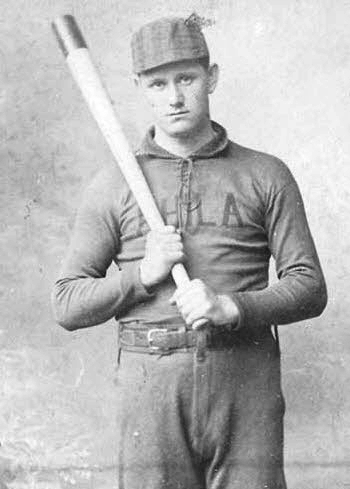
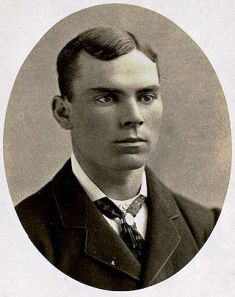
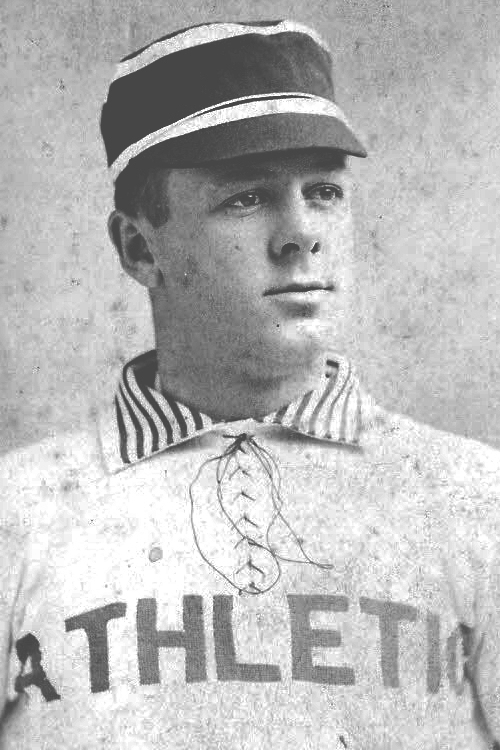
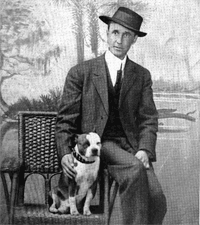
William “Bad Bill” Eagan was just 35-years-old when he died from tuberculosis in 1905, but many people didn’t believe it when the news was first reported. The hard-living Eagan’s demise had been predicted and reported several times. In 1901, the year after his professional career ended, The Fort Wayne Sentinel said:

“’Bad Bill’ Eagan who died two or three times last year, is running a poker room in Detroit. Eagan dies on the average of three times a year and is about due for the first of this year’s series. Eagan captained and played first base for Youngstown before his second demise last season.”

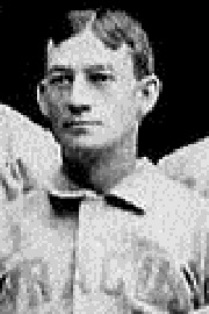
Bad Bill
Bad Bill

In 1899 Connie Mack told The Philadelphia North American:

“Eagan would be one of the best second basemen in the business if he would keep in condition.”

He quickly wore out his welcome during all three of his brief stints in the big leagues. The first, with the St. Louis Browns in the American Association in 1891, ended, according to The Syracuse Standard after an incident with team owner Chris von der Ahe:

“(Eagan) was a jolly fellow and not afraid of discipline. The Browns got on a train at St. Louis to come East…von der Ahe’s nasal organ was rather large and red for its age and ‘Bad Bill’ determined to have some sport.

“Walking up to his employer, he caught the nose between his fingers, and said: ‘Say, Chris, how much did it cost to color that?’

“The owner of the cerise nose was furious with rage. He released Eagan at once. The train was ninety miles east of St. Louis, and at von der Ahe’s order the conductor put the nose twirler off the train.”

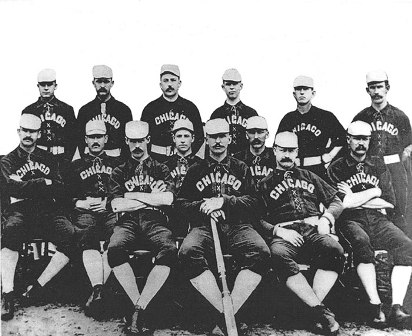
Two years later Eagan joined ‘Cap’ Anson’s Chicago Colts. Hugh Fullerton told the story of how he wore out his welcome there after just six games:

“Anson was a quick thinker on the ball field, but once he released the best second baseman that ever wore a suit for thinking a little quicker than anybody else on the nine.

“The second baseman in question was “Bad Bill’ Eagan. Everybody who remembers ‘Bad Bill’ will admit his supremacy on the second bag. When the play we celebrate came up there was a base runner on second. Chicago was one run to the good, and it was in the last half of the ninth inning.

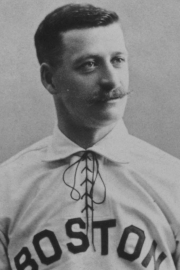
(Bill) Dahlen was playing third base for Chicago. The man hit a sharp liner down to second. ‘Bad Bill’ started for it and at the same instant the man started for third base.

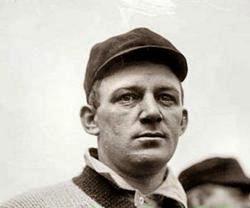
Bill Dahlen

Bill Dahlen

“The liner was a clipper and the ball struck ‘Bad Bill’s’ hands and bounded out. It struck the ground ten feet away, with ‘Bill’ right after it. Once he got his hands on it and without stopping to look where he was throwing. ‘Bill’ let the ball fly to third base.

“Most ball players after fumbling the ball would have tossed it to the pitcher or thrown it home if, after looking around, they saw that the base runner had started to try to score.

“In this case the base runner, after touching third, went on for twenty feet and then stopped for an instant to see what had become of the ball. He saw it coming straight as a die for third base, and went back there like a flash. But the ball beat him by ten feet. Unfortunately for the game, and also for “Bad Bill,’ Dahlen had taken it for granted that Eagan would throw the ball to the home plate, and was not looking for it to be thrown to him. Consequently the ball went by him, going within four inches of his nose, and striking the grand stand far behind.

“The result was that both base runners got safely home before Dahlen recovered himself and the ball, and the game was lost to Chicago.

“Anson was furious and immediately after the game gave ‘Bad Bill’ his release for making that throw. As a matter of fact, it was the best possible play under the circumstances, and Dahlen, rather than “Bad Bill’ was to blame for it not coming out as planned. If ‘Dal’ had thought as quickly as ‘Bill’ the game might have been settled right then and there.”
Eagan received one more trial with a major league team in 1898. He started the season on the bench for the Pittsburgh Pirates, but was given the opportunity to start when regular second baseman Dick Padden left the team over a dispute with Manager Bill Watkins in May.

Eagan hit .328, but committed 10 errors in 19 games. He was sold to Louisville Colonels on June 5. The Louisville Courier-Journal said:

“He is a clever fielder, a fair batsman, extremely aggressive and absolutely fearless (and will) certainly strengthen the team in one of its weakest spots.”

But he never appeared in a game for Colonels. The following day The Courier-Journal said the deal was off, and Manager Fred Clarke would only say, via telegram:

“Called deal for Eagan off for good reasons.”

The Colonels passed on Eagan despite being a team badly in need of a regular second baseman—Clarke tried nine different men there during the season, and his primary second baseman, Heine Smith hit .190 and committed 16 errors in 26 games.

Eagan finished the 1898 season with the Eastern League’s Syracuse Stars, where he had played from 1894 to 1897. He finished the year of 1898 in jail in his native Camden New Jersey.

That story Wednesday
11,297,424

12 Sep

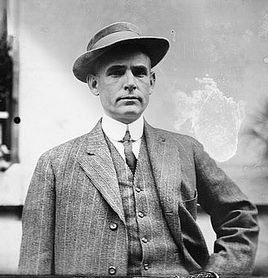
The Chicago Tribune baseball writer Hugh Fullerton was fond of saying:

“Once upon a time there was a baseball bug down in Cincinnati who figured out there were 11,297,424 possible plays in baseball.  This, of course, was counting only straight and combination plays and taking no account of the different kinds of fly hits and grounders, which all are different.  He proved it conclusively and the next day the team made one that wasn’t on the list.

“Every play, every throw, every hit is different.  That is why baseball is the national game, and there are freaks in the game that make even the case hardened regular sit up and yelp with surprise and joy.”

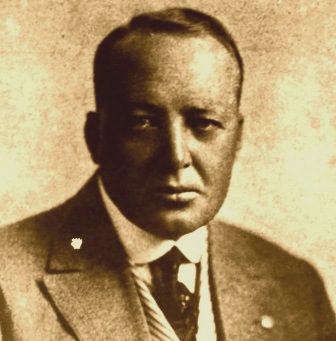
Hugh Fullerton

Hugh Fullerton

Fullerton made a career of telling stories about those plays; some might have even been true.

A few more of them:

“Philadelphia lost a hard luck game to Cleveland in the old twelve club league.  The score was close, Philadelphia had two men on base, and Ed Delehanty was at bat.

“He cracked a long drive across the left field fence—a sure home run.  The ball was going over the fence high in the air, when suddenly it changed its course, dropped straight down, hit the top of the fence and bounded back into the lot.

Ed Delahanty

Ed Delahanty

“The crowd, which had given up in despair, was astonished.  The Cleveland left fielder got the ball and, by a quick throw, cut down the runner at the plate and Delehanty was held at second.  The next men went out and Philadelphia was beaten.

“Investigation after the game proved that the ball had struck a telephone wire reading to a factory just outside the grounds.”

Tom Corcoran had one of the oddest baseball experiences in the history of the National League at the old Eastern Park grounds in Brooklyn years ago, in a game against Boston.  The game was played on the morning of Labor Day, and there had been a hard rain the night before.  In the early part of the game Corcoran, going after a ground ball, felt his foot slip and his ankle turn, and, half falling, he stopped the ball and then fell.  He turned to pick up the ball to throw out his man, and saw no ball—although there was a hole six inches across, into which his foot had plunged.  The runner, reaching first, stopped and saw Corcoran with his arm plunged to the elbow in the ground, and after hesitating a moment, he ran on down to second.

Tom Corcoran

Tom Corcoran

“Corcoran, meantime, had been thinking.  His fingers were clutched around the ball, and yet he waited, pretending to be groping for the ball.  The runner started on, and as he passed, Corcoran dragged the ball out and touched him out.”

“One of the funniest plays I ever witnessed was pulled off on the old Baltimore grounds along in 1896, and it was good-natured, happy Wilbert Robinson who made the blunder that resulted in the defeat of the Orioles when they might have won the game.

Wilbert robinson

Wilbert Robinson

“The struggle was between Chicago and Baltimore and it went into extra innings.  In the eleventh, with a Chicagoan on second Doctor Jimmy McJames made a wild pitch, the ball shooting crooked and bounding around back of the visitors bench with Robby in close pursuit.  The ball rolled back of the water cask and disappeared.  Robby made one frantic grab back of the cask, and then, straightening up, hurled a sponge full of water at McJames, who was covering the plate.  The Doctor grabbed it, and as the water flew all over him he tagged Jimmy Ryan…In spite of the fact that the play beat Baltimore, the crowd yelled with delight over it, and Robby, who had made the sponge throw as a joke when he found he could not get the ball in time, appeared as much pleased as if he had won the game.”


“It is Feared that the Cares of his Office are making an old man out of Tim”

18 Aug

Timothy Carroll “Tim” Hurst had an eventful season in 1906.

He had been an umpire since 1891—with the exception of one awful season managing the St. Louis Browns to a 39-111 last place finish in 1898.  In 1904 Hurst retired from the National League, but months later joined the umpire staff of the Central League, and took a job in the American League in 1905.

Tim Hurst

Tim Hurst

The Kansas City Journal described the 5’ 5” umpire who was also a boxing referee::

“Hurst is a pudgy little fellow, below medium height, with sandy hair, twinkling blue eyes and a ruddy complexion.”

He was often called “pugnacious” for his on field, and off, altercations, and once told a reporter for The New York Herald how he dealt with argumentative catchers:

“Never put a catcher out of the game.  If the man back of the bat is sassy and objects to your calling of balls and strikes, keep close behind him while doing your work and kick him every time he reaches out a catch a ball.  After about the third kick he’ll shut up.”

The incident that earned him the most attention in 1906 happened during a May 7 game in New York between the Highlanders and the Washington Nationals.   The New York Times said during the fifth inning:

(Frank) LaPorte was declared out at first base on a close decision.  Manager (Clark) Griffith rushed over to the base line, and, throwing his cap in the air, protested against the decision.  He wildly gesticulated, and Hurst ordered him away.  Griffith, instead of following Hurst’s instructions, stepped up to the latter, protesting all the time.  In his excitement he stepped upon Hurst’s foot.”

Hurst “drew back” to punch Griffith but was held back by players from both teams.

“Hurst then took hold of the lapel of Griffith’s coat and started to lead the player-manager to the bench.  The latter angrily resented this action and pushed Hurst’s hand away.  Lave Cross and the Washingtons tried to pacify Griffith, and succeeded in getting him to the players’ bench.”

Hurst followed Griffith to the New York bench and again attempted to punch the manager, while Griffith “rushed at the umpire.”

Clark Griffith

Clark Griffith

According to The Associated Press Griffith claimed “’Hurst didn’t hit me.’ Then pointing to his swollen mouth he added, ‘I had this swollen lip before the game.’”

Hurst and Griffith were both suspended for five games.

The following year Henry Pierrepoint Edwards of The Cleveland Plain Dealer said Hurst had given him an explanation to “clear up the mystery” of why he reacted so violently:

“Now, it isn’t customary for Tim to wear baseball shoes on the diamond.  Usually Tim appears for the fray clad in the same suit he would wear at a pink tea.  His real uniform is just a cap.

“On the afternoon in question Tim purchased a new pair of patent leather shoes.  The shoes glistened in the sun like a diamond and gave Tim great pleasure.  Griffith forgot all about the shoes and in his rage over losing a close decision spiked and spoiled the new kicks.  Great was Tim’s rage.  Even greater was the clash.  That’s all.”

Two months after the incident with Griffith, Hurst made what might have been the worst call of his career.

On July 7 in Washington, he was working the game between the Nationals and the Detroit Tigers.  The score was tied 3 to 3 in the seventh inning, the Tigers had the bases loaded with two out and Sam “Wahoo” Crawford at the plate, facing Nationals pitcher Frank KitsonThe Washington Post said:

“’Wahoo’ lifted one a thousand miles directly over the pan.  Kitson came tearing in,  (Catcher Howard) Wakefield hesitated.  Manager (Jake) Stahl stood still at first base.  The pellet whirled in the air and finally dropped just inside the line and bounded back to the stands.  (Charley) O’Leary and (John) Eubank romped home.  Crawford went to second, carrying the funniest two-base hit on record.  Kitson and Wakefield stood admiring each other until Hurst again yelled ‘Fair ball!’ when the boy catcher went after the bulb.”

Sam Crawford

Sam Crawford

While the Nationals argued the call, and Hurst refused to reverse his decision, The Post said “The spectators were forced to listen to the dillydallying for fully fifteen minutes, then many of them got up and left the belligerents wrangling over the decision.”

Kitson threw a wild pitch to the next batter, Matty McIntyre scoring Herman “Germany” Schaefer and Crawford.  The Tigers went on to win 9 to 3.  Jake Stahl filed a protest with American league President Ban Johnson.

The Washington Evening Star said:

“The only excuse that Umpire Hurst can have is that the play was an unusual one.  Lave Cross admitting that he never saw its like in his experience on the diamond.  Hurst was palpably rattled, and the Tigers when taking their places on the field chaffed the locals with the remark that ‘Tim certainly handed us one that time.’”

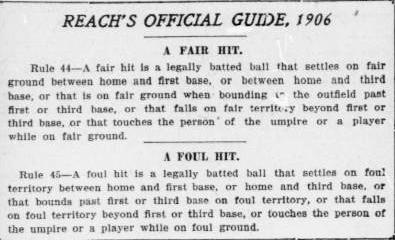
The Washington Times said it was “one of the most remarkable plays ever seen on a diamond,“ and printed for their readers rule number’s 44 and 45 from the 1906 “Reach Guide” Reach describing “A Fair Hit,” and “A Foul Hit.”

The Washington Times used "The Reach Guide" to illustrate how Hurst blew the call.

The Washington Times used “The Reach Guide” to illustrate how Hurst blew the call.

The Times said:

“(T)here seemed no possible way of calling it fair, but Hurst was obdurate, and the only explanation he would give was that the ball ‘was hit too high.”  What the heighth of the hit had to do with the fact that it eventually bounded foul is still another mystery.”

Hurst’s story evolved over the next several days.  The Post said his original explanation regarding the ball’s height was “to the effect that the ball was it so high it ‘settled’ inside, constituting the hit a fair one. “  This was quickly replaced by Hurst’s claim that the ball had touched Wakefield, the Washington catcher, before bounding into foul territory.

The Times’ baseball reporter Thomas Stevens Rice said of Hurst’s new story:

“This explanation is all right if it presents the facts in the case.  In the press box there was not a single man who thought the ball was touched by Wakefield or anybody else.”

The Post conceded that the protest would be rejected, saying “It is almost certain that Ban Johnson will sustain his scrappy umpire, no matter what interpretation he puts on the rules,” but the paper did not let up on Hurst.

The following week when Sam Crawford brought his average up to .300, The Post said:

“Hurst last week decided that Crawford’s high rap which hit inside the base line and bounded back to the stands was fair…am would have faced the pitcher 271 times and got away with 81 hits which would have made his average .299, as it was Sam got and extra hit which brought the total to .303.  He owes Tim a hat.”

Hurst was still young, just forty-one in 1906, but The Sporting Life said something had changed during that year, and by the end of the season that the umpire lacked the “Aggressiveness and enthusiasm” he had previously exhibited:

“It is feared that the cares of his office are making an old man out of Tim, who once was noted for having the finest brand of keen-cutting, kill-at-a-thousand-yards sarcasm of any umpire in captivity.  Sit Timothy is very tame, and the players, even the bush leaguers who have just broken in, can tell him what they think of him and his calling.”

Hurst’s old “aggressiveness” came out in 1909.  He was suspended in May for a fight with Norman “Kid” Elberfeld of the Highlanders, then on August 3 during a game between the Athletics and White Sox.  The Brooklyn Eagle said:

“At Philadelphia Tim Hurst came in for considerable trouble.  Hurst called Eddie Collins out at second and the Columbia youngster put up a kick.

“Whether it was with malice aforethought or quite an accident, it is a fact that the umpire distributed a mouthful of moistened union-made tobacco in the direction of the youthful Eddie, who immediately called Tim’s attention to the board of health ordinance which prohibited expectorating in public places.”

After the game Hurst had to be escorted from the field by Philadelphia police.  Ban Johnson suspended Hurst, beginning two weeks of rumor and speculation about the umpire’s fate.  Finally, on August 18 it was announced that Hurst had been let go by the American League.

Hurst, in poor health since 1912, died in 1915.  Hugh Fullerton of The Chicago Examiner said of his passing at age 49:

“The saddest part of it is that ‘Timothy’ did not die in the blue uniform, and that during the last few years of his life he was practically blacklisted in baseball for refusing to answer or deny charges made against him for his actions during a clash with Eddie Collins…President Johnson declared that if Hurst even had replied to his telegrams of inquiry he would have kept him—but Tim, knowing he had done wrong, refused, and went out of the game.”

“First thing I know they had the Cushions Populous”

15 Aug

Nearly two decades after he claimed it happened, Clark Griffith told a reporter from The Sporting News a story about getting the final out, and humiliating a friend in the process:

Clark Griffith

Clark Griffith

“It has been my luck to see a large number of peeved and angry people in this old game of baseball, particularly gentlemen against whom I have been lucky enough to do some successful pitching.

“I still think, however, that the maddest man I ever did behold was that grand old Monolith of the Boston team—Mr. Thomas Tucker.  The Occasion on which I beheld the fury of this famous warrior is still green in my memory, and can never forsake me.

“Old Tommy Tucker was pretty nearly on his last legs so far as big league baseball was concerned, and hits to him were more precious than rubies and diamonds when we bumped together one summer afternoon.  It was a big game, a most important game, and I really had to win it.  I love Tom Tucker very much, but I loved my salary more.

Tommy Tucker

Tommy Tucker

“The battle was a hot one, running along on pretty even terms till near the close, when we managed to get a couple on the bases when good old Uncle (Cap) Anson did the rest with one of those murderous  hits that they don’t make now, the old man not being there to soak them.  That Boston bunch was never whipped till the last man was counted out, and they went after me strong in the last death rally.  First thing I know they had the cushions populous, two down and old Tom Tucker standing grimly at the plate.  I worked him into biting at two wide ones, then fed him two more which he refused to reach after.  It was coming down to cases and no mistake.

“Just at this juncture I happened to remember a trick of indoor baseball—the enormous upshot which is put on an indoor ball by swinging it underhand, with the knuckles uppermost and the ball rolling off the palm.  It causes a huge upshot ball, but it is not practicable for outdoor ball because, at the greater pitching distance, the ball would lose all its speed before it reached the platter.

“I decided to throw the ball just once, as a desperate experiment, and I threw it.  The globule sauntered along, way low, below Tom’s knee line, and he stood scoffing at it.  Then, just as the ball came parallel with him it leaped up and whirled over the plate, while the umpire yelled ‘strike three.’

“Old Tom Tucker laid down his bat and started toward me, with evidence of much excitement on his face, but I was already on my way, and was going fast.  That night he came to the hotel looking for me, and publicly announced that he intended to slay me on sight, but I was not in, and he never got his hands upon me.”

The pitch used to strike out Tucker was not the only one Griffith said originated with him.  In addition to his claim to have invented the screw ball, in 1899 The Chicago Daily News said Griffith claimed to have perfected a new type of curve which “is said to be an amplification of his celebrated slow ball, with which he has in times past puzzled so many batsman.”

The “celebrated slow ball” was taught to Griffith by Charles “Old Hoss” Radbourne—as a result The Chicago Tribune’s Hugh Fullerton said Griffith held “practically a monopoly on the slow ball and (used) it with wonderful effect.”

Griffith said he developed this new curve when shooting pool:

“You simply English the ball with your hand instead of the cue that is the only difference.  In other words, before the ball leaves my hand it is set to spinning in a direction towards my body.  All the time it is going through the air towards the batter it has this rotary motion.”

The Daily News described the pitch:

“It is believed that the air in the case of a curve of this kind acts like the cushion of a billiard table and accentuates the tendency to return, which underlies the forward motion of the baseball.  Be that as it may, the result is astonishing.  A ball that starts out with great velocity from Griffith’s hand in this experiment, as it gets to the batter suddenly slows up to a speed not more than one-half as great as that at which it was launched.  The effect on the batter, who is expecting a swift ball, can readily be imagined.  He strikes at the leather globe before it reaches him, and the chance that he hits it is reduced to a minimum.”

“Baseball is now Played by certain Mathematical rules and Regulations”

16 Jul

The Chicago Tribune’s Hugh Fullerton concluded in 1906 that base running had “in a sense, become a lost art.”

“Baseball is now played by certain mathematical rules and regulations, and there is no more of the brilliant individual feats of the old days.  Everyone who plays now knows just what stage the game is in, what to do in that stage, and if he does not the signals from the batter to show him his duty.  In the old days most of them ran unaided by bunt, ‘squeeze,’ hit and run, or blocking or feinting to bunt to draw the fielders out of position.

“Teams still run, hoping to demoralize the opposition, but not to the extent that they did in the early years of the game.”

Hugh Fullerton

Hugh Fullerton

According to Fullerton no team ran wilder than the Chicago White Stockings of the 1880s

 “Mike Kelly was perhaps the most daring of all base runners.  He never was extremely fast, and in his later years grew extremely slow—but he stole almost as many bases when slow as ever he did.  Indeed, the best base runners the game has known were men of medium speed in running, and few of the really fast sprinters ever were good base runners.  Kelly ran bases with his head instead of his feet.

“One of the best trick that old team ever pulled off was against Boston in Chicago.  Kelly engineered the deal, although he was on first base, with a runner—(Tom) Burns, I think—on third.  One was out and the worst hitter on the team was up, with one run needed.  Kelly was standing on first, and as the pitcher prepared to deliver the ball Kel went dashing towards second, yelling at the top of his lungs.

“The pitcher took a glance to see if the runner had left third and saw him standing still, and to his astonishment saw Kelly still tearing towards second.  He hesitated, expecting Kel would stop or slow up—then threw, and threw high, while Kel, instead of sliding and reaching second in safety, merely touched the base and tore towards third at top speed, leaving the second baseman holding the ball in astonishment.  The runner at third had moved off ten feet as Kel came tearing towards him yelling commands, and catching the drift of the play, he sprinted for home.  The throw went to the plate ahead of him as he rushed homeward and seeing himself hopelessly out he slowed up a bit, and Kelly, coming on from third, slid around him, escaped the astonished catcher, who was tagging the other runner, and scored, evening up the game.”

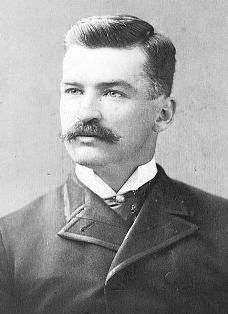
Mike "King" Kelly

Mike “King” Kelly

Fullerton also wrote about the “Kelly Slide,” or “Kelly Spread,” the hook slide Kelly made famous, which also went by another name:

“Kelly invented the ‘Chicago Slide,’ which was one of the greatest tricks ever pulled off.  It was a combination slide, twist and dodge.  The runner went straight down the line at top speed and when nearing the base threw himself either inside or outside of the line, doubled the left leg under him—if sliding inside, or the right, if sliding outside—slid on the doubled up leg and the hip, hooked the foot on the other leg around the base, and pivoted on it, stopping on the opposite side of the base.

“Every player of the old Chicago team practiced and perfected that slide and got away with hundreds of stolen bases when really they should have been touched out easily  There are some modern players who make the slide something as it was done then, but Bill Dahlen of New York really is the only one in either big league who executes it regularly and perfectly.”

And, as with most Fullerton reminiscences there were stories about his personal favorite players; which may, or may not have actually happened on a baseball field somewhere, to someone.

Elmer Foster was a great base runner, after his style.  He ran regardless of consequences and perhaps no man that ever played in fast company ever took an extra base on a hit oftener as did Elmer.  He simply refused to stop at his legitimate destination, and kept right on.  When he got caught he always said:  ‘Why, I wasn’t a bit tired.  Why should I have stopped running?’

“On day Foster was turning third, trying to score from second on a short hit, when Billy Kuehne bumped him with his hip, threw him out into the grass, and forced him to stop.  Elmer was wild.  He kept yelling, ‘I’ll be around here again.’  The next time up he made a two base hit and he never stopped at second, but dashed on for third at top speed.  The second baseman, surprised, made a high throw to third and Kuehne stretched to get the ball just as Foster, leaping through the air, landed on his chest with both feet and kicked him half way to the grandstand.  Foster came home running backwards and yelping with delight at Kuehne—and then got sore because he was called out.”

Elmer Foster

Elmer Foster

“One of the funniest incidents in base stealing I ever saw happened in Chicago one of the yeas that Bill Lange led the league in base running.  It was a close race between Lange and (Billy) Hamilton for the honors and the season was drawing to a close.  The game was close, and Lange led off the eighth inning with a two bagger.  Anson went to bat and laid down a perfect bunt, intending to sacrifice.  He went out in a close finish at first, and looking up, discovered Lange still perched on second.  He was furious, but the condition was mild compared to what he experienced an instant later when Lange stole third—and took the lead fo the base running honors.”


Bugs Versus Rube

9 Jun

Charles Emmett Van Loan is largely forgotten today, but from 1904 until his death in 1919 at age 42, he was considered one of the best, and most prolific, baseball writers in the country.

Grantland Rice said:

“Van Loan was not only a great story-teller.  He was the first writer of his time to see the romance and the glamour of the game, mingled with its amazing fund of humor.”

In addition to his newspaper work, which included stints in New York, Los Angeles, San Francisco and Denver, Van Loan wrote some of the most popular fictional baseball stories of his era—he published four collections of baseball stories, as well as anthologies of  boxing, horse racing and golf stories.

Hugh Fullerton said of his death:

“Van is dead and sports in America have lost their greatest interpreter, and fighters, ball players and athletes of all grades have lost their best friend.”

Charles Emmett Van Loan

Charles Emmett Van Loan

As sports editor for The New York American in 1910 Van Loan weighed in on the two most interesting pitchers of the day:

“In the race for distinction as the most erratic, eccentric and daffy pitcher of the big leagues “Bugs” Raymond is leading by an elbow over our old friend, G. Edward Waddell, known to fame and a portion of Missouri as the ‘Rube.’

“The battle between G. Edward and the ‘Bug’ has been a close one.  For many moons Waddell held the belt for eccentricity.  If he had not been a wonderful baseball player, he would have been chucked to the minors years ago, but pitchers like Waddell are so rare that they must be preserved to the game.

Bugs Raymond

Bugs

“We all remember the sorrows of Oscar Hammerstein and the many tribulations forced upon him by his singers, particularly the women.  A woman with a wonderful voice can get away with anything short of murder in the first degree by blaming it upon her artistic temperament—which is an ornamental means for plain unadorned meanness, selfishness or petty spite.  If a soprano got jealous of another woman and tore up her contract, refused to sing her roles and played smash generally, she could blame it upon her artistic temperament, and all was forgiven.  What a shame the ‘Rube’ never heard about that artistic temperament thing!  It would have been such a handy alibi for him.

“Waddell stuck in the limelight by virtue of his ability to throw a ball like a streak of lightning and throw it twice or three times in the same place…In between his marvelous performances the ‘rube’ established himself as a bartender, a side-show barker, an actor, a sidewalk comedian, a rough and tumble battler and a very competent vessel for mixed liquors.  He enjoyed the proud eminence of supreme bug of the major leagues and everything was lovely until ‘Bugs’ Raymond happened along.  ‘Bugs’ went the ‘Rube’ one better.  Waddell in his balmiest days never had a special keeper engaged, by the management to take him gently but firmly by the elbow and steer him away from temptation.

Rube

Rube

“You never heard of a chorus girl with an overdose of the artistic temperament.  A chorus girl who develops tantrums is fired immediately.  You never heard of an eccentric ballplayer who was not a good one, a bad player would be sent  back to herd the cows and coax the potatoes out of the ground with a hoe.

“’Rube’ and ‘Bugs’ are good players.  Raymond almost drove (John) McGraw to despair last season, for the chubby manager realized what an excellent pitcher ‘Bugs’ really was and tried to save him for the hard finish of the season.  McGraw even went so far as to try physical persuasion upon his big, but erratic southpaw, upon the ground that a swift wallop on the nose is sometimes better than a ream of argument.

“McGraw tried to keep money out of Raymond’s hands, figuring that if he never had a cent he would be forced to keep his nose dry.  No use.  ‘Bugs’ had too many friends.  His admirers were always ready to purchase even if ‘Bugs’ had to look up in the air when it came his turn to deliver orders to the gent in the apron.

“’Turn him loose on a desert isle’ said one of the players, referring to Raymond, ‘and inside of an hour he will turn up with a flask on his hip.  How he does that I don’t know.  I guess he just charms that liquor.

“Unfortunately George Edward must retire from the competition.  Boston is his hoodoo town,  By reason of matrimonial troubles ‘Rube’ was forced to cut Boston off the pitching list, and just as the clouds cleared away, bing! On the elbow with a red hot liner, and out goes the ‘Rube’ with a broken bone.

“At the end of last season nobody believed that McGraw would make another effort to reform the thirsty Raymond.  It was thought that in spite of the fact that ‘Bugs’ won 600 percent of his games, he would get the gate, but McGraw decided to try it again on the ground that a pitcher of Raymond’s class is worth saving at any cost.  McGraw is willing to gamble.  Should he fail to straighten out the big spitballist everybody will say:  ‘I told you there wasn’t any use.’  On the other hand, should the private keeper keep ‘Bugs’ away from the disturbance water and his pitching be up to his usual standard, everyone will say that McGraw showed excellent judgment in hanging on to his souse paw through thick and thin.

“An erratic pitcher is a hard strain on a team.  The men behind him never know when he is going to blow up and they are kept on a strain whenever the eccentric one works.

“When ‘Bugs’ goes into the box in good condition, his head clear and his muscles hardened by work, he pitches good enough baseball for any man’s club.  His keeper has been steering him away from the gin mills for some time—touch wood everybody—and at last accounts McGraw was hopeful that the problem had been solved.

“They say the ever loving ‘Rube’ is consumed with jealousy because ‘Bugs’ has a keeper.  A man with a broken wing doesn’t really need a keeper.”

McGraw was unable “to straighten out the big spitballist,” Raymond’s big league career was over by June of 1911, and he was dead just more than a year after that.  Waddell’s major league days were over within weeks of Van Loan’s observations, and he was dead less than four years later.

“The life of a Baseball Player is Extremely Unsatisfactory”

30 Apr

After more than two decades covering baseball, Hugh Fullerton told fathers “Don’t send your boy into professional baseball.”  In response to a letter he said he received seeking his advice from a father who said his 19-year-old son wanted to play pro ball, Fullerton said in The Chicago Herald-Examiner  in 1915:

Hugh Fullerton

Hugh Fullerton

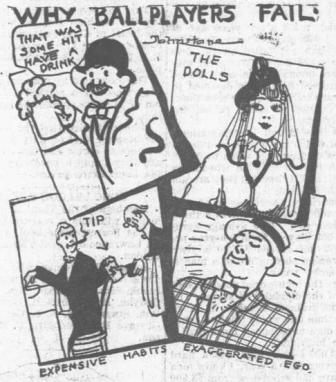
“The life of a baseball player is extremely unsatisfactory.  I have lived with them for more than 20 years and have found few good men in the profession who would not have been better off in any other.

“Your boy is at the age when the majority come into the upper leagues.  Usually they are swell headed because they have been applauded and cheered as the best in their own class.  Among the veteran ballplayers they are looked upon with scorn, chiefly through this tendency to freshness.  If they are sensitive or lack determination they are broken in spirit and courage right at the start.

“I made a list a few years ago of nearly 1000 players—and about 98 out of each 100 failed on the first trial to make good.  The great majority are doomed to failure.  Those who succeed finally are destined to temporary failure.  I have seen thousands broken in spirit, ruined entirely by this.

“The life is full of temptations, chief of which are women and drink.  Swarms of fans urge them to drink, seek to buy them wine when they succeed, and if they fail they are apt to drink as a solace.

"Why Ballplayers Fail" The illustration that accompanied Fullerton's column

“Why Ballplayers Fail”
The illustration that accompanied Fullerton’s column

“Financially, about one in 40 succeeds moderately and one in a thousand gets rich.  The average earnings of 500 players for a ten-year period will not exceed $1000 a year.  The average playing life of a man is about seven years.

“Even the high-priced players complain of the difficulty of saving.  The constant drain of expenses is much higher than one would think.  A semi-public man must spend more than a private individual.

“A 3,000-a-year man has a hard time saving $500 a year.  I know men who have had salaries of from $3,500 to $7,500 for seven or eight years who have only a few thousand laid by.

“The worst feature, however, is that your boy, starting at 19, probably would be done when he was 32 or 33—done and out of employment, with expensive tastes, expensive acquaintances, no knowledge of any trade or business and really just where he is now.  He probably would be worth $20 a week.

“His one chance is that he has, during his baseball career, formed the friendship with some wealthy or prominent man who can place him in a ‘soft’ job.  To me this seems undesirable.”

Within days Fullerton was again writing columns about the joys of the drunken exploits of players like Elmer Foster.

“You are mostly Fakes, and yet I love you all!”

19 Mar

Elmer Foster became better known after his career had ended than he ever had been as a player because of sportswriter Hugh Fullerton who included stories he said were about Foster in his columns for more than twenty years.

Elmer Foster

Elmer Foster

The first story appeared in 1897, shortly after Fullerton arrived at The Chicago Tribune:

“The long-lost is found.  A few days ago a traveling man who is a baseball fan climbed on the train with the Colts and engaged Jimmy Ryan in Conversation.

“’Who do you think I saw the other day?’ he queried…I was up in Minnehaha, the village at the falls of St. Paul.  About 10 o’clock at night I was preparing to go to bed, when suddenly there came a series of war whoops up the street.  A man came tearing down on horseback, whipping the animal to dead run and whooping like a Comanche Just as he got to where we were standing he pulled two revolvers and, still whooping, emptied them into the air.  I was scared to death, but no one else paid any attention.  When the danger was over I crawled out from under a cellar door and said ‘Who is that?  ‘Oh, that’s nothing,’ said one of the gang.  ‘It’s only Elmer Foster going home.’”

The 1897 article also told a more accurate version of the incident in Pittsburgh that led to Foster’s release than Fullerton told in later years–it mentioned that he was with Pat Luby (incorrectly identified as “Harry” Luby), and Fullerton, in this version, did not claim to be present.

With that the legend was born.

Hugh Fullerton

Hugh Fullerton

By the turn of the century the legend grew.  Fullerton said:

“Foster was a great baserunner…He ran regardless of consequences, and perhaps no man that ever played in fast company ever took an extra base on a hit oftener than did Elmer.  He simply refused to stop at his legitimate destination, and kept right on.  When he got caught he always said: ‘Why, I wasn’t a bit tired.  Why should I have stopped running?’”

By 1903 Fullerton said of Foster:

“No man who was interested in baseball during the early ‘90s can certainly have forgotten the name of the man who was perhaps the best center fielder who ever wore a Chicago uniform.”

Like Bill Lange, another player he helped make famous long after his career was over, Fullerton’s most often repeated story about Foster was a dubious one involving a catch—a story that was repeated over the years as having happened three years after Foster’s big league career was over:

“Back in ’94 one of the Eastern teams was playing Chicago on the West Side, with Foster in center field.  The man at bat made a terrific swipe at the ball and hit it.  The shadow was deep over the infield and Foster could not see the ball.  He started to run out into far center, so as to be prepared.

“As a matter of fact the ball was only a bunt.  The shortstop caught it and threw the batter out at first.  But Foster kept on running—running like mad….Foster ran at the top of his speed almost to the center field fence.  Then he jumped high up into the air, threw up his left hand, and came down to the ground with—an English sparrow tightly clenched in his fist.”

In addition to Fullerton repeating the story over the years,  “Gentleman” Jim Corbett retold it in his syndicated sports column in 1919 and Al Spink, writing for The Chicago Evening Post in 1920 quoted former Chicago White Sox Manager Jimmy “Nixey” Callahan telling the story in 1920—like the original, both Corbett’s version and Spink’s via Callahan say the “catch’ happened three years after Foster left Chicago.  The story survived until at least 1925 when it appeared in several paper as park of a King Features syndicated column of short baseball stories.

Fullerton’s Foster stories—including several regarding drunken pranks Foster was alleged to have played on Cap Anson—became so ubiquitous that William A. Phelon of The Cincinnati Times-Star  said in 1912:

“It is now an accepted tradition that Elmer Foster, the famous fielder, led the Chicago team on a glorious, care-free, drunk through a whole wild merry season in 1891.  That is believed by everybody—yet the records show that Foster played just a few games with Chicago in 1890, and was released in April [sic] of 1891, before the season was even one week old!  Oh, you legends!  Oh, you deceiving old stories!  You are mostly fakes, and yet I love you all!”

“Foster you are Released”

17 Mar

Elmer Ellsworth Foster’s career as a pitcher ended on August 26, 1884.  He had been out for three weeks with “an injury to the tendon in his right arm,” when he took the mound for the St. Paul Apostles in a Northwestern League game against the Milwaukee Brewers.  The 22-year-old was 17-19 with 1.18 ERA when he took the mound at St. Paul’s West Seventh Street Grounds.

The St. Paul Daily Globe said:

“When the popular favorite took his position in the box in the last half of the first inning the audience received him with an ovation of cheers, to which he responded by raising his cap.  A moment later he pitched the first ball, a sharp crack was heard distinctly all over the ground and the sphere went spinning ten feet to the right of the batter.  Foster turned pale, but stood in his position until the players in the vicinity reached him.”

He had “snapped the bone of the right arm just above the elbow,” and after Foster left the field a collection was taken up among the fans “A few minutes later it was announced that $172 had been collected.”

He made it to the major leagues two years later as an outfielder with the New York Metropolitans in the American Association, and played parts of five seasons in the American Association and National League.  A consistent .300 hitter in the minors, Foster hit just .187 in 386 big league at bats.

According to The Sporting Life, his manager with the New York Giants in 1888 and ‘89, Jim Mutrie considered him “one of the best fielders in the country, and the only reason New York ever let him go was because he didn’t show up well with the stick in fast company.”

Elmer Foster

Elmer Foster

Sportswriter Hugh Fullerton said he excelled at other things as well:

“The rowdy of the rowdies was Elmer Foster.  Handsome, well bred, clean cut and with it all, well educated and something of an actor.  Foster was in baseball for the fun of it.”

From the time Fullerton joined The Chicago Tribune in 1897 until he left Chicago for New York in 1919 Bill Lange was probably the only 19th Century player he wrote about more often Foster.

Foster’s  best season was 1890 (.248 in 105 at bats and 5 home runs) with Cap Anson’s second place Chicago Colts after being acquired in late August.

Foster started the season with his hometown Minneapolis Millers in the Western Association (he hit .388 in his first twelve games), but fell out of favor with Manager Sam Morton after he and a teammate named Henry O’Day were arrested and fined in Milwaukee for public intoxication in May.

Foster was benched, but the team refused to release him, and by mid-July he was ready to take the Millers to court.  The St. Paul Daily Globe said:

“(Foster) threatens to bring suit against the management to compel its members to give him his release.  His claim will be that they are unjustly preventing him from earning a livelihood.  There is a possibility that the threat may be only a bluff, but should such a trial be put on, it will be of much interest in Western baseball circles, as it will be the first of its kind in this section.”

The Millers finally chose to release Foster rather than fight a lawsuit.  Foster was rumored to be headed to several different teams, but finally signed with the Colts on August 27.

After his strong September in 1890 Foster began the ’91 season as the Colts center fielder, but it didn’t last.

Fullerton said Foster sealed his fate with Anson during the opening series:

“We were going to Pittsburgh, and just before we arrived in town on the unearthly jump from Chicago to Pittsburgh, via Cleveland, Anson came along and sat facing us.

“’Foster,’ He said ‘The next time you take a drink, or anyone on the club takes a drink with you, I’ll release you.’

“’All right, Cap,’ said Foster, cheerfully.

“We arrived in Pittsburgh, and while Anson was registering the club at the desk Foster said: ‘Let’s go have a cocktail.’

“’Better be careful, Elmer, the old man is sore,’ I remarked.

“But we went.  The mixologist had just strained the cocktails into the glasses when Foster, looking into the mirror, spied Anson in the doorway.  He turned and, bowing low, said sweetly “Captain anson, will you join us for a drink?’

“’No,’ thundered Anson.  “Foster you are released.

“And now that I am released, Captain Anson,’ said Foster, ‘will you join us in a drink?”

Unlike many of Fullerton’s story, the basic facts (if not the part where he included himself in the story) are confirmed by contemporaneous accounts.  The Chicago Tribune said on April 26 after the Colts four-game series with the Pirates:

“Elmer Foster is not with the club and he has probably played his last game with it.  He and (Pat) Luby last night at Pittsburgh were drinking and Anson fined each $25 and ordered them to go to bed.  They paid no attention to the order and the fine was increased to $50.  This morning when the team was ready to go to Cincinnati Anson gave foster a ticket to Chicago and sent him home.”

Luby was not sent home and lost to the Reds 1 to 0 the following day.  He was fined several times for drinking during the 1891 season, and after a promising 20-9 rookie season in 1890 he slipped to 8-11, and followed it up with an 11-16 season in 1892 before Chicago let him go.

Foster was suspended without pay and finally released on May 11.  He was immediately signed by the Kansas City Blues.

Foster played well in Kansas City, hitting .300 in 70 games for the second place Blues, but was released in August.  The Kansas City Star said:

“One of the sensations of today is the unconditional release of Elmer Foster whose behavior on the present trip has been disgraceful”

The paper said Manager Jim Manning was forced to make the move, not just because of Foster’s drinking, but because he “has been largely instrumental in leading other members of the team astray.”

His replacement, Joseph Katz, acquired from the Grand Rapids Shamrocks in the Northwestern league hit just .225 in the final 25 games.

In December of 1891 The Minneapolis Times said:

“Elmer Foster, the ballplayer, yesterday secured $25,000 through the will of his dead mother, and today announced his permanent retirement from the diamond. “

With the exception of one game in 1895 (he went 1 for 2) with the Millers, Foster was true to his word and quit baseball at the age of 29.

Foster retired to Minneapolis where he operated a piano and organ store with his brother, did some acting and occasionally said he was considering running for the Minneapolis City Council or the Minnesota State Legislature, although there is no record of his ever officially filing to run for office.  He also worked as a scout for the Pittsburgh, and signed Ralph Capron out of the University of Minnesota for the Pirates.

After Fullerton moved to New York and stopped writing about Foster the “The rowdy of the rowdies” faded into comfortable obscurity in Minnesota.  He died in 1946 at age 84.

Some of Fullerton’s less reliable stories about Foster on Wednesday.

Em Gross

5 Feb

Emil Michael “Em” Gross was one of the best hitting (.295) and worst fielding (233 errors) catchers of the 19th Century during five major league seasons between 1879 and 1884.  The Chicago Tribune’s Hugh Fullerton, no stranger to hyperbole, called Gross “perhaps the heaviest hitting catcher that ever donned a glove.”

Em Gross

Em Gross

Gross, a Chicago native, didn’t need baseball in order to earn a living.  In 1884, when he played with his hometown team, the Browns,  in the Union Association (the team relocated to Pittsburgh in August), The Chicago Daily News said he “owns $50,000 worth of real estate in Chicago.”

Gross’ professional career came to an end after the 1884 season, but he played one more year for a Chicago semi-pro team called the Heavyweights.  The Tribune said of the team:

“While they do not count a man who weighs less than 200 pounds, they have some great baseball talent.”

Fullerton is responsible for the story that was most often told about Gross’ career in the years before his death in 1921.

Like many of Fullerton’s stories, the first telling appeared more than a decade after the fact and contained vague details,  little corroboration and was likely apocryphal.

This one made its first appearance in a Fullerton column in 1907.  He said Gross’ biggest weakness “was in catching foul flies.  He tried for everything in sight, ran circles around the ball and sometimes speared it, but he never felt at ease when one of those tall, twisting fouls went up.”

The columnist claimed the story was “vouched for by two old ballplayers who watched it come off:”

“(Gross) was catching in Providence one day when a Philadelphia batter poked up a fly that looked 50 feet high.  There was a wind blowing and the ball began to twist around in circles, with Em doing a merry-go-rounder under it.  Finally, seeing that it was escaping he made a desperate effort to turn quickly and fell flat on his back.  To his amazement he discovered that, for perhaps the first time in his career, he was under the ball which was descending like a shot straight toward his nose.

“Instinctively he threw up his feet and hands to protect his face.  The ball struck the sole of his shoe, bounded up into the air, and, as it fell again, Em reached out and caught it.

“And the next morning the Providence papers had the nerve to say he did it on purpose.”

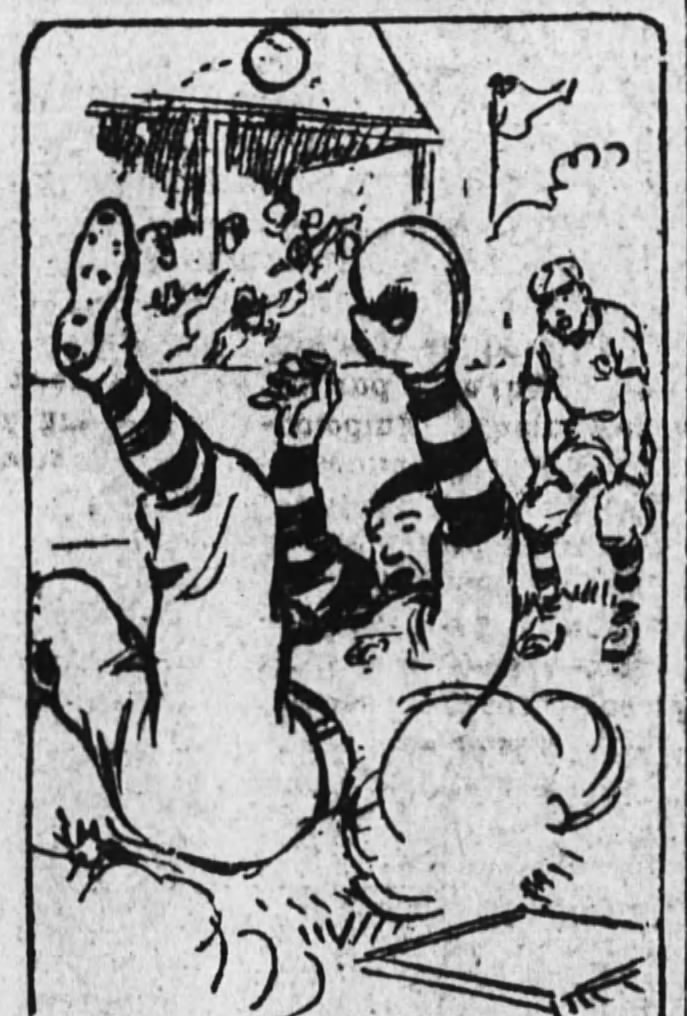
A cartoon which appeared with the 1914 retelling of the Gross story

A cartoon which appeared with the 1914 retelling of the Gross story

Fullerton continued to retell the story, with minor alterations, after he left The Tribune to join The Chicago Record-Herald, then The Chicago Examiner and The Tribune repeated the story several times over the years, with no byline, as well.

Gross was an important man in Chicago during the years Fullerton’s story circulated.  He owned several properties in the city, including two hotels, and his nephew, Fred A. Busse, was mayor of Chicago from 1907-1911.

Mayor Fred Busse

Mayor Fred Busse

Gross was known to help former baseball players in need; The Examiner called him “a refuge in time of trouble for all the old timers.”  When it was reported in 1907 that Joe Quest, a former National League, and American Association infielder, was “near death” from  tuberculosis in Georgia, he was living on, and managing a plantation owned by Gross—Quest survived and lived until 1924.

Joe Quest

Joe Quest

Gross told a story to Fullerton, then at The Examiner, about his attempt to help another player, William Henry “Bollicky Bill” Taylor during the 1890s.

“Taylor made an entre into Chicago without cash or credit and immediately swarmed upon Em and renewed old friendships. That was in November and along about midnight Em made the discovery that his friend had no money nor any place to sleep.  So he wrote a note to the manager of his hotels saying, ‘Take care of my friend Mr. Taylor, and give him what he needs.’  Em didn’t see ‘Bollicky’ again, but early in March his manager called him in the phone and inquired; ‘Say, how long do you want me to take care of your friend?’

“’What friend ‘inquired Em, who had forgotten all about it.

“Why the fellow you sent here with a note.’

“’Bollicky’ had wintered there and kept out of the path of his host, and when Em got through laughing, he ‘phoned back:

“Keep him as long as he has the nerve to stay.”

Gross never confirmed whether or not he made the catch Fullerton claimed he did.  He died in Eagle River, Wisconsin in 1921.