Tag Archives: Hughie Jennings

“Victim of Hoodoo”

4 Feb

In a game filled with stories of superstition, jinxes, “hoodoo,” and general irrationality, the Detroit Tigers seem to be the subject of an out-sized number of such stories during major league baseball’s first four decades.

Tigers’ pitcher George Mullin, whose story I told in October, was one of the most superstitious players in the history of the game, and he was not alone in Detroit.

This story begins in 1904, but took off in 1911, first in the Detroit newspapers and then across the country.  The Headline in The Duluth News-Times said:

“Moriarity (sic) is Victim of Hoodoo that follows Detroit Captains.”

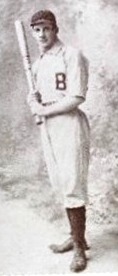
“Moriarity” was George Moriarty, who had been named captain of the Tigers for 1911.  The story said Moriarty was the victim of a “Jinx” that dated back to 1904 when Bobby “Link” Lowe was acquired by the Tigers and named captain:

“His sterling playing qualities and the friendship that all the players had for him, together with his knowledge of baseball brought him the appointment of captain.  Bob got into a slump and Bob did not get out of it.”

Bobby "Link" Lowe

Bobby “Link” Lowe

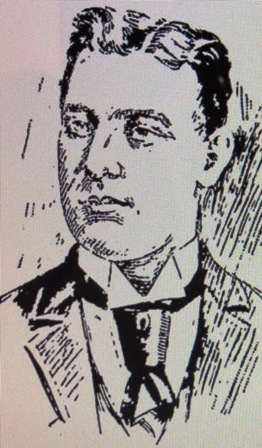
In 1905, the Tigers named Bill Coughlin captain, the story continued:

“Coughlin, whom everybody liked and who could play ball as well as the majority of them and think faster than most of them… (His) playing started down grade.  Bill bit his fingernails tore out his black wavy hair in bunches, lost sleep and worried several pounds off…Bill never got back to form.”

Bill Coughlin
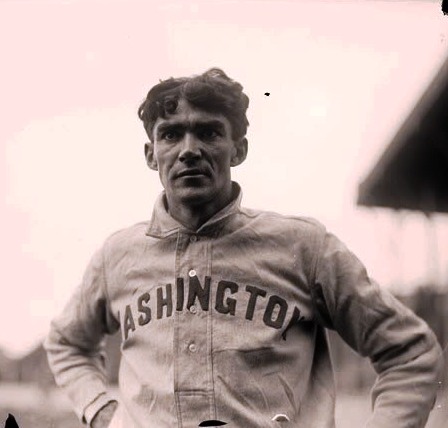
Bill Coughlin

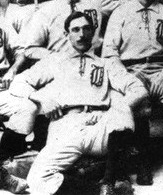
After Coughlin was replaced at third base by Moriarty in 1909, Detroit manager Hughie Jennings named William Herman “Germany” Schaefer captain for the 1909 season.  The story said of him:

“Herman with his ever penetrating optimism, humor and baseball wisdom …appeared to be the right man in the right place as captain…but Herman’s playing ability decreased to such an extent that Detroit gladly grasped at the chance to trade Schaefer.”

Germany Schaefer

Germany Schaefer

Hughie Jennings was enough of a believer in the jinx, even before it became grist for the newspapers, that after trading Schaefer in August of 1909, he chose not to name a captain for the remainder of the season, or for 1910.  Jennings decided to again name a captain in 1911:

“On the Southern training trip Jennings came to realize the necessity of a field leader… (Moriarty) was cool-headed and had the qualities of a leader…the choice seemed like a good one…But soon after the opening of the season it became apparent that Moriarty caught the hoodoo…The duties of the position have weighted in Moriarty until his playing ability has fallen away below par.”

After the 1911 season, Jennings took the situation seriously enough to again consider eliminating the position of captain.  The Detroit Free Press said, “In all probability the Tigers will have to struggle along without a captain next season,” citing Moriarty’s “Frightfully bad year,” after being named captain.
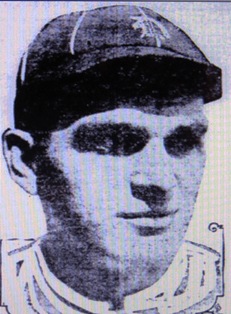
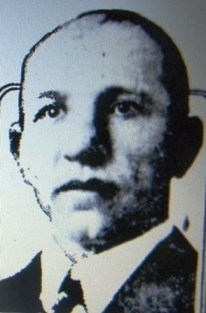
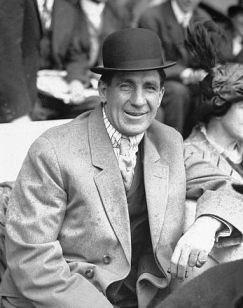
George Moriarty

George Moriarty

In the end, Moriarty was again captain of the Tigers in 1912 and served in that capacity through 1915.

Like most “jinxes,” there really was no jinx, none of the players performed significantly worse than their career averages except for Lowe—but he was 38-years-old when he was acquired by Detroit in 1904 and had missed most of 1903 with a badly injured knee.

Coughlin had shown great promise with the Washington Senators, hitting .275 and .301 in 1901 and 1902, but by the time he was named Tiger captain in 1905 he had back-to-back seasons of .245 and .255, right around his career .252 average.

Schaefer was a .257 career hitter, and his numbers during his half-season as captain were similar to his career numbers.

Moriarty hit .243 during his season with the captain “hoodoo;” his career average was .251, and most of his 1911 numbers were similar to his performance throughout his career.

More on Moriarty tomorrow.
“Hanlon Springs a Surprise on the Baseball Public”

14 Jan

Albert Joseph “Smiling Al” Maul’s best days seemed well behind him by 1898.  The 32-year-old Maul had posted a 16-12 record for the Pittsburgh Burghers in the Players League in 1890, but after returning to the National League the following season he had gone 39-44 through 1897.

Baltimore Orioles manager Ned Hanlon signed Maul after he was released by the Washington Senators in 1897.  The results were not good; in two games Maul gave up 9 hits and walked 8, posting a 7.04 ERA.  Baltimore released him at the end of the season and there were no takers for Maul at the beginning of 1898.

Ned Hanlon

Ned Hanlon

By June of 1898 The Baltimore Morning Herald said:

“For some time (Hanlon) has been hinting to his friends that he had something up his sleeve in the way of twirling talent that would surprise the natives, but when he let fall Al Maul’s name he was met with a chorus of merry ha-has.”

But by June Hanlon’s “surprise” was no longer met with laughter.

On June 5, The Sunday Herald headline said:

“Hanlon springs a surprise on the baseball world.”

Maul had shut out the Saint Louis Browns on three hits in his first start for Baltimore.

Al Maul

Al Maul

The Herald cautioned that “it’s too early to say that Maul is all right,” but all season he successfully filled the gap in Baltimore’s rotation caused by Joe Corbett’s holdout.

The New York World said Maul was:

“The most remarkable case on record of a restored glass arm.”

Maul’s comeback season became a sensation.  John Clarkson, who had not appeared in a game since 1894, told The Bay City (MI) Tribune he was serious about making his own comeback:

“I might be a second Al Maul, who can tell?”

Clarkson’s comeback never materialized, but Maul’s success continued all summer.

The Sporting Life credited Hanlon for his pitcher’s success:

“Al Maul’s experience this season is only another confirmation of the claim that Ned Hanlon can take any old thing and get good results from, it for a year or so.”

Maul finished the season with a 20-7 record and a 2.10 ERA, and Hanlon had high hopes for his pitcher the next season.  Maul, along with “Wee Willie” Keeler, Hughie Jennings and Joe Kelley moved to the Brooklyn Superbas as part of the stock swap between the Baltimore and Brooklyn franchises that led to Hanlon’s move to Brooklyn.

But the pitcher who won 20 games two years after his career was “over” was out of surprises.  After four games with Brooklyn in 1898, Hanlon released Maul.  Brief stints with the Philadelphia Phillies and New York Giants failed to rekindle the magic and Maul’s career came to an end after his release by the Giants in September of 1901.

Maul went on to coach baseball at Lehigh University and scouted for several years for the Philadelphia Athletics.  He died in 1958 at age 92.

Zimmer and The Players Protective Association

21 Dec

Charles “Chief” Zimmer made one more important contribution to the game as founding member and first president of the Baseball Players Protective Association.

When the organization was formed in June of 1900 Zimmer said:

“The players realize that the sport needs a stirring up, and will cooperate with the club owners in the good work.”

In retrospect it was an admirable, but naive statement.

Nearly 100 players attended the first meeting and elected Zimmer.  Hughie Jennings was elected secretary and William Clarke treasurer.  The attorney for the Association was former Major Leaguer Harry TaylorClark Griffith was later name vice president.

In December the association presented their five point plan to the owners:

  1. “Club owners (would) mot have the right to ‘reserve’ players at a salary less than that provided for the ensuing year, nor for more than three years.”

  2. “Not to buy, sell, assign, trade lend, accept, select or claim service of any player for any period in any way without his written consent.”

  3. “Club owners to pay physicians’ fees for injuries received in actual play.”

  4. “No player to be suspended without pay more than three times a season or two weeks at a time.”

  5. “The appointment of a committee of arbitration, one member to be chosen by the owners, one by the players, and a third (agreed upon to mediate disputes)”

The demands were met with silence.  The Baltimore Morning Herald said:

“Club owners will hardy accede to the requests—no communication yet established with the new organization.”

Part of the reason the association was largely unsuccessful was because early on it was made known they would do nothing to leverage their demands.  Harry Taylor told The New York Times:

“Well, this is a conservative organization.  There is nothing revolutionary about it, and we don’t propose to keep men from playing ball.”

While some short-term gains were made as a result of the creation of the American League as a Major League in 1901, allowing players to jump contracts for terms from AL clubs, the association was all but broken after the American and National League’s made peace in 1903.

Charles "Chief" Zimmer

Charles “Chief” Zimmer

It would be more than 50 years before players again seriously considered taking collective action, but Zimmer’s organization provided one of the early, small steps to challenging the reserve clause.

Brother Joe Comes Back

30 Nov

Twenty-three-year-old Joe Corbett, brother of heavyweight champ “Gentleman Jim” Corbett announced his retirement before the 1899 season.  Corbett had written a column for The San Francisco Call during his 1898 hold out, and announced he was quitting that job too:

“I have (also) quit writing baseball news now, and take little or no interest in the game. I wouldn’t cross the street to see one.”

Corbett ran the livery stable his father had started in San Francisco, helped operate the family bar on Ellis Street, and within weeks had apparently regained his interest in the game and was back writing for The Call.  His responsibilities in the family businesses increased after his parent’s deaths in August of 1898 (Patrick Corbett shot and killed his wife then committed suicide).

Joe Corbett

There remained significant interest in Corbett’s services; unfortunately for Joe he remained under the control of Ned Hanlon.  Hanlon had moved to the Brooklyn Superbas in 1899 as part of a stock swap between the Brooklyn and Baltimore franchises—he took several players with him, including “Wee Willie” Keeler, Hughie Jennings and Joe Kelley—he also kept Corbett’s rights.

Ned Hanlon

Hanlon offered Corbett $2400 to play for Brooklyn and turned down offers to trade his rights.

According to California newspapers Corbett occasionally pitched in semi-pro games in 1899, but in 1900 The Sporting Life reported that Corbett was “dangerously ill,” and would probably never pitch again as a result of sciatic rheumatism.

Less than a year later The Sporting Life said Corbett was pitching for a team in Oakland, and the next year he appeared in five games for the Minneapolis Millers in the American Association—the retirement appeared to be over.

A successful January 1903 appearance on the mound in an exhibition game featuring barnstorming Major Leaguers renewed interest in Corbett again.  The Los Angeles Angels of The Pacific Coast League offered Joe a contract he couldn’t refuse, one that allowed him to tend to the family business interests in San Francisco during the season.

Newspaper reports said Corbett earned $5000 for the 1903 season, Angels manager Jim Morley said he wouldn’t say how much Joe earned but said that he had:

“Figured it out that Corbett will get 4.99 a curve.”

After going 23-16 for the Angels, the Major leagues again came calling.   Early reports had Corbett signing with the Pittsburgh Pirates, who offered $5000, but Joe eventually signed with the Saint Louis Cardinals.  While the Cardinals assured Joe that Ned Hanlon had relinquished Brooklyn’s claim, the Corbett family was not ready to end the feud with Hanlon.

Gentleman Jim, when asked if Joe would ever consider playing for his former manager again, told reporters:

“Hanlon couldn’t get Joe to twirl for him if he offers him a million dollars a year.”

Things didn’t go well in Saint Louis.  Joe Corbett was 5-8 when the Cardinals released him August 1.

Jim was, as always, Joe’s biggest defender:

“My brother Joe was getting $7000 for the season from the St. Louis club, but his heart was not in his work, simply because he was separated from his wife and little ones who were out in California.  Thinking of his family all the time impaired his effectiveness as a pitcher.”

Gentleman Jim

Joe returned to San Francisco where he added a hat store to growing stable of businesses; his rights returned to Hanlon and Brooklyn.

The final chapter of the Corbett story on Monday.

“The Man who Ate Himself out of the American League”

20 Nov

Frank Frederick Schneiberg was born in Milwaukee in 1882 (Baseball Reference lists his year of birth as 1880, but all available documents say 1882).

He began playing baseball for amateur teams in the Milwaukee city league, and after playing for the Pabst Brewery team in 1903 signed with the Springfield Hustlers in the Three-I League.  No records survive, but according to The Milwaukee Journal Schneiberg “won 19 out of 21 starts.”  He played with the Freeport Pretzels in the Wisconsin State League in 1905 and according to the Journal “won 12 straight.”

Frank Schneiberg

He won 22 games the following season with the La Crosse Pinks, which earned him a shot with the Detroit Tigers.

It didn’t go well.

Schneiberg was released to the Milwaukee Brewers before the beginning of the season.

The Associated Press said:

“He has the earmarks of a great pitcher…speed, curves, control and a pretty good collection of baseball brains…but Schneiberg was lazy…He wasn’t eager to pitch.”

The story quoted Tigers manager Hugh Jennings:

“He knows how (to pitch) but he won’t exert himself, I don’t want anybody who will not hustle.”

The Toledo News-Bee blamed his release on something else:

“He is known all over the country as the man who ate himself out of the American League.”

It is unknown whether either or both versions of his time with the Tigers is accurate, in either case, Detroit did try to claim that Schneiberg was still their property later that season when he was pitching well for the Brewers.  The claim was denied and he remained in Milwaukee.

Schneiberg pitched for the Brewers for three seasons compiling a 40-48 record.

While a fan favorite in Milwaukee, Schneiberg appears not to have been popular in at least one other American Association city.  The Toledo News-Bee accused him of being a head hunter in 1908:

“Schneiberg has the reputation of threatening to ‘bean’ batters.”

The following season The News-Bee claimed the Brewers were trying to trade the pitcher and said the team was:

“(V)ery anxious to trade the German, who does not work with any spirit, but the player is not highly regarded around the circuit.”

Regardless of the opinion in Toledo, The Brooklyn Superbas thought highly enough of Schneiberg to draft him from the Brewers at the end of the 1909 season.

He appeared in his only Major League game. On June 8, 1910, with Brooklyn trailing the Cincinnati Reds 4-0, Schneiberg relieved Nap Rucker in the top of seventh inning.  He walked four, gave up five hits and allowed 7 runs (Baseball Reference shows Schneiberg giving up eight runs, with seven earned—the box score from the game shows 7 total).

Schneiberg was lifted for a pinch-hitter in the bottom of the seventh.  Within days, he was traded to the Des Moines Boosters in the Western League.

He retired after the 1910 season, but in February of 1913 signed with the Memphis Chickasaws of the Southern Association.  He appeared in two games and was released, and in June signed with the Springfield Watchmakers in the Three-I League.  It’s unclear whether he appeared in any games with Springfield.

Frank Schneiberg 1932

Schneiberg retired to Milwaukee after the 1913 season, he became an asbestos worker and an official in the Asbestos Workers Union.  He passed away in Milwaukee in 1948.

Stallings Stealing Signs

17 Oct

George Stallings had turned the New York Highlanders around.

Hired by owner Frank Farrell after New York’s disastrous 51-103 season in 1908, Stallings guided the Highlanders to 74-77 record in 1909.

George Stallings

American League President Ban Johnson said he knew why Stallings’ team had improved.

During a series with the Highlanders in the summer of 1909 Washington Senators Manager Joe Cantillon thought he noticed something unusual past the center field wall in Hilltop Park.  He passed his suspicions on to Detroit Tigers Manager Hughie Jennings.

Tiger Manager Hughie Jennings

The Highlanders hit Detroit pitcher Ed Summers hard during the first game of Detroit’s next series in New York.  Jennings sent pitcher Bill Donovan out to center field to investigate, but according to The Sporting Life:

“Bill returned without having shown any ability as a Sherlock Holmes.”

Jennings then assigned trainer Harry Tuthill to the job.  Tuthill noticed that the letter “H” in a hat advertisement on the center field fence was moving, scaled the fence and made a discovery.

Initially the Tigers did nothing, Jennings had more on his mind; Detroit was headed to the World’s Series and despite New York’s improvement they were a fifth place team.

But rumors spread and the story was picked up by The Sporting Life, getting the attention of  the American League president.

Johnson sent a telegram to Tuthill threatening to bar him from the league if he did not provide the his office with a full report of what he knew.  Tuthill said that after he noticed the letter in the sign moving he went to the center field wall and upon climbing to the other side discovered a small area behind the sign where a man sat with a pair of field glasses.  According to Tuthill “The man ran out as I came in, I think I know who it is but can’t be positive.”

In other reports Tuthill said he was sure who the man was but would not reveal his identity—it was later alleged to be former Major League pitcher Gene McCann.

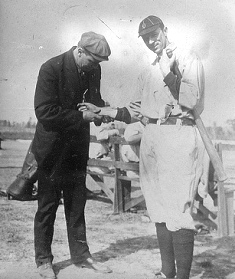
Trainer (and detective)  Harry Tuthill with Tigers first baseman Del Gainer

Jennings was convinced the Highlanders were stealing signs all year as did The Sporting Life:

“It has been a noticeable fact all season that the Highlanders always hit like fury at home and were punk batters on the road.”

The Highlanders scored 338 runs in 76 homes games; 251 in 75 road games.

The Sporting Life also speculated that Stallings, who had a poor relationship with the American League president, might be expelled from the league as a result of the allegations:

“President Johnson has conclusive evidence…and it is all but natural to suppose that the man in charge of the team which benefited by the system employed knew of its existence, and it is on this theory that Stallings’ resignation will be asked.”

Despite the speculation there was no rule at the time which prohibited stealing signs in the manner the Highlanders were accused

At the winter meetings that December the American League Board of Directors exonerated Stallings, but in their ruling vowed that any team official found stealing signs in the future would be “Barred from baseball for all time.”

Stallings was at the helm of the Highlanders for most of the 1910 season, and became embroiled in another sign stealing controversy in late July when “Big Ed” Walsh and several members of the Chicago White Sox accused the Highlanders of stealing signals in the same manner.

The Chicago Tribune said:

“There is not a player on the Sox club who isn’t confident the catcher’s signs are being tipped off.”

Stallings again denied the charges and said the White Sox pitching staff was tipping their pitches:

“What are you going to do when practically every Chicago pitcher insists on giving his own signals from the box and the signals get familiar, they are repeated so often?”

Stallings was again cleared of wrongdoing, but in spite of a guiding the Highlanders to a 78-59 record through September 19, he was replaced as manager after losing a struggle for control of the team with first baseman Hal Chase, who was named as his replacement.

Stallings went on to manage the World’s Series winning Boston Braves in 1914.