Tag Archives: Jim O’Rourke

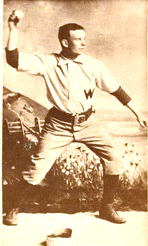
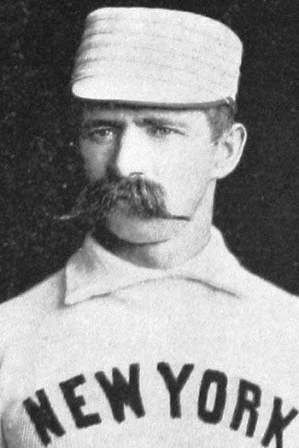
Miah Murray

7 May

Jeremiah “Miah” Murray appeared in only 34 major league games, with four teams between 1884 and 1891.  In 31 games a catcher, he made 29 errors and was charged with 28 passed balls.

During that short career, he also became the subject of two stories which highlighted his shortcomings behind the plate.  Both stories appeared after the fact, so are subject to the usual caveats of 19th-century baseball stories.

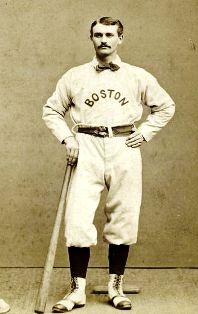
Jeremiah "Miah" Murray

Jeremiah “Miah” Murray

In 1894 The New York Sun wrote about the most embarrassing episode Murray’s career—said to have taken place during his rookie season, 1884:

“(Murray) tells about a game he once caught in at Buffalo when he was a member of the Providence team.  There were three men on bases and he threw to (Jerry) Denny to catch a man napping, but the ball never got there.  It hit Jim O’Rourke, who was the batsman, on the side of the head and bounded into the grandstand, three men scoring and winning the game for Buffalo.  Jim staggered and cried out with pain, but the crowd simply cried with glee, O’Rourke’s hurt being entirely lost sight of in the enthusiasm.”

Murray’s manager during that 1884 season was Frank Bancroft who led Providence to the National League championship and a three games to zero victory over the New York Metropolitans of the American Association earning for the first time the title “World Champions” from The Sporting Life.

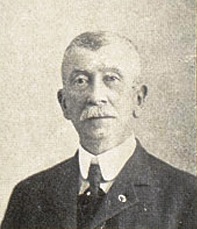
Frank Bancroft

Frank Bancroft

Bancroft compiled a 375-333 record over parts of nine seasons as a big league manager, before becoming an executive with the Cincinnati Reds.

It was while serving as the Reds’ Business Manager that Bancroft related another story about Murray’s brief time with Bancroft’s championship team.  The story first appeared in The New York  American in 1915:

“’Take it from me,’ said Frank Bancroft, while some of the fans were discussing famous bonehead plays, ‘the old timers pulled some bones that had all you youngsters blocked off the map.  Best I recollect, right now, was sprung by Miah Murray when he was catching for me…With a runner on first Miah steamed back to the stand a made a magnificent catch of a foul fly.  The crowd broke into roars of applause; Murray, leaning against the stand, took off his cap and bowed right and left—and the runner, sizing up the situation, lit out from first, kept right on going, and came all the way around while Miah kept bowing and the rest of the team were screeching and raving, all in vain.”

Murray later became a National League and college umpire; he was also a prominent boxing promoter and matchmaker in Boston where he operated the Lincoln Athletic Club of Chelsea, and later the Armory Athletic Club.  He died in Boston in 1922 at age 57.

Bancroft retired as business manager of the Reds in January of 1921; he died two months later at age 74.

Jim Lillie

28 May

The Sporting Life described Jim Lillie as “one of the most sensational of right fielders,” and “the rival of Mike (King) Kelly in the position.”  The New Haven Register said he earned his nickname “grasshopper”  as a result of his “agility in the outfield.”

His career was brief, and his short post-baseball life was tragic.

The 21-year-old Connecticut native was said to have been discovered by “Orator Jim” O’Rourke “on the lots and commons of New Haven.”  He played his first professional game on May 17, 1883 with the Buffalo Bisons in the National League.  Lillie appeared in 50 games, hitting .234. In November his hometown newspaper, The New Haven Register, got his position wrong (saying he was used primarily as a catcher—he caught in two games), but said “his record was highly credible,” and that he had already signed for the 1884 season.

Jim Lillie

Jim Lillie

Lillie spent two more seasons in Buffalo; leading the team in games played both seasons.  In 1884 he led National League outfielders with 41 assists; his 40 errors also led the league.  He committed 33 errors the following season; he hit .223 and .249 for the Bisons.  When the team disbanded after the 1885 season, his contract was assigned by the National League to the Kansas City Cowboys, who had been admitted to the league on a trial basis.

He had, for him, a typical season in the field: 30 errors (third in league), 30 assists (second) and 199 putouts (third).  He also had one of the all-time worst performances at the plate; hitting .175 in 426 at bats, with only nine extra base hits (all doubles), he finished the season with 82 total bases—for identical .197 on base and slugging percentages.

The 30-91 Cowboys were dissolved in February of 1887, with the players being sold to the league.

Lillie remained in Kansas City, and had the best season of his career with the Cowboys, now in the Western League.  He also met an 18-year-old woman named Nellie O’Shea, the daughter of a wealthy Kansas City contractor and said The Kansas City Star, “a young lady highly spoken of.”

Lillie, playing primarily in left field, hit .369; a hitter’s haven, the Western League leader, Jimmy Macullar hit .464, and Lillie’s average was good for 34th best in the league.

On December 29, 1887 Lillie married Nellie O’Shea.

He joined the Fort Worth Panthers in the Texas League around June 1 of 1888, but left the team in less than two weeks.  The Dallas Morning News said he was released, The New Haven Register said he left Texas to be with his wife and go to work for his father-in-law, “(Lillie) promised her to settle down,” and planned on returning to baseball for the 1889 season.

He never had the chance to return to the game.  On September 10, 1888, the Lillie’s child was stillborn.  Two days later, a fire broke out in their home.  The Associated Press said:

“(Nellie) was making preparations for supper when the accident occurred…She had moved the gasoline stove too near the cooking stove and in filling the reservoir with gasoline some of it became ignited.  The flames at once enveloped her…(Lillie) entered at that moment or (she) would have been burned to death…Lillie did not notice his own condition until after he had summoned  a physician.”

Mrs. Lillie lingered for nearly three weeks before dying of her injuries on October 4.  Lillie, who had attempted to remove his wife’s burning clothes, had his hands burned “down to the bone,” and initial reports said he’d have to have some of his fingers amputated.  There’s no record of how well his hands recovered, but he never played baseball again.

He stayed in Kansas City and according to The Kansas City Star “managed (Nellie’s) estate.”  Within two years he would contract typhoid fever, and he died November 9, 1890.  The Star said his last words were to a friend at his bedside:

“I am afraid, Charlie, it is three strikes and out.”

1876 Salaries

14 May

In July of 1876, The Brooklyn Argus published the salaries of the two highest paid teams in the newly formed National League; many of these have never appeared in any of the collections of early baseball salaries.

According to the article, the highest paid player was Chicago White Stockings pitcher Albert Goodwill Spalding who “as pitcher and manager, receives $3,000 for the year, with $1,000 bonus for producing the secession from the Hub (Boston) to Chicago.”  (The 1950 book “100 Years of Baseball,” by Lee Allen said Spalding earned $3,500 and a $500 bonus for the season).

A.G. Spalding, highest paid in National League

A.G. Spalding, highest paid in National League

The three players Spalding brought with him from the Boston Red Stockings in the National Association, Catcher James “Deacon” White, first baseman Cal McVey and second baseman Ross Barnes were all paid $2,500.  The two players signed away from the Philadelphia Athletics, third baseman Adrian “Cap” Anson and outfielder Bob Addy received $2,200 and $1,500 respectively.

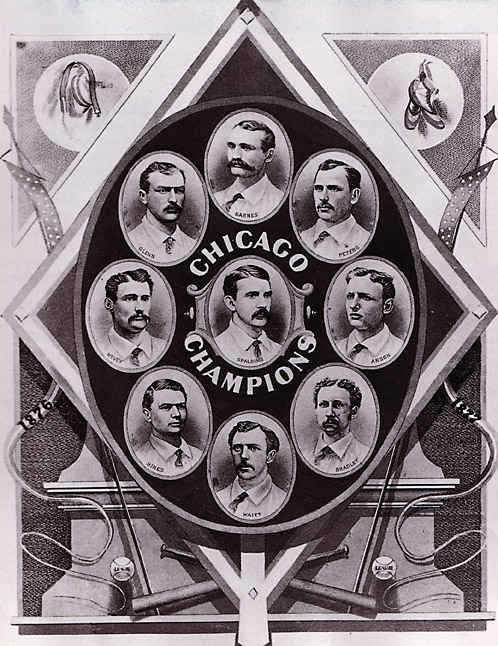
Outfielder Paul Hines earned 1.800, utility player Fred Andrus was paid 1,000, and the remaining members of the first National League Champions, shortstop John Peters and outfielders John Glenn and Oscar Bielaski were made $1500 each.

Chicago White Stockings, 1876 National League Champions--and highest salaried team.

Chicago White Stockings, 1876 National League Champions–and highest salaried team.

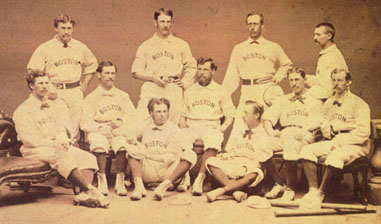
Harry Wright’s Boston Red Stockings filled the vacancies of White and Barnes with 18-year-old Lew Brown and 21-year-old John Morrill who The Argus said received “between 800 to 1000 dollars each.”

Manager Wright, who only appeared in one game, and his brother George were the highest paid members of the Boston club at $2,500 each.  Andy Leonard, who played second and outfield was paid $2,000.  Two other notable players on the Red Stockings, Hall of Famer “Orator Jim” O’Rourke and Tim Murnane received “between fifteen hundred and eighteen hundred dollars.”

According to The Argus, the White Stockings payroll of $21,500 topped the league, with Boston’s total of 18,000.

The Ross Barnes Case

2 May

Charles Roscoe “Ross” Barnes was one of the greatest players of his era, and largely forgotten today.

Barnes was a member Harry Wright’s Boston Red Stocking teams in the National Association from 1871-1875 and won the National League’s first batting title hitting .429 in 1876 as a member the Chicago White Stockings.

Ross Barnes

Ross Barnes

Teammates and contemporaries had no doubt about how good he was.

“Orator Jim” O’Rourke called Barnes “the greatest second baseman the game ever saw.”  In 1896, A.G. Spalding “declared Ross Barnes to have been the greatest ballplayer in America,” and Tim Murnane said of Barnes:

“His left-handed stops of hard-hit balls to right field were the prettiest stops ever made on the Boston grounds. As a base-runner no man of the present day is his equal, and as a batsman he must be reckoned very high.”

1871 Red Stockings. Spalding, standing second from left, Barnes, standing far right, O'Rourke, seated far left.

1871 Red Stockings. Spalding, standing second from left, Barnes, standing far right, O’Rourke, seated far left.

Some of Barnes’ success was due to the rule at the time regarding  balls that rolled foul in the infield, The Sporting Life said:

“It was Barnes who was the first to master the fair-foul hit. He was able to drive the ball so that it would land fair and then swing in foul just outside of the reach of the third baseman.”

Barnes became ill in 1877, although he started the season with the White Stockings, The Chicago Inter Ocean said in early May “he is now, and has been all spring, very sick with few signs of improvement.”  After a slow start, Barnes was out for more than three months before returning in late August.

The Chicago Tribune said:

“Barnes made his reappearance with the Whites, and played his old position at second base,  but he showed evidence of physical weakness and lack of practice,”

Barnes appeared in only 22 games, hitting .272.

The second baseman,  who was earning $2500 for the season, and as was often the case in 19th Century baseball,  was not paid for the time he missed.  Early in 1878 Barnes filed a lawsuit against the White Stockings to collect more than $1,000 the team did not pay him while he was ill.

Cook County Judge Mason B. Loomis heard the case, which The Inter Ocean said:

“(I)s a new one in the experience of ball clubs, and the result is looked forward to with some interest  in sporting circles.”

The result was not favorable for ballplayers.  Judge Loomis ruled against Barnes, The Tribune said:

“This makes clear the point that players are not legally entitled to wages when laid off by sickness.”

While some owners did pay players during time missed due to illness and injury, teams had the right, after 15 days, to suspend any player without pay; and the legal precedent established in Barnes’ case remained until 1916 when the “injury clause” was rescinded.

Barnes attempted to return to the White Stockings in 1878, but The Tribune said he “has never fully recovered,” from the illness, and was released.

He played with and managed the London Tecumsehs in the International Association in 1878, then made two comeback attempts with the Cincinnati Reds in 1879, and the Boston Red Stockings in 1881, his career was over at age 31.

Barnes retired to Chicago and was working for Peoples Gas, Light and Coke Co. when he died in 1915 at age 65.

“Phil Powers Seems to be Dead to the World”

15 Apr

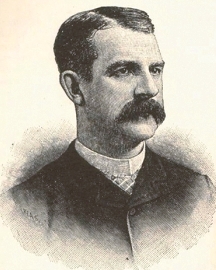
Phillip J. Powers again left the National League umpire staff at the close of the 1888 season.  In 1889 he returned to London, Ontario to manage the Tecumseh’s, quit in May to become an umpire in the International Association, and then resigned from that job to return to the National League as an umpire in July.
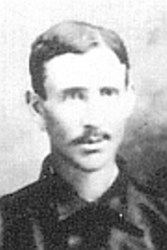
Phil Powers

Phil Powers

The Detroit Free Press said the former and current National League arbiter “would never be a success as an umpire.”

Within weeks he was again at the center of controversy.

After the Boston Beaneaters beat the Philadelphia Quakers on July 25, The Philadelphia Inquirer placed the blame for the home team’s loss squarely on the shoulders of one man:

“Anyone who saw Phil Powers umpire yesterday would set him down as incompetent or dishonest.  While he is neither of these he gave a combination of glaring decisions which robbed the Philadelphia club of the game…It was a hard game to lose and it was no wonder that nearly every one of the 6,7000 spectators joined in hooting at Powers.”

The Inquirer would continue to criticize Powers for the remainder of his career; a few sample quotes.

From 1890:

“Umpire Phil Powers seems to be dead to the world.”

From 1891:

“The rank work of umpire Powers.”

From 1892:

“Umpire Phil Powers has been unanimously elected a member of the Society for the Promotion of Riots.”

The Sporting Life joined the chorus and derided as a “decided detriment to the game,” his work in the Giants-White Stockings series in early August:

“Mr. Powers is not a competent umpire…He does not know the rules, and judging from his decisions on the bases his eyesight is certainly impaired.”

 The Chicago Daily News quoted “Cap” Anson saying Powers “ didn’t know his business.”

Powers did have one defender.  “Orator” Jim O’Rourke, of the New York Giants, wrote a long letter that was reprinted in The Sporting Life, and other papers, making the case for the “High opinion in which Mr. Powers is held by the majority of professionals”, and using the opportunity to heap scorn on Anson:

“No man ever filled the position to better advantage and with more honor and credit to himself.   Mr. Powers is conscientious, faithful and absolutely fearless in voicing his convictions; neither can there be any doubt of his intentions to discharge impartially the irksome duties which the office entail upon him.

“Anson’s hate of such a man is only limited by the capacity of his nature for hate. Now why is this so? Because this cross-grain brow-beater, with the swaggering air of a Mexican bandit, who is so susceptible to becoming red-headed In the presence of umpires and spectators, is forced by this honest referee to have the result of a game settled by the contesting clubs upon its merits and not by his disgusting methods, which have made him the laughing-stock of all players, not even excepting his own.”
Jim O'Rourke--Defender of Powers

Jim O’Rourke–Defender of Powers

Despite O’Rourke’s defense, the criticisms of Powers continued, but he managed to stay on the National League staff in 1890 and ’91.

The Sporting Life updated readers about the umpire through the 1891 season:

“(Powers) has been catching it along the Western line from spectators, players and reporters.”

“(The Pirates) ready to meet Anson’s team to the call of Umpire Phil Powers, who has never pleased Pittsburgh’s audiences”

“Western critics are unanimously of the opinion that Phil Powers argues too much with the players.”

“(Cleveland papers) roasted Phil Powers to their hearts’ content.”

In August of 1891 Powers was released as an umpire by the National League.  He died in New York City in 1914.

A postscript:

A story that has appeared in several books and articles (all citing previous secondary sources) claims Powers pulled a gun on enraged fans in either 1888 or ’89.  While similar stories have been attributed to other umpires (for example umpire Joe Ellick, in 1886, was escorted off the field in Philadelphia by police who drew their weapons to protect him from an angry mob) and there are numerous contemporaneous references to irate fans at games, some with Powers as umpire,  none mention the gun incident.

It is probably a conflation of stories such as Ellick’s and a wire service article that appeared in several newspapers in 1906, shortly after “Buck” Ewing’s death, and described another incident involving Powers and Ewing.

“It was in 1889 that one of the worst rows in the history of baseball was precipitated at Cleveland by “Buck” Ewing.  Phil Powers was umpiring and his weakness whenever a critical decision came up was so apparent that the crowd was on pins and needles as to which way the cat would jump.

“(Jimmy) McAleer hit for two bases.  After he had got (sic) to second, Ewing said something to Powers, and the umpire hesitated a moment and then declared McAleer out for not touching first base…(Powers) was not looking at first when McAleer passed, having turned his head as somebody yelled at him from the opposite side of the field.  This was plainly evident to the crowd, and the moment that the spectators understood why McAleer was out they bolted from the stands and made a rush for the umpire.

“(Powers) took one look at the approaching mob and fled to the players’ clubhouse.  The police cleared the field after a while and Powers was induced to come forth and finish the game, but with police protection on either side of him.”

According to the story (which makes no mention of a gun), Powers later admitted that he had no idea whether McAleer had touched first base and simply took “Ewing’s word for it.”
Jimmy McAleer, called out on Ewing's word

Jimmy McAleer, called out on Ewing’s word

Tom Colcolough

26 Oct

Thomas Bernard “Coke” Colcolough (his name was pronounced “Cokely”) posted a 14-11 record in parts of four seasons in the National League with the Pittsburgh Pirates and News York Giants.

His greatest baseball achievement has been lost to history.

Before the 1893 season, professional baseball eliminated the five and a half by four-foot pitcher’s box and replaced it with the rubber, while moving the distance to the current 60 feet, six inches.  Intended to increase offense the change had the desired effect increasing batting averages throughout baseball.

Not everyone immediately took to the new rule.  The Boston Globe and Cleveland Plain Dealer predicted the rule would be eliminated.  They were wrong, it was there to stay.

One consequence of the new rule was the sharp decline in no-hitters.  In the National League seven no-hitters were thrown between 1890 and 1892.  From the beginning of the 1893 season until Cy Young’s in September of 1897, there was but one:  On August 16, 1893, Bill Hawke of the Baltimore Orioles no-hit the Washington Senators.

Hawke’s was not the first professional no-hitter after the change.  That belonged to Charleston Seagulls pitcher Tom Colcolough on June 23 against the Montgomery Colts in the Southern Association.  The Sporting Life said:

“Colcolough, the rising young pitcher of the Charleston Club, has the honor of being the first pitcher under the new rules to dispose of an opposing team without a safe hit in a full game.  He accomplished the feat against the hard-hitting Montgomerys.”

Colcolough was 16-11 for Charleston and earned his first trip to the Major Leagues.   Prone to wildness (166 walks in 319 1/3 Major League innings), Colcolough was returned to the minor Leagues in 1895, pitching for the Wilkes-Barre Coal Barons in the Eastern League from 1895 through 1898.

Tom Colcolough

Colcolough earned one more shot in the National League with the Giants in 1899 posting a 4-5 record.  He was sent to Jim O’Rourke’s Bridgeport Orators in the Connecticut League in July and was released at the end of the season.

Colcolough returned to Charleston, South Carolina and served as a city councilman.  He passed away there in 1919.

Filling in the Blanks—Dooley, 1896 Bridgeport Victors

7 Sep

Baseball Reference lists “Dooley”on the roster of the Bridgeport Victors, managed by Hall of Famer Jim O’Rourke, of the Naugatuck Valley League.

Philip Dooley was a 23 year old third baseman playing his first season of professional baseball.  Born in Bridgeport, he had played semi-pro ball the last several years while working for the Bridgeport Gas Company.  According to the Bridgeport Evening Post and Sporting Life Dooley was “The best amateur third baseman in the state.”

On June 6, 1896 Dooley was on a boat with friends on a local reservoir when, it was reported, the boat capsized “(D)ue to the recklessness of his companions in rocking the boat.”   Accounts varied, with some saying Dooley’s companions were able to swim to shore, other saying they were rescued.  In either case, Dooley was unable to get to shore and drowned.

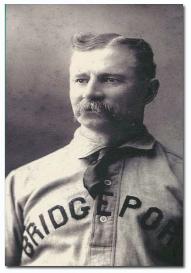
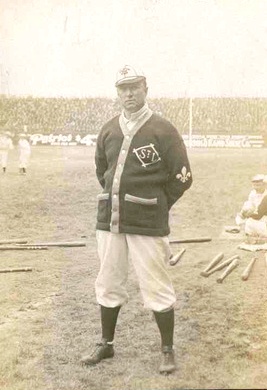
Bridgeport Manager “Orator Jim” O’Rourke