Tag Archives: John McGraw

“I’d be Perfectly Willing to Split with Uncle Sam”

14 Nov

In 1915, The Chicago Eagle reported on the difficulty the government was having “getting at the facts,” in order to collect income taxes from ballplayers after the passage of the 16th Amendment two years earlier.   But the paper predicted that  players in the three major leagues “will pay into the internal revenue department something like $5,000 in income tax.”  Five thousand dollars total.

“But for the fact that 50 per cent of the players in the American, National and Federal leagues are married and thereby permitted to claim an exemption of $4,000 in salary, the sum exacted by the government would be considerably greater.”

The Eagle said there were approximately 300 players in the three leagues who earned more than $3000 per season and were subject to pay income tax, but half of those were exempt because they were married and could claim an exemption up to $4,000.

“(T)here are about 200 who earn more than $4,000.  There are close to 100 who draw more than $5,000 and 50 whose contracts call for amounts ranging between $6,000 and $10,000.  There are less than a dozen who make more than that.  The notable ones are Eddie Collins, Ty Cobb, Tris Speaker, Walter Johnson and a few managers.  (John) McGraw is reputed to make $25,000 in salary.”

Tris Speaker was “the hardest hit” bachelor.  At a salary of $15,000 Speaker was taxed on $12,000 and paid income taxes for the year totaling $120.

Tris Speaker "hardest hit"

Tris Speaker “hardest hit”

Frank “Home Run” Baker of the Philadelphia athletics, who earned between $8,000 and $9,000, and was sitting out the 1915 season in a salary dispute said regarding his teammate Eddie Collins, who earned $15,000:

“Still, if they raise mine up to that of Eddie Collins I’ll be perfectly willing to split with Uncle Sam.”

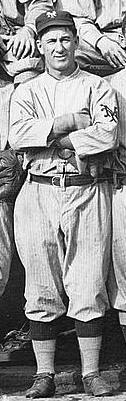
Frank "Home Run" Baker, "willing to split with Uncle Sam"

Frank “Home Run” Baker, “willing to split with Uncle Sam”

Bowerman by TKO

5 Nov

“The Popular Magazine,” a literary magazine that billed itself as a “magazine for men and women who like to read about men,” was published by Street & Smith from 1903 until 1931.

In 1904, the magazine told the story of a fight the previous season involving New York Giants catcher Frank Bowerman.

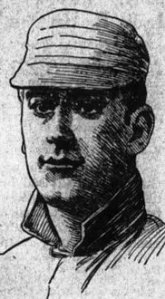
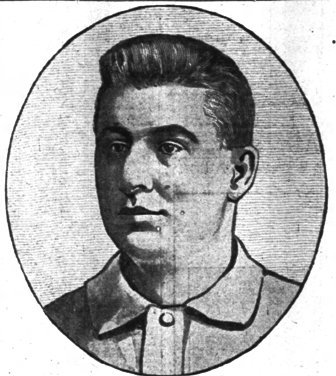
Frank Bowerman

Frank Bowerman

Bowerman was not kept by Fred Clarke when the Pirates and Louisville Colonels merged after the 1899 season; his contract was assigned to the  Giants.  Apparently some bad blood remained into 1903, and according to the magazine, Giants manager John McGraw used Bowerman’s grudge and some comments made by Clarke to try to light a fire under his team:

“When the Giants were in Pittsburgh (on June 1) last season McGraw noticed that there was bad feeling in the team.  The men stood in little knots in the hotel corridor glowering at other players; they rode to the field in a bus without exchanging a word; the preliminary practice, usually so brilliant, was dull and lifeless.  This worried McGraw.”

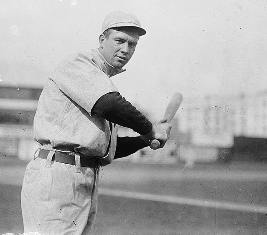
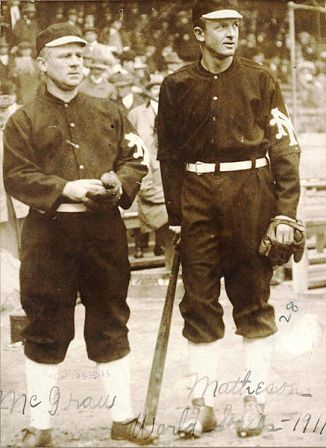
John McGraw

John McGraw

The article said McGraw had figured out the cause a few days later in Chicago; Bowerman had sat in the grandstand for that June 1 game, being unable to play due to an injured thumb.  Jack Warner caught Christy Mathewson that day.  What McGraw discovered was that Clarke said Bowerman was overheard criticizing Warner’s work behind the plate, blaming his teammate for one of the two runs scored off of Mathewson:

“This, of course, was tantamount to Bowerman’s asserting his superiority over Warner, a boast that ballplayers are rarely guilty of.”

McGraw cornered Bowerman who insisted Clarke had told “the meanest lie that ever was told, and I told Jack Warner so, but he don’t believe it.”  McGraw told him to keep quiet about it until the Pirates visited New York on June 26.

“(McGraw) proceeded to reinject that esprit de corps by a measure so drastic that it horrified ball patrons all over the country, who, however, thought it merely an incident of the brutality of ballplayers.  Instead of that, it was a well-planned scheme of a crafty general.”

When the Pirates arrived at the Polo Grounds on the morning of the 26th, McGraw took Bowerman aside:

“’Frank, have you got a good right swing?’  The Michigan Lumberman smiled grimly and clenched a fist knotted and as hard as Hercules’ war club.  ‘Well, it’s up to you, then,’ advised McGraw, “to put life in the team. Don’t lose any time.’ Bowerman understood.

“”’I’d like to speak to you a minute,’ he said to Clarke, as the Pittsburgh captain was passing through the gate on his way to the clubhouse.  They went into the stuffy box office; where there was hardly room to swing a cat.  Three times Bowerman demanded an explanation, offering to bring McGraw and Warner in as witnesses…Clarke went down three times and finally admitted he had enough…The Giants played that day, to use the expression of a rooter, as though they were ‘fighting their weight in wildcats.’  Bowerman and Warner coached each other with pet names, and walked lovingly from the victorious field arm in arm, while Fred Clarke was buying a pound of raw beef.”

Fred Clarke

Fred Clarke

“The Popular Magazine” story added an element that differed from the coverage in New York and Pittsburgh newspapers—while each town pointed fingers at the other (in Pittsburgh Bowerman was an out of control thug, while in New York, Clarke got what he deserved for stirring up trouble) no one else suggested that McGraw engineered the fight to motivate his club against the first place Pirates.

The Giants weren’t able to catch Pittsburgh, finishing in second place six and a half games behind the Pirates.

National League President Harry Pulliam initially announced that there would be no punishment for either player because the fight did not take place on the field, three weeks later, under pressure from Pirates owner Barney Dreyfuss, Pulliam fined Bowerman $100.

“You can try to Refine and Civilize Baseball all you want”

21 Oct

In 1912, Joe Kelley, former player and manager (and future Hall of Famer) told William A. Phelon, sports editor of The Cincinnati Times-Star, a story about the lack of civility in baseball and a game Kelley claimed took place when he was with the Baltimore Orioles in the 1890s:

“You can try to refine and civilize baseball all you want and you can make a parlor game out of it by giving the umpires power of life and death, but you can’t kill off the players’ tongues unless you stun ‘em with an ax.

“Years and years ago, I well remember, two ball clubs tried to pull a polite and courteous ballgame, just to see how things would work.  The old Baltimores and the old Bostons (Beaneaters)—which were real ball clubs both of them—held a conference one afternoon.  There had been a lot of talk and newspaper criticism about rough house work and bad language—and we wanted to show the press and public that we could be good, decent people after all.  We agreed to try out the polished conversation and Golden Rule stuff for this one occasion, and Tim Hurst, who was slated to umpire, agreed to help the good work along.”

——

Joe Kelley

Joe Kelley

“The first half inning went by something lovely.  Even when Tim called a strike on Tom McCarthy that was a foot over his head, there was no outbreak.  Say Tom, very gently, ‘Wasn’t that ball a trifle high, Mr. Umpire?’  And says Tim, all courtesy, ‘I fear I may have erred in judgment, Mr. McCarthy.  Kindly overlook it, if you will.’ And in our half, when Jack Doyle went down to second in a cloud of dust, and Tim said ‘Out,’ Jack jumped up, and red in the face, yelled ‘What the —-‘ and caught himself in time.  ‘Pardon me,’ says Jack, ‘but I honestly thought that Mr. Long failed to touch me.’  And says Herman Long, equally polite, ‘I am under the impression that I did touch Mr. Doyle.

“And in the very next inning the blow-off came.  Three on and two gone with Hughey Jennings batting.  (Heinie) Reitz made a dash for home on what he thought was a passed ball.  The Boston catcher (Charlie Ganzel) recovered it, but as he dove for the putout, Jennings wandered against him and knocked him 10 feet away.  ‘Out fer interference,’ yelped Hurst—and then everybody arrived at the plate all in a bunch.

Tim Hurst

Tim Hurst

Kelley said there was a chaotic scene at home plate.  Reitz was screaming at Hurst while Jennings and Ganzel nearly came to blows:

“’Fer Moses sakes remember,’ I interposed, ‘that this is supposed to be a polite courteous game, just to show how well we can behave—‘ and somebody hit me across the map with a catching glove.

“’I can lick every wan av yez,’ howled Tim Hurst, and I’ll do it, too, if you’re not back in your places inside a half-minute.’

“’You’re a cheap crook,’ said John McGraw.

“’You’re all a bunch of yellow dogs,’ said Herman Long, addressing the whole Baltimore team, sort of impersonally.

“and when the police arrived the rules of etiquette had been fractured so badly I never heard of their being reinstated.  That was, I think, the first, last and only time that a courteous ball game was staged in big league company.”


“Figures of your kind are Pathetic”

13 Aug

John McGraw made news for an “innovation” in 1909.  The Associated Press said:

“McGraw has adopted an innovation in baseball which will appeal to fandom throughout the National league circuit and probably prevent (Fred) Merkle and others from running to the clubhouse before they ‘touch second.’ The innovation is the signing of the once famous player Arlie Latham as coach for the base runners.”

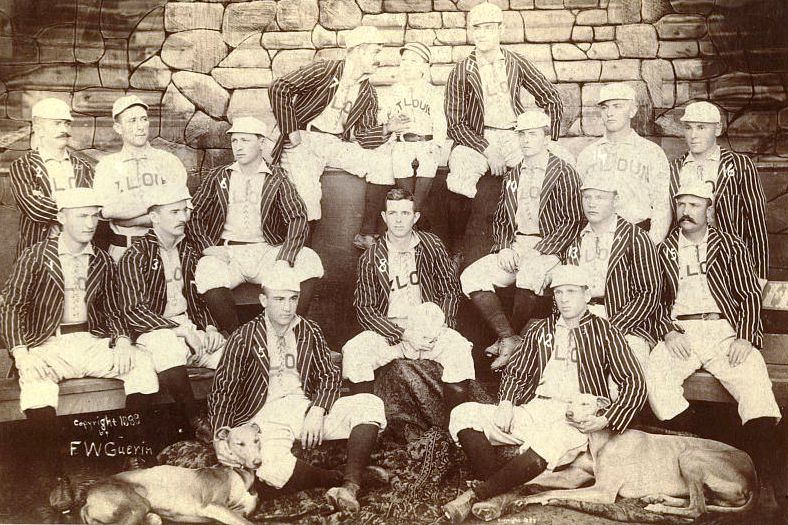
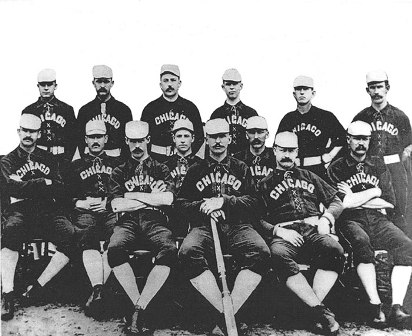
Arlie Latham, top center, facing team mascot, with 1888 American Association champion St. Louis Browns

Arlie Latham, top center, facing team mascot, with 1888 American Association champion St. Louis Browns

Walter Arlington “Arlie” Latham, was “particularly known for his humor” in the 1880s and 90s.  Primarily a third baseman with the St. Louis Browns in the American Association, the Chicago Pirates in the Players League and the Cincinnati Reds in the National League, Latham was nicknamed “The Freshest Man on Earth.”

The Associated Press said Latham:

“(B)rought much enjoyment to spectators of the Cincinnati club’s games and the Reds kept Latham a long while after he deteriorated as a player because of his drawing power as a comedian and humorist.

“Latham will don the uniform of the Giants and take his place in the coacher’s box while the Giants are at bat and between coaching the baserunner and batsmen and ‘getting the goat’ of the opposing pitchers will furnish an interesting sidelight to the New York games.”

Things did not go smoothly when Latham joined the team.  During spring training in Marlin, Texas Latham and McGraw were returning to their rooms at the Arlington Hotel when Giants outfielder James “Cy” Seymour, according to The St. Louis Post Dispatch, “knocked him down, and then bit him on the cheek.”  The article said McGraw and Latham did not know the “reason (Latham) was attacked,” but McGraw announced that Seymour was given his unconditional release.  McGraw said:

“Seymour is done with the New York club, and that goes.  It was the worst thing I ever saw pulled off.  Nothing like that can go on the New York club.”

Despite what he said McGraw did not release Seymour; the outfielder was suspended for the first week of the regular season, and The Dallas Morning News said McGraw made Seymour pay “his own expenses in Texas after the unpleasant episode.”

Arlie Latham, New York Giants coach

Arlie Latham, New York Giants coach

Latham was often criticized for his antics and even more often for the quality of his work as a coach, which became such a running joke that The New York Times said after the Giants had beaten the Cardinals in a September 1910 game:

“Arlie Latham’s team won it with their eyes shut, 11 to 3.  Latham’s coaching was invaluable yesterday.  He advised the players to touch every base and this tip won the game for them.”

The Sporting Life said:

“(Latham) undoubtedly lost a lot of games by bad coaching.  He got so unreliable that in a tight pinch McGraw would shift him from third to first and take the third line himself.”

The Sporting Life also said that Latham served as McGraw’s spy;  a position that would later be filled by another colorful McGraw coach, Dick Kinsella.

Giants outfielder Fred Snodgrass told Lawrence Ritter in “The Glory of their Times,” that Latham “was probably the worst third base coach who ever lived.”

It looked like the end of the line for baseball’s first full-time coach after the 1910 season.  The New York Herald said Latham “will not wear a Giant uniform next season,” and:

“He may amuse old timers, who remember him as a great ball player with (Charlie) Comiskey’s St. Louis Browns, but the new generation of fans seems to regard his efforts with disfavor.”

Despite the criticisms and predictions of his impending firing, Latham was back with Giants in 1911.  After the Giants pennant winning season Latham again joined the Giants for spring training in Texas in 1912, but in March, according to The Associated Press:

“(Latham) was carried as one of the twenty-five men permitted on the payroll.  McGraw did not want to let Latham go, but needed the place on the payroll for a real player.”

While McGraw didn’t want to lose his coach, most of baseball thought the end of Latham’s coaching career was a good thing; but even the New York press was not as harsh in their assessment of Latham as was Ed Remley, the baseball writer for The Fort Worth Star-Telegram:

“Arlie Latham has passed.

“May he rest in peace, for he is truly dead…Arlie has been called the fool of baseball and with much justice.  He was not the fool in any modern sense but more like the professional jesters who were kept in the courts of kings in the middle ages.

“Today, reading descriptions of the position of the court jesters, their crude horseplay jokes, we are not filled with laughter but with pity…The crude vassals of a former generation thought the brutal jokes of the court fool were funny; the bleacherites of today laugh at Arlie Latham pretending an engrossing interest in a game which he cannot even play himself…Vale, Latham—You have our sympathy, but we are not really sorry you are gone.  Figures of your kind are pathetic and pathos has nothing to do with baseball.”

Latham was next heard from when he accepted a coaching position with Patrick “Patsy” Flaherty’s Lynn Fighters in the New England League; that job only lasted until June.  Latham managed to run afoul of the entire Lynn team.  The Associated Press said he was forced to resign because “Players thought he was after manager Flaherty’s job and threatened to go on strike unless he was dismissed.”

Latham finished the 1914 season as an umpire in the Massachusetts and Rhode Island based Colonial League.  He did not return the following season, and in May of 1915 The Pittsburgh Press reported under the headline “Arlie Latham Has Quit The Diamond for All Time Now,” that he had found a new line of work; operating a deli in the Washington Heights neighborhood in Manhattan:

“He declares that as a delicatessener he is batting only .106 at present, but that when he gets properly warmed up and learns how to shave 15 ½ ounces of ham for a pound he will hit with the best of them in the delicatessen league.”

By 1917 Latham was in Europe, for the last act of his baseball career.  From 1917 to 1923 he lived in London and organized baseball leagues for military personnel.  The highlight of his stay was the July 4, 1918 game between the Army and Navy teams.  Latham served as umpire and greeted the most important dignitary at the game, King George V.  The Associated Press said:

“It had been planned to have the king throw out the first ball, but this was abandoned because of the netting in front of the royal box, so the king brought the ball out on the field and handed it to the umpire.  One of the balls used was autographed by the king with an American fountain pen and mailed tonight to President Wilson as a souvenir. “

Arlie Latham, front row center, with army team in London, 1918

Arlie Latham, front row center, with army team in London, 1918

After returning to the States, Latham first returned to the deli, then later was hired to work in the press box at the Polo Grounds, he remained a fixture at the New York ballpark until his death at age 92 in 1952.

As a result of outliving his critics and becoming one of the last surviving links to the 19th Century game by the time of his death, memories had faded about the “pathetic” figure of Latham, and only the image as  “baseball’s clown prince” remained.

“Another Phil Pitcher was Sacrificed on the altar of a Futile Attack”

6 Aug

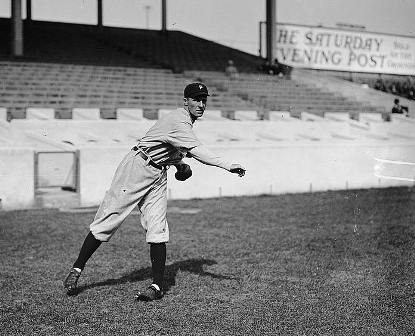
When George Chalmers returned from Cuba with the Philadelphia Phillies in November of 1911 he wasn’t the same pitcher.

After pitching the first game of the series against Almendares and the great Cuban pitcher Jose Mendez, Chalmers saw little action in the final eight games.

While training in Hot Springs, Arkansas in the spring of 1912 it became clear that Chalmers’ shoulder was in bad shape.  The Philadelphia Inquirer said he was sent from Hot Springs to Youngstown, Ohio to “visit ‘Bonesetter’ Reese.” (John D. Reese was a Welsh-born “practitioner of alternative medicine.” The  “self trained”  Reese was, according to The Pittsburgh Press, visited by many of baseball’s biggest stars, including Frank Chance, Ty Cobb, Honus Wagner, and John McGraw.  At the same time he was condemned by Ohio physicians who said there was no evidence of Reese “curing a single case where there was actual fracture or displacement of bone.”)

The famous “Bonesetter” was unable to do anything for Chalmers.  The Wilkes-Barre Times-Leader said in April:

“It is reported on good authority that Chalmers, one of the Phillies star pitchers, will be unable to deliver the goods this season owing to the condition of his pitching arm.”

As a result of the injury Chalmers only appeared in 12 games in 1912, with a 3-4 record, and didn’t pitch at all from July 5 until September 4.   At the end of the season Phillies owner Horace Fogel, who would soon find himself chased out of the game, used Chalmers’ injury to suggest a change in how pitchers were paid.  According to The Philadelphia Bulletin:Ho

“Horace wants to employ pitchers on the percentage basis, paying them so much per game—no game, no pay.

“The Phillies President conceived the idea after he had figured that it had cost him an average of $800 per game for the few games pitched by George Chalmers during the present season.”

Phillies team photo from George Chalmers personal collection--appears to be the 1912 team.

Team photo from George Chalmers’ personal collection

The $800 per game figure was clearly wrong—Chalmers would have not earned anywhere near $9600 for the 1912 season (Christy Mathewson made between $8000 and $9000), Chalmers and “Pete” Alexander both probably made less than $3000.  It is doubtful Fogel’s plan would have gone anywhere had he remained president of the Phillies.

The following season was no better; with no improvement to the injured shoulder, Chalmers appeared in 26 games, 15 as a starter, and was 3-10 with 4.81 ERA.  It got so bad that after a loss near the end of the season The Wilkes-Barre Times-Leader said:

“Our old friend ‘Dut’ Chalmers got another trimming yesterday.  It has gotten to be such a regular thing for Chalmers to be beaten that he doesn’t mind it anymore.”

Two of the Phillies best pitchers in 1913, Tom Seaton (27-12), and Addison “Ad” Brennan (14-12) jumped to the Federal League, making Chalmers and his injured shoulder even more critical to the Phillies hopes for 1914.

In March The Philadelphia Inquirer said Chalmers had spent the winter in Hot Springs rehabilitating his shoulder and appeared “to be in splendid shape,” when he reported to spring training in Wilmington, North Carolina, and “(Charles “Red”) Dooin is thanking his lucky stars that Chalmers is in camp.”

The season turned out to be Chalmers’ worst.  He pitched in three games, losing all three with an ERA of 5.50, and he Phillies released him on June 22.  The Inquirer said his shoulder had never healed and attributed the injury to “rheumatism and a misplaced muscle.”

George "Dut" Chalmers

George “Dut” Chalmers

The Pittsburgh Press said:

“The frailty of baseball life and the quickness with which a career in the big show may be ruined are shown again in the case of George Chalmers…Chalmers may recover and come back some time, but it is doubtful, and his going marks the untimely end of a career that promised to be one of the most brilliant in baseball pitching history.”

According to The Inquirer, he was not yet ready for the end:

“Chalmers…had mighty little money, about $400 in all, and his best friends advised him to stick the little old four hundred into some good business and forget baseball…Good doctors had told George that his arm was gone.  Other pitchers, real friends of the Phillies star, had told him the same thing…Then he heard of a specialist in New York who had done a great job on another pitcher’s arm which had seemed to be gone (no articles mentioned the name of the specialist or the other pitcher).”

With his arm seemingly better, Chalmers was invited to spring training with John McGraw’s New York Giants in Marlin, Texas.  The New York Mail said “he looked good at Marlin,” but the Giants let him go before the season began.  On April 20 he was signed again by the Phillies, and sent out to pitch the next day.  The Inquirer said:

 “George Chalmers, once a Philly discard and lately spurned by the Giants, with whom he trained during the spring trip to the Southland, was the hero of today’s festive occasion for Philadelphia.  Chalmers had been without a big league contract and he was signed by (manager Pat) Moran only yesterday.  But he gave him a quick trial by shunting him at the Giants, and he showed his gratitude to the Quaker boss by pitching the best game of his career.”

Chalmers gave up only two hits and beat the Giants 6-1.

As the Phillies fifth starter in 1915 he was 8-9 with a 2.48 ERA, appearing in 26 games.  Jack Kofoed, a sportswriter for The Philadelphia Record said in “Baseball Magazine”that Chalmers’ record did not reflect how well he pitched:

“Throughout the season Chalmers twirled splendid ball, but played in tougher luck than any man on the Philly staff.  Had fate been as kind to him as to Al Demaree (14-11 3.05 ERA) , for instance, he would have won twice the number of games he did.  But the Phillies played more weird ball behind him than in back of any man on the staff.”

The Phillies won the National League pennant, and met the Boston Red Sox in the World Series.  With Philadelphia down two games to one, Chalmers was Moran’s choice to pitch game four in Boston.

Facing Ernie Shore, who won 19 games for the Red Sox, Chalmers pitched well, but lost 2-1 (the same score of Philadelphia’s losses Geo 2 and 3); The Inquirer said:

“Another Phil pitcher was sacrificed on the altar of a futile attack…through the futile efforts of his companions to obtain for him even the slender margin that was all he required.”

The Red Sox beat the Phillies four games to one.

In November of 1915 several Pennsylvania papers said Chalmers had used his “World Series coin as a matrimonial nest egg.”

The following season was his last.  The shoulder injury returned and the Phillies only used Chalmers in 12 games, he was 1-4 with a 3.19 ERA.  He did not appear in a game after August 7, and was released at the end of the season.  After an unsuccessful attempt to catch on with the Kansas City Blues in the American Association in 1917 Chalmers career was over before his 29th birthday.

In the waning days of his career, The Wilkes-Barre Times-Leader said:

“’Dut,’ as George is called by his playmates is a fine, upstanding, intelligent young fellow, with all the sturdy Scotch virtues as well as a Scotch burr in his speech, and whether or not he lasts in baseball he is very likely to be successful in life.”

Chalmers retired to New York and died in the Bronx in 1960.

Special thanks to Karen Weiss, George Chalmers’ great niece, for generously providing copies of photos from Mr. Chalmers’ scrapbook.

Bill Brennan versus Philadelphia

10 Jul

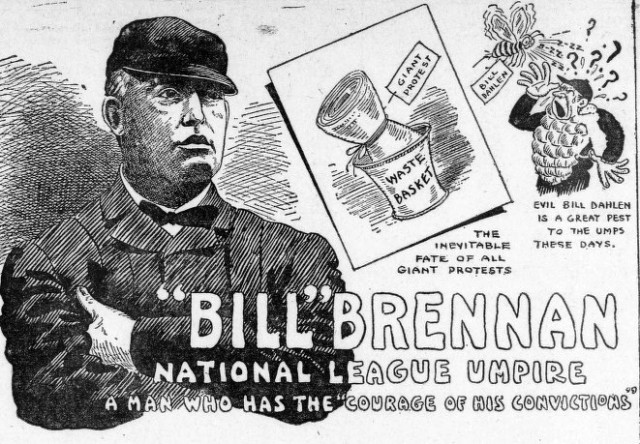
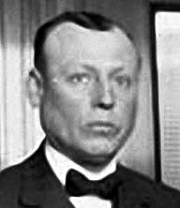
Umpire William “Bill” Brennan was at the center of the controversy that led to Philadelphia Phillies owner Horace Fogel being banished from the National League.  Fogel maintained that the 1912 pennant race was fixed, and that Brennan and the rest of the league’s umpires were in the tank for the champion New York Giants.

After Fogel was expelled Brennan dropped a threatened libel suit against him and the umpire’s life went back to normal, until August 30, 1913.

Fogel was working the game in Philadelphia’s Baker Bowl between the Phillies and the New York Giants.  The Giants, who were in first place by nine games, were trailing the Phillies 8-6 in the ninth inning.

Harry “Moose” McCormick, pinch-hitting for Fred Merkle, led off the inning with a groundout to second baseman Otto KnabeThe Philadelphia Inquirer said:

“As the big Giants’ pinch hitter started for the players’ bench he motioned towards the center field bleachers and shouted to Brennan that the white shirts there had blinded him.”

Brennan walked out to the center field bleachers and told the fans seated in the area to vacate their seats:

“They greeted him with jeers and catcalls; Brennan paused helplessly for minute and then walked back into the diamond.  Approaching Mike Doolan, captain of the Phillies, he ordered him to have the crowd removed.  Doolan laughed and said that it was impossible.  Then Brennan walked over to the New York bench and held a conference with Manager (John) McGraw.”

Philadelphia manager Charles “Red” Dooin had been ejected earlier in the game, so Brennan told acting manager Hans Lobert to move the crowd out of center field.  Lobert and the Phillies “explained that it could not be done.”

Brennan again went out to the center field bleachers, this time ordering a Philadelphia police officer to remove the crowd:

“The bluecoat laughed at him and said that he could not, under any circumstances, take his orders.

“’You’re under my orders,’ said Brennan.

“’I’m under no orders except from my sergeant or captain,’ was the answer.”

The crowd of 22,000 was “storming angrily for the game to proceed,” and the other umpire, Mal Eason, suggested the game be continued and played under protest.  Instead, Brennan again huddled with McGraw.

“Strangely enough, McGraw, who is generally the most volatile man in the world and charges all over the field in excitement, this time, remained quietly on the New York Players’ bench.”

Brennan walked back on the field and said, “This game is forfeited to New York, 9 to 0.”  The Giants were “running towards the clubhouse before (Brennan) completed his statement,” according to The Inquirer.

“Bedlam cut loose at that instant.  Screaming in rage the bleacherites by the thousands poured over the low rail into the playing field…a cushion seat struck Brennan in the face as he was walking towards the exit…His walk turned into an undignified run.  The bleach crowd had first tried to stop the New York players who butted their way to safety.  Then they turned toward Brennan.”
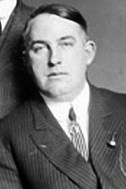
Bill Brennan

Bill Brennan

Escorted by police “with drawn revolvers,” Breen was able to get off the field.   Mobs formed outside the Baker Bowl and pursued the Giants, and Brennan, with his police escort, on their separate routes to the North Philadelphia Railroad Station:

“Brennan and his guard reached the entrance to the station just at the instant McGraw and his players came fleeing around the corner at Broad Street.  The police forsook the umpire to try and head off the larger crowd behind the New Yorkers.  With drawn guns they held them at bay for a few minutes. “

While police held two mobs at bay, a third waited for Brennan inside the station and “jumped upon him by the dozens.  (Brennan) was beaten to the ground, rose, (and) was beaten down again.”

The Inquirer claimed that McGraw and Brennan in their haste to escape the crowd boarded the wrong train, “an extra fare train from Pittsburgh,” rather than the train to New York.

Despite the mob, the chaos, and the “Missiles of all kinds,” that were thrown by Phillies fans, there was only one injury.  Giants’ utility man Arthur Tillie Shafer was hit in the head with a brick, but was not seriously injured.

Two days later National League President Thomas Lynch assigned Brennan to work the Phillies September 1 double-header with the Dodgers. The Inquirer said:

“President Lynch, of the National league, exhibited anything but a keen sense of delicacy in sending Brennan in to umpire the two games between the Phillies and Brooklyn on Monday,  or perhaps he is trying to work up a reputation as a humorist.”
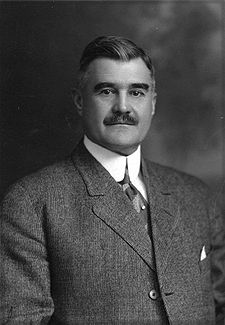
National League President Thomas Lynch

National League President Thomas Lynch

Philadelphia won both games without any serious incidents.  The Inquirer headline read:

“Man Who Helped Giants Couldn’t Aid Dodgers.”

Two days later Lynch reversed Brennan’s decision, The Associated Press said:

“Lynch, in his decision says that Umpire Brennan exceeded his authority in declaring the game forfeited to the New York club and formally awards it to the Philadelphia team by a score of 8 to 6.”

While New York appealed Lynch’s decision, Brennan‘s troubles were just starting.

He learned that a warrant was issued for his arrest in Philadelphia; a Phillies fan named Henry Russell claimed “Brennan in his efforts to get out of the park pummeled him and knocked him to the ground where he was trampled by the crowd.”  At the same time, it was rumored that Brennan would be let go by the National League.  The Associated Press said:

“(Tom Lynch) is certain to let him out, it is said if he is reelected, and if another man is chosen to head the circuit he will be instructed by his nominators to dispense with Brennan.  It is not the case of the forfeit that mitigates against Brennan so much, according to the yarn circulated, but his generally inconsistent work in games where the spirit of battle ran high.  He is said to be over excitable.”

Two weeks after Lynch’s decision, he was overruled by the National League Board of Directors, and it was determined that the game would be completed on October 2,

The Philadelphia Record and The Inquirer called the decision unfair and gave the second place Phillies “all the worst of it.”

In the end, the decision made no difference.  The Phillies, nine games behind the Giants on the day of the forfeit, never got closer than seven games out of first place, and finished the season twelve and a half games behind the Giants.  The pennant was a foregone conclusion when what The Inquirer called “The longest game on record,” was finally completed.

The anti-climactic two-thirds of an inning ended quickly on October 2.  Tacked on to the beginning of a double-header, pitcher George Chalmers faced three batters:  John “Red” Murray grounded out, John “Chief” Meyers singled; Eddie Grant ran for Meyers and was forced at second on Larry McLean’s ground ball.  The Phillies “ran from the bench and danced in glee at the speedy decision in favor of the long-standing dispute.”
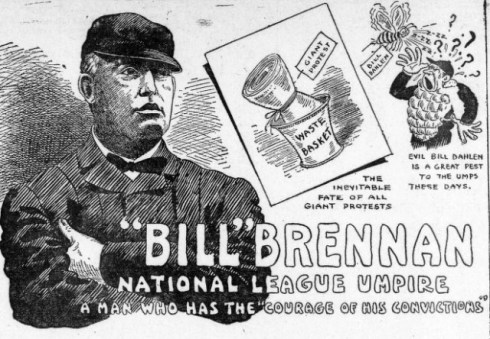
billbrennan

After New York won the 1913 pennant, Giant pitcher and cartoonist Al Demaree featured Brennan in one of his nationally syndicated cartoons.

In December Lynch resigned as National League president; the following month it was announced that Brennan had jumped from the National League, signing a three-year contract to become a Federal League umpire (the league would only last two seasons).

The last word in the Brennan/Philadelphia controversy belonged to a journeyman boxer and fight promoter in Superior, Minnesota named Curly Ulrich.  Three weeks after the 1913 season ended The Duluth News-Tribune said Brennan, a St. Paul resident,  “attended the bouts in Superior.”  Promoter Ulrich introduced him:

“Ladies and gentlemen, I wish to present to you Bill Brennan, National League umpire and member of the New York Giants.”
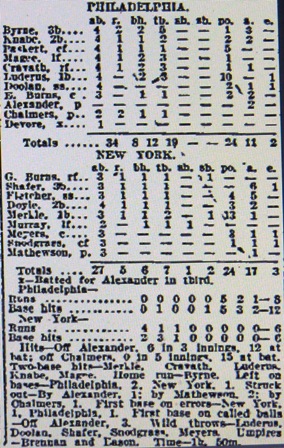
The box score as it appeared on August 31

The box score as it appeared on August 31

Baseball’s “Growing Evil”

24 Jun

By 1913 newspaper articles under the byline of a famous player were common in newspapers across the country, and most of the game’s biggest stars were represented.

Most fans of that era assumed the players did their own writing until an expose appeared in The Washington Herald in March of 1913.  Sports Editor William Peet wrote:

“The dear old public fell for this stuff and swallowed hook, bait and sinker.  An article under the signature of Christy Mathewson led three-fourths of the fans to believe that the great pitcher himself wrote it.”

According to Peet, players were paid between $250 and $1000 for each story “and not one of them wrote a single word,” but it was still a good investment:

“The newspapers themselves regarded these feature articles as good investments, for the reason that the stories were syndicated to 25 or more outside publications and the revenues derived not only paid the amount guaranteed the baseball player for the use of his name, but left a handsome profit.”

Peet exposed the writers behind the articles “written” by the game’s biggest stars:

Christy Mathewson and Jeff Tesreau/John Wheeler, The New York Herald

Walter Johnson/Ralph MacMillan, The Boston Journal/The Boston Herald

John McGraw/Walter Turnbull, The New York Evening Sun

John “Chief” Meyers/Jim McBeth, The New York American

Richard “Rube” Marquard/Bill Farnsworth, The Atlanta Georgian/Hearst Newspapers

Denton “Cy” Young/Sam Carrick, The Boston Post

Tris Speaker/Tim Murnane, The Boston Globe

“Smokey” Joe Wood/Jim O’Leary, The Boston Globe

Ty Cobb/Roger Tidden, The New York World

Hughie Jennings/George “Stoney” McLinn, The Philadelphia Press

John McGraw and Christy Mathewson

John McGraw and Christy Mathewson

Peet called the practice dishonest, and said it had gone too far, and in New York and Boston the practice   had “become a mania.”  Peet singled out an article “written” by John McGraw criticizing “Chief” Myers that caused an “explosion,” and said the articles featuring “Rube” Marquard’s byline, and written by Farnsworth got Marquard “in bad with his teammates, for Farnsworth spared no one is his scathing criticisms.”

Pittsburgh Pirate manager Fred Clarke disagreed with the practice, telling Peet:

“I do not think it is any ball player’s place to butt into the newspaper end of the game…I think it is foolish for any player, especially those who take part in the world’s Series, to write about the games.”

As a result of Peet’s revelations the American League club owners condemned the practice of players’ names appearing on articles they did not write, but came just short of officially banning the practice. In September, the Baseball Writers Association petitioned the National Commission to end the “growing evil” of players authoring or appearing to author articles during the upcoming World Series.

The commission agreed, and American League President Ban Johnson informed Philadelphia Athletics manager Connie Mack on the eve of the World Series that star players Eddie Collins and Frank Baker “have been instructed not to write baseball stories or give the impression they are writing them.  If they ignore this request, a way of punishing them would be found. “

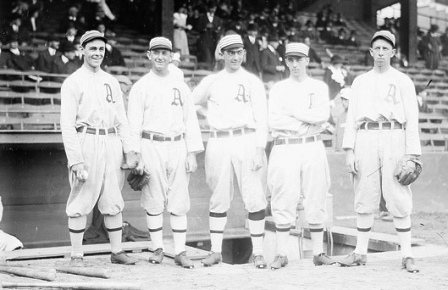
Frank Baker, center, Eddie Collins, far right,

Frank Baker, center, Eddie Collins, far right,

Johnson even threatened “Collins and Baker would not be permitted to take part in the World Series,” if they wrote articles or permitted their names to be attached to articles.

At one point Johnson and National Commission Chairman August Hermann said they would consider calling off the series if players refused to comply.  Dave Fultz, the former player, practicing attorney, and president of the Fraternity of Baseball Players, said members of the commission could be personally liable for damages if the series was cancelled.  Johnson and Herman’s threat to cancel the series as a whole was put to rest.

Mack argued that the players had contracts with newspapers and that Johnson had said earlier that players who were “capable” of writing their own articles would be permitted to do so, but as he prepared his team to play the New York Giants, he prepared for the worst, telling The Associated Press:

“(I)f the commission decides the players must not write under any conditions and players decide not to abide by the ruling, I will be prepared to put a team on the field,” The AP speculated that utility infielder John “Doc” Lavan  would play second base  and outfielder Rube Oldring would be moved to third base, with Amos Strunk taking Oldring’s place in the outfield.

Mack’s adjustments weren’t required.  Collins was allowed to write for The Philadelphia Record because his deal with the paper predated the commission’s ruling, and Baker did not write articles.  Together they led the Athletics to a 4-1 Series win, hitting .421 and .450.

Ghost written articles, and articles actually written by players never disappeared, but the practice became much less popular after the revelations and battles of 1913.

“The Deterioration in the Morale of the Players”

10 Jun

The Chicago Tribune had had enough:

“The deterioration in the morale of the players has been followed by deterioration in that of the spectators.  The latter relish the obscene profanity and the slugging exploits of the hulking brutes of the baseball field.”

The Tribune provided an “account of the more disgraceful of the many rows witnessed by spectators of baseball games,” during the just-ended 1899 season:

“May 2—Row at Pittsburgh—St. Louis game.  (Frank) Bowerman was put out of the game.  (Jack) O’Connor was taken off the field by the police, and the crowd chased umpires (Tom) Burns and (William) Smith.

May 19—Umpire Burns put (Giants’ William “Kid”) Gleason out of the game at St. Louis.  Gleason’s protest was so strong Burns forfeited the game to St. Louis.

June 1—Row on the grounds at Washington.

June 16—After a long wrangle and continued rowing on the field at New York.  Umpire Burns forfeited the game to Brooklyn.

June 16—(Fred) Clarke and (Clarence “Cupid”) Childs fight on the field in Louisville.

June 27—Rowdy action of players caused the crowd at the Pittsburgh game to mob umpire (James “Chippy”) McGarr.

July 18—(Tommy) Corcoran slugged (John) McGraw at Baltimore after being first attacked, and his action started a riot.

July 26—(Emerson “Pink”) Hawley, (Fred) Tenney, and (Hugh) Duffy engaged in a game of fisticuffs at Cincinnati.

Aug 16—(Oliver “Patsy”) Tebeau, McGraw and (George “Candy”) LaChance fought at Baltimore

Aug 18—Riot at Baltimore game started by (Tim) Donahue throwing a handful of dirt at (Steve) Brodie’s face.

Sept 1—Childs and Aleck Smith fight on the field in Louisville.

Sept 7—Riots at St. Louis and Brooklyn.

Sept 15—Clarke taken off Philadelphia grounds by police.

Sept 16—Chicago players jerked (Ed) Swartwood around the diamond because he called the game in the eighth inning on account of darkness.

Oct 9—(George “Win”) Mercer assaulted (Al) Mannassau at Washington.

Oct 14—(Jimmy) Scheckard assaulted umpire (John) Hunt, refused to retire, and Hunt forfeited the game to Brooklyn.”

Cupid Childs, repeat offender

Cupid Childs, repeat offender

Al Mannassau, assaulted by Win Mercer in Washington

Al Mannassau, assaulted by Win Mercer in Washington

In addition to the fans, The Tribune blamed team owners:

 “For the multifarious minor acts of blackguardism and rowdyism of which the hired men of the club owners were guilty there is no room.  It is sufficient to say that they, like the graver offenses mentioned above, did not wound the feelings or jar on the nerves of the proprietors of these baseball roughs.  Those proprietors seem to have come to the conclusion that audiences like these ruffianly interludes.”

Like hundreds of predictions before and thousands more to come over the years, The Tribune saw dire consequences for baseball given the current state of the game:

“There was a time when Chicagoans went to see the games of the Chicago club because they had a feeling of proprietorship in that organization.  That day is over.  Men do not go to see games out of local pride, nor do they go to see fine playing.  They go to listen to the language of the slums and to witness the horseplay and brutalities of the players or performers.  When these have lost their attractions professional baseball will disappear. “

“Manager McGraw makes Flight in Army Airplane”

24 May

mcgrawplane


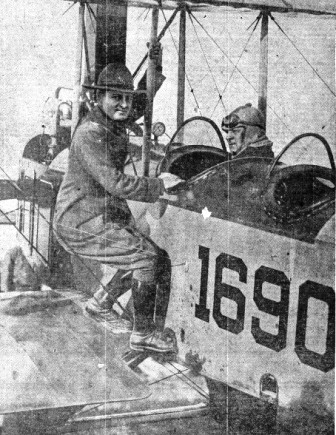
In 1918, the new York Giants traveled to Marlin, Texas for spring training.  In April, the team from the Air-Service Pilot Training Center at Richfield Aviation Camp came from Waco to Marlin to play an exhibition game with the Giants.  After the game Giants, Manager John McGraw took up Colonel Archibald Miller on his offer of a flight.  That’s McGraw in the forward seat of a Curtiss biplane, with Miller on the wing.  Newspaper reports said McGraw thought the 20-minute flight was “one experience he needed.”

McGraw, and most of the Giants, flew again with Miller and his colleagues two-years later, when after a game with the aviators’ team, The New York Times said, “McGraw and most of his regulars, most of the rookies, Dr. Birs, the club dentist, and three of the newspaper men accompanying the club made flights.”

Crazy Schmit Stories

13 May

Fred “Crazy” Schmit was widely considered to be the first pitcher to keep a “book” on hitters, it was mostly attributed to his poor memory, and the pitcher kept an actual book in his pocket listing the weakness of each hitter.  The earliest reference to Schmit’s book was in The Sporting Life in 1894, but the story was repeated in newspapers for the next thirty years, usually as a story told by John McGraw or Hughie Jennings.

The article said Schmit kept:

“(A)n account of the weakness at bat of his opponents, setting them down in a small book, which he always carried with him on the diamond…One day when he had the Chicagos as opponents (it was the season that Captain Anson led the League in batting), Anson came to the bat. “Crazy” Schmit looked at the big first baseman, then went down into his pocket, and, taking out his book, read “Anson, base on balls.”

Over the years the story changed—the batter was sometimes Elmer Flick, Nap Lajoie, Ty Cobb, Honus Wagner, Tris Speaker, and as Jennings said in 1926, “Every good hitter since Anson’s day, but Anson is the player whose weakness was reported to be a base on balls.”

"Cap" Anson

“Cap” Anson

Jennings also claimed that during the 1890s as part of a prank by teammates aboard a ferry, Schmit’s suitcase, with his book inside, fell overboard, and said:

“Schmit was a losing pitcher from that time on.  He won a few games but lost a great many more…The bottom of Hudson River held his ‘pitching arm.’”

Pitcher turned sports cartoonist Al Demaree said Schmit “used to warm up with an old water-soaked ball that weighed several pounds—at a distance of 75 feet, and not the regulation 60 feet from his catcher.”

Al Demaree's Schmit cartoon--as with most references to the pitcher, his name is spelled incorrectly

Al Demaree’s Schmit cartoon–as with most references to the pitcher, his name is spelled incorrectly

After his final game with the Baltimore Orioles in 1901, Schmit continued to play with semi-professional and quasi-professional teams for more than a decade.  His antics continued to make the papers.

In 1906 Schmit joined Jim “Nixey” Callahan’s Logan Squares in the Chicago City League.  The Sporting News’ Revere Rodgers told a story (complete with Schmit speaking in a comic German accent) about the team going to Joliet, Illinois for a game:

“(The Logan Squares) knew the umpire was a ‘homer’—a man who couldn’t see a close decision without giving his team the best of it.  He stopped before the grandstand, hat in hand, and announced (the batteries)…’Crazy’ Schmit was right behind him and when (the umpire) finished Schmit took off his cap and making a sweeping bow said: ‘Laties and schentlmen, der umpire for der game today vill be Mister Miller of Joliet and he vill as usual slightly favor der home glub mit his decision.”

According to The Chicago Tribune’s Hugh Fullerton Schmit was deeply disappointed at the end of the 1906 season when Callahan did not allow him to pitch in the Logan Squares victories against the World Champion White Sox, and National League Champion Cubs.

Schmit continued to play in the Midwest and also did some scouting for John McGraw’s New York Giants.  A story that appeared in The Duluth News-Tribune said Schmit pitched a few games for the Fond du Lac in the Wisconsin-Illinois League (Schmit’s name does not appear on any Fond du Lac roster in either of the two years the other player mentioned in the story was with the team (1909, 1911)so the story may be apocryphal):

“Along about the seventh inning, with Rockford leading by 6 to 4 the first man up got on.  Schmit pitched out three times in an attempt to get the runner going down to second base, but the runner made no attempt to purloin the sack.  With the count three and nothing on the batter he grooved the next one, only to have the batter lean on it and drive it over the left field fence for a homerun.

“After the runners had circled the bases the umpire threw up another ball.  Schmit took it, shook his head and walked over to Bobby Lynch, who was playing third base…and said to him ‘Say, Bobby, no wonder I can’t beat these fellows.  I won’t pitch against them any longer.  I quit right now.  They don’t know how to play baseball and yet they are leading in this league.  The runner that was on first base just let me waste three balls and yet he does not attempt to steal; then when I put one over for the batter who has three balls and no strikes, he hits it.  Tell me, how can a man of my intelligence and baseball knowledge pitch a game of baseball against such boneheads and unscientific playing of the game?”

“Crazy” Smith died in Chicago in 1940.