Tag Archives: John Montgomery Ward

“Because Players are apt to be Foolish”

25 Jul

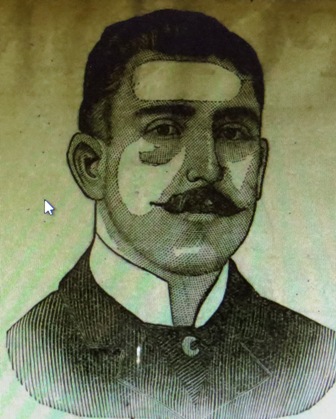
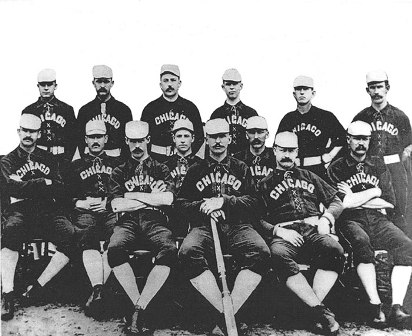
In 1887 John Montgomery Ward shared with The New York Sun his wisdom about what it takes for a ballplayer to get in shape.

“Gymnasium apparatus and gymnastic exercise are going out of favor among ball players for several reasons, and very few of them now attempt to keep in condition through the winter.  When you hear a player going into a gymnasium that usually means he goes in there, tries some feat and lames himself…It is not a good thing for a player to fool with the apparatus.  He does not want to develop big bunches of muscle.  What he needs is agility, suppleness, quickness of eye, hand and foot.  If he goes into a gymnasium he exercises muscles that he does not use in the field, and he either develops them at the expense of his useful muscles, so he puts too much strain upon them, thinking himself as strong in one part as another, and breaks a cord or otherwise injures himself.”

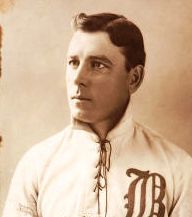
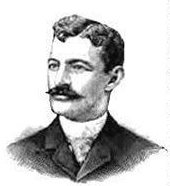
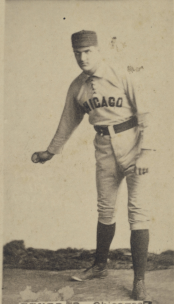
John Montgomery Ward
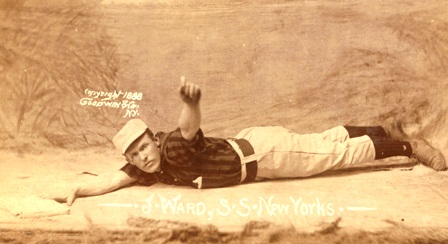
John Montgomery Ward

He said the gym contained “too many temptations in the apparatus for trials of strength…Because players are apt to be foolish about the use of apparatus managers now discourage gymnasium use as a rule.”

Ward said he, and others were injured in this way:

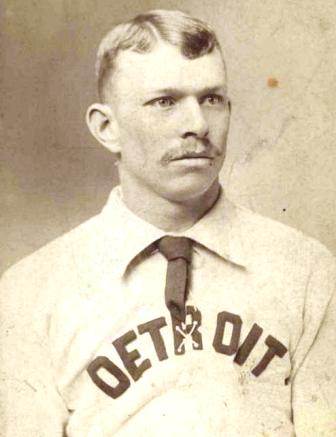
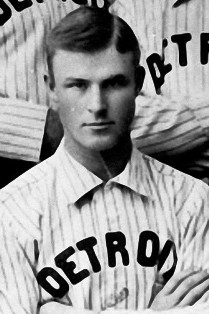
(Larry) Twitchell of the Detroits hurt his shoulder and could not pitch well afterward.  The parallel bars broke some small sinew in my shoulder and spoiled me for pitching, and I can feel the pain now when I raise my arm in a certain way. “

Larry Twitchell

Larry Twitchell was primarily an outfielder after 1887, appearing in just 23 games as a pitcher .
Ward then laid out his vision for how he would prepare a team for the season:

 “If I were training a nine, I would call the men together about two weeks before the opening of the season, and put them at work in a hand-ball court, watching them very closely.  Hand-ball is the best form of exercise they could have, excepting base ball, of course.  When you come right down to the point, no exercise is as good for a base ball player as base ball itself, but in this climate it is not practicable to put a nine at work on the diamond much before the opening of the regular season.  Hand ball comes next to the real thing, as it requires the same agility and quickness of eye, and it is much better than the gymnasium, because it is a game in itself and is full of amusement and excitement.  When the players get interested in a game of hand ball they forget that they are working, and before they know it they are perspiring, and their blood is circulating finely through all their muscles.  The throwing in this game is easy, and there is no danger of a player’s straining his arm or shoulder, as he might if he tried to make a long throw in the field after a long rest.   In catching the ball on the bound and returning it to the wall, activity is necessary, and the work is so quick that it keeps a player on a jump all through the game.  The constant striking of the ball with the palm of the hand accustoms the hand to the impact, and if it does not harden the palm it tends to deaden the nerves on the surface.

“In the handball court the pitcher and catcher and pitcher can pass the ball when not playing in the game, and so get the special practice that the battery needs.  Batting exercise should be kept up by the whole nine also.  The director of this training ought to understand the men thoroughly and adapt the exercise to their individual peculiarities.  The stout man needs to be worked hard and the thin man restrained.  A nervous man is inclined to go in too enthusiastically and do more than is good for him, while the stout, phlegmatic man is averse to exertion, and will not do enough unless he is urged.”

Ward said the parallel bars ruined him as a pitcher
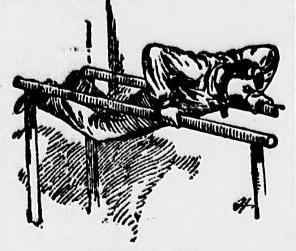
Ward said the parallel bars ruined him as a pitcher

Ward said it was necessary to make players understand that each one should be treated differently when getting in condition for the season:

 “This makes the director’s position anything but pleasant.  The heavy men think that they are doing more than their share, and attribute the difference in work to partiality.  All expect to be treated alike, but that cannot be done, and it is difficult to make some players understand why the work should be varied.

“I would have the men begin to practice throwing about the 1st of March, insisting upon starting with light, easy work, and getting into it gradually.  They ought also to walk some and take short jogs out of doors.  A man may be in good gymnasium condition and still be unfit for hard outdoor work.  Indoor condition is different from outdoor condition.  Let a man work all winter in a gymnasium and then go outside and take a violent exercise, and he will surely stiffen up at first.  He must accustom himself to the open air and difference in temperature before trying to do too much outside.  Hand ball playing will put him in outdoor condition without laming him.  If he does not attend to this matter, but attempts to go right out of the gymnasium and play base ball, he will feel the effects very unpleasantly.  Last year the New York nine played a game the very next day after being called together, having had no preliminary outdoor training to harden the muscles and the next day the men were sore and lame all over.  It took them several weeks to get into condition.  They had to train in the field, and the result was the spring practice was greatly interfered with, and they did not begin the championship series in as good condition as they would have if they had received the proper amount of preliminary training.  A man just out of a gymnasium, with lots of spare flesh, feels strong and thinks he can do anything.  Before the public he will attempt to do more than his condition warrants.  He will try to throw a ball in from the field to home plate, and strain his shoulder or lame his arm so that he can’t throw worth a cent for the next week or two.  Or he will make a good hit and try to get in a home run, the result being lame legs or a strained knee that makes him almost useless for several games.  An injury to a good player at the first of the season may be thousands of dollars damage to the club, but some men do not seem to appreciate that fact.  When the St. Louis Browns were trained by Comiskey they came into the field in splendid condition, and took such a lead in the first part of the season that no club could catch up with them.  The Chicago Club was trained well last year, and won the championship.  This year the Chicago men are having five weeks of outdoor work at Arkansas Hot Springs under (Cap) Anson’s direction, and they will show up in fine form and be able to play well right from the start.

“Many ball players show up for the first game about 25 pounds overweight, and they have to work that off before they can handle themselves well.  It is not advisable to begin in what a trainer calls condition, because one soon feels tired; but neither is it well to have a great deal of extra flesh.  The exact condition to be recommended depends upon the temperament of the player, and must be decided by common-sense rules.  The subject of proper training has been too much neglected by base ball men, but it is beginning to receive attention, and eventually a system will be adopted and its observance enforced by discipline in the clubs.  Some players are sensible enough to see the importance of rational training and will take care of themselves and study up the best methods; but there are many foolish fellows who never think of anything in that line, don’t understand themselves well enough to work properly, and need to be directed and compelled to follow instructions.  The calling together of most of the clubs several weeks earlier this year than heretofore indicates that the managers are waking up to the importance of having their men fit for work at the start.”

He provided a glimpse of the type of manager he would be three years later when he le Brooklyn’s Ward’s Wonders to a second place finish in the Players League:

”Discipline ought to be more strict during the base ball season, and men should not be allowed to knock about and abuse their stomachs as many of them do.  While traveling about the country and getting frequent changes of food and water, it is difficult enough to keep the stomach right with the greatest care.  A nine has been disabled more than once by one man’s recklessness in eating.  A base ball player never ought to be seen in a barroom during the season.  He may go in to get a glass of beer, but he meets friends who insist upon treating, gets four or five drinks that do him no good and that he doesn’t want, and somebody goes about reporting that he was drunk.

“A thin player may get some benefit from a bottle of ale with his meal after the game, but he should not drink before the game; and the stout man should not drink at all, because he does not need anything of the kind.  Base ball players ought to keep regular hour also, go to bed early and get plenty of sleep, and be up by breakfast time.  This staying up until 2 in the morning and then sleeping until noon is all foolishness, and it ought to be prohibited.”

Ward’s views on training had a larger purpose, they were in keeping with his role as the leader of baseball’s first labor movement; in order for players to achieve the status the Brotherhood sought Ward knew they needed to take every aspect of the game seriously, including preparation:

“The sum and substance of the whole thing is that a base ball player must recognize the fact that base ball is a business, not simply a sport.  It is no longer just a summer snap, but a business in which capital is invested.  A base ball player is not a sporting man.  He is hired to do certain work, and do it as well as he possibly can.  The amount of his salary depends entirely on the way he does his work, and it is for his own interest to keep himself in the best condition and study how to get the best results.  If he does not know how to train himself, he should submit to the direction of somebody who understands the business.  Players are beginning to see this, but they need to see it more clearly yet.  They have been through the gymnasium experience and learned that performing feats of strength and turning on the rings is not good for them, and many of them have given up winter training on that account, but they have yet to learn that there is a proper system of exercising and training that is indispensable.  Those who do appreciate the importance of the matter are glad to see the growing interest and discussion, but the success of clubs that exercise systematically will o more than all the talking toward bringing about a general recognition of the benefits or training and the adoption of a perfect system of discipline.”

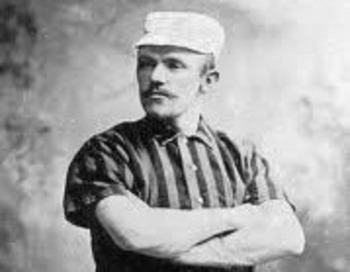
“Go to Providence”

18 Jul

After Ned Hanlon guided the Brooklyn Superbas to horrible back-to-back seasons in 1904 and ’05 (56-97 sixth place, 48-104 eighth place) it was time for a parting of the ways between Hanlon and Brooklyn—it was announced that Hanlon had signed to manage the Cincinnati Reds in 1906.

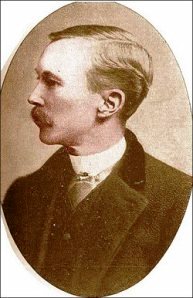
Ned Hanlon

Ned Hanlon

During fifteen years with the franchise (eight in Baltimore, seven more in Brooklyn) Hanlon led them to five pennants and three second-place finishes, and according to The Brooklyn Eagle his departure “caused no end of regret among the wide circle of friends he had gained during his seven years stay here as head of the Superbas.”

But, the paper said, one man “learned of the change with greater dismay than anybody else.”  John Montgomery Ward, the former player, manager and leader of the Brotherhood was, by then, a successful Brooklyn attorney.

Ward and Hanlon were long-time friends and Hanlon had been an active member of the Brotherhood, but Ward said, more than that, he “owed my start as a successful ballplayer,” to Hanlon.

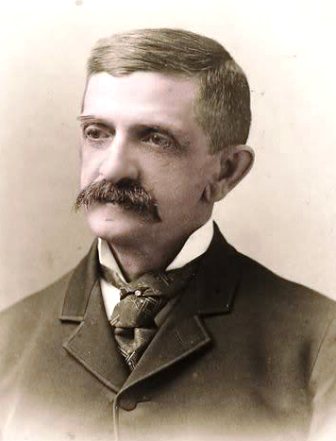
John Montgomery Ward

John Montgomery Ward

“I had begun my career as a professional that year with the Binghamtons, but along about June the club disbanded.  I received offers from Rochester and Providence to finish the season in the box. For I was pitching in those days, and went to Rochester to look over the field.  I was a boy of eighteen then, and inexperienced, and I was taken aback when the manager and players clamored for me to sign immediately.  Hanlon was captain of the team and he joined in the request for me to sign.  I asked them to give me a little time to think it over and went back to the hotel for that purpose.  Hanlon, and a well-known player of those days, Ed Caskin, followed me there, and continued their importunities.

“’I told them that it was my first year in the game, and then turning to Hanlon said ‘Mr. Hanlon, put yourself in my place and tell me what to do.  Advise me just as if you were speaking to a brother.’

“’Hanlon flushed up, looked at the floor, then at Caskin.  Then he turned to me.’

“’Go to Providence.’ He said.  Caskin coincided, and I took my bag and went to Cincinnati where the Grays were playing.  I made good with them (22-13 1.51 ERA) and gained fully five years of my career because of the sacrifice of Hanlon, who wanted me in Rochester.  We’ve been firm fiends ever since, the bonds being strengthened during his stay here.  I’m sorry he has gone, but I am confident he will have better success with the Reds.”

Despite Ward’s confidence, Hanlon was only slightly more successful with the Reds in 1906 and ’07 than he had been during his final two seasons in Brooklyn–64-87, 66-87, sixth place finishes.

“Show yourself a man, Borchers, and Leave Boozing to the Weak Fools”

10 Feb

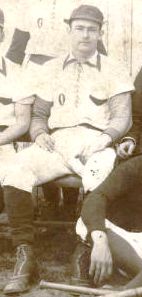
After defeating the Boston Beaneaters and “Old Hoss” Radbourn in his major league debut, George Borchers returned to the mound five days later in Chicago and beat the Philadelphia Quakers and William “Kid” Gleason 7 to 4.

With two wins in two starts the 19-year-old Borchers was, according to The New York Evening World, one of the most sought after players in the National League:

“There are several league clubs who would like to get hold of Borchers, the latest Chicago wonder, the only thing in the way of his acquisition is the $10,000 (the White Stockings were asking).”

Chicago probably should have sold Borchers while there was interest.  He injured his arm sometime in June, missed most of July, and according to White Stockings Manager “Cap” Anson “lacks the heart to stand heavy punishment.”

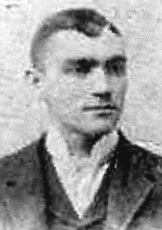
George Borchers

George Borchers

After his fast start, Borchers was just 4-4 in 10 starts when Chicago released him and Chicago’s other 19-year-old “phenom” Willard “Grasshopper” Mains (1-1 in 2 games) on September 6.

The Chicago Tribune said Borchers was on his way to Cincinnati to play for the Red Stockings, “he has plenty on speed and good curves, and it will not be surprising if he makes a success in the American Association.”

After the Cincinnati deal failed to materialize, Borchers accepted $100 in advance money to join the Stockton franchise in the California League.  After receiving the money he never showed up in Stockton.

No less a figure than the “Father of Baseball,” Henry Chadwick held out hope that Borchers would eventually be a successful pitcher:

“There is a chance that a first-class pitcher, who played in the Chicago team last season, is going to reform the bad habits which led to his release by Captain Anson in August (sic) last. I refer to Borchers.   (John Montgomery) Ward told me that Borchers was a very promising pitcher, and had he kept himself straight be would undoubtedly have made his mark. I learn that be is going to try and recover his lost ground, and if be shows the possession of the moral courage to reform, and the intelligence to keep temperate, he will yet find his way to fame and fortune. Show yourself a man, Borchers, and leave boozing to the weak fools of the fraternity who indulge in it at the cost of a fair name and of pecuniary independence.”

Borchers didn’t appear ready to “reform.”  Between the 1888 and ’89 season, according to The San Francisco Chronicle, he signed a contract to play for the Canton Nadjys in the Tri-State League, receiving $100 in advance money and also signed a contract with that Kansas City Cowboys in the American Association, receiving a $300 advance.

In February of ’89 Borchers was awarded to Canton.  Kansas City offered to purchase his contract.  Canton Manager William Harrington said in The Sporting Life that “Borchers will play in Canton or not at all.”

Borchers left for California.

Upon arriving in Sacramento Borchers was arrested as a result of the Stockton contract.  The Los Angeles Herald said:

“George Borchers, the well-known baseball player, was arrested this afternoon on a warrant from Stockton, charging him with having received money by false pretenses.”

Borchers pleaded guilty and paid a fine in March.  In April he attempted to sign with the Sacramento Altas.  The San Jose Evening News said:

“Sacramento being in need of a pitcher, induced Borchers to agree to play there and asked the Stockton Club to allow him to do so.  This President Campbell (of Stockton) refused and the league directors have sustained the action.”

The California League ruled Borchers ineligible for the season.

With too much time on his hands, Borchers couldn’t stay out of trouble.  The Associated Press reported on June 27:

“Shortly after 11 o’clock tonight a barn belonging to Mrs. Borchers, mother of George Borchers, the well-known baseball pitcher, was destroyed by fire, causing a loss of nearly $1000.  When the Fire Department arrived on the scene George Borchers tried to prevent the firemen from fighting the flames.  He was drunk and very boisterous.  Finally Chief Engineer O’Meara ordered his arrest.  When two officers took him in custody he fought desperately, and had to be handcuffed and placed in a wagon before he could be got to prison.”

The story said Borchers, who “has been loafing about town (Sacramento) for several months, drinking heavily” had made threats that he’d burn down the barn because his mother would not give him any more money.  Mrs. Borchers had “recently expended a large sum of money to get him out of trouble at Stockton.”

Whether his mother paid his way out of this or not is unknown, but the charges against Borchers went away, and he spent the remainder of the 1889 baseball season pitching for a semi-pro team in Merced, California.

He returned to the California League on March 23, 1890 when he pitched for Stockton in the season opener against the Haverlys at San Francisco’s Haight Street Grounds.  Borchers and Stockton lost 11 to 5.

His time in the league would be short.

In Early May he began complaining of a sore arm; The San Francisco Call said that “Borchers is known to have received an offer from the New York Brotherhood (Players League) Club and the Stockton directors think he’s playing for his release.”

On May 11 Borchers, according to The Sacramento Bee arrived at the ballpark in Stockton, on horseback and “extremely drunk.”  Catcher/Manager Mike DePangher sent Borchers home.  Borchers instead went on a bender that ended the following evening in a Stockton restaurant where he was arrested for being drunk and disorderly.

The Call said:

“If he took this means to sever his connection with the Stockton Club and join the Brotherhood, he not only brought disgrace in more sense than one upon himself, but has probably ruined his chance of an Eastern engagement.”

Borchers was fined $10 in court, the Stockton club fined him $100 and suspended him for the remainder of the season and sold his contract to Portland in the Pacific Northwest League–but not before the Sacramento Senators attempted to use him in a game.  The Call said Stockton protested:

“(Sacramento) Manager (George) Ziegler thought it best not to play him.  When George was informed that he was not to play he good-naturedly said:  ‘All right, old man,’ and then added, ‘One suspension, one release, all in two weeks.’”

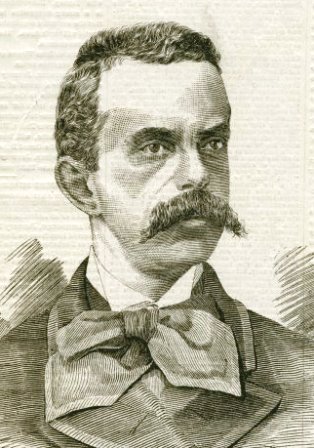
George Ziegler

George Ziegler

On June 1 he won his first start for Portland, beating Spokane 7 to 6.  The Oregonian said “Borchers pitched a splendid game for the Portlands.”

Borchers split the remainder of the season between Portland and Spokane, compiling a 14-14 record with a 1.44 ERA.  When the Pacific Northwest League season ended Borchers returned home to play in the California League again; The Sacramento Record-Union printed a letter from his manager at Spokane, William “Kid” Peeples:

“Borchers has been pitching ball out of sight, and has not tasted a drop of liquor while up north.  He says he is going to stay straight, and finish the season with the Sacramentos.  He will have all the California boys guessing, as he did here.”

The San Francisco Call said Borchers was “a dismal disappointment” after he lost his first two starts for the second place Senators—both losses were against the league-leading San Francisco Haverlys.  San Francisco Manager Mike Finn filed a protest with the league, claiming Borchers should be declared ineligible because he was still on the reserve list of the Spokane club.

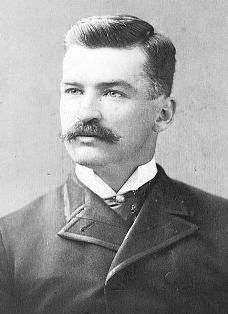
Mike Finn, manager, San Francisco Haverlys

Mike Finn, manager, San Francisco Haverlys

In his third start Borchers allowed Stockton to score three runs in the first inning on five walks and a wild pitch, but settled down and won 7 to 6. He beat Stockton again three days later, 15 to 10. The Record-Union criticized all four of his performances and said he had reverted to “his old ways.”

The 21-year-old finished the 1890 season with a 2-2 record for the second place Senators; San Francisco won the championship.  At the end of the season the California League upheld Finn’s protest over Borchers and fined Sacramento $500.

The rest of the George Borchers story on Wednesday.

The Adventures of George Borchers

7 Feb

George Bernard “Chief” Borchers was a West Coast phenom.  The Sacramento native was so good as a 16-year-old in 1885 that the town’s two professional teams battled for his services.  After pitching half the season for one club, The Sacramento Record-Union said:

“George Borchers, heretofore pitcher for the Alta Baseball Club, has resigned his position in that club and will hereafter pitch for the Unions.”

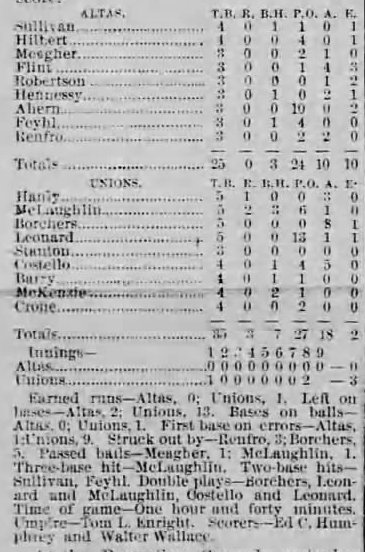
Box score for Borchers' first start for the Sacramento Unions (July 26, 1885) after jumping the Sacramento Altas.  Borchers beat his former team 3 to 0.

Box score for Borchers’ first start for the Sacramento Unions (July 26, 1885) after jumping the Sacramento Altas. Borchers beat his former team 3 to 0.

He played for the California League’s Sacramento Altas in 1886 and the Oakland Greenhood & Morans in the same league in 1887. The Sporting Life said of him:

“Borchers is possessed of Herculean strength, great endurance, and is a heavy batsman.”

The Sacramento Bee said Borchers “would soon rank as one of best pitchers on the coast,” if he got “command of the ball and his temper.”

Before the 1888 season the 19-year-old became the subject of a bidding war.  He pitched several games against the New York Giants during John Montgomery Ward’s barnstorming/honeymoon tour of the West Coast in the winter of 1887.

Ward told New York reporters that Borchers was the best pitcher in the California League.  The Sporting Life called him “Ward’s especial favorite,” and “Ward’s find.”  By January The Boston Post said he turned down an offer from the Beaneaters, The San Francisco Chronicle said he rejected the Detroit Wolverines, and The Philadelphia Times said “(Athletics Manager Bill) Sharsig is hopeful to sign Borchers.”  The Times also said Ward’s Giants had made an offer but:

“The young man wanted a mortgage on Central Park and a large chunk of Coney Island.”

The San Francisco Chronicle said Borchers came from a wealthy family (his father owned a brewery) and were “opposed to his playing ball.”

Whatever the reason, Borchers opened the 1888 season with the Greenhood & Morans.  He pitched at least four games for Oakland before it was announced on May 2 that the 19-year-old had signed a major league contract.  The  Chronicle said:

“The baseball world was thrown into a state of excitement yesterday when the press dispatches made the unexpected announcement that George Borchers prize pitcher of the Greenhood & Moran club, had been signed to pitch for the Chicagos.”

The paper said when White Stockings President Al Spalding sent a telegram to Borchers asking his terms, the pitcher, “treated the telegram as more of a joke than anything else, and in the spirit of fun telegraphed back” asking for $3000, with a $500 advance.

“He never dreamed of receiving a favorable answer, and his surprise can well be imagined when a few hours later the answer came accepting his terms.”

Despite being what The Chronicle claimed was the “largest salary ever paid to a California player in the East,” Borchers immediately regretted the agreement:

“He says he does not feel much like leaving here and would like to back out if he could, but, knowing that he is legally bound by his act, he will of course stand by it.”

The pitcher arrived in Chicago on May 13 to great fanfare.  The Chicago Tribune said “if he equals the reports of his ability that precede him, the team will be as nearly invincible as it is possible for a baseball organization to be.”

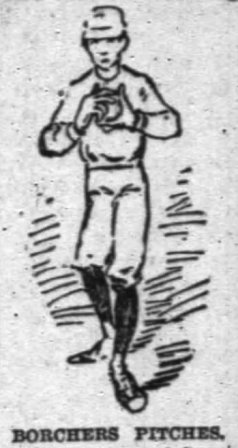
Caricature of Borchers from The Chicago Tribune--1888

Caricature of Borchers from The Chicago Tribune–1888

White Stockings shortstop Ned Williamson, who batted against Borchers on a West Coast trip, compared him to another California pitcher who made his big league debut at age 19:

“He pitched more like Charley Sweeney than any other man I ever saw, and Sweeney was as good as any that ever stepped in the box.”

Borchers made his debut on May 18.  The Chicago Inter Ocean said:

“Another wonder has been discovered and the Chicago Ball Club has it.  The wonder is George Borchers, the California pitcher.  He was put in the box to pitch for the Chicagos yesterday against the Bostons in the closing game of the series.  The result is manifest in the score—13 to 0…Borchers was made the hero of the hour.  He has come to stay, and his work yesterday is a guarantee of his ability to keep his place.”

The Chicago Tribune was more subdued than The Inter Ocean:

“(Borchers) has an easy delivery. Good curves and great speed, but his command of the ball remains to be determined.  Yesterday he was wild.  Three wild pitches were charged to him, and with a less active and reliable man than (Tom) Daly behind the bat more would have been recorded.  Those that got by Daly were extremely wild.  Still he was effective.”

The game, played in the rain at West Side Park, in what The Chicago Daily News called “practically a swamp,” was called after five innings.

The papers couldn’t agree on the attendance either–The Inter Ocean said it was 3000, The Tribune, 1500 and The Daily News 2000.

Borchers allowed just three hits and beat Charles “Old Hoss” Radbourn in his first major league game.

Things went downhill from there; the rest of Borchers’ story on Monday.

Adventures in Barnstorming—“Their Conduct was Disgraceful”

30 Oct

After the 1887 season John Montgomery Ward was celebrating his marriage to one of the most popular actresses of the era, Helen Dauvray, by touring the South playing exhibition games with the New York Giants–primarily made up of New York players but also included Mike “King” Kelly (who also brought his wife Agnes) of the Boston Beaneaters and Jerry Denny of Indianapolis Hoosiers.

John Montgomery Ward

John Montgomery Ward

The team arrived in New Orleans on October 29 and was greeted with a reception at the St. Charles Hotel.

The first game against the Southern League’s New Orleans Pelicans was played the next day at Sportsmen’s Park in front of 6000 fans.  New York’s Tim Keefe held the Pelicans to just two ninth-inning runs, in a 7-2 victory.   Ward had three hits.

The New Orleans Times-Picayune said:

“It was far from an ideal day for ball playing, for the weather was almost freezing and the wind blew in cutting blasts.  But those who admire baseball in this city were undeterred.”

The following day the Pelicans managed an 8-inning 4-4 tie:

“(The Pelicans) put up a game that would have done credit to any aggregation, and the only excuse for their not having bounced the Giants, was the fact that (Bill) Geiss and (Ed) Cartwright made inexcusable errors at the commencement that let in two runs.”

The Times-Picayune left out a large part of what happened that day.

Two days later the whole story appeared in papers across the country, The New York Times said:

“(S)everal members of the New York Baseball club were intoxicated when they entered the grounds to play with the New Orleans nine on Monday last.  Their conduct was disgraceful, and (Pelicans) Secretary (Maurice) Kaufman called on a police officer to eject them from the grounds.”

A wire report from New Orleans, that appeared in The Chicago Daily News said:

“There are several men in the New Yorks who have been drinking freely ever since they arrived in the city, and were not of course, in condition to play ball.”

Giants’ catcher William “Buck” Ewing, and Jerry Denny were identified as drunken players, but it was King Kelly who was most often singled out.  The wire report said when police attempted to arrest a drunken fan who had accompanied the players to the ballpark:

“Kelly jumped into the stand and tried to prevent the arrest, claiming the man was a friend of his…During the entire game the unseemly exhibition was kept up.  At one time Kelly climbed into the stand and drank beer with his friends, while the other men of the nine had already taken positions in the field to begin an inning.”

King Kelly

King Kelly

During the game Ward “took his wife from the grounds, and placing her in a carriage, sent her to the St. Charles Hotel, because of the disgraceful exhibition of some of the players.”

The game scheduled for November 2 was cancelled and The New York Times said the tour would be disbanded.

By the end of the week all parties were trying to downplay the incident.  Ward said members of the club “misbehaved in no way,” and instead said the cancellation was because it was discovered that Pelicans players had received $5 each for the games, and the Giants players only received $3.  The Pelicans and The Times-Picayune had a revised version of the events:

“The whole story is that a couple of the members met too many friends with tempting ways and reached the field in no condition to play ball.  The majority of the visitors were all right and were heartily ashamed of the conduct of their comrades.”

The paper said that the “New Yorks are in good trim again, however and at their own request a game was arranged for (November 4).”

The Giants won that game 5 to 3—New York catcher Buck Ewing pitched a complete game for the Giants (he pitched 47 innings during his major league career, with a 2-3 record and 3.45 ERA), beating the Pelicans best pitcher John Ewing.  Only 500 fans attended the game.

The series ended on November 6 with the Giants winning two games; a 3-1 morning game with “a very small crowd,” and an evening game in front of more than 6000 won by the Giants 5-4.

While the rest of the Giants continued on to Texas, Ward returned to New York for meetings to negotiate the recognition of the Brotherhood of Professional Baseball Players by the National League.  He rejoined the team on the West Coast later that month for a six-week barnstorming tour.

The Ward/ Dauvray marriage went about as well as the honeymoon in New Orleans—their divorce just six-years later was a very public, scandalous affair.  Ward, who was accused of being a serial philanderer, was actually barred from ever remarrying during Dauvray’s lifetime as part of the divorce decree.  He was able to get the ruling reversed in 1903 and remarried.

“A Game before the Kings and Many Nobles”

24 Oct

While traveling around the world as a member of A. G. Spalding’s 1888-1889 world tour, John Montgomery Ward wrote a series of dispatches for The New York World.  On February 23, 1889 the team played in Rome:

“In the picturesque Piazzi di Siena of the grounds of the Villa Borghese today the American baseball teams played a highly exciting game.  This is one of the favorite resorts of Roman citizens.  Never before in all my experience on the diamond have I seen so many distinguished persons among the crowd of baseball spectators as were in attendance here this afternoon.  The nobility was out in all its glory, and in there center stood his Majesty King Humbert.  He was dressed in a civilian’s suit and apparently enjoyed the sport. “

King Humbert "enjoyed the sport"

King Humbert “apparently enjoyed the sport”

Ward listed every member of the royal party and other “Roman princely families” who were present at the game.

“Nearly all the local literary and artistic celebrities were in the unprecedented royal and papal assemblage, and the applause at times would have stirred the heart of the most enthusiastic admirer of the American national game.  The last time the Piazzi di Siena was used was on the occasion of the marriage of the King’s brother, when the celebration was held on these magnificent grounds.

“The day was beautiful and the players were in fine condition.  During the preliminary practice the crowd of 5000 people was simply amazed at the skill displayed by the boys in batting, throwing and catching the ball.  The game itself was extremely well played, and resulted 3 to 2 in favor of Chicago.   The batting was lively, but nothing could pass the fielders, who played with remarkable energy.”

John Montgomery Ward

John Montgomery Ward

On the day of the game in Rome Ward said the players received word that National league owners were instituting the Brush Salary Classification Plan; a system developed by Indianapolis Hoosiers owner John Tomlinson Brush,  which rated players and placed them into five categories, each with a capped salary.  The Brush Plan, along with the Reserve Clause, would be the major impetus for the formation of the Players League:

“I interviewed every one of the men on the subject.  The scheme, as it is now understood by us, is regarded as a great mistake.  President Spalding, Captain Anson and Ned Hanlon concur in this opinion and say the plan is impossible and will not last long.”

Another issue that rankled players in Rome was the news that National League owners were demanding that the players return to the states by April 1 to prepare for the 1889 season; Ward said of the demands:

“From letter received by various members of the All-American team it is evident that certain managers are endeavoring to force the players to report for duty by April 1st.  For the information of these magnanimous gentlemen I will say that every player in the party will play the trip out.”

The All-Americans returned on April 6.

Nearly a Century before his Time

22 Oct

Baseball’s Reserve Clause was first instituted in September of 1879; the eight National League clubs agreed at a meeting in Buffalo, New York, that each team would be able to “reserve” five players for the following season.

In August of 1880, as it appeared the league would renew the agreement, Oliver Perry “O.P.” Caylor of The Cincinnati Enquirer wrote a scathing article about the practice; one that could have been written 10 years later by John Montgomery Ward during the creation of the Players League, or almost 90 years later by Curt Flood.

opcaylor11

O.P. Caylor

“It has frequently been urged in these columns that the so-called Buffalo agreement made by the league clubs last year…was a gross outrage and unworthy of the organization.  We did not believe until recently that the league would have gall enough to enact the disgrace.  But already there is log-rolling going on to bring it into existence for next season.”

Caylor said the only way to defeat the “five-men fraud” was for the players to stand up against it.

“What right has the league to say to any player where he shall play ball next year?  The days of slavery are over.  This system of Ku-Kluxism in ball-playing ought to be quashed.  A ballplayer has no better right than to place a price on his services in Cincinnati, and another for his services in Chicago.  It may be that he would rather play in Chicago for $100 less than in Cincinnati, or vice versa.  Let him name his price for each place.  Let the city which considers him worth the salary asked pay for it.  If he asks too much; that city need not engage him.  No man with common business sense would engage a clerk at a salary he could not earn”

Caylor did seem to miss the point that several owners did lack “common business sense” and that the Reserve Clause was instituted in large part to protect them from themselves.  He also overestimated the resolve of players to exercise their influence.

“It is time such outrageous policy was ended.  If the league will not do it, the players must.  It is a poor rule that will not work both ways.  Let the players then anticipate the fraud, and meet it half way.  Let every league player sign a solemn agreement with every other league player not to play ball next season for any club that shall attempt to coerce players in this manner.  The players command the field.  Clubs cannot do without them; but they can do without clubs.  If the league intends to repeat the fraud, it should deserve to have its existence ended.  Such men as George Wright, Jim (Deacon) White and John Clapp cannot afford to be driven out of the profession by such repeated outrages.  If the players, or, at least, the better part of them, will but demand their rights as men—freemen—they can have them.  If they go on supremely careless and do nothing until forty of them are under the yoke of despotism, they will richly deserve all that they suffer by it.  This is the time to act.  We warn players that the log is already rolling which is intended to pin them down again under the dictation of a despotic power.”

“Fear of the Black List has Stopped Many a Crooked Player from Jumping”

9 Sep

For a brief period in the mid1890s, George Jouett Meekin was considered among the top pitchers in the game; he might never have had the opportunity, but for what The Sporting Life called “The disastrous effects of Chairman Young’s somersault.”

Jouett Meekin

Jouett Meekin

 John Montgomery Ward, Meekin’s manager with the New York Giants, said he was, along with Amos Rusie, Tim Keefe, John Clarkson and Kid Nichols, the “most marvelous pitchers as ever lived.”

Charles “Duke” Farrell, who caught Meekin and Rusie with the Giants, said:

“Sometime, it seemed to me that (Meekin) was actually faster…Rusie’s speed struck the glove with a bruising deadening, heavy shock, and Meekin’s fastest gave a sharp, sudden sting.”

But in 1891 Meekin was a 24-year-old pitcher in his third season with the St. Paul Apostles in the Western Association. The New Albany, Indiana native became a well-known amateur player across the Ohio River in Louisville before signing his first professional contract with the Apostles in 1889.  His sub .500 winning percentage was not enough to keep the American Association’s eighth place Louisville Colonels, from inducing Meekin to jump his contract with St. Paul.

In June Meekin jumped; at the same time third baseman Harry Raymond jumped to Colonels from the Western League’s Lincoln Rustlers.

The National Board of Control, created after the 1890 season as part of the “peace agreement” between the National League and The American Association after the collapse of the Players League, to arbitrate contract disputes, acted quickly.  Board Chairman (and National League President) Nick Young announced that Meekin and Raymond would be “forever ineligible to play with or against a National Agreement club.”  The statement, signed by Young, also said:

“This order or any other that may hereafter be made for the same cause, will never be modified or revoked during the existence of the present board, whose term of office will not expire for five years.”

The move was applauded by the press and no less a figure than “the father of baseball,” Henry Chadwick, who called Raymond and Meekin part of a “venal cabal” of jumping players.

Despite the promise that the order would “never be modified or revoked,” Young did just that.  Within weeks of issuing the order, both players were reinstated.

The backlash was swift.

The Cleveland Plain Dealer called the reversal “nauseating.”  The Cincinnati Times-Star said it was “one of the greatest mistakes ever made.”  The Milwaukee Evening Wisconsin said Young and the board chose to “toss the National Agreement into the fire.”

nickyoungpix

Nick Young

James Edward Sullivan, founder of the Amateur Athletic Union (AAU) said the reinstatement of the “arch-culprits” Meekin and Raymond “was the worst in the history.”  He predicted dire consequences as a result:

“Heretofore the fear of the black list has stopped many a crooked player from jumping or doing dishonest work.  But from now on it will be different.  A precedent has been formed.”

Raymond jumped back to Lincoln, taking Colonels’ pitcher Phillip “Red” Ehret with him to the Rustlers.  Meekin remained with Louisville and moved to the National League with the Colonels the following season.

Meekin had a 10-year big league career as a result of Young’s reversal.

From 1891-93, Meekin was 29-51 with Louisville and the Washington Senators and was traded to the Giants (along with Duke Farrell) before the 1894 season.  He was 33-9, and fellow Indiana native Amos Rusie was 36-13, for the 2nd place Giants.  Meekin had two complete game victories in the Giants four game sweep of the first-place Baltimore Orioles in the Temple Cup series (Rusie won the other two games).

The New York Evening Journal called Meekin “Old Reliable,” and said, “He can push ‘em up to the plate in any old style, and is factor with the stick.”  The pitcher hit .276 with 29 RBI in 183 at bats in 1894 (including hitting 3 triples in a game on July 4) and was a career .243 hitter.

Meekin won 102 more games (including 26, and 20 win seasons in 1896 and ’97), but as O. P. Caylor said in The New York Herald he suffered from “a lack of control.”  Meekin walked 1056 batters and struck out only 901 in more than 2600 innings, he also hit 89 batters; in 1898, he broke Hughie Jennings nose with a pitch.

After posting a 16-18 record for the seventh place Giants in 1898, Meekin, along with Rusie, and second baseman William “Kid” Gleason, were blamed by New York owner Andrew Freeman for the team’s disappointing finish.  Freeman told reporters:

“Meekin, Rusie and Gleason will be either sold or traded.  We do not want them.  I’m going to break up cliques in the team even if I have to get rid of every man.  There must be harmony.  Without it we can’t win games.  We have too many men who are simply playing for their salaries and do not seem to care whether they win or not.”

Rusie had injured his arm late in the season and sat out the next two years.  Meekin and Gleason, despite Freedman’s promise, returned to the Giants for the 1899 season.  The team finished in tenth place, and Meekin struggled with a 5-11 record.

He was sold to the Boston Beaneaters in August for a reported $5000, although it was commonly assumed that the Giants received much less, or simply “loaned” Meekin to Boston for the stretch run; a charge made by Brooklyn Superbas manager Ned Hanlon.  Although Hanlon’s charges have become “fact” in countless books and articles over the years, several newspapers, including The Pittsburgh Press refuted Hanlon’s story:

“All that talk and fuss about Freedman giving Jouett Meekin to Boston in order to help that team win the pennant and thus get even with Brooklyn is nonsense.  The truth of the matter is that Freedman thought Meekin’s days as a pitcher were over, and he offered him to the Pittsburgh club, but President (William) Kerr thought the same way and did not take him.  At the time Boston’s pitching corps was in bad shape and manager (Frank) Selee took a chance on the big fellow.  There was no underhand dealing in the matter at all.”

Meekin was 7-6 with a 2.83 ERA for Boston, but the team finished second to Brooklyn.  He was released by Boston before the 1900 season and pitched just two games with the Pittsburgh Pirates before being released again in July.  He finished the season with the Grand Rapids Furniture Makers in the Western Association and spent 1902 in the Southern Association with the Memphis Egyptians.

Meekin returned home to New Albany, Indiana, where, in 1910, according to The Trenton True American “his earnings from baseball are well invested in real estate.”

Meekin slipped into relative obscurity by the time he died in 1944.

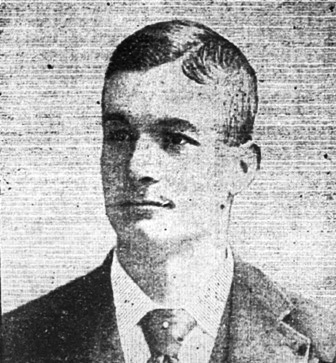
The original picture that appeared with this post–now below–was misidentified as Jouett Meekin in this blog and by The Louisville courier-Journal in 1897.  According to Mark Fimoff co-chair SABR Pictorial History Committee, the picture was actually Lave Cross.  

Lave Cross--picture earlier misidentified as Jouett Meekin.

Lave Cross–picture earlier misidentified as Jouett Meekin.

Happy Labor Day

2 Sep
John Montgomery Ward

John Montgomery Ward

John Montgomery Ward spearheaded the movement to create baseball’s first union.  He invoked the recent memory of slavery in his article entitled “Is the Base Ball Player a Chattel?” in “Lippincott’s Monthly Magazine,” in August of 1887:

“Like a fugitive slave law, the reserve rule denies him a harbor or a livelihood, and carries him back, bound and shackled, to the club from which he attempted to escape.”

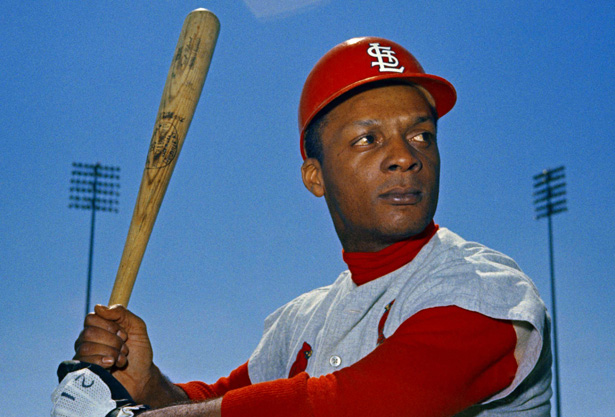
Curt Flood

Curt Flood sat out the 1970 season, refusing to report to the Philadelphia Phillies after being traded by the St. Louis Cardinals.  He challenged baseball’s reserve clause all the way to the United States Supreme Court.  Despite losing his challenge in 1972, Flood’s case was a major factor in the elimination of the reserve clause.

“I’m a human being I’m not a piece of property. I am not a consignment of goods.”

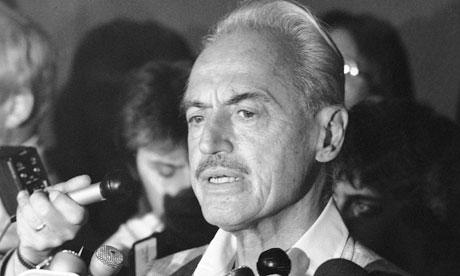
Marvin Miller

Marvin Miller

As Executive Director of the Major League Baseball Players Association from 1966 to 1982, Marvin Miller transformed the players union from a toothless entity to one of the nation’s strongest unions.  Jim Bouton, quoted by National Public Radio in 2009:

“If not for politics, so obvious to everyone, Marvin would have been voted in (to the Hall of Fame) years ago. Instead of pointing to the sky, today’s players should be pointing to Marvin Miller.”

Profiles of Members of Spalding’s World Tour

22 Apr

Among those who joined A.G. Spalding’s world tour between the 1888 and 1889 seasons, was Simon “Si” Goodfriend, a sports writer for The New York World who later became a theatrical agent.  In 1935 The New York Times said of Goodfriend “has watched baseball as a fan and a sportswriter since the days of the Civil War.”

Simon "Si" Goodfriend

Simon “Si” Goodfriend

Throughout the trip Goodfriend wrote brief profiles of some of the players:

On Hall of Famer John Montgomery “Monte” Ward:

“Ward is a credit to the professional brotherhood of ballplayers.  He is not only ambitious to elevate the standing of the profession but he is equally ambitious personally.  He is exceedingly studious and never visits a strange city (without visiting) the art galleries, museums and libraries and takes copious notes of what he sees.  He presents the same disposition on the sea voyage.  He is a busy person both with his pencil and at his ball practice.”

Ward, who had spearheaded the effort to create the first player’s union in 1885 and the creation of the Players League in 1890.

John Montgomery Ward

John Montgomery Ward

Of John Kinley Tener, White Stockings pitcher and future United States Congressman and Pennsylvania Governor:

“I was going to allude to John K. Tener as a typical handsome American gentleman, but unfortunately I learned, but a day or two ago, that he was born in Ireland and came to America with his parents when he was 9-years-old…His features are clear cut, regular and refined.  His manners are gentle and cultured. Baseball players secured a worthy brother professional when he joined their forces, and there is a to be regretted possibility that he may retire again next season…Anson can be relied on to make a great effort to hold him back.  On the trip Mr. Tener acts as a secretary and treasurer to Mr. Spalding.”

John Tener

John Tener

Tener jumped the Cubs to join the Pittsburgh Burghers in Players League in 1890; after posted a 3-11 record with an ERA of 7.31 Tener left baseball for the banking business, and ultimately politics.

Jimmy Manning, who would quite possibly save an umpire’s life in Kansas City in 1890, was also on the tour:

“(He) is another modest young man with a blond mustache, of which he is proud.   He recently graduated from the Boston college of Pharmacy.”

Jimmy Manning

Jimmy Manning

Philadelphia Quakers outfielder Jim Fogarty:

(Monte Ward) mentions in his book on baseball (that Fogarty was) probably the best right fielder in the country, is a bright looking young fellow with an exuberance of spirits, unquestionably inherited from the land of Erin, and that apparently has no limit.  It is said that he is writing for a Philadelphia paper.  If his letters are half as bubbling and genial as he is at sea they will make interesting reading.  With the exception of (Charlie) Bennett of the Detroits, Fogarty probably has as bad a pair of hands from hard knocks in baseball games as any player in the country.”

Fogarty also jumped to the Players League, joining the brotherhood team in Philadelphia; however he became ill during the season would die of tuberculosis in May of 1891.

Jim Fogarty

Jim Fogarty

Of Billy Earle, “The Little Globetrotter,” McClure said:

“Little William Earle…has already proven himself a first-class backstop (and) is still quite a lad, being only 21 years old.  He is heavy-set has a jolly round face, an habitual smile and tightly curled hair.  He rarely smokes, doesn’t drink and would almost sooner play ball than eat.

Billy Earle

Billy Earle

Some of Goodfriend’s observations about Earle would prove to be wrong, as discussed in an earlier post.

Goodfriend’s profiles of the White Stockings’ “stone wall infield” tomorrow.