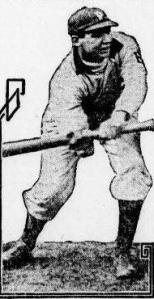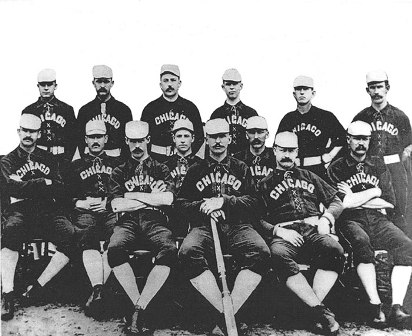
Tag Archives: Joseph B. Bowles

“Even when he Wins he Loses”

18 Apr

During his most successful season as a major leaguer, Bobby Byrne had some advice for the children who wished to follow in his footsteps:

“If they asked me I would tell them everything I could to keep them from starting.  Not that I knock the profession, but I think it is a poor one to choose, not because of the life itself, but because of its temptation and hardships, and worse than that, the small chances of being successful.”

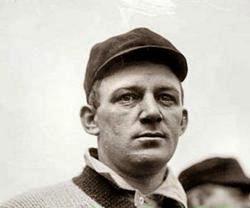
Bobby Byrne
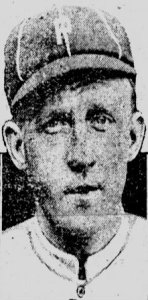
Bobby Byrne

That answer was given to syndicated journalist Joseph B. Bowles during the 1910 season when he asked Byrne questions about how he started in baseball “in order to help young and aspiring players.”

Despite being the starting third basemen for the defending World Champion Pittsburgh Pirates, and on his way to leading the National League in hits (tied with Honus Wagner) and doubles (178, 43), while hitting a personal-best .296 in 1910, he told Bowles:

“If I had it to do over again I do not think I ever would become a professional ballplayer, in spite of the fact that I love the game and love to play it.  I think a young fellow would do better to devote himself to some other line than to take the chances of success in the national game, for even when he wins he loses.”

He talked about how he started, and offered a theory about where the best players come from:

“I wanted to be a ballplayer and was educated at the game in a good school, on the lots around St. Louis.  I think that ballplayers develop faster when they are in the neighborhood of some major league team.  One or two of the players on a ‘prairie’ team are at every game the big league (team) plays.  They see how the game is played, and being at that age as imitative as monkeys, they work the same things on their own teams and teach all the other boys.  I have noticed when any city has a pennant winning club the quality of baseball played by the boys and the amateurs in that vicinity are much improved.”

Byrne

Byrne

Byrne said because of his time playing on the sandlots of St. Louis, he “picked up the game rapidly,” but said it wasn’t until he began to play professionally, first in Fort Scott, Arkansas, then in Springfield, MO, that he corrected the biggest flaw in his game:

“The hardest thing I had to learn was when to throw.   I think I must have thrown away half the games we played before I learned not to throw when there was no chance to get the runner. I think that is one of the first things a young player should learn; to look before he throws and only throw when he has a chance to make a play.  The next thing, it seems to me, is to learn to handle one’s feet and to keep in the game all the time, and be in position to move when the ball is hit.”

Even at the pinnacle of his career, the man who discouraged children from following in his path, was also somewhat cynical about his own experience:

“The biggest thing I had learned was that, no matter how far a fellow gets up in the business, there still is a lot he does not know, and by dint of watching and learning I held on, and still am learning and willing to learn.  When I know it all I’ll quit, or be released.”

Byrne continued “learning” for seven more seasons, and the end of his career was fitting for someone who warned that a young man should steer clear of baseball because “even when he wins he loses.” After being acquired on waivers by the Chicago White Sox in September of 1917, he appeared in just one game, on September 4.  He was with the team when they clinched the pennant 20 days later; and was released the day after he appeared in the team photo commemorating their American League Championship.
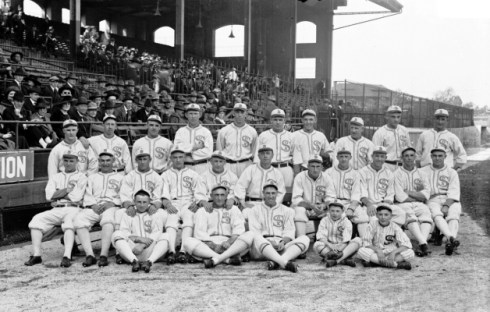
Group portrait of American League's Chicago White Sox baseball team posing in front of a section of the grandstands on the field at Comiskey Park, Chicago, Illinois, 1917.

White Sox team photo after clinching 1917 pennant, Byrne is fourth from right in second row–he was released the following day.

While the Sox were beating the Giants in the World Series, Byrne was back in St. Louis operating a bowling alley.   After three years away from baseball, he managed minor league teams—the Miami (OK) Indians and Saginaw (MI) Aces—in 1921 and ’22 before returning again to the bowling business.

His admonition against professional baseball didn’t stop his two sons from having their own brief minor league careers; Bobby played for several clubs between 1939 and 1941, and Bernie (listed as “Byrnes” on Baseball Reference) played for the Paragould (AK) Browns in the Northeast Arkansas League in 1940.  Both had their careers interrupted by WWII, Bernie was an airforce fighter pilot in Asia, while Bobby was awarded the Distinguished Flying Cross, Air Medal and Purple Heart while flying for the airforce in the Mediterranean Theater.
Clark Griffith, “How I Win”

14 Mar

In 1910, Cincinnati Reds Manager Clark Griffith spoke to journalist Joseph B. Bowles for one of  a series of syndicated articles in which baseball’s biggest stars described “How I Win.”

“If a fellow is going to cut any ice he needs ice picks and the first way for a manager to win is to get men who can deliver, and men intelligent enough to take care of themselves.

“My theories in regard to what constitutes a winner are the only ones, and I use them in instructing my players what to do.  I used them in pitching, and they worked out, and I believe any player will succeed if he follows them.”

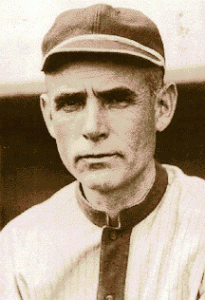
Clark Griffith

Clark Griffith

Griffith said baseball was “Ninety-nine and fifteen sixteenths” courage and nerve:

“It is more than that—it is what ballplayers call ‘guts’—which is courage with aggressive confidence behind it…The first thing to do to win baseball games is to go after anyone who does not wear a uniform that looks like yours, and go after him hard.  Hand every opposing player anything that will make him weaken or show the yellow.  Anytime I can convince my men that they are going to win and the other fellows that they are going to lose, I’ll win a pennant.”

He believed his confidence could successfully intimidate opponents:

“The best system of winning games is to tell the other fellow that you are going to beat him.  Tell it to him before the game starts and tell him in a way that will convince him.  You cannot convince him unless you believe it yourself.  I keep telling them all the time, and I believe it myself until the game is over and sometimes even then.”

Griffith said what he wanted most was for his players to:

“Take chances; any chance to gain an inch of ground or a base…Go after the game with intelligence and force every point as hard as possible…The player who takes chances of hurting himself seldom hurts either himself or his opponent and he will make a weak opponent run away.  More players get hurt stopping up on their feet and giving up before they are touched than are damaged in sliding to bases.”

He said that aggressiveness should also be directed at umpires:

“Then claim every point and claim it quick.  Holler.  ‘No, no’ real quick and beat the umpire to it on every close play a la (Johnny) Evers.  The umpire may be perfectly honest and square but on a close play the fellow who yells quickest is much more likely to get the decision.  I do not believe in fighting umpires or nagging at them.  I believe in yelling quickly.  Yelling quickly beats yelling loud all to pieces.  It is not cheating a bit, but simply protecting yourself on close plays not so much to get the decision yourself as to keep the other fellow from getting it.”

Griffith led the Chicago White Sox to the inaugural American League pennant during his first season as a manager in 1901.  And despite not winning one since, was very confident about his “theories” for success:

“These things, taken together with a little good pitching and perhaps one star pitcher, will win any pennant if carried out correctly and persistently, regardless almost of the mechanical ability of the players on the team.”

In the end, Griffith was unable “to win any pennant.”

His Reds teams in 1910 and 1911 were both sub .500 clubs and finished in fifth and sixth place.  He joined the Washington Senators in 1912, and finally with “one star pitcher’ he managed the team to two-second place finishes (1912-13), but did not win a pennant there either.  He stepped down as manager after the 1920 season to devote himself full time to his ownership duties.

One Star Pitcher

One Star Pitcher

He ended his managerial career with a 1491-1367 record over 20 seasons.

“A Flat-Footed Player is as Bad is a Flat-Headed one”

27 Jan

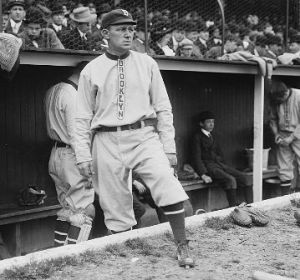
As part of his 1910 series of articles called “How I Win,” syndicated journalist Joseph B. Bowles spoke to Bill Dahlen, manager of the Brooklyn Superbas, during Dahlen’s first season as a big league manager.

Bill Dahlen

Bill Dahlen 

“The only theory on which I ever have worked is that every man on a team should work for the common interest, that each man should help out each other one, and that eight men if strong ought to help out the weak one.

“Close attention to every move is essential.  Not only should a player watch every change of position of his opponents…The mind must be alert at every instant during a game.  There is no room in major league baseball for any except fast-thinking and fast-moving players.  I do not mean that a player must be a ten-second man.  I mean he must be on his toes, ready to jump in any given direction without the loss of an instant.”

Dahlen said success was all about footwork:

“A man who handles his feet well, either batting, fielding or base running, is a good player, for footwork is better than ability with the hands.  It is necessary for a player to be shifty on his feet as it is for a boxer.  No one can be shifty unless he is on his toes all the time, and a flat-footed player is as bad is a flat-headed one—and usually the two things go together.

“The batter who is on his toes, balanced and ready for the jump, will hit, for he can shift and swing and still get his weight behind the bat.  The shifty runner on first is ready to move either way—to dive back to first or go on to second.  In the field, he moves with the ball, and is moving when it is hit, so he covers more ground.”

Dahlen had advice for young players:

“(He) should watch every move of the batter, and poise himself for the start just as a sprinter does.  I remember that one of the first things taught me after I joined the Chicago club was starting, and the crowd of great players under (Cap) Anson won many games because they started faster and were readier in seizing an opportunity than their opponents were.  Another thing they taught me was sliding to bases, not only so as to avoid being touched, but also to avoid getting hurt or hurting anyone.  That slide known as the ‘Chicago slide’ was the invention of (King) Kelly and adopted by (Tom) Burns, (Ned) Williamson, (Fred) Pfeffer and the great players of that day. There is more footwork to that slide than in any other department of the game.  It consists of watching the position of the baseman who is receiving a thrown ball and throwing the body in the opposite direction, sliding on the hip with the leg partially bent under and the toe hooking the bag.”

Bill Dahlen

Dahlen

Dahlen’s footwork was not enough to guide four bad Brooklyn teams to a winning season.  During his managerial career (1910-1913) the Superbas were 251-355.

Frank Schulte, “How I Win”

4 Jan

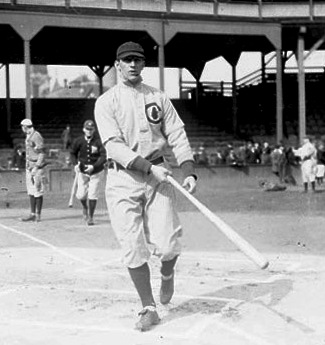
Chicago Cubs outfielder Frank Schulte told journalist Joseph B. Bowles “How I Win,” as part of a syndicated series of articles in the spring of 1910. Schulte, who owned and raced standardbred horses, compared baseball to harness racing:

“First, you have to have the horse, and next the driver that can get the best out of him, and is the best judge of speed and pace.  I try to lay back and let them trot their heads off then go to the whip down the stretch and finish strong.  Of course, I get set down for a bad ride in one or two heats each season.

“I don’t get excited about these ball games.  If they beat me today, I know there’ll be another game tomorrow, and if a fellow can keep up the old confidence he’ll come along somewhere. Every horse is allowed one break in a heat, if it isn’t too long, and still can win. In a race a fellow oughtn’t go to the whip too soon, and it’s the same in baseball.”

Frank Schulte

Frank Schulte

Schulte addressed criticisms about his low-key demeanor on the field, which led some to question his dedication:

“Lots of people think I don’t like this game because I don’t get excited, but the fact is I want to win just as much as anyone does, only it affects me differently. I try to keep thinking and waiting until some of the excitable fellows swing wide from the rail, then I make a drive for the pole and come through on the inside…A team out there in the front running their heads off and working themselves out oughtn’t to discourage a team that is trailing along and doing pretty well.  I just say: ‘Old boy, we may never get up where you are, but you’ll come back to where we are,’ and keep plugging along.”

[…]

“The only way I know how to win a game is to get the hit when it is needed and to make the throw when you have to, wasting as little effort as possible and saving up strength for the time when it is necessary.  I try not to wear myself down early in the season, and to come strong toward the finish, when games count more, and to drive harder in games that are important than in others, and to ease  up and save myself after a game is safely won;  that is not to take the chances in easy games I would take in hard ones.”

Schulte said “a fellow ought to be able to take a philosophical view,” of the game:

“Keeping cool and thinking helps a lot…If I strike out three times, I come back to the bench and say: ‘Old boy, you keep pitching that way to me and I’ll claw one pretty soon.’  And then maybe I get hold of the ball good just when it helps the most, instead of getting discouraged or worried.  And when one of those fellows who want to run themselves to death and tire out before a game is over, and reduce to shadow before the season ends, yells: ‘I got it, I got it!’ I say, ‘Take it, I’ll trot back. Then when I have to be I’m fresh.”

Honus Wagner, “How I Win”

14 Dec

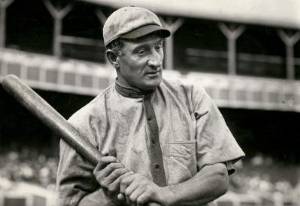
As part of a series of syndicated articles which asked some of baseball’s biggest stars to talk about “How I Win,” Joseph B. Bowles, a Chicago journalist, interviewed Honus Wagner before the 1910 season.

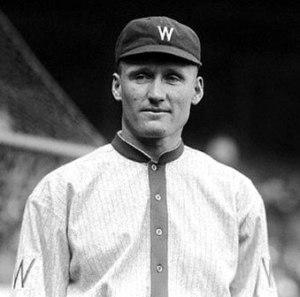
Honus Wagner

Honus Wagner

Wagner said it was simple:

“The secret of winning at baseball is to be found in the first order given to a new ballplayer.  it is ‘Keep your eye on the ball.’  I believe there is such a thing as the instinct for playing the game, but the greatest success comes from quick eyesight and from never taking the eye off the ball for a moment, whether batting fielding or running bases.”

But, he admitted he hadn’t given the subject much thought:

“I never have written anything about baseball, and never have thought much about why a team wins or why a player is a winning player (until now).  It is hard for a player to explain how he wins than it is to win.  I think, however after thinking it over, that the eyesight has more to do with it than anything else.  It is the quick eye and the steady one that makes a man a winner.”

Wagner said this was especially true at bat:

“The batter who faces a clever pitcher is certain to be outguessed by him the majority of times. There is no way to overcome the pitcher’s advantage except to have an eye quick enough to see either from the way the pitcher wings or from the way the ball comes, what is pitched, and then have an eye quick enough to enable him to follow the course of the ball.”

As for his approach at the plate:

“In batting a player should stand firmly on both feet.  It does not matter what his position at bat is, and he ought to take his most natural position, but he must stand on the balls of both feet to get the force of his body, arms and shoulders into the swing of the bat.  Every batter has a different style, but the good ones swing with a steady drive, backed up by the whole body.  I think there is a lot in the way a man holds his bat.  It is impossible to tell a young player how to hold his bat.  He must use his own motion and grip.  He can, however, learnt o shift his feet in hitting.”

On defense, Wagner said:

“(T)he quick eye saves many hits…Perhaps one in five ground balls hit to an infielder bound crooked or shoot in unexpected directions, and a quick eye and a good pair of hands will save the team.”

Wagner was also quick to credit his teammates:

“I think the big reason for Pittsburgh’s success has been first that we’ve played together a long time and know each other and second, and greater, that every man is there to win for the team, no matter what he may do himself.  Last year (George) Gibson caught the greatest ball of any catcher living, and he enabled all the rest of us to play team ball all the time because he was in the team work every minute.  Besides (Fred) Clarke is the greatest manager in the business and a great leader.  No one knows how good Clarke is until he has played with him.”

Bowles spoke with one other Pirate player for his series.   Second baseman John “Dots” Miller was the 22-year-old rookie second baseman who played alongside Wagner on the 1909 World Champions.  His answer to “How I Win:”

“I win by watching Wagner.

“When asked to tell how I won I was going to refuse because it does sound ‘swelled’ for a young fellow to tell such things or claim to win until I remembered how it was.

Dots Miller

Dots Miller

“I win because Honus Wagner taught me the game, showed me how to play it something after his own style, so in telling how I win I am only praising the teacher and the man I think is the greatest ballplayer of them all.”