Tag Archives: Milwaukee Brewers

“The Montgomery Team Threw to us Three Games by Arrangement”

12 Nov

The Southern Association kicked off their 1903 season assuming things couldn’t help but go better than the previous year.  The actions of Memphis Egyptians owner/manager Charlie Frank—who continued to put players in the Memphis line up who had been blacklisted by the league—had thrown the season into chaos.  The situation became so contentious that the headline in The Atlanta Constitution said after the final day of the season:

  To The Relief of All the Season is Now Over

A post season agreement restored the league—and made Frank even a greater power in the league.

As part of the settlement Frank received an estimated $5000 which he immediately put towards building a contender for 1903.

Frank built a good team and continued to improve it; as the team battled for the pennant in the final month the roster included veterans Perry Werden, Joe Delehanty, and Charles “Dusty” Miller.

In July he paid a reported $2500 to the Milwaukee Brewers in the American Association for outfielder Sam Dungan, pitcher Ray “Dad” Hale and third baseman Bill Phyle; Frank named Phyle team captain.

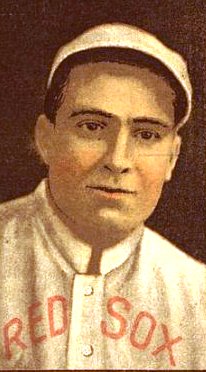
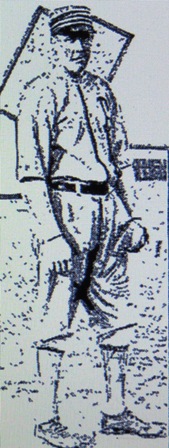
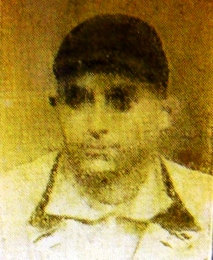
Bill Phyle

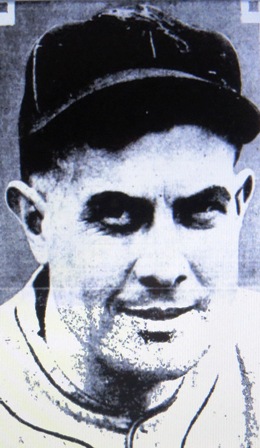
Bill Phyle

Frank’s team finished strong and edged out the second place Little Rock Travelers on the final day of the season; Memphis beat the Atlanta Crackers 9 to 5 in front of 7500 fans—the then largest ever crowd at Atlanta’s Red Elm Park.
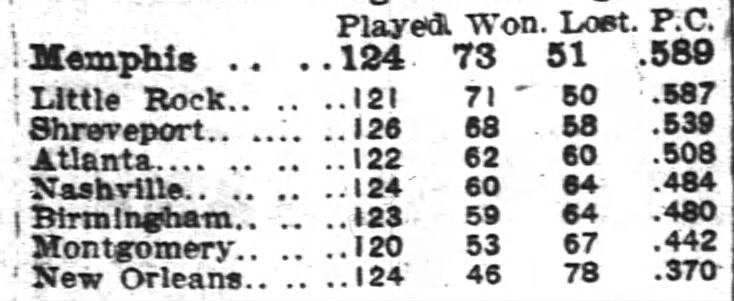
The final standings

The final standings

The following week Little Rock defeated Memphis 3 games to 2 in a best of five series; the Southern Association season appeared to have come to peaceful close on September 28, 1903.

That changed two days later.

Newspapers across the South reported on serious charges that were being made in Memphis.  The Associated Press said:

“According to statements made by William Phyle, former National League player and this year a captain of the pennant-winning Memphis team…the Memphis club won first honors by inducing players on the opposing team to ‘throw’ the final (series).”

Phyle told reporters the scheme began earlier in September:

“The Montgomery team (Black Sox) threw to us three games by arrangement, but Little Rock kept on winning and kept it close on out heals.  I knew that Birmingham (Barons) threw to Little Rock too.  Then the deciding and final game of the season between Memphis and Atlanta arrived, and we had to win the last two games to keep the lead.  Two of the Atlanta pitchers were given $25 each to allow Memphis to win…and another player was also bought.  We won one game by (George) Winters misjudging a fly that allowed (Ted) Breitenstein a three-bagger and the deciding run.”

Winters error came in the second to last game; he was absent from the final game of the season.

Phyle later told an Atlanta reporter that the pitchers who were paid off were Frank “Zeke” Wilson and John Ely.  Charlie Frank, who had just announced he was leaving Memphis to take control of the New Orleans Pelicans, denied the charges and claimed Phyle was simply angry over a “dispute involving money.”
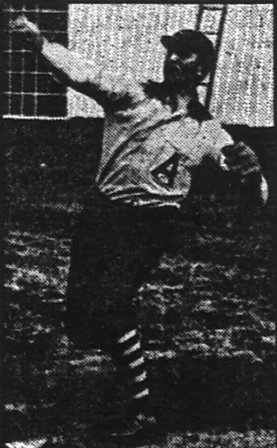
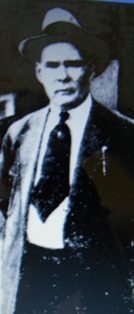
Zeke Wilson

Zeke Wilson

Phyle also said the five-game post season series was “prearranged, so that the deciding game was played in Memphis before a Sunday crowd.”

League President William Kavanaugh scheduled a meeting in Memphis for October 17 to investigate the charges, and Phyle went to West Baden, Indiana.

Phyle demanded travel expenses to return to Memphis for the meeting, he initially claimed that the money the league wired came too late. Then Kavanaugh ordered him, by telegram, to “catch the first train for Memphis,” Phyle refused, now claiming he was ill.

The meeting was held without Phyle.  Zeke Wilson testified that he had received $50 from Charlie Frank, but that it was given to him after the season in order to secure his release from Atlanta.  He said he intended to sign with Frank in New Orleans (he ended up signing with Montgomery in 1905, but joined Frank in New Orleans in 1905).

As for Winters, who made the error that allowed Memphis to win the second to last game and was absent for the final game, The Sporting Life said that charge was “very easily explained.” It was claimed he failed to appear in the final game because of a dispute with Atlanta management over transportation money.

Managers Lew Whistler of Montgomery and Michael “Duke” Finn of Little Rock denied that either club was involved in “anything crooked.”  John Ely did not appear but sent a letter denying all charges.

Without Phyle in attendance to provide his evidence the league “exonerated all clubs and players mentioned in his charges,” and suspended Phyle indefinitely.

Next Phyle was ordered to St. Louis to defend his charges before the National Association of Professional Baseball Leagues.  He again failed to appear.

On October 25 Bill Phyle was expelled indefinitely from professional baseball.

The following week he appealed the decision; claiming his illness was the only reason he failed to appear and that if allowed “he will appear and substantiate the charges which he has made.”

He was never given another opportunity to present his case.  His appeal was denied in December.

Tomorrow: More on Bill Phyle.
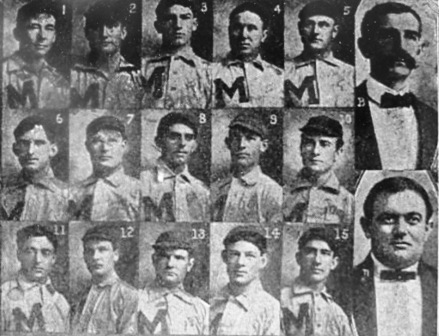
The 1903 Memphis Egyptians--

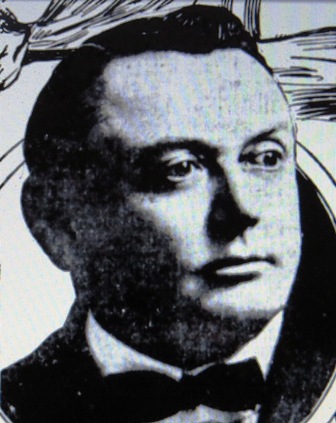
The 1903 Memphis Egyptians–Bill Phyle is number 11, Joe Delehanty 2, Perry Werden 4, “Dusty” Miller 12, Ted Breitenstein 13, Charlie Frank, bottom left with bow tie
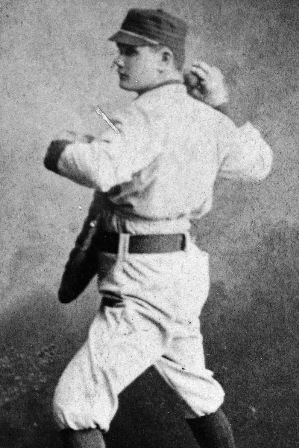
Filling in the Blanks, Pearson, Minneapolis Millers, 1884

18 Apr

Baseball Reference lists “Pearson” as a pitcher for the Minneapolis Millers in the Northwestern League in 1884.

Edward Pool Pearson’s professional career was brief and ended dramatically.

Born in Waterloo, New York in 1859, Pearson attended Hobart College, where he studied mathematics.

He pitched three seasons with the Hobart team—his battery mate there was James Adelbert McCauley, who also made his professional debut with the Millers in 1884, and went on to play with the St. Louis Browns, Buffalo Bisons, Chicago White Stockings and Brooklyn Grays in the National League and American Association.

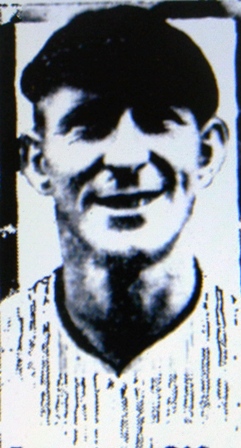
jim McCauley, Pearson's teammate at Hobart and with Minneapolis

jim McCauley, Pearson’s teammate at Hobart and with Minneapolis

Pearson was 5-7 with a 1.54 ERA in 13 appearances with the Millers when he took the mound to pitch against the Milwaukee Brewers on August 7.  According to The Associated Press:

“Pearson, the pitcher for the Minneapolis Club, while delivering the ball, broke his arm above the elbow.  It broke with a snapping sound that could be heard all over the diamond, the ball rolling along the grass to the Captain’s line.  Pearson uttered a loud cry of pain and fell to the ground.  He was immediately carried to a doctor’s office, where the broken bone was set…The accident will necessitate his retirement from the diamond, as he has no desire to ever play ball again.”

After the injury he  returned to Hobart, graduated in 1885 and received a Master’s Degree in 1889.  Pearson died in 1932.

McCloskey, Mays and Hair Color

12 Mar

Carl Mays is best known for being the pitcher who hit Cleveland Indians shortstop Ray Chapman with a pitch, resulting in the only hit by pitch death of a Major League player. In fifteen seasons he posted a 208-126 record with a 2.92 ERA.

Five years before he became infamous for Chapman’s death, Mays became embroiled in a strange feud with former National League manager John James McCloskey; the dispute was over hair color.

Carl Mays

Carl Mays

In December of 1914, McCloskey was a well-respected figure in baseball, credited with being the “father” of the original Texas League in 1888, he had spent five seasons as manager of the Louisville Colonels and St. Louis Cardinals in the National League, and another 23 as a minor league manager and owner.

Mays was coming off a 24-8 season for the Providence Grays in the international League, and while called up to the Red Sox in the closing weeks of the season had not yet appeared in a big league game.

The controversy originated when Charles “Toby” Fullerton, a pitcher for the Seattle Giants in the Northwestern League was quoted in an article that appeared in The Pittsburgh Press and several other papers about pitcher “Seattle Bill” James, who had just led the Boston Braves to a World Championship. Fullerton said when he and James were teammates in Seattle in 1912, manager Shad Barry had, “condemned the youngster for being a blond,” he then was quoted saying McCloskey also, “has no use in the world for blonde ball players.”

“Seattle Bill” James

The strange, silly, throwaway quote should have been the end of it, but it was apparently serious enough for McCloskey to issue a long denial from his home in Louisville, Kentucky. The full-page letter McCloskey wrote appeared in more newspapers than the original story, and read in part:

“Let me say, I have been accused of every crime in the calendar, but this is too much.”

McCloskey claimed the “rumor” originated when he was managing the Milwaukee Brewers in the American Association in 1910. Outfielder Rube DeGroff played for McCloskey (incidentally, Shad Barry was also a member of the team), and according to McCloskey:

“We were playing in Kansas City, we were behind…and made a big rally that came near giving us the game. The bases were full in the last inning, with two men out, when the big, blonde and good-natured Rube DeGroff, who was a splendid all-around player and life of the club, came to bat with the bases full and struck out. I was sore over losing the game and made the remark that I never saw a cotton-top who ever made good in a pinch.”

McCloskey said he also believed anything Barry might have said to or about James was certainly a joke, and closed with a final defense:

“In fact, in my humble opinion, I think the blonde has a shade over the brunette. But why the color of a man’s hair should have anything to do with his ability as a ball player is a mystery to me, and I hope this explanation will put an end to these silly rumors.”

It didn’t.

Within days Carl Mays weighed in, claiming that he had twice been rejected for an opportunity to pitch for McCloskey’s Ogden Canners in the Union Association because he was blond.

Mays said:

“McCloskey is a liar pure and simple…In 1912, when I was on my way to Boise to try out for the Boise team; I stopped off at Ogden, thinking possibly owner McCloskey might give me a trial. I met him downtown in a billiard parlor and went up and introduced myself.

“McCloskey looked me over carefully, like a horse-trader examining a piece of horseflesh, and then suddenly espied my blond hair. ‘No,’ said he coolly, ‘I don’t want you. In fact I wouldn’t have you around the ranch. I don’t want any blonds in my camp.’”

Mays also claimed that later in 1912 while compiling a 22-9 record for the Boise Irrigators in the Western Tri-State League; he was nearly sold to McCloskey’s pitching-strapped Ogden Canners until:

“One of the Ogden players happened to mention the fact that he was the same blond-haired fellow who had asked for a job earlier.”

According to Mays, McCloskey said:

“’Deal is off. Send that white-haired guy over here and I’ll kill him.’”

The story stuck with McCloskey for more than 20 years. A 1916 story in The Providence Tribune said:

“Scouts all over the country know McCloskey and never did one in his employ recommend a light-haired ballplayer…His peculiarity was well-known, and he knew that no one would have the temerity to recommend to him a blond or light-haired ballplayer. “

The black-haired John McCloskey

The black-haired John McCloskey

In 1934, The Milwaukee Journal called McCloskey, “one grizzled veteran who frowned on blond athletes.”

The article quoted E. Lee Keyser, a long-time minor league executive, who said when McCloskey managed Butte, “One of (McCloskey’s) players was an Indian outfielder whose hair was black,” the player struck out in a critical situation. According to Keyser, when the unnamed player returned to the clubhouse later, McCloskey grabbed his hair and said: “I just want to know if you’re wearing a wig. You hit like a blond.”

McCloskey managed in the minor leagues until he was 70-years-old, he died eight years later in 1940.

Things I Learned on the Way to Looking Up Other Things #1

7 Mar

There are many interesting, odd, great stories I stumble across when researching that are too short for a full post.

Sydney J. Harris, the late Chicago Daily News and Sun-Times Columnist had a regular feature by the same title as this post.  It seemed an appropriate name for this feature—so with a hat tip to Mr. Harris:

Arrested for Refusing to Fight Forest Fire

In December of 1911, Boston Red Sox pitcher Charley Hall and Pacific Coast League outfielder Harry Price were teammates on a winter league baseball team in Ventura, California, when a forest fire broke out in the area.  According to The Associated Press:

“When the fire was at its height Hall and Price…were sitting on the veranda of a hotel,  a deputy fire warden ordered them to fight the fire but they refused.”

Charley Hall, arrested for refusing to fight fire

Charley Hall, arrested for refusing to fight fire

Fire Warden John Kuhlman placed both players under arrest.  There is no record if they were ever convicted.

Baseball 1860

The New York Herald report on a July 5, 1860 game:

“The friendly game of ball between the Excelsior Club of Brooklyn and the Niagara Club of Buffalo resulted in an easy victory for the Excelsiors.

“The score was, Excelsior 50, Niagara 19.  In the fifth inning the Excelsiors made twenty-four runs.”

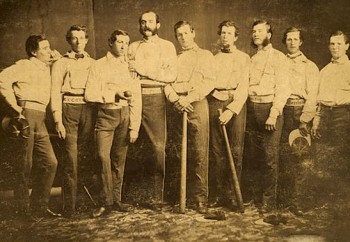
The Excelsiors, 1860

The Excelsiors, 1860

Carrier Pigeons

According to The Philadelphia Record in 1883 a zookeeper in Philadelphia used carrier pigeons dispatched between the zoo and Jefferson Street Grounds to provide updates on Athletic games.

Pigeons were also used by news organizations for the next several decades.  In 1900 The Milwaukee Journal bragged of their “carrier pigeon news service” which delivered updates from Milwaukee Park to the newspaper offices.  According to The Journal, sometimes the pigeons were more interesting to Brewers fans than the games.

The Journal’s carrier pigeon service attracted much attention on the field, and as each bird was released from the grand stand, the spectators of the game invariably lost interest for a moment in the diamond as they watched the bird dart upward and shape its course toward the city.

“Even the members of the contesting teams allowed their attention to be distracted at times by the unusual spectacle, and once, at the beginning of the sixth inning, when one of the liberated birds swooped down past big Perry Werden (Minneapolis Millers first baseman) as he stood guard over the initial bag…(Werden) raised an imaginary gun as though to take a shot at the pigeon, and of course the bleachers laughed.

“That The Journal’s service by means of the birds in not unknown to Milwaukeeans was well illustrated by the conversation of people seated around the spot from which the birds were set free.  They discussed the enterprise and those who did not understand the plan were quickly enlightened by the others, who knew all about how fast the birds flew, how they were kept and how they carried the news.”

The practice was continued at The Journal over the next decade.

Cincinnati radio station WLW revived the practice for at least one game in 1939, when the station used pigeons to deliver information from a Reds game against the Pittsburgh Pirates to the studio.

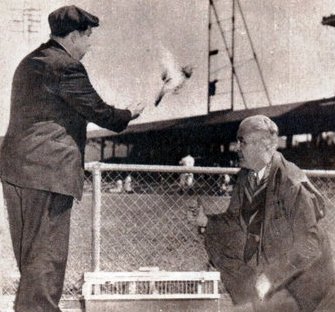
Carrier Pigeons being released at Crosley Field,  Cincinnati, 1939

Carrier Pigeon being released at Crosley Field, Cincinnati, 1939

Another “Rube”

4 Mar

Hall of Famer “Lefty” Grove and Jack Ogden were the best known pitchers of the great Baltimore Orioles teams that won seven straight International League Pennants from 1919-1925, but in 1923 both were out-pitched by James Arthur “Rube” Parnham.

Parnham began his professional career in 1914 with the Huntington Blue Sox in the Ohio State League.  In 1915 he joined the Raleigh Capitals in the North Carolina State League, managed by Connie Mack’s son Earle.  The 21-year-old was an unspectacular 9-15 for Raleigh, but caught the eye of the elder Mack and spent the spring of 1916 with Jacksonville with the Philadelphia Athletics.

Rube Parnham, 1917

Rube Parnham, 1917

Parnham returned to the North Carolina State League for the 1916 season, splitting time between Raleigh and the Durham Bulls, posting a 17-19; his contract was purchased by the Athletics in late August.  Nearly a month later Parnham made his Major League debut; he appeared in four games for Mack’s last place (36-117) ballclub, he was 2-1 with a 4.01 ERA.

Parnham was with the Athletics in Jacksonville again in 1917, but was sent to Baltimore before the beginning of the season.  He won 16 games for the Orioles and earned one more shot with Mack in Philadelphia; Parnham was 0-1 with a 4.09 ERA in two September appearances.

As Parnham started winning games for Baltimore he developed a reputation as a work horse; in 1917 he won both ends of a double-header against the Rochester Hustlers, pitching a total of 24 innings in two 3-2 victories; in 1919 he won both games of a twin bill twice.   At the same time he began to earn a reputation as “eccentric’ and “erratic,” the inevitable comparisons to Rube Waddell and his small time roots earned Parnham the nickname “Rube,” he was also known as “Uncle.”

Baltimore sold Parnham to the Louisville Colonels in the American Association in March of 1918, but within two months was sold back to Baltimore, where he rejoined manager Jack Dunn, with who he had, and would continue to have, a contentious relationship.  He won 22 games in 1918 and followed with 28 in 1919, leading the Orioles to their first championship since 1908.

As the Orioles jumped out to a quick lead in 1920 (Parnham was 5-0, and was joined on the pitching staff by Ogden and Grove) the erratic Rube Parnham surfaced again. He was prone to disappearing for days at a time and also appears to have been hurt.  By mid-season he was gone.

More recent accounts have said Parnham jumped the Orioles to play semi-pro ball in Pennsylvania; just as likely, Parnham, who was suspended in June by Dunn for being out of shape, and who was clearly overshadowed by Grove (12-2) and Ogden (27-9); as well as Jack Bentley (16-3) and Harry Frank (25-12), was let go.

Lending credence to Parnham not having jumped is a January 1922 Associated Press item that said the pitcher “whose arm went on him” would rejoin “the Baltimores for the 1922 season.  Parnham wrote Dunn that he believed he could come back next season and pitch successfully.”  He won 16 games for the Orioles in 1922.

The following season would be Parnham’s best; the 29-year-old pitcher led the Orioles with a 33-7 record, Grove was 27-10, Ogden 17-12.   In addition to out-pitching his two teammates, Parnham set an international League record by winning 20 consecutive games.

Parnham’s old ways returned before the 1924 season when he failed to report to Florida for spring training.  The Associated Press said:

“Rube never reported at the Oriole training camp in the south and never even deigned to notify Jack Dunn whether he was going to play ball this year.”

Parnham eventually reported, but had another stormy, abbreviated season.  With a 6-5 record and a 4.84 ERA, Dunn suspended the pitcher in June, and he appears to have not pitched for the Orioles again that season.

The only reference to Parnham in 1925 was a May game he pitched for a semi-pro team in Duquesne, Pennsylvania and was beaten 8-0 by the Homestead Grays.

His career appeared to be over, but Dunn, it seems was willing to give his pitcher one more chance.

The Baltimore Sun said shortly before the 1926 season:

“Uncle Rube Parnham, the most colorful figure in the International League, will be back on the mound for the Orioles next season.”

Parnham was 13-9 with a 5.05 ERA, and spent the entire season feuding with Dunn; It was the end of the Orioles dynasty, the Toronto Maple Leafs won the championship in 1926 and Baltimore would not finish first again until 1944.

The Orioles were finally through with Parnham, The Baltimore Sun said:

“There was so much trouble between Parnham and Dunn last year that it was apparent Rube had spent his last season with the Orioles.” “

The 32-year-old was still considered valuable enough that the Milwaukee Brewers in the American Association purchased the pitcher from Baltimore.

The Brewers expected big things from their new pitcher, The Milwaukee Journal said:

“At times his playfulness leads him away from the straight and narrow, and he nearly drove Jack Dunn nutty last season…But Parnham is a great pitcher, despite his eccentricities, and if (Brewers owner) Otto Borchert can hire a good keeper for him is certain to be a winner with the Brewers.”

By March Parnham had worn out his welcome with another manager when he didn’t bother to report to Hot Springs, Arkansas for spring training.  The Journal said:

“Disgusted with the dilatory tactics of Rube Parnham, Jack Lelivelt, boss of the Brewers, hinted Saturday night that unless the eccentric righthander reports at once that he would probably be turned back to Baltimore.  Former International Leaguers …have told the Milwaukee leader about some of Reuben’s idiosyncrasies  and Lelivelt is beginning to feel that he will become a stepsister to Kid trouble if he had the former Oriole on his club.”

Parnham never played for the Brewers, and was returned to Baltimore, but Dunn was finished with him as well and he was shipped off to the Reading Keystones.  After a 2-8 season split between Reading and the Newark Bears, Parnham’s career was over.

rube

Rube Parnham, 1923

Parnham retired to McKeesport, Pennsylvania, where the troubles that followed him throughout his career seem to have continued.  James Bready, an editor for The Baltimore Sun went to Pennsylvania to interview the former Oriole hero in 1961:

“The story was that he had gone downhill. Falling asleep in the snow, recently, he had lost several toes. On the phone, the director of a home for indigents said he would notify Parnham of the interview project. He gave me the street address — and a caution: ‘Try to get here before noon.’

“Paper, pen — I knocked and Rube beckoned me inside what today would be called a shelter. He was wearing an overcoat (I understand that better, now) and had not shaved recently. We sat down, facing, on two of half a dozen cot beds.  I tried a question. ”Gbbmhdahlr,” he replied. I stared at him; slowly, the meaning penetrated. I reached in my pocket and handed him a dollar.”

Parnham died two years later in McKeesport.

“The Man who Ate Himself out of the American League”

20 Nov

Frank Frederick Schneiberg was born in Milwaukee in 1882 (Baseball Reference lists his year of birth as 1880, but all available documents say 1882).

He began playing baseball for amateur teams in the Milwaukee city league, and after playing for the Pabst Brewery team in 1903 signed with the Springfield Hustlers in the Three-I League.  No records survive, but according to The Milwaukee Journal Schneiberg “won 19 out of 21 starts.”  He played with the Freeport Pretzels in the Wisconsin State League in 1905 and according to the Journal “won 12 straight.”

Frank Schneiberg

He won 22 games the following season with the La Crosse Pinks, which earned him a shot with the Detroit Tigers.

It didn’t go well.

Schneiberg was released to the Milwaukee Brewers before the beginning of the season.

The Associated Press said:

“He has the earmarks of a great pitcher…speed, curves, control and a pretty good collection of baseball brains…but Schneiberg was lazy…He wasn’t eager to pitch.”

The story quoted Tigers manager Hugh Jennings:

“He knows how (to pitch) but he won’t exert himself, I don’t want anybody who will not hustle.”

The Toledo News-Bee blamed his release on something else:

“He is known all over the country as the man who ate himself out of the American League.”

It is unknown whether either or both versions of his time with the Tigers is accurate, in either case, Detroit did try to claim that Schneiberg was still their property later that season when he was pitching well for the Brewers.  The claim was denied and he remained in Milwaukee.

Schneiberg pitched for the Brewers for three seasons compiling a 40-48 record.

While a fan favorite in Milwaukee, Schneiberg appears not to have been popular in at least one other American Association city.  The Toledo News-Bee accused him of being a head hunter in 1908:

“Schneiberg has the reputation of threatening to ‘bean’ batters.”

The following season The News-Bee claimed the Brewers were trying to trade the pitcher and said the team was:

“(V)ery anxious to trade the German, who does not work with any spirit, but the player is not highly regarded around the circuit.”

Regardless of the opinion in Toledo, The Brooklyn Superbas thought highly enough of Schneiberg to draft him from the Brewers at the end of the 1909 season.

He appeared in his only Major League game. On June 8, 1910, with Brooklyn trailing the Cincinnati Reds 4-0, Schneiberg relieved Nap Rucker in the top of seventh inning.  He walked four, gave up five hits and allowed 7 runs (Baseball Reference shows Schneiberg giving up eight runs, with seven earned—the box score from the game shows 7 total).

Schneiberg was lifted for a pinch-hitter in the bottom of the seventh.  Within days, he was traded to the Des Moines Boosters in the Western League.

He retired after the 1910 season, but in February of 1913 signed with the Memphis Chickasaws of the Southern Association.  He appeared in two games and was released, and in June signed with the Springfield Watchmakers in the Three-I League.  It’s unclear whether he appeared in any games with Springfield.

Frank Schneiberg 1932

Schneiberg retired to Milwaukee after the 1913 season, he became an asbestos worker and an official in the Asbestos Workers Union.  He passed away in Milwaukee in 1948.

Alonzo Hedges and the Hunting Dog

31 Oct

In 1903 Alonzo Hedges briefly became a baseball sensation.

“Pongo” Joe Cantillon, manager of the pitching strapped Milwaukee Brewers in the American Association acquired fellow Kentuckian Hedges in August from the Paducah Chiefs in the Kitty League (no roster exists for the team, but Hedges is listed in multiple box scores in Kentucky newspapers).

Said to be a 19-year-old, Hedges started his first game for Milwaukee the day after his arrival and shut down the Columbus Senators–he took a no-hitter into the ninth inning, giving up a single with two outs.

After another shutout in his second game, Hedges, “The Boy Pitcher of Milwaukee,” appeared headed for stardom.  He wasn’t.

Alonzo Hedges

First, The Chicago Tribune revealed in mid August that “The ‘boy pitcher’, whom a number of clubs are after, is really 23-years-old.”   Then Hedges faltered.  While posting a 5-4 record he was hit hard in last 11 games with Milwaukee, after being nearly unhittable in the first two.

Back in the Kitty League with the Springfield Hustlers in 1904, Hedges was effective and helped lead the team to the league championship (again, no statistics survive), but he was no longer mentioned seriously as prospect.

Newspaper accounts indicate he was the “Hedges” who appeared in four games for the Webb City Goldbugs in the Missouri Valley League in 1905—although an arm injury ended his career early in the season.   Hedges signed with the Springfield Senators of the Three-I League in 1906, but it appears that he never played for the team.

How Hedges ended up with Springfield after his brief time in Milwaukee is the real story.

One of the stories that has been told and retold about the colorful Joe Cantillon is that in 1915, while part owner and manager of the Minneapolis Millers, he traded a player, “outfielder Bruce Hopper,” to the Chicago Cubs for a hunting dog.

There are two problems with the oft-repeated story:  “outfielder Bruce Hopper”  is actually pitcher Bill “Bird Dog” Hopper, and contemporaneous accounts mentioning that Hopper was once traded for a dog provide no details of the transaction and predate Hopper’s tenure playing for Cantillon.

Joe Cantillon

However, such a trade might have taken place, but it happened more than ten years earlier and the player traded was Alonzo Hedges.

A 1910 article in The Milwaukee Sentinel mentions that Milwaukee Brewers owner Charles Sheldon Havenor kept a photo of Cantillon on his desk, along with a letter.  The letter read:

“The mother of the dog in the picture is the one I received in exchange for Alonzo Hedges, the pitcher.”

The story went on to tell the story of the trade:

“Cantillon went to Springfield, IL, to see a friend of his who owned the Springfield club and ran a cafe on the side.  During the course of the afternoon the friend showed Joe a couple of dandy setter puppies.”

Later in the discussion when the Springfield owner mentioned his need for pitching, Cantillon offered to sell him Hedges, and Cantillon said “I’ll let you have the fellow for one of those dogs.”

The Sentinel concluded:

“Mr. Hedges may not have been much of a bear cat as a pitcher, but he probably has the distinction of being the only ball player in captivity ever traded for a dog.”

One more note on Hedges.  The Chicago Tribune might have been wrong, the 23-year-old “Boy Pitcher,” might have actually been 26-years-old.  While Hedges grave lists his birth date as 1880, all extant records, including Hedges’ death certificate and census data, indicate he was born on 1877.

Hedges passed away January 12, 1928 in Paducah, Kentucky.

Ty Lober

27 Sep

Elmer “Ty” Lober was a long-time minor league player, manager in the Wisconsin State League, served in the Army in WWI and was a central figure in a scandal that briefly rocked the Pacific Coast League in 1914.

In September of 1914 police in Portland, Oregon announced the arrest of four men, and issued a warrant for a fifth.  The men were charged with “Wholesale traffic in school girls between the age of 14 and 16.”

Two of the men arrested were Portland outfielder Lober and third baseman Bobby Davis.  Also arrested were a local jeweler and an actor named Bert Roach (Roach would go on to appear in more than 300 films).  The warrant was issued for Mission Wolves and former Major League pitcher Frank Arellanes.

Early reports indicated that the players had confessed and that there would be several more arrests.  But the “open and shut case” described by West Coast newspapers seemed to quickly fall apart, and concerns about wide spread human trafficking among Pacific Coast League players quickly faded.

Just three weeks after the arrests the grand jury came back with indictments for only two of those arrested; Davis and Arellanes.  The cases against these two quickly fell apart also and all three players were in uniform at the beginning of 1915, Lober and Davis with Portland and Arellanes with Denver in the Western League.

Lober went on to play with Lincoln in the Western League before entering the service in 1918.  He spent 1920 with an independent team in Zanesville, Ohio and was signed to play with the Milwaukee Brewers in the American Association in 1921.  He finished his career with the Little Rock Travelers of the Southern Association in 1925 (he’s misidentified as “Lobar” on Baseball Reference).

Elmer “Ty” Lober

Lober managed and occasionally played for Two Rivers in the Wisconsin State League into the early 30s

He passed away on November 6, 1946 in Two Rivers.

Charlie Dexter, and the Other Charlie Dexter

14 Aug
Last week I told you about Charlie Dexter, former major leaguer, and one of the heroes of Chicago’s Iroquois Theater fire.  Not to be confused with the other Charlie Dexter, a minor league outfielder and first baseman of the same era.  The two were often conflated in contemporary newspaper accounts.

Charlie Dexter

The other Charlie Dexter, the career minor leaguer (1904-09), was born Oscar Schoenbecker in Ohio and was killed in a hunting accident in November of 1909 in Mount Holly, Ohio.  According to his obituary, in The Cincinnati Commercial Tribune he changed his name “fearing the jests of the old people in case he failed,” as a player.

Reading contemporary accounts of the major league Charlie Dexter is a study in dichotomies.  A year and a half before his heroics at the Iroquois theater were recounted in papers across the country, numerous papers echoed the sentiments of the Pittsburgh Press that Dexter’s release by Chicago had more to do with his being a “trouble maker” than his .227 average.

Numerous stories over the years hinted, or outright said that Dexter, like many players of the era, had a serious drinking problem. He was released by Boston after the 1903 season and returned to the minor leagues for the first time since 1895.
The end of line seemed to come in October of 1905 in Des Moines, when during what was described as a “Drinking binge” Dexter stabbed his friend, Milwaukee first baseman Henry “Quait” Bateman.  The earliest reports from Iowa papers and wire services said Bateman was either dead or near death and that “(Dexter) slashed Bateman across the breast, the blade cutting into the lung.”

Quait Bateman

Dexter was immediately arrested.  But within days the wire services were reporting that Bateman was not seriously injured and had refused to file charges.  Dexter was released from custody.  Other players who were present (none were named is stories) “Dexter and Bateman are on the best of terms and that their little quarrel had done nothing to mar their friendship.”  Without Bateman’s cooperation, a grand jury elected not to indict Dexter.

He played two more seasons in Des Moines, taking over as manager from Mike Kelly 20 games into the 1907 season and managing the team through 1908.

Dexter stayed in Iowa and was occasionally mentioned in local papers over the next few years in connection with amateur and semi-pro leagues.  Dexter shot himself in 1934 in Cedar Rapids, Iowa.  Bateman Died in Milwaukee on January 18, 1937.

One more story about the aftermath of the Bateman stabbing next week.

Murdered by an Actor

3 Aug

In 1905 Arthur Brown was a promising first baseman from Wilkes-Barre PA.  He had been discovered by Walter Burnham who managed east coast minor league teams for more than 20 years.  After spending the ’05 season with his hometown team in the New York State League.

He played for Burnham with Newark in the Eastern League the following season, and despite a .235 average he was purchased by the Detroit Tigers and then sold to Montreal.  After a .239 season with Montreal in the Eastern League and a spring training Trial with the St. Louis Browns, Brown played for Milwaukee in the American Association in 1908, hitting .192.  In 1909 he played for Trenton in the Tri State League and moved on to Albany in the New York State League in 1910.

On June 15 of 1911 Brown was in his second season with Albany, hitting .187.  He was living in Albany with an actress named Mildred Barre; the problem was she was still married to an actor from New Orleans named John V. McStea.  McStea entered the house on Pearl Street  in Albany and after being hit by Brown pulled a revolver and shot the 1st baseman four times.  Brown died that night.

McStea was convicted the following year, his wife testified for the prosecution.