Tag Archives: National League

“Phil Powers Seems to be Dead to the World”

15 Apr

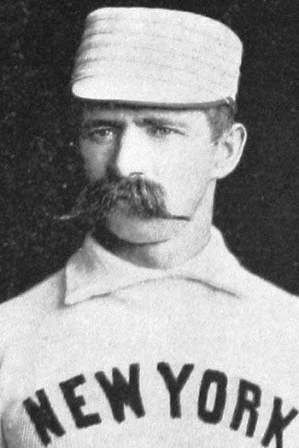
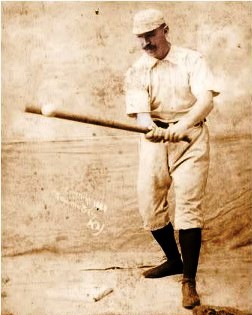
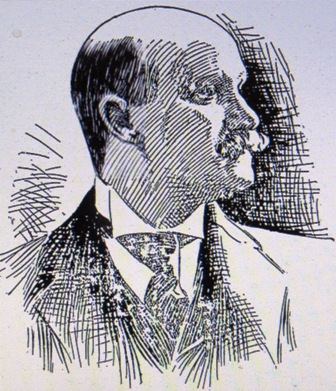
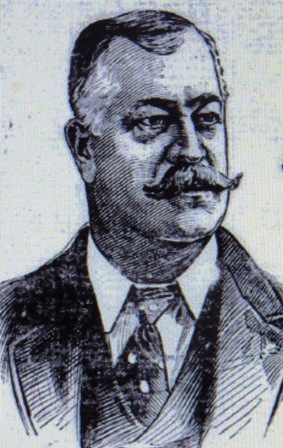
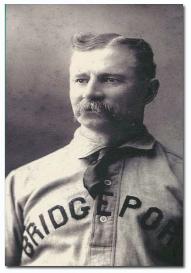
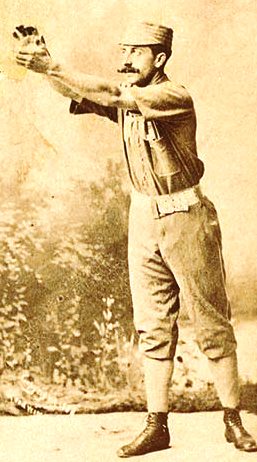
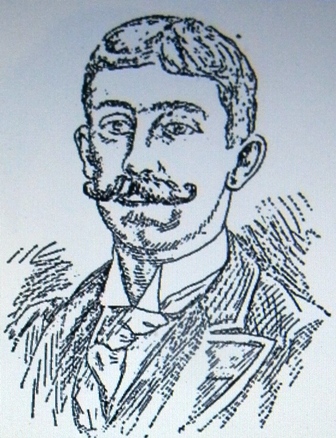
Phillip J. Powers again left the National League umpire staff at the close of the 1888 season.  In 1889 he returned to London, Ontario to manage the Tecumseh’s, quit in May to become an umpire in the International Association, and then resigned from that job to return to the National League as an umpire in July.
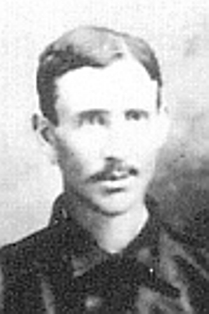
Phil Powers

Phil Powers

The Detroit Free Press said the former and current National League arbiter “would never be a success as an umpire.”

Within weeks he was again at the center of controversy.

After the Boston Beaneaters beat the Philadelphia Quakers on July 25, The Philadelphia Inquirer placed the blame for the home team’s loss squarely on the shoulders of one man:

“Anyone who saw Phil Powers umpire yesterday would set him down as incompetent or dishonest.  While he is neither of these he gave a combination of glaring decisions which robbed the Philadelphia club of the game…It was a hard game to lose and it was no wonder that nearly every one of the 6,7000 spectators joined in hooting at Powers.”

The Inquirer would continue to criticize Powers for the remainder of his career; a few sample quotes.

From 1890:

“Umpire Phil Powers seems to be dead to the world.”

From 1891:

“The rank work of umpire Powers.”

From 1892:

“Umpire Phil Powers has been unanimously elected a member of the Society for the Promotion of Riots.”

The Sporting Life joined the chorus and derided as a “decided detriment to the game,” his work in the Giants-White Stockings series in early August:

“Mr. Powers is not a competent umpire…He does not know the rules, and judging from his decisions on the bases his eyesight is certainly impaired.”

 The Chicago Daily News quoted “Cap” Anson saying Powers “ didn’t know his business.”

Powers did have one defender.  “Orator” Jim O’Rourke, of the New York Giants, wrote a long letter that was reprinted in The Sporting Life, and other papers, making the case for the “High opinion in which Mr. Powers is held by the majority of professionals”, and using the opportunity to heap scorn on Anson:

“No man ever filled the position to better advantage and with more honor and credit to himself.   Mr. Powers is conscientious, faithful and absolutely fearless in voicing his convictions; neither can there be any doubt of his intentions to discharge impartially the irksome duties which the office entail upon him.

“Anson’s hate of such a man is only limited by the capacity of his nature for hate. Now why is this so? Because this cross-grain brow-beater, with the swaggering air of a Mexican bandit, who is so susceptible to becoming red-headed In the presence of umpires and spectators, is forced by this honest referee to have the result of a game settled by the contesting clubs upon its merits and not by his disgusting methods, which have made him the laughing-stock of all players, not even excepting his own.”

Jim O'Rourke--Defender of Powers

Jim O’Rourke–Defender of Powers

Despite O’Rourke’s defense, the criticisms of Powers continued, but he managed to stay on the National League staff in 1890 and ’91.

The Sporting Life updated readers about the umpire through the 1891 season:

“(Powers) has been catching it along the Western line from spectators, players and reporters.”

“(The Pirates) ready to meet Anson’s team to the call of Umpire Phil Powers, who has never pleased Pittsburgh’s audiences”

“Western critics are unanimously of the opinion that Phil Powers argues too much with the players.”

“(Cleveland papers) roasted Phil Powers to their hearts’ content.”

In August of 1891 Powers was released as an umpire by the National League.  He died in New York City in 1914.

A postscript:

A story that has appeared in several books and articles (all citing previous secondary sources) claims Powers pulled a gun on enraged fans in either 1888 or ’89.  While similar stories have been attributed to other umpires (for example umpire Joe Ellick, in 1886, was escorted off the field in Philadelphia by police who drew their weapons to protect him from an angry mob) and there are numerous contemporaneous references to irate fans at games, some with Powers as umpire,  none mention the gun incident.

It is probably a conflation of stories such as Ellick’s and a wire service article that appeared in several newspapers in 1906, shortly after “Buck” Ewing’s death, and described another incident involving Powers and Ewing.

“It was in 1889 that one of the worst rows in the history of baseball was precipitated at Cleveland by “Buck” Ewing.  Phil Powers was umpiring and his weakness whenever a critical decision came up was so apparent that the crowd was on pins and needles as to which way the cat would jump.

“(Jimmy) McAleer hit for two bases.  After he had got (sic) to second, Ewing said something to Powers, and the umpire hesitated a moment and then declared McAleer out for not touching first base…(Powers) was not looking at first when McAleer passed, having turned his head as somebody yelled at him from the opposite side of the field.  This was plainly evident to the crowd, and the moment that the spectators understood why McAleer was out they bolted from the stands and made a rush for the umpire.

“(Powers) took one look at the approaching mob and fled to the players’ clubhouse.  The police cleared the field after a while and Powers was induced to come forth and finish the game, but with police protection on either side of him.”

According to the story (which makes no mention of a gun), Powers later admitted that he had no idea whether McAleer had touched first base and simply took “Ewing’s word for it.”

Jimmy McAleer, called out on Ewing's word

Jimmy McAleer, called out on Ewing’s word
“Leather-Fisted Phil”

12 Apr

“Leather –Fisted Phil” is what Phillip J. Powers was called in his 1914 Associated Press obituary which said:

“(Powers) was famous for his ability to stop the swiftest throws of the league’s star pitchers.”

He most likely earned the nickname in 1877 when, like many other catchers of the era, he began using a small, leather pad on his hand while with the London Tecumsehs of the International Association.

After the London team disbanded in August of 1878 Powers joined the Chicago White Stockings.  According to The Chicago Inter Ocean:

“He is a tall young fellow…He is described as a good catcher, but liable to get hurt, fair at the bat, and a genial man on the grounds.”

Powers would spend parts of seven seasons and 155 games in the National League and American Association with the Boston Red Stockings, Cleveland Blues, Cincinnati Red Stockings and Baltimore Orioles, hitting .180.  In between his engagements as a player Powers was an umpire.

It was as an umpire that he made a name for himself, but it probably wasn’t what he had in mind.  Few umpires, even in an era when members of the “profession” were poorly trained and underpaid, were the target of as much criticism as Powers.

In 1881 he began the season as a National League umpire.  By July he had become a target in several cities,

The Detroit News said:

“Phil Powers has acquired reputation enough in the last two weeks to last him a lifetime.  The erroneous umpiring he did here, people were inclined to regard as errors of judgment, but to say the least his ‘mistakes’ have become so numerous that his utter unfitness for the position he holds is unquestioned.”

The Cleveland Plain Dealer took the criticism even further:

“Powers is said to have been offered $150 to play ball (for the Detroit Wolverines) for one month, but refused it.  As an umpire he cannot, if square, earn more than $15 or $20 a week and expenses; and must take the chance at that of being chosen an umpire.  He preferred to be an umpire.  Several of his decisions on Saturday were grossly unfair, and, what is worse, they bore heavily on Cleveland.  They were so one-sided that many of the spectators believed he deliberately purposed to give the game to Troy.”

Despite the ill feelings in Cleveland, Powers joined the Blues in August and caught five games for the team after Michael “Doc” Kennedy was injured and John Clapp was “called away by an illness in his family.”   He finished the season with the New York Metropolitans in the Eastern Championship Association.

Powers again became a full-time player from 1882-1885, and was part of the Red Stockings American Association championship team in 1882.  He was released by Cincinnati in July of 1885, signed with the Baltimore Orioles and was again released the following month.

1882reds

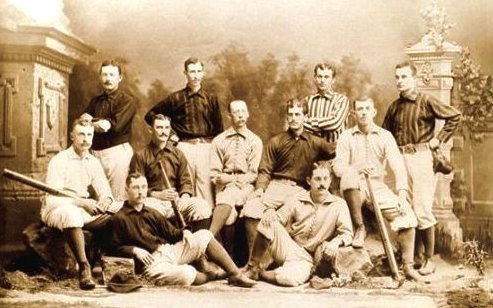
1882 Cincinnati Red Stockings, Phil Powers standing 2nd from left

Powers was signed by the St. Louis Browns in the spring of 1886, but released before the beginning of the season, and was added to the National League umpiring staff in August.  He again worked as an umpire through the 1887 season, left to return to London, Ontario to manage the Tecumsehs in the International Association, but again returned to the National League as an umpire in August of 1888.   He came back just in time to find himself in the middle of a controversy involving two Hall of Famers.

New York Giants catcher/captain William “Buck” Ewing was hit on the wrist by a ball during a game with the White Stockings in Chicago.  In 1888 the opposing team’s captain had to agree that an injury was serious to necessitate a substitution; Chicago’s “Cap” Anson said he did not agree to a substitution when backup catcher “Big Bill” Brown entered the game in the 6th inning.  Anson appealed to the umpire, and according to The Chicago Inter Ocean, “(Powers) said that Captain Ewing was not so badly hurt that he could not play.”

After a heated argument, during which The Inter Ocean said Ewing acted “in a childish and fatuous manner,” Powers declared the game “forfeited to Chicago by a score of 9 to 0.”

Buck Ewing acted “in a childish and fatuous manner”

Buck Ewing acted “in a childish and fatuous manner”

Powers had been involved in a similar situation in 1886, refusing to allow Philadelphia Quakers catcher “Deacon” McGuire to leave a game after an injury.  The Chicago Tribune said Quakers captain Arthur Irwin “told McGuire to catch ‘away back’ (from the plate).” The Tribune said Irwin’s actions created a “scene” and “pandemonium reigned,” until Anson agreed to allow Philadelphia to replace McGuire.  White Stockings President A.G. Spalding “preferred charges against umpire Powers” for losing control of the game.

The substitution rule was changed in 1891, putting an end to controversies regarding the replacement of injured players.

But controversies involving Powers continued.  More on Monday.

“Barnie’s Phenom”

10 Apr

The Baltimore Orioles needed pitching in 1889; Billy Barnie’s team had finished in 5th place in the American Association with a 57-80 record, and a 5.69 team ERA.

The Baltimore papers thought he had found a solution in April of 1889, The Sun said:

“Yesterday a big six-footer strolled up to the ball grounds while the Baltimore boys were at play.  He put on a suit and went in to pitch.  The ball-players laughed at first, but soon found that they could not hit the stranger.  He placed the ball in every conceivable position, and his curves and in-and-out shoots were remarkable.  When he picked up the bat he made the ball and the centre-field fence come together.  Mr. J.M. Ritter, a traveling salesman, had seen the young pitcher at play in Virginia and brought him to Baltimore.”

The Baltimore American was also enthusiastic:

“Great things are expected of Goetz, the Greencastle giant.”

His full name was George Burt Goetz, a 24-year-old house painter from Greencastle, Pennsylvania, who had played semi-pro ball in Virginia and Pennsylvania.

His first outing was against Pennsylvania University at Oriole Park; The Sun said Goetz “delighted 1,000 persons yesterday afternoon by his work in the box.” He pitched five shutout innings, giving up just two hits in a 20-1 victory; he also hit four singles, The Sun raved “He gives promise of becoming a great pitcher, batter and runner.”

The Sun said Goetz’ arrival was almost biblical:

“(He) has apparently created almost as much of a sensation among the local ball enthusiasts as David did when he strolled in among the embattled hosts of the Hebrews and offered to take the Philistine champion down a peg or two. ..Let us hope for the honor of the Baltimore Club that Mr. Goetz will prove a Baltimore David, and that the big champions of opposing teams may fall before his lightning delivery and Heaven-inspired curves.”

Within a week Goetz had been brought back to earth when he was pounded in an exhibition game against the National League’s Boston Beaneaters in Baltimore, he gave up 15 hits, 12 runs (6 earned), and committed three errors in a 12-5 loss.

The Sun conceded that “David met Goliath and came out second best this time,” but remained hopeful:

“(T)here’s life in him yet, which the season may develop into full growth.”

As quickly as he had arrived, it was reported that Goetz had returned to Pennsylvania to recover from an unknown illness; The Sporting Life simply said “Barnie’s Phenom Goetz is sick and recuperating in Greencastle.”

Oriole Manager Billy Barnie

Orioles Manager Billy Barnie

Goetz made it back to Baltimore and pitched in a June 6 game “Between two nines composed of Baltimore club players…for the benefit of the Johnstown (flood) sufferers.”  The Sun said “Goetz was too much for them,” allowing only four hits.

That outing appears to have earned him a shot for his professional debut; eleven days later Goetz started the first game of a double-header against the last place Louisville Colonels.  The Sun said:

“With a hard, steady work and a display of intelligence he may become a success.  At times he would fire the ball over the plate with a speed like a rifle shot, but when men were on bases he was nervous.  He was twelve times safely with a total of seventeen bases.”

Goetz gave up six runs (four earned); Baltimore tied the game with a three-run ninth inning, and won it with four in the tenth, earning Goetz the victory, Bert Cunningham pitched the tenth inning for the Orioles.

It would be his only appearance.

On July 4 the Orioles released Goetz. With little fanfare or explanation Barnie’s phenom was through.

Goetz signed with the York franchise in the Middle States League later in 1889.

He dropped out of sight until 1892 when The Sun reported that Goetz was “the sensation of the Wisconsin-Minnesota League,” pitching for Hayward, Wisconsin, and had recently struck out 19 in a game with the West Superior team.  The paper facetiously noted “It was reported Goetz had drowned in the Johnstown flood, but seems to have turned up again.”

Goetz’ catcher in Wisconsin was a Baltimore native named Milton K. Osborn; the two would play again the following season with a team in Little Falls, Minnesota and both joined the Lynchburg Hill Climbers of the Virginia League in 1894.  No statistics survive for any of Goetz’ post-Baltimore stops.

His trail goes cold after 1894.  There are many listings in city directories for George B. Goetz’ throughout the country for the next several decades, and there are reports that he was in California as late as 1912—but nothing else is known about “Barnie’s phenom”

Things I Learned on the Way to Looking Up Other Things #2

8 Apr

A few items from 1888 to 1890:

Largest bat 

Jonah William “Quiet Joe” Knight appeared in the National League as a pitcher for six games with the Philadelphia Quakers in 1884, posting a 2-4 record, and returned in 1890 as a left fielder with the Cincinnati Reds, hitting .312 in 127 games.  He also spent 16 seasons in the minor leagues and was one of the premier hitters in the Eastern League.

When Knight joined the Reds in 1890 The Cincinnati Post said he “uses a larger bat than any other professional.”  Reds shortstop Ollie Beard said:

“I can hardly swing the bat Knight uses let alone hit a ball with it.”

It was said Knight had his bats made to order in his home town St. Catherine’s Ontario, Canada.

joeknight

“Quiet Joe” Knight

Baseball in German

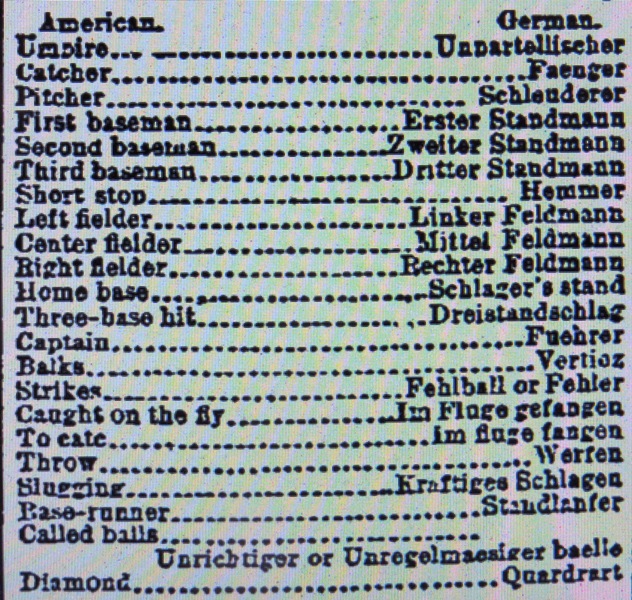
The Boston Herald reported in 1890 that New York’s German language paper Staats-Zeitung hired a baseball editor and would be recapping National League and American Association games:

“Naturally he has been obliged to invent words to describe the technical plays and points and how well he’s succeeded  will be seen from the following:”

???????????????????????????????

Harry Wright’s Team Unimpressive

After the 1887 season Hall of Famer and baseball pioneer Harry Wright took his Philadelphia Quakers on a tour of West Coast along with the Chicago White Stockings, New York Giants and St. Louis Browns; playing exhibition games against each other and with California League teams.

After seeing Philadelphia play The San Francisco Call was unimpressed with the National League’s second place team:

“The ‘Phillies’ will have to improve wonderfully to make their games at all interesting.  They may plead excuses, but they cannot disguise the fact that they played rank ball, and very rank at that.  Their initial effort stamps them as about fourth class, and it will require a brilliant rally to convince people in this section that they are ball-players.  There is not a team in the California League that will not give them a hard game and perchance defeat them.”

Unfortunately there is no record of  how Philadelphia fared on the rest of the tour.

Harry Wright, center, with his 1887 Philadelphia Quakers

Harry Wright, center, with his 1887 Philadelphia Quakers

“Not Quite Such an Idiot”

5 Apr

The 1889 American Association season began and ended as a two-team race between the Brooklyn Bridegrooms and St. Louis Browns, who had won four straight championships—the third place Philadelphia Athletics finished 16 games back.  The battle between Brooklyn and St. Louis was bitter and culminated in September with a charge of umpire bribery.

St. Louis owner Chris von der Ahe made a charge of attempted bribery of an umpire.  He said Brooklyn Captain William “Darby” O’Brien had attempted to bribe umpire John Kerins “$100 and the chance for him to umpire in the World’s Series if Brooklyn got there.” (Some accounts claim the amount was $1000, but the overwhelming number of contemporaneous stories put the figure at $100).

Chris von der Ahe

Chris von der Ahe

The Browns owner claimed “I can prove,” the charges and said “Kerins himself told the story in my presence.  Captain (and manager Charles) Comiskey and another party were in the carriage at the time.”

The other “party” never materialized, and Comiskey, no stranger to dubious charges, never fully backed his boss with a statement confirming the accusation.

Kerins, who since 1884 had bounced back and forth between playing in the American Association with the Indianapolis Hoosiers, Louisville Colonels and Baltimore Orioles, and working as a minor league and Association umpire, called the claim “Simply absurd.”

John Kerins

John Kerins


He said he never spoke to von der Ahe, and “I never told Comiskey that any attempt had been made to bribe me,” and that all the charges came from a misinterpreted conversation he had with Comiskey.

Kerins said he simply mentioned to the Browns manager that O’Brien had made “A casual remark,” that “I would give $100 out of my own pocket if Brooklyn could win the championship.”

Kerins said he told O’Brien he’d like to serve as an umpire in the World Series (against eventual National League champions the New York Giants), but it appears Kerins, like every other Association umpire, told many people he’d like to earn the additional money paid to post-season umpires.

Kerins told The Baltimore American that he was:

“Not quite such an idiot as to sell (myself) for the paltry sum of $100.”

O’Brien issued an indignant statement about the charges that appeared in The Chicago Times and other newspapers:

“I was completely nonplussed when I read that story, and, as it was the first intimation I had had of it, you can well imagine my surprise.  To think that that story should reach the eyes of my folks in Peoria and that they might believe me capable of stooping to a dishonest act is what galls me.”

Darby O'Brien

Darby O’Brien

Brooklyn went on to beat the Browns by two games for the American Association Pennant and lost the World Series to the Giants six games to three.

Nothing came of the charges, and it seems doubtful von der Ahe and Comiskey actually believed they were true.

A postscript:  After Comiskey jumped the Browns the following season to join the Chicago Pirates in Players League, von der Ahe signed Kerins (who had all but called him a liar six months earlier), and named him manager in May (one of five Browns managers that season) for 17 games; under Kerins the browns were 9-8.  In June Kerins, hitting .127, was replaced as manager and released by the Browns.

“Death to Flying Things”

3 Apr

The nickname “Death to Flying Things,” is likely the only thing most baseball fans would know of John Curtis “Jack” Chapman, and even that is a morass of different and often questionable research.  He shares the nickname with one-time Brooklyn Atlantics teammate Bob Ferguson, and competing versions of the story disagree about whether first baseman/outfielder Chapman or infielder Ferguson is the one most commonly referred to by the nickname—and never with contemporaneous citations to back up the assertions.

Regardless, Chapman was an important figure during the advent of the game.

He was a well-known amateur player in the 1860s with the Brooklyn Atlantics (as opposed to the National Association team of the same name he and Ferguson played for in 1874) and the Quaker City’s of Philadelphia. Beginning at age 30 he played a total of 113 in the National Association, with Brooklyn and St. Louis, and during the National League’s inaugural season in 1876 he played and managed the Louisville Grays.

Jack Chapman, far right, with 1868 Brooklyn Atlantics

Jack Chapman, far right, with 1868 Brooklyn Atlantics

After the 1876 season, the career.246 hitter retired as a player.  Over the next 22 years he managed parts of ten seasons in the National League and American Association; including an 88-44 finish and American Association championship with the Louisville Colonels in 1890.  He also managed for 11 seasons in the minor leagues, retiring from baseball after the 1899 season.

When his managerial career ended Chapman was often asked to discuss the current state of baseball; carrying on a tradition as old as the game, and one that will never end, Chapman was adamant that the game as it was currently being played did not measure up the game during his prime.  In a column that appeared in several newspapers in 1900 he said:

“Our great national game is today in bad shape both financially and in other ways.  Whether this situation is caused by the rowdyism of the players I cannot say, but it seems to me that if the rules were strictly lived up to and the chief of umpires and his staff did their duty the game would soon climb back to the high plane it once occupied.

“The players of 10 and 15 years ago were just as fast, tricky and well up in the game as those of today…Years ago the ball used to have two and one-half ounces of rubber in it, whereas now there is only one ounce.  This reduction has made the sphere less lively and consequently easier to field…The men are now harnessed almost like football players, with gloves, pads masks and other paraphernalia.  We hadn’t these accessories in the old days, yet I don’t think the fielding is much improved.”

But mostly Chapman seemed to be concerned with his legacy as a manager:

“Probably no other man has brought out so many players as I have, mainly because I always have made it a point to be on the lookout for new blood by means of which I could improve my team…I think I may claim without anyone gainsaying my assertion, that I have turned out and sold to the National and other leagues more players who have proved to be crackerjacks than any other man living.

Robert Winchester and Mickey Welch, two old timers were ‘finds’ of mine, while Hugh Jennings, Roger Connor, Jimmy Collins, (Bill) Hoffer, (Harry) Howell and many others too numerous to mention in the major and minor leagues were developed by myself.”

Jack Chapman 1900

Jack Chapman 1900

Unfortunately, he said little and provided no details about the most significant incident of his career: as manager of the Louisville Grays in 1877 his team was the first to be involved in a gambling scandal:

“I had four men of my own team—(George) Hall, (Bill) Craver, (Al) Nichols and (Jim) Devlin—put out by the league because they were caught throwing a game.  That was the first time such a thing had ever happened, and it caused a great sensation at the time.”

“Death to Flying Things” died in 1916 in Brooklyn at age 73.

“It is Not as Though they were Men of High Honor”

1 Apr

As the 1879 season drew to a close, The Chicago Inter Ocean lamented that the fourth place White Stockings, despite “the receipts of the year,” would only “have between $2,000 and $3,000 on the right side of the balance-sheet.”

According to the paper, the Cincinnati Reds would lose at least 8,000; the Boston Red Sox and Troy Trojans were both $4,000 in the red, the Cleveland Blues and Buffalo Bisons lost “a little,” while the National League Champion Providence Grays made “a little.”  The Syracuse Stars were “completely wiped out;” the franchise would be replaced by Worcester in 1880.

What was the reason for the lack of profits?  The Inter Ocean said it was those over paid players,:

“The folly of paying men from $1,000 to $1,800 for six months work.  It is not as though they were men of high order, who had spent large sums of money in training for a high profession…On the contrary, the best of them are nominally farmers or mechanics, who at their legitimate business are worth from $30 to $40 a month, and that is all they worth at baseball.”

Hall of Famer Jim O'Rourke hit .348 in 1879, "worth from $30 to $40 a month."

Hall of Famer Jim O’Rourke hit .348 in 1879, “worth from $30 to $40 a month.”

After all, The Inter Ocean said, “a majority of them are simply ‘hoodlums.’”’

“There is no league player who is a good investment, simply as player at over $2 a day and expenses…For a captain, a man of good executive ability, more might reasonably be paid.  The executive capacity should demand an extra remuneration above the manual labor supplied by the ordinary player.

“Players are now so plenty that there is no need of the usual insane rush for engagements.  This season has shown that cheap men can do no more nor no less than high-priced men—that is, fall all to pieces and lose everything.”

1879 National League Champion Providence Grays

1879 National League Champion Providence Grays

“A Heart-Breaking Play, Engineered by Wagner”

29 Mar

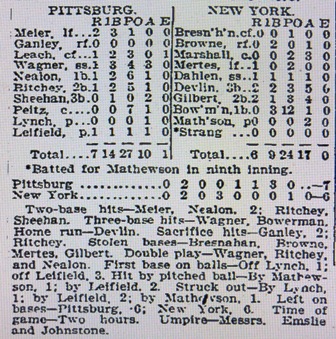
The defending World Series Champion New York Giants had gotten off to a fast start in 1906; on May 15 they were 19-7, the Chicago Cubs were 21-9, when they arrived in Pittsburgh for a four game series.

The Giants were shut out by the Pirates in the first two games.  In the third game of the series Christy Mathewson blew a three-run lead and the Giants trailed 7-5 heading into the top of the eighth inning..

Outfielder Sam Mertes walked, moved to second on Bill Dahlen’s single and scored on a two-out single by second baseman Billy Gilbert.  The Giants were behind 7-6 with runners on first and second; manager John McGraw was about to send Sammy Strang to pinch hit for Mathewson, when, according to The New York Times:

“A heart-breaking play, engineered by (Honus) Wagner in the last second of the eighth inning, beat the Champion New Yorks…It was a hard game to lose, and might not have been lost had Dahlen not fallen a victim to the wiles of Wagner.  The big Dutchman was guilty of the trick of hiding the ball, and when Bill stepped off second base, thinking (pitcher Albert “Lefty”) Leifield had the ball, Wagner, who had concealed it, touched Dahlen, which made the third out.”

Bill Dahlen

Bill Dahlen

The Pirates held on to win 7-6; The Times said of Dahlen:

“The New York shortstop felt so bad that he fairly wept.  McGraw, too, was angry, and it was said tonight he fined Dahlen heavily for his bit of carelessness.”

The Giants were unable to keep pace with the Cubs who finished 20 games ahead of New York for National League Pennant.

The Box Score

The Box Score

Count Campau Explains the “Science of the Sport”—the Battery

20 Mar

Charles Columbus “Count” Campau earned his nickname because of his regal appearance and his background; he was a member of a prominent Detroit family and educated at Notre Dame, and was regarded as one of the smartest players of the late 19th and early 20th Centuries.

His Major League career was brief, just 147 games with the Detroit Wolverines, St. Louis Browns and Washington Senators, but he was one of the best known, and highest regarded minor league players for 20 years.

Charles Columbus "Count" Campau

Charles Columbus “Count” Campau

Campau was especially popular in New Orleans, where he played for parts of four seasons, managed for one, and adopted as his home.

In 1893 Campau, who The New Orleans Times-Picayune called “one of the best students of baseball,” wrote an article as “Advice for Amateurs” about the “Science of the Sport:”

 “Many a time I have been asked for my views on the successful way to make a good ball player.  From a player’s standpoint a ball player is born and not made.  But with continued practice and coaching from and older and experienced head the amateur will probably reach the top notch in the profession.  There are two things, when combined, (which) will make a good ball player.  A practical and intellectual knowledge of the pastime or sport will aid the amateur.”

The New Orleans Pelicans captain explained what passed for “scientific baseball” in 1893; position by position:

“The most important position is the pitcher. For three reasons he ranks as the most important player on the team. He is the pivot upon which the victory of the team rests.  Should he be slightly disabled or out of condition all hopes of victory would go glimmering and the rest of the team would not put up a good game of ball.  A good pitcher, with fair fielders, is better than a poor pitcher with brilliant fielders.  With a weak pitcher, a fast fielding team would make a sport, and with good hitters would likely win one game out of ten.”

Campau blamed pitching for the Pelicans slow start that season; in spite of being “as hard a batting team” as there was in the league, they “could not win for the reason that the box was decidedly weak.”

“Another important factor in a game is the catcher…A catcher with good judgment and a quick brain will prevent the speedy base runner from advancing, and will lessen the work of the pitcher by watching the bases.  A good battery, with judgment, will work a hard batter, and the chances are that he will pop up a fly or send a grounder to short.  The catcher’s work does not only consist of receiving the delivery of his pitcher, for such a catcher is not worth the chest protector he wears, and will never become a success…(Charlie) Bennett(Jack) Clements, (Buck) Ewing and (Morgan) Murphy are catchers who watch every point of the game.  They back up the first baseman at every safe opportunity.”

"Count" Campau

“Count” Campau

More from the “Count” next week.

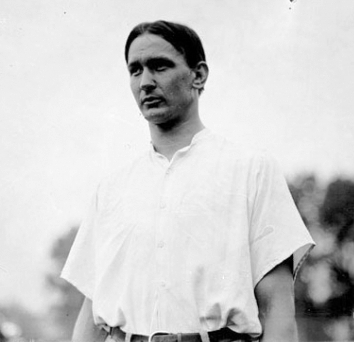
Ernie Diehl

18 Mar

Ernest Guy “Ernie” Diehl’s entire professional career consisted of less than 60 games.

Every year from 1900 to 1911 he was offered contracts by professional teams and despite his time with two National League teams and two minor league teams he never earned a penny as a ballplayer.

By the time the 25-year-old Diehl made his first professional appearance with the Pittsburgh Pirates in May of 1903, he was already a well-known player. Diehl was the star of the perennial powerhouse Avondale team in Cincinnati’s semi-pro Saturday League, which The Sporting Life called “a fast, clean league.”

diehl

Ernie Diehl

Diehl was born in Cincinnati in 1877, the scion of a Cincinnati distillery empire; His father Adam G. Diehl had made a fortune in the whiskey business with his brother-in-law; together they founded The Edgewood Distilling Company.

He attended the University of Cincinnati and established a reputation as one of the area’s best athletes.  Perhaps even better at tennis than baseball, Diehl was a prominent amateur tennis player during the first decade of the 20th Century.

In May of 1903 when the Pirates arrived in Cincinnati for a series, the team was decimated with injuries and Diehl joined the team for one game, playing left field on May 31, he went 1 for three in a 3-2 pirate victory.

Despite being offered a contract with Pittsburgh, Diehl chose to return to the distilling business and the Saturday Baseball League.

In 1904, with several Pirate players hurt, Diehl was again asked to join the team; this time for 12 games.  The Pittsburgh Gazette said Diehl also spent time with the Pirates in Hot Springs, Arkansas that spring.

The Baltimore American ran a story before the Pirates arrived in New York in August:

“New Yorkers who attend the games between the Brooklyn and Pittsburgh teams will be treated to an opportunity of seeing the work in the field of a millionaire ballplayer.”

While he hit just .162 for the Pirates in 1904, that did not diminish Pirate owner Barney Dreyfuss’ desire to sign Diehl.

Before the 1905 season Dreyfuss told The Pittsburgh Press:

“The one player I would like to get on the team is beyond my reach… His name is Ernest Diehl…He is one of the best baseball players I ever saw.”

Dreyfuss also called Diehl “One of the best all-around athletes,” he had seen.  The Press said that although Diehl was required to sign a contract for his time with the Pirates in 1903 and ’04:

“Diehl never received a penny of salary from President Dreyfuss.”

Barney Dreyfuss

Barney Dreyfuss

Dreyfuss, and every other owner who offered Diehl a contract was unsuccessful in securing him for the 1905 season; Diehl spent the season playing in the Saturday League and in several tennis tournaments across the country.

He again played tennis and semi-pro ball in 1906, until August when the Boston Beaneaters came to Cincinnati. Shortstop Al Bridwell was injured, and Diehl was signed (again for no salary) to play for Boston in the three-game series.

The Associated Press reported:

“’Ernie’ Diehl, a wealthy young distiller of this city, an enthusiastic athlete, long known as a brilliant baseball player on local amateur teams, distinguished himself in the series just played…He played three games in the Boston ranks…He made five hits in eleven times at bat…Diehl could not afford to enter professional ball if he desired, at the highest salary paid in the organization, on account of his business, but is delighted and satisfied with his experience…Besides his heavy batting, his fielding was strictly up to the professional standard.”

Just as he had in Pittsburgh, Diehl turned down an offer to stay with Boston for the remainder of the 1906 season.

In 1907, Diehl appeared in 21 games for the Toledo Mud Hens in the American Association, hitting .405.  The Toledo News-Bee said Diehl was spending “His vacation…helping out the Toledo club.”  The Associated Press said that as in the past, “Diehl is wealthy and refused to accept pay for his services.”

In addition to his business interests, amateur tennis and baseball career, and professional baseball “vacations,” Diehl also served on Cincinnati’s city council from, roughly, 1906-1910.

In 1909 Diehl played in one game of a doubleheader for the Boston Doves on August 12 against the Reds, he was 2 for 4 with a double—it would be his last in the National League

Diehl then joined the eventual American Association champion Louisville Colonels, at the request of his friend and fellow Cincinnatian, manager Heinie Peitz.  (Baseball Reference lists a player as “Diehl,” with no first name on the 1909 Louisville roster, with a .226 average in 20 games).

The Sporting Life said Diehl “figured very prominently in Louisville’s winning the championship of the A.A. will again be in Colonel garb,” in 1910; Diehl did not play for Louisville, or any other professional team again.

In 1911 The Associated Press and Cincinnati newspapers said the 33-year-old Diehl had a deal in place with Reds manager Clark Griffith to join the team at some point during the season; as with Louisville, that deal never materialized either.

Diehl was briefly mentioned as a candidate to replace Griffith as Reds manager in 1912, the job eventually went to Hank O’Day.

Diehl’s career was summed up well in a 1914 Baseball Magazine article by William A.  Phelon:

“For ten years it has been a tacitly accepted fact, around the big leagues and whenever players or managers assembled, that Ernie Diehl was not only of major league quality, but what might be called super-quality—the Wagner-Lajoie-Cobb variety.  He could hit, run, and break up a defense with anybody, and was a versatile artist in five or six positions.  Business held him; there never was a chance for him to spend a full season in the game; year after year, in short vacation frolics, he showed the professionals what he could do—and now, getting on in years, with business still gripping him, he sadly gives it up, and lays aside the bat and glove he never had a fair chance to use.”

Diehl’s Edgewood Distilling Company seems to have been dissolved sometime around 1918, and he eventually settled in Miami where he died in 1958.