Tag Archives: National League

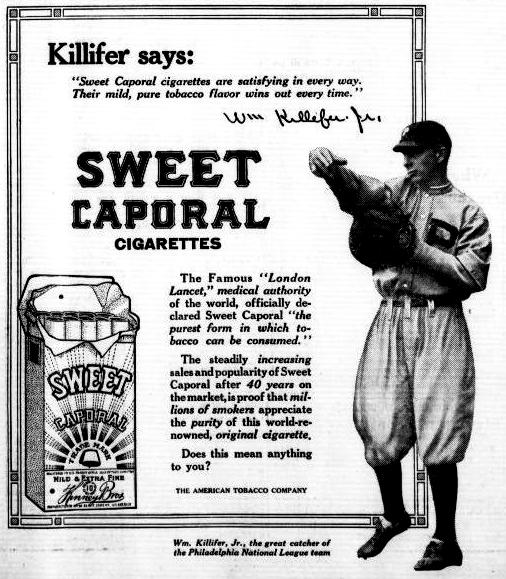
Lost Advertisements: Bill Killifer [sic] for Sweet Caporal Cigarettes

5 Jun

killifersweetcaporal

A 1914 advertisement for Sweet Caporal Cigarettes.  While spelling Killefer‘s name wrong, the ad calls him “(T)he great catcher of the Philadelphia National League Team.”

Killefer says:

“Sweet Caporal cigarettes are satisfying in every way.  Their mild, pure tobacco flavor wins out every time.”

In 1918, Killefer was traded to the Chicago Cubs, along with Grover Cleveland Alexander.  After the Cubs won the National League pennant, The Chicago Daily News reported that Killefer would be getting a bonus beyond his World Series share:

“A bet of a ten-cent cigar against $1000, made as the result of a joke while the Cubs were training at Pasadena, California, last spring has been won by Bill Killefer, it was revealed today.  The loser, William Wrigley, one of the club’s stockholders, wagered the $1000 that the team would not win the National League pennant.  Killefer, who accepted it in jest, had forgotten about the bet until he was reminded of it by Wrigley.”


Charlie Roy

27 May

Robert Charles “Charlie” Roy was one of the most sought after prospects in the country in the winter of 1905.  Raised on the White Earth Reservation in Minnesota, Roy was a pitcher for the Carlisle Indian School baseball team.

The Minneapolis Journal said of the 21-year-old:

“He has been pitching altogether four years, and he puts remarkable speed into the ball.”

In December of 1905, it was reported that Roy was about to sign with the Cincinnati Reds, but just days later he chose to return to Carlisle

The manager of the Carlisle baseball team in the spring of 1906 was Philadelphia Phillies pitcher Charles “Togie” Pittinger–who won 23 games for Philadelphia in 1905.

In March, it was announced  that Roy had signed a contract with the Phillies on the recommendation of Pittinger.  The Philadelphia Record said Pittinger compared the pitcher’s abilities to those of one of Roy’s childhood friends, another Carlisle product:

“He thinks Roy has every earmark of developing into one of the best pitchers in either major league, and predicts for him as bright a baseball career as that of (Chief) Bender.”

Cincinnati protested the signing and claimed Roy had “Verbally agreed,” to a contract the previous December and belonged to Reds.  As the National League considered which team he belonged to, Roy worked out with Phillies.

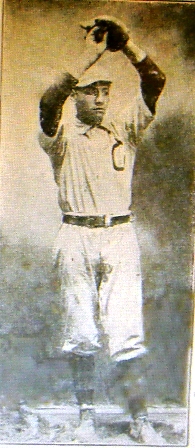
Charlie Roy, Carlisle Indian School, 1906

Any thought that he’d instantly join the team and be the next Bender was dispelled by Phillies Manager Hugh Duffy who was quoted in The Pittsburgh Press that Philadelphia would not appeal if Cincinnati won the claim because:

“Roy lacks the experience necessary to make him a success in the big league.  He is still green, and until the greenness wears off he will be of no value to big league team.”

The National League ruled that Roy was the property of Philadelphia, and regardless of Duffy’s assessment he made his debut for the Phillies in late June.  Roy only appeared in seven games, posted a 0-1 record with a 4.91 ERA and was sent to the Newark Sailors in the Eastern League.

Charlie Roy

Charlie Roy

He was 2-4 with Newark and was 2-4 again early in 1907 when he was released by the Sailors.  He signed with the Wilmington Peaches of the Tri-State League, although there is no record of him appearing in a game.  He finished the 1907 season with the Steubenville Stubs in the Pennsylvania-Ohio-Maryland League, appearing in 15 games.

Despite dropping from the Major Leagues to a class “D” league in 18 months, the 23-year-old pitcher was still considered a good prospect. The Pittsburgh Post-Gazette said after he won his first start for the Stubs, a 7-2 three-hitter against the Braddock Infants:

“He has plenty of speed and fine curves and looks like a winner.”

But near the close of the 1907 season it was clear he’d never be another Bender.  Despite being drafted by Boston Doves, The Associated Press reported that he would refuse to report to the National League club in the spring:

 “Charlie Roy, The Indian Twirler…has quit baseball to go into the evangelist field.”

Some papers reported the pitcher’s decision more impoliticly.

The Harrisburg Telegraph:

“(Roy) says he has had all the National League game he wanted, and rather than report he will go back to the plains and throw mud balls at his fellow Indians.”

The Sporting Life:

 “(Roy) intends to forsake the diamond after the close of this season and equip himself for evangelistic labors among the redskins of the Northwest.”

Roy returned to the White Earth Reservation to preach and eventually settled in Blackfoot, Idaho  where he died in 1950.

A shorter version of this post appeared on October 30, 2012.

Lost Advertisements–Pat Moran for Sloan’s Liniment

22 May

patmoran

An advertisement that appeared late in the 1919 season featuring Cincinnati Reds Manager Pat Moran:

“‘When my players get sore, I don’t rub them the wrong way;  I use Sloan’s Liniment–it penetrates.’

“Moran knows how to keep his men fit for the pennant scramble–keeps Sloan’s handy for emergency.  ‘Glass arm,’ ‘Charley horse,’ stiffness, soreness, bruises, rheumatic aches, are quickly and comfortably relieved.  Penetrates without rubbing, keeping the boys ready for the winning game.”

The 1919 World Series was the fourth for Moran.  He played in two with the Chicago Cubs (1906 and ’07) and managed two, (the other was with the Philadelphia Phillies in 1915).

Moran replaced Charles “Red” Dooin as Phillies manager after the team finished in sixth place in 1914.  Under Moran, the team won 10 of their first 11 games and won the National League with a 90-62 record.

In September, Frank Menke of The International New Service said:

“Moran deserves ranking among the greatest managers the game has ever known.  It is the wonderful leadership of the red-faced, gray-haired Irishman that has put the misfit Phillies where they are today.”

Moran

Moran

Menke said Moran was saddled with a team consisting primarily of “castoffs,’ and “one wonderful pitcher (Grover Cleveland Alexander).”

Moran followed up the 1915 pennant with two second-place finishes, with teams Grantland Rice of The New York Tribune said the manager had little to work with beyond pitcher Alexander:

“(T)hose astounding Phillies, piloted by a leader who has never received anywhere near his due recognition for extraordinary ability to lead a ball club.  need it be said that we refer to Pat Moran?  It needn’t.”

As was his habit, Rice memorialized Moran’s abilities with a poem:

Pat Moran’s no Miracle Man

Nor anything like that;

Nobody ever stands and cheers

The while he tips his hat.


Pat doesn’t draw the headline space

Nor yet the picture frames;

Pat Moran’s no Miracle Man–

Buthe’shellatwinninggames”

During his nine-year managerial career in Philadelphia and Cincinnati, Moran compiled a 748-586 record, which included a total of four second-place finishes to go with his two pennants.

During spring training of what would have been his sixth season with the Reds, Moran, who had a history of excessive drinking, became ill in Orlando, Florida.

His former Cubs teammate Johnny Evers came to his bedside.  According to The Associated Press, he said:

“‘Hello John, take me out of here.’ He then lost consciousness.”

He died later that day.  The official cause was Bright’s Disease.

“If Baseball is really the National Game let the Club Owners go out and prove it”

4 May

Haywood Broun, columnist for The New York World-Telegram, shook up the annual Baseball Writers Association dinner in February of 1933.  The Pittsburgh Courier said Broun “struck out boldly in advocacy of admitting Negroes to the charmed circle of big leagues.”

Heywood Campbell Broun

Heywood Broun

Broun said (and later wrote in The World-Telegram):

“I can see no reason why Negroes should not come into the National and American Leagues.

“Why in the name of fair play and gate receipts should professional baseball be so exclusive?”

[…]

“The introduction of a few star Negro ball players would do a great deal to revivify interest in the big leagues.  It would attract a number of colored rooters. And it would be a fair and square thing.  If baseball is really the national game let the club owners go out and prove it.”

Jimmy Powers of The New York Daily News said he polled the dinner guests after Broun’s remarks:

“I made an informal tour around the tables asking club owners and players their reactions to Broun’s little talk.  I was amazed at the sentiment in favor of the idea.”

Powers claimed that Yankees owner Jacob Rupert, St. Louis Cardinals General Manager Branch Rickey, and Babe Ruth were all in support of Broun’s statement.   John McGraw the dinner’s guest of honor—he had resigned as manager of the New Giants the previous summer due to his failing health—was, according to Powers, “The only prominent man present vetoing” the idea.

John McGraw

John McGraw vetoed the idea


Salem Tutt Whitney, a prominent star of the black vaudeville circuit, commented on McGraw in the pages of The Chicago Defender:

“John McGraw and his Giants have been the idols of the Colored baseball fans.  Whenever and wherever there had been talk about the color line in major league baseball, the Colored fans were a unit that declared that if John McGraw could have his way there would be no color line.  ‘Didn’t he play (Charlie) Grant at second base on the Giants!’  ‘Look how long he employed a Colored trainer (Ed Mackall)!’”

[…]

 “It is my opinion that if the Colored baseball fans of Harlem are not convinced that Mr. McGraw has nothing more to do with the Giants, there will be a lack of personal color in bleachers and stands at the Giants’ stadium this summer.”

Salem Tutt Whitney

Salem Tutt Whitney

Not content to simply report on Broun’s pitch for integration, Powers made his own:

“I would like to make a case for the colored baseball player.  In football, Duke Slater, Fritz Pollard and Paul Robeson and stars of similar complexion played with and against the cream of Nordic colleges.  Eddie Tolan, Ralph Metcalfe and Phil Edwards have conducted themselves in a gentlemanly—not to mention championship—fashion.  Boxing has known Joe Gans, Sam Langford, Joe Walcott and Tiger Flowers.  There are only three popular sports in which the dark-skinned athletes are snubbed—tennis, golf and baseball.”

The New York Age approved:

“Here’s hoping all the other big white sportswriters have the courage of Jimmy Powers.”

Chester Washington, a sports writer at The Pittsburgh Courier announced that the paper was launching “A symposium of opinion, coming from outstanding figures in baseball circles,” designed to demonstrate a broad coalition of support for integration.

The Courier reported “The first of these statements,” in response to Washington’s outreach the following week—and it was a rather incredible one from John Heydler, president of the National League, who said:

“Beyond the fundamental requirement that a major league player must have unique ability and good character and habits, I do not recall one instance where baseball has allowed either race, creed or color enter into the selection of its players.”

Gerald Nugent “aggressive young owner of the Phillies,” was next to respond to The Courier:

“Nugent calls attention to the fact that no ‘color line’ is drawn on the dollars which are spent by colored and white fans for admissions in the various big-league parks…He further declares that the average colored semi-pro league player is better than his white brother in the same category.”

Support continued to come.  Chicago White Sox President J. Louis Comiskey:

“You can bet your last dime that I’ll never refuse to hire a great athlete simply because he isn’t the same color of some other player on my team if the alleged bar is lifted.”

While Commissioner Kennesaw Mountain Landis did not respond to The Courier, his right-hand man, Leslie O’Connor said “(T)here isn’t any rule which keeps colored players out.”  But, like Heydler, he made the incredible claim that “the subject of Negro ball players had never been brought up,” among the Major League Advisory Council.

Based on the initial responses, William Goldwyn Nunn, The Courier’s managing editor, expressed great, if premature, optimism:

“And the color will be black!

“As sure as the Ides of March are approaching, there’s going to be some added color in the Major Leagues.  AND, THAT COLOR WILL BE BLACK!”

Meanwhile Jimmy Powers quoted Lou Gehrig and Herb Pennock of the Yankees and Frankie Frisch of the Cardinals in The Daily News, all said they were “open-minded,” about the possibility integration.

pennock

Pennock “Open-minded”


Two more prominent sportswriters came out in support:  Dan Parker of The New York Daily Mirror, and Gordon Mackay, who had been sports editor of three Philadelphia papers—The Enquirer, The Press and The Public Ledger.

And then, as abruptly as it began, the movement died.

Despite the brief groundswell of support, by the time the major league season opened Alvin J. Moses, another writer for The Courier admonished the papers readers:

“Aren’t you somewhat ashamed of yourselves that you haven’t seen fit to spare the time to flood (the paper) with letters that cry out against these NEGROPHOBES who for more than half a century have kept Negro ballplayers out of league competition?

“The cry of ‘Play Ball, Play Ball, Play Ball?’ is heard today in hundreds of parks the county over, and baseball statisticians have figured to show more than 40,000,000 fans walk past the turnstiles.  But what does that cry mean to you, and you, and you? Well, I’ll tell you—absolutely nothing.”


Diet Tips from Tim Murnane

6 Apr

Tim Murnane, who began his career as a first baseman for Middletown Mansfields in the National Association in 1872 and later was a member of the Boston Red Stockings in the National League’s inaugural season in 1876, would go on to become one of the most influential baseball writers in the country.

Tim Murnane

Tim Murnane

Writing in The Boston Globe in 1906, he said he had discovered the one thing that caused the greatest harm to a baseball player.

“Over-feeding kills off more ballplayers than accidents or hard work on the ball-field.”

Murnane suggested two solutions.  First, he recommended that, “The Fletcher system should be taken up by the veteran ballplayers without delay.”

The “Fletcher System” or “Fletcherizing” was a then very popular diet technique put forth by a “self-taught nutritionist” named Horace Fletcher.  Fletcher claimed, in several books published during the first decade of the 20th Century that the key to weight loss was to chew food so completely that it was virtually liquefied before swallowing.  Called “The Great Masticator,” Fletcher counted Thomas Edison, Henry James, Franz Kafka, John D. Rockefeller, J.C. Penny—and apparently Tim Murnane—among his adherents.  His theories had fallen out of favor, replaced by diets based on calorie intake, by the time of his death in 1919.

Horace Fletcher "The Great Masticator"

Horace Fletcher, “The Great Masticator.”

Secondly, Murnane said, “(T)he rules of eating should be laid down by the management of every club.”

He said Harry Wright, who had been Murnane’s manager in Boston, “(W)as about the first baseball man to keep a close watch over his players during meal time,” and insisted they eat lightly before games.

“’Just a plate of soup.  That’s plenty,’ would be Mr. Wright’s cry as the players filed into the dining room for lunch.  The greatest athletic performances on the field have been accomplished on practically empty stomachs.”

[…]

“I have known at least half a dozen good ballplayers being passed up in Boston on account of paying no heed to the manager’s advice about overloading their stomachs.  Frank Selee was just as much of a stickler in this line as was Harry Wright, and both were remarkably successful baseball managers.  The manager who does not pay especial attention to this end of the players’ life must lose out, for his team will be unable to keep up a fast clip very long after the boys commence to take on flesh as the result of overfeeding and drinking.”

Murnane had other diet tips for readers:

“A ballplayer cannot drink too much good milk.  The greatest drinker of milk I ever knew was James O’Rourke, and Jim, after thirty-three years on the ball-field, is just as lively a 10-year-old today.  O’Rourke never used tobacco in any form, nor ever indulged in malt liquors, but what a milk drinker he has been all his life and what credit to the national game, from every angle you view the old sport!’

Jim O'Rourke

Jim O’Rourke, “The greatest drinker of milk.’

Murnane blamed the disappointing performance of the Boston Americans in 1905 (Fourth place, 78-74, 16 games out of first) on the dietary habits of the team:

“To be honest, I think the Boston Americans last season practically ignored condition from first to last.  I never witnessed on one ball team so many men out of form by being overweight…This club would have won at least one dozen more games had they taken good care of their stomachs, and no one knows this better than Captain (Manager Jimmy) Collins himself, who has said it will be a much different season with the Boston club next season.”

The next season, 1906, was much different, but not in the way Collins had hoped.  The team was 35-79 when Collins was replaced as manager by Charles “Chick” Stahl, and finished in last place with a 49-105 record.

Murnane concluded:

“Baseball was never intended for a fat man’s game, and Captain Anson was the only heavyweight who ever piloted a pennant winner, although my old friend Charley Comiskey was growing a bit stout when his boys carried off the prize five years ago.”


“Silly Assertions by a Brace of Newspaper Nincompoops”

1 Apr

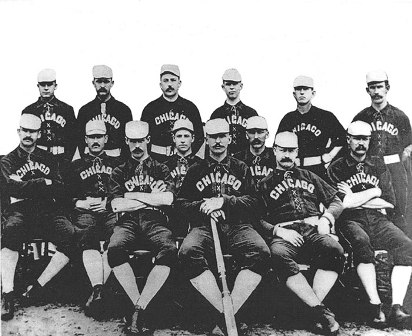
Adrian Constantine “Cap” Anson’s Chicago White Stockings cruised to the National League championship in 1880. The team was never out of first place and won the pennant by 15 games over the Providence Grays.

The 1880 National League Champions

The 1880 National League Champions

Two influential newspapers, The Cincinnati Enquirer and The Washington Capital spent the offseason downplaying the White Stockings’ victory and questioning the team’s integrity.

The Enquirer’s OP Caylor had a long-time feud with White Stockings—and National League President William Hulbert–which heated up further at the close of the 1880 season when the Cincinnati Reds were banished from the National League. Cincinnati management routinely leased the team’s Bank Street Grounds out for Sunday games—games where beer was sold as well. Hulbert pushed through a ban on both practices for the 1881 season, then, as was his original intent, forced the Reds out of the league.

William Hulbert

William Hulbert

Caylor attributed the White Stockings’ success to favorable schedules approved by Hulbert’s “well-trained minions,” and he declared:

“The League, as owned and operated by Hulbert, is rotten and corrupt.”

The Capital, an independent, crusading weekly, took it further. Not content to limit the accusations to off-field corruption, the paper claimed it was common knowledge Chicago had thrown games late in the season.

Over their last fourteen games, the White Stockings were 9-4 with a tie. The Capital said:

“Everybody knows that when the Chicagos had the championship well in hand last season they gave games away to attract gate money…(Hulbert) does not seem to know that the public knows that every time his league goes into secret session it is to concoct some means of swindling the public or the players, or both.”

The Chicago Tribune would not let the insults stand. Their defense was no surprise, in 1875 the paper’s baseball writer, Lewis Meacham had been Hulbert’s conduit for selling the public on the formation of the National League as a successor to the National Association–a league free of drunkenness, gambling and corruption. While Meacham had died in 1878, the paper remained Hulbert’s staunch ally. The Tribune said:

Silly Assertions by a Brace of Newspaper Nincompoops

“Everybody knows that this assertion is a silly falsehood, without a shadow of basis in fact or reasonable probability. So far from losing games to attract gate-money, the Chicago club finds that nothing pays so well as to win all games and lose none. If such a thing were not possible, the club that should go through the greater part of a season without once suffering defeat would attract more patronage and make money than any club ever organized.

“Reason and fairness are, however, wasted upon two such hopeless imbeciles as the fellows who butcher base-ball in the columns of The Washington Capital and The Cincinnati Enquirer.”

The Tribune said jealousy over the lack of a National League club in each city was the only explanation:

The Capital man has been standing on his head ever since the League was impelled by geographical reason to refuse the Washington club’s application for admission; and The Enquirer man has been similarly inverted both as to body and brain ever since the Cincinnati Club was kicked out of the League on account of its refusal to abolish Sunday games and beer jerking on the club grounds in Cincinnati.”

like most 19th-Century allegations of malfeasance on and off the field, the allegations were quickly forgotten.

The White Stockings cruised to another championship in 1881 with a 56-28 record, finishing nine games ahead of second place Providence. It was Hulbert’s final season. He died three weeks before opening day in 1882.

The Tribune, Hulbert’s greatest ally to the end, said upon his death:

“His great force of character, strong will, marked executive ability, unerring judgment of men and measures, and strict integrity and fairness were of incalculable value to the league, and he was rightly considered to be the brains and backbone of that organization. In him, the game of base-ball had the most useful friend and protector it has ever had; and in his death the popular pastime suffers a loss the importance of which cannot easily be exaggerated.”

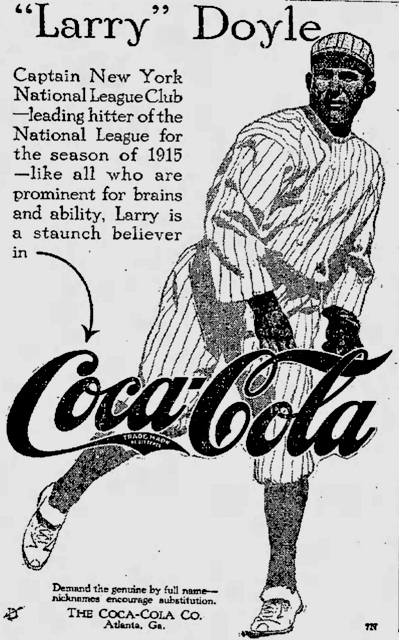
Lost Advertisements–Larry Doyle for Coca-Cola

20 Mar

larrydoylecoke

A 1916 advertisement for Coca-Cola featuring New York giants Captain Larry Doyle.

Four years earlier, when Doyle led the Giants to a National League championship–hitting .330 and winning the Chalmers Award as the league’s most valuable player–he told a reporter from The New York Evening Journal that his success was driven by a snub from White Sox Manager Jimmy “Nixey” Callahan:

“When he was playing in a western minor league city (the Three-I League with the Springfield Senators) the (New York) Highlanders heard of him and asked Callahan, then playing independent ball (in Chicago’s City League), to look him over.  Callahan watched Doyle perform in several games and then wired the Highlanders:

“‘He isn’t fast enough.  Can’t field and isn’t a first-class hitter.’

“So Doyle was passed up and Callahan sent in a bill for $200 to cover his expenses and time.  Then (John) McGraw walked up…and paid $4,000 (actually $4,500) for Doyle, who couldn’t be purchased now for three times that amount.  All of which goes to show that some of the best judges of ball players make serious mistakes.”


Pete Childs’ Pitch

27 Feb

After seven seasons in the minor leagues, 29-year-old Peter Pierre “Pete” Childs made his debut with the St. Louis Cardinals had a brief big league career as a second baseman with the Cardinals. Chicago Orphans and Philadelphia Phillies in 1901 and ’02.

Pete Childs

Pete Childs

He then returned to the minor leagues for more than a decade and became manager with the Portsmouth Cobblers in the Ohio State League, where he also played infield and occasionally pitched in relief.  It was as a member of the Cobblers where he had, arguably, the most efficient relief appearance in the history of organized baseball.

On June 18, 1910, Portsmouth was losing 4 to 3 to the Marion Diggers when the diggers came to bat in the bottom of the eighth.  Portsmouth pitcher Frank Harter gave up four hits and hit a batter; the Cobblers also committed an error.  Three runs had scored and the bases were loaded with no one out.

With his team down 7 to 3 The Marion Star said the manager and second baseman “Childs essayed to do the pitching and traded places with Harter.”

With the bases loaded, Childs faced Marion outfielder William Colligan. He threw one pitch.  The Portsmouth Evening Times said:

“Colligan smashed the first ball to the fence in center field, and (Portsmouth’s Frank) O’Day went up against the fence and made the catch with one hand.  (Emmett “Turk”) Reilly had gone to second and (August “Gus”) Epler counted from third.”

O’Day threw to the cutoff man, Wesley Hornung; he threw to first to put out Reilly, who stood on second with teammate Al Hummel, and first baseman William Scudder threw to third baseman Ed Conwell for the triple play.

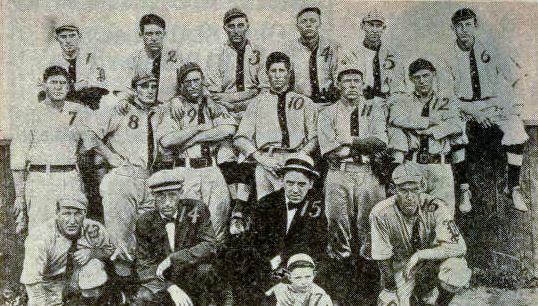
The 1910 Portsmouth Cobblers, Manager Pete Childs 7.  Wesley Hornung 1, Frank Harter 4, William Scudder 5, Frank O'Day 8 and Ed Conwell 16.

The 1910 Portsmouth Cobblers, Manager Pete Childs 7. Wesley Hornung 1, Frank Harter 4, William Scudder 5, Frank O’Day 8 and Ed Conwell 16.

Despite the triple play, Childs’ Cobblers dropped a doubleheader that day but went on to win the Ohio State League championship with an 86-52 record.  Childs won three championships during his five seasons as Portsmouth’s manager.

Nick Maddox

9 Feb

Nicholas “Nick” Maddox burst on the National League scene in 1907. Born in Maryland on November 9, 1886, Maddox’ was born Nicholas Duffy, but adopted his stepfather’s name Maddox.

In 1906 the 19-year-old was given a trial in the spring with the providence Grays in the Eastern league.  He was released before the season began and signed with the Cumberland Rooters in the Pennsylvania-Ohio-Maryland League (POM).  Maddox had played in 1905 for the Piedmont team in the semi-pro Cumberland and Georges Creek League.

He was the best pitcher in the POM; The Sporting Life said Maddox was 22-3 for the Rooters who finished the season in fourth place with a 50-45 record, and was “the fastest pitcher in the league.”
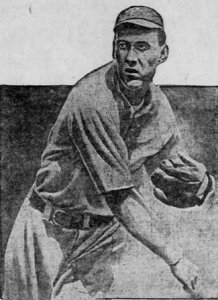
Nick Maddox

Nick Maddox

Maddox spent most of 1907 with the Wheeling Stogies of the Central League.  He posted a 13-10 record and no-hit the Terre Haute Hottentots on August 22.  Maddox was purchased by the Pirates the following month and made his big league debut on against the St. Louis Cardinals.

The Cumberland Times noted that he faced a “double-jointed hoodoo of commencing his National League career on Friday, September the 13th.”

The Pittsburgh Press said:

“Nick was ‘on the job’ yesterday from start to finish, and acted more like a man with many years’ major league experience than like a minor leaguer who has been in the business but a few seasons.”

Maddox shut the Cardinals out on just five hits, struck out 11 and got his first hit, a single in his first at bat.

Eight days later Maddox threw the first no-hitter in Pirates’ history, beating the Brooklyn Superbas 2 to 1—Brooklyn scored on two fourth-inning errors.   Years later, Maddox said of his own throwing error that put Emil Batch on base:

 “They scored me with an error, but hell man, I threw it straight to the first baseman (Harry) Swacina.  Sure it went over his head but he should have jumped for it.”

Batch scored on an error by shortstop Honus Wagner.  Maddox said:

“I don’t hold that against Honus, he saved my no-hitter in the ninth.  A ball was hit right over my head and ‘pfft’ Wagner was over there to get it.  I don’t think he ever held the ball, he just swooped it over to first.”

The rookie started six games Pittsburgh, won his first four, and finished with a 5-1 record with a 0.83 ERA.

The Pittsburgh Leader said Pirates’ President Barney Dreyfuss claimed Maddox would be “the sensation” of 1908.  He wasn’t far off.

The 21-year-old was an impressive 23-8 with a 2.28 ERA with five shutouts.  Despite his success there was concern about control—he walked 90 batters while striking out just 70 in 260 innings, and hit 11 batters.

After three second and one third-place finish the four previous seasons, Pittsburgh, and Maddox, came into 1909 with high expectations.  The Pittsburgh Press said:

“Nick Maddox is facing a very successful summer, and with an even break and barring accidents he ought to push any other twirler in the National League for first honors.  He has everything a pitcher needs, and youth with it.”

The Press also said he would “start out with good control” based on his performance in March games in Hot Springs, Arkansas.

The Pirates lived up to expectations, taking over first place on May 5 and cruising to the pennant; Maddox did not.

The 22-year-old struggled for the first half of the season.  The Leader said he was having “a hard time getting into condition,” and was wild as a March Hare.”  Maddox got on track in July pitching a 2-hit shout against the Cincinnati Reds on the 6th, and four-hit shutouts against the Brooklyn Superbas and Boston Doves on the 14th and 23rd.

He ended the season 13-8 with a 2.21 ERA—overshadowed by teammates Howie Camnitz (25-6), Vic Willis (22-11), Albert “Lefty” Leifield (19-8) and rookie Charles “Babe” Adams (13-3 as a reliever and spot starter).
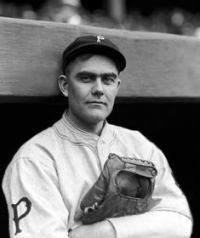
Babe Adams

Babe Adams

Despite going into the World Series against the Detroit Tigers with such a strong pitching staff, Manager Fred Clarke opted for the rookie Adams in game one and he responded with a 4 to 1 victory.

The Tigers beat Camnitz 7 to 2 in game 2.

Three years later, Fred Clarke spoke to James Jerpe of The Pittsburgh Gazette-Times about his decision on a pitcher for game three:

“I was in an awful predicament.  Adams had been used up.  It was had been raining, and it was very cold.  The chilly drizzle was something frightful.  The ball would get wet and water-logged and the problem was to get a pitcher who could handle the wet ball.  I looked the gang over.  Adams was out of the question.  He had been used up.

“I was figuring on the others, and I asked ‘Who can go out there today and handle a wet ball and win?’  Poor Maddox, sitting in a corner of the bench all bundled up with sweaters and other stuff, shed his extra clothes and jumped up.  Grabbing a ball, he said: ‘Gimme a catcher till I warm up.  I’ll handle this wet ball and beat them or break a leg.’  His confidence gave me a hunch, and I acted on it.”

Ring Lardner said of the game:

“Detroit’s record crowd, 18,277, saw the Tigers beaten by the Pirates 8 to 6, today in one of the most exciting and most poorly played world’s series games in baseball history.”

The Pirates scored five runs in the first inning off Detroit’s Ed Summers, and Maddox shut the Tigers down for the first six innings.  Detroit scored four runs in the seventh, aided by two Pirate errors.  Clarke said:

“Maddox wouldn’t have been in so much trouble if we had played ball behind him.”

The Pirates took a 8 to 4 lead into the ninth–Detroit scored two more runs, helped by another error—but Maddox held on and picked up the win.

He did not appear in another game during the series.  The Pirates won in seven; with Adams picking up complete game wins in games five and seven.
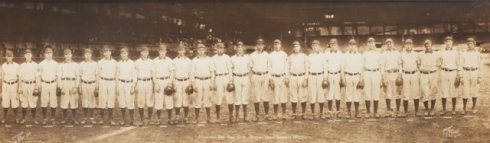
09pirates

1909 World Series Champion Pirates, Maddox is ninth from left.


The defending champions got off to a quick start again, but Maddox again started slow.  By July, The Leader said:

“Nick Maddox should have rounded into form..He is big and strong this year, but does not seem able to pitch good ball for nine rounds.”

He never “rounded into form.”  Maddox struggled all season.  He started just seven games, pitched in relief in 13 others, and was 2-3 with 3.40 ERA.

By August, with the Pirates in second place, six games behind the Chicago Cubs, The Pittsburgh Gazette asked “what was the matter?” with Maddox and why the Pirates had not cut him loose.

He made his last appearance on September 12, giving up a run, a hit and walking two batters in two innings of relief during a 4-0 loss to the Reds.  He was sold to the Kansas City Blues in the American Association 10 days later.

Maddox won 22 games for the Blues the following season, but continued to be plagued by wildness and arm trouble.  His major league career was over, and he was finished professionally in July of 1914 at 27-years-old when he was released as manager and pitcher for the Wichita club in the Western League after posting a 3-13 record.

Fred Clarke was convinced Maddox’ career really came to an end on that rainy day in Detroit.  James Jerpe of The Pittsburgh Gazette-Times said that in 1910 Dreyfuss asked Clarke to release Maddox long before he sold the pitcher to Kansas City:

“’Why don’t you let Maddox go? You aren’t pitching him.’

“’No,’ replied the Pirate Chief sadly.  “I’m not pitching him.  He ruined his arm helping Adams win the world’s series.’

“And Fred narrated (to Dreyfuss) more of Nick’s gameness on that bleak and drizzly October day in Detroit when he gave his arm for a championship.  Nick was carried for a whole year and the club has been interested in his welfare ever since.”
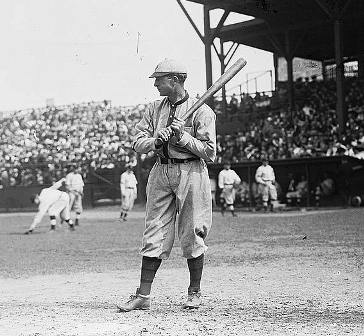
Fred Clarke

Fred Clarke

Maddox, who lived in Pittsburgh, and worked for the Fort Pitt Brewing Company, after his retirement, lived long enough to listen on the radio to the last two innings of the next no-hitter thrown by a Pirate pitcher—Cliff Chambers defeated the Boston Braves 3-0 on May 6, 1951.

Nick Maddox died in 1954 at age 68.

Cecil and Josh

21 Jan

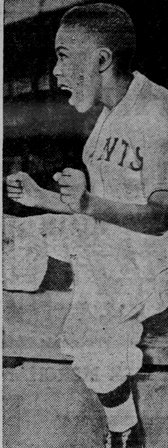
Newspapers across the country saw it as a human interest story about baseball; the Black Press saw it very differently.  With his team in a slump, New York Giants Manager Bill Terry brought in 13-year-old Cecil Terry to “bring the Giants some badly needed luck.”

Cecil Haley

Cecil Haley

The Associated Press said of Haley’s first day on the job:

“Cecil, a Negro mascot, was given a Giant uniform yesterday, allowed to sit in the dugout for the first time and promised a trip West if he’d bring the Giants some badly-needed luck.  The net result of his work?  Pirates 4, Giants 3.”

Very different stories appeared in the Black press.  The Washington Afro-American said:

“(O)rganized big leagues will have colored mascots but steadfastly refuse to accept them as players.  The proud lad sits under the bat rack in the Giants’ dugout, but to date, something must be wrong, because the Giants are hopelessly battling for fifth place.”

The New York Age said:

“Cecil Haley, New York Giants colored mascot, will know better when he grows older and tries to get a job playing for the same team.”

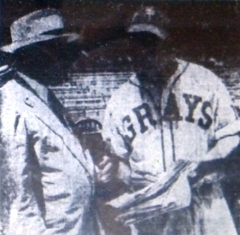
The same day that Haley appeared on the bench with the Giants, New York pitcher Carl Hubbell spoke with The Pittsburgh Courier about Josh Gibson:

“‘(H)e’s one of the greatest backstops in the history of baseball, I think…Boy–how he can throw!’ exclaimed Hubbell.

josh

“There seems to be nothing to it when he throws.  He just whips the ball down to second base like it had a string on it.  He’s great, I’m telling you.  Any team in the big leagues could use him right now.’

“But, with all that,’ said Hubbell, ‘the thing I like best about him is that he’s as fast as greased lightening.  You know, after a few years a catcher usually slows up considerably from bending down so much.  But that guy–why, he’s never slowed down.”

That summer, a new effort was underway to integrate baseball.  A petition drive led by the Young Communist League collected between 25,000 and 100,000 (reports varied) and delivered to National League President Ford Frick,  and Commissioner Kenesaw Mountain Landis at the 1939 winter meeting in Cincinnati.

The Afro-American said Frick “avoided the issue by declaring that a ‘social problem’ was involved for which the big leagues were not responsible.”

There is no public record of the commissioner’s response.

Josh Gibson, with two-time Communist Vice-Presidential Candidate James W. Ford looking on, signs the 1939 petition to end racial discrimination in professional baseball.

I published a shorter version of this post on August 27, 2012.