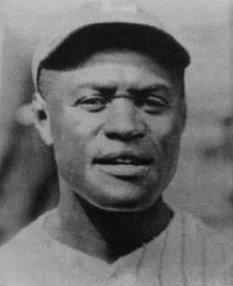
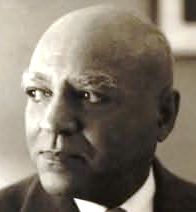
Tag Archives: Pacific Coast League

“We didn’t have any High-Faluting Baseball Paraphernalia”

15 Oct

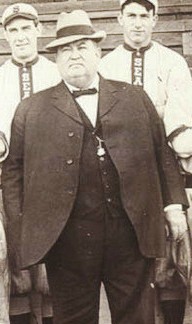
The Seattle Star said of Dan Dugdale:

“No man in the Northwest can rival the experiences in baseball that Daniel E. Dugdale has had in the national game.”

In his 1934 obituary, The United Press called Dugdale “the father of organized baseball in Seattle.”

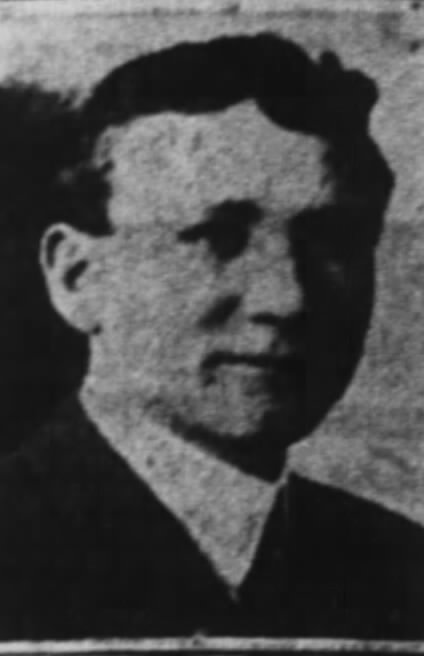
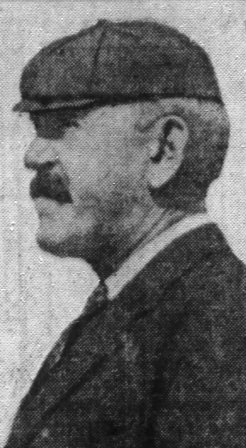
Dan Dugdale

Dan Dugdale

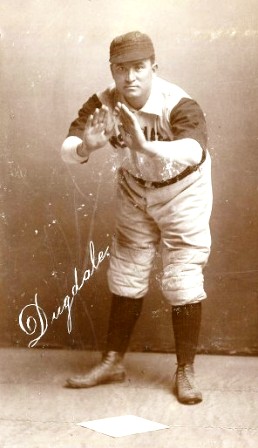
Primarily a catcher, Dugdale played professional ball for more than a decade; including two stints in the National League with the Kansas City Cowboys in 1886 and the Washington Senators in 1894.  He retired after the 1897 season and made what was intended to be a brief stop in Seattle on the way to Alaska for the Klondike Gold Rush.  He never made it to Alaska, and in Seattle, he organized most of the city’s early professional teams and built two ballparks.

Dan Dugdale 1894

Dan Dugdale 1894

Forty years after he began playing he shared his reminiscences about in the early 1880s in his hometown of Peoria, Illinois with Seattle reporter Leo Lassen:

“We didn’t have any high-faluting baseball paraphernalia for the deciding game of the Peoria, Illinois city championship in the summer of 1883.  I can remember that we used a piece of the curbstone for home plate.  Nobody except the catcher used glove, and he only had a fingerless glove of thin leather over both hands.

“Oh yes!  Of course my team, the Double Browns, won, or it wouldn’t start this story out right.  It was in that game that I got my start as a catcher.

“I had been playing shortstop, but the regular receiver split a finger and there wasn’t anyone else to catch, so I tried it.

“We stood back for the pitches except on the third strike, and except with men on bases, catching the ball on the first bounce when standing back.

Ted Kennedy, who later helped pitch one of Pop Anson’s Chicago teams into the championship, was hurling for our side that day, and baby but he could throw that ball with plenty of swift.

“’Don’t catch if you want to keep your health,’ Ted warned me before taking up my receiving duties…Kennedy was right.  The first time I stood up close to catch, the ball hit that curbstone plate and crashed into my mouth, knocking out teeth by the wholesale and putting me on queer street.

“But in those days no one considered quitting as long as it was possible to stand up and catch the ball.

“I finished the game and we won the championship, and I felt well repaid for it.

“That game started me on my baseball career as a catcher, after which I was to serve for 15 years as a receiver for clubs throughout the country.”

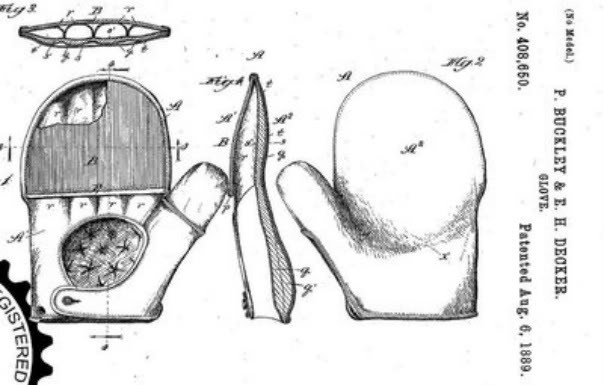
Kennedy wasn’t the only major leaguer Dugdale played with while in Peoria.  In 1885, he played with one of the claimants to the title of invention of the catcher’s mitt—Harry Decker—and Dugdale talked about some of the attempts his teammate made to protect his hands four years before Decker was awarded the patent for the Decker Safety Catcher’s Mitt:

“(Catchers) had no shin guards, masks or big gloves in those days, and a fellow had to be almost a martyr to go behind the plate with fellows like John Clarkson, Amos Rusie and those old stars doing the pitching.

“The big catcher’s pad now in use in baseball, is the same glove that Harry Decker, a teammate of mine on the Peoria team in 1885, invented.

“Harry had been troubled with split fingers and he kept tinkering around with leather trying to figure out how to protect his left hand, which does the big work for all catchers.

“He had a thin, fingerless glove to start with and one day he slipped a piece of raw beefsteak between the glove and his hand and that glove gave him his first idea.  He used this protection for almost a season, using a fresh piece of meat each day.

“Then he tried shot in the pocket of the glove and put a piece of leather on top of the shot, leaving it between the two pieces of leather.

“This gave him the idea of building the mitt up bigger and lacing fingers on the back of the glove.

“One day he hit upon the idea of stuffing the glove with rags in the mitt for protection, and finally got some good felt and used that.  It has been in use ever since.”

Decker Safety Catcher’s Mitt

Decker Safety Catcher’s Mitt

Dugdale remained the most prominent figure in Seattle baseball until he was hit by a truck and killed in 1934.

Accounts vary over how much Decker received from the sale of the mitt patent to A.G. Spalding.   He  is one of the enigmatic 19th Century players for whom there is no information on the date or location of his death.

After his career ended in 1891 he was convicted of numerous crimes—most involving forgery, but also including larceny and bigamy; several of his crimes involved other ballplayers.

Throughout his career Decker had a reputation as a womanizer; The Philadelphia Inquirer called him “The Don Juan of the Diamond,” but by 1890, perhaps exacerbated by his being hit in the head by a pitch, he went from lovable rogue to serial offender.  He racked up arrests and convictions in at least six states and an involuntary commitment to the Elgin State Hospital in Illinois over the next 25 years.

Victims of his crimes included Dugdale, and Al Reach, both of whose names appeared on forged checks in separate cases, and Jack Horner and Pat Pettee, teammates of Decker’s in 1891 during his brief stay with the New Haven Nutmegs in the Eastern Association.  Decker was convicted of stealing property worth $150 from Horner and $55 from Pettee after the two had allowed him to stay in the apartment they shared.

Decker’s trail goes cold after he was released from California’s San Quentin Prison in 1915.

Leo Lassen, the reporter Dugdale spoke to, went on to become the radio voice of the Seattle Rainiers of the Pacific Coast League from 1931 through the 1961 season.  Some surviving audio can be found here.

Sam Crane on International Baseball

30 Jul

Samuel Newhall “Sam” Crane, like Tim Murnane, turned to sports writing after his career on the field ended.  His involvement in a scandal might have contributed to his departure from the diamond—but contrary to oft-repeated stories it was not the direct result.

Sam Crane

Sam Crane

Crane was named as a respondent in a Scranton, Pennsylvania divorce in 1889—a prominent Scranton businessman named Edwin Fraunfelter (some contemporary newspapers incorrectly said “Travenfelter”) charged that Crane had stolen his wife, and $1500.  Crane had played for the Scranton Miners in 1887 and ’88 and departed the city with Fraunfelter’s wife Hattie in 1889, relocating to New York.  Crane and Hattie Fraunfelter were returned to Scranton to face trial for the theft.

In October of 1889, they were acquitted.  The Philadelphia Times said the two were released and Mr. Fraunfelter was ordered to pay the court costs, and “The congratulations which were showered on the second baseman and the woman made a scene in the courtroom.”

Despite the scandal the New York Giants (twice) and the Pittsburgh Alleghenys were happy to sign Crane in 1890.  The end of his career was more of a result of the 36-year-old’s .179 batting average and diminishing fielding skills—twelve errors in 103 total chances at second base–and, of course, he probably wouldn’t have found himself in Scranton in 1887 and ’88 had his career not already been on a downward trajectory.

Crane immediately went to work for The New York Press upon his retirement and remained one of the most respected sports writers in the country.  He edited the “Reach Guide” from 1902 until his death in 1926.

In 1905 Crane, then with The New York Journal, wrote about the boom in International baseball on the eve of the visit of the Waseda University baseball team:

“The Japanese are nothing if not progressive, and even with their country in the throes of a disastrous war (The Russo-Japanese War) they have found time to devote attention to our national game.”

Crane said the Waseda visit would:

“(M)ark a red letter day in the history of the game,  It will be a sensational era in the life of the sport, and in fact, that of all athletic sports.”

Japan was not alone in embracing the game:

“Baseball is also flourishing in South Africa.  The Transvaal Leader, a progressive newspaper, has taken up the sport and publishes full scores of the games and the records of the players.

“There is a South African baseball association and the players of the different teams can hit the ball, even if they have not yet attained the accuracy and agility in fielding their American cousins have reached.  According to The Leader, out of thirty-seven batsmen who figure in the official  record from July 1 to October 8, twenty-three of them batted over .300…A batter named Suter of the Wanderers was the Lajoie of the league, and he made our own ‘Larruping Larry’s’ record of .381 look like a bush league mark.  Suter’s batting percentage was .535.

“The second batter to Suter was Hotchkiss, also of the Wanderers, who walloped out a base hit every other time at bat, making his average .500…Wonder what the Africans would do with ‘Rube’ Waddell and the Chesbro ‘spit ball?’”

As evidence that the South Africans had “grasped the American style of reporting games” Crane gave an example from a recent edition of The Leader:

“’The diamond was very hard, and, as a consequence, the ball frequently wore whiskers, as some infielders can testify.’”

Crane expressed surprise that baseball had taken such a “stronghold” in an “English possession”  like South Africa:

“Britons, wherever found, look upon the great American game as a direct infringement on the sporting rights as established by cricket.

“’It is only an offshoot of our rounders,’ they are wont to say, and that ancient game is about on the level of ‘one old cat’ and ‘barnball.’

“Englishmen are extremely conservative about their sports, especially of cricket, which is considered their national game, and in their own stanch little island they have always pooh-poohed baseball.  But when the Briton gets away from home influences he becomes an ardent admirer of the American game and is loud in his praise of the sharp fielding it develops.

“In Canada, South Africa and Australia, where there is more hustling, and time is more valuable than in the staid old mother country, the quick action, liveliness and all around hustling of baseball that give a result in a couple of hours, is fast becoming more popular with the colonials than cricket, that requires as many days to arrive at a decision.

“Great strides have been made in baseball in the Sandwich (Hawaiian) Islands.  Honolulu is the headquarters just now, but the game is fast spreading to other localities.  The game has been played in the Sandwich Islands for many years, but it was not until the United States was given possession that it flourished.”

Crane mentioned that his late brother Charles–who died in 1900, and incidentally, married his brother Sam’s ex-wife who Sam divorced before leaving Scranton with Mrs. Fraunfelter) had been the catcher on the team representing the naval vessel the USS Vandalia and frequently played games against teams in Hawaii and Samoa during the 1880s:

“The natives took to the game very quickly and soon learned to enjoy it.  They welcomed every arrival of the Vandalia with loud demonstrations of joy, and there was a general holiday whenever a game was to be played.”

Crane predicted that baseball would continue to flourish in the islands, and throughout Asia, noting that a Chinese player “plays third base on the leading club, and has the reputation of being the best player in the whole league.”

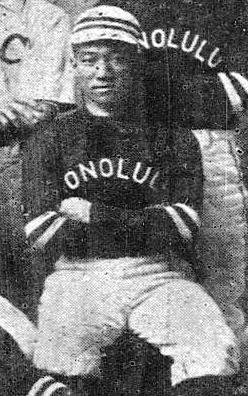
He was likely referring to 20-year-old Charles En Sue Pung, a teammate of Barney Joy’s on the Honolulu Athletic Club team who was also one of Hawaii’s best track athletes.  Pung was rumored to be joining Joy when the pitcher signed with the San Francisco Seals in the Pacific Coast League in 1907, and in 1908 there were brief rumors in the press that Chicago Cubs Manager Frank Chance wanted to sign the Chinese third baseman—neither materialized, and he remained in Hawaii.

Charles En Sue Pung

Charles En Sue Pung

Crane said the growth of the game internationally would be endless; he said the introduction of the game in the Philippines was a prime example:

“(T)here are several enclosed grounds in Manila to which are attracted big crowds…I know they can learn to play the game, for when the (New York) Giants were in Savannah (Georgia) for practice last spring a team of soldiers from a nearby fort played an exhibition game with the Giants.”

Crane said the team was accompanied by “a young Filipino, who, while he did not play on the soldier team, practiced with them and showed surprising proficiency… (The) youth knew all the points of the game as well as Henry Chadwick.”

For Crane, that was enough to declare that “in short order” the Philippines would adopt the game as had, and would, “all people that are blessed with real red blood and progressive.”

Jack Grim

2 Jun

John J. “Jack” Grim never amounted to much as a player.  Statistics are nearly nonexistent for his playing career, and those that do survive are unimpressive; primarily a catcher, he played for all, or parts of nine seasons from 1894 until 1902.  The Cincinnati native made his mark, now all but forgotten, as a manager and executive.
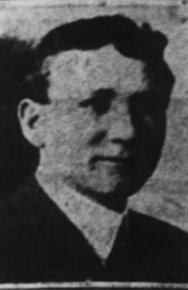
John J. "Jack" Grim

John J. “Jack” Grim

Often confused with former major league catcher John Helm “Jack” Grim—for example, most sources list John H. Grim as the manager of the 1904 Columbia Skyscrapers in the South Atlantic League, it was John J. Grim who managed that team, and during that season might have made his greatest contribution to the game.

Grim’s first managerial appointment was with the Anaconda Serpents in the Montana State League in 1900.  He guided the team to a second-place finish in the first half, and the club was in first place in the second half race on August 11, when Grim abruptly resigned.  The Anaconda Standard said Grim sent a letter to the team directors in which he charged “there is a feeling in certain quarters, against me.” He said:

“I cannot do myself justice while laboring under these conditions.”

Arthur “Dad” Clarkson, brother of Hall of Famer John Clarkson, replaced Grim; the team finished the second half of the season in second place under Clarkson.  Grim became an umpire in the league for the remainder of the season.

In 1901 Grim went to the West Coast with William H. Lucas, a former minor league pitcher who had been president of the Montana State League, to join Dan Dugdale to reestablish  the Pacific Northwest League; Lucas served as league president and Grim managed the Portland Webfoots to the championship, winning the pennant by 16 games.

The league expanded from four to six teams for 1902, and Grim was hired to manage the Spokane franchise, which had finished in last place (41-67) under three different managers in 1901.  The Sporting News said:

“(Spokane’s) stockholders have given (Grim) full power to act in signing players.”

The Sporting Life said Spokane fans were “feeling confident that (Grim) will this year sustain his reputation for always piloting winners.”  Despite the free reign, and high hopes, Spokane struggled, finishing in last place with a 46-75 record.

The following season, as a result of the West Coast baseball war—the California League expanded to the Pacific Northwest, becoming the Pacific Coast League—the Pacific Northwest League expanded into California and became the Pacific National League.  Grim managed the Portland Green Gages.

On July 1 the Portland franchised was, according to, The Oregon Journal “transferred bag and baggage to Salt Lake City.” In Salt Lake City Grim quickly wore out his welcome.

After it was reported in late July that Grim might be let go, six players, including the team’s star shortstop Charles “She” Donahue, went on strike.  They missed two games, but returned after the team’s president said: “he has no intention of letting Grim out.”  The harmony didn’t last and just weeks later Grim was released and fined $100 for what The Salt Lake Herald called “starting a mutiny within the ranks of the club.”

The trouble in Salt Lake wasn’t over.  Near the end of the season, Donahue’s contract was sold to the St. Louis Cardinals.  The sale was reportedly engineered by Grim after he was let go as manager.

The Herald said:

“What kind of a con game is Jack Grim trying to work on the Salt Lake ball club?  What right had Jack Grim, who was fired…got to sell Donahue to the St. Louis club?  How many more of the Salt Lake’s players is Grim trying to dispose of in the same way?  What did Grim do with the money he received from (Cardinals President Benjamin) Muckenfuss of the St. Louis team?”

Grim told The Cincinnati Enquirer he entered into negotiations with the Cardinals over Donahue on September 14. But The Herald noted:

“At that time Grim’s sole business in Salt Lake was to hang around with the ballplayers and try his best to create discord among them.  He had been fired long before.”

The National Commission ruled the sale/signing legal.  Garry Herrmann, chairman of the commission, said that in the contract he signed with Portland for 1903 “Donahue had a specified agreement that he was not (placed on the reserve list)” despite the fact that the Salt Lake team claimed he had already signed a contract for the following season.  As a result, there was nothing stopping Grim from delivering Donahue to the Cardinals, and the money he received—the amount was never reported—was his.

Grim was again involved in a new league in 1904, when he and fellow Cincinnati native Ed Ashenbach, helped form the first incarnation of the South Atlantic League—Grim managed the Columbia Sky Scrapers and Ashenbach managed the Charleston Sea Gulls in the six-team circuit.  Grim only lasted until mid-July as manager and finished the year as an umpire in the league.

It was that season that that he claimed he made his great contribution to the game.  According to Grim, he was the first person to alert the Detroit Tigers about a 17-year-old outfielder for the Augusta Tourists named Tyrus Raymond Cobb.

While Cobb was not sold to the Tigers until August of 1905, some credence for the claim was provided by Cobb himself in 1910, when an article appearing under his name—likely ghostwritten by Roger Tidden of The New York World—said Grim had tried to purchase his contract when he was struggling at Augusta, shortly after “I left home to show up the league.”

In 1905 Grim was one of the principal organizers of the Virginia-North Carolina League and managed the Greensboro Farmers—Grim lasted less than half a season and by August The Sporting Life said he was scouting for the Cincinnati Reds.

Grim finally found some stability in 1906.  He again helped found a league and owned and managed a club.  Grim’s Lynchburg Shoemakers won the Virginia League pennant in 1906—the team was led by pitcher Walter Moser (24-8), who would make the jump from the C-league Shoemakers to the Philadelphia Phillies in August.   But after a fifth-place finish and 1907, and a slow start the next season, Grim sold the team in July of 1908.
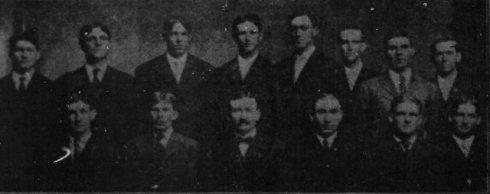
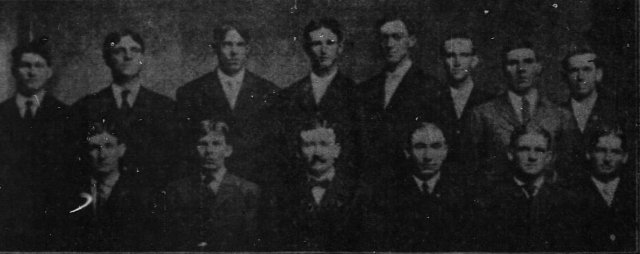
1906 Lynchburg Shoemakers, Virginia League champions. Grim is third from left on the bottom row.

1906 Lynchburg Shoemakers, Virginia League champions. Grim is third from left on the bottom row.

Just after selling the team, Grim’s wife reported him missing.  She told police in Louisville, Kentucky that she hadn’t heard from him for three weeks and thought he might be in Louisville after visiting family in Cincinnati.  Al Orth, the New York Highlanders pitcher, said he saw Grim in New York and told The Associated Press “He did not look like a man who was missing from anywhere.”
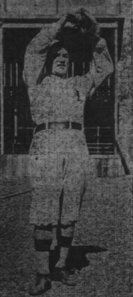
Al Orth

Al Orth


Grim eventually returned to Virginia and his disappearance was never explained.  Orth, who was from Lynchburg, returned there later that summer purchased an interest in the team and managed the club until early 1909 when he returned to the Highlanders.

For the next four years Grim bounced back and forth from team ownership (he managed, and owned part of two more Virginia League franchises (Portsmouth in 1910 and Newport News in 1912) and real estate speculating on the West Coast and in Virginia.

At the beginning of the 1912 season a small item in The Richmond Times-Dispatch hinted that there was trouble ahead:

“Jack Grim has a combination of troubles.  One is of the financial variety—well the other is nobody’s business.”

The financial troubles came to a head in August.  The Times-Dispatch said:

 “Because Manager J.J. Grim would not pay their salaries, all of the players of the Newport News baseball club except (Frank) ‘Deacon’ Morrissey, struck just before the scheduled double header between Newport News and Petersburg.”

After the game was awarded to Petersburg by forfeit, Grim’s co-owners removed him—outfielder William “Buck” Hooker was named manager for the remainder of the season.

At the end of the 1912 season, Grim found himself in an odd predicament.  The Cincinnati Enquirer said:

“Though minus a franchise, Jack Grim, formerly of Cincinnati, has a ball team under reservation, for he owns title to the players of the Newport News club…It develops that in the adjustment of the club’s affairs in August, Grim who was manager and part owner, got out without losing title to the players, though he lost the franchise.”

As a result, when the Cleveland Naps drafted third baseman Ray Bates from Newport News after the 1912 season, the draft price went to Grim.

It was the last good thing to happen to him; from there, Grim’s life spun out of control.

In October, he attended the World Series in New York (his wife later said he attempted to kill her during that trip).

In November of 1912 the Virginia League turned down his attempt to secure a franchise for 1913; next his effort to start a new league with teams in Virginia and the Carolinas fell through.

In addition to being unable to secure a franchise and running out of money—an effort to secure the New York-New Jersey League franchise in Kingston, New York also fell through–Grim’s wife had him arrested  during the first week of March 1913, and told a Lynchburg judge he had repeatedly “threatened Mrs. Grim with bodily harm.”  Grim was held in jail, but according to The Times-Dispatch “is doing everything possible to effect a reconciliation with his wife.”

Grim was released on bond after a week, but quickly rearrested, and by March 23 The Times Dispatch said:

“That a commission of lunacy will be summoned early this week to investigate the Sanity of john J. Grim, the well-known minor league baseball magnate , seems now to be a foregone conclusion…Since his incarceration Grim’s condition has grown so bad that there is no doubt in the minds of the jail attaches that he is insane…Grim has not had his clothes off in a week, and he spends his time in his cell singing, shouting, talking and pacing up and down, begging to be liberated.”

The “commission of lunacy” found Grim insane based on the testimony of Grim’s wife and a doctor named Albert Priddy, and ordered him sent to Virginia’s Southwestern State Hospital in Marion.  It was in front of the commission that Mrs. Grim related the story of the “attempt to murder her with a razor in New York City.”
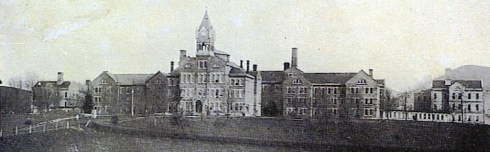
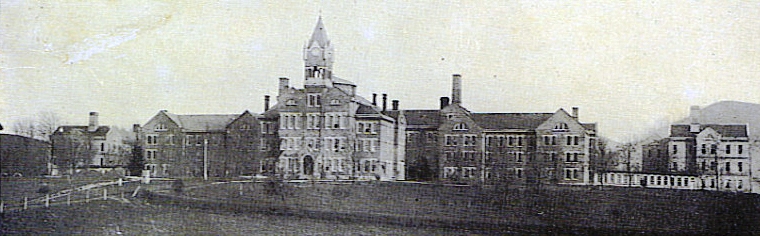
Southwest State Hospital, Marion, Virginia

Southwest State Hospital, Marion, Virginia

Contradictory reports about Grim’s condition came out during the next year.  The Associated Press said in August Grim was “A raving maniac…not far from death.”  A December story in The Cincinnati Enquirer said “he is improving rapidly and probably will be discharged at an early date…Grim expects to return to Cincinnati.”

Almost a year later, he was still in the hospital, and The Enquirer reported that “Grim is improving in health and expects to visit his Cincinnati friends soon.”

That item was the last newspaper reference to Grim; he was never released and died in the state hospital.

The doctor who testified that Grim was insane, Albert Sidney Priddy, was superintendent of the Virginia State Colony for Epileptics and Feebleminded in Madison Heights, Virginia.  The doctor, and that institution became infamous in the case of Buck v. Bell (the case was Buck v. Priddy until Priddy’s death in 1925; Bell was his successor at the State Colony).  The Supreme Court’s decision in the case–upholding the Virginia’s compulsory sterilization law– resulted in the forced sterilization of more than United States citizens in Virginia and states that enacted similar laws.

Franz Hosp

19 May

Franz Philip Hosp Jr. was born in Cincinnati in 1884 (some records, including cemetery documents and his grave say 1883).  His father was a well-known landscape architect and horticulturist who moved the family to Riverside, California in 1888.

The elder Hosp was responsible for many projects in the Southwest and Southern California; he is probably most famous for his landscaping of Victoria Avenue in Riverside, which remains a tourist attraction and is listed on the National Register of Historic Places, and for planting the gardens at the El Tovar Hotel in Grand Canyon National Park.

The family also ran a successful nursery in Oceanside, California  and Hosp worked with his father while playing baseball in the San Diego area.

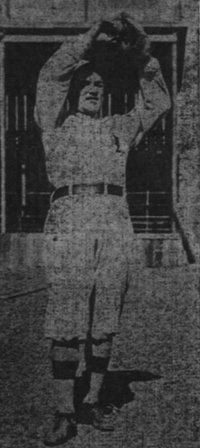
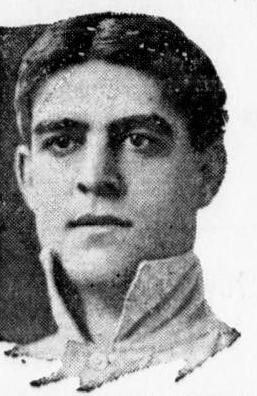
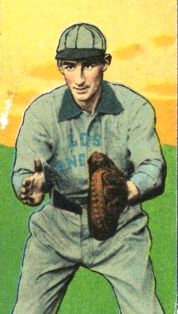
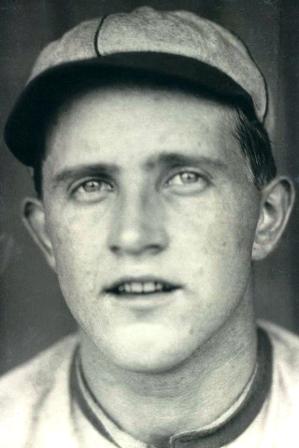
Franz Hosp

Franz Hosp, 1909

In December 1906 he pitched for the San Diego Pickwicks (sponsored by San Diego’s Pickwick Theater) of the California Winter League.  Hosp quickly caught the eye of West Coast professional teams; according to The Los Angeles Times he had a streak of thirty-one scoreless innings that winter and “fanned as many as eighteen men in a single game.”

The Los Angeles Herald said two teams, The Butte Miners and the Seattle Siwashes of the Northwestern League, had already “tried hard to secure his services,” when he pitched against the Los Angeles Angels of the Pacific Coast League (PCL) in a February exhibition game in San Diego.

The Associated Press said the game

 “(W)as the first time in which he allowed as many as seven hits, and after doing, he took a brace and fanned out an equal number of Los Angeles’ best artists, with the result being that the Angels’ manager (Henry ”Hen”  Berry) lost no time in annexing Hosp to his own aggregation.”

Hosp said he chose to play with Los Angeles so he could continue working at the family business in Oceanside.

The pitcher was a popular member of the Angels.  The Los Angeles Herald said:

“Pitcher Franz Hosp is not only one of the best twirlers in the coast league, but he is also one of the most genial boys who ever donned a baseball uniform.  Hosp has forgotten more baseball, young as he is, than many of the swell headed players who roar at decisions have ever learned.”

The Times said of Hosp, who also played second base and shortstop:

“His work in the field and at the bat is equal to his performance in the box making him one of the best all-around men in the business.”

Hosp was 12-7 with a 2.73 ERA for the PCL champion Angels in 1907; he also played 13 games in the infield, hitting just .105.

franzhosppix

Franz Hosp

The following season Hosp (22-14 2.02), William “Dolly” Gray (26-11, 2.12), and Walter “Judge” Nagle (24-10, 1.94) led the Angels to another league championship.  On July 26 he had the most embarrassing moment of his career during a game with the San Francisco Seals.  The San Francisco Chronicle said:

“Hosp of the Angels established a unique and startling record yesterday afternoon, one that bids to stand a long time in baseball circles.  Not only did he literally pitch the game away, but in one inning—the fourth—he walked six men and hit two more, forcing in five runs across the plate without a hit by the Seals.  Not a ball was hit out of the diamond.”

(Just more than a year later, August 28, 1909, Hosp’s former teammate Dolly Gray, now a 30-year-old rookie with the Washington Senators, set the major league record by walking eight Chicago White Sox batters in one inning).

Hosp was 16-14 in August of 1909 when he was signed by the Cincinnati Reds for 1910.  Within a week he hurt his arm and did not pitch again for the remainder of the season.

By the spring of 1910 there were conflicting reports about the condition of Hosp’s arm.

The Times reported that according to Angels pitcher Andy Briswalter:

“Franz Hosp, whose clever pitching resulted in his purchase by the Cincinnati Reds, may never play ball again.”

The Herald said Hosp:

“(D)enied with considerable indignation the story purporting to be an interview with Andy Briswalter.  According to this story, Hosp’s arm was said to be in such condition that he might never play ball again.  While Hosp was overworked last season, when his sensational work with the Seraphs resulted in his being purchased by the Cincinnati Reds, he stated that he never felt better and that the rest of the past winter overcame any inconvenience or ill effects.  Hosp says he hasn’t seen Briswalter in six months.”

Hosp joined the Reds in Hot Springs, Arkansas, and was first tried in the outfield.  The Cincinnati Enquirer said after his debut:

(Ward) Miller and (George “Dode”) Paskert will have a dangerous rival for the right field job in the person of Franz Hosp, the recruit from the coast, who was signed as a pitcher but will try out as a fielder…He is a right-hand hitter, a good-sized, well-built fellow, and meets the ball square on the nose.  He came to bat five times; made a double and two clean singles…He showed a lot of speed on the bases and appears to be a kid who will bear watching.”

When finally given a chance to pitch, against the Boston Red Sox on March 25, after two scoreless innings, he gave up four singles and doubles to Harry Lord and Tris Speaker, in the third, resulting in three runs and was lifted for a pinch hitter the following inning.

Hosp was also tried in the infield where he “has made a fine impression.”  But it wasn’t enough to stick with the Reds.

The Herald reported in early May:

“Franz Hosp, one of the best pitchers who ever worked in the Coast League and who was released to Los Angeles by Cincinnati almost ten days ago because his pitching arm is kafluey for a time is warming up with the Angels every day and Hen Berry thinks he will get back into pitching form again soon.  He is a crack infielder too, and a heavy sticker, so it is dollars to cents that he will not be idle long.”

Hosp made his mound debut for the Angels on May 20; he pitched a complete game, losing 5 to 3.  The Herald said:

“Hosp showed excellent form for a pitcher who has been out of the game as long as he, and with a weak and sore arm, and he should be able get back to his best form with a little patience and careful slab work until his arm is ripe again.”

The paper was wrong, the extent of Hosp’s activity as a pitcher after that game was four innings in three games over the next year and a half.

Hosp was released by the Angels on June 15, along with Briswalter, who The Times claimed four months earlier had said  Hosp’s arm was shot; Briswalter had not recovered from a hip injury sustained during the 1909 season, he developed Tuberculosis of the injured bone and died in 1912.

Andy Briswalter

Andy Briswalter


Hosp continued to play for a decade.

Within weeks he was signed to play shortstop for the Vernon Tigers.   He hit just .240 for the Tigers, but The (Portland) Oregonian called him “a nifty fielder.”

Hosp became the team’s regular shortstop, through their move to Venice, California.  He hit .261 in 1911, and 1912, .255 in 1913, and then slipped to .208 in 1914.  He was released before the 1915 season and played for the Wichita Witches in the Western League.  He returned briefly to the PCL at the end of 1915, but was released by the Oakland Oaks prior to the 1916 season.  He returned to the PCL in 1918, playing for four teams over the next three seasons, ending his career after 56 games with the Salt Lake City Gulls in 1920.

Hosp returned to Southern California where he played and managed for semi-pro and industrial league teams and lived in Los Angeles.

On June 30, 1928 he was killed in a car accident on Coast Highway (US 101) 16 miles north of Oceanside.

The Occidentals

14 May

Billed as the “Colored World Champions” during their barnstorming tours of the West, The Salt Lake City-based Occidentals were also members of the otherwise all-white Utah State League.  Despite being forced to play additional road games, the team was very competitive.  In 1908 The Deseret News said:

“The colored boys have paid no attention to handicaps under which they had to enter the league; they have played good, earnest ball and provide the fans with their money’s worth every time they play.”

The paper acknowledged that the team’s manager Frank Black was correct when he said the team could “make more money by traveling throughout the inter-mountain region on a pick-up schedule than he will make in the league,” and made a “plea for fair play to all men, no matter who they may be.”

In 1909, the Occidentals won the Utah State League and then headed west.

The team arrived in Los Angeles in late October.  The Los Angeles Herald said:

“The Occidentals are a colored team, and after cleaning up everything in sight in the Mormon state decided that Southern California would afford new fields to conquer.”

Among the players on the Occidentals’ roster were second baseman/manager Black and pitcher/outfielder Louis “Ad” Lankford (contemporaneous accounts, including coverage of his brief boxing career in Salt Lake City, usually call him “Langford”)—in December catcher/first baseman Bill Pettus joined the team.

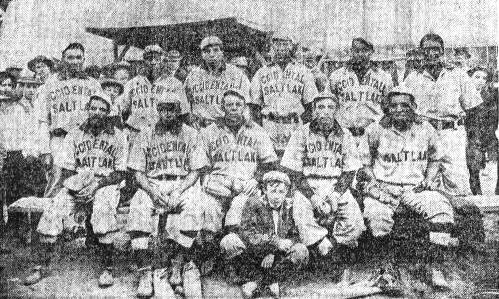
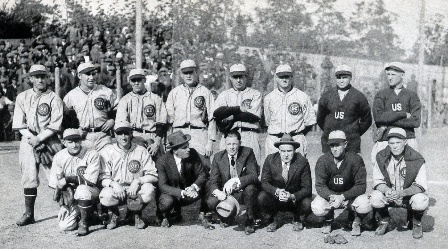
The Occidentals--Frank Black is standing far left, Ad Lankford is seated second from left.

The Occidentals–Frank Black is standing far left, Ad Lankford is seated second from left.

The team opened their tour with a series with the Los Angeles Giants billed as the “Colored Championship of the Pacific Coast.”  The Occidentals swept the best of five series with 9 to 2, 7 to 1 and 4 to 2 victories.

After winning the series, the team from Salt Lake City played a team dubbed as the “Japanese All-Stars of Los Angeles,” organized by Los Angeles Angels catcher Jesse Orndorff—the team was all Japanese except for the battery which consisted of Orndorff and Angels’ pitcher Bill TozerThe Herald said, “The game was fast and witnessed by a crowd of 1500.” The Occidentals won 7 to 3.

Jesse Orndorff

Jesse Orndorff

Two days later the barnstormers lost 6 to 1 to the Angels (the team was billed as the Los Angeles Angels, but was more accurately a current and former Pacific Coast League all-star team), with St. Louis Cardinals pitcher John Raleigh on the mound.

The Occidentals spent another six weeks in Los Angeles and had three well-publicized games with  McCormick’s Shamrocks, managed by local pool hall operator and promoter Jim McCormick.  The teams met for the first time on Thanksgiving and were tied 0-0 after five innings when the game was called.  The two teams met again at Chutes Park on Christmas.

The two managers tried to build attendance with quotes in The Herald, and The Los Angeles Times.  Black said:

“If you want to be a few beans ahead when the sun goes down on Christmas day, put a few cartwheels on the colored boys to win from the Winter League aggregation.”

McCormick countered:

“Nothing to it but shouting, and we will win in a walk.”

McCormick promised to get the “Occidental’s goat.”

When the sun set on Christmas The Herald said: And Manager Black’s goat is still grazing unmolested at Chutes Park.”  The Occidentals won 3 to 2.

Frank Black poses at Chutes Park with Jim McCormick's "goat" after the victory.

Frank Black poses at Chutes Park with Jim McCormick’s “goat” after the victory.

After a New Year’s Day rain out, the teams met again on January 8.  The McCormick’s recruited Tozer from the Angels to pitch; the game was tied 1 to 1 when called after twelve innings.

The following day the Occidentals played another twelve inning game, this one a 0-0 tie against an all-star team composed of Pacific Coast League, California League and major league players, including William “Brick” Devereaux, Eli Cates, Ed McDonough, Charles “Truck” Eagan and Elmer Rieger.

According to The Herald the team was 14-2-2 on the California tour when they departed for San Diego on January 22, where they lost 1-0 in 10 innings.

The final game of the trip was played against the Santa Ana Winter League Team—the Yellow Sox– which was made up of Pacific Coast League players including Arnold “Chick” Gandil—then a second baseman, as well as St. Louis Cardinals outfielder George “Rube” Ellis and future Hall of Famer Walter Johnson on the mound.

Johnson shut out the Occidentals 2 to 0, striking out 15 (The Times said he finished the winter league season 9-0—with nine complete games, giving up just 21 hits and 5 runs in 81 innings) The Herald said the team “did not take very lovingly to the slants of the mighty Walter, who had them well in hand throughout the contest.”

The team was generally well received by fans on the coast—notwithstanding The Herald’s habit of referring to them as “the dinges.”

Black and the Occidentals returned to Salt Lake City and rejoined the Utah State League for the 1910 season, finishing in second place.

The following year Frank Leland’s Chicago Giants entered the California Winter League, posting a 10-7-2 record.

Brief Bios

7 Apr

Finley Yardley

Identified as “Findley” on Baseball Reference, Finley A. Yardley was born in Ben Arnold, Texas on March 21, 1895.

“Fin” Yardley was a good hitter, but his intelligence was questioned more than once during his career.

After a spring trial with the St. Louis Browns in 1917, he was released to the Little Rock Travelers in the Southern Association for 57 games, but according to The Arkansas Gazette, “Forgetting is what chased him out” and he was sent to the Spokane Indians in the Northwestern League.

Yardley hit well in Spokane (.339 in 115 at bats), but despite his success The Gazette noted that:

“His think tank still slips now and then.  Recently he hit a drive good for three bases but forgot to touch first.”

Fin Yardley was no rocket scientist—his son John Finley Yardley was.

John Yardley was an aeronautical engineer whose team from McDonnell Aircraft Corporation designed the Friendship 7 capsule in which John Glenn orbited the Earth in 1962—Glenn called him “one of the real pioneers of the space program.”  Yardley was also involved with the Gemini, Skylab and Space Shuttle Programs.

After his playing career, Finley Yardley settled in St. Louis where he worked as a sales manager at a car dealership.  He died in Tucson, Arizona on March 1, 1963.

Charles Gurtz

Charles Joseph Gurtz was born in DePauw, Indiana in 1890.  He served in the United States Army, where he was a member of the 22nd Infantry and played for the unit’s baseball team in the El Paso, Texas city league.  He then played in a number of leagues throughout the Southwest not recognized by the National Agreement, including stops with teams in the “copper circuit;” loosely connected teams and leagues in mining towns in New Mexico and Arizona

Gurtz was let out of his contract in Silver City, New Mexico in order to join the Bloomington Bloomers in the Three-I League in 1914.  He hit .333, finishing second to Howard Wakefield for the league batting title.

Shortly after the 1914 season ended, Gurtz broke his leg during a semi-pro game in Odell, Illinois and returned home to Indiana.

In February of 1915, The Associated Press reported that he was “suffering from mental trouble, due to excessive religious zeal (and) has been declared insane. “  He was committed to Indiana’s state hospital at Madison, where “Physician’s say that he should respond to treatment and become normal again if his mind can be kept off religion.”

A month later Gurtz was released from the state hospital, The Associated Press said the hospital’s “superintendent expressed the opinion that Gurtz would be able to play ball.”

Gurtz played, but not well.

He hit just .193 for Bloomington in 1915.  The following year he was released by Bloomington just before the season began, but was signed by the Oklahoma City Senators in the Western Association in May.  He split the 1916 season between the Senators and the Muskogee Mets in the same league, hitting just .210.  (Baseball Reference identifies the player with Oklahoma City and Muskogee in 1916 as “William Gurtz,” but contemporary references in The Oklahoma City Times confirm that it was Charles Gurtz)

Gurtz returned to his native Indiana after the 1916 season and died on November 9, 1989, three weeks short of his 100th birthday.

Jimmy Duchalsky

James Louis “Jimmy” “the Duke” Duchalsky was discovered in Hawaii between the 1922 and ’23 seasons when Herb Hunter’s touring big leaguers visited the island during their barnstorming trip which also included stops in Japan, Korea, China and the Philippines.

The International News Service, which called the 5’ 9” 150 lb. Duchalsky the “hardest hitting pitcher in Hawaiian baseball circles,” said he caught the eye of New York Yankee pitcher “Bullet” Joe Bush.  Bush “was so impressed with the youngster’s work in a game he pitched against the big leaguers that he recommended him highly to Duffy Lewis manager of the Salt Lake City Bees in the Pacific Coast League).”

Joe Bush, front, second from right

Joe Bush, front, second from right  photographed during the tour.

Bush said the only thing he lacked was “a change of pace and that can be developed under the instruction of a good coach and manager.”

Duchalsky was 24-years-old (the Bees claimed he was just 21), but not as polished as Bush thought and struggled through 15 appearances, most in relief, for Salt Lake.  He posted a 1-3 record and 7.59 ERA in 51 innings—he did have 8 hits in 20 at bats, with one home run.   In May, he and teammate Tony Lazzeri were sent to the Peoria Tractors in the Three-I League; Duchalsky was 13-8 in 28 appearances.

The following season Duchalsky rejoined the Bees but pitched just one-third of an inning, allowing two runs and two hits in an 18-17 loss to the Oakland Oaks on April 10.  He was released later that week and returned to the Three-I League, this time as a member of the Decatur Commodores; he was 11-9 with a 4.13 ERA for the last-place (58-78) Commodores.

Jimmy Duchalsky 1923

Jimmy Duchalsky 1923

At the end of October he returned to Honolulu to play winter ball.

On December 7, 1924 Duchalsky was involved in an altercation with a cab driver. The Decatur Review said:

“Jim Duchalsky, known to all Three Eye League baseball fans as “The Duke,” has pitched his last game of ball… (he was) shot to death in his native city last evening after a street argument…It will be hard to convince Decatur baseball fans who have come in contact with Jim that he was the aggressor in any brawl that might have taken place for he was the most quiet player both on and off the field to ever appear here… Despite his quiet manners and the fact that he was not a mixer, many fans in both Decatur and Peoria will mourn his loss.  Duchalsky was admired by fans in every city where he played for his sportsmanlike conduct on the ball field and in all his games pitched at Staley Field was never seen disputing an umpire’s decision, even on balls and strikes.  He pitched his game and left the arguments out of his assortment.”

The Associated Press said, “The encounter was believed to have started in jealousy over a woman.”  The cab driver, John Emmeluth, claimed self-defense, but several witnesses said he approached and shot the pitcher with no warning.  He was sentenced to 20 to 25 years in prison.  Duchalsky was buried in Honolulu.

“This whole Trouble, Disgraceful to be sure, may be Blamed directly on Jack Sheridan”

14 Mar

On April 7, 1901, The San Francisco Call reported that John F. “Jack” Sheridan had accepted an offer from President Ban Johnson to continue working as an umpire in the American League—which operated as a minor league the previous season.  The paper said “The National League also made a bid for his services.  He will receive $400 a month and expenses.”  It was said to be “the largest salary ever paid to an umpire.”

Sheridan was a former player, a second baseman and outfielder, who played for several San Francisco teams in the California League, including stints with the Haverlys from 1883-85.  He went East in 1885 and appeared in six games for the Chattanooga Lookouts in the Southern league, and that same season began working as an umpire.

sheridanpix

Jack Sheridan

Years later, Mique Fisher, long-time California and Pacific Coast League manager and executive told The (Spokane) Spokesman-Review that Sheridan was signed by the Lookouts after he “sold himself to Chattanooga through a glowing personal description of his own ability,” but Fisher said:

 “Sheridan couldn’t field a ball with a fish net or hit one with a tennis racket.  When the Chattanooga manager saw Sheridan in action, he swore out a warrant charging him with obtaining money fraudulently.  Sheridan had to work out the expense advance in a cigarette factory.”

He worked as an umpire in the Southern League (1885, ‘93), the California League (1886-89, ’91), the Players League (1890), the National League (1892, ’96-97), and the Western/American League (1894-95, 1898-1900).

The best-paid umpire in the game, who was also a San Jose undertaker during the off-season, traveled from his California home to Chicago in early April of 1901, but a detour in Missouri nearly cost him his job.

The Chicago Tribune said Sheridan left the train “and was taken into custody on account of his strange actions.”  The Fort Wayne Sentinel said among the “strange actions” Sheridan “donned his uniform and started to umpire an imaginary game in the middle of the street.”

Johnson sent fellow American League Umpire “Pongo” Joe Cantillon to Missouri to get Sheridan released and accompany him to Chicago.  Sheridan was admitted to St. Elizabeth Hospital.  The Tribune said he was suffering from “nervous prostration,’ while The Cincinnati Enquirer said the league president said Sheridan was “on a protracted drunk.”

The day after he was admitted to the hospital two friends were given permission to take Sheridan out for a walk, The Chicago Inter Ocean said:

“As they reached Milwaukee Avenue and Division Street, a (street) car whirled by, and Sheridan swung himself on the rear coach.  His friends yelled in vain to the conductor to stop the train, and lost sight of Sheridan.

“They at once notified the police department to look out for Sheridan…Detective Fitzgerald found Sheridan wandering aimlessly on Jackson Boulevard near Wabash…Sheridan did not know where he was, nor could he tell where he had been since escaping from his friends.”

As Sheridan waited to appear in court to determine whether he was insane, newspapers speculated that Johnson would replace the umpire with either former player Warren “Hick” Carpenter or former Western and National League umpire Al Manassau—Manassau was appointed to the American League staff two days before the season began.

Before he could be adjudicated insane Sheridan made a miraculous recovery just one week into the season.  The San Jose Evening News said:

“Mrs. Sheridan, the mother of Jack Sheridan, the noted baseball umpire, has received a telegram from her son, who is in Chicago, stating that he has fully recovered from his derangement and that he could now continue with his contract.”

Sheridan was back on the field before the month of April of over.  He was competent, served as the American League umpires “chief of staff,”  and umpired in four World Series (1905, 07, 08 and 10); he was also selected, along with National League umpire Bill Klem, to join the Chicago White Sox and New York Giants on their world tour after the 1913 season.
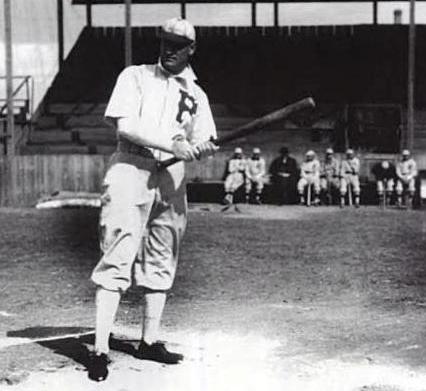
But he also demonstrated erratic behavior for the rest of his career.

Just a month after returning to the field The Sporting Life said “Sheridan became frantic and ran up and down the field like a crazy man,” after a disputed call at home plate in the bottom of the ninth of a May 31 game in Detroit between the Tigers and Baltimore Orioles, which led to Sheridan awarding the game to the Tigers by forfeit.

The Sporting Life’s Baltimore correspondent said Sheridan was “held by President Johnson as a competent man,” despite his “habits.”

He resigned on at least three occasions.  After the 1905 and 07 seasons he said he was retiring to return to San Jose and become a full-time undertaker, only to return the following spring and in June of 1910, he abruptly quit minutes before a game in Washington, but returned within several weeks.

When Sheridan again took the field The Washington Post said he would “establish a precedent, as he will be the only major league umpire wearing glasses.”

Sheridan was also arrested in October of 1907 after a barroom brawl that began over a dispute over $120.  The Associated Press said when police searched Sheridan he was carrying $2700.  He was released from jail the following day after being fined $10.

On July 30, 1914, Sheridan called Ray Morgan of the Washington Senators out on a close play at first base in Detroit.  The Washington Post said Morgan, who had slid, “came up with a handful of dirt and threw it on the ground at Sheridan’s feet…Sheridan evidently thought that Morgan intended to hit him, and did not even give the National’s second sacker time to put up his guard, but whaled away at his smaller opponent.”

Ray Morgan

Ray Morgan

Morgan punched Sheridan, and after both dugouts emptied, Sheridan was also punched by Washington’s Eddie Ainsmith.  The disturbance spilled over to the stands with a few Washington players, including Morgan and Ainsmith, taking on Detroit fans before police restored order.

The Post said:

“This whole trouble, disgraceful to be sure, may be blamed directly on Jack Sheridan, the umpire, who has been at fault so many times this year.  In the first place Sheridan has threatened to beat up several of the Washington players.  Sheridan told (David “Mutt”) Williams and (Joe) Engel that he would punch them in the nose, the same as he had Morgan, if they did not do as he told them.”

Ban Johnson never took action against Sheridan for the incident in Detroit, but Morgan and Ainsmith drew suspensions from the league.

On August 1, 1914, The Associated Press reported that “The baseball players fraternity intends to take steps to have Umpire Jack Sheridan retired from service on grounds of incompetence.”

The incident, and dust up on August 12 with Jack Fournier of the White Sox inspired a poem from The Chicago Tribune’s Ring Lardner:

Making Night Hideous

Oft in the stilly night,

Ere slumber’s chain has bound me

Fond memory brings the sight

Of athletes crowding round me;

The scowls, the sneers

Of Jack Fourniers

And Morgans strike my vision;

I hear the barks

And rude remarks

That greet each close decision.

Thus in the stilly night,

Ere slumber’s chain has bound me,

I sometimes get tight up and fight

The chairs and tables round me.

At the end of the 1914 season, Sheridan returned to California.  On October 31 The Associated Press reported that Sheridan would not be returning as an umpire:

“Sheridan will probably be retained as a sort of supervisor of umpires, spending his time roaming around the circuit.”

Just three days later Sheridan died of heart failure in San Jose at age 62—he was said to have suffered sunstroke during an August game and never fully recovered.  Ban Johnson supported him to the end; just weeks before the umpire died the American League president told a reporter:

“I sincerely doubt if the baseball game will ever know another Jack Sheridan.  He had all of the virtues of other arbiters, and none of their mistakes.”

“Mr. Borchers has Merely made Excuses.”

12 Feb

After two arrests and a season-long suspension in 1889, and another arrest and stints with four teams in 1890, George Borchers seemed to have settled down.

The San Francisco Chronicle said in January of 1891 that he was “taking excellent care of himself and will be ready to play winning ball.”

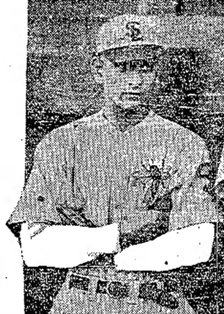
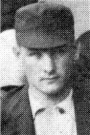
George Borchers

George Borchers

From 1891 through 1893 he pitched in the Pacific Northwest and California League’s and seems to have stayed sober and out of jail.

He was essentially a .500 pitcher, with less than average control; when he was with the Los Angeles Angels in 1893 he walked 210 batters, hit 24 and had 17 wild pitches.

The Los Angeles Herald regularly noted Borchers’ wildness.  In his first appearance for the Angels in April of ’93 he walked six and hit two batters in the first inning, yielding four runs, and was removed in the second after another walk and two more hit batsmen.  After a 21-12 May victory against Stockton the paper said:  “Borchers did himself proud, allowing 13 men to walk to first base, 12 for base on balls and one for being hit.  How the Angels managed to win with him in the box is a marvel.”

From 1894 through the 1896 season he was a baseball nomad, playing for nine teams in six leagues, including a single, disastrous final major league appearance with the Louisville Colonels in May of 1895—he started a game against the Brooklyn Grooms, lasting just two-thirds of an inning, giving up a hit, three walks, a wild pitch and two runs—earning the loss as the Colonels went down 11 to 0.

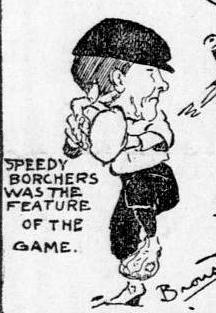
Caricature of Borchers from The San Francisco Call

Caricature of Borchers from The San Francisco Call

Borchers was out of organized baseball in 1897 and it’s unclear what he was doing and where he was doing it, but he resurfaced the in 1898 as a minor league team owner.  The Pacific Northwest League, which folded after the 1896 season, was resurrected as a four-team circuit organized by Dan Dugdale and William Works.  Dugdale took the Seattle franchise; Works took Tacoma, a Spokane “newspaperman” named Hutchinson took that town’s team, and George Borchers was awarded the Portland club.

The league struggled, and Borchers was stripped of his franchise in early July.  The Tacoma Daily News explained the problem:

“George Borchers is beginning to look upon matters of baseball in a new light.  The (league) is holding an inquest on his official corpse this afternoon, sitting in Portland.  The chief is not to figure any longer as manager of the Portland baseball team…The trouble has all arisen over Borchers’ treatment of his men.  He has not distributed cash since the opening of the season and as he is still short on the amount due the league will be displaced…Mr. Borchers has merely made excuses.”

Borchers returned to California and appeared in games for three Pacific Coast League teams during the remainder of the season: Santa Cruz, Stockton and Watsonville.

Borchers would continue, on and off, as a player until 1903—including a season as player/manager with the California League’s San Jose Brewers in 1899.  But in 1901 he made headlines when he became embroiled in a scandal.


Borchers was pitching for the Oakland Commuters in the California League, and failed to show up for a game he was scheduled to pitch on May 1.  The San Francisco Call said:

“George Borchers, the star pitcher of the Oakland baseball nine, has disappeared…None of the missing player’s close friends in baseball circles can explain why he decamped so suddenly nor where the absent ballplayer has gone.”

“Some of the Oakland players are injecting a bit of romance into the story, the names of some of the fair enthusiasts of Golden Gate being introduced as the possible cause for the handsome pitcher’s sudden leave taking.  But none seem to be able to tell with certainty the story that he has fallen victim to the charms of some fair one.”

The plot thickened the following day when Oakland owner J. Cal Ewing hired a private detective to track the missing pitcher, and an angry father went public.

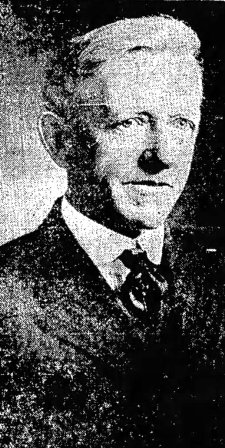
J. Cal Ewing

J. Cal Ewing

While Ewing’s investigator hunted, an Oakland real estate developer named Don Miller told The San Jose Evening News his daughter Grace had disappeared:

“(Miller) is convinced that she has gone with the ballplayer.  Neither Borchers, who has a wife in Portland, not Miss Miller has been seen since last Monday, when they boarded an eastward-bound train.”

Miller told the paper:

“I am endeavoring to locate them now, and if I ever find the man who has broken up my home he’ll need nothing but a coffin.  I’ll find them yet.”

After a week, he turned up in Ogden, Utah, pitching for that town’s club in the Inter-Mountain League.  The Santa Cruz Evening Sentinel said:

“He says he left simply to better his position and justifies his action on the ground that the California League takes players who skip out on other leagues and the local players are in competition with them all the time.  He thinks he had the right to skip out likewise and better his position.  He claims the reason he left secretly was because he feared Ewing would cause him trouble.

“He was worried over the account that he had left with Miss Grace Miller, but denied it.”

The paper noted that while Borchers wife remained in Portland, he had received two train tickets from the Ogden club.

Eventually, the truth came out.  Borchers returned to California to secure a divorce from his wife and married the former Miss Miller.  He spent 1902 playing and managing for a team in Salt Lake City, and managing a bowling alley there.

The second Mrs. Borchers became ill in November of 1902 and died two weeks later from peritonitis.

His last scandal behind him, Borchers married again and operated a large dairy in Sacramento until his death in 1938.


“Fatty Weakened and Portland scored four runs”

24 Jan

Walter “Judge” McCredie went ahead with the scheduled spring series in California between his Portland Beavers and the Chicago American Giants despite criticism from Pacific Coast League (PCL) President Allan T. Baum and other league executives.

Much of the concern was the result of the Negro League team beating the Beavers four out of five games in the spring of 1913.

The results of the 1914 series were much different.  Foster, and most of the rest of the pitching staff were injured, and catcher Bruce Petway missed most of the games with a bad ankle.

The series began in Santa Maria with an 11-inning 8 to 8 tie.  “Smokey” Joe Williams, of the New York Lincoln Giants joined Rube Foster’s club for the series.  The Beavers pounded him for 14 hits.

"Smokey" Joe Williams

“Smokey” Joe Williams

Portland won the second game in Santa Maria 5 to 0.  Harry Krause (who would win 22 games for Portland in 1914) shut out the American Giants on eight hits; Lee Wade struck out 9, but allowed 11 hits and took the loss.  The Portland Oregonian said Krause’s:

“Southpaw slants and spitballs stood the Negro Giants, of Chicago, on their heads.”

The series moved to Santa Cruz.

Portland beat “Smokey” Joe Williams again in game 3; 6 to 2.  The Santa Cruz Evening News said Williams “Had a nice curve, plenty of speed, but was a little wild.”  The American Giants loaded the bases with two outs in the ninth, but 19-year-old rookie Elmer Hanson struck out pinch hitter Frank Duncan to end the game.

Watsonville was the site of the fourth, and final, game.

The Santa Cruz Evening News said while McCredie and Foster made the trip together to Watsonville, McCredie asked which pitcher Foster was starting the next day:

“Foster replied that he did not know, as all were ailing, one way or another.

“McCredie suggested that he (Foster) pitch.  Foster said that he would pitch if McCredie would play, and an agreement was made.”

McCredie’s last season as a regular was 1909.  After playing in 61 games in 1910, he had appeared in just eight games from 1911-1913.

“(McCredie and Foster) appeared on the ball field in uniform and the Portlanders went to bat first, big Foster began to pitch and retired the side…Then it was that McCredie got cold feet.

“He refused to carry out his side of the agreement to play, and all coaxing and teasing and jibes from  both teams could not feaze him.”

Foster pitched five innings of one-hit ball, but in the sixth “Fatty weakened and Portland scored four runs.”

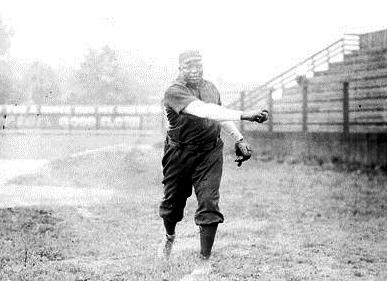
Rube Foster

Rube Foster

After the final game The Oregonian said:

“Perhaps it was taking unfair advantage, but in the recent Beaver-Negro series the Portland Coasters knew in advance nearly everything the twirlers tossed up the plate.

(James) Hi West and (Irv) Higginbotham were out on the coaching line every game stealing the catcher’s signs.”

The American Giants salvaged their West Coast trip in their series against Nick Williams’ Portland Colts. They won the opener on March 28 in Santa Rosa 6 to 0 behind a “Smokey” Joe Williams no-hitter.  Williams struck out nine of Portland’s  Northwestern Leaguers.  The Oregonian said:

“Williams, a tall, rakish looking mulatto (Williams’ mother was a member of the Comanche nation) set the Colts down without a hit or a run.”

The American Giants committed two errors, including one by third baseman Bill Francis.  The paper said:

(Duke) Whitt rolled one infield grounder toward third that might have been construed a safety, but the scorers graciously agreed to swallow race prejudices.  It was scored as an error.”

The series then went to Chico, California, and Medford and Grants Pass, Oregon, before finishing in Portland.

The Colts only managed one victory, beating the Giants 9 to 8 in Medford.  Although the colts won the game The Oregonian said the highlights were two long home runs hit by American Giants shortstop John Henry “Pop” Lloyd, including “one of the longest hits ever seen on the local field.”

John Henry lloyd

John Henry Lloyd

The American Giants continued the spring tradition of traveling west to play Portland teams through the 1916 season.

Walter “Judge” McCredie later created some doubt that playing Foster’s team was simply a business relationship and not an expression of his opinion of the color line in baseball.  When he was criticised by PCL executives in 1914 he said: “the games are nothing more or less than training affairs.”  Later that season his attempt to sign a Hawaiian player of Chinese decent named Lang Akana was thwarted by PCL officials and his own players who threatened to revolt. In 1915 McCredie was quoted in The Chicago Defender:

“I don’t think the color of the skin ought to be a barrier in baseball…If I had my say the Afro-American would be welcome inside the fold.  I would like to have two such ball players as Petway and Lloyd of the Chicago Colored Giants who play out here every spring.  I think Lloyd is another Hans Wagner around shortstop and Petway is one of the greatest catchers in the world.”

It wouldn’t be until 1917 that a Chinese player would play professional baseball.

The Color Line and the PCL

22 Jan

In the spring of 1913 Walter “Judge” McCredie brought Rube Foster’s Chicago American Giants to the West Coast to play five games against his Portland Beavers of the Pacific Coast League (PCL).  The American Giants won four of the games and also split a two-game series against Nick Williams’ Portland Colts of the Northwestern League.

Walter "Judge" McCredie

Walter “Judge” McCredie

When McCredie made arrangements with Foster for the American Giants to return west in 1914 it created a stir in the PCL.  Joe Murphy of The San Francisco Call wrote:

“Some of the magnates and officials of the Pacific Coast League are bitterly opposed to Manager Walter McCredie’s plan of playing a series of games with the Chicago Giants, an aggregation of colored ball players.  The Beavers played the colored tossers during their training trip last season and were badly beaten by them.”

Murphy said “no official action can be taken against McCredie to prevent his team engaging in games with the dusky tossers,” but said several prominent PCL figures “do not mince any words” regarding the games.

Dan Long, who had managed the San Francisco Seals from 1908 through 1912, was now a West Coast scout for the Chicago White Sox and booked the team’s 1914 spring games in California.  Long said he turned down a request for the Sox to play the American Giants:

“Colored players are barred in organized baseball, and I can see no reason why white players should even meet them in exhibition games, if they are barred by the baseball powers.  Baseball is a sport that must be elevated, and it is up to the managers and players to keep it free from criticism.

“I never arranged or played in any games with colored players, and I doubt Mr. (Charles) Comiskey, owner of the White Sox, would allow his team to play with the colored men.”

James Calvin “Cal” Ewing, the owner of the San Francisco Seals, who was one of the PCL’s founders and a former president of the league, was equally as outspoken:

“If I were a player working for McCredie, and he asked me to go out and play against these colored fellows, I would refuse to do it for him.

“There are two classes I bar from playing on my ball park—colored tossers and bloomer girls.  They will never use any park I control.”

Cal Ewing

Cal Ewing

Allan T. Baum, entering his third season as the PCL’s president said he was against the games, but was powerless to act because the games were played outside of the league’s regular season:

“I have no jurisdiction in the matter, but my sentiments are strongly against it.  I am sure that there is not another manager in the league who would consider playing with the Chicago Giants.”

Lester Aglar Walton, managing editor of the East Coast’s largest circulation black newspaper, The New York Age, responded to “the vicious article” from the West Coast:

“Joe Murphy, in an heroic effort to start needless agitation relative to the drawing of the color line in organized ball, does a journalistic stunt which, while humorous for the absurdities contained therein, is a curious document for the lamentable ignorance which this writer and other show on the subject.”

Walton said the color line was borne solely out of fear:

“The cowardly practice of using the color prejudice subterfuge as a cloak to hide the white man’s fear in open competition with the colored man in various avenues of endeavor will someday lose its effectiveness.  The truth of the matter is some white managers and players are not opposed to playing colored teams solely on account of color, for if their aversion was based purely on color the Indian would not be permitted to join organized baseball, nor would teams of the two major leagues journey every winter to Cuba to engage in games with native players, many of whom are as black as the ace of spades.”

“Manager Walter McCredie is the only game white man in the Pacific Coast League.  He is not afraid to permit his team to meet a strong colored nine and fight it out on the diamond.  There would not be a word of complaint today about the beavers and Giants playing a series of exhibition games had not the colored team given undisputed evidence of its supremacy last spring.”

Lester Aglar Watson

Lester Aglar Watson

McCredie claimed he wasn’t making a social statement.

He told The Portland Oregonian he needed to schedule the games in order to compete with teams like San Francisco in the regular season.  The Seals, he said, were preparing for the season by playing the White Sox, and taking in between $15,000 and $20,000 in the process:

“Yet they rave because I book the Beavers for four or five games against the Negroes, although they furnish the only stiff opposition available.

“It is to laugh.  Likewise the statement that playing against the Negroes hurts baseball.  It might, were we to consider them on an equal footing because of the strong race prejudice that exists here on the Coast. But the games are nothing more or less than training affairs.”

Despite the objections, Foster and his team arrived on the West Coast in March of 1914.

The rest of the story on Friday