Tag Archives: Rube Foster

The Color Line and the PCL

22 Jan

In the spring of 1913 Walter “Judge” McCredie brought Rube Foster’s Chicago American Giants to the West Coast to play five games against his Portland Beavers of the Pacific Coast League (PCL).  The American Giants won four of the games and also split a two-game series against Nick Williams’ Portland Colts of the Northwestern League.
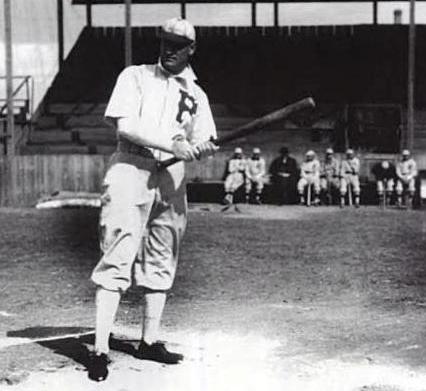
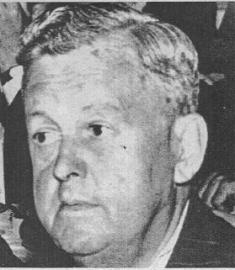
Walter "Judge" McCredie

Walter “Judge” McCredie

When McCredie made arrangements with Foster for the American Giants to return west in 1914 it created a stir in the PCL.  Joe Murphy of The San Francisco Call wrote:

“Some of the magnates and officials of the Pacific Coast League are bitterly opposed to Manager Walter McCredie’s plan of playing a series of games with the Chicago Giants, an aggregation of colored ball players.  The Beavers played the colored tossers during their training trip last season and were badly beaten by them.”

Murphy said “no official action can be taken against McCredie to prevent his team engaging in games with the dusky tossers,” but said several prominent PCL figures “do not mince any words” regarding the games.

Dan Long, who had managed the San Francisco Seals from 1908 through 1912, was now a West Coast scout for the Chicago White Sox and booked the team’s 1914 spring games in California.  Long said he turned down a request for the Sox to play the American Giants:

“Colored players are barred in organized baseball, and I can see no reason why white players should even meet them in exhibition games, if they are barred by the baseball powers.  Baseball is a sport that must be elevated, and it is up to the managers and players to keep it free from criticism.

“I never arranged or played in any games with colored players, and I doubt Mr. (Charles) Comiskey, owner of the White Sox, would allow his team to play with the colored men.”

James Calvin “Cal” Ewing, the owner of the San Francisco Seals, who was one of the PCL’s founders and a former president of the league, was equally as outspoken:

“If I were a player working for McCredie, and he asked me to go out and play against these colored fellows, I would refuse to do it for him.

“There are two classes I bar from playing on my ball park—colored tossers and bloomer girls.  They will never use any park I control.”

Cal Ewing
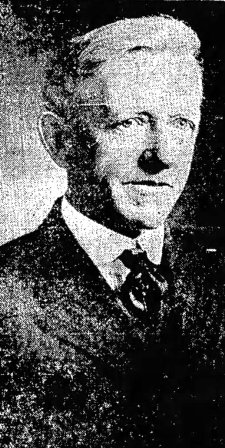
Cal Ewing

Allan T. Baum, entering his third season as the PCL’s president said he was against the games, but was powerless to act because the games were played outside of the league’s regular season:

“I have no jurisdiction in the matter, but my sentiments are strongly against it.  I am sure that there is not another manager in the league who would consider playing with the Chicago Giants.”

Lester Aglar Walton, managing editor of the East Coast’s largest circulation black newspaper, The New York Age, responded to “the vicious article” from the West Coast:

“Joe Murphy, in an heroic effort to start needless agitation relative to the drawing of the color line in organized ball, does a journalistic stunt which, while humorous for the absurdities contained therein, is a curious document for the lamentable ignorance which this writer and other show on the subject.”

Walton said the color line was borne solely out of fear:

“The cowardly practice of using the color prejudice subterfuge as a cloak to hide the white man’s fear in open competition with the colored man in various avenues of endeavor will someday lose its effectiveness.  The truth of the matter is some white managers and players are not opposed to playing colored teams solely on account of color, for if their aversion was based purely on color the Indian would not be permitted to join organized baseball, nor would teams of the two major leagues journey every winter to Cuba to engage in games with native players, many of whom are as black as the ace of spades.”

“Manager Walter McCredie is the only game white man in the Pacific Coast League.  He is not afraid to permit his team to meet a strong colored nine and fight it out on the diamond.  There would not be a word of complaint today about the beavers and Giants playing a series of exhibition games had not the colored team given undisputed evidence of its supremacy last spring.”

Lester Aglar Watson
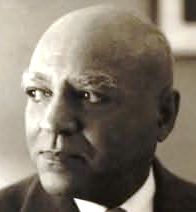
Lester Aglar Watson

McCredie claimed he wasn’t making a social statement.

He told The Portland Oregonian he needed to schedule the games in order to compete with teams like San Francisco in the regular season.  The Seals, he said, were preparing for the season by playing the White Sox, and taking in between $15,000 and $20,000 in the process:

“Yet they rave because I book the Beavers for four or five games against the Negroes, although they furnish the only stiff opposition available.

“It is to laugh.  Likewise the statement that playing against the Negroes hurts baseball.  It might, were we to consider them on an equal footing because of the strong race prejudice that exists here on the Coast. But the games are nothing more or less than training affairs.”

Despite the objections, Foster and his team arrived on the West Coast in March of 1914.

The rest of the story on Friday
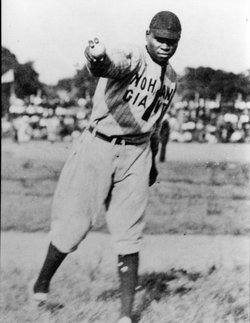
“Fans Inclined to be Fair find it Difficult to side with Wickware”

7 Oct

Frank Wickware is best remembered for defeating Walter Johnson and a team of minor league players 1 to 1 in Schenectady, New York in October of 1913.  He was pitching for the Mohawk Giants, and the game was very nearly cancelled after the pitcher and his teammates initially refused to take the field, claiming they were owed six weeks of back pay.

Frank Wickware

Frank Wickware

The New York Times said the crowd of 6,000 nearly rioted, the police were called to control the crowd and more than an hour after the game was scheduled to begin “the financial difficulty was settled and the game started.”

As a result of the “strike,” and the late start, the game was called after only five innings.

The incident in Schenectady wasn’t the first time in 1913 that Wickware took center stage in a controversy over money—the first time it contributed to the cutting short a much anticipated series of games.

On July 17 the Rube Foster’s Chicago American Giants were to begin a five-game series with the Lincoln Giants in New York.

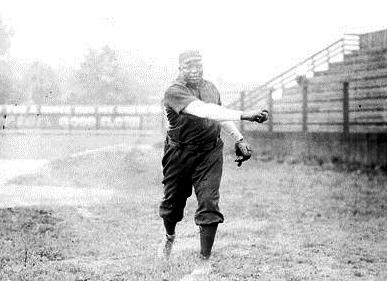
Rube Foster

Rube Foster

Roderick “Jess” McMahon, the owner of the Lincoln Giants, went to Schenectady before the series and signed Wickware, who he intended to start in the first game.

The New York Age said:

“Thursday afternoon before the game…McMahon spied Wickware all togged up in and American Giant suit.  He inquired of the pitcher why he was not in a Lincoln Giant uniform.  Wickware promptly told him that he was going to pitch for the American Giants.

“McMahon protested to Rube Foster against Wickware playing on the American Giants in view of the fact that he had given him money (allegedly $100), but the manager of the American Giants insisted that Wickware do the pitching for his team.  The two managers argued for over an hour, when the game was called off.”

The series was resumed the following day without Wickware.  The Lincoln Giants were ahead in the series 2 games to 1 before the game scheduled for July 22.  McMahon recruited Charles Earle of the Brooklyn Royal Giants to play left field in place Robert “Judy” Gans who was ill.  Foster objected to the substitution and refused to play the game despite there being “A large crowd.”

The Age said Wickware and both teams were doing damage to the future of black baseball:

“Fans inclined to be fair find it difficult to side with Wickware or regard him as a hero.  To accept money from one manager and then want to play for another is a piece of reasoning which does not favorably impress those who believe that one should keep his word at all times.  Just such conduct of Wickware’s will do much to injure the progress of baseball among colored clubs.”

“The sooner the managers of the colored teams get together and agree upon a working basis for their mutual protection the better.  Manager McMahon seems to have developed a habit of borrowing players from other clubs which should not be permitted. “

Roderick ":Jess" McMahon

Roderick “:Jess” McMahon

Wickware would remain one of the dominant pitchers in black baseball into the 1920s.  He continued to jump when teams when a better offer came—he played for four clubs in 1914, jumping a contract each time.  In 1925 Wickware was in a bar on 135th Street in New York with Lincoln Giants teammates Oliver Marcelle and Dave Brown.  After an altercation in the bar, a man named Benjamin Adair was shot and killed in front of the bar.

One report in The Freeman said witnesses claimed Adair was with the three players when a fifth man ran from building “shouted ‘I got you,’ and fired point-blank at Adair,” The New York Amsterdam News said “four men were quarreling on the sidewalk, when one drew an automatic.”

In either case, Brown disappeared and was assumed to me the shooter.  Wickware and Marcelle were never charged; there has been much mythology about Brown and speculation about the date and place of his death, but no definitive evidence has been presented.

McMahon and his brother Ed sold their controlling interest in the Lincoln Giants in 1914 and owned the Lincoln Stars from 1914-1917.  The McMahon’s were also boxing and wrestling promoters—which continues to be the family business.

“Topeka” Jack Johnson and the Negro National League

19 Jun

Ten years before Rube Foster organized it in 1920, Jack T. Jackson called for the creation of the Negro National League.  Johnson was variously nicknamed “Topeka Jack,” “Chicago Jack,” and “Kansas Jack,” and was occasionally confused with another Jack Johnson, the World Heavyweight Champion who also dabbled in baseball—“Topeka” Jack also did some boxing, further confusing the issue.

As a result of the common name and the confusion with his more famous namesake, there is very little biographical information available about him and no information survives regarding his birth or death, but for about a decade at the beginning of the 20th Century, he was an important figure in black baseball.

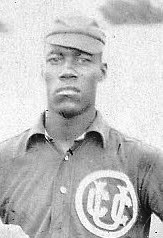
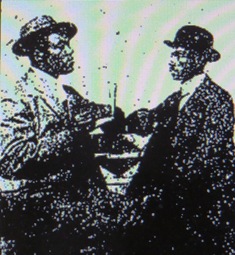
Jack T. Johnson

Jack T. Johnson

A shortstop and outfielder, he organized teams  in Topeka before going north and joining the Chicago Union Giants, and then the Minneapolis Keystones.  In 1909, he returned to Kansas to manage the Kansas City Giants, owned by Tobe Smith, and the following season he played for and managed the rival Kansas City (MO) Royal Giants owned by Kansas City businessmen M.B. Garrett and George Washington Walden.

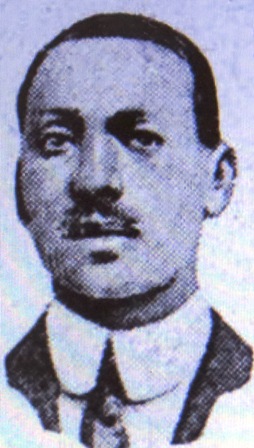
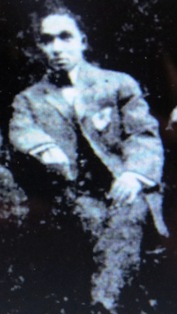
George Washington Walden

George Washington Walden

On the eve of the 1910 season, with two rival franchises in Kansas City, and Chicago’s Rube Foster and Frank Leland battling over control of the Leland Giants, Johnson attempted to form a Negro National League.  He wrote an article which appeared in The Freeman, The Chicago Defender, and other papers:

“To my idea it will be one of the greatest things that has ever happened for the Negro, if it goes through.  There is no one that knows from the actual experience, better than I, under what trying conditions the Negro has been existing in baseball…in other words it has been very discouraging for the colored player.”

Johnson said the teams suffered at the box office because games were arranged on an ad hoc basis and often clubs would “show up with about one-half of the lineup being green youngsters that had never played a game together before,” and said many great players had quit the game because of the lack of organization.

“I contend that these conditions are not likely to occur with the clubs of the league as each club would practically be intact the season through, would have something to fight for and each manager would consequently show more interest.

“It has certainly been proven from the big leagues on down to the minors, that there is nothing in the world that beats organized baseball and harmony.  Of course we cannot expect to cope right along with the big leagues the first season or two, but we can follow their method and system as far as we go.  Good judgment can be used in adopting a schedule in regard to the shortest jumps, conflicting dates with white league clubs, etc…From the fact that most cities of the league would put out good, strong clubs, would be attractions that would draw at any time and at any place where baseball is known at all.  So many times the white fans have been heard to remark, ‘I would rather go to see those colored boys play than one of the big league games.’  To prove this look how they used to pass right by the White Sox gate at 39th Street to get to Auburn Park at 79th street to watch the Lelands.

“Then look at the prestige, standing and rating it will give each club under the heading ‘Negro National League.’  What a great thing it would be to have an official record and per cent kept of each club and player.  Then we will not have to argue and squabble as to the real merits (of Negro League players).”

The type of league Johnson envisioned was a decade away.

Johnson and George Washington Walden would have a bitter split after the 1910 season with Johnson leaving the Royal Giants and returning to the Kansas City (KS) Giants—the two resolved their differences the following year, according to The Freeman:

“At last war in Kansas City has come to a happy ending.  (Walden and Johnson) have at last got together and will give Kansas City the strongest baseball team she has ever had.”

Jack T. Johnson and George Washington Weldon, 1912

Jack T. Johnson and George Washington Weldon, 1912

The newly formed Kansas City club operated as an independent barnstorming team and faded away by the early teens; Jack Johnson also faded away, his date and place of death unknown.

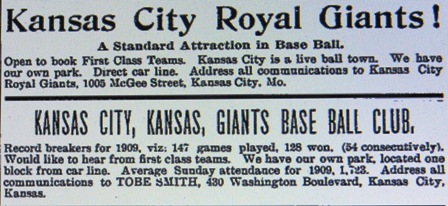
Competing advertisements for the Kansas City Royal giants and Giants in The Freeman, 1910

Competing advertisements for the Kansas City Royal Giants and Giants in The Freeman, 1910

In 1920, while the former Heavyweight Champion Jack Johnson was serving his sentence at Leavenworth, Kansas for violation of the Mann act, he fought two exhibition matches on November 25, knocking out a Chicago fighter named Frank Owens and then “sparring” four rounds with a fighter billed as “Topeka Jack Johnson.”  Some sources have identified the fighter as the same “Topeka Jack,” but, at least, three different professional fighters (and likely more) used that name between 1900 and 1925, and none of the newspaper reports indicate it’s the same Johnson.

jackjohnsonb

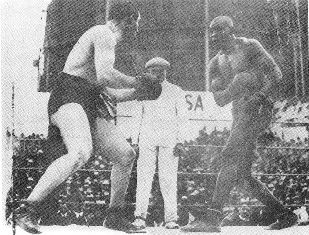
The other Jack Johnson, fighting Tommy Burns in 1908

Charles Mills and the St. Louis Giants

25 Mar

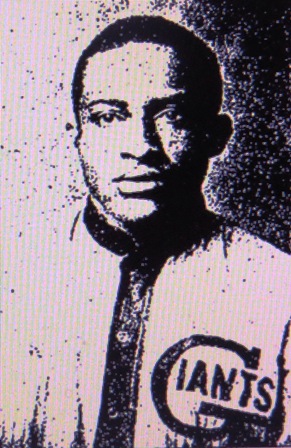
The origin of the Negro League St. Louis Giants, one of the Western Independent Clubs, has become clouded by conflicting histories –some say Charles Alexander Mills started the team in 1909, others say he started it earlier; contemporaneous accounts in the Black press differ, but seem to indicate that Conrad Kuebler, a white businessman (and ballpark owner) operated the team beginning in 1906 or ’07, with Mills becoming involved with the club later (the team was almost universally referred to as Kuebler’s Giants before 1909, when Mill’s became involved, and references as late as 1915 confirm  that Kuebler still had an ownership stake in the team).

Mills’ background is equally as murky, born around 1879; some sources call him “a bank messenger,” others “a tavern owner.”  He did for a time own a bar, the Keystone Cafe and Cabaret at the corner of Compton and Lawton in St. Louis which he opened in 1915—The Freeman said “Hours of good entertainment and high-class wines…can always be found at the Keystone.”

In any case, Mills operated the team on a shoestring in 1909; The Freeman said in 1911:

“Two years ago, when baseball was emerging from the field of darkness into the dim light of athletic fame, the present St. Louis Giants baseball team sprang into existence.  At that time baseball was something new to the Negroes of St. Louis and hardly 100 patrons attended the games.  Players would receive about .50 or .60 each for their share of the gate receipts.

“Their baseball uniform consisted of different colors, cheap material—every man wearing a different suit and stockings of a different type, therefore presenting a grotesque appearance.”

Charles Alexander Mills

Charles Alexander Mills

Within a year, Mills had transformed the Giants.

David Wyatt, a former Chicago Union Giants player turned sportswriter wrote about the opening of the 1910 season at Kuebler’s Field at the corner of Broadway and Pope:

“The St. Louis Giants pulled off a demonstrative honor of Negro baseball, the like of which has never been equaled in the history of the game.

“A monstrous street parade in which automobiles, landaus, coupes and traps played a conspicuous part, started promptly from in front of the Missouri Negro Republican League quarters at 12 o’clock and passed over a route which included all the principal thoroughfares inhabited by the Negro in St. Louis.”

Wyatt praised Mills “the genial and hustling business manager” of the Giants, who “proved conclusively that he is a type of young business- man who is not only endowed with spirit and proclivities of the up-and-doing variety, but he is putting the same into circulation and getting results.”

As for the game, Giants pitcher Bill Gatewood pitched a no-hitter against the Louisville Stars; an 11-0 victory in front of “an assemblage of about five thousand fans.”

By 1911, Mills had signed some of the best players in the country to join Gatewood, including team captain Dick Wallace and three of the Taylor Brothers; Ben, “Candy” Jim and “Steel Arm” Johnny.  The Giants, according to The Freeman now had “as good athletes as ever trod American soil.”

Giant Captain Wallace

Giant Captain Dick Wallace

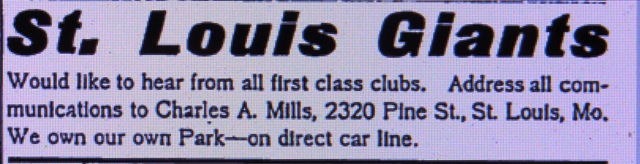
Mills’ Giants won the St. Louis City League in 1912 and ’13 but were generally a .500 team in games against other Western Independent Clubs. Mills aggressively solicited opponents and filled the Giants schedule with games against all comers between league games.

A 1910 ad for Mills' St' Louis Giants soliciting games.

A 1910 ad soliciting games for Mills’ St. Louis Giants

Despite maintaining a fairly strong following in the African-American community, the Giants were something of a nomadic club–according to reports of games in The Freeman, The Chicago Defender and The St. Louis Argus the team played “home” games in no less than seven ballparks during Mills’ tenure.

The Giants continued operating as an independent team (although they seemed to have disbanded for most of 1917 and ’18— tensions stemming from the East St. Louis race riots in May and July of 1917 were probably a contributing factor).

In 1920, Mills was present at the YMCA on 18th and Vine in Kansas City for Rube Foster‘s meeting to form the Negro National League; his Giants finished 6th in 1920 and 3rd in 1921 (Giants’ center fielder Oscar Charleston hit–depending on the source– .433 or .444 that season).

Mills was either ousted or sold his interest in the team (depending on the source) after the 1921 season, and new owners Dr. Sam Sheppard (variously spelled Shepard, Sheperd, and Sheppard) who had played for the New York Gorhams in 1887 and Dick Kent renamed the team the St. Louis Stars.

Mills died in St. Louis in 1944; his role as a pioneer of black baseball so forgotten that as late as 1994, James A Riley in The Biographical Encyclopedia of the Negro Baseball Leagues refers to Mills as “A white businessman.”

“A Historical Account of a Great Game of Ball”

5 Mar

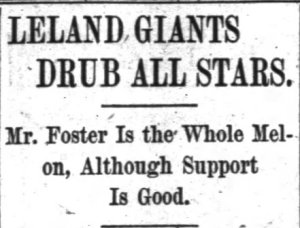
The headline above appeared in 1907 above an article written by Frederick North Shorey in The Freeman regarding a series between Andrew “Rube” Foster’s Leland Giants and Mike Donlin’s All-Stars “an aggregation composed of such noted players as Mike Donlin, Jake Stahl, Jimmie Ryan and Jimmy Callahan, probably the best semi-professional team in the country.”

Shorey said the series at South Side Park “exceeded in interest to the people it attracted anything that took place between the White Sox and Cubs last fall (1906 World Series).”

Rube Foster beat the Donlin All-Stars 3-1 in the first game, allowing only three hits:

“Rube Foster is the pitcher of the Leland Giants, and he has all the speed of (Amos) Rusie, the tricks of a Radbourne, and the heady coolness and deliberation of a Cy Young. What does that make him? Why, the greatest baseball pitcher in the country; that is what the best ballplayers of the white persuasion that have gone up against him say.”

Rube Foster

Rube Foster

Foster was so important to his fans, Shorey said:

“If it were in the power of the colored people to honor him politically or to raise him to the station to which they believe he is entitled, Booker T. Washington would have to be content with second place.”

The Chicago Tribune said of Foster’s domination of the All-Stars:

lelandsvsdonlins

Back to the series, and back to Shorey:

“While the all-stars were confident in their ability to win, several of the old players, including Mr. Donlin himself, who have known of the prowess of Mr. Foster…knew that it was by no means a certainty…but they had hopes that the colored team behind him might do something to undo the efforts of the twirler.

Mike Donlin

Mike Donlin

Shorey said the all-stars were over matched:

“The colored men set a new pace for base running, while foster’s cool, deliberate pitching was too much for the old-time players on Donlin’s team. Both teams put up brilliant fielding games.”

Foster pitched in four games in the series; he won all four.

David Wyatt–who had been a teammate of Foster’s with the Chicago Union Giants in 1902, and who in 1920 was asked by Foster to help draft the constitution of the Negro National League—also wrote about the series in The Freeman:

“All the baseball critics in the city were out to look the Lelands over, many under the impression that they were overrated. The most interested of the number was Mr. Comiskey, owner of the white Sox…After witnessing the first game the white sox boss said if it were possible he would have annexed the signature of at least three of the boys to contracts, and he was so enthused over the fast, snappy work of the Lelands that he had his world’s champions to lay over one day in Chicago to watch the boys play.”

Wyatt had higher hopes for “Baseball as the common leveler” in general and the series specifically:

“There was no color line drawn anywhere; our white brethren outnumbered us by a few hundred, and all bumped elbows in the grand stand, the box seats and bleachers; women and men alike, all whetted freely with one another on the possible outcome of the series, the effect it would have upon the future of the negro in baseball, the merits of the different players etc…”

Foster’s heroics, Wyatt’s hopefulness, Comiskey’s words and Chicago’s enthusiasm were, of course, not enough to change the status quo; regardless of the “Great game of ball,” played at South Side Park in that 1907 series, the color line would remain intact for four more decades.

David Wyatt

David Wyatt

Adventures in Barnstorming

3 Sep

By 1908, Andrew “Rube” Foster was probably the best known African-American pitcher in the country.  The previous season, he and Pete Hill had jumped Sol White’s Philadelphia Giants to join the Leland Giants of Chicago, turning the Leland’s into a powerhouse.

As was the custom, the Leland Giants would play a number of games against small town teams when traveling to and from games against other professional teams and their 21 games against other National Independent Clubs teams.

In August of 1908, The Freeman related a story (apocryphal perhaps, but a good story nonetheless) about one of those small town games.

“On their way back from Cleveland, where they had been playing an engagement, they had an agreement to play a little ‘woods town’ team called ‘The Cow Boys,’  The contract called for the great Rube Foster to pitch.”

The story goes on to say that Foster noticed upon arriving that the locals knew him on sight.  Scheduled to pitch against a better team the following day, Foster instructed his team to begin calling the team’s catcher, James “Pete” Booker (who also jumped to the Leland’s from Philadelphia), “Foster.”

The story continues:

“Booker went in to pitch and Foster did the catching.  It worked fine, score 23-0.  The Cow Boys were more than delighted, as they had gotten five hits during the game…Everything went well until a commercial traveler who knows each player on the Leland Giants very well remarked ‘My friends, had Foster pitched that game he would have struck out every man.’ The whole town was in a rage in a little while, and it was a good thing the Lelands (sic) didn’t stop for supper, for those country people would have broke that team up.”

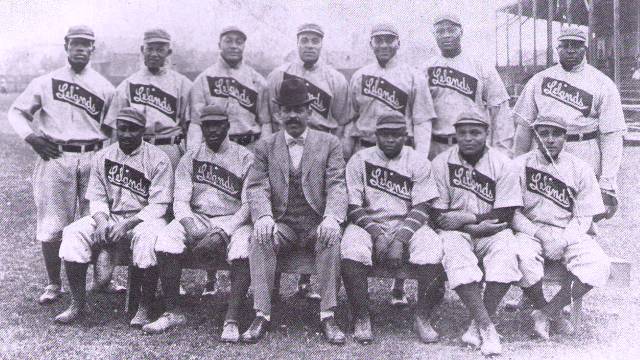
Leland Giants–Pete Hill, far left standing, Pete Booker, standing third from left, and Rube Foster, standing far right.

Hall of Famers Foster and Hill have been written about extensively and their prominent place in Dead Ball era Negro League Baseball is firmly established.  Less has been written about Booker, overshadowed by Hall of Famer Louis Santop and Bruce Petway (arguably the best defensive catcher ever, whose presence with the Leland’s in 1910 pushed Booker to first base), he was an excellent hitter and solid defensively behind the plate and at first.