Tag Archives: Satchel Paige

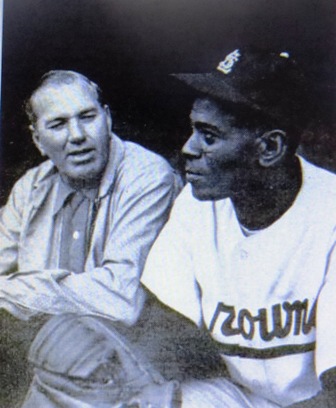
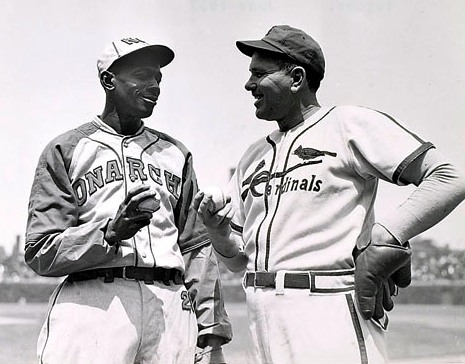
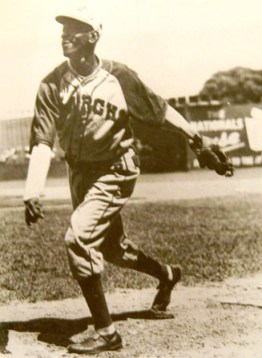
A Thousand Words–Satch and Diz

15 Mar

???????????????????????????????

Ted Williams called for the recognition of Negro League players in his 1966 Hall of Fame induction speech:

“The other day Willie Mays hit his five hundred and twenty second home run. He has gone past me, and he’s pushing, and I say to him, “Go get ’em, Willie.” Baseball gives every American boy a chance to excel. Not just to be as good as someone else, but to be better  This is the nature of man and the name of the game. I hope that one day Satchel Paige and Josh Gibson will be voted into the Hall of Fame as symbols of the great Negro players who are not here only because they weren’t given the chance.”

After Williams’ speech, Jay Hanna “Dizzy” Dean became one of Paige’s most vocal supporters.In 1968 Dean said:

“I think that he was one of the most outstanding pitchers I ever saw throw a ball and too bad he couldn’t have broken in in his prime when he could really fire that ball.”

Dean encouraged fans to write letters to members of the Baseball Writers Association of America to tell then “The venerable Leroy Robert Paige has proved he belongs in Cooperstown.”

Dean said he had “played more baseball against Satchel Paige,” than any other Major League player:

“I certainly think that if anybody belongs in the Hall of Fame, Satchel Paige deserves it as much as anyone else.  I think he was one of the outstanding pitchers of all times, and a guy who has given his life to baseball.”

Paige was the first player inducted to the Hall of Fame by The Special Committee on the Negro Leagues in 1971.

satchndiz

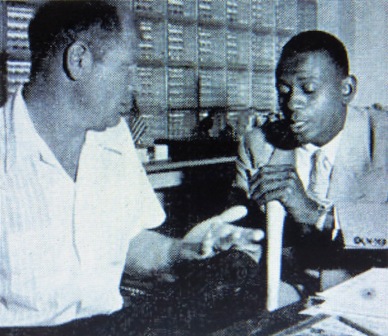
Veeck and Paige–a third time?

27 Feb

In 1959, when Bill Veeck purchased the White Sox rumors swirled in Chicago that the Sox owner was planning on having Satchel Paige start on Opening Day. Later, as the Sox were making a run for their first American League Pennant in 40 years the rumors resurfaced that the ageless Paige would join the White Sox for the Pennant run.

???????????????????????????????

Bill Veeck and Satchel Paige, 1959

Paige, who had played for Veeck with the Cleveland Indians and St. Louis Browns, had spent 1956-59 with the Miami Marlins in the International League, winning 31 games. He had returned to barnstorming with the Cuban Giants and Indianapolis Clowns in 1959, but it was reported he was looking for another chance in the Major Leagues, and in June it began to be reported again that Paige would be joining the Sox.

A United Press International story in July said that Veeck had “sent Paige two new Chicago White Sox uniforms,” and quoted Paige:

 “If they want me they’d have to pay me big money.  I’m not going back for nothing.”

Whether it was ever a serious discussion, or simply two famous showmen milking rumors for the maximum publicity will never be known, but Veeck and Paige let the rumors swirl well into August before Veeck finally put them to rest, telling Jet Magazine:

“We’re not giving any thought to hiring him.  I’m very fond of LeRoy and I see him whenever he’s in town.  I gave him the uniforms because we’re old friend and for no other reason.”

And with that White Sox fans missed the chance to see the pitcher who Veeck called “The best righthander baseball has ever known,” pitch for the 1959 Pennant winners.

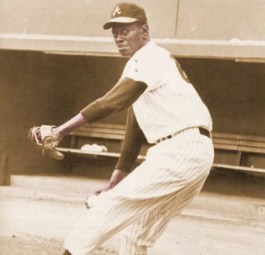
A Thousand Words–Satchel Paige, Chicago White Sox

6 Feb

???????????????????????????????

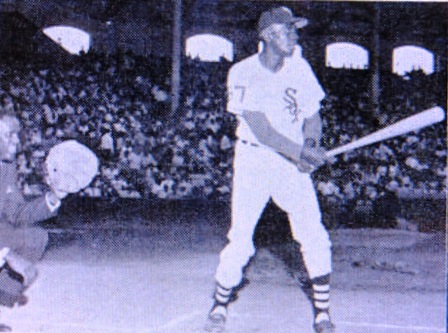
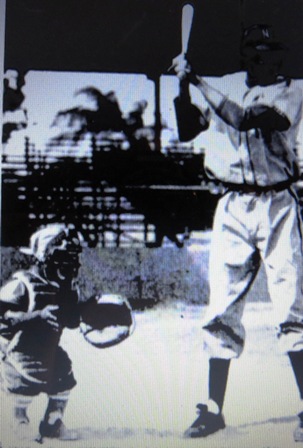
What if?  Satchel Paige in a White Sox uniform.  From 1938-1947 the Sox never finished better than 3rd, add Satchel Paige to those teams, which already had some good pitching including Ted Lyons, Eddie LopatThornton Lee, Monty Stratton and Orval Grove, and Sox fans might have had something to cheer about.  But of course, by the time Paige had a chance to play in the Major Leagues he was at least 42-years-old.  Paige would have helped at the box office as well.  For example, on July 18, 1942 the Sox drew slightly better than 24,000 for a doubleheader with the Detroit Tigers, across town at Wrigley Field a nearly identical amount came out to watch Paige pitch the first five innings for the Memphis Red Sox against the New York Cuban Stars.

Instead, all White Sox fans have is this rare photo taken in 1965 when Paige appeared with the Indianapolis Clowns at Comiskey Park (Chicago Cubs outfielder George Altman is the catcher in the picture).

——-

in 1935, Gene Coughlin, a sports writer for The Los Angeles Evening Post-Record wrote a column that went largely ignored, calling on organized baseball to break the color barrier which “not only makes (baseball) look ridiculous but is at the same time passing up increased business.”  Coughlin predicted that if a Pacific Coast League team were to sign Paige, it “would be good for an extra 10.000 in attendance every time he goes to the mound.  And he became good despite the inane prejudice that drives the colored baseball player to the sandlots and keeps him there.”

Coughlin’s column concluded:

“When you come right down to it, that baseball doesn’t give a darn whether it is pitched or caught by a white hand or a black one.  It is a symbol of game, a sport, and not a symbol of class distinction or color.”

Twelve years later organized baseball finally agreed.

Dero Austin

10 Jan


dero

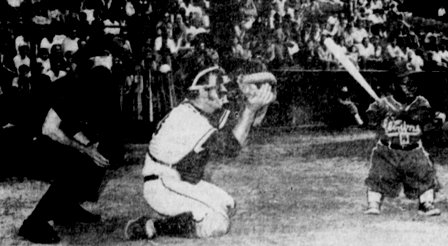
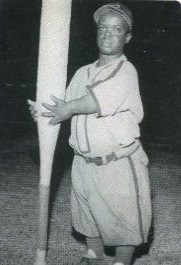
Dero Austin Jr. was one of the few Negro League “players” who was born too late; he was added to the Indianapolis Clowns in 1964 to try to recreate the fame of one of his predecessors, Spec Bebop, who had top billing with the team well into the 1950s.

Spec Bebop, circa 1952

Spec Bebop, circa 1952

Austin quickly joined  James “Nature Boy” Williams as one of the most popular members of the barnstorming team, but the Clowns were well past their heyday when they filled ballparks across the country.  Occasionally they still drew well, in Austin’s first season, 1964, 15,797 fans saw the Clowns in Chicago’s Comiskey Park on July 10; across town 13,556 fans watched the Cubs play the San Francisco Giants.

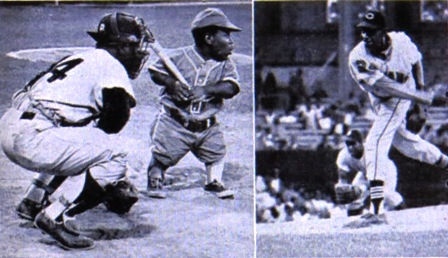
Austin would usually bat first in each game, replicating Eddie Gaedel’s appearance for Bill Veeck’s Saint Louis Browns in 1951–occasionally Satchel Paige would pitch to Austin.  While he appeared in publicity photo’s playing the field, he never appeared in the field during a game.

Satchel Paige pitching, Dero Austin at the plate.  Comiskey Park 1966

Satchel Paige pitching, Dero Austin at the plate. Comiskey Park 1966

Austin never became as popular as Bebop, and the Clowns continued playing to smaller crowds in smaller towns until they disbanded in the 1980s.

dero

Austin stayed with the Clowns well into the 70s and by 1974 was billed as the team’s manager.  The 31-inch tall Grandfield, Oklahoma native died in July of 1987 at age 39.

A Thousand Words–“The Wonderful Country”

13 Dec

satch

Leroy “Satchel” Paige talks baseball with local children in Mexico on the set of the 1960 movie “The Wonderful Country.”  Robert Mitchum and Julie London starred; Paige played Cavalry Sgt. Tobe Sutton.

It was Paige’s only real acting role (He made a cameo appearance as himself ten years earlier in “The Kid from Cleveland“),  and it’s a pretty good film.

Satchel Paige as Sgt. Sutton

Satchel Paige as Sgt. Sutton

A Thousand Words

6 Dec

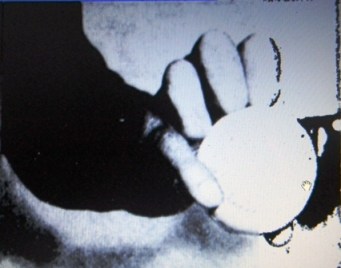
Satchel Paige demonstrates four of his favorite pitches to The Baltimore Afro-American, 1948:

The sidearm curve (outshoot):  “A wrist-twist causes counter-clockwise spin which makes the ball bend away from a right-handed batter.”

Sidearm Curve--outshoot

Sidearm Curve–outshoot

The overhand curve (drop): “Is gripped and thrown with a twist as to let the ball leave the hand with a snap between thumb and forefinger.  Overspin thus makes ball take a sudden dip.”

Overhand curve--drop

Overhand curve–drop

The Screwball (inshoot):  “Ball slides off fingers with a rapid clockwise spin, making it twist away from a left-handed hitter.”

Screwball--inshoot

Screwball–inshoot

The knuckleball:  “takes odd twists and turns even the pitcher can’t predict.”

Knuckle ball

Knuckle ball

“May every page you turn be a Satchel Paige.” Greg Proops, The Smartest Man in the World Podcast.

satchelbraves

McGraw’s Maxims

4 Dec

While the New York Giants were training in Marlin Springs, Texas before the 1912 season, John McGraw wrote (his name appeared on the byline) an article published in newspapers across the country about what it took “to become a big league ballplayer.”

John McGraw, 1912

John McGraw, 1912

McGraw wrote:

“If you have speed in your legs, in your arms, if you are physically strong, know human nature, don’t use tobacco, you’ll make a ballplayer.”

Included in the article were “McGraw’s Maxims:”

Forget what you know and learn over

Don’t drink

Eat two meals a day

Don’t drink water on the field

The less training in winter the better

Indoor training doesn’t help

A steady player is better than a grandstand player

A country boy is better material than a college boy, because he doesn’t think he knows it all.

Reminiscent, if less colorful, than Satchel Paige’s “How to Keep Young,” written forty years later, (this has been reprinted everywhere for years, but any excuse to mention Satchel Paige…)

Satchel Paige, 1942

Satchel Paige, 1942

Avoid fried meats which angry up the blood.

If you stomach disputes you, lie down and pacify it with cool thoughts.

Keep the juices flowing by jangling around gently as you move.

Go very light on the vices, such as carrying on in society. The social ramble ain’t restful.

Avoid running at all times.

Don’t look back. Something might be gaining on you.

Sammy Strang

5 Nov

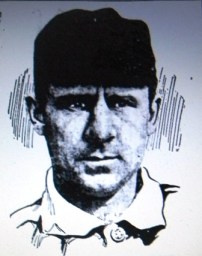
Samuel Strang Nicklin, “The Dixie Thrush,” was one of baseball’s great renaissance men.

Born in Tennessee in 1876, he was the scion of one of Chattanooga’s most prominent families.  His father John Bailey Nicklin served in the Union Army during the Civil War, moved to Chattanooga in 1866, and served as mayor from 1887-1889.
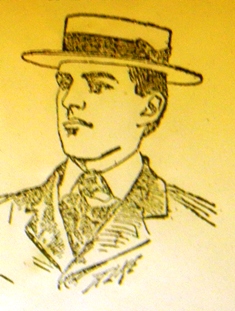
Sammy Strang

Samuel Nicklin spent one year at the University of Tennessee where he starred on the football and baseball teams. He also had two short stints in professional baseball 1893 and 1896, which included 14 games with the Louisville Colonels in the National League when he was 19.  Late in 1896, he enlisted as a private in the Tennessee Volunteers, served in Spanish-American War and rose to the rank of captain.

After leaving the service, Nicklin signed a contract with Cedar Rapids Bunnies in the Western Association and dropped his last name; he was known as Sammy Strang for the rest of his career.

The Milwaukee Journal said of the name change:

“(Strang) came of a rich southern family with deep prejudices against professional ball.”

This “prejudice” likely had nothing to do with it given that in addition to serving as Chattanooga mayor, the elder Nicklin was active in professional baseball, serving as president of the Southern Association in the 1890s.

A career .269 hitter, Strang was best known for being one of baseball’s first regular pinch-hitters while playing for John McGraw’s New York Giants from 1905 until June of 1908.  According to The Associated Press:

“McGraw noted the regularity with which he hit in pinches.  So he called him a ‘pinch hitter’—and the term stuck.”

During the 1909 season, Strang began coaching the baseball team at West Point.  He retired from baseball after playing from 1908-1910 with the Baltimore Orioles in the Eastern League, to study opera.
Sammy Strang

During his baseball career, Strang was known for writing songs and singing but decided to seriously pursue a music career in 1910.  He traveled to Paris where he trained under Jean De Reszke, one of the greatest male opera stars of the 1890s.

Upon returning from Paris, he chose not to accept an offer to join an opera company and instead returned to West Point, where he continued as coach until 1917.

Strang returned Tennessee shortly before his father’s death in 1919 to manage and take over ownership of the struggling Chattanooga Lookouts in the Southern League.  While the Lookouts did not win a league championship during Strang’s tenure, he was credited with turning the franchise around and sold the team, for which he paid nothing 1919, for a reported $75,000 in 1927, while retaining ownership of the stadium, Andrews Field.

Unfortunately, Strang’s most ambitious plan–to sign Satchel Paige in 1926–never materialized.

According to Larry Tye’s book “Satchel Paige: The Life and Times of an American Legend,”   Strang failed in an attempt to sign Paige for $500 to pitch a game against the Atlanta Crackers. Paige said of the deal:

“I just had to let him paint me white.”

Samuel Strang Nicklin died in Chattanooga in 1932.

Adventures in Barnstorming II—Crawfords vs. Dean’s

4 Sep

This story has been told in a few books, but those books generally get the facts wrong.  The authors relied on the 50 and 60-year-old memories of participants, the same participants from whom I first heard the story from, but never checked the stories against contemporaneous accounts.

On October 23, 1934 the Pittsburgh Crawfords (the team was made up of many members of the Crawfords lineup, but also included Negro League stars from other teams) played the Dizzy Dean All-Stars (made up of the Dean brothers, a few current and former Major Leaguers and  minor leaguers from the Pittsburgh area) at Forbes Field in Pittsburgh.  It was the final game of the Dean Brothers’ 1934 barnstorming tour.  As with most of the games, Dizzy Dean, and Satchel Paige pitched the first two innings.  After Dean was relieved by minor league pitcher Joe Semler, he went to left field.

In the bottom of the 5th, with the Crawfords trailing 4-3, Elander “Vic” Harris either bunted or “tapped the ball” in front of the plate and former and future major league catcher George Susce threw wide to first base.  Harris advanced to second on the throw.

Dizzy Dean came in from left field and told home plate umpire James Ahearn that Harris had interfered with the throw.  Ahearn called Harris out.

Harris ran from 2nd base to argue the call with Ahearn, a local Pittsburgh umpire with whom Harris had a contentious history.

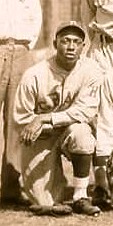
Vic Harris with the 1930 Homestead Grays.

Accounts vary at this point.  Some newspapers said Harris picked up Ahearn’s mask and hit him with it.  Other accounts said Harris grabbed the umpire’s mask (this is what Harris also maintained until his death).

Susce then went after Harris and a melee broke out.  Josh Gibson came to Harris’ aid and wrestled Susce away from him.  Soon a group of fans attempted to join the fray, but all accounts agree that police, security and cooler heads on both teams quickly controlled the situation and the game resumed.

Versions of the story that came much later included an account of Josh Gibson taking on Susce and throwing “Dizzy” Dean off of him “some ten feet away,” when Dean and Ted Page attempted to pull Gibson away from Susce.  This version did not come out until the 1970s, and it strains credibility that the greatest star of the Negro Leagues “threw” one of the most popular white players in America ten feet during a fight and that the account failed to appear in any newspaper story.

Gibson did hit a home run in the 8th to lead the Crawfords to a 4-3 victory.

Harris was removed from the field and arrested for assault.  Other erroneous accounts credit Pittsburgh Steelers owner Art Rooney with interceding Harris’ behalf and ensuring he wasn’t charged with a crime.  The problem with that story is that Harris was charged, and convicted of assault and battery in March 1935.  Harris was fined and given six months probation.

This incident, other run-ins with umpires and his aggressive style of play earned Harris the nickname “Vicious Vic.”

Harris died in California in 1978.  He was one of the Negro League players considered for enshrinement in Cooperstown but was passed over in 2006.

“King of the Sandlots”

13 Aug

Not every baseball legend had a long professional career.

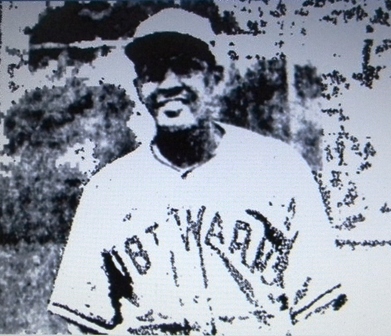
“King of the Sandlots” and “Pittsburgh’s Satchel Paige” is what they called Ralph “Felix” Mellix when the former Negro League and barnstorming pitcher announced his retirement from the Semi-pro 18th Ward Team in Pittsburgh’s South Hills League.  Mellix retired every year for a decade only to return again the next season until he was 60.

Ralph “Felix” Mellix

 Almost all of the statistics compiled by Mellix are lost to history, “officially” Mellix appeared in two professional games in his late 30s, one for the Newark Dodgers in 1934 and another the following season for the Homestead Grays, posting an undistinguished ERA of 12.54. Mellix was said to have spent short stints with the Chicago American Giants in 1915 and the Pittsburgh Crawfords in the early 30s, where he was said to be Paige’s roommate, but no records exist of his time with either team.  He pitched for the Crawfords a few times in the 40s in exhibition games, including one against the Chicago Brown Bombers in Milwaukee in 1944.

Like many African American players who began their careers during the first two decades of the twentieth century, Mellix barnstormed and played semi-pro ball for most of his career.  Mellix toured with Jesse Owens when the Olympic Heroes’ was barnstorming with his Toledo Crawfords in 1939.

Born in Atlantic City, New Jersey in 1896, Mellix began playing for his father’s Mellix A.C. Stars semi-pro team at 12 years old.  Mellix began his career as a pitcher in 1915 and spent the next 40 years pitching in an estimated 1500 games, winning more than 600 according to James A. Riley in his book The Biographical Encyclopedia of the Negro League Baseball Leagues.

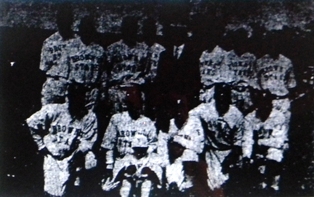
Mellix starred for the powerful Brown’s Colored Stars team in Youngstown Ohio during the mid-20s, sharing mound duties with George Brannigan and Admiral Walker, who also had short professional careers in Negro League baseball.

Brown’s Colored Stars 1924

At the close of his semi-pro career in Pittsburgh, Mellix continued to barnstorm, billing himself as “Baseball’s Oldest Pitcher,” including an appearance with Paige at Forbes Field in 1965 when Paige was traveling with the New York Stars.

Mellix will never haves a bust in Cooperstown, but the Hall of Fame does include his papers and mementos, including a 1946 contract offer from the Brooklyn Brown Dodgers, Joe Hall’s Hillsdale Club transplanted to Brooklyn at the behest of Branch Rickey.  Mellix, employed by the city of Pittsburgh, said he didn’t want to jeopardize his pension to play pro ball at 49 years of age.

Mellix remained a legend in Pittsburgh until his death on March 23, 1985.