Tag Archives: Southern Association

“Calvo has been the Victim of a Cruel and Merciless Conspiracy”

4 Jun

When he signed 18-year-old Jacinto “Jack” Calvo Gonzalez, Washington Senators manager/owner Clark Griffith was no stranger to Cuban players, having managed Armando Marsáns and Rafael Almeida with the Cincinnati Reds, but Calvo’s signing was the beginning of Griffith’s 40-plus year commitment to signing players from Cuba.  During his tenure the Senators signed more than half of the 63 Cuban players in the major leagues.

Calvo was “discovered” while playing with Almendares in the Cuban National League, where he hit .342 in 19 games.  He made even more of an impression during a series Almendares played against the New Orleans Pelicans of the Southern Association, Calvo hit .400 and his older brother Tomas hit .385.

???????????????????????????????

He also hit .400 during a six-game series with the Philadelphia Athletics, The Associated Press said he didn’t compile those numbers facing minor league pitchers picked up for the series, but “against (Eddie) Plank, (Jack) Coombs, and (Charles “Chief”) Bender.”

When rumors circulated that Washington might have signed Calvo, Bender said:

“I never saw a faster youngster in my life; he can hit too, and looks for the entire world like a class ball player…If Griffith has signed him he will never regret it, for there is no chance for him to be a failure.”

By December of 1912 Griffith had Calvo under contract.  The Pittsburgh Press said:

“The young Cuban sent a letter to Griff, written in Spanish.  ‘They did not teach Spanish where I went to school,’ said The Old Fox, ‘so I can’t translate the missive.  However, as he signed his contract I guess everything is alright.’”

The Boston Red Sox signed Tomas Calvo later in December.

While Tomas never made it in Boston, Jacinto made his debut with the Senators on May 9; he hit only .242, but everyone noticed his arm.  After a June game with the St. Louis Browns, The Associated Press said:

“The youngster astonished the bugs yesterday with his remarkable throwing arm.  At one time he heaved the ball from the right field fence directly to (Germany) Schaefer’s hands at second.”

On August 13 Calvo was sent to the Atlanta Crackers in the Southern Association and made his first appearance with the team the following day, batting seventh, going 1 for 4.  The Atlanta Constitution said “He’s fast, fields pretty well, throws like a shot and meets the ball squarely.”

Calvo only lasted 10 days in Atlanta.  He was hit on the right arm with a pitch thrown by Charles “Curly” Brown of the Montgomery Rebels.  He was returned to the Senators and did not appear in another game that season.  (Some sources show Calvo with the Long Branch Cubans in the New York New Jersey League—it was most likely his brother Tomas, an infielder, rather than career outfielder Jacinto, who played shortstop for the team in 94 games).

Calvo started the 1914 season with the Los Angeles Angels in the Pacific Coast League.  After only 11 games (he was 4-8 with one double, one triple and a stolen base) he was sent to the Victoria Bees in the Northwestern League.  Later in the season a story came out explaining his abrupt departure from Los Angeles.
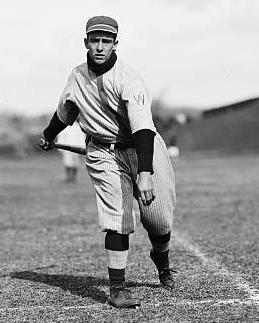
Calvo with the Washington Senators

Calvo with the Washington Senators

The Spokane Spokesman-Review said, “Calvo has been the victim of a cruel and merciless conspiracy,” despite the fact that “in the exhibition games last spring against the White Sox Calvo loomed up head and shoulders above the other Angel gardeners, out hitting them by a wide margin and displaying more speed on the bags than the whole Angel team combined.”

The paper claimed that a female reporter:

“(o)n one of the local papers…dragged out of him the fact that his father was a rich sugar planter in Havana, and that he played baseball for fun and not for money…That was the beginning of the end for little Calvo. “

The story said fans began harassing Calvo, and:

“Instead of coming to his rescue, the players on the Angel team ‘rode’ the boy unmercifully.  It was pathetic to see the friendless little Cuban trying to get into the good graces of his teammates.  One day, in the clubhouse the boy sat down on a bench and cried before them all.  His spirit was broken.”

Calvo hit .289 for Victoria in 1914, and spent the spring of 1915 with the Senators before being release before the beginning of the season.  After his release he played with his brother Tomas for the Long Branch Cubans, by then a member of the Independent Negro League; he also played for Havana in the Cuban-American Negro Clubs Series.

Calvo next played for the Vancouver Beavers in the Northwestern League and the San Francisco Seals in the Pacific Coast League, hitting .329 in 1916, and slipping to .263 in 1917. After the 1917 season, the outfielder returned, unsigned, the contract sent to him by Seals owner Charlie Graham.

Calvo had been very popular in San Francisco during his nearly two seasons with the Seals, but was criticised by fans and local press for his holdout, especially because he was holding out on the even more popular Graham.  The San Francisco Chronicle said:

“He sent his terms, and as they were exactly what he asked for before.  (Charlie) Graham is wondering why the Cuban went to the trouble to wire at all.”  The paper criticised Calvo for “asking for more money than he got last year,” while “better players than he have submitted to a salary slash on account of war conditions.”
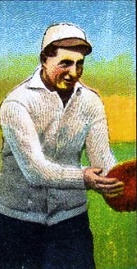
San Francisco Seals owner Charlie Graham

San Francisco Seals owner Charlie Graham

The Chronicle lamented the fact that Seals outfielder Biff Schaller would miss the entire season with an injury, otherwise “Calvo could have stayed in Havana for all that anyone here cares.”

As it turned out, Calvo did stay in Havana.  For all of 1918 and ’19, not returning to the states until 1920.  Tomorrow–Jacinto Calvo’s return.
“Begged the Crowd for God’s Sake not to Kill Him”

21 May

Edward Siegfried Hengel (often misspelled Hengle during his career) was a well-known umpire and manager in the 1880s.

Born in 1855, Hengel managed the Union Association franchise that began the season in Chicago, and relocated to Pittsburgh in August, 1884.  His career is occasionally confused with Emery “Moxie” Hengel (also often misspelled Hengle) who played second base for 1884 Chicago/Pittsburgh club, and had a long minor league career.  (The two were born two years apart in Chicago, but there is no indication they were related).

Emery "Moxie" Hengel

Emery “Moxie” Hengel

In 1886 Ed Hengel was an umpire in the Southern Association.  On August 5 he was working a game between Savannah and the Charleston Seagulls.  The Macon (GA) Telegraph said, in the sixth inning:

“”At this point of the game it became apparent to the audience, as well as to the players of the local team, that Hengle (sic), the umpire, had sold the game to Savannah; but notwithstanding his adverse decisions, the locals kept the Savannah team down to one run till the end of the ninth inning.  During the latter half of this inning (Hengel) gave the visitor three runs, letting them score in the following manner:  (John “Tug”) Arundel was at the bat. There were two out.  He hit a grounder to (Henry “Heinie”) Kappel who stopped it and threw it to first.  Arundel had stopped running and left the line when (first baseman Jim) Powell   failed to catch the ball”

Arundel then came back onto the field and ran to first, Hengel declared Arundel safe and a  run scored; the next hitter, Joe Miller, drove in two more runs, to win the game for Charleston, 4 to 3

The Telegraph said:

“As soon as the crowd caught on to the steal the grand stand and bleaching boards emptied their male contents on the ground, and for five minutes (the umpire) was in danger of getting very badly hurt, if not killed, by the infuriated crowd.”

The management of the Charleston team helped keep the fans at bay until police arrived:

“It were (sic) best for (Hengel) to get transferred immediately as another disgraceful piece of umpiring will cost him some inconvenience.  The people of Charleston will not stand another robbery.

“(Hengel) was scared nearly to death; he was as white as a sheet, and it is said begged the crowd, for God’s sake, not to kill him.  He did not deny having sold the game when charged with it by a director of the baseball club after he was safe.”

Hengel did not work another game in Charleston that season.

In October of 1887 The Aurora (IL) Daily Express credited Hengel with signing “(Charlie) Hoover crack-backstop of the Western League” for the Chicago White Stockings—within weeks Hoover’s long series of troubles would begin.

HOOVER_LG

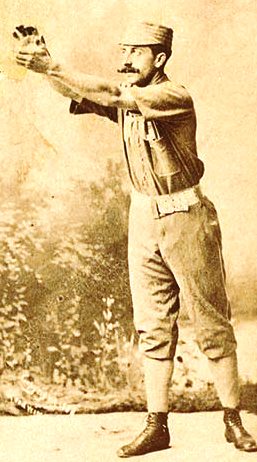
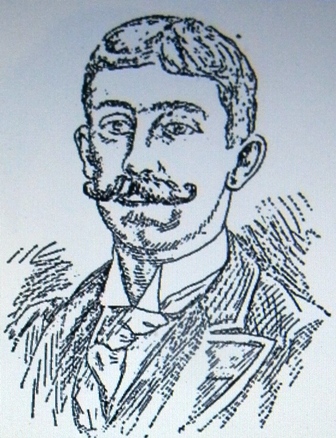
Charlie Hoover

Hengel continued as an umpire, including stints in the Tri-State and Pacific Northwest Leagues,  and minor league manager for the next decade.  While managing the Hamilton (OH) club in the Tri-State League, Hengel saved a young girl from drowning, and “her grateful parents presented him a pair of diamond sleeve buttons.”

Hengel disappears from the newspapers after 1892;  he died in Great Britain in 1927; presumably not at the hands of angry Charleston fans.

Note:  Henry “Heinie” Kappel does not appear on surviving rosters for the 1886 Charleston Seagulls, but contemporaneous accounts in The Sporting Life and other newspapers confirm he was with the team.

Charlie Hoover–Infinite Baseball Card Set

21 Mar

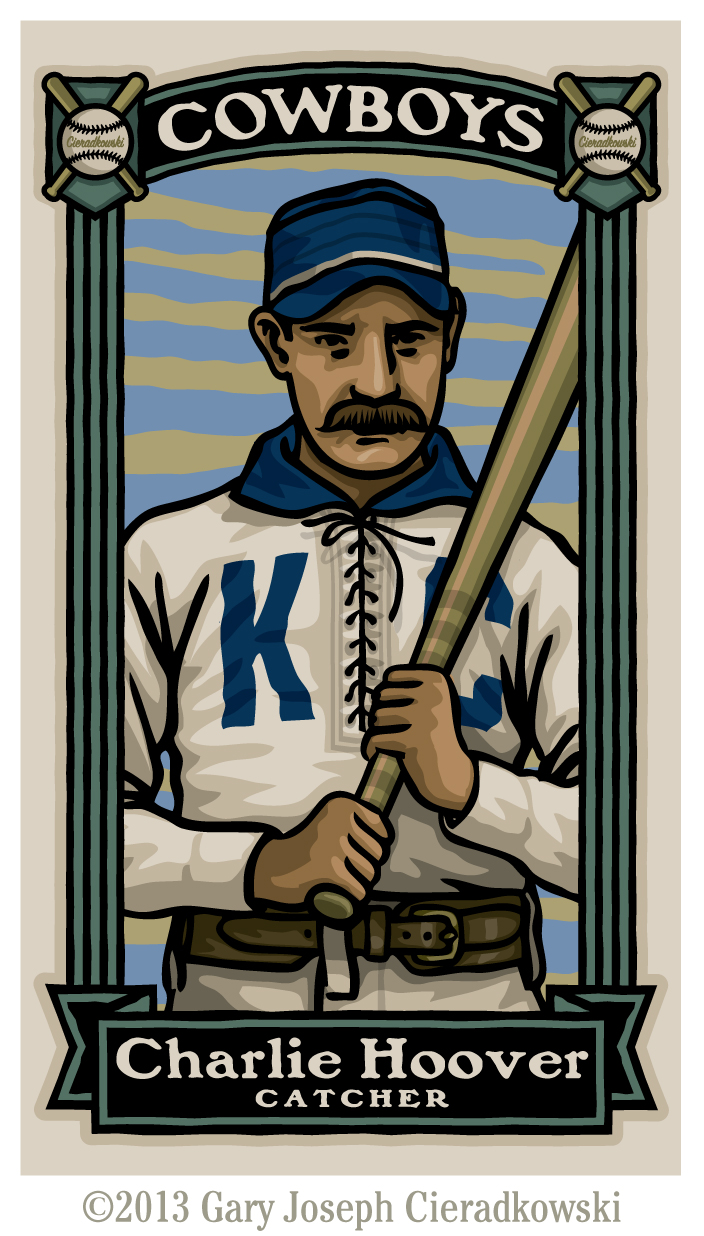
Gary Cieradkowski is an exceptionally talented artist from Covington, Kentucky.  Since 2010 he has produced the great Infinite Baseball Card Set Blog–with excellent stories and his incredible art work.  Gary contacted me recently about collaborating on a piece.  I chose Charlie Hoover.  Hoover was a talented, troubled 19th Century catcher who faded into obscurity and remains one of a handful of Major League players for which there is no information on the place or date of his death.  Read the piece here on Gary’s blog.

This is the card Gary created:

HOOVER_LG

Count Campau Explains the “Science of the Sport”—the Battery

20 Mar

Charles Columbus “Count” Campau earned his nickname because of his regal appearance and his background; he was a member of a prominent Detroit family and educated at Notre Dame, and was regarded as one of the smartest players of the late 19th and early 20th Centuries.

His Major League career was brief, just 147 games with the Detroit Wolverines, St. Louis Browns and Washington Senators, but he was one of the best known, and highest regarded minor league players for 20 years.

Charles Columbus "Count" Campau

Charles Columbus “Count” Campau

Campau was especially popular in New Orleans, where he played for parts of four seasons, managed for one, and adopted as his home.

In 1893 Campau, who The New Orleans Times-Picayune called “one of the best students of baseball,” wrote an article as “Advice for Amateurs” about the “Science of the Sport:”

 “Many a time I have been asked for my views on the successful way to make a good ball player.  From a player’s standpoint a ball player is born and not made.  But with continued practice and coaching from and older and experienced head the amateur will probably reach the top notch in the profession.  There are two things, when combined, (which) will make a good ball player.  A practical and intellectual knowledge of the pastime or sport will aid the amateur.”

The New Orleans Pelicans captain explained what passed for “scientific baseball” in 1893; position by position:

“The most important position is the pitcher. For three reasons he ranks as the most important player on the team. He is the pivot upon which the victory of the team rests.  Should he be slightly disabled or out of condition all hopes of victory would go glimmering and the rest of the team would not put up a good game of ball.  A good pitcher, with fair fielders, is better than a poor pitcher with brilliant fielders.  With a weak pitcher, a fast fielding team would make a sport, and with good hitters would likely win one game out of ten.”

Campau blamed pitching for the Pelicans slow start that season; in spite of being “as hard a batting team” as there was in the league, they “could not win for the reason that the box was decidedly weak.”

“Another important factor in a game is the catcher…A catcher with good judgment and a quick brain will prevent the speedy base runner from advancing, and will lessen the work of the pitcher by watching the bases.  A good battery, with judgment, will work a hard batter, and the chances are that he will pop up a fly or send a grounder to short.  The catcher’s work does not only consist of receiving the delivery of his pitcher, for such a catcher is not worth the chest protector he wears, and will never become a success…(Charlie) Bennett(Jack) Clements, (Buck) Ewing and (Morgan) Murphy are catchers who watch every point of the game.  They back up the first baseman at every safe opportunity.”

"Count" Campau

“Count” Campau

More from the “Count” next week.

“An Umpire Nearly Lynched”

11 Mar

The above headline appeared on an Associated Press story in August of 1890.  Former Major Leaguer Jimmy Manning, then managing the Kansas City Blues in the Western Association had interceded to quell a riot at the end of a game with the Denver Grizzlies in Kansas City:

“Two questionable decisions by umpire Jovin (Sic) in the ninth inning, when Kansas City was about to tie the score, angered the crowd to such an extent that they swarmed into field, hooting and jeering the umpire.  Two young boys got hold of a rope, and in fun proposed to lynch him.  This added to the excitement, and it looked for a time as if the umpire would be mobbed.  Jimmy Manning climbed up to the top of the fence and addressed the mob.  He said the umpire had decided rightly and advised that no violence be attempted.  This quieted the mob to a degree.  In the meantime the players of both clubs formed a hollow square around the umpire and conducted him to the clubhouse.”

Jimmy Manning

Jimmy Manning

“Jovin” was actually Fred Jevne, a 26-year-old minor league veteran who had become an umpire just a month earlier.  After joining the Spokane franchise in the Pacific Northwest League in April, Jevne was suspended in May for punching an umpire.

In July The Spokane Falls Daily Chronicle said Jevne and teammate Tom Turner “quit the nine because they were excessively fined and ill-treated.”  According to the paper the two players showed up at the July, 1 game “in an intoxicated condition and acted like ruffians in the grand stand.” Turner was eventually reinstated and finished the season in Spokane, Jevne did not.

Since 1885 Jevne had played for a variety of teams in several leagues, including the Southern, International, and California.  When he was signed by Spokane to play center field and serve as captain, The Daily Chronicle said:

“Jevne is rather short.  He is a good batsman and a good player generally.  The San Francisco papers, when he played there, alternately praised him and berated him, but all agree that he was a good player.”

Jevne made one more attempt at playing, joining the Evansville Hoosiers in the Northwestern League in 1891.  He then returned to the Western Association as an umpire.

Fred Jevne

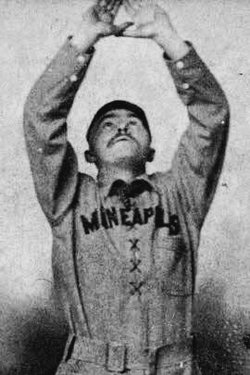
Fred Jevne with the Minneapolis Millers, 1889

In December of 1894 Jevne was named to the National League umpiring staff, where his work received mixed reviews.  In June The Baltimore Sun called him “As good an umpire as there is in the business.” In August, after a he worked a game between the Boston Beaneaters and Chicago Colts, The Boston Globe said “Umpire Jevne did poor work, both sides suffering from his yellow decisions.”  The Pittsburgh Press called Jevne’s performance in a September game between the Pittsburgh Pirates and Philadelphia Athletics “By far the worst exhibition of umpiring given this season.”

Jevne was not offered a position in the National League for 1896, and went to work in the Southern Association, where he seems to have a continued his fighting ways.  In July, The Birmingham Age-Herald said Jevne had missed the previous day’s game between the Montgomery Senators and Columbus River Snipes:

“Jevne, the regular umpire, arrived in town last night, but this morning loaded himself up with the spirit of hilarity, got into a fight with a citizen and when the hour for playing arrived was in the hands of the police, and failing to make bond was unavoidably absent from the field.”

Despite his troubles, or because of them, Jevne was asked to join the Interstate League at the end of the 1896 season because, according to The Sporting Life, umpires were losing control of games:

 “(Interstate League President Charles) Powers to-night wired for Fred Jevne the ex-National League umpire, who is so handy with his fists, to report for duty.”

Jevne was not popular with players or the press down south, and said his time in the Southern Association was difficult:

“It was no snap umpiring down South.  Fines didn’t go—were never paid—and so I used to remove men from the game.  Sometimes I would have to take out about half of a team before they would behave, and then the papers would roast me good and plenty the next morning…I had a scrap with a player named (Al) Gifford (Atlanta Crackers shortstop), and punched him in a car going from the grounds.  The local paper came out the next morning and urged the chartering of a special car for the umpire. So that he could be alone in his dignity, and another paragraph hinted that a cigar sign or dummy could be put in the special car for the umpire to punch”

Jevne appears to have returned to the Southern Association for parts of the 1897 and ’98 seasons.  He spent at least part of 1899 and 1900 in his hometown, Chicago, where he worked as an umpire in some college games.  In 1901 Jevne became a Western League umpire and that year met with a violent and mysterious end.

Initial newspaper reports said Jevne had fallen from a third story window in Denver’s Hotel Victor on August 2; he lingered for two days before dying. His body was returned to Chicago and he was buried at Graceland Cemetery.

However, several months after his death, Jevne’s brother Lloyd, a well-known three cushion billiard champion, told The Associated Press he was certain he had been murdered, and that before dying Jevne had said he was pushed:

“I saw Fred’s body after it was shipped back to Chicago, where the burial took place, and the most prominent feature of his injuries was the bruise on his nose.  Doctors I saw believe that he was struck across the face with some blunt object… When he was about to die it is not probable he would have told a falsehood.  He would not have said at that time that he had been pushed out the window.”

Lloyd Jevne

Lloyd Jevne

Whether Fred Jevne fell or was pushed from that hotel window has never been positively determined.

“Bill Abstein Denies he is a Bonehead”

20 Feb

Pittsburgh Pirate owner Barney Dreyfuss and manager Fred Clarke felt all they needed to win a World Series was a first baseman.  Since winning the National League Pennant with Kitty Bransfield in 1903, only one Pirate first baseman hit better than .260 (Del Howard .292 in 1905).

In 1908 the Pirates finished second with four different first basemen, Harry Swacina, Alan Storke, Jim Kane and Warren Gill; none played more than 50 games, none hit better than .258 and they combined for 29 errors.

The man who took over in 1909, and was with the Pirates for their World Series victory, might have preferred to have never been given the job.

Bill Abstein had played eight games at second base and in the outfield for the Pirates in 1906, before returning to minors.

-Abstein had put up respectable, but by no means spectacular, numbers with the Shreveport Pirates in the Southern Association and Providence Grays in the Eastern League from 1906 to 1908—but as early as August of 1908 The Pittsburgh Press said he was the answer to the Pirates problem at first base:

“Fred Clarke is very eager to secure Bill Abstein from Providence.  Bill is rated the best first baseman in the Eastern League, and he would no doubt strengthen the Pirates where they are weak.”

When Abstein joined the Pirates before the 1909 season The Press said:

“The acquisition of bill Abstein has rounded our infield nicely.  He’s the best first baseman we have had in years and he certainly fits in nicely.”

???????????????????????????????

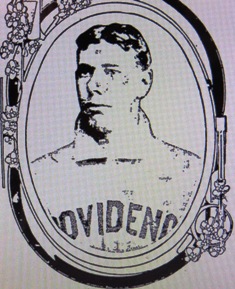
Abstein, Providence 1908

In a letter sent to Dreyfuss with his contract, Abstein told the Pirate owner:

“Fred Clarke will not have to worry about a first baseman after he sees this big German hustling around the bag.”

In keeping with his career performance, Abstein had a respectable season for the pirates.  He hit .260 and drove in 70 runs.  His 27 errors were only a slight improvement over 1908’s first baseman by committee.

The Pirates won 110 games and won the National League Pennant by six and half games over the Chicago Cubs and met the Detroit Tigers in the World Series.  The series would be the beginning of the end of Abstein’s Major League career.

09pirates

1909 World Champion Pittsburgh Pirates, Abstein 11th from left.

Abstein struggled at the plate (6 for 29 with nine strikeouts) and in the field (5 errors total, 2 each in games 3 and 4).  The Pirates won the series in seven games, but despite the victory, Abstein quickly became the subject of ridicule in Pittsburgh.

An Associated Press article after the series said:

“During the games with Detroit Abstein appeared to forget all that he knew about base ball.  He ran the bases foolishly, made a number of costly errors, failed to hit and disobeyed orders.  In fact, his playing was worse than that of any other man on either team.  The other Pirates, seeing that Abstein was the ‘goat’ for the combination, kept up the cry against him…Before the series was ended many of the Pirates shunned Abstein and it was reported he would be traded.”

The Pittsburgh Press was less generous:

“Bill Abstein denies he is a bonehead and says baseball is largely a case of ‘if-you-can-get-away-with-it,’ well it’s a cinch that Bill couldn’t in the National League.”

The Pirates were unable to trade Abstein and finally put him on waivers.  He was claimed by his hometown St. Louis Browns.

Even though the Pirates had actually won the Worlds Series and even though Abstein was gone, that didn’t mean the Pirates, and The Pittsburgh Press, wouldn’t continue to pile on.

Barney Dreyfuss told The Associated Press shortly after Abstein was claimed by St. Louis:

“We have discarded the weakest offensive player we had—Abstein—and hope to improve the team by doing so.”

Dreyfuss also claimed:

“Fred (Clarke) told me as early as last June that we should get someone else for Abstein’s place in 1910, as Bill mixed up the team’s plays too frequently.”

The Pittsburgh Leader said:

“(Abstein) had deplorable batting weaknesses which the opposing pitchers were certain to fathom in time.”

The Pittsburgh Press was even less generous:

“Bill Abstein is reported to be making a hit with the Browns by his work in the spring practice.  Just wait about three months friends, before declaring Bonehead Bill a wonder.”

When the Pirates sold pitcher Vic Willis the St. Louis Cardinals in February of 1910, newspapers reported that Willis and Abstein had “engaged in a bitter fight,” during the series.

Abstein quickly wore out his welcome in his own hometown of St. Louis.  Abstein made 11 errors in 23 games at first base and hit .149; he was released on June 2, 1910.  It appears Abstein was no more popular with Browns Manager Jack O’Connor than he was in Pittsburgh.  O’Connor was quoted in The St. Louis Times in May:

“How did Abstein get away with it last year?  How could he make plays like he has been making for me and get away with it all year for Pittsburgh?  I never dreamed that some of the plays made by him were even possible.”

His Major League career over, Abstein returned to the minor leagues for seven seasons.  He had one above average year with the Los Angeles Angels in the Pacific Coast League in 1914; in 202 games he hit .308, with 234 hits and 40 doubles.

Abstein moved on, Pittsburgh apparently did not.  For years, Pittsburgh newspapers took every opportunity to take a shot at the first baseman.  In 1915 The Pittsburgh Press, in an article about the revolving door the Pirates still had at first base–in the five post-Abstein seasons, the Pirates had four different starting first baseman–(emphasis theirs):

“No one will ever forget the way Bill did NOT play the bag in the Worlds Series.  In fact, Bill did NOT play the bag all the time he was stationed there.”

Pittsburgh finally seemed to move on by the time they won their next world Championship in 1925.  Abstein died in St. Louis in 1940.

Filling in the Blanks—F. Bassett

7 Jan

Baseball Reference lists the manager of the 1903 Hopkinsville Browns of the Kentucky-Illinois-Tennessee League simply as F. Bassett—something of a slight to a man whose obituary in The Chicago Tribune called him “The Father of the Kitty League.”

Dr. Frank Houston Bassett was born in Stephensport, Kentucky in 1873, and grew up in Hopkinsville.

Bassett, who came from a wealthy family, played with semi-professional teams in Hopkinsville in his 20s.  Late in 1902 Bassett began trying to line up cities in Kentucky, Illinois, Tennessee and Indiana to form a new professional league; by February of 1903 the eight-team league was formed.

Frank Houston Bassett

Frank Houston Bassett

Bassett owned, managed and played for the Browns.

Very few records survive for the Kitty League’s first season and no statistics for Bassett can be found.  The only reference to his abilities as a player came years later in an article in The Kentucky New Era which included a quote from Scott Means.  Means, a well-known amateur and professional player in Hopkinsville who played in the Kitty in 1913, saw Bassett play:

“Doc Bassett was a very good fielder.  Only trouble was he couldn’t hit.”

Bassett continued to own the Hopkinsville franchise, renamed the Hoppers for 1905 until the team was dropped from the league in July in order to keep a balanced schedule after the Henderson Hens disbanded.  The first incarnation of the league ended the following season.

Bassett maintained the Hoppers as a semi-professional team for the 2nd half of 1905 and all of 1906.  He then became an umpire in the Cotton States League and the Southern Association.  He also entered medical school.

In the spring of 1909, Bassett was the subject of a feature in The Chicago American after he had umpired an exhibition between the Cubs and the Nashville Volunteers.  The article said Bassett was worth more than $100,000 and had an income from investments of “$500 a month…and umpires for the love of it.”

The American noted that Bassett owned a car, “a forty horsepower French machine,” and drove it 72 miles from Hopkinsville to umpire Southern Association games in Nashville.  Bassett said:

 “I run over in the machine every day before the game and return in the evening.”

In 1910 Bassett helped to resurrect the Kitty League and was named President before the 1912 season; as he would continue to do throughout the league’s many incarnations Bassett used his personal fortune to keep the league afloat by financing the Evansville Yankees.

Frank Houston Bassett

Frank Houston Bassett

He was re-elected president for the next two seasons, but the financially troubled league folded again after the 1914 season.  An attempt to revive the league in 1915 failed, and after being revived again for 1916 the league folded in August.

Bassett seems to have temporarily lost interest in professional baseball in Kentucky and turned to politics.  He became a city commissioner in Hopkinsville in 1916 and became mayor in 1918; he served until 1922 when he was elected Court Clerk of Christian County.

In 1922, he again helped to revive the Kitty league; this version lasted for three seasons but was plagued by the same financial difficulties that doomed its predecessors.

Bassett tried again after a decade and was the driving force in reorganizing the league in 1935.  He was named president, secretary and treasurer of the new six-team league.

Bassett served for three seasons as president.  The league meeting after the 1937 season was contentious and several league owners felt Bassett had been a weak leader, and objected to his indifference in maintaining accurate statistics for the league and his opposition to night baseball.

There are a number of versions of what transpired.  Most sources say that after being re-elected Bassett left the meeting and team owners then voted him out; others say he, in effect, resigned by leaving—sometimes even the same source disagrees.  Some accounts in The Kentucky New Era said Bassett was ousted; others said he “became disgusted” and resigned.

In either case, night baseball was the primary issue that ended Bassett’s presidency.  The league would not survive without it and Bassett was dead set against it.   The New Era said:

 “The good doc contends that if baseball was supposed to be played after supper, nature would have made it light enough to see.”

With the exception of a few occasions when he was honored in Hopkinsville, Bassett seldom attended games after 1937 citing his hatred for night baseball.

He continued to serve as Christian County’s court clerk until his death in 1950.

Two weeks after Bassett’s death the Hopkinsville Hoppers held a memorial for him before their game with the Owensboro Oilers—it was a night game.

The Man who Dried up Memphis

4 Jan

Finis Albert “Fin” Wilson had a brief, unsuccessful Major League career.  After four minor league seasons—two with the Knoxville Reds in the Appalachian League and two with the New Orleans Pelicans in the Southern Association—and a brief spring trial with the Cleveland Indians, Wilson signed a contract to play with the Brooklyn Tip-Tops in the Federal League in September of 1914.

Appearing in two games that September, Wilson went 0-1 with a 7.71 ERA.  Despite a respectable 3.78 ERA in 1915, Wilson‘s Major League career was over after a 1-8 season for the Tip-Tops.

Wilson signed with the Atlanta Crackers in the Southern Association in 1916, but became sick in April and missed most of the first half of the season.  He returned to the team in July and ended the season with a 4-6 record.

Finis Wilson 1914

Finis Wilson 1914

He returned home to Greensburg. Kentucky and served two terms in the Kentucky General Assembly.  In 1928 he was appointed as a federal prohibition administrator in Memphis, Tennessee, primarily responsible for stopping the transportation of illegal liquor on the Mississippi River.

Wilson was very popular in Atlanta because while pitching for New Orleans in 1913 he beat the Mobile Sea Gulls on the last day of the 1913 season securing the championship for the Crackers and shortly after his appointment he was the subject of a glowing profile in The Atlanta Constitution:

“In an office at the custom-house here in old Shelby County with the Mississippi meandering by just outside the window I found the man who won the 1913 pennant for the Atlanta Crackers. Finis E. Wilson, who left a bank presidency in Kentucky to battle Shelby county bootleggers, does not look like the young left-handed pitcher who gave the greatest exhibition of courage the Southern Association ever saw. His hair is gray now and he looks positively genial.”

He was on the front line of the government’s battle with moonshiners.  In one raid Wilson, according to The Associated Press he:

 “Dried Memphis up… (Wilson) directed the greatest cleanup Memphis ever experienced…more than 150 persons were arrested and confiscated 1,500 gallons of whiskey, 800 gallons of wine and 20,000 quarts of home-brew.

In another raid two of Wilson’s boats were bombed as agents destroyed 1300 gallons of liquor and arrested six men.  Wilson told The Associated Press:

“If it’s war the moonshiners want it’s war they’ll get.”

And it was a war; 16 agents were killed and 183 were injured in 1928 and ’29 alone; and while corruption among agents was widespread, it appears that no agents under Wilson were charged with any wrongdoing.

Wilson left government service sometime after the repeal of the Volstead Act in 1933, and died in Coral Gables, Florida in 1959.

Finis Wilson circa 1930

Finis Wilson circa 1930

Blame it on the Uniform

3 Jan

Justin Titus “Pug” Bennett could hit.  After playing baseball at tiny Blackburn College in Carlinville, Illinois, in 1895 and ’96, there’s no record of him again until 1899 when, at 25-years-old, he played with the Indiana-Illinois League franchise that began the season in Kokomo, Indiana and finished in Mattoon, Illinois.

Pug Bennett circa 1904

Pug Bennett circa 1904

Back-to-back .300 seasons with the Nashville Volunteers in the Southern Association and the Seattle Siwashes in the Pacific Coast League earned the 32-year-old his first shot in the Major leagues.  The Bennett hit .248 for two seasons with the Saint Louis Cardinals and returned to the minor leagues with Seattle, now in the Northwestern League.

Bennett returned to his old ways for two seasons, hitting .305 and a league leading .314 in 1908 and 1909.

1910 was not going well for Bennett, the perennial .300 hitter was hovering around .240 all season.

The Spokane-Spokesman Review provided an explanation late in the season:

“(Bennett) claims the white uniform worn by the umpires is the principal stumbling block in the way of batting averages this year.  Bennett says the light suits shade the white ball and make any pitcher with a crossfire or a sharp break much more effective.”

Bennett might have had a point.  There was not a single hitter in the Northwestern League with more than 50 at bats who hit .300;  Lou Nordyke led the league with a .290 average.

The following year the umpires’ uniforms were changed.  Ten players hit over .300 and Art Bues led the league with a .352 average.  The 37-year-old Bennett, with the Vancouver Beavers, rebounded with a .300 season.

Pug Bennet, t-206 card with Vancouver

Pug Bennet, t-206 card with Vancouver

Bennett continued playing in the Northwestern League until 1917.  He lived in Washington until his death in 1935.

Anger Management

27 Dec

Thomas Timothy “Tim” Flood just couldn’t control himself.

Flood was a solid infielder and somewhat erratic hitter.  As a 17-year-old he hit .364 with the New Orleans Pelicans in the Southern Association in 1894 but hit .266 in his minor league career and .233 as a Major Leaguer.

He had a late season 10-game trial with his hometown St. Louis Perfectos in the National League in 1899.  He was given his next shot in the National league in 1902 when he was signed by Ned Hanlon’s Brooklyn Superbas to fill the void left at second when veteran Tom Daly jumped his contract to join the Chicago White Sox.

Flood was an upgrade in the field, and while a weaker hitter than Daly, he quickly became a favorite of Hanlon who named him Brooklyn’s captain for the 1903 season.

Tim Flood

Tim Flood

1903 was not a good season for the new captain; he continued to struggle at the plate and dealt with a knee injury that limited him to 84 games.  He was also suspended for two games in July for a physical altercation in Cincinnati with umpire James “Bug” Holiday.  Holiday, a former Major Leaguer had a stormy half season as a National league umpire and resigned several days after tangling with Flood.

Flood was released by Brooklyn in March of 1904 and joined the Los Angeles Angels in the Pacific Coast League.

He was a very popular player in Los Angeles and captained the Angeles in 1904 and part of 1905 until he assaulted Ira “Slats” Davis, another former Major Leaguer turned umpire during a game in June of 1905. Eugene Bart, president of the league suspended flood indefinitely.

Newspapers reported that Flood said he would “never fight another arbitrator whether he is in the right or wrong.”

In 1906, he signed with the Altoona Mountaineers in the “outlaw” Tri-State League, where he appears to have kept his pledge and had an incident-free season.

In 1907, he joined  the Toronto Maple Leafs in the Eastern League and managed to play 29 games before he was in trouble again.  Flood assaulted an umpire named John Conway during a game in Toronto; the attack included a kick to the umpire’s chest.

Flood was arrested.

He was charged with assault and ordered to appear in front of a magistrate. Friends told Flood the hearing would be a formality and that he should plead guilty and receive a small fine.

No one told Magistrate George Taylor Denison who said, “This sort of thing must be discouraged,” and sentenced Flood to “Fifteen days in jail with hard labor.” At the same time Patrick Powers, president of the Eastern League, banished Flood from the league.

Toronto fans were outraged and immediately began circulating petitions which “included the names of several clergymen” and were presented by team officials to Minister of Justice Allen Bristol Aylesworth in hopes of getting Flood pardoned.

Opinions of the punishment varied.  Several newspapers carried the following poem which lamented Flood’s fate for “Sassing” an umpire:

“’Holy Moses!’  In Toronto

There is news to make you pale

Sass the umpire if you want to—

That is, want to go to jail!

There is woe among the batters,

As around the field they scud;

And their pride is torn to tatters

By the fate of poor Tim Flood

Fifteen days in jail for Timmy

Soon the parks will close so tight

That you couldn’t with a jimmy

Let in one small streak of light.”

Others, including two former players, said Flood got what he deserved and implied that his behavior was not limited to the three well-publicized incidents.

Charles “Count” Campau, a former Major Leaguer and umpire, who had been a teammate of Flood’s in New Orleans said:

“I am sorry to see anyone go to jail, but, for the good of baseball. I am glad to see Tim Flood out of it for good. Rowdies of the Flood type are a disgrace to any sport or business, and especially baseball. He was always mixed up in just this way and was chased out of California, where b« was playing, for the same kind of tricks. Umpire baiting was always his long suit, and, from what I can understand, his attack on Umpire Owens [sic] was a most cowardly one: Flood is a good ballplayer, but his hasty temper, his meanness has put him out of the game forever, and incidentally Into Jail.”

Charles "Count" Campau

Charles “Count” Campau

Tim Murnane, Major Leaguer turned baseball writer said:

“Tim Flood has a new record, and will now be in a position to go back to his trade and give up the game he was unfitted for.  The courts all over the country should follow the example of the Canadian judge, who sent a ballplayer to lock-up for assaulting an umpire.  It wouldn’t take many decisions of this kind to drive the bad men out of the sport.  Imagine a player taking a running jump at a man and hitting him in the breast with his spiked shoes!”

Tim Murnane

Tim Murnane

After serving 10 days, Minister of Justice Aylesworth ordered Flood released.  The player, in various reports, claimed he lost between 10 and 16 pounds during his incarceration, citing the poor quality of the food.

President Powers rejected pleas from the Toronto management to reinstate Flood and permanently banned him from the Eastern League; however, contrary to Campau’s and Murnane’s wishes, Flood was out of baseball for less than a month.

Flood was signed before the end of July by the Saint Paul Saints in the American Association and vowed, as he had before, that he was a changed man.

It appears 10 days in jail might have made a difference.  Flood was named manager of the Saints in 1908 and continued to play and manage in the minor leagues for five more seasons, apparently without incident.

In 1914, The Sporting Life reported, with no irony, that Flood was hired as an umpire in the Northern League.

Flood died in St’ Louis in 1929.