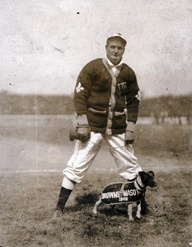
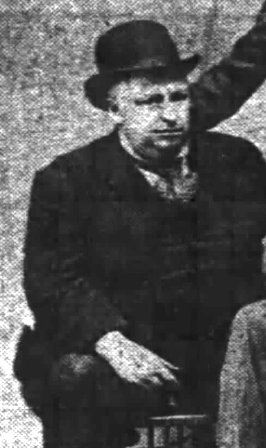
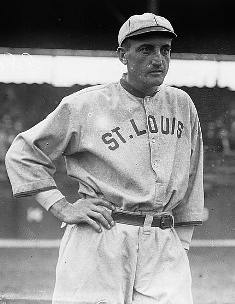
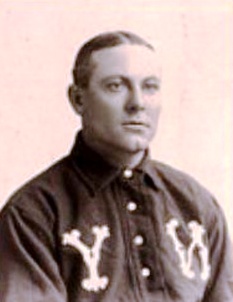
Tag Archives: St. Louis Browns

Comiskey’s “Sandusky Terror”

15 Sep

In February of 1899 The Chicago Inter Ocean said of Charles Comiskey, then owner of the Western League’s St. Paul Saints:

“It is also proper to state that C. Comiskey is, all things considered, the greatest story teller in this profession.”

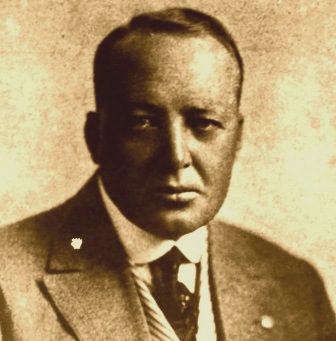
Charles Comiskey
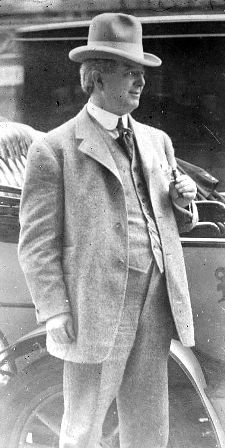
Charles Comiskey

The paper then related one of Comiskey’s favorite stories, told during that winter’s Western League meeting:

“’Speaking of ballplayers and their ways,’ he began, ‘did I ever tell you about my efforts to make a pitcher of the ‘Sandusky Terror?’  It happened while I was managing the old St. Louis Browns… It was in the early spring and I was in St. Louis waiting for my men to report for preliminary training.  (Browns owner Chris) von der Ahe had trouble in signing his star pitcher (Dave Foutz) that year, and when I looked over the list I found that I needed twirlers and needed them badly.  I told my troubles to Chris and he did his best to cheer me up.  He told me, among other things, that he had sent a railroad ticket to a young farmer who lived near Sandusky, and from all accounts was a wonder.  I didn’t enthuse, for I had had previous experience with these rustic phenomenons , but Chris said that a friend of his in Sandusky had bet him a case of champagne that the boy would prove a grand find.’

Chris von der Ahe

Chris von der Ahe

“’Next morning the boy from Sandusky showed up at the ballpark.  He was one of the biggest and strongest chaps I ever met in or out of baseball.  What is more, he had a pitching arm of tremendous powers, and after he passed the ball to me five minutes I saw that he had a world of speed and for a raw amateur, very fair control of the ball.’

“’Well, we started on a little training trip down South, and as a matter of course I took the boy with us.  His terrific speed and his willingness to learn made him popular with the members of the team, and they spent hours in catching him.  A week passed and I really began to think I had discovered the pitching star of the year.  Things went well until we struck Mobile..  When we drove up the hotel a fairly good looking woman of 30 or thereabouts walked up the bus and caught my Sandusky wonder by the arm.’

“’William,’ she said, ‘I want to have a serious talk with you.’

“’They strolled down the street arm in arm while the other players lounged around the hotel wondering what it all meant.  Half an hour later the couple returned.  The girl went into the parlor, but the young fellow called me to one side.’

“’Captain,’ he said, ‘I have gone and done it.’

“’Done what?’ I asked.’

“’Married Louisa,’ he answered.  ‘You see, she came all the way from Sandusky to teach school down in this part of the country, an’ she says she’s lonesome like an’ that playin’ ball for wages don’t suit her views.  Me an’ she kinder liked each other when she lived up in Sandusky an’ we’ve been writin’ letters to each other ever since she left home.  That’s how she knew I was with your club.  Captain, I guess that’s all, exceptin’ here’s the 60 cents I borrowed from you yesterday.  Louisa says I musn’t quit you owin’ a cent, and she gave me the money to hand to you.’

“’You don’t mean to say you’re going to quit the team,’ I gasped.  ‘Why, we will make a pitcher of you and pay you good wages while you are developing.’

“’That’s just it,’ he answered.  Louisa says I musn’t play for money.  Says her uncle, who is a preacher in the village, insists that it is wrong to do it.  Come in and ask Louis if I am not tellin’ you the truth.’

“’Well, I spent an even half hour in trying to induce that woman to change her mind, but she wouldn’t.  She said she had decided to make a lawyer out of her husband and that they would live on the money she earned teaching school until he was admitted to the bar.  Then she took her youthful husband away from the hotel and that was the last we ever laid eyes on the pair.  Later in the day I made a little investigation on my own account and found that the woman, who by the way, was at least ten years older than her new husband, had taken the boy straight to the parsonage and married him before he had been in the town twenty minutes.  I don’t know whatever became of the pair, but I believe to this very day that if the ‘Sandusky Terror,’ as the players nicknamed him, had gone back to St. Louis with the team he would have developed into another (Amos) Rusie.  I have never forgiven that pretty school teacher for making him jump our club, and, what’s more, I never will.’”

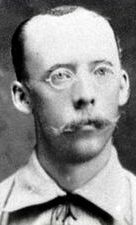
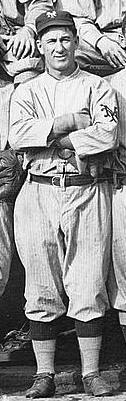
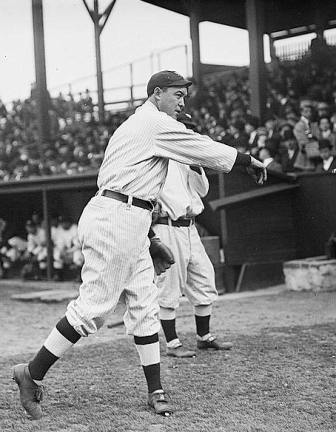
Hugh Nicol

25 Aug

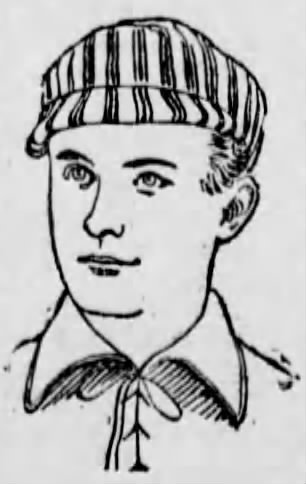
In 1884 Hugh “Little Nic” Nicol was one of the most popular members of the St. Louis Browns—so popular, a local boy’s team named themselves after the right fielder, and the Nicol was invited to address the team.

Hugh Nicol

Hugh Nicol

A reporter for The St. Louis Critic was on hand when Nicol imparted his baseball wisdom to the kids:

“I’m no speech maker, but if you like I’ll give you a pointer or two, and you can take ‘em or leave ‘em, just as you like.  First, when you go to the bat don’t sneak up there, but pick up your club determined like, and look at the pitcher as you’d look at a mosquito which you had the dead wood on.  Then when he curls the ball away, up around your left year duck your head, look mad and whisper, ‘Oh, you sucker you know better than to give me a good ball.’  That’s what you call workin’ the pitcher—makin’ him mad as a bull—so mad that he’ll put the ball just where you say he can’t put it, but where you know he’s going to put it, and when he puts it there smash her right in the eye.

“Then when you’ve smashed her, don’t stop and admire the smash, but make for first as though the devil was trying catch hold of your coat tails.  When you reach first don’t stop unless you hear the captain yell: ‘Hole yer first; hole it!’  If he yells ‘hole it,’ obey orders.  Don’t think you know more than him, because if you get to thinkin’ that way your head will begin to swell, and all the ice in St. Louis won’t take down the swellin’ If you only reach first, place your arms akimbo and look at the pitcher as though you had got there by a fluke and was going to hold to her if it was the last act.  If you are a runner, and not one of those tired cusses that crawl when they think they’re flyin’.

“Make for second the moment he pitches the ball; and when you get near the bag, grab hold of it and come up smilin’ at the umpire , as though you meant to say “Oh, I beat the ball about a foot, and he never touched me anyhow.’  If you work it right the umpire will sing out, ‘Hole yer second!’

“But, fellers if you can’t run when you reach first stay there and thank God you got that far.  Don’t try to make second for if you do the catcher will make a bloomin’ gillie out of you.  But make out that you are a dandy on the run, and bob up and down like a bear dancing on a red hot stove.  That kind of business works up the pitcher and he’ll try to catch you nappin’, but instead he’ll fire the ball away over the first baseman’s head.  Then if you can run a little bit you can get all the way ‘round.  But take care that he don’t catch you nappin’.  If he does that the captain will call you a bum base runner and you’ll feel like clubbin’ the life out of yourself.”

Thirty-five years later, Nicol attended an old-timers banquet at the Great Northern Hotel in Chicago and spoke with Al Spink, then occasionally writing for The Chicago Evening Post.  Spink called Nicol “the smallest and most wonderful right fielder in America.”

Nicol, like most of his 19th Century brethren, thought his old teammates were better than current players:

“I can’t see where the game has improved a bit since we played it…and I can’t see where the players of today are any better than our old gang…I don’t see any players cavorting around on the diamond today that are any better than the Browns’ old infield when it was composed of (Charles) Comiskey, (William “Yank”) Robinson, (Arlie) Latham and (Bill) Gleason…Where are there any better players than our old Chicago infield—(Cap) Anson, (Fred) Pfeffer, (Ned) Williamson and (Tom)Burns?”

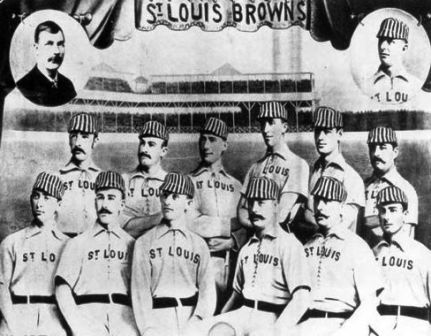
1885 St. Louis Browns--Nicol is on the far right of the bottom row.

1885 St. Louis Browns–Nicol is on the far right of the bottom row.

Nicol also objected to the way the game was played:

“(W)here is there the  enthusiasm and the effort to win that was in evidence in the days when we played?

“Nowadays a player often goes to the bat acting like a man who has lost an immediate member of his family.

“We used to go up smiling and acting as though we were certain of clouting out a homer, although we often fell down on the proposition.

“And then, too, many of your players of today make little attempt to advance themselves in the various departments of play.

“They do not half try to learn all the fine points of the game as we did in the days of old, but simply try to get by.  They are content if they get a couple of hits every afternoon and play an errorless game.  The first thing they do each morning is to get the newspaper and look at the hit and error columns.  If they don’t see themselves credited with a hit perhaps they did make, some sports writer gets a terrible panning.”

Nicol managed in the Three-I League and later  coached baseball and served as athletic director at Purdue University from 1906 until 1914—he resigned both positions in November of 1914 after a dispute with his football coach Andy Smith and Smith’s assistant Pete Vaughn (who was also Purdue’s basketball coach).

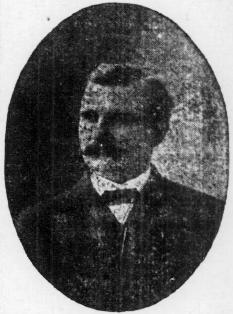
Nicol 1904

Nicol 1904

Nicol was often credited by contemporary sports writers with inventing the head-first slide.

He died in Lafayette, Indiana in 1921.

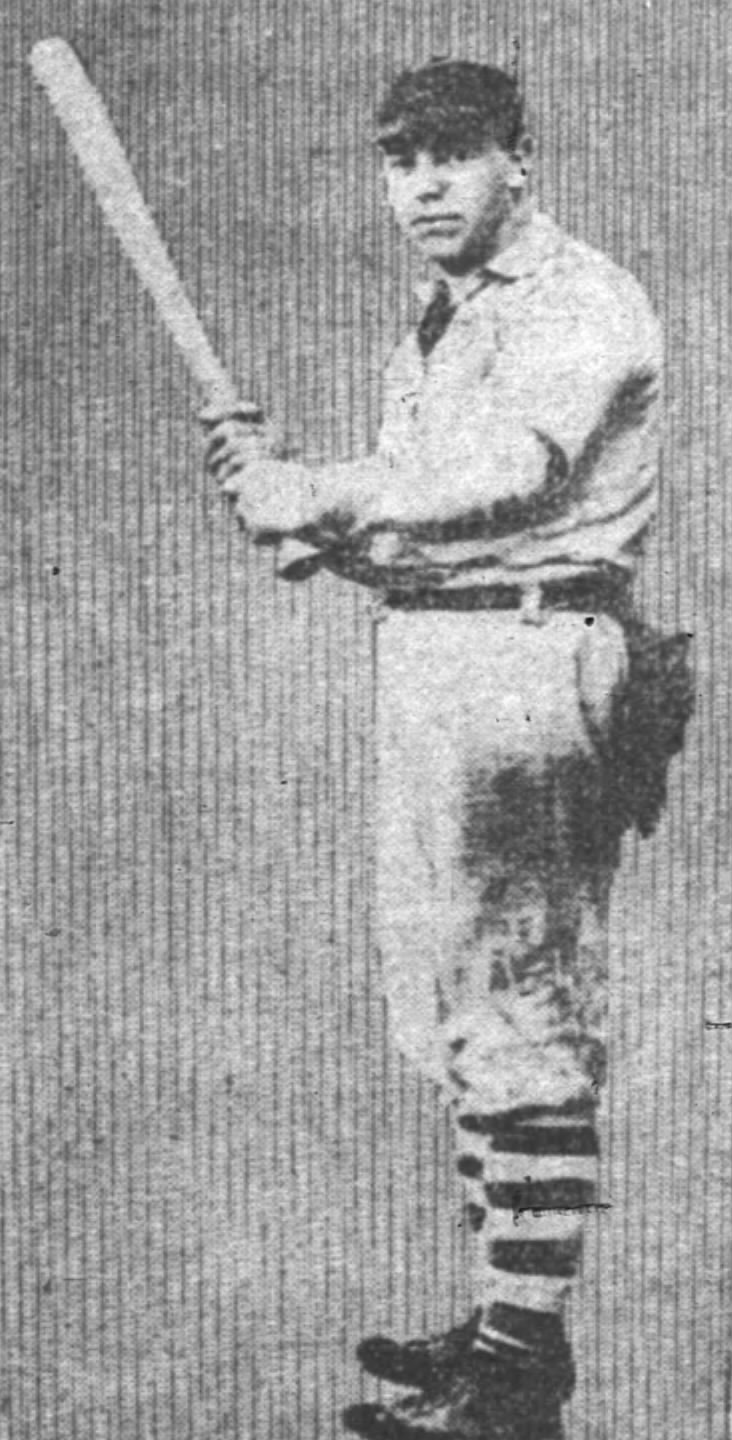
Stewart Strader

11 Aug

Stewart W. Strader was the son of a prominent business leader in two of Kentucky’s signature businesses.  His father, Colonel Robert Stuart Strader operated a distillery and was a prominent breeder of Standardbred Trotters.  In 1875, the elder Strader moved the family from Boone County, Kentucky to Lexington where he was involved in the founding and management of The Red Mile—the world’s second oldest harness racing track.

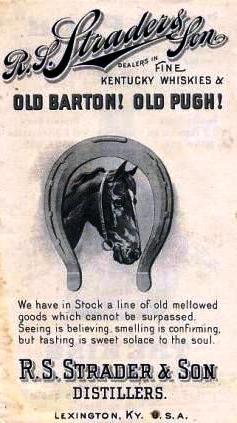
Advertisement for R.S. Strader and Son Distillery. The "Son" was Stewart's older brother Wilson.

Advertisement for R.S. Strader and Son Distillery. The “Son” was Stewart’s older brother Wilson.

Stewart Strader was born in Lexington in 1882, one of seven sons.  By the age of 20 he had become an important figure in baseball circles in and around Lexington, as owner, manager and one of the best players on Lexington’s local semi-pro team.

Before the 1903 season The Lexington Leader said Strader was attempting to get his team accepted into the Central League and “Lexington’s application for a franchise is looked upon quite favorably,” but days later The Lexington Herald said Strader “decided most of the cities composing the Central League were too far to enable his club to play them with profit.”  He instead entered his team in Cincinnati’s Sunday League and played against other independent teams during the week.

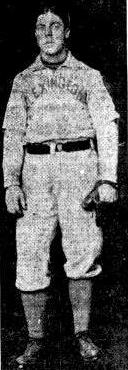
Stewart Strader 1903

Stewart Strader 1903

His reputation quickly spread, and while there were rumors in the press that he would be signed by the Cincinnati Reds, they did not materialize, but he did receive a letter from William Henry “Bill” Watkins, president and manager of the Indianapolis Indians of the American Association.  Watkins wrote:

“I thought I would write you and see if you had any idea of going into the professional end of the game next season.  If you will consider a trial with us, I would like to hear from you.”

Strader accepted the offer, but by the time he reported to Indianapolis in late March, Watkins had left Indianapolis to manage the Minneapolis Millers.  In his first game with the Hoosiers, an exhibition against Purdue University, Strader played right field and was 3 for 3 with a triple.  The Indianapolis News said, “Strader is a hitter of merit and with a little more work should develop into a strong fielder.”

Two days before the beginning of the regular season Indianapolis purchased left fielder Ed “Pinky” Swander from the St. Louis Browns, and right fielder George Hogriever, who had refused to sign after hitting .330 the previous season, agreed to terms with the Hoosiers.   Strader was released to the Greenville Cotton Pickers in the Cotton States League.  His hometown paper, The Herald, said he “had been holding down right field with due credit,” but Indianapolis Manager Bill Phillips felt “he was too young for the fast company.”

Strader 1904

Strader 1904

After hitting .309 for Greenville in 81 at bats, he was sold to the Macon Highlanders in the South Atlantic League where he hit just .200 in 130 at bats.

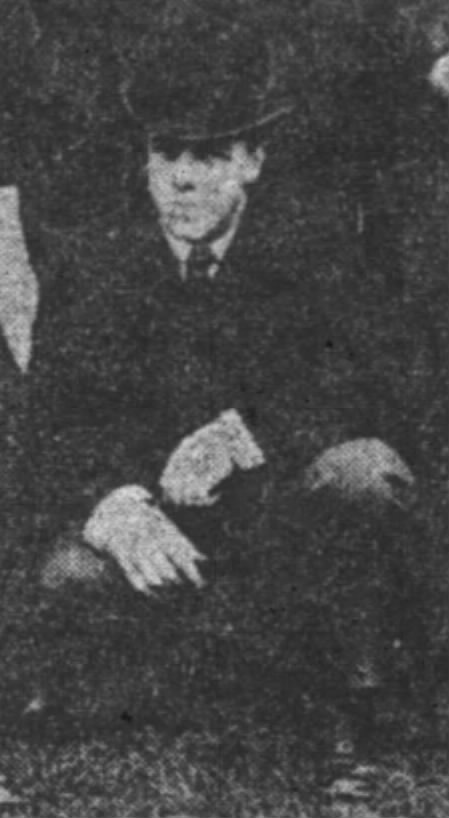
Strader spent the next five years making brief stops with seven different minor league teams, buying and selling the independent Lexington club at least twice, and tending a saloon he opened in 1905.


Stewart Srader

Stewart Srader

In 1908, Lexington became part of the newly formed Blue Grass League.  It was the city’s first team in organized ball in more than a decade, and Strader may, or may not, have been involved in an attempt to wrest control of the team from owner and manager Thomas Sheets.

Strader opened the season in the Virginia State League, where he appeared in 10 games for the Richmond Colts and Danville Red Sox.  In late May, he returned to Kentucky and signed a contract with Sheets’ Lexington Colts.  On May 31 he played center field for the Colts and was 0 for 3.  The following day he was released.

The Herald speculated that another player, Warren Fieber (who had purchased the independent Lexington team from Strader two years earlier and later sold it back to him) would also be released:

“Sheets admitted that an effort had been made to undermine him in the last two days, but would make no further statement.”

Fieber, who was hitting .320 on June 1, remained with the team, but his batting average plummeted to .222 by the season’s end.  Strader stayed in the Bluegrass League and signed with the Shelbyville Grays; he had the best season of his pro career, hitting .324.

Strader played his final season of pro ball the next year with the Frankfort Statesmen.  In June The Herald said:

 “Lexington fans have noted with considerable satisfaction that Stewart Strader a Lexington boy now with Frankfort is leading the Blue Grass League in batting.”

Strader was hitting .410 as late as June 23, but slumped badly in the second half of the season and finished with a .264 average.  At the end of the 1909 season Strader and Patrick Downing, a former minor league player, were appointed deputies by the Fayette County Sheriff.  The Leader said the two deputies they replaced “apparently would not play ball.”

Strader signed with the Davenport Prodigals in the Three-I League in the spring of 1910 but was released before the season began.

During the last several years of career, and the first decade after he left the diamond, the Strader family was regularly mentioned in the local press for things other than baseball.

Two brothers died tragically, one, according to The Leader, by his own hand after shooting a woman in Lexington’s “Tenderloin District.” The other was murdered during a dispute while hunting.

Strader began operating taverns and restaurants in Lexington in 1905, and the family spent the better part of a decade bringing various lawsuits against each other involving the failure of the distillery after their father’s death and other business disputes.  During one dispute Strader’s older brother W.P. had him arrested claiming Stewart Strader “would do bodily harm or injury to him.”

Despite the family drama, Strader remained a successful businessman and prominent member of Lexington society.  He owned the Berlin Café—which he originally purchased with one of his brothers in 1905–until 1940 and for seven years in the 1920s operated Third Avenue Motor Company in Louisville, which sold the Anderson Six—produced by the Anderson Motor Car Company in South Carolina.

Strader died in Lexington on August 9, 1948.

Things I Learned on the Way to Looking up other Things #10

21 Jul

Trash Talk, 1886

The Philadelphia Times reported in July of 1886 about a feud between two American Association pitchers; Brooklyn Grays rookie Steve Toole and St. Louis Browns star Dave Foutz:

“Steve Toole says Foutz is the ugliest player in the Association.  Foutz returns the compliment by saying that Toole is no pitcher, but his face paralyzes the batsmen.”

Dave Foutz

Dave Foutz

Steve Toole

Steve Toole

The National Convention—1867

The Nashville Union and Dispatch’s take on a decision which would reverberate for the next 80 years:

“Still Against The Negro—The National Convention of base-ball players in session at Philadelphia last week resolved that no club composed of persons of color, or having in its membership persons of color, should be admitted into the National Association.

“To show the significance of this action we may state that there were four hundred and eighty-one clubs represented in this convention including clubs from the following states:  Massachusetts, Connecticut, New York, New Jersey, Pennsylvania, Delaware, Maryland, District of Columbia, Ohio, Indiana, Illinois, Wisconsin, Minnesota, Missouri, Oregon and Nebraska.  From which it is evident that the Northern base-ballists are opposed to Negro equality.”

Boss Schmidt—Throwing and Fighting

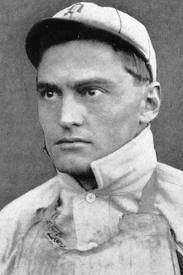
Charles “Boss” Schmidt is best known for leaving Ty Cobb with two black eyes and a broken nose in 1907 after Cobb slapped a black groundskeeper and choked the man’s wife when she attempted to intervene;  he also was a member of three pennant-winning Detroit Tigers teams (1907-1909).

Charles "Boss" Schmidt

Charles “Boss” Schmidt

During the era when several players received tremendous publicity for catching balls dropped from great heights. Schmidt received only minimal attention for an impressive throwing feat in 1909.

The Tigers were staying at Washington’s Arlington Hotel during an August series with the Washington Senators when Schmidt, according to The Associated Press:

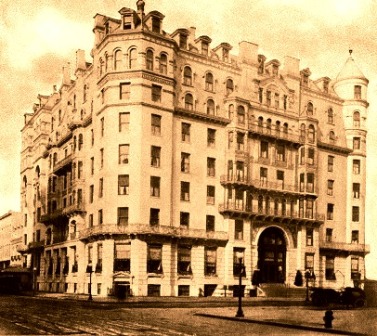
“Charles Schmidt of the Detroit baseball team threw a 10-cent baseball from Vermont Avenue in front of the Arlington over the eight-story Shoreham Hotel (the one torn down in 1929, not the Omni Shoreham which was built in 1930 and is still standing), which faces on fifteenth Street.  He took a run, and the ball went up until it disappeared over the roof line of the hotel.  It was later found in Fifteenth Street.  Whether it cleared the building entirely or bounced from the roof is not known, but it was a splendid throw, for the distance from where Schmidt stood to Fifteenth Street is nearly 400 feet.”

shoreham

The Shoreham Hotel, Washington D.C., the eight story hotel Schmidt cleared with “a 10-cent baseball.”

Schmidt participated in two professional bouts in Fort Smith, Arkansas after the 1911 season—he won a six-round decision and participated in one four-round no decision.  While some thought Schmidt could potentially fight champion Jack Johnson (who some sources say he spared against during this period), it’s clear Schmidt never took seriously the idea of fighting Johnson.

In a letter later printed in The Detroit Times Schmidt told a friend:

“This white man’s hope bunk is the biggest joke ever put over on the public.  I admit I like the boxing game, but I have never even considered gathering a living from the roped arena.  I like to do just four things.  Play ball, fight, hunt and eat.  Boxing is all right for a little amusement when it’s too cold to play ball…As for this dope on my being the white man’s hope, somebody is loon, it sounds like a squirrel talking to a nut.

“I have joined the Tigers again, and mean to show by my playing that I am with the team heart and soul.  Whatever my personal opinions have been, whatever my playing is, whatever critics have said about me, no one can say that I have not given the Detroit team the best I have…I don’t know who this guy is who has been sending fight dope from Fort Smith about my challenging Jack Johnson, but whoever he is, he ought to get a job in New York.  He could sell J. Pierpont Morgan a nicely enameled brick without difficulty.

“Yours is peace, prosperity and pennants, Charlie.”

Despite being released by the Tigers before the beginning of the 1912 season, Schmidt remained true to his word that baseball, not boxing, was his sport of choice.  His big league was over, but he continued as a player and manager in the minor leagues until 1927.  He never fought again.

“No Exhibition was ever Received in this City with more Enthusiasm”

2 Jul

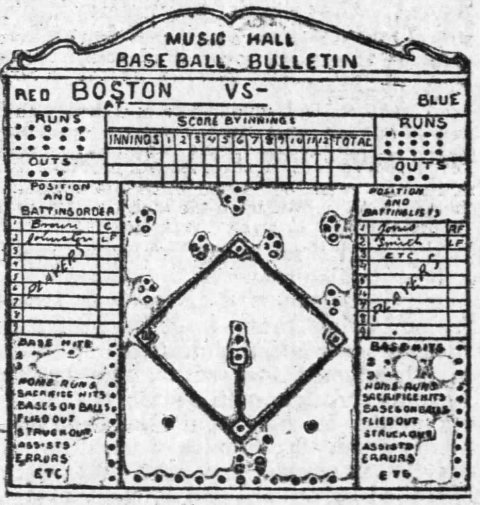
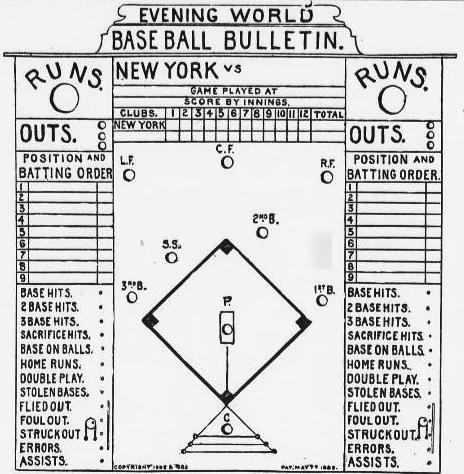
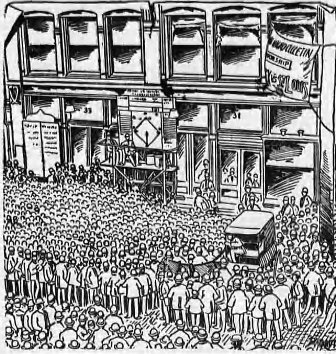
The New York World unveiled a newly updated attraction for baseball fans on August 6, 1889; the “Baseball Bulletin,” a version of which had also been introduced at the Boston Music Hall earlier that summer.

The Boston Music Hall "Bulletin Board."

The Boston Music Hall “Bulletin Board.”

The Associated Press said some fans thought the board was “an advantage over the actual game, in that it not only reproduces the plays graphically and simultaneously, but it keeps at the same time a simple and conspicuous record of the contest.”

The New York World's "Bulletin Board."

The New York World’s “Bulletin Board.”

The Boston Herald said their board measured “fifteen feet square.”  New York’s board was an improved version of one that had been used the previous October for the Giants six game to four World Series victory over the American Association’s St. Louis Browns.

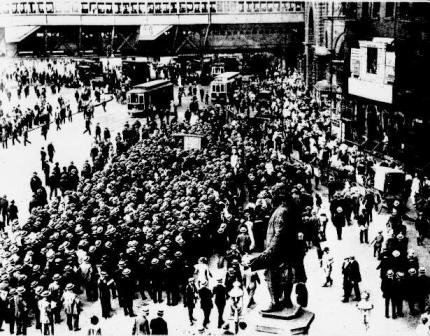
The crowd on Park Row for the 1888 World Series

The crowd on Park Row for the 1888 World Series

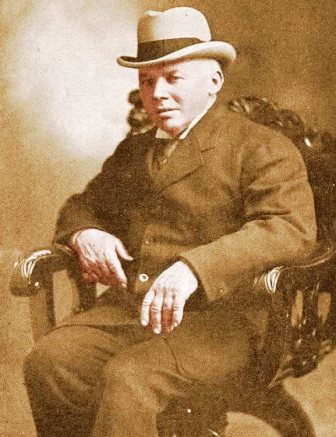
The board was the creation of  reporter Edward Van Zile of The World; Van Zile received a patent for the invention, although it was another member of the paper’s staff, Publisher Joseph Pulitzer’s secretary Edwin A Grozier, who turned it into a profitable enterprise. After purchasing the original rights from Van Zile, Grozier improved the design and received his own patent.

The World said the new version was a bigger sensation than the one introduced the previous October:

“’Perfection’ is the word which expressed the verdict of the baseball public who had the good fortune to witness the game between the New York Giants and Baby Anson’s team on The  World’s Baseball Bulletin Board yesterday afternoon…it is safe to say that no exhibition was ever received in this city with more enthusiasm than was the baseball bulletin.

“And the crowd too!  What a vast number!  There must have been fully 10,000 people in the audience, and the way they cheered when the Giants made a run was a sound that would have made Baby Anson sick.”

The presentation of the game took place on New York’s “Newspaper Row” (Park Row), with a crowd on the east side of the street

“(E)xtending from above The World Building to far below it (and) on the west side of the street the crowd was much larger.  There was a long line of people from Mail Street almost down to the other end of the big Federal Building.

“No point from which the game could be witnessed was left vacant.  The boys climbed up and lodged themselves in among the pillars of the Post Office…Even the lamp post was monopolized by the urchins, and when our boys made a good play they generally led the cheering.”

The “expert board operator placed the Chicago men in the field,” for the first inning, and leadoff hitter George Gore at the plate:

“When (Gore) slid down to first base the crowd were just ready to cheer, but they saw him put out and they reserved their applause for another occasion.

“They did not have long to wait, however, for (Mike) Tiernan and (Buck) Ewing  each succeeded in gaining bases, and then big Roger Connor was placed over home plate

“The crowd held its breath in anticipation of what was to come.  Their enthusiasm was drawn up to a high pitch, and was just waiting for a chance to break its bonds.  And they got it!  The little red disk representing Connor slid up to first and Tiernan slid across home plate.  Then there was a volley of cheers.  It broke forth clear and strong, and the sound could be heard blocks away.

“Up on the tops of the tall buildings in the neighborhood the cheers of the crowd could be heard resounding forth as a victorious army returning from battle.

“And it was all the same through the game. A great many people were attracted to the spot by the cries of the crowd, and when they saw the baseball bulletin they all united in declaring it to be the greatest thing they had ever seen.”

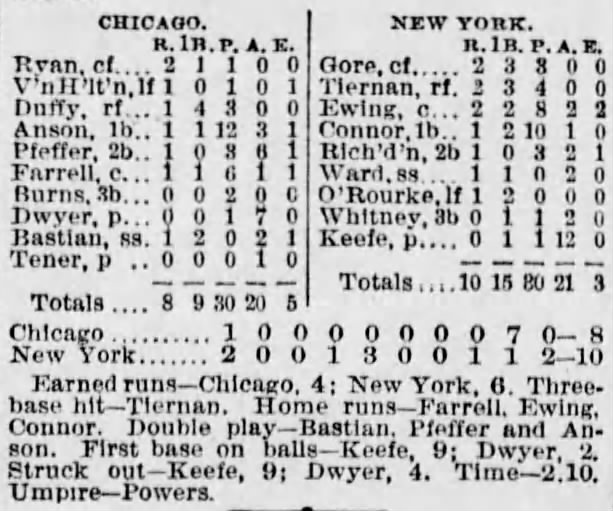
Chicago scored seven runs off Tim Keefe in the ninth to tie the score at 8.  The crowd’s “disapproval resolved itself into a continued groan.”

The Giants scored two runs in the tenth, and when the white Stockings came to bat in the last half of the inning:

“(T)he crowd watched more intently than at any time before.As each Chicago man went out there was a yell, and when they all went out without having made a run it was impossible to say a word that could be heard.”

The Box Score

The Box Score

The paper commemorated their innovation with a poem:

A boy was passing down the street,

Another lad he chanced to meet;

‘I’ll bet,’ he said, ‘we’re licked once more.

What is the score?’

A merchant coming down that way,

Lifted his bearded head so gray;

And ceased o’er book and cash to pore—

‘What is the score?’

A preacher wrestled with his text,

And wondered what he’d best say next;

Then called out through his study door;

What is the score?’

The Mayor in his office sat

And pondered over this and that,

The said: ‘I’m sure the game is o’er.

What is the score?’

If they had only chanced to go

Into the middle of Park Row,

And see the bulletin of The World,

And the glorious pennant there unfurled,

They’d never ask the question more

‘What is the score?’

The  World predicted the initial crowd was just the beginning:

“Today’s game between the Chicagos and the New Yorks will be duly recorded on the board.  There is room for everybody to see, and it is expected that the crowd will be twice as large as yesterday.”

The following day the paper did not say the crowd had doubled—to 20,000—but claimed it was “The largest crowd that had ever been on Park Row,” for the Giants 4 to 2 victory over the White Stockings.

Crowds continued to come to Park Row as the Giants battled the Boston Beaneaters and won the pennant on the final day of the season.

Baseball Bulletin Boards, and other versions of the concept, remained a popular feature well into the 20th Century. More often than not they were sponsored and presented by local newspapers.

The New York Sun presented their own "Baseball Bulletin Board"  on New York's Park Row in 1914

The New York Sun presented their own “Baseball Bulletin Board” on New York’s Park Row in 1914


“I Remember Well the First Day Latham Coached”

11 Jun

Arlie Latham “The Freshest Man on Earth” is generally credited as the first full-time third base coach.  Even before John McGraw hired him to coach third for the New York Giants in 1909, Latham’s antics as a “coacher” were already legendary—in 1907 Ted Sullivan, one of baseball’s pioneers and Latham’s manager with the St. Louis Browns, told The Washington Evening Star about Latham’s first time.

Ted Sullivan

Ted Sullivan

“’I remember well the first day Latham coached,’ said Sullivan.  ‘It was in Cincinnati in 1883.  I must confess I never had much use for a ‘fresh’ player, and soon after Latham reported I was not backward in telling him he was too d— fresh, but  I later discovered that he was a wonderful player, and that his freshness was of a most harmless and hilarious nature.  But after I gave him the reprimand I noticed he was a little timid about saying anything, but was still of good cheer.

“One day in Cincinnati Will White had the Browns on his staff with his little stingy rise ball.  My best men were on the bases and there was no one on the line.  I asked the men on the bench, ‘Is there no one here able to coach a little?’ Latham speaks up and says, ‘I will coach if you want me.’”

Never one for understatement, Sullivan said what happened next:

“Well, if Gabriel had entered a graveyard and blown his trumpet, and the tombstones had loosened their grip on the dead, it would not have created more of a sensation.  Latham walked out to the home plate and to the consternation of umpire, players and myself, delivered this talk to pitcher White:

‘My Dear Mr. White, we have been very courteous to you during the game, but as the Browns need a few runs we will have to be rude to you for awhile,’ and then stalking off to third base went through those gyrations that afterward made him famous all over America.  White was dumbstruck at the flow of words that afterward fell from Latham, and he became so rattled that the Browns batted him out of the box and won the game.”

Will White

Will White

No Browns game in Cincinnati that season matches well with Sullivan’s initial account—he continued to tell the story to reporters for more than a decade and sometimes said instead the game was “against Cincinnati—the game that best fits Sullivan’s description was a 9 to 5 Browns win over the Reds on May 16. But, contemporary accounts attribute White’s faltering, which led to the Browns come from behind victory, to a knee injury rather than any “flow of words” from Latham.

“Latham was the original funny man in the coacher’s box, and he stood in a class entirely by himself.  He has had many imitators, but they have never reached the position that Latham occupied, for he was a genius in the work and never used language that would offend the ears of the most prudish.

“Many years ago it used to be Latham’s great aim to get out on the coaching line here in Washington in the games that local pet—Win Mercer—was to do the pitching.  It will be recalled that Mercer was an extremely handsome fellow, and often it fell to his lot to pitch on Ladies’ Day.  Latham took the greatest delight in endeavoring to disconcert Mercer, the large number of ladies being mad enough to pull his hair, while at the same time they were convulsed with laughter at his sayings and antics.  He and Mercer were great chums, and when Latham was secured by the Wagners (J. Earl and George) to travel with the Washingtons (in 1899) for coaching purposes alone the two were inseparable, thus showing that though a thorough minstrel and actor, his chaff never broke into bitter personalities  or severed friendships.

“We have our Hughey Jennings and others of today, but in the history of baseball there has only been one ideal coacher from the line—Arlie Latham.”

Latham with the New York Giants

Latham with the New York Giants

When McGraw hired Latham two years later, Bozeman Bulger, sports writer for The New York Evening World said the Giants’ new third base coach had just as much fun as a minor league umpire as he did when coaching—Bulger was a writer for The Birmingham Age-Herald while Latham was working in the Southern Association:

“I had the fun one time of traveling with Latham while he was an umpire in the Southern (Association).  On one of those days the Birmingham club was playing at Little Rock, and Pat Wright was playing first for Little Rock, and Pat Millerick, of Birmingham was at the bat.  He hit a little grounder toward short, and for a moment it was fumbled.  Pat went lumbering down to first.  Seeing that he couldn’t quite make it on the run, he slid for the bag.  Pat Wright at the same time got the ball a little wide and slid for the bag himself, so as to beat the runner.  The feet of both hit the bag at about the same time.”

Latham made no call on the play.

“’Judgment!’ yelled Millerick, as he threw up his hand.

“Everybody waited for Latham to make a decision.

“’Wait a minute,’ said Arlie, ‘I want to do this thing right.’  He then rushed into the clubhouse and came out with a tape measure.  While the crowd sat in suspense Latham deliberately measured the feet of the two Pats—Millerick and Wright.  It was shown that Wright’s foot was one inch longer, and Millerick was promptly declared ‘Out!’  Nobody had the nerve to question the decision.”

Bugs Versus Rube

9 Jun

Charles Emmett Van Loan is largely forgotten today, but from 1904 until his death in 1919 at age 42, he was considered one of the best, and most prolific, baseball writers in the country.

Grantland Rice said:

“Van Loan was not only a great story-teller.  He was the first writer of his time to see the romance and the glamour of the game, mingled with its amazing fund of humor.”

In addition to his newspaper work, which included stints in New York, Los Angeles, San Francisco and Denver, Van Loan wrote some of the most popular fictional baseball stories of his era—he published four collections of baseball stories, as well as anthologies of  boxing, horse racing and golf stories.

Hugh Fullerton said of his death:

“Van is dead and sports in America have lost their greatest interpreter, and fighters, ball players and athletes of all grades have lost their best friend.”

Charles Emmett Van Loan

Charles Emmett Van Loan

As sports editor for The New York American in 1910 Van Loan weighed in on the two most interesting pitchers of the day:

“In the race for distinction as the most erratic, eccentric and daffy pitcher of the big leagues “Bugs” Raymond is leading by an elbow over our old friend, G. Edward Waddell, known to fame and a portion of Missouri as the ‘Rube.’

“The battle between G. Edward and the ‘Bug’ has been a close one.  For many moons Waddell held the belt for eccentricity.  If he had not been a wonderful baseball player, he would have been chucked to the minors years ago, but pitchers like Waddell are so rare that they must be preserved to the game.

Bugs Raymond

Bugs

“We all remember the sorrows of Oscar Hammerstein and the many tribulations forced upon him by his singers, particularly the women.  A woman with a wonderful voice can get away with anything short of murder in the first degree by blaming it upon her artistic temperament—which is an ornamental means for plain unadorned meanness, selfishness or petty spite.  If a soprano got jealous of another woman and tore up her contract, refused to sing her roles and played smash generally, she could blame it upon her artistic temperament, and all was forgiven.  What a shame the ‘Rube’ never heard about that artistic temperament thing!  It would have been such a handy alibi for him.

“Waddell stuck in the limelight by virtue of his ability to throw a ball like a streak of lightning and throw it twice or three times in the same place…In between his marvelous performances the ‘rube’ established himself as a bartender, a side-show barker, an actor, a sidewalk comedian, a rough and tumble battler and a very competent vessel for mixed liquors.  He enjoyed the proud eminence of supreme bug of the major leagues and everything was lovely until ‘Bugs’ Raymond happened along.  ‘Bugs’ went the ‘Rube’ one better.  Waddell in his balmiest days never had a special keeper engaged, by the management to take him gently but firmly by the elbow and steer him away from temptation.

Rube

Rube

“You never heard of a chorus girl with an overdose of the artistic temperament.  A chorus girl who develops tantrums is fired immediately.  You never heard of an eccentric ballplayer who was not a good one, a bad player would be sent  back to herd the cows and coax the potatoes out of the ground with a hoe.

“’Rube’ and ‘Bugs’ are good players.  Raymond almost drove (John) McGraw to despair last season, for the chubby manager realized what an excellent pitcher ‘Bugs’ really was and tried to save him for the hard finish of the season.  McGraw even went so far as to try physical persuasion upon his big, but erratic southpaw, upon the ground that a swift wallop on the nose is sometimes better than a ream of argument.

“McGraw tried to keep money out of Raymond’s hands, figuring that if he never had a cent he would be forced to keep his nose dry.  No use.  ‘Bugs’ had too many friends.  His admirers were always ready to purchase even if ‘Bugs’ had to look up in the air when it came his turn to deliver orders to the gent in the apron.

“’Turn him loose on a desert isle’ said one of the players, referring to Raymond, ‘and inside of an hour he will turn up with a flask on his hip.  How he does that I don’t know.  I guess he just charms that liquor.

“Unfortunately George Edward must retire from the competition.  Boston is his hoodoo town,  By reason of matrimonial troubles ‘Rube’ was forced to cut Boston off the pitching list, and just as the clouds cleared away, bing! On the elbow with a red hot liner, and out goes the ‘Rube’ with a broken bone.

“At the end of last season nobody believed that McGraw would make another effort to reform the thirsty Raymond.  It was thought that in spite of the fact that ‘Bugs’ won 600 percent of his games, he would get the gate, but McGraw decided to try it again on the ground that a pitcher of Raymond’s class is worth saving at any cost.  McGraw is willing to gamble.  Should he fail to straighten out the big spitballist everybody will say:  ‘I told you there wasn’t any use.’  On the other hand, should the private keeper keep ‘Bugs’ away from the disturbance water and his pitching be up to his usual standard, everyone will say that McGraw showed excellent judgment in hanging on to his souse paw through thick and thin.

“An erratic pitcher is a hard strain on a team.  The men behind him never know when he is going to blow up and they are kept on a strain whenever the eccentric one works.

“When ‘Bugs’ goes into the box in good condition, his head clear and his muscles hardened by work, he pitches good enough baseball for any man’s club.  His keeper has been steering him away from the gin mills for some time—touch wood everybody—and at last accounts McGraw was hopeful that the problem had been solved.

“They say the ever loving ‘Rube’ is consumed with jealousy because ‘Bugs’ has a keeper.  A man with a broken wing doesn’t really need a keeper.”

McGraw was unable “to straighten out the big spitballist,” Raymond’s big league career was over by June of 1911, and he was dead just more than a year after that.  Waddell’s major league days were over within weeks of Van Loan’s observations, and he was dead less than four years later.

“Why don’t you make Latham keep still?”

2 May

After winning the first three games of the 1894 season, the Cincinnati Reds dropped six of their next seven.  The Cincinnati Enquirer’s Harry Weldon said most of the players weren’t “fighters.”

“To be a ‘fighter’ in the sense that this term is applied in baseball does not necessarily mean that you must be a leg breaker, a rib crusher or indulge in billingsgate or profanity to your opponent.  It simply means that your mind must be on the game every minute and every second while it is in progress.  It means that you must watch every movement and point and be alert for any opening, however small.

“The Reds are as gentlemanly a team as there is in the league, and it is to their credit that they are so; but there is such a thing as carrying the matter too far.  There is an old adage about ‘fighting the devil with fire’ that some of our local players would do well to follow.  This advice is apparent.  There are times when ‘Excuse me please,’ and ‘I beg your pardon,’ won’t do.  The men to whom they are addressed don’t know what that sort of language means.  In other words, when you are in Rome do as Romans do.”

Weldon said some players were critical of the behavior of Reds third baseman Arlie Latham.  Latham was a Weldon favorite; the two had been friends since Weldon served as secretary for St. Browns President Chris Von der Ahe while Latham played there:

Arlie Latham

Arlie Latham

“There are a few growlers and soreheads who find fault with Latham for talking too much.  I cannot sympathize with such criticism.  Latham does not coach because he likes it or to be ‘funny’ and ‘work the grand stand,’ as many of his detractors would have people believe it.  I once heard one of the soreheads say to Captain (Charlie) Comiskey: ‘Why don’t you make Latham keep still?’

“’Do you want me to put him out of the game?’ replied the Reds’ captain.

“’No, I only want you to make him stop talking.’

“’Well, if I did that, he might as well be out of the game, for he would lose his interest.’

“Every word of this is true.  Latham is too much interested to keep still.  Hardly a ball is pitched in the game by the Reds’ pitchers that Latham from third base doesn’t have something to say.  Scarcely a movement is made at the bat, on the bases or the coaching lines that Latham doesn’t deliver some wordy instructions.

“He is in the game from start to finish.  He couldn’t be funny ‘to order’ to save his life.  The ludicrous and witty sallies he makes from the coaching lines just bubble out of him.  He doesn’t ‘day dream’ or ‘build air castles’ while a play is in progress as some players do.

“His mind is right on the business on hand.  He is a fighter all over.  There are others on the Cincinnati team who would do well to follow his example.  The Pittsburghs and Clevelands are examples of what fighters can do.  Every member of those teams was in the game all the way through when they were here.  Not a play occurred that they were not on their feet hustling and shouting.  The Reds should fall in beside (Latham) from now on and back him up with spirit and noise.

“Nothing pleases a crowd of local enthusiasts more than a scrappy game.  If you have got to go down, boys, do it with all your banners flying.  Fight it to the last-ditch, and then if you are whipped you’ll know how it occurred.”

Harry Weldon

Harry Weldon

The Reds never started fighting in 1894, and finished in tenth place with a 55-75 record; it was Comiskey’s final season as a major league manager, and his least successful.  The following year he purchased the Sioux City franchise in the Western league, and moved the team to St. Paul.

Latham, who hit .313 in 1894, had his final productive season the following year, hitting .313 for an improved Reds club (66-64) managed by William “Buck” Ewing.

Weldon was sports editor of The Enquirer until he suffered a stroke in February of 1900 at age 45, he died two years later.  Ren Mulford Jr., who succeeded Weldon as editor said:

“No more forceful writer on sports topics ever played upon the keys of a typewriter.”

Baseball’s “Fountain of Youth”

16 Apr

John Brinsley “J.B.” Sheridan wrote for several St. Louis newspapers and The Sporting News from 1888-1929.

In 1917 he asked in The St. Louis Globe-Democrat:

“How is it that two young chaps come up together, one lasts a year or two, the other keeps on playing until he meets his sons and the sons of his pals coming up?”

Sheridan noted that Bobby Wallace was 43-year-old and in his twenty-fourth season–albeit as a reserve who appeared in just eight games for the Cardinals–while contemporaries like Jimmy Collins were out of the game for nearly a decade.  (Sheridan failed to mention or notice that Wallace was three years younger and started his professional career at age 20 while Collins began his at 23):

“Wallace has had a great career in baseball.  Only one man, A. C. (Cap) Anson has played longer than Wallace in the major leagues (Sheridan didn’t mention Deacon McGuire who also had Wallace beaten in years of service with 26—but he only played a total of 20 games in his final eight “seasons”) Anson did twenty-seven seasons, but had he not been his own manager he would not have done so many.  The old man could hit to the end, but for the last ten years of his major league career Anson was so slow and stiff that it is doubtful if any manager, other than himself would have employed him.”

Booby Wallace

Booby Wallace

Sheridan neglected to mention that “slow and stiff” Cap Anson managed to play in more than 1100 games in those last ten seasons when no manager “other than himself would have employed him,” and hit better than .330 in five of them–and would contradict himself on the “slow and stiff” part later in the same article.

He said, “Jack O’Connor did twenty-two years in the majors and was useful to the end.” (O’Connor only hit better .250 twice in his last ten seasons, never appearing in more than 84 games during that period)”

Despite the many misstatements, Sheridan’s article included interesting character sketches of several 19th and early 20th Century players (the veracity of those sketches can be judged with the above misstatements in mind).

“O’Connor was a really wonderful man.  He always retrained his diet during the playing season, but gave it full rein during the off season.  O’Connor had some appetite, too.  Usually he put on 20 pounds of extra weight every winter and regularly took it off every spring.  O’Connor must have taken off 500 pounds of flesh in the twenty-two years of his baseball playing.  He ate and drank like Gargantua during the winter, but denied himself like a monk in the spring, summer and fall.

(Napoleon) Lajoie, who did his 20 years [sic 21] in the majors, was like Wallace and (Jake) Beckley, an iron man.  (Lajoie) came from Breton peasant stock…The Bretons lived off the rocks and fishing grounds of Brittany, beaten by Atlantic spray long before the dawn of history.  No wonder then, that Lajoie is a hardy man (who) needed no conditioning in his youth.  He threw a couple, hit a couple and was ready for the fray.”

Sheridan said O’Connor’s former battery-mate Cy Young was “another physical wonder” despite being “rather soft and inclined to obesity later in life.”

“Cy never cared much for beer, the beverage of the old-time ballplayer, but he did not mind a little ‘red eye’ now and then In fact, the old boys say the farmer could pack more whiskey about him than any man they had ever known.”

As an example of Young’s prowess Sheridan said O’Connor told him a story about a night out in Boston:

“I drank beer while Cy drank whiskey. Drink for drink with me, but the last thing I remembered that night was that Cy put me to bed.

“I got up the next morning looking for sedlitz powder and something cooling.  I got the powder and I went into the breakfast room to get a grapefruit.  Then I saw Young behind a big plate of beefsteak with onions.  I turned and ran for the fresh air…Cy ate the entire steak, all the onions, a lot of bread and butter, stuck a strong cigar in his mouth and joined me on the sidewalk.

“What made you quit so early last night, Jack?  I was just getting’ goin’ good, when you said ‘Let’s go home I’m sleepy.’”

Jack O'Connor

Jack O’Connor

Sheridan compared Young’s career to that of Bill Dinneen:

“Dinneen came into the game seven [sic–nine] years after Young, was Cy’s teammate for four years [sic–five and part of a sixth] then dropped out (Dinneen played three more seasons with the St. Louis Browns, but his career was over after 12 seasons at age 33)

“Dinneen ate too well, and what ballplayers call the ‘old uric acid’ got him in the arm.  Yet Dinneen was one of the finest physical specimens that ever played ball.

“Some big fellows look strong but prove to be soft and unenduring.  Jack Chesbro was one of these.  Chesbro had three great years as a pitcher, and then broke down.  Jack was a soft-boned boy, with bad ankles and could not stick the route.

“Some men hold out in arm, legs and bone, but lose the keenness of vision essential to good batting, Willie Keeler, was one of these.  Keeler’s legs were good to the end and his arm worked all right, but his eyes went back on him and he had to quit…(Art) Devlin was one of the three great third basemen of his time.  He was a star, but endured only a few years.  Bad Digestion stopped him when he was at the height of his fame, and when he should have been good for many more years.”

Sheridan claimed to know the secret of a ballplayer’s longevity: the waters of Hot Springs, Arkansas.

“Each January 1 for twenty-two years saw (Young) at Hot Springs…O’Connor and (Jake) Beckley were always at Hot Springs, too.  These three men never missed a season at the Arkansas resort, while they were playing ball…Fred Clarke, too, was a great advocate of Hot Springs as a training resort, and the Pirates always fitted in there when Clarke was manager.  That took (Honus) Wagner, another long liver, there too.

“Anson always took a season at Hot Springs.  It is pretty well established that the Arkansas resort is the location of Ponce de Leon’s famous “Fountain of Youth.”  It may or may not be a coincidence, but the fact remains that Young, O’Connor, Beckley, Anson, Clarke, Wallace and Wagner, men who played from seventeen to twenty-two years of major league baseball, have all been frequenters of or habitues of Hot Springs.”

Cy Young, third from left, with Bill Carrigan, Jake Stahl and Fred Anderson at Hot Springs in 1912

 Cy Young, third from left, with Bill Carrigan, Jake Stahl and Fred Anderson at Hot Springs in 1912

The St. Louis sportswriter was certain the springs were a magic “Fountain of Youth, “and said he was only aware of one exception to his rule:

“Every iron man of baseball, except Lajoie, has been a yearly visitant.”

Brief Bios

7 Apr

Finley Yardley

Identified as “Findley” on Baseball Reference, Finley A. Yardley was born in Ben Arnold, Texas on March 21, 1895.

“Fin” Yardley was a good hitter, but his intelligence was questioned more than once during his career.

After a spring trial with the St. Louis Browns in 1917, he was released to the Little Rock Travelers in the Southern Association for 57 games, but according to The Arkansas Gazette, “Forgetting is what chased him out” and he was sent to the Spokane Indians in the Northwestern League.

Yardley hit well in Spokane (.339 in 115 at bats), but despite his success The Gazette noted that:

“His think tank still slips now and then.  Recently he hit a drive good for three bases but forgot to touch first.”

Fin Yardley was no rocket scientist—his son John Finley Yardley was.

John Yardley was an aeronautical engineer whose team from McDonnell Aircraft Corporation designed the Friendship 7 capsule in which John Glenn orbited the Earth in 1962—Glenn called him “one of the real pioneers of the space program.”  Yardley was also involved with the Gemini, Skylab and Space Shuttle Programs.

After his playing career, Finley Yardley settled in St. Louis where he worked as a sales manager at a car dealership.  He died in Tucson, Arizona on March 1, 1963.

Charles Gurtz

Charles Joseph Gurtz was born in DePauw, Indiana in 1890.  He served in the United States Army, where he was a member of the 22nd Infantry and played for the unit’s baseball team in the El Paso, Texas city league.  He then played in a number of leagues throughout the Southwest not recognized by the National Agreement, including stops with teams in the “copper circuit;” loosely connected teams and leagues in mining towns in New Mexico and Arizona

Gurtz was let out of his contract in Silver City, New Mexico in order to join the Bloomington Bloomers in the Three-I League in 1914.  He hit .333, finishing second to Howard Wakefield for the league batting title.

Shortly after the 1914 season ended, Gurtz broke his leg during a semi-pro game in Odell, Illinois and returned home to Indiana.

In February of 1915, The Associated Press reported that he was “suffering from mental trouble, due to excessive religious zeal (and) has been declared insane. “  He was committed to Indiana’s state hospital at Madison, where “Physician’s say that he should respond to treatment and become normal again if his mind can be kept off religion.”

A month later Gurtz was released from the state hospital, The Associated Press said the hospital’s “superintendent expressed the opinion that Gurtz would be able to play ball.”

Gurtz played, but not well.

He hit just .193 for Bloomington in 1915.  The following year he was released by Bloomington just before the season began, but was signed by the Oklahoma City Senators in the Western Association in May.  He split the 1916 season between the Senators and the Muskogee Mets in the same league, hitting just .210.  (Baseball Reference identifies the player with Oklahoma City and Muskogee in 1916 as “William Gurtz,” but contemporary references in The Oklahoma City Times confirm that it was Charles Gurtz)

Gurtz returned to his native Indiana after the 1916 season and died on November 9, 1989, three weeks short of his 100th birthday.

Jimmy Duchalsky

James Louis “Jimmy” “the Duke” Duchalsky was discovered in Hawaii between the 1922 and ’23 seasons when Herb Hunter’s touring big leaguers visited the island during their barnstorming trip which also included stops in Japan, Korea, China and the Philippines.

The International News Service, which called the 5’ 9” 150 lb. Duchalsky the “hardest hitting pitcher in Hawaiian baseball circles,” said he caught the eye of New York Yankee pitcher “Bullet” Joe Bush.  Bush “was so impressed with the youngster’s work in a game he pitched against the big leaguers that he recommended him highly to Duffy Lewis manager of the Salt Lake City Bees in the Pacific Coast League).”

Joe Bush, front, second from right

Joe Bush, front, second from right  photographed during the tour.

Bush said the only thing he lacked was “a change of pace and that can be developed under the instruction of a good coach and manager.”

Duchalsky was 24-years-old (the Bees claimed he was just 21), but not as polished as Bush thought and struggled through 15 appearances, most in relief, for Salt Lake.  He posted a 1-3 record and 7.59 ERA in 51 innings—he did have 8 hits in 20 at bats, with one home run.   In May, he and teammate Tony Lazzeri were sent to the Peoria Tractors in the Three-I League; Duchalsky was 13-8 in 28 appearances.

The following season Duchalsky rejoined the Bees but pitched just one-third of an inning, allowing two runs and two hits in an 18-17 loss to the Oakland Oaks on April 10.  He was released later that week and returned to the Three-I League, this time as a member of the Decatur Commodores; he was 11-9 with a 4.13 ERA for the last-place (58-78) Commodores.

Jimmy Duchalsky 1923

Jimmy Duchalsky 1923

At the end of October he returned to Honolulu to play winter ball.

On December 7, 1924 Duchalsky was involved in an altercation with a cab driver. The Decatur Review said:

“Jim Duchalsky, known to all Three Eye League baseball fans as “The Duke,” has pitched his last game of ball… (he was) shot to death in his native city last evening after a street argument…It will be hard to convince Decatur baseball fans who have come in contact with Jim that he was the aggressor in any brawl that might have taken place for he was the most quiet player both on and off the field to ever appear here… Despite his quiet manners and the fact that he was not a mixer, many fans in both Decatur and Peoria will mourn his loss.  Duchalsky was admired by fans in every city where he played for his sportsmanlike conduct on the ball field and in all his games pitched at Staley Field was never seen disputing an umpire’s decision, even on balls and strikes.  He pitched his game and left the arguments out of his assortment.”

The Associated Press said, “The encounter was believed to have started in jealousy over a woman.”  The cab driver, John Emmeluth, claimed self-defense, but several witnesses said he approached and shot the pitcher with no warning.  He was sentenced to 20 to 25 years in prison.  Duchalsky was buried in Honolulu.