Tag Archives: Texas League

“The Rube Waddell of the Central League”

11 Oct

Edward S. Van Anda was the most talented pitcher in the Central League from 1904 to 1908; he was also the most erratic personality in the league–and was often compared to baseball’s most eccentric pitching legend “Rube” Waddell.

Van Anda was born June 6, 1881 in Wapakoneta, Ohio. He pitched for independent teams in Ohio from 1900-1903, getting as much attention for his enormous ego and behavior as he did for his pitching.

Nicknamed “Lord Chesterfield,” or simply “Chesty,” Van Anda would disappear for long stretches and his shameless self promotion made him unpopular with teammates He was signed by the Fort Wayne Railroaders in the Central League in 1904. His statistics for that season are lost, but according to The Youngstown Vindicator: “(H)e won every game he pitched except one toward the close of the season.”

In 1905 Van Anda again pitched for Fort Wayne (the team relocated to Canton, Ohio during the season) and posted a record of 20-14. The Fort Wayne News described Van Anda’s abilities as a ballplayer:

“There is only one thing Van Anda can do and that is pitch. He cannot hit a balloon and he runs bases like an ice wagon.”

The Fort Wayne Gazette said:

“He is rather erratic but has great pitching caliber in him.”

Every article about Van Anda described him as “eccentric,” or as the Toledo Bee put it:

“That Freak Van Anda.”

And the Bluffton (IN) Chronicle said:

“Van Anda is the name of the latest freak to break into baseball.”

A story about his self promotion that made the rounds in newspapers in 1905 was retold several years later in column by former major league pitcher Al Demaree:

“I used to know a fellow named Van Anda…he’d go out into the bleachers, and if the pitcher in the box began to falter, he’d yell “Put in Van Anda he’s the best pitcher on the club. Then he’d move over back of third and start up the same cheer in the crowd.”

The 1905 version of the story included his fellow pitchers, angry at Van Anda’s antics, setting him up

But he could pitch, and appeared destined for the Major Leagues. The Youngstown Vindicator said at the close of the 1905 season:

“Van Anda, known on account of his eccentricities as “the Rube Waddell of the Central League,” has been drafted by the Cincinnati Reds.”

At the close of the 1905 season Van Anda pitched for the local Wapakoneta team in an exhibition against the Reds, the Major Leaguers got 14 hits and beat Van Anda 12-0, it was the last time he faced a Major League team.

After a strong 1906 season with the Grand Rapids Wolverines (23-13), Van Anda was acquired by the Trenton Tigers in the Tri-State League. His time there was short; during a spring training game Van Anda walked off the mound and led the field in the middle of a game, which led to his immediate release.

According to The Fort Wayne News Van Anda “Known all over the Central as an eccentric …was given a bus ticket and returned to Fort Wayne.”

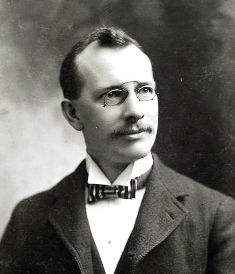
Edward Van Anda

Van Anda pitched for neither Trenton nor Fort Wayne during the 1907 regular season, but signed with the Central League South Bend Greens in June. He only appeared in one game, losing 7-1 to the Wheeling Stogies. He was released a few days later, not resurfacing until the following season.

In 1908 he went 15-11 for Fort Wayne and was purchased by the Montgomery Senators of the Southern Association and posted a 6-5 record. Early in the 1909 season Van Anda was suspended indefinitely by Fort Wayne for “insubordination.” The Fort Wayne News reported that Van Anda signed with the Galveston Sand Crabs of the Texas League, but there is no record he ever played for that team.

Van Anda became a traveling salesman in 1910. He remained in Fort Wayne until his death on October 17, 1965.
Assumed Names II

9 Oct

Players using assumed names were common enough during professional baseball’s first four decades that some players still exist in the record books as separate individuals.

John Berkel is one such case.  He has four separate listing on Baseball Reference.

The “official” record for John H. Berkel begins in 1910 with the Atlanta Crackers of the Southern Association and ends in 1914 with the Fort Forth Panthers of the Texas League.

That was the second half of his career.

Under the name John Bierkotte he started playing pro ball with the Mattoon-Charleston Canaries in the Kitty League when he was 20 years old.

A slick fielding, weak hitting shortstop and third baseman, Berkel, as John Bierkotte, played with the Jacksonville Jays and Augusta Tourists of the South Atlantic League from 1907-1910 (further complicating the trail of Berkel-Bierkotte is that Baseball reference lists him as “Bierkortte” on the Jays’ 1909 roster with a unique player listing).

John Bierkotte with the Augusta Tourists, 1909

On June 30, 1910 John Bierkotte was acquired by Atlanta from Augusta.

John Bierkotte made his debut with the Crackers on August 1.  On August 2 the Atlanta Constitution said:

“John Berkel.  You fans will have to learn to call our new shortstop by that name, for that is really his name…When he first broke into baseball he was trifle afraid he might not make good and rather than cause the laugh to be thrown on him, he decided to change his name.  This he did, and he chose Bierkotte, a weird name, as the one.”

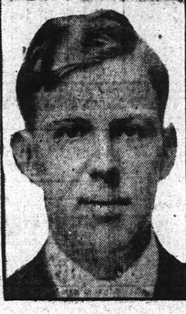
John Berkel 1910

Berkel received high marks for his fielding but struggled at the plate and hit only .207 for Atlanta.  At the end of the 1910 season he was sold to Albany in the South Atlantic League.  From there he went to the Scranton Miners in the New York Penn League in 1912.  The “official” listing for Berkel only adds 10 games with Fort Worth in 1914.

The rest of his career is under the listing “Berkel.”

Berkel spent 1914 on the West Coast, playing for the Fresno Packers of the California State League.  After those 10 games in Fort Worth he played for the Decatur Commodores in the Three-I League, and then was sold to the Peoria Distillers in the same league.  Berkel was offered a contract by Peoria for 1915, but chose to retire and move to the west coast.

The Berkel trail runs cold until 1926 when he turns up as a 40-year-old infielder for the Spokane Eagles in the semi-pro Idaho-Washington League.

Berkel continued to live in Spokane until his death in 1975.  There is no record of why he chose the name Bierkotte.

What Happened to Trammell Scott?

2 Oct

Trammell Scott (Incorrectly listed as Trammel in multiple sources) was born in 1886 to a prominent Dalton, Georgia family.  After playing baseball at the University of Georgia, Scott played minor league ball in the south.  He spent time in the Georgia State League, South Atlantic League, and the Carolina Association—he was said to have also played with Houston in the Texas League but no statistics survive.

After his brief playing career Scott was the victim of a near fatal shooting in 1916.  The Atlanta Constitution covered the story closely and reported that Scott, while “In a dying condition,” told his mother “I told you they would get me.”  Trammell recovered, but never identified his assailant and no motive or suspects were ever identified–just 10 days after the shooting Atlanta Chief of Detectives Newport Langford said they were closing their investigation. and according to the Constitution “Leaving the mystery unsolved.”

Scott joined the army in World War I, was decorated for bravery in action and promoted to the rank of Major.

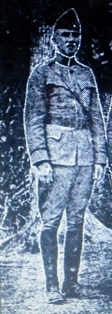
Trammell Scott 1919

Upon returning to Georgia Scott became a well known sportsman.  He was boxing referee and later served on the state boxing commission, owned a sporting goods store, was actively involved in local semi-pro baseball and basketball, and was prominent hunter and breeder of champion bird dogs.

In January of 1938 Scott was named interim President of the Southern Association in a contentious split vote.  At the end of the year he was named President.

In December of 1942 Scott boarded a train in Atlanta to attend the baseball winter meetings in Chicago.  Due to arrive for the league meeting at 4 pm, Scott’s train was delayed.

When the meeting convened without Scott, the owners who opposed his original appointment seized the opportunity.  Thomas Watkins from Memphis, Larry Gilbert of New Orleans, Roy Thompson of Little Rock and Bob Allen of Knoxville led a revolt which was soon joined by Paul Florence of Birmingham.

Within an hour Scott had been voted out and replaced by Billy Evans, a former American League umpire and one time general manager of the Cleveland Indians and Boston Red Sox.  Evans was at the meeting in hopes of landing a different position, but the Southern Association bosses settled on him as the new compromise candidate to run the league.

There was a problem.  No one attempted to reach Scott to inform him of the decision.

That evening, having finally arrived in Chicago, Scott hurried to the National Association dinner meeting of all the league presidents.  Taking his seat, the Associated Press noted “It was a tense moment as (National Association) President William G. Bramham informed Scott the Southern had named a new president.”

Scott said he never saw his dismissal coming and said league owners threw him “A low curve,” by replacing him in the manner they did.

Less than three weeks after his dismissal Scott was turkey hunting on friend’s farm near Newton, Georgia.  After returning for the day, Scott told his friends he was returning to the fields in search of a turkey he had wounded earlier in the day.  The following day Scott was found with a gunshot wound to the chest.

The medical examiner ruled that the wound was self-inflicted but the official ruling said it was “Undetermined whether the shooting was accidental or pre-meditated.”

Many of Scott’s friends said that in spite of being embarrassed by his dismissal he was far from distraught and noted that while being an experienced hunter, Scott was not always careful, “On occasion he was known to have leaned a loaded shotgun against his middle while lighting a cigaret (sic).” This, they speculated, could have caused the type of injury that killed Scott.

Scott was interred at Westview Cemetery in Atlanta—the whole story about two shootings 25 years apart, buried with him.

“A Leaden Messenger of Death”

12 Sep

George Kittle played in Texas and Nebraska from 1888-90.  Very little is known about his life before 1888, other than that he was most likely born in Taylorville, Illinois between 1860 and 1862.

Kittle appears in Texas in 1888 as an outfielder and catcher for Dallas in the Texas Southern League and Fort Worth in the Texas League.  In 1889 he pitched for the Austin Senators in the Texas League posting a 25-16 record.  Kittle spent the first half of 1890 pitching for the Waco Babies.  He was 9-8 when, on June 20, he was sold to Omaha in Western Association.

No records exist for Kittle’s time in Omaha and he was not listed on the roster of any team for 1891, but it appears he was playing baseball in or around Waco that season.

On January 19, 1892 Kittle and two friends entered one of Waco’s legal brothels.  Just after arriving one of Kittle’s friends became involved in altercation with another customer.  Hattie Tyree, who operated the brothel, became involved in the dispute and had a physical altercation with Kittle.  She returned to her room and came back with a pistol.  She fired one shot at Kittle, who was immediately taken from the brothel to a nearby hotel and a doctor was called.  Kittle died from the gunshot wound early the following morning.

Ren Mulford Jr., the famous baseball writer for the Cincinnati Enquirer and  Sporting Life described the shooting:

“George Kittle, the Texas Leaguer, was sent to his grave by a siren named Hattie Tyree, who fired a leaden messenger of death into him at Waco. That murder was cold blooded.”

Ren Mulford

Tyree’s trial was a sensation in Waco, where she was well known; Kittle was not the first person she had shot in her house (the first had survived).  Despite public outcry and multiple witnesses who testified that Kittle was not the aggressor in the altercation, Tyree was acquitted by a Texas jury in the spring of 1882.

Abe Lincoln and Baseball

26 Jul

As detractors denounced baseball in the 19th century for drunkenness, gambling, and bad behavior, there were numerous attempts to link the game to Abraham Lincoln. The many stories linking the martyred President to baseball helped contribute to its acceptance and popularity.

The connections were more invention than fact.  There is no supporting evidence for A.G. Spalding’s story in his 1911 book “America’s National Game that Lincoln was informed of his nomination in 1860 while playing baseball in Springfield, Illinois.  Stories that Lincoln mentioned baseball on his death bed; as well as the 1914 claim by Rachel Billington, an alleged former neighbor of Lincoln that he played baseball regularly and “Could hit the ball every time it was pitched to him” have been thoroughly discredited.

It was a scandal involving a minor league player that became Lincoln’s closest link to the national pastime.

By all accounts Warren Wallace Beckwith led an interesting life.  Born in Mount Pleasant, Iowa in 1874, his father was a wealthy railroad executive and Beckwith was said to have inherited a fortune upon his father’s death in 1905..  He played college football at Iowa Wesleyan and played baseball and football professionally, and served in the Spanish-American War and World War I.

His life got more interesting in 1897 when he became front page news in every paper in the country.  Beckwith had eloped with Jesse Lincoln, granddaughter of the late President.  Her father Robert Todd Lincoln, former Secretary of War, was quoted calling Beckwith a “Baseball Buffoon.”

The Beckwith-Lincoln marriage played out like a soap opera in the newspapers for the next decade.

Beckwith spent most of 1897 playing in the Texas League with Dallas, Paris and Denison/Sherman/Waco teams.  The New York Times reported that Beckwith’s nicknames in Texas were “The Dude” and “Lady Killer,” and that “He would never go into a game to pitch without first combing or brushing his hair faultlessly.”

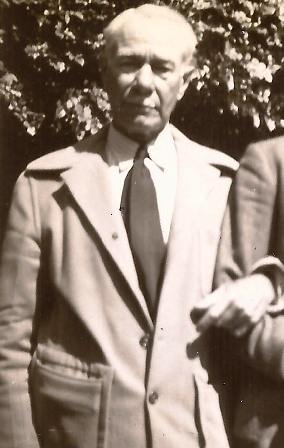
Warren Wallace Beckwith

Beckwith made headlines again when he entered the service as war was declared with Spain. When he returned from Cuba and after the birth of the couple’s first child, a daughter, he joined Sacramento in the California League, which resulted in another round of stories about Robert Todd Lincoln’s disapproval of his son-in-law’s profession.

According to contemporary news reports neither Robert Todd Lincoln nor his wife, Mary Eunice Harlan Lincoln, daughter of former Iowa Senator James Harlan, ever accepted the marriage.

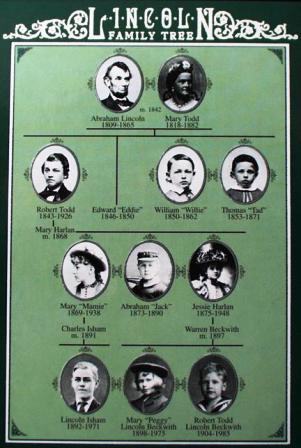
Lincoln Family Tree

News stories announcing the couple’s divorce in 1900 turned out to be incorrect and they had a second child, Robert Todd Lincoln Beckwith, who upon his death in 1985 was the final direct descendent of President Lincoln.  Beckwith and Lincoln did divorce in 1907.

Beckwith never played professionally after 1899, but played extensively on semi-professional teams in Illinois and Iowa.  Beckwith’s final appearance in organized ball was as the manager of Oshkosh in the Wisconsin State League for part of the 1905 season.

After serving in France in World War I Beckwith settled in La Jolla, California.  He died in La Jolla in 1955 and is buried at the Forest Home Cemetery in Mount Pleasant.