Tag Archives: Western League

Lost Advertisements–“Walter Johnson says…”

22 Apr

goldsmithbb

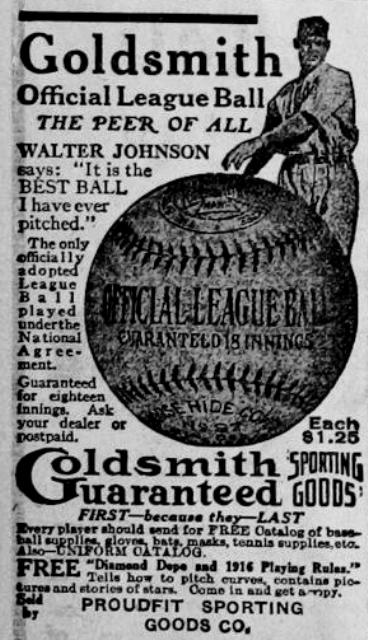
A 1916 advertisement for the Goldsmith Official League Ball:

The Peer of All

“Walter Johnson says: ‘It is the best Ball I have ever pitched.’

“The only officially adopted League Ball played under the NAtional Agreement.

“Guaranteed for eighteen innings.”

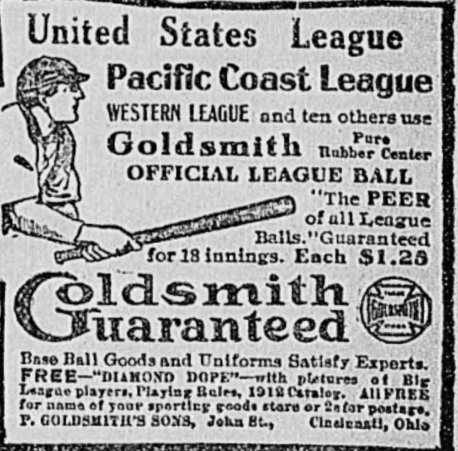
The 18-inning guarantee and mentions of the leagues which had adopted the ball for use were a staple of Goldsmith’s advertising, like the one below from 1912, announcing that the ball would be used in the United States, Pacific Coast, and Western Leagues:

goldsmith1912

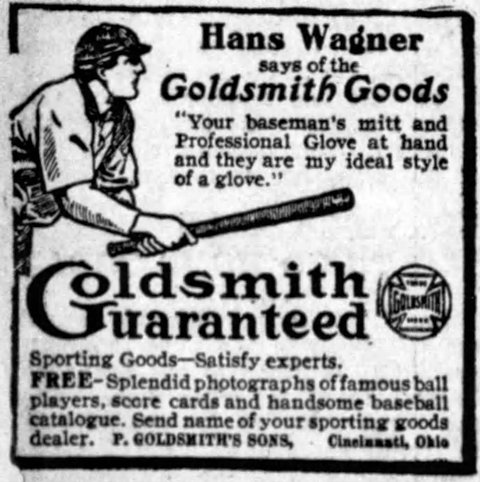
The 1912 ad used the same image–that of Honus Wagner–that appeared in the company’s 1911 sporting goods ad, which quoted Wagner: “Your baseman’s mitt and Professional Glove at hand and they are my ideal style of a glove.”

goldsmithwagner

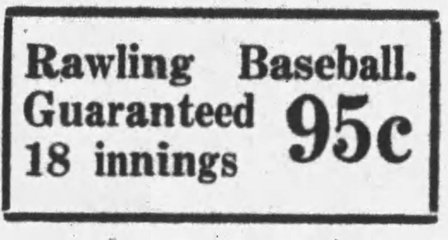
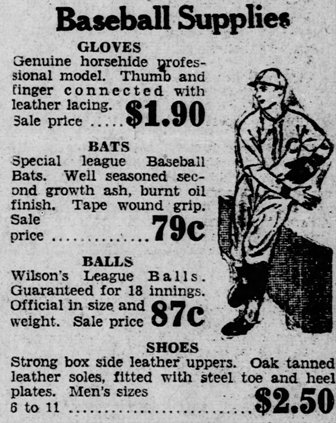
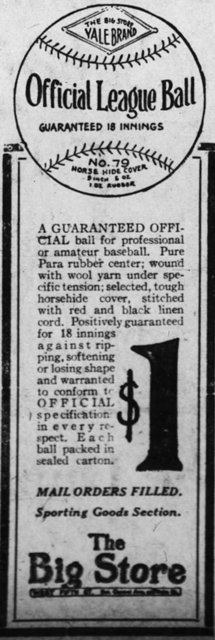
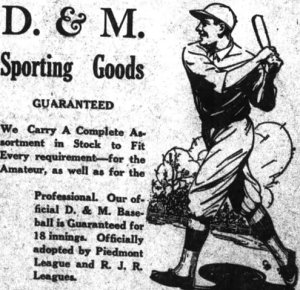
By the 1920s, the 18-inning guarantee became generic throughout the sporting goods world

rawlings wilson yaleball

dm

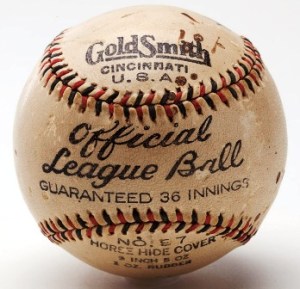
Not to be outdone, the Goldsmith ball of the 1930s was “Guaranteed for 36 Innings:”

goldsmith30s

“It’s the Noodle that Throws the Ball, not the Wing”

13 Apr

Charles Benjamin “Babe” Adams appeared washed up at age 34.  After posting a 2-9 record and 5.72 ERA in 1916, the Pittsburgh Pirates released him.  But, Adams wasn’t done.

He won 20 games in the Western League in 1917 and was 14-3 with a 1.67 ERA for Kansas City Blues in the American Association when the Pirates reacquired Adams in July of 1918.

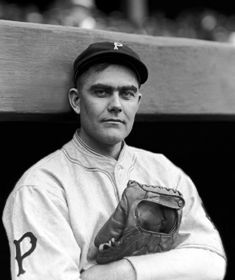
Babe Adams

Babe Adams

Adams was 49-29 with a 2.17 ERA from his return through the 1921 season, and now turning 40, talked about his success with Roy Grove, a cartoonist, and writer for The Cleveland Press:

“A ballplayer has lots of time in which he can do himself harm.

“A fellow can’t disregard nature and get away with it.  He can kid himself along for a while but finally, he’ll snap…A fellow my years has to dig some to get by the young chaps.”

But, said Adams, baseball had changed a lot since his debut in 1906,and most younger pitchers could never approach his longevity:

“The pitching game isn’t what it used to be.  In my day, I used to have to sit down and figure out the different things that go to make pitching and then go out and practice them hard.  The young pitcher today can pick the game up in a few weeks.  He has two or three coaches, with modern methods of tricks and systems and so forth that have been accumulated through years of experience.  That‘s the reason I think they crack so fast.  They don’t get the right seasoning during youth to stand the grinds of the years.”

But in the end, Adams said he was just smarter than most:

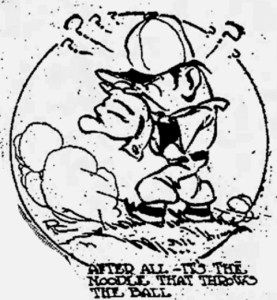
“It’s not so much the old pitching arm these Twentieth Century days as it is the pitching head.  After all, it’s the noodle that throws the ball, not the wing.  There are some fellows I can throw a high inside ball to and they won’t touch it, and then let some other pitcher come up and do the same thing and that same player will knock it outa the lot.

“If a fellow were to stop thinking out there in the box and resort to strength, he’d darn soon find out he was losing all his friends.”

babeadams1

A Roy Grove cartoon that accompanied the article.

Adams’ “Noodle” and excellent control (18th all-time lowest walks per nine innings) kept him in the National League for five more seasons, until he was 44.

Lost Advertisements–The $30,000 Battery

30 Dec

otoolead

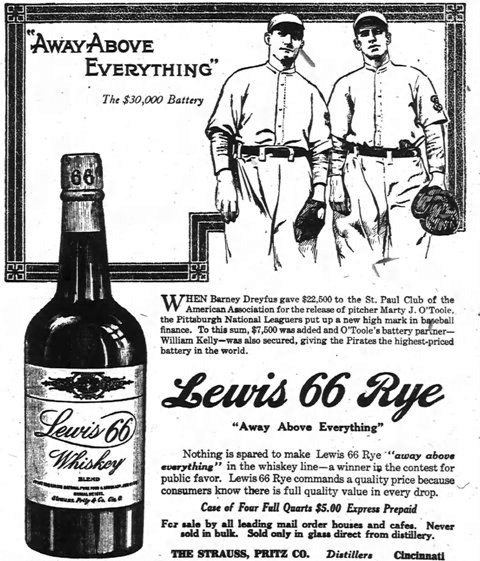
An advertisement from the spring of 1914 for Lewis 66 Rye from The Strauss, Pritz Co., of Cincinnati:

“When Barney Dreyfus gave $22,500 to the St. Paul Club of the American Association for the release of pitcher Marty J. O’Toole, the Pittsburgh National Leaguers up a new high mark in baseball finance.  To this sum, 7,500 was added and O’Toole’s battery partner–William Kelly–was also secured, giving the Pirates the highest priced battery in the world.”

The price paid for Kelly remains a matter of dispute.  The New York Times said he was acquired “for less than $5,000.”  The Washington Post put the price at $10,000 while The Pittsburgh Gazette Times, The Pittsburgh Press and The Associated Press said it was $12,500.


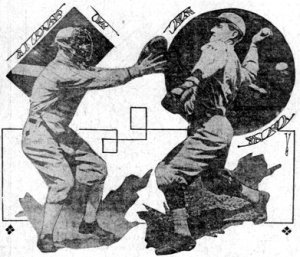
Kelly and O'Toole

Kelly and O’Toole

O’Toole posted a 24-27 record from 1911-1913.  He struggled in 1914, and with a 1-8 and record and 4.68 ERA in August, he was sold to the Giants, in 10 appearances with new York he was 1-1 with a 4.24 ERA.  Dreyfus’ “$22,500 Beauty,” was done as a major leaguer at 25 years old, seven months after the ad appeared.  He played four more seasons in the American Association and Western League; his professional career was over before his 30th birthday.

Kelly’s big league career was over before the ad came out.  In three seasons with Pittsburgh, he appeared in 104 games and batted .290, but was sold to the Toronto Maple Leafs of the International League at the end of 1913 season.  The Pittsburgh Press said the sale came as no surprise:

“Kelly came here from St. Paul with Marty O’Toole, but he has not developed as was expected of him, and has long been rated as considerable of a disappointment. It looks very much as if he were just a trifle shy of major league calibre.”

Kelly played four years in Toronto, hitting .227 in 280 games; his professional career was over at age 31.


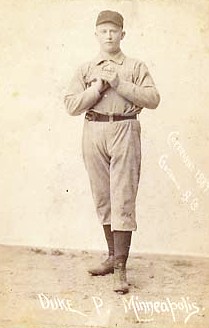
“The Duke of Minneapolis”

20 Nov

Martin F. Duck was born in Zanesville, Ohio in 1867.  He played under the name Martin Duke.   As he was becoming a well-known pitcher The Kansas City Times told a story which purported to explain why he changed his name:

 “The real name of the (Minneapolis) Millers’ best pitcher is not Duke, but Duck…Martin was pitching in a game up in Michigan and in the ninth his club led the opposing team by one run. (With two runners on base) a man up in the grandstand began imitating the quack of a duck…as the ‘quack, quack, quack continued his face became lobster-colored.  He shouted to his taunter that he would fix him after the game, but the fiend…went on with his ‘quack, quack, quack’”

At this point, Duck allegedly threw the ball into the stands at his tormentor, allowing both runs to score, “After that he dropped the name Duck entirely.”

By the time that story appeared Martin Duke seemed headed for a productive career.  He went 14-12 with the Zanesville Kickapoos in the Ohio State League in 1887.  In 1888, he again pitched for Zanesville, now in the Tri-State League and for The Toledo Maumees in the same league—no  records survive for that season.

The five-foot, five-inch Duke made a name for himself the following year.  While pitching for the Millers in the Western Association, he posted a 24-16 record and struck out 347 batters in 355 innings, earning the nickname “Duke of Minneapolis.”

In February of 1890, The Chicago Inter Ocean said Chicago’s Players League team was after the pitcher:  “Captain Comiskey of the Chicago Brotherhood has been on Duke’s trail for weeks, with the result that although Duke has not yet signed a contract we will play with the Chicago Brotherhood club this season.”

If Comiskey was, in fact, on Duke’s trail he never got his man.  Duke returned to Minneapolis, and while statistics for 1890 no longer survive, but the press routinely called him the Millers’ best pitcher.

In 1891, he slipped to 10-11, and in May he was suspended for being, as The Sporting Life said, “Out of condition” (a euphemism for his problem drinking), but earned an August trial with the Washington Statesmen in the American Association.  The Saint Paul Globe said of his departure:

“Martin Duke–the one, the only, the statuesque Duke–has bidden good-bye to the ozone of Minnesota and beer of Minneapolis…Last night he boarded the train, moved his hand in adieu, cocked his hat to one side, closed an eye, uttered a certain familiar expression peculiar to Dukes and disappeared forever.”

Martin Duke

Duke failed his Major league trial.  In four games, he posted a 0-3 record and walked 19 batters in 23 innings.

Despite his poor debut, he received another opportunity, this one with the Chicago Colts in 1892. When he was signed in January, The Chicago Tribune said:

“Duke’s last season, owing to lax discipline, was not a success, but this season he promises to regain his old form, as he is bound by an ironclad contract to abstain from intoxicating drinks.  By his contract half his salary reverts to the club if he breaks the pledge.  This should keep him straight.”

He received a big buildup in The Chicago Daily News:

“(He) is one of Captain Anson’s new colts, and he not only puts the ball over the home plate with almost the speed of a cannon shot, but he also seems to have a head studded with eyes, for stealing second base when he is in the box is always most hazardous business.  His pitching arm is so strong and shapely and so well equipped with powerful muscles that it would win admiration from a blacksmith.”

Despite the accolades he was released before the beginning of the season, The Tribune said:

“Martin Duke is also down for release. He has shown up poorly so far, and the club cannot use five pitchers anyhow.”

He signed with the New Orleans Pelicans in the Southern Association and seemed to regain his old form posting a 13-3 record.  It was his last successful season.

After getting off to a 2-5 start in 1893 Duke was released by New Orleans, and initially there were no takers for his services.  The Milwaukee Journal said why:

“Martin was always a good pitcher, but his mouth and his temper were too great a load for any team to carry any length of time.”

Duke bounced around the minor leagues after that with short stints for teams in the Eastern League, Southern Association and Western League until 1895, when he returned again to Minneapolis.  But after 13 games with the Millers, he injured his arm and was released in June.  According to The St. Paul Globe, he injured the arm again in August; rupturing a tendon while pitching for a semi-pro team in Rosemount, Minnesota.

In 1897, The Sporting Life reported that Duke, employed in a Minneapolis tavern, was “Trying to get in shape” in order to return to the diamond that season, but he never played professional ball again.

Duke died from pneumonia on December 31, 1898, in Minneapolis.  The Sporting Life said:

“He possessed great ability as a pitcher, but never lasted long with any club, as he was a hard man to control, and was given to dissipation, which ultimately led to enforced retirement from the profession and untimely death.”

Duke was 31 years-old.

A shorter version of this post appeared in October 2012

“Pace is what decides Pennant Races”

28 Oct

Joseph B. Bowles ran a newspaper syndication service in Chicago during the first two decades of the 20th Century.  His content was mostly religion and baseball.  One series of articles he published asked players and managers to explain “How I Win.”

Hugh Duffy, the new manager of the Chicago White Sox was the subject of a 1910 article:

“There is an element in baseball which is not on the surface, and which players, spectators, lovers of the game and often managers themselves do not realize or understand.  This element is pace.

Hugh Duffy

                            Hugh Duffy

“Pace is what decides pennant races.  The team that is fast enough, well conditioned enough and smart enough to set the pace, and force the other clubs to play at top speed all the time to hold in the race, is the pennant-winning team unless it cuts out too fast a pace and breaks itself.  In races where all the clubs start slowly and are a long time rounding into true playing condition, some flash in the pan club may win by a spurt of speed, but in most races the conditioned, fast team plays steadily and forcing the pace against its closest competitors, wins.

“Ability to hold the pace is the test of the gameness and the fighting spirit of a club and no club can win a pennant, or be a consistent winner unless it is courageous enough to stand the strain and fight every step of the way.

“Pennants usually are won by the gamest club, rather than by the fastest ones or the best ones.  Before a season starts each manager calculates the strength, the speed, and the hitting and fielding ability of the men under him and calculates what sort of pace is best suited to his team.  If he thinks his club is strong enough he may force the speed from the start, trying to spread eagle the other clubs and win away by himself.  Sometimes this is the best policy, for often an inferior club, if permitted to gain a big lead on the others, will get so full of confidence that nothing can stop it.  There have been such cases but they are seldom, and the manager who strains his pitching staff and risks damaging his team in order to gain an early lead is likely to find himself in mid-season with a crippled and broken club.  On the other hand, the manager who strives to hold back and save the strength of his team for a hard finish is liable to have a discouraged and beaten club on his hands just at the time he is ready to make his spurt towards the lead.

“The manager must strive to strike the happy medium, to reserve the strength of his team, especially of pitchers, without falling completely out of the race.  Above all, he must keep the spirit and the condition of his men to a high standard.  The well-conditioned club, composed of players working in unity, and with brains enough to keep themselves in condition all the time, will beat much better ball clubs in a bruising race.

“As for individual standards, I want brains on my ball club.  The smart ballplayer, who keeps thinking all the time, who is looking for an opening, and out thinking his opponents, is a much better player than the men who can out bat, outrun and outfield him.  Speed and hitting ability are the main essentials of a team.  I do not claim that twenty reporters, who probably know the game better than any twenty ballplayers do, could win a pennant, but the brains must direct intelligently the actions of trained hands and feet and if, combined with brains, hands and feet, a player has the quality known as aggressiveness, he is a winning ballplayer.  The manager cannot think for twelve men.  He can correct their mistakes, or tell them about their blunders, may order their plays and discipline them, but there are a hundred times in each game when the men must think for themselves and if they do not, then defeat is to be expected.”

Duffy was unable to find the “pace” with his White Sox, who finished in sixth place with a 66-85 record. Late in the season, The Chicago Daily News placed the blame on the manager, saying it was:

“(A) generally recognized fact that President Charles A. Comiskey’s 1910 White Sox are a dismal failure…Lack of teamwork and the inability of Hugh Duffy to manage the team properly are the real causes of the disgraceful showing.”

In eight seasons as a major league manager he never finished better than fourth place—he did win two championships in the minor leagues, with the Milwaukee Creams in the Western League in 1903 and the Portland Duffs in the New England League in 1915.

“Baseball is full of Authenticated instances of Woman’s Influence over it”

27 Jul

In 1905, The Washington Evening Star said:

“The unwritten history of baseball is full of authenticated instances of woman’s influence over it…Not infrequently a sweetheart’s or a wife’s objections to the game cause a star to forsake the diamond for work for which he is not fitted in the least degree, and at which he makes only a living at best.

Bill Lange is a case in point.  Up to (1899) he was one of the best ground coverers in the profession, and as a batsman had a high average.  From the day of his wedding, his wife kept at him to leave the game, urging him to take the step on the grounds of personal safety.  Bill reasoned with her and told her time and again that he knew of no other job for which he could make $4,500 in six months.  But Mrs. Lange was obdurate, and so, when his last season closed Bill ruefully announced to his manager that the diamond would never know him again.  And it has not, though he has annually been tempted by numerous flattering offers. ‘I have given my word to my wife,’ he says simply, ‘and so long as she feels as she does about the game I shall not take up the bat.’”


Bill Lange

Bill Lange

Lange never played another professional game

The Evening Star said that occasionally a wife would change her mind, and allow her husband to play professional ball; George “Del” Howard was one such player.

Howard—under his middle name Elmer—was a member of the Mattoon, Illinois team in the Indiana-Illinois League in 1899.

“Howard took as his wife the daughter of a prominent citizen of a central western town.  They had scarcely settled down after their honeymoon when Mrs. Howard began pleading with her husband to give up the game, naming as a reason that she had a strong dislike for it.  She was so insistent that finally Howard reluctantly severed connections with the game, and secured employment selling agricultural implements.

“But he did not give up all hope of returning to the diamond.  During the months that he was engaged in telling farmers of the merits of his particular make of wheat drills and mowers he spent his spare time endeavoring to get his wife interested in baseball. At first it was hard and slow work, and had to be accomplished diplomatically, but little by little he progressed to the point where Mrs. Howard would accompany him to games.  Then Howard explained every play made, told her about the players, introduced them to her, and made her acquainted with the woman folk of the players who were in the grandstand.

“At the end of four tedious years his work of education bore fruit.  Mrs. Howard came to him one day, confessed that she had changed her mind about baseball, declared that she would rather have him on the diamond than an agent for farm implements, and further caused him great joy by appending that he couldn’t get their quickly enough to suit her.“

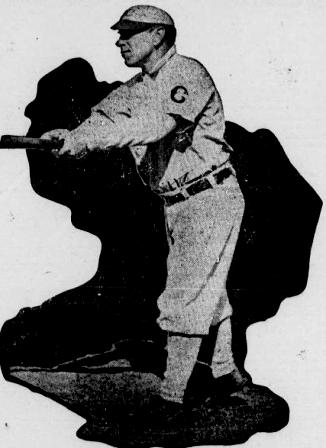
After a five-year absence from baseball, Howard signed with the Omaha Rangers in the Western League in 1904.  He hit .316 in 144 games (finishing second to William “Bunk” Congalton of the Colorado Springs Millionaires for the batting title) and was purchased by the Philadelphia Phillies.

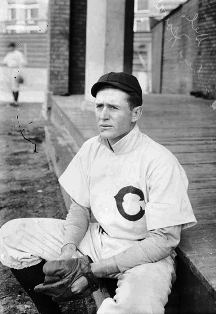
Del Howard

Del Howard

Traded to Pittsburgh for three players, the 27-year-old Howard made his major league debut for the Pirates on April 15, 1905, in Cincinnati with his wife Jessie in the stands.

Howard’s rookie season was his best; he hit .292 in 123 games with the Pirates.  He played in the major leagues for five seasons and was a member of the 1907 and ’08 World Series Champion Chicago Cubs.

Howard played and managed in the minor leagues through 1922. His wife Jesse died in California in 1933.  He died on his 79th birthday on December 24, 1956.

Nick Maddox

9 Feb

Nicholas “Nick” Maddox burst on the National League scene in 1907. Born in Maryland on November 9, 1886, Maddox’ was born Nicholas Duffy, but adopted his stepfather’s name Maddox.

In 1906 the 19-year-old was given a trial in the spring with the providence Grays in the Eastern league.  He was released before the season began and signed with the Cumberland Rooters in the Pennsylvania-Ohio-Maryland League (POM).  Maddox had played in 1905 for the Piedmont team in the semi-pro Cumberland and Georges Creek League.

He was the best pitcher in the POM; The Sporting Life said Maddox was 22-3 for the Rooters who finished the season in fourth place with a 50-45 record, and was “the fastest pitcher in the league.”
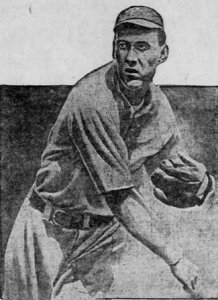
Nick Maddox

Nick Maddox

Maddox spent most of 1907 with the Wheeling Stogies of the Central League.  He posted a 13-10 record and no-hit the Terre Haute Hottentots on August 22.  Maddox was purchased by the Pirates the following month and made his big league debut on against the St. Louis Cardinals.

The Cumberland Times noted that he faced a “double-jointed hoodoo of commencing his National League career on Friday, September the 13th.”

The Pittsburgh Press said:

“Nick was ‘on the job’ yesterday from start to finish, and acted more like a man with many years’ major league experience than like a minor leaguer who has been in the business but a few seasons.”

Maddox shut the Cardinals out on just five hits, struck out 11 and got his first hit, a single in his first at bat.

Eight days later Maddox threw the first no-hitter in Pirates’ history, beating the Brooklyn Superbas 2 to 1—Brooklyn scored on two fourth-inning errors.   Years later, Maddox said of his own throwing error that put Emil Batch on base:

 “They scored me with an error, but hell man, I threw it straight to the first baseman (Harry) Swacina.  Sure it went over his head but he should have jumped for it.”

Batch scored on an error by shortstop Honus Wagner.  Maddox said:

“I don’t hold that against Honus, he saved my no-hitter in the ninth.  A ball was hit right over my head and ‘pfft’ Wagner was over there to get it.  I don’t think he ever held the ball, he just swooped it over to first.”

The rookie started six games Pittsburgh, won his first four, and finished with a 5-1 record with a 0.83 ERA.

The Pittsburgh Leader said Pirates’ President Barney Dreyfuss claimed Maddox would be “the sensation” of 1908.  He wasn’t far off.

The 21-year-old was an impressive 23-8 with a 2.28 ERA with five shutouts.  Despite his success there was concern about control—he walked 90 batters while striking out just 70 in 260 innings, and hit 11 batters.

After three second and one third-place finish the four previous seasons, Pittsburgh, and Maddox, came into 1909 with high expectations.  The Pittsburgh Press said:

“Nick Maddox is facing a very successful summer, and with an even break and barring accidents he ought to push any other twirler in the National League for first honors.  He has everything a pitcher needs, and youth with it.”

The Press also said he would “start out with good control” based on his performance in March games in Hot Springs, Arkansas.

The Pirates lived up to expectations, taking over first place on May 5 and cruising to the pennant; Maddox did not.

The 22-year-old struggled for the first half of the season.  The Leader said he was having “a hard time getting into condition,” and was wild as a March Hare.”  Maddox got on track in July pitching a 2-hit shout against the Cincinnati Reds on the 6th, and four-hit shutouts against the Brooklyn Superbas and Boston Doves on the 14th and 23rd.

He ended the season 13-8 with a 2.21 ERA—overshadowed by teammates Howie Camnitz (25-6), Vic Willis (22-11), Albert “Lefty” Leifield (19-8) and rookie Charles “Babe” Adams (13-3 as a reliever and spot starter).
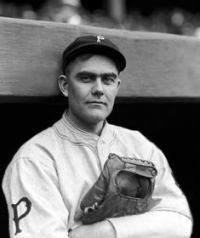
Babe Adams

Babe Adams

Despite going into the World Series against the Detroit Tigers with such a strong pitching staff, Manager Fred Clarke opted for the rookie Adams in game one and he responded with a 4 to 1 victory.

The Tigers beat Camnitz 7 to 2 in game 2.

Three years later, Fred Clarke spoke to James Jerpe of The Pittsburgh Gazette-Times about his decision on a pitcher for game three:

“I was in an awful predicament.  Adams had been used up.  It was had been raining, and it was very cold.  The chilly drizzle was something frightful.  The ball would get wet and water-logged and the problem was to get a pitcher who could handle the wet ball.  I looked the gang over.  Adams was out of the question.  He had been used up.

“I was figuring on the others, and I asked ‘Who can go out there today and handle a wet ball and win?’  Poor Maddox, sitting in a corner of the bench all bundled up with sweaters and other stuff, shed his extra clothes and jumped up.  Grabbing a ball, he said: ‘Gimme a catcher till I warm up.  I’ll handle this wet ball and beat them or break a leg.’  His confidence gave me a hunch, and I acted on it.”

Ring Lardner said of the game:

“Detroit’s record crowd, 18,277, saw the Tigers beaten by the Pirates 8 to 6, today in one of the most exciting and most poorly played world’s series games in baseball history.”

The Pirates scored five runs in the first inning off Detroit’s Ed Summers, and Maddox shut the Tigers down for the first six innings.  Detroit scored four runs in the seventh, aided by two Pirate errors.  Clarke said:

“Maddox wouldn’t have been in so much trouble if we had played ball behind him.”

The Pirates took a 8 to 4 lead into the ninth–Detroit scored two more runs, helped by another error—but Maddox held on and picked up the win.

He did not appear in another game during the series.  The Pirates won in seven; with Adams picking up complete game wins in games five and seven.
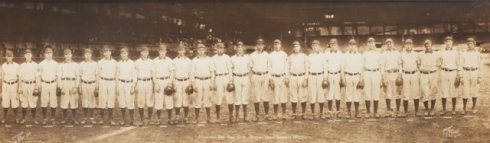
09pirates

1909 World Series Champion Pirates, Maddox is ninth from left.


The defending champions got off to a quick start again, but Maddox again started slow.  By July, The Leader said:

“Nick Maddox should have rounded into form..He is big and strong this year, but does not seem able to pitch good ball for nine rounds.”

He never “rounded into form.”  Maddox struggled all season.  He started just seven games, pitched in relief in 13 others, and was 2-3 with 3.40 ERA.

By August, with the Pirates in second place, six games behind the Chicago Cubs, The Pittsburgh Gazette asked “what was the matter?” with Maddox and why the Pirates had not cut him loose.

He made his last appearance on September 12, giving up a run, a hit and walking two batters in two innings of relief during a 4-0 loss to the Reds.  He was sold to the Kansas City Blues in the American Association 10 days later.

Maddox won 22 games for the Blues the following season, but continued to be plagued by wildness and arm trouble.  His major league career was over, and he was finished professionally in July of 1914 at 27-years-old when he was released as manager and pitcher for the Wichita club in the Western League after posting a 3-13 record.

Fred Clarke was convinced Maddox’ career really came to an end on that rainy day in Detroit.  James Jerpe of The Pittsburgh Gazette-Times said that in 1910 Dreyfuss asked Clarke to release Maddox long before he sold the pitcher to Kansas City:

“’Why don’t you let Maddox go? You aren’t pitching him.’

“’No,’ replied the Pirate Chief sadly.  “I’m not pitching him.  He ruined his arm helping Adams win the world’s series.’

“And Fred narrated (to Dreyfuss) more of Nick’s gameness on that bleak and drizzly October day in Detroit when he gave his arm for a championship.  Nick was carried for a whole year and the club has been interested in his welfare ever since.”
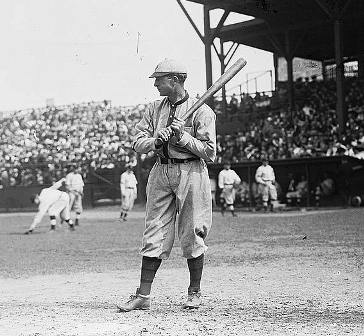
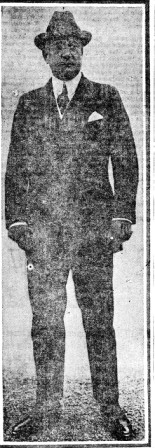
Fred Clarke

Fred Clarke

Maddox, who lived in Pittsburgh, and worked for the Fort Pitt Brewing Company, after his retirement, lived long enough to listen on the radio to the last two innings of the next no-hitter thrown by a Pirate pitcher—Cliff Chambers defeated the Boston Braves 3-0 on May 6, 1951.

Nick Maddox died in 1954 at age 68.

Things I Learned on the Way to Looking up other Things–Sunday Baseball Edition

4 Feb

What type of Sunday Ball? 1863

In 1863, The Brooklyn Eagle—there was no byline on the story, but it was likely written by Henry Chadwick—wanted the police department to make a clarification:

“We see by the police records that a party of forty or fifty persons was arrested for playing ball in Sunday, at the ‘ball alley’ corner of Green Lane and York Street.”

Henry Chadwick

Henry Chadwick

The paper’s complaint was that the notice from the police lacked “any description…of the character of ball playing indulged in,” which left a mistaken impression.

“We beg to state, for the benefit of ignorant outsiders, that any base ball club belonging to the National Association is yet to be disgraced by the stigma of playing base ball on the Sabbath.  Not a club in the community can be charged with such a things and this fact should be understood.

“The game the parties were engaged in who were arrested is that known as ‘house ball,’ where the players knock the ball up against the side of a wall with their hands.  No responsible base ball player engages in a game on Sunday, and we trust the police reporters will in future bear this fact in mind and state the kind of game those arrested were engaged in.”

John L. Sullivan and Sunday Baseball, 1885

Heavyweight Champion John L. Sullivan, arrived in Cleveland, Ohio on Friday, September 11, 1885.  The Cleveland Press said he would be pitching on Sunday for a local semi-pro club, the Forest Cities—the Western League team of the same name had folded in June–in an exhibition game against a team from Sandusky.  The scheduling of a game on Sunday had raised the ire of the local “Law and Order League,” who the paper said “were up in arms,’ and attempted to get the game canceled.

John L. Sullivan

John L. Sullivan

Despite the protests, the game, at Cleveland’s Brooklyn Park, went ahead as scheduled.  Sullivan was paid $900 for his appearance and pitched well—he gave up just five hits in nine innings, a fifth inning error allowed Sandusky to score two runs, and Sullivan and the Forest Cities lost 2 to 0.

The Press said as soon as the game ended Sullivan was placed under arrest by “a meek constable” named Jones, who “feared to arrest (him) during the game.”

The move was roundly criticized as simply a publicity stunt, given that the Law and Order League failed to swear out warrants against the other seventeen players or the game’s organizers.

Bond was posted for Sullivan and the fighter left town that evening.  The following day an attorney pleaded guilty on Sullivan’s behalf that he had “engaged in a game of ball on Sunday.”

The attorney for the “Law and Order League” asked the judge to “uphold the sacred day of rest by assessing a fine of such proportions as would teach the law-breakers and Sabbath-desecrators a wholesome lesson.”

The judge fined Sullivan $1 plus costs “amounting in all to $15.90”

Sunday Baseball in Chicago, 1894

During the spring of 1894 a man named William W. Clark met with Chicago Mayor John Patrick Hopkins.

The Chicago Inter Ocean said Clark was “Secretary of the International Sunday Observance League,” The Chicago Eagle called him as “a blue-nosed individual in clerical garb.”

Chicago Mayor John P. Hopkins

Chicago Mayor John P. Hopkins

Clark presented the mayor with a resolution requesting a ban on Sunday games in Chicago.

The Eagle described the meeting:

“He was accorded a courteous hearing, in the course of which the clerical gentleman expatiated upon the enormity of ‘catching men out,’ of making ‘home runs’ on Sunday.  Such practices he said were wrong and highly immoral.  Mayor Hopkins listened in mild surprise.  When the gentleman got through His Honor announced that he used to play ball on Sunday’s himself, and sometimes attended a game even yet, and saw nothing immoral about it.

“The cleric was unable to specify any particular enormities growing out of the game, but proceeded to hold out threats.  Then Mayor Hopkins announced that he had been elected by the liberal-minded people of Chicago, and as they appeared to be in the majority here, he, Mr. Hopkins, intended to be governed by their wishes.”

The Eagle editorialized that the mayor had “made another of his famous home run strikes on the particular occasion.”  And, “As for the clerical visitor, the poor man struck out.”

The International Sunday Observance League abandoned their effort to make Sunday baseball illegal in Chicago.

“The most Disgraceful affair ever Witnessed”

12 Jan

Homer Chase “Bill” Hausen spent more than 15 years playing in minor and independent leagues—but was almost banished from baseball in 1900.

He was born on September 8 in Franklin Grove, Illinois—records differ regarding the year–most say 1872, some say 1870–and began playing on independent teams near his northern Illinois hometown. Hausen made his professional debut in the Eastern Iowa League with Ottumwa in 1895; primarily a catcher, he also played first base and outfield.

Homer Hausen

Homer Hausen

In 1898 he played with the Kansas City Blues in the Western League, and expected to remain with the club the following season, but according to The Sedalia Democrat he had a dispute with fellow catcher Bill “Scrappy” “Big Bill” Wilson:

“(T)hey were rivals for the hand of Mrs. Jessie Pierce a pretty widow…Hausen was the favored one and much ill feeling resulted between the two men that he charged Wilson with having secured his (Hausen’s) release from the Kansas City team.”

The bad blood culminated on July 9, 1900. Hausen, a member of the Sioux City Cornhuskers, came to the plate. Wilson was catching for the Omaha Omahogs.

“Hausen says Wilson was continually badgering him during the Sioux City-Omaha games… (On July 9, Wilson) made a derogatory remark concerning Mrs. Pierce’s character and Hausen felled him with a bat.”

The Omaha Bee said:

“The most disgraceful affair ever witnessed on a ball diamond in Sioux City took place today when Hausen of the Sioux City club deliberately struck ‘Big Bill’ Wilson of the Omaha team in the head with a bat, stretching him out on the ground.

“The assault was followed by great excitement during which Hausen was placed under arrest and quietly hurried off the grounds by a policeman. “

The Bee said the two “had bad words” every time Hausen came to the plate.

“(I)n the eighth inning they had words as usual. It looked as if Wilson dared Hausen to hit him and Hausen tapped his mask with the bat. A few more words were said and then Hausen swung the bat and struck Wilson above the left ear.”

After hitting Wilson, Hausen went towards the Sioux City bench while fans ran on the field. Omaha President “Buck” Keith ran across the field towards Hausen:

“(Keith) called Hausen a coward. ‘If I had a gun I’d fill you full of holes.’ He declared.

“Hausen still held the bat and dared Keith to come on. Keith might have done so if an officer had not cleared the field. The excitement had grown intense. An Omaha rooter was offering 5 for a rope and a Sioux City rooter at his side cried ‘Hang him! Hang the coward.’

Hausen was held for a short time at the police station while the Western League took immediate action.

The Associated Press (AP) said:

“President Thomas J. Hickey of the Western League, last night issued an order blacklisting Hausen of Sioux City for probably fatally assaulting Bill Wilson…Hausen used a ball bat, inflicting injuries on Wilson’s head that leave him irrational much of the time.”

President Hickey

President Hickey

The reports of Wilson’s impending demise were premature. The catcher recovered and was back in the lineup within two weeks.

The blacklisted Hausen quickly caught on with a semi-pro team in Rock Rapids, Iowa.

While his banishment seemed to be the correct recourse, Hausen was not without his supporters, who claimed he was not entirely at fault.

The Sioux City Tribune pointed out that Hausen “was a very quiet chap,” while Wilson had been disciplined numerous times for “using abusive language,” directed at umpires and other players.

In fact, Wilson’s temper was well-known. In 1896, while playing for the Columbus Buckeyes he attacked an umpire named Clark twice during the same game in Minneapolis—as was the case in Sioux City, he came out on the short end–twice. The St. Paul Globe said:

“Umpire Clark was forced into two fights by Bill Wilson…Clark got the best of Wilson in both encounters, and not only was Wilson battered up, but he is out $10, and President Ban Johnson says that he will be severely dealt with and probably suspended. It was a sorry day for Bill.”

Hausen had the last laugh. Two weeks after the incident The Sedalia Democrat reported:

“The last act in the little drama was enacted at Sioux City on Friday. When Mrs. Pierce learned how much Hausen had sacrificed to protect her reputation, she went at once to Sioux City. Hausen met her at the train and late in the afternoon a marriage license was secured.”

Wilson turned to a life of crime after his baseball career ended, and was murdered in 1924.

On Wednesday—Hausen on the receiving end.

Charles Barngrover

27 Oct

Charles Andrew Barngrover pitched in just a handful of minor league games, but his career as an itinerant professional baseball player in the first decade of the 20th Century provides a window into the world of the hundreds of young men who traveled the country earning a living on the fringes of the game.

He was born on January 1, 1883 in Ellinwood, Kansas, and started his career with a team in Great Bend in 1902; the league was comprised of most of the Central Kansas cities that would make up the Kansas State League when it was formed in 1905.

In 1903 he joined a team in Larned, Kansas and was involved in an incident that that made headlines across the state.

The Topeka Daily Capital said Barngrover and his teammates “fought their way from the hotel to the Hutchinson & Southern depot in Kingman last night after a disagreement concerning a 17-inning ballgame.”  When the fleeing ballplayers reached Hutchinson, Barngrover described the chaos to a reporter from The Hutchinson News:

“The Kingman boys have a good club and they managed to put it on us by a score of 3 to 0 in Monday’s game.  We had a series of three games in sight and were to receive $25 a game.  The game yesterday (Tuesday) was a hard one and there was a tie at the end of the ninth inning.  The tie lasted until the seventeenth inning.”

In the seventeenth, the umpire, a Larned player, called a close play at the plate in favor of his team, which gave the visitors a 7 to 6 victory.

“When the decision was made (a $60 side bet) was turned over to us and five of us started for town.  The Kingman club and the citizens generally went after the other Larned) boys (about the call) saying it would have to be changed of the $25 a game would not be forthcoming. “

According to Barngrover the umpire was forced to reverse his decision, and the four remaining Larned players told to take the field.  Kingman quickly scored a run and claimed victory.

“A short time after this the crowd came into town.  The Kingman boys found that we had the side bet money and they came to the hotel and demanded it.  We refused to turn loose and the fight started…There were about forty Kingman boys in the mob and they said they were going to get us.  Baseball bats and everything else in sight were used and we fought all the way from the hotel to the depot and stood them off until the train came in…As we got on the train we heard someone say that there were several broken heads in the crowd…We were lucky to get out alive, as the Kingman people are the worst we ever went up against.”

The following year, Barngrover’s hometown paper, The Ellinwood Leader reported that the pitcher “was lynched at Fort Worth, Texas a short time ago.  It is said that during a ball game he disputed a decision of the umpire and struck him over the head with a bat, killing him.  The crowd was so angered they avenged the murder by hanging him.”

The Hoisington (KN) Dispatch added:

“(Barngrover’s parents) are fairly well to do and highly respected…He pitched several games for Hoisington last spring but was not so popular among the ballplayers here on account of being accused of throwing a game.”

Several weeks later The Leader reported that the rumor was wrong; Barngrover’s parents had received word from him that he was in San Francisco, the paper gave no explanation for how the rumor arose, or whether or not Barngrover was involved in any such incident in Texas.

It’s unclear where Barngrover played after arriving in San Francisco in the spring of 1904, but he turned up two years later in Reno, Nevada.  The Nevada State Journal said the local agent for the Rainier Brewing Company had organized a team which “will defeat any Nevada team,” and signed Barngrover, who the paper said was “reputed to be the best amateur pitcher in California.

The stop in Nevada lasted just three months, and by June he was back in Kansas pitching for a team in his hometown and pitched for them on and off for the remainder of the 1906 season.  In August The Kansas City (KN) Globe said he had joined a barnstorming club called the National Bloomers:

“(He) is wearing bloomers and appearing as ‘Lady Rupert, one of the two World Renowned Lady Pitchers.’”

In 1907 he made his first appearance with a team recognized by the national agreement when he was signed by the Springfield Midgets in the Western AssociationThe Hutchinson News was not thrilled with his prospects:

“Hutchinson fans are wondering whether or not Barngrover can stick at Springfield.  He got off extremely lucky in three of his games but in the other four or five he has been radically wrong.”

Charles Barngrover

Charles Barngrover

After just 10 games, and a 4-6 record, he was released and returned to Kansas to play for a semi-pro team in Kinsley.  Barngrover then went from Kansas to Colorado to New Mexico and back to Kansas the next two years, playing with various semi-pro teams.

And, while he does not appear on any published rosters, Barngrover pitched in two games for the 1909 Western League Champion Des Moines Boosters in September; a 15-8 victory over the Topeka Jayhawks and he pitched the final two innings of an 11 to 4 loss to the Sioux City Packers.

He began the 1910 season, according to The Sporting Life, under the name “Smith” pitching the Quincy Vets of the Central Association to a 13-inning opening day victory over the Burlington Pathfinders—the game was later awarded to Burlington and after just one game, Barngrover was on the road again, to the Minnesota-Wisconsin League, where he was a combined 2-9 in eleven games with the La Crosse Outcats and the Rochester Roosters.

Barngrover, as "Smith" won his only game on the mound for the Quincy Vets

Barngrover, as “Smith” won his only game on the mound for the Quincy Vets

The wandering pitcher spent the next two seasons bouncing back and forth from the semi-pro fields of Kansas to La Crosse for a handful of games in 1911; then to Utah in 1912, where he spent a month with the Ogden Canners of the Union Association, and back to Kansas again.

He spent one more season pitching in Kansas before retiring.

Barngrover went to work for the Fort Worth & Denver Railway; it was as a result of his second career that he received the most media attention.

In the fall of 1921 he was indicted by a United States grand jury for theft of interstate shipments.  Barngrover cooperated with the government and, according to The Fort Worth Star-Telegram “was the government’s star witness in the prosecution of four men indicted with him.”  In all twenty-three men were indicted for stealing more than $100,000 in goods; the indicted men would hide in rail cars and throw “stolen goods along the tracks as the trains left Fort Worth, which were picked up by other members of the gang in motor cars.”

On March 10, 1922, Barngrover was preparing to testify at the trial of several more co-conspirators. While he had been fired from his job after the indictment, he was at the rail yard talking to former coworkers when he was shot and killed.  Two days after his murder, The Star-Telegram said:

“The body of C.A. Barngrover, ex-railroad man, self-confessed boxcar robber and Government witness, was placed in a modest grave in Greenwood Cemetery Saturday afternoon.

“And while the funeral services were said over his grave, police were endeavoring to solve the mystery surrounding the identity of the assassin who, concealed in a boxcar, shot Barngrover to death…Barngrover had 3 cents in his pockets when killed.”

A railroad employee was indicted for the murder, but there is no record of a conviction in the case.