Archive | February, 2013

Gaines and Raines

12 Feb

???????????????????????????????

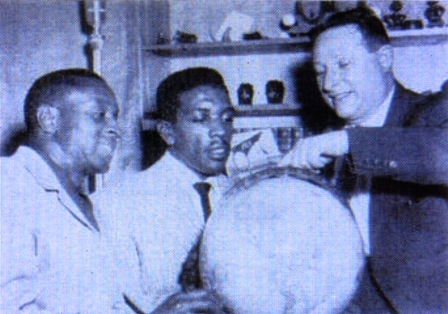
Two of the early foreign players—or gaijin—and the third and fourth African-Americans to sign to play baseball in Japan pose with the man who negotiated their contracts in 1953: Jonas Gaines, left and Larry Raines with Abe Saperstein of Harlem Globetrotters fame.

gaines

Jonas Gaines

Gaines, born in either 1914 or ’15 depending on the source, was nearing the end of a long career; a graduate of Southern University, he played semi-pro ball in North Dakota then began his professional career with the Newark Eagles in 1937, went to the Baltimore  Elite giants in 1938 and appeared in five East-West All-Star games.  Gaines served in the US Army in WWII and  finished his Negro League career with the Philadelphia Stars in 1950.  He spent 1951 and ’52 with the Minot Mallards in the Manitoba-Dakota (Man-Dak) League.

He spent one season in Japan with the Hankyu Braves in the Pacific League, where he was teammates with Raines.  The Braves third gaijin was another former Negro League player, John Britton.  Britton and Jimmy Newberry were the first two African-American players in Japan, having signed together in 1952.  Newberry, like Gaines, left after one season.

Gaines returned to the states in 1954 and led the Pampa Oilers, champions of the West Texas-New Mexico League, with 18 wins.  He finished his career with the Carlsbad Potashes in the Southwestern League in 1957. He died in his native Louisiana in 1998.

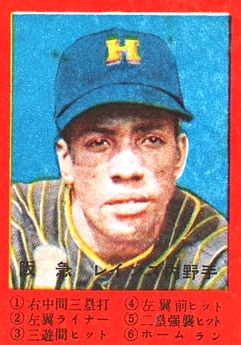
Larry Raines, Japanese baseball card

Larry Raines, Japanese baseball card

Raines was a twenty-two-year-old infielder for the Chicago American Giants and hit .298 in 1952.  Saperstein, who helped engineer the deal that brought Britton and Newberry to Japan, negotiated the contracts for Gaines and Raines, who according to Jet Magazine were paid $1000 a month by the Braves.

Raines quickly became a star in Japan, leading the Pacific League with 61 stolen bases in 1953; he led the league with a .337 batting average, 96 runs and 184 hits, he also finished second in RBI’s in 1954.

Raines returned to the states and signed with the Cleveland Indians in 1955.  After two seasons in the minor leagues, he played in 96 games for the Indians in 1957.  He appeared in nine games with Cleveland in 1958 and played in the minor leagues until 1961.  Raines returned to Japan in 1962, playing one more season with the Braves.  He died in Michigan in 1978.

Fielder Jones and the Chehalis Gophers

11 Feb

Most biographies of Fielder Jones—player-manager of the 1906 World Champion Chicago White Sox, the Hitless Wonders—mention that he managed the Chehalis Gophers, a team in the Washington State League, in 1910;  they never mention that he ended up there because of a near-fatal assault before he arrived.

The 36-year-old Jones left the White Sox after the 1908 season to settle in the Portland, Oregon and tend to his many business holdings in the area.  In 1909, he was named president of the Northwestern League, and served for one season.  According to West Coast newspaper reports, Jones was in the running to named president of the Pacific Coast League in 1910, before Thomas Graham was elected as a compromise candidate.

In the spring of 1910, Jones coached the Oregon Agricultural College (now Oregon State) baseball team to the school’s first conference championship.

At the same time, Jones was coaching at OAC, the Washington State League was getting underway—the league had been operating for at least three seasons, but 1910 was the first year it was recognized under baseball’s national agreement as an “official” minor league.

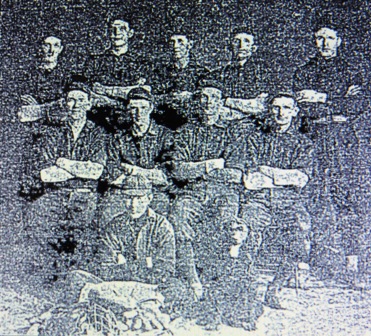
The Chehalis Gophers were led by 27-year-old Fred Nehring; he had previously played on the Pacific Coast, Northwestern and Connecticut State Leagues.  Nehring, who was born in Pueblo, Colorado in 1883, but grew up in Chehalis, had been playing on and off with the local team since leaving the Tacoma Tigers in 1908
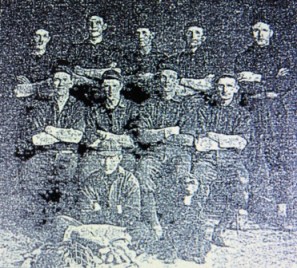
1908 Chehalis team. Fred Nehring standing 2nd from left, Tamp Osburn, standing 4th from left.

1908 Chehalis team. Fred Nehring standing 2nd from left, Tamp Osburn, standing 4th from left.

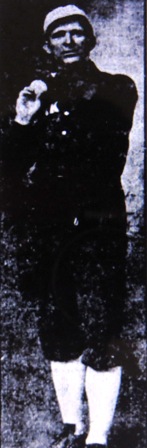
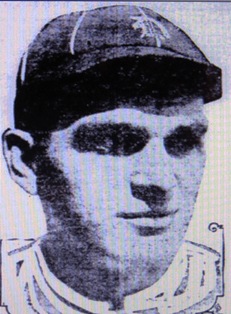
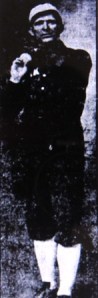
Another player who had spent time with Chehalis since 1908 was a pitcher known variously as “Tamp” Osburn, Osborn or Osborne (for the purpose of this story we’ll call him Osburn—most common usage by contemporaneous sources).  Tamp Osburn has, at least, two separate, partial listings on Baseball Reference.

Osburn was considered a talented pitcher, but an erratic character.  While pitching for the Spokane Indians in Northwestern League in 1907, he quit the team in June.  According to The Spokane Daily Chronicle:

“The whole trouble yesterday started when a couple of misplays in the eighth inning put a losing aspect on the game…Tamp blames the whole trouble on (William ‘Terry’) McKune, who he says ‘threw’ the game on him.”

Osburn had additional problems with teammates and developed a reputation as an eccentric, and like all eccentric pitchers of the era there was one he was often compared; The Daily Chronicle called him “The Rube Waddell of the Northwestern League.”

After playing together for Chehalis in 1908, both Nehring and Osburn played in the short-lived Inter-Mountain League in 1909; both returned to Chehalis after that league folded in July.
???????????????????????????????

“Tamp” Osburn, 1908 with Spokane Indians

On May 20, just after the 1910 season opened, the Chehalis team boarded a train.  According to The Chehalis Bee-Nugget:

“(Osburn) who had been drinking before the train left Chehalis became so unruly on the train that the train crew called on Fred Nehring, captain of the Chehalis team to quiet him.  Tamp resented Nehring’s efforts to keep him from cursing in the presence of ladies, and pulled a knife and began to slash Nehring…Two severe cuts…in the left arm, and the other was in the breast.  If the latter had been an inch farther over, it would have penetrated the lungs.”

Nehring had the wounds dressed, left the hospital against doctor’s advice and managed the Chehalis team “from the bench.”  Despite the seemingly quick recovery, Nehring only appeared in a few games the rest of the season.  Osburn was arrested.

The Chehalis team floundered for the next several weeks.  In late June, it was announced that Fielder Jones would join the team as manager and centerfielder.

Under Jones, who was still property of the White Sox and needed Charles Comiskey’s approval to play, Chehalis easily won the league championship; Jones hit .358 in 37 games.

Jones had agreed to play for the team for no salary and was only reimbursed for his expenses.  This arrangement nearly cost Chehalis the league championship.  According to The (Portland) Oregonian, the second place Raymond Cougars protested to the league and the National Commission that all wins under Jones should be forfeited because Jones “was not under contract.”  The protest was denied and Chehalis was declared league champion.

Osburn was sent to the Lewis County Jail while awaiting trial, and according to The Oregonian was involved in an attempted escape along with other prisoners who occupied the jail’s first floor, a week after his arrest.  The paper said of Osburn “the baseball player, and one other man were taken to the cells on the second floor and locked up securely.”

There is no record of whether Osburn was convicted; in any case, he was free by July of 1911 and was pitching for the Missoula, Montana franchise in the Union Association when The Helena Daily Independent reported that Osburn:

“The Missoula pitcher, who started a rough house in a Missoula cafe and pulled a knife on a stranger, drew a severe panning from the judge, who, after fining him $25, -said: ‘There are some good men on your team, who behave themselves, but there is a lot of you whose conduct is a disgrace to the city and the national game. We don’t want that kind of men in Missoula uniforms, and you fellows have got to stop such actions.”

Contemporaneous newspaper accounts say he was a native of Utah, but given the inconsistent spelling of his last name, and a full first name never being listed, the trail for Osburn ends after this 1911 incident.

Nehring remained in Chehalis where he died on February 19, 1936.

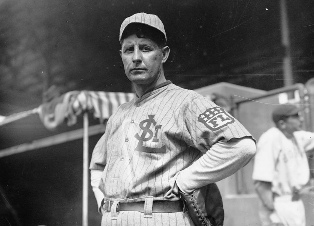
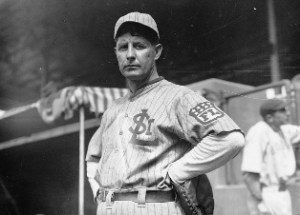
Jones returned briefly to baseball in 1914 and 1915 as manager of the Saint Louis Terriers in the Federal League.  He died in Portland in 1934.
Fielder Jones, 1914

Fielder Jones, 1914

“The most Extraordinary of the Championship Contests so far”

8 Feb

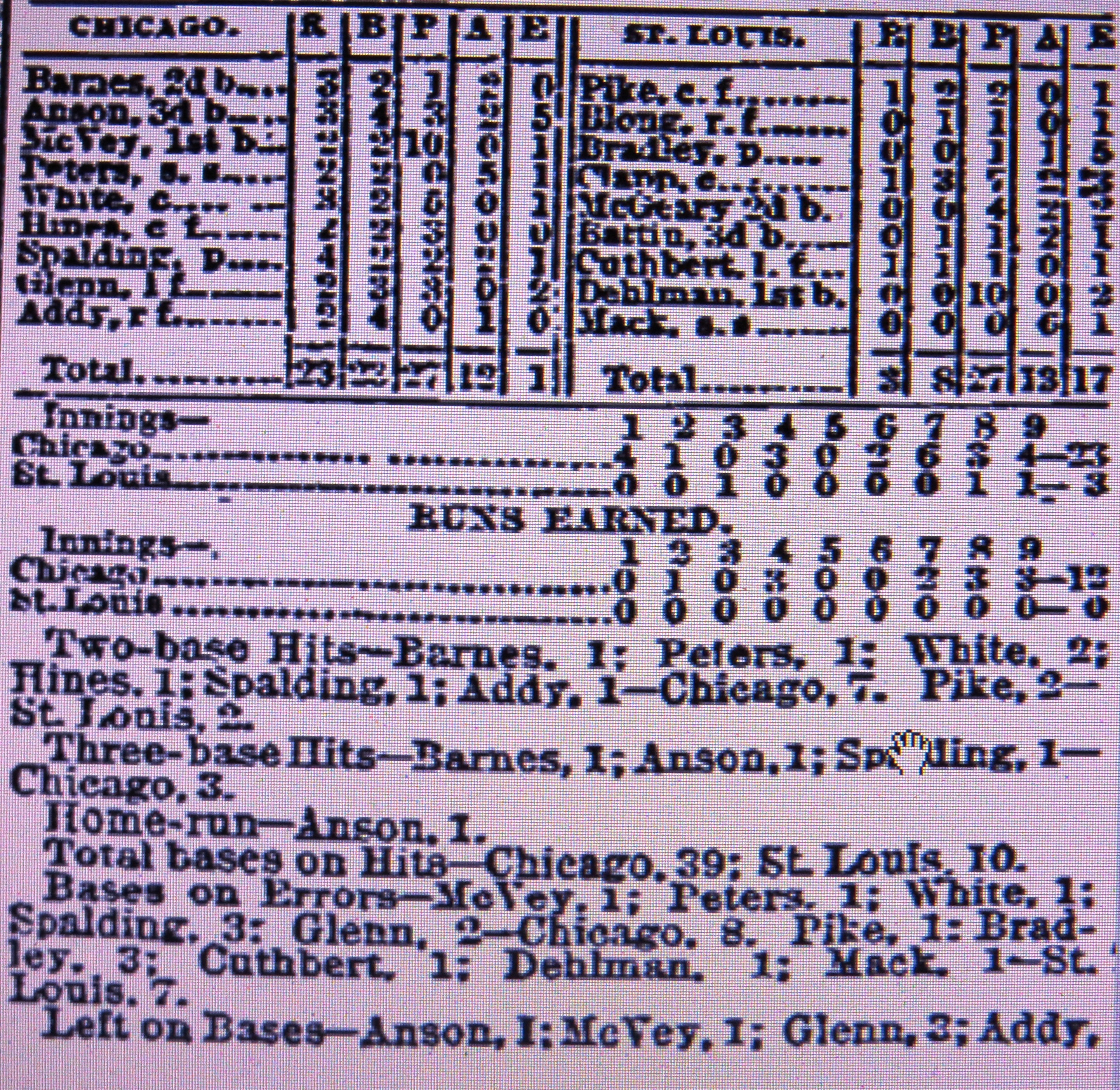
A game recap and box score from the National League’s inaugural season.  On August 26, 1876, the Chicago White Stockings defeated the St. Louis Brown Stockings 23-3 in Chicago.

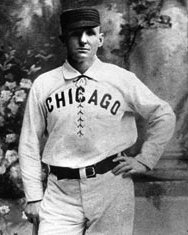
Cap Anson, 50 errors in 1876

Cap Anson, 50 errors in 1876

Among the game highlights, White Stockings 3rd baseman Cap Anson made five errors, on his way to 50 for the season, Brown Stockings pitcher George Bradley also committed five (he only had 12 for the season) and the two teams combined for 28 errors.

The Chicago Inter-Ocean said the game was the turning point of the season in the White Stockings drive for the first league championship in a breathless, meandering report:

“The closing game of the Chicago-St. Louis series which was played Saturday at the Twenty-Third Street grounds, proved to be by all odds the most extraordinary of the championship contests so far.  As if determined to wipe out every record of the St. Louis having ever won a game from them, the Chicagos turned themselves loose and broke Bradley’s heart…Nearly 5,000 witnessed the game, and the enthusiasm rose at times to fever-heat.”

The story said Anson redeemed himself for his errors “two or three” of which were “comparatively easy balls,” by hitting a triple and a home run:

“Obtained on a terrible drive to right field which went clear to the fence…The Chicago batting was tremendous, and the visitors were kept on a continual hunt for the ball.”

The box score:

???????????????????????????????

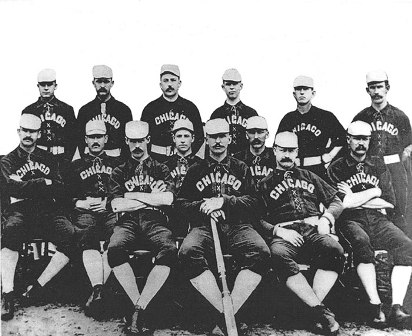
Albert Spalding, Chicago’s manager, and pitcher, who batted 7th started all but six of the White Stockings 66 games in 1876. Bradley, who batted third, started all 64 of the Brown Stockings games and pitched 573 of the 577 innings played by St. Louis—outfielder Joe Blong pitched 4 innings in one game.  Bradley also pitched the National League’s first no-hitter against the Hartford Dark Blues on July 15.  As expected with the number of errors, Bradley gave up 151 unearned runs for the season.

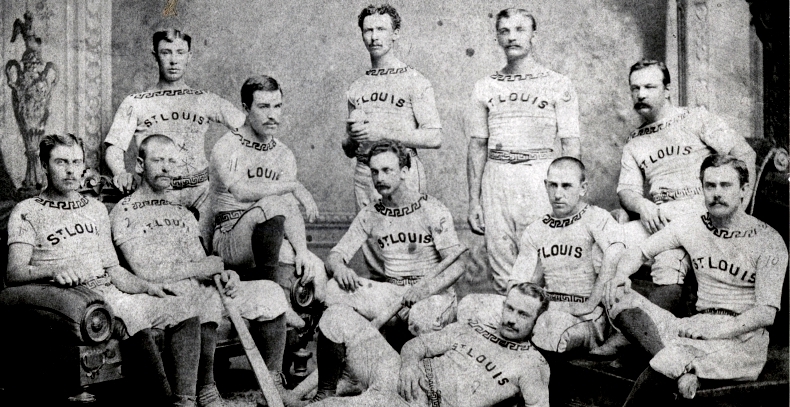
1876 St. Louis Brown Stockings, George Bradley

1876 St. Louis Brown Stockings, George Bradley, standing center, Joe Blong, standing left

After his 45-19 season for the third-place Brown Stockings, Bradley was acquired by the White Stockings in 1877, with Spalding moving to 1st base.  The White Stockings finished 5th with a 26-33 record, Bradley was 18-23.

St. Louis finished fourth, Blong split time between the outfield and the mound and went 10-9 for the Brown Stockings.


Lost Advertisements—Louisville Slugger, World War II—Sports Aid Preparedness

7 Feb

???????????????????????????????

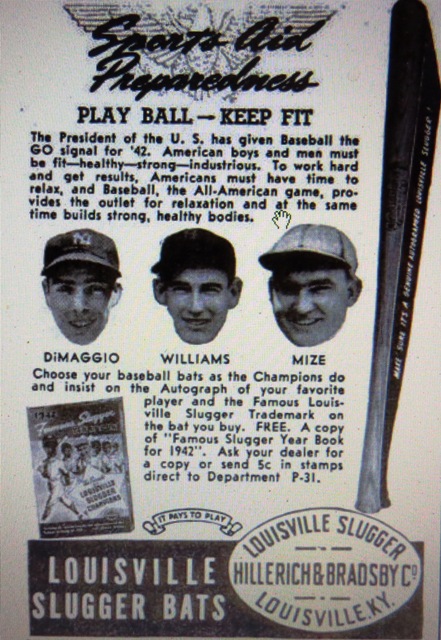
1942 Louisville Slugger Advertisement featuring Hall of Famers Joe DiMaggio, Ted Williams and Johnny Mize.

“The President of the U.S. has given baseball the GO signal for ’42.  American boys and men must be fit—healthy—strong—industrious.  To work hard and get results, Americans must have time to relax, and baseball, the All-American game, provides the outlet for relaxation and at the same time builds strong, healthy bodies.”

“Choose your bats as the champions do and insist on the autograph of your favorite player and the Famous Louisville Slugger trademark on the bat you buy.”

A Thousand Words–Satchel Paige, Chicago White Sox

6 Feb

???????????????????????????????

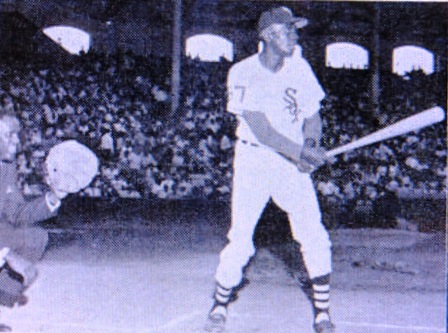
What if?  Satchel Paige in a White Sox uniform.  From 1938-1947 the Sox never finished better than 3rd, add Satchel Paige to those teams, which already had some good pitching including Ted Lyons, Eddie LopatThornton Lee, Monty Stratton and Orval Grove, and Sox fans might have had something to cheer about.  But of course, by the time Paige had a chance to play in the Major Leagues he was at least 42-years-old.  Paige would have helped at the box office as well.  For example, on July 18, 1942 the Sox drew slightly better than 24,000 for a doubleheader with the Detroit Tigers, across town at Wrigley Field a nearly identical amount came out to watch Paige pitch the first five innings for the Memphis Red Sox against the New York Cuban Stars.

Instead, all White Sox fans have is this rare photo taken in 1965 when Paige appeared with the Indianapolis Clowns at Comiskey Park (Chicago Cubs outfielder George Altman is the catcher in the picture).

——-

in 1935, Gene Coughlin, a sports writer for The Los Angeles Evening Post-Record wrote a column that went largely ignored, calling on organized baseball to break the color barrier which “not only makes (baseball) look ridiculous but is at the same time passing up increased business.”  Coughlin predicted that if a Pacific Coast League team were to sign Paige, it “would be good for an extra 10.000 in attendance every time he goes to the mound.  And he became good despite the inane prejudice that drives the colored baseball player to the sandlots and keeps him there.”

Coughlin’s column concluded:

“When you come right down to it, that baseball doesn’t give a darn whether it is pitched or caught by a white hand or a black one.  It is a symbol of game, a sport, and not a symbol of class distinction or color.”

Twelve years later organized baseball finally agreed.

Moriarty and Cobb

5 Feb

While the Detroit Tigers captain “jinx” almost cost George Moriarty his captaincy in 1912, he was also nearly traded to the Cleveland Naps in December of 1911.  The reason given for the Tiger’s desire to trade Moriarty was an alleged fight with Tigers star Ty Cobb.

Whether the fight actually took place is questionable, and an oft-told story about Cobb and Moriarty that grew out of the fight rumor is almost certainly untrue.

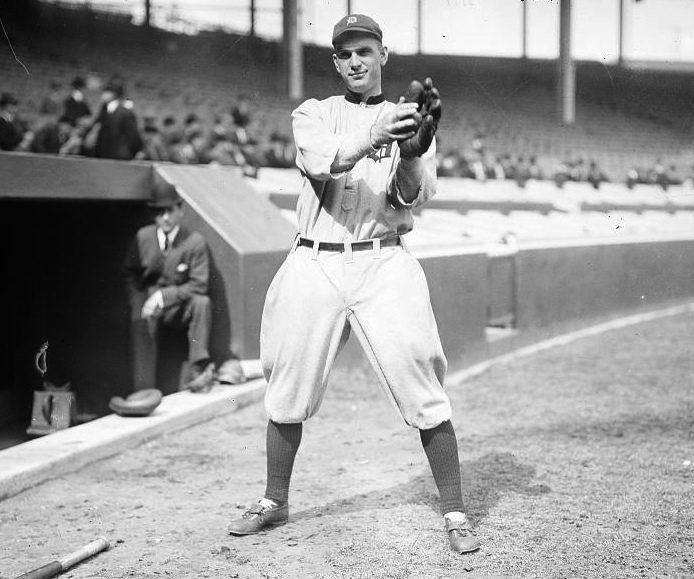
George Moriarty

George Moriarty

In December of 1911, The Associated Press reported the “Real reason for proposed trading of Moriarty.” The wire service said:

 “A battle royal between George Moriarty and Tyrus Cobb one day late in the season of 1911, is the reason why Detroit now wishes to dispose of the star third sacker.  Moriarty and Cobb started their argument upon the field at Detroit, and followed it up with an angry controversy at the club office.  Finally Cobb grabbed a bat and threatened to hit the big third baseman.  The latter armed himself in a similar manner, and they started to beat each other up.”

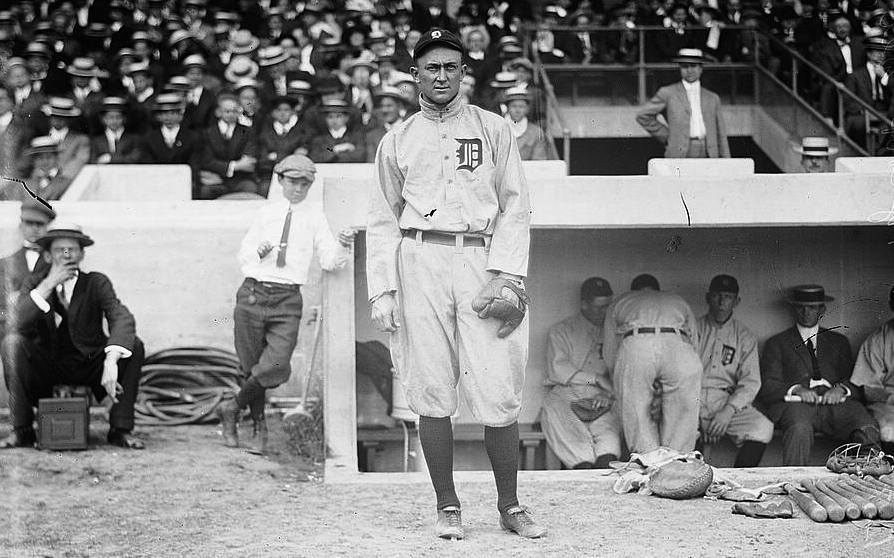
Ty Cobb

Ty Cobb

The story said the fight was broken up by teammates, and “Cobb then issued his ultimatum which was that he would not play with the Tigers if Moriarty was on the team, unless Moriarty apologized to him.”

Within days, both players and Tigers management denied that there had been any fight.  Cobb said:

“There has been a lot of talk that Moriarty and I almost had a fight in the clubhouse last season.  George and I are the best of friends.  We roomed together in the spring and were on the friendliest terms throughout the season.  The story that I put it up to (Tigers owner Frank) Navin to sell or trade George is a fabrication.  In the first place I had no grounds for such action, and in the second place I wouldn’t take such a step if I did have.  I wouldn’t put the Detroit club in a compromising position.”

While the story of a fight was told and retold over the next twenty years, Cobb and Moriarty always denied it happened.

The story that is still included in nearly every mention of Moriarty is that as he and Cobb were preparing to fight, Moriarty said “A fellow like you needs a bat to even things up when fighting an Irishman.”

The quote first appeared in a 1932 column by New York World-Telegram sportswriter Joe Williams when, as an American League umpire, Moriarty’s reputation as a fighter was renewed.  The Associated Press said after a double-header sweep by the Cleveland Indians, Chicago White Sox catcher

Charlie Berry followed the umpire into the runway of the clubhouse, accusing him of ‘missing’ a third strike on Earl Averill just before the Indian broke up the second game with a ninth-inning triple.

“Berry challenged Moriarty to a fight…Milt Gaston, Chicago pitcher, advanced himself.  The umpire felled Gaston…Then Berry, Frank Grube and Lew Fonseca rushed Moriarty, beating him until he was rescued by the Indians.”

In response to mentions of a fight with Cobb in the reports of the 1932 fight, Moriarty renewed his denial of a fight with Cobb, a denial he had also made in 1927 when he replaced Cobb as Detroit manager:

“Say anything else you like about me, but don’t spread the report that Ty and I fought.  We were roommates, and while we may have disagreed we never came to blows.”

Cobb and Moriarity relished their reputations as fighters, the fact that both continued to deny they fought long after it mattered would indicate that they often retold story is more wishful thinking than fact.

One more bit of trivia about Moriarity:  His grandson Michael Moriarty starred as Henry Wiggen in one of the greatest baseball movies, “Bang the Drum Slowly” with Robert De Niro.

Moriarty and De Niro in "Bang the Drum Slowly"

Moriarty and De Niro in “Bang the Drum Slowly”

“Victim of Hoodoo”

4 Feb

In a game filled with stories of superstition, jinxes, “hoodoo,” and general irrationality, the Detroit Tigers seem to be the subject of an out-sized number of such stories during major league baseball’s first four decades.

Tigers’ pitcher George Mullin, whose story I told in October, was one of the most superstitious players in the history of the game, and he was not alone in Detroit.

This story begins in 1904, but took off in 1911, first in the Detroit newspapers and then across the country.  The Headline in The Duluth News-Times said:

“Moriarity (sic) is Victim of Hoodoo that follows Detroit Captains.”

“Moriarity” was George Moriarty, who had been named captain of the Tigers for 1911.  The story said Moriarty was the victim of a “Jinx” that dated back to 1904 when Bobby “Link” Lowe was acquired by the Tigers and named captain:

“His sterling playing qualities and the friendship that all the players had for him, together with his knowledge of baseball brought him the appointment of captain.  Bob got into a slump and Bob did not get out of it.”

Bobby "Link" Lowe

Bobby “Link” Lowe

In 1905, the Tigers named Bill Coughlin captain, the story continued:

“Coughlin, whom everybody liked and who could play ball as well as the majority of them and think faster than most of them… (His) playing started down grade.  Bill bit his fingernails tore out his black wavy hair in bunches, lost sleep and worried several pounds off…Bill never got back to form.”

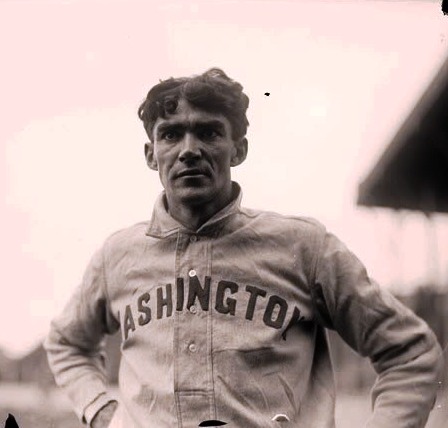
Bill Coughlin

Bill Coughlin

After Coughlin was replaced at third base by Moriarty in 1909, Detroit manager Hughie Jennings named William Herman “Germany” Schaefer captain for the 1909 season.  The story said of him:

“Herman with his ever penetrating optimism, humor and baseball wisdom …appeared to be the right man in the right place as captain…but Herman’s playing ability decreased to such an extent that Detroit gladly grasped at the chance to trade Schaefer.”

Germany Schaefer

Germany Schaefer

Hughie Jennings was enough of a believer in the jinx, even before it became grist for the newspapers, that after trading Schaefer in August of 1909, he chose not to name a captain for the remainder of the season, or for 1910.  Jennings decided to again name a captain in 1911:

“On the Southern training trip Jennings came to realize the necessity of a field leader… (Moriarty) was cool-headed and had the qualities of a leader…the choice seemed like a good one…But soon after the opening of the season it became apparent that Moriarty caught the hoodoo…The duties of the position have weighted in Moriarty until his playing ability has fallen away below par.”

After the 1911 season, Jennings took the situation seriously enough to again consider eliminating the position of captain.  The Detroit Free Press said, “In all probability the Tigers will have to struggle along without a captain next season,” citing Moriarty’s “Frightfully bad year,” after being named captain.

George Moriarty

George Moriarty

In the end, Moriarty was again captain of the Tigers in 1912 and served in that capacity through 1915.

Like most “jinxes,” there really was no jinx, none of the players performed significantly worse than their career averages except for Lowe—but he was 38-years-old when he was acquired by Detroit in 1904 and had missed most of 1903 with a badly injured knee.

Coughlin had shown great promise with the Washington Senators, hitting .275 and .301 in 1901 and 1902, but by the time he was named Tiger captain in 1905 he had back-to-back seasons of .245 and .255, right around his career .252 average.

Schaefer was a .257 career hitter, and his numbers during his half-season as captain were similar to his career numbers.

Moriarty hit .243 during his season with the captain “hoodoo;” his career average was .251, and most of his 1911 numbers were similar to his performance throughout his career.

More on Moriarty tomorrow.

A Thousand Words–Honus Wagner and Claude Hendrix

1 Feb

???????????????????????????????

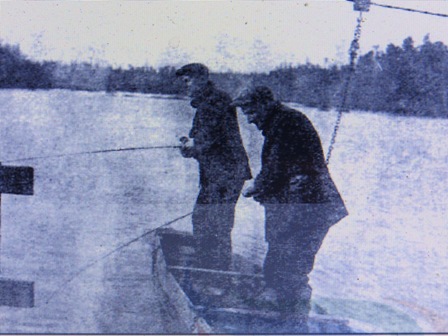
Honus Wagner participating in his 2nd favorite sport with pitcher Claude Hendrix.

William A. Phelon, poet and sportswriter for The Chicago Daily News, Chicago Tribune, New York Morning Telegraph, Cincinnati Times-Star and St. Louis Star—where this poem about Honus Wagner appeared in 1904.

 Hans Wagner, Hans Wagner, we see you lead once more

The Sluggers of the National League—if leather spher’s had gore

The blood of many a fractured globe would dew the faces where

Your mighty whacks, from shoulder swung, went whizzing through the air!

Hans Wagner, Hans Wagner—how oft we’ve felt the shivers

To see you striding to the plate, to knock our hopes to shivers!

How oft we’ve heard the call, “Two strikes,” to make us yelp and smile,

And then our blood was frozen up—you’ve smashed the thing a mile!

Hans Wagner, Hans Wagner, whene’er that ball you spank

We wonder if you think about the coin you’ve placed in bank?

For every time a mighty drive brings roaring cheer on cheer,

You’ve added to your chances for a boost in pay next year!

Hans Wagner, Hans Wagner, your habits are the best—

You never store bad whiskey in the space beneath your vest—

The midnight jag attracts you not—you murmur “Aber nit—

If I should get von chag dis nacht, zu morgen I’d not hit!”

Hans Wagner, Hans Wagner, you’ve saved a load of dough

The products of the scheme by which you give the slabman woe!

You’ve made a record that will live, you’ve gained tremendous fame—

A slugger of the A1 class—a credit to the game.