
Lewis Henke played first base for the Atlanta Atlantas in the Southern League in 1885. The Atlanta Constitution said:
“He was the swiftest and most baring baserunner on the Atlanta nine.”
And
“(A) favorite not only in Atlanta, but wherever he was known…perhaps the most popular player in the Southern League.”
On August 14 Atlanta was hosting the Nashville Americans, when according to The Macon Telegraph:
“In the fourth inning Henke, in making the first base, ran violently against the knee of (Charles “Lefty”) Marr, of the Nashvilles, the knee joint striking him apparently full in the stomach. Henke showed immediately that he was badly hurt, and in a moment was lying stretched out almost on the base. He was carried from the field to the dressing room…Although he had clearly made his base after heavy hit, no one of the players, no one of the great crowd looking on, knew that the infallible umpire above had decided differently, and called him out.”
Henke’s liver was ruptured in the collision and the Cincinnati native died of the injury the following day.
The New York Times blamed the death on “Bad feelings” between the two teams, which resulted in “much ugly work on the field, such as tripping each other, etc..”
Henry “Red” Bittman was Henke’s teammate, fellow Cincinnatian and best friend; they had come to Atlanta together in 1884 to play for the city’s entry in the Georgia State League. He was at his friend’s bedside.
According to The Times:
“Henke observing his friend by his side this evening whispered to him: ‘Bitt, do not play today; I feel that I am dying.’ ‘What shall I tell your wife for you?’ Bittman inquired. ‘Just tell her I got hurt in yesterday’s game and died from it,’ he replied as he again closed his eyes, and in three minutes he was dead.”
The Telegraph said that later that evening:
“At half past ten the manager (Gus Schmelz) escorted the remains to the depot, and walked beside the undertaker’s team through the streets with barred (sic) heads. The dead man’s comrades, rough and hard, were deeply afflicted, and some of the cried like children over the coffin…Henke, the dead baseballist, was carried west on the 10:40 train tonight on the Western and Atlantic to Cincinnati.”
Lewis Henke, standing–Henry “Red” Bittman, seated
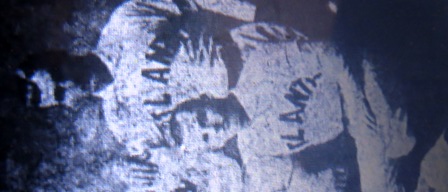
While some attributed Henke’s death to the “bad blood” and “ugly work on the field,” no one publicly singled out the popular “Lefty” Marr for blame. Years later, Edward Cuba Bruffey, a long-time reporter and editor for The Atlanta Constitution said:
“The death of Henke completely prostrated Marr, and it was several days before he was able or willing to return to the game. I am not certain now, but I think Marr was one of the men who accompanied the body to Cincinnati for the funeral.”
The Southern League owners pledged to play benefit games to raise money for Henke’s wife and child.
Tickets for the Atlanta benefit went on sale the final week of August. The Constitution said:
“Henke’s wife and child are destitute. There is not one of the thousands who have seen him play and applauded him his pluck and skill who could not afford to buy tickets to the benefit…every dollar taken in will go to his family.”
The benefit became a bit of a scandal in Atlanta; and it’s unclear whether games were played throughout the league as promised.
The Atlanta game raised $159.85 for the widow, but it took more than six months for the money to get to her. Ownership of the Atlanta franchise changed hands after the 1885 season and the former management of the club never gave the money raised from the game to Henke’s family.
In February of 1886 The Macon Telegraph said the new chairman of the Atlanta Baseball Association, Steve Ryan had advanced the money to the widow and “received a guarantee that he will be reimbursed” by the former owners. According to The Telegraph:
“(Ryan) saved the old directorship from a very ugly legal squabble. With the remittance Mr. Ryan forwarded to Mrs. Henke a spicy and sympathetic letter…It would be rich and rewarding reading as it touches up the old directorship interestingly. “
Henke’s best friend Henry Bittman played five more seasons in the minor leagues; including 87 games as “Lefty” Marr’s teammate with the Nashville Americans in 1886. In 1889 he appeared in four games with the Kansas City Cowboys in the American Association. He died in Cincinnati in 1929 at the age of 67.
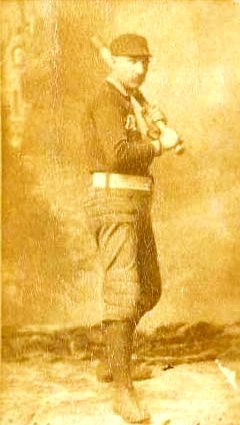
Charles “Lefty” Marr
Marr played professional ball until 1898, including parts of four seasons in the American association and National League. His best seasons were with the Columbus Solons in 1889 and the Cincinnati Reds in 1890. The left-hander played 129 games at third base and 29 at shortstop in the big leagues. He died in Connecticut in 1912.


 Baseball History Daily