Archive | September, 2013

Page Fence Giants

30 Sep

The Page Fence Giants would become one of the great early teams in black baseball; some sources say they played 156 games, winning 118 their first year.  But things did not go well in their first game.

Organized by John “Bud” Fowler and Grant “Home Run” Johnson, the team represented the Adrian, Michigan-based Page Woven Wire Fence Company; at the time the nation’s largest fence company;  Augustus “Gus” Parsons served as the team’s business manager and scheduled their games (he’s often misidentified as the team’s manager).

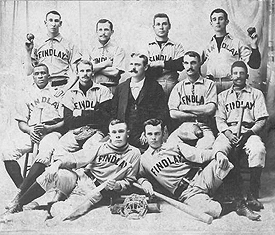
Grant "Home Run" Johnson, left center row and John "Bud" Fowler, right center row, with the independent Findley (OH) Sluggers in 1894.

Grant “Home Run” Johnson, left center row and John “Bud” Fowler, right center row, with the independent Findley (OH) Sluggers in 1894.

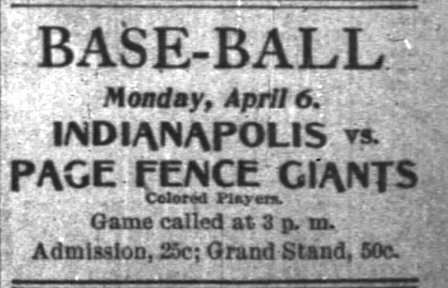
Their first game was scheduled for April 10 against the Western League’s Indianapolis Hoosiers.

The Indianapolis News said of the Giants:

“Besides playing ball they perform feats of tumbling, and there is a quartet among them that sings between innings.”

The team also would arrive in towns riding bicycles in parade formation (the Giants’ other sponsor was the Monarch Bicycle Company).

While they often played for mostly white crowds The News said the stands “were very nearly peopled” with black fans; they did not get the show they had hoped for:

“In the first inning the Indianapolis team had fourteen men to bat and scored eight runs.  It seemed evident that one more inning of slaughter like the first would precipitate a race riot, and President (and manager William “Bill”) Watkins diplomatically let up.  The ease with which Indianapolis did everything it wanted to, and the “rough deal” the colored team received at the hands of umpire Andrews conspired to make the score look like the original report of the Armenian massacre…The one-sided score, which misrepresents both teams as far as figures are concerned.”

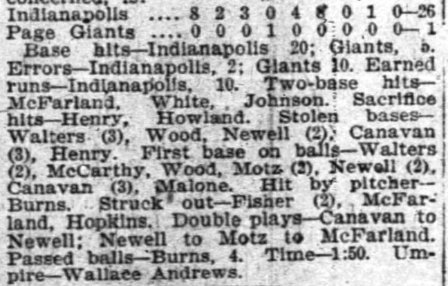
Page Fence lost 26-1.

The Box Score

The Box Score

They also lost two games against the Cincinnati Reds, then lost Fowler and pitcher George Wilson to the Adrian Reformers in the Michigan State League (where they were teammates of Honus Wagner).

The Giants returned to Indianapolis in 1896, losing 16-3 to the Hoosiers

The Giants returned to Indianapolis in 1896, losing 16-3 to the Hoosiers

Despite their first game, the Giants continued drawing crowds and winning games until they disbanded in 1898—with most of the players joining the newly formed Chicago Columbia Giants.

Lost Advertisements–Leading Baseball Players Indorse

27 Sep

caldwell's


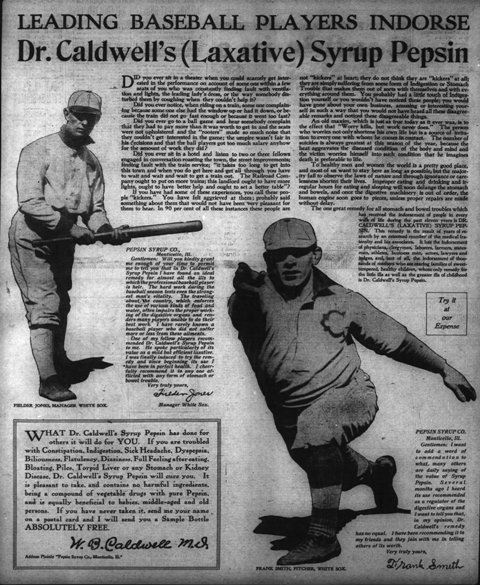
A 1904 advertisement for Dr. Caldwell’s Laxative Syrup Pepsin Company in Monticello, Illinois featuring Fielder Jones and Frank Smith.

Fielder Jones:

“I have found an ideal remedy for almost all of the ills to which the professional baseball player is heir.  The hard work during the baseball season tests even the strongest man’s vitality.”

Frank Smith:

“Dr. Caldwell’s remedy has no equal.”

In 1904 Jones replaced James “Nixey” Callahan as manager of the Chicago White Sox after 42 games.  He led the team to a third place finish.  The White Sox finished second in 1905 and his “Hitless Wonders” won the 1906 American League pennant and defeated the heavily favored Chicago Cubs 4 games to 2 in the World Series.

Frank “Piano Mover” Smith won 104 games for the White Sox between 1904 and 1910, including two 20-win seasons.

Dr. Caldwell’s Pepsin Syrup Company remained in business until 1985.


“Anson, the Baseballist, would like to see some Changes”

26 Sep

Some of baseball’s pioneer’s had ideas for rule changes that would have if adopted, dramatically changed the game.  In 1896 Adrian Constantine “Cap” Anson proposed two such changes.

Anson’s Colts had not finished better than fourth place in the National League in the previous five seasons, and the manager apparently thought two radical changes would improve his team’s chances and simplify the game.

"Cap" Anson

“Cap” Anson

The Chicago Record said:

“Anson, the baseballist, would like to see some changes in the present system of playing ball.”

Anson said he wanted to make a change to the 1893 rule that established the distance from the pitcher’s mound to home plate and replaced the pitcher’s box with the rubber:

“He is in favor of putting the pitcher’s slab in front of the pitcher, instead of having it behind him.  He wants this done in order to stop the interminable bickering that is going on in almost every game as to whether the pitcher was in position.  It is much easier to see whether the rule is conformed to when the slab is in front of the pitcher, and he dare not stop over it.”

Anson’s other rule change would have led to complete chaos, and would have made it an adventure to fill out a scorecard:

“Another radical change that Anson is in favor of allowing the captain to put players back into the game after they have been taken out…(Anson)  wants all restrictions removed, the manager being allowed to play his men just as he sees fit, taking them out and putting them back just when he wants to.”

The issue of introducing free substitution into baseball has occasionally been raised in the years since Anson advocated for it.

Montreal Canadians coach Dick Irvin suggested it to Kennesaw Mountain Landis as a solution to player shortages when the baseball commissioner attended an NHL game during World War II.   Lew Fonseca made a pitch for the rule in the 1950s, and Walter “Red” Barber, long-time Dodger and Yankee broadcaster suggested in the 1960’s that the rule would help keep baseball from being “as exciting as watching paint dry.”

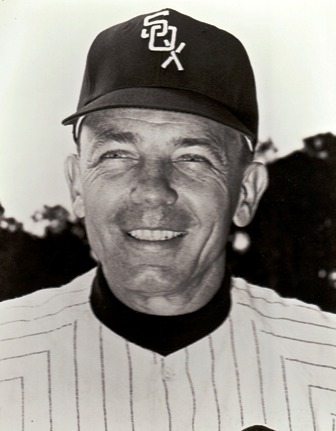
In 1967, Eddie Stanky of the Chicago White Sox was given permission from the American League to experiment with a crude form of what would become the designated hitter rule six years later.  The convoluted rule, according to The Milwaukee Sentinel, said:

“(T)he Sox and their spring opponents will be allowed to call on a pinch hitter twice provided that he is designated before the game is not used twice in the same inning.”

Eddie Stanky

Eddie Stanky


“Krug Seemingly Lost his Head”

25 Sep

The 1902 Southern Association season was so contentious that a headline in The Atlanta Constitution said the day after it ended:

To the Relief of All the Season is Now Over

In addition to the months-long battle between Charlie Frank and the league, there was an on-field incident that The Columbus (GA) Daily Enquirer called “an exhibition as was never before seen on an Atlanta Diamond.”  Henry “Heine” Krug was at the center of it.

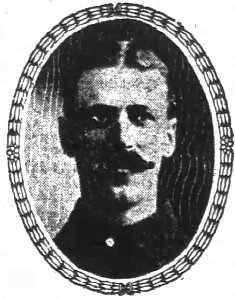
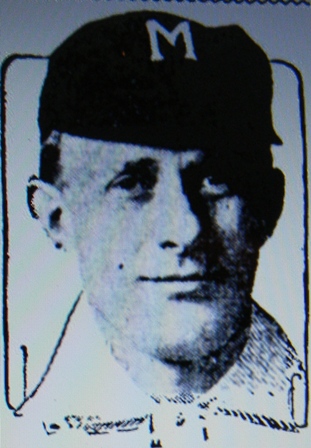
Henry Krug

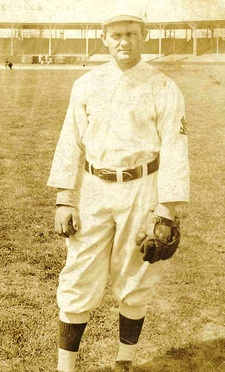
Henry Krug, 1902

In February of 1902, Ed Peters, new owner and president of the Atlanta Firemen signed Ed Pabst to manage the team.  Pabst had played the previous season with the San Francisco Wasps in the California League and brought with him to Atlanta his friend Krug, a 25-year-old shortstop who had been playing for West Coast professional teams since he was 17.

When Krug was signed The Constitution said he was “beyond doubt the star of the Pacific Coast,”

The Sporting Life said Krug had already signed a contract with the Philadelphia Phillies, but jumped the Phillies to join Atlanta.

Krug’s average never dipped below .300, and was very popular with fans and the press.  The Constitution called him “The best all-around professional of the Southern Association” in June.

On July 15 the paper noted his “dashing, errorless work that has been classed as phenomenal.”

Two days later the tone changed dramatically.

The fourth place Firemen were playing Charlie Frank’s Memphis Egyptians and Krug was having a rough day.  Early in the game a throw from first baseman George Winters hit Krug “and gave him a severe blow in the mouth.”  Krug had walked off the field, intending to leave the game, but came back.  He probably shouldn’t have.

Krug went on to make three errors, two of which The Constitution said “in the opinion of the crowd might have been avoided.”

The crowd began to taunt Krug and “Instead of taking the roast the bleachers proceeded to give him as any sensible player would take it, Krug seemingly lost his head and with all the vicious intent imaginable, he secured the ball and threw it with all his strength into the bleachers.”

The Constitution said Krug, “phenomenal” just two days earlier, now said the shortstop’s “conduct on former occasions has been offensive to the patrons of the game.”  Although Krug was ejected from a game earlier in the week, there didn’t appear from newspaper reports to be any pattern of “offensive conduct.”

Atlanta bleacher fans “dodged the sphere” and no one was hurt.  Team president Peters immediately approached Ed Pabst and “instructed him to order Krug out of the game.”  Pabst refused:

“He did not like what he considered an infringement on his prerogative, and at once tendered his resignation as manager of the Atlanta team.  President Peters was just as ready to accept as Manager Pabst was to tender, and within the space of a few seconds the ball player who has been managing the Atlanta team since the playing season of 1902 opened found himself deposed.”

Ed Pabst

Ed Pabst

Peters took over as manager and remained in the position for the rest of the season.  His first act as manager was to remove Krug from the game and suspend him.  The Constitution said:

“Krug’s baby act was witnessed by Sergeant Martin and policemen Norman and Hollingsworth.  They placed him under arrest.”

Some reports said a bottle and rock were thrown at Krug, but the player said he didn’t see that and was reacting only to the verbal taunts.  He appeared in court the following day and was fined $10.75; The Daily Chronicle said, “Krug appeared very penitent.”

Peters sold Krug’s contact to the New Orleans Pelicans the following day, but Krug refused to report sending a wire to Peters and Pelicans owner Abner Powell saying “that if he could not play in Atlanta he would not play,” in the league.

Despite the incident, there was no shortage of interest in Krug’s services.  In addition to New Orleans, the Phillies, who he jumped to join Atlanta and the San Francisco franchise in the California League offered him contracts.

Krug signed with Philadelphia and made his debut with the Phillies on July 26; the day after Atlanta management petitioned the National Association of Baseball Leagues (NAPBL) to blacklist Krug.

No action was taken and Krug played out the season in Philadelphia, hitting .227 in 53 games.  He spent 1903 with the San Francisco Seals in the Pacific Coast League (PCL).  Peters sold his interest in Atlanta in 1903.

Before the 1904 season, the PCL and the NAPBL reached an agreement that made the league part of the National Association and no more an “outlaw league.”  As part of the deal, PCL players who were under contract with other teams were returned.  As a result, Krug returned to Atlanta.

The Constitution assured their readers:

“He has promised to be good and to do his best to help the team win.  It is the belief of many fans in this city that he wishes to redeem the past.”

Krug played two incident-free, if unspectacular seasons in Atlanta, then played in the New York State League with the Scranton Miners and the American Association with the Indianapolis Indians.

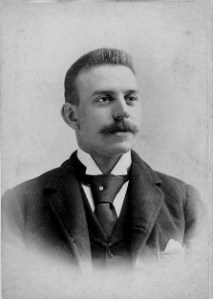
krug1

Henry Krug,1907

The 31-year-old returned to San Francisco, where he was “negotiating for a place with the California State League,” and had accepted a position coaching the baseball team at Cogswell College.  Krug underwent surgery for “an abscess upon his throat” on January 12, 1908, and died from complications from the operation two days later.

Two months after his death all had been forgiven in Atlanta.  The Constitution named him to the paper’s “All-Atlanta Ball Team,” the best professional players to have played in the city.  Krug “was a power with the stick.  No better man ever played on the Atlanta team when it came to breaking up a game.”

“Pitchers Should be Taught how to Sleep”

24 Sep

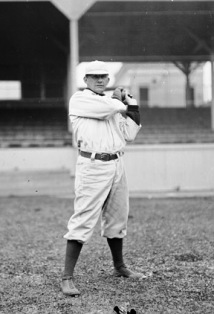
Edward Tilden Siever had a theory about one of the greatest dangers facing pitchers:  how they sleep.

Edward Siever

Edward Siever

The Kansas native did not begin playing professionally until he was 24-years-old in 1899, and was 18-14 as a rookie with the Detroit Tigers two years later.  He injured his arm that season, had a sub .500 record the next three seasons with the Tigers and St. Louis Browns, and went to the American Association with the Minneapolis Millers in 1905. 

Siever’s arm recovered sufficiently to post a 23-11 record with the Millers and was purchased by the Tigers the following spring; he was 14-11 in 1906.

He was having the best season of his career in 1907; finishing with an 18-11 record and a 2.16 ERA for the American League Champion Tigers.  It was during that season that he told The Detroit Times about his theory:

“Pitchers should be taught how to sleep.  Don’t laugh, I mean that More than one good pitcher has lost his arm because he did not know how to sleep correctly.”

Siever claimed that fellow Kansan, St. Louis Cardinal pitcher Charlie “Dusty” Rhodes, missed much of 1906 with a bad arm brought on by the manner in which he slept:

“(Rhodes) used to rest his head on it when he was sleeping.  It deadened the muscles…No ballplayer should ever rest his head on his arms when he is sleeping.  It’s more dangerous than the average young man imagines.  Many a ball player loses his whip and doesn’t know how to account for it.  I’ll bet that’s the real reason in many a case.”

Charlie "Dusty" Rhodes

Charlie “Dusty” Rhodes

The Chicago Cubs defeated Siever in his only World Series appearance in 1907, and after a 2-6 start in 1908 he was sold to the Indianapolis Indians in the American Association; he pitched three more seasons in the minor leagues. 

He remained a popular figure in Detroit and worked for the city’s public works department until he died of a heart attack in 1920.

“An Almost Complete Surrender”

23 Sep

At the close of the Southern Association’s tumultuous 1902 season league president William Kavanaugh, and the majority of the team owners, led by the New Orleans Pelicans’ Abner Powell, set out to oust Charlie Frank of the Memphis Egyptians.

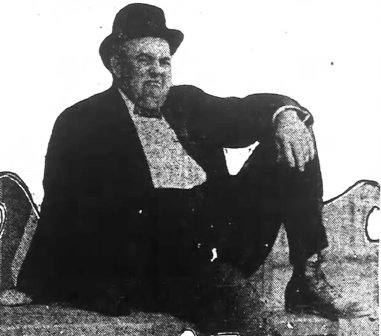
Charlie Frank

Charlie Frank

After a decade as a player, including two seasons with the St. Louis Browns in the National League, Frank was one of the founding members of the new Southern Association in 1901 and became the president and manager of the Memphis Egyptians.

The Atlanta Constitution said that right from the beginning Frank became “the storm center for southern baseball politics… (He) was constantly engaged in some sort of furious baseball litigation.”

After signing three players–Jim St. Vrain, Charlie Babb,  and Bill Evans—who were under contract with other teams during the 1902 season, Frank became embroiled in a months-long legal battle with the league and the National Association of Professional Baseball Leagues (NAPBL).

In October of 1902, Frank lost his legal battle, and it was thought that the time was right to force him out.  The New Orleans Times-Picayune said Powell and Kavanaugh were “confident that a new party” would take over the Memphis franchise and “do much better than the old.”

Powell, Kavanaugh, and the other league owners overestimated their influence in Southern baseball and underestimated Frank’s.

While Powell and company were trying to find a replacement for Frank, he was creating a new league.  The Constitution said:

“(Frank) determined to organize an outlaw league, got financial backing in Memphis and actually formed a circuit.”

The problem for the Powell group was that Frank’s proposed league, and its investors, were more financially sound than the existing league.  Charlie Frank challenged the Southern Association again, and again the Southern Association blinked.

Rather than losing the league, the other team owners accepted every one of Frank’s demands and welcomed him back.

The Associated Press called it “an almost complete surrender,” by the Powell-Kavanaugh contingent:

“Charles Frank retains the Memphis franchise; Memphis club and Frank restored to good standing; Memphis will be paid for all losses sustained during last season, on account of unplayed games, legal costs, etc…”

Additionally, Frank saw to it that every investor in his “new league” was reimbursed for their costs; the Association covered “all obligations made by the promoters,” including honoring the contracts of all players who had been signed, most of whom were absorbed into Southern Association teams.  Additionally, Chattanooga, Tennessee was dropped from the league and a franchise in Montgomery, Alabama was “awarded to the promoters” of Frank’s “new league.”

It was estimated that Frank received $5,000 in the settlement.  He put some of that money towards building a solid team for 1903, winning his first pennant.  Memphis won again in 1904; early in the season, Frank handed over the managerial reins to Lew Whistler.

Lew Whistler

Lew Whistler

In 1905, Frank became president, principal owner, and manager of the New Orleans Pelicans, and promptly led them to a pennant— in spite of a Yellow Fever epidemic in New Orleans which required the team to relocate to Atlanta for part of the season.  Frank’s Pelicans also won pennants in 1910 and ’11.  He sold his interest in the team after the 1911 season but remained manager for two more years.

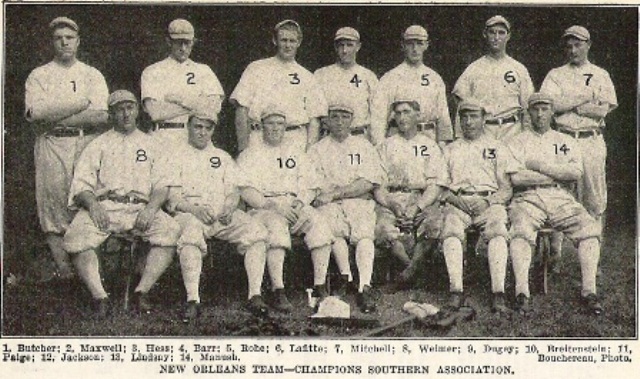
Charlie Frank's 1910 New Orleans Pelicans

Charlie Frank’s 1910 New Orleans Pelicans

In 1916 Frank returned to the Southern association again, organizing a stock company to purchase the Atlanta Crackers.  He managed Atlanta to a fifth place finish in 1916, and then won pennants in 1917 and ’19.

Frank sold his majority interest in the Crackers in May of 1921 but continued to manage the team.  In May of 1922, he resigned citing poor health—he died in Memphis three weeks later.

Lost Advertisements–His Big Bat Brings the Bingles

20 Sep

dannymurphyad

A 1910 ad for Kellogg’s Toasted Corn Flakes featuring Philadelphia Athletics outfielder Danny Murphy.

“Speaking of bingles, here’s one of the longest hitting swatters in the game.”

Kellogg’s boxes featured a “new baseball game found printed on every package:”

“For Danny has tried it, and fell down–and this is what he said: ‘The only thing I miss in the home runs.’  But he still sticks at it, for it’s the wildest, newest, biggest fun creator of the age.”

Murphy hit .400 and drove in nine runs during the Athletics four games to one victory over the Chicago Cubs in the 1910 World Series.


“Demoralizing a Successful Organization For the Sake of a Few Unimportant, Mediocre Ball Players”

19 Sep

When Charlie Babb jumped from the Indianapolis Indians of the American Association to the Memphis Egyptians in the Southern Association in June of 1902, he was not alone.

Pitcher Jim St. Vrain, recently released by the Chicago Orphans and under contract with the Tacoma Tigers in the Pacific Northwest League, signed with Memphis rather than going to Tacoma.

Another American Association player, Second baseman Bill Evans of the Columbus Senators, also jumped to Memphis.  The Cincinnati Enquirer said he jumped being suspended by the Senators for being “too drunk” to take the field on June 18.

Memphis manager Charlie Frank’s three new players would be a source of controversy in the Southern Association for the remainder of the season and a continuation of an ongoing feud over the league’s salary limit which The Sporting Life said: “a majority of the clubs are known to have violated.”
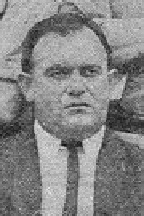
Charlie Frank

Charlie Frank

Southern Association President John Bailey Nicklin, acting on orders from Patrick T. Powers, president of National Association of Professional Baseball Leagues (NAPBL), ordered Frank not to play any of the three.  Frank not only defied the order but according to The Atlanta Constitution, gave Nicklin a “lecture in abuse,” and threatened to “break the league.”

Throughout July, the situation became increasingly absurd.

On July 11 Nicklin ordered umpire Ed Cline (the same Ed Cline who may, or may not, have initially approached Babb about jumping) to not allow St. Vrain to pitch against the Nashville Volunteers, managed by Frank’s biggest ally in the league, Isaac Newton “Ike” FisherThe Atlanta Constitution said Cline became mysteriously “sick and could not work,” although he “was upon the grounds while the game was being played.”  St. Vrain and the Egyptians beat the Volunteers 8 to 5 with “Red” Ehret and Nashville’s Bill Dammann acting as umpires.

After the game Frank was suspended for 10 games and threatened with being blacklisted if he played St. Vrain again.  Later that week Frank received a temporary injunction allowing him to continue using St. Vrain. And while Babb and Evans had been suspended by the league and were not covered by the ruling, Frank continued to put both in the lineup.  Frank also continued to manage the team despite his own suspension.

On July 25 Frank was again ordered by Nicklin not to play Babb and Evans.  This time, he complied, for one day.  The two players sat out an 8 to 4 victory over Atlanta (St. Vrain pitched for Memphis).  Both were again in the lineup the following day, and on July 27 Frank filed a suit against the league and Nicklin seeking $10,000 in damages.  He also sought and received an injunction “restraining President Nicklin from interfering with the playing of Babb and Evans.”

The Constitution began calling the team the “Memphis Injunctionists.”

The Sporting Life said Frank was:

“Demoralizing a successful organization for the sake of a few unimportant, mediocre ball players.”

Nicklin, the league, and the NAPBL blinked first.

Two days after the suit was filed an agreement was reached.  Babb and Evans would remain with Memphis and were reinstated from suspension; the fourth place Egyptians agreed to forfeit every game in which Babb and Evans participated in while under suspension—dropping the team to fifth place.

The controversy appeared to be over.  It wasn’t.

On August 4 the Egyptians arrived at Athletic Park in New Orleans to play the second place Pelicans.  The New Orleans Times-Picayune said:

“Under orders of (Pelicans) manager Abner Powell a big policeman today refused admission to St, Vrain, Evans and Babb, of the Memphis club, when they tried to enter.”

The game was canceled

The following day:

“Manager Frank again took his team to out to the park, but admission was refused to St. Vrain, Evans and Babb.”

The umpire, picked by the Pelicans, “declared the game forfeited to New Orleans,” and Powell shared with the press a telegram from the Little Rock Travelers which read:

“Congratulations upon your firm methods.  We will stand with you.”

Despite the earlier agreement, the NAPBL announced that Frank and St. Vrain were still under suspension.
Jim St. Vrain

Jim St. Vrain

On August 9 the Shreveport Giants refused to allow St. Vrain into the ballpark for a double-header.  Memphis took the field for each game with only eight players and no pitcher.  They forfeited both games to the Giants.

Memphis was due to travel to Little Rock for a three-game series from the 11th through the 13th.  The Travelers announced that they “would not play with St. Vrain and Frank in the game.  Babb and Evans will be allowed to play (but) under protest.”

On August 12 Nicklin resigned at a meeting of league owners in Chattanooga (Memphis and Nashville refused to attend).  He said he was “almost helpless to enforce the rules of the league,” because of Frank’s numerous injunctions.  He was replaced by vice president William Kavanaugh.  A motion was passed to suspend Frank and St. Vrain indefinitely, but Babb and Evans were officially reinstated.  Again.

In response, Frank filed another $10,000 lawsuit naming every team in the league except Nashville.

On August 27 in Nashville, St. Vrain started for Memphis.  President Kavanaugh fined Nashville $1000 and “suspended that club for the balance of the season,” he threatened “drastic measures’ towards Memphis as well, but for the several injunctions that kept him from acting.  Two days later the suspension was lifted.

On August 30 a Little Rock judge enjoined Frank from “playing or attempting to play St. Vrain in any state.”

The Atlanta Constitution headline summed up the opinion of most Southern baseball fans on September 22:

To The Relief of All the Season is Now Over

As an appropriate end, Memphis beat Atlanta on the final day of the season behind the pitching of the still suspended Jim St. Vrain.

The no longer suspended Nashville Volunteers won the pennant.

The Indianapolis Indians, the team Charlie Babb jumped, won the American Association pennant.
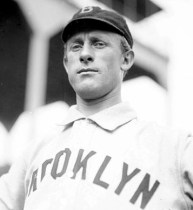
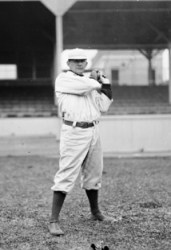
Charlie Babb

Charlie Babb

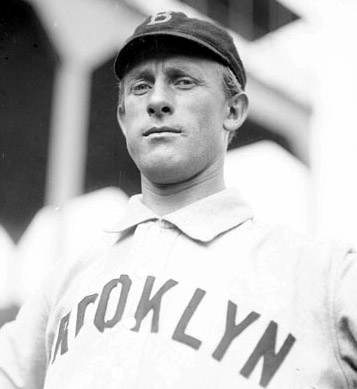
The Indianapolis papers had predicted that Babb’s career would be doomed when he jumped.  In 1903, he was purchased by the New York Giants.  He played in the National League with the Giants and Brooklyn Superbas through the 1905 season.  In 1906, he became a minor league player/manager; with the Memphis Egyptians.  He stayed with Memphis until 1910 and managed to become embroiled in one more controversy.

Jim St. Vrain was only 19-years-old during that 1902 season.  He finished 12-4 with Memphis.  He went to the West Coast in 1903.  His career was over after the 1905 season.

Bill Evans played in the Southern Association until 1906; he eventually became a member of three different teams who refused to play against him in 1902: New Orleans, Shreveport, and Little Rock.

Charlie Frank did just fine in the end.  More on that next week.

“Baseball will be in Utter Disrepute”

18 Sep

As common as contract jumping was during the first 30 years of organized baseball, there are very few cases in which the particular inducements that led to the player breaking his contract are available.  Such is the case with Charlie Babb.

Before the 1902 season, Babb, a 29-year-old journeyman infielder, signed to play with the Indianapolis Indians in the newly formed American Association (Indianapolis was a member of the Western Association in 1901).

The Sporting Life described  as “a base-hit killer,” but “anything but a graceful fielder.”  The St. Paul Dispatch said:

 “He covers all kinds of ground, and it is next to impossible to lay down a bunt and get away with it.”

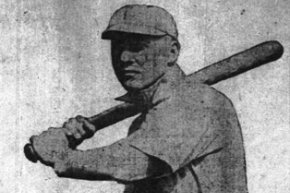
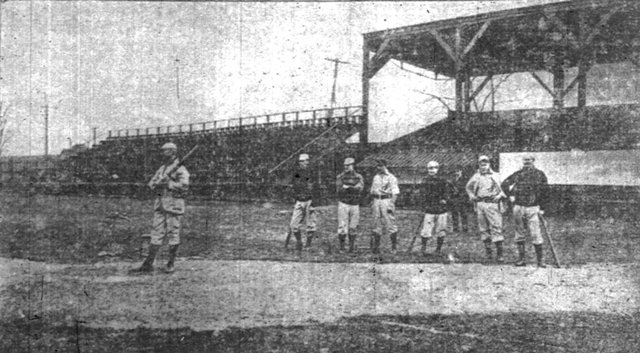
Charlie Babb takes batting practice in Indianapolis in 1902.

Charlie Babb takes batting practice in Indianapolis in 1902.

Babb was installed at third base where The Indianapolis Times said he would be an improvement over previous third baseman Eddie Hickey who had committed 49 errors in 101 games in 1910; Babb told The Indianapolis News “he will try his best to make Indianapolis fans forget that there ever was a third-baseman by the name of Hickey.”

Babb quickly became a favorite with fans and the press.  When the Indians moved into second place in June The Times said Babb won games for the team with “his hands, feet and bat.” The News said:  “Babb can borrow a dollar from the left field bleacherites any time he wants to.”

Babb was hitting .308 in 182 at bats through June 22, and his popularity in the city was why a small item that appeared in several Midwest and Southern papers that day was largely ignored in Indianapolis.

Charlie Babb

Charlie Babb

It said that earlier in June, while the Indians were playing in Louisville, Babb was approached by Philip “Red” Ehret, a Louisville native who knew something about jumping, and currently played for the Memphis Egyptians in the Southern Association (some versions said it was a Southern Association umpire named Ed Cline who approached Babb).  The story said Ehret had “urged” Babb to jump and that “Babb turned him down.”

Disinterest over the story in Indianapolis turned to outrage two days later.  Babb had not turned Ehret and Memphis down; he jumped the Indians to join the Egyptians.

The News said:

“Babb, the deserter, was one of the most popular players ever in this city, and by his action it is doubtful he ever again will have such a place in the affections of any city.”

The Indianapolis papers provided precise details of just what was offered:  Babb would receive $45 more a month, a $300 bonus, $80 transportation expenses, and a winter job in Memphis.

The News said “Contract jumping is the greatest evil that afflicts baseball at present,” and warned that “baseball will be in utter disrepute,” if something wasn’t done to end the practice; Ignoring the “evil” of the reserve clause.

Orville “Sam” Woodruff replaced Babb at third base.  Within days, The News, which less than a month earlier had called Babb “the best third baseman” to ever play in Indianapolis; said Woodruff had played so well that “Indianapolis fans don’t care if he never comes back.”  The Times said “Babb has nothing on Orville Woodruff in the field or at the bat.”

Orville "Sam" Woodruff

Orville “Sam” Woodruff

Babb was not the only jumper to join Memphis is June.  Bill Evans, a Louisville native and friend of Ehret left the American Association’s Columbus Senators to join the Egyptians and Jim St. Vrain, after being released by the Chicago Orphans, signed with Memphis despite being the property of the Tacoma Tigers in the Pacific Northwest League.

Tomorrow: the fallout from Babb, Evans and St. Vrain signing with Memphis.

“If Jones Refrains from any more ‘Baby’ Whining”

17 Sep

In June of 1877 the struggling– financially and on the field–Cincinnati Reds disbanded. The defending champion Chicago White Stockings, mired in fifth place in the six-team league, signed Reds second baseman Jimmy Hallinan and outfielder Charley Jones.

Both players had signed with Chicago believing there was no chance that the Cincinnati franchise would be saved. Some stories claim Lewis E. Meacham of The Chicago Tribune, who worked with White Stockings President William Hulbert to organized the National League, got Hallinan drunk and convinced him to sign. There were also non-specific, unsubstantiated rumors of “coercion” being used to secure Jones.

Within days, enough money was raised by the Reds new president J.M. Wayne Neff to continue operation of the club, and Jones made it clear he wasn’t happy to be in Chicago; the Chicago press was not particularly happy with Jones either.

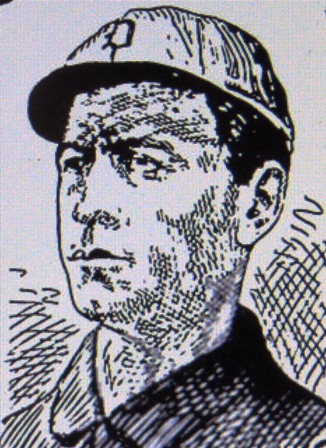
Charley Jones

Charley Jones

When the White Stockings new outfielder failed to join the team before two straight losses in Hartford to the Dark Blues, The Chicago Inter Ocean said:

“(I)f Jones refrains from any more ‘baby’ whining, and shows up like a man and a reputable ball-player there should be no reason why the nine should not win.”

Jones officially became a member of the White Stockings on June 26; an 11-0 win over the St. Louis Brown Stockings; Jones had a single in four at bats. Two days later they beat St. Louis again 6 to 2, Jones was 2 for 4 with two RBIs.

During those three days the Reds were petitioning the National League to return Jones to Cincinnati (they made no effort to reacquire Hallinan), Hulbert refused and the league refused to force the issue. A prominent Cincinnati attorney, Edgar M. Johnson sent a letter to the White Stockings requesting that Jones be released, the letter read in part:

“We, as you probably know, have succeeded in reorganizing the base-ball club here. The task has been a hard one, and even now we find that it will be almost impossible for us to get along without Jones…I ask you, as a favor that our club will always appreciate, that you will honorably release Jones and permit him to rejoin us.”

On June 30 Charley Jones’ two-game career with Chicago came to an end.

The Cincinnati Enquirer announced that an agreement had been reached, Hulbert had agreed to release Jones and, “recognized the fact that (Jones’ contract) had been obtained in an unfair manner.”

The Chicago Tribune saw the situation differently; Hulbert made a, “graceful concession to the evident feeling in Cincinnati,” and by releasing Jones carried out “the idea of doing what he could for the new (Reds) club.”

Chicago papers were quick to point out to their readers that the release of Jones, and the signing of former Philadelphia Athletics outfielder Dave Eggler to take his place, would not hurt the White Stockings:

The Inter Ocean:

“Eggler is generally considered a fine ballplayer, and there are many who think a much better fielder, runner and batter than Jones. Last year his record in all of these important points was far in advance of Jones’.’’

The Tribune:

“There can be no doubt that Eggler will fully fill Jones’ place and the club will certainly lose nothing by the change.”

Dave Eggler

Dave Eggler

Eggler hit .265 in 33 games in Chicago. Jones hit .313 for the Reds.

The White Stockings finished in fifth place with a 26-33 record, the Reds were sixth with a 15-42 record.

Speaking of Charley Jones

Jones (born Benjamin Wesley Rippay) was once, for a short period in the 1880s, baseball’s all-time home run leader. He hit 56 in a 12-year career from 1875 to 1888. He missed 1881-82 after being blacklisted from the National League because of a dispute over money owed to him by Boston Red Stockings owner Arthur Soden, despite his claim being upheld in court.

He returned to major league baseball with the Cincinnati Red Stockings in the American Association in 1883.

Colorful was a word often used in regard to Jones; and probably his most colorful mention in the press came between the 1885 and ’86 seasons. The Cincinnati Star-Times reported on some unrest in the Jones household:

“Charles W. Jones, the well-known base ball player, was accosted by his wife Monday night, while he was making himself agreeable to another woman. Mrs. Jones threw cayenne pepper in her spouse’s eyes causing such intense suffering that he had to be taken to the hospital.”

While there was no report of any lasting effects, Jones’ batting average did drop 52 points; from .322 in 1885 to .270 in 1886.