Archive | July, 2015

Lost Advertisements–“The World’s Best Pitchers Recommend…”

8 Jul

adreach

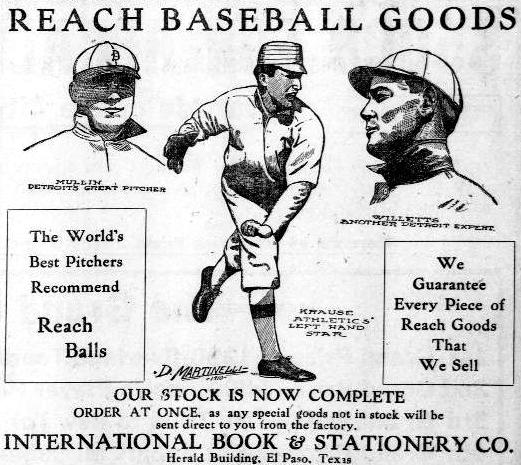
A 1910 advertisement for Reach Baseball Goods  “The World’s Best Pitchers Recommend Reach Balls”–from International Book & Stationary Co. in El Paso, Texas.  The ad features “Detroit’s Great Pitcher,” George Mullin, “Another Detroit Expert,” Ed Willett (Misspelled Willetts in the ad), and “Athletics’ Left Hand Star,” Harry Krause.

In 1909, the 20-year-old Krause, who had been 1-1 in four appearances with the Athletics in 1908, became the talk of baseball when he opened the season with 10 straight victories–including six shutouts.  A San Francisco native who played under Hal Chase and was a teammate of Hall of Famer Harry Hooper at St. Mary’s College, Krause was asked by The Oakland Tribune what led to success:

“That’s easy.  A capable manager in Connie Mack, one of the best pitching tutors in the world in Ed Plank, fairly good control on my part and lots of luck.”

The Tribune‘s scouting report on Krause:

“He has a good curve, but many pitchers in the league have a better one.  He has speed, but any number of American League twirlers have more smoke than he.  However, there are very few twirlers, whether right or left-handers, who can equal him in control of the ball.

“He doesn’t appear to have much to the opposing batters when they first face him, but when the game is over they wonder how it came to pass that he let them down with three or four hits and no runs.”

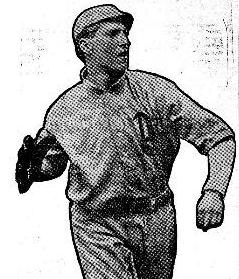
Harry Krause

Harry Krause

On July 18 his luck ran out, Krause dropped his first game of the season, an 11-inning, 5 to 4 loss to the St. Louis Browns.

He went just 8-7 (with one shutout) the rest of the season, but led the league with a 1.39 ERA.

He appeared in only 55 more games over three seasons, winning 17 and losing 20, before a sore arm ended his major league career at age 23.

He finished the 1912 season in the American Association with the Toledo Mud Hens, then returned to California and pitched for 15 seasons in the Pacific Coast League (with a one-season detour to the western League), where he won 230 games.

“He is a $900 Man”

6 Jul

Frank Leonardo Hough had a major conflict of interest. While sports editor for The Philadelphia Inquirer, he also held a 12.5% interest in the Philadelphia Athletics from the club’s inaugural season until 1912—he also served as the team secretary for several seasons while working at the paper. Another Philadelphia sports writer, Sam Jones of The Associated Press also held a 12.5% interest in the team.

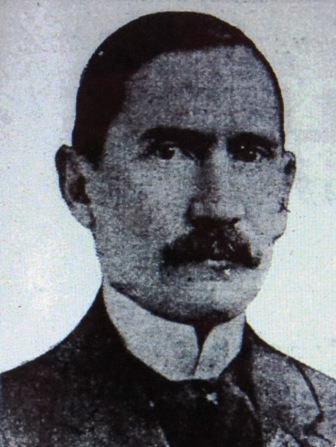
Frank L. Hough

Frank L. Hough

Perhaps it was Hough’s close association with an American League team that made him one of the most vocal advocates for the rights of current and former National League players while the leagues battled for stars.

In 1902, he told his readers the story of how William “Bill” Duggleby, who jumped from the Phillies to the Athletics after the 1901 season, was treated—Hough said he was, “Human Chattel”–while a member of the Phillies:

“These are the facts:

“William Duggleby, pitcher played with the Auburn Club, of the New York State League, during the season of 1897. In the fall of that year, he was drafted by the Philadelphia Ball Club.”

According to Hough, Duggleby was offered $900 for the season, a $25 raise from his salary in Auburn.

Hough pitched just nine games for the Phillies in 1898 and, “was farmed or rented,” to minor league clubs for the remainder of 1898 and in 1899 and 1900.

“Thus it will be seen that although he was under the absolute control of the Philadelphia Club from 1897, he played only a few games in the season of 1898 with that organization. He had no control over his own services. He could not even say where he would play, or where he would not play. That matter was determined by the treasurer of the Philadelphia Ball Club.”

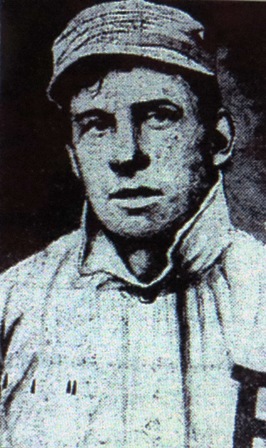
William Duggleby

William Duggleby

Hough noted that while Duggleby, “developed considerable skill,” and had three good seasons in the Eastern League (12-11, 22-16, 17-10) drawing considerable interest from a “half dozen” major league teams, he only received $900 from the Phillies each season:

“The clubs that rented Duggleby did not know him in the financial end of the transaction at all.

“Had Duggleby the right to sign wherever he could have made the best bargain he would have undoubtedly received at least $1800 a season for his services—just twice as much as received under the White Slave system of the National League.”

Hough said Duggleby likely only had six to 10 years total earning power and “lost three years in which he should have received a salary somewhere commensurate to his ability.”

That, however, said Hough, was not the worst of it. In 1900, Duggleby was with the Toronto Canucks, who paid the Phillies, “$225 per month for his services,” while Duggleby was paid just $150 a month.

“No convict from a Texas or Georgia penitentiary was ever rented or leased to break stone on a quarry or repair roadways in colder blood than was Duggleby to the Toronto Club.

“If Duggleby was not a white slave in a free country, what in the name of all that is fair was he?…Of course, Duggleby did not have to wear ball and chain—that might have interfered with his playing ability. But he had no more control over his actions than would the most hardened criminal consigned to the quarries.”

Just days after Hough made the case for Duggleby’s victimhood—and after he appeared in just two games for the Athletics— the pitcher returned to the Phillies. Said to have been paid $3250 by the Athletics, Duggleby accepted a $2400 contract with the Phillies. He told Sporting Life:

“There was no great reason for my going with the American League in the first place, but after I had given my word to go with Connie Mack’s team I did not feel like breaking it. Then came the decision in the (Napoleon) Lajoie case, and a notice from Manager (Bill) Shettsline to report to him or meet with the same fate as Lajoie. I went to see Shetts at once and asked him if the club really intended to proceed against all players that were under reserve. He assured me that they would. Well, under the circumstances I saw nothing for me to do but go back to the National.”

Hough’s tone changed considerably after Duggleby left the Athletics; in addition to his paper referring to the pitcher in a headline as a “Vertebraeless Youth,” he said:

“Without awaiting the outcome of the efforts to be made today to secure an appeal (in the Lajoie case)… (Duggleby) runs to cover like a frightened hound…Evidently the treasurer of the Philadelphia Ball Club sized up Duggleby right in the first place. He is a $900 man.”

Duggleby, who posted a 20-12 record for the Phillies in 1901, only had one winning season after (18-17 in 1905). He pitched in the major leagues until 1907.

Duggleby had one other distinction: During his initial trial with the Phillies in 1898, he hit a grand slam in his first major league at-bat on April 21–for 70 years he remained the only player to hit a grand slam in his first game until Bobby Bonds hit one during his debut (his third at-bat) on June 25, 1968; Jeremy Hermida equaled the feat in his first major league at-bat in 2005.

Hough remained a stockholder and officer with the Athletics while simultaneously reporting on baseball for The Inquirer, until he sold his interest to Connie Mack in 1912. He was the paper’s sports editor until his death the following year. (While Hough’s middle name was said to be Leonardo throughout his life, his Pennsylvania death certificate lists it as Lewis)

A Baseball Fan’s Diary

3 Jul

While writing for The Cleveland News in 1907, Grantland Rice wrote a poem–“A Baseball FAn’s Diary”– that summed up how many thought–and still think–about their home team throughout the course of the season.

Grantland Rice

Grantland Rice

April Fifteenth

Hurrah!  The season’s started!  The opening game’s to-day!

The fans are swarming to the park to see our heroes play;

The whole darn town is turning out to get in on the fun.

And cheer the team that has the flag already good and won.

They have a silver loving cup for Johnson, and a cane

For every other player; oh, they’re raving, wild, insane;

They’re cheering like Comanches, all impatient for the fray.

To see our team jump in and take the field on opening day.

May Fifteenth

Cheer up, the race ain’t over yet, although our prospect’s frayed;

What matter if the team has dropped the first twelve games they’ve played.

It makes no difference, rooters, that we’re on the bottom rung;

Remember, fans, before you knock, the season’s very young.

June Fifteenth

Say, Johnson, fire that Riley; he’s a lemon through and through.

Who told you Smith could play the game?  And Jones is rotten too.

Can that big dub Jackson now, and throw him off the nine;

The infield you have signed for us is something of a shine.

July First

I’ve seen some awful yellow teams in my day, I’ll admit;

But this bunch couldn’t catch a cold; they neither field nor hit.

Say, this is on the level—I could not believe my eyes

The day I saw that outfield squad drop fourteen easy flies.

When a shortstop makes twelve errors in one game, he’s getting stale;

The time has come to ride him out of town on a rail.

And when a pitcher passes up a dozen men per game—

I wouldn’t like to say it, but I know his proper name.

July Fifteenth

Say, fire that Johnson right away, you guys that own the club;

He’s nothing but a wooden-headed, drunken, brainless dub.

He’s a holy show as manager, as I said from the first;

You’ve got to hand it to him as the one and only worst.

October First

Hurrah!  The season’s over, and I’m glad the race is past.

I know we finished in the rut this year—a hopeless last!

We didn’t do a blooming thing but hit the chutes and slump;

But next year keep your eye on us—we’ll  be there from the jump.

“The Aristocrat of all Mascots”

1 Jul

Shortly after the 1920 World Series, The Associated Press (AP) claimed to have discovered why the Brooklyn Robins, after taking two out of three games from the Indians at home, dropped four straight in Cleveland:

“At last the secret…is out.  The Dodgers declined to take their mascot, Eddie Bennett, with them to the lair of the Indians, and without his lucky presence they were swamped.  And not only that.  Bennett, indignant over having been left at home, has quit the Brooklyns!  That’s revenge!”

The Brooklyn Daily Eagle said, Bennett, a Brooklyn native, came to the attention of baseball fans in 1919 when he served as bat boy and mascot for the American League Champion Chicago White Sox:

“(H)e used to hang around the players’ entrance to the ballparks on both sides of the bridge.  The Yankees were playing at the Polo Grounds then, and one day one of the White Sox noticed a wistful little fellow in the front row of hero worshippers.”
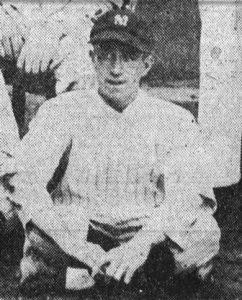
Eddie Bennett

Eddie Bennett

White Sox outfielder Oscar “Happy” Felsch, noticed Bennett suffered from kyphosis (the excessive curvature of the spine—in Bennett’s case it was said to have been caused by an injury when he fell out of his stroller as an infant) and asked “’Are you lucky?’ ‘Sure,’ cried Eddie Bennett eagerly.”  With Bennett serving as bat boy, the Sox defeated the Yankees.  With that:

“Felsch spoke to Eddie Cicotte about taking him back to Chicago. Cicotte spoke to Manager (William) Kid Gleason.  Eddie Bennett became the official White Sox mascot.”

Bennett spent the rest of the season with the Sox and roomed with pitcher Dickie Kerr on the road. After the Black Sox scandal broke—Bennett told reporters, “I was one of the honest ones”—the 16-year-old returned to New York and went to work for the Robins.

Dean Snyder, writing for Scripps’ Newspaper Enterprise Association, said of Bennett during Brooklyn’s pennant run:

“(The Robins) bought the kid a swell uniform and told him to hang around.

“From the day he started as the official mascot…things began to look up.”

But, Snyder noted, Bennett was strictly a mascot and not a bat boy in Brooklyn:

“Little Eddie is a hunchback. The players positively forbid him to touch their bats.  They just want him to stick around. They’re might superstitious about their war clubs.”

After being left home by the Robins for the club’s ill-fated trip to Cleveland, Bennett jumped to the Yankees; he told The AP:

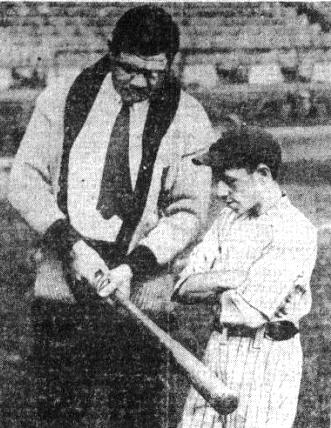
“I’m going to be with a real club this year.  Oh boy, to watch that (Babe) Ruth sock them every day.”
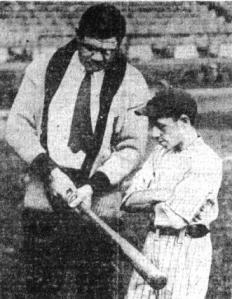
Bennett with Ruth

Bennett with Ruth

For the third straight season, Bennett was part of a pennant winner, and for the third straight year his team lost the World Series.  But this time he stayed put and remained a fixture with the Yankees for another decade.

American League Umpire Billy Evans, in one of his syndicated columns, said Bennett took his position very seriously and related a story about seeing him in a restaurant during a Yankee losing streak:

“Bennett was seated across from me at a table in the diner. We were served at about the same time, and I noticed he ate but little of the food he had ordered.

“’Something wrong with the food Eddie?’ I ventured.

“’The food is all right, I guess there is something wrong with me,’ replied Eddie.

“’Cheer up, Eddie.  The Yankees can’t lose all of them,’ I said with a laugh.

“’Babe hasn’t made a home run in a week.  The team never gets any runs for Bob Shawkey.  Every time Scotty (shortstop Everett Scott) makes an error it means a run.  Waite Hoyt has a bad inning every game,’ was Eddie’s come back.

“’Why worry about these things, Eddie?’ The Yankee mascot looked at me in a puzzled manner, as if I might be joshing him.

“’That’s my business, I’m a mascot,’ said Eddie in all seriousness.  ‘I am supposed to bring luck, to help Ruth make home runs, keep Scotty from making errors, have the team get runs for Shawkey, and no bad innings for Hoyt.’

“Eddie was disgusted at my failure to appreciate the importance of his position.”

In 1928, The Brooklyn Daily Eagle called Bennett “(T)he aristocrat of all mascots…eight flags in 10 years is the mark for other mascots, living and still to be born to try to equal.  It will probably never be beaten.”

Bennett’s career came to an end in May of 1932; according to The United Press (UP) he was riding in a cab which crashed and “was pinned to a pole,” Bennett suffered several broken bones, including a leg broken in several places, and spent months in the hospital. (The AP said he was hit by the cab while walking).

He made a brief, dramatic return to the Yankees a year later.

On May 23, 1933, Bennett entered the Yankees clubhouse on crutches in the midst of what The International News Service called “The great home run famine.”  Neither Babe Ruth nor Lou Gehrig had hit one since April 30:

“It was the longest home run slump for the twins since they started making life miserable for American League pitchers.  For weeks they rubbed their carcasses and bats with sundry kinds of magic oils and rabbit’s feet, consulted Yogi’s and employed every luck charm known to the superstitious in an effort to shake off the jinx.  It took Eddie Bennett, the little cripple who formerly was the club’s bat boy, to shatter the jinx.  Before yesterday’s game he solemnly tapped both sluggers with his magic crutch and that turned the trick.”
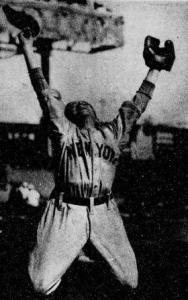
Eddie Bennett

Eddie Bennett

Both Ruth and Gehrig hit home runs off Oral Hildebrand (who came into the game with a 6-0 record) in an 8 to 6 victory over the Cleveland Indians.

It was a final happy moment for Bennett.

While he continued to be paid by Yankees owner Jacob Rupert, depression and alcoholism consumed the last years of his life.  The 31-year-old, “aristocrat of all mascots,” was found dead on January 17, 1935, according to The UP “cold and stiff in his drab rooming home…He lived out his days among his baseball trophies, drinking steadily”

Edit:  As noted in the comments, I say above that Bennett left the White Sox “when the scandal broke,”  which implies September of 1920 when the grand jury was impaneled. I should have said “when rumors of the scandal broke,” which began during the 1919 series and continued throughout the 1920 season.