Archive | December, 2015

Lost Advertisements–The $30,000 Battery

30 Dec

otoolead

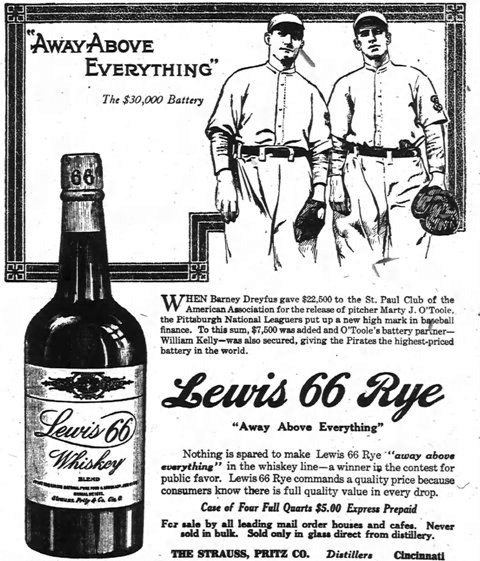
An advertisement from the spring of 1914 for Lewis 66 Rye from The Strauss, Pritz Co., of Cincinnati:

“When Barney Dreyfus gave $22,500 to the St. Paul Club of the American Association for the release of pitcher Marty J. O’Toole, the Pittsburgh National Leaguers up a new high mark in baseball finance.  To this sum, 7,500 was added and O’Toole’s battery partner–William Kelly–was also secured, giving the Pirates the highest priced battery in the world.”

The price paid for Kelly remains a matter of dispute.  The New York Times said he was acquired “for less than $5,000.”  The Washington Post put the price at $10,000 while The Pittsburgh Gazette Times, The Pittsburgh Press and The Associated Press said it was $12,500.


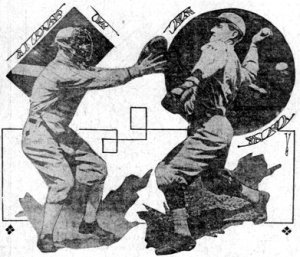
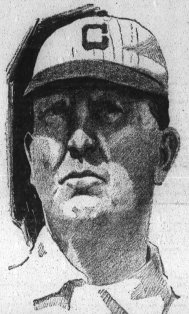
Kelly and O'Toole

Kelly and O’Toole

O’Toole posted a 24-27 record from 1911-1913.  He struggled in 1914, and with a 1-8 and record and 4.68 ERA in August, he was sold to the Giants, in 10 appearances with new York he was 1-1 with a 4.24 ERA.  Dreyfus’ “$22,500 Beauty,” was done as a major leaguer at 25 years old, seven months after the ad appeared.  He played four more seasons in the American Association and Western League; his professional career was over before his 30th birthday.

Kelly’s big league career was over before the ad came out.  In three seasons with Pittsburgh, he appeared in 104 games and batted .290, but was sold to the Toronto Maple Leafs of the International League at the end of 1913 season.  The Pittsburgh Press said the sale came as no surprise:

“Kelly came here from St. Paul with Marty O’Toole, but he has not developed as was expected of him, and has long been rated as considerable of a disappointment. It looks very much as if he were just a trifle shy of major league calibre.”

Kelly played four years in Toronto, hitting .227 in 280 games; his professional career was over at age 31.


“Frysinger Hated in the Paper City”

28 Dec

It took less than two weeks for Jesse “Jess” M. Frysinger to go from being the most popular man in Holyoke, Massachusetts to becoming not just the most unpopular man in town, but a man reviled by the entire Connecticut State League.

His arrival in Holyoke in the winter of 1904 to take over the reins of the Holyoke Paperweights was met with great fanfare.
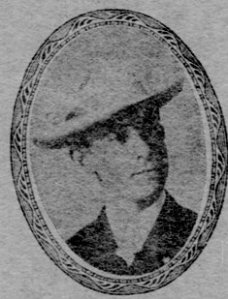
Frysinger

Frysinger

Born in 1873 in Chester, Pennsylvania, the son of a newspaper publisher, Frysinger was a well-known ballplayer around his hometown until his mid-20s when he became a manager.  He managed a local club in Chester from 1899 to 1901.  The 1901 team was a member of the Pennsylvania State League, and the following season Frysinger moved the team and most of the players to Wilmington, Delaware to join the “outlaw” Tri-State League.

When in 1903 Frysinger took over as manager of an independent team in Harrisburg, Pennsylvania, which would eventually join the Tri-State, he signed a young shortstop he knew in Chester named Joe Cassidy.  No statistics survive for the 1903 Harrisburg club, but Cassidy played well enough to be signed by the Washington Senators at the close of the season.  The 23-year-old was a promising prospect and rare bright spot with the horrible 1904 and ’05 Senator teams but passed away from either typhoid or malaria (depending on the report) in 1906 before he could realize his potential.
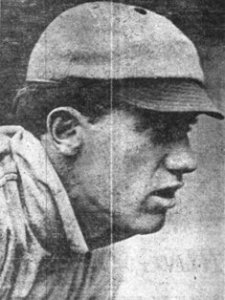
Cassidy

Cassidy

Frysinger managed the Tri-State League Wilmington Peaches in 1904, then left to manage Holyoke, making the bold prediction that he would bring a winning team to the paper producing capital of the world.  Frysinger brought with him several players from Pennsylvania who would make up the core of his ballclub, including Snake Deal, Chick Hartley and Butch Rementer.

The Paperweights quickly became the powerhouse of the Connecticut State League, in one stretch, beginning in late June the team won 20 of 23 games, and easily won the league championship.

Frysinger was given a $300 bonus on top of his $1200 salary and on September 12 signed a contract to manage the Paperweights in 1906 at a salary of $1400.  He was the town hero and was presented a diamond watch fob by the team’s directors.

Things changed quickly.

On September 29, while Frysinger and the Holyoke team were playing a series of exhibition games against local teams in Pennsylvania, he informed the Holyoke management that he had accepted an offer to manage the Lancaster Red Roses in the Tri-State League for $1800.  Holyoke refused to let Frysinger out of his contract so he simply jumped.  At the same time, Frysinger did exactly what he did when arriving in Holyoke; he took many Holyoke and Connecticut State League players with him.  In addition to Deal, Hartley and Rementer, Frysinger signed Fred Crolius, Pop Foster and Dave Altizer away from the league.

Holyoke was in an uproar.

“Frysinger Hated in the Paper City,” said the headline in The (New London, CT) Day, the story called Frysinger a”

“Traitor to Holyoke ideals and baseball ethics.”

The Bridgeport Herald said Frysinger “Is determined to take away from Holyoke all its best.”

No one in Holyoke or anywhere in the Connecticut State League seemed to care about the contract status of the players when they arrived with Frysinger, but their departure became the main focus of the league meeting in January of 1906.

There were demands to have Frysinger blacklisted, but the manager, recovering from appendicitis in Wilmington, Delaware told The Meriden Daily Journal “I brought them to Holyoke…why shouldn’t I try to bring them to Lancaster as well?”

Frysinger’s status would never be resolved.  The 33-year-old manager developed an infection from the surgery and died on February 5, 1906. The Philadelphia Inquirer said most of the Lancaster club and Philadelphia Athletics Manager Connie Mack were present at the funeral in Wilmington.

The Lancaster New Era reported that there was some concern in the city about whether the players signed by Frysinger would play for the team:

“(Q)uite a number of players affixed their signatures to local contacts for the only reason that they were to play under Frysinger, who had the reputation for being one of the squarest managers in the business….The deceased wife (Madge), who acted as the manager’s stenographer through his final illness is thoroughly conversant with the affairs concerning the local baseball situation, and she promises to retain the players already signed.”

She was true to her word; all of the players who were mentioned to have committed to Frysinger were members of the 1906 team which finished in third place in the Tri-State League

Lost Advertisements–An Excellent Christmas Gift

25 Dec

???????????????????????????????

A 1916 advertisement for the World’s Series Baseball Game from the United Games Company:

“Every play known to baseball can be made on this game.  Pitch a Straight or Curved Ball, Bunt or Hit ‘Em Out, and Steal Bases as you think best.  Don’t matter whether you know real baseball or not–you’ll soon like this game…”

An Excellent Christmas Gift

“Read this letter from a ‘World’s Series’ Fan:  ‘I am sending to you for another of your World’s Series Baseball Games.  I bought one of these games last summer and was delighted with it.  My father, who was never a baseball enthusiast became a rabid fan at this game, as did the whole family to such an extent that I was unable to get the game when I wished it.'”

“The Man who Lives in the Santa Claus House””

23 Dec

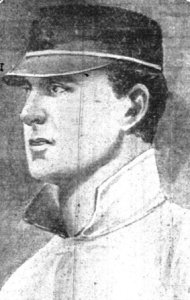
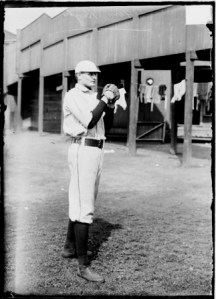
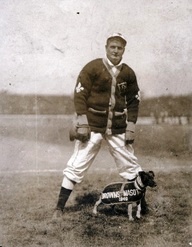
Walter Sydney Woods earned his nickname “Sunday School Pitcher” because he never played a game on Sunday throughout his 20-year professional career.

Woods also played lacrosse, football, basketball and tennis and was considered one of the best athletes in New Hampshire when he chose to enter professional baseball with Portland in the New England League in 1895.

In 1897, he won 17 games for the Springfield Ponies in the Eastern League and was drafted by the Chicago Orphans.

When Woods arrived in Chicago, it was assumed he’d give up his pledge not to play on Sunday, but he quickly made it clear that he would quit first.  The Sporting Life said:

“Walter Woods, Chicago’s model man, will not play Sunday ball either at home or on the road.  The conscientious youngster who neither smokes, drinks nor swears, also has scruples against participating in games on the Sabbath. He will thus be a standing reproach to all the other members of the Chicago Club”

Woods pitched and played infield and outfield for Chicago, going 9-13 and hitting only .175.  He was traded to the Louisville Colonels the following season and posted an identical pitching record, although The Sporting Life said in July:

“Walter Woods is an unlucky pitcher.  Though pitching finely he has won but two games out of his last eight.”

Woods went to the Pittsburgh Pirates in 1900 but was released in April.  He spent the next 14 season playing for a variety of teams in the Eastern and New York State Leagues, exclusively as a position player after 1902.

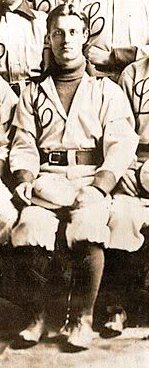
Walter Woods, 1899 Louisville Colonels

Walter Woods, 1899 Louisville Colonels

Woods also coached baseball at the University of New Hampshire from 1897-99 and at Dartmouth from 1912-1915 and played semi-pro football during the winter.  After baseball, he went to work for the US Postal Service.

But to a generation of kids in Portsmouth, New Hampshire, none of that mattered.  At Christmas every year, he was known as “Jolly Wally Woods-the man who lives in the Santa Claus house.”

For about 15 years until his death, kids would line up in front of Woods’ house one day about a week before Christmas and wait for him to appear in an attic window dressed as Santa Claus.  Woods would lower baskets of candy and toys down to the children with a rope, and then on Christmas morning, he was back in the suit with presents for all the neighborhood kids.

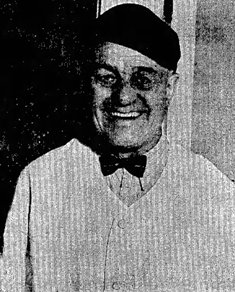
Wally Woods

Wally Woods

The “Sunday School Pitcher” died in Portsmouth in 1951.

“Frank Chance Stands Forth as the Biggest Individual Failure”

21 Dec

It was widely assumed that American League President “Ban” Johnson had a hand in the transactions that resulted in Frank Chance coming to New York to manage the Yankees in 1913—Chance was claimed off waivers by the Cincinnati Reds in November of 1912, then waived again and claimed by the Yankees a month later.

Ban Johnson

Ban Johnson

William A. Phelon, the sports editor at The Cincinnati Times-Star noted “(T)he strange fact that all the clubs in the older league permitted him to depart without putting in a claim,” as evidence of the fix being in.  And, in “Ban Johnson: Czar of Baseball,” author Eugene Murdock said “Johnson masterminded a series of intricate maneuvers,” to bring “The Peerless leader” to New York.

Chance’s arrival in New York was heralded as a turning point for the franchise, and he made no effort to downplay his confidence.  On January 9, 1913, The Associated Press reported that chance told Yankees owner Frank Farrell:

“I will win the pennant for you before I get through in New York. That may sound like a bold statement to make at this time, but I ask you to remember my promise.”

Frank Chance

Frank Chance

Despite the maneuvers on Chance’s behalf and Chance’s own confidence, he failed miserably in New York. The club finished seventh with a 57-94 record in 1913. The following season, the team was 60-74 when Chance resigned.   The resignation came after a tumultuous season which included charges by Chance that the team’s failures were largely the result of scout Arthur Irwin’s failure to sign decent players.  He also secured a guarantee of his 1915 salary from Farrell before he resigned.

Two months after Chance’s exit, the man who “masterminded” the moves that brought him to New York, unleashed his wrath on the former manager to Ed Bang of The Cleveland News:

“You can say for me that Frank Chance stands forth as the biggest individual failure in the history of the American League.  That’s the sum and substance of what B. B. Johnson, president of the American League said a short time since when “The Peerless Leader” came up for discussion, ‘and what’s more, you can write a story to that effect and quote me as strong as you’d like,’ Ban continued.

“President Johnson had great hopes of Chance molding a winner in New York, and when, after almost two years as the leader of the Yankees, he quit a dismal failure, the blow all but floored Ban for the count.  The American League has always played second fiddle to the Giants in New York, and Ban and other American Leaguers figured that Chance was the man to bring about a change in the condition of affairs.”

Bang said Johnson took Chance’s failure “to heart,” because he believed he “made a ten-strike” for the league when Chance came to New York.  Johnson told him:

“’Chance had the material in New York and I think any other man would have made a success og the venture,’ said Ban.  ‘Surely no one could have done any worse.  Of all the players that were on the New York roster in 1913 and 1914, and there were any number of likely looking recruits, Chance failed to develop even one man of class.  Why, it was an outrage.’

“’And then when he made up his mind that he was a failure, or at least when he was ready to step down and out he had the unmitigated nerve to ask for pay for services that he had not performed.  That surely was gall, to say the least.”

Johnson finished by comparing Chance unfavorably with the Yankees’ 23-year-old captain who replaced him and guided the team to a 10-10 finish:

“’Why, Roger Peckinpaugh, youth though he is, displayed far more class as manager of the Yankees in the short time he was at the helm than Frank Chance ever did.”

peckinpaugh2

Roger Peckinpaugh

Irwin left the Yankees in January of 1915 when Farrell and his partner William Devery sold the team to Jacob Rupert and Cap Huston.  Peckinpaugh remained captain but was replaced as manager by Bill Donovan, who guided the Yankees for three seasons–a fifth, a fourth and a sixth-place finish with an overall record of 220-239.

Lost Advertisements–Cubs, White Sox and Whales Endorse Steele’s Game of Baseball

18 Dec

steeles

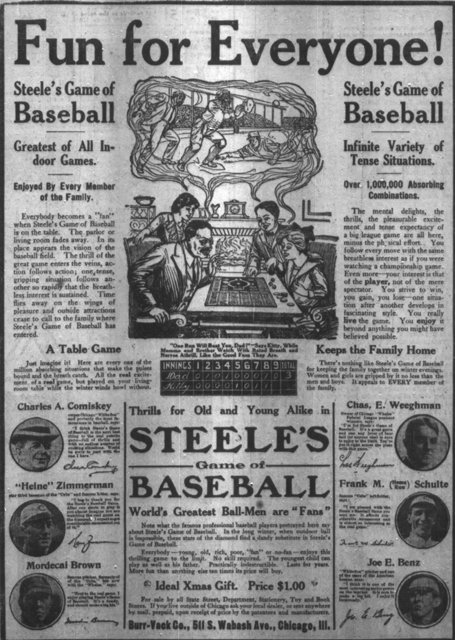
A 1915 advertisement for Steele’s Game of Baseball, a table-top game which claimed to have “Over 1,000,000 absorbing combinations,” and promised that the player would “enjoy it beyond anything you might have believed possible:”

Greatest of All Indoor Games

“Everybody becomes a ‘fan’ when Steele’s Game of Baseball in on the table.  The parlor or living room fades away.  In its place appears the vision of the baseball field.  The thrill of the great game enters the veins, action follows action; one tense, gripping situation follows another so rapidly that the breathless interest is sustained.  Time flies away on the wings of pleasure and outside attractions cease to call to the family where Steele’s Game of Baseball has entered.”

The game was produced by the Burr-Vack Company, a Chicago-based office supply dealer, and received glowing endorsements from members of the city’s three teams:

World’s Greatest Ball-Men are “Fans

Charles A. Comiskey owner Chicago ‘White Sox’ and probably the most famous man in baseball, says: ‘I think Steele’s Game of Baseball is the next best thing to the real outside game–full of thrills and with an endless number of exciting situations.  Would be sorry to part with the one I have.’

“‘Heine’ Zimmerman third baseman of the ‘Cubs’ and famous hitter says: ‘I  beg to thank you for the Steele’s Baseball Game.  After one starts to play it you almost imagine you are watching the real game on the diamond.  I expect to get considerable amusement out of it.’

Mordecai Brown famous pitcher, formerly of the ‘Cubs’ but now with the ‘Whales’ says: ‘Next to the real game, I enjoy playing Steele’s Game of Baseball.It’s a dandy and should make a big hit.’

Chas. E. Weeghman owner of Chicago ‘Whales’ Federal League pennant winners says, ‘I’m for Steele’s Game of Baseball.  It’s a great game and one any lover of baseball (or anyone else) is sure to enjoy to the limit.  You’ve put it right across the plate with this game.’

Frank M. (Home Run) Schulte famous ‘Cubs’ left fielder says: ‘I am pleased with the Steele’s Baseball Game you sent me.  It affords considerable amusement and is almost as interesting as the real game.”

Joe Benz ‘White Sox’ pitcher and one of the stars of the American League, says, ‘I think it is one of the most interesting parlor games on the market.  It is sure to make a big hit. I enjoy it immensely.'”

[…]

“Note what the famous professional baseball players portrayed here say about Steele’s Game of Baseball.  In the long winter, when outdoor ball is impossible, these stars of the diamond find a dandy substitute in Steele’s Game of Baseball.”

Despite the endorsements, the “Ideal Xmas Gift,” which cost one dollar and was “For sale by all State Street, Department, Stationary, Toy, and Book stores,” appears to have quickly disappeared–there are no mentions of the game in newspapers after 1915.

“Those Freak Balls have no Place in the Game”

16 Dec

Billy Evans, “The Boy Umpire,” was a newspaper reporter in Youngstown, Ohio before he worked his first game as an umpire and continued writing about baseball in syndicated articles throughout his nearly 50-year career as an umpire and front office executive.

Billy Evans

Billy Evans

In January of 1917 he wrote about a conversation he had the previous summer with Cy Young, the 49-year-old former pitcher, out of baseball for five seasons:

“I met him in the lobby of a Cleveland hotel.  Jokingly, I asked him how his arm felt and if he would be able to pitch that afternoon.  He looked as well as ever.  His waist line alone showed the effects of not being in constant training. At the mention of his arm and the chances of him pitching, Cy’s eyes flashed with the old spirit.”

Young told Evans he was “ready and willing:”

Cy Young

Cy Young

“’Honestly Bill, the old arm feels as good as ever,’ was his reply to my query.  ‘Never hurt me in my life, don’t know what it is to have a pain in that good old right arm.  When I quit I had more speed and a better curve than a lot of fellows who are still big leaguers, and I didn’t develop that curve until I had been a big league pitcher many years.  You know, it was excess weight, and not a glass arm, that made me quit pitching. My fielding failed me long before my arm showed signs of weakening, and when I was in my prime I was hardly (Napoleon) Lajoie on ground balls, bunted ones in particular.  During my last two or three years as a big leaguer the boys were wise to my inability to field, even as well as I once did, and they made life miserable for me in many a game.  You might say I was practically bunted out of baseball.”

Young said control “more than any other feature” was the key to his longevity:

“I saw many a pitcher come and go and it was lack of control that started most of them on their way to retirement or to the bushes.  Wasted effort ruins man a pitcher’s arm.  I never used any more energy than was necessary.  I have known a lot of pitchers who invariably did enough pitching for three games every time they were called.  It seemed as though they would have three balls and two strikes on every batter. “

Young said early in his career he learned to warm up differently than most pitchers:

“In the old days pitchers when warming up prior to pitching used to do so at random.  They would hurl the ball to the catcher without any definite purpose.  The sole aim was to get the muscles of the pitching arm loosened.  When I warmed up I always had the catcher take off his cap and set it on the ground for an imaginary home plate.  I figured this scheme would not only loosen up the muscles but help my control, for instead of throwing every ball aimlessly to the catcher, I made an effort to get every ball over the plate…Many pitchers used to warm up from any old distance.  They might pitch from forty to sixty feet.  I always insisted on warming up from the regulation pitching distance.”

[…]

“That I was right in many of my theories has been proven by the methods now used by every major league club.  Practically all have regular places for the pitchers to do their preliminary work.  I mean they have the distance carefully measured to conform to the rules, and have regular pitching rubbers and home plates.”

Evans asked Young what he felt about “new fangled” pitches like the spitball and emery ball:

“’I don’t think about them,’ answered Young.  ‘I just laugh.  We didn’t have to resort to that stuff in the old days, and there were some pretty good pitchers serving them up then.  Speed, curves and a change of pace ought to be enough for any pitcher.  Those freak balls have no place in the game, but it is a pretty hard matter to legislate them out.”

Honus Wagner, “How I Win”

14 Dec

As part of a series of syndicated articles which asked some of baseball’s biggest stars to talk about “How I Win,” Joseph B. Bowles, a Chicago journalist, interviewed Honus Wagner before the 1910 season.

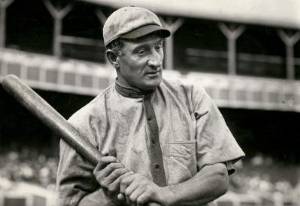
Honus Wagner

Honus Wagner

Wagner said it was simple:

“The secret of winning at baseball is to be found in the first order given to a new ballplayer.  it is ‘Keep your eye on the ball.’  I believe there is such a thing as the instinct for playing the game, but the greatest success comes from quick eyesight and from never taking the eye off the ball for a moment, whether batting fielding or running bases.”

But, he admitted he hadn’t given the subject much thought:

“I never have written anything about baseball, and never have thought much about why a team wins or why a player is a winning player (until now).  It is hard for a player to explain how he wins than it is to win.  I think, however after thinking it over, that the eyesight has more to do with it than anything else.  It is the quick eye and the steady one that makes a man a winner.”

Wagner said this was especially true at bat:

“The batter who faces a clever pitcher is certain to be outguessed by him the majority of times. There is no way to overcome the pitcher’s advantage except to have an eye quick enough to see either from the way the pitcher wings or from the way the ball comes, what is pitched, and then have an eye quick enough to enable him to follow the course of the ball.”

As for his approach at the plate:

“In batting a player should stand firmly on both feet.  It does not matter what his position at bat is, and he ought to take his most natural position, but he must stand on the balls of both feet to get the force of his body, arms and shoulders into the swing of the bat.  Every batter has a different style, but the good ones swing with a steady drive, backed up by the whole body.  I think there is a lot in the way a man holds his bat.  It is impossible to tell a young player how to hold his bat.  He must use his own motion and grip.  He can, however, learnt o shift his feet in hitting.”

On defense, Wagner said:

“(T)he quick eye saves many hits…Perhaps one in five ground balls hit to an infielder bound crooked or shoot in unexpected directions, and a quick eye and a good pair of hands will save the team.”

Wagner was also quick to credit his teammates:

“I think the big reason for Pittsburgh’s success has been first that we’ve played together a long time and know each other and second, and greater, that every man is there to win for the team, no matter what he may do himself.  Last year (George) Gibson caught the greatest ball of any catcher living, and he enabled all the rest of us to play team ball all the time because he was in the team work every minute.  Besides (Fred) Clarke is the greatest manager in the business and a great leader.  No one knows how good Clarke is until he has played with him.”

Bowles spoke with one other Pirate player for his series.   Second baseman John “Dots” Miller was the 22-year-old rookie second baseman who played alongside Wagner on the 1909 World Champions.  His answer to “How I Win:”

“I win by watching Wagner.

“When asked to tell how I won I was going to refuse because it does sound ‘swelled’ for a young fellow to tell such things or claim to win until I remembered how it was.

Dots Miller

Dots Miller

“I win because Honus Wagner taught me the game, showed me how to play it something after his own style, so in telling how I win I am only praising the teacher and the man I think is the greatest ballplayer of them all.”

Lost Advertisements–Ty Cobb, Lewis 66 Rye

11 Dec

cobblewis66

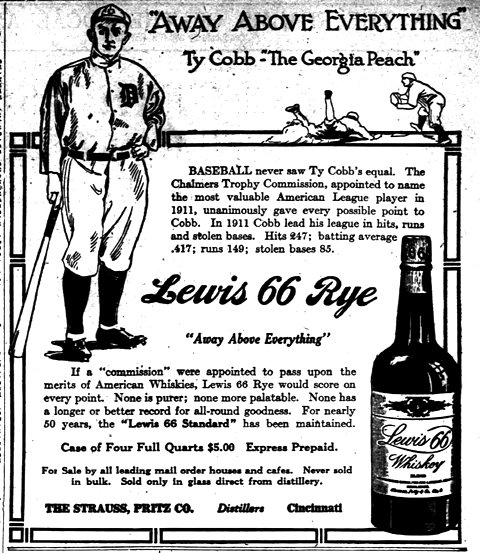
A 1912 advertisement for Lewis 66 Rye Whiskey from The Strauss, Pritz Company, a Cincinnati-based distiller:

“Away Above Everything”

Ty Cobb–‘The Georgia Peach’

“Baseball never saw Ty Cobb‘s equal.  The Chalmers Trophy Commission, appointed to name the most valuable American League player in 1911, unanimously gave every possible point to Cobb (he received all eight first-place votes–the commission consisted on one sportswriter from each league city).  In 1911, Cobb led his league in hits, runs, and stolen bases.  Hits 247; batting average .417; runs 149, stolen bases 85 [sic 248; .420; 147, 83].”

Cobb was presented with a Chalmers “36” at Shibe Park in Philadelphia on October 24, 1911, before game four of the World Series. Jack Ryder, covering the series for The Cincinnati Enquirer said of the presentation:

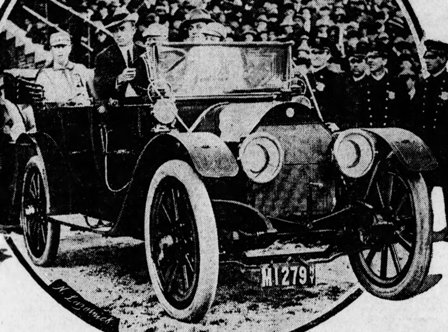
“President (John T.) Brush of the Giants declined to allow this ceremony at the Polo Grounds, so it was pulled off very quietly here this afternoon…The event took place 10 minutes before the game and was coldly ignored by the Giants though the Athletics took a keen interest in it and several of them had their pictures taken with Cobb. Ty now has three cars, but he says this one is much the best of the lot, and he expects to drive it to his home in Georgia as soon as the series is over.”

Cobb in his Chalmers at Shibe Park

Cobb in his Chalmers at Shibe Park

While Cobb was the unanimous choice of the eight-man commission, the second place finisher in the American League received a more valuable car.

The Chicago Inter Ocean said Chicago White Sox fans, unhappy that pitcher “Big Ed” Walsh finished second to Cobb, “Undertook to raise a fund to purchase an automobile,” for him.

But, said the paper, the fans:

“(F)ound themselves confronted with a dilemma–they had too much money in the fund to buy a duplicate of the Chalmers touring cars presented to Ty Cobb and (National League winner, Chicago Cubs outfielder) Frank Schulte.”

Two days before Cobb received his Chalmers in Philadelphia, Walsh was presented with his car before a charity game at Comiskey Park.

Ed Walsh

Ed Walsh

No Chicago newspaper reported the make and model.  The Daily News called it “A handsome automobile.”  The Inter Ocean said it was “A $4,000 automobile,” and The Tribune said simply that he had received an “(A)utomobile subscribed for by the fandom of the city.”  The Examiner also failed to mention the type of car Walsh received but said the Cubs’ Schulte “gave $25” to the fund.

According to The Tribune, Walsh promised to “‘(L)earn how to run it before spring,’ and the stands cheered loyally.”

Rube Waddell, “How I Win”

9 Dec

Joseph B. Bowles, a Chicago journalist, produced a series of syndicated interviews with baseball stars in 1910.  Among them, Rube Waddell on “How I Win:”

“Curve them when they think they’re coming straight, straighten them out when they are expecting a curve, lob them when they are set for fast ones; and come on with the speed in a pinch.”

Waddell said his fastball and curve were effective but gave just as much credit to having “outguessed about as many batters who were trying to outguess me,” as any other pitcher.

Waddell

Waddell

The interview suggests Waddell was very aware of his reputation and used it to his benefit:

“There are a lot of fellows who think the ‘Rube,’ as they have called me ever since I was a rube, isn’t doing much thinking, but they keep taking three healthies and sitting down just the same…I know all the batters and where to pitch to them—or where not to pitch, rather—but in a game I watch them closely to see what they are trying to do, and then ‘cross’ them with something else”

Control said Waddell was critical:

“Control has been the great trouble with all left-handed pitchers, and very few of them can put the call where they want it to go.  I always have had pretty fair control and sometimes perfect control for months at a time.  A fellow cannot say honestly he always has it for there are times when the ball won’t go anywhere he wants it to go.”

He also credited his motion for his success:

“A good motion is necessary, not only to keep the batters from getting on to what a fellow is pitching, but also to save the strain on the pitching arm and back, and to add to the speed.  The only thing it hurts is control, and if you notice when a left-hander is wild it is mainly because he is swinging himself off his stride.  Then he has to shorten up the swing to regain control, and if he has not the speed with the shorter swing—bing bing—and to the bench for him.”

Rube

Rube

Like many pitchers, Waddell said he preferred taking the mound on overcast days:

“The easiest games for me are on dark days when I can just cut loose the speed and curve and mow them down,  On days like that a pitcher with speed does not need to strain his head thinking.  He can just pitch.”