Archive | Uncategorized RSS feed for this section

Moose Baxter’s Play

4 Nov

Jimmy Ryan played 18 seasons in the major leagues from 1885 through 1903, and appeared in more than 2000 big league games and nearly 500 in the minor leagues.  But he said the greatest play he ever witnessed took place in 1908—his final year in organized ball–when he was player-manager of the Montgomery Senators in the Southern Association.

He claimed the play was made by John “Moose” Baxter, who he released later in the season for allegedly placing bets against his own team.

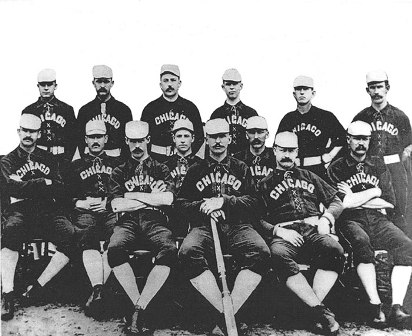
1908 Montgomery Senators.  Ryan is sitting center of middle row, Baxter is standing second from right.

1908 Montgomery Senators. Ryan is sitting center of middle row, Baxter is standing second from right.

Ryan told the story to Hugh Fullerton of The Chicago Herald.  He said it happened during a game against the Atlanta Crackers:

“(T)he bases were full and no one was out…I think it was (Louis “Lou”) Castro at bat, and he hit the first ball pitched, a line drive about twenty feet inside of first base.  I was playing right field and I sprinted forward, fully expecting to catch the ball on the line and throw home.  But I never got a chance.

“Moose took a running jump at the ball; he hadn’t a chance to catch it.  Instead he flew up into the air, and striking at the ball with his mitt, hit it and knocked it forty feet as straight as if he had thrown it, and right into the hands of the second baseman (Clay Perry)…Baxter, when he hit the ball (with his glove) turned half over and fell heavily, but without waiting to get up started and rolled back toward first.

“(Perry) tossed the ball up there, and with one hand stretched out to touch the base, Baxter stuck up the other, caught the ball and completed the double play.  The runner on third, seeing what was coming off, started home at top speed, and Baxter, sitting near first base, threw from that position to the plate and caught the runner.”

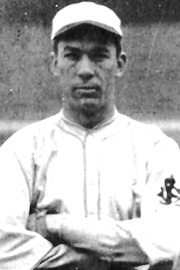
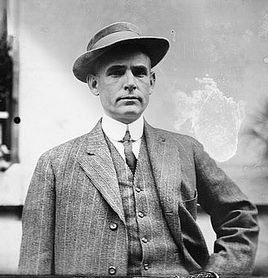
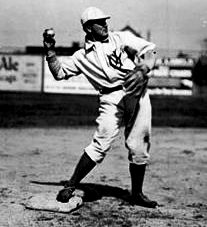
Moose Baxter

    Moose Baxter

Despite executing “the greatest play” Ryan said he ever saw, Baxter quickly became more trouble than he was worth.  In May, he was suspended for a week.  The Montgomery News said, after he had “engaged in a tussle” with an umpire named O’Brien.  “Baxter threw the umpire to the ground and pummeled his face.”

Baxter was released on May 17.  Ryan said only that it was “for the good of the team.”  Later in the week, The News said:

“The reasons assigned by the management are that Baxter has incurred displeasure of the spectators and has bred dissention among the players.

“Reasons given on the street are that Baxter has been betting against his own team in one of the recent games.”

Whether Baxter ever placed a bet against his team is unknown, but no action was ever taken by the league and he signed with the New Orleans Pelicans within a week.

Baxter was never far from trouble during his career.  While playing, and operating an illegal business in Canada in 1910, Baxter ran afoul of the law and was escorted to the border.

“Out of the Game”

2 Nov

ripley

A September 1920 cartoon in The New York Globe, “Cleaning Up” by Robert Ripley–later famous for “Ripley’s Believe it or Not” which he began drawing two years earlier–calling on organized baseball to banish  Hal Chase, Heinie Zimmerman, and six members of the Chicago White Sox: Swede Risberg, Joe Jackson, Eddie Cicotte, Buck Weaver. Happy Felsh [sic, Felsch] and Lefty Williams–Ripley left out Chick Gandil and Fred McMullin.

Ripley continued to draw baseball cartoons as “Believe it or Not” gained popularity, including the one below from 1921 winter meetings featuring Kenesaw Mountain Landis, Ban Johnson, Kid Gleason, Hooks Wiltse, Charles Ebbets, John McGraw, and Wilbert Robinson.  After The Globe folded in 1923, Ripley moved to The New York Evening News.

ripley2


Lost Advertisements–“Fireball” Johnson

30 Oct

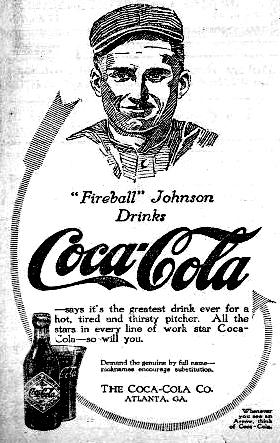
walterjonsoncoke1915

“‘Fireball’  Johnson Drinks Coca-Cola–Says it’s the greatest drink ever for a hot, tired, and thirsty pitcher. All the stars in every  line of work star Coca-Cola–so will you.”

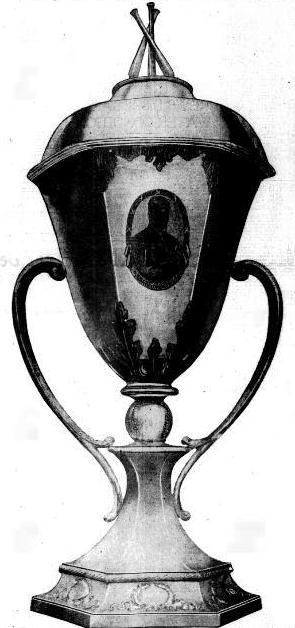
In 1913, The Washington Times presented Walter Johnson with a cup honoring him as “Greatest Pitcher in the World,” and published a special section including quotes from his contemporaries:

Cup presented to Johnson by The Washington Times

Cup presented to Johnson by The Washington Times

Napoleon Lajoie:

“I like to bat against Johnson.  There’s some satisfaction hitting against a hurler of such pronounced class.  When I make a hit off Johnson I know it’s well-earned, and the sound of a good, solid swat made off one of Walter’s curves is the most welcome music I hear during the season.”

George Stovall:

“I consider Walter Johnson the greatest pitcher in the game today and one of the finest fellows on and off the ball field.”

Nixey Callahan:

“You may say anything good for me regarding Walter Johnson that you care to. I consider him one of the greatest pitchers that the game has ever known and an ornament to the profession in every way.”

Russ Ford:

“He is the King Pin of them all, and yet remains just the same quiet, good fellow who broke in six years ago.”

Joe Birmingham

“May your curve always break and your speed never diminish.”

“Pace is what decides Pennant Races”

28 Oct

Joseph B. Bowles ran a newspaper syndication service in Chicago during the first two decades of the 20th Century.  His content was mostly religion and baseball.  One series of articles he published asked players and managers to explain “How I Win.”

Hugh Duffy, the new manager of the Chicago White Sox was the subject of a 1910 article:

“There is an element in baseball which is not on the surface, and which players, spectators, lovers of the game and often managers themselves do not realize or understand.  This element is pace.

Hugh Duffy

                            Hugh Duffy

“Pace is what decides pennant races.  The team that is fast enough, well conditioned enough and smart enough to set the pace, and force the other clubs to play at top speed all the time to hold in the race, is the pennant-winning team unless it cuts out too fast a pace and breaks itself.  In races where all the clubs start slowly and are a long time rounding into true playing condition, some flash in the pan club may win by a spurt of speed, but in most races the conditioned, fast team plays steadily and forcing the pace against its closest competitors, wins.

“Ability to hold the pace is the test of the gameness and the fighting spirit of a club and no club can win a pennant, or be a consistent winner unless it is courageous enough to stand the strain and fight every step of the way.

“Pennants usually are won by the gamest club, rather than by the fastest ones or the best ones.  Before a season starts each manager calculates the strength, the speed, and the hitting and fielding ability of the men under him and calculates what sort of pace is best suited to his team.  If he thinks his club is strong enough he may force the speed from the start, trying to spread eagle the other clubs and win away by himself.  Sometimes this is the best policy, for often an inferior club, if permitted to gain a big lead on the others, will get so full of confidence that nothing can stop it.  There have been such cases but they are seldom, and the manager who strains his pitching staff and risks damaging his team in order to gain an early lead is likely to find himself in mid-season with a crippled and broken club.  On the other hand, the manager who strives to hold back and save the strength of his team for a hard finish is liable to have a discouraged and beaten club on his hands just at the time he is ready to make his spurt towards the lead.

“The manager must strive to strike the happy medium, to reserve the strength of his team, especially of pitchers, without falling completely out of the race.  Above all, he must keep the spirit and the condition of his men to a high standard.  The well-conditioned club, composed of players working in unity, and with brains enough to keep themselves in condition all the time, will beat much better ball clubs in a bruising race.

“As for individual standards, I want brains on my ball club.  The smart ballplayer, who keeps thinking all the time, who is looking for an opening, and out thinking his opponents, is a much better player than the men who can out bat, outrun and outfield him.  Speed and hitting ability are the main essentials of a team.  I do not claim that twenty reporters, who probably know the game better than any twenty ballplayers do, could win a pennant, but the brains must direct intelligently the actions of trained hands and feet and if, combined with brains, hands and feet, a player has the quality known as aggressiveness, he is a winning ballplayer.  The manager cannot think for twelve men.  He can correct their mistakes, or tell them about their blunders, may order their plays and discipline them, but there are a hundred times in each game when the men must think for themselves and if they do not, then defeat is to be expected.”

Duffy was unable to find the “pace” with his White Sox, who finished in sixth place with a 66-85 record. Late in the season, The Chicago Daily News placed the blame on the manager, saying it was:

“(A) generally recognized fact that President Charles A. Comiskey’s 1910 White Sox are a dismal failure…Lack of teamwork and the inability of Hugh Duffy to manage the team properly are the real causes of the disgraceful showing.”

In eight seasons as a major league manager he never finished better than fourth place—he did win two championships in the minor leagues, with the Milwaukee Creams in the Western League in 1903 and the Portland Duffs in the New England League in 1915.

“There’s one thing you mustn’t do when you get to New York”

26 Oct

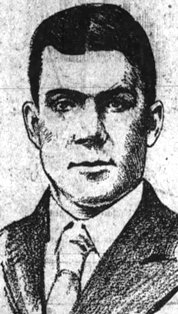
“Sinister Dick” Kinsella is primarily known as John McGraw’s equally pugnacious right-hand man and scout.  He was at McGraw’s side for one of the manager’s most famous brawls; a battle with Giants catcher Larry McLean in the lobby of the Buckingham Hotel in St. Louis, he also boasted an impressive list of “finds” including Carl Hubbell, Chief Meyers, Hack Wilson and Larry Doyle.

"Sinister Dick" Kinsella

              “Sinister Dick” Kinsella

Kinsella credited a career minor league player and manager for his discovery of Doyle, who he sold to the New York Giants in July of 1907.  After Doyle hit .310 in 1911, a syndicated Newspaper Enterprise Association told the story of how he acquired Doyle after the 1906 season from the Mattoon Canaries of the Kitty League, having never seen him play:

“Mattoon was in need of a pitcher and appealed to President Dick Kinsella of the Springfield Three-Eye League team for aid…Kinsella saw a chance to make a bargain when Mattoon hoisted the distress sign and struck one.  ‘I’ll let you have a pitcher for the pick of your team at the end of the season,’ Kinsella told the Mattoon people.  His offer was accepted and pitcher (John) Jokerst was sent  to the Kitty League team by Springfield.

“Doyle didn’t do well with Mattoon (.225 in 91 games) that season.  Kinsella had not even considered him in deciding what player to pick.  He had almost made up his mind to take a veteran pitcher.”

Fate intervened when Kinsella mentioned the Mattoon deal to Frank Belt, manager of the Kitty League’s Jacksonville Jacks.  Belt asked Kinsella if he had ever seen Doyle:

“’No,’ answered Kinsella.

‘”Well, don’t pick anyone until you do, and then pick him.  He’s the coming ballplayer of that club.  He hasn’t looked good in the box scores, but he’s ‘there’ any way you take him.  He’ll bring you more money inside of a year than you ever got for a player.”

Larry Doyle

                  Larry Doyle

Sight unseen, Kinsella took Belt’s advice.  Doyle played third base and hit .290 in 66 games for Kinsella’s Springfield Senators.  He became the subject of a bidding war with the Giants winning out over the Detroit Tigers and Washington Senators for his services on July 16.

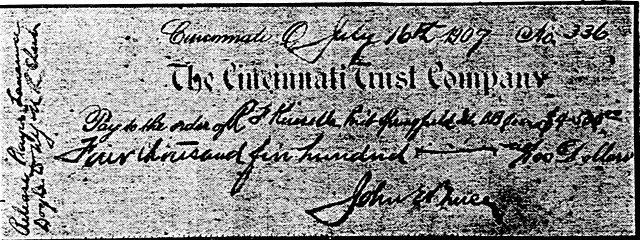
Kinsella was paid a then-record $4500 for Doyle—a record eclipsed the following year when Kinsella sold Rube Marquard to the Giants for $11,000.

The $4500 check to Kinsella for the sale of Doyle

                              The $4500 check to Kinsella for the sale of Doyle

According to The Springfield Journal Kinsella sent Doyle off to New York with just one piece of advice:

“There’s one thing you mustn’t do when you get to New York.  You must quit sliding to bases on your head.  If you don’t, they will think you’re from the brush.”

Doyle was moved to second base, hit .290 over a 14-year big league career, and presumably took Kinsella’s advice about sliding head first.

“The Fair Sex” at American Giants Park

23 Oct

The Chicago Defender loved Rube Foster:

Rube Foster

                                       Rube Foster

“Chicago generally leads all cities in America in producing foremost men in the world of business, letters, professions, and arts, and in athletics she boasts of her champions, crowned and uncrowned.  Perhaps no sport in America has a greater following than baseball, and of the many colored teams who sign up here the American Giants under Rube Foster’s management is unquestionably the best.  Rube Foster is to baseball what Jack Johnson is to the pugilistic world and as a manager and player he has few equals in the major leagues.”

But during the 1914 season, the paper said there was one area where Foster had been negligent.  It involved “The fair sex” at American Giants Park at 39th and Wentworth:

“Sport to be good must be clean sport…The thousands of ladies who attend the games should be given every courtesy, and complaint has been generally made that their costumes have been soiled by unclean seats.  It isn’t such a great task to turn the hose on the seats two or three hours before each game, so the ladies may attend without having to send their dresses to the cleaners after each game.  There is no doubt that it is simply an oversight on the part of the management and will immediately be remedied.”

Things I Learned on the Way to Looking Up Other Things #16

21 Oct

Pirates Slump, 1921

The first place Pittsburgh Pirates were preparing for a doubleheader with the New York Giants on August 24, 1921, when the team took time out to pose for a photo.  The Pittsburgh Leader said:

“Someone happened to mention, as the photographer moved away, that for a whole team to watch the little birdie at once was a jinx.”

The team promptly went out and dropped the doubleheader, then lost three more to the Giants.  The paper said of the five straight losses:

“It doesn’t prove the jinx exists.  But it does prove that to imbue a man or a team of men, with the idea that they can’t win a ballgame generally means that they won’t win.  For their pep and enthusiasm has been stolen.”

The Pirates finished second, four games behind the Giants.

Anson’s All-Time Team, 1918

While visiting St. Paul, Minnesota in the summer of 1918, Cap Anson was asked by a reporter for The Associated Press to name his all-time all-star team.  The reporter said the team was most “notable for including in its makeup not one” current player:

"Cap" Anson

                        “Cap” Anson

“According to Captain Anson, at  least four outfielders of old times are better than (Ty) Cobb or (Tris) Speaker and (John) Clarkson, (Amos) Rusie, and (Jim) McCormick, he thinks were better pitchers than (Grover Cleveland)  Alexander  or (Walter) Johnson.  His line-up would be:

Catchers—William “Buck” Ewing and Mike “King” Kelly

Pitchers—Amos Rusie, John Clarkson, and Jim McCormick

First Base—Captain Anson, himself

Second Base—Fred Pfeffer

Third Base—Ned Williamson

Shortstop—Ross Barnes

Outfielders—Bill Lange, George Gore, Jimmy Ryan and Hugh Duffy

Cy Young’s Five Rules, 1907

Forty-year-old Cy Young won 21 games for the Boston Americans in 1907 and his longevity became a popular topic of newspaper copy until he pitched his final major league game four years later.

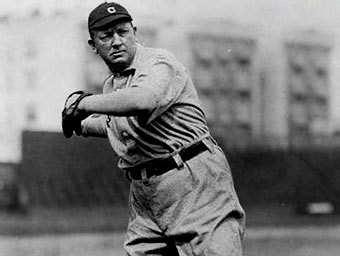
Cy Young

                                             Cy Young

During that 1907 season he gave a reporter for The Boston Post his advice for young players:

“(T)o the young player who seeks his advice about getting in condition and being able to stay in the game as long as the veteran himself, Cy lays down a few simple rules, which are as follows:

  1.  Live a temperate life
  2. Don’t abuse yourself if you want to attain success
  3. Don’t try to bait the umpires; abusing the arbitrators does a player no good and harms him in the eyes of the umpires, players and public in general
  4. Play the game for all you are worth at all times
  5. Render faithful service to your employers

Regarding his “rule” about umpires, Young said:

“What’s the use in kicking?  The umpire won’t change his decision, and kicking will give him another chance to get back at you for your silly abuse.”

Armando Marsans’ Tall Tale

19 Oct

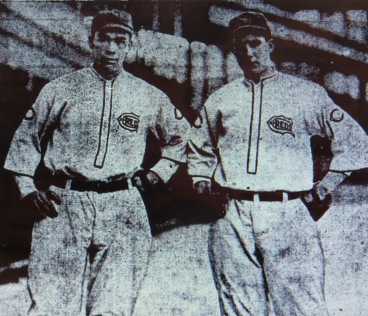
Baseball writers were fascinated by every utterance of the Cincinnati Reds’ two Cuban players, Armando Marsans and Rafael Almeida.  Marsans was the more popular—and more successful—of the two.   He was also the product of well-to-do background.

marsansandalmeida

                           Marsans and Almeida

William A. Phelon of The Cincinnati Times-Star illustrated the cultural difference between the Reds’ two Cuban players:

“(S)omeone asked Almeida and Marsans if they wouldn’t like tickets to a grand opera.  ‘Si, si, accented Marsans, delightedly.  I love grand opera—eet ees fines’ of all entertainment for a gentleman.’

‘I thank you much,” negatived Almeida, “but I care not to go.  To me, grand opera eet sound like de screech of de beeg tomcat, and about so much sensible.’”

Perhaps made up on his own, perhaps captivated by the erudite Marsans, perhaps in on the joke—it wasn’t always clear when Phelon was in on the joke—he quoted Marsans spinning a tale of a Cuban legend in his column in 1912:

“I have seen all the great ballplayers of the present time.  I have been in post-season series against (Napoleon) Lajoie and (Joe) Jackson and have made trips just to see Ty Cobb.  They are wonderful ballplayers, but I give you my word that the greatest I ever looked upon was an Indian named Canella, and popularly called Cinnamon.

“Canella was of a strange Indian race that is supposed to be extinct—the Sibboneys [sic Ciboney] of Cuba, who populated the island when the Spaniards came.  The historians and scientific books all say that they are extinct, and it would doubtless be so, if it were not for the fact that they still live in eastern Cuba and have a little city of their own.  They are tall men with ancient Greek faces—nothing but the color of the Indian to make resemble such men and (John “Chief”) Meyers and (Charles “Chief”) Bender—and they are an athletic people, more agile and active by far than we.  Baseball is their own pet diversion, and Canella, known as Cinnamon, was the greatest of them all.

“Canella, who cannot be over 27 even now, came out a few years ago, and at once became the marvel of eastern Cuba.  He was a pitcher, and a star on the slab, but he was also a batsman, lightening base runner, and clever outfielder.  The records of six years ago show Canella, in some 60 games hit .446 and stole 55 bases.  Havana’s best clubs went up against him and found him invincible while he turned the tide of the closest games with his own batting.

“Canella received no offers from the big American leagues, They took it for granted he was a light colored negro, and when his friends explained that he was an Indian the Americans laughed and said ‘There are no Indians in Cuba—the Spaniards killed them all 400 years ago.’

Armando Marsans

Armando Marsans

“So Canella kept right on playing in Cuba, and he seemed to improve each succeeding season.  At least he became so terrible that even the Havana and Almendares clubs sought excuses to avoid meeting him, and the weaker clubs would face him and get shut out every time.  Finally, some influential Cubans managed to make an American magnate understand that Canella was no Negro, and all was arranged for his tryout in the coming spring.  And then came the news that Canella’s arm was gone, and he could never pitch again.

“It seems that the Indians of Sibboney [sic] still practice the games of their forefathers, and of their favorite sports which is throwing the javelin,  Coming home for a visit, Canella saw the young men of the tribe practicing the spear throw.  Laughingly, he said ‘It is many years since I have done thix—let me try.’ And picking up a slender spear, he hurled it with all his might—and something went snap, crack, in his upper arm as he let go of the javelin.  The arm, so long accustomed to throwing the baseball, gave way when he tried to throw the spear, and never since has Canella been able to throw a ball from the pitching slab as far as the catcher.  It was a shame because Cinnamon Canella was the greatest pitcher, the finest batter, and the fastest base runner that I have ever gazed upon.”

Lost Advertisements–American Giants in Nashville

16 Oct

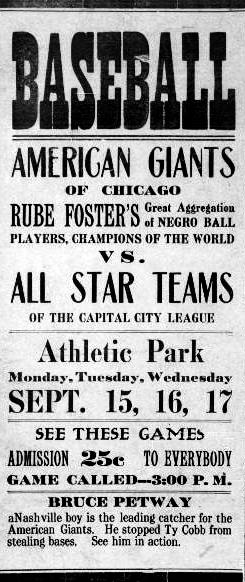
1913amgiants

A 1913 advertisement for a three-game series in Nashville between the Chicago American Giants and “all-star teams” comprised of players from the city’s semi-pro league:

Rube Foster‘s Great Aggregation of Negro Ball Players, Champions of the World vs.  All Star Teams of the Capital City League

The games were scheduled for Nashville’s Athletic Park (Sulphur Dell), on September 15, 16, and 17.

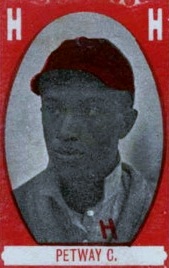
In addition to Foster, the primary drawing card was Bruce Petway:

“A Nashville boy is the leading catcher for the American Giants.  He stopped Ty Cobb from stealing bases.  See him in action.”

The Cobb reference is from the 1910 tour of Cuba by the Detroit Tigers–depending on the source, Petway playing for the Havana Reds threw Cobb out attempting to steal between one and three times.

petway

The American Giants with “Big Bill” Gatewood on the mound won the first game of the series 12 to 1.

The next two games were rained out and were rescheduled as a September 19 doubleheader.  Bill Lindsey beat the locals 6 to 5 in the first game and Foster shut them out 4 to 0 in the second.


“He thought he knew more than his Manager”

14 Oct

New York Highlanders pitcher Jack Chesbro’s wild pitch in the top of the ninth inning in the first game of an October 10, 1904 doubleheader with the Boston Americans allowed the winning run to score in a 3 to 2 game, and ended the first great American League pennant race, Boston winning the championship by 1 ½ games over New York.

Jack Chesbro

Jack Chesbro

But, ten years later, Chesbro’s manager, Clark Griffith, put the blame for losing the game, and the pennant, squarely on another member of the team.

Griffith told Stanley Milliken of The Washington Post:

“Players are often of the opinion that they know more than their manager, and simply on this account New York lost a pennant to Boston in 1904.”

[…]

“It was either Boston or New York, and as fate would have it, the schedule brought us together. I sent in Jack Chesbro, who at the time was one of the greatest pitchers in baseball.  ‘Big’ Bill Dinneen worked for Boston, and when he was right had few superiors.”

Clark Griffith

Clark Griffith

Griffith said the moment that lost the pennant came when “Dinneen began to weaken,” and allowed two runs—Griffith, in his ten-year-old recollection incorrectly said it was the seventh inning; it was actually the fifth.  Dinneen had just walked “Wee Willie” Keeler and “Kid” Elberfeld, forcing in a second run and loading the bases.  With two out, and 2 to 0 lead, Griffith picked up the story:

“Every man that went to the bat (in the fifth inning) had instructions to wait ‘em out.

(Jimmy) Williams, my second baseman was also sent up with the same orders.  But he thought he knew more than his manager.  He did not even look over the first ball, but banged away at it, thinking perhaps he might clean the bases.  What happened?  Well, he rolled weakly (to Dinneen) and the side was retired.  There is no telling how many men Dinneen would have walked.”

Jimmy Williams

Jimmy Williams

Chesbro’s wild pitch was merely a footnote in Griffith’s story, and he failed to mention Williams’ throwing error in the seventh that allowed two runs to score. The pennant, according to Griffith, was lost because Williams failed to listen to his manager; a widespread problem in baseball according to the manager:

“Not only on this occasion but on many, have I seen a player go directly against the orders of his manager and bad results follow.  Of course, we all have different ideas regarding what is to be done at the critical moment, but brains count in baseball just as much as it does in any other walk of life.

“Give me a bunch of ballplayers with superior brains but not as much actual playing ability as opponents and I will win just as many games as they do.“

Despite Williams’ thinking he “knew more than his manager,”  he remained as Griffith’s second baseman for three more seasons.