Archive | Uncategorized RSS feed for this section

Things I Learned on the Way to Looking up other Things #15

17 Jun

Fullerton’s Prediction

Seven years before he watched the events of the 1919 World Series unfold from the press box, Hugh Fullerton warned readers of The Chicago Record-Herald:

“Baseball as a great national sport is in greater peril today than ever before.  Not until the present week did I realize this fact.  The gamblers, bookmakers and handbook men, who ruined horse racing…and who made fighting a noisome scandal, have attached themselves to baseball this year as never before”

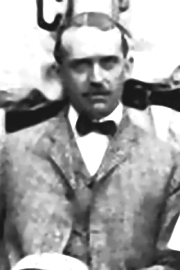
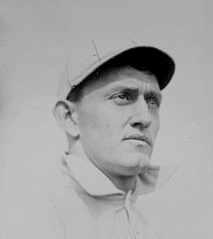
Hugh Fullerton

Hugh Fullerton

“The King of them all for Superstitiousness”

In 1916, Napoleon Lajoie, then a member of the Philadelphia Athletics, told The Cleveland Press:

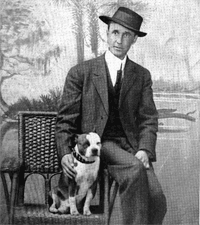
“I have known many a ballplayer who collected hairpins, held his breath if he saw a circus horse, but Bill Armour was the king of them all for superstitiousness.

Bill Armour

Bill Armour

“If you put a ladder in front of the door to his room Bill would have jumped out of the window sooner than have come under that ladder.  I think he would have stayed in there and starved to death rather than let the ‘jinx’ take him overboard because he went under a step-ladder.   Me?  No, I am not superstitious, it’s all nonsense.

“Going to fetch me a black cat?  Don’t bring it up here; we have enough bad luck as it is without any black cat hanging around the clubhouse.”

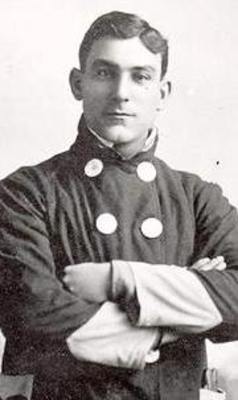
Napoleon Lajoie

Napoleon Lajoie

Black cat or not, Lajoie was correct about the Athletics “bad luck.”  The team finished in eighth place with a 36-117 record.  The forty-one-year-old Lajoie hit just .246; 92 points below his career average.  He retired at the end of the season.

“Any old Manager can run a Team of real Baseball Players”

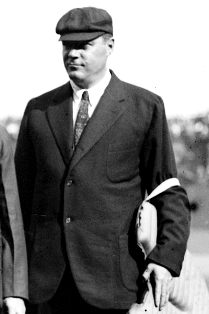
Bill Dinneen pitched in the major leagues for 12 seasons, and a month after his playing career ended he began his 28-year tenure as an American League umpire

Bill Dinneen

Bill Dinneen

In 1910, he told Joseph Samuel “Joe” Jackson, sports editor of The Washington Post, how major league clubs should allocate money:

“’If I were a club owner, I would invest $15,000 in a scout and $5,00 in a manger  And old manager can run a team of real baseball players  But the best leader in the world can’t make bad material good  Every major league team needs a thoroughbred judge of raw material more than a teacher of baseball tricks’’’

Jackson said Dinneen’s observation confirmed what he thought while watching the Philadelphia Athletics beat the Chicago Cubs four games to one in that year’s World Series

“His remarks come merely to emphasize what the world’s series showed—that a club that is hitting the ball over the lot, and giving its pitchers support, will set at naught all schemes to beat it by carefully thought out plans that might be applicable if the other fellows would stop making so many base hits”

John Milton Dabney

15 Jun

Born in November of 1867 in Richmond, Virginia, the son of former slaves, John Milton Dabney spent his childhood working for his father who became a successful restaurant owner and caterer in Richmond after the Civil War.

In 1885, Dabney went to work at the Argyle Hotel in Babylon, Long Island.  He joined the hotel’s baseball team (ostensibly composed of the hotel’s service workers, but some of the best amateur players on the East Coast were recruited for the team by head waiter Frank P. Thompson, as Dabney likely was), intended to provide entertainment for the summer tourists.

The Argyle Hotel Athletics fared well against the strongest amateur teams in the area and caught the eye of a white promoter, John F Lang.   Under Lang’s management, the team began touring that summer as the first professional African-American baseball team, the Cuban Giants.  The following year, Lang sold the team to Walter Cook.

John Milton Dabney

Initially a left fielder, Dabney also pitched and played first base for the Cuban Giants in 1885-86 and for the Cuban X-Giants in the 1890s.

Dabney went to work for the United States Postal Service and played baseball in Richmond for decades–he also played football for the Richmond Athletic Club and worked as a boxing referee.  According to the Baltimore Afro-American, “No amateur team in Richmond was complete unless Milton Dabney played first base.”

In 1897, Dabney  captained the Eclipse, a team based in Richmond, The Richmond Planet said:

“Dabney, who will play first base is perhaps one of the most celebrated colored players in the United States  He has played on clubs all over the country, notably with the Cuban Giants  He knows the game from A to Z and can be depended on at all times”

While Milton Dabney was a pioneer of black baseball, his older brother Wendell Phillips Dabney was a pioneer in another field.  An author, composer, and publisher of The Enterprise, and later The Union,  Cincinnati-based black newspapers, The Chicago Defender called him “The dean of Negro journalists.” he was one of the most prominent African-American newspaper publishers and political activists of the first half of the 20th century.

Wendell Phillips Dabney

Wendell Phillips Dabney

Dabney eventually went to live in Newark, New Jersey, where his son owned a funeral home, he died in a nursing home there in November of 1967, four days short of his 100th birthday.  Until his death, he was oldest surviving retired postal carrier in the country, and the last surviving member of black baseball’s first professional team.

Lost Advertisements–The Big Train for Coca-Cola

12 Jun

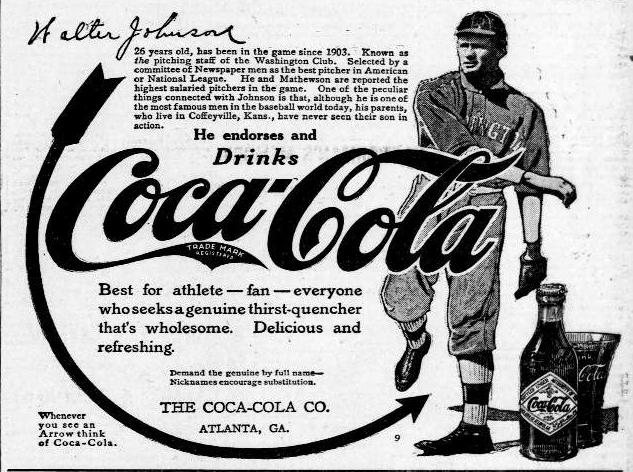
bigtrainA 1915 advertisement for Coca-Cola featuring Walter Johnson.

“26 years old (Johnson was 27 when the ad appeared, but fact-checking was a bit loose in ads of the era)  has been in the game since 1903, Selected by a committee of newspaper men as the best pitcher in American or National League.  He and Mathewson are reported the highest salaried pitchers in the game.  One of the peculiar things connected with Johnson is that, although he is one of the most famous men in the world today, his parents, who live in Coffeyville, Kans. have never seen their son in action.”


“Their Joy was Unrestricted”

10 Jun

After Charles “Cy” Swain lost his leg in an accident after the 1914 season, he attempted to stay active in baseball by forming a team called the Independents with another former player, Tommy Sheehan.

Cy Swain

Cy Swain

Swain managed the team which was comprised of minor and major leaguers who spent the off-season on the West Coast.

In the early spring of 1916, the team played their most unusual game.  The San Francisco Chronicle described the scene:

“For the first time in the history of the State Prison across the bay in Marin County, the convict baseballers were yesterday permitted to play against an outside team…The attendance? Good!  Something like 2300 men and women prisoners, even including the fellows from solitary confinement, took their seats to watch the game, and their joy was unrestricted.”

Swain’s Independents were playing the Midgets, the baseball team at San Quentin.

The paper said Swain received “an ovation that lasted for five minutes,” and that the prisoners cheered loudly for Ping Bodie, Spider Baum, and Biff Schaller.

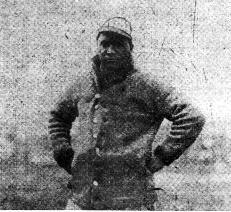
Ping Bodie

Ping Bodie

“They know a good play or a bad one, just as you do from your comfy seat at Recreation Park, and they did their rooting accordingly.”

Because of prison rules, the game recap was slightly different than usual:

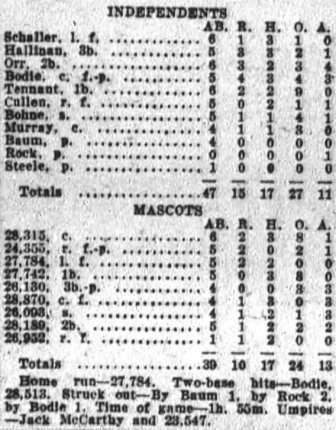
“Names are barred when it comes to San Quentin inmates, but it is worthy of note that No. 27784 came through with a home run, while third sacker 26130 pulled a fielding stunt that would land him with the Coasters if he were a free agent.

“Warden (James A.) Johnson, however, has his players fully signed, and he is protected with a reserve clause that is far more binding than the foundation of organized baseball. “

Jack McCarthy, a former American League and Pacific Coast League umpire, worked the game with “No. 23547,” and “to their credit be it said, the double system worked perfectly.”

The game was a slugfest, won the Independents 15 to 10—Bodie, Schaller and Ed Hallanan had three hits each.

The Box Score

The Box Score

Swain’s independents returned to the prison again the following year, beating the Mascots 9 to 6.  After the success of those games, baseball against outside teams became a regular feature at San Quentin.

Cy Swain

8 Jun

Charles R. “Moose” “Cy” Swain was for a short time, one of the best-known players on the West Coast and his brief time as the West’s home run king is all but forgotten.

Born in Palo Alto, California, Swain made his professional debut with San Jose franchise in the California State League in 1904.  Years later, Mike Steffani, San Jose manager, told The San Jose Evening News that his “discovery” of Swain was an accident.

Steffani was in need of a shortstop, and Swain’s brother Ira, who played at Stanford University,  was recommended to him by pitcher Win Cutter.  Cy, who accompanied his brother to San Jose, played first while Steffani worked out Ira at short.  Steffani said he told Cutter:

“I think young Cy is the best player.  I like the way he handles the ground balls.  He acts like (Charles) Truck Eagan to me.”

Cy Swain was signed.  Ira was sent home.

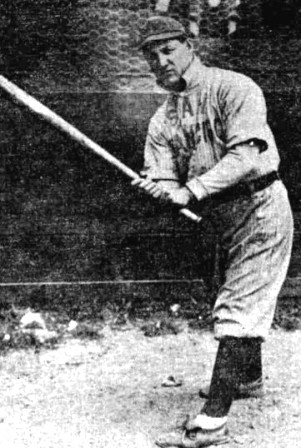
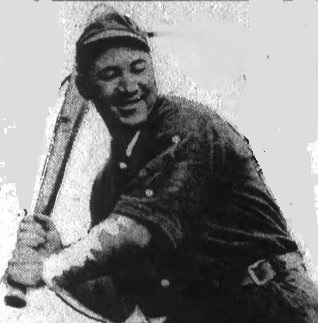
Charles "Cy" Swain

Charles “Cy” Swain

Swain was called “a hard hitter,” who struck out often.  He also apparently enjoyed a drink.  After hitting a disappointing .239 for the Spokane Indians in The Northwestern League in 1907, Swain was traded to the Butte Miners.

In announcing the news, The Spokane Press said, “Charley isn’t exactly a temperance man.”   The paper said that when the Spokane owner sent him a contract with a temperance clause, Swain wired back, “Send me two of those; I may break one.”

Swain, who also struggled with weight issues, went from Butte to the Tacoma Tigers, then the Vancouver Beavers.

In July of 1910, he was leading the league with a .298 batting average when the Washington Senators offered $1800 for his contract.  The Vancouver Daily World said the offer was turned down.  The club’s owner/manager/shortstop Bob Brown told the paper:

“That pennant looks awfully good to me, and until I have it clinched I intend to hold the team intact.  There have been numerous other clubs after Charlie’s services, but they will all have to wait until the season is over.”

Swain slumped badly the rest of the year and finished with a .250 average (and a league-leading 11 home runs). The Beavers finished second, six and a half games behind the Spokane Indians.

Despite Swain’s sluggish finish and questions about his weight—The Seattle Star said he was “carrying 220 pounds”– Washington purchased his contract at the end of the season.  Just before he reported to the team in Atlanta in February of 1911, The Washington Herald said:

“There is a reason why this man Swain should not be overlooked when the time comes for the final selection of the Nationals.  It was Cliff Blankenship who was sent scouting for Walter Johnson five years ago and who signed him…and Blankenship is sponsor for Swain.”

Cliff Blankenship

Cliff Blankenship

Swain responded to a letter from William Peet, The Herald’s baseball writer, about his weight:

“I note what you say about certain of my friends on the Western papers claiming I have taken on so much weight that I am handicapped thereby.  Just write them a personal letter and bet them all you’ve got that I haven’t taken on more than five pounds since I quit playing last fall…I will join the Washington club in shape and try my best to make good.”

Early reports from Atlanta in the Washington papers, The Post, The Times, and The Herald sounded promising:

“For a big fellow Swain is a wonder when it comes to covering ground in the outfield.”

“Though a six-footer, weighing 200 pounds, he runs like a sprinter.”

“He hits hard…his most distinguishing trait (is) a willingness to work and an inexhaustible fund of good humor.”

Swain was hitting .273 in spring games when he became sick (either a cold or the flu, depending on the source) and did not appear in a game, or practice with the team for a week.
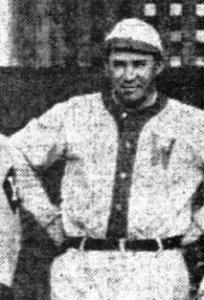
Swain in Atlanta with the Senators

Swain in Atlanta with the Senators

On April 6 The Herald said:

“Swain and Manager Jim (McAleer) had a long talk this morning in the clubhouse and when the Vancouver husky emerged his face was wreathed in smiles.

“’It’s all right, boys,’ he said.  ‘I will probably go back to the Pacific Coast.  Had a nice chat with the boss and told him that if he decided he couldn’t use me to ship me (West) and he promised to do so.”

Swain was returned to Vancouver, where he hit. 309 and helped lead the Beavers to the Northwestern League pennant.  After hitting .286 for the last place Sacramento Sacts in the Pacific Coast league in 1912, Swain was sold to the Victoria Bees in Northwestern League in May of 1913, setting the stage for his record-breaking season.

On August 1, The Oakland Tribune said:

“(Swain) is electrifying the natives in the Northwestern League.  Playing for Victoria, up to last Sunday, Cy had connected with 17 home runs and was hitting .329.”

He hit 17 more by September 18.  Swain’s 34 home runs broke the previous West Coast high—Ping Bodie hit 30 for the San Francisco Seals in 1910 (Art Bues had the previous league record with 27 in 1910)—and his .329 average was a career high.

He benefitted from the small dimensions of the league’s parks; The (Portland) Oregonian said fourteen of his 34 home runs cleared Victoria’s 270 foot center field fence and 11 more came at Seattle where the left and right field fences were just 237 feet from home plate.

After another solid season in the Northwestern League in 1914–.310 with 12 homeruns—Swain was traded to the Minneapolis Millers in the American Association for Fred “Newt” Hunter on November 24.

While most of the newspapers in Northwestern League cities shared the view of The Spokane Chronicle, that “The exchange will effect a promotion for Swain as he will play in a class AA league, which has been his ambition.”  The Seattle Star, however, despite the numbers he put up, raised some doubts about Swain:

“It is not likely that Seattle will be disappointed in the trade…Swain did not deliver last season like the fans had hoped and expected.  He was the joke of the league in the pinches.”
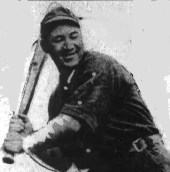
Swain

Swain

Just three days after the trade, Swain was working his off-season job for the Pacific Telephone and Telegraph Company in San Francisco, when he fell from the back of a company truck which ran over his right leg.  On December 4, the leg was amputated.

The San Francisco Chronicle said:

“He was counting on making good with Minneapolis with the view of someday stepping into the big league, the dream of every ballplayer.  What Swain will do now with one limb lost has not been decided, for the unfortunate player is overwhelmed with grief at the sudden termination of his diamond career.”

Benefit games were held in San Francisco and Tacoma, drawing 4000 and 7000 fans; the games raised more than $4000 for Swain.

He used the money to open a cigar store in San Francisco with another former player, Tommy Sheehan.  The two also organized a team, managed by Swain, called the Independents.  The team was comprised of West Coast professionals—including Ping Bodie, Spider Baum, and Biff Schaller–and played during the winter and early spring.  One of their games in the spring of 1916 was the first game ever played by an outside team on the grounds of San Quentin Prison.  Swain’s team won 15 to 10.

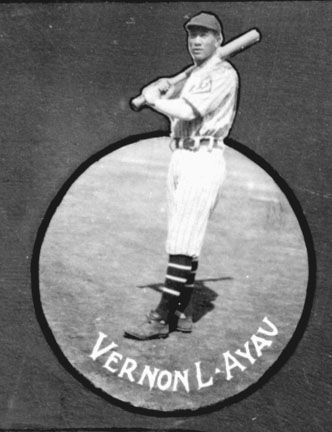
In November of 1916, Swain and Sheehan organized team made up of major leaguers and West Coast players to travel to Hawaii for a series of games.  The team played local and military teams, as well as the All-Chinese team which included Vernon Ayau, the first Chinese player to have appeared in a professional game.

Ayau, played against Swain's team in Hawaii

Ayau, played against Swain’s team in Hawaii

News of the games in Hawaii was sketchy; based on various reports the team played between eight and 12 games on the trip; all sources agree the only game they lost was against a US Army Infantry team.

Swain continued to manage the Independents in 1917 and ’18.  He and Sheehan also sold the cigar store and opened the Maryland Bowling Alleys in Oakland with Cliff Blankenship, the former catcher who recommended Swain to the Washington Senators in 1910.

Early in the fall of 1918, Swain’s brother, Ira, who accompanied to the tryout in San Jose in 1904, contracted the Spanish Flu and died on October 21.  On November 5, The Oakland Tribune said:

“Charlie Swain, one of the most popular ball players in the history of the game in the West, died here last night, a victim of Spanish Influenza.  Two weeks ago today Charlie’s brother Ira fell victim to the malady.”

Swain was 36-years-old.  The Tribune said:

“Good-bye, Charlie, we’re going to miss that happy smile.”

Lost Advertisements: Bill Killifer [sic] for Sweet Caporal Cigarettes

5 Jun

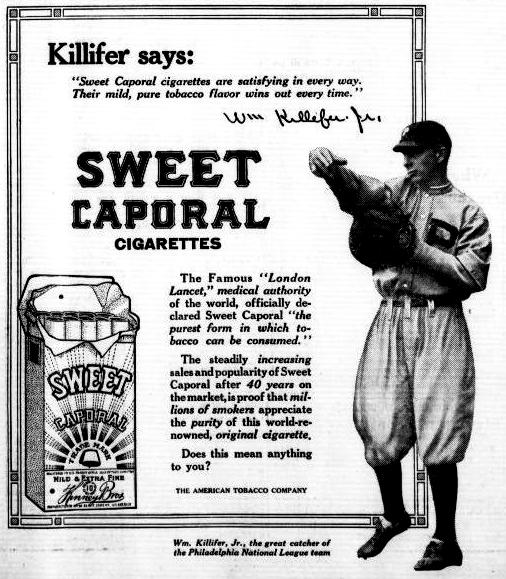
killifersweetcaporal

A 1914 advertisement for Sweet Caporal Cigarettes.  While spelling Killefer‘s name wrong, the ad calls him “(T)he great catcher of the Philadelphia National League Team.”

Killefer says:

“Sweet Caporal cigarettes are satisfying in every way.  Their mild, pure tobacco flavor wins out every time.”

In 1918, Killefer was traded to the Chicago Cubs, along with Grover Cleveland Alexander.  After the Cubs won the National League pennant, The Chicago Daily News reported that Killefer would be getting a bonus beyond his World Series share:

“A bet of a ten-cent cigar against $1000, made as the result of a joke while the Cubs were training at Pasadena, California, last spring has been won by Bill Killefer, it was revealed today.  The loser, William Wrigley, one of the club’s stockholders, wagered the $1000 that the team would not win the National League pennant.  Killefer, who accepted it in jest, had forgotten about the bet until he was reminded of it by Wrigley.”


“Pitcher Geiss No Good”

3 Jun

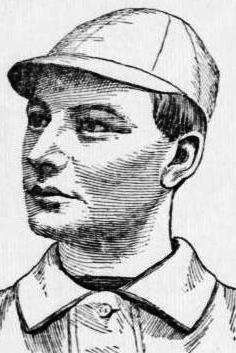
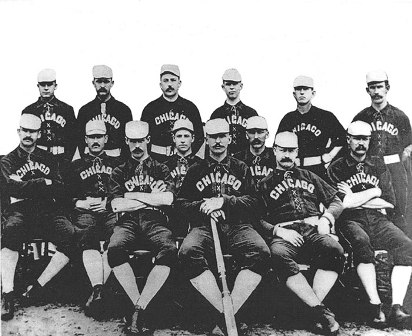
Emil August Geiss pitched one game in 1887 for Cap Anson’s Chicago White Stockings; it was his only Major League game as a pitcher (he later played two games in the infield).

The Chicago Tribune reported that Geiss was signed by the White Stockings “at a salary of $250 month.”  Geiss had been blacklisted the previous season for failing to report to the St. Paul Freezers in the Northwestern League after signing with that club.  The paper said, “It cost $200 to get him reinstated (The Sporting Life said it was $600).”

Geiss’ performance on May 18 was less than memorable.  He gave up 11 runs, eight earned, and 17 hits in an 11-4 loss to the Washington Senators.

The Chicago Tribune headline the following day summed up Geiss’ performance:

Pitcher Geiss No Good

Emil Geiss

The headline in The Chicago Inter Ocean was no kinder:

Geiss Is No Good.  A New Pitcher Tried by the Chicagos at Washington with Disastrous Results

The paper said Anson, who sat out, “watched the game from the players’ bench, a look of disgust deepening on his face every inning widened, and fairly turned his back on the unfortunate Whites.”

Geiss briefly redeemed himself when filling in for Anson on June 15 against the Indianapolis Hoosiers. The Tribune said:

“Geiss played first base in first-class style. He accepted eleven chances with no errors.At the bat he struck out twice and made one hit.”

Their opinion changed one week later when he played in place of Fred Pfeffer at second and  made three errors on seven total chances and was 0 for 5 at the plate.

The Tribune said:

“If Geiss is capable of no better work that he did yesterday he should not be allowed to again don the uniform of the Chicago nine.  A man who plays as he did is a positive menace to the success of the club.”

At the end of June, Geiss was released and finished the season in the Chicago City League.

An additional note about Geiss, and it’s a confusing note:

The remainder of his career is a bit vague and complicated.  His brother was William Geiss, who had two brief major league stints and a long minor league career during which he sometimes played under the name of Emil Geis (one “s”), further complicated because Emil Geiss’ Cook County, Illinois death certificate lists him as “Emil Geis.”

Emil pitched for the London Tecumsehs in the International League in 1888 and ’89.  He was the subject of a dispute between London and New Orleans in the Southern League over his rights—an arbitrator ruled that Emil was the property of London; at the same time William was with New Orleans, so we know it was Emil with London.

After a seven-year absence from professional ball, Baseball Reference has Emil hitting .402 in 41 games split between Bloomington in the Western Interstate League and Ottumwa in the Eastern Iowa League in 1895.

It seems likely, and contemporary reports indicate that it was actually William, playing under the name Emil Geiss (sometimes Geis) who put up those numbers in 1895–this conclusion is also supported by the fact that Emil, who had joined the Chicago Police Department in 1891 was still a member a force in 1895.

William Geiss

William Geiss

Both brothers died in Chicago, Emil on October 4, 1911, and William on September 18, 1924.  Both are buried at Saint Boniface Cemetery in Chicago.


“Baseball is far behind Golf in its Self-analysis”

1 Jun

During the Chicago Cubs disappointing fifth place finish, with a 67-89 record in 1916, the team hit just .239.

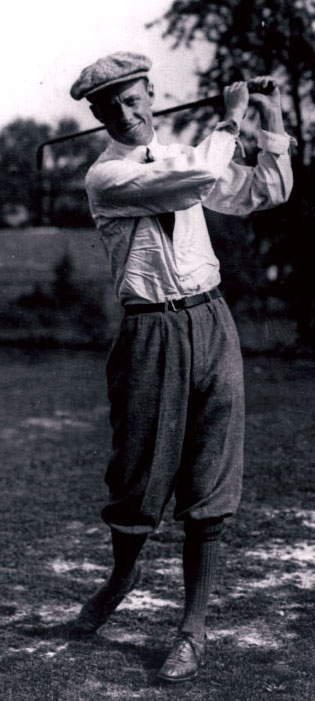
When Manager Joe Tinker was replaced by Fred Mitchell, team owner Charles Weeghman announced that golfer Charles “Chick” Evans, who in 1916 became the first to win the U.S. Amateur and U.S. Open in the same year, would be accompanying the team on their spring training trip to Pasadena, California.

Chick Evans

Chick Evans

Weeghman told The Chicago Day Book’s Mark Shields that Evans would teach the hitters “a golf follow through” intended “to increase the batting of the regulars.  Shields said Weeghman “Points to (Frank) Schulte, (Heine) Zimmerman and (Tris) Speaker as strong hitters who use a golf style.”

Weeghman told The Associated Press (AP):

“There is form in the driving of a golf ball, but there is none in driving a baseball.  Applying the form of golf to baseball was responsible for the wonderful driving power of Frank Schulte and Heine Zimmerman.”

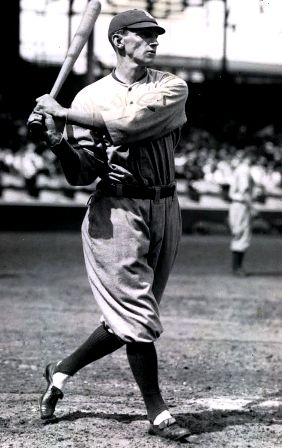
The Cubs’ owner allowed that Schulte knew nothing about golf, but said “(H)e unconsciously used the same swing.”

Frank Schulte's swing

Frank Schulte’s swing

Weeghman said the golfer would not be paid for services in order to maintain his amateur standing.

Evans told The Chicago Daily News that “the batsmen don’t have the knowledge of stance, grip and manner of swinging that the more successful golfers possess. “

He told The International News Service that he had considered a career in baseball:

“Chick says that he might have become a baseball player after having pitched a no-hit game for his high school (Evanston Academy).”

Evans claimed “a torn ligament at the shoulder” derailed his plans.

The response to the Cubs’ plan was immediate.

The Daily News said:

“Chick Evans is going to teach the Cubs how to bat, thereby accomplishing something no one else even considered possible.”

Rabbit Maranville told The AP the story was “a funny one,” and that he was sure that the decision to bring in Evans was strictly Weeghman’s, and likely not endorsed by the Cubs’ new manager:

“Doesn’t seem to me as if (Fred) Mitchell is responsible for that stunt.  I guess it’s being wished on him.

“In baseball the batter needs courage.  He does not know when the pitcher is going to slip a notch in his control…Courage is the big asset in batting, and with all the respect in the world to golf, where is there any great courage needed in driving the golf ball?”

While John Brinsley “J.B.”  Sheridan, the sports editor of The St. Louis Globe-Democrat, said ballplayers may derive some benefit from a golfer’s advice:

“Baseball is far behind golf in its self-analysis.  The keen minds of many generations of Scotch students have been devoted to the science of golf.  So far, no keen analytical mind has been given to baseball.  Men who do know the game are usually inarticulate and cannot tell what they know.”

Sheridan outlined how golf in general, and Evans in particular, could help:

“Drawing back the club or the bat slowly is most important.  If the striking implement is drawn back too quickly or with a jerk, the player is thrown off balance and his eye is put out of focus.

“It is notable that the great hitters, Speaker, Joe Jackson, Eddie Collins and others carry their bats well behind them and do not draw back quickly.”

Additionally, Sheridan said other “golf maxims will help” hitters, including:

“Hit off the (front) foot.  Keep your eye on the ball.  Do not hit too hard.  Follow through.”

Weeghman’s plan was finally shelved shortly before the team departed for the West Coast.  The Daily News said the United States Golf Association (USGA) could strip Evans of his amateur standing:

“If Evans uses his ability as a golfer to aid him in attempting to instruct ballplayers how to swing their bats, it appears that he will take a long chance.”

Charles Weeghman

Charles Weeghman

Evans was in California at the same time as the Cubs in March, and although newspapers had announced he would accompany the team “over the Sante Fe” railroad on the trip, it is unclear whether he actually traveled with the team.  The AP said he “stayed far away” from the Cubs’ practices in order to not run afoul of the USGA, but one paragraph in The  Chicago Tribune the day after the club’s first practice in Pasadena was rained out, likely exposed the Cubs’ owner’s real intention for wanting Evans in California:

“(The rain) did not keep Prexy Weeghman from tackling Chick Evans in a golf match.  They had played only twelve of the eighteen holes when the mist became so active it stopped the contest.  At the finish, the score stood $11 to $1 in favor of the national amateur champion.”

The Cubs posted a slightly improved 74-80 record, but once again finished in fifth place.  Whether the lack of instruction from Chick Evans was a factor or not, the team’s batting average was .239; identical to their 1916 average.

Lost Advertisements–Bull Durham’s Fan for a Fan

29 May

1913fan

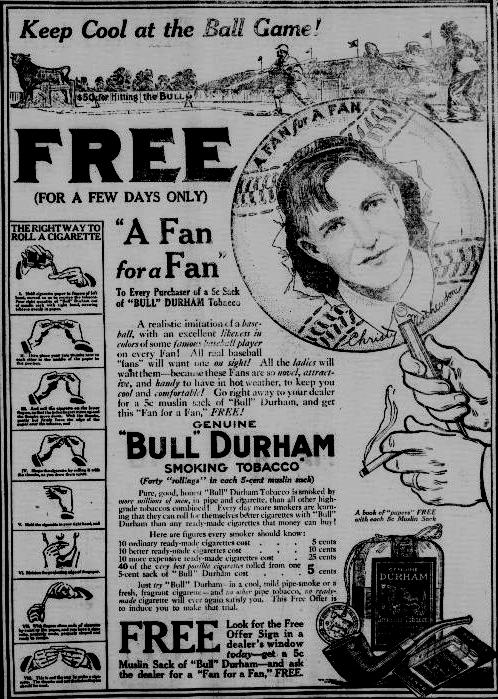
A 1913 advertisement for the “A Fan for A Fan” offer from Bull Durham Tobacco:

Keep Cool at the Ballgame

 Free (for a few days only)

A Fan for a Fan

 To Every Purchaser of a 5 cent sack of “Bull” Durham Tobacco

A realistic imitation of a baseball, with an excellent likeness in colors of some famous baseball player in every fan!  All real baseball “fans” will want this on site!  All the ladies will want them–because these fans are so novel, attractive, and handy to have in hot weather to keep you cool and comfortable!  Go right away to your dealer for a 5 cent muslin sack of “Bull” Durham, and get this “Fam for a Fan,” Free!

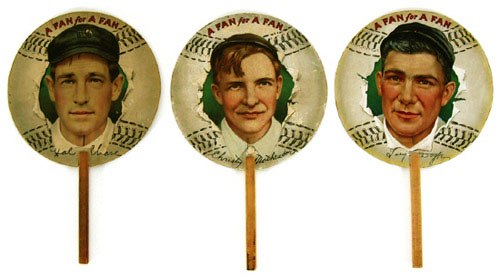
In addition to the Christy Mathewson fan featured in the ad,  Ty Cobb, Hal Chase, Frank Baker, and Larry Doyle were also available; the fans themselves included a facsimile signature of the player and no mention of Bull Durham.  Apparently they are rare enough that auctions date them only to “Circa 1910,” and make no mention of them being distributed by the tobacco company.

fan

Chase, Mathewson and Doyle fans from a 2005 auction; the three sold for $3,480.


Charlie Roy

27 May

Robert Charles “Charlie” Roy was one of the most sought after prospects in the country in the winter of 1905.  Raised on the White Earth Reservation in Minnesota, Roy was a pitcher for the Carlisle Indian School baseball team.

The Minneapolis Journal said of the 21-year-old:

“He has been pitching altogether four years, and he puts remarkable speed into the ball.”

In December of 1905, it was reported that Roy was about to sign with the Cincinnati Reds, but just days later he chose to return to Carlisle

The manager of the Carlisle baseball team in the spring of 1906 was Philadelphia Phillies pitcher Charles “Togie” Pittinger–who won 23 games for Philadelphia in 1905.

In March, it was announced  that Roy had signed a contract with the Phillies on the recommendation of Pittinger.  The Philadelphia Record said Pittinger compared the pitcher’s abilities to those of one of Roy’s childhood friends, another Carlisle product:

“He thinks Roy has every earmark of developing into one of the best pitchers in either major league, and predicts for him as bright a baseball career as that of (Chief) Bender.”

Cincinnati protested the signing and claimed Roy had “Verbally agreed,” to a contract the previous December and belonged to Reds.  As the National League considered which team he belonged to, Roy worked out with Phillies.

Charlie Roy, Carlisle Indian School, 1906

Any thought that he’d instantly join the team and be the next Bender was dispelled by Phillies Manager Hugh Duffy who was quoted in The Pittsburgh Press that Philadelphia would not appeal if Cincinnati won the claim because:

“Roy lacks the experience necessary to make him a success in the big league.  He is still green, and until the greenness wears off he will be of no value to big league team.”

The National League ruled that Roy was the property of Philadelphia, and regardless of Duffy’s assessment he made his debut for the Phillies in late June.  Roy only appeared in seven games, posted a 0-1 record with a 4.91 ERA and was sent to the Newark Sailors in the Eastern League.

Charlie Roy

Charlie Roy

He was 2-4 with Newark and was 2-4 again early in 1907 when he was released by the Sailors.  He signed with the Wilmington Peaches of the Tri-State League, although there is no record of him appearing in a game.  He finished the 1907 season with the Steubenville Stubs in the Pennsylvania-Ohio-Maryland League, appearing in 15 games.

Despite dropping from the Major Leagues to a class “D” league in 18 months, the 23-year-old pitcher was still considered a good prospect. The Pittsburgh Post-Gazette said after he won his first start for the Stubs, a 7-2 three-hitter against the Braddock Infants:

“He has plenty of speed and fine curves and looks like a winner.”

But near the close of the 1907 season it was clear he’d never be another Bender.  Despite being drafted by Boston Doves, The Associated Press reported that he would refuse to report to the National League club in the spring:

 “Charlie Roy, The Indian Twirler…has quit baseball to go into the evangelist field.”

Some papers reported the pitcher’s decision more impoliticly.

The Harrisburg Telegraph:

“(Roy) says he has had all the National League game he wanted, and rather than report he will go back to the plains and throw mud balls at his fellow Indians.”

The Sporting Life:

 “(Roy) intends to forsake the diamond after the close of this season and equip himself for evangelistic labors among the redskins of the Northwest.”

Roy returned to the White Earth Reservation to preach and eventually settled in Blackfoot, Idaho  where he died in 1950.

A shorter version of this post appeared on October 30, 2012.