Archive | Uncategorized RSS feed for this section

“Walsh? Ed Walsh? Who’s he?”

16 Mar

On May 1, 1912, as a result of a contract dispute, press operators walked off or were locked-out, of their jobs at 10 Chicago newspapers.  The following day, drivers and newsboys walked out in sympathy, and ultimately three more unions joined.

The dispute, which at times became violent, lasted until November.

The New York Times said at one point during the strike’s first week, less than 50,000 copies of the city’s four morning newspapers—limited to just four pages each– were distributed to a metropolitan area with a population of nearly four million.

Every Chicago paper, with the exception of The Day Book, Edward Willis Scripps’ advertisement free, pro-labor publication, suffered decreases in circulation and were forced to publish smaller editions for the first weeks of the strike.

The strike also had a negative impact on two other Chicago institutions.

The New York Tribune noted that during the first two weeks of May, while most of Chicago’s papers provided a minimum amount of baseball coverage, attendance at White Sox Park (renamed Comiskey Park the following season) and West Side Grounds “dropped off 30 percent.”

Writing in The Chicago Herald-Record after that paper had again begun publishing full-sizes editions in mid-May, sportswriter Hugh Fullerton was not surprised that less baseball news resulted in smaller crowds at the ballparks:

“Various major league club owners have, during their recent years of great prosperity, declared that baseball was independent of the newspapers.  Indeed such intellectual giants as C. Webb Murphy and Charles Ebbets have practically stated that the newspapers depended upon baseball for their circulation.  Of course, printing baseball news makes circulation for newspapers; else the newspapers would not print it.

“But during the last ten days Chicago has given the club owners and object lesson in the relative values.  There has been a strike of several trades allied with the newspaper printing business which resulted in crippling ten big dailies, restricting their circulation, besides cutting down the amount of baseball news and gossip printed.  The instantaneous result must have been a shock to the baseball magnates, who thought that the game was independent of the advertising.”

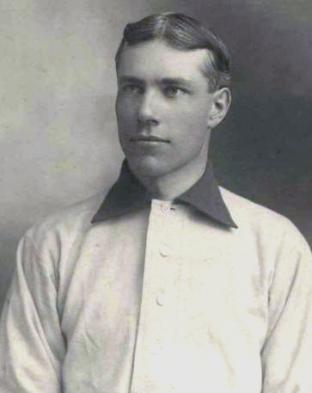
Hugh Fullerton
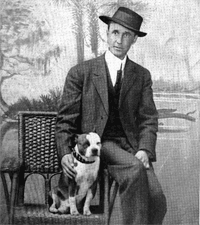
Hugh Fullerton

Fullerton, like the New York paper, said the attendance decline was “at least” 30 percent.

“I scouted around the city and discovered, rather to my amazement, that the lack of baseball news was received rather as a welcome relief from a necessary evil than as a bereavement.  A score of men told me they were glad they couldn’t get the news, that their employees could attend to business and that there was less waste of time…The town, which has been wild over the sensational race of the White Sox, cooled off in an instant.  I met fans who had been rooting wildly, who inquired whether or not the team was in town.”

Fullerton’s observations led him to the “startling proof that interest in baseball largely is manufactured by the papers.”

And, if the strike were to result in a further decrease in baseball news:

“I really believe that if the newspapers were to be suppressed for a couple of months, and one was to mention Walsh, people would say, ‘Walsh?  Ed Walsh?  Who’s he?’”

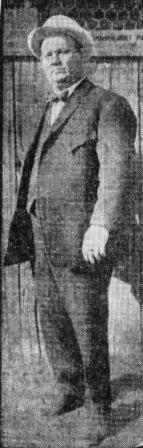
Ed Walsh

Ed Walsh

While the strike continued through the entire season, circulation and baseball coverage increased in June, giving no one the opportunity to forget Chicago’s best pitcher.

Attendance at Chicago’s ballparks rebounded as well.  By season’s end, Walsh’s White Sox drew more than 600,000 fans, despite a 20-34 swoon in June and July and a fourth place finish; while 514,000 fans  came out for the third place Cubs.
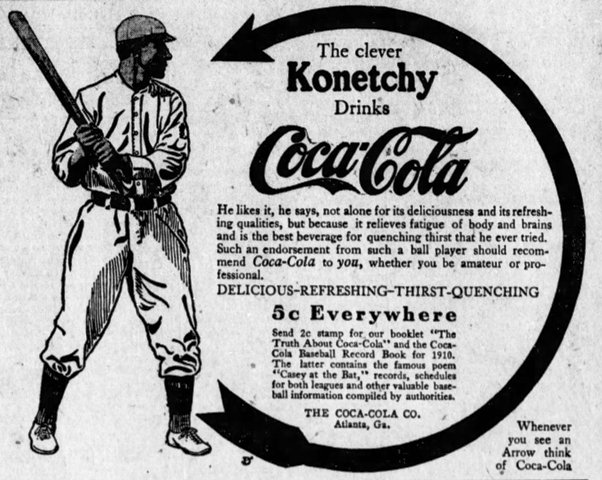
Lost Advertisements–“The Clever Konetchy Drinks Coca-Cola”

13 Mar

konetchy

A 1910 advertisement for Coca-Cola featuring St. Louis Cardinals first baseman Ed Konetchy:

“He likes it, he says, not alone for its deliciousness and its refreshing qualities, but because it relieves fatigue of body and brains and it is the best beverage for quenching thirst he’s ever tried.

“Such an endorsement from such a ballplayer should recommend Coca-cola to you, whether you be amateur or professional.”

Two years later, Konetchy shared his theories on batting and batting slumps, with The St. Louis Globe-Democrat:

“The ordinary person cannot for the life of him reason out why a ballplayer should be able to hit one part of the season and suddenly take a slump and act like a novice at the bat.  To one familiar with the playing of the game of baseball, the reason for this was a well-known fact.

“Good hitting, considering of course a natural player, generally depends upon the physical and mental condition of the man.  When he is in good shape, his eye is clear and his brain works quickly;  when he is out of condition his mind is dull and he loses his eye for the ball.”

[…]

“The other day as were leaving the field of St. Louis, I heard a fan, referring to one of our players, remark: ‘They ought to bench that fellow, he can’t hit anything.’  As a matter of fact, the man to whom he referred was one of the best stickers of our team and had merely been up against a little hard luck.  For three or four days, I have watched this player and almost every time he came to bat he had met the ball squarely but could not seem to place it into fair territory.  This is a fact that is not taken into consideration by a great many baseball lovers.  They judge a man’s ability to hit by reading the scores in the next day’s papers, not at all stopping to think that a man who has no hits credited to him may have done far more towards winning the game than the player who annexed two or three safeties.”

Congress Plays Ball

11 Mar

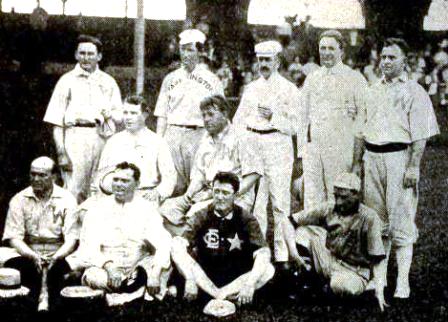
On July 16, 1909, the United States Congress took over Washington’s American League Park.  More than 1000 Washingtonians paid 75 cents to watch Democrats and Republicans in, what The Washington Post called an “affair (that) was advertised as a ball game.”

The Washington Herald said:

 “Hurrah for the Democratic party!

”No joking—the faithful followers of Jefferson, or whoever it was that gave (William Jennings) Bryan’s friends their principles, certainly did do things to the tried and true lieutenants of Speaker (Joseph Gurney) Cannon at the National Park yesterday afternoon, when two baseball teams composed of members of the House of Representatives fought it out for seven innings in some of the hottest rays Old Sol has dealt out to Washington this summer.”

[…]

“Republicans and Democrats alike were free traders, so far as errors and two or three base hits were concerned.”

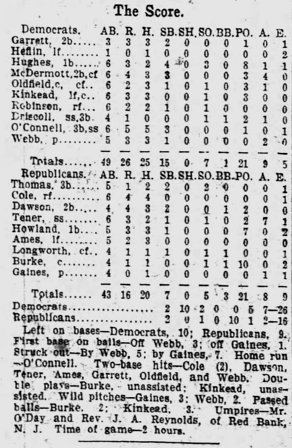
The game ended after seven innings, the Democrats winning 26-16.

The Democrats

The Democrats

The Associated Press (AP) said:

“More varieties of baseball were played in that game than ever crowded into seven innings before and strange as it may seem not all of the varieties were bad.  The Democrats put up a rattling good game in the field—sometimes.”

The Box Score

The Box Score

The AP said one of the highlights of the game was the collision between Republican catcher James F. Burke (PA) and pitcher Joseph H. Gaines (WV) in front of home plate on a pop up, “While (Burke) and the pitcher were doing the ‘Alphonse and Gaston,’ three Democrats with a warped idea of chivalrous courtesy raced home.”

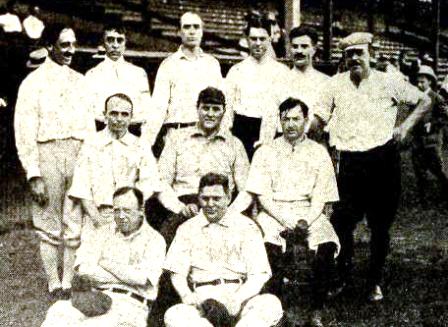
The Republicans

The Republicans

The Washington Times was more critical of the abilities of the lawmakers, singling out several:

“Before going further it is necessary to state that for the Democrats the man who attracted the most unfavorable notice was Handsome (James Thomas) Heflin of Alabama, who, with the help of a collie dog, covered left field for his party in a lamentable, sad and sorrowful style.  Heflin is tall and stout, and not to say sebaceous, and he and the dog went on the principle that they could catch every fly and stop every grounder by simply staring the ball out of countenance.  Heflin played the position like a merycotherium.  He probably does not know what that mean, but a glance at the dictionary reveals it to be an animal like a rhinoceros, ruminant, contemplative and far from agile.”

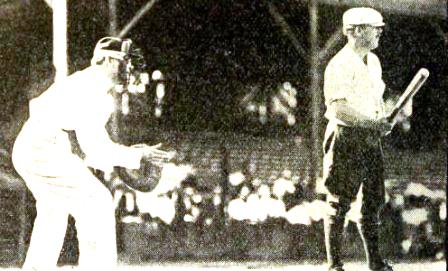
Nick Longworth (OH), who was dressed in a golfing suit, and hit at the ball as if he thought it had been teed for him (he struck out twice) is suffering this afternoon from a wrenched erector spinae muscle, caused by continually looking up and seeing flies, which he had misjudged go sailing over his head in center field.”

congressman Longworth at the plate.

Congressman Longworth at the plate, Congressman Kinkead is the catcher

The Times said, in general:

“Most of the players in trying to catch the ball held up their hand as if they expected someone to place in them very gently a salary check or a piece of pie.  On grounders they all had holes in their legs and could not stop a thing.”

Despite the overall criticism, the paper did mention three players on each team for being, at least, passable on the field.

Among the three Republicans was former big league pitcher, turned Pennsylvania Congressman, John Tener who played shortstop and had two hits and made just one of his team’s nine errors.  The other two Republican standouts were Albert F. Dawson of Iowa and Leonard Paul Howland of Ohio.

The three ”best fielders” among the  Democrats were Eugene F. Kinkead and William Hughes  of New Jersey and William Oldfield of Arkansas.

Congressman Hushes at the plate.

Congressman Hughes at the plate.

The game raised $320.55 to for the Washington Playgrounds Association “for the benefit of the children of Washington.”

The nation’s biggest baseball fan, President William Howard Taft skipped the game to play golf with Vice President James S. Sherman.

Lost Pictures–Pete Childs

9 Mar

A good detective story.

In February, I told the story of Peter Pierre Childs’ one-pitch triple play while he was the manager and occasional relief pitcher for the Portsmouth Cobblers in the Ohio State League in 1910.  While I was able to locate a picture of Childs with Portsmouth, I could not find a high-quality image of him in a major league uniform.  The only one I was aware of was a grainy photo included with Childs’ one-sentence biography in Wikipedia.

After I posted the story, I received an email from Mark Fimoff, co-chair SABR Pictorial History Committee. Mark is one of the foremost baseball photograph researchers and has helped me identify players in photographs in the past.

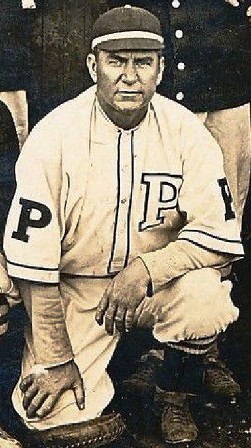
He has recently discovered two photographs of Childs that have been misidentified for more than 100 years.

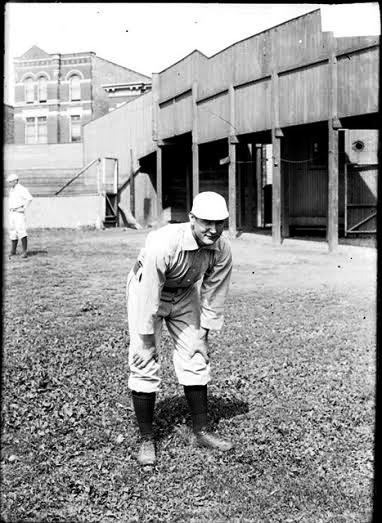
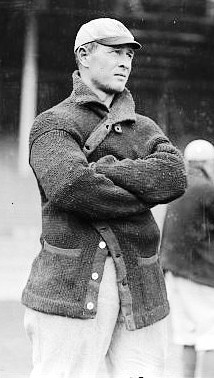
petechilds petechildschidailynews2

The pictures are part of the collection from The Chicago Daily News.  The paper, and subsequently, the Library of Congress and the Chicago History Museum misidentified Childs (and also got the year wrong) until Mark discovered the error.

The listings for the pictures say:

“Baseball player Delhanty [sic] standing on a baseball field.”

And

“Baseball player Delhanty [sic] bending forward with hands on his knees standing on a baseball field.”

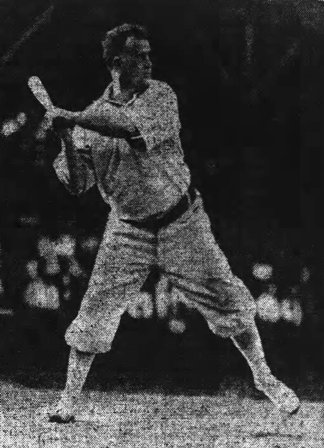
“Delhanty” is Jim Delahanty, who played with Childs on the 1901 Chicago Orphans.

jimdelahanty

Delahanty

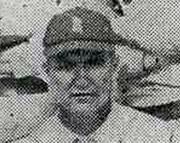
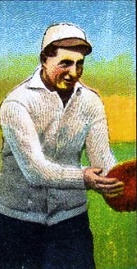
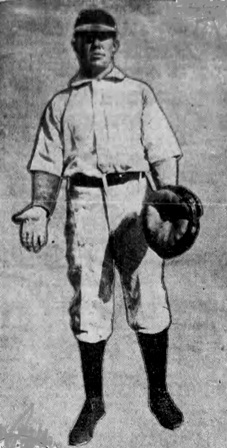
pchilds

Pete Childs

Pete Childs

The listings for the photos also say they were taken in 1906.  Mark said, based on the uniform and the centerfield clubhouse visible in the photos—the wood structure pictured was replaced with a brick structure in 1905—the photos could not be from 1906.  Neither Childs nor Delahanty played with Chicago in any season other than 1901–so the photo was taken sometime between mid-July and October of 1901.

—–

 Childs was acquired by the Orphans in July after he was released by the St. Louis Cardinals.  He replaced Cupid Childs (no relation), who had been released by Chicago a week earlier, at second base.

Pete Childs was an upgrade in the field but hit just .229, 29 points lower than his predecessor, Cupid Childs.

The Chicago Inter Ocean said:

“Pete Childs is the best thing, in a fielding sense, Chicago has had since the days of (Fred) Pfeffer.  It is a mystery how a man who moves so fast after a grounder can move so slow in going down to first.  It is probable that Motionless Peter stands on his heels when batting, and that he thus heaves a mound of earth under his hoofs, blocking his passage, when he scoots, and materially jarring his batting average.”

Pete Childs was released by Chicago at the end of the 1901 season.

Lost Pictures–The Princeton Pitching Gun

6 Mar

princetonpitchinggun


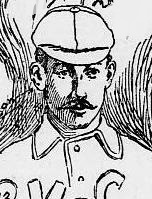
The illustration above–from The Chicago Times-Herald in the summer of 1897–depicts the Princeton University team’s first use of The Pitching Gun–the invention of Mathematics Professor Charles Howard “Bull” Hinton, a member of the Princeton faculty.

The Times-Herald said of the gun:

“A test was recently made at Princeton in three games played on the college ball field, and the machine is said to have given satisfaction, although there was some delay caused by the necessity of loading the canon.”

The paper said there were no problems “regulating the speed of the ball, nor in causing it to curve or drop as if thrown by a human being.”

The illustration is inaccurate, the device was not fired like a gun, but rather, according to The New York Sun, it was “discharged by the batsman, who, when ready for the ball to be delivered, steps upon an electrical intercepting plate, connected by wires which trigger the cannon.”


The success of the new invention, which Hinton had been testing for more than a year, was likely overstated as well.

A trial of the gun in Newark, during an exhibition game between the Newark Field Club and the Orange Y.M.C.A., did not go as well.

The New York World said:

“Prof. Hinton and his so-called pitching gun were on exhibition at Newark yesterday…Fifty-seven persons were on hand to see the performance.”

The paper said it took Hinton more than an hour and a half to set up the gun, which used gunpowder to discharge the ball.  The players on both teams feared stepping up to the plate against the gun.

The World concluded:

“(Hinton) is thoroughly in earnest about the practicability of a pitching gun, although his experiences by this time should have convinced him that his invention, even if perfected, will never be of the slightest use to the world.”

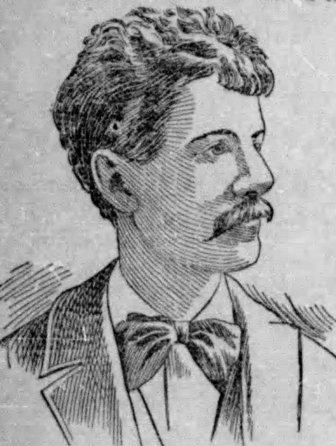
Charles H. Hinton

Charles H. Hinton

Hinton moved from Princeton to the University of Minnesota in 1898 and continued trying to perfect his invention, but The Philadelphia Press declared it “impracticable for regular use.”

Hinton finally abandoned his quest to create the first viable pitching machine when he went to work at the United States Navel Observatory in 1900.

“A Pork Jinx on the Club”

4 Mar

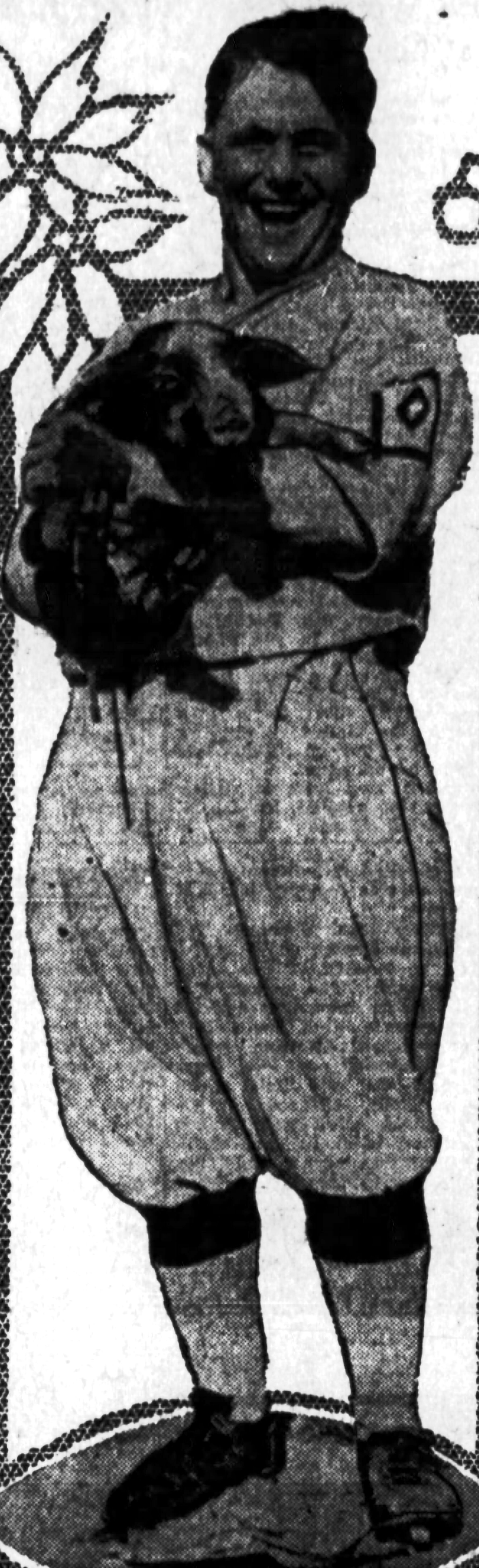
To mark the Oakland Oaks 1916 home opener, J. Cal Ewing, generally known as “The Godfather of the Pacific Coast League” presented Oakland Manager Harold “Rowdy” Elliott with a gift:  The Oakland Tribune said:

“Ewing gave to the Oaks a mascot in the shape of a real ‘rooter,’ a yearling pig, which was kept on the players’ bench throughout the game.”

The Oaks cruised to a 10-2 victory over the Portland Beavers in front 15,000 enthusiastic Oakland fans, and the superstitious among the ball club and their fans attributed the win to “Margaret,” the new mascot.

The Oaks played well in April, and were in first place until the end of the month, but by mid May they were 16-21, fifth place in the six-team league—and it was noticed that no one had seen “Margaret” for some time.

Rowdy Elliott with Margaret

Rowdy Elliott with Margaret

The Tribune was convinced the disappearance of the pig was responsible for the team’s decline:

“Suffering Pigs!  A Pork Jinx on the club!…The wrathful shade of a female porker is responsible for the Oaks’ slump.  Maggie the Pig was compelled to shuffle all her porcine coil to the accompaniment of roast apples and cranberry sauce, which is no nice way to treat an emblem of Good Fortune.”

The paper also noted that the club’s secretary also worked as a cook, and Ewing should have “had sense enough” to take that into account before presenting the team with a pig.

And, the paper composed a poem:

O Maggie, dear, and did ye hear

   The news that’s goin’ round?

The Oaks are losing day by day

   And soon they won’t be found.

They’ve ingestion badly.

   And they’re looking for the hook

They can’t play ball at all, at all

   Since you went to the cook.

It became a bit of a scandal.

The Oaks quickly denied that the pig had been eaten:

“They say the trouble is that they haven’t eaten her pigship.  Margaret was given to the ground keeper to preserve, and that personage refuses to produce the pig.”

Rowdy Elliott was quick to tell The Tribune the reason for the club’s slump had nothing to do with the team mascot.  He said the blame was clearly the result of another team’s mascot:

“Elliott says the Oaks’ slump can be attributed to no less a personage than Erasmus Pinckney Johnson.”

Johnson was the mascot for Frank Chance’s Los Angeles Angels—The Los Angeles Times said the young African American boy had been found, on Chance’s orders, in late April in order to break a week-long losing streak. The Times routinely described “the good luck charm” in the most racist terms.

Part of the “luck” Johnson brought was derived from rubbing the young mascot’s head.  Elliott claimed during the Oaks’ last series in Los Angeles he had rubbed the Johnson’s head “the wrong way.”

“Since that moment Rowdy has had little luck, winning only two games out of the last fourteen played.  Erasmus hasn’t been doing much for the Angles of late, for Chance’s crew has been in a slump, but he has at least succeeded in wrecking the Oakland club.”

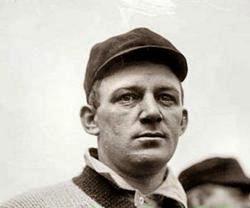
Frank Chance

Frank Chance

So desperate were the Oakland fans for answers that The Tribune enlisted two prominent fans, an Alameda County Circuit Court judge and a local doctor to do a “psychological study of the team.”

“Judge Wells…has come to the conclusion that the team has worked itself into a jinx, and needs the aid of the pig mascot they had in the opening game to pull them through.  Dr. Halsey agrees that hits, pitching fielding and psychology and all may have something to do with it, but the real reason, according to the doctor, is that the boys are suffering from a nervous breakdown that followed shortly after seeing such an enormous crowd at the opening game.”

Things quickly got worse for the Oaks. Elliott was suspended for several days for throwing a ball at umpire Jack Doyle, and the team continued to lose in June, and then for the rest of the season.

At the end of July Elliott was sold to the Chicago Cubs, George “Del” Howard, who had purchased the club during the season, replaced him as the Oaks’ manager.

Oakland finished 1916 in last place with a 73-136 record.  Chance’s Angels overcame their May slump and easily won the championship with a 119-79 record.

Margaret the pig was never heard from again.

“There were Absurd Errors, Collisions, Accidents, Spectacular Batting”

2 Mar

William Henry “Josh” Reilly had a memorable big league debut for the Chicago Colts in 1896.

Josh Reilly

Josh Reilly

Reilly filled in at shortstop for Bill Dahlen in a May 2 game against the St. Louis Browns.  The Chicago Tribune said Dahlen was “(E)ngaged at home in holding a hot water bag against a turbulent tooth.”

While the toothache story was reported in the Chicago papers, The Sporting Life was not sold on the reason for the hard-drinking Dahlen’s absence:

“Dahlen laid off—was sick, or—well, you know Dahlen.”

Bill Dahlen

Bill Dahlen

The Chicago Inter Ocean called the game “Worse than cough medicine,” and said:

“Of all the untabulated, unscheduled, unexpected, terrible, heartrending, frayed-out exhibitions of something or another that must be classed under the head of baseball, yesterday’s game with St. Louis was the worst.”

The Tribune said:

 “There were absurd errors, collisions, accidents, spectacular batting.”

Reilly was responsible for three of those “absurd errors,” and some of the “spectacular batting,” going 2 for 6 in his debut; he was also responsible for what The Tribune called “The electrifying feature of the game.”

The Inter Ocean described what happened:

(Monte) Cross got to first because (Chicago first baseman) George Decker thought his arm was as long as the legs of a man who has to stand on a ladder to comb his hair.  His arm was short by about six feet.  Then (Tom) Parrott made a single to center… (Duff) Cooley knocked a hot liner, and everybody started to sprint.  Reilly was playing at short, and stuck his finger nail into a loose stitch just as the ball shot past him.  He slammed it to (Harry) Truby, where Cross should have been, but was not, and Truby in turn, tossed it over to Decker to fondle while Parrott endeavored to correct himself.”

That game was the only highlight in Reilly’s major league career.  He played a total of nine games in Chicago—the other 8 at second base—and made a total of 11 errors.  And, after going 2 for 6 in his debut, he was just 6 for 36 thereafter.   Then, in late May Reilly became ill—accounts varied regarding what the illness was, The Sporting News said it was typhoid fever, The Sporting Life, and The Chicago Daily News said pneumonia.

Reilly returned home to the West Coast.  By September, his debut heroics were long forgotten, The Tribune simply said:

“(Reilly) was a disappointment and he was released.”

Despite his brief and relatively inauspicious big league career, Reilly was a popular minor leaguer for more than a decade.

An often told story about him, alleged to have taken place the year before his short trial in Chicago, illustrates just how superstitious 19th Century players could be.

The earliest telling was in 1897 in The Tribune, and it appeared on several occasions, in several papers, over the next 15 years with various embellishments.  There was no byline on the original story, but it was likely written by Hugh Fullerton–who retold it himself several times.

Reilly spent the 1895 season in Texas, playing with the San Antonio Missionaries and the Fort Worth Panthers in the Texas-Southern League.  Reilly opened the season with the Missionaries, who got off to a horrible start; they won just three of their first 28 games:

“The team was discouraged and sore.  They held a meeting and were on the verge of firing their mascot or committing violence upon his person when Josh Reilly…came to the rescue with a new proposition.  The mascot was put into a full dress coat, with gray baseball trousers and a silk hat, and the bats, some half a score of them, were pulled upon his back.  Then the team formed in line and marched down to the hotel, where “The Divine Healer,” Schlatter was stopping.”

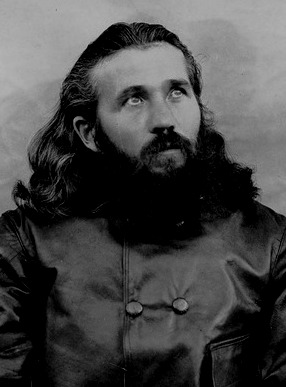
Francis Schlatter was, at that time, walking across the American Southwest gaining fame and followers.  Three years earlier he had come to believe he received a “directive from God” to heal the sick, and became a messianic figure for many during his brief time in the spotlight.

Francis Schlatter

Francis Schlatter, “The Divine Healer”

“The divine was brought forth and made to pronounce a blessing upon the bats…and through all the season those inspired bats continued to give out base hits., and the team went close to the top of the league.”

While Reilly never disputed the story–and seemed to tell it himself on occasion–Fullerton’s ending was pure fiction. San Antonio continued to struggle and blessed or not, the Missionaries’ bats were mostly silent all season–the team never left the cellar and was 21-72 in August when they disbanded.

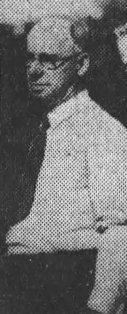
Josh Reilly, 1930--he died in San Francisco in 1938.

Josh Reilly, 1930–he died in San Francisco in 1938.

In different versions of the story, it was claimed that Reilly still used one or more of the “blessed bats.”  In another, Reilly “Hit .344” with one of the bats “and after he broke that bat he hit .189 for the rest of the season.”

Fullerton had one more Reilly story that he told often–first appearing in 1906 but recycled frequently for two decades–this one about his fielding troubles during his brief stay in Chicago and the impact the ire of fans has on a struggling player:

“(Reilly) was pretty bad as a fielder, and getting no better rapidly.  the jeers, hisses and hoots of the crowd merely made him mad.  He wanted to fight back.  His Irish blood was boiling.  For a time it seemed as if he would win and prove himself a great ball player merely by his nerve in playing at all under such a constant shower of criticism.  But one day Josh got through.  I found him frothing at the mouth out at the club house.  He was done.  He never would play again–unless he got a chance to kill a certain man.  When he grew calm enough.  I discovered the cause of it.

“‘He was a big man sitting in the bleachers’ said Josh.  ‘While they were all yelling at me for booting a hot one, he sat still.  I saw him and  said to myself ‘there’s one friend of mine up there.’  He never said a word until the seventh inning.  Then he stood up, stretched himself, walked down two or three steps and yelled:  ‘Reilly, you’re a disgrace to the Irish!’  If I had him I’d killed him.'”

Pete Childs’ Pitch

27 Feb

After seven seasons in the minor leagues, 29-year-old Peter Pierre “Pete” Childs made his debut with the St. Louis Cardinals had a brief big league career as a second baseman with the Cardinals. Chicago Orphans and Philadelphia Phillies in 1901 and ’02.

Pete Childs

Pete Childs

He then returned to the minor leagues for more than a decade and became manager with the Portsmouth Cobblers in the Ohio State League, where he also played infield and occasionally pitched in relief.  It was as a member of the Cobblers where he had, arguably, the most efficient relief appearance in the history of organized baseball.

On June 18, 1910, Portsmouth was losing 4 to 3 to the Marion Diggers when the diggers came to bat in the bottom of the eighth.  Portsmouth pitcher Frank Harter gave up four hits and hit a batter; the Cobblers also committed an error.  Three runs had scored and the bases were loaded with no one out.

With his team down 7 to 3 The Marion Star said the manager and second baseman “Childs essayed to do the pitching and traded places with Harter.”

With the bases loaded, Childs faced Marion outfielder William Colligan. He threw one pitch.  The Portsmouth Evening Times said:

“Colligan smashed the first ball to the fence in center field, and (Portsmouth’s Frank) O’Day went up against the fence and made the catch with one hand.  (Emmett “Turk”) Reilly had gone to second and (August “Gus”) Epler counted from third.”

O’Day threw to the cutoff man, Wesley Hornung; he threw to first to put out Reilly, who stood on second with teammate Al Hummel, and first baseman William Scudder threw to third baseman Ed Conwell for the triple play.

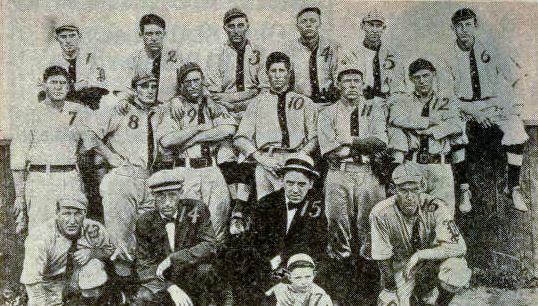
The 1910 Portsmouth Cobblers, Manager Pete Childs 7.  Wesley Hornung 1, Frank Harter 4, William Scudder 5, Frank O'Day 8 and Ed Conwell 16.

The 1910 Portsmouth Cobblers, Manager Pete Childs 7. Wesley Hornung 1, Frank Harter 4, William Scudder 5, Frank O’Day 8 and Ed Conwell 16.

Despite the triple play, Childs’ Cobblers dropped a doubleheader that day but went on to win the Ohio State League championship with an 86-52 record.  Childs won three championships during his five seasons as Portsmouth’s manager.

“A Ballplayer can’t chase ‘Chickens’ and Chase Flies”

25 Feb

With money borrowed from his brother Clarence, an oil speculator, Henry “Hen” Berry stepped in to take over ownership of the Los Angeles Angels in 1906.

"Hen" Berry

“Hen” Berry

Berry’s Angels won the Pacific Coast League championship in 1907 and ’08, and that success, along with his own profits in the oil business, made Berry a wealthy man in his own right.

He also managed, during his tenure with the Angels, to sell a player to a big league club for the highest amount ever received by a Coast League Club to that point, when he was paid $5,000 by Charles Comiskey of the Chicago White Sox for 18-year-old Lee “Flame” Delhi in 1911; Delhi appeared in just one game for the Sox the following season and was out of organized ball well before his 25th birthday.

Berry was also the driving force in getting the league to finally adopt a two-umpire system in 1912.

He also had a theory about what the type of lifestyle that best suited his players.  In 1914, he talked about it with a reporter from The Los Angeles Examiner:

“’A ballplayer can’t chase ‘chickens’ and chase flies at the same time with any degree of certainty that he’ll land the flies.’

“That is ‘Hen’ Berry’s way of saying that a player whose head is turned by the hero-worship of the fair patrons on the diamond stands a mighty slim chance at high fielding averages or of shining in the .300 batting class…Wedding bells for all players, he believes, would result in the highest possible efficiency.”

Eighteen of the 21 members of the Angels were married, and it was that way by design:

“’It is his susceptibility to the attentions of pretty hero worshippers that keep many a promising athlete from reaching the high place that otherwise would be his in the world of sport,’ asserts Berry.

“’The ballplayer is perhaps more constantly beset by these fair idolizers than any other professional athlete because women frequent the diamond more generally by far than any other sport.’

“’So we have the very thing which keeps baseball keyed up to concert pitch—the element of personal admiration for the players—becoming the most dangerous possibility in pulling a good man down or keeping him mediocre.’”

"Hen" Berry caricature

“Hen” Berry caricature

While Berry conceded that marriage didn’t guarantee that a player would be “immune from lionizing” by women, it would at least reduce the “social diversions which frazzle a man’s nerves.”

Marriage, said Berry, resulted in “Emotional calm” and provides “stability which goes far towards winning pennants.”

Berry’s theory had not resulted in any recent success; after his two pennants in 1907 and ’08, the Angels had experienced a drought that would continue in 1914 when his predominately married club finished second to the Portland Beavers.

Berry sold the Angels after the 1914 season and moved north, purchasing the San Francisco Seals.

He picked up two more championships with the Seals—it is unclear how many of the players on each pennant-winning club were married– and sold the team to group headed by former Coast League catcher Charlie Graham before the 1918 season.

San Francisco Seals owner Charlie Graham

Charlie Graham

After leaving baseball, Berry managed the family’s oil holdings in California.  On March 13, 1929 the steering broke on Berry’s car as he rounded a curve while driving near his home in Maricopa.  The car plunged 100 feet into a ravine, and the former West Coast baseball magnate was dead at age 59.

A Bobby Eager Story

23 Feb

The 1906 San Francisco earthquake left the city in ruins; it also put the future of the Pacific Coast League (PCL) in serious jeopardy.

Years later PCL veteran Bobby Eager wrote about the league in the aftermath of the quake in The San Jose Evening News:

“Did you ever hear of a bunch of ballplayers owning their club in a league?  I never did, but I came within an ace of being a part owner at one time.”

Bobby Eager

Bobby Eager

Eager, then with the Los Angeles Angels, said the league was “pretty much on the bum,” and while leagues in the East had agreed to help the PCL financially, there was no sense of how the league would operate.

Jim Morley, the owner of a large pool hall in Los Angeles, owned and managed the Angels, but said Eager:

“(H)e got cold feet early.  He practically dismissed the team and said he was through.”

San Francisco Seals owner James Calvin (J. Cal) Ewing, whose deep pockets kept the league afloat, was “furious at Morley, quitting like a hound.”

Local boxing promoter “Uncle” Tom McCarey was asked by Ewing and league president Eugene Bert to take control of the club, but when that failed they reached out to a local businessman.

“They got a fellow by the name of Gil Meade to take over…It was decided to play the San Francisco games at Oakland, and go on with the league and give the fans some ball.  Of course it was an uphill fight all around with no grounds at Frisco.

“Meade shot his $5,000, which was his bankroll, in a couple months and he was done and out.”

At the time, The Los Angeles Examiner said Meade left as a result of the league failing to award him a large block of stock in the team that was promised.

Eager said after Meade departed the team was called together by field manager and Captain Frank “Pop” Dillon:

Frank "Pop" Dillon

Frank “Pop” Dillon

“He first wanted to know how much money we all had and we told him.  Then he laid before us his plans.  He showed us how we could take over the club by putting up three or four hundred dollars apiece.  He said we would not get any salaries that year but the next year he thought the club would pay big.  A few of the players (Eager included) were willing to take a chance but most wanted their salaries.  They were not gamblers.”

Dillon could not convince enough of the Angles and Eager’s dream to own a club died.

“The result was the league dug up (William Henry) “Hen” Berry who was running a little poolroom.  Hen’s brother (Clarence, who made a fortune in the oil and horse businesses) let him have enough to back the club the rest of the season which was about $8,000, but next year we won the pennant and Berry cleaned up big.  I know every stockholder who had a $100 share got a $40 dividend the next year.  If we players had taken the club we would have made just as much and might have started something new in baseball in the way of profit-sharing.”

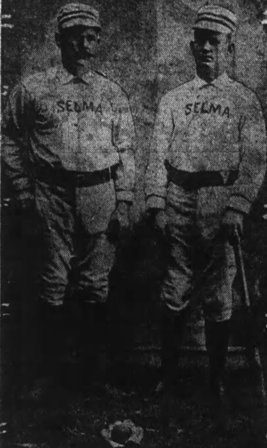
Clarence, left, and William Henry Berry played for the amateur Selma (CA) Tigers in the 1890s

Clarence, left, and William Henry Berry played for the amateur Selma (CA) Tigers in the 1890s

Another “Hen” Berry story on Wednesday.