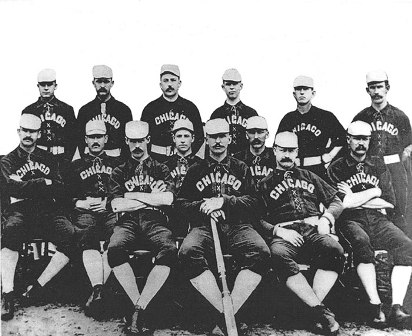
11,297,424

12 Sep

The Chicago Tribune baseball writer Hugh Fullerton was fond of saying:

“Once upon a time there was a baseball bug down in Cincinnati who figured out there were 11,297,424 possible plays in baseball.  This, of course, was counting only straight and combination plays and taking no account of the different kinds of fly hits and grounders, which all are different.  He proved it conclusively and the next day the team made one that wasn’t on the list.

“Every play, every throw, every hit is different.  That is why baseball is the national game, and there are freaks in the game that make even the case hardened regular sit up and yelp with surprise and joy.”

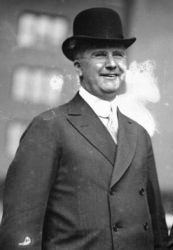
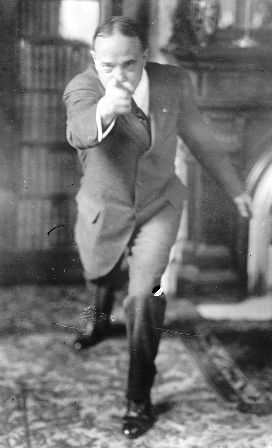
Hugh Fullerton

Hugh Fullerton

Fullerton made a career of telling stories about those plays; some might have even been true.

A few more of them:

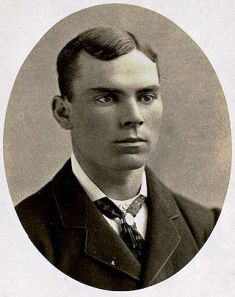
“Philadelphia lost a hard luck game to Cleveland in the old twelve club league.  The score was close, Philadelphia had two men on base, and Ed Delehanty was at bat.

“He cracked a long drive across the left field fence—a sure home run.  The ball was going over the fence high in the air, when suddenly it changed its course, dropped straight down, hit the top of the fence and bounded back into the lot.

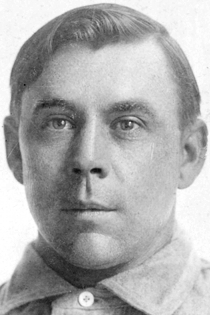
Ed Delahanty

Ed Delahanty

“The crowd, which had given up in despair, was astonished.  The Cleveland left fielder got the ball and, by a quick throw, cut down the runner at the plate and Delehanty was held at second.  The next men went out and Philadelphia was beaten.

“Investigation after the game proved that the ball had struck a telephone wire reading to a factory just outside the grounds.”

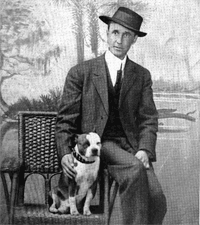
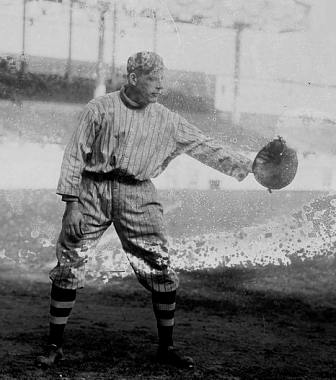
Tom Corcoran had one of the oddest baseball experiences in the history of the National League at the old Eastern Park grounds in Brooklyn years ago, in a game against Boston.  The game was played on the morning of Labor Day, and there had been a hard rain the night before.  In the early part of the game Corcoran, going after a ground ball, felt his foot slip and his ankle turn, and, half falling, he stopped the ball and then fell.  He turned to pick up the ball to throw out his man, and saw no ball—although there was a hole six inches across, into which his foot had plunged.  The runner, reaching first, stopped and saw Corcoran with his arm plunged to the elbow in the ground, and after hesitating a moment, he ran on down to second.

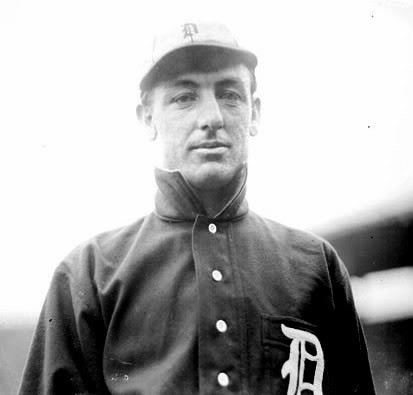
Tom Corcoran

Tom Corcoran

“Corcoran, meantime, had been thinking.  His fingers were clutched around the ball, and yet he waited, pretending to be groping for the ball.  The runner started on, and as he passed, Corcoran dragged the ball out and touched him out.”

“One of the funniest plays I ever witnessed was pulled off on the old Baltimore grounds along in 1896, and it was good-natured, happy Wilbert Robinson who made the blunder that resulted in the defeat of the Orioles when they might have won the game.

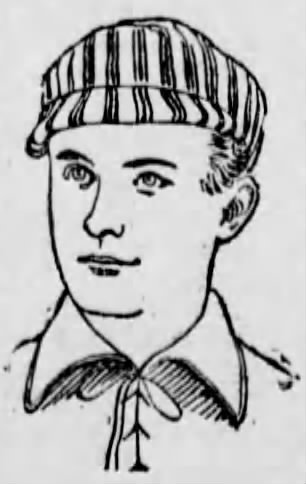
Wilbert robinson

Wilbert Robinson

“The struggle was between Chicago and Baltimore and it went into extra innings.  In the eleventh, with a Chicagoan on second Doctor Jimmy McJames made a wild pitch, the ball shooting crooked and bounding around back of the visitors bench with Robby in close pursuit.  The ball rolled back of the water cask and disappeared.  Robby made one frantic grab back of the cask, and then, straightening up, hurled a sponge full of water at McJames, who was covering the plate.  The Doctor grabbed it, and as the water flew all over him he tagged Jimmy Ryan…In spite of the fact that the play beat Baltimore, the crowd yelled with delight over it, and Robby, who had made the sponge throw as a joke when he found he could not get the ball in time, appeared as much pleased as if he had won the game.”


“This Fellow has about as much Judgment of Balls and Strikes as a Six-year-old Kid”

10 Sep

Umpire baiting was an art form for managers like John McGraw.  In 1906 Tim Murnane wrote in The Boston Globe about the way McGraw, and his players, intimidated a first-year umpire named John Conway during a game between the New York Giants and Boston Beaneaters.

On May 1 the Giants had defeated the Beaneaters 7 to 5, and according to Murnane:

“I was very much interested with the tactics of the Giants in a game here, when they found the clever Irvin Young in the box, and knew it would take extra work to defeat the local team.

“Umpire Conway was behind the bat in this game, and the New York boys went after the young umpire from the first ball pitched until the last man went out.  Conway was consistently giving Young the small end of the decisions on balls and strikes, and yet the New York men tried to make it appear that he was giving them a terrible roast.  The Giants worked like sailors, never letting up;  in fact, their good work with the stick and on the bases was commendable in every way, and what they were saying to the umpire could only be heard in the front seats, and perhaps that was a good thing for the game.”
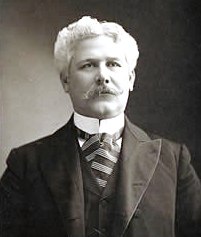
Tim Murnane

Tim Murnane

Murnane said the actions of the Giants were reminiscent of those of McGraw and other members of the Baltimore Orioles in the 1890s, but “this time it was umpire and not their fellow players,” who were the target:

“As each man passed the umpire they would make some remark, until finally (Dan) McGann, (Roger) Bresnahan and McGraw were put out of the grounds by Conway.  Note the four names, all of Celtic origin, every man out for a salary, the umpire doing his best to please, and doing it certainly in a fair way to the visitors, and yet the trio must be doing something for effect, perhaps to give the umpire something to think of when he went to New York, or perhaps to affect his work in the next game.  There was an object in the uncalled-for nagging.  The result was that Pitcher Young was actually affected, and put up a weak all-round game as the contest went along, the Giants finally winning out as a result of his poor work.”

The Giants doubled-down on their harassment of Conway after the game was over.  Murnane said Fred Knowles, the Giants Secretary,

“(I)nformed me that the New York players complained of Conway’s breath, saying that he had been drinking and was under the influence of liquor during the game.  What are the honest facts?  A friend of mine at the same hotel with Conway and Bob Emslie (the other umpire) told me that he was with the umpires the night before, as well as that morning, and heard them refuse to take a drink of any kind.  I was speaking to Conway just before the game, and took pains to note if he had been drinking, and I can say positively that he had not.”

Murnane’s comments are curious, given that he said Knowles informed him of the accusation after the game, yet he claims he “took pains” to confirm whether Conway was drinking before the game began.

“Now, doesn’t it seem unfair to pass around cold-blooded lies about an umpire doing his duty, to a management who naturally listens to stories of this kind, and then tries to make it easy for players?  I could forgive every act of the New York men, as they are out for blood, and are fine ballplayers, but I must pass up players who will try to harm a good, honest fellow, for Conway is a good umpire and had the nerve to pick the big fellows out, and no two men in the business need the call-downs that McGann and Bresnahan do.”

Murnane’s Boston colleague, Jacob Charles Morse of The Herald, called the Giants actions “reprehensible,” but said the umpire was partially to blame:

“Had Conway started in at the very first a lot of trouble might have been obviated, but it was not until he had allowed the New Yorks to kick at strikes and decisions, to leave their places, something strictly forbidden by the rules, and to bellow like bulls.  Bresnahan could be heard all over the field telling the umpire to ‘get out.’  Early in the game a bunch gathered around the umpire without the least expostulation, and went back to their places when the seemingly felt like it.”

Despite McGraw, McGann and Bresnahan receiving three-game suspensions for their actions, Morse said “The penalty imposed for the actions of the individuals was ridiculously light; not at all commensurate with the gravity of the offense.”

Things did not get any easier for Conway.

He had another run-in with the Giants at the end of June which resulted in another McGraw ejection.

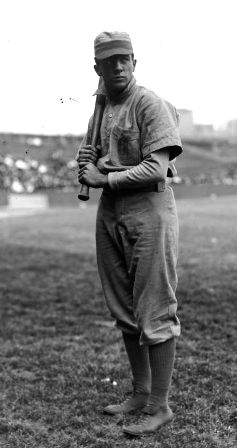
He was also assaulted by two different St. Louis Cardinals; William “Spike” Shannon in June, and Mike Grady in August.  The August incident, during a game in Boston, required police to escort Conway from the field and resulted in a three game suspension for Grady.
Mike Grady had two altercations with Conway

Mike Grady had two altercations with Conway

After a second incident with Grady; this time in Pittsburgh on September 4, The Pittsburgh Press took the side of the Cardinals catcher, and harshly criticised Conway:

 “Umpire Conway officiated the game at Exposition Park yesterday afternoon.  To be more exact, a man named Conway attempted to imitate a real umpire, but the attempt was a failure…this fellow has about as much judgment of balls and strikes as a six-year-old kid, and he makes some of the weirdest mistakes ever seen.  To make matters worse, Conway thinks he is funny and laughs at his poor decisions…The Press never condones umpire baiting, but Conway called one strike on Grady that was not within two feet of the plate, and it is little wonder indeed that Michael was exasperated.

“It is to be hoped that Conway’s career as an umpire in the National League will end with the present season.  There are a score more competent men umpiring in the minor leagues today.  Conway is not fit for the position he occupies.  He takes trouble with him wherever he goes, owing to his inefficiency.”

National League President Harry Pulliam apparently agreed; Conway was not retained for the 1907 season.

He joined the Eastern League in 1907, but trouble continued to follow him.  In June he was assaulted by Toronto Maple Leafs second baseman Tim Flood—which resulted in Flood serving 10 days in jail.
Tim Flood

Tim Flood


Less than a week later, after the Jersey City Skeeters scored a run in the ninth inning to beat the Newark Sailors 2 to 1, Conway was attacked by fans in Newark’s Wiedenmayer Park.  The New York Times said:

 “A mob waited after the game until Umpire Conway left the dressing room on the grounds for the train, and when he appeared in the street the mob hooted, hissed and threw mud at him.”

He was escorted to the train station by “a squad of policemen.”

Just weeks into the 1908 season Conway decided he had enough, and resigned.  The Sporting Life said he “quit umpiring to go into business.”

Conway never worked a professional game again, although he worked several Ivy League games before giving it up all together in 1910.  He died in Massachusetts in 1932–the same year McGraw, too ill to continue baiting umpires, resigned as manager of the Giants.

“The Dream of an Ardent Baseball Fan and Admirer brought to Realization”

8 Sep

The Associated Press (AP) reported the same day that Hall of Famer Joe McGinnity was released by the New York Giants that he, along with a partner had purchased an Eastern League franchise, the Newark Indians, for $50,000—more than $1.3 million in current dollars.

Joe McGinnity

Joe McGinnity

The following month, The AP told how McGinnity and his co-owner, Chicago businessman Henry Clay Smith, came to be partners:

“There is an interesting story connected with the deal whereby Joe McGinnity and H.C. Smith of Chicago purchased the Newark club of the Eastern League, which reveals the identity of Mr. Smith and portrays the rise of a penniless man to a millionaire, who remained true to his first love in the baseball world.

“H.C. Smith is now a leading member of a Chicago manufacturing company, was station agent for the Chicago & Alton Railroad at Auburn, a little town south of Springfield, IL., working on a modest salary, with nothing better in view, 12 years ago…it was in those days that he learned to admire McGinnity as a ballplayer.

“That was the time when McGinnity earned the sobriquet of ‘Iron Man.’ He would work six days a week, pitching for country teams all over central Illinois, and on Sunday he would go to Springfield and play with the Springfield team.”

One of McGinnity’s teammates on that semi-pro team in Springfield was Dick Kinsella, who would become a minor league magnate and confidant of John McGraw:

“(Kinsella) remembers the connection between H.C. Smith and Joe McGinnity in the olden days.

“Smith was one of Joe’s staunchest and most consistent admirers, and from the time he first knew him until the present day, his admiration has not abated.  In 1895 Smith left Auburn and went to Chicago, where he became engaged in the brokerage business, at which he prospered.  Later he became connected with his present company, gradually working his way to the top, until he was a man of wealth.

“Learning that the New York Giants were going to release McGinnity, Smith at once arranged with Joe to get hold of some team, for which Smith would furnish the money.  The result was the purchase of the Newark club, the dream of an ardent baseball fan and admirer brought to realization, and a home assured the famous Joe McGinnity, all through the regard, which a station agent in a country town felt for a ballplayer whom he considered the best he had ever known.”

McGinnity

McGinnity

The 38-year-old McGinnity started 46 games and posted a 29-16 record with a 1.66 ERA for the 2nd place Indians during his first season as co-owner and team president.

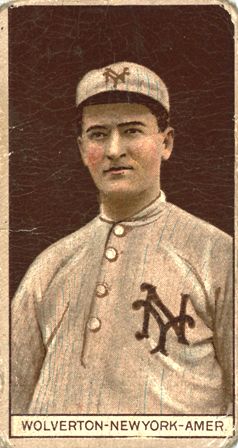
Harry Wolverton, who had been hired as manager by the previous ownership was retained by McGinnity and Smith.

Harry Wolverton

Harry Wolverton


There are several versions of the story of how McGinnity came to replace Wolverton as manager late in the season—some say Wolverton was let go for trying to remove McGinnity from a game, others say Wolverton took another position.  The real story, based on contemporaneous accounts in The Newark Evening News, was simply that Wolverton was injured before the team’s final road trip, and McGinnity took over.  In the winter of 1909 Wolverton purchased his release and McGinnity became the team’s full-time manager.

McGinnity and Smith owned the Newark Tigers through the 1912 season.  McGinnity managed the team to a second place finish in 1910 and a seventh place finish in 1911.  The team joined the International League in 1912 and finished third.

McGinnity won 87 games and lost 64 in 151 starts during his four seasons in Newark.

He and Smith sold their shares in the club after the 1913 season.

An Umpire’s Revenge

5 Sep

In July of 1910 the Cotton States League released an umpire named Hunt (his first name has been lost to history).

A week after he was let go the first place Greenwood Chauffeurs were in Jackson, Mississippi to play the second place Tigers.  The Jackson Clarion-Ledger told the story:

“Ex-Umpire Hunt was in Jackson last night.

“If you don’t believe that statement ask some of the members of the Greenwood baseball team.

“They can testify to it.

“They can also show bodily evidence in support of the fact.

“He also had on his fighting clothes, and this is another fact they will swear to

“There are others who are willing to testify that he would have made a better show against Jack Johnson than did (Jim) Jeffries, among them Deputy Sheriff Sanders.

“Hunt was a short while back in the employ of the Cotton States League officiating in the capacity of umpire, but his performance last night demonstrated that he is better fitted for the prize ring.

“He was also fired, or at least relieved of his official duties on account of a howl made by certain players, the merits of which The Clarion-Ledger knows nothing.

“As before stated Hunt was in town and while standing at the corner of Mill and Capitol Streets, met Orth Collins of the Greenwood team, who accused him of umpiring games and betting on them at the same time.  This offended Hunt’s dignity, and on Collins reiterating the accusation, he was promptly knocked down…Hunt walked away, going to his supper in a nearby café.  Having satisfied his appetite, he proceeded to the Lemon Hotel, headquarters for all the baseballists, and where the Greenwood team had congregated preparatory to taking their game.  Entering Hunt espied his old friend Jack Law, catcher for the Greenwooders, and saluting him, asked that he use his good offices in patching up the differences between him and the mighty Orth.  But Jack, who reports say, was feeling his rye, was somewhat in belligerent humor himself, and he promptly pasted Hunt one in the face and received a knockdown in return.  Hunt then squared himself for action, but in doing so stumbled over a chair and fell to the floor and was immediately covered by second baseman (Ray) Rolling, who had gone to the assistance of Law.  In the meantime Law had recovered himself and kicked his ex-umpship in the eye, and to use Hunt’s expression ‘that kinder made him mad,’ and those who witnessed his subsequent performance, were perfectly willing to believe it.

Orth Collins--one of Hunt's victims

Orth Collins–Hunt’s first victim

“Shaking himself loose from Rolling, Hunt ‘riz’ to his feet and then the fireworks went off and the pyrotechnics shot out in every direction.  Four of the other players of the Greenwood bunch decided to take a hand against the athletic umpire, but very soon regretted their rashness in ‘rushing in where angels dare not tread,’ and were kept busy for a few minutes picking themselves up from the floor.

“Hunt backed himself up against the counter and his arms began working like piston-rods with battering ram attachments, and every time he stretched them out somebody went down.  (Clyde) Frakes, who officiates as catcher when Jack Law is occupying the bench, got into the scrap rather late, but he lost no time in getting out of it.  In fact, it is said that one lick delivered at the psychological moment started his feet to moving with such rapidity that he was unable to get any control over them until he found himself seated on in the A & V train (Alabama & Vicksburg Railroad) ready to pull out for Vicksburg.  Other players who showed an inclination to help their brothers in distress, hesitated and finally decided that discretion was the better part of valor and contented themselves with being ‘lookers on.’

“After the fight had gone some three or four round Hunt recognized that some of the men persisted in getting up after being knocked down by him, and not caring to continue the performance indefinitely, he gathered  two spittoons, one in each hand, and let one of them fly at a belligerent who was making for the stairway, and it is said that it hastened his speed to such an extent that his moving form became like Mark Twain’s coyote, ‘only a yaller streak,’ and that only lasted for a fraction of a second before he entirely disappeared from view.  The other cuspidor went in another direction, as also did most of the spectators.  Hunt was getting wild in his aim and not being able to distinguish friend from foe, and knocking down everybody and everything that came in reaching distance, the last being Jack Law, who had got back into the scrap, only to receive another swat, the like of which, spectators declared, was never before delivered to mortal man.

“Having put all his opponents hor de combat.  Hunt found himself in the arms of Deputy Sheriff Sanders, but not knowing him to be such, he was preparing himself for a last mighty effort when the deputy sheriff hastily volunteered the information that he was a peace officer intent on doing his duty, and the roaring lion subsided like an innocent lamb, and meekly announced that he didn’t ‘want to hurt any man attending to his own business.’”

Hunt and six of the Greenwood players were arrested.  Four of the players were immediately released, but Law and Rolling, along with Hunt were held over for trial the following day.  All three were fined and released.

The Clarion-Ledger said although Hunt was “out of a a job at present…his friends will insist that he go into immediate training and challenge the holders of all the championship titles in the universe.”

Greenwood held on to beat Jackson by a half game for the pennant.

It’s unclear whether Hunt ever worked again as an umpire, but The Washington Times suggested that if Ban Johnson “wants a fighting umpire, one who can take the players and administer punishment on the ball field without fear of his blouse being torn to shreds or dirtied, here is the boy.”

Matty and the Federal League

3 Sep

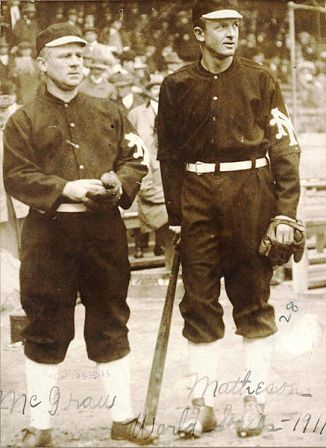
Despite the controversy during 1913 over ghost-written articles appearing under the bylines of major league players, Christy Mathewson continued to  “write” articles that were distributed to newspapers by the “Wheeler Syndicate.”  The Wheeler Syndicate was the creation of John Neville Wheeler, a reporter for The New York Herald, and widely known to be the writer of Mathewson’s articles.

Christy Mathewson with John McGraw

Christy Mathewson with John McGraw

Shortly before the beginning of the 1914 season, Mathewson “wrote’ a story about the outlaw Federal League, and the attempt the nascent league’s president made to secure his services:

“Until I had definitely signed with the Giants again, I made no comment on the Federal League or the offer of that organization to me.  In fact, there was nothing definite in the way of an offer until I received a telegram from President (James A.) Gilmore a few hours after putting my signature to a National league contract…The proposition came out of a clear sky and was unexpected.  I have learned since that the Federals believed I was signed up all winter and that it was not until a New York newspaperman happened to mention the fact to Gilmore.”

James A. Gilmore

James A. Gilmore

A New York reporter (likely Wheeler) told Mathewson how Gilmore came to find out he wasn’t yet signed:

“’We were sitting around the Waldorf late one night, fanning and discussing the Federal League, when one of the boys said to Gilmore: “’Why don’t you make Matty an offer and get some publicity out of it anyway?

“’He’s signed isn’t he?’ asked Mr. Gilmore.

“’No more than I am.  His contract expired last season, and he has not signed the new one yet.’

“’Gilmore at once left the party and sent a telegram to you.  Then he announced his action to us newspaper men, and the story appeared in the papers the next day.’”

At the time of the offer, Mathewson was asked by a reporter from The Los Angeles Examiner whether he would consider joining the Federal League, and said, “he would consider the offer.”  He now claimed, “all the time I knew I would not desert the New York club which had practically made me in baseball.”

Mathewson also took the opportunity to deny another rumor; that he was in California working on behalf of National and American League franchises to help them protect their players from the Federal League said:

“I saw several reports in the newspapers during the winter and early spring months that I was the agent of organized baseball on the Coast and that I had been busy counterbalancing the bids of the Federal League agents for the players spending the winter there.  As a matter of fact, I kept clear of both baseball on the diamond and the politics of baseball last winter because I did not care to have it on my mind.   Was having too much fun playing golf, and it is not in my province as merely a player to try to influence others to take certain steps which some day they might regret and then blame me for their mistakes”

Mathewson used his former teammate, catcher Art Wilson, as an example of how he had not given any players advice about accepting Federal League offers—Wilson had jumped from the Giants to the Chicago Feds during the winter:

“(Wilson) received a big offer to go with the Federals with the promise of a large piece of advance money.  Wilson has been pining for the chance to work regularly with a big league club for two or three years now and was weary of sitting on the bench, absorbing information in this position about how it is done in the majors.  As I said in a previous article, Wilson even asked (Manager John) McGraw to transfer him to a minor league team this season so that he could have an opportunity to work daily.  Now, if the Federal League turns out to be a big success, and if I had advised Wilson to refuse its offer and stick with the Giants, he might have said to me some day:

“’Well, I took your advice and am still sitting on the bench.  If I had gone with the Feds, I might have been a star now.’”

Art Wilson

Art Wilson

The move did result in additional playing time for Wilson.  From the time he joined the Giants in 1908 until he jumped to the Feds, he had appeared in just 231 games over six seasons.  In 1914 and ’15 he appeared in 233 Federal League games, hitting .291 and .305.

Mathewson, who had been paid $9,000 by the Giants in 1913, would not reveal how much he was paid by the Giants for 1914: “It is at the request of the New York club that I do not state the terms.”  He did, however, say exactly what he was offered by Gilmore to jump.  He said after not responding to the initial telegram from the Federal League president—a telegram that did not mention terms–he received a second:

“’Newspaper reports state you do not take Federal League offer seriously.  Get acquainted with the Federal League officials and be convinced we are not four flushing.  I will give you $65,000 for three years service as manager of a Federal League club–$15,000 advance money.  If satisfactory, meet me at the Waldorf Thursday, at my expense.  Wire answer Chicago.’”

Mathewson said he “was torn with regret” for refusing the offer that would have more than doubled his salary.

“It would be like leaving home if I were to pass up the Giants now.  I don’t think I would feel right in any other uniform.”

Mathewson said “the Federals have been spending money very liberally,” but placed the credit for the success the league had in inducing players to jump with Joe Tinker.  Tinker had jumped the Cincinnati Reds to join the Chicago Feds as player-manager.  Mathewson said:

“At first there was little confidence in the backers of the new organization until Joe Tinker jumped…The ball players had faith in Tinker because he is rated as one of the shrewdest in the business.  If the Federal League lives and goes through, Joe should get credit for it, because he is the man who has collected practically all the players for it.”

Joe Tinker

Joe Tinker

Both 33-years-old Mathewson (24-13 3.00 ERA) and Tinker (hit .256 in 126 games and led the Chi-Feds to a second place finish) had their last productive seasons in 1914.

Mathewson continued to “write” articles for the Wheeler Syndicate until 1916 when Wheeler sold the operation to the McClure newspapers.  Almost immediately after the sale, Wheeler formed the Bell Syndicate, and occasional articles under Mathewson’s byline were distributed by Bell through 1919.

“Lord, if you ever Helped a Mortal Man, help me get that Ball”

29 Aug

Outfielder turned evangelist Billy Sunday spent a month during 1902 traveling through the small towns of East Central Indiana, preaching in the small towns that rose as a result of the natural gas boom.

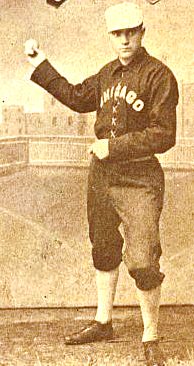
Billy Sunday

Billy Sunday, ballplayer

A reporter for The Philadelphia Press spent time with Sunday during the tour, and the paper ran a story that the evangelist told at every stop—about how “prayer saved a game of baseball.”

Sunday said it happened during 1886—Sunday at various times said he was “saved” in 1886 or 1887– when he was playing for the Chicago White Stockings.  The first place White Stockings were playing the second place Detroit Wolverines in a September series:

“The last half of the ninth inning was being played,” says the ex-ball player.  “Two men were out, and Detroit, with Charley Bennett at bat, had one man on second and another on third.  He had two strikes on him and three balls called, when he fell on a ball with terrific force.  It started for the clubhouse.  Benches had been placed in the field for spectators, and as I saw the ball sailing through my section of the air I realized I was going over the crowd, and I called: ‘Get out of the way!’  The crowd opened, and as I ran and leaped those benches I said one of the swiftest prayers that was ever offered.

“It was, ‘Lord, if you ever helped a mortal man, help me get that ball.’  I went over the benches as though wings were carrying me up.  I threw out my hand while in the air, and the ball struck and stuck.  The game was ours.  Though the deduction is hardly orthodox, I am sure the Lord helped me catch that ball, and it was my first great lesson in prayer.  Al Johnson, brother of the present mayor of Cleveland, ran up to me and handed me a ten-dollar bill.  ‘Buy a new hat Bill,’ said he.  ‘That catch won me $1,500.”

The White Stockings went on to win the National League championship over Detroit by two and half games.

Sunday’s stories earned him thousands of followers, and scores of critics—among the religious and non-religious.

Billy Sunday, evangelist

Billy Sunday, evangelist

A 1915 article—during the height of Sunday’s popularity– in “The Congregationalist and Christian World,” the magazine of the National Association of Congregational Christian Churches said:

“He has grave faults.  He is intolerant; his language is often violent, impatient and unkind.  He is a fighter of the types that asks and gives no quarter.  I saw him do and say things that seemed to me ridiculous and I disapprove of many things I reason to believe he has said and done.  I could make out a pretty strong case against him on the facts I have at my command.  But after we have said all that, we have before us a preacher whom I believe to be honest and earnest…He says ‘If I talked the same and acted the same as the other fellows do I wouldn’t get more people to listen to me than they get.’  With the crowd before him he wins their confidence, makes them his friends and delivers the message that is in his heart.  He talks plain, blunt language, tinged with the vernacular of the sporting crowd and that all who follow our great national game are accustomed to use.”

“It’s Strange how these Stars of Balldom have such Beliefs”

27 Aug

Throughout his career as an American League umpire, Billy Evans, who had covered baseball for The Youngstown Vindicator continued to write syndicated newspaper articles.  He was fascinated by the superstitions that controlled the actions of so many players.

Billy Evans

Billy Evans

He followed a 1907 article about the subject, with more stories the following year:

“Of all professions, that of baseball player is the most superstitious…Of course, there are many superstitions in common, yet most of the players have pet ideas of their own on which they place much reliance.  The data of origin of many of the superstitions is a deep, dark mystery.”

Evans said:

“There is certainly nothing out of the ordinary to be seen in a load of hay, yet most players welcome the sight of one during the playing season.  In the dictionary of baseball a load of hay signifies two hits that afternoon for the discoverer, and history tells us there is nothing dearer to a player’s heart than base hits…While its supposed strange magic often fails, still the players retain faith in it.  On the other hand, the sight of a load of empty barrels is always dreaded, for some it means a shutout, to others merely defeat.”

Of one popular superstition of the time, Evans said there was “no greater believer in shaking up the bats when a rally is on” than Cleveland Naps pitcher Charles “Heinie” Berger:

“Ordinarily a team keeps its bats lined up in front of the bench in a fairly tidy manner.  According to Heinie’s code that is all well and good when everything is moving along smoothly, but when a rally appears to be in the air, the proper way to encourage it, according to Berger, is to scatter the bats in every direction.”

Heinie Berger

Heinie Berger

Evans told the story of the Naps’ August 21, 1908, game, although some of the details regarding the scoring wrong, he got most of the facts correct:

“One day last summer during an important game at Philadelphia, the Athletics got away with a seven-run lead in the first two innings.  When they added another in the third, it certainly looked as if things were all off so far as Cleveland was concerned.  Until the seventh inning the Naps bench was not unlike a funeral.  Two runs in the seventh stirred up a little hope, and caused Heinie to heave a few big sticks in different directions.  His actions caused Umpire Jack Sheridan (Sheridan and Evans both worked the game, Sheridan was behind the plate) was to offer a mild rebuke and incidentally warn Heinie that he wanted nothing but silence during the rest of the afternoon.”

Cleveland scored two runs the following inning, and had the tying run on base:

“Heinie proceeded to scatter the two dozen or more bats in all directions.  That was too much for the veteran Sheridan, and after he had made Berger replace all the bats back in a straight line, he tied a can on the Teuton and chased him from the lot.

“Berger viewed the remainder of the game from the bleachers, failing to carry out completely the edict of the umpire.  When the Naps scored the two men on the sacks and tied up the game he was happy.  Heinie was confident that the bat superstition had aided in the victory that he was sure would result, now that the score was tied.  When the Athletics scored a run in the eighth that proved to be the winner his confidence in the theory was not shaken in the least. He blamed the defeat on Sheridan, claiming that as soon as the umpire ejected him from the game the spell was broken.”

Evans also wrote about his favorite superstitious player, “Wild Bill” Donovan, pitcher for the Detroit Tigers.  Evans had previously mentioned Donovan’s fear of throwing a shutout during his first start of each season, and his actions in one game in particular, but now gave a more detailed account:

“It all seems rather foolish, yet I have worked back of Donovan on two such occasions and have every reason to believe that Bill makes it possible for his opponents to score.  In one of the games Detroit had the affair clinched 8 to 0 in the eighth.  With one down and a man on second Charley Hickman stepped to the plate.  A straight fast one is the most delicious kind of dessert for Charley, although he likes almost any old thing in the shape of curves and slants.

“There is no more strategic pitcher in the league than Donovan, yet he started off the reel to hand them up to Hick’s liking.  After fouling off three, Hick met a fast one on the nose and was blowing hard at third by the time the ball was relayed back to the infield.  He scored a moment later, but Detroit too the game easily, 8 to 2.  Bill had escaped the much despised shutout.  By the way that year was the most successful of Donovan’s career, and, of course, merely served to strengthen his belief.”

Bill Donovan

Bill Donovan

Again, Evans got nearly all the details correct—except the final score was 9 to 2.  The May 24, 1907, game was Donovan’s first start of his best season in baseball (25-4, 2.19 ERA for the American League Pennant winners), and he did lose a shutout to Washington in the eighth inning on a Hickman triple.

Evans said a superstition often attributed to Cy Young, was not a superstition at all:

“The veteran Cy Young, the grand old man of them all, is one of the few players who doesn’t take much stock in omens of good or bad luck.  Cy, however, has one big hobby.  He always prefers to pitch on dark days…The dark day idea is no superstition with Cy.  No one except the batters perhaps realizes how hard it is to hit his fast ball when the light is dim.  It is really a pleasure for him to work out of turn on such days, for he knows what a big handicap he has over his opponents.”

Evans said another Hall of Fame pitcher had a bizarre habit, that while perhaps not a superstition, bears mentioning:

Jack Chesbro, the famous spitter, is always of the opinion that someone is slipping a doctored ball over on him, and quite often asks for a new one when the cover doesn’t taste just right.”

The umpire concluded:

“It’s strange how these stars of balldom have such beliefs and stick to them, but they do.  The ball player lives in a world of his own, more than any other profession with the possible exception of the actors.”

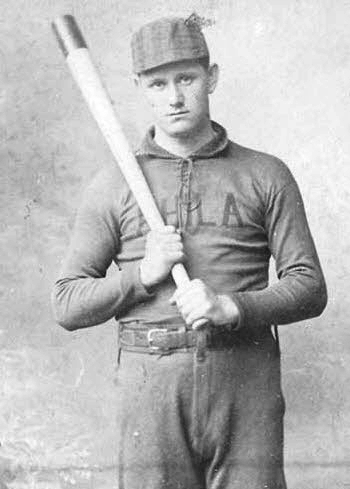
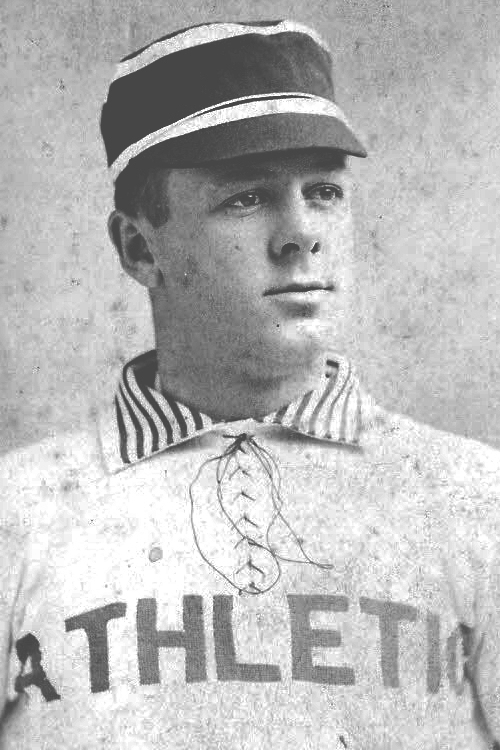
Hugh Nicol

25 Aug

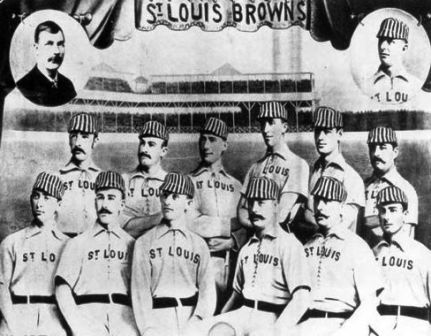
In 1884 Hugh “Little Nic” Nicol was one of the most popular members of the St. Louis Browns—so popular, a local boy’s team named themselves after the right fielder, and the Nicol was invited to address the team.

Hugh Nicol

Hugh Nicol

A reporter for The St. Louis Critic was on hand when Nicol imparted his baseball wisdom to the kids:

“I’m no speech maker, but if you like I’ll give you a pointer or two, and you can take ‘em or leave ‘em, just as you like.  First, when you go to the bat don’t sneak up there, but pick up your club determined like, and look at the pitcher as you’d look at a mosquito which you had the dead wood on.  Then when he curls the ball away, up around your left year duck your head, look mad and whisper, ‘Oh, you sucker you know better than to give me a good ball.’  That’s what you call workin’ the pitcher—makin’ him mad as a bull—so mad that he’ll put the ball just where you say he can’t put it, but where you know he’s going to put it, and when he puts it there smash her right in the eye.

“Then when you’ve smashed her, don’t stop and admire the smash, but make for first as though the devil was trying catch hold of your coat tails.  When you reach first don’t stop unless you hear the captain yell: ‘Hole yer first; hole it!’  If he yells ‘hole it,’ obey orders.  Don’t think you know more than him, because if you get to thinkin’ that way your head will begin to swell, and all the ice in St. Louis won’t take down the swellin’ If you only reach first, place your arms akimbo and look at the pitcher as though you had got there by a fluke and was going to hold to her if it was the last act.  If you are a runner, and not one of those tired cusses that crawl when they think they’re flyin’.

“Make for second the moment he pitches the ball; and when you get near the bag, grab hold of it and come up smilin’ at the umpire , as though you meant to say “Oh, I beat the ball about a foot, and he never touched me anyhow.’  If you work it right the umpire will sing out, ‘Hole yer second!’

“But, fellers if you can’t run when you reach first stay there and thank God you got that far.  Don’t try to make second for if you do the catcher will make a bloomin’ gillie out of you.  But make out that you are a dandy on the run, and bob up and down like a bear dancing on a red hot stove.  That kind of business works up the pitcher and he’ll try to catch you nappin’, but instead he’ll fire the ball away over the first baseman’s head.  Then if you can run a little bit you can get all the way ‘round.  But take care that he don’t catch you nappin’.  If he does that the captain will call you a bum base runner and you’ll feel like clubbin’ the life out of yourself.”

Thirty-five years later, Nicol attended an old-timers banquet at the Great Northern Hotel in Chicago and spoke with Al Spink, then occasionally writing for The Chicago Evening Post.  Spink called Nicol “the smallest and most wonderful right fielder in America.”

Nicol, like most of his 19th Century brethren, thought his old teammates were better than current players:

“I can’t see where the game has improved a bit since we played it…and I can’t see where the players of today are any better than our old gang…I don’t see any players cavorting around on the diamond today that are any better than the Browns’ old infield when it was composed of (Charles) Comiskey, (William “Yank”) Robinson, (Arlie) Latham and (Bill) Gleason…Where are there any better players than our old Chicago infield—(Cap) Anson, (Fred) Pfeffer, (Ned) Williamson and (Tom)Burns?”

1885 St. Louis Browns--Nicol is on the far right of the bottom row.

1885 St. Louis Browns–Nicol is on the far right of the bottom row.

Nicol also objected to the way the game was played:

“(W)here is there the  enthusiasm and the effort to win that was in evidence in the days when we played?

“Nowadays a player often goes to the bat acting like a man who has lost an immediate member of his family.

“We used to go up smiling and acting as though we were certain of clouting out a homer, although we often fell down on the proposition.

“And then, too, many of your players of today make little attempt to advance themselves in the various departments of play.

“They do not half try to learn all the fine points of the game as we did in the days of old, but simply try to get by.  They are content if they get a couple of hits every afternoon and play an errorless game.  The first thing they do each morning is to get the newspaper and look at the hit and error columns.  If they don’t see themselves credited with a hit perhaps they did make, some sports writer gets a terrible panning.”

Nicol managed in the Three-I League and later  coached baseball and served as athletic director at Purdue University from 1906 until 1914—he resigned both positions in November of 1914 after a dispute with his football coach Andy Smith and Smith’s assistant Pete Vaughn (who was also Purdue’s basketball coach).

Nicol 1904

Nicol 1904

Nicol was often credited by contemporary sports writers with inventing the head-first slide.

He died in Lafayette, Indiana in 1921.

“Sweeney was Drunk, but I didn’t Know it”

22 Aug

In 1884 Frank Bancroft’s Providence Grays won the National League pennant and defeated the American Association’s New York Metropolitans in the World Series—the first post-season exhibition to be called the World Series.  Late in 1896 he told a reporter for The Boston Post his version of the story of the turning point in that season:

Frank Bancroft

Frank Bancroft


“We were leading the championship race (the Grays were in 2nd place at the time of the game in question).  Both (Charles) Sweeney and (Charles “Old Hoss”) Radbourne were pitching in grand style.  In those days you couldn’t take a player out of the game and put another one in his place unless he was sick.  I wanted to save my pitchers all I could.  One day we were playing the Bostons (Bancroft was incorrect; the game was against the Philadelphia Quakers on July 22).  I had (Joseph) Cyclone Miller in right field and Sweeney in the box.  I told Joe Start, who was captain of the team that if we got far enough ahead in the game to take Sweeney out of the box and bring in Miller.  I did this to save Sweeney’s arm.  In the sixth inning we had a lead of 7 to 2 (the score was 6 to 2).  I told Start to make the change.  He asked Sweeney to go out in the field.  Sweeney was drunk, but I didn’t know it.  Start’s request made Sweeney mad.  He didn’t take it in the way it was meant.  He walked off the field.  I went after him, but couldn’t get him to come back.

“He called me a vile name.  The president of the club (J. Edward “Ned” Allen) went to him and asked him what he meant, and he called him everything vile on the calendar.  Sweeney was very drunk.  We had to finish the game with eight men, and the Bostons [sic] beat us out (Providence lost 10 to 6).  The directors of the club had a meeting that night, expelled Sweeney and came within an ace of breaking up.  In fact, they did vote to disband.”

Charlie Sweeney

Charlie Sweeney

With Sweeney gone, the team was left without their two top pitchers.  Bancroft had suspended Radbourn earlier in the month, and he was still sitting out at the time—Radbourne was unhappy sharing the pitching duties and was rumored to be heading to the St. Louis Maroons in the Union Association–The Providence Evening Press in describing Sweeney’s July 22 outburst said he had “caught Radbourn’s complaint.”

Picking up the story in The Post, Bancroft said:

“They said there was no use of going on with one pitcher.  I said to President Allen: ‘If you will give me authority to tell Radbourne that you will not reserve him at the end of the season, I can get him to pitch all the rest of the games this year.’  ‘All right,’ said Allen, ‘you have that authority.’  I found old Rad at his boarding house.  I told him about the proposition.  ‘It’s a go,’ said Rad.  ‘I’ll get rid of reservation if I lose my arm.  I’ll pitch all the other championship games this season.”

Radbourn did not pitch “all the other” games that season but did pitch 75—with 73 complete games, 678 2/3 innings.  Bancroft said of his pitcher:

“It was the greatest feat of endurance I ever witnessed.  Rad was in awful shape before it was all over…Why, (his arm) hurt him so bad when he would get up in the morning that he couldn’t get it up high enough to fasten his collar button.  He had to comb his hair with his left hand.  It used to make me shudder to look at him, but he was gritty.  He would go out in the afternoon before the game, and instead of loosening up by easy pitching, as pitchers do nowadays, he would go in the field and throw the ball just as far as he could.  He would throw for ten or fifteen minutes, until he got wound up, and then he would go in to pitch a winning game.”

"Old Hoss" Radbourn

“Old Hoss” Radbourn

Bancroft said the pitcher “could split the plate any time he wanted to,” and that during “morning practice, to show what he could do, Radbourn would set a pop bottle on the home plate and knock it down three out of four times.”

The release of Sweeney had an immediate positive effect on the Grays.  On the day of the incident, The Evening Press said: “The pennant is no doubt out of the reach of Providence this year.”

The following day, after Radbourn pitched the team to an 11 to 5 over the New York Gothams, the paper’s outlook brightened:

“The summary expulsion of Sweeney for crookedness seemed to have a salutary effect, on Wednesday, for the purging of the club of such a bad egg resulted in a better class of patrons on the grand stand than for many weeks.  The attendance throughout was better than the management had looked for after the airing of Sweeney’s revolt, about 700 being present. “(There were just 450 in the stands the day before for “Sweeney’s revolt”)

Sweeney had not yet left for St. Louis and the paper took the opportunity to take one final shot at the pitcher:

“Sweeney is still about town, and wherever he goes the women whom he escorted to the ball game on Tuesday are seen with him.  The conduct of this fellow is shameful, and he will regret it when he fully wakes up to its enormity.”

The twenty-one-year-old Sweeney pitched the Maroons to the Union Association championship with a 24-7 record and 1.83 ERA.  Whether his arm couldn’t handle the strain, or as a result of his off-field habits, he would only win 16 more games (losing 30), and was out of the major leagues at age 24.

He returned to his home in California and played for teams in the California, Central California Leagues, after his retirement he worked for a short time as a police officer and later worked in saloons around San Francisco.

By the time Bancroft shared his reminiscences of 1884 with The Post, Sweeney was incarcerated in California, and Radbourne was dying in Illinois.

In July of 1894, Sweeney shot a man named Cornelius McManus during an altercation in a bar.  The San Francisco Chronicle said when he was informed the following day that the victim was dead “he broke down and wept bitterly.”  Sweeney was convicted of manslaughter four months later and sentenced to eight years.

The Chronicle said he was released after serving “a little over three years of his sentence,” after which “his health broke down.”  Sweeney died of Tuberculosis in 1902—most sources say he died on April 4—The Call and The Chronicle both said he died on April 3.

Radbourn pitched 1311 innings in 1883 and ’84, and started and won all three games in the 1884 World Series.  Bancroft said that after the Grays won the championship:

“President Allen kept his word, and gave him his release; but Rad didn’t take it.  The club offered him just twice as much salary for the next year.”

Radbourn pitched seven more seasons and finished his career with a 309-194 record.  After being accidentally shot in a hunting accident, and suffering from a variety of ailments, he died in February of 1897.

Bancroft remained in baseball until January of 1921 when he retired a business manager of the Cincinnati Reds. He died two months later at age 74.

Wagner’s Mysterious Bat

20 Aug

In 1911 Honus Wagner hit .334, it was his thirteenth straight season hitting better than .320, but he still wondered how much better he could have hit if he had the opportunity to regularly use a bat he once found in Ohio.  He told the story to William A. Phelon in The Cincinnati Times-Star:

Honus Wagner

Honus Wagner

“There was never yet a perfect bat, and I don’t suppose there ever can be.  Not while the shape has to remain perfectly round and fouls can slip off the curving surface, and not while the material breaks just as you are administering a sure home run with the bases full.  I have had bats break when I met the ball fair and square—break deliberately, after months of faithful service—and a feeble grounder would go trickling off the treacherous stick when the force I put into the wallop had spelled at least three bases.”

Wagner said, “bats are strange and moody things,” and that he understood why Pete Browning “used to talk to his bats and credit them with human understanding.”

Pete Browning

Pete Browning

He said he had “handled one that was almost perfection” during 1898, his first full season with the Louisville Colonels.  The team was playing an exhibition game “against some small club in an Ohio river city,” and the Colonels’ bats had already been shipped to their next stop:

“We figured, of course that we would borrow bats from the locals, but we didn’t need to.

“On arriving at the local ball park we found some urchins knocking flies.  One of the kids was using a curious looking bat, long, finely shaped and of a peculiar red-brown color.  I took it from the youngster, examined it, and found that, while it was very heavy, that it balanced nicely in the hand.  I slipped the boy half a dollar for the loan of his bat, and we started the game with the red stick and three or four others of the ordinary pattern which had been scared up by admiring natives.

“We never used the ordinary bats.  That red stick proved to be the proper medicine.  Of course there wasn’t any big league team against us, but the pitcher was one who was destined to be a mighty star in the after years, and he had something that day, believe me.”

Wagner did not say who the pitcher was, but said it didn’t matter how good he was:

“The least tap with that red bat and the ball whirred out in the field like a bullet.  There was spring and a texture to the wood that gave incomparable hitting power.  Tap a fast ball with that bat and it would go for two bases.  Meet a curve and you could send it to the bleachers.  With that bat a man who ordinarily hit .200 would be a .300 hitter, easy, and I blush to estimate the record I could have made therewith.”

Wagner said he and his teammates had “about twenty-eight long hits” during the game, and he asked the boy about the bat’s origin:

“(H)e explained that he had laboriously turned the wood to proper shape himself, and that it was originally the leg of an old-fashioned, broken-down table that his grandfather possessed.  It was some strange oriental wood, something like mahogany, but much heavier and of firmer grain…When the game ended I turned to find the boy, intending to hand him good money for that bat, but the kid was gone.  Apparently afraid we intended to steal his bat…I never saw the boy again, and although I twice played games in that town years after, he never came near the park.  The mysterious bat, brimful of hits, vanished the same afternoon it first appeared and its equal has never been discovered.”