Tag Archives: American League

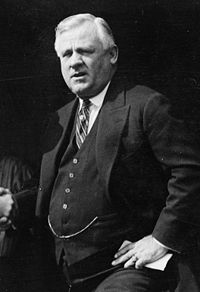
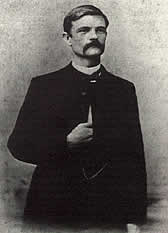
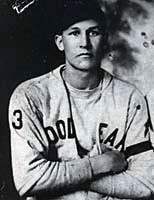
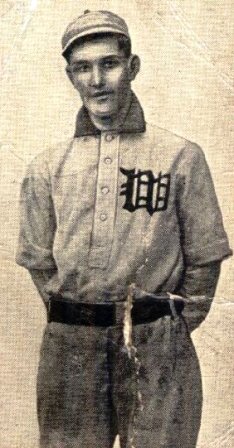
Jot Goar

15 May

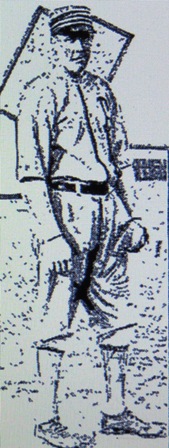
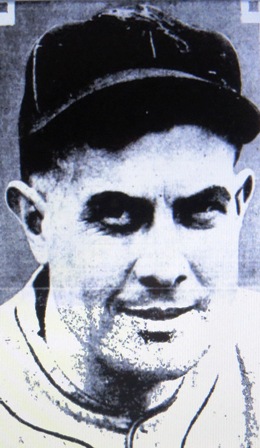
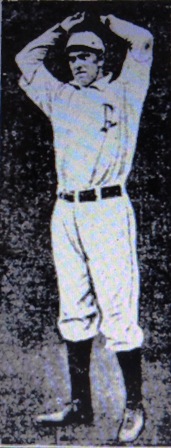
Joshua Mercer “Jot” Goar had one good minor league season.

Born in 1870 in New Lisbon, Indian, Goar’s early career is mostly unknown, although he appears to have pitched for the Muncie club in the Indiana State League in 1890 and for a variety of semi-pro teams in that state during the early 90s.  In one version of a story I told in January (“Remarkable Baseball Stunt”), “Baseball Magazine” identified Goar as the pitcher who gave up six hits in one inning without a run scoring in an Indiana State League game versus Anderson.

Goar was signed by the Toledo Swamp Angels in the Western League in 1895 (the team would relocate to Terre Haute, Indiana during the season).  While his numbers don’t look impressive, 13-19 with a 3.38 ERA and 345 hits in 288 innings, Goar was called “The best twirler in the Western League,” by The Sporting Life, and quickly became a highly sought after prospect.  Goar also hit .273 as a part-time outfielder.

His manager Denny Long told Indiana papers that Cap Anson “offered him a neat sum,” to sell Goar to Chicago.  Instead, the pitcher was purchased by the Pittsburgh Pirates; The Anderson Herald said Pittsburgh paid $3,200 for Goar:

“Jot Goar, considered the greatest find in the Western League this year…is looked upon to be one of (the Pirates) mainstays for next year.”

Gore joined Connie Mack’s Pirates in Hot Springs, Arkansas in the spring of ’96 and made the team; he made his debut with the team on April 18, pitching in relief in a 7-2 victory over the Louisville Colonels.  Gore struggled in three games with the Bucs, he allowed 25 earned runs on 36 hits and eight walks in 13 1/3 innings, losing his only decision, and was sold to the Grand Rapids Rippers in the Western League on May.
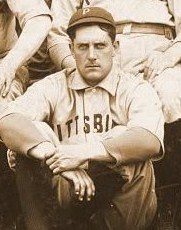
Jot_Goar

Jot Goar

No statistics survive for Goar’s 1896 season in Grand Rapids, but a mention of Goar in The New York American two years later said he had “deserted Grand Rapids,” at some point during the season.  Goar joined the Indianapolis Indians in 1897, and with a 25-9 record and a 1.39 ERA led the Indians to the Western League championship.  Goar was again highly sought after and his contract was purchased by the Cincinnati Reds.

Goar spent the winter refusing to sign a contract along with Frank “Noodles” Hahn, who had also pitched in Western League in 1897; the Cincinnati Enquirer said both players were asking for $1,800.  Goar finally signed in February, but the salary he settled upon was not reported, The Mansfield Daily Shield said:

 “Jot Goar has signed his Cincinnati contract and expects to play good ball this season.”

In March The Sporting News said:

“Jot Goar is showing more speed than any of the Reds pitchers.”

Goar did not live up to the expectations.  He hurt his arm in his first and only appearance; a two-inning mop up in an 11-5 loss to the Pirates, giving up, four hits, three runs, two earned, and a walk.

Pittsburgh Sports writer John Henry Gruber said Goar went to Reds manager Buck Ewing after the game “and at his own request was laid off until such time as he could get in shape.”

Goar returned to Indiana and for the remainder of 1898 and all of ’99 he managed and played first base for an independent team in his hometown in New Lisbon, that fall his team took part in a ballpark riot.  The Indiana State Journal said:

“The game of baseball between the Shamrock and Jot Goar teams on the Hagerstown grounds Sunday broke out in a riot.  Fists, clubs and stones were freely used and practically everyone who attended received some kind of injury.  The trouble arose over a decision of the umpire, who was Councilman John Geisler of Hagerstown.”

Gore began pitching again 1900 for the Indianapolis Hoosiers in the American League posting a 7-2 record in 10 games; he also played for the Western Association Hoosiers the following year, but there are no surviving records.

Goar returned again to New Lisbon, vowing that his pro career was not over, and accepted the position of postmaster and opened a general store while continuing to play for the local team. In 1904, The Sporting Life noted that he was still pitching in Indiana:

“Jot Goar, the old Cincinnati and Toledo pitcher, was doing things with the Connersville, Indiana team this season.  He pitched seven games for that club, six of which he won, the other being a 12-inning tie.  Only five runs were scored in the seven games, and he struck out seventy batters or an average of 10 a game.”

Goar gave up baseball after 1906.  He accidentally shot himself in the arm while hunting in 1907, and his general store burned to the ground, the 1911 “Reach Guide” said:

 “His place of business was completely ruined by a disastrous fire, which practically destroyed the business section of (New Lisbon).”

He rebuilt the store which he operated until 1921; Jot Goar died in 1947 at 77.
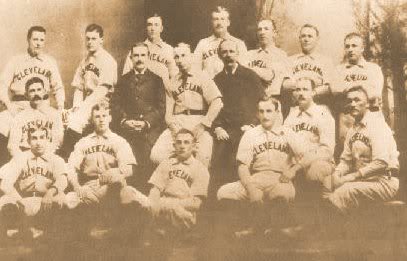
Crazy Schmit in Cleveland

10 May

Crazy Schmit pitched for the Cleveland Spiders in 1899; compiling a 2-17 with a 5.86 ERA for the 20-134 last place team (in Schmit’s defense the 1899 Spiders were one of the worst teams in history, losing 24 straight at one point, and Schmit’s ERA was a half of a run better than the team ERA).

The pitcher had grown tired of his nickname “Crazy,” and of references to his behavior as “tacky.”  After being called both by The Cincinnati Enquirer in August, he responded:

“I have stood this sort of thing just about long enough.  I am neither tacky nor crazy, and without wanting to throw any flowers at myself, I will make the statement that there is not another left-handed pitcher in the business who used as good judgment when pitching as I do.

“Furthermore, I am the only left-hander in the business who has an effective slow ball.  Some of these ten-thousand-dollar beauties and phenoms look like thirty cents to me.  I can also swell up and say that I threw the Phillies down this year.  I beat that hard-hitting gang by a score of 6 to 2.”

1899 Cleveland Spiders--finished 20-134

1899 Cleveland Spiders–finished 20-134

Within weeks Schmit was let go by Cleveland;  The Baltimore American reported on the release of the former and future Oriole:

“Pitcher Schmit, that queer and original baseball character, was yesterday given his ten days’ notice of release by the Cleveland club management and afterward notified that he had been fined for insubordination.”

The American quoted Schmit:

“I was released I suppose because it had been reported that I was not doing my best to win and because the owners were displeased with me for several accidents that happened to me.  I missed the train in Chicago, and while I was riding into Cincinnati from one of the suburbs with a young lady who may one day be Mrs. Schmit, lightning struck the trolley wire and I missed the train again.  I guess that is why I was fined.  They wished to make an example of me.  I do not mind the release, as I can easily get another and better position, but I hate that $50 fine, because my salary is not quite as high as that of some bank presidents.”

Despite his release and his record, Schmit still considered himself a great pitcher, blamed his career statistics on the teams he played with, and the more he spoke the more valuable he became as a player:

“I have in my career pitched for fourteen tail-end clubs and I am done with them.  Unless I can pitch for some club that can win a game occasionally I will stop pitching ball.  The longer I pitch the more stuck I am on myself as a pitcher.  I have pitched good ball for Cleveland, but who could win with six and eight errors behind him, and misplays that are far worse than errors and that go as hit.

“I am the most popular player on the circuit and the only man who knows how to coach as a science.  If some of these managers knew something of the theatrical business they would wire on and advertise I am to pitch a certain game.  When it is known I am to pitch I have often brought enough into the box office in a single game to pay my whole salary for the season several times over.  We played before 14,000 people in Chicago and of that number fully 5,000 came to see me.”

Schmitt did not “easily get another or better position” in 1899 or 1900—he sat out the remainder of 1899 and spent 1900 in the Interstate and New York State Leagues.  Schmit opened the season at 2-3 in five games with the Columbus Senators before being released; there are no surviving records for his New York State League games with the team that split the season between Elmira and Oswego.  The next season John McGraw would give him a chance to pitch in the American League.

More Crazy Schmit next week.

Crazy Schmit

9 May

In 1913, Giants manager John McGraw, wrote an article that ran in newspapers across the country, in which he made the case that baseball had “practically eliminated the ‘bad actor,’” citing the World Series and the development of the game as a business as the primary factors.

McGraw said many of the players of his day “had paths worn from the ballpark to some favorite saloon and back to the grounds.”  McGraw singled out one player in particular to make his point.

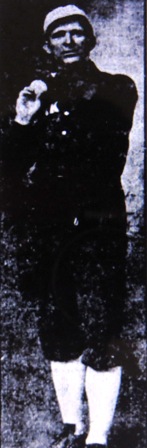
Frederick “Crazy” Schmit pitched for parts of five seasons for five different American and National League teams from 1890-1901, posting a career record of 7-36.  (Schmit’s name was almost universally misspelled by contemporary newspapers–the misspellings have been corrected in quotes that reference him).

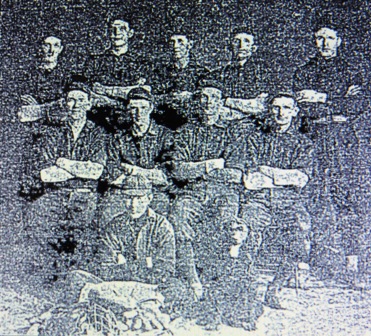
Crazy Schmit

Crazy Schmit

McGraw wrote (and likely embellished) about Schmit, who was his teammate in 1892 and ’93 and who he managed in 1901 with the Baltimore Orioles:

  “(W)e had a pitcher named Schmit generally and aptly called ‘Crazy’ Schmit.  His habits were nothing for a temperance society lecturer to dwell upon as an example…I called (Schmit) into a corner the day before the first game (of a series with the Cleveland Blues) and told him that I wanted him to pitch the next afternoon and asked him to get into good shape.  He said he would be out there with everything on the ball.  That was one thing about him—he never knocked his own ability.

“But Schmit’s notion of preparations did not coincide with mine.  I learned afterwards that he went directly from my lecture to his favorite loafing place and remained there telling his friends what he would do to Cleveland the next day.”

McGraw claimed that Schmit fell down on the mound (there’s no contemporary report o confirm it) and:

“Those were the days of quick action, so I rushed into the box from third base where I was playing, sore enough to do anything.

‘Get out of here.’  I yelled at him ‘You are released.’

“He laboriously regained his feet, and with ludicrous dignity walked out of the pitcher’s box and toward the exit of the park.  As he left he whirled on me and exclaimed dramatically: ‘I go to tell the world that the great Schmit has been released.”

McGraw said the pitcher only made it as far as the same tavern he had been at the day before, “and we had to send his clothes to him.”

John McGraw

John McGraw

McGraw wrote that before he released Schmit he used a tactic he later tried with “Bugs” Raymond; withholding money from the pitcher to keep him from spending it on liquor:

“After a time I began to miss baseballs in great numbers from the clubhouse and my suspicions were aroused, so I followed Schmit when he left the grounds one night…Schmit proceeded to a corner and mounted a soapbox which he produced from the bushes nearby, and then he pulled five or six league balls, partly used, out of his pocket and began to auction them off as ‘genueen leeg balls.’  For some of them he got as high as $5 apiece.  Or rather, he received $5 for the first one, and then I interrupted him and took the rest away.”

Schmit was released by the Orioles on June 10, 1901; he continued to pitch in semi-pro and outlaw leagues for more than a decade and worked as a scout–for the New York Giants, managed by John McGraw.

Another “Crazy” Schmit story tomorrow.

“I Have a Profound Contempt for the Game”

29 Apr

Samuel Porter Jones was one of the country’s most prominent Evangelists from the late 1870s until his death in 1906—the Ryman Auditorium in Nashville, home of The Grand Ole Opry, was originally called The Union Gospel Tabernacle and was built for Jones’ ministry.

Jones was not a baseball fan.

Speaking at a tent revival in his hometown of Cartersville, Georgia in 1885 Jones stirred up a crowd with his attack on the game.

Evangelist Samuel Porter Jones

Evangelist Samuel Porter Jones

According to The Atlanta Constitution, Jones read a note from one of the flock which said, “Our children have often gone off to the baseball grounds during this meeting and grieved our hearts,” and asked Jones for his opinion.  The preacher first said he’d hold his comments about the game for a later date, and then proceeded to give his views:

“In this town this year one poor wretch went into the baseball business regularly neglected his work and finally stopped doing anything whereby he could make a living.  His wife had to go to her father’s to get something to eat.  Yes, my views on the baseball question are very clear, and I intend to give those views with a vengeance at some future time.”

And then he continued again:

“I have a profound contempt for the game.  All that agree with me say ‘amen.’”

The Constitution said there were several ‘amen’s’ repeated in the tent:

“It is all very well for little boys under ten years of age to play baseball, but for men it is a crying shame and an abominable sin.  Why, I would not get mad with a man if he should kill my dog if he found him on a baseball ground.  My boy can play baseball until he is 10-years-old, but after that time I will give a hundred lashes every time he plays. ..If this meeting breaks up baseball in this town it will do well; if it does nothing else.  In three years no decent man will be found in the baseball business, if the game is carried on as it is now.”

The evangelist, and others who railed against the game in the late 19th Century did little to curb the growing popularity of the game..

Jones is buried in Cartersville.

Cartersville’s other connection to baseball is seven time American League all-star Rudy York, who played for the Detroit Tigers, Boston Red Sox, Chicago White Sox and Philadelphia Athletics.  York’s family moved there in his teens, and he played ball on a company team at the local textile mill and for the Atlantic Transportation Company team in nearby Atco, Georgia, before being signed for the Tigers by scout Eddie Goostree in 1933.

Rudy York, circa 1930, with local textile mill team.

Rudy York, circa 1930, with local textile mill team.

York died in 1970 and is buried four miles away from Jones in Cartersville.

Eddie Goostree, signed York for the Tigers

Eddie Goostree, signed York for the Tigers

More Superstitions

25 Apr

Billy Evans, “The Boy Umpire,” joined the American League staff at the age of 22.  Before becoming an umpire, Evans was a reporter for The Youngstown Vindicator and continued to write occasional, syndicated newspaper articles throughout his career.

Billy Evans

Billy Evans

In a 1907 article he wrote about superstitions:

“Baseball players are the most superstitious class of people in the world.  There are many superstitions in general in which all members of the profession have implicit confidence and nearly every player has some pet belief that is all his own.”

Evans mentioned one of the most superstitious players of all-time, Detroit Tigers pitcher “Wild Bill” Donovan, who as mentioned in an earlier post, believed that striking out the first batter he faced was bad luck.  According to Evans he also had a strange belief about the first game of the season:

“Donovan has a dread of working in shutout games on his first appearance.  He believes it a season hoodoo and would do almost anything to prevent it.”

Evans worked as an umpire in Donovan’s first start of the 1907 season, and the pitcher took a shutout into the ninth inning:

“I happened to be working back of Donovan that day and noticed that he seemed to let up in the ninth , also that he used nothing but a straight fast ball.  A pass, an error and a cracking hit by Charley Hickman sent a couple of tallies over the pan.”

Evans said he asked Donovan after the game if he “(lost his stuff,” in the ninth, Donovan said no:

“I have no desire to win a shutout game right off the reel…shutouts on your debut are not lucky.”

Bill Donovan

Bill Donovan

Evans said Fred “Lucky” Glade, a St. Louis Browns pitcher who had just been traded to the New York Highlanders, had a phobia of pitching if the sun wasn’t out:

 “According to Glade, he has never during his career won a game on a dark day.”

The pitcher also “started each inning…by tossing a ball to (Browns first baseman) Tom Jones.  Next year he will have to use (Highlanders first baseman) Hal Chase

Chase must not have been an adequate substitute; Glade struggled with arm and stomach problems, posted an 0-4 record in five starts for the Highlanders, before returning home to Nebraska in June.  He signed a contract for 1909, but never reported and never pitched again.

Fred Glade

Fred Glade

Ty Cobb had numerous superstitions; one had to do with the “position of the broom with which the umpires use to dust off the plate.”  Evans said:

“The umpires find it handy to keep the broom to the left of the plate, while Cobb, when at the bat, always desires it to the right.  Whenever he steps to the plate Cobb always picks up the broom and tosses it to the right side of the batter’s box.”

Additionally:

“When in a batting slump Cobb always makes three crosses as he takes his position at the plate.  When Cobb reaches first base on his journey from right field to the bench he always gives the bag a terrific kick in the direction of the plate…Cobb insists that the short distance he moves the bag toward the plate with his kick often is the means of winning a close decision at first for his team.’

Ty Cobb

Ty Cobb

Evans said of superstitions in baseball:

“No doubt a close investigation would reveal that every player from the smallest bush league up has his pet theory.”

Lost Advertisements—Old Underoof Whiskey, 1909 World Series and 1910 A.L. Race

11 Apr

oldunder1909ws

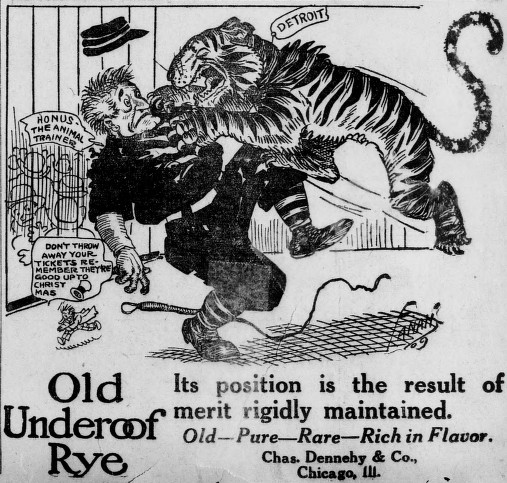
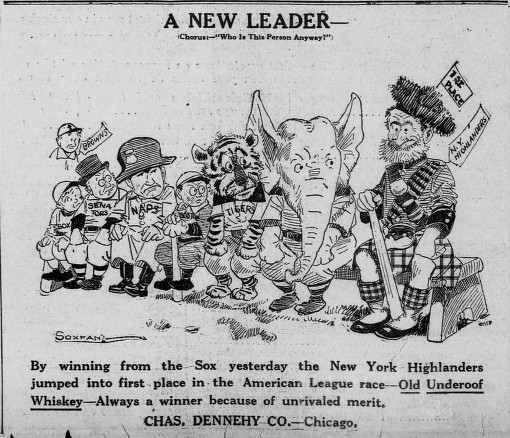
During the first decade of the 20th Century cartoon ads from Chas. Dennehy & Co., distributor of Underoof Bourbon and Rye Whiskey appeared regularly in Chicago newspapers.  Most focused on the Cubs and White Sox, the two featured today do not.

The ad above appeared after game 4 of the 1909 World Series when the Detroit Tigers evened the series with the Pittsburgh Pirates at two games apiece on George Mullin’s a five hitter;  Pirate star Honus Wagner, who would hit .333 for the series was held hitless by Mullin.  The Pirates would go on to win the series in seven games.

The one below was published on June 6, 1910 when the New York Highlanders, after winning two of three in a series with the White Sox, moved into first place.  The Philadelphia Athletics quickly overtook New York and would win the American League Pennant by 14 1/2 games.


oldunder1910Highlanders

Another “Rube”

4 Mar

Hall of Famer “Lefty” Grove and Jack Ogden were the best known pitchers of the great Baltimore Orioles teams that won seven straight International League Pennants from 1919-1925, but in 1923 both were out-pitched by James Arthur “Rube” Parnham.

Parnham began his professional career in 1914 with the Huntington Blue Sox in the Ohio State League.  In 1915 he joined the Raleigh Capitals in the North Carolina State League, managed by Connie Mack’s son Earle.  The 21-year-old was an unspectacular 9-15 for Raleigh, but caught the eye of the elder Mack and spent the spring of 1916 with Jacksonville with the Philadelphia Athletics.

Rube Parnham, 1917

Rube Parnham, 1917

Parnham returned to the North Carolina State League for the 1916 season, splitting time between Raleigh and the Durham Bulls, posting a 17-19; his contract was purchased by the Athletics in late August.  Nearly a month later Parnham made his Major League debut; he appeared in four games for Mack’s last place (36-117) ballclub, he was 2-1 with a 4.01 ERA.

Parnham was with the Athletics in Jacksonville again in 1917, but was sent to Baltimore before the beginning of the season.  He won 16 games for the Orioles and earned one more shot with Mack in Philadelphia; Parnham was 0-1 with a 4.09 ERA in two September appearances.

As Parnham started winning games for Baltimore he developed a reputation as a work horse; in 1917 he won both ends of a double-header against the Rochester Hustlers, pitching a total of 24 innings in two 3-2 victories; in 1919 he won both games of a twin bill twice.   At the same time he began to earn a reputation as “eccentric’ and “erratic,” the inevitable comparisons to Rube Waddell and his small time roots earned Parnham the nickname “Rube,” he was also known as “Uncle.”

Baltimore sold Parnham to the Louisville Colonels in the American Association in March of 1918, but within two months was sold back to Baltimore, where he rejoined manager Jack Dunn, with who he had, and would continue to have, a contentious relationship.  He won 22 games in 1918 and followed with 28 in 1919, leading the Orioles to their first championship since 1908.

As the Orioles jumped out to a quick lead in 1920 (Parnham was 5-0, and was joined on the pitching staff by Ogden and Grove) the erratic Rube Parnham surfaced again. He was prone to disappearing for days at a time and also appears to have been hurt.  By mid-season he was gone.

More recent accounts have said Parnham jumped the Orioles to play semi-pro ball in Pennsylvania; just as likely, Parnham, who was suspended in June by Dunn for being out of shape, and who was clearly overshadowed by Grove (12-2) and Ogden (27-9); as well as Jack Bentley (16-3) and Harry Frank (25-12), was let go.

Lending credence to Parnham not having jumped is a January 1922 Associated Press item that said the pitcher “whose arm went on him” would rejoin “the Baltimores for the 1922 season.  Parnham wrote Dunn that he believed he could come back next season and pitch successfully.”  He won 16 games for the Orioles in 1922.

The following season would be Parnham’s best; the 29-year-old pitcher led the Orioles with a 33-7 record, Grove was 27-10, Ogden 17-12.   In addition to out-pitching his two teammates, Parnham set an international League record by winning 20 consecutive games.

Parnham’s old ways returned before the 1924 season when he failed to report to Florida for spring training.  The Associated Press said:

“Rube never reported at the Oriole training camp in the south and never even deigned to notify Jack Dunn whether he was going to play ball this year.”

Parnham eventually reported, but had another stormy, abbreviated season.  With a 6-5 record and a 4.84 ERA, Dunn suspended the pitcher in June, and he appears to have not pitched for the Orioles again that season.

The only reference to Parnham in 1925 was a May game he pitched for a semi-pro team in Duquesne, Pennsylvania and was beaten 8-0 by the Homestead Grays.

His career appeared to be over, but Dunn, it seems was willing to give his pitcher one more chance.

The Baltimore Sun said shortly before the 1926 season:

“Uncle Rube Parnham, the most colorful figure in the International League, will be back on the mound for the Orioles next season.”

Parnham was 13-9 with a 5.05 ERA, and spent the entire season feuding with Dunn; It was the end of the Orioles dynasty, the Toronto Maple Leafs won the championship in 1926 and Baltimore would not finish first again until 1944.

The Orioles were finally through with Parnham, The Baltimore Sun said:

“There was so much trouble between Parnham and Dunn last year that it was apparent Rube had spent his last season with the Orioles.” “

The 32-year-old was still considered valuable enough that the Milwaukee Brewers in the American Association purchased the pitcher from Baltimore.

The Brewers expected big things from their new pitcher, The Milwaukee Journal said:

“At times his playfulness leads him away from the straight and narrow, and he nearly drove Jack Dunn nutty last season…But Parnham is a great pitcher, despite his eccentricities, and if (Brewers owner) Otto Borchert can hire a good keeper for him is certain to be a winner with the Brewers.”

By March Parnham had worn out his welcome with another manager when he didn’t bother to report to Hot Springs, Arkansas for spring training.  The Journal said:

“Disgusted with the dilatory tactics of Rube Parnham, Jack Lelivelt, boss of the Brewers, hinted Saturday night that unless the eccentric righthander reports at once that he would probably be turned back to Baltimore.  Former International Leaguers …have told the Milwaukee leader about some of Reuben’s idiosyncrasies  and Lelivelt is beginning to feel that he will become a stepsister to Kid trouble if he had the former Oriole on his club.”

Parnham never played for the Brewers, and was returned to Baltimore, but Dunn was finished with him as well and he was shipped off to the Reading Keystones.  After a 2-8 season split between Reading and the Newark Bears, Parnham’s career was over.

rube

Rube Parnham, 1923

Parnham retired to McKeesport, Pennsylvania, where the troubles that followed him throughout his career seem to have continued.  James Bready, an editor for The Baltimore Sun went to Pennsylvania to interview the former Oriole hero in 1961:

“The story was that he had gone downhill. Falling asleep in the snow, recently, he had lost several toes. On the phone, the director of a home for indigents said he would notify Parnham of the interview project. He gave me the street address — and a caution: ‘Try to get here before noon.’

“Paper, pen — I knocked and Rube beckoned me inside what today would be called a shelter. He was wearing an overcoat (I understand that better, now) and had not shaved recently. We sat down, facing, on two of half a dozen cot beds.  I tried a question. ”Gbbmhdahlr,” he replied. I stared at him; slowly, the meaning penetrated. I reached in my pocket and handed him a dollar.”

Parnham died two years later in McKeesport.

Veeck and Paige–a third time?

27 Feb

In 1959, when Bill Veeck purchased the White Sox rumors swirled in Chicago that the Sox owner was planning on having Satchel Paige start on Opening Day. Later, as the Sox were making a run for their first American League Pennant in 40 years the rumors resurfaced that the ageless Paige would join the White Sox for the Pennant run.

???????????????????????????????

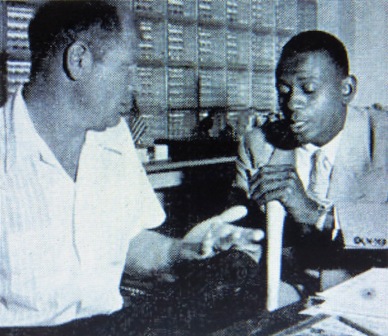
Bill Veeck and Satchel Paige, 1959

Paige, who had played for Veeck with the Cleveland Indians and St. Louis Browns, had spent 1956-59 with the Miami Marlins in the International League, winning 31 games. He had returned to barnstorming with the Cuban Giants and Indianapolis Clowns in 1959, but it was reported he was looking for another chance in the Major Leagues, and in June it began to be reported again that Paige would be joining the Sox.

A United Press International story in July said that Veeck had “sent Paige two new Chicago White Sox uniforms,” and quoted Paige:

 “If they want me they’d have to pay me big money.  I’m not going back for nothing.”

Whether it was ever a serious discussion, or simply two famous showmen milking rumors for the maximum publicity will never be known, but Veeck and Paige let the rumors swirl well into August before Veeck finally put them to rest, telling Jet Magazine:

“We’re not giving any thought to hiring him.  I’m very fond of LeRoy and I see him whenever he’s in town.  I gave him the uniforms because we’re old friend and for no other reason.”

And with that White Sox fans missed the chance to see the pitcher who Veeck called “The best righthander baseball has ever known,” pitch for the 1959 Pennant winners.

“Greatest Baseball Game Ever Contested”

13 Feb

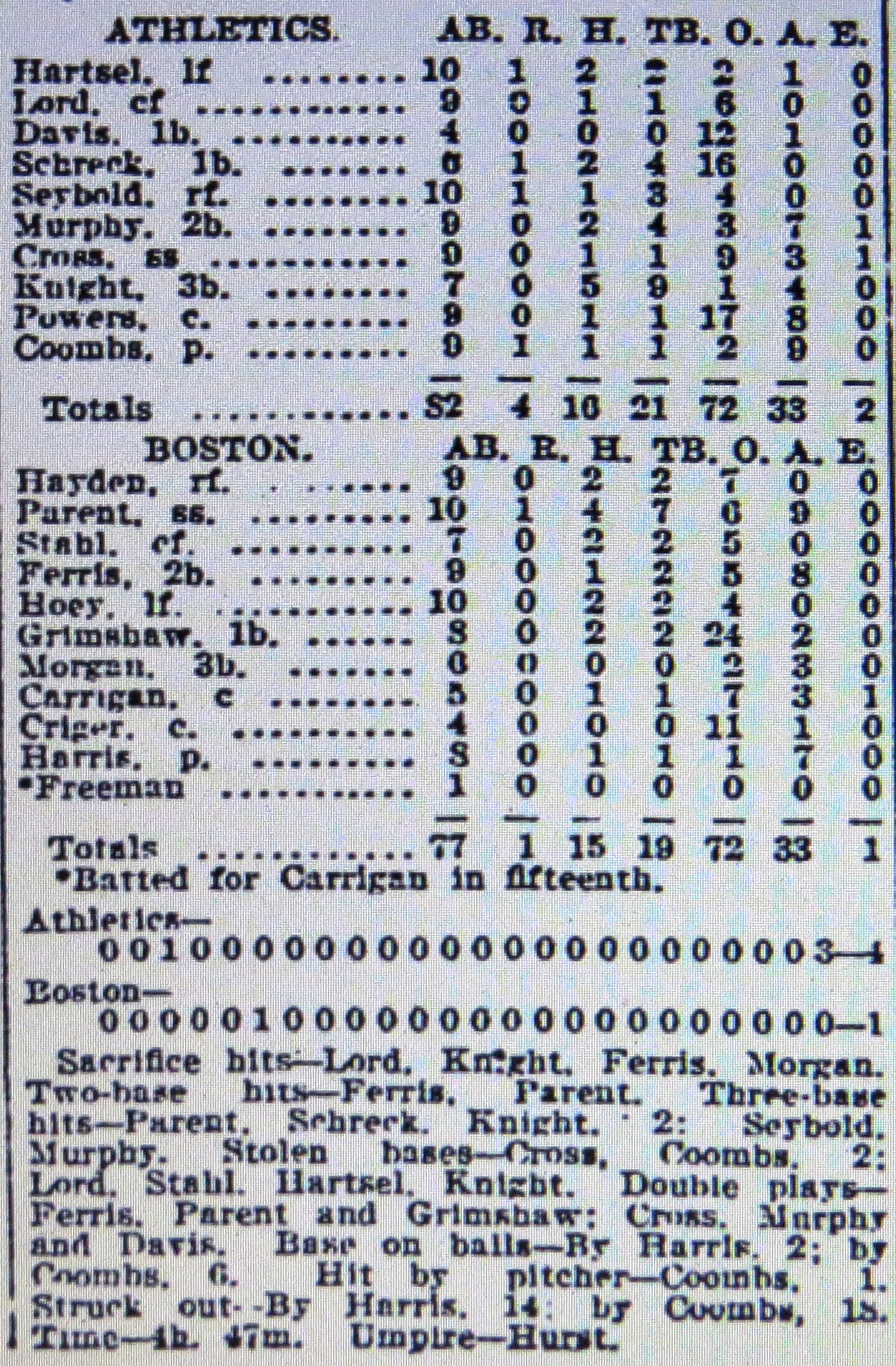
The Philadelphia Record headline called it the “Greatest Baseball Game Ever Contested, “ the September 1, 1906 game at Boston’s Huntington Avenue Grounds between the Philadelphia Athletics and the Boston Americans:

“What will go down in history as the most remarkable ball game ever played in a major league lasted 4 hours and 47 minutes to-day, and the champion Athletics beat the Bostons 4 to 1 in 24 innings.  It was a heart-breaking struggle all through, and to the astonishment of 18,000 people who saw the contest, the pitchers hung on until the last gun was fired.”

Rookie Jack Coombs pitched for Philadelphia, Joe Harris was on the mound for Boston.

Philadelphia scored a run in the third inning; Boston tied the game in the sixth:

“After that plenty of opportunities were offered, but owing to fast fielding and good pitching neither side could cross the plate.

“In the twenty-fourth, when darkness was fast covering the field, (Topsy) Hartsell led off with a single.  (Bris) Lord struck out, but Hartsell stole second…Shreck (Ossee Schrecongost) sent him home with a single over second.”

The Athletics added two more Runs as “The immense crowd filled out around the field.”

Coombs closed the Americans out in the twenty-fourth and “was cheered to an echo, some of the fans wanting to carry him on their shoulders from the field.”

The box score:

???????????????????????????????

“It was well that the game was concluded as it was, for it was too dark to go another inning, and the crowd began to murmur that the light was too dim when the last round began.  But the players themselves interposed no objection, for they were all deeply anxious to fight it out.”

Jack Coombs, 1906

Jack Coombs, 1906

Coombs would go on to a long career, highlighted by a 31-9 record, and three more wins over the Chicago Cubs in the World Series for the champion Athletics in 1910; overall he was 5-0 in World Series play.  He also pitched for the Brooklyn Robins and Detroit Tigers.

Harris is one of the ultimate hard-luck pitchers in the history of baseball.  He ended the 1906 season with a 2-21 record (the Americans were shut out 8 times when he pitched).  His Major League career was over after he went 0-7 in 1907; Harris ended his career with a 3-30 record.

Fielder Jones and the Chehalis Gophers

11 Feb

Most biographies of Fielder Jones—player-manager of the 1906 World Champion Chicago White Sox, the Hitless Wonders—mention that he managed the Chehalis Gophers, a team in the Washington State League, in 1910;  they never mention that he ended up there because of a near-fatal assault before he arrived.

The 36-year-old Jones left the White Sox after the 1908 season to settle in the Portland, Oregon and tend to his many business holdings in the area.  In 1909, he was named president of the Northwestern League, and served for one season.  According to West Coast newspaper reports, Jones was in the running to named president of the Pacific Coast League in 1910, before Thomas Graham was elected as a compromise candidate.

In the spring of 1910, Jones coached the Oregon Agricultural College (now Oregon State) baseball team to the school’s first conference championship.

At the same time, Jones was coaching at OAC, the Washington State League was getting underway—the league had been operating for at least three seasons, but 1910 was the first year it was recognized under baseball’s national agreement as an “official” minor league.

The Chehalis Gophers were led by 27-year-old Fred Nehring; he had previously played on the Pacific Coast, Northwestern and Connecticut State Leagues.  Nehring, who was born in Pueblo, Colorado in 1883, but grew up in Chehalis, had been playing on and off with the local team since leaving the Tacoma Tigers in 1908

1908 Chehalis team. Fred Nehring standing 2nd from left, Tamp Osburn, standing 4th from left.

1908 Chehalis team. Fred Nehring standing 2nd from left, Tamp Osburn, standing 4th from left.

Another player who had spent time with Chehalis since 1908 was a pitcher known variously as “Tamp” Osburn, Osborn or Osborne (for the purpose of this story we’ll call him Osburn—most common usage by contemporaneous sources).  Tamp Osburn has, at least, two separate, partial listings on Baseball Reference.

Osburn was considered a talented pitcher, but an erratic character.  While pitching for the Spokane Indians in Northwestern League in 1907, he quit the team in June.  According to The Spokane Daily Chronicle:

“The whole trouble yesterday started when a couple of misplays in the eighth inning put a losing aspect on the game…Tamp blames the whole trouble on (William ‘Terry’) McKune, who he says ‘threw’ the game on him.”

Osburn had additional problems with teammates and developed a reputation as an eccentric, and like all eccentric pitchers of the era there was one he was often compared; The Daily Chronicle called him “The Rube Waddell of the Northwestern League.”

After playing together for Chehalis in 1908, both Nehring and Osburn played in the short-lived Inter-Mountain League in 1909; both returned to Chehalis after that league folded in July.

???????????????????????????????

“Tamp” Osburn, 1908 with Spokane Indians

On May 20, just after the 1910 season opened, the Chehalis team boarded a train.  According to The Chehalis Bee-Nugget:

“(Osburn) who had been drinking before the train left Chehalis became so unruly on the train that the train crew called on Fred Nehring, captain of the Chehalis team to quiet him.  Tamp resented Nehring’s efforts to keep him from cursing in the presence of ladies, and pulled a knife and began to slash Nehring…Two severe cuts…in the left arm, and the other was in the breast.  If the latter had been an inch farther over, it would have penetrated the lungs.”

Nehring had the wounds dressed, left the hospital against doctor’s advice and managed the Chehalis team “from the bench.”  Despite the seemingly quick recovery, Nehring only appeared in a few games the rest of the season.  Osburn was arrested.

The Chehalis team floundered for the next several weeks.  In late June, it was announced that Fielder Jones would join the team as manager and centerfielder.

Under Jones, who was still property of the White Sox and needed Charles Comiskey’s approval to play, Chehalis easily won the league championship; Jones hit .358 in 37 games.

Jones had agreed to play for the team for no salary and was only reimbursed for his expenses.  This arrangement nearly cost Chehalis the league championship.  According to The (Portland) Oregonian, the second place Raymond Cougars protested to the league and the National Commission that all wins under Jones should be forfeited because Jones “was not under contract.”  The protest was denied and Chehalis was declared league champion.

Osburn was sent to the Lewis County Jail while awaiting trial, and according to The Oregonian was involved in an attempted escape along with other prisoners who occupied the jail’s first floor, a week after his arrest.  The paper said of Osburn “the baseball player, and one other man were taken to the cells on the second floor and locked up securely.”

There is no record of whether Osburn was convicted; in any case, he was free by July of 1911 and was pitching for the Missoula, Montana franchise in the Union Association when The Helena Daily Independent reported that Osburn:

“The Missoula pitcher, who started a rough house in a Missoula cafe and pulled a knife on a stranger, drew a severe panning from the judge, who, after fining him $25, -said: ‘There are some good men on your team, who behave themselves, but there is a lot of you whose conduct is a disgrace to the city and the national game. We don’t want that kind of men in Missoula uniforms, and you fellows have got to stop such actions.”

Contemporaneous newspaper accounts say he was a native of Utah, but given the inconsistent spelling of his last name, and a full first name never being listed, the trail for Osburn ends after this 1911 incident.

Nehring remained in Chehalis where he died on February 19, 1936.

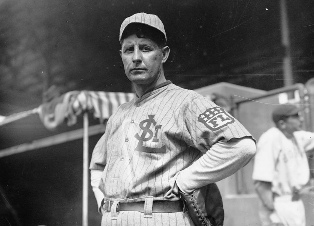
Jones returned briefly to baseball in 1914 and 1915 as manager of the Saint Louis Terriers in the Federal League.  He died in Portland in 1934.

Fielder Jones, 1914

Fielder Jones, 1914