Tag Archives: Cap Anson

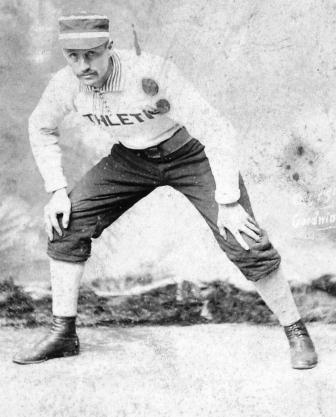
Bad Bill Eagan

6 Oct

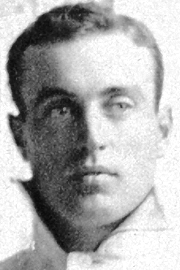
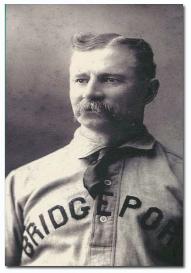
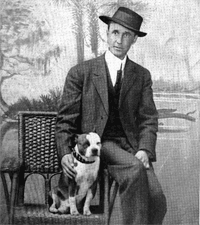
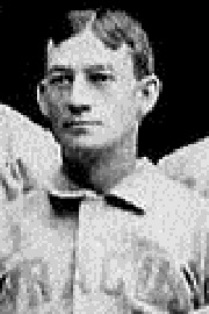
William “Bad Bill” Eagan was just 35-years-old when he died from tuberculosis in 1905, but many people didn’t believe it when the news was first reported. The hard-living Eagan’s demise had been predicted and reported several times. In 1901, the year after his professional career ended, The Fort Wayne Sentinel said:

“’Bad Bill’ Eagan who died two or three times last year, is running a poker room in Detroit. Eagan dies on the average of three times a year and is about due for the first of this year’s series. Eagan captained and played first base for Youngstown before his second demise last season.”

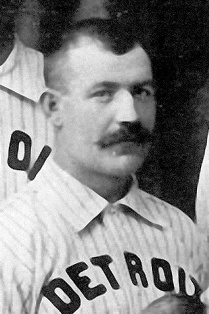
Bad Bill
Bad Bill

In 1899 Connie Mack told The Philadelphia North American:

“Eagan would be one of the best second basemen in the business if he would keep in condition.”

He quickly wore out his welcome during all three of his brief stints in the big leagues. The first, with the St. Louis Browns in the American Association in 1891, ended, according to The Syracuse Standard after an incident with team owner Chris von der Ahe:

“(Eagan) was a jolly fellow and not afraid of discipline. The Browns got on a train at St. Louis to come East…von der Ahe’s nasal organ was rather large and red for its age and ‘Bad Bill’ determined to have some sport.

“Walking up to his employer, he caught the nose between his fingers, and said: ‘Say, Chris, how much did it cost to color that?’

“The owner of the cerise nose was furious with rage. He released Eagan at once. The train was ninety miles east of St. Louis, and at von der Ahe’s order the conductor put the nose twirler off the train.”

Two years later Eagan joined ‘Cap’ Anson’s Chicago Colts. Hugh Fullerton told the story of how he wore out his welcome there after just six games:

“Anson was a quick thinker on the ball field, but once he released the best second baseman that ever wore a suit for thinking a little quicker than anybody else on the nine.

“The second baseman in question was “Bad Bill’ Eagan. Everybody who remembers ‘Bad Bill’ will admit his supremacy on the second bag. When the play we celebrate came up there was a base runner on second. Chicago was one run to the good, and it was in the last half of the ninth inning.

(Bill) Dahlen was playing third base for Chicago. The man hit a sharp liner down to second. ‘Bad Bill’ started for it and at the same instant the man started for third base.

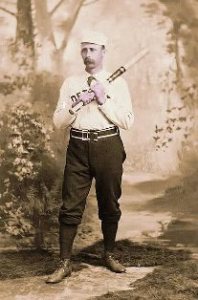
Bill Dahlen

Bill Dahlen

“The liner was a clipper and the ball struck ‘Bad Bill’s’ hands and bounded out. It struck the ground ten feet away, with ‘Bill’ right after it. Once he got his hands on it and without stopping to look where he was throwing. ‘Bill’ let the ball fly to third base.

“Most ball players after fumbling the ball would have tossed it to the pitcher or thrown it home if, after looking around, they saw that the base runner had started to try to score.

“In this case the base runner, after touching third, went on for twenty feet and then stopped for an instant to see what had become of the ball. He saw it coming straight as a die for third base, and went back there like a flash. But the ball beat him by ten feet. Unfortunately for the game, and also for “Bad Bill,’ Dahlen had taken it for granted that Eagan would throw the ball to the home plate, and was not looking for it to be thrown to him. Consequently the ball went by him, going within four inches of his nose, and striking the grand stand far behind.

“The result was that both base runners got safely home before Dahlen recovered himself and the ball, and the game was lost to Chicago.

“Anson was furious and immediately after the game gave ‘Bad Bill’ his release for making that throw. As a matter of fact, it was the best possible play under the circumstances, and Dahlen, rather than “Bad Bill’ was to blame for it not coming out as planned. If ‘Dal’ had thought as quickly as ‘Bill’ the game might have been settled right then and there.”
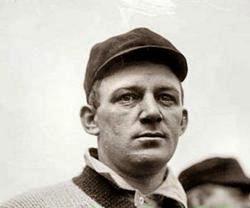
Eagan received one more trial with a major league team in 1898. He started the season on the bench for the Pittsburgh Pirates, but was given the opportunity to start when regular second baseman Dick Padden left the team over a dispute with Manager Bill Watkins in May.

Eagan hit .328, but committed 10 errors in 19 games. He was sold to Louisville Colonels on June 5. The Louisville Courier-Journal said:

“He is a clever fielder, a fair batsman, extremely aggressive and absolutely fearless (and will) certainly strengthen the team in one of its weakest spots.”

But he never appeared in a game for Colonels. The following day The Courier-Journal said the deal was off, and Manager Fred Clarke would only say, via telegram:

“Called deal for Eagan off for good reasons.”

The Colonels passed on Eagan despite being a team badly in need of a regular second baseman—Clarke tried nine different men there during the season, and his primary second baseman, Heine Smith hit .190 and committed 16 errors in 26 games.

Eagan finished the 1898 season with the Eastern League’s Syracuse Stars, where he had played from 1894 to 1897. He finished the year of 1898 in jail in his native Camden New Jersey.

That story Wednesday

“Go Back to Old Kentucky”

26 Sep

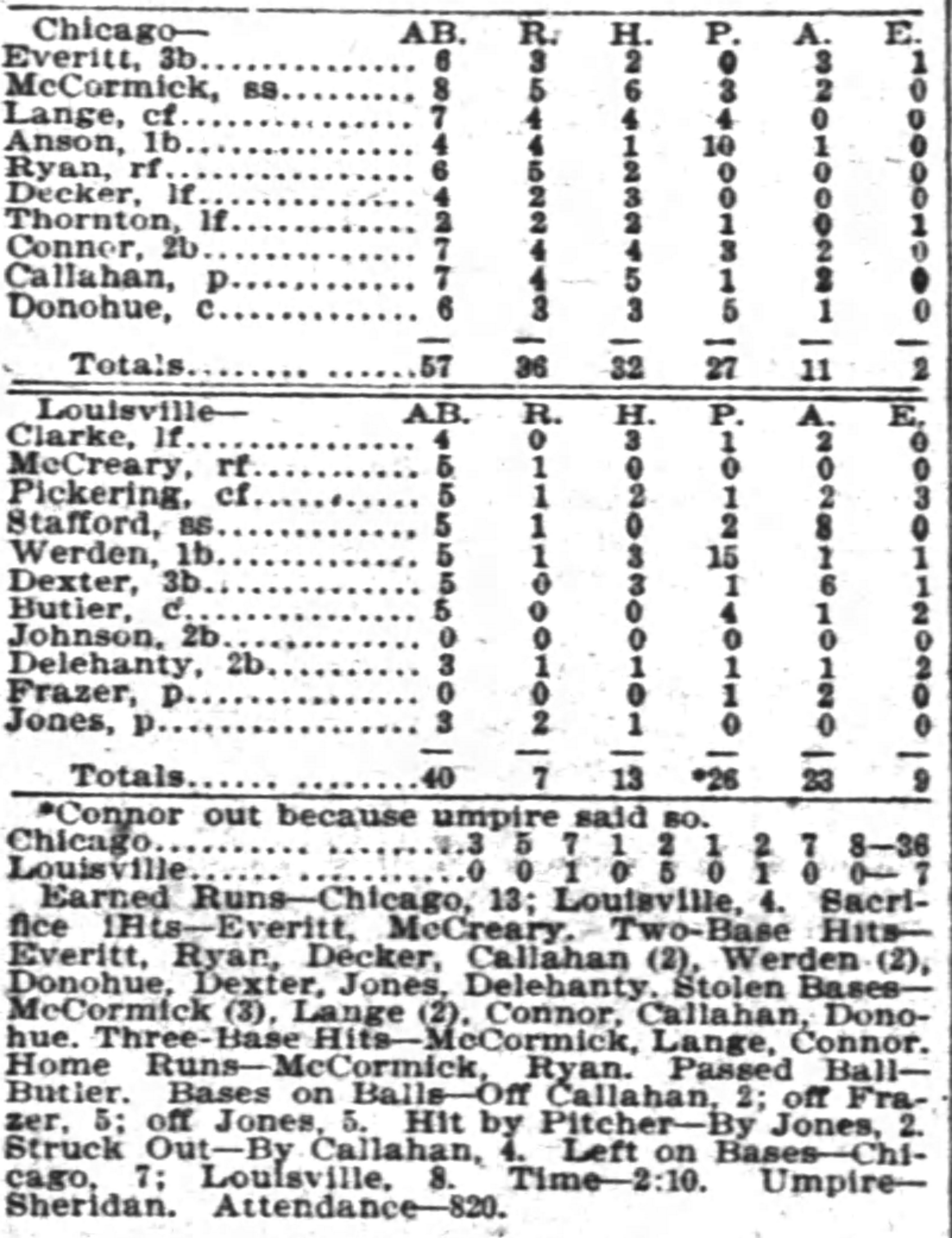
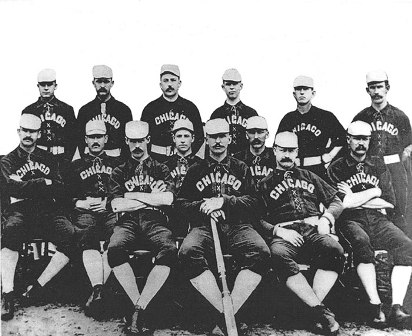
On June 29, 1897 “Cap” Anson’s Chicago Colts defeated Fred Clarke’s Louisville Colonels by scoring more runs than any team has ever scored in a single game.  The Chicago Tribune said:

“Game is a farce and everybody has a good time except the Colonels.”

The Chicago Inter Ocean said:

“Chicago exterminates Bourbons to the tune of 36 to 7.”

The Louisville Courier-Journal headline put it simply:

“Awful work.”

The Colts scored at least one run in each inning, collected 30 hits, and Louisville committed nine errors.

The Colonels finished in 11th place with a 52-78 record in 1897

The Colonels finished in 11th place with a 52-78 record in 1897

One Chicago fan memorialized the contest with a song, which The Courier-Journal shared with their readers.  The song, said the paper, was “a parody on the song ‘She Was Bred in Old Kentucky;”

Go Back to Old Kentucky

While talking one summer’s day,

With a friend not far away,

About a baseball game

That was coming off that day,

The Colonels and the Colts

Were going to take the holts

On the Diamond Field

And battle for the game.

A man, Fred Clarke, by name,

Young, but who had won great fame,

Had come out to play

With the Kentucky boys.

He had reason to be sad,

For Louisville was bad,

When a hobo in the crowd

Rose up and said:

Chorus

Go back to old Kentucky,

Here the meadow grass is green;

You’re a lot of dub ball-players,

You’re the worst I ever seen,

Go back to old Kentucky

And consider yourself lucky

You got off as light as you did.

Oh! His heeding of advice,

He would not listen to him twice,

And the grounds that day he did go;

There was Clarke and (Charlie) Dexter too,

The game began at half-past two,

And their places in the field they took;

Ritchie was at second base,

With the ball he tried to race.

The ball bounded

And caught him in the eye;

And Clarke fancied he could trace

A little swelling on his face.

As he sat down a lobster in the crowd cried:

(Repeat Chorus)

“Richie” was Ebenezer “Abbie” Johnson, who was occasionally called “Richie” in the press; Johnson was playing second base during the third inning when a ball hit by Anson—The Tribune called it “a viciously driven ball”– took a bad hop and “smashed Johnson in the eye, almost knocking it out.”

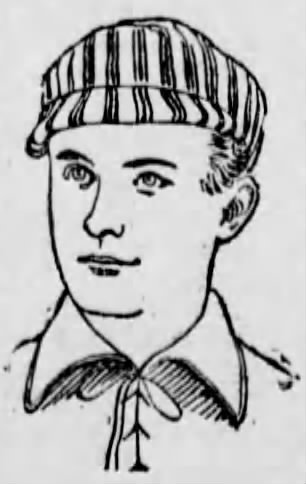
Abbie Johnson

Abbie Johnson

The game also included, in the fifth inning, an incident The Tribune called “probably the most ludicrous situation ever seen on a league diamond.”

The Colts led 16 to 1 at the beginning of the inning.  After loading the bases and scoring two runs, catcher Tim Donahue fouled out, and third baseman Bill Everitt grounded out; Jim Connor, the Colts second baseman appeared to score from third on the play, but, The Tribune said:

“When the players all came off the field the fact only two were out became known.  After much searching through his brain pan for and excuse (Umpire Jack) Sheridan took the tally away from Connor and called him out for ‘Cutting third base.’”

Perhaps the first, and only, time a player was called out for “cutting” the base he left from; Sheridan’s call also made for one of the most interesting notations included within a box score.

The Tribune box score included the note: “Connor called out.  No reason assigned.”  The Inter Ocean went with the more sarcastic:  “Connor out because umpire said so.”

The Tribune Box Sore


The Inter Ocean Box Score

The Inter Ocean Box Score


30 runs or more have only been scored by one team in a single game nine times—eight of them were before 1900—and Chicago is responsible for four; the other three games were in 1876, 1883 and 1883.

Tom Lynch’s Broom

24 Sep

In 1905 Chicago White Sox outfielder Jimmy “Nixey” Callahan talked about his first season in Chicago in 1897 in an article distributed by “Newspaper Enterprise Association” to several newspapers across the country:

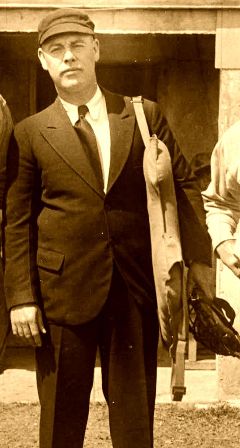
“’Bill’ Lange, who is now a prosperous real estate dealer in Frisco, and former Umpire Tom Lynch, who is a theatrical magnate in New Britain, Conn., were sworn enemies of the diamond.  On the ball field Lynch insisted on being addressed as ‘Mr. Lynch’ and was probably the strictest disciplinarian that ever wore a mask.

“We were playing in Boston with the old Chicago club, under (Cap) Anson, and noticed that the broom used to brush the plate was always kept or thrown over to our side, due to some superstition of other on the part of the Boston players to have it on the visitors’ side.  Lange was leading off about the fifth inning and as he walked to the plate he picked the broom up and threw it over on the Boston side.  (Hugh) Duffy, who was then captain of the Boston nine, threw it back.  One of our players ran from the bench and hurled the broom over to the Boston side.  The large crowd began to see the humor of the situation and began cheering the players as the broom passed back and forth.  Lynch stopped the game and as a truce umpired the rest of the game with the broom in his possession.  The next day the broom was missing and Mr. Lynch carried a small whisk broom in his pocket.”

National League President Thomas Lynch

National League President Thomas Lynch

During the same series, Callahan said:

“Lange’s method of annoying Lynch was artistic.  When at bat or passing Lynch he would say” ‘Don’t you think Boston will win today Mr. Lynch? Or ‘Don’t you think Boston will win the pennant Mr. Lynch? Would you as a disinterested party like to see Boston win, Mr. Lynch?’  Never giving Lynch a chance to fine him by being vulgar or noisy, Lange would not stop walking when addressing him, ever.

“He would have Lynch furious, but as he kept within the bounds Lynch was forced to take his medicine.”

Five years later, after Lynch had been named president of the National League; Lange retold the broom story to a reporter and said:

“After the damage had been done I suggested that we compromise by allowing one half the handle to lie on one side of the plate and the other half on the other.”

Years later, another National League umpire, George Barr, told a reporter for The Associated Press that the umpire’s whisk broom was “The most important thing, he possessed on the field:

“That little whisk-broom which most of the fans and players, too, believe is carried around to keep the plate free from dust is actually the symbol of authority the umpire has over the game.

“So when you are working behind the plate, stride up to the old pan and give her a vigorous dusting, even if the thing’s as clean as a whistle.  That’s to let the fans and players know you’re in charge of the game—that you’re the official representative of the league which, in fact, you are.”

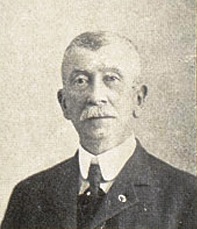
George Barr

George Barr

The Wealthiest Ballplayers, 1894

19 Sep

In 1894, major leaguer turned sportswriter, Sam Crane wrote about the wealthiest players in baseball in The New York Press:

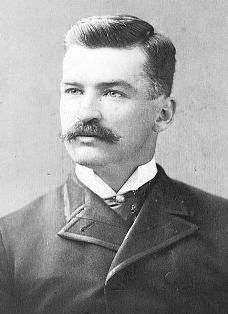
(Cap) Anson is probably the wealthiest ball-player on the diamond today.  His wealth has been estimated anywhere from $50,000 to $100,000.  It is, without doubt, nearer the latter sum than the former.”

"Cap" Anson

“Cap” Anson

Anson’s fortune would be long gone, due to a series of poor investments and other financial setbacks, by the time he died in 1922.

“From the time he joined the Chicago club he has enjoyed a big salary.  In his nearly 20 years’ connection with the club he has acted as manager and captain since the retirement as a player of A.G. Spalding in 1877.  Anson, of course received extra salary as manager, and has also been a stockholder in the club…He has been fortunate, too, in real estate transactions in the “Windy City,” under the tutelage of Mr. Spalding, and could retire from active participation in the game without worrying as to where his next meal was coming from.”

The men who Crane said were the second and third wealthiest players managed to keep their fortunes.

Jim O’Rourke is thought to come next to Anson in point of wealth.  Jim came out as a professional player about the same time as Anson.  He did not get a large salary at first with the Bostons, which club he joined in 1873.  He remained with the team until 1878, when he went to Providence.  Jim was young and giddy when he came from Bridgeport to Boston, in 1873, and did not settle down into the staid, saving player he now is…He was a ‘sporty’ boy then, and liked to associate with lovers of the manly art.  Patsy Sheppard was his particular friend in the ‘Hub,’ and James made the boxer’s hotel his home for some time.  When he went to Providence in 1879 Jim began to think of saving his money, and from that time on his ‘roll’ began to increase.

Jim O'Rourke

Jim O’Rourke

Dan Brouthers has received big salaries only since 1886, when he, as one of the famous ‘big four,’ was bought by Detroit from Buffalo.  But since then he has pulled the magnates’ legs and socked away the ‘stuff.’  He has been situated so that he has been able to make the magnates ‘pony up’ to the limit, and Dan had no mercy.  He said he was out for the ‘long green,’ and he got it.  When the Boston club bought Brouthers, (Abram “Hardy”) Richardson, (Charlie) Bennett, (Charles “Pretzels”) Getzein and (Charlie) Ganzell, Dan grasped the opportunity and got a big bonus and also a big salary.  He made the Detroit club give up a big slice of the purchase money before he would agree to be sold.

Dan Brouthers

Dan Brouthers

“The Brotherhood war, when Dan jumped to the Boston Players league was another favorable opportunity for him, and he grasped it and the boodle with his accustomed avidity.  Dan has planted his wealth in brick houses in Wappingers Falls (NY), and can lie back at his ease with his 30,000 ‘plunks’ and laugh at the magnates.  It is this feeling of contentment that has made Dan almost too independent and has affected his playing lately (Brouthers appeared in just 77 games in 1893, but hit .337, and hit .347 in 123 games in 1894).  Dan is what ballplayers call ‘hard paper,’ which was a most distinguishing characteristic of every one of the ‘big four.’”

Detroit’s “Big Four” consisted of Brouthers, “Hardy” Richardson, James “Deacon” White and Jack Rowe.

“Hardy Richardson was not so awful bad, but Jim White and Jack Rowe took the whole bake shop for being ‘hard papes.’  They have both been known to start on a three weeks’ trip with 80 cents each, and on their return Jim would ask Jack, ‘How much have you spent?’  Jack would reply:  “I haven’t kept run of every little thing, but I’ve got 67 cents left.’   Jim would remark gleefully: ‘Why, I’m three cents ahead of you; I’ve got 70 cents.’  And Pullman car porters are blamed for kicking when a ball club boards their car!  Jack and Jim would sleep in their shoes for fear they would have to pay for a shine.  The only money they spent was for stamps in sending home papers, which they borrowed from the other players.  They are both well off now, however, and can afford to laugh at the players who used to guy them.”

Deacon White

Deacon White

(Charles) Comiskey has been fortunate in getting big money since 1883.  (Chris) Von der Ahe appreciated the great Captain’s worth and paid him more and more every year.  The Brotherhood business enabled him to make a most advantageous contract, and as manager and Captain of the Chicagos he received $7,000 salary besides a big bonus.  His contract with Mr. (John T.) Brush to play and manage in Cincinnati called for $23,000 for three years and $3,000 in cash.  This was made in 1891 and runs this year (1894).  Comiskey has his money invested in Chicago real estate, which is paying him a good income at the present time.

(John “Bid”) McPhee, (William “Buck”) Ewing, (Harry) Stovey, (Paul) Radford, (Ned) Hanlon, (Jack) Glasscock, (Tim)Keefe, (Charles “Chief”) Zimmer, (Charlie) Buffington, (Charlie) Bennett, and (Fred) Pfeffer are players who are worth from $10,000 to $15,000, which has all been made by playing ball.  There are only a few more players who have much in the ‘stocking.’”

Hugh Nicol

25 Aug

In 1884 Hugh “Little Nic” Nicol was one of the most popular members of the St. Louis Browns—so popular, a local boy’s team named themselves after the right fielder, and the Nicol was invited to address the team.

Hugh Nicol

Hugh Nicol

A reporter for The St. Louis Critic was on hand when Nicol imparted his baseball wisdom to the kids:

“I’m no speech maker, but if you like I’ll give you a pointer or two, and you can take ‘em or leave ‘em, just as you like.  First, when you go to the bat don’t sneak up there, but pick up your club determined like, and look at the pitcher as you’d look at a mosquito which you had the dead wood on.  Then when he curls the ball away, up around your left year duck your head, look mad and whisper, ‘Oh, you sucker you know better than to give me a good ball.’  That’s what you call workin’ the pitcher—makin’ him mad as a bull—so mad that he’ll put the ball just where you say he can’t put it, but where you know he’s going to put it, and when he puts it there smash her right in the eye.

“Then when you’ve smashed her, don’t stop and admire the smash, but make for first as though the devil was trying catch hold of your coat tails.  When you reach first don’t stop unless you hear the captain yell: ‘Hole yer first; hole it!’  If he yells ‘hole it,’ obey orders.  Don’t think you know more than him, because if you get to thinkin’ that way your head will begin to swell, and all the ice in St. Louis won’t take down the swellin’ If you only reach first, place your arms akimbo and look at the pitcher as though you had got there by a fluke and was going to hold to her if it was the last act.  If you are a runner, and not one of those tired cusses that crawl when they think they’re flyin’.

“Make for second the moment he pitches the ball; and when you get near the bag, grab hold of it and come up smilin’ at the umpire , as though you meant to say “Oh, I beat the ball about a foot, and he never touched me anyhow.’  If you work it right the umpire will sing out, ‘Hole yer second!’

“But, fellers if you can’t run when you reach first stay there and thank God you got that far.  Don’t try to make second for if you do the catcher will make a bloomin’ gillie out of you.  But make out that you are a dandy on the run, and bob up and down like a bear dancing on a red hot stove.  That kind of business works up the pitcher and he’ll try to catch you nappin’, but instead he’ll fire the ball away over the first baseman’s head.  Then if you can run a little bit you can get all the way ‘round.  But take care that he don’t catch you nappin’.  If he does that the captain will call you a bum base runner and you’ll feel like clubbin’ the life out of yourself.”

Thirty-five years later, Nicol attended an old-timers banquet at the Great Northern Hotel in Chicago and spoke with Al Spink, then occasionally writing for The Chicago Evening Post.  Spink called Nicol “the smallest and most wonderful right fielder in America.”

Nicol, like most of his 19th Century brethren, thought his old teammates were better than current players:

“I can’t see where the game has improved a bit since we played it…and I can’t see where the players of today are any better than our old gang…I don’t see any players cavorting around on the diamond today that are any better than the Browns’ old infield when it was composed of (Charles) Comiskey, (William “Yank”) Robinson, (Arlie) Latham and (Bill) Gleason…Where are there any better players than our old Chicago infield—(Cap) Anson, (Fred) Pfeffer, (Ned) Williamson and (Tom)Burns?”

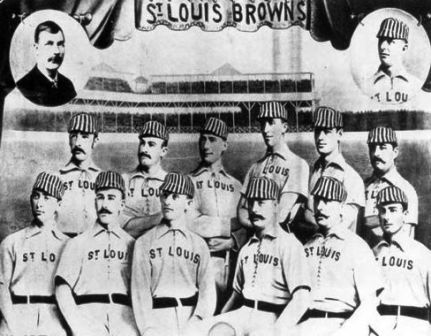
1885 St. Louis Browns--Nicol is on the far right of the bottom row.

1885 St. Louis Browns–Nicol is on the far right of the bottom row.

Nicol also objected to the way the game was played:

“(W)here is there the  enthusiasm and the effort to win that was in evidence in the days when we played?

“Nowadays a player often goes to the bat acting like a man who has lost an immediate member of his family.

“We used to go up smiling and acting as though we were certain of clouting out a homer, although we often fell down on the proposition.

“And then, too, many of your players of today make little attempt to advance themselves in the various departments of play.

“They do not half try to learn all the fine points of the game as we did in the days of old, but simply try to get by.  They are content if they get a couple of hits every afternoon and play an errorless game.  The first thing they do each morning is to get the newspaper and look at the hit and error columns.  If they don’t see themselves credited with a hit perhaps they did make, some sports writer gets a terrible panning.”

Nicol managed in the Three-I League and later  coached baseball and served as athletic director at Purdue University from 1906 until 1914—he resigned both positions in November of 1914 after a dispute with his football coach Andy Smith and Smith’s assistant Pete Vaughn (who was also Purdue’s basketball coach).

Nicol 1904

Nicol 1904

Nicol was often credited by contemporary sports writers with inventing the head-first slide.

He died in Lafayette, Indiana in 1921.

“First thing I know they had the Cushions Populous”

15 Aug

Nearly two decades after he claimed it happened, Clark Griffith told a reporter from The Sporting News a story about getting the final out, and humiliating a friend in the process:

Clark Griffith

Clark Griffith

“It has been my luck to see a large number of peeved and angry people in this old game of baseball, particularly gentlemen against whom I have been lucky enough to do some successful pitching.

“I still think, however, that the maddest man I ever did behold was that grand old Monolith of the Boston team—Mr. Thomas Tucker.  The Occasion on which I beheld the fury of this famous warrior is still green in my memory, and can never forsake me.

“Old Tommy Tucker was pretty nearly on his last legs so far as big league baseball was concerned, and hits to him were more precious than rubies and diamonds when we bumped together one summer afternoon.  It was a big game, a most important game, and I really had to win it.  I love Tom Tucker very much, but I loved my salary more.

Tommy Tucker

Tommy Tucker

“The battle was a hot one, running along on pretty even terms till near the close, when we managed to get a couple on the bases when good old Uncle (Cap) Anson did the rest with one of those murderous  hits that they don’t make now, the old man not being there to soak them.  That Boston bunch was never whipped till the last man was counted out, and they went after me strong in the last death rally.  First thing I know they had the cushions populous, two down and old Tom Tucker standing grimly at the plate.  I worked him into biting at two wide ones, then fed him two more which he refused to reach after.  It was coming down to cases and no mistake.

“Just at this juncture I happened to remember a trick of indoor baseball—the enormous upshot which is put on an indoor ball by swinging it underhand, with the knuckles uppermost and the ball rolling off the palm.  It causes a huge upshot ball, but it is not practicable for outdoor ball because, at the greater pitching distance, the ball would lose all its speed before it reached the platter.

“I decided to throw the ball just once, as a desperate experiment, and I threw it.  The globule sauntered along, way low, below Tom’s knee line, and he stood scoffing at it.  Then, just as the ball came parallel with him it leaped up and whirled over the plate, while the umpire yelled ‘strike three.’

“Old Tom Tucker laid down his bat and started toward me, with evidence of much excitement on his face, but I was already on my way, and was going fast.  That night he came to the hotel looking for me, and publicly announced that he intended to slay me on sight, but I was not in, and he never got his hands upon me.”

The pitch used to strike out Tucker was not the only one Griffith said originated with him.  In addition to his claim to have invented the screw ball, in 1899 The Chicago Daily News said Griffith claimed to have perfected a new type of curve which “is said to be an amplification of his celebrated slow ball, with which he has in times past puzzled so many batsman.”

The “celebrated slow ball” was taught to Griffith by Charles “Old Hoss” Radbourne—as a result The Chicago Tribune’s Hugh Fullerton said Griffith held “practically a monopoly on the slow ball and (used) it with wonderful effect.”

Griffith said he developed this new curve when shooting pool:

“You simply English the ball with your hand instead of the cue that is the only difference.  In other words, before the ball leaves my hand it is set to spinning in a direction towards my body.  All the time it is going through the air towards the batter it has this rotary motion.”

The Daily News described the pitch:

“It is believed that the air in the case of a curve of this kind acts like the cushion of a billiard table and accentuates the tendency to return, which underlies the forward motion of the baseball.  Be that as it may, the result is astonishing.  A ball that starts out with great velocity from Griffith’s hand in this experiment, as it gets to the batter suddenly slows up to a speed not more than one-half as great as that at which it was launched.  The effect on the batter, who is expecting a swift ball, can readily be imagined.  He strikes at the leather globe before it reaches him, and the chance that he hits it is reduced to a minimum.”

“Because Players are apt to be Foolish”

25 Jul

In 1887 John Montgomery Ward shared with The New York Sun his wisdom about what it takes for a ballplayer to get in shape.

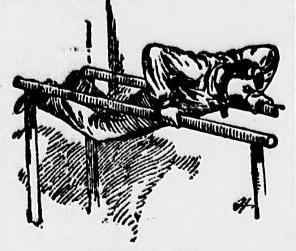
“Gymnasium apparatus and gymnastic exercise are going out of favor among ball players for several reasons, and very few of them now attempt to keep in condition through the winter.  When you hear a player going into a gymnasium that usually means he goes in there, tries some feat and lames himself…It is not a good thing for a player to fool with the apparatus.  He does not want to develop big bunches of muscle.  What he needs is agility, suppleness, quickness of eye, hand and foot.  If he goes into a gymnasium he exercises muscles that he does not use in the field, and he either develops them at the expense of his useful muscles, so he puts too much strain upon them, thinking himself as strong in one part as another, and breaks a cord or otherwise injures himself.”

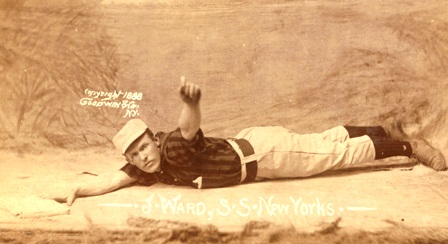
John Montgomery Ward

John Montgomery Ward

He said the gym contained “too many temptations in the apparatus for trials of strength…Because players are apt to be foolish about the use of apparatus managers now discourage gymnasium use as a rule.”

Ward said he, and others were injured in this way:

(Larry) Twitchell of the Detroits hurt his shoulder and could not pitch well afterward.  The parallel bars broke some small sinew in my shoulder and spoiled me for pitching, and I can feel the pain now when I raise my arm in a certain way. “

Larry Twitchell

Larry Twitchell was primarily an outfielder after 1887, appearing in just 23 games as a pitcher .

Ward then laid out his vision for how he would prepare a team for the season:

 “If I were training a nine, I would call the men together about two weeks before the opening of the season, and put them at work in a hand-ball court, watching them very closely.  Hand-ball is the best form of exercise they could have, excepting base ball, of course.  When you come right down to the point, no exercise is as good for a base ball player as base ball itself, but in this climate it is not practicable to put a nine at work on the diamond much before the opening of the regular season.  Hand ball comes next to the real thing, as it requires the same agility and quickness of eye, and it is much better than the gymnasium, because it is a game in itself and is full of amusement and excitement.  When the players get interested in a game of hand ball they forget that they are working, and before they know it they are perspiring, and their blood is circulating finely through all their muscles.  The throwing in this game is easy, and there is no danger of a player’s straining his arm or shoulder, as he might if he tried to make a long throw in the field after a long rest.   In catching the ball on the bound and returning it to the wall, activity is necessary, and the work is so quick that it keeps a player on a jump all through the game.  The constant striking of the ball with the palm of the hand accustoms the hand to the impact, and if it does not harden the palm it tends to deaden the nerves on the surface.

“In the handball court the pitcher and catcher and pitcher can pass the ball when not playing in the game, and so get the special practice that the battery needs.  Batting exercise should be kept up by the whole nine also.  The director of this training ought to understand the men thoroughly and adapt the exercise to their individual peculiarities.  The stout man needs to be worked hard and the thin man restrained.  A nervous man is inclined to go in too enthusiastically and do more than is good for him, while the stout, phlegmatic man is averse to exertion, and will not do enough unless he is urged.”

Ward said the parallel bars ruined him as a pitcher

Ward said the parallel bars ruined him as a pitcher

Ward said it was necessary to make players understand that each one should be treated differently when getting in condition for the season:

 “This makes the director’s position anything but pleasant.  The heavy men think that they are doing more than their share, and attribute the difference in work to partiality.  All expect to be treated alike, but that cannot be done, and it is difficult to make some players understand why the work should be varied.

“I would have the men begin to practice throwing about the 1st of March, insisting upon starting with light, easy work, and getting into it gradually.  They ought also to walk some and take short jogs out of doors.  A man may be in good gymnasium condition and still be unfit for hard outdoor work.  Indoor condition is different from outdoor condition.  Let a man work all winter in a gymnasium and then go outside and take a violent exercise, and he will surely stiffen up at first.  He must accustom himself to the open air and difference in temperature before trying to do too much outside.  Hand ball playing will put him in outdoor condition without laming him.  If he does not attend to this matter, but attempts to go right out of the gymnasium and play base ball, he will feel the effects very unpleasantly.  Last year the New York nine played a game the very next day after being called together, having had no preliminary outdoor training to harden the muscles and the next day the men were sore and lame all over.  It took them several weeks to get into condition.  They had to train in the field, and the result was the spring practice was greatly interfered with, and they did not begin the championship series in as good condition as they would have if they had received the proper amount of preliminary training.  A man just out of a gymnasium, with lots of spare flesh, feels strong and thinks he can do anything.  Before the public he will attempt to do more than his condition warrants.  He will try to throw a ball in from the field to home plate, and strain his shoulder or lame his arm so that he can’t throw worth a cent for the next week or two.  Or he will make a good hit and try to get in a home run, the result being lame legs or a strained knee that makes him almost useless for several games.  An injury to a good player at the first of the season may be thousands of dollars damage to the club, but some men do not seem to appreciate that fact.  When the St. Louis Browns were trained by Comiskey they came into the field in splendid condition, and took such a lead in the first part of the season that no club could catch up with them.  The Chicago Club was trained well last year, and won the championship.  This year the Chicago men are having five weeks of outdoor work at Arkansas Hot Springs under (Cap) Anson’s direction, and they will show up in fine form and be able to play well right from the start.

“Many ball players show up for the first game about 25 pounds overweight, and they have to work that off before they can handle themselves well.  It is not advisable to begin in what a trainer calls condition, because one soon feels tired; but neither is it well to have a great deal of extra flesh.  The exact condition to be recommended depends upon the temperament of the player, and must be decided by common-sense rules.  The subject of proper training has been too much neglected by base ball men, but it is beginning to receive attention, and eventually a system will be adopted and its observance enforced by discipline in the clubs.  Some players are sensible enough to see the importance of rational training and will take care of themselves and study up the best methods; but there are many foolish fellows who never think of anything in that line, don’t understand themselves well enough to work properly, and need to be directed and compelled to follow instructions.  The calling together of most of the clubs several weeks earlier this year than heretofore indicates that the managers are waking up to the importance of having their men fit for work at the start.”

He provided a glimpse of the type of manager he would be three years later when he le Brooklyn’s Ward’s Wonders to a second place finish in the Players League:

”Discipline ought to be more strict during the base ball season, and men should not be allowed to knock about and abuse their stomachs as many of them do.  While traveling about the country and getting frequent changes of food and water, it is difficult enough to keep the stomach right with the greatest care.  A nine has been disabled more than once by one man’s recklessness in eating.  A base ball player never ought to be seen in a barroom during the season.  He may go in to get a glass of beer, but he meets friends who insist upon treating, gets four or five drinks that do him no good and that he doesn’t want, and somebody goes about reporting that he was drunk.

“A thin player may get some benefit from a bottle of ale with his meal after the game, but he should not drink before the game; and the stout man should not drink at all, because he does not need anything of the kind.  Base ball players ought to keep regular hour also, go to bed early and get plenty of sleep, and be up by breakfast time.  This staying up until 2 in the morning and then sleeping until noon is all foolishness, and it ought to be prohibited.”

Ward’s views on training had a larger purpose, they were in keeping with his role as the leader of baseball’s first labor movement; in order for players to achieve the status the Brotherhood sought Ward knew they needed to take every aspect of the game seriously, including preparation:

“The sum and substance of the whole thing is that a base ball player must recognize the fact that base ball is a business, not simply a sport.  It is no longer just a summer snap, but a business in which capital is invested.  A base ball player is not a sporting man.  He is hired to do certain work, and do it as well as he possibly can.  The amount of his salary depends entirely on the way he does his work, and it is for his own interest to keep himself in the best condition and study how to get the best results.  If he does not know how to train himself, he should submit to the direction of somebody who understands the business.  Players are beginning to see this, but they need to see it more clearly yet.  They have been through the gymnasium experience and learned that performing feats of strength and turning on the rings is not good for them, and many of them have given up winter training on that account, but they have yet to learn that there is a proper system of exercising and training that is indispensable.  Those who do appreciate the importance of the matter are glad to see the growing interest and discussion, but the success of clubs that exercise systematically will o more than all the talking toward bringing about a general recognition of the benefits or training and the adoption of a perfect system of discipline.”

“Baseball is now Played by certain Mathematical rules and Regulations”

16 Jul

The Chicago Tribune’s Hugh Fullerton concluded in 1906 that base running had “in a sense, become a lost art.”

“Baseball is now played by certain mathematical rules and regulations, and there is no more of the brilliant individual feats of the old days.  Everyone who plays now knows just what stage the game is in, what to do in that stage, and if he does not the signals from the batter to show him his duty.  In the old days most of them ran unaided by bunt, ‘squeeze,’ hit and run, or blocking or feinting to bunt to draw the fielders out of position.

“Teams still run, hoping to demoralize the opposition, but not to the extent that they did in the early years of the game.”

Hugh Fullerton

Hugh Fullerton

According to Fullerton no team ran wilder than the Chicago White Stockings of the 1880s

 “Mike Kelly was perhaps the most daring of all base runners.  He never was extremely fast, and in his later years grew extremely slow—but he stole almost as many bases when slow as ever he did.  Indeed, the best base runners the game has known were men of medium speed in running, and few of the really fast sprinters ever were good base runners.  Kelly ran bases with his head instead of his feet.

“One of the best trick that old team ever pulled off was against Boston in Chicago.  Kelly engineered the deal, although he was on first base, with a runner—(Tom) Burns, I think—on third.  One was out and the worst hitter on the team was up, with one run needed.  Kelly was standing on first, and as the pitcher prepared to deliver the ball Kel went dashing towards second, yelling at the top of his lungs.

“The pitcher took a glance to see if the runner had left third and saw him standing still, and to his astonishment saw Kelly still tearing towards second.  He hesitated, expecting Kel would stop or slow up—then threw, and threw high, while Kel, instead of sliding and reaching second in safety, merely touched the base and tore towards third at top speed, leaving the second baseman holding the ball in astonishment.  The runner at third had moved off ten feet as Kel came tearing towards him yelling commands, and catching the drift of the play, he sprinted for home.  The throw went to the plate ahead of him as he rushed homeward and seeing himself hopelessly out he slowed up a bit, and Kelly, coming on from third, slid around him, escaped the astonished catcher, who was tagging the other runner, and scored, evening up the game.”

Mike "King" Kelly

Mike “King” Kelly

Fullerton also wrote about the “Kelly Slide,” or “Kelly Spread,” the hook slide Kelly made famous, which also went by another name:

“Kelly invented the ‘Chicago Slide,’ which was one of the greatest tricks ever pulled off.  It was a combination slide, twist and dodge.  The runner went straight down the line at top speed and when nearing the base threw himself either inside or outside of the line, doubled the left leg under him—if sliding inside, or the right, if sliding outside—slid on the doubled up leg and the hip, hooked the foot on the other leg around the base, and pivoted on it, stopping on the opposite side of the base.

“Every player of the old Chicago team practiced and perfected that slide and got away with hundreds of stolen bases when really they should have been touched out easily  There are some modern players who make the slide something as it was done then, but Bill Dahlen of New York really is the only one in either big league who executes it regularly and perfectly.”

And, as with most Fullerton reminiscences there were stories about his personal favorite players; which may, or may not have actually happened on a baseball field somewhere, to someone.

Elmer Foster was a great base runner, after his style.  He ran regardless of consequences and perhaps no man that ever played in fast company ever took an extra base on a hit oftener as did Elmer.  He simply refused to stop at his legitimate destination, and kept right on.  When he got caught he always said:  ‘Why, I wasn’t a bit tired.  Why should I have stopped running?’

“On day Foster was turning third, trying to score from second on a short hit, when Billy Kuehne bumped him with his hip, threw him out into the grass, and forced him to stop.  Elmer was wild.  He kept yelling, ‘I’ll be around here again.’  The next time up he made a two base hit and he never stopped at second, but dashed on for third at top speed.  The second baseman, surprised, made a high throw to third and Kuehne stretched to get the ball just as Foster, leaping through the air, landed on his chest with both feet and kicked him half way to the grandstand.  Foster came home running backwards and yelping with delight at Kuehne—and then got sore because he was called out.”

Elmer Foster

Elmer Foster

“One of the funniest incidents in base stealing I ever saw happened in Chicago one of the yeas that Bill Lange led the league in base running.  It was a close race between Lange and (Billy) Hamilton for the honors and the season was drawing to a close.  The game was close, and Lange led off the eighth inning with a two bagger.  Anson went to bat and laid down a perfect bunt, intending to sacrifice.  He went out in a close finish at first, and looking up, discovered Lange still perched on second.  He was furious, but the condition was mild compared to what he experienced an instant later when Lange stole third—and took the lead fo the base running honors.”


Frank Bancroft

14 Jul

When Frank Carter Bancroft died in 1921 at age 74, “Spalding’s Official Baseball Guide” said:

“His executive ability and Knowledge of Base Ball, combined with the fact that he was for sport first and the show element of Base Ball secondarily, rendered him one of the most competent of men to handle the affairs of a professional team.”

Frank Bancroft

Frank Bancroft

While working in the front office of the Reds in 1892, Bancroft talked with Harry Weldon, sports editor of The Cincinnati Enquirer about some of the players who got their start with his teams.  He also didn’t seem to mind taking a swipe at a couple former players:

“Probably no man now before the public except Harry Wright or Adrian C. Anson have had a longer or more varied experience with the intricacies of the great National Game than Frank C. Bancroft.  He never wore the spangles, like a great many other managers, but he has been connected with the game in a managerial capacity since the early seventies.  ‘Bannie’ is one of the wittiest men in the profession and he has a fund of anecdotes about players and plays that are well worth hearing.  Many of the great baseball stars now before the public made their debut under Mr. Bancroft’s management.  Many of them who are now drawing $4,000 or $5,000 a season worked under Bannie for about one-tenth that amount and were glad to get it.  Bancroft was one of the leading lights in the original New England League, which graduated a great many of the stars of today.

“At the present time Mr. Bancroft is business manager of the Cincinnati Reds.  He has nothing whatever to do with the players. All of that part of the club’s affairs being under the supervision of Captain (Charlie) Comiskey.  All Bannie has to do is look after the gate, railroad rates and dates.  The other evening the veteran manager was in The Enquirer office and grew reminiscent.  His recital of the details of the debut of some of the stars is worth reproducing.

Harry Stovey, one of the greatest ballplayers today, began his professional career under Manager Bancroft.  He began his career in the pitcher’s box and graduated out of the ranks of a Philadelphia amateur team called the Defiance in 1877 (the Philadelphia Defiance were a professional team, part of the league Alliance).  Manager Bancroft heard of him, and in 1878 engaged him as a change pitcher for the New Bedfords.  G. Washington ‘Grin’ Bradley was the regular pitcher of the team, and as he was an every-day pitcher Stovey was never allowed an opportunity of displaying his pitching abilities on the New Bedford team.  He had to be content with warming the bench until fate was kind and he had a chance.

Stovey

Harry Stovey

“‘Stovey played his first game with our team at Baltimore,’ said Mr. Bancroft.  ‘we were making an exhibition tour when John Piggot, the first baseman, was taken ill, and as we only carried ten men, Stovey was called on to make an attempt to play first base.  His maiden effort was a brilliant one—so brilliant that it lost Piggott his job and made Stovey a fixture on first.  He had at least twenty putouts, no errors and several cracking hits to his credit that day.  He played the season with us, and his fame spread so that he was signed by the Worcester (Ruby Legs) League team and afterward with the Athletics Stovey’s salary the first season in New Bedford for $50 a month.  Now he is paid nearly that much a game.’

George Gore, the crack center-fieder of the New Yorks is another player who came into prominence with the New Bedfords that year.  Gore’s home was in Maine, at a little town called Saccarappa…Gore was about as green a specimen as ever stepped into the business.  He played a few games with the Fall Rivers, and then the New Bedfords got him.  He was a big, awkward country boy then, but he could run like a deer and hit the ball like a trip hammer.  Gore signed with the New Bedfords under Manager Bancroft for $50 a month, but he did not stay with them long.  His terrific batting attracted the attention of the whole baseball world, and soon the more prominent clubs were after him.  While the Chicagos were in Boston the late lamented (William) Hulbert, President of the National League, who was with them, ran up to New Bedford to have a talk with Gore.  Luck was with big George.  He had his eye with him, and made three home runs in the game.  That feat settled his fate.  Before Hulbert left New Bedford he had Gore’s name to a contract to play in Chicago in 1879 at $150 a month.  His career since that time is well known.  Today he is yet a great hitter, and reached first base as frequently as any player in the business, by either hits, errors or bases on balls.  His ability to reach first causes him to be selected to head the battery list of the New Yorks.

Arthur Irwin is another player whom Manager Bancroft put in the business. ‘He made a grand impression in his opening game with me,” said Manager Bancroft.  ‘I was then manager of the Worcester League team, and we were on the hog train for a while, owing to Charlie Bennett’s glass arm and Buck (William “Farmer”) Weaver’s faint heart.  Matters were so bad that a crisis was at hand.  A meeting of the stockholders of the club was called, and it was voted to place the team in my hands for one month, and if no improvement was shown at the end of that time I was to be given the chase.  It was a dying chance for me, and you could gamble that I had my eyes and ears open for a savior of some kind.  Arthur Irwin was then playing with an amateur team called the Aetnas, of South Boston, and I engaged him to play short with the Worcester.  (J. Lee) Richmond, the once famous left-handed pitcher, who played here with the Reds in 1886, was then with the Brown University team and he was telegraphed to come for a trial.  We played the Chicagos that day, and we shut them out, only one man getting first base.  Irwin made a great hit at short, and Richmond was a wizard.  Irwin was a fifty-dollar-a-month man, and that was the start of his professional career.  Richmond is now a physician at Geneva, Ohio.’”

The game Bancroft referred to was an exhibition between Worcester (a member of the National Association) and the National League’s Chicago White Stockings played on June 2 in Worcester. Richmond walked the first batter, Abner Dalrymple, and then retired the next twenty-one before the game was called after seven innings.  The Chicago Tribune said Richmond struck out 8.  Worcester tagged Frank Hankinson for 12 hits and 11 runs (Chicago also committed 11 errors).  Bancroft was correct that Richmond became a physician, but by 1892, he was no longer practicing and was working as a teacher in Toledo, Ohio.

J. Lee Richmond

J. Lee Richmond

“Big Roger Connor of last season’s New Yorks, but now of Philadelphia, received his professional introduction under Manager Bancroft.  ‘It sounds queer to say that such a cracking hitter as Roger Connor was ever released for poor batting, but such was the case’ said Manager Bancroft

“’I had him with the New Bedfords in 1878, but he was hitting so poorly that I released him.  He afterward signed with the New Havens the same season, but the disbanded.  Roger left New Haven and went to Waterbury, his home, where he joined an amateur team in that city called the Monitors.  Up to that time he had batted right-handed, but he decided to turn around and try it left-handed.  The change saved his life.  He blossomed out as a great slugger, and his reputation has been growing ever since.

“Connor, like Stovey, began his professional career at $50 a month, and has since climbed to the top rung of high salaried players.  Many young players of today should look upon these as examples for honest and temperate habits have enabled them to remain at the head of the profession, while the path is strewn with a multitude of others who might have been where they are if they had not thought this world was a continuous round of gaiety and fun and discovered their mistake when it was too late.”


“No Exhibition was ever Received in this City with more Enthusiasm”

2 Jul

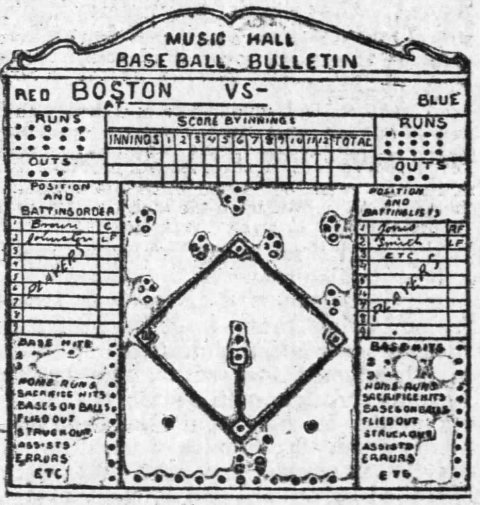
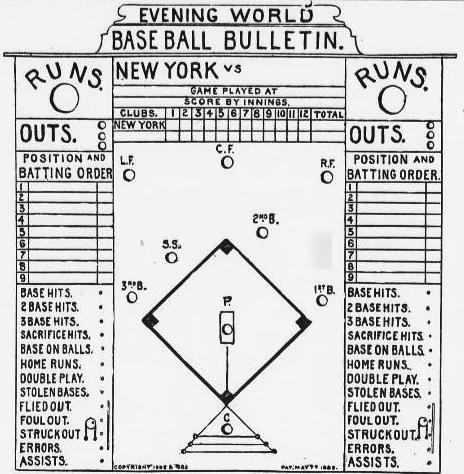
The New York World unveiled a newly updated attraction for baseball fans on August 6, 1889; the “Baseball Bulletin,” a version of which had also been introduced at the Boston Music Hall earlier that summer.

The Boston Music Hall "Bulletin Board."

The Boston Music Hall “Bulletin Board.”

The Associated Press said some fans thought the board was “an advantage over the actual game, in that it not only reproduces the plays graphically and simultaneously, but it keeps at the same time a simple and conspicuous record of the contest.”

The New York World's "Bulletin Board."

The New York World’s “Bulletin Board.”

The Boston Herald said their board measured “fifteen feet square.”  New York’s board was an improved version of one that had been used the previous October for the Giants six game to four World Series victory over the American Association’s St. Louis Browns.

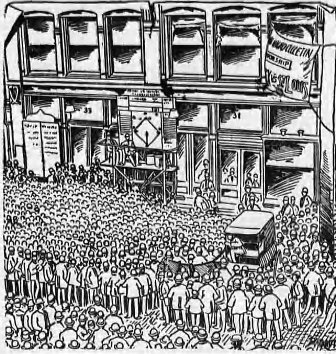
The crowd on Park Row for the 1888 World Series

The crowd on Park Row for the 1888 World Series

The board was the creation of  reporter Edward Van Zile of The World; Van Zile received a patent for the invention, although it was another member of the paper’s staff, Publisher Joseph Pulitzer’s secretary Edwin A Grozier, who turned it into a profitable enterprise. After purchasing the original rights from Van Zile, Grozier improved the design and received his own patent.

The World said the new version was a bigger sensation than the one introduced the previous October:

“’Perfection’ is the word which expressed the verdict of the baseball public who had the good fortune to witness the game between the New York Giants and Baby Anson’s team on The  World’s Baseball Bulletin Board yesterday afternoon…it is safe to say that no exhibition was ever received in this city with more enthusiasm than was the baseball bulletin.

“And the crowd too!  What a vast number!  There must have been fully 10,000 people in the audience, and the way they cheered when the Giants made a run was a sound that would have made Baby Anson sick.”

The presentation of the game took place on New York’s “Newspaper Row” (Park Row), with a crowd on the east side of the street

“(E)xtending from above The World Building to far below it (and) on the west side of the street the crowd was much larger.  There was a long line of people from Mail Street almost down to the other end of the big Federal Building.

“No point from which the game could be witnessed was left vacant.  The boys climbed up and lodged themselves in among the pillars of the Post Office…Even the lamp post was monopolized by the urchins, and when our boys made a good play they generally led the cheering.”

The “expert board operator placed the Chicago men in the field,” for the first inning, and leadoff hitter George Gore at the plate:

“When (Gore) slid down to first base the crowd were just ready to cheer, but they saw him put out and they reserved their applause for another occasion.

“They did not have long to wait, however, for (Mike) Tiernan and (Buck) Ewing  each succeeded in gaining bases, and then big Roger Connor was placed over home plate

“The crowd held its breath in anticipation of what was to come.  Their enthusiasm was drawn up to a high pitch, and was just waiting for a chance to break its bonds.  And they got it!  The little red disk representing Connor slid up to first and Tiernan slid across home plate.  Then there was a volley of cheers.  It broke forth clear and strong, and the sound could be heard blocks away.

“Up on the tops of the tall buildings in the neighborhood the cheers of the crowd could be heard resounding forth as a victorious army returning from battle.

“And it was all the same through the game. A great many people were attracted to the spot by the cries of the crowd, and when they saw the baseball bulletin they all united in declaring it to be the greatest thing they had ever seen.”

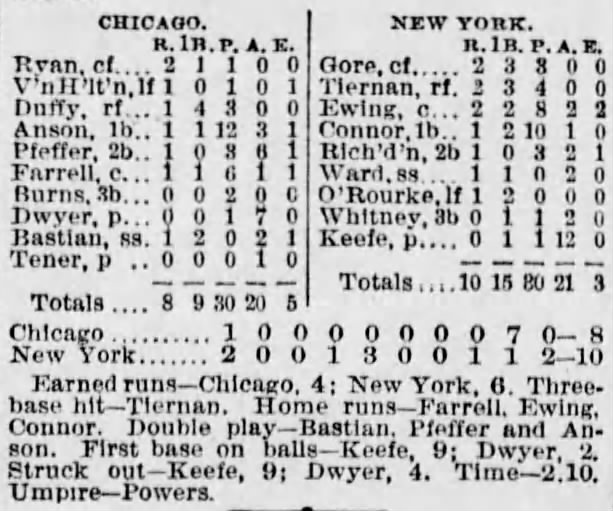
Chicago scored seven runs off Tim Keefe in the ninth to tie the score at 8.  The crowd’s “disapproval resolved itself into a continued groan.”

The Giants scored two runs in the tenth, and when the white Stockings came to bat in the last half of the inning:

“(T)he crowd watched more intently than at any time before.As each Chicago man went out there was a yell, and when they all went out without having made a run it was impossible to say a word that could be heard.”

The Box Score

The Box Score

The paper commemorated their innovation with a poem:

A boy was passing down the street,

Another lad he chanced to meet;

‘I’ll bet,’ he said, ‘we’re licked once more.

What is the score?’

A merchant coming down that way,

Lifted his bearded head so gray;

And ceased o’er book and cash to pore—

‘What is the score?’

A preacher wrestled with his text,

And wondered what he’d best say next;

Then called out through his study door;

What is the score?’

The Mayor in his office sat

And pondered over this and that,

The said: ‘I’m sure the game is o’er.

What is the score?’

If they had only chanced to go

Into the middle of Park Row,

And see the bulletin of The World,

And the glorious pennant there unfurled,

They’d never ask the question more

‘What is the score?’

The  World predicted the initial crowd was just the beginning:

“Today’s game between the Chicagos and the New Yorks will be duly recorded on the board.  There is room for everybody to see, and it is expected that the crowd will be twice as large as yesterday.”

The following day the paper did not say the crowd had doubled—to 20,000—but claimed it was “The largest crowd that had ever been on Park Row,” for the Giants 4 to 2 victory over the White Stockings.

Crowds continued to come to Park Row as the Giants battled the Boston Beaneaters and won the pennant on the final day of the season.

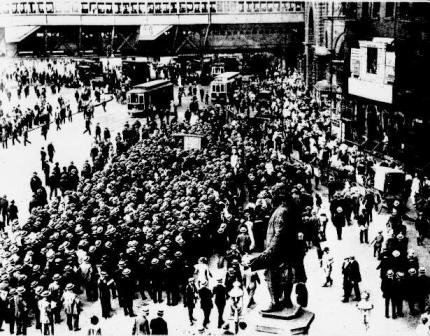
Baseball Bulletin Boards, and other versions of the concept, remained a popular feature well into the 20th Century. More often than not they were sponsored and presented by local newspapers.

The New York Sun presented their own "Baseball Bulletin Board"  on New York's Park Row in 1914

The New York Sun presented their own “Baseball Bulletin Board” on New York’s Park Row in 1914