Tag Archives: Cap Anson

Things I Learned on the Way to Looking up other Things #8

4 Jun

Remember the Maine

Several sources say Harry Stees, who played for the 1897 Shamokin Coal Heavers in the Central Pennsylvania League died in the explosion of the USS Maine in Havana Harbor on February 15, 1898—it would make him the first professional player killed in action.

The Sporting Life also reported that he had died aboard the ship.

A small item in his hometown newspaper contradicts that story.

Nearly a month after the sinking of the Maine, The Harrisburg Telegraph ran the following Headlines:

“A Fool Joke”

Harry Stees was Never on the ‘Maine’ at Havana or Elsewhere

The paper said a letter had been published in The Daily, the newspaper in the nearby town of Sudbury, Pennsylvania signed by “Mrs. Harry Stees.”  The letter asked for the paper if they could locate Robert Durnbaugh, a teammate of Stees with the Coal Heavers, and have Durnbaugh contact her.

In the Letter Stees is referred to as Theo.  Contemporary references in the Telegraph and census records refer to Stees as T. Harry Stees. The paper said:

“A ‘Telegraph’ reporter located Mr Harry Stees without difficulty at the Peipher Line warehouse, on Walnut Street, this morning, and showed him the clipping.  He stated that he was undoubtedly the individual referred to in the letter, but was positive that neither his wife nor mother had written such a communication to The Daily.  ‘It’s some fool joke, put up on me by someone in town,’ he said.  ‘I have been away from Harrisburg since last September when I returned with Durnbaugh from Shamokin, where we had been playing ball, and I never set foot on the Maine.’  Mr. Stees proposes to investigate the origin of the communication.”

There was no follow up on the story, but T. Harry Stees was a prominent figure in amateur and semi-pro baseball in Harrisburg into the 1930s.

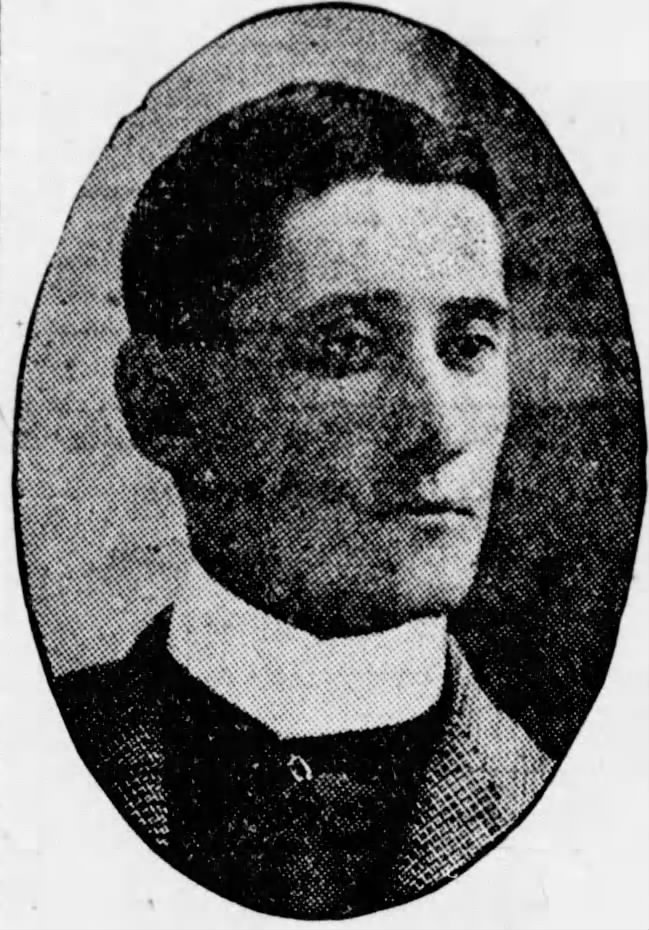
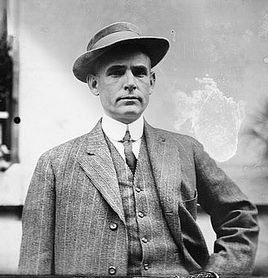
T. Harry Stees, circa 1915

T. Harry Stees, circa 1915

It appears he was not the first professional player killed in action.

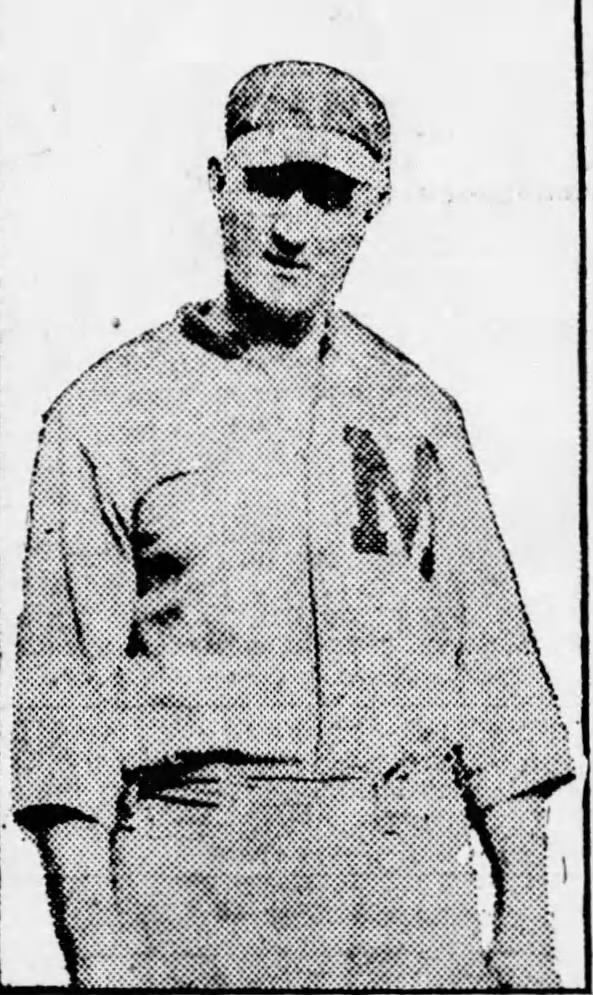
Stees, 1919

Stees, 1919

Anson’s Old Bat

Despite a broken ankle received while sliding on May 23 sidelined “Silent” John Titus for much of the season, the Philadelphia Phillies’ outfielder had his highest single-season home run total–eight in just 236 at bats, his previous high was four in 504 at bats in 1904.

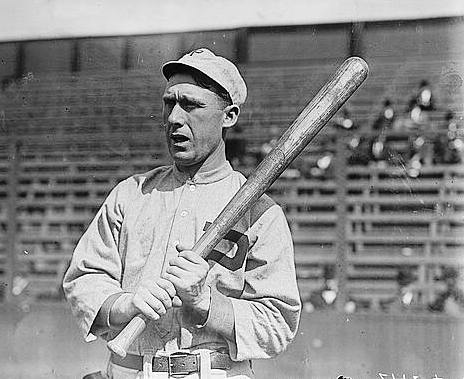
John Titus

John Titus

The Philadelphia Record claimed it was due to a bat he had acquired that season:

“Cap Anson’s old base ball bat is helping the Phillies in their flight toward the National League pennant.  This relic of early baseball is now owned by John Titus.

“When everything broke badly for Anson and he lost his fortune…that bat had to be auctioned off.  Pat Moran, then a member of the Cubs, but now (Phillies Manager Charles “Red”) Dooin’s first lieutenant, was the purchaser of the club.  He bid against several members of the cubs team.

“Moran had the bat shortened as soon as it was his, so that today it doesn’t look much like the clubs that Anson used, but Moran says that ‘the wood is there.’

“Titus was looking over Moran’s club one afternoon toward the close of (the 1910) season and asked to be allowed to hit  a ball to the outfield with it…’Silent John’ used the bat just once and after that nothing but the possession of it would satisfy him.

“Immediately Titus began to negotiate with Moran for the bat…Finally Moran yielded, knowing that the bat would do Titus more good than it would do him.”

The Record described the bat:

“(D)irty and black from tobacco juice and frequent oiling, but the wood is in perfect shape.  Probably no bat in baseball is as thick as this one.  From the pitcher’s box it is said it reminds one more of a cricket bat in width.”

Titus told the paper:

“Anyone can hit with that bat of Anson’s.  When a fellow is hitting, he feels that there is something to life, after all.  What pleases a fellow more than to see a ball dropping over a fence?  Another one I guess.  Every player likes to hit home runs.  It gives a player lots of ginger and confidence when he is hitting them on the nose.”

Several newspapers picked up versions of the story throughout the season, but there was no later mention of the bat, or its eventual fate, in the Philadelphia press.

“I Believe that a Pitcher of a Slow Ball could make Monkeys out of Opposing Batsmen”

21 May

After the success of William Arthur “Candy” Cummings’ decades-long campaign to be recognized as the inventor of the curveball—his claim was supported by influential voices like A.G. Spalding, Cap Anson,  and Tim Murnane—culminated with his 1908 “Baseball Magazine” article “How I Pitched the First Curve,” Cummings was often sought out by the press for his opinions on pitching.

Candy Cummings

Candy Cummings

In 1910, an article “By Arthur Cummings, Discoverer of the Curve,” appeared in several newspapers, including The Boston Post.  Cummings took current pitchers to task for throwing too hard:

“Speed, speed, speed seems to be the cry of the pitcher today.  The more steam a fellow has, the more valuable he appears in the eyes of the managers.  It’s only once or twice in a game that a twirler will let loose his slow ball, and then he doesn’t put a whole lot of faith in it.  Of course there are some exceptions, like Mathewson, but I am talking about the general run.  To my mind, the speed craze is an obsession and many a pitcher would meet with greater success if he’d only revert to the old style of pitching and try slow ones oftener.  Players and managers of today think that the only way to win a ballgame is to have a pitcher who can throw a ball with such force that it will go through a six-inch plank, and if the fellow hasn’t got that amount of speed he is no good.

“If some managers would go back to the old-time style of pitching and send men in the box who would serve up slow balls there wouldn’t be as much base running as there is now, but the ball would be batted more and there would be better exhibitions of fielding.  Players of today can’t hit a slow ball with any degree of safety, they having become used to the swift article.  That’s why I believe that a pitcher of a slow ball could make monkeys out of opposing batsmen.

“Of course, there is a difference in the national sport, as now exemplified, when you compare it with the game when I was in it some thirty years ago.  The pitcher’s box now is further away from the home plate than it was when I used to pitch.  At that time it was forty-five feet from the home plate; now it is more than sixty, and it takes some speed to get over the plate.  I don’t know as I could go in a pitcher’s box, such as it is used today, and get a ball over the home plate, but if they moved it up to forty-five feet I could get my slow overshoots over the pan and I’ll bet a cigar the batsman wouldn’t hit it; he’d hit at it, though, and swing for all he’s worth.

“But even though the plate is further back, the pitchers have the curve worked down to such a science that they can make their ‘floaters’ break more sharply than we old timers could, and consequently they would much more easily fool the hitters.  Once in a while a genuine slow ball pitcher pops up and gets along but little confidence is placed in him; his victories are attributed to luck, and he is not used very regularly.

“Fans laugh these days when a pitcher takes it into his head to serve up a slow ball, which scorers call a change of pace, and see a heavy hitter almost break his back trying to kill the ball.  When he misses, it pleases the bugs immensely, but let me tell you, that the slower a ball is the harder it is for the batsman to connect with.  The hitting column wouldn’t have as big averages as it does now, and a man who could bat for .300 would be a wonder indeed, if slow balls were used by pitchers.

“But it seems as if the day of the slow ball has gone by.  A scout will not sign a pitcher unless he has got something good in the way of speed or a peculiarly curving swift ball, like Harry Howell’s or Eddie Cicotte’s knuckle ball.  It seems as if when we old timers dropped out of the game and the present generations took it up where we left off, they thought they would introduce new features to the game, and selected speed as the proper thing.  Of course, the invention of the mask, protector and heavy mitts had something to do with slow pitching passing out of existence, but it was the ideas of the young pitchers more than anything else that developed the desire of captains and managers for pitchers with great speed.

Ed Cicotte's knuckleball grip

Eddie  Cicotte’s knuckleball grip

“Perhaps you notice that these pitchers of today who have such great speed and assortment of curves do not work very regularly.  Well, when I played ball I was in the box one day and in the field the next and in that way I kept my arm in good shape and my batting eye keen, just because I was at the game all the time.  I never used much speed; therefore my arm was in condition to work.  Perhaps some manager will come along yet and decide that there was better pitching in the old days and give a slabbist with a slow curve ball a chance to work in the box.

“When that day arrives the fans will see some fun, for the long-distance hitters will find it hard to connect with the ball very often.”

In 1921 Cummings, then 72-years-old was sitting in the press box of Ebbetts Field, a guest of The Brooklyn Eagle, for a game between the Dodgers and Philadelphia Phillies.  Cummings told The Eagle’s Sports Editor Abe Yager:

“I think I could out-guess   Babe Ruth if I were pitching right now.  I had to pitch against Dan Brouthers, Cap Anson and other sluggers of bygone fame and believe me it was some feat to fool them.  We did it often, but of course, they hit ‘em out just as often.  Ruth can be fooled by an outcurve, a high one in close or a drop the same as the sluggers of old, but of course, he will connect once in every three times by the law of averages.”

Baseball’s “Fountain of Youth”

16 Apr

John Brinsley “J.B.” Sheridan wrote for several St. Louis newspapers and The Sporting News from 1888-1929.

In 1917 he asked in The St. Louis Globe-Democrat:

“How is it that two young chaps come up together, one lasts a year or two, the other keeps on playing until he meets his sons and the sons of his pals coming up?”

Sheridan noted that Bobby Wallace was 43-year-old and in his twenty-fourth season–albeit as a reserve who appeared in just eight games for the Cardinals–while contemporaries like Jimmy Collins were out of the game for nearly a decade.  (Sheridan failed to mention or notice that Wallace was three years younger and started his professional career at age 20 while Collins began his at 23):

“Wallace has had a great career in baseball.  Only one man, A. C. (Cap) Anson has played longer than Wallace in the major leagues (Sheridan didn’t mention Deacon McGuire who also had Wallace beaten in years of service with 26—but he only played a total of 20 games in his final eight “seasons”) Anson did twenty-seven seasons, but had he not been his own manager he would not have done so many.  The old man could hit to the end, but for the last ten years of his major league career Anson was so slow and stiff that it is doubtful if any manager, other than himself would have employed him.”

Booby Wallace

Booby Wallace

Sheridan neglected to mention that “slow and stiff” Cap Anson managed to play in more than 1100 games in those last ten seasons when no manager “other than himself would have employed him,” and hit better than .330 in five of them–and would contradict himself on the “slow and stiff” part later in the same article.

He said, “Jack O’Connor did twenty-two years in the majors and was useful to the end.” (O’Connor only hit better .250 twice in his last ten seasons, never appearing in more than 84 games during that period)”

Despite the many misstatements, Sheridan’s article included interesting character sketches of several 19th and early 20th Century players (the veracity of those sketches can be judged with the above misstatements in mind).

“O’Connor was a really wonderful man.  He always retrained his diet during the playing season, but gave it full rein during the off season.  O’Connor had some appetite, too.  Usually he put on 20 pounds of extra weight every winter and regularly took it off every spring.  O’Connor must have taken off 500 pounds of flesh in the twenty-two years of his baseball playing.  He ate and drank like Gargantua during the winter, but denied himself like a monk in the spring, summer and fall.

(Napoleon) Lajoie, who did his 20 years [sic 21] in the majors, was like Wallace and (Jake) Beckley, an iron man.  (Lajoie) came from Breton peasant stock…The Bretons lived off the rocks and fishing grounds of Brittany, beaten by Atlantic spray long before the dawn of history.  No wonder then, that Lajoie is a hardy man (who) needed no conditioning in his youth.  He threw a couple, hit a couple and was ready for the fray.”

Sheridan said O’Connor’s former battery-mate Cy Young was “another physical wonder” despite being “rather soft and inclined to obesity later in life.”

“Cy never cared much for beer, the beverage of the old-time ballplayer, but he did not mind a little ‘red eye’ now and then In fact, the old boys say the farmer could pack more whiskey about him than any man they had ever known.”

As an example of Young’s prowess Sheridan said O’Connor told him a story about a night out in Boston:

“I drank beer while Cy drank whiskey. Drink for drink with me, but the last thing I remembered that night was that Cy put me to bed.

“I got up the next morning looking for sedlitz powder and something cooling.  I got the powder and I went into the breakfast room to get a grapefruit.  Then I saw Young behind a big plate of beefsteak with onions.  I turned and ran for the fresh air…Cy ate the entire steak, all the onions, a lot of bread and butter, stuck a strong cigar in his mouth and joined me on the sidewalk.

“What made you quit so early last night, Jack?  I was just getting’ goin’ good, when you said ‘Let’s go home I’m sleepy.’”

Jack O'Connor

Jack O’Connor

Sheridan compared Young’s career to that of Bill Dinneen:

“Dinneen came into the game seven [sic–nine] years after Young, was Cy’s teammate for four years [sic–five and part of a sixth] then dropped out (Dinneen played three more seasons with the St. Louis Browns, but his career was over after 12 seasons at age 33)

“Dinneen ate too well, and what ballplayers call the ‘old uric acid’ got him in the arm.  Yet Dinneen was one of the finest physical specimens that ever played ball.

“Some big fellows look strong but prove to be soft and unenduring.  Jack Chesbro was one of these.  Chesbro had three great years as a pitcher, and then broke down.  Jack was a soft-boned boy, with bad ankles and could not stick the route.

“Some men hold out in arm, legs and bone, but lose the keenness of vision essential to good batting, Willie Keeler, was one of these.  Keeler’s legs were good to the end and his arm worked all right, but his eyes went back on him and he had to quit…(Art) Devlin was one of the three great third basemen of his time.  He was a star, but endured only a few years.  Bad Digestion stopped him when he was at the height of his fame, and when he should have been good for many more years.”

Sheridan claimed to know the secret of a ballplayer’s longevity: the waters of Hot Springs, Arkansas.

“Each January 1 for twenty-two years saw (Young) at Hot Springs…O’Connor and (Jake) Beckley were always at Hot Springs, too.  These three men never missed a season at the Arkansas resort, while they were playing ball…Fred Clarke, too, was a great advocate of Hot Springs as a training resort, and the Pirates always fitted in there when Clarke was manager.  That took (Honus) Wagner, another long liver, there too.

“Anson always took a season at Hot Springs.  It is pretty well established that the Arkansas resort is the location of Ponce de Leon’s famous “Fountain of Youth.”  It may or may not be a coincidence, but the fact remains that Young, O’Connor, Beckley, Anson, Clarke, Wallace and Wagner, men who played from seventeen to twenty-two years of major league baseball, have all been frequenters of or habitues of Hot Springs.”

Cy Young, third from left, with Bill Carrigan, Jake Stahl and Fred Anderson at Hot Springs in 1912

 Cy Young, third from left, with Bill Carrigan, Jake Stahl and Fred Anderson at Hot Springs in 1912

The St. Louis sportswriter was certain the springs were a magic “Fountain of Youth, “and said he was only aware of one exception to his rule:

“Every iron man of baseball, except Lajoie, has been a yearly visitant.”

“You are mostly Fakes, and yet I love you all!”

19 Mar

Elmer Foster became better known after his career had ended than he ever had been as a player because of sportswriter Hugh Fullerton who included stories he said were about Foster in his columns for more than twenty years.

Elmer Foster

Elmer Foster

The first story appeared in 1897, shortly after Fullerton arrived at The Chicago Tribune:

“The long-lost is found.  A few days ago a traveling man who is a baseball fan climbed on the train with the Colts and engaged Jimmy Ryan in Conversation.

“’Who do you think I saw the other day?’ he queried…I was up in Minnehaha, the village at the falls of St. Paul.  About 10 o’clock at night I was preparing to go to bed, when suddenly there came a series of war whoops up the street.  A man came tearing down on horseback, whipping the animal to dead run and whooping like a Comanche Just as he got to where we were standing he pulled two revolvers and, still whooping, emptied them into the air.  I was scared to death, but no one else paid any attention.  When the danger was over I crawled out from under a cellar door and said ‘Who is that?  ‘Oh, that’s nothing,’ said one of the gang.  ‘It’s only Elmer Foster going home.’”

The 1897 article also told a more accurate version of the incident in Pittsburgh that led to Foster’s release than Fullerton told in later years–it mentioned that he was with Pat Luby (incorrectly identified as “Harry” Luby), and Fullerton, in this version, did not claim to be present.

With that the legend was born.

Hugh Fullerton

Hugh Fullerton

By the turn of the century the legend grew.  Fullerton said:

“Foster was a great baserunner…He ran regardless of consequences, and perhaps no man that ever played in fast company ever took an extra base on a hit oftener than did Elmer.  He simply refused to stop at his legitimate destination, and kept right on.  When he got caught he always said: ‘Why, I wasn’t a bit tired.  Why should I have stopped running?’”

By 1903 Fullerton said of Foster:

“No man who was interested in baseball during the early ‘90s can certainly have forgotten the name of the man who was perhaps the best center fielder who ever wore a Chicago uniform.”

Like Bill Lange, another player he helped make famous long after his career was over, Fullerton’s most often repeated story about Foster was a dubious one involving a catch—a story that was repeated over the years as having happened three years after Foster’s big league career was over:

“Back in ’94 one of the Eastern teams was playing Chicago on the West Side, with Foster in center field.  The man at bat made a terrific swipe at the ball and hit it.  The shadow was deep over the infield and Foster could not see the ball.  He started to run out into far center, so as to be prepared.

“As a matter of fact the ball was only a bunt.  The shortstop caught it and threw the batter out at first.  But Foster kept on running—running like mad….Foster ran at the top of his speed almost to the center field fence.  Then he jumped high up into the air, threw up his left hand, and came down to the ground with—an English sparrow tightly clenched in his fist.”

In addition to Fullerton repeating the story over the years,  “Gentleman” Jim Corbett retold it in his syndicated sports column in 1919 and Al Spink, writing for The Chicago Evening Post in 1920 quoted former Chicago White Sox Manager Jimmy “Nixey” Callahan telling the story in 1920—like the original, both Corbett’s version and Spink’s via Callahan say the “catch’ happened three years after Foster left Chicago.  The story survived until at least 1925 when it appeared in several paper as park of a King Features syndicated column of short baseball stories.

Fullerton’s Foster stories—including several regarding drunken pranks Foster was alleged to have played on Cap Anson—became so ubiquitous that William A. Phelon of The Cincinnati Times-Star  said in 1912:

“It is now an accepted tradition that Elmer Foster, the famous fielder, led the Chicago team on a glorious, care-free, drunk through a whole wild merry season in 1891.  That is believed by everybody—yet the records show that Foster played just a few games with Chicago in 1890, and was released in April [sic] of 1891, before the season was even one week old!  Oh, you legends!  Oh, you deceiving old stories!  You are mostly fakes, and yet I love you all!”

“Foster you are Released”

17 Mar

Elmer Ellsworth Foster’s career as a pitcher ended on August 26, 1884.  He had been out for three weeks with “an injury to the tendon in his right arm,” when he took the mound for the St. Paul Apostles in a Northwestern League game against the Milwaukee Brewers.  The 22-year-old was 17-19 with 1.18 ERA when he took the mound at St. Paul’s West Seventh Street Grounds.

The St. Paul Daily Globe said:

“When the popular favorite took his position in the box in the last half of the first inning the audience received him with an ovation of cheers, to which he responded by raising his cap.  A moment later he pitched the first ball, a sharp crack was heard distinctly all over the ground and the sphere went spinning ten feet to the right of the batter.  Foster turned pale, but stood in his position until the players in the vicinity reached him.”

He had “snapped the bone of the right arm just above the elbow,” and after Foster left the field a collection was taken up among the fans “A few minutes later it was announced that $172 had been collected.”

He made it to the major leagues two years later as an outfielder with the New York Metropolitans in the American Association, and played parts of five seasons in the American Association and National League.  A consistent .300 hitter in the minors, Foster hit just .187 in 386 big league at bats.

According to The Sporting Life, his manager with the New York Giants in 1888 and ‘89, Jim Mutrie considered him “one of the best fielders in the country, and the only reason New York ever let him go was because he didn’t show up well with the stick in fast company.”

Elmer Foster

Elmer Foster

Sportswriter Hugh Fullerton said he excelled at other things as well:

“The rowdy of the rowdies was Elmer Foster.  Handsome, well bred, clean cut and with it all, well educated and something of an actor.  Foster was in baseball for the fun of it.”

From the time Fullerton joined The Chicago Tribune in 1897 until he left Chicago for New York in 1919 Bill Lange was probably the only 19th Century player he wrote about more often Foster.

Foster’s  best season was 1890 (.248 in 105 at bats and 5 home runs) with Cap Anson’s second place Chicago Colts after being acquired in late August.

Foster started the season with his hometown Minneapolis Millers in the Western Association (he hit .388 in his first twelve games), but fell out of favor with Manager Sam Morton after he and a teammate named Henry O’Day were arrested and fined in Milwaukee for public intoxication in May.

Foster was benched, but the team refused to release him, and by mid-July he was ready to take the Millers to court.  The St. Paul Daily Globe said:

“(Foster) threatens to bring suit against the management to compel its members to give him his release.  His claim will be that they are unjustly preventing him from earning a livelihood.  There is a possibility that the threat may be only a bluff, but should such a trial be put on, it will be of much interest in Western baseball circles, as it will be the first of its kind in this section.”

The Millers finally chose to release Foster rather than fight a lawsuit.  Foster was rumored to be headed to several different teams, but finally signed with the Colts on August 27.

After his strong September in 1890 Foster began the ’91 season as the Colts center fielder, but it didn’t last.

Fullerton said Foster sealed his fate with Anson during the opening series:

“We were going to Pittsburgh, and just before we arrived in town on the unearthly jump from Chicago to Pittsburgh, via Cleveland, Anson came along and sat facing us.

“’Foster,’ He said ‘The next time you take a drink, or anyone on the club takes a drink with you, I’ll release you.’

“’All right, Cap,’ said Foster, cheerfully.

“We arrived in Pittsburgh, and while Anson was registering the club at the desk Foster said: ‘Let’s go have a cocktail.’

“’Better be careful, Elmer, the old man is sore,’ I remarked.

“But we went.  The mixologist had just strained the cocktails into the glasses when Foster, looking into the mirror, spied Anson in the doorway.  He turned and, bowing low, said sweetly “Captain anson, will you join us for a drink?’

“’No,’ thundered Anson.  “Foster you are released.

“And now that I am released, Captain Anson,’ said Foster, ‘will you join us in a drink?”

Unlike many of Fullerton’s story, the basic facts (if not the part where he included himself in the story) are confirmed by contemporaneous accounts.  The Chicago Tribune said on April 26 after the Colts four-game series with the Pirates:

“Elmer Foster is not with the club and he has probably played his last game with it.  He and (Pat) Luby last night at Pittsburgh were drinking and Anson fined each $25 and ordered them to go to bed.  They paid no attention to the order and the fine was increased to $50.  This morning when the team was ready to go to Cincinnati Anson gave foster a ticket to Chicago and sent him home.”

Luby was not sent home and lost to the Reds 1 to 0 the following day.  He was fined several times for drinking during the 1891 season, and after a promising 20-9 rookie season in 1890 he slipped to 8-11, and followed it up with an 11-16 season in 1892 before Chicago let him go.

Foster was suspended without pay and finally released on May 11.  He was immediately signed by the Kansas City Blues.

Foster played well in Kansas City, hitting .300 in 70 games for the second place Blues, but was released in August.  The Kansas City Star said:

“One of the sensations of today is the unconditional release of Elmer Foster whose behavior on the present trip has been disgraceful”

The paper said Manager Jim Manning was forced to make the move, not just because of Foster’s drinking, but because he “has been largely instrumental in leading other members of the team astray.”

His replacement, Joseph Katz, acquired from the Grand Rapids Shamrocks in the Northwestern league hit just .225 in the final 25 games.

In December of 1891 The Minneapolis Times said:

“Elmer Foster, the ballplayer, yesterday secured $25,000 through the will of his dead mother, and today announced his permanent retirement from the diamond. “

With the exception of one game in 1895 (he went 1 for 2) with the Millers, Foster was true to his word and quit baseball at the age of 29.

Foster retired to Minneapolis where he operated a piano and organ store with his brother, did some acting and occasionally said he was considering running for the Minneapolis City Council or the Minnesota State Legislature, although there is no record of his ever officially filing to run for office.  He also worked as a scout for the Pittsburgh, and signed Ralph Capron out of the University of Minnesota for the Pirates.

After Fullerton moved to New York and stopped writing about Foster the “The rowdy of the rowdies” faded into comfortable obscurity in Minnesota.  He died in 1946 at age 84.

Some of Fullerton’s less reliable stories about Foster on Wednesday.

Alternate Uniforms, Circa 1879

14 Feb

On the eve of the 1879 season The Chicago Times endorsed an innovation about to be introduced by the Chicago White Stockings:

“The management of the Chicago Club has very wisely decided that the skinny white uniform with tips of blue, in which it has dressed its men from time immemorial, is not the best of its kind; that good taste dictates higher colors for the field, something that will bring out, instead of dwarfing the muscular development of its wearer.  The result of the consultations over the matter has been the adoption of something which has merit of novelty about it, at least, and, at the first blush, there seems to be no reason why it should not produce a pretty effect on the field.”

The Times noted that three years earlier, the White Stockings had worn individually colored caps in order to make it either for fans to identify the players.  The move “for some unknown reason was discarded” at the end of the 1876 season.

“The present change is in the same line, except that it goes further and applies the principle to the entire uniform.  The customary white flannel will be used for the body of the dress.  In this respect they will all be alike; but each man will be furnished with an individual color to finish it with, including cap, neck-tie, belt and a band some three inches wide around the thickest part of the calf.  The colors have been selected, and Spalding Bros. are now at work upon the uniforms.”

The 1879 Chicago roster by color:

Silver Flint:  Blue

Terry Larkin: Brown

“Cap” Anson: Grey

Joe Quest: Black and yellow

John Peters: Green

Frank Hankinson: Scarlet

Abner Dalrymple: White

George “Orator” Shafer: Red and black

George Gore: Blue and white

Bill Harbridge: Red and white

Frank Hankinson--wore scarlet in 1879

Frank Hankinson–wore scarlet in 1879

The move was taunted in at least one National League city–The Syracuse Courier derisively referred to the team as the “Chicago Rainbows.”

The Times said “Cap” Anson was in favor of the new uniforms and “says there’s luck in it.”

The paper agreed with Anson’s assessment:

“The individual caps won in 1876.  Since then they have been discarded, and Chicago hasn’t been able to win anything.”

Anson’s “luck” didn’t hold in 1879.  The White Stockings were in first place from Opening Day until August 1, then Anson became ill in July and eventually left the team which went 5-12  the rest of the season under Silver Flint, and finished in fourth place.

The uniforms disappeared and Anson returned for the 1880 season. When the team took the field for the opener The Chicago Tribune said:

“The Chicagos appeared for the first time in their regular League uniform for this year, with all-white stockings that are a marked improvement over the many-colored rings of last year.”

The 1880 White Stockings

The 1880 White Stockings “with all-white stockings”

“Show yourself a man, Borchers, and Leave Boozing to the Weak Fools”

10 Feb

After defeating the Boston Beaneaters and “Old Hoss” Radbourn in his major league debut, George Borchers returned to the mound five days later in Chicago and beat the Philadelphia Quakers and William “Kid” Gleason 7 to 4.

With two wins in two starts the 19-year-old Borchers was, according to The New York Evening World, one of the most sought after players in the National League:

“There are several league clubs who would like to get hold of Borchers, the latest Chicago wonder, the only thing in the way of his acquisition is the $10,000 (the White Stockings were asking).”

Chicago probably should have sold Borchers while there was interest.  He injured his arm sometime in June, missed most of July, and according to White Stockings Manager “Cap” Anson “lacks the heart to stand heavy punishment.”
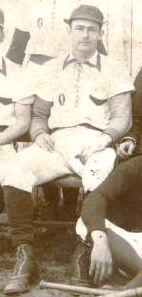
George Borchers

George Borchers

After his fast start, Borchers was just 4-4 in 10 starts when Chicago released him and Chicago’s other 19-year-old “phenom” Willard “Grasshopper” Mains (1-1 in 2 games) on September 6.

The Chicago Tribune said Borchers was on his way to Cincinnati to play for the Red Stockings, “he has plenty on speed and good curves, and it will not be surprising if he makes a success in the American Association.”

After the Cincinnati deal failed to materialize, Borchers accepted $100 in advance money to join the Stockton franchise in the California League.  After receiving the money he never showed up in Stockton.

No less a figure than the “Father of Baseball,” Henry Chadwick held out hope that Borchers would eventually be a successful pitcher:

“There is a chance that a first-class pitcher, who played in the Chicago team last season, is going to reform the bad habits which led to his release by Captain Anson in August (sic) last. I refer to Borchers.   (John Montgomery) Ward told me that Borchers was a very promising pitcher, and had he kept himself straight be would undoubtedly have made his mark. I learn that be is going to try and recover his lost ground, and if be shows the possession of the moral courage to reform, and the intelligence to keep temperate, he will yet find his way to fame and fortune. Show yourself a man, Borchers, and leave boozing to the weak fools of the fraternity who indulge in it at the cost of a fair name and of pecuniary independence.”

Borchers didn’t appear ready to “reform.”  Between the 1888 and ’89 season, according to The San Francisco Chronicle, he signed a contract to play for the Canton Nadjys in the Tri-State League, receiving $100 in advance money and also signed a contract with that Kansas City Cowboys in the American Association, receiving a $300 advance.

In February of ’89 Borchers was awarded to Canton.  Kansas City offered to purchase his contract.  Canton Manager William Harrington said in The Sporting Life that “Borchers will play in Canton or not at all.”

Borchers left for California.

Upon arriving in Sacramento Borchers was arrested as a result of the Stockton contract.  The Los Angeles Herald said:

“George Borchers, the well-known baseball player, was arrested this afternoon on a warrant from Stockton, charging him with having received money by false pretenses.”

Borchers pleaded guilty and paid a fine in March.  In April he attempted to sign with the Sacramento Altas.  The San Jose Evening News said:

“Sacramento being in need of a pitcher, induced Borchers to agree to play there and asked the Stockton Club to allow him to do so.  This President Campbell (of Stockton) refused and the league directors have sustained the action.”

The California League ruled Borchers ineligible for the season.

With too much time on his hands, Borchers couldn’t stay out of trouble.  The Associated Press reported on June 27:

“Shortly after 11 o’clock tonight a barn belonging to Mrs. Borchers, mother of George Borchers, the well-known baseball pitcher, was destroyed by fire, causing a loss of nearly $1000.  When the Fire Department arrived on the scene George Borchers tried to prevent the firemen from fighting the flames.  He was drunk and very boisterous.  Finally Chief Engineer O’Meara ordered his arrest.  When two officers took him in custody he fought desperately, and had to be handcuffed and placed in a wagon before he could be got to prison.”

The story said Borchers, who “has been loafing about town (Sacramento) for several months, drinking heavily” had made threats that he’d burn down the barn because his mother would not give him any more money.  Mrs. Borchers had “recently expended a large sum of money to get him out of trouble at Stockton.”

Whether his mother paid his way out of this or not is unknown, but the charges against Borchers went away, and he spent the remainder of the 1889 baseball season pitching for a semi-pro team in Merced, California.

He returned to the California League on March 23, 1890 when he pitched for Stockton in the season opener against the Haverlys at San Francisco’s Haight Street Grounds.  Borchers and Stockton lost 11 to 5.

His time in the league would be short.

In Early May he began complaining of a sore arm; The San Francisco Call said that “Borchers is known to have received an offer from the New York Brotherhood (Players League) Club and the Stockton directors think he’s playing for his release.”

On May 11 Borchers, according to The Sacramento Bee arrived at the ballpark in Stockton, on horseback and “extremely drunk.”  Catcher/Manager Mike DePangher sent Borchers home.  Borchers instead went on a bender that ended the following evening in a Stockton restaurant where he was arrested for being drunk and disorderly.

The Call said:

“If he took this means to sever his connection with the Stockton Club and join the Brotherhood, he not only brought disgrace in more sense than one upon himself, but has probably ruined his chance of an Eastern engagement.”

Borchers was fined $10 in court, the Stockton club fined him $100 and suspended him for the remainder of the season and sold his contract to Portland in the Pacific Northwest League–but not before the Sacramento Senators attempted to use him in a game.  The Call said Stockton protested:

“(Sacramento) Manager (George) Ziegler thought it best not to play him.  When George was informed that he was not to play he good-naturedly said:  ‘All right, old man,’ and then added, ‘One suspension, one release, all in two weeks.’”
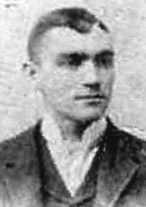
George Ziegler

George Ziegler

On June 1 he won his first start for Portland, beating Spokane 7 to 6.  The Oregonian said “Borchers pitched a splendid game for the Portlands.”

Borchers split the remainder of the season between Portland and Spokane, compiling a 14-14 record with a 1.44 ERA.  When the Pacific Northwest League season ended Borchers returned home to play in the California League again; The Sacramento Record-Union printed a letter from his manager at Spokane, William “Kid” Peeples:

“Borchers has been pitching ball out of sight, and has not tasted a drop of liquor while up north.  He says he is going to stay straight, and finish the season with the Sacramentos.  He will have all the California boys guessing, as he did here.”

The San Francisco Call said Borchers was “a dismal disappointment” after he lost his first two starts for the second place Senators—both losses were against the league-leading San Francisco Haverlys.  San Francisco Manager Mike Finn filed a protest with the league, claiming Borchers should be declared ineligible because he was still on the reserve list of the Spokane club.
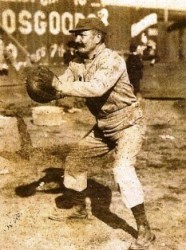
Mike Finn, manager, San Francisco Haverlys

Mike Finn, manager, San Francisco Haverlys

In his third start Borchers allowed Stockton to score three runs in the first inning on five walks and a wild pitch, but settled down and won 7 to 6. He beat Stockton again three days later, 15 to 10. The Record-Union criticized all four of his performances and said he had reverted to “his old ways.”

The 21-year-old finished the 1890 season with a 2-2 record for the second place Senators; San Francisco won the championship.  At the end of the season the California League upheld Finn’s protest over Borchers and fined Sacramento $500.

The rest of the George Borchers story on Wednesday.

“Sunday was not a ‘real’ Ball Player”

15 Jan

Fred Pfeffer, a member of the Chicago White Stockings “Stonewall Infield” in the 1880s, became the proprietor of a number of popular saloons in Chicago.  He opened Pfeffer’s Theater Court Buffet on State Street in 1911; the tavern, located in the alley between the Majestic and  McVicker’s Theaters, was a popular meeting place for athletes, vaudeville performers and newspaper reporters.

Fred Pfeffer

Fred Pfeffer

In 1912 Harvey Woodruff of The Chicago Tribune was present when Pfeffer and Jimmy Ryan held forth on some of their teammates:

Billy Sunday was the only successful ‘made’ ball player I ever heard of in the history of baseball.  Not a man on our team except (Cap) Anson had any confidence in Sunday when he joined the club (in 1883), nor for a long time afterward, for that matter.  Anson liked Sunday because he was like lightning in getting to first base.  Sunday was not a great hitter.  He could scarcely be called a great fielder, but he was the fastest man of his time in legging it down to first base.  My, how he could run!  But after Billy was on first I would sooner have had Anson there, and none of us accused Anse of being the best base runner of his time.  We thought Billy was too daring.

“But Anson insisted Sunday would make a ball player.  So he was taught to bat, to field, and to run bases.  Anson spent more time with him than with all the rest of us put together.  What skill Sunday attained was developed.  Most of us finally admitted that Anson’s judgment was justified, but others on the team retained to the last their opinion that Sunday was not a ‘real’ ball player.

“Those who obstinately kept that opinion might have been influenced in part by prejudice, for those were times when team discipline was not as severe as now, and Sunday chose his companions.”

Billy Sunday

Billy Sunday

Pfeffer told The Tribune reporter that Ned Williamson had the best arm he had seen.

While playing as an amateur in his native Louisville in 1881 Pfeffer had “won a gold medal, which is still in his possession for throwing a ball 400 feet.”  After joining the White Stockings he participated in a throwing contest at Chicago’s Lake Front Park “and threw the ball 399 feet and six inches.”  He was beaten by six inches by Williamson.

The mention of Williamson’s arm strength reminded Ryan of “an incident of the trip around the world taken by the White Stockings” after the 1888 season:

“Following one of the exhibitions in England, some native cricketers were holding a competition in throwing a cricket ball.  A crowd circled the field beyond the range of the throws, taking a keen interest in the sport.  Williamson, who had not allowed his baseball duties to prevent his enjoyment at a nearby pub, watched the proceedings for a time with growing impatience.

“Finally, swaggering up to the circle, Williamson said: ‘Let me take that ball for a minute.’ Then, scarcely setting himself for the effort, he hurled the ball.  It soared clear over the heads of the crowd on the outskirts. “

Ryan claimed no one knew exactly how far Williamson’s throw traveled because “everyone was so surprised (by the distance of his throw) no attempt was made even to recover the ball.”

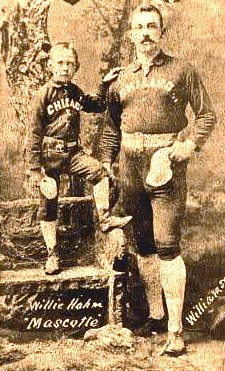
Ned Williamson with White stockings mascot

Ned Williamson with White stockings mascot

The subject next turned to bunting.  Pfeffer said

“We knew the bunt, but seldom practiced it.  Those were the days when long hits were wanted, and the play would not have been popular.  We more often played a variation of what is known now as the hit and run.  It seems to me there were more players who could hit to right field then.

“I often have been asked whether all the great hitters of that time were swingers who clasped their bats at the end of the handle.  I do not recall that we held our bats any differently from the players of today.  Some held it near the end and some did what you now call ‘choking it.’ I think, perhaps the proportion of chop hitters was less then, for everyone liked to see long drives.”

Pfeffer continued entertaining patrons and reporters at the Theater Court Buffet until the passage of the Eighteenth Amendment put him out of business—his obituary said he sold “bar and all” for $1.50.  Pfeffer died in Chicago in 1932.

“By-By, Baby Anson”

26 Dec

On August 20, 1888 Adrian Constantine “Cap” Anson and his Chicago White Stockings were set to begin a three-game series with the Pittsburgh Pirates.  Chicago was in second place, six and a half games behind the New York Giants.

Anson’s club had been in first place for most of the season, but  relinquished the lead to the Giants after dropping eight of nine games at the end of July.

After sweeping two games from the Giants in New York earlier that week, Anson said he had just improved his team by signing pitcher John Tener, who was playing for the East End Athletic Club in Pittsburgh, for a reported $2500 for the remainder of the season.   He also spoke to a reporter from The New York Times:

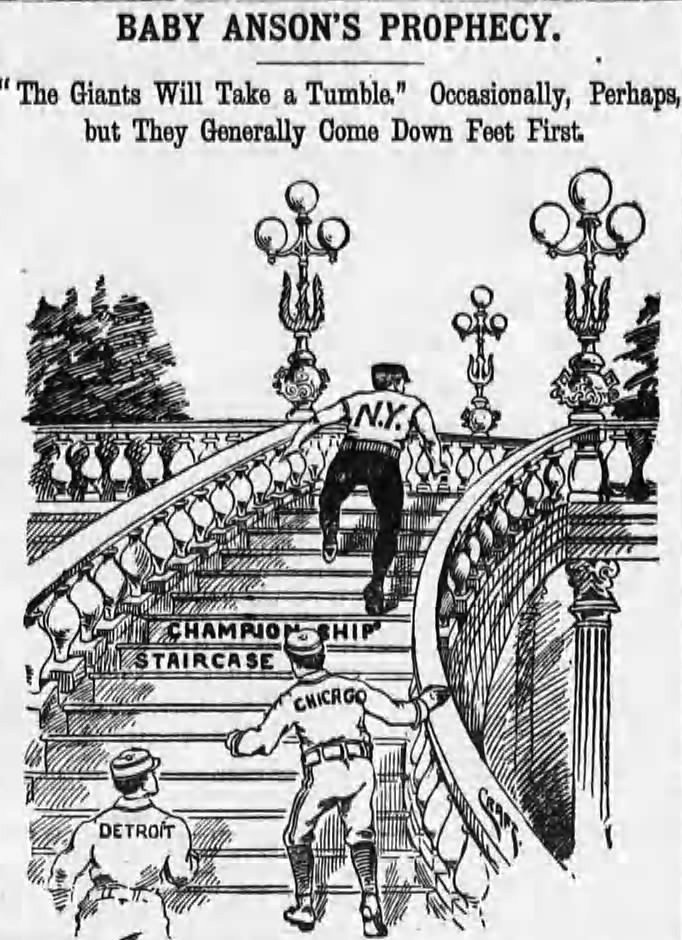
“Mr. Anson is inclined to think that New York will ‘take a tumble,’ and if it occurs soon the Giants’ chances of closing the season at the top of the pile are woefully thin.”

Another New York paper, The World, was determined to not let Anson forget his prediction.

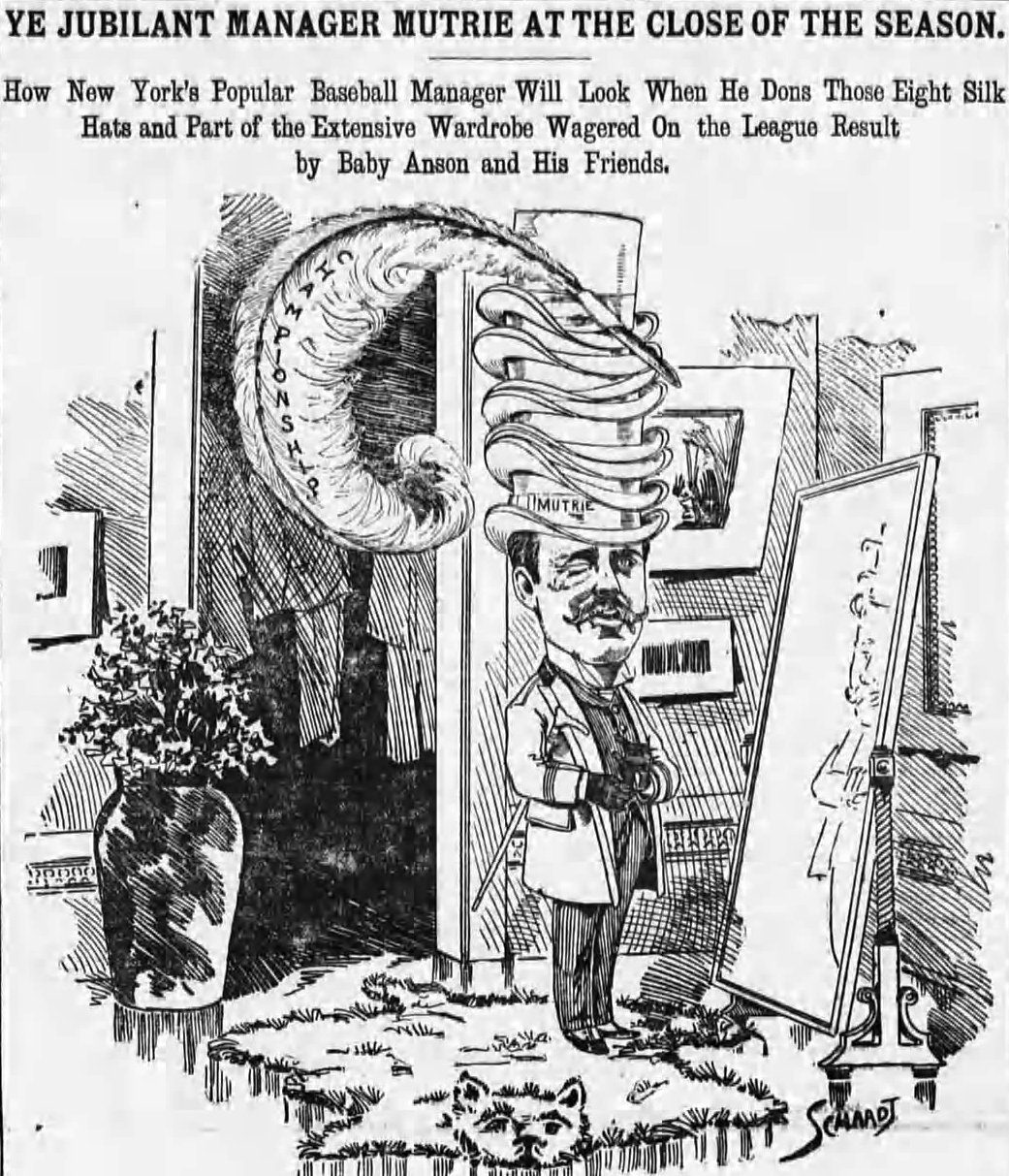
Three days after he made the comment, The World said Anson and Giants Manager Jim Mutrie had bet a $100 suit on the National League race, and:

“(Anson) has been busily engaged in predicting a tumble for the Giants. Jim says that tumble is not coming.”

Within a week the White Stockings had dropped to eight games behind the Giants.  The World said:

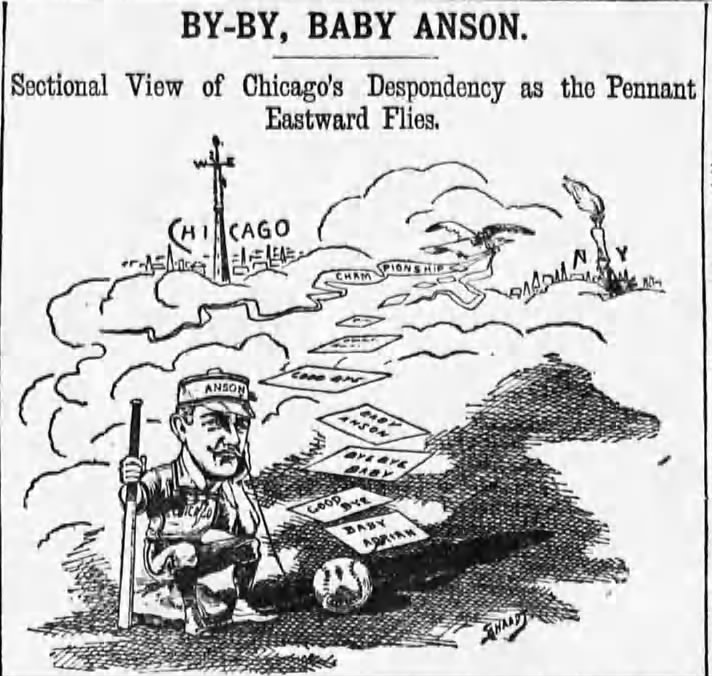
“Anson’s prophecies much resemble the boomerang.  He swore Mutrie’s men would take a tumble, and his own men are fast getting there themselves.”

The paper also taunted Anson with a front-page cartoon:

 anson18880

The taunting continued.  After Chicago lost 14 to 0 to the Indianapolis Hoosiers on August 31:

“Did Brother Anson notice anything falling in Indianapolis yesterday?”

Another front-page cartoon on September 6:

anson18881

A week later, after the Colts took three straight from the Giants in Chicago, and cut the New York lead to five and a half games, The World attributed it to “Two new men for Anson’s team;” umpires Phil Powers and Charles Daniels.   The Giants managed win the fourth game of the series 7 to 3; the paper said Giant pitcher Tim Keefe was “too much for Anson and the umpires.”

Chicago never got within six and a half games again.  On September 27 the Giants shut out the Washington Nationals, putting New York nine games ahead of the idle White Stockings.  The World declared the race over on the next day’s front page:

anson1888

All was finally forgiven on October 10.  The Giants had won the pennant, and Anson, on an off day before his club’s final two games of the season in Philadelphia, came to the Polo Grounds and met with Mutrie:

“(Anson) gave Mutrie a check for $100, in payment for the suit of clothes won by the latter.  The two then clasped hands over a similar bet for the next season—that is, each betting his club would beat the other out..  Anson then cordially congratulated his successful rival upon the winning of the pennant, and stated his belief that New York would surely win the World’s Championship.”

The Giants beat Charlie Comiskey’s American Association champion St. Louis Browns six games to four.

Anson’s White Stockings won five National League championships between 1880 and 1886, he managed Chicago for another decade after the 1888 season; he never won another pennant.

Tener, the pitcher signed by Chicago in August posted a 7-5 record with a 2.74 ERA.  He played one more season in Chicago and finished his career in 1890 with the Pittsburgh Burghers in the Player’s League.  Tener later became a member of the United States Congress (1909-1911) and Governor of Pennsylvania (1911-1915), and served as President of the National League.

Mutrie’s Giants repeated as champions in 1889 (and he presumably claimed another $100 suit from Anson), he managed the team through the 1891 season.

Hence his Careless, Indifferent air when he goes to the Plate to Bat.”

18 Nov

In 1911 Reds manager Clark Griffith told The Cincinnati Times-Star that pitchers no longer hit like they did when he played:

“Give me pitchers who can hit the ball instead of fanning out weakly, I wish there were a few more pitchers available like the top notchers of twenty years ago.  In those days a pitcher believed that he was hired to soak the ball as well as curve it, and he always did his best to get a hit.

(Tim) Keefe (career .187), (Mickey) Welch (.224), (Thomas “Toad”) Ramsey (.204), and (James “Pud”) Galvin  (.201) were among the old-time pitchers who could not bat, but they tried all the time, and if one of them got a hit he was as proud as a kid just breaking into the big league.”

Clark Griffith

Clark Griffith

The problem, said Griffith, was that “The pitcher seems to think that when he is delivering the goods in the box nothing more is required of him.  Hence his careless, indifferent air when he goes to the plate to bat.”

Griffith said Cap Anson, “wouldn’t hire a pitcher who couldn’t hit,” and said former Chicago pitchers Pat Luby (.235), Ad Gumbert (.274),  Walter Thornton (.312) and  George Van Haltren (.316, but was primarily an outfielder appearing in 93 games as a pitcher over a 17-year career), “were bear cats with the stick.”

Griffith said of his ability with the bat:

“The old guide-book will show that even your humble servant hit over .300 for Anson.”

Griffith hit .319 for Anson in 1895, and .233 for his career.

The 1911 Reds had only one starting pitcher who hit better than .214, (George Suggs. 256).  He was also the only starter with a winning record (15-13) for Griffith’s sixth place Reds.

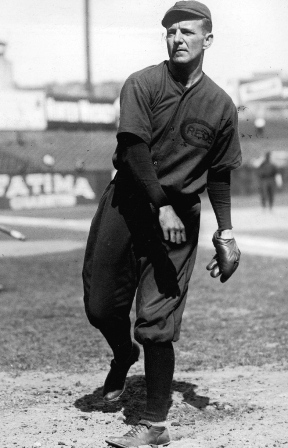
George Suggs

George Suggs