Tag Archives: Hughie Jennings

Hughie Jennings’ “Doctor”

10 Dec

On October 6, 1898, Hughie Jennings, who, for the fifth straight season was the National League’s leading hits batsman, faced Jouett Meekin, the New York Giants’ notoriously wild pitcher —Meekin hit 89 batters in nine major league seasons and walked 1056 while striking out 901.

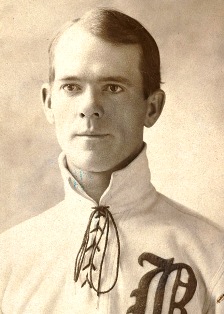
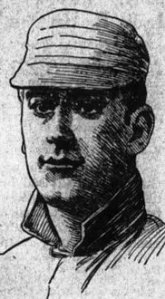
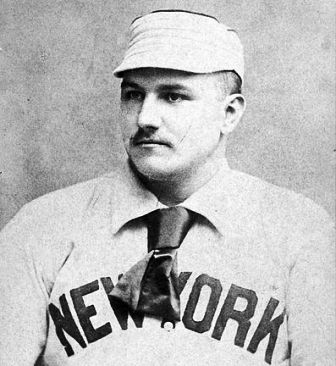
Hughie Jennings

Hughie Jennings

The New York Times said:

“Meekin began the game by hitting (John) McGraw on the head.  It was only a glancing blow, however.  Jennings followed McGraw, and the first ball pitched struck him on the nose, breaking it.  Jennings, after he was hit, staggered and then fell.  It was a swift in-curve, and the players on both teams rushed to the plate thinking he had been fatally injured”

The concern was warranted.  In June of 1897 Jennings was hit in the head with a pitch thrown by Meekin’s’ teammate Amos Rusie during the first inning of a game.  While the Rusie beaning was serious, it was likely not as serious as some sources claim–it has been said he was unconscious for three or four days, and near death.  These claims are belied by contemporary news reports, as early as the next day that said, while serious, the injury was neither life-threatening nor caused a days-long coma.
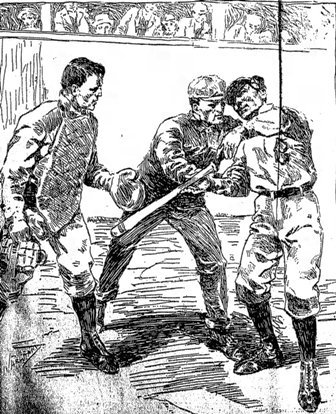
A newspaper rendering of Jennings' beaning by Rusie. The catcher is Jack Warner, Hank O'Day is the umpire.

A newspaper rendering of Jennings’ beaning by Rusie. The catcher is Jack Warner, Hank O’Day is the umpire.

The New York Sun:

“Last night the doctor said he was suffering from a slight concussion of the brain and a temporary paralysis of the right arm, but he declared his injuries would not prove serious and that Jennings would be able to play again in a few days.”

Jennings was back in the Orioles lineup in a week.

Still, there was reason for concern, Jennings had been hit by nearly 200 pitches since 1894, and according to The Sun, “his face was covered in blood.”  The previous season he had “pluckily continued in the game” after the Rusie beaning, until the second inning; this time he was immediately taken to the clubhouse.

It was there that his broken nose was attended to in an unusual way.

Enter John Joseph “Dasher” Troy, a major league infielder in 1880s, a member of the 1884 American Association champion New York Metropolitans.
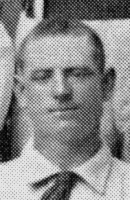
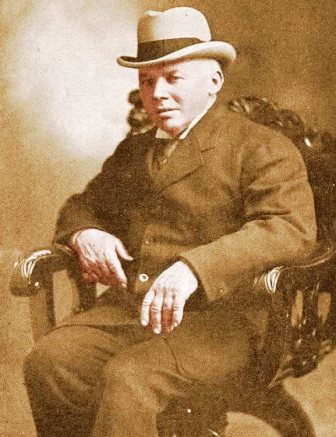
Dasher Troy

Dasher Troy

In 1891, Troy had been granted a liquor concession, “running the bar under the grandstand” at the Polo Grounds.  Three years later The Sun said Giants owner Edward Talcott “quietly ousted Troy,” after the former player’s “attack on a grandstand gatekeeper and his threatened attack on Mr. Talcott.”

Despite being ousted from the business, Troy remained a fixture at Giants games—and would eventually reclaim the business after Talcott sold his interest in the Giants to Andrew Friedman, running it until 1900.

The New York Telegraph picks up the story:

“(Troy) was at the Polo Grounds when Jennings, of the Baltimores, had his nose broken by a pitched ball. Jennings was assisted to the clubhouse and a physician summoned.  The ‘Dasher’ followed in after the doctor, and pushing the latter aside, said to Jennings:

“‘Hughie, will you let me fix that for you?’

“Hughie looked embarrassed and said:

‘Yes, Dash, but here’s the doctor.’

“’Oh, to hell with him,’ answered Johnny, with his usual impetuosity.  “I can fix that nose in two minutes.  I have fixed noses before, and broken ‘em too,’ said Troy as he threw out his chest and glanced severely at the doctor.

“’Here boy, go out and get me a couple of pebbles.’

“The (doctor) brought back two small stones, and Troy put one on each side of Jennings’ injured nasal organ, and began to press.  The damaged nose was one sided, the cartilage being badly out of place.  Jennings said he could feel the grating as Troy gradually pressed on the stones and, sure enough, when the pebbles were removed the nose was as straight as it ever was.

“’There,’ said Troy, looking again fiercely at the doctor, ‘could you do better that that?  You doctors make me tired.’

“The doctor, however, when he had collected himself, said Jennings had better go to a hospital for further treatment, apparently not being fully satisfied with Troy’s treatment, or possibly his winning ways.

“Jennings did not follow the doctor’s advice that night, but (the following day) he went to Mt. Sinai Hospital.  A physician then examined the injured nose, felt of it carefully and said:

“’There is nothing out of place there.  Who set it for you?’

“’Oh, some doctor up at the Polo grounds,’ answered Jennings.

“’Well, said the hospital physician, ‘I never saw a cleaner or better piece of work in my life.”

Regardless of having his nose successfully fixed by Troy, Jennings’ all-time record for being by pitches 287 times took a toll.  He had turned 30 years-old just a month before the 1888 broken nose, but only played more than 100 games  once more—in 1900—and was, essentially finished as a player by 1902.

Another story about Jennings’ “doctor” Dasher Troy on Friday
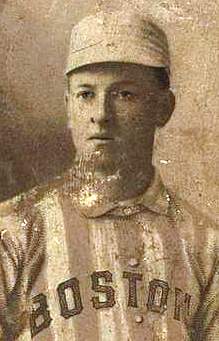
Kid Nichols

25 Jun

Add Hall of Famer Charles “Kid” Nichols to the list of those who were convinced that players from an earlier era were of better quality than those “of today,” even if the earlier era was less than a decade before.

Kid Nichols

Kid Nichols

While pitching for the Kansas City Blue Stockings in the Western League in 1903, the 33-year-old pitcher told a group which included a reporter for The Associated Press:

“I am not so sure that the ball players of today are much superior to those of ten years ago in general utility.  It seems to me there was more life and spirit in the games of a decade ago than in those of the present regime.  They weren’t so mercenary in those days and there was much more sportsmanlike spirit.  Nowadays the paramount question with the average player is salary.  He doesn’t care so much about the record of the team he plays with makes as opportunities offered him to make himself individually famous and thus increase the value of his services.  In many clubs teamwork is lacking on account of the intense desire of some of the men to make an impressive showing by individual work.  In the old days one didn’t hear so much of the individual as the playing of the team as a whole an in my opinion baseball would stand on much firmer foundation if the same spirit prevailed nowadays.”

Among the best:

“Take old (Tommy) McCarthy for instance.  As an outfielder none of them had him beaten, and in my opinion there is not an outfielder his equal now.  It was McCarthy who originated the trap ball which he worked so effectively.

“He was absolutely the headiest man in the outfield I ever saw.  You have seen outfielders throw men out at first on line drives, but you haven’t seen it done often.  I’ve seen McCarthy spoil many a legitimate one-base hit by that same play.  Another favorite play of his was this:  A man would be on first and second.  The man at bat would drive to left.  McCarthy would snap it up on a short bound and flip it to second as quick as a flash in time to catch the man who had run off first.  In turn the second baseman would throw the ball to third in time to head off the man who had started from second.  Thus a really legitimate one-base hit was turned into a double play.

“But, speaking of outfielders, Willie Keeler was about as good as any of them for all around ability.  He was like lightning on his feet and was no slouch at hitting.  He certainly did things to me one day in Baltimore.  He faced me four times and this is what he did:  Made four hits to four different parts of the field off of four different kinds of curves.  Keeler was the hardest man to fool I ever pitched to.”

Nichols said Herman “Germany” Long, his teammate for 12 years was:

“(O)ne of the greatest shortstops in the business.  He played with Boston while I was a Beaneater, and of course I had good opportunities to watch him work.  He could cover a world of territory and was a sure and accurate fielder.  You hear many people say that Hughie Jennings in his palmy days was the best infielder ever developed.  In my opinion Long could cover a foot more territory than Jennings.

“When it comes to catchers my preference is, and always has been, Charlie Bennett, whose legs were cut off in a railroad accident at Wellsville, Kansas.  Charlie was always consistent and knew what his brain was given to him for.  He was also an accurate, quick thrower…Martin Bergen was another good catcher.  He was the one who went crazy, you know, and murdered his wife and children.  Bergen always was ‘a little bit off of the top,’ but when he took a notion to do his best, his playing was beyond criticism.  Ed McFarland and (Billy) Sullivan are two right good men, and then there was reliable old Jim McGuire and Charles Zimmer, both of whom were cracker jack.”

bergen

Martin “Marty” Bergen–” always was ‘a little bit off of the top,’

Nichols said as a pitcher “I can hardly be considered a competent judge” of fellow “slabsters,” but continued:

“Personally, I admire the old war-horse, Cy Young, more than any of the others.  He is certainly a remarkable man.  Of the left-handers there a few better than (Frank “Noodles”) Hahn, of Cincinnati; (Christy) Mathewson and (Joe) McGinnity are undoubtedly valuable men.  Clark Griffith is, I think, the headiest pitcher that ever stepped on a rubber.  Among the other great ones are Jack Taylor, Joe Corbett, (Bill) Bernhard, of Cleveland and our own Jake Weimer.

Nichols was largely forgotten as one of baseball’s great pitchers by the time the Baseball Hall of Fame’s inaugural class was selected in 1936.  In the late 1940s, a push for his inclusion was led by sportswriter Grantland Rice.  Rice frequently mentioned the pitcher in his columns and in the summer of 1948 quoted two Hall of Famers regarding Nichols’ prowess:

“A few decades ago I asked Christy Mathewson to name the best pitcher he ever faced.  ‘That’s easy,’ Matty answered.  ‘His name is Charles Kid Nichols of Boston.  Nichols isn’t a good pitcher.  He is a great one.’

“I recalled this talk when the mail brought a letter from Ty Cobb at Menlo Park, California.

“‘I think everyone has overlooked one of the greatest pitchers of all time,’ Cobb Writes.  ‘His name is Kid Nichols.  Here are just a few of his records from 1890 to 1906:

“1.  Won three consecutive games on three consecutive days, all pitched in different cities.

“2.  Won 20 or more games for 10 consecutive years.  He won 360 and lost 202. (Nichols’ record was 361-208)

“3.  Won 28 or more games for eight consecutive seasons.  (Nichols won more than 28 games seven times, and not consecutively).”

Despite the inaccuracies in the letter, Cobb and Rice continued to campaign for Nichols and the push to honor him worked.  He was elected to the Hall of Fame in 1949.

Nichols, right, with Pie Traynor, left, and Branch Rickey at the Hall of Fame in 1949. Traynor was elected in 1948, but his plaque was not presented until 1949

Nichols, right, with Pie Traynor, left, and Branch Rickey at the Hall of Fame in 1949. Traynor was elected in 1948, but his plaque was not presented until 1949

“I Remember Well the First Day Latham Coached”

11 Jun

Arlie Latham “The Freshest Man on Earth” is generally credited as the first full-time third base coach.  Even before John McGraw hired him to coach third for the New York Giants in 1909, Latham’s antics as a “coacher” were already legendary—in 1907 Ted Sullivan, one of baseball’s pioneers and Latham’s manager with the St. Louis Browns, told The Washington Evening Star about Latham’s first time.

Ted Sullivan

Ted Sullivan

“’I remember well the first day Latham coached,’ said Sullivan.  ‘It was in Cincinnati in 1883.  I must confess I never had much use for a ‘fresh’ player, and soon after Latham reported I was not backward in telling him he was too d— fresh, but  I later discovered that he was a wonderful player, and that his freshness was of a most harmless and hilarious nature.  But after I gave him the reprimand I noticed he was a little timid about saying anything, but was still of good cheer.

“One day in Cincinnati Will White had the Browns on his staff with his little stingy rise ball.  My best men were on the bases and there was no one on the line.  I asked the men on the bench, ‘Is there no one here able to coach a little?’ Latham speaks up and says, ‘I will coach if you want me.’”

Never one for understatement, Sullivan said what happened next:

“Well, if Gabriel had entered a graveyard and blown his trumpet, and the tombstones had loosened their grip on the dead, it would not have created more of a sensation.  Latham walked out to the home plate and to the consternation of umpire, players and myself, delivered this talk to pitcher White:

‘My Dear Mr. White, we have been very courteous to you during the game, but as the Browns need a few runs we will have to be rude to you for awhile,’ and then stalking off to third base went through those gyrations that afterward made him famous all over America.  White was dumbstruck at the flow of words that afterward fell from Latham, and he became so rattled that the Browns batted him out of the box and won the game.”

Will White

Will White

No Browns game in Cincinnati that season matches well with Sullivan’s initial account—he continued to tell the story to reporters for more than a decade and sometimes said instead the game was “against Cincinnati—the game that best fits Sullivan’s description was a 9 to 5 Browns win over the Reds on May 16. But, contemporary accounts attribute White’s faltering, which led to the Browns come from behind victory, to a knee injury rather than any “flow of words” from Latham.

“Latham was the original funny man in the coacher’s box, and he stood in a class entirely by himself.  He has had many imitators, but they have never reached the position that Latham occupied, for he was a genius in the work and never used language that would offend the ears of the most prudish.

“Many years ago it used to be Latham’s great aim to get out on the coaching line here in Washington in the games that local pet—Win Mercer—was to do the pitching.  It will be recalled that Mercer was an extremely handsome fellow, and often it fell to his lot to pitch on Ladies’ Day.  Latham took the greatest delight in endeavoring to disconcert Mercer, the large number of ladies being mad enough to pull his hair, while at the same time they were convulsed with laughter at his sayings and antics.  He and Mercer were great chums, and when Latham was secured by the Wagners (J. Earl and George) to travel with the Washingtons (in 1899) for coaching purposes alone the two were inseparable, thus showing that though a thorough minstrel and actor, his chaff never broke into bitter personalities  or severed friendships.

“We have our Hughey Jennings and others of today, but in the history of baseball there has only been one ideal coacher from the line—Arlie Latham.”

Latham with the New York Giants

Latham with the New York Giants

When McGraw hired Latham two years later, Bozeman Bulger, sports writer for The New York Evening World said the Giants’ new third base coach had just as much fun as a minor league umpire as he did when coaching—Bulger was a writer for The Birmingham Age-Herald while Latham was working in the Southern Association:

“I had the fun one time of traveling with Latham while he was an umpire in the Southern (Association).  On one of those days the Birmingham club was playing at Little Rock, and Pat Wright was playing first for Little Rock, and Pat Millerick, of Birmingham was at the bat.  He hit a little grounder toward short, and for a moment it was fumbled.  Pat went lumbering down to first.  Seeing that he couldn’t quite make it on the run, he slid for the bag.  Pat Wright at the same time got the ball a little wide and slid for the bag himself, so as to beat the runner.  The feet of both hit the bag at about the same time.”

Latham made no call on the play.

“’Judgment!’ yelled Millerick, as he threw up his hand.

“Everybody waited for Latham to make a decision.

“’Wait a minute,’ said Arlie, ‘I want to do this thing right.’  He then rushed into the clubhouse and came out with a tape measure.  While the crowd sat in suspense Latham deliberately measured the feet of the two Pats—Millerick and Wright.  It was shown that Wright’s foot was one inch longer, and Millerick was promptly declared ‘Out!’  Nobody had the nerve to question the decision.”

“Somebody has got to Write a real Baseball History”

18 Apr

Detroit Tigers Manager Hughie Jennings had an idea to improve American education.  He told The Detroit Times in 1911:

“I think it pretty near time that our advanced public school educators began to think of teaching baseball history in their schools.  Seriously I do.

“Baseball is America’s chief recreation, and has been for two generations.  Indications are that it will live many generations more.  The stars of the game are important personages to the boys and the men of today as are the big men in affairs of state and business.  The boy is constantly clamoring for news of his baseball heroes, and because we have decided baseball is a clean, good sport, we encourage his interest.

“It is only lately that I have been interested in the history of the game, although it has been my means of support for years.  I don’t know what it was that impelled me last winter to go digging into newspaper files for data on the antecedents of the game, but I do know this:  I’m mighty sorry I didn’t get the idea before.  For nothing was more interesting.”

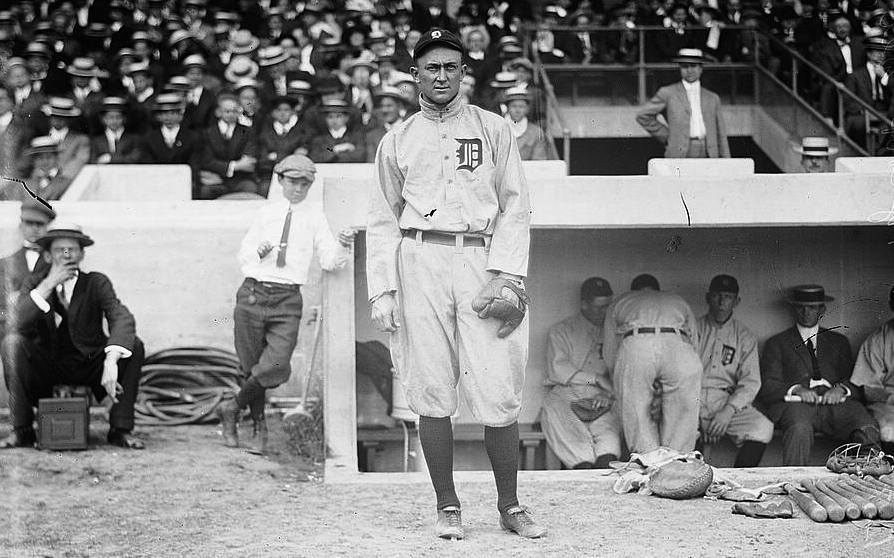
Tiger Manager Hughie Jennings

Tiger Manager Hughie Jennings

Jennings’ conclusions would likely have disappointed Albert Spalding and the members of the Mills Commission, which advanced the Doubleday myth:

“Of course I had always known in a superficial way something about the origin of baseball and about the men who figured prominently in it during its infancy; and the men who have brought it up to the standards of today are men of my day and age, but I had never before made a consistent effort  to learn just what was what in baseball history.  I was pained and surprised , when I started at it, to find that there does not exist a history of the game which is so thoroughly prepared that it might be put into schools as a text book.  Before this idea of mine can be put into effect, somebody has got to write a real baseball history.

“In my research last winter, for instance, I I confirmed my old understanding that baseball as we know it today is sort of a sublimated ‘one-old-cat’ or ‘rounders’ as they used to call it.  The first game of baseball, with nine men on a side, was played in Hoboken, NJ in 1845.”

Jennings quoted Alexander Cartwright’s 1845 rules and made no mention of Cooperstown or a Civil War general, putting squarely in the camp of “The Father of Baseball” on the game’s origins.

The Tigers’ manager also said, according to his research “The first ball was made from sections of an old arctic shoe wound with woolen string and covered with coarse cowhide.”

“You can try to Refine and Civilize Baseball all you want”

21 Oct

In 1912, Joe Kelley, former player and manager (and future Hall of Famer) told William A. Phelon, sports editor of The Cincinnati Times-Star, a story about the lack of civility in baseball and a game Kelley claimed took place when he was with the Baltimore Orioles in the 1890s:

“You can try to refine and civilize baseball all you want and you can make a parlor game out of it by giving the umpires power of life and death, but you can’t kill off the players’ tongues unless you stun ‘em with an ax.

“Years and years ago, I well remember, two ball clubs tried to pull a polite and courteous ballgame, just to see how things would work.  The old Baltimores and the old Bostons (Beaneaters)—which were real ball clubs both of them—held a conference one afternoon.  There had been a lot of talk and newspaper criticism about rough house work and bad language—and we wanted to show the press and public that we could be good, decent people after all.  We agreed to try out the polished conversation and Golden Rule stuff for this one occasion, and Tim Hurst, who was slated to umpire, agreed to help the good work along.”

——

Joe Kelley

Joe Kelley

“The first half inning went by something lovely.  Even when Tim called a strike on Tom McCarthy that was a foot over his head, there was no outbreak.  Say Tom, very gently, ‘Wasn’t that ball a trifle high, Mr. Umpire?’  And says Tim, all courtesy, ‘I fear I may have erred in judgment, Mr. McCarthy.  Kindly overlook it, if you will.’ And in our half, when Jack Doyle went down to second in a cloud of dust, and Tim said ‘Out,’ Jack jumped up, and red in the face, yelled ‘What the —-‘ and caught himself in time.  ‘Pardon me,’ says Jack, ‘but I honestly thought that Mr. Long failed to touch me.’  And says Herman Long, equally polite, ‘I am under the impression that I did touch Mr. Doyle.

“And in the very next inning the blow-off came.  Three on and two gone with Hughey Jennings batting.  (Heinie) Reitz made a dash for home on what he thought was a passed ball.  The Boston catcher (Charlie Ganzel) recovered it, but as he dove for the putout, Jennings wandered against him and knocked him 10 feet away.  ‘Out fer interference,’ yelped Hurst—and then everybody arrived at the plate all in a bunch.

Tim Hurst

Tim Hurst

Kelley said there was a chaotic scene at home plate.  Reitz was screaming at Hurst while Jennings and Ganzel nearly came to blows:

“’Fer Moses sakes remember,’ I interposed, ‘that this is supposed to be a polite courteous game, just to show how well we can behave—‘ and somebody hit me across the map with a catching glove.

“’I can lick every wan av yez,’ howled Tim Hurst, and I’ll do it, too, if you’re not back in your places inside a half-minute.’

“’You’re a cheap crook,’ said John McGraw.

“’You’re all a bunch of yellow dogs,’ said Herman Long, addressing the whole Baltimore team, sort of impersonally.

“and when the police arrived the rules of etiquette had been fractured so badly I never heard of their being reinstated.  That was, I think, the first, last and only time that a courteous ball game was staged in big league company.”


“A Great deal of foolish Sympathy was wasted on Rusie”

5 Sep

Hank O’Day, pitcher and Hall of Fame umpire, said Amos Rusie was the greatest pitcher ever:

“Amos is the greatest pitcher the country ever saw. Why, Rusie had more speed in his curve ball than any pitcher I ever saw before, or have ever since seen, has in his straight fast ones.  Rusie was a wonder—that’s all there is to it.  I was behind the plate one day when one of Rusie’s  fast incurves hit Hughey Jennings…the ball hit Jennings squarely in the temple, and he fell as though shot by a ball from a Winchester rifle.  I caught him in my arms as he toppled backwards—and he was out of his head for three days.” (Contemporary reports of the incident said Jennings actually finished the game, but later lost consciousness for four days)

O’Day was also on the field when Rusie blew out his arm in 1898; Rusie threw to first to pick-off Chicago Orphans outfielder Bill Lange and “his arm cracked like a pistol’s shot.”  In 1940 Lange told his version of the story to The Portland Oregonian:

“Amos Rusie, I don’t know of any better one and I never played against any other one as good.  He had great control, as well as everything else a pitcher should have.  But my base stealing got him.  He worried over it.  I guess he lost sleep over it.  Anyway, one day he showed up on the field and said he had developed a new way to catch me off of first without turning his body.  I was anxious to see what he had, and he caught me off of first.  But—and it was a mighty large but—in doing so Rusie threw his arm out.  And never could pitch in his old form again.”

Amos Rusie

Amos Rusie

Rusie, with a dead arm, became a benchmark, an oddity, and a cautionary tale.

He posted a 246-173 record before the injury; after sitting out all of 1899 and 1900 he was traded to the Cincinnati Reds for Christy Mathewson, appeared in three games, was 0-1 with an 8.59 ERA, and his career was over.

In the decade between 1898 and 1908 The Sporting Life christened “the next Rusie,” or “another Rusie” no less than 20 times; scores more were given the same title by newspapers across the country.  Most like Cecil Ferguson (career 29-46), Davey Dunkle (17-30), Cowboy Jones (25-34), and Whitey Guese (1-4) were busts.  The three best were Orval Overall (108-71), who was called the “next Rusie” more than anyone else; Ed Reulbach (182-106), and Hall of Famer Ed Walsh (195-126).

During that same decade there were regular, small items in newspapers about Rusie’s post National League life.  Shortly after his release from the Reds in June of 1901 papers reported that Rusie, “who commanded a salary of many thousands of dollars, is now working as day laborer at $1.50 a day.”   The pitcher told a reporter “This shows I am not afraid to work, but it’s an awful comedown in salary.”

The Dallas Morning News pulled no punches in their assessment of his plight:

“The dismal afterclap to the brilliant career of a once-famous ballplayer whose name was a household word in balldom…reckless wastefulness in financial matters and a total disregard for physical care brought Rusie to his present deplorable condition when he should have been in his prime, for the big fellow is barely 30 now.”

In 1903 it was reported that Rusie had joined the Vincennes (IN) Alices in the Kitty League.  While no statistics survive, he appears to have stayed with the team for most of the summer.  The Detroit Free Press said he was “playing for a salary of $75 per month.”

After the 1903 season he went to work in a lumber yard, and the regular reports on his activities as a “low-wage laborer” appeared regularly in newspapers.  The items became such a regular feature that The Associated Press, in a short story about the Philadelphia Athletics’ eccentric and troubled Rube Waddell in 1904 said:

“Rube has run the gamut of foolishness.  He is in his prime but a few more years of such lack of sense as he displayed last season will send him to the wood pile or coal heap and he will, like Amos Rusie, be occupying two inches in the has-been columns every spring.”

There were multiple reports that Rusie was coming back as a pitcher for the 1906 season.  The rumors started in September of 1905 when Rusie attended an exhibition game in Vincennes between the Alices and the Chicago Cubs.  The Philadelphia Inquirer said of the news:

“If you don’t know the tremendous importance of this announcement you are no baseball fan.”

Not everyone agreed that Rusie returning to baseball would be a good thing.  A report from The News Special Service, which appeared in many Midwest papers said:

“His habits were none of the best, and he rapidly deteriorated in efficiency as an athlete.  He refused to pitch one whole season because he had been fined by the New York (Giants) management for being intoxicated and abusing his wife.  A great deal of foolish sympathy was wasted about that time on Rusie, but he was entitled to nothing except what he received, and some who knew the circumstances thought stricter disciplinary methods would not have been amiss.”

Rusie didn’t sign a contract that spring; and two other rumors that John McGraw had sent him a letter inviting him to spring training with the Giants and that he would return to the Kitty League didn’t materialize either.

But Rusie did make the news again in June.  A man named Gabe Watson was collecting mussels in the Wabash River when his boat when his boat overturned.  The Evansville Courier said Rusie pulled the drowning man from the river.

The nearly annual reports of “Rusie’s return” ended after 1906, but Rusie’s many career, and life changes continued as newspaper copy for the next twenty years.

When pearls were discovered in the Wabash River’s mussels, Rusie became a pearl diver.  Two years later he was in Weiser, Idaho, serving a 10-day sentence for public drunkenness.  In 1910 he was in Olney, Illinois working in a glass factory.  The following year he moved to Seattle, Washington.  For the next decade served as an umpire for a couple of Northwestern League games, worked as a ticket taker and groundskeeper at Yesler Way Park and Dugdale Field, home of the Seattle Giants, and also worked as a steam fitter.  Rusie went to jail at least once while in Seattle, and remained a big enough name that when he was injured by a falling pipe in 1913, it made newspapers throughout the country.

In 1921 Rusie became another in the long line of former players hired by the New York Giants at the behest of John McGraw.  According to newspaper reports McGraw offered the former pitcher a “job for life” as a “deputy superintendent” at the Polo Grounds.  Interest in Rusie’s career was renewed, and the pitcher was regularly interviewed for the next couple of years, reminiscing about his career and about how he’d like to have had the opportunity to pitch to Babe Ruth.

Unlike most of the former players who McGraw found work for at the Polo Grounds, Rusie did not stay for the rest of his life; he returned to Auburn, Washington in 1929 and bought a farm, where he remained for the rest of his life.  He was badly injured in a car accident in July of 1934—The Seattle Daily Times said Rusie’s vehicle overturned and he sustained a concussion and broken ribs.

While he received less attention after being incapacitated after the car accident, Rusie was still mentioned frequently in the press until his death in 1942; contrary to oft-repeated fiction that he died in obscurity.  And his obituary appeared in hundreds of papers across the country in December of 1942.  It wasn’t until the post WWII area that Rusie stopped being a household name, which led to his final comeback in the 1970s; Rusie was inducted into the Hall of Fame 34 years after his death.

“I Object to Being Made a Freak.”

17 Jul

In 1913 American League President Ban Johnson set out to put an end to the practice the Baseball Writers Association called “A growing Evil,” ghost-written articles appearing under the by-lines of famous ballplayers.

William Peet of The Washington Herald revealed the identities of the ghost writers in March of 1913; Gerhard “Roger” Tidden of The New York World had been the man responsible for articles bearing the name of Ty Cobb, but Tidden died just three months after the revelation.   While the practice waned after 1913, Cobb remained defiant, and continued “authoring” a syndicated column for the next several years.

Ty Cobb

Ty Cobb

Cobb’s articles, for the most part, steered clear of trouble with the league president, but the assertions he made about the Chicago White Sox and manager Clarence “Pants” Rowland in June of 1915 caused a major stir.

Cobb said:

“Battery signal stealing, which has been the cause of several scandals in big league baseball threatens to make more trouble this season if anyone is able to prove what is generally suspected about one of the American League clubs.

“I will not mention the name of the organization which has been accused by the opposing players…because I couldn’t present any proof.”

Cobb then went on for seven paragraphs trying to present proof, and provided enough hints to make it clear he was talking about the White Sox.

Cobb’s said

 “The team I have in mind has won almost all its home games…It looks mighty funny, though, the way this club could hit at home and the feeble manner in which it has been swatting on the road and almost all of the Tigers will take an oath that something out-of-the-way is coming off.”

Chicago, through 49 games, was in first place; 22-8 at home and 9-10 on the road.  Detroit was in second place a game back.  If he left any doubt Cobb said later in the column when discussing the American League pennant race in general:

“The White Sox, who burned up things at home, have not been doing so well on the road.”

Everyone, including American League President Ban Johnson, assumed Cobb was talking about the Sox.  Johnson said:

 “(Cobb) must prove the charges, or I will keep him from playing baseball.  If any man in the American League makes a charge of dishonesty and refuses to back up his charge with the absolute evidence, that man will have to get out of the game.”

The White Sox were less concerned; The Chicago Tribune said the charges made Sox players “grin,” and Rowland told reporters:

“I suppose we had out tipping instruments planted in the Polo Grounds when we made nineteen hits in New York the other day.”

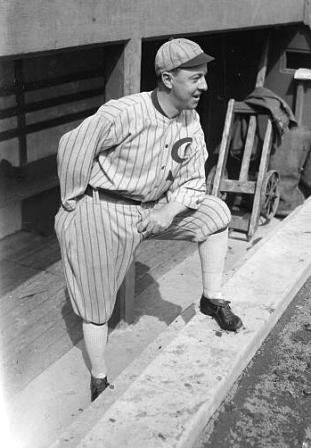
Clarence "Pants" Rowland

Clarence “Pants” Rowland

In his next column Cobb issued a non-denial denial and at the same time openly, and loudly, defied Johnson:

“I made no specific charge against the White Sox…What I did say was that a strong rumor of sharp practice was abroad, and I reiterate that statement right here.”

___

“Mr. Johnson even went to the extreme of saying that he would drive me out of baseball.  He hasn’t done this yet and I expect to stay around for a few more days.  If the league president is willing to pay the salary that my three-year contract calls for, I will be perfectly willing to take a vacation at that, for I have long wanted to do a number of things that baseball interferes with.”

Cobb reiterated the charges and offered no evidence, but said he was justified in making the claims because his manager might have believed them:

“(Tigers) Manager (Hughie) Jennings thought the report sufficiently serious to detail one of our players for plain clothes duty in the bleachers, and he also wrote Manager (Bill) Donovan of New York, telling him of a warning we had received and cautioning him to be on the lookout.  So you see the signal tipping report was not a creature of my own imagination, but a matter of sufficient seriousness to warrant an investigation by our manager in his official capacity.”

Cobb’s only bit of backtracking was to say that if “it should be proved the White Sox tried signal stealing it would be without the knowledge of Mr. (Charles) Comiskey.”  Cobb said Comiskey “wouldn’t countenance anything of this sort for a moment.”

Cobb took one last swing at Ban Johnson, charging the league president with giving “sensational interviews” about him to get “the people excited artificially. If this is Mr. Johnson’s idea, I wish he would abandon it.  I object to being made a freak.”

If there was any doubt whether the American League’s star player or the league president wielded more power, it became obvious within a week.

Johnson, who The Associated Press said “long has been opposed to players permitting their name to be used over baseball stories,” decided not only had Cobb not written the columns, but claimed “a Detroit newspaperman” made up the allegations “out of whole cloth,” and incredibly said that Cobb had “no knowledge,” of the columns despite Cobb being quoted by numerous sources discussing the charges.

Ban Johnson

Ban Johnson

Hugh Fullerton of The Chicago Examiner summed it up best:

“We are rather surprised each morning upon picking up our newspaper to discover that Ty Cobb is still making two-base hits, two steals and catching a few flies instead of being driven out of baseball by (Ban) Johnson.  By the way how did Johnson get into baseball?”

As quickly as Johnson backed down, the charges went away.  Despite the strong start the White Sox faded, and continued to fade even after the acquisition of “Shoeless Joe” Jackson on August 21, finishing third, nine and a half games behind the pennant-winning Boston Red Sox and seven games behind the Tigers.

Cobb led the league for the ninth straight season, hitting .369.

The one legacy from the brief 1915 controversy seems to be Cobb’s dislike of Rowland, who later became a scout for the Tigers.  In his 1984 book “Ty Cobb,” Charles C. Alexander said Cobb only agreed to manage the Tigers before the 1921 season because he was told:

 “Pants Rowland, whom Cobb considered an incompetent fraud, might very well get it and Cobb would have to play for him.”

Rowland, who remained in baseball until 1959 as a manager, scout and executive with the Los Angeles Angels in the Pacific Coast League and Chicago Cubs in the National League, appears to have also held a grudge.   Up until his death at age 90 in 1969, Rowland often said two of his former players, Jackson and Eddie Collins were better than Cobb.

 In 1953 at the Old Timers Baseball Association of Chicago Banquet Rowland said “I wouldn’t have traded (Collins) for Cobb.  What made him greater than Cobb was that he inspired the entire ball club.  Ty was an individualist.  He was interested only in Cobb.”

Rowland called Jackson the “greatest natural hitter,’ he ever saw, and said Ted Williams, not Cobb, was the only player “of the same make-up.”

Baseball’s “Growing Evil”

24 Jun

By 1913 newspaper articles under the byline of a famous player were common in newspapers across the country, and most of the game’s biggest stars were represented.

Most fans of that era assumed the players did their own writing until an expose appeared in The Washington Herald in March of 1913.  Sports Editor William Peet wrote:

“The dear old public fell for this stuff and swallowed hook, bait and sinker.  An article under the signature of Christy Mathewson led three-fourths of the fans to believe that the great pitcher himself wrote it.”

According to Peet, players were paid between $250 and $1000 for each story “and not one of them wrote a single word,” but it was still a good investment:

“The newspapers themselves regarded these feature articles as good investments, for the reason that the stories were syndicated to 25 or more outside publications and the revenues derived not only paid the amount guaranteed the baseball player for the use of his name, but left a handsome profit.”

Peet exposed the writers behind the articles “written” by the game’s biggest stars:

Christy Mathewson and Jeff Tesreau/John Wheeler, The New York Herald

Walter Johnson/Ralph MacMillan, The Boston Journal/The Boston Herald

John McGraw/Walter Turnbull, The New York Evening Sun

John “Chief” Meyers/Jim McBeth, The New York American

Richard “Rube” Marquard/Bill Farnsworth, The Atlanta Georgian/Hearst Newspapers

Denton “Cy” Young/Sam Carrick, The Boston Post

Tris Speaker/Tim Murnane, The Boston Globe

“Smokey” Joe Wood/Jim O’Leary, The Boston Globe

Ty Cobb/Roger Tidden, The New York World

Hughie Jennings/George “Stoney” McLinn, The Philadelphia Press

John McGraw and Christy Mathewson

John McGraw and Christy Mathewson

Peet called the practice dishonest, and said it had gone too far, and in New York and Boston the practice   had “become a mania.”  Peet singled out an article “written” by John McGraw criticizing “Chief” Myers that caused an “explosion,” and said the articles featuring “Rube” Marquard’s byline, and written by Farnsworth got Marquard “in bad with his teammates, for Farnsworth spared no one is his scathing criticisms.”

Pittsburgh Pirate manager Fred Clarke disagreed with the practice, telling Peet:

“I do not think it is any ball player’s place to butt into the newspaper end of the game…I think it is foolish for any player, especially those who take part in the world’s Series, to write about the games.”

As a result of Peet’s revelations the American League club owners condemned the practice of players’ names appearing on articles they did not write, but came just short of officially banning the practice. In September, the Baseball Writers Association petitioned the National Commission to end the “growing evil” of players authoring or appearing to author articles during the upcoming World Series.

The commission agreed, and American League President Ban Johnson informed Philadelphia Athletics manager Connie Mack on the eve of the World Series that star players Eddie Collins and Frank Baker “have been instructed not to write baseball stories or give the impression they are writing them.  If they ignore this request, a way of punishing them would be found. “

Frank Baker, center, Eddie Collins, far right,

Frank Baker, center, Eddie Collins, far right,

Johnson even threatened “Collins and Baker would not be permitted to take part in the World Series,” if they wrote articles or permitted their names to be attached to articles.

At one point Johnson and National Commission Chairman August Hermann said they would consider calling off the series if players refused to comply.  Dave Fultz, the former player, practicing attorney, and president of the Fraternity of Baseball Players, said members of the commission could be personally liable for damages if the series was cancelled.  Johnson and Herman’s threat to cancel the series as a whole was put to rest.

Mack argued that the players had contracts with newspapers and that Johnson had said earlier that players who were “capable” of writing their own articles would be permitted to do so, but as he prepared his team to play the New York Giants, he prepared for the worst, telling The Associated Press:

“(I)f the commission decides the players must not write under any conditions and players decide not to abide by the ruling, I will be prepared to put a team on the field,” The AP speculated that utility infielder John “Doc” Lavan  would play second base  and outfielder Rube Oldring would be moved to third base, with Amos Strunk taking Oldring’s place in the outfield.

Mack’s adjustments weren’t required.  Collins was allowed to write for The Philadelphia Record because his deal with the paper predated the commission’s ruling, and Baker did not write articles.  Together they led the Athletics to a 4-1 Series win, hitting .421 and .450.

Ghost written articles, and articles actually written by players never disappeared, but the practice became much less popular after the revelations and battles of 1913.

Crazy Schmit Stories

13 May

Fred “Crazy” Schmit was widely considered to be the first pitcher to keep a “book” on hitters, it was mostly attributed to his poor memory, and the pitcher kept an actual book in his pocket listing the weakness of each hitter.  The earliest reference to Schmit’s book was in The Sporting Life in 1894, but the story was repeated in newspapers for the next thirty years, usually as a story told by John McGraw or Hughie Jennings.

The article said Schmit kept:

“(A)n account of the weakness at bat of his opponents, setting them down in a small book, which he always carried with him on the diamond…One day when he had the Chicagos as opponents (it was the season that Captain Anson led the League in batting), Anson came to the bat. “Crazy” Schmit looked at the big first baseman, then went down into his pocket, and, taking out his book, read “Anson, base on balls.”

Over the years the story changed—the batter was sometimes Elmer Flick, Nap Lajoie, Ty Cobb, Honus Wagner, Tris Speaker, and as Jennings said in 1926, “Every good hitter since Anson’s day, but Anson is the player whose weakness was reported to be a base on balls.”

"Cap" Anson

“Cap” Anson

Jennings also claimed that during the 1890s as part of a prank by teammates aboard a ferry, Schmit’s suitcase, with his book inside, fell overboard, and said:

“Schmit was a losing pitcher from that time on.  He won a few games but lost a great many more…The bottom of Hudson River held his ‘pitching arm.’”

Pitcher turned sports cartoonist Al Demaree said Schmit “used to warm up with an old water-soaked ball that weighed several pounds—at a distance of 75 feet, and not the regulation 60 feet from his catcher.”

Al Demaree's Schmit cartoon--as with most references to the pitcher, his name is spelled incorrectly

Al Demaree’s Schmit cartoon–as with most references to the pitcher, his name is spelled incorrectly

After his final game with the Baltimore Orioles in 1901, Schmit continued to play with semi-professional and quasi-professional teams for more than a decade.  His antics continued to make the papers.

In 1906 Schmit joined Jim “Nixey” Callahan’s Logan Squares in the Chicago City League.  The Sporting News’ Revere Rodgers told a story (complete with Schmit speaking in a comic German accent) about the team going to Joliet, Illinois for a game:

“(The Logan Squares) knew the umpire was a ‘homer’—a man who couldn’t see a close decision without giving his team the best of it.  He stopped before the grandstand, hat in hand, and announced (the batteries)…’Crazy’ Schmit was right behind him and when (the umpire) finished Schmit took off his cap and making a sweeping bow said: ‘Laties and schentlmen, der umpire for der game today vill be Mister Miller of Joliet and he vill as usual slightly favor der home glub mit his decision.”

According to The Chicago Tribune’s Hugh Fullerton Schmit was deeply disappointed at the end of the 1906 season when Callahan did not allow him to pitch in the Logan Squares victories against the World Champion White Sox, and National League Champion Cubs.

Schmit continued to play in the Midwest and also did some scouting for John McGraw’s New York Giants.  A story that appeared in The Duluth News-Tribune said Schmit pitched a few games for the Fond du Lac in the Wisconsin-Illinois League (Schmit’s name does not appear on any Fond du Lac roster in either of the two years the other player mentioned in the story was with the team (1909, 1911)so the story may be apocryphal):

“Along about the seventh inning, with Rockford leading by 6 to 4 the first man up got on.  Schmit pitched out three times in an attempt to get the runner going down to second base, but the runner made no attempt to purloin the sack.  With the count three and nothing on the batter he grooved the next one, only to have the batter lean on it and drive it over the left field fence for a homerun.

“After the runners had circled the bases the umpire threw up another ball.  Schmit took it, shook his head and walked over to Bobby Lynch, who was playing third base…and said to him ‘Say, Bobby, no wonder I can’t beat these fellows.  I won’t pitch against them any longer.  I quit right now.  They don’t know how to play baseball and yet they are leading in this league.  The runner that was on first base just let me waste three balls and yet he does not attempt to steal; then when I put one over for the batter who has three balls and no strikes, he hits it.  Tell me, how can a man of my intelligence and baseball knowledge pitch a game of baseball against such boneheads and unscientific playing of the game?”

“Crazy” Smith died in Chicago in 1940.

“Death to Flying Things”

3 Apr

The nickname “Death to Flying Things,” is likely the only thing most baseball fans would know of John Curtis “Jack” Chapman, and even that is a morass of different and often questionable research.  He shares the nickname with one-time Brooklyn Atlantics teammate Bob Ferguson, and competing versions of the story disagree about whether first baseman/outfielder Chapman or infielder Ferguson is the one most commonly referred to by the nickname—and never with contemporaneous citations to back up the assertions.

Regardless, Chapman was an important figure during the advent of the game.

He was a well-known amateur player in the 1860s with the Brooklyn Atlantics (as opposed to the National Association team of the same name he and Ferguson played for in 1874) and the Quaker City’s of Philadelphia. Beginning at age 30 he played a total of 113 in the National Association, with Brooklyn and St. Louis, and during the National League’s inaugural season in 1876 he played and managed the Louisville Grays.

Jack Chapman, far right, with 1868 Brooklyn Atlantics

Jack Chapman, far right, with 1868 Brooklyn Atlantics

After the 1876 season, the career.246 hitter retired as a player.  Over the next 22 years he managed parts of ten seasons in the National League and American Association; including an 88-44 finish and American Association championship with the Louisville Colonels in 1890.  He also managed for 11 seasons in the minor leagues, retiring from baseball after the 1899 season.

When his managerial career ended Chapman was often asked to discuss the current state of baseball; carrying on a tradition as old as the game, and one that will never end, Chapman was adamant that the game as it was currently being played did not measure up the game during his prime.  In a column that appeared in several newspapers in 1900 he said:

“Our great national game is today in bad shape both financially and in other ways.  Whether this situation is caused by the rowdyism of the players I cannot say, but it seems to me that if the rules were strictly lived up to and the chief of umpires and his staff did their duty the game would soon climb back to the high plane it once occupied.

“The players of 10 and 15 years ago were just as fast, tricky and well up in the game as those of today…Years ago the ball used to have two and one-half ounces of rubber in it, whereas now there is only one ounce.  This reduction has made the sphere less lively and consequently easier to field…The men are now harnessed almost like football players, with gloves, pads masks and other paraphernalia.  We hadn’t these accessories in the old days, yet I don’t think the fielding is much improved.”

But mostly Chapman seemed to be concerned with his legacy as a manager:

“Probably no other man has brought out so many players as I have, mainly because I always have made it a point to be on the lookout for new blood by means of which I could improve my team…I think I may claim without anyone gainsaying my assertion, that I have turned out and sold to the National and other leagues more players who have proved to be crackerjacks than any other man living.

Robert Winchester and Mickey Welch, two old timers were ‘finds’ of mine, while Hugh Jennings, Roger Connor, Jimmy Collins, (Bill) Hoffer, (Harry) Howell and many others too numerous to mention in the major and minor leagues were developed by myself.”

Jack Chapman 1900

Jack Chapman 1900

Unfortunately, he said little and provided no details about the most significant incident of his career: as manager of the Louisville Grays in 1877 his team was the first to be involved in a gambling scandal:

“I had four men of my own team—(George) Hall, (Bill) Craver, (Al) Nichols and (Jim) Devlin—put out by the league because they were caught throwing a game.  That was the first time such a thing had ever happened, and it caused a great sensation at the time.”

“Death to Flying Things” died in 1916 in Brooklyn at age 73.