Tag Archives: Mike “King” Kelly

Things I Learned on the Way to Looking up other Things #11

22 Sep

Floto on Baseball’s Most Powerful Men

Otto Clement Floto was one of the more colorful sportswriters of the late nineteenth and early twentieth century’s.  The Denver Post’s Woody Paige said of the man who was once worked for that paper:

“In the early 1900s Floto was The Denver Post’s sports editor and a drunk, barely literate, loud-mouthed columnist–sounds like a description of that guy in my mirror–who didn’t believe in punctuation marks, wrote about fights he secretly promoted on the side, got into shouting matches with legendary Wild West gunman–turned Denver sportswriter–Bat Masterson.”

Otto Floto

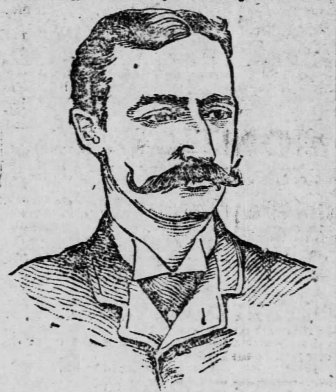
Otto Floto

Floto, in 1910, provided readers of The Post with his unvarnished opinion of baseball’s most powerful figures:

John T. Brush—The smartest man in baseball, but vindictive.

Garry Herrmann—Smart, but no backbone; the last man to him has him.

Ban Johnson—Bluffs a great deal and makes it stick.  Likes to talk.

Charles Comiskey—Shrewd as can be.

Connie Mack—Shrewd and clever; knows the game better than anyone.

Charles Murphy—A hard fighter, but backs up at times.

George Tebeau—More nerve than any other man in baseball, very shrewd.

Barney Dreyfus—Smart, but always following, never leading.

As for John McGraw, Floto allowed that the Giants’ manager was “Pretty wise,” but attributed his success to the fact that he “has lots of money to work worth.”

Too Much Money for Players, 1884

The Cleveland Herald was not happy when pitcher Jim McCormick jumped his contract with the Cleveland Blues in the National League to the Union Association’s Cincinnati franchise.  Although teammates Jack Glasscock and Charles “Fatty” Briody also jumped to Cincinnati, the paper saved most their anger for the first big leaguer to have been born in Scotland.
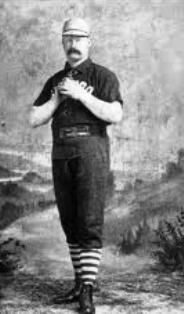
Jim McCormick

Jim McCormick

The paper noted that McCormick, who was paid $2500 by the Blues, had received a $1,000 bonus to jump:

“(A) total of $3,500 for joining the Cincinnati Unions to play the remainder of the season.  This is equal to $1750 a month, which again divided makes $437.50 a week.  Now McCormick will not play oftener than three times a week which makes his wages $145.83 per day for working days.  The game will average about two hours each, so that he receives for his actual work no less than $72.91 an hour, or over $1.21 a minute for work done.  If he was not playing ball he would probably be tending bar in some saloon at $12 a week.”

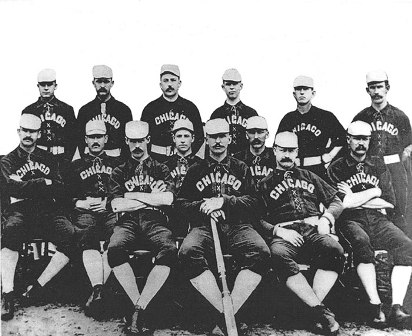
McCormick was 21-3 with a 1.54 ERA in 24 games and helped pitch the “Outlaw Reds” to a second place finish in the struggling Union Association.  After the Association collapsed was assigned to the Providence Grays, then was sold to the Chicago White Stockings.  From July of 1885 through the 1886 season McCormick was teamed with his boyhood friend Mike “King” Kelly—the two grew up together in Paterson, New Jersey and were dubbed “the Jersey Battery” by the Chicago press—and posted a 51-15 record during the season and a half in Chicago, including a run of 16 straight wins in ‘86.

He ended his career with a 265-214 record and returned home to run his bar.  In 1912 John McGraw was quoted in The Sporting Life calling McCormick “the greatest pitcher of his day.”

The pitcher who The Herald said would otherwise be a $12 a week bartender also used some of the money he made jumping from Cleveland in 1884 the following year to purchase a tavern in Paterson.

Not Enough Money for Owners, 1885

In 1885 J. Edward “Ned” Allen was president of the defending National League Champions –and winners of baseball’s first World Series—the Providence Grays.  He told The New York Sun that baseball was no longer a profitable proposition:

“The time was when a man who put his money into a club was quite sure of coming out more or less ahead, but that is past.  When the National League had control of all the best players in the country a few years ago, and had no opposition, salaries were low, and a player who received $1,500 for his season’s work did well.  In 1881, when the American Association was organized in opposition to the league, the players’ salaries at once began to go up, as each side tried to outbid the other.  When the two organizations formed what is known as the National Agreement the clubs retained their players at the same salaries.

“Several other associations were then organized in different parts of the country and were admitted under the protection of the National Agreement.   This served to make good ball-players, especially pitchers, scarce, and forced salaries up still higher, until at the present time a first-class pitcher will not look at a manager for less than $3,500 for a season.  (“Old Hoss”) Radbourn of last year’s Providence Club received the largest amount of money that has ever been paid to a ball-player.  His wonderful pitching, which won the championship for the club, cost about $5,000 (Baseball Reference says Radbourn earned between $2,800 and $3,000 in 1884), as did the work of two pitchers and received the pay of two.
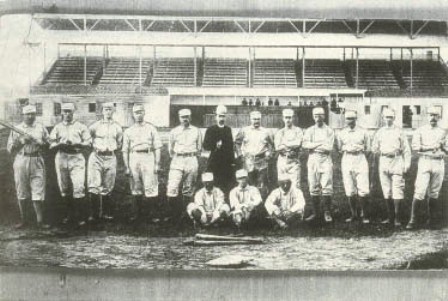
The Providence Grays--Champions and unprofitable

The Providence Grays–Champions and unprofitable

“Some of the salaries which base-ball players will get next season are; (Jim) O’Rourke, (Joe) Gerhardt, (Buck) Ewing and (John Montgomery) Ward of the New York Club, $3,000 each.  (Tony) Mullane was to have played for the Cincinnati Club for $4,000 (Mullane was suspended for signing with Cincinnati after first agreeing to a contract with the St. Louis Browns).  (Fred) Dunlap has a contract with the new League club in St. Louis for $3,400.  These are only a few of the higher prices paid, while the number of men who get from $2,000 to $3,000 is large.  At these prices a club with a team costing only from $15,000 to $20,000 is lucky, but it has not much chance of winning a championship.  To this expense must be added the ground rent, the salaries of gate-keepers, and the traveling expenses, which will be as much more.

“As a high-priced club the New York Gothams leads, while the (New York) Metropolitans are nearly as expensive.  The income of these two clubs last year was nearly $130,000, yet the Metropolitans lost money and the New York Club (Gothams) was only a little ahead.  The first year the Metropolitans were in the field(1883) their salary list was light, as were their traveling expenses, and at the end of the season they were $50,000 ahead.”

The Grays disbanded after the 1885 season.
“Baseball is now Played by certain Mathematical rules and Regulations”

16 Jul

The Chicago Tribune’s Hugh Fullerton concluded in 1906 that base running had “in a sense, become a lost art.”

“Baseball is now played by certain mathematical rules and regulations, and there is no more of the brilliant individual feats of the old days.  Everyone who plays now knows just what stage the game is in, what to do in that stage, and if he does not the signals from the batter to show him his duty.  In the old days most of them ran unaided by bunt, ‘squeeze,’ hit and run, or blocking or feinting to bunt to draw the fielders out of position.

“Teams still run, hoping to demoralize the opposition, but not to the extent that they did in the early years of the game.”

Hugh Fullerton

Hugh Fullerton

According to Fullerton no team ran wilder than the Chicago White Stockings of the 1880s

 “Mike Kelly was perhaps the most daring of all base runners.  He never was extremely fast, and in his later years grew extremely slow—but he stole almost as many bases when slow as ever he did.  Indeed, the best base runners the game has known were men of medium speed in running, and few of the really fast sprinters ever were good base runners.  Kelly ran bases with his head instead of his feet.

“One of the best trick that old team ever pulled off was against Boston in Chicago.  Kelly engineered the deal, although he was on first base, with a runner—(Tom) Burns, I think—on third.  One was out and the worst hitter on the team was up, with one run needed.  Kelly was standing on first, and as the pitcher prepared to deliver the ball Kel went dashing towards second, yelling at the top of his lungs.

“The pitcher took a glance to see if the runner had left third and saw him standing still, and to his astonishment saw Kelly still tearing towards second.  He hesitated, expecting Kel would stop or slow up—then threw, and threw high, while Kel, instead of sliding and reaching second in safety, merely touched the base and tore towards third at top speed, leaving the second baseman holding the ball in astonishment.  The runner at third had moved off ten feet as Kel came tearing towards him yelling commands, and catching the drift of the play, he sprinted for home.  The throw went to the plate ahead of him as he rushed homeward and seeing himself hopelessly out he slowed up a bit, and Kelly, coming on from third, slid around him, escaped the astonished catcher, who was tagging the other runner, and scored, evening up the game.”

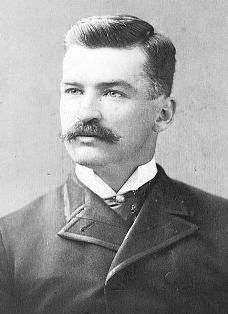
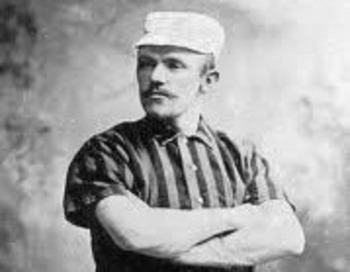
Mike "King" Kelly

Mike “King” Kelly

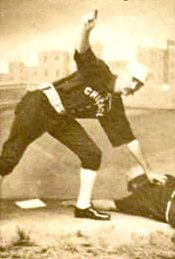
Fullerton also wrote about the “Kelly Slide,” or “Kelly Spread,” the hook slide Kelly made famous, which also went by another name:

“Kelly invented the ‘Chicago Slide,’ which was one of the greatest tricks ever pulled off.  It was a combination slide, twist and dodge.  The runner went straight down the line at top speed and when nearing the base threw himself either inside or outside of the line, doubled the left leg under him—if sliding inside, or the right, if sliding outside—slid on the doubled up leg and the hip, hooked the foot on the other leg around the base, and pivoted on it, stopping on the opposite side of the base.

“Every player of the old Chicago team practiced and perfected that slide and got away with hundreds of stolen bases when really they should have been touched out easily  There are some modern players who make the slide something as it was done then, but Bill Dahlen of New York really is the only one in either big league who executes it regularly and perfectly.”

And, as with most Fullerton reminiscences there were stories about his personal favorite players; which may, or may not have actually happened on a baseball field somewhere, to someone.

Elmer Foster was a great base runner, after his style.  He ran regardless of consequences and perhaps no man that ever played in fast company ever took an extra base on a hit oftener as did Elmer.  He simply refused to stop at his legitimate destination, and kept right on.  When he got caught he always said:  ‘Why, I wasn’t a bit tired.  Why should I have stopped running?’

“On day Foster was turning third, trying to score from second on a short hit, when Billy Kuehne bumped him with his hip, threw him out into the grass, and forced him to stop.  Elmer was wild.  He kept yelling, ‘I’ll be around here again.’  The next time up he made a two base hit and he never stopped at second, but dashed on for third at top speed.  The second baseman, surprised, made a high throw to third and Kuehne stretched to get the ball just as Foster, leaping through the air, landed on his chest with both feet and kicked him half way to the grandstand.  Foster came home running backwards and yelping with delight at Kuehne—and then got sore because he was called out.”

Elmer Foster

Elmer Foster

“One of the funniest incidents in base stealing I ever saw happened in Chicago one of the yeas that Bill Lange led the league in base running.  It was a close race between Lange and (Billy) Hamilton for the honors and the season was drawing to a close.  The game was close, and Lange led off the eighth inning with a two bagger.  Anson went to bat and laid down a perfect bunt, intending to sacrifice.  He went out in a close finish at first, and looking up, discovered Lange still perched on second.  He was furious, but the condition was mild compared to what he experienced an instant later when Lange stole third—and took the lead fo the base running honors.”


“There will be Cliques”

30 Jun

William Ingraham “W.I.” Harris was one of the most important baseball writers of the 19th Century, but like Charles Emmett Van Loan three decades later, he died young and is mostly forgotten today.

He was sports editor for The New York Press, which was billed as “The aggressive Republican newspaper of New York,” and The New York Star.  The Sporting Life said of Harris:

“He feels strongly in any given direction and talks earnestly. One cannot be long in his presence without being convinced of his unswerving honesty and sincerity.”

He was, along with Ren Mulford Jr. of The Cincinnati Times-Star, an outspoken critic of the Players League, and said he agreed with Mulford’s assessment that the appearance of the Brotherhood, and the resulting “baseball war” was “a campaign for the preservation of baseball law on one side and its destruction on the other.”

William Ingraham Harris

William Ingraham Harris

Harris was also considered the best prognosticators among contemporary baseball writers, and before the 1890 season began he said:

 “For the past two years I have had the satisfaction of naming the champions of both major associations before a championship game had been played…and last season (in the National league), with the exception of Pittsburgh and Cleveland, I located the exact position at the finish.”

He said he would not attempt to handicap the results of the three leagues in 1890:

“The writer who ventures to make predictions as to the results of the championship fight in any one of the many leagues at this stage of affairs takes an enormous risk on masticating a pretty tough crow later on.”

But, said Harris, he was “willing to take my chances on giving one tip,” before the beginning of the season.  The “tip” went against the conventional wisdom, in fact, it went against what the entire baseball world considered a certainty; the fate of the club The Chicago Tribune called “The greatest team ever organized.

“(I) shall not undertake to pick any winners this year until the season has been well started.  I propose, however, to nominate one team that will not win a pennant, and that is the Chicago Brotherhood team.  In making this assertion I am bucking against general sentiment, or rather general belief.  The consensus of opinion is the other way.  There is no doubt that on paper the Chicago Brotherhood team is in many respects one of the greatest aggregations of baseball stars ever got together, but there are some potent reasons against its success.“

Harris was critical of the team’s catchers and pitchers:

(Conrad “Dell”) Darling never was a first class catcher and never will be.  (Charles “Duke”) Farrell is a strong hitter, and at times a most brilliant catcher, but he is not a steady or remarkably heady catcher.  Boyle is a good one, but he isn’t in it with such good men as (William “Buck”) Ewing, (Jack) Clements, (Charlie) Bennett, (Charlie) Ganzel, (George “Doggie’) Miller, (Connie) Mack, (Michael “King”) Kelly, (John “Jocko”) Milligan, (Paul) Cook and (Cornelius “Con”) Daily.  On catchers the team is all right on quantity, but short in quality.

“As to pitchers, (Mark) Baldwin, in 1887 and 1889, was a star In 1888 he was not to be depended on.  Baldwin doesn’t take care of himself as he should in the winter time.  As a pitcher he ranks among those who may be great at any time, but who keep you guessing on the dates.

(Charles “Silver”) King, in condition, is a ‘tip topper.’  He was a failure in the League once before, and in the world’s Series against New York didn’t astonish people to any extent.”

He dismissed the other two pitchers, Frank Dwyer and Charlie Bartson as a “medium man” and “unknown quantity,” and said “Unless strengthened in the battery department, and probably not then, this team will not land first.”

He conceded that “The outfield and infield are well-nigh perfect.”  But, there was a bigger problem than the weak pitching and catching; Harris predicted tension between second baseman Fred Pfeffer, who had raised $20,000 for the creation of the Players League, recruited most of his Chicago White Stockings teammates to jump to the Brotherhood, and was one of the club’s directors, and team captain and first baseman Charles Comiskey:

“(T)he Comiskey-Pfeffer or the Pfeffer-Comiskey combination.  By the way, which is it?  The answer to this will have quite a bearing on the general result…There will be cliques.  Germany and Ireland will be at war in less than a month.  The public may not know, but the lack of harmony will be there and will have its effect.  Comiskey is a great baseball captain.  At least he was in the American Association.  His methods are well-known.  He was supreme at St. Louis.  Everything went.  The men had no respect for (owner Chris) von der Ahe.  They feared Comiskey.  At Chicago Comiskey will find some men who have just escaped from the rule of a greater captain than himself, perhaps a harder task master.  They have reveled all winter over the prospect of freedom from that restraint, proper and effective though it was.  They are stockholders—yes magnates—now.  Will they swallow Comiskey’s manners on the field and in the dressing room?  As Charlie Reed sings, ‘Well, I guess not.’ (Reed was a famous minstrel performer in the 1880s and 18890s)

“Comiskey must change his methods.  He will have to gag himself; he will have to, figuratively, kiss the baseball blarney stone; he will have to be cheerful, under protest; and, above all, if harmony be his objective point he will have to please Director Pfeffer.  He may not try to do these things; he probably won’t.  Comiskey will have his way.  He always has had it.  He can only rule by practically despotic methods.”

Fred Pfeffer

Fred Pfeffer

Harris correctly concluded that Brooklyn, New York, and probably Boston (the eventual champions) would finish ahead of Chicago.  At season’s end, The Chicago Times summed up how prescient Harris had been about the fourth place team in the Players League:

“The outside world cannot fully realize the bitter disappointment felt here over the poor showing made by Comiskey’s team during the season just closed.  Surely it was strongest aggregation of players ever collected in one club, but its lack of success was mainly from two causes—lack of discipline and the miserable condition of certain members of the club.

“There has been absolutely no discipline in the team, and some of the men paid as much attention to Comiskey’s orders as they would to a call from some church congregation.  An order to sacrifice was met with a smile of scorn, and the ball was hammered down to an infielder, who made an easy double play.”

Harris died the following summer on July 7, at age 33, of tuberculosis.  The Boston Globe, the first paper he worked for, said:

“Being of a most observing nature, a ready thinker and as it were, a lightening calculator, he managed to foretell many of the leading baseball events of the year weeks ahead…Mr. Harris was without exaggeration, one of the brightest of his class, a ready and graceful writer and a hard worker.”

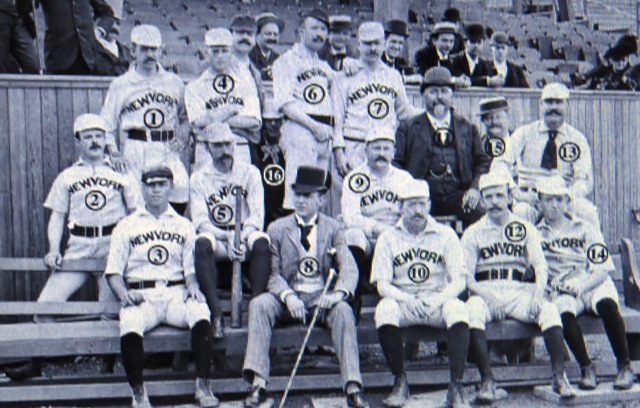
W.I. Harris (#5), as a member of the New York Reporters Baseball Club at the Polo Ground in 1889.

W.I. Harris (#5), as a member of the New York Reporters Baseball Club at the Polo Ground in 1889.

Rube and Ossee

10 Mar

Connie Mack’s Philadelphia Athletics were expected to repeat as American League champions in 1906.  The 1905 team won 92 games, finishing two games ahead of the Chicago White Sox, and lost to the New York Giants in the World Series.

The 1906 Athletics were in first place as late as August 11, but faded to fourth, losing 33 of their last 52 games and finishing 12 games behind the champion White Sox.

Much of the blame for the poor finish was directed at Rube Waddell.

Rube Waddell

Rube Waddell

Waddell, 27-10 in ’05, dropped to 15-17 after fracturing his thumb in May of ’06.   The Philadelphia Inquirer said he was driving a rented carriage, “At Twenty-second Street and Ridge Avenue he became involved is a collision with a delivery wagon…he turned his horse quick to avoid the wagon, and when he found that the wagon was sure to hit the carriage he jumped and landed on his thumb.”  He sat for two weeks and never found his form from the previous season.

Waddell’s recovery was slowed, it was suspected, because of his off-field habits.  The general opinion of the fans and press was summed up by The Wilkes-Barre Times which said:

“Waddell has refused to appreciate that the modern ballplayer positively must keep in condition and ‘deliver the goods.’  The famous Mike Kelly could spend a $100 bill the night before playing a championship game and not report the next day.  It was regarded in those days as a joke.  That day has gone by.”

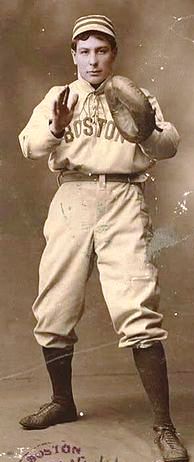
Waddell’s personal catcher, Ossee Schreckengost—Schreck—was also blamed for the collapse.  Schreck was sent home by Mack for the remainder of the season on September 22.  During a series in St. Louis he failed to return to the team hotel after a night out with “some German friends.”  Schreck said:

“Mack told me to pack up and go home.  That’s all there is to it.  We did not have any argument.

“Mack wants to try out a lot of juveniles this trip.  I do not think he is sore at me, and do not think I stand suspended.”

The Philadelphia Inquirer disagreed:

“For the good of the cause, Ossie [sic] Schreckengost was sent home by Manager Mack tonight suspended for the rest of the season.

“Schreck has not taken care of himself this year (as) an athlete should, and to his shortcomings more than anything else Manager Mack attributes the slump of the team in mid-season.  To Schreck St. Louis is the most attractive town on the circuit.  Yesterday he succumbed to its blandishments.”

Ossee Schrecongost

Ossee Schrecongost

Either as a result of their drinking, the fact they were said to have “tanked” the Athletics season, or both, The Washington Post suggested that “Waddell and Schreck should be dubbed the tank battery.”

The battery mates and road roommates were sent their contracts for 1907.  Waddell was threatened with a pay cut if he didn’t stay in shape.  He quickly signed.

Mack is quoted by many sources over the years saying Schreck refused to sign his contract until Waddell agreed to no longer eat crackers in the double beds they shared on the road.

It is generally considered an apocryphal story invented by Mack years later—and often even said to have happened before the 1904 or ’05 seasons rather than 1907.

But, the story was not the invention of Mack.  There was actually a letter purported to be written by Schreck “from his home in Cleveland” (it is not known who actually wrote the letter), and reprinted in several newspapers between the 1906 and ’07 seasons:

“Dear Connie:  This is not a touch for any advance, or an increase in salary, but something much more serious, and as it won’t be long before the Athletics start south for spring practice, I am going to ask you to put Waddell under another charge this year.

“While I did not mind Rube bringing mocking birds and a reptile or two into our sleeping apartments down south, I do object to his habit of eating crackers in bed.  This Rube does nightly.  Not a single night last spring did Waddell retire without his south paw containing a dozen crackers, many of them resembling animals.

“By the time Rube, or Eddie, as he wishes to be called in southland, had got outside of these crackers, I was in anything but a sleepy mood, due in a measure to his crunching of the crackers.  It did not seem to interfere with Eddie.  He would turn over and go to sleep at once when through.

“Had it stopped here, all would have been lovely.  It didn’t however, and the natural result was that the bed was full of crumbs.  This had been going on for years, and frequently have I welcomed a night on the road with an upper berth, so as to escape Waddell and his crumbs.

“This complaint may seem trivial to you, after your varied experiences with Rube, but I can assure you that the crumbs that came from those crackers were anything but ‘crumbs of comfort’ for your humble servant.  In closing, I would like to suggest that if you can put a clause in Waddell’s contract that he is not to eat crackers in bed during the season of 1907.  I am sure Waddell and I will continue to be real good friends as of yore.  Yours truly, Ossee Schreck

“P.S.—I wish all of the boys, and of course this takes in you, a happy new year.  Am doing light training.  O.S.”

Whether or not the “cracker clause” was inserted in Waddell’s contract, the Rube/Ossee battery was together for all but four of Waddell’s 33 starts in 1907, but the relationship between “the real good friend’s of yore” began to deteriorate that season;  likely because Schreck had cut back his drinking considerably, while Waddell continued to be Waddell.

Despite a 19-13 record for the second place Athletics in 1907 Waddell had become a distraction and more trouble than he was worth.   The Inquirer said he was sold to the St. Louis Browns after “Ruben made himself objectionable to his club mates, and for the good of the club’s future Manager Mack concluded that it would be the part of wisdom to let him out.”  Waddell was 33-29 in parts of three seasons in St. Louis.

Schreck remained in Philadelphia until September of 1908 when he was sold to the Chicago White Sox, his big league career was over at the end of that season, after eight games with Chicago.

The two old teammates died just three months apart in 1914, Waddell was 37, and Schreck was 39.  The Inquirer said:

“’Thuh batt’ries for today: for Philadelphia, Waddell and Schreck!’  It has lo these many days been but a memory, and now there is only memory left of the famous diamond combination.  They flashed in dazzling brilliancy across the baseball horizon and disappeared as quickly as they came.  And both died old young.”

Adventures in Barnstorming—“Their Conduct was Disgraceful”

30 Oct

After the 1887 season John Montgomery Ward was celebrating his marriage to one of the most popular actresses of the era, Helen Dauvray, by touring the South playing exhibition games with the New York Giants–primarily made up of New York players but also included Mike “King” Kelly (who also brought his wife Agnes) of the Boston Beaneaters and Jerry Denny of Indianapolis Hoosiers.

John Montgomery Ward

John Montgomery Ward

The team arrived in New Orleans on October 29 and was greeted with a reception at the St. Charles Hotel.

The first game against the Southern League’s New Orleans Pelicans was played the next day at Sportsmen’s Park in front of 6000 fans.  New York’s Tim Keefe held the Pelicans to just two ninth-inning runs, in a 7-2 victory.   Ward had three hits.

The New Orleans Times-Picayune said:

“It was far from an ideal day for ball playing, for the weather was almost freezing and the wind blew in cutting blasts.  But those who admire baseball in this city were undeterred.”

The following day the Pelicans managed an 8-inning 4-4 tie:

“(The Pelicans) put up a game that would have done credit to any aggregation, and the only excuse for their not having bounced the Giants, was the fact that (Bill) Geiss and (Ed) Cartwright made inexcusable errors at the commencement that let in two runs.”

The Times-Picayune left out a large part of what happened that day.

Two days later the whole story appeared in papers across the country, The New York Times said:

“(S)everal members of the New York Baseball club were intoxicated when they entered the grounds to play with the New Orleans nine on Monday last.  Their conduct was disgraceful, and (Pelicans) Secretary (Maurice) Kaufman called on a police officer to eject them from the grounds.”

A wire report from New Orleans, that appeared in The Chicago Daily News said:

“There are several men in the New Yorks who have been drinking freely ever since they arrived in the city, and were not of course, in condition to play ball.”

Giants’ catcher William “Buck” Ewing, and Jerry Denny were identified as drunken players, but it was King Kelly who was most often singled out.  The wire report said when police attempted to arrest a drunken fan who had accompanied the players to the ballpark:

“Kelly jumped into the stand and tried to prevent the arrest, claiming the man was a friend of his…During the entire game the unseemly exhibition was kept up.  At one time Kelly climbed into the stand and drank beer with his friends, while the other men of the nine had already taken positions in the field to begin an inning.”

King Kelly

King Kelly

During the game Ward “took his wife from the grounds, and placing her in a carriage, sent her to the St. Charles Hotel, because of the disgraceful exhibition of some of the players.”

The game scheduled for November 2 was cancelled and The New York Times said the tour would be disbanded.

By the end of the week all parties were trying to downplay the incident.  Ward said members of the club “misbehaved in no way,” and instead said the cancellation was because it was discovered that Pelicans players had received $5 each for the games, and the Giants players only received $3.  The Pelicans and The Times-Picayune had a revised version of the events:

“The whole story is that a couple of the members met too many friends with tempting ways and reached the field in no condition to play ball.  The majority of the visitors were all right and were heartily ashamed of the conduct of their comrades.”

The paper said that the “New Yorks are in good trim again, however and at their own request a game was arranged for (November 4).”

The Giants won that game 5 to 3—New York catcher Buck Ewing pitched a complete game for the Giants (he pitched 47 innings during his major league career, with a 2-3 record and 3.45 ERA), beating the Pelicans best pitcher John Ewing.  Only 500 fans attended the game.

The series ended on November 6 with the Giants winning two games; a 3-1 morning game with “a very small crowd,” and an evening game in front of more than 6000 won by the Giants 5-4.

While the rest of the Giants continued on to Texas, Ward returned to New York for meetings to negotiate the recognition of the Brotherhood of Professional Baseball Players by the National League.  He rejoined the team on the West Coast later that month for a six-week barnstorming tour.

The Ward/ Dauvray marriage went about as well as the honeymoon in New Orleans—their divorce just six-years later was a very public, scandalous affair.  Ward, who was accused of being a serial philanderer, was actually barred from ever remarrying during Dauvray’s lifetime as part of the divorce decree.  He was able to get the ruling reversed in 1903 and remarried.

Jim Lillie

28 May

The Sporting Life described Jim Lillie as “one of the most sensational of right fielders,” and “the rival of Mike (King) Kelly in the position.”  The New Haven Register said he earned his nickname “grasshopper”  as a result of his “agility in the outfield.”

His career was brief, and his short post-baseball life was tragic.

The 21-year-old Connecticut native was said to have been discovered by “Orator Jim” O’Rourke “on the lots and commons of New Haven.”  He played his first professional game on May 17, 1883 with the Buffalo Bisons in the National League.  Lillie appeared in 50 games, hitting .234. In November his hometown newspaper, The New Haven Register, got his position wrong (saying he was used primarily as a catcher—he caught in two games), but said “his record was highly credible,” and that he had already signed for the 1884 season.

Jim Lillie

Jim Lillie

Lillie spent two more seasons in Buffalo; leading the team in games played both seasons.  In 1884 he led National League outfielders with 41 assists; his 40 errors also led the league.  He committed 33 errors the following season; he hit .223 and .249 for the Bisons.  When the team disbanded after the 1885 season, his contract was assigned by the National League to the Kansas City Cowboys, who had been admitted to the league on a trial basis.

He had, for him, a typical season in the field: 30 errors (third in league), 30 assists (second) and 199 putouts (third).  He also had one of the all-time worst performances at the plate; hitting .175 in 426 at bats, with only nine extra base hits (all doubles), he finished the season with 82 total bases—for identical .197 on base and slugging percentages.

The 30-91 Cowboys were dissolved in February of 1887, with the players being sold to the league.

Lillie remained in Kansas City, and had the best season of his career with the Cowboys, now in the Western League.  He also met an 18-year-old woman named Nellie O’Shea, the daughter of a wealthy Kansas City contractor and said The Kansas City Star, “a young lady highly spoken of.”

Lillie, playing primarily in left field, hit .369; a hitter’s haven, the Western League leader, Jimmy Macullar hit .464, and Lillie’s average was good for 34th best in the league.

On December 29, 1887 Lillie married Nellie O’Shea.

He joined the Fort Worth Panthers in the Texas League around June 1 of 1888, but left the team in less than two weeks.  The Dallas Morning News said he was released, The New Haven Register said he left Texas to be with his wife and go to work for his father-in-law, “(Lillie) promised her to settle down,” and planned on returning to baseball for the 1889 season.

He never had the chance to return to the game.  On September 10, 1888, the Lillie’s child was stillborn.  Two days later, a fire broke out in their home.  The Associated Press said:

“(Nellie) was making preparations for supper when the accident occurred…She had moved the gasoline stove too near the cooking stove and in filling the reservoir with gasoline some of it became ignited.  The flames at once enveloped her…(Lillie) entered at that moment or (she) would have been burned to death…Lillie did not notice his own condition until after he had summoned  a physician.”

Mrs. Lillie lingered for nearly three weeks before dying of her injuries on October 4.  Lillie, who had attempted to remove his wife’s burning clothes, had his hands burned “down to the bone,” and initial reports said he’d have to have some of his fingers amputated.  There’s no record of how well his hands recovered, but he never played baseball again.

He stayed in Kansas City and according to The Kansas City Star “managed (Nellie’s) estate.”  Within two years he would contract typhoid fever, and he died November 9, 1890.  The Star said his last words were to a friend at his bedside:

“I am afraid, Charlie, it is three strikes and out.”