Tag Archives: National League

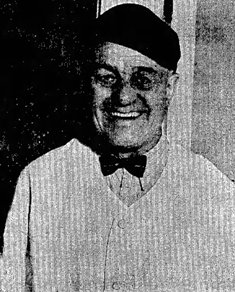
“Maryland is the Home Run State”

25 Mar

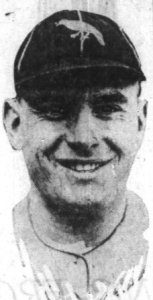
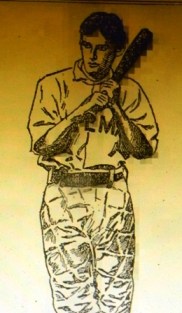
Jack Bentley, pitcher and first baseman for the Baltimore Orioles in the International League hit 20 home runs in 1920.  The feat earned Bentley, who was born in Sandy Spring, Maryland, the nickname “Home run” among local fans.   Dean Snyder of The Denver Express declared:

“Maryland is the home run state.

“Three swat kings hail from the oyster state.  Each has earned the “Home Run” prefix”

Snyder spoke to all three:  Bentley, Frank Baker, born in Trappe, Maryland, and Babe Ruth, born in Baltimore.

Bentley said:

“Homerunning depends on how you place your feet.  ’That gives a batter poise.  Keep your feet together.  You’re set to step up or back then.

“(During the 1920 season) I tried for a while to keep my feet apart.  I hit a batting slump.  (Orioles) Manager Jack Dunn told me to get my feet together.  I did.  Then I started bouncing ‘em over the walls.”

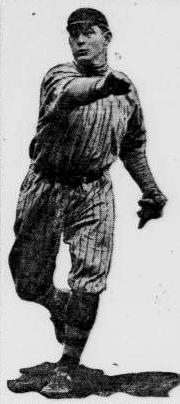
Jack Bentley

Jack Bentley

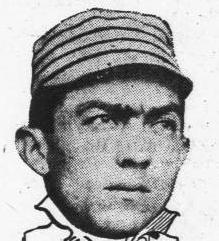
Baker said:

“It’s the way I grasp the bat.

“Grab it right down at the knob.  No long distance hitter holds the bat far up.  Use all the wood in the bat.

“That’s my secret.”

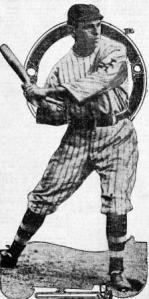
Frank Baker

Frank Baker

Ruth said:

“The eye and the swing is the thing.

“Coordinating the two…that makes the ball travel.  Swing a fraction of a second too early or too late and you don’t hit a homer.

“The old eye counts most.  Without a keen eye you flivver.

“I hit 54 last year because I timed my swing.  When I was making (the movie “Headin’ Home” during the 1920 season) my eyes went bad.  I didn’t bust one for three weeks.  No pictures for me this summer.

“I’m shootin’ at 75.”

Babe Ruth

Babe Ruth

Bentley hit 24 and 22 home runs the next two seasons with Baltimore (he was also 12-1 with 2.34 ERA in ’21 and 13-2 1.73 on the mound) and was purchased by the New York Giants for $72,000.

“Home run” Bentley appeared in 65 games in the field and hit just seven home runs in 539 National League at-bats from 1923-1927—as a pitcher, he was 40-22 with a 4.35 ERA.

Baker sat out the 1920 season after his wife died of Scarlet Fever in February.  Snyder predicted that when he returned to the Yankees he would “fight Bambino Babe a home run duel.”  He hit 16 home runs in 564 at-bats in 1921 and ’22 before retiring.

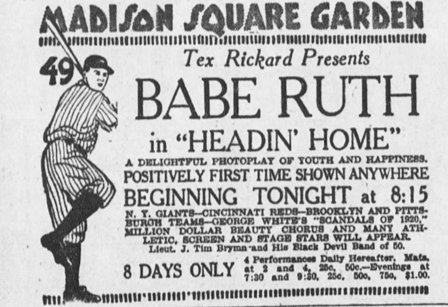
Ruth didn’t get “75 in 1921—he settled for 59.  “Headin’ Home,” presented by boxing promoter Tex Rickard, opened at Madison Square Garden on September 19, 1920, to what The Brooklyn Eagle called “a fair sized crowd.”  As for the quality of the film Ruth said caused his eyes to go bad for “three weeks,” the paper said:

“It is an astonishing thing that when people, prominent in other walks in life, enter the moving picture field, they generally appear in most absurd pieces.”

headinhome

Lost Advertisements–John McGraw for Coca-Cola

18 Mar

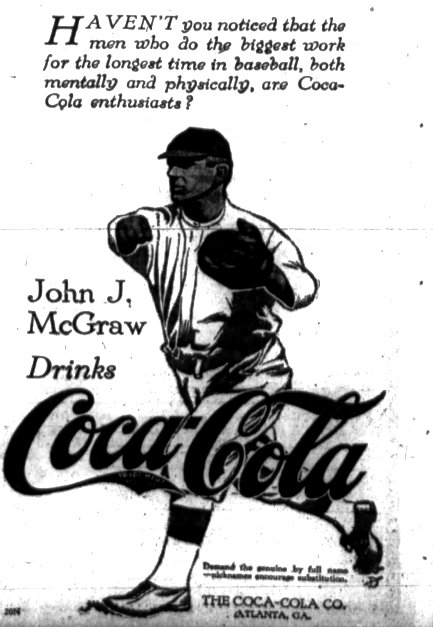
mcgrawcoke

“Haven’t you noticed that the men who do the biggest work for the longest time in baseball, both mentally and physically, are Coca-Cola enthusiasts?

John J. McGraw drinks Coca-Cola.”

After winning three straight pennants with the Giants from 1911-1913, McGraw was confident his team was heading for a fourth straight National League championship after his club took over first place on May 30.  In September, the surging Boston Braves–who were in eighth place when New York took over first– split a doubleheader with the Giants to remain tied for first place (The Braves were tied with the Giants for one day on August 25 and were in sole possession of first for one day earlier in the month).

That day, under the headline “Prophecies and sich!” Ralph Davis of The Pittsburgh Press presented a series of quotes he attributed to McGraw which nicely summed up the season’s pennant race:

“John McGraw said on June 1: ‘The big disappointment of the year has been the Boston Nationals.  I thought (George) Stallings would get his team into the first division at the start and keep it there.’

George Stallings

George Stallings

“John McGraw said on July 1: ‘Those poor old Bostonians are still at the bottom of the pile, where they seem to be anchored.  The team is surely the surprise of the season.’

“John McGraw said on Aug 1: ‘The Boston Braves have made a great showing during the past two weeks, and are now in fourth place.  They will probably slump again, but should not drop back into last place.’

“John McGraw said on Aug. 15: ‘Boston is now in second place, but we are not worried about that.  Their present spurt is merely a flash, and they will soon be headed the other way.’

“John McGraw said on Sept. 1: ‘As I predicted, the Braves did not stay with us.  They have dropped back to second place and have probably shot their bolt.  They will decline from this out.  Mark my words.’

“John McGraw said on Sept. 7: “Those Braves blankety blank, blank, etc…, ad infinitum!’

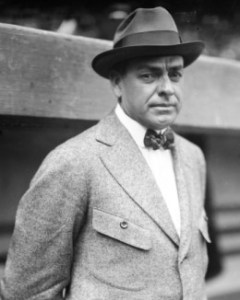
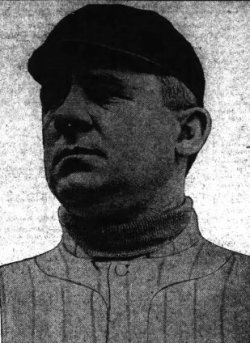
McGraw

McGraw

“Which being interpreted means Boston once more tied with the Giants for the lead, and shows no sign of breaking badly, as the eminent Mr. McGraw predicted.”

Davis’ prophecy that the Braves showed “no sign of breaking badly” was correct.  Boston beat the Giants 8 to 3 the following day, recapturing sole possession of first place.  They never looked back.  The Braves went 25-6  (with three ties) the rest of the season and cruised to the pennant, beating McGraw’s Giants by 10 1/2 games.

On the Road with the Giants, 1912

18 Jan

As the New York Giants were cruising to the National League Pennant in 1912—they won by 10 games and were never in second place after May 20—New York’s catcher John “Chief” Meyers provided fans with a look at life with the Giants.

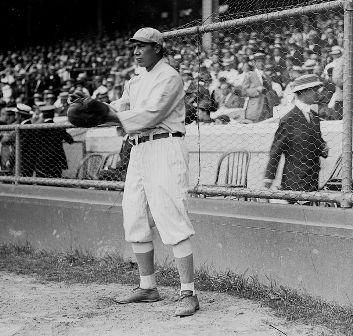
Chief Meyers

Chief Meyers

The article was written for The Associated Press—most likely by Jim McBeth of The New York American, who acted most often as Meyers’ ghostwriter:

“After the last ball of the game is fielded and the crowd begins to pour out of the park and the players disappear into the clubhouse—what then?

“The fans read in their papers next morning: ‘New York at Pittsburgh’ or ‘New York at Boston,’ or something like that.  And until the bulletin boards begin to put up the score, inning by inning, in the afternoon, they know little of nothing about the men they have been watching and cheering.

“What have ballplayers been doing in the meantime?”

Meyers explained life on the road:

“Well, suppose we’ve just finished a game on the Polo Grounds.  Our schedule calls for a battle with the Pirates in their home park.  Of course, the first thing is to get there, and we get there in easier and better fashion than any other sort of a traveler.

“We have two private Pullman cars of our own, always, and they are our traveling home We assemble at the railroad station—sometimes forty strong—and just pile aboard and make ourselves comfortable.

“In the first place, I might mention the make-up of our party.  We carry twenty-five players, as many as the rules allow; John McGraw, the manager; Wilbert Robinson, coach and assistant manager; the club secretary and his assistant; Dr. Finley the club physician;  Ed Mackall, the club trainer; Dick Hennessy, our kid mascot, and as many as ten or twelve newspaper writers especially towards the end of a close race.”

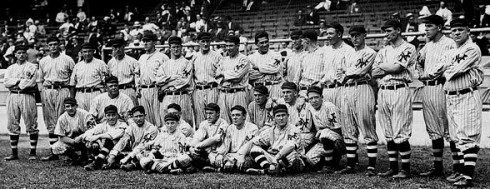
The 1912 Giants

The 1912 Giants

As for accommodations:

“If he is a regular he takes possession of a seat which indicates that his berth when it is made up will be a ‘lower.’ That’s an absolute rule.  Nothing but the cream for the first string players.

“As soon as the train pulls out the boys go to their favorite amusements—card playing, reading, ‘fanning.’  Don’t think a player finishes a game when he sheds his spangles.  He doesn’t.  Many a game is played all over again as soon as the boys get together.

“There’s a little quartet of us who are pinochle fans—(James ‘Doc’) Crandall, (Art) Fletcher, (David ‘Beals’) Becker and myself—a fine lot of Dutchmen we are.  We’re the ‘tightwads’ of the club because we don’t  risk as much as a nickel on our games.

“There was a time when there was tall gambling by the players on trains while traveling from one town to another.  I’ve seen as much as $6,000 or $7000 on the table in a poker game. But that’s past; the player of today holds on to his money, and, besides, he knows that high betting causes ill feeling between friends and heavy losses get a man’s mind off his playing.  The Giants play a little poker, of course, but it’s only a 25-cent limit game, where a man in hard luck may lose as much as $4 or $5 in a session.

“Occasionally you’ll hear a little singing.  Some of the boys have really good voices.  Others fancy themselves as vocalists, anyhow.  Larry Doyle, for instance…Leon Ames gets up sometimes and gives us his specialty.  He recites Kipling’s poem, ‘On the Road to Mandalay,‘ (with an affected speech impediment). That always gets a laugh.  The younger, smaller players buzz around Big Jeff Tesreau like a flock of mosquitoes attacking an elephant, giving him a good-natured kidding until he sweeps his big arms and chases them. “

Big Jeff Tesreau

Big Jeff Tesreau

Meyers said the Giants were “like one big family—a lively, noisy bunch of pals.”   He said a player occasionally “gets a grouch and sits off by himself,” but:

“I never saw a group of men in any business so genuinely attached to each other…Occasionally some stranger tries to horn into our cars but he quickly finds he isn’t wanted.”

The Giants, he said, drew crowds at the ballpark and at their hotel:

“There’s nothing tight about us when we travel. We’re an attraction and we know it, and that helps box office receipts.  People always want to see this club that’s got Matty and a real Indian, and sometimes  (the previous season) Charley Faust  or a Bugs Raymond as an added attraction. So we don’t keep our light under any bushel.

“We’re always pretty well sized up in our hotel in a strange city.  We can hear people say ‘So they are the Giants eh?’  The native can always spot me because of my Indian appearance, so I’m usually the one they make for.

“’Say, Chief, which is Matty?’ they ask.  ‘Which one is Johnny McGraw?’ ‘Who’s going to pitch today, Chief?’ The other boys give me the laugh because I’m the goat for all questioners.  The fans don’t recognize the other players.”

Meyers said most of the Giants were not great dressers, ‘content with two changes of costume.”  The exceptions were Rube Marquard:  “He travels with a steamer trunk and sometimes has six or eight suits with him,” as well as Josh Devore and Art Wilson.

Meyers said every player shared one fashion statement:

“Everybody…sports a diamond.  That seems to be the badge of big-league class.  As soon as a ballplayer gets out of the ‘bushes’ and into the big show the first thing he does is buy a spark.  Some of the boys have half a dozen. “

Meyers also insisted that drinking was not a problem among the modern players:

“One thing we hear from strangers most frequently is ‘Have a drink, old man let’s drink one for good luck in today’s game.’  That invitation is invariably refused. Few of the boys drink anything at all, and those who do take a glass of beer occasionally do it among themselves always.  The present day player differs greatly from the old timer, who mixed with everyone.

“Pleasant strangers, with sensible questions, we don’t mind, but they are in the minority t the butters-in who simply want to tell their friends they are associates of ballplayers.”

Meyers said he and his teammates were also very popular with deaf fans, many of whom began following the Giants when Luther “Dummy” Taylor (1900-01, 1902-08) pitched for the club:

“(N)ow they’re friends of all of us.  Most of the Giants learned the finger talk from Taylor.”

He said Mathewson, Doyle and Fred Snodgrass were all very conversant in sign language and “are the idols of” many deaf fans.

Fred Snodrass

Fred Snodgrass

Meyers frequented art museums on the road.  As for his teammates: billiards for most, chess or checkers for Mathewson during the day, and the theatre at night, he said, were the “favorite pastimes” of the Giants.

No matter the activity after a road game, he said: “Everybody must be in bed” by 11:30 pm.  “That’s one of McGraw’s rules, and the boys are on their honor to obey it.”

Meyers drew one conclusion from the lifestyle of the modern ballplayer.  He and his brethren were “(A) trifle better off, both physically and morally, than the average young man.”

The Decline of Baseball, 1899

8 Jan

Late in the 1899 season, The Chicago Tribune editorialized on the state of the game.  The paper was convinced that baseball’s best days were behind it:

“Once upon a time this city put on mourning when its ball club lost a game and when the club returned from a victorious tour it had a Dewey welcome.  Men left stores and offices to go to the ball field.  They knew the players on the home team and exulted in their powers.  There is no more of that.  There is no longer any civic pride in the local team.  Business men no longer attend the games.  In this city and in other cities baseball has ceased to be a high-class sport.  It has become a low-grade pastime.  It is patronized by the class of people who are interested in bicycle races, long-distance pedestrian contests, gamblers, horse races and poolrooms.  Baseball, once the sport of men and women of taste, is now the diversion of hoodlums.”

As for why the game was no longer of interest to “men and women of taste,” The Tribune said:

“There is no room for doubt as to what has pulled it down from its former high state.  Commercialism in part has done it.  The players have become chattels.  Teams are bought and sold and are transferred from city to city as if they were livestock.  The men who are playing in Chicago this year may be playing in Cleveland or New York the next.  That cuts up all sense of local pride in a club…There have been teams which really belonged to Chicago.  Of late years, there have simply been organizations of hirelings whose owners instructed them to hail from here.

“Professional baseball is in the hands of a few men whose sole object is to make all they can out of a sport they have ruined.  There is no competition among them.  That championship, in the winning of which cities took so much pride once, has become a farce.”

The actions of Frank DeHass and Martin Stanford “Stanley” Robison was a particular source of the paper’s ire. The Robison brothers, owners of the Cleveland Spiders, purchased the bankrupt St. Louis Browns and transferred Cleveland’s best players, including Cy Young, Nig Cuppy, and Jesse Burkett to the St. Louis club, now called the Perfectos.  What was left of the Spiders finished with a 20-134 record.

 “Sometimes one man owns two clubs and makes draft on one to help out the other. If it becomes evident that Cleveland must be at the tail of the procession, its best men are shifted over to the St. Louis organization, both being under one ownership.  Requisitions are made on Baltimore for the benefit of Brooklyn and on New York for that of Boston.  No city can have any feeling of city proprietorship in a club under such circumstances.”

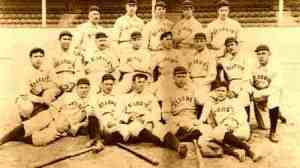
The 1899 St. Louis Perfectos

The 1899 St. Louis Perfectos

The behavior of fans was of equal concern:

“Rowdyism has come in along with commercialism and has finished what interest was left in the game. Quiet, decent people can no longer go to baseball games because of the vulgarity and ruffianism displayed there.”

The Tribune felt current players were of lower moral character than those of the previous generation:

The morals of the players have deteriorated.  They used to try to behave like sportsmen.  They act now like foul-tongued bullies.  When a question comes up for the umpire to settle, the players surround him and blackguard and threaten him.  He is fortunate if he escapes without bruises.  Fair decisions cannot be expected from a man in danger of being mobbed.  Occasionally the contending players come to blows and the spectators, who went to see a game of ball, have to witness a game of slugging, garnished with profanity.”

How low had the game gone?

“Baseball has fallen so low that gamblers do not think it is worth paying any attention to.  They have not dropped it because they fancy it is not ‘on the square,’ but because it has become an uninteresting, second-class sport.  It does not interest them now any more than a race between professional bicyclists does.  Baseball has become a recreation of the people whom commercialism, vulgarity, and Rowdyism do not displease.”

The Tribune continued their crusade against the “uninteresting” sport a month later, with an “account of the more disgraceful of the many rows witnessed by spectators of baseball games.”

“The Man who Lives in the Santa Claus House””

23 Dec

Walter Sydney Woods earned his nickname “Sunday School Pitcher” because he never played a game on Sunday throughout his 20-year professional career.

Woods also played lacrosse, football, basketball and tennis and was considered one of the best athletes in New Hampshire when he chose to enter professional baseball with Portland in the New England League in 1895.

In 1897, he won 17 games for the Springfield Ponies in the Eastern League and was drafted by the Chicago Orphans.

When Woods arrived in Chicago, it was assumed he’d give up his pledge not to play on Sunday, but he quickly made it clear that he would quit first.  The Sporting Life said:

“Walter Woods, Chicago’s model man, will not play Sunday ball either at home or on the road.  The conscientious youngster who neither smokes, drinks nor swears, also has scruples against participating in games on the Sabbath. He will thus be a standing reproach to all the other members of the Chicago Club”

Woods pitched and played infield and outfield for Chicago, going 9-13 and hitting only .175.  He was traded to the Louisville Colonels the following season and posted an identical pitching record, although The Sporting Life said in July:

“Walter Woods is an unlucky pitcher.  Though pitching finely he has won but two games out of his last eight.”

Woods went to the Pittsburgh Pirates in 1900 but was released in April.  He spent the next 14 season playing for a variety of teams in the Eastern and New York State Leagues, exclusively as a position player after 1902.

Walter Woods, 1899 Louisville Colonels

Walter Woods, 1899 Louisville Colonels

Woods also coached baseball at the University of New Hampshire from 1897-99 and at Dartmouth from 1912-1915 and played semi-pro football during the winter.  After baseball, he went to work for the US Postal Service.

But to a generation of kids in Portsmouth, New Hampshire, none of that mattered.  At Christmas every year, he was known as “Jolly Wally Woods-the man who lives in the Santa Claus house.”

For about 15 years until his death, kids would line up in front of Woods’ house one day about a week before Christmas and wait for him to appear in an attic window dressed as Santa Claus.  Woods would lower baskets of candy and toys down to the children with a rope, and then on Christmas morning, he was back in the suit with presents for all the neighborhood kids.

Wally Woods

Wally Woods

The “Sunday School Pitcher” died in Portsmouth in 1951.

Lost Advertisements–Cubs, White Sox and Whales Endorse Steele’s Game of Baseball

18 Dec

steeles

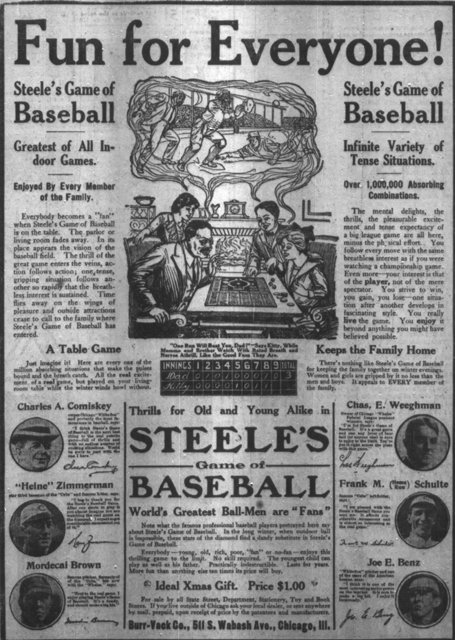
A 1915 advertisement for Steele’s Game of Baseball, a table-top game which claimed to have “Over 1,000,000 absorbing combinations,” and promised that the player would “enjoy it beyond anything you might have believed possible:”

Greatest of All Indoor Games

“Everybody becomes a ‘fan’ when Steele’s Game of Baseball in on the table.  The parlor or living room fades away.  In its place appears the vision of the baseball field.  The thrill of the great game enters the veins, action follows action; one tense, gripping situation follows another so rapidly that the breathless interest is sustained.  Time flies away on the wings of pleasure and outside attractions cease to call to the family where Steele’s Game of Baseball has entered.”

The game was produced by the Burr-Vack Company, a Chicago-based office supply dealer, and received glowing endorsements from members of the city’s three teams:

World’s Greatest Ball-Men are “Fans

Charles A. Comiskey owner Chicago ‘White Sox’ and probably the most famous man in baseball, says: ‘I think Steele’s Game of Baseball is the next best thing to the real outside game–full of thrills and with an endless number of exciting situations.  Would be sorry to part with the one I have.’

“‘Heine’ Zimmerman third baseman of the ‘Cubs’ and famous hitter says: ‘I  beg to thank you for the Steele’s Baseball Game.  After one starts to play it you almost imagine you are watching the real game on the diamond.  I expect to get considerable amusement out of it.’

Mordecai Brown famous pitcher, formerly of the ‘Cubs’ but now with the ‘Whales’ says: ‘Next to the real game, I enjoy playing Steele’s Game of Baseball.It’s a dandy and should make a big hit.’

Chas. E. Weeghman owner of Chicago ‘Whales’ Federal League pennant winners says, ‘I’m for Steele’s Game of Baseball.  It’s a great game and one any lover of baseball (or anyone else) is sure to enjoy to the limit.  You’ve put it right across the plate with this game.’

Frank M. (Home Run) Schulte famous ‘Cubs’ left fielder says: ‘I am pleased with the Steele’s Baseball Game you sent me.  It affords considerable amusement and is almost as interesting as the real game.”

Joe Benz ‘White Sox’ pitcher and one of the stars of the American League, says, ‘I think it is one of the most interesting parlor games on the market.  It is sure to make a big hit. I enjoy it immensely.'”

[…]

“Note what the famous professional baseball players portrayed here say about Steele’s Game of Baseball.  In the long winter, when outdoor ball is impossible, these stars of the diamond find a dandy substitute in Steele’s Game of Baseball.”

Despite the endorsements, the “Ideal Xmas Gift,” which cost one dollar and was “For sale by all State Street, Department, Stationary, Toy, and Book stores,” appears to have quickly disappeared–there are no mentions of the game in newspapers after 1915.

Lost Advertisements–Ty Cobb, Lewis 66 Rye

11 Dec

cobblewis66

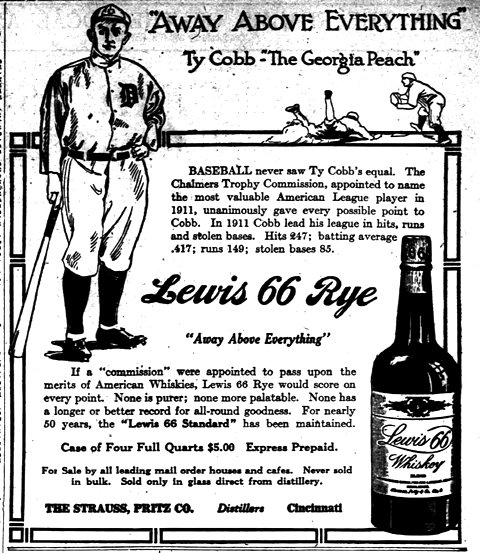
A 1912 advertisement for Lewis 66 Rye Whiskey from The Strauss, Pritz Company, a Cincinnati-based distiller:

“Away Above Everything”

Ty Cobb–‘The Georgia Peach’

“Baseball never saw Ty Cobb‘s equal.  The Chalmers Trophy Commission, appointed to name the most valuable American League player in 1911, unanimously gave every possible point to Cobb (he received all eight first-place votes–the commission consisted on one sportswriter from each league city).  In 1911, Cobb led his league in hits, runs, and stolen bases.  Hits 247; batting average .417; runs 149, stolen bases 85 [sic 248; .420; 147, 83].”

Cobb was presented with a Chalmers “36” at Shibe Park in Philadelphia on October 24, 1911, before game four of the World Series. Jack Ryder, covering the series for The Cincinnati Enquirer said of the presentation:

“President (John T.) Brush of the Giants declined to allow this ceremony at the Polo Grounds, so it was pulled off very quietly here this afternoon…The event took place 10 minutes before the game and was coldly ignored by the Giants though the Athletics took a keen interest in it and several of them had their pictures taken with Cobb. Ty now has three cars, but he says this one is much the best of the lot, and he expects to drive it to his home in Georgia as soon as the series is over.”

Cobb in his Chalmers at Shibe Park

Cobb in his Chalmers at Shibe Park

While Cobb was the unanimous choice of the eight-man commission, the second place finisher in the American League received a more valuable car.

The Chicago Inter Ocean said Chicago White Sox fans, unhappy that pitcher “Big Ed” Walsh finished second to Cobb, “Undertook to raise a fund to purchase an automobile,” for him.

But, said the paper, the fans:

“(F)ound themselves confronted with a dilemma–they had too much money in the fund to buy a duplicate of the Chalmers touring cars presented to Ty Cobb and (National League winner, Chicago Cubs outfielder) Frank Schulte.”

Two days before Cobb received his Chalmers in Philadelphia, Walsh was presented with his car before a charity game at Comiskey Park.

Ed Walsh

Ed Walsh

No Chicago newspaper reported the make and model.  The Daily News called it “A handsome automobile.”  The Inter Ocean said it was “A $4,000 automobile,” and The Tribune said simply that he had received an “(A)utomobile subscribed for by the fandom of the city.”  The Examiner also failed to mention the type of car Walsh received but said the Cubs’ Schulte “gave $25” to the fund.

According to The Tribune, Walsh promised to “‘(L)earn how to run it before spring,’ and the stands cheered loyally.”

“The Duke of Minneapolis”

20 Nov

Martin F. Duck was born in Zanesville, Ohio in 1867.  He played under the name Martin Duke.   As he was becoming a well-known pitcher The Kansas City Times told a story which purported to explain why he changed his name:

 “The real name of the (Minneapolis) Millers’ best pitcher is not Duke, but Duck…Martin was pitching in a game up in Michigan and in the ninth his club led the opposing team by one run. (With two runners on base) a man up in the grandstand began imitating the quack of a duck…as the ‘quack, quack, quack continued his face became lobster-colored.  He shouted to his taunter that he would fix him after the game, but the fiend…went on with his ‘quack, quack, quack’”

At this point, Duck allegedly threw the ball into the stands at his tormentor, allowing both runs to score, “After that he dropped the name Duck entirely.”

By the time that story appeared Martin Duke seemed headed for a productive career.  He went 14-12 with the Zanesville Kickapoos in the Ohio State League in 1887.  In 1888, he again pitched for Zanesville, now in the Tri-State League and for The Toledo Maumees in the same league—no  records survive for that season.

The five-foot, five-inch Duke made a name for himself the following year.  While pitching for the Millers in the Western Association, he posted a 24-16 record and struck out 347 batters in 355 innings, earning the nickname “Duke of Minneapolis.”

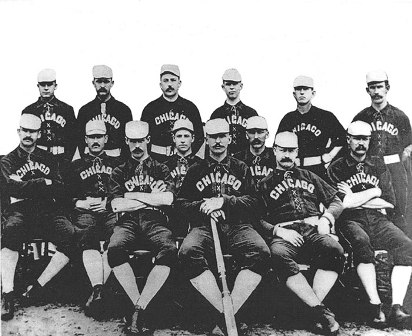
In February of 1890, The Chicago Inter Ocean said Chicago’s Players League team was after the pitcher:  “Captain Comiskey of the Chicago Brotherhood has been on Duke’s trail for weeks, with the result that although Duke has not yet signed a contract we will play with the Chicago Brotherhood club this season.”

If Comiskey was, in fact, on Duke’s trail he never got his man.  Duke returned to Minneapolis, and while statistics for 1890 no longer survive, but the press routinely called him the Millers’ best pitcher.

In 1891, he slipped to 10-11, and in May he was suspended for being, as The Sporting Life said, “Out of condition” (a euphemism for his problem drinking), but earned an August trial with the Washington Statesmen in the American Association.  The Saint Paul Globe said of his departure:

“Martin Duke–the one, the only, the statuesque Duke–has bidden good-bye to the ozone of Minnesota and beer of Minneapolis…Last night he boarded the train, moved his hand in adieu, cocked his hat to one side, closed an eye, uttered a certain familiar expression peculiar to Dukes and disappeared forever.”
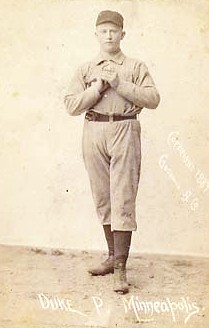
Martin Duke

Duke failed his Major league trial.  In four games, he posted a 0-3 record and walked 19 batters in 23 innings.

Despite his poor debut, he received another opportunity, this one with the Chicago Colts in 1892. When he was signed in January, The Chicago Tribune said:

“Duke’s last season, owing to lax discipline, was not a success, but this season he promises to regain his old form, as he is bound by an ironclad contract to abstain from intoxicating drinks.  By his contract half his salary reverts to the club if he breaks the pledge.  This should keep him straight.”

He received a big buildup in The Chicago Daily News:

“(He) is one of Captain Anson’s new colts, and he not only puts the ball over the home plate with almost the speed of a cannon shot, but he also seems to have a head studded with eyes, for stealing second base when he is in the box is always most hazardous business.  His pitching arm is so strong and shapely and so well equipped with powerful muscles that it would win admiration from a blacksmith.”

Despite the accolades he was released before the beginning of the season, The Tribune said:

“Martin Duke is also down for release. He has shown up poorly so far, and the club cannot use five pitchers anyhow.”

He signed with the New Orleans Pelicans in the Southern Association and seemed to regain his old form posting a 13-3 record.  It was his last successful season.

After getting off to a 2-5 start in 1893 Duke was released by New Orleans, and initially there were no takers for his services.  The Milwaukee Journal said why:

“Martin was always a good pitcher, but his mouth and his temper were too great a load for any team to carry any length of time.”

Duke bounced around the minor leagues after that with short stints for teams in the Eastern League, Southern Association and Western League until 1895, when he returned again to Minneapolis.  But after 13 games with the Millers, he injured his arm and was released in June.  According to The St. Paul Globe, he injured the arm again in August; rupturing a tendon while pitching for a semi-pro team in Rosemount, Minnesota.

In 1897, The Sporting Life reported that Duke, employed in a Minneapolis tavern, was “Trying to get in shape” in order to return to the diamond that season, but he never played professional ball again.

Duke died from pneumonia on December 31, 1898, in Minneapolis.  The Sporting Life said:

“He possessed great ability as a pitcher, but never lasted long with any club, as he was a hard man to control, and was given to dissipation, which ultimately led to enforced retirement from the profession and untimely death.”

Duke was 31 years-old.

A shorter version of this post appeared in October 2012

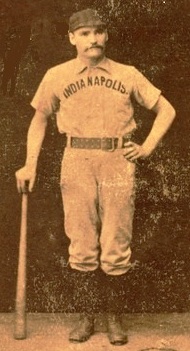
Tug Arundel

16 Nov

Twenty-one years before catcher Gabby Street caught a baseball dropped. From the Washington Monument, another catcher attempted it with less success.

When news of Street’s feat was reported in 1908, Oliver Romeo Johnson, who had been a sportswriter for The Indianapolis News in 1887, recalled the circumstances:

“On one of our eastern trips we followed the Chicagos in Washington, and while there the catching of a ball dropped from the monument was much talked of, because one of the Chicago players was said to have done it a few days before.  My impression is that it was (Cap) Anson himself, although it might have been Silver Flint.

“One of our team, John Thomas ‘Tug’ Arundel, a catcher, said it was ‘dead easy’ to catch a ball dropped from the monument, and a bet was made on it.  A crowd of us went out to see the attempt.  Arundel wore catcher’s gloves—which were not so thick as they now are—on both hands and put layers of cotton under them. He tried eight or ten times to catch the ball…but failed every time, and after he had battered up his hands so he could not play for some days he gave it up.”

Tug Arundel

Tug Arundel

Several days after Johnson’s recollection appeared in The News, Horace Fogel, who had been Arundel’s manager with the Hoosiers and dropped the balls from the monument, weighed in.  Fogel, then sports editor of The Philadelphia Telegraph, disputed the claim that Anson or Flint had caught a ball and said of his catcher’s attempt:

“Arundel, if I remember alright, only succeeded in getting his hands on one ball and it almost tore them off at the wrists. Tug explained afterward that he had not figured on ‘A ball weighing a ton coming from that distance.’ The other balls, a dozen or more, I tossed out to him, Arundel missed, some by fifty feet, he misjudged them that badly.”

Horace Fogel

Horace Fogel

Bad judgment was a staple of Arundel’s career which was marred by arrests for drinking and fighting.    He appeared in just 76 major league games over four seasons from 1882 to 1888 and played for at least 16 different professional clubs during his 10 seasons in professional ball, often quickly wearing out his welcome.

The Memphis Appeal said he was:

“(T)he handsomest player in the profession, who would sooner fight than eat.”

The Washington Critic summed up the opinion many had of Arundel when he was acquired by the Nationals in 1888:

“’Tug’ Arundel has been secured by the Washington management, as last week’s reports indicated he would be.  He is not popular here.  However, it is to be hoped that Manager (Ted) Sullivan can keep him muzzled.”

After his release, when it was rumored he might join the Detroit wolverines, The Detroit Free Press told readers:

“Detroit wouldn’t have Tug Arundel under any circumstances.”

After every incident, Arundel pledged to change his ways.

After an 1887 drunken melee in Indianapolis, which resulted in the arrests of Arundel along with teammates Jerry Denny and John (Patsy) Cahill, he told The Indianapolis News he took “a total abstinence pledge for six months.”

In the spring of 1889, he was arrested in his hometown, Auburn, New York twice. First for assaulting a police officer and then for a bar fight with another former major leaguer, and Auburn native, Mike MansellThe Auburn Bulletin said Arundel “Got the worst of it.” A month after the fight, The Sporting Life said Arundel “writes he is in fine shape and looking for an engagement.”

In 1890, the 28-year-old Arundel was nearing the end of the line.  He signed with the Saginaw-Bay City (Michigan) club in the International Association and told The Detroit Free Press that he was serious about sobriety this time:

“I lost splendid situations and almost ruined my reputation through liquor, but, sir, I realize the baneful effects of over-indulgence in intoxicating liquors and I have resolved never to touch another drop.  I have kept aloof from it for the past three months and am now in as good condition as I ever was in my life.”

It is unclear whether, or for how long, Arundel kept his last public pledge.  He appeared to have played fairly well behind the plate for Saginaw-Bay City.  Although he hit just .152, The Free Press, which three years earlier assured readers that Arundel was not wanted on the city’s National League club, was pleased when he signed with the Detroit Wolverines of the Northwestern League:

“(Arundel) has faced the greatest pitchers on the field and held them all.  Arundel is a good trainer for young ones, and did good work while with the Hyphens in 1890.”

Whether because of drinking or injuries (The Free Press and The Detroit News said he suffered from “Split fingers” several times throughout the season) Arundel was finished after the 1891 season, at age 29.

Arundel returned to Auburn and was eventually committed to the Willard State Hospital for the Chronic Insane in New York where he died in 1912.

“The Phillies were Somewhat Crippled by the absence of Roy Thomas”

14 Sep

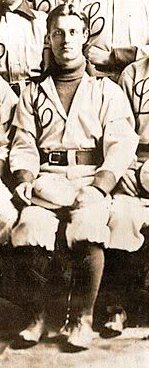
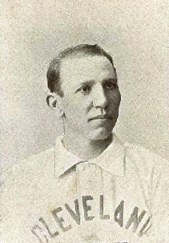
Charles “Chief” Zimmer was acquired by the Philadelphia Phillies to play for and manage the team in 1903; it was assumed he couldn’t do worse than Bill Shettsline who led the team to a 56-81 record the previous season.  He did.

Unlike nearly every other “Chief” in 19th Century baseball, Zimmer had no Native American blood and various stories have circulated as to the origin of the nickname.  His 1949 obituary said:

“In 1886 he joined Poughkeepsie as captain and manager…”since we were fleet of foot we were called Indians.  As I was the head man of the Indians somebody began to call me “Chief.”  It stuck.”

The Pittsburgh Press said in 1904:

“Zimmer received his sobriquet as ‘Chief’ because of his facial resemblance to an Indian, although he is a German.”

Zimmer was one of the best catchers in baseball for more than a decade.  He had brief trials in the National League with the Detroit Wolverines and American Association with the New York Metropolitans from 1884 and 1886, and was playing for the Rochester Maroons in the International Association in 1887 when his contract was purchased for $500 by the Cleveland Blues of the American Association.

zimmer

Chief Zimmer

Zimmer was the starting catcher for the Blues when the team moved to the National League and became the Cleveland Spiders in 1889, and remained in Cleveland until 1899.  In 1890, he caught 111 straight games; which was the Major League record for 19 years.

By January of 1903 the 43-year-old’s best days were behind when Philadelphia acquired him on waivers from the Pittsburgh Pirates and named Zimmer manager.

After a 2-2 start, the Phillies never saw .500 again and Zimmer quickly lost control of his team.

The team went into June with an 11-26 record.  Things got worse that month in Cincinnati when Zimmer put the team’s captain,  centerfielder and leadoff man Roy Thomas into the lineup–Thomas was  a devout Christian who did not want to play on Sundays.  The Philadelphia Record said:

“Manager Zimmer had some trouble getting Roy Thomas to play in the Sunday game, he claiming that he had not contracted to play on Sunday, and that he had no desire to break the Sabbath.  In the end, however, Zimmer prevailed and Thomas went into the game.”

The Philadelphia Times said Zimmer talked to the team’s new owner, James Potter, who was reported to have said:

“So he won’t play today, eh?  Well, then place him on the bench today, tomorrow and for the remainder of the season, without pay.”

Thomas relented, but told reporters before the game::

“I’m playing under protest.  There’s nothing in my contract that exempts me from playing on Sunday, but when I signed it I had no idea that the Philadelphia Club would change hands and abandon old precepts.”

The following Sunday, with the Phillies in Chicago, The Associated Press (AP) said:

“Thomas made his protest doubly strong and backed it up by staying out of uniform that day.”

After Philadelphia’s 4 to 2 loss, The Chicago Tribune said:

“The Phillies were somewhat crippled by the absence of Roy Thomas who does not like the new ownership of the club, because it believes in Sunday games. which Roy does not.”

As a result The AP said,  other players on the slumping team suddenly found religion.

“Now several other members of the team declare that they are as much opposed to playing baseball on Sunday as is Thomas and that their religious scruples are just as strong as his.”

The article quoted an unnamed member of the Phillies:

“(I)f the club insists on showing partiality to Thomas the others who also object to playing on Sunday, but who are willing to help out the club, will insist on the same privileges.”

Zimmer faced a full-blown revolt as they prepared to embark on a 19 game road trip:

“All of which portends a pleasant trip in the West for Zimmer when he starts out again.”

The Philadelphia papers did not continue to pursue the story during the Phillies’ 4-15  road trip, but it seems that for the remainder of 1903 Thomas backed off of his demand as he appears in box scores for several Sunday games in the final three months of the season.

Roy Thomas

Roy Thomas

The Phillies limped to a 49-86 seventh place finish, seven less victories than the previous season under Shettsline.  Zimmer was dismissed at the end of the season and was replaced by Hugh Duffy.

Thomas’ Sunday request was granted the following season, with manager Duffy making most of his appearances as a player in 1904 on Sundays when his centerfielder took the day off.  There is no record of teammates complaining about Thomas’ Sunday schedule under Duffy’s management.

Regardless of the team’s new-found harmony, the Phillies under Duffy finished 52-100.  Potter sold the team after the 1904 season to Bill Shettsline.

A shorter version of this story was posted 12-18-2012.