Tag Archives: New York Giants

“Father of Sunday Ball”

22 Jan

After becoming president of the Waco Tigers in the Texas League, Henry Fabian allowed himself to be arrested in order to challenge a law that was costing Texas League owners money: The blue law that didn’t allow them to play games on Sunday.

The state statute forbade “Sunday amusements” that charged admission.  Texas League teams had lost money in each previous incarnation of the league and the inability to schedule games on Sunday was a contributing factor.

Whether challenging the law was part of Fabian’s plan from the beginning is unknown, but by June his Tigers had played three Sunday home games, and three times Fabian was arrested for violating the statute, posting $60 bond on each occasion.

After being found guilty at the local level Fabian challenged the statute in Texas’ Court of Criminal appeals, arguing that the law was passed before baseball became a professional sport and did not apply to the game.  The court ruled in Fabian’s favor, and while local ordinances still prevented Sunday games in Dallas, Sunday baseball became the norm in the Texas League. In his obituary, 35 years later, The Dallas Morning News’ headline called Fabian “Father of Sunday Ball.”

Fabian sold the Waco club to local businessmen in 1906 and took a job with a sporting goods company, but it was his interest in ballpark design and grounds keeping that would become his vocation.

Fabian participated in the layout and design of several local ballparks in Texas from 1888-1910, and was credited with creating the first “ Turtle-back diamond” at Oak Cliff Park, the Dallas Hams’ home field in 1888.  The pitched design and elevated pitcher’s mound allowed for quick drainage.

By 1910 Fabian had designed diamonds in Dallas, Waco, Galveston, New Orleans and Atlanta, when he was hired as head groundskeeper for the Saint Louis Browns.  He stayed with the Browns for three seasons until his old friend John McGraw hired him to be the groundskeeper for the New York Giants

By 1915 The Sporting Life said:

“Visiting ballplayers declare that the diamond Henry Fabian has built up at the Polo Grounds is the best in the country.”

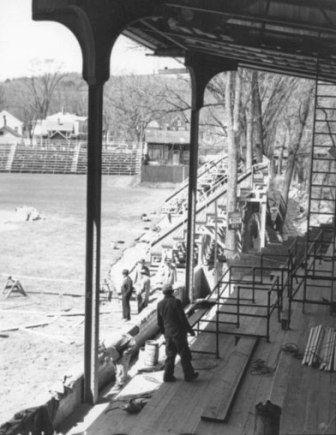
Fabian was considered the premier groundskeeper in baseball for the next 25 years and in 1939 he was put in charge of the Works Progress Administration’s (WPA) project to prepare Doubleday Field in Cooperstown for baseball’s centennial celebration.

Doubleday Field renovation, 1939

Doubleday Field renovation, 1939

Fabian died the following year on February 25, six years to the day after the death of his friend John McGraw.

“Hanlon Springs a Surprise on the Baseball Public”

14 Jan

Albert Joseph “Smiling Al” Maul’s best days seemed well behind him by 1898.  The 32-year-old Maul had posted a 16-12 record for the Pittsburgh Burghers in the Players League in 1890, but after returning to the National League the following season he had gone 39-44 through 1897.

Baltimore Orioles manager Ned Hanlon signed Maul after he was released by the Washington Senators in 1897.  The results were not good; in two games Maul gave up 9 hits and walked 8, posting a 7.04 ERA.  Baltimore released him at the end of the season and there were no takers for Maul at the beginning of 1898.

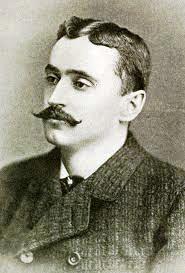
Ned Hanlon

Ned Hanlon

By June of 1898 The Baltimore Morning Herald said:

“For some time (Hanlon) has been hinting to his friends that he had something up his sleeve in the way of twirling talent that would surprise the natives, but when he let fall Al Maul’s name he was met with a chorus of merry ha-has.”

But by June Hanlon’s “surprise” was no longer met with laughter.

On June 5, The Sunday Herald headline said:

“Hanlon springs a surprise on the baseball world.”

Maul had shut out the Saint Louis Browns on three hits in his first start for Baltimore.

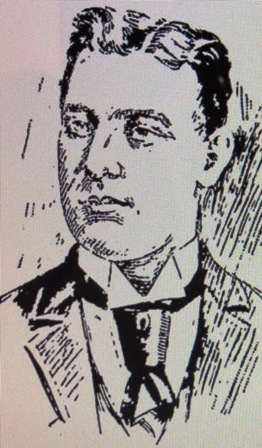
Al Maul

Al Maul

The Herald cautioned that “it’s too early to say that Maul is all right,” but all season he successfully filled the gap in Baltimore’s rotation caused by Joe Corbett’s holdout.

The New York World said Maul was:

“The most remarkable case on record of a restored glass arm.”

Maul’s comeback season became a sensation.  John Clarkson, who had not appeared in a game since 1894, told The Bay City (MI) Tribune he was serious about making his own comeback:

“I might be a second Al Maul, who can tell?”

Clarkson’s comeback never materialized, but Maul’s success continued all summer.

The Sporting Life credited Hanlon for his pitcher’s success:

“Al Maul’s experience this season is only another confirmation of the claim that Ned Hanlon can take any old thing and get good results from, it for a year or so.”

Maul finished the season with a 20-7 record and a 2.10 ERA, and Hanlon had high hopes for his pitcher the next season.  Maul, along with “Wee Willie” Keeler, Hughie Jennings and Joe Kelley moved to the Brooklyn Superbas as part of the stock swap between the Baltimore and Brooklyn franchises that led to Hanlon’s move to Brooklyn.

But the pitcher who won 20 games two years after his career was “over” was out of surprises.  After four games with Brooklyn in 1898, Hanlon released Maul.  Brief stints with the Philadelphia Phillies and New York Giants failed to rekindle the magic and Maul’s career came to an end after his release by the Giants in September of 1901.

Maul went on to coach baseball at Lehigh University and scouted for several years for the Philadelphia Athletics.  He died in 1958 at age 92.

“Big, Good-Hearted and Foolish”

9 Jan

Almost immediately there was trouble for manager John McGraw after the New York Giants acquired Larry McLean from the St. Louis Cardinals, August 6, 1913—it was one of the few times in his career when the trouble wasn’t McLean’s fault.

With Chief Meyers hurt McGraw needed a catcher and traded the popular Doc Crandall to the Cardinals for McLean.  The day after the trade The Cincinnati Commercial Tribune reported that McGraw had “exchanged fisticuffs” with five of his players:

“Crandall was very popular among the club members, and there was much bitterness felt at his loss…The players passed hot words (at McGraw), and several blows were struck.”

McGraw was left with a bloody nose from the fight, and less than two weeks later reacquired Crandall from St. Louis.

McLean thrived in New York, a United Press story said:

“The big lad has been slamming the horsehide at a terrific gait, and has been displaying wonderful form behind the plate…Larry is said to be behaving himself better than he ever has since joining the big show.”

McLean hit .320 for the pennant-winning Giants and went 6 for 12 in their World Series loss to the Philadelphia Athletics.  He earned the praise of McGraw and despite diminishing skills, remained a model citizen for all of 1914 and part of 1915.

That all changed in June of 1915.  McLean had a clause in his contract which would have earned him an additional $1000 if he did not drink during the season.  McGraw’s right-hand man, scout Richard “Sinister Dick” Kinsella, had accused McLean of drunkenness and as a result was suspended for 10 days by McGraw.
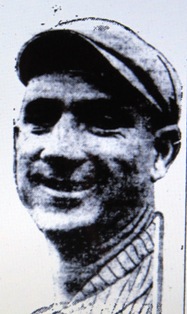
Larry McLean, 1915

Larry McLean, 1915

In the lobby of the Buckingham Hotel in St. Louis, McLean accused Kinsella of making up the charge that he’d been drinking in order to cheat him out of the promised bonus.  Words were exchanged and then a fight broke out.  There was the McGraw-Kinsella version and the McLean version.

McGraw and Kinsella said McLean was carrying a length of gas pipe, and “came into the lobby with a number of rough companions.”

Kinsella’s version was as colorful as it was questionable:

“I picked up a chair and broke it over McLean’s head.  That frightened his gang of ruffians and they fled.  McLean continued to fight until McGraw and I chased him into the street, where he jumped into an automobile filled with women and begged for protection.”

McLean told reporters “I whipped McGraw and all of his associates with my two fists, I did not use a gas pipe, and he “exhibited his bruised right hand as evidence.”

McLean was finished with the Giants.

In March of 1916 The Associated Press reported that McLean had purchased the New Haven Murlins of the Eastern League and said “Larry will manage the club and catch.”  Either the report was erroneous or the deal fell through.  McLean never again played professional baseball and spent 1916 playing with semi-pro teams in New York.

Before the 1917 season baseball writer Ren Mulford reported that McLean might be signed by the Reds:

 Wouldn’t it be odd if Big Larry would come out of the swamp and stick to his spikes into dry ground?  Larry McLean, big, good-hearted and foolish, always his own worst enemy might come back if he willed it so.”

McLean never joined the Reds.

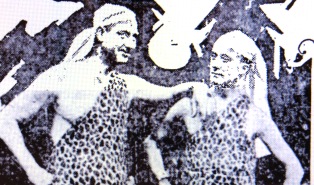
Also in 1917 several newspapers reported that McLean was becoming an actor, The New London (CT) Day said McLean “is now a real moving picture actor,” and included a picture of McLean with another actor “as Egyptian slaves in ‘The Siren,’ a movie soon to be released.”  (The film “The Siren” is described on IMDB as a western—what film, if any McLean actually appeared in is unknown)
Larry McLean, 1915

Larry McLean as an Egyptian slave in a 1917 film

In 1919 McLean was “in serious condition,” in a New York hospital as a result of burns received in a Turkish bath when he lost consciousness after entering a room.  He had been suffering from pneumonia and was in a weakened condition.”

That was the last that was heard of McLean until March 24, 1921.  McLean and a friend named Jack McCarthy were in a bar in Boston’s South End.  The bartender (John Connor) claimed McLean became enraged when he refused to give him cigarettes and threatened to “beat him up:”

 “McLean started to climb the bar to attack him.  McCarthy was helping McLean over the counter when Connor reached for a pistol, and fired… McLean staggered out to the sidewalk where he fell.”

Connor claimed that the previous evening McLean had chased another bartender “up and down the barroom…and forced him to leave to save himself from a beating.

McCarthy was also shot and died in the hospital six days later.  (Some recent sources, such as Bill James in “The New Bill James Historical Baseball Abstract” erroneously identify McCarthy as John Arthur “Jack” McCarthy, a former Major League player.  The McCarthy who was shot with McLean was John F. McCarthy.  Incidentally, John Arthur McCarthy is one of a very few Major League players for whom death information is unknown)

Connor was being held without bail at the time of McCarthy’s death and, according to The Boston Post, eventually pleaded guilty to manslaughter and was sentenced to one year in prison.

Larry McLean

8 Jan

At 6’ 5” John Bannerman “Larry” McLean is still the tallest catcher to have played in the Major Leagues nearly a century after his final game.  Born in New Brunswick, Canada, McLean’s ability was mostly overshadowed by his frequent off-field troubles during his career.

McLean bounced between the minor leagues, semi-pro teams, and trials with the Boston Americans, Chicago Cubs and Saint Louis Cardinals from 1901-1904.  McLean joined the Portland Beavers in the Pacific Coast League in 1905 and it was here that he developed into a good ballplayer and a first-rate baseball character.
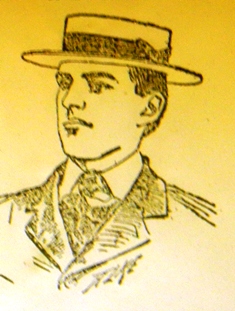
Larry McLean

Larry McLean

McLean hit .285 in 182 games with Portland in 1905, but also started to show signs of the troubles that would plague him for the remainder of his career; Portland added a “temperance clause” to his contract and McLean, who had originally planned on a boxing career, loved to fight.

In 1906, while hitting .355 for Portland, and catching the eye of the Cincinnati Reds who would purchase his contract in August; McLean announced that he was going to become a professional fighter.

The wire report which ran in The Bakersfield Daily Californian said:

“McLean the giant catcher of the Portland team…He is so big that umpires walk out behind the pitcher so they judge balls and strikes…announces that he will fight any man in the world, Big Jeff (Jim Jeffries) not barred.”

The story said McLean was training with Tom Corbett (older brother of “Gentleman Jim” Corbett) and Corbett said he “has a ‘sure ‘nuff’ champion in the big catcher.”

Talk of a ring career temporarily ended when McLean joined the Reds, but McLean’s legend grew.  In November of 1906, he caught a murderer while in a subway station with his wife.  The Boston Post said the suspect:

“Was seen to pull a gun and pump five bullets (into the victim)…Larry started after him and collard him just outside the entrance.  (McLean had the suspect) pinioned so he could not move.  The police soon arrived and took charge of McLean’s prisoner.”

McLean was a huge hit with Havana fans the following winter when the Reds touring Cuba; The Sporting Life said:

“Larry McLean was the favorite and every time he caught a ball the crowd applauded. McLean has been dubbed by the baseball fans ‘Chiquito.’”

McLean and Chicago White Sox pitcher Frank Smith were mentioned at various times as possible opponents for heavyweight champion Jack Johnson; boxing writer Tommy Clark said in 1910 that McLean “Thinks he has a good chance of lowering Johnson’s colors.”

But while McLean was a fan favorite he regularly ran afoul of Cincinnati management and none of the managers he played for was able to keep him out of trouble.

While with the Reds McLean was arrested at least four times–for disorderly conduct, passing a bad check and two assaults.  In one case, at the Savoy Hotel in Cincinnati, McLean knocked a newspaper man from Toledo unconscious after the man “Reproved McLean for using a vile name.”

While serving a suspension for breaking team rules in 1910 McLean Said:

“When I get back to Cincinnati there will be 25,000 fans at the depot waiting to shake hands with me.”

Frank Bancroft, Reds secretary and former manager said in response:

“Twenty-five thousand, why, they’ve not that many barkeepers in Cincinnati”

McLean had worn out his welcome by 1910, but Cincinnati was not able to find any takers for the catcher.  Pittsburgh Pirates owner Barney Dreyfuss said, “I wouldn’t give 30 cents for Larry McLean.”

McLean stayed with the Reds for two more seasons, but when Joe Tinker took over the team one of his first moves was to sell McLean to the Saint Louis Cardinals in January of 1913.  McLean said he had finally learned his lesson and promised to behave with the Cardinals:
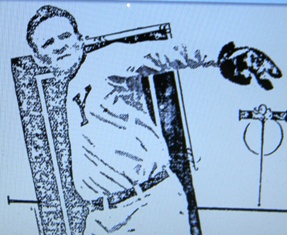
“They didn’t want me around because they said I was a bum. Now I’m going to fool Tinker.”

McLean did behave himself in Saint Louis and seemed to appreciate the opportunity he was given by his former Reds teammate, manager Miller Huggins, even earning a “good behavior” incentive in his contract, and was hitting .270 for the Cardinals, but the cash-strapped team went with the younger, cheaper Ivey Wingo behind the plate and traded McLean to the New York Giants for Pitcher Doc Crandall.

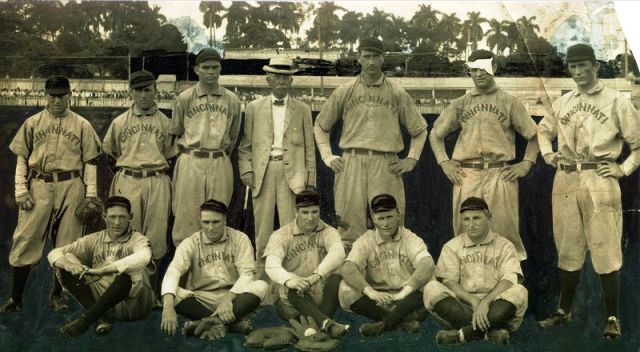
Larry McLean, standing end right, Miller Huggins, standing end left, and Frank Bancroft, standing middle (in suit) on the 1908 Cuban tour.

Larry McLean, standing 5th from left, Miller Huggins, standing end left, and Frank Bancroft, standing middle (in suit) on the 1908 Cuban tour.

The rest of the McLean story tomorrow.

“Bugs” and Trains

28 Dec

Arthur “Bugs” Raymond was one of the most talented pitchers to end his career with a sub .500 (45-57) record.  Known more for his drinking problems and erratic behavior, Raymond was dead by 30.

John McGraw, the only manager who even for a short time, managed to get the best out Raymond, told sportswriter Grantland Rice that he had the best motion he’d ever seen and “Even half sober Raymond would have been one of the greatest.”

Rube Waddell, whose eccentricities were the standard by which all players of his era were judged, weighed in about Raymond, saying about Bugs something he could have said about himself:

“It’s a shame that fellow doesn’t take care of himself.  He would be a wonder if he would just keep in condition and pay strict attention to business.”

Bugs Raymond

Bugs Raymond

While Waddell was fascinated with fire and on many occasions assisted fire fighters (although there is no evidence supporting the long-held myth that Waddell left the mound during a game to follow a fire wagon), Raymond was enamored of trains.

According to the Hall of Fame sportswriter Hugh Fullerton III Raymond loved trains:

“The moment he enters a sleeping car he begins to take possession of the train and it isn’t long until he’s captured it.  Usually he begins by borrowing a blue coat with brass buttons and a uniform cap from some trainman or porter who admires baseball players, and arrayed in these he saunters through the train trying to collect fares, issuing orders and generally enjoying himself.”

Fullerton wrote about a 1907 road trip:

“(R)ushing through the darkness in two sections.   The St. Louis Cardinals were traveling in the rear car of the first section and the other section was following five minutes behind.  Suddenly there was a jarring of the brakes, the shrilling of air, the jar of sudden stoppage, and the second section jolted to a sudden standstill shaking sleepers out of their berths and awaking everybody.”

According to Fullerton the sudden stoppage and near accident of the following train was explained in the report issued several days later by the railroad:

“Raymond, who was looking for amusement, had stationed himself on the rear platform of the first section and amused himself touching off the red flare which is carried for use as a warning s and danger signals…the second section saw the warning and stopped.”

Hugh Fullerton

Hugh Fullerton


McGraw’s Maxims

4 Dec

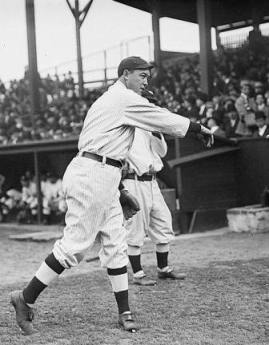
While the New York Giants were training in Marlin Springs, Texas before the 1912 season, John McGraw wrote (his name appeared on the byline) an article published in newspapers across the country about what it took “to become a big league ballplayer.”

John McGraw, 1912

John McGraw, 1912

McGraw wrote:

“If you have speed in your legs, in your arms, if you are physically strong, know human nature, don’t use tobacco, you’ll make a ballplayer.”

Included in the article were “McGraw’s Maxims:”

Forget what you know and learn over

Don’t drink

Eat two meals a day

Don’t drink water on the field

The less training in winter the better

Indoor training doesn’t help

A steady player is better than a grandstand player

A country boy is better material than a college boy, because he doesn’t think he knows it all.

Reminiscent, if less colorful, than Satchel Paige’s “How to Keep Young,” written forty years later, (this has been reprinted everywhere for years, but any excuse to mention Satchel Paige…)

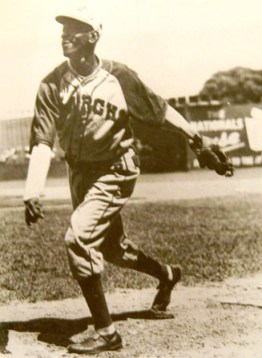
Satchel Paige, 1942

Satchel Paige, 1942

Avoid fried meats which angry up the blood.

If you stomach disputes you, lie down and pacify it with cool thoughts.

Keep the juices flowing by jangling around gently as you move.

Go very light on the vices, such as carrying on in society. The social ramble ain’t restful.

Avoid running at all times.

Don’t look back. Something might be gaining on you.

“A Vain and Foolish Kick”

23 Nov

The Brooklyn Bridegrooms won the 1890 National League Championship by 6 ½ games over the Chicago Colts behind pitcher Tom Lovett who posted a 30-11 record.

Just three years earlier there was speculation that Lovett’s career might be over due to overwork.

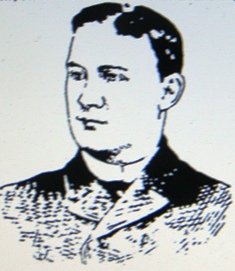
Tom Lovett, 1890

Born in Providence, Rhode Island in 1863, Lovett began his professional career with Waterbury in the Connecticut State League in 1884.  He appeared in 16 games for Philadelphia Athletics in the American Association in 1885 and was in the New England League with the Lynn/Newburyport Clamdiggers.

In 1887 he signed with the Bridgeport Giants in the Eastern League and dominated the league in May and early June.  Despite getting off to a fast start (the team was 20-5 in May), Bridgeport was suffering a decline in attendance and the franchise was in trouble.

At the same time community leaders in Oshkosh, Wisconsin were determined to win the Northwest League championship, and they put enough money together to offer to purchase Lovett who was 21-3, as well as Tug Wilson, Bridgeport’s catcher and leading hitter, and shortstop Dan Shannon, the Eastern League’s leading base stealer.

Lovett was 20-2 for Oshkosh (40-7 for the season) and they easily won the championship, but he did not pitch during the season’s closing days; The Sporting Life reported that “Lovett is said to be lame in the arm.”

Despite speculation well into the next spring that his arm was permanently “lamed,” Lovett recovered and posted a 30-14 season in 1888 with Omaha in the Western Association.   In the fall of 1888 he was purchased by Brooklyn, then in the American Association.

Lovett was 17-10 in his first season with Brooklyn, and followed that with his pennant-winning performance in 1890.  He then dropped to 23-19 in 1891 as the team fell to 6th place; Lovett threw a 4-0 no-hitter in June against the New York Giants.

After the 1891 season Brooklyn attempted to cut his salary to $2800 (various sources say he either earned $3000 or $3500 in 1891).  Lovett demanded $3500 and turned down a compromise offer of $3200.

He said he could earn more money operating his tavern in Providence and chose to sit out the 1892 season.

The Sporting Life called it, “A vain and foolish kick against salary reduction.”

In this case the critics might have been correct.  The Lovett-less Grooms improved from 61-76 in 1891 to 95-59 in 1892.

Hat in hand, he returned to Brooklyn for the 1893 season signing for $2400.

Lovett pitched in only 14 games and had a 3-5 record before hurting his arm again.  The following season he pitched for the Boston Beaneaters until he was released in July.  His Major League career over, Lovett finished 1894 in the Eastern League with the Providence Clamdiggers and spent 1895 with the renamed Providence Grays in the same league.

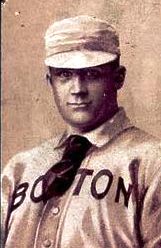
Lovett, with Boston 1894

Lovett, most likely baseball’s first true hold out, spent the rest of his life in Providence and died in 1928.

Lost Team Photos

19 Nov

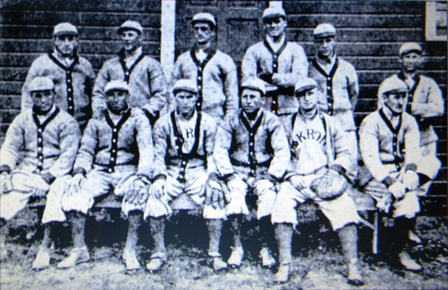
Another photo I’ve never seen published before, the 1908 Akron Champs, Ohio-Pennsylvania League Pennant Winners.

Top left to right:

Dick Breen—a minor leaguer for 12 seasons, his career overlapped with another career minor leaguer named Dick Breen—this Breen’s career came to an end in 1917, when while playing for the Reading Pretzels in the New York State League he got in a fight with Wilkes-Barre Barons  manager Jack “Red” Calhoun.  Both men were suspended indefinitely; Breen was released several days later, neither ever appeared in organized ball after that season.

Bill Speas—longtime minor league player and manager, Speas hit.284 in 22 seasons and won three Mississippi Valley League pennants as a player/manager with the Cedar Rapids Bunnies and Dubuque Dubs.

John Brackenridge—appeared in seven games for the Philadelphia Phillies in 1904, Brackenridge pitched in the Pacific Coast League from 1909-1913.

Fred “Buff” Ehman—a 6’ 4” (some sources list him an inch shorter) right-handed pitcher, the enigmatic Ehman was 81-36 for Akron from 1906-08, but according to The Akron Beacon Journal, was known for disappearing for days at a time and “sulking.” He had multiple trials with Major League clubs; according The Mansfield (OH) Daily Shield he never stuck with a team because of “his refusal to exert himself.”  Through 11 minor league seasons he won 214 games.

Wilbur Good—spent parts of 11 seasons in the Major Leagues: Joe Tinker said of him, “He is one of the fastest runners in the National League and still one of the poorest base runners.”

Edward Murphy—a light hitting catcher, Murphy played five seasons in the Ohio-Pennsylvania League.

Bottom left to right:

Bill Kommer—there is no listing for Kommer on any minor league data base.  He was left-handed pitcher who played for many amateur and semi-pro teams in Ohio during the first decade of the 20th Century;  he was released by Akron in July, there is no record of his statistics for the ’08 season.

William Hille—“Silent Bill” was a shortstop who played until 1917 primarily in the Texas and South Atlantic League.

Jim Callahan—his Major League career consisted of one game with the 1902 New York Giants; played three seasons for Akron (1906-08), was reported to have played in the Western League in 1909, but no records exist.

Matt BroderickThe Reading Eagle called him “one of the best shortstops who ever played on a minor league field,” Broderick played two games in the Major Leagues with Brooklyn in 1903—played minor league and amateur baseball for the remainder of the decade while working for Carpenter Steel Works in Reading, PA.

George Texter—one of the first players to sign with the Federal League in 1913, Texter played for the Indianapolis Hoosiers/New Jersey Pepper during the Fed’s two seasons as a Major League (1913-14).  Managed teams throughout the 1920s in the Ohio-Pennsylvania League (no longer recognized by the National Association, the OPL was nonetheless a strong semi-pro/industrial league during that period).

Cecil Armstrong—a dominant right-handed pitcher, first with the Youngstown Ohio Works team in 1905 during his three seasons with Akron (64-33 from 1906-08), Armstrong spent 1909 and 1910 with New Bedford Whalers in the New England League. Armstrong retired to Akron after the 1910 season.

“A Star of the First Magnitude”

8 Nov

Huyler Westervelt was going to be the next big thing.

By January of 1894 the New York Giants had been trying to sign the 24-year-old Westervelt for more than two years.   Considered the best amateur pitcher on the East Coast, he pitched for a number of top teams including the Englewood Field Club, New Jersey Athletic Club, and Orange Athletic Club. Westervelt came from a prominent family in Tenafly, New Jersey and said repeatedly that he’d never play professionally.

Huyler Westervelt, standing second from right, with the Englewood Field Club team circa 1893

When Giants owner E.B. Talcott finally convinced Westervelt to play professionally he simply signed a piece of paper which said:

“I hereby agree to play with the New York Base Ball Club for the season of 1894 at a salary of $1800.”

Westervelt made his debut for the Giants on April 21, losing 4-3 to the Baltimore Orioles; but beat the Boston Beaneaters 5-2 on May 5, holding the defending champions to three hits and earning the fawning praise of New York Sporting Times columnist O.P. Caylor who said Westervelt was:

 “(A) newly discovered jewel who has flashed out in the baseball firmament as a star of the first magnitude.

“(On May 5) young Westervelt became famous, and his name flashed over thousands of miles of wires that night, while next day the whole country was reading about his triumph.”

Westervelt struggled for the remainder of the season; prone to wildness he finished with a 7-10 record and 5.04 ERA, but still figured into the Giants future plans.  He refused to sign a contract for 1895 which reduced his salary to $1500—Westervelt was added to Giants’ reserve list, where he would remain for several years.

Westervelt continued playing for amateur teams in New York and New Jersey, while working for the Overman Bicycle Company, and attempted to get the Giants to trade or release him.  He filed an appeal contending that he never signed a National League contract, only the piece of paper he signed with Talcott, and therefore the Giants had no right to put him on the reserve list.  He lost the appeal.

Huyler Westervelt

There were reports in early 1896 that Baltimore Orioles manager Ned Hanlon was trying to acquire the pitcher, they never panned out.  In April The Sporting Life said Westervelt was done with professional baseball, but later in the year he joined the Derby-Shelton Angels in the Naugatuck Valley League; no statistics survive other than a brief mention of a seemingly less than successful August game against the Torrington Tornadoes, “(Westervelt) received the warm reception of 16 hits.”

Westervelt returned to the amateur leagues, playing well into the first decade of the 20th Century, and went to work as a broker on Wall Street.  He remained on the reserve list of the New York Giants through the 1901 season, prompting The Sporting Life to say:

 “By the way, did you notice that New York still reserves Huyler Westervelt?  That is one of the standing jokes of each season.”

Westervelt made one more appearance in professional baseball; according to Baseball Reference he played 17 games for the Bradford Drillers in the Interstate League in 1905; while he is not listed on the roster of the Utica Pent-Ups in the New York-Penn League in 1905, he appeared in at least one game for that team, losing a 5-4 decision to the Troy Trojans on June 23.

While Westervelt never achieved the stardom Caylor predicted for him, he remained an important figure in amateur baseball circles until his death in 1949 at the age of 80.

Sammy Strang

5 Nov

Samuel Strang Nicklin, “The Dixie Thrush,” was one of baseball’s great renaissance men.

Born in Tennessee in 1876, he was the scion of one of Chattanooga’s most prominent families.  His father John Bailey Nicklin served in the Union Army during the Civil War, moved to Chattanooga in 1866, and served as mayor from 1887-1889.

Sammy Strang

Samuel Nicklin spent one year at the University of Tennessee where he starred on the football and baseball teams. He also had two short stints in professional baseball 1893 and 1896, which included 14 games with the Louisville Colonels in the National League when he was 19.  Late in 1896, he enlisted as a private in the Tennessee Volunteers, served in Spanish-American War and rose to the rank of captain.

After leaving the service, Nicklin signed a contract with Cedar Rapids Bunnies in the Western Association and dropped his last name; he was known as Sammy Strang for the rest of his career.

The Milwaukee Journal said of the name change:

“(Strang) came of a rich southern family with deep prejudices against professional ball.”

This “prejudice” likely had nothing to do with it given that in addition to serving as Chattanooga mayor, the elder Nicklin was active in professional baseball, serving as president of the Southern Association in the 1890s.

A career .269 hitter, Strang was best known for being one of baseball’s first regular pinch-hitters while playing for John McGraw’s New York Giants from 1905 until June of 1908.  According to The Associated Press:

“McGraw noted the regularity with which he hit in pinches.  So he called him a ‘pinch hitter’—and the term stuck.”

During the 1909 season, Strang began coaching the baseball team at West Point.  He retired from baseball after playing from 1908-1910 with the Baltimore Orioles in the Eastern League, to study opera.

Sammy Strang

During his baseball career, Strang was known for writing songs and singing but decided to seriously pursue a music career in 1910.  He traveled to Paris where he trained under Jean De Reszke, one of the greatest male opera stars of the 1890s.

Upon returning from Paris, he chose not to accept an offer to join an opera company and instead returned to West Point, where he continued as coach until 1917.

Strang returned Tennessee shortly before his father’s death in 1919 to manage and take over ownership of the struggling Chattanooga Lookouts in the Southern League.  While the Lookouts did not win a league championship during Strang’s tenure, he was credited with turning the franchise around and sold the team, for which he paid nothing 1919, for a reported $75,000 in 1927, while retaining ownership of the stadium, Andrews Field.

Unfortunately, Strang’s most ambitious plan–to sign Satchel Paige in 1926–never materialized.

According to Larry Tye’s book “Satchel Paige: The Life and Times of an American Legend,”   Strang failed in an attempt to sign Paige for $500 to pitch a game against the Atlanta Crackers. Paige said of the deal:

“I just had to let him paint me white.”

Samuel Strang Nicklin died in Chattanooga in 1932.