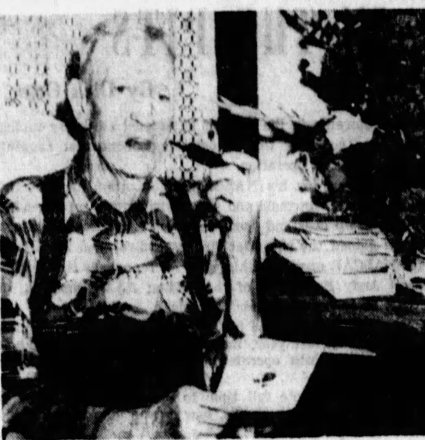
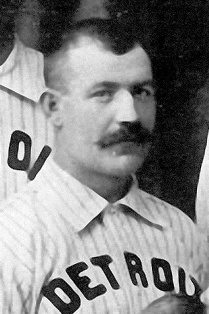
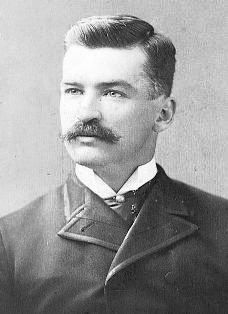
Tag Archives: New York Giants

“The Town seems to be for the Most Part Against the Home Team”

31 Jul

In Early May, on his way to horrible 45-87, 11th place finish in 1894, Washington Senators manager Gus Schmelz told The Washington Star he knew who was to blame:

“This capital of the United States of America is possessed of less pride regarding the national game than any other city in the country. The town seems to be for the most part against the home team, while in every other place the situation is just the reverse.”

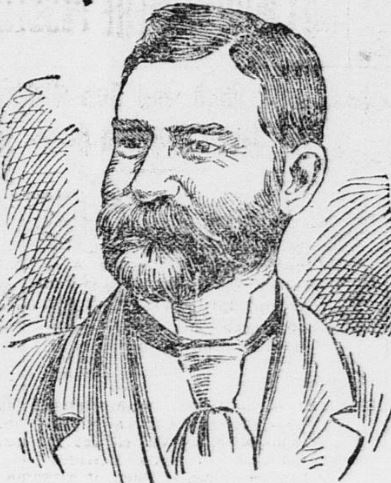
schmelz

Schmelz

Schmelz said it was “hard enough” to build a winning team with “the solid support” of local fans:

“Every man in the profession understands the difficulty of playing in Washington, and it is an undisputed fact that if a good player should be released by a club at the present time, he would prefer signing with any other team in the league than the local one. It is almost impossible for our organization to secure the services of a good man.”

Schmelz said it wasn’t just the fans who were against his club:

“Umpires, as a general rule, in other cities give close decisions in favor of the home club, but here they seem to think they will be backed up for doing otherwise.”

He said the fans were so against his club, that in a game with the Grooms on May 1:

“Another sample of animosity was displayed when the ball rolled under the gate in Tuesday’s game. Somebody opened the gate and aided the Brooklyn player to quickly field the sphere.”

Bill Hassamaer was held to a single on the play; in that same game, with a 2 to 1 lead in sixth inning, umpire Billy Stage called Brooklyn’s Dave Foutz safe on a close play at first—Washington players led by team captain Bill “Scrappy” Joyce and George Tebeau “kicked determinedly”  resulting in a forfeit of the game to Brooklyn.

Schmelz said the fans also had a lack of appreciation for Joyce:

“Washington has been howling for years and years because its ball club has not had a wide-wake captain, but now that it has one who is not afraid to stand up for the interests of the team the cry is on the other side. In my opinion, Joyce has done no more kicking than was justified, and every objection made by him was the result of the most intense provocation.”

scrappybill_kindlephoto-184054893

Scrappy Bill Joyce

And of course, he blamed the press:

“Then there are certain newspaper correspondents, who, after accepting the hospitality of the club, take delight in sending dispatches to their papers utterly false and derogatory to the Washingtons.”

As an example he cited a story The Star carried in April when The New York Giants were in town; Schmelz said it “contained not a word of truth” and was “meant to injure” Senators owner J. Earl Wagner:

“There are some close-fisted people in every line of business. If all reports are true, the baseball profession has a few in the vicinity of the capital city. When manager (John Montgomery) Ward took his men out to the Washington Park the other morning for practice that President Wagner telegraphed from Philadelphia telling them they could not use the Washington grounds. This is very mean treatment, especially as the New York club gave Wagner $7,500 a few weeks ago for a $750 battery.”


Wagner, like Schmelz, denied the story. The “$750 battery” was Jouett Meekin and Duke Farrell—sent to New York in February for Jack McMahon, Charlie Petty, and $7,500.

While not presenting an alternate scenario, Schmelz said when the newspapers reported that Joyce and other Washington players “dared Mr. Stage” to award the forfeited game to Brooklyn that idea “originated in the mind” of a  writer.

He also had a problem with the way The Star  was “abusing the management” of the Senators when they did not provide refunds for the 1,700 fans at the forfeited game:

“(O)ur men were on the field and ready and anxious to continue play. Those people (in the press) do more to injure the sport than anything else I know of.”

Schmelz had a final message for the fans:

“We are using every endeavor to give Washington a winning ball club, but that will be impossible unless we receive the same loyal support from the patrons that is such a prominent feature elsewhere and is so utterly lacking here.”

The Senators finished 45-87 in 1894; Schmelz managed the team until June 7, 1897, Washington was 155-270 during his tenure.

“The “$750-dollar battery” were probably worth their actual $7,500 price tag. Farrell appeared in 116 games, hit .287 and drove in 70 runs, and Meekin was 33-9 with a 3.70 ERA for the second place Giants.

“I was in Sort of a Trembling Condition”

19 Jul

When George Van Haltren joined the Chicago White Stockings as a pitcher in June of 1887, California newspapers followed his progress closely.

After a disastrous first start on June 27, Van Haltren was used in relief and in right field until July 5, when he started for Chicago against the New York Giants.

vanh

Van Haltren

The Chicago Tribune said that likely “not one of each hundred of the 7000” fans in attendance thought the White Stockings would win with the rookie on the mound:

“(T)here were many who feared that the Giants would ‘get into’ the young man and hammer out a victory.”

Van Haltren beat the Giants 15-3, allowing just one earned run in the ninth inning when he experienced a bout of the wildness that plagued his first start, and walked three batters.

The Sacramento Daily Record-Union sent a reporter to Chicago who provided West Coast fans with the first interview of “The California Wonder” since he headed East:

“George Van Haltren, hot, tired, and dusty, but with a most excusable look of triumph on his face, walked into the White Stockings clubhouse at close of today’s ‘toying’ with the New York Giants and seated himself in a chair. The crowning test of his ability as a pitcher had come and been triumphantly met.”

The reporter asked “the well-tried young pitcher,” about to embark on his first road trip with the club, how he was being accepted in Chicago:

“I’ve been treated like a prince and feel sorry that we are going away even for three weeks. Talk about Southern hospitality, if it’s anything better than what I’ve experienced here, I want to go South.”

Van Haltren was asked to compare baseball on the West Coast to the National League:

“Oh, players are very much more finished, of course, and in some respects the game is almost a new one to me. There is fielding, for instance; why, if my old partners in San Francisco could see the way the ball comes into the diamond from the field in Chicago, it would make their hair stand on end.”

But, said Van Haltren, he wasn’t necessarily having a harder time in Chicago:

“On the contrary, I’ve been most agreeably surprised in that respect. You see, there I was almost expected to strike three out of every five men who faced me, and when I came here, of course, I expected that against famous sluggers of the National League I should have to get down to just so much harder playing. Shortly after my arrival here, however, Captain Anson told me that I was not expected to do anything of the sort. There are outfielders in the Chicago nine, he said, and it was part of their business to look after balls that were knocked into the field. All I was expected to do was play good ball, and if batsmen knocked me hard, men on the outside of the diamond were to attend to the rest.”

He said he was treated well by his teammates:

“I was a stranger, and they took me in and treated me in such a way that now I feel perfectly at home. They are gentlemen from way back, and I would not ask for better company.”

Anson then interjected:

“The satisfaction is mutual my boy, and don’t let it slip your memory.”

Van Haltren was then asked about his disastrous first start—after four strong innings, the rookie walked 14 batter and hit four, although most sources said umpire Herm Doescher did the pitcher no favors:

 “Well, that was a bitter dose. When I went on the ground that day my heart was in my throat and stayed there until I had struck out the first Boston batsman to face me (Joe Hornung), the it went down nearer its natural place, but all through the game I was in sort of a trembling condition. It might not have been so bad if Doescher had given me a fair show.”

He said by the end of the game:

“I wished that I had never come East of the Rocky Mountains. That was an awful roast.

‘”Should say it was,’ growled big Edward Williamson, the Chicago shortstop, who was gravely killing flies on the wall, smashing them with his baseball pants. ‘It is a wonder the colt didn’t break down entirely,’ and the speaker made a vicious lunge at an unusually big bluebottle fly.”

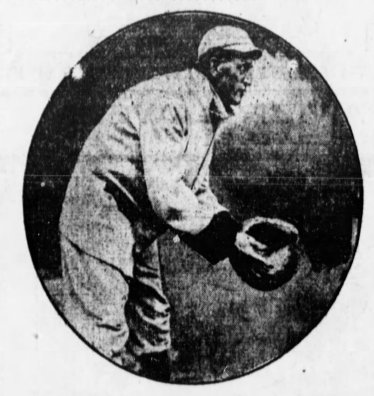
He said he had just one regret; he had been informed that day that Tom Daly would no longer be his catcher for his starts. The Tribune said of his performance during the game with the Giants that, “Daly’s work behind the bat was little short of phenomenal and was best ever seen on the grounds.”

daly

Daly

Van Haltren told the California reporter:

“I am only sorry I am going to lose Daly, who has been catching for me. He is the greatest man behind the bat I ever saw, and I think that he’s the only man can hold (Mark) Baldwin’s terrific delivery, and so I am to have (Dell) Darling. He of course is a first-class man, too, but Daly caught first for me and I am sorry to lose him.”

In closing he asked the reporter to:

“Be sure to tell my California friends that I am enjoying myself.”

Van Haltren was 11-7 with a 3.86 ERA as the White Stocking’s third starter; he also played 27 games in the outfield and hit .206 for the third place White Stockings.

Chief Meyers’ “Brother”

15 Jul

It was a barroom fight at Soren’s Saloon on Broadway in Denver that ended with a shooting. It probably would not have been news anywhere beyond The Denver Post and The Rocky Mountain News had the shooter not been the son of a fairly prominent businessman, and had the victim not spent the last several months trying to pass himself off as the brother of John ‘Chief’ Meyers, catcher for the New York Giants.

chiefmeyers

Chief Meyers

A man arrived in Denver in the spring of 1913, having just failed a tryout with the Sioux City Packers in the Western League. Some knew him as George Meyers, Native American from Riverside, California with a famous brother—his real name was Phillip Sandoval.

Sandoval was, according to his brother, “a full-blooded Spaniard,” who was born and raised in New Mexico, had been convicted of forgery in 1910, and served at least three years in the state penitentiary in Santa Fe.

Also said to have boxed professionally, Sandoval married a local woman within weeks of arriving in Denver. He was in a bar on September 11 when he had an altercation with another patron—witnesses said it was over a dice game, the shooter said it was because Sandoval, “insulted (the) American flag and no Indian can do that.”

The shooter, Samuel L. Long Jr., “son of a wealthy Kansas City businessman,” was arrested immediately.

The news of the shooting spread quickly across the country, and while most of the articles clarified that the dead man was Sandoval, and that Meyers was an alias, many headlines said Chief Meyers’ brother had been killed.

With the Giants on the verge of securing their third straight National League pennant, Meyers was inundated with questions in the days following the shooting. In order to put any rumors to bed, he issued a statement to the press while the team was in Chicago for a series with the Cubs:

“A newspaper item has just been sent me which states that a George Meyers, a brother of Chief Meyers was shot while engaged in a quarrel with one Sam Lang [sic]. I wish to obtain as wide publicity as possible for one or two corrections which I trust will be permanent.

“I have one brother, but he is not and has not been in Denver and furthermore his name is not George. His first name could not, even by a deaf man be twisted into any sound which would in the slightest resemble George. My brother is a quiet chap and so far as I know has never been shot and killed in his whole life.

“This is the third time that a brother of mine has been reported as dying a violent death and in consideration of this fact I wish to beg all correspondents to respect my affliction and shoot up somebody else’s family for a while.

“You can readily see it is also unsettling for my mother and my brother to have the latter wounded and killed so frequently. Seriously, it is far from pleasant to receive telegrams which state that a member of one’s family has been shot and requesting information as to what to do with the remains.”

sandoval

Sandoval

Meyers seems to have avoided having additional “brothers” shot.

Samuel Long’s defense attorney put several witnesses on the stand who portrayed Sandoval as “a worthless wretch, crazed with Whiskey and with murder on his mind.”

Less than three months after the killing, a jury acquitted Long of murder.

“Some People Think I’m Eccentric, and Maybe I am”

10 Jul

In March of 1920, Hal Chase provided a short, sometimes self-serving, eulogy for his major league career to a United Press reporter “while attending a dinner at the Ritz Carlton” in New York:

“I wanted to quit big league baseball before it quit me, I realize that I would lose out in two or three years, and I’d rather quit while I’m top of my baseball career than wait for the career to leave me flat. That is the principal reason why I am not with the Giants on their training trip.”

Chase told the reporter he was heading West:

“I want work that is more regular. I’d like to work my eight hours daily and be free after that. It must be work in which I can advance. I can’t get any higher in baseball. My old parents live in San Jose and I haven’t seen them in four years. They want to see me and I’m going out.”
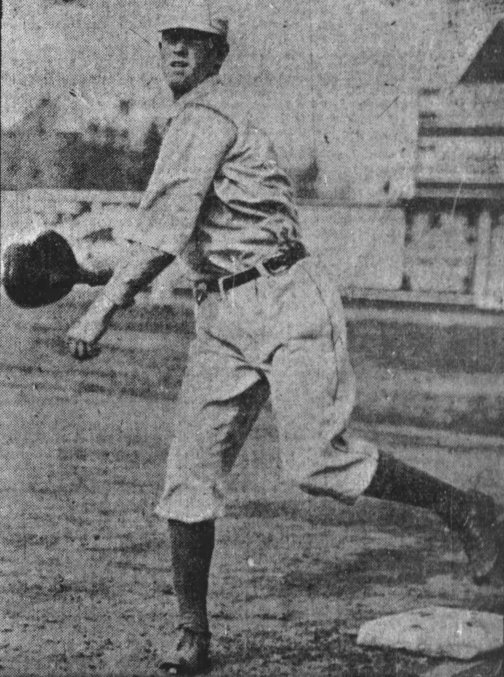
princehal.jpg

Hal Chase

Chase believed he had a future in Hollywood:

“If the film business offers me an opportunity for money-making, I’ll go into it.”

The report suggested to Chase that he might have the same impact as another recent arrival to films:

“Look how well Will Rogers, cowboy, has done.

“’That’s right,’ said Chase. ‘Say, I’d like to join hands with Rogers and put on a film comedy based on Ban Johnson. It would be a scream. I’ll bet.”

As for his baseball career coming to an end, Chase said:

“Some people think I’m eccentric, and maybe I am. However, I have no sore spots. McGraw is a fine fellow and my friend. I understand he is to put (George “High Pockets”) Kelly in my place at first base. Kelly in a regular baseball player and should make good.”

Within days of giving that interview, The New York Daily News reported that Chase was working with a theatrical agent named Thaddee Letendre–who represented several actors, including French silent film star Max Linder–and had signed a contract for Chase’s “exclusive appearance in films.”

The paper said:

“In a short while Hal probably will be the screen idol of the small boy, Letendre intends to fit Chase into the role of Frank Merriwell, whose episodes have been chronicled in novels by Burt L. Standish (pen name for author Gilbert Patton). The role of Merriwell probably will fit Chase like a glove, inasmuch as he is a versatile athlete.”

The irony of Chase playing a character Patten said he created to embody “truth, faith, justice, the triumph of right, mother, home (and) friendship,” was not mentioned in the article.

Whether it was an unsubstantiated rumor, or whether the deal fell through is unknown. But by the time Chase reached California on April 13, there was no talk of a movie contract and The Los Angeles Examiner said Chase “would like to play ball in the Pacific Coast League (PCL).”

The Seattle Star reported the next day that the Seattle Rainiers “puts in bid for services” of Chase. Team president William Klepper telegraphed the Giants offering to but Chase’s contract.

That never materialized either—The Examiner said, “apparently a hitch in the proposed deal developed;” the “hitch” was likely when revelations made by Lee Magee went public just as Chase was traveling West, that they had conspired to throw games in 1918.

The Seattle option gone; Chase joined the San Jose Bears in the Mission League He made his Mission League debut on May 2—Chase was 1 for 4 with a double and drove in both San Jose runs in a 10 to 2 loss to Monterey.

In mid-May, with San Jose 1 and 4, despite having “Prince Hal” in the lineup, Mission League officials met and attempted to ban Chase; A.J. O’Connor, director of the San Jose club told The San Jose in June, The San Jose Evening News:

“The effort is going to be made to bar Chase, but it’s not going to get anywhere. We simply will not stand for it. We are going to keep Chase for we know the fans want him.”

O’Connor told the paper the team would withdraw from the league if Chase was ruled ineligible.

On May 24, The Evening News reported:

“The (Mission League) board voted (May 23) in favor of allowing Hal Chase to continue his playing with the local club, which brought joy to the hearts of the fans all over the circuit.”

Chase celebrated the decision by hitting an RBI double—his third hit of the game–in the tenth inning to give San Jose a 4 to 3 victory over Watsonville.

As Chase was settling into his role as Mission League drawing card, he was again making headlines in the East; Lee Magee’s case against the Chicago Cubs went to trial and Chase’s alleged role in fixing games was a key feature.
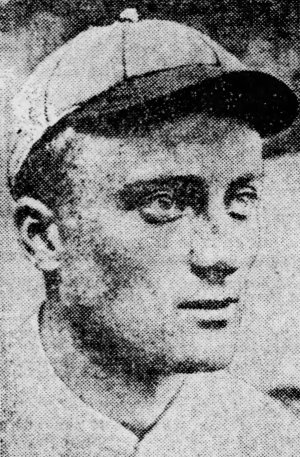
leemagee.jpg

Lee Magee

Chase told The San Jose Mercury-Herald:

“There is absolutely no truth in this statement made by Magee. I was exonerated of all charges by the national commission after it made a full investigation. I do not know what Magee did at the time of the game he mentions, but I do know that I did not place any bets and the statement is untrue from start to finish.”

Days after Magee lost his suit against the Cubs, The Mercury Herald reported “the greatest stir in baseball circles;” Chase had purchased a one-third interest in the San Jose club:

“This announcement will no doubt please the local fans as it shows what an active interest Hal has taken in baseball here and that he is out to do his share in giving San Jose real baseball and a winning team.”

Both San Jose papers reported a rumor that Chase had been in contact with former Giants teammate Heinie Zimmerman to join the San Jose team–Zimmerman never came West,

Chase made several trips to Southern California in search of players and to watch PCL games—primarily a pitcher—for San Jose. Failing to secure one, Chase took the mound for the club. On July 24, he pitched a complete game shutout against King City; he pitched again a week later, losing 4 to 1 to Watsonville.

Never far from trouble, two days after he pitched against Watsonville, Chase was in the news again. William H. McCarthy, President of the PCL barred him from all league parks after a sworn statement from Charles “Spider” Baum of the Salt Lake City Bees that Chase had approached him at the Hotel Lankersham in Los Angeles with an offer to throw a game; Baum told Chase he would likely not pitch in the series.

In response, Mission League President James J. Nealon, who had backed San Jose in its earlier effort to keep Chase, issued a statement:

“The Mission League has stood for all that is clean and wholesome and doesn’t intend to have its name smeared by such an incident as Baum relates of Chase.

“The directors of the league unite with me in declaring that Chase is barred. Whatever interest he may have in the San Jose ball club must be forfeited.”
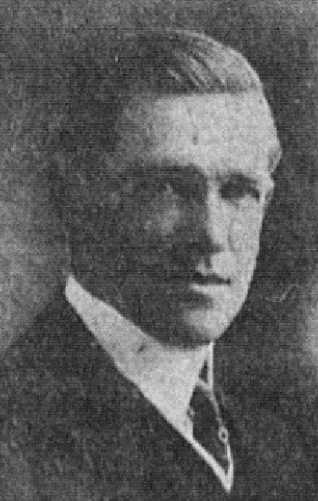
halchase

Chase, 1920

The San Jose papers which had been among his biggest cheerleaders, were split on the quick action of the Mission League. The Evening News said:

“There is no room on the San Jose club for Hal Chase. He is finished. If the club attempts to play Chase the baseball fans should absent themselves from the game. Chase wired yesterday (from the Clark Hotel in Los Angeles) that the latest charges against him were ridiculous. If these charges had been made by some player whose reputation for honesty, decency, and truthfulness was less known than Spider Baum’s we might withhold judgment for a minute.”

The Mercury-Herald countered:

“The latest accusation—that Chase actually approached a pitcher with the view of inducing him to ‘throw’ the game—is the most serious of any yet revealed, and if true should at once and forever eliminate him from the baseball field. But it should be proved, not hinted at; it should be made so clear that none shall say hereafter that the player was ‘railroaded’ out of the game, or that jealous managers anxious to get him on their teams fought over him and finally decided to put him out of the way…Otherwise the ‘fans’ will continue to idolize the player and regard him as a martyr rather than as a ‘short sport,’ which we trust he is not.”

On August 8, Chase was in uniform and on the bench when San Jose took the field against Hollister. In the third inning, San Jose was down 5 to 0, with two runners on base, when Chase was brought in in relief. Umpire Al Erle forfeited the game Hollister. The remainder of the contest was played as an exhibition game; Chase pitched the rest of the way in the 14-9 loss.

Three days later, the league directors voted 10-2 to uphold Chase’s banishment from the Mission League. Four days later, Chase was on the field—along with Harl Maggert who had been banned by the PCL—with the Madera team in the Northern San Joaquin Valley League and led Madera to an 11-0 victory over Chowchilla. The San Francisco Chronicle said:

“Chase thrilled spectators with two headlong slides to second.”

Chase and Maggert were banned from playing in the Northern San Joaquin Valley League two days later by league president J. C. Lesher who also announced that the game they participated in would be thrown out.

Chase spent the remainder of the 1920s playing semi-ball in California, Arizona, Texas, and anywhere that would have him.

“A Pitcher Ought to Fight his own Battle”

17 Jun

Less than a year before Cy Young’s death in November 1955, a United Press reporter—Haskell Short—visited Newcomerstown, Ohio to get Young’s opinion of the game. Young said:

“I’d like modern baseball a great deal more if there were no relief pitchers.”

cyyoung

Cy Young

Short said Young “shifted his weight in his big, easy rocking chair,” as the two spoke. While Young had his issues with the use of pitchers, “I wouldn’t want to criticize the game as it is played today because I think baseball s still the finest American game.”

Despite not wanting to be critical, Young said he was not happy with how easily pitchers were removed from games:

“’In my day it was like taking a physical beating when a pitcher was taken out of a game…But today,’ he said with a sigh, ‘it looks to me as if some pitchers want help and want to be taken out.’

“’A pitcher ought to fight his own battle to the bitter end, even when he gets into trouble.’”

Young blamed the lack of complete games on improper training, “the result of big salaries and winter frolicking.”

cy87.jpg

Cy Young on his 87th birthday

Young said, “When I was in my prime, I could run two miles a day and I kept in condition the year around,” by working at his father’s farm and chopping wood.

Young turned to hitting and told Short too many current batters were swinging for the fences:

“You can’t meet the ball right when you are trying to hit a homer every swing.”

He blamed that mindset for the difficulty the Indians had during th 1954 World Series—the Giants swept Cleveland and the team hit just .190 and scored nine runs in the four loses. He said:

“’The Indians were helpless against New York in New York and even more helpless in those two games in Cleveland.’

“But Young quickly added, ‘don’t you forget half the game of baseball is the breaks you get.’”

Young, who would soon turn 88, told Short he still tried to attend “two or three games a year” in Cleveland. He died shortly after the 1955 season on November 4.

“As a Trickster he was a Marvel”

12 Jun

Dan Brouthers was working at the Polo Grounds in 1917—after John McGraw got Brouthers hired, he held a variety of jobs there according to contemporary news accounts, including night watchman, custodian, and operating the gate at the press entrance to the ballpark—when The New York World asked him to reminisce about some of the his experiences as a player.

brouthers

Dan Brouthers

Brouthers said he was told by McGraw when he had earlier scouted for the Giants, “brains and speed are what you are to look for.”

Brouthers said:

“If you get hold of a good, speedy man, with something more than a bone above the ears, you probably have the makings of a good ball player.”

He said players with the combination of brains and a willingness to flout the rules had won many games when he was playing:

”It may be that the poorer team had a fox on it somewhere, and every time the umps are asleep or looking the other way, he pulls one over…There are of course, some people who believe in playing baseball on the level. But a good many other birds realize that it is played on a diamond, and so take advantage of all corners.”

One player stood out in that category for Brouthers:

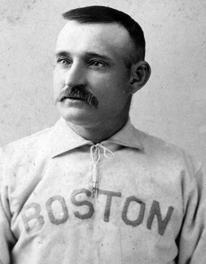
“Mike (King) Kelly was a shark for that sort of thing. He could have sold earmuffs in the Philippines or palm-leaf fans in Alaska. He was a wonder as a baseball player, but as a trickster he was a marvel. Whenever he was on the field the umpires spent half their time combing the wool away from their eyes.”

Brouthers described The King:

“He was very little short of six feet tall, weighed in the neighborhood of 180 pounds, had a fine, full mustache which was the fashion in those days and a bluff, genial manner that disarmed suspicion and made you like him from the first.”

kingkelly

Kelly

He said:

“Mike was the idol of the fanatics, and anything he did was right…He was so popular that he had three nicknames—The King of the Diamond, The Only Kel, and the $10,000 Beauty…Kelly was as full of tricks as a monkey, and couldn’t stand to lose a game if he could win it—by any means at all.”

Brouthers provided his version of the most famous story about Kelly, which he said happened when they were both with the Boston Reds in the Players League in 1890:

“One afternoon Kel was sitting on the bench, while (Charlie) Bennett was catching.”

Brouthers is confusing his former teammate with the Detroit Wolverines—Bennett–with Morgan Murphy and William “Pop” Swett who were the other two catchers in addition to Kelly on the club.

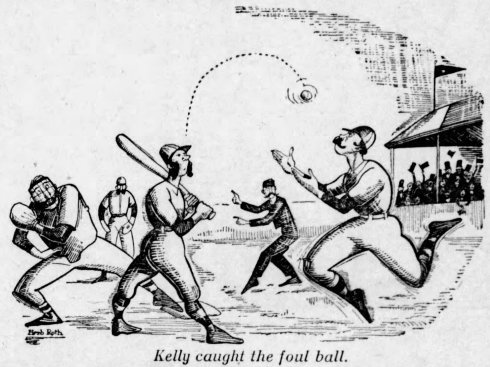
“The game was close, but Kel had made up his mind we had to win it and had his peepers skinned for a chance to put one over. Suddenly the man at bat knocked a high foul that Kelly saw (the catcher) could not catch. It is hardly likely that what Kelly did would have occurred to any other manager. What Kel did was jump up and run for the foul ball at the top of his speed. And while running for it he kept shouting to the umpire that he had taken (the catcher) out of the game and had substituted himself. Then he caught the foul ball.

“According to Mike’s way of doping it out, it was strictly according to Hoyle.”

Brouthers said Kelly then walked over to the catcher and took his mask and glove:

“Then the astonished umpire and the spectators came out of their trance at the same time and there was a yell from both of them. Kel insisted everything was O.K. In fact, he didn’t even concede there was room for an argument. There was nearly a riot over the affair, but it ended by Kelly being shooed back to the bench, and the batter being called safe. That one was a little too raw for the ump. But Kel wore an injured air all the rest of the game, and although the crowd knew he was wrong, they all sympathized with him.”

kellycartoon.jpg

Cartoon by Herb Roth of The New York World which accompanied the article

Brouthers said Kelly had more success with other stunts:

“When I was with Detroit Kel was playing with Anson’s Chicago club. At a game in Detroit, when I came to bat in the ninth inning, there were two out and three on base. Moments like that are big ones in a batter’s life, and I got a toe hold and made my mind to tear the cover off the first good one that came across. I believe we needed three runs too. Kel was playing in the field that day. I picked out one that I liked and hit it hard enough to drive it out of the lot. I was sure the ball was going over the fence, because Kelly was running in that direction like a mountain goat. Just as he got near the fence, he made a wonderful jump and got the ball. That made three out; the game was over, and Kel kept running into the clubhouse, taking the ball with him. We lost the game, of course.

“Some time later Kel confessed to me that the ball he apparently caught he had never even touched. It had cleared the fence by 10 feet!”

Brouthers said Kelly often hid a ball in the outfield, “opposing teams didn’t know this at the time. If they had, Kel probably would have died a violent death.”

“One foggy afternoon in Philadelphia, with Phil Powers umpiring, Philadelphia had a man on base when Sam Thomson came to bat. Sam picked out one he liked, and, as we found out later, poled it clear over the right field fence. But because of the fog the umpire couldn’t follow the flight of the ball.

“Now Kelly had a ball hidden in the long grass near the fence, and when Thompson made his hit, Kelly never looked at the ball in play at all, but dived for the extra ball. He fumbled around a bit as though he were looking for it and then picked it up and made an accurate throw to home, putting out the man who had been on first when the ball was hit.”

Brouthers said Thompson was sure the ball had cleared the fence and, “roared like a lion and called down the vengeance of high heaven” on Powers.

“And while he was ranting and roaring, Kelly, with an injured and innocent air, was calmly proving that the ball never went near the fence at all. Powers believed Kelly and his own eyesight, and Thompson, almost crying with rage, was fined for kicking.”

Brouthers said Kelly showed of his “foxiness” coaching third base as well.

“If a ball had been fouled by the man at bat and hit the grandstand, Kelly would demand that the pitcher throw it to him, in order that Kelly might be sure it was not cut or ripped. He only pulled this stunt when there was a man on base. Then the pitcher, if he were not wise, would throw the ball to Kelly. Kelly, instead of catching it, would dodge it, and allow it to roll past him, and the man on base would streak for home. And probably get there before the ball could be returned. Of course, this only worked once on the same man, but it sometimes helped to win a game.”

Brouthers also said Kelly attempted to use a potato as a ball in the 1880s:

“I can remember one time he took a potato to right field with him, and when a hit ball bounded past him, he made believe he had caught it, and then turning whipped the potato to the second baseman. The second baseman relayed the potato to third in order to get the man trying for that base. And he might have got him but for the fact that the potato was not a solid one and burst when the third baseman caught it.”

Brouthers said Kelly “was the most genial fellow in the world off the diamond,” but considered umpires “an eyesore.” He said “he would stand as close to him as he could and jaw him until the ump would run up a $100 fine on him in $5 and $10 clips. But that didn’t work the King any, because someone else always paid his fines.”

Lost Advertisements: $1000 in Gold

7 Jun

1905athletics.jpg

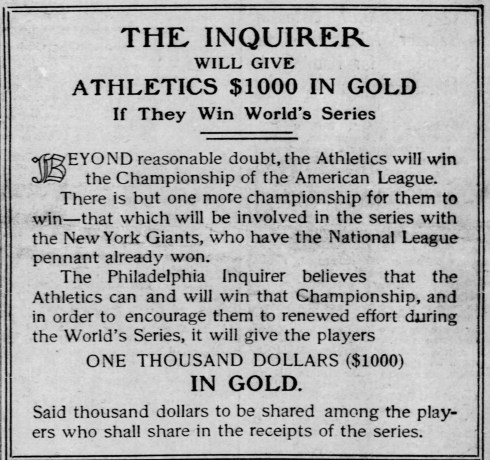
Despite there being six games left in the 1905 season, and only leading the second place Chicago White Sox by two games, The Philadelphia Inquirer declared, “Beyond Reasonable Doubt” that the Athletics would win the American League Pennant.

In order to provide incentive for the team to “encourage them to renewed effort,” the paper offered $1000 in gold to be shared among the players in addition to their World Series share.

The Athletics hung on to their lead and won the pennant, but lost four games to one to the New York Giants and lost out on the gold.

Things I Learned on the way to Looking up Other Things #33

7 May

Radbourn on Rule Changes

Old Hoss Radbourn told The Boston Journal that he thought the new rule changes for 1887—including the four-strike strikeout and abolishing the rule that allowed batters to call for high or low pitches—would have very little impact:

“Radbourn says it is a mistake on the part of anybody to think that (Dan) Brouthers can’t hit anything but a low ball. He thinks they will find that when it is absolutely necessary Brouthers can hit almost anything. When asked what effect the thought the new rules would have on Anson’s batting, Radbourn smiled and said: ‘Anson’s all right. He has more chances than anyone else. A man has to get five strikes on Anson before the umpire will call him out. Umpires don’t like to call strikes on Anson. I don’t know why, but they don’t. The pitcher who strikes out Anson does a big thing.”

radbourn

 Radbourn

Brouthers’ average dropped 32 points to .338, but he still led the league in runs, doubles and on base percentage.  Anson’s fell 24 to a league-best .347—he had 18 strikeouts in 533 plate appearances. Radbourn posted career highs in walks (133) and ERA (4.55) for the fifth place Boston Beaneaters.

Comiskey on ‘Friends’

Charles Comiskey said he had no friends in the American League. He told The Pittsburgh Press before the 1902 season:

“There’s Connie Mack, if he thought I could use one of his players he would keep him around until the Fourth of July, and then, if I hadn’t got that place filled, he would take the player out behind the grandstand and shoot him rather than turn him loose so I could sign him. The rest are getting as bad as Connie too.

“When (Tom) Loftus came back into the league I thought I would have at least one friend. Now he puts blinders on his players every time I get anywhere near them. Just to show you; before Loftus went East recently, I framed it all up for him to get a good second baseman for his team. I knew (John) McGraw couldn’t use all his infielders, so told Loftus to go after either (Bill) Keister or (Jimmy) Williams. McGraw would talk to Loftus, but not to me, when it came to players.”

comiskeypix

 Comiskey

Loftus ended up signing Keister as a free agent.

“Well, Loftus got Keister, you know, and I figured that would solve my third base problem, for he can’t use both (Harry) Wolverton and (Bill) Coughlin at third, and neither is much good anywhere else. So, when Tom came back, I led him up to the subject gently and proposed taking one or the other of them off his hands. Then what do you think Loftus sprung on me? He said he though of playing Keister in the outfield next year so he would need all his infielders. He looks like all the rest to me now.”

Keister and Coughlin remained with the sixth place Washington Senators all season—Coughlin at third, Keister splitting time at second and in the outfield—Wolverton, who had jumped to the Senators returned to the Philadelphia Phillies mid-season. Comiskey tried to solve his “third base problem” by acquiring Sammy Strang from the New York Giants. Strang hit .295 but committed 62 errors and was released in September.

Warner on Revenge

In 1906, Washington catcher Jack Warner told The Boston American how he had gotten even with Cupid Childs for spiking him. The incidents occurred, he said, in 1895 when he had recently joined the Louisville Colonels and Childs played for the Cleveland Spiders.

warner

Warner

Warner said he had received the throw to the plate well ahead of Childs:

“Well, sir, Cupid came in like the Empire State Express, feet first and his body high in the air. And say, he planted those mudhooks of his on my right side with such force that I flew twenty feet. Then there was absolutely no excuse, as the play was not close, me being there waitin’ there to receive him. I put up a howl but that was useless, so I made up my mind to work the next day and watch for a chance to get even. I was lucky to have the same sort of play come off.

“Up in the sky went Mr. Cupid again. But this time I was not there, only thereabout. I had plenty of time to look him over and pick out a soft spot in his architecture. They had to pry the ball out and it took half an hour to bring him back from dreamland. That’s the way to do it when you know a lad it trying to get you. And you can always tell if he is on the level after a couple of encounters.”

“He Took a Needling From Jackie Every Day”

29 Apr

In 1952, “Jet Magazine” featured an article about the “feuds” between several former Negro Leaguers who were currently starring in the major leagues.  The article contained no byline but was likely written by Andrew Sturgeon “A.C.” “Doc” Young, who wrote most of the baseball articles for the magazine during the early 50s; Young later became Hollywood’s fist black publicist in the late 1950s.

Young said Satchel Paige arrived in Cleveland in 1948 “a bit confused by some of the regulations,” of big league clubs. Paige did not understand why players did not have mustaches, as he did, nor did they were hats with their street clothes:

“One day Satch asked of Larry Doby, then a fledgling major leaguer “Why don’t they wear hats up here?’

“Doby, who had crawled in diapers while Satch was getting started on his fabulous career, said shortly, ‘Do as we do. Don’t ask questions!’

“Ít was the unkindest cut. Satch didn’t like it. And, later, when Doby told a white writer that Satch ‘carries a gun,’ failing to explain the pitcher was a collector of antique firearms, a feud was on. To this day it still flairs every time Doby faces Paige in a game.”

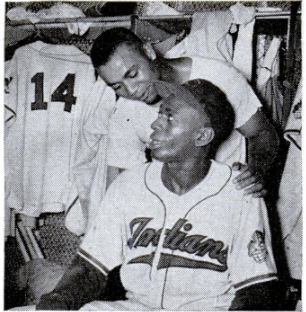
dobypaige

Doby and Paige

Young said the “feuds” tended to get “little publicity,” but would put “the Hatfields and McCoys episode to shame.”

Artie Wilson appeared in just 19 games for the New York Giants in 1951, but Young said it was enough time for two feuds to develop between Wilson and fellow, former Negro Leaguers.

The first involved Doby before the beginning of the season.

“The Indians and Giants had played an exhibition game at Charleston, West Virginia, after which a party was organized.”

Wilson went back to the hotel rather than attending.

“(H)e was in bed when someone knocked on his door and insisted he attend the affair. Finally, not wanting to offend the man, he agreed to go. He went, had a few dances, and returned home.

“Later, on the train, Doby sought to collect $5 from Wilson, explaining that the players had agreed to chip in for the party. Wilson declared he knew nothing of any such arrangements. Doby insisted Wilson should chip in anyway. An argument ensued, during which the 155-pound Wilson invited the 185-pound Doby to settle it with fists in back of the car.”

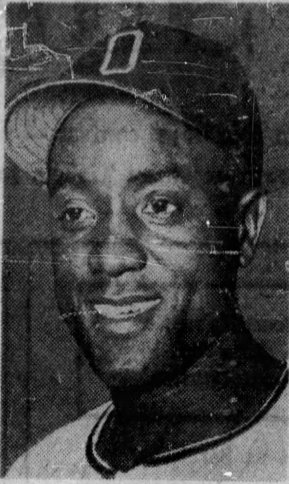
artie.jpg

Wilson

Wilson’s other feud was with teammate Hank Thompson. Thompson, who had hit .289 and drove in 89 runs in 1950, got off to a slow start in ’51:

Although he was a rookie with the Giant, Wilson was an experienced player and a former manager in Latin league ball. He sought to give Thompson some good advice.

“Thompson heard him out, then snapped, “Listen, you can’t tell me nothing. You just got up here.”

Doby, said Young was involved in a bit of a “feud” with every other black player on the Indians in 1950:

“When the club went to Tucson, Arizona for spring training, they were housed at a local Negro family because the swank resort Santa Rita Hotel had refused them. To facilitate their travel the two miles between the home and the ballpark, the Indians arranged for the Negroes to have a rented Ford, with Doby holding the keys. Luke Easter and others became disgruntled when Doby wouldn’t let them drive the car. As the pioneer Negro with the club, he felt the car was his responsibility.”

Young said there were several feuds among the black players on the Brooklyn Dodgers.

In 1949, Don Newcombe “had been labeled lazy” by manager Burt Shotton, and:

“(He) took a needling from Jackie every day he pitched and between games. It was Jackie’s way of ‘lighting a fire’ under the big, easy-going rookie. But Don didn’t take it that way.

“When he sought to buy a house later, he was very much impressed with one in St. Albans, L.I. [sic, Queens] Everything was fine until the real estate broker, thinking he was embellishing its attractiveness, said the house was in Jackie Robinson’s neighborhood. Newcombe immediately cancelled the deal. Explaining he did not want to live in the same neighborhood as Jackie Robinson.”

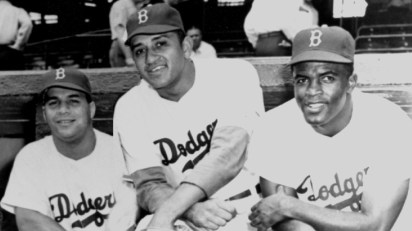
campanella-newcombe-and-robinson

Campanella, Newcombe, and Robinson

After the 1950 season, Young said, Robinson had “perhaps the hottest feud of all” with Roy Campanella after the catcher felt Robinson did not pay him enough during the Jackie Robinson All-Stars barnstorming tour:

“Campy, a man who watches money with eagle eyes, was greatly put out. Though they play together every day, and perhaps, will fight for the other team’s rights, the feud has not completely burned out, evidence indicates. Only recently, Campy refused to let his children attend a birthday party for one of Jackie’s children.”

And Campanella, said Young, sought out a feud with Giants Rookie Willie Mays in 1951:

“Campy, who had earned his place in the sun by playing both Latin ball in the winter and Negro ball in the summer, catching doubleheaders, and riding broken-down busses before entering organized ball, was miffed because Mays became a major leaguer in less than a year following graduation from high school.

“Every time the teams met, Campanella rode Mays unmercifully. It got to the point where Mays complained to his manager Leo Durocher, who said Campy had no right to do it.

“Mays, a naïve youngster, was at bat one day, Campy went into his needling routine. Mays turned and told the catcher, ‘Stop talking to me. Mr.  Durocher says you have no right to keep talking to me that way.’ But Campy didn’t stop talking until Mays went into the army this year.”

Young said “likeable, hard-hitting Monte Irvin” was one of the few who seemed to avoid “feuds” with fellow players.

The “strangest feud of all” according to Young started over a joke in 1949.  Two of the stars of the Wilkes-Barre Indians in the Eastern League were “Tall’ slender Harry Simpson,” the 24-year-old outfielder who hit .305 and hit a league-leading 31 home runs, and “rotund, left-handed Roy Welmaker,” the 35-year-old, long-time Negro League pitcher who was 22-12 with a 2.44 ERA in a league where only six pitchers who qualified for the league lead had an ERA below 3.45.

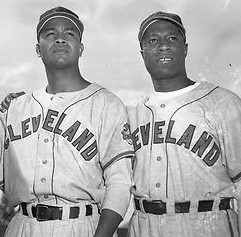
dobywelmaker.jpg

Doby and Welmaker

“After a game one day, Welmaker almost used an entire bar of soap lathering himself in the bath. A startled white player inquired, ‘What’re you doing, Roy?’ The pitcher replied, ‘I’m trying to get white like you.’

“From that day on, Simpson and Welmaker were in sharp disagreement. Simpson said Welmaker was an ‘Uncle Tom.”’


Things I Learned on the way to Looking up Other Things #32

8 Apr

“He Runs Bases Like a cow”

John Irwin began 1891, his eighth and final major league season playing for the Boston Reds, managed by his brother Arthur.

After a June game with The Colonels, The Louisville Courier-Journal said the connection was not an accident:

“John Irwin, who is a ball player because his brother is a baseball manager, was in a part of yesterday’s game. He runs bases like a cow and was caught off first yesterday in the easiest manner possible. He foolishly ran out between the bases and then waited until (catcher Jack) Ryan had thrown the ball to get him out. He is very gay and is never happier or more fatal to Boston’s chances then when he is coaching. His dangerous advice got one man out yesterday.”

irwin.jpg

John Irwin

The paper said when Irwin entered the game, at least one of his teammates, right fielder, Hugh Duffy was not pleased:

“Duffy was seen to remonstrate yesterday, when Irwin took (Paul) Radford’s place. It was like leaving the short field without a man. Irwin would be cheaper to the Boston club were he paid five times as much as he is now, with the proviso that he did not in the field—except to bring a bat.”

Irwin was released by the Boston Reds on July 16, and immediately signed by the Louisville Colonels.

“He Fairly Flew at me”

Roger Connor jumped the New York Giants and signed with the Philadelphia Athletics of the American Association in November of 1891. Before he left New York, he sought out Sam Crane, former major leaguer and reporter for The New York Press, to settle a score in “an uptown saloon.”

connor

Connor

Crane told the story in the pages of The Press:

“I know Roger fully believes what he says. I had a short séance with him recently and was unfortunate enough to strike Roger in a very unamiable mood. Talk about the effect of a red flag on a mad bill.”

According to Crane, when Connor approached him in the bar:

“He fairly flew at me and threatened to knock seven kinds of daylight out of me, or any other baseball reporter that ever lived, in as many minutes.”

The New York Herald said Connor had also threatened George Erskine Stackhouse of The New York Tribune and Charles Mathison of The New York Sun.

samcrane2

Crane

Crane continued the story:

“His big form loomed over me and his brawny fist made belligerent hieroglyphics before my face a very vivid recollection came to me of what an effect that same fist on the features of (his former New York teammate) Ed Caskin several years ago. I would bet even money just at that stage of the game that he could lick John L. Sullivan in a punch, and I decided to forego, for some time at least, all further thought of making any arguments with him.”

Crane suggested that those who called him “a gentleman” and congratulated him on staying above the fray and not getting in a fight with Connor were not considering Connor’s point of view:

“Roger laid great stress on the fact that I once said, ‘he hadn’t a heart as big as a pea.’”

Connor was assigned to the Philadelphia Phillies after the American Association folded.

“He Never Gave the Game Enough”

The Detroit News said during the spring of 1912, Hughie Jennings told young players as the Tigers trained in Louisiana that to be successful a player “must breathe baseball, eat baseball, play baseball, and sleep baseball.”

hughie

Hugh Jennings

Jennings said four of his players—Ty Cobb, Donie Bush. Sam Crawford, and Del Gainer—“devote their entire time and attention” to baseball.

“The man who is successful is the man who trains himself to his work and keeps his mind on it.”

Jennings then mentioned his only exception to that rule:

“In my career in the game I have known but one really good player who could place baseball second to other things. That man is Bill Dahlen, now manager of the Brooklyn team. Dahlen played the ponies and indulged in other outside affairs. He never practiced. He never gave the game enough when off the field, and he always reached the clubhouse two or three minutes before starting time. Sometimes the game had to wait till Bill took his position at short.”

Jennings, who was Dahlen’s teammate in 1899-1900 in Brooklyn said:

“If Dahlen had devoted his entire time to baseball he would have been the greatest infielder of all time. He could take a grounder on either side of him while in motion and throw without hesitating a moment. He could smash the ball to any part of the lot and bunt perfectly. He was a great baserunner. There was no more brilliant fielder.”

billdahlen

Bill Dahlen

Jennings acknowledged that his former teammate was not the “greatest of all time,” but:

“He should have been.”