Tag Archives: Philadelphia Athletics

Another “Rube”

4 Mar

Hall of Famer “Lefty” Grove and Jack Ogden were the best known pitchers of the great Baltimore Orioles teams that won seven straight International League Pennants from 1919-1925, but in 1923 both were out-pitched by James Arthur “Rube” Parnham.

Parnham began his professional career in 1914 with the Huntington Blue Sox in the Ohio State League.  In 1915 he joined the Raleigh Capitals in the North Carolina State League, managed by Connie Mack’s son Earle.  The 21-year-old was an unspectacular 9-15 for Raleigh, but caught the eye of the elder Mack and spent the spring of 1916 with Jacksonville with the Philadelphia Athletics.
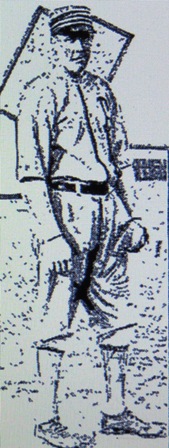
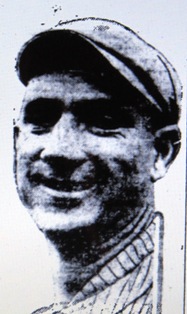
Rube Parnham, 1917

Rube Parnham, 1917

Parnham returned to the North Carolina State League for the 1916 season, splitting time between Raleigh and the Durham Bulls, posting a 17-19; his contract was purchased by the Athletics in late August.  Nearly a month later Parnham made his Major League debut; he appeared in four games for Mack’s last place (36-117) ballclub, he was 2-1 with a 4.01 ERA.

Parnham was with the Athletics in Jacksonville again in 1917, but was sent to Baltimore before the beginning of the season.  He won 16 games for the Orioles and earned one more shot with Mack in Philadelphia; Parnham was 0-1 with a 4.09 ERA in two September appearances.

As Parnham started winning games for Baltimore he developed a reputation as a work horse; in 1917 he won both ends of a double-header against the Rochester Hustlers, pitching a total of 24 innings in two 3-2 victories; in 1919 he won both games of a twin bill twice.   At the same time he began to earn a reputation as “eccentric’ and “erratic,” the inevitable comparisons to Rube Waddell and his small time roots earned Parnham the nickname “Rube,” he was also known as “Uncle.”

Baltimore sold Parnham to the Louisville Colonels in the American Association in March of 1918, but within two months was sold back to Baltimore, where he rejoined manager Jack Dunn, with who he had, and would continue to have, a contentious relationship.  He won 22 games in 1918 and followed with 28 in 1919, leading the Orioles to their first championship since 1908.

As the Orioles jumped out to a quick lead in 1920 (Parnham was 5-0, and was joined on the pitching staff by Ogden and Grove) the erratic Rube Parnham surfaced again. He was prone to disappearing for days at a time and also appears to have been hurt.  By mid-season he was gone.

More recent accounts have said Parnham jumped the Orioles to play semi-pro ball in Pennsylvania; just as likely, Parnham, who was suspended in June by Dunn for being out of shape, and who was clearly overshadowed by Grove (12-2) and Ogden (27-9); as well as Jack Bentley (16-3) and Harry Frank (25-12), was let go.

Lending credence to Parnham not having jumped is a January 1922 Associated Press item that said the pitcher “whose arm went on him” would rejoin “the Baltimores for the 1922 season.  Parnham wrote Dunn that he believed he could come back next season and pitch successfully.”  He won 16 games for the Orioles in 1922.

The following season would be Parnham’s best; the 29-year-old pitcher led the Orioles with a 33-7 record, Grove was 27-10, Ogden 17-12.   In addition to out-pitching his two teammates, Parnham set an international League record by winning 20 consecutive games.

Parnham’s old ways returned before the 1924 season when he failed to report to Florida for spring training.  The Associated Press said:

“Rube never reported at the Oriole training camp in the south and never even deigned to notify Jack Dunn whether he was going to play ball this year.”

Parnham eventually reported, but had another stormy, abbreviated season.  With a 6-5 record and a 4.84 ERA, Dunn suspended the pitcher in June, and he appears to have not pitched for the Orioles again that season.

The only reference to Parnham in 1925 was a May game he pitched for a semi-pro team in Duquesne, Pennsylvania and was beaten 8-0 by the Homestead Grays.

His career appeared to be over, but Dunn, it seems was willing to give his pitcher one more chance.

The Baltimore Sun said shortly before the 1926 season:

“Uncle Rube Parnham, the most colorful figure in the International League, will be back on the mound for the Orioles next season.”

Parnham was 13-9 with a 5.05 ERA, and spent the entire season feuding with Dunn; It was the end of the Orioles dynasty, the Toronto Maple Leafs won the championship in 1926 and Baltimore would not finish first again until 1944.

The Orioles were finally through with Parnham, The Baltimore Sun said:

“There was so much trouble between Parnham and Dunn last year that it was apparent Rube had spent his last season with the Orioles.” “

The 32-year-old was still considered valuable enough that the Milwaukee Brewers in the American Association purchased the pitcher from Baltimore.

The Brewers expected big things from their new pitcher, The Milwaukee Journal said:

“At times his playfulness leads him away from the straight and narrow, and he nearly drove Jack Dunn nutty last season…But Parnham is a great pitcher, despite his eccentricities, and if (Brewers owner) Otto Borchert can hire a good keeper for him is certain to be a winner with the Brewers.”

By March Parnham had worn out his welcome with another manager when he didn’t bother to report to Hot Springs, Arkansas for spring training.  The Journal said:

“Disgusted with the dilatory tactics of Rube Parnham, Jack Lelivelt, boss of the Brewers, hinted Saturday night that unless the eccentric righthander reports at once that he would probably be turned back to Baltimore.  Former International Leaguers …have told the Milwaukee leader about some of Reuben’s idiosyncrasies  and Lelivelt is beginning to feel that he will become a stepsister to Kid trouble if he had the former Oriole on his club.”

Parnham never played for the Brewers, and was returned to Baltimore, but Dunn was finished with him as well and he was shipped off to the Reading Keystones.  After a 2-8 season split between Reading and the Newark Bears, Parnham’s career was over.
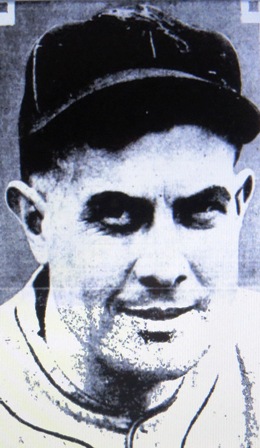
rube

Rube Parnham, 1923

Parnham retired to McKeesport, Pennsylvania, where the troubles that followed him throughout his career seem to have continued.  James Bready, an editor for The Baltimore Sun went to Pennsylvania to interview the former Oriole hero in 1961:

“The story was that he had gone downhill. Falling asleep in the snow, recently, he had lost several toes. On the phone, the director of a home for indigents said he would notify Parnham of the interview project. He gave me the street address — and a caution: ‘Try to get here before noon.’

“Paper, pen — I knocked and Rube beckoned me inside what today would be called a shelter. He was wearing an overcoat (I understand that better, now) and had not shaved recently. We sat down, facing, on two of half a dozen cot beds.  I tried a question. ”Gbbmhdahlr,” he replied. I stared at him; slowly, the meaning penetrated. I reached in my pocket and handed him a dollar.”

Parnham died two years later in McKeesport.
Lost Advertisements–Louisville Slugger, New Finish…Adds Punch to Hits

19 Feb

???????????????????????????????


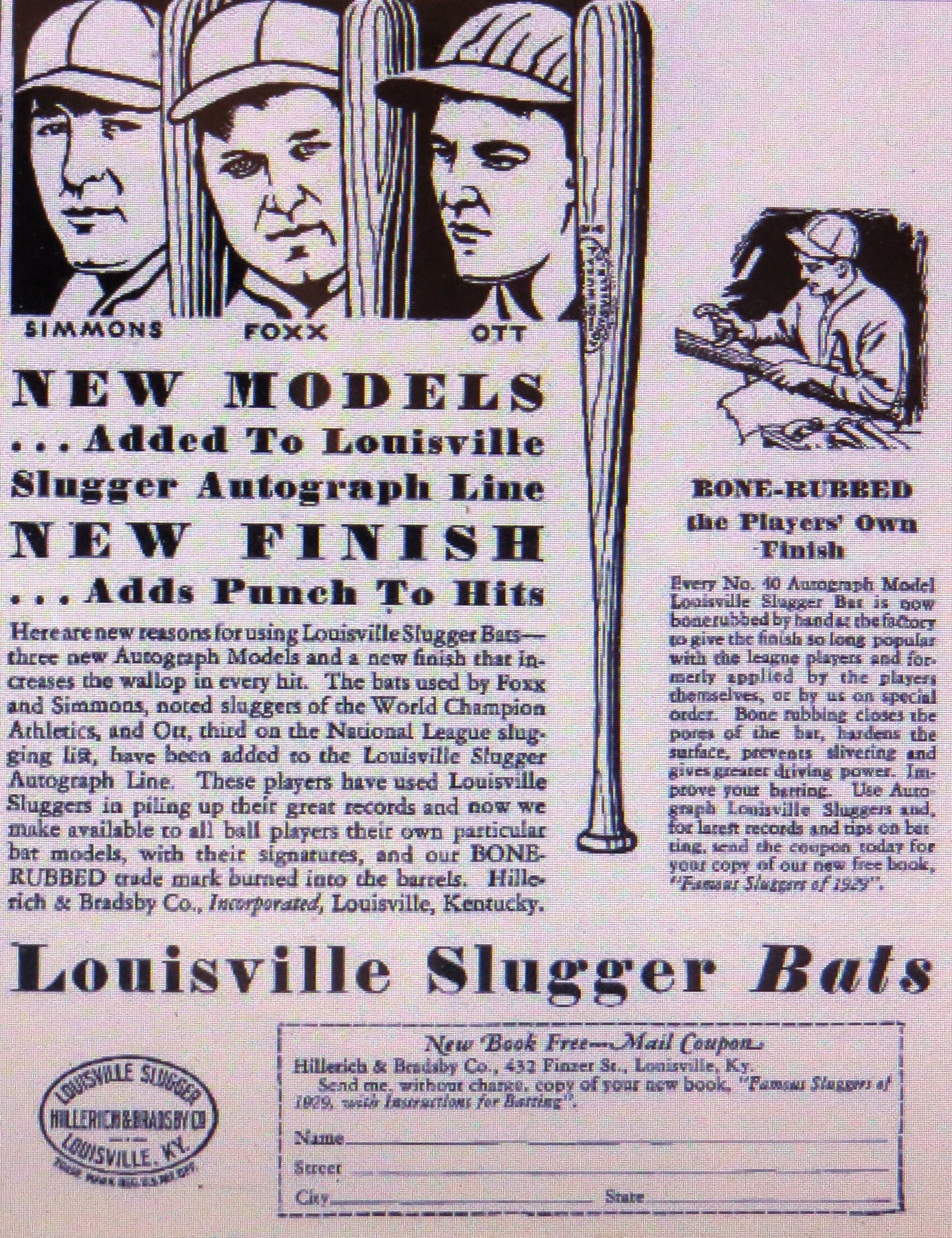
April 1930 advertisement for Louisville Slugger, featuring Hall of Famers Al Simmons, Jimmy Foxx and Mel Ott.

“Here are new reasons for using Louisville Slugger Bats–three new Autograph Models and a new finish that increases the Wallop in every hit.  The bats used by Foxx and Simmons, noted sluggers of the World Champion Athletics, and Ott, third on the National League sluggers list, have been added to the Louisville Slugger Autograph Line.  These players have used Louisville Sluggers in piling up their great records and now we make available to all ballplayers their own particular bat models, with their signatures, and our BONE-RUBBED trademark burned into the barrels”


“Greatest Baseball Game Ever Contested”

13 Feb

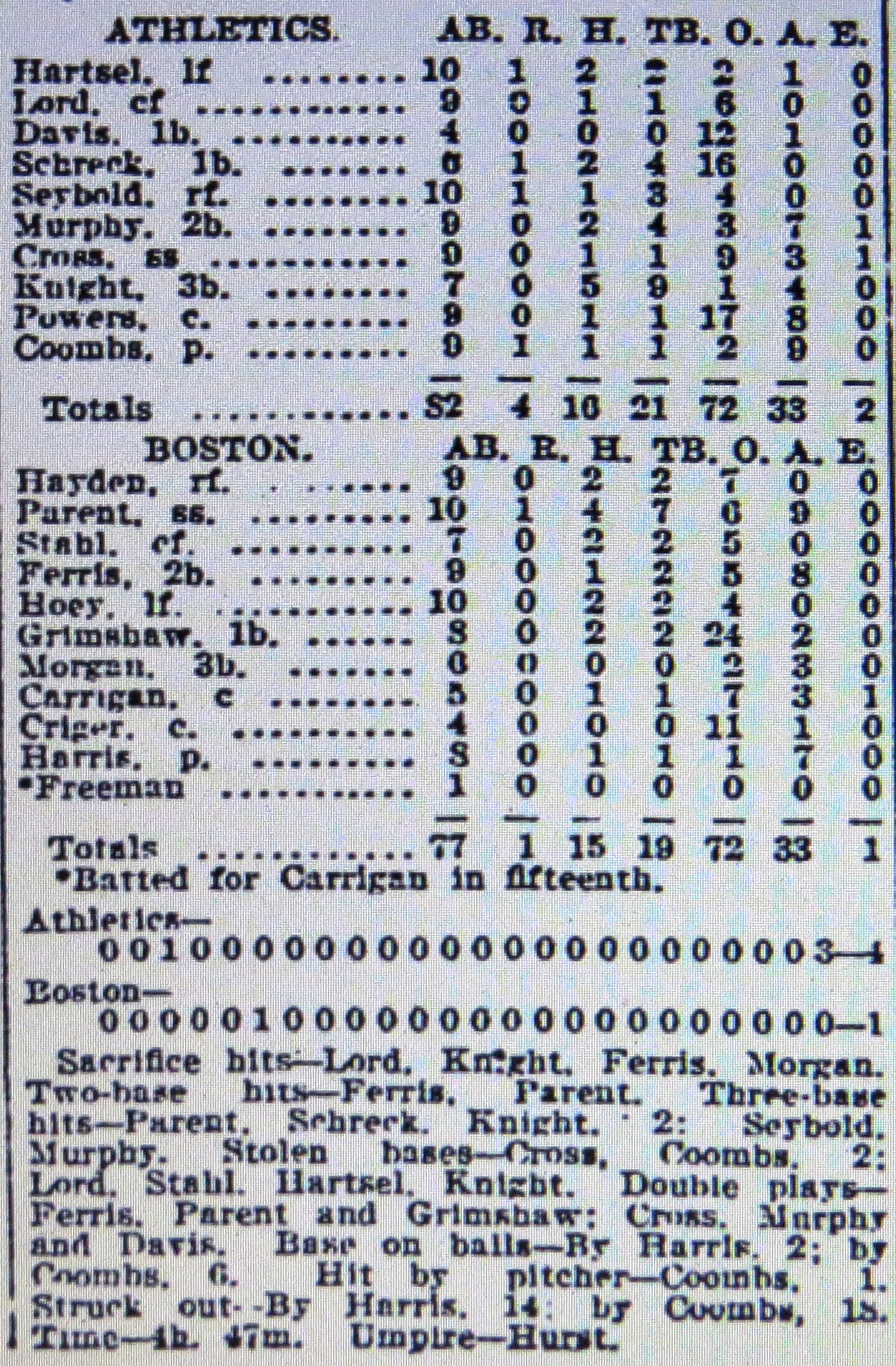
The Philadelphia Record headline called it the “Greatest Baseball Game Ever Contested, “ the September 1, 1906 game at Boston’s Huntington Avenue Grounds between the Philadelphia Athletics and the Boston Americans:

“What will go down in history as the most remarkable ball game ever played in a major league lasted 4 hours and 47 minutes to-day, and the champion Athletics beat the Bostons 4 to 1 in 24 innings.  It was a heart-breaking struggle all through, and to the astonishment of 18,000 people who saw the contest, the pitchers hung on until the last gun was fired.”

Rookie Jack Coombs pitched for Philadelphia, Joe Harris was on the mound for Boston.

Philadelphia scored a run in the third inning; Boston tied the game in the sixth:

“After that plenty of opportunities were offered, but owing to fast fielding and good pitching neither side could cross the plate.

“In the twenty-fourth, when darkness was fast covering the field, (Topsy) Hartsell led off with a single.  (Bris) Lord struck out, but Hartsell stole second…Shreck (Ossee Schrecongost) sent him home with a single over second.”

The Athletics added two more Runs as “The immense crowd filled out around the field.”

Coombs closed the Americans out in the twenty-fourth and “was cheered to an echo, some of the fans wanting to carry him on their shoulders from the field.”

The box score:

???????????????????????????????

“It was well that the game was concluded as it was, for it was too dark to go another inning, and the crowd began to murmur that the light was too dim when the last round began.  But the players themselves interposed no objection, for they were all deeply anxious to fight it out.”

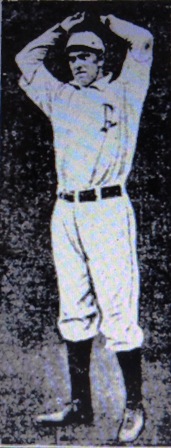
Jack Coombs, 1906

Jack Coombs, 1906

Coombs would go on to a long career, highlighted by a 31-9 record, and three more wins over the Chicago Cubs in the World Series for the champion Athletics in 1910; overall he was 5-0 in World Series play.  He also pitched for the Brooklyn Robins and Detroit Tigers.

Harris is one of the ultimate hard-luck pitchers in the history of baseball.  He ended the 1906 season with a 2-21 record (the Americans were shut out 8 times when he pitched).  His Major League career was over after he went 0-7 in 1907; Harris ended his career with a 3-30 record.

“Hanlon Springs a Surprise on the Baseball Public”

14 Jan

Albert Joseph “Smiling Al” Maul’s best days seemed well behind him by 1898.  The 32-year-old Maul had posted a 16-12 record for the Pittsburgh Burghers in the Players League in 1890, but after returning to the National League the following season he had gone 39-44 through 1897.

Baltimore Orioles manager Ned Hanlon signed Maul after he was released by the Washington Senators in 1897.  The results were not good; in two games Maul gave up 9 hits and walked 8, posting a 7.04 ERA.  Baltimore released him at the end of the season and there were no takers for Maul at the beginning of 1898.

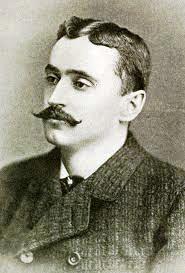
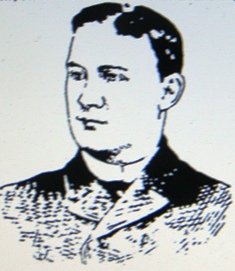
Ned Hanlon

Ned Hanlon

By June of 1898 The Baltimore Morning Herald said:

“For some time (Hanlon) has been hinting to his friends that he had something up his sleeve in the way of twirling talent that would surprise the natives, but when he let fall Al Maul’s name he was met with a chorus of merry ha-has.”

But by June Hanlon’s “surprise” was no longer met with laughter.

On June 5, The Sunday Herald headline said:

“Hanlon springs a surprise on the baseball world.”

Maul had shut out the Saint Louis Browns on three hits in his first start for Baltimore.

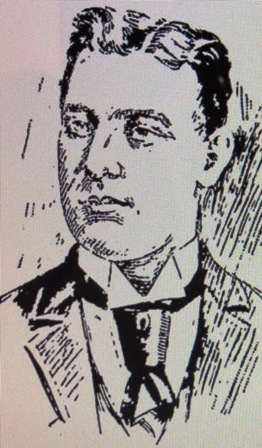
Al Maul

Al Maul

The Herald cautioned that “it’s too early to say that Maul is all right,” but all season he successfully filled the gap in Baltimore’s rotation caused by Joe Corbett’s holdout.

The New York World said Maul was:

“The most remarkable case on record of a restored glass arm.”

Maul’s comeback season became a sensation.  John Clarkson, who had not appeared in a game since 1894, told The Bay City (MI) Tribune he was serious about making his own comeback:

“I might be a second Al Maul, who can tell?”

Clarkson’s comeback never materialized, but Maul’s success continued all summer.

The Sporting Life credited Hanlon for his pitcher’s success:

“Al Maul’s experience this season is only another confirmation of the claim that Ned Hanlon can take any old thing and get good results from, it for a year or so.”

Maul finished the season with a 20-7 record and a 2.10 ERA, and Hanlon had high hopes for his pitcher the next season.  Maul, along with “Wee Willie” Keeler, Hughie Jennings and Joe Kelley moved to the Brooklyn Superbas as part of the stock swap between the Baltimore and Brooklyn franchises that led to Hanlon’s move to Brooklyn.

But the pitcher who won 20 games two years after his career was “over” was out of surprises.  After four games with Brooklyn in 1898, Hanlon released Maul.  Brief stints with the Philadelphia Phillies and New York Giants failed to rekindle the magic and Maul’s career came to an end after his release by the Giants in September of 1901.

Maul went on to coach baseball at Lehigh University and scouted for several years for the Philadelphia Athletics.  He died in 1958 at age 92.

“Big, Good-Hearted and Foolish”

9 Jan

Almost immediately there was trouble for manager John McGraw after the New York Giants acquired Larry McLean from the St. Louis Cardinals, August 6, 1913—it was one of the few times in his career when the trouble wasn’t McLean’s fault.

With Chief Meyers hurt McGraw needed a catcher and traded the popular Doc Crandall to the Cardinals for McLean.  The day after the trade The Cincinnati Commercial Tribune reported that McGraw had “exchanged fisticuffs” with five of his players:

“Crandall was very popular among the club members, and there was much bitterness felt at his loss…The players passed hot words (at McGraw), and several blows were struck.”

McGraw was left with a bloody nose from the fight, and less than two weeks later reacquired Crandall from St. Louis.

McLean thrived in New York, a United Press story said:

“The big lad has been slamming the horsehide at a terrific gait, and has been displaying wonderful form behind the plate…Larry is said to be behaving himself better than he ever has since joining the big show.”

McLean hit .320 for the pennant-winning Giants and went 6 for 12 in their World Series loss to the Philadelphia Athletics.  He earned the praise of McGraw and despite diminishing skills, remained a model citizen for all of 1914 and part of 1915.

That all changed in June of 1915.  McLean had a clause in his contract which would have earned him an additional $1000 if he did not drink during the season.  McGraw’s right-hand man, scout Richard “Sinister Dick” Kinsella, had accused McLean of drunkenness and as a result was suspended for 10 days by McGraw.

Larry McLean, 1915

Larry McLean, 1915

In the lobby of the Buckingham Hotel in St. Louis, McLean accused Kinsella of making up the charge that he’d been drinking in order to cheat him out of the promised bonus.  Words were exchanged and then a fight broke out.  There was the McGraw-Kinsella version and the McLean version.

McGraw and Kinsella said McLean was carrying a length of gas pipe, and “came into the lobby with a number of rough companions.”

Kinsella’s version was as colorful as it was questionable:

“I picked up a chair and broke it over McLean’s head.  That frightened his gang of ruffians and they fled.  McLean continued to fight until McGraw and I chased him into the street, where he jumped into an automobile filled with women and begged for protection.”

McLean told reporters “I whipped McGraw and all of his associates with my two fists, I did not use a gas pipe, and he “exhibited his bruised right hand as evidence.”

McLean was finished with the Giants.

In March of 1916 The Associated Press reported that McLean had purchased the New Haven Murlins of the Eastern League and said “Larry will manage the club and catch.”  Either the report was erroneous or the deal fell through.  McLean never again played professional baseball and spent 1916 playing with semi-pro teams in New York.

Before the 1917 season baseball writer Ren Mulford reported that McLean might be signed by the Reds:

 Wouldn’t it be odd if Big Larry would come out of the swamp and stick to his spikes into dry ground?  Larry McLean, big, good-hearted and foolish, always his own worst enemy might come back if he willed it so.”

McLean never joined the Reds.

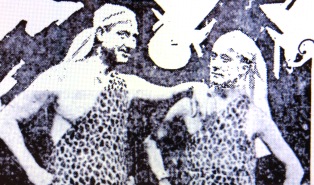
Also in 1917 several newspapers reported that McLean was becoming an actor, The New London (CT) Day said McLean “is now a real moving picture actor,” and included a picture of McLean with another actor “as Egyptian slaves in ‘The Siren,’ a movie soon to be released.”  (The film “The Siren” is described on IMDB as a western—what film, if any McLean actually appeared in is unknown)

Larry McLean, 1915

Larry McLean as an Egyptian slave in a 1917 film

In 1919 McLean was “in serious condition,” in a New York hospital as a result of burns received in a Turkish bath when he lost consciousness after entering a room.  He had been suffering from pneumonia and was in a weakened condition.”

That was the last that was heard of McLean until March 24, 1921.  McLean and a friend named Jack McCarthy were in a bar in Boston’s South End.  The bartender (John Connor) claimed McLean became enraged when he refused to give him cigarettes and threatened to “beat him up:”

 “McLean started to climb the bar to attack him.  McCarthy was helping McLean over the counter when Connor reached for a pistol, and fired… McLean staggered out to the sidewalk where he fell.”

Connor claimed that the previous evening McLean had chased another bartender “up and down the barroom…and forced him to leave to save himself from a beating.

McCarthy was also shot and died in the hospital six days later.  (Some recent sources, such as Bill James in “The New Bill James Historical Baseball Abstract” erroneously identify McCarthy as John Arthur “Jack” McCarthy, a former Major League player.  The McCarthy who was shot with McLean was John F. McCarthy.  Incidentally, John Arthur McCarthy is one of a very few Major League players for whom death information is unknown)

Connor was being held without bail at the time of McCarthy’s death and, according to The Boston Post, eventually pleaded guilty to manslaughter and was sentenced to one year in prison.

“A Vain and Foolish Kick”

23 Nov

The Brooklyn Bridegrooms won the 1890 National League Championship by 6 ½ games over the Chicago Colts behind pitcher Tom Lovett who posted a 30-11 record.

Just three years earlier there was speculation that Lovett’s career might be over due to overwork.

Tom Lovett, 1890

Born in Providence, Rhode Island in 1863, Lovett began his professional career with Waterbury in the Connecticut State League in 1884.  He appeared in 16 games for Philadelphia Athletics in the American Association in 1885 and was in the New England League with the Lynn/Newburyport Clamdiggers.

In 1887 he signed with the Bridgeport Giants in the Eastern League and dominated the league in May and early June.  Despite getting off to a fast start (the team was 20-5 in May), Bridgeport was suffering a decline in attendance and the franchise was in trouble.

At the same time community leaders in Oshkosh, Wisconsin were determined to win the Northwest League championship, and they put enough money together to offer to purchase Lovett who was 21-3, as well as Tug Wilson, Bridgeport’s catcher and leading hitter, and shortstop Dan Shannon, the Eastern League’s leading base stealer.

Lovett was 20-2 for Oshkosh (40-7 for the season) and they easily won the championship, but he did not pitch during the season’s closing days; The Sporting Life reported that “Lovett is said to be lame in the arm.”

Despite speculation well into the next spring that his arm was permanently “lamed,” Lovett recovered and posted a 30-14 season in 1888 with Omaha in the Western Association.   In the fall of 1888 he was purchased by Brooklyn, then in the American Association.

Lovett was 17-10 in his first season with Brooklyn, and followed that with his pennant-winning performance in 1890.  He then dropped to 23-19 in 1891 as the team fell to 6th place; Lovett threw a 4-0 no-hitter in June against the New York Giants.

After the 1891 season Brooklyn attempted to cut his salary to $2800 (various sources say he either earned $3000 or $3500 in 1891).  Lovett demanded $3500 and turned down a compromise offer of $3200.

He said he could earn more money operating his tavern in Providence and chose to sit out the 1892 season.

The Sporting Life called it, “A vain and foolish kick against salary reduction.”

In this case the critics might have been correct.  The Lovett-less Grooms improved from 61-76 in 1891 to 95-59 in 1892.

Hat in hand, he returned to Brooklyn for the 1893 season signing for $2400.

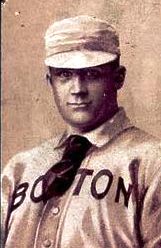
Lovett pitched in only 14 games and had a 3-5 record before hurting his arm again.  The following season he pitched for the Boston Beaneaters until he was released in July.  His Major League career over, Lovett finished 1894 in the Eastern League with the Providence Clamdiggers and spent 1895 with the renamed Providence Grays in the same league.

Lovett, with Boston 1894

Lovett, most likely baseball’s first true hold out, spent the rest of his life in Providence and died in 1928.