Tag Archives: Pittsburgh Pirates

“Women have been the cause of Ruin of more Good Clubs than Anything Else”

17 Oct

In 1907 Hugh Fullerton wrote in The Chicago Herald about the outside influences that he felt did the most damage to a ballclub:
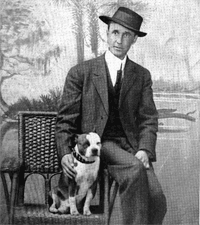
Hugh Fullerton

Hugh Fullerton

“There are dozens of things that happen to keep a team from landing a pennant about which the general public is entirely ignorant and which never can be explained clearly.

“For instance, one of the mysteries of baseball was the breaking up of the famous White Stockings team.

“Hundreds and thousands of people cursed the management of the Chicagos for selling off star players and wrecking the club—and few ever knew why it was.  The management felt worse over it than the fans possibly could feel—but it was inevitable.  A scandal in the club concerning two members and the wife of one of them started the trouble.  Threats to kill each other were made—and the disruption of the club became absolutely necessary.  The sale of (Mike “King”) Kelly (1887) and (John) Clarkson (1888) was the beginning –and after a time all parties to the scandal were let out—and Chicago was given a decade of losing clubs.”

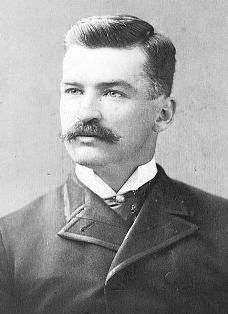
Mike "King" Kelly

Mike “King” Kelly

He claimed the reason for the breakup of the White Stockings was a common one.

“Women have been the cause of ruin of more good clubs than anything else.  They need not necessarily be bad women.  There was one club in the old twelve-club National League which, for two years, was knocked out of all chances of winning merely because the wife of one of the players was an inveterate gossip.  She knew everything that went on in the club and retained it until she had half the players up in arms against each other.

“One of the best manager s in the country today frowns upon all women and his players, under his direction, forbid their wives to mention the subject of baseball to each other.  The result is that there is the best feeling in the club.  Almost every member of the team is married, their wives meet socially at all times—and baseball is tabooed by common consent.

“I know a catcher, one of the toughest, hardiest fellows in the business, who nearly was ruined as a catcher by the women of the club.  He was so strong and tough that you couldn’t have dented him with an ax, but one day he split his hand a little bit.  He thought nothing of it, and was ready to catch the next day when the women got to pitying him and telling him he ought to take good care of it.  When he left the grounds he had tied up the injured place with a rag—and was all right.  By the next morning he was ready to go to the hospital—and he did lay off for two weeks, all because the women made a martyr of him.”

But, according to Fullerton, there was something almost as bad for a baseball team as women:

“Horse racing, however, has ruined almost as many clubs as women have.  Once a team gets interested in horse racing, and so far as winning goes, it might as well disband.

“One of the greatest troubles in the present New York National League team is the devotion of some of the players to the racing game.  (John) McGraw himself has been so successful at it that baseball has become sort of a side issue.  Many of his players have followed his example, and the result is they think more of horse racing than of baseball.

“Racing did more to wreck (Ned) Hanlon’s championship Brooklyn team than any other thing.  The Washington Park grounds are so close to the Brighton and Sheepshead tracks that players could see two or three races before the game.  Eventually baseball was forgotten and the conversation in the clubhouse dwelt only on horse racing.

(Cap) Anson had a crowd of horse race fans for several years, and the result on the work of the team was something frightful.  They talked horse racing even on the field, and had the telegraph operators throwing out messages telling what horses had won.”

And, he said, gambling in general had been detrimental to the Giants during the years Andrew Freedman owned the club (1895-1902):

“There always was a crap game or a poker game in the clubhouse, and the stakes were so high that bitter feeling was endangered.”

While Fullerton, for the most part, avoided naming names, he did single out one former Chicago manager, who had died five years earlier, for presiding over teams that were “ruined” by gambling:

“The Chicago team the second year under Tom Burns (1899) was wrecked by the same sort of deal, the manager setting a bad example in that respect.  Burns also was charged by the Pittsburgh owners with ruining their club, when he was manager (1892), by permitting and encouraging gambling.”

Tom Burns

Tom Burns

Lost Advertisements–George Gibson for Coca-Cola

13 Oct

gibsoncoke

Pittsburgh Pirates Catcher George Gibson was coming off one of the most impressive seasons ever–he caught in 134 straight games and a total of 150 for the World Series Champions–when this advertisement appeared:

George Gibson of the Pittsburgh Nationals

(Champions of the World)

led the league as a catcher with a percentage of .983 and caught more games than any other catcher last year.  He writes us that he is enthusiastic about Coca-Cola.  You, too, will like Coca-Cola, because it relieves fatigue, refreshes, quenches the thirst and is absolutely wholesome.

The Coca-Cola Company wanted to attribute Gibson’s iron man performance in 1909 to his choice of beverage, but before the season Gibson, from his home in London, Ontario wrote to Barney Dreyfuss, Pirates president and told him about his secret for getting in shape for the campaign.  The Pittsburgh Dispatch printed the letter:

I had a letter from (Pirate outfielder John) Chief Wilson the other day.  All he writes about is hunting.  He says the quails are so thick down where he is (Bertram, Texas) that you have to cut a path through them when you go hunting.  Nothing like that up here.  I have seen a lone jack rabbit this season and I have been chasing him to keep in condition, but to date I have not captured him.  He is the limit for speed.  One jump and he lands in the next town.  He would make a good trainer.  If I can catch him alive I will take him to Hot Springs and let the boys get in condition by chasing him.”

Bad Bill Eagan

6 Oct

William “Bad Bill” Eagan was just 35-years-old when he died from tuberculosis in 1905, but many people didn’t believe it when the news was first reported. The hard-living Eagan’s demise had been predicted and reported several times. In 1901, the year after his professional career ended, The Fort Wayne Sentinel said:

“’Bad Bill’ Eagan who died two or three times last year, is running a poker room in Detroit. Eagan dies on the average of three times a year and is about due for the first of this year’s series. Eagan captained and played first base for Youngstown before his second demise last season.”

Bad Bill

Bad Bill

In 1899 Connie Mack told The Philadelphia North American:

“Eagan would be one of the best second basemen in the business if he would keep in condition.”

He quickly wore out his welcome during all three of his brief stints in the big leagues. The first, with the St. Louis Browns in the American Association in 1891, ended, according to The Syracuse Standard after an incident with team owner Chris von der Ahe:

“(Eagan) was a jolly fellow and not afraid of discipline. The Browns got on a train at St. Louis to come East…von der Ahe’s nasal organ was rather large and red for its age and ‘Bad Bill’ determined to have some sport.

“Walking up to his employer, he caught the nose between his fingers, and said: ‘Say, Chris, how much did it cost to color that?’

“The owner of the cerise nose was furious with rage. He released Eagan at once. The train was ninety miles east of St. Louis, and at von der Ahe’s order the conductor put the nose twirler off the train.”

Two years later Eagan joined ‘Cap’ Anson’s Chicago Colts. Hugh Fullerton told the story of how he wore out his welcome there after just six games:

“Anson was a quick thinker on the ball field, but once he released the best second baseman that ever wore a suit for thinking a little quicker than anybody else on the nine.

“The second baseman in question was “Bad Bill’ Eagan. Everybody who remembers ‘Bad Bill’ will admit his supremacy on the second bag. When the play we celebrate came up there was a base runner on second. Chicago was one run to the good, and it was in the last half of the ninth inning.

(Bill) Dahlen was playing third base for Chicago. The man hit a sharp liner down to second. ‘Bad Bill’ started for it and at the same instant the man started for third base.

Bill Dahlen

Bill Dahlen

“The liner was a clipper and the ball struck ‘Bad Bill’s’ hands and bounded out. It struck the ground ten feet away, with ‘Bill’ right after it. Once he got his hands on it and without stopping to look where he was throwing. ‘Bill’ let the ball fly to third base.

“Most ball players after fumbling the ball would have tossed it to the pitcher or thrown it home if, after looking around, they saw that the base runner had started to try to score.

“In this case the base runner, after touching third, went on for twenty feet and then stopped for an instant to see what had become of the ball. He saw it coming straight as a die for third base, and went back there like a flash. But the ball beat him by ten feet. Unfortunately for the game, and also for “Bad Bill,’ Dahlen had taken it for granted that Eagan would throw the ball to the home plate, and was not looking for it to be thrown to him. Consequently the ball went by him, going within four inches of his nose, and striking the grand stand far behind.

“The result was that both base runners got safely home before Dahlen recovered himself and the ball, and the game was lost to Chicago.

“Anson was furious and immediately after the game gave ‘Bad Bill’ his release for making that throw. As a matter of fact, it was the best possible play under the circumstances, and Dahlen, rather than “Bad Bill’ was to blame for it not coming out as planned. If ‘Dal’ had thought as quickly as ‘Bill’ the game might have been settled right then and there.”

Eagan received one more trial with a major league team in 1898. He started the season on the bench for the Pittsburgh Pirates, but was given the opportunity to start when regular second baseman Dick Padden left the team over a dispute with Manager Bill Watkins in May.

Eagan hit .328, but committed 10 errors in 19 games. He was sold to Louisville Colonels on June 5. The Louisville Courier-Journal said:

“He is a clever fielder, a fair batsman, extremely aggressive and absolutely fearless (and will) certainly strengthen the team in one of its weakest spots.”

But he never appeared in a game for Colonels. The following day The Courier-Journal said the deal was off, and Manager Fred Clarke would only say, via telegram:

“Called deal for Eagan off for good reasons.”

The Colonels passed on Eagan despite being a team badly in need of a regular second baseman—Clarke tried nine different men there during the season, and his primary second baseman, Heine Smith hit .190 and committed 16 errors in 26 games.

Eagan finished the 1898 season with the Eastern League’s Syracuse Stars, where he had played from 1894 to 1897. He finished the year of 1898 in jail in his native Camden New Jersey.

That story Wednesday

“This Fellow has about as much Judgment of Balls and Strikes as a Six-year-old Kid”

10 Sep

Umpire baiting was an art form for managers like John McGraw.  In 1906 Tim Murnane wrote in The Boston Globe about the way McGraw, and his players, intimidated a first-year umpire named John Conway during a game between the New York Giants and Boston Beaneaters.

On May 1 the Giants had defeated the Beaneaters 7 to 5, and according to Murnane:

“I was very much interested with the tactics of the Giants in a game here, when they found the clever Irvin Young in the box, and knew it would take extra work to defeat the local team.

“Umpire Conway was behind the bat in this game, and the New York boys went after the young umpire from the first ball pitched until the last man went out.  Conway was consistently giving Young the small end of the decisions on balls and strikes, and yet the New York men tried to make it appear that he was giving them a terrible roast.  The Giants worked like sailors, never letting up;  in fact, their good work with the stick and on the bases was commendable in every way, and what they were saying to the umpire could only be heard in the front seats, and perhaps that was a good thing for the game.”

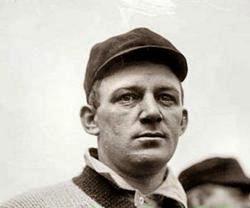
Tim Murnane

Tim Murnane

Murnane said the actions of the Giants were reminiscent of those of McGraw and other members of the Baltimore Orioles in the 1890s, but “this time it was umpire and not their fellow players,” who were the target:

“As each man passed the umpire they would make some remark, until finally (Dan) McGann, (Roger) Bresnahan and McGraw were put out of the grounds by Conway.  Note the four names, all of Celtic origin, every man out for a salary, the umpire doing his best to please, and doing it certainly in a fair way to the visitors, and yet the trio must be doing something for effect, perhaps to give the umpire something to think of when he went to New York, or perhaps to affect his work in the next game.  There was an object in the uncalled-for nagging.  The result was that Pitcher Young was actually affected, and put up a weak all-round game as the contest went along, the Giants finally winning out as a result of his poor work.”

The Giants doubled-down on their harassment of Conway after the game was over.  Murnane said Fred Knowles, the Giants Secretary,

“(I)nformed me that the New York players complained of Conway’s breath, saying that he had been drinking and was under the influence of liquor during the game.  What are the honest facts?  A friend of mine at the same hotel with Conway and Bob Emslie (the other umpire) told me that he was with the umpires the night before, as well as that morning, and heard them refuse to take a drink of any kind.  I was speaking to Conway just before the game, and took pains to note if he had been drinking, and I can say positively that he had not.”

Murnane’s comments are curious, given that he said Knowles informed him of the accusation after the game, yet he claims he “took pains” to confirm whether Conway was drinking before the game began.

“Now, doesn’t it seem unfair to pass around cold-blooded lies about an umpire doing his duty, to a management who naturally listens to stories of this kind, and then tries to make it easy for players?  I could forgive every act of the New York men, as they are out for blood, and are fine ballplayers, but I must pass up players who will try to harm a good, honest fellow, for Conway is a good umpire and had the nerve to pick the big fellows out, and no two men in the business need the call-downs that McGann and Bresnahan do.”

Murnane’s Boston colleague, Jacob Charles Morse of The Herald, called the Giants actions “reprehensible,” but said the umpire was partially to blame:

“Had Conway started in at the very first a lot of trouble might have been obviated, but it was not until he had allowed the New Yorks to kick at strikes and decisions, to leave their places, something strictly forbidden by the rules, and to bellow like bulls.  Bresnahan could be heard all over the field telling the umpire to ‘get out.’  Early in the game a bunch gathered around the umpire without the least expostulation, and went back to their places when the seemingly felt like it.”

Despite McGraw, McGann and Bresnahan receiving three-game suspensions for their actions, Morse said “The penalty imposed for the actions of the individuals was ridiculously light; not at all commensurate with the gravity of the offense.”

Things did not get any easier for Conway.

He had another run-in with the Giants at the end of June which resulted in another McGraw ejection.

He was also assaulted by two different St. Louis Cardinals; William “Spike” Shannon in June, and Mike Grady in August.  The August incident, during a game in Boston, required police to escort Conway from the field and resulted in a three game suspension for Grady.

Mike Grady had two altercations with Conway

Mike Grady had two altercations with Conway

After a second incident with Grady; this time in Pittsburgh on September 4, The Pittsburgh Press took the side of the Cardinals catcher, and harshly criticised Conway:

 “Umpire Conway officiated the game at Exposition Park yesterday afternoon.  To be more exact, a man named Conway attempted to imitate a real umpire, but the attempt was a failure…this fellow has about as much judgment of balls and strikes as a six-year-old kid, and he makes some of the weirdest mistakes ever seen.  To make matters worse, Conway thinks he is funny and laughs at his poor decisions…The Press never condones umpire baiting, but Conway called one strike on Grady that was not within two feet of the plate, and it is little wonder indeed that Michael was exasperated.

“It is to be hoped that Conway’s career as an umpire in the National League will end with the present season.  There are a score more competent men umpiring in the minor leagues today.  Conway is not fit for the position he occupies.  He takes trouble with him wherever he goes, owing to his inefficiency.”

National League President Harry Pulliam apparently agreed; Conway was not retained for the 1907 season.

He joined the Eastern League in 1907, but trouble continued to follow him.  In June he was assaulted by Toronto Maple Leafs second baseman Tim Flood—which resulted in Flood serving 10 days in jail.

Tim Flood

Tim Flood


Less than a week later, after the Jersey City Skeeters scored a run in the ninth inning to beat the Newark Sailors 2 to 1, Conway was attacked by fans in Newark’s Wiedenmayer Park.  The New York Times said:

 “A mob waited after the game until Umpire Conway left the dressing room on the grounds for the train, and when he appeared in the street the mob hooted, hissed and threw mud at him.”

He was escorted to the train station by “a squad of policemen.”

Just weeks into the 1908 season Conway decided he had enough, and resigned.  The Sporting Life said he “quit umpiring to go into business.”

Conway never worked a professional game again, although he worked several Ivy League games before giving it up all together in 1910.  He died in Massachusetts in 1932–the same year McGraw, too ill to continue baiting umpires, resigned as manager of the Giants.

A Goat and a Dog

9 Jul

Edward John “Goat” Anderson played just one season in the major leagues, hitting .205 for the Pittsburgh Pirates in 1907.  He also played 10 seasons in the Central, Eastern and Western Leagues.

Described as eccentric, he made an impression on The Fort Wayne Sentinel in 1903, his first professional season with the South Bend Greens:

“’Goat’ Anderson who made it a rule during the games here to leave his post and come into the infield to argue every point raised by the umpire’s decisions, has stamped himself as the prize rowdy of the association.”

The Pittsburgh Leader said Pirate outfielder Tommy Leach had recommended the team sign Anderson, and told a reporter in the spring of 1907 that Anderson made the team because he was willing to stand up to Manager Fred Clarke while training in Hot Springs, Arkansas:

“(Clarke) had told Anderson to bunt at the signal from a man on first…The ball was pitched five feet outside, and of course, the catcher flagged the man going to second.  Anderson made no move to bunt or even to strike at the ball.  Clarke started to call him.  ‘Shut up,’ you don’t know all there is in the books,’ Anderson replied.  The answer made Clarke gasp…’All right, son,’ grinned Clarke.  ‘I guess you haven’t got stage fright when you can give it to your manager that way.’”

Edward John “Goat” Anderson

Edward John “Goat” Anderson


His excellent fielding, .343 on base percentage and 27 stolen bases with the Pirates impressed the local press, if not the fans.  George Moreland of The Pittsburgh Press said:

“Some fans are of the opinion that “Goat” Anderson, the hustling little right fielder of the Pittsburgh team, is not much of a general use to the Pirates, and that a good move would be made to get another man for the job.  These same fans are the ones who believe that a ballplayer is not worth his salt unless he is a slugger of the Wagnerian stripe…Manager Fred Clarke knows how to win games, and he also knows where to place a player in the batting order to get the most out of him.  That is the reason that the ‘Goat’ has been put at the top of the list to lead off.  It is not that Anderson makes a large number of hits.  Even when he does hit, he has difficulty in getting the ball out of the diamond.  But, somehow or other he manages to get to first base just about as often as any of them and when he does get there he is not slow about getting around the circuit.”

The Leader was even more enthusiastic about the new outfielder:

“The way little Goat Anderson has been hitting the ball and running bases insures him a permanent berth in the outfield.  Anderson has proved one of the finds of the season.  If there ever was another Wee Willie Keeler it is Anderson.  He is a ‘drop hitter’ of the Keeler style, and can run bases and bunt with the star of the New York Highlanders.  As a matter of fact, Anderson is of more value to the team than Keeler, because the latter’s star seems to be sinking.”

Despite the praise, Anderson was sold to the Rochester Bronchos of the Eastern League in January of 1908.

While with Rochester, Anderson attempted to get a patent on a sliding pad he invented; there is no record of a patent being awarded.  He also suggested a novel idea for improving his batting average.

The Lexington Herald said Anderson, who trained in Kentucky with the Bronchos before the 1909 season made this recommendation:

“Cut down the size of the home plate and I’ll hit .500 as long as the season lasts.  Where the front of the home plate is seventeen inches wide make it 10 or 12.  Then the batter will be able to get an even break with the pitcher, who now has everything in his favor.  With a home base half its present size a pitcher would need perfect control to get the ball over.  All this business of cutting across the inside and outside would be a thing of the past.  There wouldn’t be enough of the plate to give the pitcher the advantage of feeding outside low ones that can only be hit into someone’s hands…With a home base ten inches wide the ball would have to look pretty good right from the start, and if it didn’t a batter could easily pass it up.  There would be more bases on balls at the start, and that would mean a base on balls or a hit, or a hard liner that would bring a fine fielding play.  A smaller plate seems to me to be the thing.”

The small plate was the wish of a man who hit .222, .201 and .138 from 1908-1910 in Rochester.

Goat Anderson saved his greatest moment for his final season in professional baseball.  As the manager and leftfielder for the Terre Haute Terriers (or Terre-iers) in the Central League, he filed one of the most unusual game protests in history.

Goat Anderson (2), with the Terre Haute Terriers.

Goat Anderson (2), with the Terre Haute Terriers.

The Terriers were leading the Fort Wayne Champs 6 to 0 in the bottom of the seventh inning during the first game of a doubleheader.  Fort Wayne had a runner on first base with no outs with catcher Harry Martin at the plate.  The Fort Wayne Daily News picks up the story:

“Martin poked a drive into left field.  The ball rolled almost to the club house with ‘Goat’ Anderson in full cry after it.  Then came the cause for the protest in the person of Don.”

“Don” was a Great Dane who belonged to a Fort Wayne man named Ed Longfield.

“Don can’t bite, and wouldn’t if he could, but Anderson didn’t for sure know that, so ‘Goat’ hesitated a second in chasing the ball and Martin got a triple, Ted Anderson scoring. “

Fort Wayne went on to score six runs in the inning to tie the game and scored a run in the 10th to win 7 to 6.

The Fort Wayne Journal Gazette said:

“Toothless Don, Ed Longfield’s dog, is supposed to be harmless.  Goat Anderson, Terre Haute manager and left fielder evidently doesn’t think so and because dog Don jumped at him during the seventh inning romp in the first game yesterday Goat will file a protest with President (Louis) Heilbroner, requesting the game be played over.”

Heilbroner ruled against Anderson’s protest saying the play did not have a sufficient impact on the outcome of the game, but he did order that Don would no longer be allowed on the field during games.

Terre Haute finished fifth in the six-team league with 60-79 record.  Anderson was rumored to be considering offers from Federal League teams for 1914, but never signed with a team and his career was over.

He returned to his home in South Bend, Indiana.  He died of stomach cancer 10-years later at age 43.

“The Contest is going to be the Hottest in the History of Baseball”

6 Jun

Just weeks into the 1892 season, National League president Nick Young declared the newly expanded league, which absorbed four franchises from the defunct American Association and included the only scheduled split-season in major league history, an unqualified success.

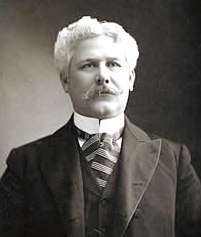
Nick Young

Nick Young

The schedule, which called for the first half to end on July 15, and the second in later October, necessitated starting league play two weeks earlier than 1891 resulting in a large number of early season games being played in inclement weather.

Young spoke to a reporter named Max Ihmsen, who usually covered politics for The Pittsburgh Dispatch, about the state of game

“(T)here is no doubt of the overwhelming success of the new deal.  Considering the wretched weather that prevailed everywhere during April the showing, both financially and as to skill displayed, has been remarkable.  Everyone is making money, and I look for the most successful season ever known in the history of the game.  The reconciliation of the clashing interests, a reconciliation effected during the past winter, has been the salvation of the sport…This year there is every prospect of each club quitting a big winner.  Never before have such games, as are now being put up, been seen.”

Young said an April 19 doubleheader in Chicago, which brought in $4,000 accounted for the league’s highest single-day gate receipts of the season so far.

As for the pennant race Young said:

“The contest is going to be the hottest in the history of baseball.  Everybody is ‘out for blood,’ and at the close of the season I anticipate seeing a tie for every place up to fourth or fifth.  A difference of 10 or 15 games between the highest and lowest clubs will reflect no discredit on the lowest club…All the clubs are in good shape and I expect quite a number of absolutely errorless games will be recorded before the season closes.”

Young got nearly everything wrong.

At the close of the season, Ernest J. “Ernie” Lanigan said in The Philadelphia Record that only two teams (Cleveland and Pittsburgh) operated in the black.  He said their profits were less than $20,000 combined while “ten clubs have lost in the neighborhood of $150,000.”

O.P. Caylor said in The New York Herald the league’s financial state was a “disaster more astonishing than any which have preceded it and knocks the hot air out of President Nick Young’s prosperity balloon, which went sailing up so grandly.”

At a June meeting in New York team owners agreed to cut rosters from 15 to 13, and the salaries for the remaining thirteen players were cut (as much as 40 percent).  At the same time, they increased to 12 ½ percent the 10 percent of gate receipts each club was assessed to pay off the debt incurred to buy out the American association franchises that were not absorbed into the league.

Caylor said salaries would continue to fall and “This is the year when the owners of huge blocks of baseball stock are not classed with the Vanderbilts, Goulds, Astors, and Rockefellers.  Every one of the holders has been ‘touched’ heavily, more or less, by the financial disappointments of the year.”

The Baltimore Sun put it more succinctly:

“The season has been a failure financially.”

The Boston Beaneaters won the first half (52-22) over the Brooklyn Grooms (51-26), after the June roster and salary reductions, the Cleveland Spiders (fifth place with a 40-33 record in the first half) won the second half (53-23) over the Beaneaters (50-26).

Initially, Boston owner Arthur Soden said his team would not meet Cleveland in a post-season series as a result of charges in Boston that his team tanked the second half.  He told Caylor:

“You cannot make a large number of our patrons believe that the Boston club has not purposely lost the last championship for the sake of making money out of a series of finals.  That belief has hurt us to the extent of thousands of dollars during the last half of the season, and unless it be removed will hurt us equally as much next season.  The only way we can remove the wrong impression is by refusing to play.”

Caylor said at the October owners meeting “the rest of the league took up the case and literally forced the Boston club to play…Boston’s refusal to play would do more harm to the interests of the League at large than the Bostons could possibly suffer by the playing of the games.”

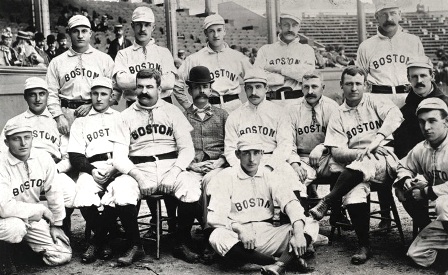
The nine-game championship series began with an 11-inning pitching duel between Boston’s Jack Stivetts and Cleveland’s Cy Young that ended in a 0-0 tie.  Boston swept the next five games.

The Boston Beaneaters

The Boston Beaneaters

The split schedule and the resulting longer season were dropped for 1893.

Max Ihmsen, the reporter Nick Young spoke with, became city editor of The New York Journal, a William Randolph Hearst paper, in 1895.  Ihmsen went on to manage Hearst’s unsuccessful campaigns for mayor of New York City and governor of New York; he was also the Hearst-backed candidate for Sheriff  of New York County in 1907, a race he lost to the Tammany Hall-backed candidate.

Ihmsen later became the managing editor of another Hearst paper, The Los Angeles Examiner.  He died in 1921.

“Why don’t you make Latham keep still?”

2 May

After winning the first three games of the 1894 season, the Cincinnati Reds dropped six of their next seven.  The Cincinnati Enquirer’s Harry Weldon said most of the players weren’t “fighters.”

“To be a ‘fighter’ in the sense that this term is applied in baseball does not necessarily mean that you must be a leg breaker, a rib crusher or indulge in billingsgate or profanity to your opponent.  It simply means that your mind must be on the game every minute and every second while it is in progress.  It means that you must watch every movement and point and be alert for any opening, however small.

“The Reds are as gentlemanly a team as there is in the league, and it is to their credit that they are so; but there is such a thing as carrying the matter too far.  There is an old adage about ‘fighting the devil with fire’ that some of our local players would do well to follow.  This advice is apparent.  There are times when ‘Excuse me please,’ and ‘I beg your pardon,’ won’t do.  The men to whom they are addressed don’t know what that sort of language means.  In other words, when you are in Rome do as Romans do.”

Weldon said some players were critical of the behavior of Reds third baseman Arlie Latham.  Latham was a Weldon favorite; the two had been friends since Weldon served as secretary for St. Browns President Chris Von der Ahe while Latham played there:

Arlie Latham

Arlie Latham

“There are a few growlers and soreheads who find fault with Latham for talking too much.  I cannot sympathize with such criticism.  Latham does not coach because he likes it or to be ‘funny’ and ‘work the grand stand,’ as many of his detractors would have people believe it.  I once heard one of the soreheads say to Captain (Charlie) Comiskey: ‘Why don’t you make Latham keep still?’

“’Do you want me to put him out of the game?’ replied the Reds’ captain.

“’No, I only want you to make him stop talking.’

“’Well, if I did that, he might as well be out of the game, for he would lose his interest.’

“Every word of this is true.  Latham is too much interested to keep still.  Hardly a ball is pitched in the game by the Reds’ pitchers that Latham from third base doesn’t have something to say.  Scarcely a movement is made at the bat, on the bases or the coaching lines that Latham doesn’t deliver some wordy instructions.

“He is in the game from start to finish.  He couldn’t be funny ‘to order’ to save his life.  The ludicrous and witty sallies he makes from the coaching lines just bubble out of him.  He doesn’t ‘day dream’ or ‘build air castles’ while a play is in progress as some players do.

“His mind is right on the business on hand.  He is a fighter all over.  There are others on the Cincinnati team who would do well to follow his example.  The Pittsburghs and Clevelands are examples of what fighters can do.  Every member of those teams was in the game all the way through when they were here.  Not a play occurred that they were not on their feet hustling and shouting.  The Reds should fall in beside (Latham) from now on and back him up with spirit and noise.

“Nothing pleases a crowd of local enthusiasts more than a scrappy game.  If you have got to go down, boys, do it with all your banners flying.  Fight it to the last-ditch, and then if you are whipped you’ll know how it occurred.”

Harry Weldon

Harry Weldon

The Reds never started fighting in 1894, and finished in tenth place with a 55-75 record; it was Comiskey’s final season as a major league manager, and his least successful.  The following year he purchased the Sioux City franchise in the Western league, and moved the team to St. Paul.

Latham, who hit .313 in 1894, had his final productive season the following year, hitting .313 for an improved Reds club (66-64) managed by William “Buck” Ewing.

Weldon was sports editor of The Enquirer until he suffered a stroke in February of 1900 at age 45, he died two years later.  Ren Mulford Jr., who succeeded Weldon as editor said:

“No more forceful writer on sports topics ever played upon the keys of a typewriter.”

“Foster you are Released”

17 Mar

Elmer Ellsworth Foster’s career as a pitcher ended on August 26, 1884.  He had been out for three weeks with “an injury to the tendon in his right arm,” when he took the mound for the St. Paul Apostles in a Northwestern League game against the Milwaukee Brewers.  The 22-year-old was 17-19 with 1.18 ERA when he took the mound at St. Paul’s West Seventh Street Grounds.

The St. Paul Daily Globe said:

“When the popular favorite took his position in the box in the last half of the first inning the audience received him with an ovation of cheers, to which he responded by raising his cap.  A moment later he pitched the first ball, a sharp crack was heard distinctly all over the ground and the sphere went spinning ten feet to the right of the batter.  Foster turned pale, but stood in his position until the players in the vicinity reached him.”

He had “snapped the bone of the right arm just above the elbow,” and after Foster left the field a collection was taken up among the fans “A few minutes later it was announced that $172 had been collected.”

He made it to the major leagues two years later as an outfielder with the New York Metropolitans in the American Association, and played parts of five seasons in the American Association and National League.  A consistent .300 hitter in the minors, Foster hit just .187 in 386 big league at bats.

According to The Sporting Life, his manager with the New York Giants in 1888 and ‘89, Jim Mutrie considered him “one of the best fielders in the country, and the only reason New York ever let him go was because he didn’t show up well with the stick in fast company.”

Elmer Foster

Elmer Foster

Sportswriter Hugh Fullerton said he excelled at other things as well:

“The rowdy of the rowdies was Elmer Foster.  Handsome, well bred, clean cut and with it all, well educated and something of an actor.  Foster was in baseball for the fun of it.”

From the time Fullerton joined The Chicago Tribune in 1897 until he left Chicago for New York in 1919 Bill Lange was probably the only 19th Century player he wrote about more often Foster.

Foster’s  best season was 1890 (.248 in 105 at bats and 5 home runs) with Cap Anson’s second place Chicago Colts after being acquired in late August.

Foster started the season with his hometown Minneapolis Millers in the Western Association (he hit .388 in his first twelve games), but fell out of favor with Manager Sam Morton after he and a teammate named Henry O’Day were arrested and fined in Milwaukee for public intoxication in May.

Foster was benched, but the team refused to release him, and by mid-July he was ready to take the Millers to court.  The St. Paul Daily Globe said:

“(Foster) threatens to bring suit against the management to compel its members to give him his release.  His claim will be that they are unjustly preventing him from earning a livelihood.  There is a possibility that the threat may be only a bluff, but should such a trial be put on, it will be of much interest in Western baseball circles, as it will be the first of its kind in this section.”

The Millers finally chose to release Foster rather than fight a lawsuit.  Foster was rumored to be headed to several different teams, but finally signed with the Colts on August 27.

After his strong September in 1890 Foster began the ’91 season as the Colts center fielder, but it didn’t last.

Fullerton said Foster sealed his fate with Anson during the opening series:

“We were going to Pittsburgh, and just before we arrived in town on the unearthly jump from Chicago to Pittsburgh, via Cleveland, Anson came along and sat facing us.

“’Foster,’ He said ‘The next time you take a drink, or anyone on the club takes a drink with you, I’ll release you.’

“’All right, Cap,’ said Foster, cheerfully.

“We arrived in Pittsburgh, and while Anson was registering the club at the desk Foster said: ‘Let’s go have a cocktail.’

“’Better be careful, Elmer, the old man is sore,’ I remarked.

“But we went.  The mixologist had just strained the cocktails into the glasses when Foster, looking into the mirror, spied Anson in the doorway.  He turned and, bowing low, said sweetly “Captain anson, will you join us for a drink?’

“’No,’ thundered Anson.  “Foster you are released.

“And now that I am released, Captain Anson,’ said Foster, ‘will you join us in a drink?”

Unlike many of Fullerton’s story, the basic facts (if not the part where he included himself in the story) are confirmed by contemporaneous accounts.  The Chicago Tribune said on April 26 after the Colts four-game series with the Pirates:

“Elmer Foster is not with the club and he has probably played his last game with it.  He and (Pat) Luby last night at Pittsburgh were drinking and Anson fined each $25 and ordered them to go to bed.  They paid no attention to the order and the fine was increased to $50.  This morning when the team was ready to go to Cincinnati Anson gave foster a ticket to Chicago and sent him home.”

Luby was not sent home and lost to the Reds 1 to 0 the following day.  He was fined several times for drinking during the 1891 season, and after a promising 20-9 rookie season in 1890 he slipped to 8-11, and followed it up with an 11-16 season in 1892 before Chicago let him go.

Foster was suspended without pay and finally released on May 11.  He was immediately signed by the Kansas City Blues.

Foster played well in Kansas City, hitting .300 in 70 games for the second place Blues, but was released in August.  The Kansas City Star said:

“One of the sensations of today is the unconditional release of Elmer Foster whose behavior on the present trip has been disgraceful”

The paper said Manager Jim Manning was forced to make the move, not just because of Foster’s drinking, but because he “has been largely instrumental in leading other members of the team astray.”

His replacement, Joseph Katz, acquired from the Grand Rapids Shamrocks in the Northwestern league hit just .225 in the final 25 games.

In December of 1891 The Minneapolis Times said:

“Elmer Foster, the ballplayer, yesterday secured $25,000 through the will of his dead mother, and today announced his permanent retirement from the diamond. “

With the exception of one game in 1895 (he went 1 for 2) with the Millers, Foster was true to his word and quit baseball at the age of 29.

Foster retired to Minneapolis where he operated a piano and organ store with his brother, did some acting and occasionally said he was considering running for the Minneapolis City Council or the Minnesota State Legislature, although there is no record of his ever officially filing to run for office.  He also worked as a scout for the Pittsburgh, and signed Ralph Capron out of the University of Minnesota for the Pirates.

After Fullerton moved to New York and stopped writing about Foster the “The rowdy of the rowdies” faded into comfortable obscurity in Minnesota.  He died in 1946 at age 84.

Some of Fullerton’s less reliable stories about Foster on Wednesday.

“Zimmer was not to be frightened.”

20 Jan

On March 28, 1907 the New York Giants took the field against the Philadelphia Athletics in the second game of a five-game exhibition series at New Orleans’ Athletic Park.

The umpire was new.  Charles Louis “Chief’ Zimmer, after a 19-year career a major league catcher had tried his hand at managing in 1906.  His Little Rock Travelers finished last in the Southern Association with a 40-98 record.

Chief Zimmer

Chief Zimmer

The Atlanta Constitution said:

“Zimmer underestimated the strength of the league, and brought men into it who did not have the goods to deliver.”

After Zimmer was dismissed by Little Rock he joined the Southern Association’s umpire staff.

The Giants/Athletics series would be among his first games as a professional umpire.

The Giants won the first game 4 to 3.  The Giants scored two runs with two outs in the bottom of the ninth off Jack Coombs for the victory.  The Philadelphia Inquirer said:

“Zimmer umpired a god game… (but) the rowdy element in the Giants broke loose frequently, and the Chief had many disputed with some of the men.”

The second game did not go as well.  The Inquirer said:

“The Giants were the first at bat, and the first two men were retired. (Art) Devlin and (Cy) Seymour then signaled safely to the outfield, each moving up a base on (Rube) Oldring’s throw…(Frank) Bowerman was then up to the bat.  (Eddie) Plank soon had two strikes and one ball on him.”

With a one and two count the Giants claimed Plank balked when he threw to third and picked Devlin off.  Zimmer said he didn’t.  Roger Bresnahan and Mike Donlin, coaching at first and third, “rushed at Zimmer from the coaching lines and a wordy war ensued.”  Manager John McGraw came out of the dugout and ‘a half hour was consumed in ‘beefing.’”

Eddie Plank

Eddie Plank

Zimmer finally ordered McGraw back to the bench and:

“Play was about to start again when a remark made by McGraw caused Zimmer to order McGraw off the grounds.  The New York manager refused to go, and a lively tilt between him and Zimmer took place, the entire New York gang surrounding the “Chief” in an effort to bulldoze him.  But Zimmer was not to be frightened.”

New Orleans police officers came out on the field as Zimmer declared the game a forfeit after a half inning.

McGraw said his team would not play in the game scheduled two days later if Zimmer was the umpire.  The Inquirer said Athletics Captain Harry Davis “informed McGraw that inasmuch as the giants had turned down Zimmer as the umpire the series might as well be called off.”  New Orleans Pelicans owner Charlie Frank also threatened to bar the Giants from Athletic Park.

On March 30 McGraw arrived at Athletic Park with only nine players consisting of “nearly all the youngsters in camp.”

With both teams on the field, Zimmer approached the Giants dugout and asked for the team’s lineup and was told the Giants would not play if he were not replaced as umpire.  Zimmer announced that the Giants had again forfeited and the Giants left the ballpark.  Frank’s New Orleans Pelicans took their place and pitcher Mark “Moxie” Manuel defeated the Athletics and Rube Waddell 4 to 2.

Waddell--lost to the New Orleans Pelicans

Rube Waddell–lost to the New Orleans Pelicans

The series was over.

Before the Giants left New Orleans that evening, McGraw confronted Thomas Shibe, business manager of the Athletics and son of team president Ben Shibe, in the lobby of the St. Charles Hotel.  The Inquirer said:

“Manager McGraw backed up the entire New York team, insulted Thomas Shibe…by calling him vile names.  McGraw alleged that Tom had informed several persons that he had heard McGraw using insulting language to Umpire Zimmer… pursuing the same cowardly tactics which have made him famous over all the base ball circuit (McGraw)did not keep within reach of Shibe.  He kept well within the group of rowdies which make up his team, and thus being forfeited from any attack from Tom, naturally was as brave as a lion.”

The paper said McGraw disappeared from the scene as soon as members of the Athletics arrived in the lobby.

Frank Leonardo Hough, baseball writer for The Inquirer, took McGraw to task for his actions, and charged the New York press with allowing McGraw and Giants’ management to intimidate them out of “writing the truth” about the team:

“The press of no other city in the Union would stand for the tactics employed by the Giants.  Such a condition of affairs would be impossible in Boston or in Philadelphia.  There are any number of thoroughly equipped baseball reporters in New York City—reporters who know the game from A to Z, who, if permitted to write the game as they see it, would be the peers of any bunch of critics the country over.  But, unfortunately they are under an awful handicap.  Let them criticize the Giants to the latter’s disadvantage and their occupation is gone.  They will be made to feel the displeasure of the august heads of the Giants by being debarred from the Polo Grounds.

“Now and then a paper will stand by its representative, but only in rare cases.  Charley Dryden, Sam Crane, Joe Vila, Eddie Hurst and numerous others were barred from the grounds.”

Hough said some reporters “stand on their manhood, and take up other fields of newspaper endeavors. But the majority of them, less favored perhaps, cannot afford to fight with the bread and butter, and consequently they are compelled to go along, glossing over the Giants’ bad breaks or bad playing as lightly as possible, while others crook the pregnant hinges of the knee until they become almost hunchbacked and ignore everything and anything that might reflect upon the Giants.  That is the reason why the New Yorkers are the best uninformed baseball public in the country.”

No disciplinary action was taken against McGraw; Giants owner John T. Brush was said to have reimbursed Charlie Frank for $1,000 in lost revenue. The Giants finished in fourth place in 1907, the Athletics third, as the Chicago Cubs ran away with the National League pennant, beating the second place Pittsburgh Pirates by 17 games.

Hough continued to write about baseball for The Inquirer despite being an investor in the Athletics (Hough and Sam “Butch” Jones of The Associated Press each held a 12 ½ percent stake in the team beginning in 1901—Jones became a full-time Athletics employee in 1906, Hough remained a sportswriter during the twelve years he held his stock).  He sold his stake to Connie Mack in 1912 and died in 1913.

Chief Zimmer’s tenure as an umpire did not improve much after his first experience in New Orleans.  He opened the season as a member of the Southern association staff, but on July 9 announced his resignation.  His final game was on July 13 in Nashville.

Lost Advertisements–Mike Martin’s Liniment

27 Dec

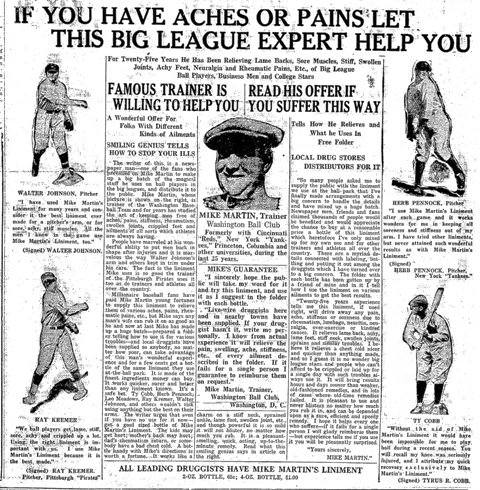
martinlinMike Martin spent 40 years with the Washington Senators as a trainer and scout; he was one of baseball’s first full-time trainers.  Martin was working as the athletic trainer at Columbia University when Clark Griffith hired him to work with the New York Highlanders, he followed Griffith to Cincinnati and then finally to Washington.

Martin began marketing the liniment he used on Walter Johnson and the rest of the Senators staff in the 1920s.  This 1925 ad featured testimonials from his good friend, Senator pitcher Walter Johnson, Herb Pennock of the Yankees, Ray Kremer of the Pirates and Ty Cobb (who rarely met a “cure” he couldn’t endorse):

“I have used mike Martin’s Liniment for many years and consider it the best liniment ever made for a pitcher’s arm, or for sore, achy, stiff muscles.  All the men i know in the game use Mike Martin’s Liniment too.”

(Signed) Walter Johnson

“I use Mike Martin’s Liniment after each game and it works wonders for me in keeping all soreness and stiffness out of my arm.  I have tried other liniments, but never attained such wonderful results as with Mike Martin’s Liniment.”

(Signed) Herb Pennock 

“We ball players get lame, stiff, sore, achy and crippled a lot.  Using the right liniment is important with us.  I use Mike Martin’s Liniment because it is the best made.”

(Signed) Ray Kremer

“Without the aid of Mike Martin’s Liniment it would have been impossible for me to play ball during the recent season.  You will recall my knee was seriously injured, and I attribute my quick recovery exclusively to Mike Martin’s Liniment.”

(Signed) Tyrus R. Cobb

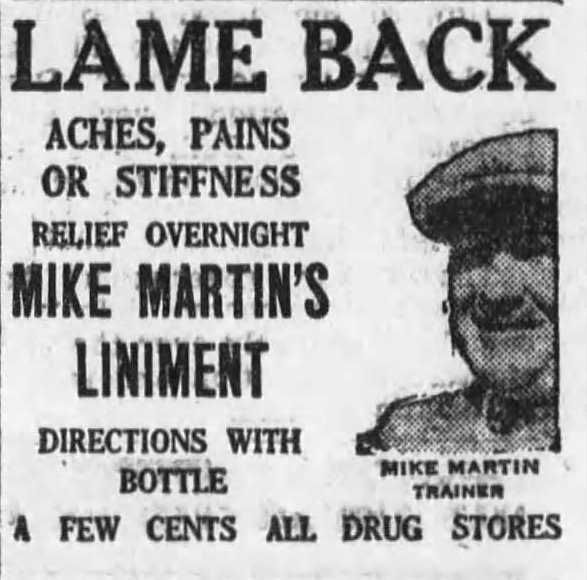
mikemartin1930

1930 advertisement

Martin remained the Washington trainer until 1946 when Griffith made him a scout.  He was still working for the Senators, and his liniment was still a popular product, in June of 1952 when the 67-year-old Martin was killed in a traffic accident near his Maryland home while driving to Griffith Stadium.