While some of the details changed in subsequent tellings, this story stayed substantially the same from when it was first presented in a column by sports writer William A. in 1913, until the final published version in 1957 in The New Orleans Times-Picayune. One version called it, “Probably the ‘boniest’ bonehead play ever”
The story was told by and told about lefty Evan “Rube” Evans. Born on April 28, 1890, in Sebring, Ohio, Evans was a career minor league pitcher who, when the story first appeared, seemed to be headed to the big leagues.
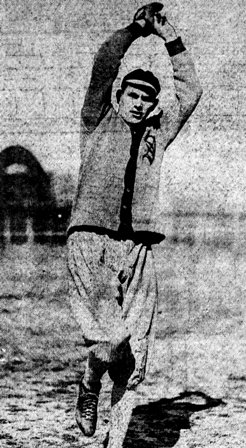
Rube Evans
The tall–he was reported by various sources as anywhere from 6′ 2″ to 6′ 4″–began his professional career with the Dallas Giants in the Texas League in 1910; he was 15-12 for the pennant winners, but The Dallas Morning News said he didn’t “take baseball seriously” until the following year, when he was 18-16 for the Giants:
“Before that, it seemed, the big, husky flinger looked at playing baseball something in the light of a joke. Last season, though he came back into the game with a different viewpoint. He seemed to realize that ball playing was a man-sized business.”
After his 1911 performance, Evans’ contract was purchased by the New York Giants, and he joined the team for spring training in Marlin, Texas in 1912. The Morning News said if he maintained his new found focus “and works as hard as he knows how to work he ought to stick.”
Evans quickly impressed the Giants with a pitch “takes a most freakish break,” according to The Washington Times:
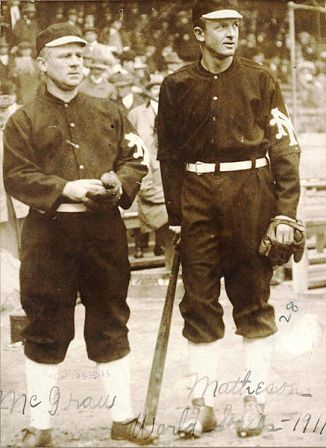
“Rube Evans, the Giants left-handed recruit pitcher from Dallas, surprised bot Manager (John) McGraw and Coach Robby (Wilbert Robinson) by showing them a curve that is entirely new to the big league…The ball is delivered in exactly the same manner as the spitball, but he does not moisten it.”
The paper did not elaborate on how Evans’ “dry spitter” was different from versions reported on during previous seasons–including the one thrown by Christy Mathewson of the Giants–but according to The New York World, “McGraw says he will try and teach it to Rube Marquard.”
Despite his “dry spitter,” Evans failed to make the team and was returned to Dallas where he posted a 22-12 record for the Giants.
In 1913, he joined the New Orleans Pelicans in the Southern Association but appeared to be headed to the Cleveland Naps before he threw a pitch in the regular season for the Pelicans. In March, Evans shut down the Detroit Tigers 3 to 1 on five hits and followed that up with a four-hitter (and 3 to 1 victory) against the Naps.
The Cleveland Press said, “(Naps Manager Joe) Birmingham plans to cut down his squad considerably. It is said recruits (Hugh) Peddy, (Pete) Shields and (Ward) McDowell will be left here in trade for one good pitcher, probably Southpaw Rube Evans.”
With Evans apparently on the verge of joining the Naps, the story of his “bonehead” play was told by Phelon, then repeated widely:
“(Evans) has one curious habit—a trait which has aroused much wonder on the part of every manager under whom the southpaw has been toiling. When given an order by his manager or captain, Mr. Evans always stops, cocks his ears, and demands a repetition of the directions. Naturally he is first taken for a simp, or bonehead, but when further acquaintance with him shows that he is a gentleman of intelligence and high mentality, the field leaders are muchly puzzled.
“’I always want my orders repeated,’ quoth Mr. Evans, ‘so that I will never again make such an error.”
(The 1913 version of the story, which quotes Evans, places the incident in McKeesport, Pennsylvania, some later versions say it happened in 1913 with the Pelicans, still others say it was in Portland, Oregon; however, the original publication predates Evans’ time on the West Coast which did not begin until May of 1914).
Evans said he had pitched into the ninth inning when the opposing team put a runner on third with one out, when his manager told him if the other team attempted a squeeze play to “bean him.” Evans said:
“’I knew no more what a squeeze play was than the man in the moon, but my orders rang in my ears as I started winding up. Just as a swung up my arm, the fellow on third tore for the plate…I took careful aim at the oncoming runner, and pickled him with a fine shot to the back of the cranium. Three seconds later the crowd was coming towards me with roars of fury, and I got over the back fence just in time.
“’Well how was I to know that I should have hit the batter and not the runner? Ever since I have insisted on duplicate orders, so that I would know just what to do.’”
His acquisition by Cleveland never materialized and he had a disappointing 12-15 record in 1913, in a season split between New Orleans and the Birmingham Barons.
It is also in question whether Phelon’s characterization of Evans as a “gentleman of intelligence and high mentality,” was entirely accurate given his inability to stick with clubs who were impressed with physical abilities. After his second chance to pitch in the majors didn’t materialize, the remainder his of career was marked by long stretches of mediocrity, charges of bad behavior and comparisons to another left-handed “Rube.”
In August of 1913, he was suspended for the remainder of the season by the Birmingham Barons for, according to The Birmingham Post-Herald, “Failure to keep in condition.” The Sporting Life’s Chandler Richter called him “Erratic,” The Oakland Tribune said he was”Eccentric,” a wire service retelling of the “beanball” story from 1915 said he “earned a nationwide reputation as a ‘squirrel,” another called him “the real eccentric,” when compared to Rube Waddell.
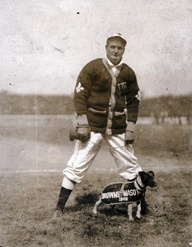
The other left-handed Rube
His two-year tenure with the Portland Beavers in the Pacific Coast League (PCL) began when he wore out his welcome in New Orleans in May of 1914 and was sold to the Beavers. It was particularly rocky. The Spokane Daily Chronicle said Evans and Beavers manager Walter “Judge” McCredie “got along like a pair of strange bulldogs.” He was suspended at least once, again for the euphemistic “failure to be in proper condition,” and gave up a game-winning home run to Jack Ness of the Oakland Oaks when he accidently threw a pitch over the plate while attempting to intentionally walk Ness. At the close of the 1915 season, Portland let him go for what The Portland Oregonian called “His inability to take care of himself.” Of his 9-22 record the paper said:
“Rube ran into gobs of adversity.”
After leaving Portland, Evans played parts of three seasons for the Salt Lake City Bees in the PCL–in 1917 he was 21-9, but when McCredie was named manager of the Bees in 1918, Evans time with the team was nearly over. Before the season, The Oregonian said, “Evans did not take kindly to the idea of having to take orders” from his former manager and was threatening to jump the club. He finally did jump in June after appearing in 14 games and posting a 3-8 record.
Evans went to Portland and finished the 1918 season in the semi-pro Shipyards League, The Oregon Daily Journal said upon his arrival:
“Rube Evans was through at Salt Lake and McCredie was probably saved the trouble of wearying his hand by writing out Rube’s release, when Rube left.”
In 1919, he played for the Rupert franchise in the semi-pro Southern Idaho League; while successful, his reliance on the emery ball for his success didn’t make him friends. The Twin Falls Times said:
“When Rube Evans lugged the emery ball into the S.I.L. he failed to do anything beneficial to the league. Rube will win a few more games for the Rupert club, but he has lowered the standard of sport in the league.”
Evans had one more season in professional baseball, posting a 10-7 record with the Regina Senators in the Western Canada League in 1920. In an August 15 doubleheader against the Edmonton Eskimos Evans was ejected for arguing with the umpire while facing the second batter of the first game; he came back to lead the Senators to 5 to 3 victory in the second game, giving up two runs in 7 2/3 innings, and hitting a three-run home run in the sixth.
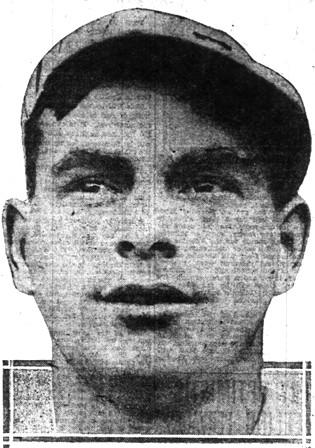
Rube Evans
After the 1920 season, he returned to Ohio and spent the next decade playing semi-pro baseball there and in Western Pennsylvania. His last headlines came in 1924 when he pitched six innings for the Sharon (PA) Elks team in an exhibition game against the New York Yankees. The Elks lost 10-8, Babe Ruth went 2-4 with a double for the Yankees.
Evans’ playing days ended in Akron, Ohio. He pitched for and managed the Goodyear Tire and Rubber Company team, and stayed on with the company as a rubber worker. He died on January 30, 1950.
A clue to some of Evans’ erratic behavior is contained in his death certificate. The pitcher spent the last three and a half years of his life in Ohio’s Cambridge State Hospital; his cause of death was listed as “General Paresis,’ brought on by syphilis.
A shorter version of this post appeared on June 3, 2013
 Baseball History Daily