Tag Archives: Texas League

“It ain’t been Overestimated None.”

26 Aug

Adair Bushyhead “Paddy” Mayes was a legend in Oklahoma when it was still a territory; the half Irish, half Muskogee (Creek) Indian—although often misidentified as Cherokee in news reports, likely because he attended school at the Cherokee Male Seminary in Tahlequah — began his professional career with the Muskogee Redskins in the Oklahoma-Kansas League in 1908, but by then he was already considered one of the area’s best players.

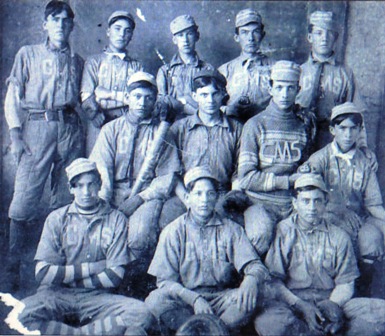
Mays, standing second from left, with the Cherokee Mens Seminary baseball team, 1903

Mays, standing second from left, with the Cherokee Male Seminary baseball team, 1903

He stayed with Muskogee the following season when the club joined the Western Association as the Navigators.  Despite hitting just .261, his legend grew.

The Muskogee Times-Democrat said he was “One of the best outfielders the association ever boasted.”

His manager George Dalrymple said:

“He is the fastest fielder and the best hitter in the Western Association.  He is a youngster that in a few years should be in the big leagues.”

In 1910, he joined the Shreveport Pirates in the Texas League.  His first game was painful.  The Dallas Morning News said after he was hit by a pitch “full in the back” he stole second base and “was struck in the head with the ball as it was thrown from the plate to second.  The later jolt seemed to daze him.”

But Mayes recovered quickly, scored, and according to the paper “Played a first-class game.”

He hit .260 in Shreveport, but his speed and fielding ability attracted the interest of Philadelphia Phillies, who purchased his contract.

Mayes quickly made an impression during spring training in Birmingham, Alabama in 1911.  The Philadelphia Inquirer said:

“That Paddy Mayes, the Indian outfielder, will prove a greater find than Zack Wheat is the opinion of Southern ballplayers.”

[…]

“Mayes, the half-breed outer garden candidate is fast as a bullet on his feet, a good fielder and has a wonderful whip.  If he can prove that he can hit good pitching he will probably stick.”

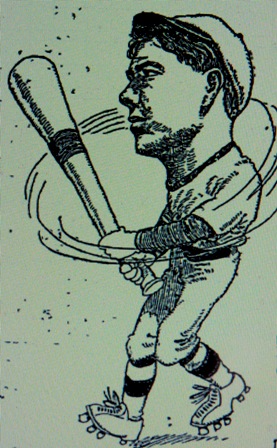
Mayes caricature from The Philadelphia Inquirer

Mayes caricature from The         Philadelphia Inquirer

The paper also called him “A greyhound on the base paths,” and reported that he made several “fine running” catches during spring games.

Despite the buildup, Mayes didn’t make the club and was sent to the Galveston Sand Crabs in the Texas League, but he refused to sign.  In June, with Phillies outfielder John Titus injured, he was sold back to Philadelphia for $500.

Mayes had the distinction of having his major league debut become the subject of a story told for by humorist Will Rogers.

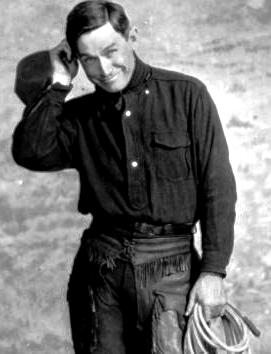
Rogers said he was present at Mayes’ first game with the Phillies in St. Louis on June 11–this is from an early retelling, as with all such stories some of the details changed in future retellings.

“I had known Paddy in the Texas League and what was my surprise one day in St. Louis when I went out to the Cardinals’ park…to see Paddy come up to bat in a Philly uniform.  I hadn’t heard that he had reached the big show.”

willrogers

                          Will Rogers

Mayes was 0-3 and was struck out twice by pitcher Bill Steele.

“I met him at the hotel after the game, but didn’t let on that I had seen him play at the ballpark in the afternoon.  We talked about rope handling and the cattle business generally, and then I asked what he was doing in St. Louis.

“This was Paddy’s answer.

“’They brought me up here to show me the speed of the big league, and believe me, it ain’t been overestimated none.”

Mayes’ never caught up to the “speed of the big league.”  In eight plate appearances over five games, he was 0-5 with a walk, hit by pitch and sacrifice.  He also scored a run.  Mayes’ final appearance with the Phillies was just six days after his first.

Rogers repeated the story of his debut for more than two decades.

“Probably the ‘Boniest’ Bonehead Play Ever”

22 Jun

While some of the details changed in subsequent tellings, this story stayed substantially the same from when it was first presented in a column by sports writer William A. in 1913, until the final published version in 1957 in The New Orleans Times-Picayune.  One version called it, “Probably the ‘boniest’ bonehead play ever”

The story was told by and told about lefty Evan “Rube” Evans.  Born on April 28, 1890, in Sebring, Ohio, Evans was a career minor league pitcher who, when the story first appeared, seemed to be headed to the big leagues. 
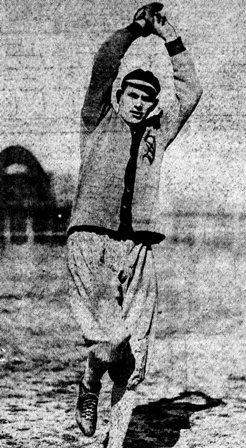
Rube Evans

Rube Evans

The tall–he was reported by various sources as anywhere from 6′ 2″ to 6′ 4″–began his professional career with the Dallas Giants in the Texas League in 1910; he was 15-12 for the pennant winners, but The Dallas Morning News said he didn’t “take baseball seriously” until the following year, when he was 18-16 for the Giants:

“Before that, it seemed, the big, husky flinger looked at playing baseball something in the light of a joke.  Last season, though he came back into the game with a different viewpoint. He seemed to realize that ball playing was a man-sized business.”

After his 1911 performance, Evans’ contract was purchased by the New York Giants, and he joined the team for spring training in Marlin, Texas in 1912.  The Morning News said if he maintained his new found focus “and works as hard as he knows how to work he ought to stick.”

Evans quickly impressed the Giants with a pitch “takes a most freakish break,” according to The Washington Times:

“Rube Evans, the Giants left-handed recruit pitcher from Dallas, surprised bot Manager (John) McGraw and Coach Robby (Wilbert Robinson) by showing them a curve that is entirely new to the big league…The ball is delivered in exactly the same manner as the spitball, but he does not moisten it.”

The paper did not elaborate on how Evans’ “dry spitter” was different from versions reported on during previous seasons–including the one thrown by Christy Mathewson of the Giants–but according to The New York World, “McGraw says he will try and teach it to Rube Marquard.”

Despite his “dry spitter,” Evans failed to make the team and was returned to Dallas where he posted a 22-12 record for the Giants.

In 1913, he joined the New Orleans Pelicans in the Southern Association but appeared to be headed to the Cleveland Naps before he threw a pitch in the regular season for the Pelicans.  In March, Evans shut down the Detroit Tigers 3 to 1 on five hits and followed that up with a four-hitter (and 3 to 1 victory) against the Naps.

The Cleveland Press said, “(Naps Manager Joe) Birmingham plans to cut down his squad considerably.  It is said recruits (Hugh) Peddy, (Pete) Shields and (Ward) McDowell will be left here in trade for one good pitcher, probably Southpaw Rube Evans.”

With Evans apparently on the verge of joining the Naps, the story of his “bonehead” play was told by Phelon, then repeated widely:

“(Evans) has one curious habit—a trait which has aroused much wonder on the part of every manager under whom the southpaw has been toiling.  When given an order by his manager or captain, Mr. Evans always stops, cocks his ears, and demands a repetition of the directions.  Naturally he is first taken for a simp, or bonehead, but when further acquaintance with him shows that he is a gentleman of intelligence and high mentality, the field leaders are muchly puzzled.

“’I always want my orders repeated,’ quoth Mr. Evans, ‘so that I will never again make such an error.”

(The 1913 version of the story, which quotes Evans,  places the incident in McKeesport, Pennsylvania, some later versions say it happened in 1913 with the Pelicans, still others say it was in Portland, Oregon; however, the original publication predates Evans’ time on the West Coast which did not begin until May of 1914).

Evans said he had pitched into the ninth inning when the opposing team put a runner on third with one out, when his manager told him if the other team attempted a squeeze play to “bean him.”  Evans said:

“’I knew no more what a squeeze play was than the man in the moon, but my orders rang in my ears as I started winding up.  Just as a swung up my arm, the fellow on third tore for the plate…I took careful aim at the oncoming runner, and pickled him with a fine shot to the back of the cranium.  Three seconds later the crowd was coming towards me with roars of fury, and I got over the back fence just in time.

“’Well how was I to know that I should have hit the batter and not the runner?  Ever since I have insisted on duplicate orders, so that I would know just what to do.’”

His acquisition by Cleveland never materialized and he had a disappointing 12-15 record in 1913, in a season split between New Orleans and the Birmingham Barons.

It is also in question whether Phelon’s characterization of Evans as a “gentleman of intelligence and high mentality,” was entirely accurate given his inability to stick with clubs who were impressed with physical abilities.  After his second chance to pitch in the majors didn’t materialize, the remainder his of career was marked by long stretches of mediocrity, charges of bad behavior and comparisons to another left-handed “Rube.”

In August of 1913, he was suspended for the remainder of the season by the Birmingham Barons for, according to The Birmingham Post-Herald, “Failure to keep in condition.”  The Sporting Life’s Chandler Richter called him “Erratic,” The Oakland Tribune said he was”Eccentric,” a wire service retelling of the “beanball” story from 1915 said he “earned a nationwide reputation as a ‘squirrel,” another called him “the real eccentric,” when compared to Rube Waddell.
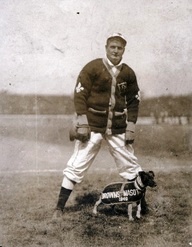
The other left-handed Rube

The other left-handed Rube

His two-year tenure with the Portland Beavers in the Pacific Coast League (PCL) began when he wore out his welcome in New Orleans in May of 1914 and was sold to the Beavers.  It was particularly rocky.  The Spokane Daily Chronicle said Evans and Beavers manager Walter “Judge” McCredie “got along like a pair of strange bulldogs.” He was suspended at least once, again for the euphemistic “failure to be in proper condition,” and gave up a game-winning home run to Jack Ness of the Oakland Oaks when he accidently threw a pitch over the plate while attempting to intentionally walk Ness.  At the close of the 1915 season, Portland let him go for what The Portland Oregonian called “His inability to take care of himself.” Of his 9-22 record the paper said:

“Rube ran into gobs of adversity.”

After leaving Portland, Evans played parts of three seasons for the Salt Lake City Bees in the PCL–in 1917 he was 21-9, but when McCredie was named manager of the Bees in 1918, Evans time with the team was nearly over.  Before the season, The Oregonian said, “Evans did not take kindly to the idea of having to take orders” from his former manager and was threatening to jump the club.  He finally did jump in June after appearing in 14 games and posting a 3-8 record.

Evans went to Portland and finished the 1918 season in the semi-pro Shipyards League, The Oregon Daily Journal said upon his arrival:

“Rube Evans was through at Salt Lake and McCredie was probably saved the trouble of wearying his hand by writing out Rube’s release, when Rube left.”

In 1919, he played for the Rupert franchise in the semi-pro Southern Idaho League; while successful, his reliance on the emery ball for his success didn’t make him friends.  The Twin Falls Times said:

“When Rube Evans lugged the emery ball into the S.I.L. he failed to do anything beneficial to the league.  Rube will win a few more games for the Rupert club, but he has lowered the standard of sport in the league.”

Evans had one more season in professional baseball, posting a 10-7 record with the Regina Senators in the Western Canada League in 1920.  In an August 15 doubleheader against the Edmonton Eskimos Evans was ejected for arguing with the umpire while facing the second batter of the first game; he came back to lead the Senators to 5 to 3 victory in the second game, giving up two runs in 7 2/3 innings, and hitting a three-run home run in the sixth.
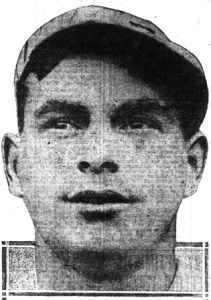
Rube Evans

Rube Evans

After the 1920 season, he returned to Ohio and spent the next decade playing semi-pro baseball there and in Western Pennsylvania.  His last headlines came in 1924 when he pitched six innings for the Sharon (PA) Elks team in an exhibition game against the New York Yankees.  The Elks lost 10-8, Babe Ruth went 2-4 with a double for the Yankees.

Evans’ playing days ended in Akron, Ohio.  He pitched for and managed the Goodyear Tire and Rubber Company team, and stayed on with the company as a rubber worker.  He died on January 30, 1950.

A clue to some of Evans’  erratic behavior is contained in his death certificate.  The pitcher spent the last three and a half years of his life in Ohio’s Cambridge State Hospital; his cause of death was listed as “General Paresis,’ brought on by syphilis.

A shorter version of this post appeared on June 3, 2013

“The Next Babe Ruth”

18 Mar

After he hit 11 home runs in 1918, and for the next two decades, stories about the discovery of “The Next Babe Ruth” became commonplace in newspapers across the country.

One of the first was Joe Doyle, “The Babe Ruth of Great Lakes,” signed by the St. Louis Cardinals in November of 1918.  Doyle was the star of the team representing Camp Dewey at Great Lakes Navel Training Station where, The St. Louis Globe-Democrat said he made a name for himself, hitting “a dozen home runs and nine triples…(and) flogging a home run over the Camp Dewey Drill Hall, a smash that might be compared to a lift over the left fences of any major league park.”

Doyle began his professional career the following spring with the Houston Buffaloes in the Texas League and played his entire career in Texas.  “The Babe Ruth of Great Lakes” hit just eight home runs over five minor league seasons.

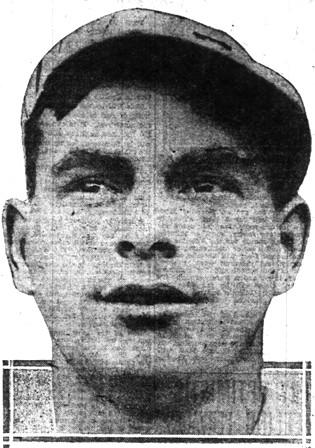
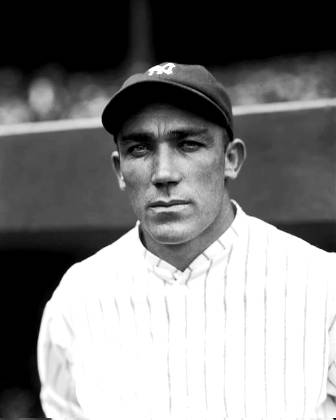
Ben Paschal had the distinction of being declared “The Next Babe Ruth” twice.  When the Boston Red Sox purchased Paschal from the South Atlantic League’s Charlotte Hornets in July of 1920, Manager Ed Barrow told The Boston Herald he had acquired “A second Babe Ruth.”

Paschal joined the Red Sox after Charlotte’s season ended in September.  He had 10 hit in 28 at-bats, but no extra base hits, and was returned to Charlotte after the season.

After four more excellent seasons in the South Atlantic League and Southern Association (he hit .335 with 68 home runs from 1921-1924) he was  purchased by the New York Yankees for $20,000 in August of 1924.

Ben Paschal

Ben Paschal

Paschal was again dubbed the “Second Babe Ruth” by newspapers.  His second stint as the second Ruth was longer and more successful than his first.  From 1924-1929 he hit .309 in with 24 home runs in 750 at-bats as an outfielder playing behind Ruth and Bob Meusel (Meusel was himself dubbed “Another Babe Ruth” by Manager Miller Huggins when he joined the Yankees in 1920).  On Opening Day in 1927 the Second Babe Ruth pinch-hit for Ruth (who was 0-3 and struck out twice) in the sixth inning; Paschal singled, and the Yankees went on to an 8 to 3 victory over the Philadelphia Athletics.

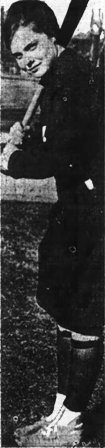
Then there was Dorothy Hodgens.  In 1921, Hodgens was a 20-year-old student at Wilson College in Chambersburg, Pennsylvania.  Hodgens briefly became a celebrity and was called the “feminine Babe Ruth” by many newspapers after The Associated Press (AP) reported that while growing up in Philadelphia Napoleon Lajoie said she was “the only girl he ever knew who could play ball.”

After her picture appeared in papers across the country, Hodgens, who played several sports at the school, was interviewed by The Harrisburg Evening News as she was “ready to enter a basketball game:”

“Yes, I’m terribly fond of baseball, and I’ve been playing it ever since I’ve been a bit of a youngster.”

She said Lajoie was a neighbor in Philadelphia when she was a child:

“Lajoie used to come out and pitch ball with the boys and girls in the neighborhood.  He told me I was the only girl he ever knew who could pitch and gave me a box of league balls that I have treasured ever since.”

Dorothy Hodgens "The Feminine Babe Ruth."

Dorothy Hodgens “The Feminine Babe Ruth.”

While she said her real ambition was to become an actress, Hodgens said, “I never expect to give up baseball entirely though, and I certainly think that every girl should learn to play the game.”

The “Feminine Babe Ruth” disappeared from the public eye shortly afterward.

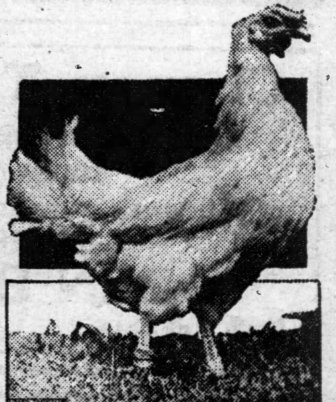
And finally, there was “Another Babe Ruth” who had a brief moment in the limelight in the fall of 1920.  This one was a three-and-a-half pound white Leghorn Chicken who was named “Babe Ruth,” and had just established a new record.

"Babe Ruth"

“Babe Ruth”

The AP said:

“(T)he home run king has a rival…She bats 326 eggs, and this beats the record of 314 (for a single year).  By experienced poultrymen, her record of 326 perfect eggs is considered the most remarkable in the history of the poultry industry.”

There was no report of how she performed the following season.

“Then the Harder I threw the Harder they hit them”

3 Oct

Walter Newton Justis–often misspelled “Justus” during his career– performed an incredible feat in 1908.  While posting a 25-17 record for the Lancaster Links in the Ohio State League, he pitched four no-hit games between July 19 and September 13.

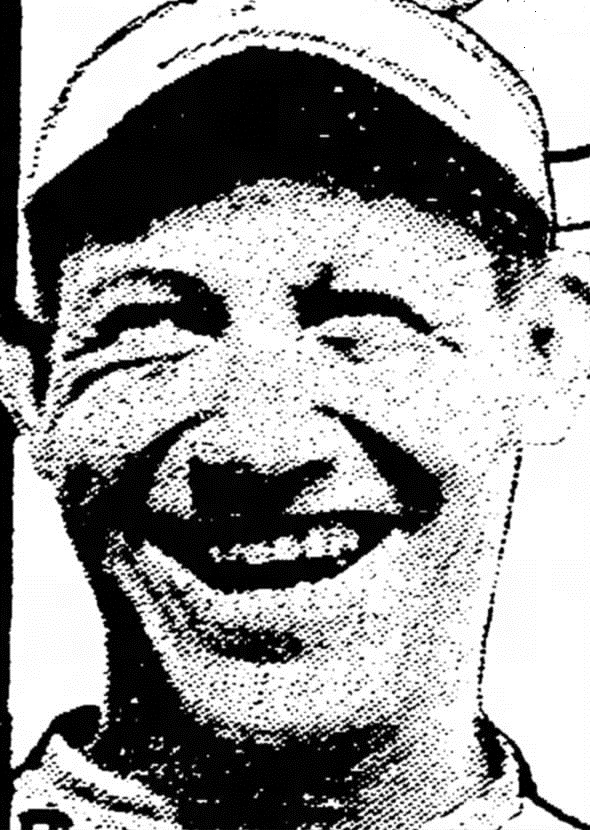
Walter Justis

Walter Justis

The performance earned him his second shot to make the big leagues.  The first consisted of two relief appearances (8.10 ERA in 3.1 innings) with the Detroit Tigers in 1905 when he was 21.  He said later that he wasn’t ready:

“All I knew was to burn them over.  And the harder they hit them the harder I threw.  Then the Harder I threw the harder they hit them.  Most of the time in the three months that I was there I lugged the big bat bag, and I guess I earned my salary then about as much as at any time I know of.”

Justis’ bizarre behavior often made as big an impression as his pitching.  Roy Castleton was pitching for the Youngstown Ohio Works in 1906 when Justis joined Lancaster (the team was in the Ohio-Pennsylvania League in 1906 and ’07, and joined the Ohio State League in 1908).

Castleton, while playing for the Atlanta Crackers two years later told The Atlanta Constitution  he thought “Rube Waddell and Bugs Raymond, two players well-known for their eccentricities…will have to take off their top pieces,” to Justis.  Castleton was staying in the same hotel as the Lancaster team:

“Early one morning he heard someone raising a disturbance in the hotel hallway and taking a look to see what was doing, he observed pitcher Justis…running down the hallway.

“’At the end of the hall Justice placed a pillow against the wall.  He would get a good start down the hall and after the fashion of a man on the paths would take a running slide at the pillow.  When he arrived at his destination he would hold out his hand as umpires do and yell ‘safe!’  Justis would keep this up for hours at a time playing base runner and umpire out in the hall at daybreak.’

“’Sometimes he would stop the double existence of umps and runner and would (just) be the judge of the play.  Standing over the pillow he would hold out his hand and yell ‘safe’ so loudly that he could be heard a block off.’”

The Constitution also said that Justis was superstitious:

“He never goes into a game without wearing a pair of ladies’ silk hose supported in the usual manner.  Regular baseball stockings would never do for him, as he believes his career as a pitcher would be cut short if he were to wear them in a game.”

He was signed by the St. Louis Browns, and Manager Jimmy McAleer told The St. Louis Globe-Democrat the pitcher’s eccentricities were a positive:

“McAleer says that the reason he signed pitcher Justis of Lancaster was because Justis bears the reputation of being a baseball ‘bug.’  ‘Bugs,’ says McAleer, ‘make good in St. Louis.  We have Waddell, while the Cardinals have ‘Bugs’ Raymond.’”

Justis joined the Browns in Dallas in the spring of 1909.

The Globe-Democrat said after he had a poor outing in an exhibition against the Houston Buffaloes of the Texas League:

“Justis pitched two innings for the Browns Saturday and the Houston team got six runs.  Until this bombardment he was tagged for the regular club, and the label hasn’t been removed yet, though slightly loosened.”

And Justis appeared to have made the team when they broke camp in Texas and returned to St, Louis in early April, but The Associated Press reported on April 6:

“Walter Justus, a pitcher recruit of the St. Louis Browns, is confined to his room by a severe nervous collapse, and the nurse in charge says he may be able to leave for his home in Indiana in a few days.  Justis lost his power of speech at the end of a wrestling bout with Arthur Griggs in Sportsman’s Park today.  It is claimed Justus fell to the floor, striking his head, and reopened an old wound received when a boy.”

Justis suffered similar attacks at least four other times during his career; in June of 1907, twice in 1908, and August of 1909.  In July, 1908 after a double-header with the Lima Cigarmakers, The Marion (Ohio) Daily Mirror said “(Justis) suffered a sudden brain stroke akin to apoplexy.  He fell in a dead faint at the close of the second contest.  He was removed to his hotel in an unconscious condition.”   In September, after another attack left Justis hospitalized, The Sporting Life said prematurely “physicians say he will never twirl another game.”   It is likely that he suffered from epilepsy.

Within days of returning to Indiana from St. Louis Justis fully recovered.  The Associated Press said “His recovery is one of the most remarkable in the history of athletes.”  But, despite his recovery, Justis was returned to Lancaster by the Browns, and lost his opportunity to return to a major league team.

He threw another no-hitter for Lancaster in 1909, on May 18 against the Marion Diggers, and went 19-16 for the season.  Justis continued pitching until 1913, finishing with the Covington Blue Sox in the Federal League—where he played with the equally eccentric, enigmatic Fred “Humpy” Badel.

Justis shut out the St. Louis Terriers 4 to 0 on the opening day of the Federal League season, but no complete records remain for the season.  By late September of 1913 he was back home in Greendale, Indiana pitching for a local team.  He remained in Greendale until his death in 1941.

Bill Setley

1 Oct

William Warren “Wild Bill” Setley was a career minor league player and umpire, and one of the most colorful figures in 19th and early 20th Century baseball.

He was born in New Jersey in 1871—Setley often claimed he was born in 1859; his grave marker and several sources still list this date, but there is a New Jersey birth certificate that confirms the 1871 date.

Bill Setley 1895

Bill Setley 1895

Setley spent the early part of his playing career in the Pennsylvania State League (PSL).  The Shenandoah Evening Herald said in 1893:

“(Setley) kept the home management on the anxious bench for many weeks last summer by his daring and acrobatic plays on the diamond and his eccentric whims between games.”

As a pitcher, Setley was credited with introducing the hidden potato play (made famous nearly a century later when Williamsport Bills Catcher Dave Bresnahan pulled a similar stunt), and he was known for turning routine plays in the outfield into spectacular circus catches.

William A. Phelon said Setley was “crazier than Rube Waddell ever thought of being,” and described an incident “when the pennant hung on the final game,”  with the winning runs on base in the ninth inning:

“Out came a fly to Setley.  Instead of catching it squarely in both hands he deliberately turned his back, reached out behind and made a dazzling circus catch—almost an impossibility.”

Years later, another Pennsylvania paper, The Mount Carmel Item described him as:

“(O)ne of the most erratic players in his day and while here a dozen years ago he was in his prime, but for a pack of cigarettes or a drink of whiskey he was liable to throw a game.”

George McQuillan who played in several leagues Setley worked as an umpire said:

“He is one of the real wonders of the game, and it’s too bad the big league fans have never had the chance to see him in action.”

There were many versions of the most often told story about Setley, and  Clarence “Pants” Rowland told the version that most often appeared in print:

Pants Rowland

Pants Rowland

“’I was managing Dubuque in the Three-I League at the time,’ says Rowland.  ‘The game was being handled by Wild Bill Setley, who was quite the character in those days.

“’I was coaching at third base and we got a runner to first during the early innings.  The next batter made a single and our runner started on the dead run from first, rounded second and bore down on third.  Right at his heels was Bill Setley.

“The ball was quickly recovered and beat the runner to third by a couple of steps.  Setley waved him out, and I had nothing to say.  But you should have heard me yell when, on turning, he also called my other man out at second, although he was standing on the base.  The third sacker had whipped the ball down to the second sacker, trying to complete a double play on our man who was trying for the base.

“’Where do you get that way? I demanded.  You had your back turned on the play how could you call him out?’

“’Setley grinned, came over to me, and showed me a small mirror he had concealed in his hand.  ‘I had my eye on the play all the time,’ he said, ‘and you know he was out.’  I was stopped all right, had nothing further to say.’”

Setley, on a few occasions, told a different version of the story.  This one placed the event in Pennsylvania and substituted Jack Tighe for Rowland.

In this rendition, Setley claimed that on the way to the ballpark he received “an advertising mirror” as a present for his daughter.  During the game, Tighe scored from second base on an infield hit, but Setley said:

“(I) knew he couldn’t have reached there if he had gone within 50 feet of the third bag.  The crowd kept yelling ‘Throw the ball to third,’ and when the first baseman did so I called Tighe out.  ‘What’s that?  Out! What do you mean?’ He yelled, chasing out on the diamond like a wild man.  ‘You are out for cutting third.’  ‘Well, if I did you didn’t see me’…’Be reasonable, Jack’ I replied, pulling out the mirror and holding it up in the palm of my hand before my face.  ‘When I was running over to first I had this glass up this way watching you.’  That wilted Tighe and he walked back to the bench as meek as a lamb.”

The Texas League was one of the many minor leagues Setley worked as an umpire.  On September 5, 1910, a triple-header (the first two games were five innings each) was scheduled between the Houston Buffaloes and the Galveston Sand Crabs on the season’s final day, with Setley working as the umpire in all three games.  After the teams split the first two games, The Houston Post said:

“The last game of the Texas League race progressed nicely here until the second inning when (with Galveston at bat) (Gus) Dundon singled to left and (Joe) Kipp had walked.  Then (Houston pitcher  Roy) Mitchell and umpire Setley, while (Bert) James was at the bat, had some words.  Suddenly Mitchell turned on the umpire and knocked him down.  Setley arose and ran towards short position, when Mitchell threw the ball at him, striking him in the back of the head rendering him unconscious.  Immediately the crowd surged into the field.”

The Associated Press added a few details, including that Mitchell “ran up and cuffed (Setley) several times,” after hitting him with the ball, and:

“(S)everal thousand fans had swarmed into the field, all of them apparently in sympathy with Mitchell.

“Setley remained motionless on the ground and the rumor spread like wild-fire over the field that his neck was broken.  Six men picked him up, shouldered him and carried him to the club house, where a physician examined him only to discover that his pulse was perfectly normal and that he was uninjured.  It suddenly dawned on the physician that someone was playing possum.

“’Come out of it Setley,’ said the physician, ‘no one is going to hurt you.’

“Setley ‘came back’ with a grin and said nothing but his feelings had been hurt.”

During the “riot” on the field, the Galveston club left the ballpark in a wagon “and returned to town.”  The game was awarded to Houston as a forfeit.

Mitchell was arrested but quickly released on bond.  Five days later he made his big league debut for the St. Louis Browns, beating the Chicago White Sox 7 to 2.

Roy Mitchell

Roy Mitchell

Somehow the Texas League and the National Commission failed to take any action against Mitchell for more than a month.  The Sporting News said:

“It was a matter of surprise that Mitchell was allowed to come direct to St. Louis and continue play, as if nothing had happened.”

He was fined $50, and while it was announced he was also suspended indefinitely, he was allowed to begin the 1911 season with the Browns.

Setley was let go by the Texas League in November.  The Fort Worth Star-Telegram said:

“(He) will always remember his short sojourn in this league as an umpire, as it probably was one of the most strenuous periods of his existence.  His first appearance was in Fort Worth, where he narrowly avoided a serious conflict with a spectator, and he precipitated wrangles at nearly every point he officiated, with the climax coming in the memorable last day’s game at Houston.”

More Setley stories later this month.

Tragic Exits 2

5 May

Charles Rapp

Charles “Adonis” Rapp was a left-handed pitcher (he also played first base and outfield) who began his career with the Austin Senators in the Texas League in 1898.  For the next several years he played for a variety of Midwest based clubs (Fort Wayne, Saginaw, Grand Rapids) in the Interstate and Michigan State Leagues.

Contemporary newspaper reports say he was also a member of the South Bend Greens in the Central League, but he is not listed on any surviving rosters; he was also said to have been “tried out by Milwaukee, when that city was in the old Western League (1903).”

Rapp’s trail goes cold after the 1903 season until 1909.  Rapp was living in his hometown of South Bend, Indiana.  The Indianapolis News reported on May 17:

“Charles Rapp, former ball player, and well known throughout the city, killed his mother late Saturday and then committed suicide.  The weapons used were a hammer, a dull paring knife and a small pair of shears.  It is said that Rapp had a tendency towards insanity, that the tendency had been marked during the last few days and that he undoubtedly deranged when he attacked his mother.

“Rapp did not die until several hours after the double crime had been committed and after he had been removed from the Rapp home to the St. Joseph County Jail.  Before death came, and in reply to a query about the crime, Rapp said: ‘I tried to get the whole family.’

“The last person to see Mrs. Rapp alive and the first one to discover the body of the woman and the dying son was Charlotte Benz.  Mrs. Benz had spent the day at the Rapp home and left the house late in the afternoon…On her return she stopped at the Rapp place, entering by the rear door…and then suddenly a sickening sight met her gaze.  Lying in a pool of blood at one side of the sitting-room were Rapp and the body of the mother.  The heads were close together and as Mrs. Benz entered the young man cried out: ‘Get out of here, Lottie, get out of here.’  It was evidently his intention to kill the Benz woman, but Rapp was unable to move from loss of blood.”

The Associated Press said of the incident:

 “Until Rapp fell a victim to the liquor habit he was one of the most popular young men in the city.”

Henry Long

Henry Long was born in Chicago in 1870 or 1871 (cemetery and death records disagree), he was the younger brother of  Herman who had a 16-year big league career.

Herman Long

Herman Long

Little is known about Henry’s early life, or when exactly he began playing professional baseball.  Based on newspaper reports he appears to be the “Long” who played with the Battle Creek Adventists in the Michigan State League in 1895.

Before the 1896 season he was signed by the Lewiston team in the New England League.  The Lewiston Daily Sun said:

“Manager (Michael) Garrity has signed pitcher Henry Long of Chicago, a brother of Herman Long of the Bostons, and is said to be a good pitcher, a hard hitter and a good all-around man.”

Long didn’t last in Lewiston, he was 0-2 in just three games before he was released.  Long then appeared in one game for the Shamokin Actives in the Pennsylvania State League, and then joined the Hagerstown Lions in the Cumberland Valley League.

The right-handed pitcher started seven games for the Lions and was 4-3 with a 1.29 ERA.

On July 10 he missed the team’s train for a game in Hanover, Maryland.  The Philadelphia Times said he attempted to hop a freight train and fell; his right arm was crushed under the wheels.  His arm was amputated “but Long sank rapidly and died in the hospital” in Hagerstown.  While contemporary news reports said the body was to be shipped back to Chicago, where it would be “received by his brother Herman,” he was instead buried in Maryland

Matt Barry

In 1900 The Sporting Life said Matthew “Matt” Barry had been “the first player from Rhode Island to receive money for playing ball.”

Information on where he played is sketchy—he was the Rhode Islands in the New England League in 1877 and Springfield (MA) of the International Association in 1878–but beyond that, there are few references to where he played during his career.

The Providence News-Democrat called Barry, who was born in Providence in 1850, a “well-known ballplayer and one of the best-known members of the sporting fraternity in the state.”

Barry eventually returned to his hometown, Providence where he operated the Empire Saloon, on Empire Street.

After the turn of the century, Barry suffered a series of financial setbacks.   On August 30, 1907 The News Democrat said:

 “(Barry) attempted suicide by inhaling illuminating gas in his room in the Essex house, at 23 Burrill Street.”

Barry was discovered by the owner of the house:

 “The room was locked, but the door was forced, and then Barry was seen unconscious on the bed with gas streaming from an open unlighted jet…as Barry’s usual custom was to sleep with all the windows open , the fact that they were closed , indicated that he had prepared to take his life.”

He was taken to Rhode Island, where he died on September 2.

Barry’s friends disputed the story that he had taken his own life, claiming his “financial embarrassments” had been overstated and that he “was in better condition financially than he had been for years.”  His friends instead said Barry, who “had been troubled with insomnia” and took morphine to sleep, turning off the lights “at that time the morphine would begin to get in its work,” had accidentally turned on the gas when he meant to turn off the light “which was on the same chandelier.”

The cause of death was never officially determined.

Tragic Exits

28 Apr

George Frazee

George Donald Frazee, listed on Baseball Reference as “G. Frazee” with the Shreveport Sports in the Texas League in 1928, was a three-sport star at Texas Christian University.

Born November 21, 1904 in Fort Worth, Texas, Frazee played outfield for the baseball team, halfback and fullback with the football team, and was a guard on the basketball team from 1923-1925.  After graduation he played basketball with a team representing the Fort Worth, Texas YMCA which played throughout the Southwest and Mexico.

It’s unclear where Frazee played baseball in 1926 and ’27, but in 1928 he started the season with the San Angelo Red Snappers in the West Texas League, there are no surviving statistics for his time there, but after being transferred to Shreveport he hit .301 in 32 games. Frazee signed with Shreveport for the following season.

On January 24, 1929 Frazee was flying from Ft. Worth with World War I flyer Willoughby Alvous “Al” Henley and another Fort Worth man, to attend the opening celebration for San Angelo’s new airport.  The United Press wire story said:

 “Tragedy marred the formal opening of the municipal airport today, claiming the life of Al Henley…one of the nation’s most skilled pilots.  Henley, Donald Frazee, professional baseball player, and W.E. Shytles…were killed when their cabin monoplane crashed in an attempted landing.”

The Brownsville Herald said:

 “He was an outfielder, fast, big and aggressive.  Shreveport lost an outfielder who was certain to make good this year.”


Chief Wano

William “Chief” Wano was born on Oklahoma’s Pottawatomie reservation on May 12, 1896.  He played semi-pro ball in Oklahoma City and in the army while serving with the 79th Infantry, 15th Division at Camp Logan, Texas.  After his discharge in early 1919 the twenty-three-year-old began his professional career with the Tulsa Oilers in the Western League.

Wano struggled during his first season, hitting just .195, but joined the Little Rock Travelers in the Southern Association the following season—and along with fellow Oklahoman, and former classmate and teammate at the Chilocco Indian School– Moses “Chief” Yellow Horse; he helped lead Little Rock to the pennant.

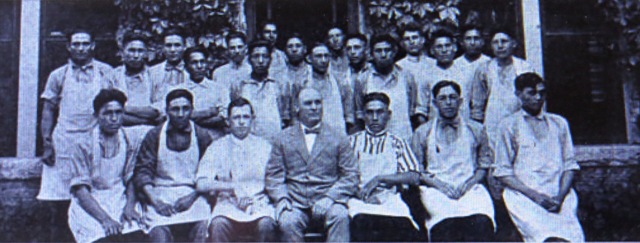
William Wano,

William Wano, back, fourth from right, at Chilocco Indian School

Wano was a consistent hitter throughout the 1920s (.317 in 11 seasons in class-A leagues), but was an erratic fielder and never made it to the major leagues.

After hitting .331 for the St. Joseph Saints in the Western League in 1930 Wano left organized baseball, first playing semi-pro then he accepted a position managing Ben Harjo’s All-Indian Baseball Club—Harjo was a millionaire and full-blooded Creek.   The team, based in Harjo’s hometown Holdenville, Oklahoma, barnstormed the Midwest and Southwest, and with Wano as player-manager won the Denver Post Tournament in July 1932.

Chief Wano

Chief Wano

Wano quit two months later after a dispute over two players Wano signed.  Harjo hired Jim Thorpe to manage the club the following season.

Wano moved to Dallas after his career.  According to The United Press he spent World War II working at the North American Aircraft plant in Dallas, and living at the home of Kal Hill Segrist Sr., his former Dallas Steers teammate (and father of Kal Segrist, who played with the New York Yankees in 1952 and the Baltimore Orioles in 1955).

On July 30, 1945 Wano was in the Dallas City Jail (reports varied on why he was there), when according to The Dallas Times-Herald another prisoner “slugged Wano on the chin, Wano fell, striking his head on the concrete floor.”  Other reports said Wano was trying to break up a fight when he was hit.

William “Chief” Wano died that night in Dallas’ Parkland Hospital.  A month later a grand jury chose not to indict the man who threw the punch.


Gene Gaffney

Eugene “Gene” Gaffney was one of the better hitters in the Florida State League during his brief career (1920-23), he was also a manager’s nightmare.

Gaffney hit .335 in 60 games for the league champion Orlando Tigers in 1921, but was suspended for several days in July by Manager Joe Tinker.

The following season he joined the Jacksonville Indians, managed by former major leaguer George Stovall.  The team struggled, and Gaffney, had his only sub .300 season, hitting just .277.  And, according to The St. Petersburg Evening Independent, a car caused a major riff between the outfielder and his manager:

“Has a baseball player a right to ride to and from the park in his own automobile?  George Stovall says no.  He suspended Gene Gaffney because Gaffney had bought an automobile and insisted on being his own bus.

“Stovall insisted he should parade to the park in the team bus.  Gaffney told Stovall to go jump; that if the team would win enough games so that he wouldn’t be ashamed to wear the uniform on parade it might be different.  At last accounts Gaffney was off the ballclub, but riding his automobile to his own intents and purposes, while Stovall still was trying to get the rest of the Jacksonville team somewhere on the field.”

Gaffney played just one more season; he hit .357 for the Daytona Beach Islanders in 1923.

After baseball, Gaffney tended bar in Orlando until August 12, 1937—The Associated Press said:

“Gene Gaffney, about 43, local bartender who once led the old Florida State League in batting, was believed today to have been the victim of foul play.

“His automobile, its windshield shattered and other windows broken, was found mired in mud on the shores of an almost inaccessible lake just across the Orange County line in Seminole County, with evidence of a struggle having taken place.

“His eye glasses were found in the mud about 20 feet from the car.”

Gaffney’s body was found the following day.  His death was ruled a homicide.

Lost Pictures–Hatton Ogle

17 Oct

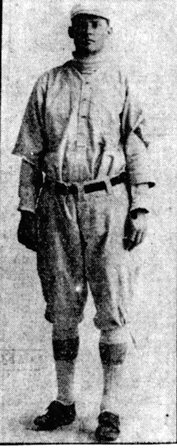
hattonoglepix

Hatton Geter Ogle (Texas papers often misspelled his last name “Ogles”) pitched in the Texas League from 1909 to 1916.  He was most likely born in 1885 (Baseball Reference lists his birth date as 1883, but North Carolina and Texas records disagree).

The six-foot, 185 pound Ogle began his professional career with the Wilson Tobacconists in the Eastern Carolina League;  complete records are not available, but in July The Raleigh Times said he “has pitched and won 11 games, having a clean slate.”

The Dallas Morning News said former pitcher Cy Mulkey watched him play in Wilson and signed him to a 1909 contract for the Dallas Giants;  Mulkey compared him to Texas League star Harry Ables.

Ogle moved to Texas after the 1908 season and took a job teaching school near Dallas, in Coppell; his off-season job earned him the nickname “professor’ in Texas papers–he continued teaching in the off-season through at least 1915.

He was just 7-14 with Dallas in 1909 and joined the Waco Navigators in 1910.  After an 11-22 season in 1910, Ogle had a three-year run as one of the best pitchers in the Texas League.

From 1911 until 1913 he was 21-11, 17-14, and 19-12.

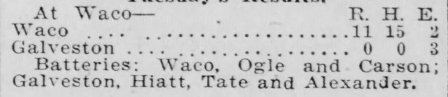
In 1912 he pitched in two exhibition games against the Chicago White Sox, on March 17 and March 30, allowing just two runs and six hits in nine innings.  He also had his first no-hitter that season, an 11-0 victory over the Galveston Pirates.

The Waco-News Tribune said:

“(Ogle’s) principal asset was his head, but when the occasion made it necessary ‘the professor’ shows his usual assortment of curves and speed.”

He continued pitching in the Texas League with Waco, the Houston Buffaloes, the Austin Senators and San Antonio Bronchos, through the 1916 season; he added a second no-hitter for Waco in 1914, defeating Austin 6-0 on April 26.

After an 8-17 season in 1916 his career was over.  He returned to the classroom until 1918 when he contracted tuberculosis and moved to El Paso, Texas, where he died five years later, on May 27, 1923.

The Waco News-Tribune–seven years after his career ended, and four years after Waco’s Texas League franchise had folded–simply said in Ogle’s small obituary:

“(He) was one of the popular tossers of the old Waco Navigators.”

Ogle's 1912 no-hitter

Ogle’s 1912 no-hitter

Ogle's 1914 no-hitter

Ogle’s 1914 no-hitter

“The Longest Hit in the World”

10 Oct

Walter “Judge” McCredie, longtime Portland Beavers player, manager and president said the longest home run he ever saw was hit by Otis L. “Ote” Johnson when Johnson played for him:

“The drive of Ote Johnson’s at Los Angeles (in 1909) was the longest clout I have ever witnessed.  Out in center field they had a pavilion 150 feet long.  Hits at Chutes Park in Los Angeles had never come within fifty feet of the pavilion…Johnson put the ball clean over the pavilion and the ball bounced into the bandstand for what I call the longest hit in the world.”

By the time he hit that ball in Portland he had already been called “Home run” Johnson for at least five years, a name earned in the Texas League when he hit 22 home runs in two seasons for the Dallas Giants—he finished third with 12 in 1903 and led the league with 10 in 1904.

Otis "Ote" Johnson

Otis “Ote” Johnson

Johnson was born in Fowler, Indiana in 1882, and grew up in Muncie.  The Dallas Morning News said fellow Indianan Claude Berry recommended Johnson to Dallas.  Primarily a shortstop, Johnson also played first, third and outfield, and appeared in more than 30 games as a pitcher during his professional career.

Johnson was sold to the Little Rock Travelers near the end of the 1904 season; he remained with Little Rock through 1906 but hit just .210 against “A” class Southern Association pitching.  He was sold to the Charleston Sea Gulls in the class “C” South Atlantic League before the 1907 season and hit .263, leading the team in doubles (27), triples (13) and home runs (10).

His performance in Charleston earned him another shot in the Pacific Coast League (PCL) when his contract was sold to Portland.  After a slow start at the tail-end of the 1907 season, Johnson regained his form, hitting .280 with 10 home runs in 1908 and .293 with 13 home runs (including his “longest hit in the world”) in 1909.

McCredie said the day Johnson hit his home run against Los Angeles scouts from the New York Highlanders was in the stands:

“(A)fter the battle they asked me to put a price on Ote.  I did, and a few days later the deal was consummated.”

The price was $4,000.

As Johnson prepared to join the Highlanders and manager George Stallings for spring training in Georgia, the New York press was excited about the team’s new prospect who was spending the winter in Muncie working and playing goalie Muncie’s professional roller polo team.  The New York Globe said:

“There is a ‘terrible Swede’ coming to New York next season.  He is a glass blower and makes from $6 to $7 a day in a factory at Muncie, Ind., and in the summertime he makes his living at swinging a large club and gathering bad and good bounders on the baseball field…The boy we’re harping about is Ote Johnson, who will be a member of the New York Americans. (In the PCL) he is known as ‘Home Run’ Johnson.  They say he has driven many a pitcher to the bench.”

George Stallings

George Stallings

Phil Cooney, a New Yorker, who played with Johnson in Portland, told The Globe:

“They seem to think that this boy Johnson can’t hit a curve ball, but Stallings will find out that he can hit any kind.”

On March 23 Stallings told The New York American that Johnson, who was playing third base and shortstop, “couldn’t hit.” Two days later The American said:

“Ote Johnson this afternoon gave an apt illustration of a home run and for the first time since he reported to Stallings the Portland demon found his batting eye.  But for the most daring burglaries on the part of (William) Birdie Cree, the big third sacker would have hit for 1.000 during the afternoon.  As it was he had a single and a homer in three times at bat.  His single might have been a homer had not (2nd baseman) Earle Gardner sprang into the air and retarded its progress by a blind stab.  But the four-base smash was beyond reach.

“Johnson got to one of (Dick) Carroll’s choicest curves and knocked the ball further than any had ever before traveled in Georgia.  Birdie Cree was playing deep for the big fellow.  The ball went so far that Cree had not gotten to it by the time Johnson crossed the home plate, and he only jogged from second.  The ball rolled to the fence, which is fully 300 yards from the plate.”

As late as April 1 it looked like Johnson might stick with New York.  The Trenton Evening Times said:

“The latest ‘phenom’ to be discovered is Otis Johnson, the New York Americans’ third sacker.  This recruit has been playing sensational games around the last station since he joined the club…Johnson is also quite a slugologist.  In the last few games the youngster has been batting like a Tyrus Cobb.  In a recent game at Athens, Ga., he made four hits in as many times at bat.  Among them was a home run.  Manager Stallings says he thinks Johnson will make a great name for himself this season.”

Despite the build up, and the reports of his prowess at the plate, Johnson did make Stallings’ club.  His contract was sold to the Jersey City Skeeters in the Eastern League.

The (Portland) Oregonian said New York “farmed out” the former Beaver star despite the fact that:

“New York critics credit Ote, nevertheless, with having more promise than some of the players retained by Stallings.”

Johnson hit just .223 with 9 home runs (second in the league) with Jersey City, but would benefit from unrest in the New York clubhouse.  Manager George Stallings accused his star first baseman, Hal Chase, of trying to throw a game in St. Louis (the first of what would become many accusations against Chase). Stallings said he would resign if Chase wasn’t let go; Highlander owner Frank Farrell sided with Chase and forced Stallings out in September; Chase was named manager.

Hal Chase

Hal Chase

After the season ended the New York papers said Johnson would on Chase’s club the following season, either at third base in place of Jimmy Austin (who was rumored to be on the market, and eventually traded to the St. Louis Browns), or to play shortstop in place of John Knight  who would be moved to second base to replace Frank LaPorte (also on the market, and also eventually traded to St. Louis with Austin).

More Otis Johnson on Monday.

Roy Spruell

14 Aug

Throughout the first half of the 20th Century there were thousands of independent and industrial league baseball teams that operated across the country; the only distinction, in many cases, between the quality of these teams and their players and those in “professional” leagues was the “professional” teams were recognized by The National Association of Professional Baseball Leagues.

Given the economics of the game, which usually required players to be employed during the off season, it was often as profitable, or even more so, to play with an independent or semi-professional team that either paid the same or more as the “professional” leagues or provided the player with a job.

As a result, there are thousands of players, who while well-known names in the towns, cities and regions where they played, have been largely forgotten.

Roy Layton Spruell is one of them.

From 1920 until 1939 Spruell was a fixture in Southern baseball, specifically on the Gulf Coast, although his “official” statistics only indicate limited “professional” appearances between 1924 and 1936.

Spruell appears to have been born January 25, 1900 in Birmingham, Alabama according to state records and census data, (his grave lists his birth year as 1902, but like many players of his era, he likely subtracted a couple of years at some point during his career and the new date stuck).

Raised in Mobile, Alabama, he first made a name for himself in 1920 pitching with industrial teams at the Southern Kraft Paper Mill and White Swann Laundry Company in Mobile.

Two years later he was a member of an independent team in Mississippi, the Ocean Springs Regulars.  In addition to Ocean Springs, the loosely affiliated semi-pro league included independent teams from nearby Mississippi towns Biloxi, Gulfport, Pascagoula  and Wiggins, and industrial teams out of New Orleans, including the Choro Colas (later renamed RC Cola), the Tokay Teas.

The following season Spruell played for another Southern Kraft Mills team; contemporary newspaper accounts alternately called the team either the Moss Point or the Kreole Papermakers—the mill was located in Moss Point, Mississippi, but the team appears to have played home games in nearby Kreole.  Spruell’s older brother Harvey was his teammate with the Papermakers.

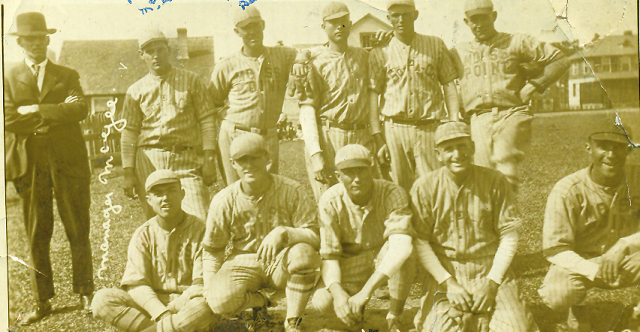
The 1923 Papermakers, Roy Spruell is standing second from right.  His brother Harvey is in the middle of the front row.   The other players are identified as: Standing at left - Manager McGee 2nd from left  - Pat McGee 3rd from left  - Matt Delmas 4th from left-unidentified. 6th from left - Sam Leslie   Seated at left - Johnnie Cunningham 2nd from left - Brother Nelson 4th from left - John Bell

The 1923 Papermakers, Roy Spruell is standing second from right. His brother Harvey is in the middle of the front row. The other players:: Standing Manager McGee, Pat McGee, Matt Delmas, unidentified, Roy Spruell, and Sam Leslie
Seated Johnnie Cunningham, Brother Nelson, Harvey Spruell, and John Bell.


In 1924 he signed his first professional contract, posting an 11-12 record for the fifth place Laurel Lumberjacks, in the six-team Cotton States League.  The following season, pitching for the last place (51-70) Alexandria Reds, Spruell was 14-10.

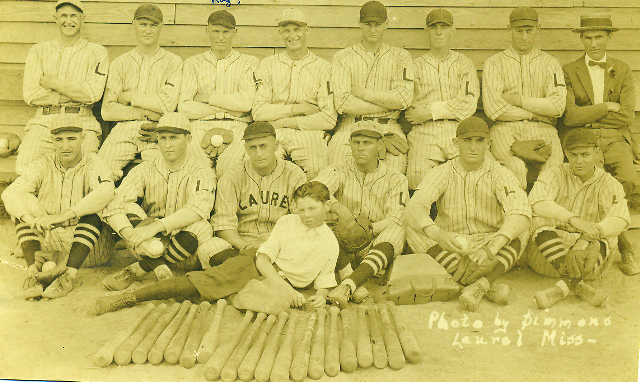
1924 Laurel Lumberjacks.  Roy Spruell is in the top row, third from left.  The player seated on the far left in the front row appears to be future big league pitcher Ray Moss who pitched for the Brooklyn Robins and Boston Braves.

1924 Laurel Lumberjacks. Roy Spruell is in the top row, third from left. The player seated on the far left in the front row appears to be Ray Moss, the only member of the Laurel club to play in the big leagues,; he pitched for the Brooklyn Robins and Boston Braves.

Spruell had his best professional season in 1926 as a member of the Hattiesburg Pinetoppers.  He led the team to the Cotton States championship with a 22-8 record, and got his name in newspapers across the country in August.  The Associated Press said:

“Friday the 13th was far from unlucky for Roy Spruell, pitching star of the Hattiesburg club of the Cotton States League, Spruell hurled the first no hit, no run game of his career.”

Spruell allowed just two walks (shortstop/manager Herschel Bobo also made an error) to the Monroe Drillers, but still only faced the minimum 27 batters.

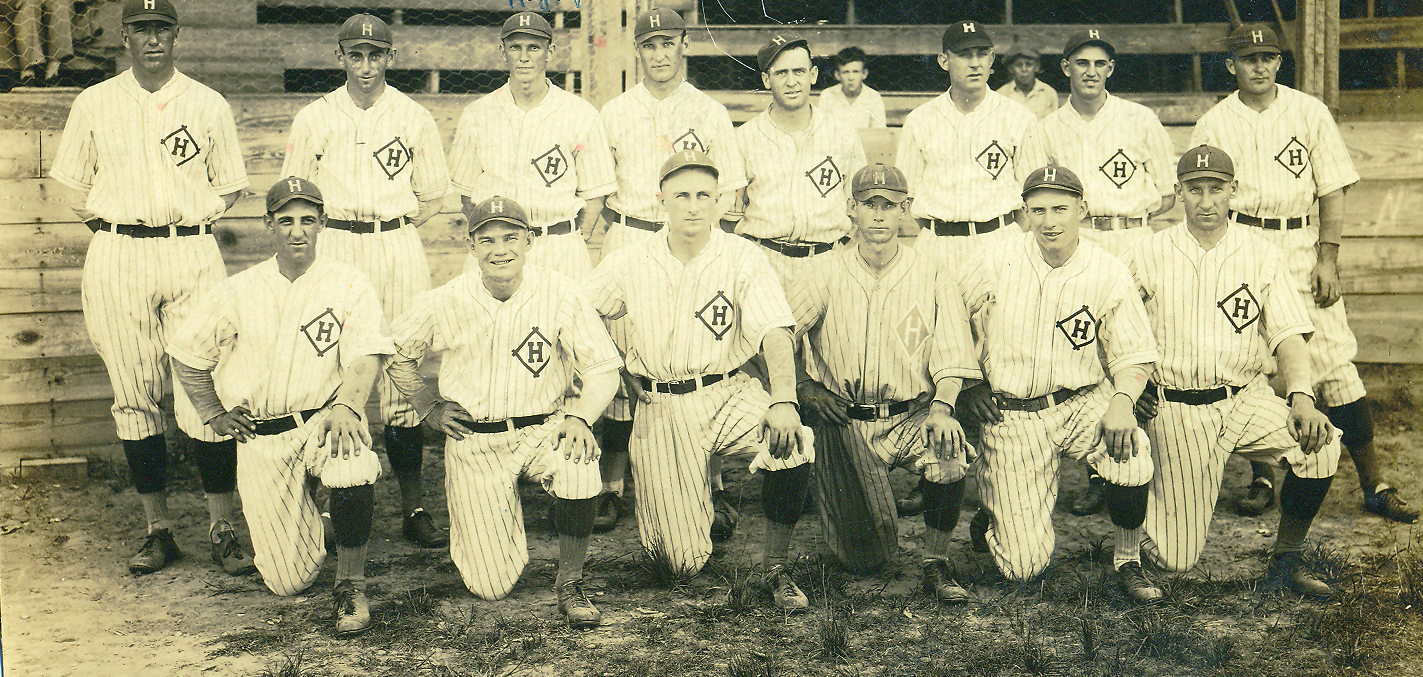
The 1926 Cotton States League champion Hattiesburg Pinetoppers.  Roy Spruell is standing third from left.  Manager/shortstop Herschel Bobo is kneeling far left.

The 1926 Cotton States League champion Hattiesburg Pinetoppers. Roy Spruell is standing third from left. Manager/shortstop Herschel Bobo is kneeling far left.

At the end of the 1926 season Spruell was purchased by the Houston Buffaloes of the Texas League, but never played in Texas.  He started the season with the Memphis Chickasaws in the Southern Association and was released to the Knoxville Smokies in the South Atlantic League in May of 1927.  He was 10-10 in Knoxville and also appeared in 20 games in outfield.  The Spartanburg Herald called Spruell “the elongated righthander,” (he was listed variously from 6’ to 6’ 2”).

Spruell returned to the Smokies for the 1928 season, but a hand injury led to a slow start and with a 1-3 record at the end of May he was released and returned to the Cotton States League. He pitched professionally through the 1930 season, but struggled with injuries his last three seasons and pitched for several teams:  Laurel and Hattiesburg again (he also pitched for the Baton Rouge Essos when the Hattiesburg franchise relocated there during the 1929 season) as well as the Jackson Senators in the Cotton States League, and the Jacksonville Tars in the Southeastern League.

Spruell spent the next decade playing with and managing independent and industrial league teams in the South.  He played from 1931 to 1935 in the Mississippi Coast League, a strong semi-pro league with teams sponsored by union and industrial interests.

He left the Gulf Coast the following year, relocating in Savannah, Georgia where he played for and managed the Union Baggers—the company team of the Union Bag and Paper Company, operator of the world’s largest paper mill.  The team was considered one of Georgia’s best semi-pro and industrial teams, playing in the Coastal League, which included teams in Georgia, Florida and South Carolina.

The Union Baggers, circa 1937.  Roy Spruell, standing second from right.

The Union Baggers, circa 1937. Roy Spruell, standing second from right.

Spruell’s baseball career appears to have ended around 1940.

He eventually relocated to Pensacola, Florida and worked for the Florida Pulp and Paper Company; he suffered a heart attack at work and died in 1950

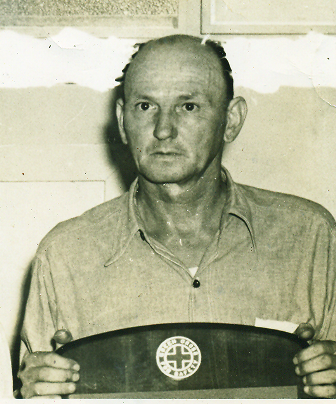
Roy Spruell shortly before his death in 1950.

Roy Spruell shortly before his death in 1950.

Like thousands of others who played baseball in small and large towns, and small and large leagues, throughout the country, Roy Spruell’s career brings to mind a passage from W. P. Kinsella’s great novel “Shoeless Joe:”

“For some reason, I recall the question at the bottom of the form sent by the Baseball Hall of Fame to everyone who has ever played professional baseball: ‘If you had it to do over again, would you play professional baseball?’  The historian at Cooperstown, Clifford S. Kachline, said he couldn’t recall even one ex-player answering ‘no’ to the question.  I wonder if any other profession can say the same?”

Thank you to Roy Spruell’s grandchildren, Paula Grady and Bob Gattis for sharing the photographs used in this post as well as a copy of Mr. Spruell’s obituary.