Tag Archives: World Series

Lost Advertisements–“Our ‘Pennant’ Hat Looks well on ‘Dut’ Chalmers

26 Jul

chalmers

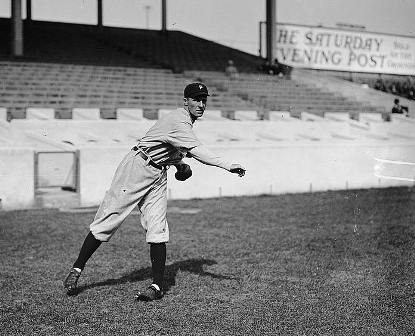
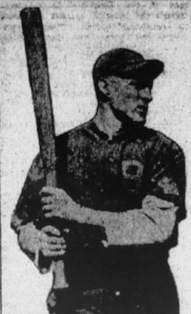
George “Dut” Chalmers, pitcher for the 1915 National League Champion Philadelphia Phillies in an advertisement for Geo. B. Wells Hats.

“Our ‘Pennant’ Hat Looks well on ‘Dut’ Chalmers

“As full of graceful curves as the shoots Chalmers puts across!

“You’ll find the right hat for your head in our very high-grade offerings at $2 and $3.”

Chalmers is one of only eight big leaguers to have been born in Scotland.  He was 8-9 with a 2.48 ERA in 26 games for the Phillies in 1915, and lost game 4 of the World Series 2-1 to the Boston Red Sox–Boston won the Series 4-1.

Chalmers was 29-41 in seven seasons, all with the Phillies.

George "Dut" Chalmers

George “Dut” Chalmers

Butcher Boy Schmidt

25 Jul

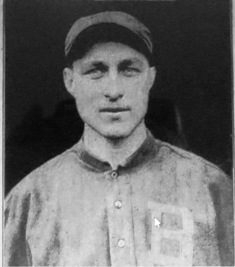
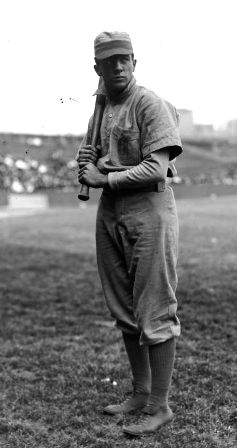
Charles John “Butch” “Butcher Boy” Schmidt was credited by Connie Mack with being the catalyst for the Boston Braves World Series upset of Mack’s Philadelphia Athletics in 1914; one year later Schmidt walked away from baseball in his prime.

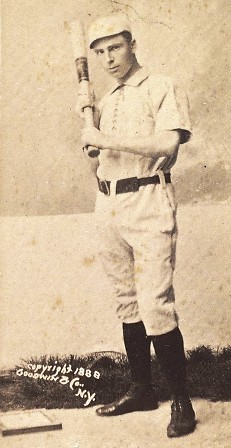
Butch Schmidt

Butch Schmidt

He was born in Baltimore in 1886, and played amateur ball while working in the family meat market, which earned him his nickname.

Schmidt signed as a pitcher with the Baltimore Orioles  in the Eastern League and assigned to the Holyoke Papermakers in the Connecticut State League, where he posted a 10-9 record.  In late August the Orioles recalled him, and he went 5-1 in 11 games with Baltimore.

The New York Highlanders drafted Schmidt and the 22-year-old pitcher started the 1909 season in New York.  He appeared in only one game, on May 11, giving up 10 hits and eight runs, four earned, in five innings.  Early in June he was returned to the Orioles.

After appearing in eight games on the mound with the Orioles, Schmidt was moved to first base.  After hitting .244 for the remainder of ’09, he hit .292, .291, and .274 the next three seasons, and was sold to the Rochester Hustlers in the International League, where he hit .321; he was purchased by the Boston Braves on August 22, and hit .308 in 22 games playing in place of Ralph “Hap” Myers.

At the end of the 1913 season Boston sold Myers’ contract to Rochester; The Boston Post reported that Braves manager George Stallings simply didn’t like Myers.  (Myers had a different theory for his release—that story next week)

Schmidt was installed as the Braves first baseman in 1914, and as Boston made their improbable run to the National league pennant Schmidt   hit .285 with 71 RBI and .990 fielding percentage, and finished 16th in the voting for the Chalmers Award, for the most valuable player in the National League; teammates Johnny Evers and Rabbit Maranville finished first and second in the voting.

Grantland Rice said in The New York Tribune:

“There are few greater first basemen in baseball and none who is steadier or a better fighter.  For Schmidt is also of the aggressive type and a hustler every second.”

The New York Times didn’t think quite as highly of Schmidt and on the eve of the World Series said the “advantage favors the Athletics” at first base:

(John “Stuffy”) McInnis makes exceptionally brilliant plays…has been through Worlds Series fire and proved just as cool as if he were playing an exhibition game in the springtime.  Schmidt has yet to face the strain and tension of the big baseball classic…While Schmidt is not a scientific batsman, he is a free swinger and hits the ball hard, but he doesn’t hit it often.”

The pressure of the series didn’t seem to bother Schmidt, the Braves first baseman hit .294 with five hits, two runs and two RBIs in the four game sweep of the Athletics; McInnis hit just .143.

In game one he made a play in the first inning that Connie Mack said set the tone for the series and “sparked the Braves.”  With runners on first and second with one out, Athletics third baseman Frank “Home Run” Baker hit a foul pop-up into short right field.  Athletics outfielder Eddie Murphy tagged up and attempted to go to third; The Associated Press said Schmidt made a “great throw…from a difficult angle,” to third baseman Charlie Deal to retire Murphy.

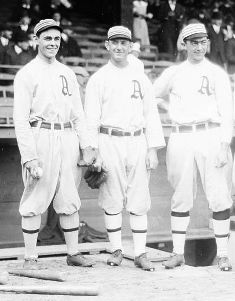
Stuffy McInnis, Eddie Murphy and "Home Run" Baker,

Stuffy McInnis, Eddie Murphy and “Home Run” Baker,

Early in the 1915 season Braves manager George Stallings called Schmidt “The best first baseman in the game,” but his performance at the plate slipped.  Schmidt hit just .251 with 60 RBIs.  The Braves again found themselves in 8th place in July, and while they made another strong run, finished 2nd, seven games behind the Philadelphia Phillies.

Despite the mediocre season at the plate, it was assumed the 28-year-old Schmidt would remain the Braves first baseman.  Schmidt shocked Stallings, Boston fans, and all of baseball when he announced in January of 1916 that he was retiring from baseball.

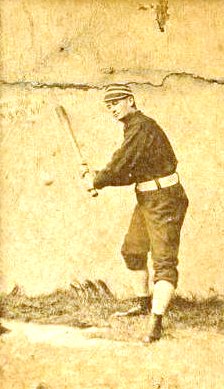
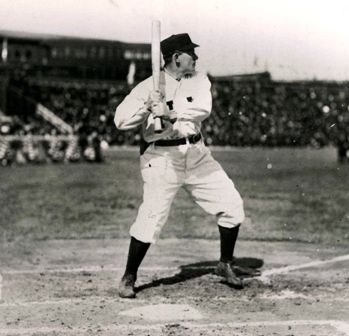
Butch Schmidt at bat

Butch Schmidt at bat

The Associated Press said Schmidt was leaving “to devote his entire time to his private business.”

Grantland Rice said Schmidt’s business included “six meat markets in Baltimore,” and that he earned $8000 a year from his stores.

The Sporting Life said it was just as likely that Schmidt, listed at 200 pounds, retired because:

Hard work in that old rubber shirt to get down to weight, especially when the extra weight comes off slowly, more slowly each succeeding season, is a trial that anyone would like to sidestep if he could. “

Boston manager George Stallings filled the void left by Schmidt by purchasing Ed Konetchy from the Pittsburgh Rebels from the newly defunct Federal League.

The Boston Post said the change at first base would not hurt the Braves:

“Konetchy, a heavier hitter than Schmidt, is just about as capable in other ways.”

Despite the confidence of The Post, Stallings was not convinced and continued to try to induce Schmidt to return; his efforts were unsuccessful.

After Konetchy hit .260 for the third place Braves in 1916 it was reported that Schmidt would return to the team.  After several weeks of speculation, Schmidt told The Boston Globe “no offer” could induce him to return to Boston.

Konetchy hit .272 and .236 the next two seasons, and each off season it was rumored Schmidt would return, and every year he stayed home where he continued to run his business and play semi-pro ball in Baltimore’s Inter-City League.

Before the 1919 season Konetchy was traded to the Brooklyn Robins and the Braves acquired Walter Holke from the Cincinnati Reds.  Holke hit .292 for the Braves in 1919, but rumors continued that Schmidt, out of organized baseball for four years, would be returning to Boston.  The Associated Press said:

“George Stallings of the Boston Braves is trying to get Charlie “Butch” Schmidt, the Baltimore butcher boy who played first base for the world’s champions of 1914, to return to the Boston Braves.  Schmidt is reported to be in wonderful condition as he has kept in practice since his retirement.”

Schmidt never returned to professional ball, and was finally removed from Boston’s reserve list in 1922.

Butch Schmidt walked away from professional baseball and never looked back; he died in 1952 of a heart attack while inspecting cattle at the Baltimore Union Stock Yards.

“Is the Best the Game has Known”

23 Jul

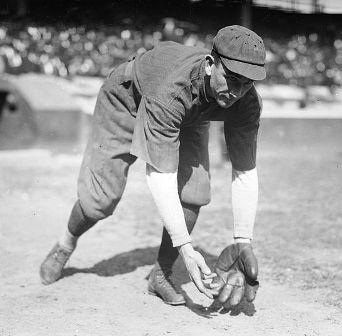
Joining the Boston Braves for the 1914 season provided second baseman Johnny Evers with the opportunity to appear in one more World Series, and gave him the chance to take a very public swipe at one of his most famous former teammates, shortstop Joe Tinker.

In December of 1912 the Chicago Cubs traded Tinker to the Cincinnati Reds, and depending on which version of the story was to believed, Tinker and Evers had not spoken a word to one another for either five or six years.

Johnny Evers

Johnny Evers

Tinker said the two stopped talking in 1908 after Evers jumped in a horse-drawn cab leaving Tinker and other teammates behind before an exhibition game in Indiana leading to an on-field fight between the two later that day; Evers said a year earlier Tinker initiated the bad blood between the two by throwing a ball so hard to the second baseman on a force play that it injured his finger.

Evers said years later:

“I yelled to him, you so-and-so. He laughed. That’s the last word we had for-well, I just don’t know how long.”

The 1914 Braves got off to a horrible 4-18 start, and were still in eighth place on July 18, but surged to second place by August 10, winning 18 of 21 games.  By September 2 the Braves had first place to themselves, and ended up running away with the pennant, beating the second place New York Giants by 10 ½ games, and sweeping Connie Mack’s Philadelphia Athletics in the World Series.

Evers, named Boston’s captain by manager George Stallings, led National League second basemen in fielding; hit .279 for the season, and .438 in the World Series.  Evers received baseball’s last “Chalmers Award,” a forerunner of the Most Valuable Player Award, which was presented from 1911-1914.  The award was sponsored by the Chalmers Motor Car Company and was presented to Evers along with a new car.

The runner-up for the Chalmers Award was Evers’ teammate, shortstop Walter James Vincent “Rabbit” Maranville.  Maranville, Evers and first baseman Charles “Butch” Schmidt were an excellent double-play combination throughout the season; Evers participated in a career-high 73 twin killings, more than he’s ever turned in a season with Tinker and Frank Chance.

Years later Maranville said of Evers:

“It was just Death Valley, whoever hit a ball down our way.  Evers with his brains taught me more baseball than I ever dreamed about.  He was psychic.  He could sense where a player was going to hit if the pitcher threw the ball where he was supposed to.”

Two days after the Braves won the World Series; Evers took the opportunity to take a swipe at his former teammate Tinker.  Evers told William Peet, sportswriter for The Boston Post that:

“(Maranville’s) the best shortstop the game has ever known.

“Better than Joe Tinker; your old side partner?

“Yes, he’s better than Tinker.”

Joe Tinker

Joe Tinker

Peet sad:

“Evers has been given credit for making Maranville the great player he has shown himself to be this season, but Johnny declares this s untrue, stating that Maranville learned the game and all its fine points unaided.”

Peet said Evers’ claim that Maranville “is a greater shortstop than Tinker is about the highest praise anyone can shower on the peppery little chap who was such a prominent factor n the Braves’ victory.”

Rabbit Maranville

Rabbit Maranville

Evers and Peet failed to mention where Honus Wagner would be ranked if Maranville was, in fact, “the best shortstop the game has ever known.”

No response from Tinker was recorded.

Evers and Tinker would not speak again for another decade.  In 1924, the two finally spoke when they were summoned to California by Chance, their former teammate and manager, who was dying.

Tinker, Evers and Chance

Tinker, Evers and Chance

Tinker, Evers and Chance were inducted into the Hall of Fame together in 1946 by the veterans committee; Maranville was elected by the Baseball Writers Association of America in 1954.

Charles Murphy’s Last Stand

16 Jul

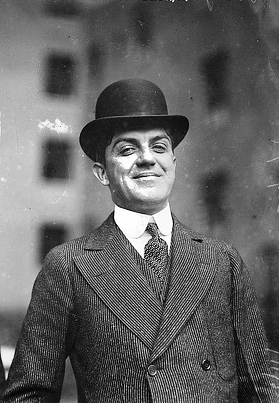
The National League had almost completely rid themselves of Charles Webb Murphy in 1914; the owner who had ongoing feuds with nearly every other league magnate, league officials, umpires, and many of his own players, had sold his interest in the Chicago Cubs to his financial benefactor Charles Phelps Taft.

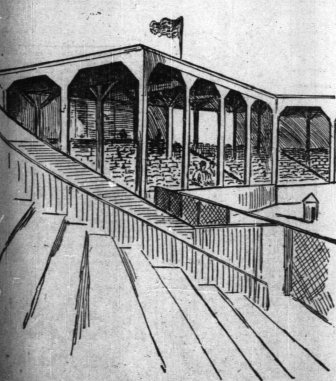
Murphy returned to his home in Wilmington, Ohio; his only connection to the National League was his part ownership of the Baker Bowl, the home of the Philadelphia Phillies.  Murphy’s other ballpark ownership stake was in Chicago’s West Side Grounds, but that investment had lost most of its value after Taft sold the Cubs to Charles Weeghman, who moved the team to his ballpark on the North Side.  The Cubs former home field was used for amateur and semi-pro games, even  Buffalo Bill’s Wild West Show, but the park was not making Murphy money.

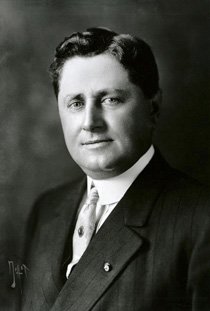
William Wrigley Jr., and his brothers were minority investors in the team in 1916, but Weeghman began struggling financially almost as soon as he bought the team, and the Wrigley brothers began buying Weeghman’s stock.

Charles Weeghman

Charles Weeghman

Between the 1918 and ’19 seasons the Wrigley’s acquired controlling interest in the Cubs.  (Some recent sources say Wrigley did not have controlling interest until 1921, but numerous contemporaneous sources said the Wrigley family had control of the team before the 1919 season began).

William Wrigley Jr.

William Wrigley Jr.

In February of 1919 Joe Vila, sports editor of The New York Sun wrote a story that said the Cubs were moving out of Weeghman Park and back to the West Side Grounds:

“National League men are gratified to learn that there will be a change of ball parks in Chicago, probably before the championship season opens on April 23.  The Cubs who have occupied the grounds of the defunct Chicago fed on the North Side since 1916, are preparing to return to their old home, West Side Park, which still is the property of Charles Webb Murphy and, presumably Charles P Taft.  The North Side plant never could accommodate more than 18,000 spectators, sitting and standing, whereas as many as 30,000 attended games at West Side Park in the days when Frank Chance had a world’s championship ball club.  Last fall the Cubs played their world’s title games with the Red Sox in Chicago at the home of the White Sox for the reason that the former Chifed arena was too small.”

Vila said Murphy saw an opportunity in the new ownership arrangement:

“Naturally, with an eye to business, Murphy promptly suggested to the Wrigley’s, who control the Cubs stock, the transfer of the Cubs…The Wrigley’s, who know little or nothing about practical baseball methods, regard Murphy as an oracle and there isn’t  a doubt that they will accept his suggestion.”

westsidegrounds

The Grandstand at West Side Grounds

It’s unclear whether the move, for which Vila said “there isn’t a doubt,” was ever even a possibility; it seems just as likely it was a story planted by Murphy.  Vila’s description of the ousted Cubs owner would suggest, at the very least, that Murphy had a sympathetic ear with The Sun sports editor:

“Murphy is one of the smartest men in baseball…When Murphy was president and of the Cubs the club didn’t have a losing year financially…In other words the Cubs under Murphy were tremendously successful.”

Vila also blames the Horace Fogel incident for all of “Murphy’s unpopularity that led to his retirement,” Not mentioning Murphy’s numerous feuds.

The Wrigley’s did not end up accepting Murphy’s suggestion, and the team remained at Weeghman Field, renamed Cubs Park before the 1920 season, and finally Wrigley Field before the 1926 season.

Murphy’s last stand having failed, he had his ballpark torn down in 1920.

It wasn’t until 1927 that the seating capacity at Wrigley Field finally surpassed that of the west Side Grounds.

Lost Advertisements–“Zim Says It’s a Hit”

8 May

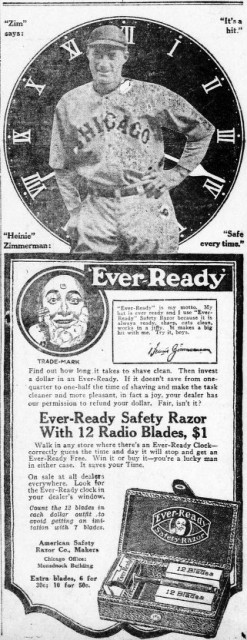
zimmermansaftyrazor

A 1912 advertisement for Ever-Ready Safety Razor featuring Chicago Cubs star Henry “Heinie” Zimmerman.

“Ever-Ready is my motto.  My bat is ever-ready and I use “Ever-Ready” Safety Razor because it is always ready, sharp, cuts clean, works in a jiffy.  It makes a bit hit with me.  Try it boys.”

The 1917 World Series, which the White Sox won 4 games to 2, was the low point of Zimmerman’s career.  Now playing for the Giants, the former Cub had once said: “I’d rather play in hell than in Comiskey Park.”  White Sox fans did not let him forget it.  Called “The sassiest and most ill-tempered player in the game,” by a wire service article before the series which also said, “Can you imagine what he will endure when the W.S. takes place?”

He did endure a lot.  Zimmerman was jeered by Sox fans throughout the series.  He hit .120, committed three errors, and was undeservedly blamed for a botched rundown when Rube Benton and Walter Holke failed to cover the plate, and the Sox’ fleet second baseman Eddie Collins beat the slower Zimmerman in a footrace home, scoring the winning run in game 6.

“Mique” Fisher 2

7 May

On October 12, 1906, with the World Series between the Chicago White Sox and Chicago Cubs deadlocked at two games apiece, August “Garry” Herrmann, President of the National Commission, received a telegram from Fresno, California:

“Fresno will give $25,000 guarantee; guarantee 40,000 fans and sunshine for deciding game of World Series.

–Mike Fisher”

Fisher said the offer to bring the series and Fresno native Frank Chance to town was backed by “the businessmen here.”

It is doubtful Herrmann took the offer seriously, and it’s probably just as doubtful that Fisher took it seriously, but it was picked up by newspapers across the country, and Fisher enjoyed the publicity.

It was a last bit of publicity before his career in organized baseball ended.  Later in the month he was dismissed as manager of the Fresno Raisin Eaters, and the team was dropped from the Pacific Coast League (PCL) the following spring.

Within weeks Fisher had moved on to a new project; he announced that he was in the process of forming a team to travel to Hawaii.  The San Francisco Call said “It will be the first American ball team to make the trip across the Pacific in a little over nineteen years,” since Spalding’s world tour.

In conjunction with Jesse Woods, a Honolulu promoter, Fisher organized a tour of the Hawaiian Islands with a team of PCL stars.

Mike Fisher

Mike Fisher

Upon his return, Fisher got more ink on the West Coast, when he headed to Nevada with Charlie Irwin of the San Francisco Seals; the two met with businessmen in the mining towns of Goldfield and Tonopah to discuss forming a professional league—Fisher told The San Jose Mercury News that he was now “against organized baseball,” and if he got involved in the league “it will be an outlaw organization.”

Fisher chose not to get involved in the new league, but immediately went to work on an even more ambitious tour than the 1907 Honolulu trip.

With the sponsorship of the Reach Sporting Goods Company, Fisher would accompany a group of stars to China, Japan and the Philippines.  Early publicity promised the travelers would include Ty Cobb, Hal Chase, and Frank Chance.

When the ship set sail in November of 1908 those three stars were not on board, but “several hundred fans and friends” were present when the steamer China left the port in San Francisco to see the group off.  The team was substantially the same as the one that toured Hawaii the previous year—an aggregation of PCL stars and a few National and American League players– and consisted of: Jim Delahanty, George Hildebrand, Bill Burns, Pat Flaherty, Jack Bliss, Babe Danzig, Harry McArdle, Nick Williams, Joe Curtis, Heine Heitmuller, Jack Graney and Bill “Brick” Devereaux.

Despite the failure to land Cobb, Chase or Chance for the tour, the West Coast press applauded Fisher for even attempting the trip, The Call said:

“The undertaking which he has fathered and which is so successfully underway at the present time is a big proposition.  With the single exception of the around-the-world trip of the A.G. Spaldings years ago, nothing on as big a scale as this has ever been attempted.  To take a team of American baseball players over a journey that will total 10,000 miles before they return, to play games in China, Japan, Manila and Honolulu is something that two or three years ago would have been laughed at as an impossibility.”

The tour lasted more than three months, with the team barnstorming through Japan, China, the Philippines and Hawaii, playing local and US Service member teams.  Though reports varied, the team played between twenty and thirty games, and lost no more than four.

While they drew large crowds throughout the trip, the newspapers back home reported that the tour was a financial disaster; when the players arrived back in San Francisco on February 15, 1909 aboard the Tenyo Maru, Fisher responded to the reports:

“I hear that it has been said that the trip was a financial frost.  Well, anybody who says that is a liar.  We broke even in Japan and made money in Manila and Honolulu.  I am satisfied with the trip.”

Fisher didn’t mention the financial results in China; likely because that leg of the tour was a disaster financially.  Years later he would tell a story about the team’s experience there, complete with his usual exaggerations:

“In one game we played in Canton we had 150,000 people inside, and as the gatemen had been instructed to accept Chinese money it required the combined efforts of the entire team to tote the money up to the hotel.  A special staff of accountants was busy all night totaling it up and in the morning we discovered we had $46.15.”

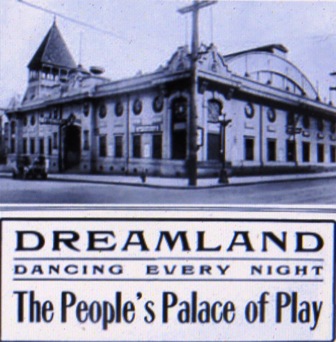
Fisher promised to take a team to Australia the following year.  The trip never took place; instead Fisher purchased a Seattle dance hall called the Dreamland, and quickly became the target of the pious women of the city.  Early in 1910 Fisher was indicted by “The King County grand jury, as a direct result of the activity of the Women’s Clubs,” for violating liquor laws, allowing “unescorted women” into his dance hall, and other assorted charges.  A special prosecutor, Justice William Henry White, one of the most respected jurists in Washington State, was appointed to prosecute Fisher and other club owners targeted by the women.

Ever the promoter, Fisher used the indictment to promote his dance hall and rally public support.  After the indictment was handed down Fisher sponsored a “Sermon in the Dreamland rink.”  According to The Seattle Times, Fisher engaged Reverend Frank Herthum, who “has liberal ideas about amusements.”

Mike Fisher's Dreamland Dancehall, Seattle

Mike Fisher’s Dreamland Dance Hall, Seattle

Herthum preached, and Fisher presented a free vaudeville show.  The paper said Fisher had stirred up a “protest against the effort to close the dance hall without having provided a substitute where clerks, servant girls and employees in the shops may pass an evening to their liking.”  At the same time The Times noted that the prosecutor was becoming impatient with the women who brought the charges because they continually promised to provide evidence that “has not yet come to light.”  The charges were quietly dismissed within weeks.

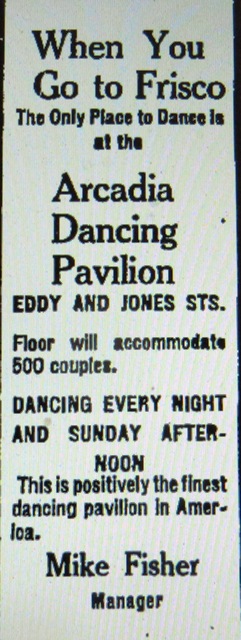
Fisher left Seattle sometime in 1911 and began operating the Arcadia Dance Hall in San Francisco.

Advertisement for Fisher's Arcadia Dancing Pavilion.

Advertisement for Fisher’s Arcadia Dancing Pavilion.

In January of 1917 Fisher made headlines in California when he announced that he was directing an effort to restart the California State League, which had folded after the 1915 season.  He said he would have clubs in Sacramento, Fresno, Stockton and San Jose.  Within two weeks Fisher abandoned the plan.  The San Jose Mercury News was not surprised:

“Mr. Fisher, the wonderful getter of publicity, has his publicity and is through.  Probably he has done wonders for his dance emporium or whatever it is he runs.”

The following year the San Francisco Seals of the Pacific Coast League came on the market; the first name reported as a potential buyer was Mike Fisher.  Fisher again got his headlines, but it was his old friend Charlie Graham who got the team.  Graham, and a group of investors purchased the Seals and the former catcher was installed as manager.
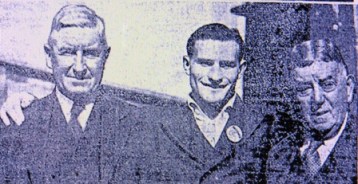
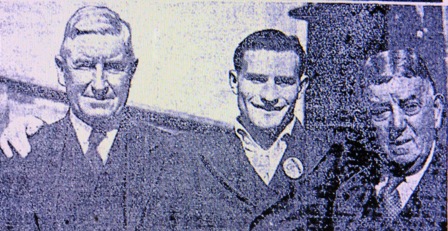
Charlie Graham, left, Mique Fisher, right, with World Middleweight Champion and actor Freddie Steele.

Charlie Graham, left, Mique Fisher, right, with World Middleweight Champion and actor Freddie Steele.

With his friend in charge The Mercury News said Fisher became a fixture “around the San Francisco ballpark ever since Graham bought in on the Seals in 1918,” he would remain a fixture at Recreation Park, and later at Seals Stadium for more than 20 years , and continued to provide copy for West Coast s sports writer

As a result of his friendship with Graham, who recommended he get the honor, 77-year-old Fisher was selected to travel to Cooperstown to represent the PCL at baseball’s centennial celebration in 1939.  The man who so loved seeing his name in the paper  received headlines one more time, when he died in San Francisco on June 6, 1943.

Lost Advertisements—Old Underoof Whiskey, 1909 World Series and 1910 A.L. Race
11 Apr

oldunder1909ws

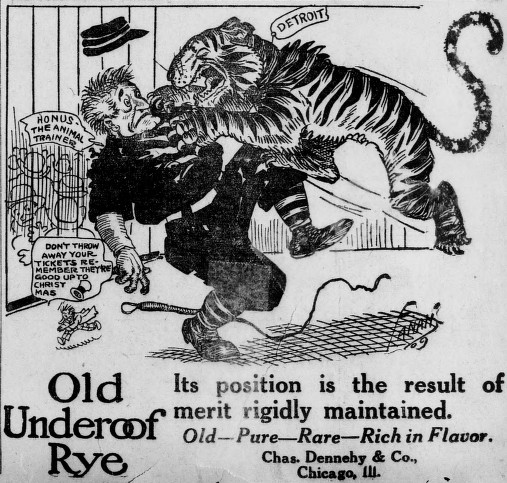
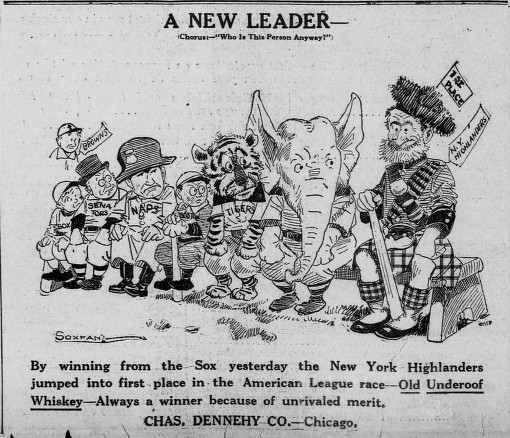
During the first decade of the 20th Century cartoon ads from Chas. Dennehy & Co., distributor of Underoof Bourbon and Rye Whiskey appeared regularly in Chicago newspapers.  Most focused on the Cubs and White Sox, the two featured today do not.

The ad above appeared after game 4 of the 1909 World Series when the Detroit Tigers evened the series with the Pittsburgh Pirates at two games apiece on George Mullin’s a five hitter;  Pirate star Honus Wagner, who would hit .333 for the series was held hitless by Mullin.  The Pirates would go on to win the series in seven games.

The one below was published on June 6, 1910 when the New York Highlanders, after winning two of three in a series with the White Sox, moved into first place.  The Philadelphia Athletics quickly overtook New York and would win the American League Pennant by 14 1/2 games.


oldunder1910Highlanders

“Not Quite Such an Idiot”

5 Apr

The 1889 American Association season began and ended as a two-team race between the Brooklyn Bridegrooms and St. Louis Browns, who had won four straight championships—the third place Philadelphia Athletics finished 16 games back.  The battle between Brooklyn and St. Louis was bitter and culminated in September with a charge of umpire bribery.

St. Louis owner Chris von der Ahe made a charge of attempted bribery of an umpire.  He said Brooklyn Captain William “Darby” O’Brien had attempted to bribe umpire John Kerins “$100 and the chance for him to umpire in the World’s Series if Brooklyn got there.” (Some accounts claim the amount was $1000, but the overwhelming number of contemporaneous stories put the figure at $100).

Chris von der Ahe

Chris von der Ahe

The Browns owner claimed “I can prove,” the charges and said “Kerins himself told the story in my presence.  Captain (and manager Charles) Comiskey and another party were in the carriage at the time.”

The other “party” never materialized, and Comiskey, no stranger to dubious charges, never fully backed his boss with a statement confirming the accusation.

Kerins, who since 1884 had bounced back and forth between playing in the American Association with the Indianapolis Hoosiers, Louisville Colonels and Baltimore Orioles, and working as a minor league and Association umpire, called the claim “Simply absurd.”

John Kerins

John Kerins


He said he never spoke to von der Ahe, and “I never told Comiskey that any attempt had been made to bribe me,” and that all the charges came from a misinterpreted conversation he had with Comiskey.

Kerins said he simply mentioned to the Browns manager that O’Brien had made “A casual remark,” that “I would give $100 out of my own pocket if Brooklyn could win the championship.”

Kerins said he told O’Brien he’d like to serve as an umpire in the World Series (against eventual National League champions the New York Giants), but it appears Kerins, like every other Association umpire, told many people he’d like to earn the additional money paid to post-season umpires.

Kerins told The Baltimore American that he was:

“Not quite such an idiot as to sell (myself) for the paltry sum of $100.”

O’Brien issued an indignant statement about the charges that appeared in The Chicago Times and other newspapers:

“I was completely nonplussed when I read that story, and, as it was the first intimation I had had of it, you can well imagine my surprise.  To think that that story should reach the eyes of my folks in Peoria and that they might believe me capable of stooping to a dishonest act is what galls me.”

Darby O'Brien

Darby O’Brien

Brooklyn went on to beat the Browns by two games for the American Association Pennant and lost the World Series to the Giants six games to three.

Nothing came of the charges, and it seems doubtful von der Ahe and Comiskey actually believed they were true.

A postscript:  After Comiskey jumped the Browns the following season to join the Chicago Pirates in Players League, von der Ahe signed Kerins (who had all but called him a liar six months earlier), and named him manager in May (one of five Browns managers that season) for 17 games; under Kerins the browns were 9-8.  In June Kerins, hitting .127, was replaced as manager and released by the Browns.

“A Heart-Breaking Play, Engineered by Wagner”

29 Mar

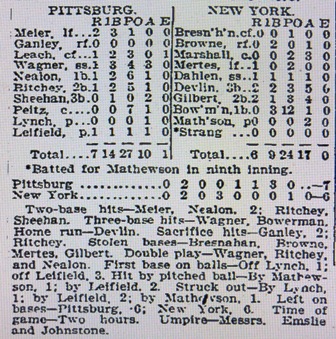
The defending World Series Champion New York Giants had gotten off to a fast start in 1906; on May 15 they were 19-7, the Chicago Cubs were 21-9, when they arrived in Pittsburgh for a four game series.

The Giants were shut out by the Pirates in the first two games.  In the third game of the series Christy Mathewson blew a three-run lead and the Giants trailed 7-5 heading into the top of the eighth inning..

Outfielder Sam Mertes walked, moved to second on Bill Dahlen’s single and scored on a two-out single by second baseman Billy Gilbert.  The Giants were behind 7-6 with runners on first and second; manager John McGraw was about to send Sammy Strang to pinch hit for Mathewson, when, according to The New York Times:

“A heart-breaking play, engineered by (Honus) Wagner in the last second of the eighth inning, beat the Champion New Yorks…It was a hard game to lose, and might not have been lost had Dahlen not fallen a victim to the wiles of Wagner.  The big Dutchman was guilty of the trick of hiding the ball, and when Bill stepped off second base, thinking (pitcher Albert “Lefty”) Leifield had the ball, Wagner, who had concealed it, touched Dahlen, which made the third out.”

Bill Dahlen

Bill Dahlen

The Pirates held on to win 7-6; The Times said of Dahlen:

“The New York shortstop felt so bad that he fairly wept.  McGraw, too, was angry, and it was said tonight he fined Dahlen heavily for his bit of carelessness.”

The Giants were unable to keep pace with the Cubs who finished 20 games ahead of New York for National League Pennant.

The Box Score

The Box Score

Lost Advertisements–Bread at Every Meal

22 Mar

???????????????????????????????

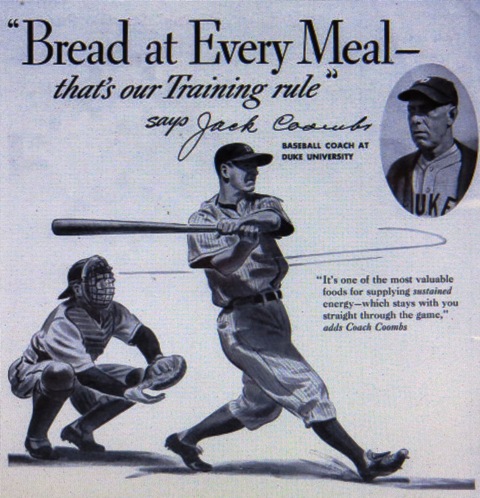
“‘Bread at Every Meal–That’s our Training rule’ says Jack Coombs Baseball Coach at Duke University.  ‘It’s on of the most valuable foods for supplying sustained energy–which stays with you through the game,’ adds Coach Coombs.”

Coombs was best known for pitching a 24-inning complete game for the Philadelphia Athletics against the Boston Americans as a rookie in 1906, and for beating the Chicago Cubs three times in the 1910 World Series.

Coombs, who never played a game in the minor leagues, finished his career with the Detroit Tigers in 1920.

He was coach at Williams and Princeton before arriving at Duke where he coached from 1929-1951, compiling a 382-171 record.  Twenty-one future Major League played for Coombs, including Billy Werber, Dick Groat, and his nephew Bobby Coombs.

Duke’s Jack Coombs Field is named for him.