Archive | Uncategorized RSS feed for this section

“Here, you Bone-Headed Mutt, come here”

19 Aug

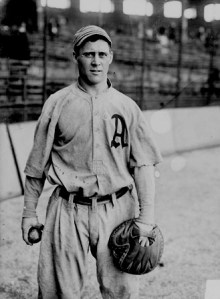
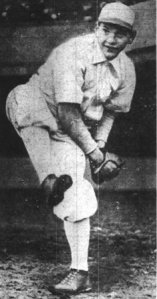
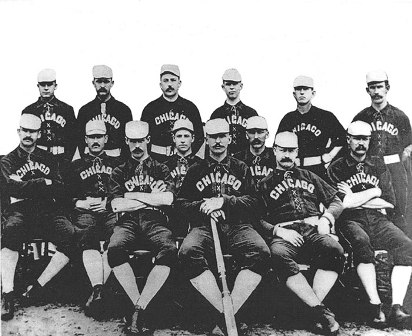
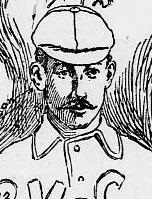
A small item in the 1913 edition of “Spalding’s Baseball Guide” reporting the death of long-time minor league player and manager Ed Ashenbach—misspelled Aschenbach by the guide—said he “coined the term bonehead.”
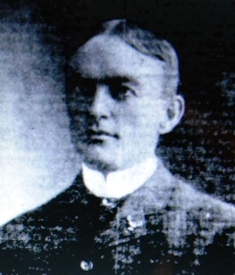
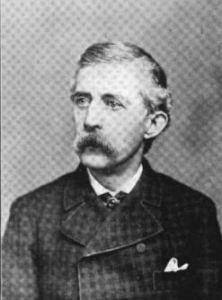
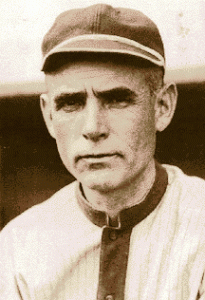
Ed Ashenbach

Ed Ashenbach

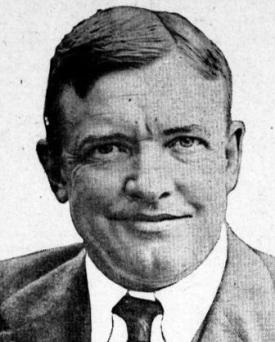
Wilbert Robinson told Billy Murphy of The St. Louis Star, the story of how Ashenbach, who The Sporting Life once called “The king of the minors,” came upon the term.

Robinson said it happened in 1902 when Ashenbach managed the Shreveport Giants in the Southern Association and involved an outfielder “by the name of McGowan,” whom he called “Mack.”  There was no “McGowan” with Shreveport, but Monte McFarland and Frank McGuire both played games in the outfield while Ashenbach was in Shreveport:

“One of the opposing players knocked a high fly in Mack’s direction.  Somehow he lost his nerve and was unable to judge it correctly.  He made three or four circles and finally gave it up entirely, just as the ball came down on his head and bounded to the far corner of the field, two runners scoring.

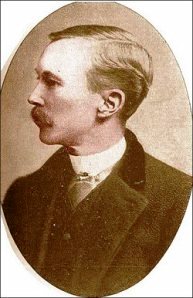
Wilbert robinson

Wilbert Robinson

“’Ash’ was wild.  The game was lost.

“Picking up a catcher’s mask and rushing out to the bewildered fielder he yelled: ‘Here, you bone-headed mutt, come here.’  When he came up with the player he began it again.  ‘Here you bonehead,’ he yelled. ‘Take this mask and put it on or they’ll knock your brains out with the next fly they put over.’”
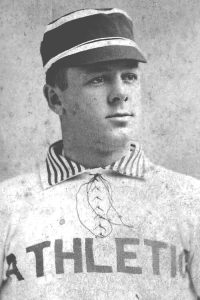
Before his death in 1912, Ashenbach wrote a book called “Humor Among the Minors,” and reprinted a very similar version of Robinson’s story that was told by Bozeman Bulger in The New York World in 1910.  While Ashenbach vouched for the veracity of the story, he said it wasn’t the first time he used the term, and had actually coined the term earlier–although he got the year wrong.:

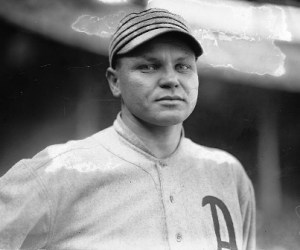
“In 1899 [sic, 1897] I played center field for the Springfield. Ohio, club (the Governors in the Interstate League).  On the team were Josh Reilly, third baseman, now retired and deputy coroner of San Francisco (It has been a matter of speculation where Reilly played in 1897–Baseball Reference lists the player with Columbus as Joseph Reilly, The Sporting Life referred to  the player with Columbus as “Josh Reilly”) and a catcher to whom we gave the nickname of Zeekoe, and who was continually doing just the opposite of what he was instructed to do.

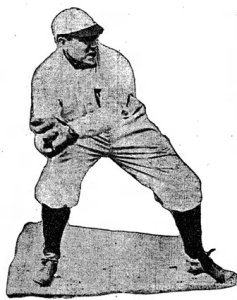
Josh Reilly

Josh Reilly

“He had a serious weakness, in that it was utterly impossible for him to catch a high foul fly.  He would dance under the ball until he got dizzy.  Reilly often advised that we build a wooden shed over him so that his head would not be shattered by one of those high fouls.

“One day the expected happened.  The ball went high up into the air, with Zeekoe, as usual, doing his sky-dance, under it.  It finally landed, not in his mitt, but right on top of his head, bouncing fully thirty feet off his bean into the bleachers.  The blow would have felled and ox.  Down went poor Zeekoe, but only for an instant–to pick up his mask, which had been knocked off in the encounter.  That evening in the dining room

“That evening in the dining room, Reilly and I passed Zeekoe, who was enjoying his evening meal with the utmost complacency.  In passing him, I playfully pressed both of my hands on his head to feel for the bump which a blow of that size should have raised.  The lump was conspicuous by its absence.

“‘Are you hurt?’ I inquired of him.  ‘Not a bit,’ he said with pride.  Turing to Reilly, I remarked, ‘No wonder, Josh, that he isn’t hurt.  His head is made of bone.’  I believe this was the very first use of the term.  Ever since that night I have applied the expression ‘bonehead’ to any player guilty of unusual stupidity, and it has gained wide circulation.”
 

“Squeeze that Bird, there’s $30,000 Depending on it”

17 Aug

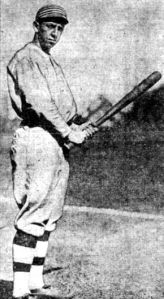
In 1922, Eddie Collins—billed in the byline as “World’s Greatest Second Baseman-“wrote a syndicated article about his post-season experience:

Collins

Collins

“Frequently I have been asked the question, ‘How does it feel to play in a World Series?’  I can at least say, ‘not monotonous, even tho I have participated in six.’

“The toughest part of any World Series, as far as the mental or nervous strain is concerned, that I have experienced has been when I was out of uniform.  Once in my baseball togs out on the field and in the game, I’ve never felt it any different from any regular season affair.  But in between games, especially if a postponement occurs, or the team is idle traveling, that is when I’ve felt ill at ease, with a longing for it to be over and to be miles away from baseball.”

Collins said the 1911 Series—with six consecutive days of rain between games 3 and 4, the longest delay in Series history until 1989—was “(T)he worst in this respect…I remember some of our team went to Cuba after the series, but I was so glad to be thru with baseball for that year I wouldn’t have gone for a mint.”

Collins said a World Series could “make or break a promising player,” and used his former teammate Wally Schang as an example:

“In 1913, in his first game the first time he came to bat against the Giants, (Jack) Barry was on first, no one out. ‘Shangie’ leaned over the bench and said to Manager (Connie) Mack. ‘What shall I do?’  Meaning whether to bunt or hit.  Connie hesitated for a fraction of a second, then said to the kid, ‘You go up there and use your own judgment.’

Schang

Schang

“Schang attempted to bunt the first, fouled it off, and on the very next ball flashed Barry the hit and run sign.  And bang went a base hit to center to center on which Barry made third and ‘Schangie’ pulled up at second on the throw in.  That play alone I honestly believe gave Schang more confidence than base hit he ever made before.”

Collins said another question he was often asked was:

“’ Do you think the fact they are playing for big stakes has any effect on the players and do some often see a dollar sign coming their way instead of a ball?’

“In general, I’d say no, because every player is too absorbed in the game itself, striving to win, rather than figuring on his share of the gate.”

Collins said some players remained loose, even during a stressful post-season game:

“I do recall a certain bit of jest that was pulled by Amos Strunk in 1913 on the play that ended that series and one that afforded three or four of us a good laugh afterward.

Strunk

Strunk

“It was on the Polo Grounds, and Larry Doyle hit a high fly toward short right which Eddie Murphy caught.

“Amos, McInnis and I were close to him when he was about to make the catch.  Just before he did ‘Strunkie’ hollered, ‘Squeeze that bird, there’s $30,000 depending on it.’  Which had reference to the (Fred) Snodgrass muff of the preceding year.  Needless to say ‘Murph’ squeezed it, and the game and series were over.”

The excitement of the World Series even overcame the taciturn Connie Mack on one occasion according to Collins:

“Mack so forgot himself, so enthusiastic and joyful did he become, as to do a miniature war dance on the bench in the eighth inning of our final game against the Cubs in 1910.  Once later, I remember, he got up to get a drink of water during a game against the Giants, but these are the only two instances I can recall where he ever moved from his usual place on the bench.”

Collins summed up his World Series experience:

“It’s great to be in a series, but take it from me, it’s greater when it’s over—and you have won.”

In his reminiscences of his six World Series appearances, Collins made no mention of 1919.

“Tell the Babe to Choke Up on his Bat”

15 Aug

While Babe Ruth kept a low profile—or as low a profile as he could—in Sudbury, Massachusetts, and occasionally New York, during the winter of 1922, he received hitting advice from Christy Mathewson.

Ruth struggled—at least for Ruth, 35/96/.315—all season after starting the year suspended by Commissioner Kennesaw Mountain Landis for barnstorming during the 1921 off-season.

Babe Ruth

Ruth

Mathewson was in New York in December promoting the sale of “Christmas Seals for the aid of others stricken with tuberculosis.”  He talked to Thomas Cummiskey, writer for the Universal Service syndicate:

“’Tell the Babe to choke up on his bat a little when pitchers start tossing slow balls at him next season, and to smash some of the floaters into left field.  If he does, he’ll cross up a plan to stop his home run hitting.”

Cummiskey noted that the New York Giants pitchers shut Ruth down during the 1922 World Series—Ruth was 2 for 17 with 1 RBI—because they “slow-balled him to death.”

As for Mathewson:

“(He) saw the series, the first games he witnessed in two years because of his battle with tuberculosis that kept him at Saranac Lake.  As always, he was a close observer of everything.

“Once he says he saw Ruth choke up on his bat, instead of making his ‘follow-through’ swing at the ball for a homer, and cross up the Giants by hitting the ball to left field.

“’He should do this every time a slow ball comes up,’ Matty declares.  ‘Next season, it is a 100 to 1 shot, the American League pitchers will try to stop his home run hitting with slow balls.  If Babe chokes up a little, as I saw him do once in the series, he’ll hit them, it’s a cinch.  Then the next thing you know, the pitchers will stop throwing them.’“

Cummiskey said:

“Matty paid Ruth the compliment of ‘being a natural ball player and wise enough to realize this.’  The tip was given for ‘old time’s sake.’  Matty wants the Babe to stay in the spotlight and ‘hit them out as of old.’”

Cummiskey asked Mathewson if he felt “Use of the ‘lively ball,’ and the fact that pitchers are not permitted to rough the surface of a shiny new ball (was) tough on the pitchers.”

Mathewson, 1922

Mathewson, 1922

Mathewson said:

“Well, yes it is.  It is tough to see the ball banged out of the lot and around so much.  But they can learn how to pitch it.  They did when it came to Babe, didn’t they?”

He also said, “(I)n the old days if a batter swung like the home run leaders of the present day they would be fined.”

As for Mathewson’s health:

“Outwardly, he is robust and healthy.  He weighs 210 pounds, has a healthy color, his hand clasp is strong, his eyes clear.  Occasionally he is allowed to smoke a cigarette, but not to inhale.  Except for a slight slowness in his walk, as he tires easily, he appears ‘fine.’

‘’I haven’t a touch of T.B. anymore,’ he said.  “The X-ray and the stethoscope reveal no signs of it.  I am now a full exercise man; I can exercise all I want.  Until a few weeks ago I was restricted to twenty minutes a day.’

“He tires more easily than a man of his outwardly fine condition would indicate because he ‘has to get along on one cylinder as yet.’  This, he explained means that ‘one lung is flat but is receiving air treatment which is expected to make it function.’”

Ruth, of course, bounced back just fine from his disappointing 1922 season and World Series.  He hit .393 with 41 home runs and 130 RBIs and hit .368 with three home runs in the Yankees’ World Series victory over the Giants.

Mathewson did not bounce back from tuberculosis and died on the disease in 1925.

The Babe’s “Exile”

12 Aug

After a disappointing 1922 season, Babe Ruth vowed to reform; or as Davis Walsh, sports editor for The International News Service put it:

“A few days hence the worthy Mr. Ruth will say farewell to Broadway, its night life and the scurrilous journals which persist in printing his escapades under cover of the subtle innuendo, and proceed in leisure to his farm at Sudbury, Massachusetts, for the winter.  That is the program he has outlined for himself.  Whether he will care to follow it as religiously as his chastened mood of the present dictates is another matter.”

Edward Thierry, of The Newspaper Enterprise Association, was one of the reporters who traveled to Sudbury that winter to see if Ruth had stuck to the plan:

“This is where you come if you want to see Babe Ruth in his farmer makeup.”

But Thierry said Ruth wasn’t always in Sudbury that winter as promised:

“’Hear you’ve given up the bright lights and are living the simple life?’ we said, coming in out of the cold and joining him before the fire in the big farmhouse sitting room.

“Ruth grunted assent and yawned.

“’Lonely, isn’t it?’ we suggested.

‘”Some,’ said the slugger.  ‘Not so bad though.  You see, I run down to New York every Monday—it makes the week go faster!’

“Ruth said he hadn’t missed a Monday yet; by the time he gets home from New York the week is half gone.  He drives down usually is his $9,600 limousine and is proud of the fact that he covers the 200 miles from Sudbury, which is 20 miles west of Boston, in five a half hours.

“The farm comprises 160 acres and didn’t produce anything much last season.  Ruth said he hadn’t decided what to do with it; but he’s going to have some chicken coops built this winter.”

Ruth told Thierry:

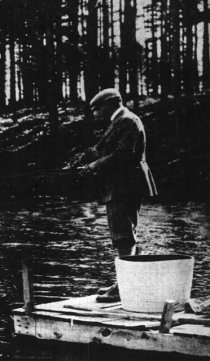
“’The air’s good around here,’ he said, ‘there’s some fishing in Pratt’s pond, and a little hunting.  Not much to do but chop wood.  I’ve done some of that.’”

Ruth fishing in Sudbury

Ruth fishing in Sudbury

Thierry said:

“The home run king was wearing a coonskin cap, a blue flannel shirt and sweater, old trousers and high-laced boots.  He looked to be in good shape, not so fat as he appeared in a baseball uniform last season.

“’I’ve taken some off the waist line,’ he said.  ‘It used to be 45.  Now it’s 39.  Haven’t weighed lately though.’

“Aside from some wood chopping and limousine work, Ruth’s chief exercise is bowling.  He goes over to Waltham some evenings to bowl.

“The house is one of those monstrosities created by building haphazard additions to the original structure.  Ruth said he was going to have a sun-parlor built on one end, and hardwood floors put down throughout.

Thierry said Ruth was attended to by a couple who cared for the property, a cook and a chauffeur.

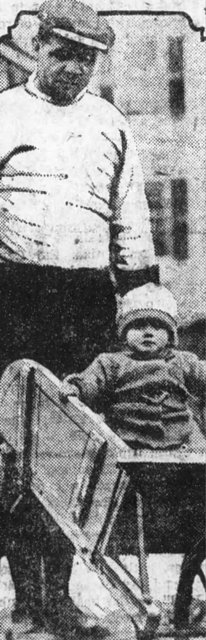
“Mrs. (Helen) Ruth, swathed in a fur coat, was leaving in the machine for a day’s trip to Boston when we arrived…The baby, Dorothy Helen, who Ruth says will be two in February, came running when Ruth called: ‘Dot!  Come to papa!’

Ruth with "Dot" in Sudbury

Ruth with “Dot” in Sudbury

Ruth seems very proud of the baby, who looks such a tiny mite beside his tremendous bulk, and he spends hours playing with her.”

By late December, Ruth sent a letter to Tillinghast L’Hommedieu “Cap” Huston, who was about to retire and sell his share in the club to co-owner Jacob Rupert:

“I don’t care where the fences are.  I can hit ‘em anywhere.”

Ruth also added that his weight was down to “210 and dropping.”

Part-time behaving, and wood chopping and bowling and “Dot” paid off.  Ruth hit .393, with 41 home runs and 130 RBI for the 1923 World Series Champions.

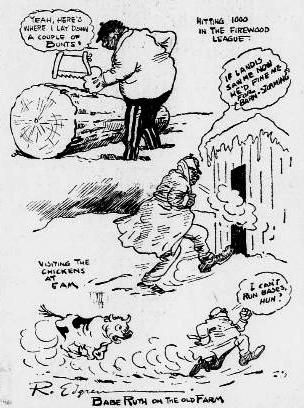
Robert Edgren, most famous for his drawings from Cuba which appeared in Hearst Newspapers in 1898 and helped fuel public support of the Spanish-American War , drew his take on Ruth's winter of 1922 activities in The New York Evening Journal.

Robert Edgren, most famous for his 1898 drawings from Cuba in Hearst Newspapers that helped fuel public support for the Spanish-American War, drew his take on Ruth’s winter of 1922 activities in The New York Evening Journal

Lost Pictures–An Off Day

10 Aug

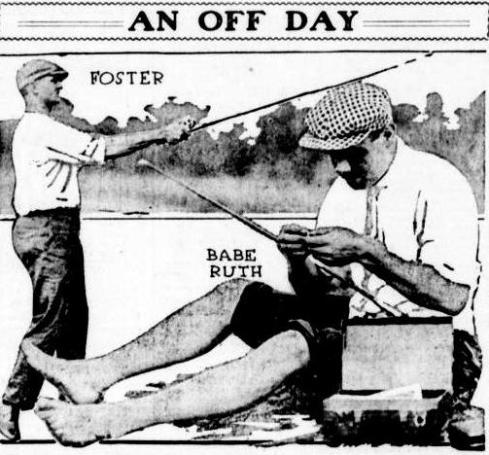
ruthfosterIn August of 1917, the Boston Red Sox were in the midst of a pennant race;  they battled the Chicago White Sox all season long and the race remained tight through August.  But there was always time for fishing, wrote Paul Purman, of The Newspaper Enterprise Association;

“An off day sounds just as good to a big league ballplayer as to anyone else, especially if the off day isn’t rainy, for on rainy days they generally have to hang around the hotel lobbies, which isn’t very good sport anytime.

“A number of the Red Sox are ardent fishermen and on off days you may usually find them at some lake pursuing the elusive bass.

“old clothes, and in some cases, almost no clothes are in order on those Izaak Walton excursionists, but the day is a big rest and the players are usually ready for a strenuous time on the ball field the next day.

“Babe Ruth is one of the club’s most enthusiastic sportsmen.  In the summer he fishes at every opportunity, although he doesn’t forget to report on the days he is to pitch as that other southpaw, Rube Waddell used to do.  Rube Foster and Harry Hooper are other members of the team who prefer fishing to other recreations.”

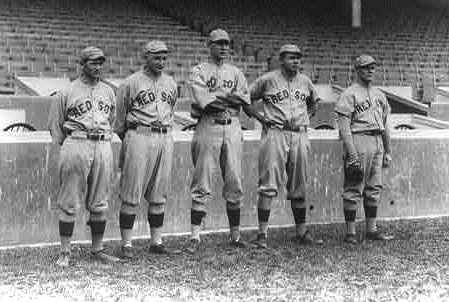
bosstaff

Foster, left, with Red Sox pitchers Carl Mays, Ernie Shore, Ruth, and Dutch Leonard.

The Red Sox finished in second place, nine games behind the White Sox.


Things I Learned on the Way to Looking Up Other Things #21

8 Aug

Community Relations in Rochester, 1896

The 1896 Rochester Blackbirds battled the Providence Grays for the Eastern League championship all season—Providence ended up winning the pennant—but four Rochester players apparently found time for off-field activities as well.

The following spring The Rochester Democrat and Chronicle said:

“Joseph Smith is suing his wife for divorce and has named these ballplayers as co-respondents:  Willie Calihan, Charlie Dooley, Tommy Gillen and ‘Sun’ Daly.”

By the time Mr. Smith filed for divorce, Gillen and Daly were with the Scranton Red Sox.

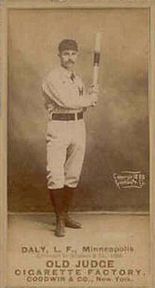
Sun Daly

Sun Daly

Baseball’s Biggest Fan, 1899

Joseph Allen Southwick might have invented baseball tourism.  The Associated Press told his story in 1899:

“Southwick, who is a merchant, probably holds the record for traveling the most miles each year to enjoy the game of baseball.  He usually travels 5,000 each baseball season to see the great American game, but this year he will close with some miles over 6,000.”

Southwick, who was in his 60s, “acquired his fondness for the game when the old Athletic Club men were the heroes of the diamond.”

He “(H)as gone as far west as Pittsburgh…as far south as Baltimore and Washington, as far east as Boston, and has made many trips to New York, Philadelphia, and Brooklyn.”

Southwick

Southwick

“He has a wonderful memory for baseball facts and can describe with considerable gusto celebrated plays and games which were made a quarter of a century ago.  He has no other hobby than going to see a baseball match, which is his only recreation.”

But, The AP said he was not a stereotypical 19th Century “Crank;”

“Mr. Southwick does not ride on a free pass, never ‘roots’ nor bets on the game.  He has only a limited acquaintance with baseball players and, as a rule, goes to the baseball game and leaves the grounds without exchanging conversation with anybody.”

The story concluded:

“When the items of railroad fare, meals, and hotel fares are considered in connection with Mr. Southwick’s baseball enthusiasm, it gives him the distinction of spending more money than any other enthusiast in the country.”

Southwick, who owned three dry goods stores in Trenton—The Southwick Combination Stores–lived for another decade.  His obituary in The Trenton Times failed to mention his interest in baseball.

Caylor on Welch, 1893

In a column in September of  1893, in The New York Herald, OP Caylor shared a warning for players:

O.P. Caylor

O.P. Caylor

 “Among the announcements recently made in the news columns of trade depression was one that the pottery hands in an East Liverpool (OH) yard had their wages reduced to $1.25 for a day of 10 hours.  Among these laborers who thus suffered was Curtis Welch, the once famous outfielder of the equally famous St. Louis Browns.  Only a few years ago he was acknowledged to be the greatest outfielder playing ball, and he held his club to his own terms every year.  The St. Louis officials were glad to pay him as much an hour for his work then as he earns now in a week.

Curt Welch

Curt Welch

“But like many other brilliant players who have wrecked their own lives, Welch took to drink and his downfall was rapid.  Now he is laboring for the means to keep life in his body.”

Welch was released by the Louisville Colonels in May and returned home to East Liverpool to work as a potter.  He returned to professional baseball in 1894 and 1895 in the Eastern and Pennsylvania State Leagues, but became ill and died of Tuberculosis in 1896.

Frank Hough of The Philadelphia Inquirer said of news of Welch’s death:

“(W)as sad but not unexpected…Poor Curt! He had the besetting weakness of many another gifted ballplayer, and to that unfortunate weakness his untimely death may be attributed.”

“I’ve no Uniform that will fit a Giraffe like you”

3 Aug

Most biographies of Harry “Slim” Sallee, if they mention his brief time with the New York Highlanders in 1906, simply say he never appeared in a game because of “(A)n abundance of pitcher’s” on Clark Griffith’s club which battled the Chicago White Sox for the pennant.

The colorful 6’ 3” 180 pond Sallee, with the Cardinals in West Baden, Indiana before the 1912 season, told a reporter for The St. Louis Republic that there was more to his departure from New York, and while the story might have been a creation of Sallee’s imagination, it seems more appropriate for a pitcher as famous for hard-drinking, suspensions, and fines as he was for his 174 career wins.

Slim Sallee

Slim Sallee

Sallee reminded the reporter he was:

“An American League discard…Yes, sirree, I was turned down cold by Clark Griffith when the ‘Old Fox’ was managing the New York Americans …I joined the Yanks in the fall in St. Louis, Griff looked me over and said: ‘I’ve no uniform that will fit a giraffe like you.  Maybe I’ll be able to get one in Chicago.  Here’s a ticket—handing me a pocket register to keep tabs on people passing through the turnstile—go out and check up the bleacher gate this afternoon.

“Four thousand geeks passed through the bleacher turnstile at Sportsman’s Park that afternoon and I kept punching that register until I became almost black in the face.”

Sallee said he was given the same assignment in Chicago on September 21 -23 when New York took three out of four games from the White Sox and moved into first place.  New York went to Detroit and lost three straight, then dropped a game in Cleveland on the 27th,dropping three games back of the White Sox.  In Cleveland:

“‘Griff dug up an old uniform and told me to warm up.  The thermometer hung around the freezing point.

Clark Griffith

Clark Griffith

“Wonder if that crazy man thinks I’m goin’ to cut loose and take chances of ruinin’ my salary wing in this kind of weather said I to myself.

“Griff went to the plate himself. I ‘lobbed’ a  couple over and the ‘Old Fox’ roared like a mad bull. ‘You’ve got a lot of nerve trying to slip that stuff over on me,’ growled Griff.  ‘Put something on that ball.  I can’t detect anything that looks like a wiggle on your curve and you haven’t shown enough speed to break a pane of glass.’”

Sallee said he told Griffith:

“I’m there, Clarkie, old chap, with the real goods, but I couldn’t think of cuttin’ loose with my speed in this kind of weather.  I’m a hothouse plant from down in Old Alabama—I played with Birmingham that year.  Give me a chance when the sun is shinin’ and the thermometer is around 90 in the shade, and I’ll show you some pitchin’ that will curl your grey locks.”

Sallee said Griffith threatened to put him “back on the gate.”

“’No, you don’t,’ said I. ‘Pay me off and also come across with a ticket for Higginsport (Ohio, Sallee’s hometown) I’m through with the New York club and Clark Griffith.  And don’t send for me next spring.”

Whether because of too much depth on the mound or because of the story Sallee told, Griffith sold him to the Williamsport Millionaires in the Tri-State League.  Sallee went 22-5 in Williamsport in 1907 and the Cardinals purchased his contract in August

“I might now be a politician in Chicago”

1 Aug

As part of his series of syndicated articles asking major league players to describe “How I Win,” journalist Joseph B. Bowles spoke to Detroit Tigers infielder Charley O’Leary:

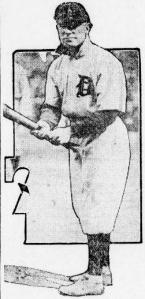
Charley O'Leary

Charley O’Leary

“I learned how to win from (Tigers Manager Hughie) Jennings.  Now before he came to Detroit the team was as flat as Aunt Jemima’s pancakes, but he threw about a quart of Fleishman’s yeast into us, and we rose.

O’Leary played three seasons with the Tigers under managers Ed Barrow, Bobby Lowe and Bill Armour before Jennings arrived in 1907—those teams finished in seventh, third and  sixth place.

“The recipe for winning is to mix ginger, yeast and horseradish with horse sense and keep stirring all the time.  Thinking and hustling, figuring on every point, watching all the time for an opening and taking all sorts of chances is what wins.  One man can’t win—unless he happens to be the fellow who can stir up a dozen others and keep them fighting all the time and never giving up.  Without a leader, the best team will slack up the pace once in a while and maybe get discouraged.”

As for individual achievements , O’Leary said:

“All the success I have had has come from studying batters while I was in the infield and studying base runners when they got on the bases.  A player almost can tell from the way the batter and the base runner act what they are trying to d, or going to try to do if he only keeps his eyes open.”

O’Leary said he never attempted to steal signs, but:

“(I) can tell by the actions and the situation what is coming off.  Then (when playing short) I want a second baseman alongside of me who understands me and whom I understand, so we can work together.  There are some men who prevent each other from doing their best work.

“I make a study of where batters hit, and every day I get the fullest accounts possible of all the games played and study out where the balls were hit to.  Batters change rapidly.  Sometimes a player hits to left field for weeks, and the next time we meet him in a series, he is hitting to right field.  I find it important to know all the time, for sometimes it is five or six weeks until we play against him again, and in that time he may have changed completely.  I keep talking to pitchers who have worked against certain men and reading about them to see how they are batting.  Then too, lots of times, a weak batter will have a batting streak and a pitcher and infielder ought to know this before starting a series against him.  The best part of my success, I think, has been in being where the ball was hit, and a whole lot of this has come from studying batters.”

O'Leary

O’Leary

O’Leary, who had a reputation as a hot head early in career, said something else contributed to his success:

“I used to think fighting umpires helped win, but I want to say that is a mistake.  Playing square with the umpires and treating them decently and playing fair with opponents is the only way to win.  Fair play ought to be the foundation of the game.  I play as hard and fight as hard for a game as anyone, but would rather lose than hurt another player, or try to make an umpire look bad to a crowd.”

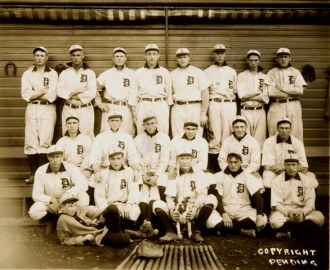
1909 Tigers. O'Leary is far right, bottom row. Jennings is at center of bottom row holding dog.

1907 Tigers. O’Leary is far right, bottom row. Jennings is at center of bottom row holding dog.

O’Leary did not make his big league debut until the age of 28 in 1904, and the Chicago native later told a reporter for The Detroit News that he nearly gave the game up for years earlier during his first professional season—with the 1900 White Sox, in the not yet a major league American League:

“The first team I ever played on, outside of (amateur teams) around Chicago, was the White Sox, and they took me to Detroit with them to play a Sunday game.  I nearly quit right then and there.  If I had I might now be a politician in Chicago.

“It was one of those games played out at Burns Park (Burns, just west of Detroit’s city limits, opened in 1900 to host Sunday games and circumvent Detroit’s blue laws).  We won by one run and as we left the park the crowd came at us with beer bottles.  It was the bottom of the bus for everybody , and as I was the most scared I got there first, I guess.  Anyway, everybody else pulled on top of me, and we rode into town that way.

“I was nearly smothered.  They had a hard time inducing me to believe that that was not an everyday occurrence.”

Lost Advertisements–Southern League Opener, Memphis, 1919

29 Jul

memphis1919

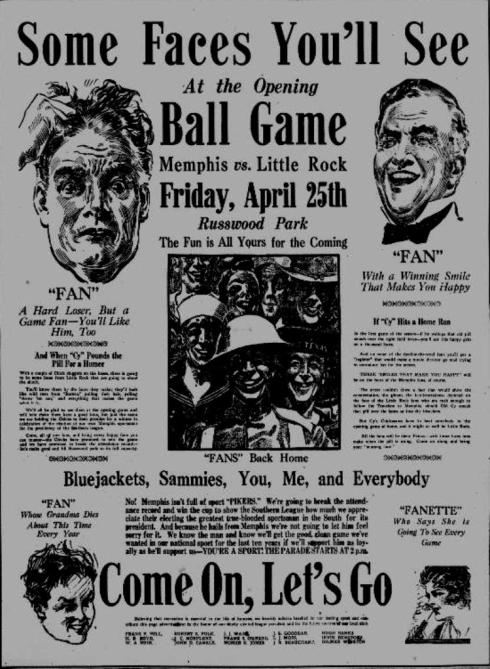
An advertisement for the Memphis Chickasaws 1919 home opener against the Little Rock Travelers at Memphis’ Russwood Park:

“Some Faces You’ll See at the Opening Ball Game

“‘Fan.’ A hard loser but a game fan–you’ll like him too

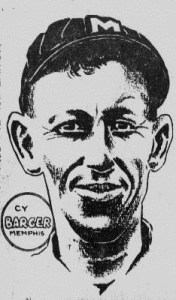
“And when ‘Cy’ (Memphis manager, outfielder and pitcher Eros Bolivar “Cy” Barger) pounds the pill for a homer with a couple of Chick sluggers on the bases, there is going to be some faces from Little Rock that are going to show the shock…

“‘Fan.’ With the winning smile, that makes you happy.

“If ‘Cy’ hits a home run.

“In the first game of the season–if he wallops that old pill over the right field fence–you’ll see this happy grin on a thousand faces…The artist couldn’t draw a face that would show the consternation, the gloom, the lost-heartedness depicted. on the face of the Little Rock fans who are rash enough to follow the Travelers to Memphis, should old Cy smash that pill over the fence and into the bleachers.

“But Cy’s Chickasaws have to beat somebody in the opening game at home and it might as well be Little Rock.

“‘Fan.’ Whose grandma dies about this time every year.

“‘Fanette.’  Who says she is going to see every game.

“No!  Memphis isn’t full of sport ‘Pikers.’ We’re going to break the attendance record and win the cup to show the Southern League how much we appreciate their electing the greatest true-blooded sportsman in the South for its president.  And because he hails from Memphis we’re not going to let him feel sorry for it.  We know the man and know we’ll get the good, clean game we’ve wanted in our national sport for the last ten years if we’ll support him as loyally as he’ll support us.”

The new league president referenced in the ad was John Donelson Martin, a Memphis attorney, who later became a federal judge.

The mention of the need for a “good, clean game” refers to the lingering concerns in Memphis about the integrity of the league which began when the Memphis Egyptians collapsed in the last three weeks of the 1907 season, giving the pennant to the Atlanta Crackers, after holding a wire-to-wire lead.

As for the opener, the Chickasaws lost to Little Rock 4-2.  Things never got better for the team, which finished fifth with a 66-79 record.

Cy Barger

Cy Barger

Cy Barger didn’t hit a home run on Opening Day, he didn’t hit a home run all season.  In 1758 at bats during a 16-year professional career (seven in the major leagues) Barger hit a total of four.

Nick Altrock’s First Start

27 Jul

The Cincinnati Enquirer ran a small item about Nick Altrock in February of 1914.  The paper said of the left-handed pitcher and one of baseball’s greatest clowns:

“(E)xcellent control, combined with a stolid indifference to the surroundings and trimmings which go to make up the big league contests, were the stock and trade of Mr. Altrock and the principal asset which made him a great pitcher.”

Nick Altrock

Nick Altrock

Altrock is 31st all-time, and third among left-handed pitchers, having walked just 1.6169 batters per nine innings.

A month later a letter arrived at the paper.  The writer, Frank Torreyson, the man who discovered Altrock in Cincinnati, and signed him to his first professional contract with Grand Rapids in the Interstate League in 1898, told the paper that it was under his tutelage that Altrock got “the idea that control was everything almost in the pitching line.”

Torreyson said:

“During our exhibition season we had much rainy weather and had very few chances to play games and the championship season was upon us before we had much chance to secure any line on our players…Well, Altrock had not done any too well in his one exhibition game, although his work looked good to me and I saw that although he was somewhat green , that he had possibilities and he then was full of comedy, just as at present.”

Torreyson said he decided to leave Altrock behind in Grand Rapids when the club made their first road trip of the season:

“I took Altrock into the clubhouse and told him I was not going to take him along, and you should have seen his face.  His lip fell down and he says, ‘Are you going to can me?’ I told him I was going to leave him at home to see if he could get control during the week we were away, telling him that he had no control over his curveball.”

Torreyson said when Altrock learned he wasn’t going to be released, he “took heart and said he would work hard,” on his control:

“I had a friend who lived near the park and he told me when I came home that Altrock came out at 9 AM and never took his uniform off until 5 o’clock.  Then before supper, he would go down the street and watch to see what the boys did on the trip.”

Frank Torreyson

Frank Torreyson

Torreyson said his left-handed pitchers, Billy Campbell, War Sanders, Charles Hutton, pitched well on the road trip, and:

“Poor Nick told them all that he guessed it was back to Cincy for him.

“Well, when we came home for the opening game Nick didn’t know whether to put on a uniform or not.  I sent him to the grounds early while the other boys were on parade, and when practice came I told him I wanted to see if he could put a few of his curveballs over the plate, and you should have seen them coming over with speed—ins, outs and every ball he pitched right over the center. “

Torreyson said shortly before the game began he informed Altrock that he would be Grand Rapids’ starting pitcher:

“Well, that was the time you should have seen him open his eyes.  Then he went in and only gave up a couple of hits, struck out 12 and never gave anything like a base on balls.”

Torreyson got some of the details wrong.  Altrock did pitch the opener and went the distance in a 12-inning game that ended in a 3 to 3 tie; he struck out eight and walked two.

Altrock went 17-3 for Grand Rapids before the cash-strapped Torreyson sold him to the Louisville Colonels in July.

Torreyson said of Altrock:

“His work with us that season was of the most sensational character.  Besides his great work he was one of the easiest men to handle I have ever seen in the game; always ready and willing and never shirking.  Many a time have I seen him after pitching a winning game, keep his uniform on and play with the kids for an hour or two.  He was always a general favorite with the public and players and was a credit to the game.”

Altrock

Altrock

As for Altrock’s success, well, Torreyson was fairly sure who to credit for that:

“I feel confident that the week he was left at home to learn to get them over had much to do with his having such great control during his later career.”