The Two Cent Release

23 Jan

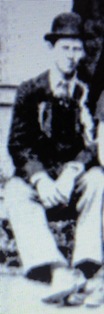
A small item in The Sporting Life in June of 1906 said John “Jock” Somerlott had been released by Jack Hardy, manager of the Fort Wayne franchise in the Interstate Association.

Four years later, when Somerlott was purchased by the Washington Senators the The Associated Press told the story of his release:

“Salary day at Fort Wayne was an event.  It rolled around regularly, but there was seldom money enough in the treasury to pay the players… (Hardy) didn’t like Somerlott, and Somerlott didn’t just exactly hanker after his manager, and the friction grew as money became scarce.”

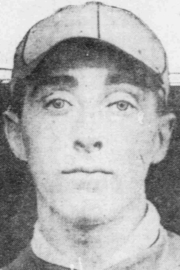
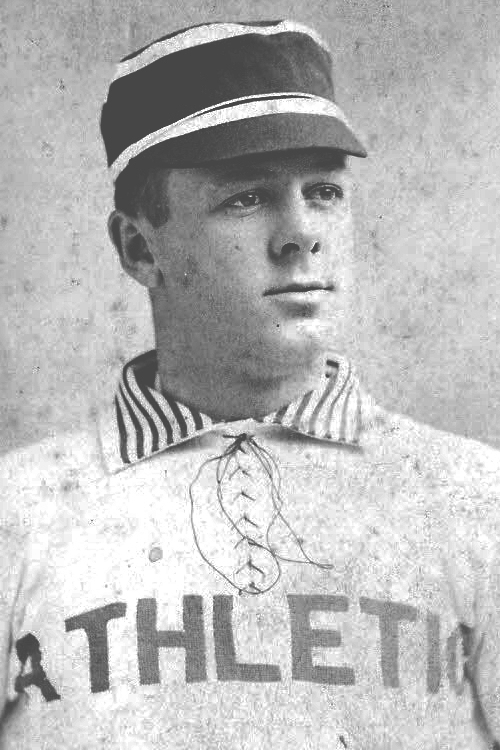
Jock Somerlott

Jock Somerlott

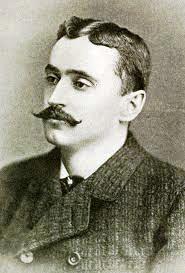
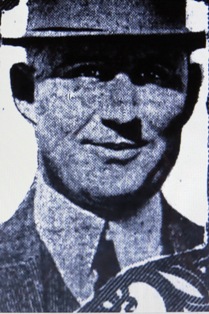
Jack Hardy

Jack Hardy

Somerlott said he was tired of not getting paid and playing in front of sparse crowds so he approached Hardy one morning in June with an offer:

“Tell you what I’ll do Jack, I’ll give you every cent I’ve got for my release.”

After Hardy accepted the offer:

“(Somerlott) searched his clothing and allowed the manager to do the same, and the total output was two pennies.  He handed the cash to Hardy and got his release.”

Somerlott signed with the Winnipeg Maroons in the Northern-Copper Country League for the remainder of 1906.  After two years in the Southern Michigan League, he went to the Terre Haute Hottentots in the Central League.  After hitting .282 and .292 in 1909 and 1910, the Washington Senators purchased his contract in August.

Somerlott’s Major League career was brief; he appeared in 29 games for the Senators in 1910 and 1911 hitting .204. He returned to the minor leagues for five seasons after his release from Washington, finishing his career with the Pittsfield Electrics in the Eastern Association in 1914.

Somerlott returned home to Indiana and for many years managed the Angola team in the semi-pro Indiana-Ohio League; among his players was Hall of Famer Charlie Gehringer.

Somerlott is a member of the Fort Wayne Baseball and the Northeast Indiana Baseball Association Halls of Fame.  He died in Butler, Indiana in 1965.

“Father of Sunday Ball”

22 Jan

After becoming president of the Waco Tigers in the Texas League, Henry Fabian allowed himself to be arrested in order to challenge a law that was costing Texas League owners money: The blue law that didn’t allow them to play games on Sunday.

The state statute forbade “Sunday amusements” that charged admission.  Texas League teams had lost money in each previous incarnation of the league and the inability to schedule games on Sunday was a contributing factor.

Whether challenging the law was part of Fabian’s plan from the beginning is unknown, but by June his Tigers had played three Sunday home games, and three times Fabian was arrested for violating the statute, posting $60 bond on each occasion.

After being found guilty at the local level Fabian challenged the statute in Texas’ Court of Criminal appeals, arguing that the law was passed before baseball became a professional sport and did not apply to the game.  The court ruled in Fabian’s favor, and while local ordinances still prevented Sunday games in Dallas, Sunday baseball became the norm in the Texas League. In his obituary, 35 years later, The Dallas Morning News’ headline called Fabian “Father of Sunday Ball.”

Fabian sold the Waco club to local businessmen in 1906 and took a job with a sporting goods company, but it was his interest in ballpark design and grounds keeping that would become his vocation.

Fabian participated in the layout and design of several local ballparks in Texas from 1888-1910, and was credited with creating the first “ Turtle-back diamond” at Oak Cliff Park, the Dallas Hams’ home field in 1888.  The pitched design and elevated pitcher’s mound allowed for quick drainage.

By 1910 Fabian had designed diamonds in Dallas, Waco, Galveston, New Orleans and Atlanta, when he was hired as head groundskeeper for the Saint Louis Browns.  He stayed with the Browns for three seasons until his old friend John McGraw hired him to be the groundskeeper for the New York Giants

By 1915 The Sporting Life said:

“Visiting ballplayers declare that the diamond Henry Fabian has built up at the Polo Grounds is the best in the country.”

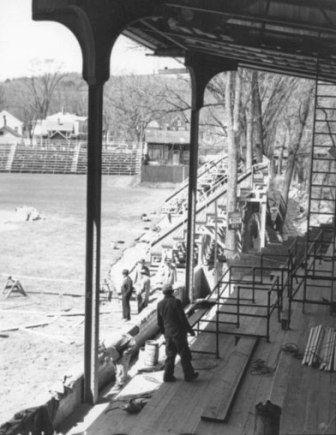
Fabian was considered the premier groundskeeper in baseball for the next 25 years and in 1939 he was put in charge of the Works Progress Administration’s (WPA) project to prepare Doubleday Field in Cooperstown for baseball’s centennial celebration.

Doubleday Field renovation, 1939

Doubleday Field renovation, 1939

Fabian died the following year on February 25, six years to the day after the death of his friend John McGraw.

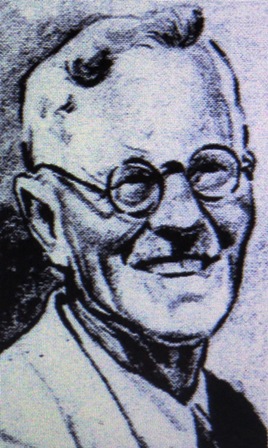
Henry Fabian

21 Jan

Like John Bradley and George Kittle, Henry Fabian was a member of the 1888 Dallas Hams, champions of the Texas League and the Texas Southern League.  Unlike those two, when someone fired a shot at him he missed.

Fabian was born in New Orleans, in 1864 or 1866, depending on the source.  He began his career in 1886, catching and playing first base for both of his hometown teams in the four-team Gulf League: the Robert E. Lee’s and the team that became the New Orleans Pelicans.

Fabian had his fingers broken by a foul tip before the beginning of the season.  A 1913 article by former Major Leaguer turned sportswriter Sam Crane told the story:

“It was such a serious injury that there was no possibility of his playing again that season and rather than release him his manager (Thomas Brennan) asked him to become groundskeeper at the same salary he was getting as a player.”

That experience would stay with him.

By November of 1887 he had recovered enough to play in games against the Chicago White Stockings and Saint Louis Browns when their post-season barnstorming tour stopped in New Orleans.

In 1888 Fabian came to Texas as a member of the Galveston Giants, but was with Dallas by June. While statistics are spotty for his career, and non-existent for 1888, The Dallas Morning News said of him:

“Though not a brilliant player, Henry has always been a hardworking courageous one.”

Fabian continued playing until 1903, spending his entire career in Texas and Louisiana with the exception of 1891 when he played for the Cedar Rapids Canaries in the Illinois-Iowa League where he played with John McGraw, who became one of his closest friends.

Fabian was the subject of two strange stories.  In a July 1892 a headline in The Dallas Morning News said:

“Henry Fabian Shot At.  A Case in Which a Base Ball Man Dodged a Bullet.”

The story said a local carpenter named Parker had fired a shot at Fabian.  Fabian told a reporter for the paper that “an article appeared in The Kansas City Sun about which he wanted an explanation from Parker.”  The article said “Mr. Fabian’s description of the article The News is not privileged to report at this stage of the proceedings.”

There was never another reference in any Dallas paper to the incident or about what the Kansas City story might have been.

Henry Fabian, circa 1930

Henry Fabian, circa 1930

In 1904 an Associated Press article appeared in several newspapers under the headline “Joy Restores Her Sight:”

“Sight has been miraculously restored to the stone-blind eyes of an aged mother by the voice of her son who returned unheralded after an absence of 18 years.  The woman is Mrs. Sophie Fabian of New Orleans and the son is Henry.”

The rest of the story did not completely live up to the headline or lede; Mrs. Fabian was told her sight might come back and the story conceded “the recovery was not complete,” but nonetheless, the paper’s treated it as some kind of miracle

Fabian returned to baseball in 1905 as part owner and president of the Waco Tigers in the Texas League, and while there he was the catalyst for changing a Texas law that helped make Texas League baseball profitable.

That, and Fabian’s other claims to fame, tomorrow.

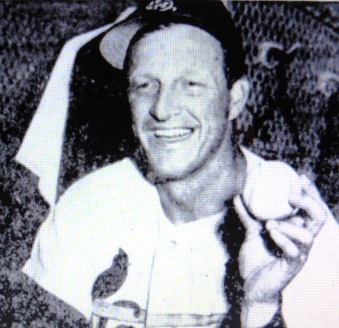
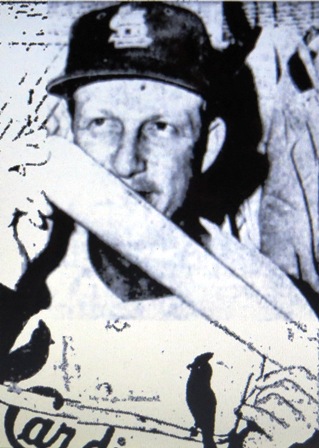
Stan Musial 1920-2013

20 Jan

stanPosing with bat and ball after his 3,000th hit, May 13, 1958, off Moe Drabowski at Wrigley Field.

“I love to play this game of baseball – I love putting on this uniform.”

Stan Musial

stan2

John Bradley

18 Jan

Two members of the 1888 Dallas Hams were shot and killed in Texas.

One, George Kittle, I wrote about in September.

John Bradley was the other one.

Charles M. “John” “Brad” Bradley (wrongly listed with the middle initial “H” on Baseball Reference) left Oil City, Pennsylvania where he was born in June of 1864, to go west and play baseball.  An article in The Louisville Courier Journal said he was born to wealth and left Pennsylvania because of his father’s disapproval of baseball:

“(Bradley) was surrounded with every luxury.  He acquired a collegiate education and all the ornamental accomplishments of modern times.  He was possessed of a charming tenor voice; was a brilliant pianist and an expert linguist.  He was passionately fond of the national game…An early disagreement with his father, the result of his penchant for baseball, led to an estrangement, and, troubles never coming singly, he was rejected by a young lady of Oil City, PA, to whom he was devoted.”

After playing in Corning, New York in 1885 Bradley went to Kansas.  Various sources place him with the Topeka Capitals in the Western League and/or a team in Abilene in 1886 though neither can be verified.  Bradley then played with the Emporia Reds in the Western League in 1887.

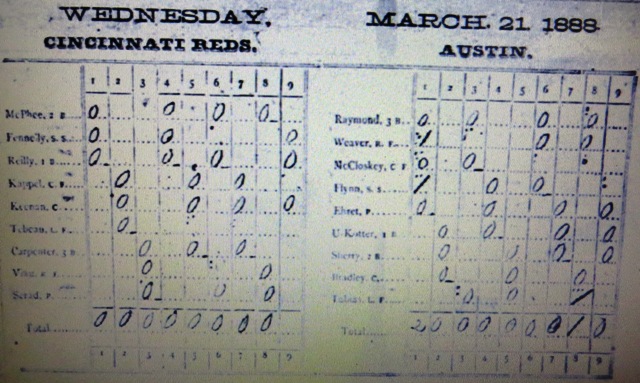
He signed with the Austin Senators in the newly formed Texas League in 1888.  In March, Bradley caught for Austin in two exhibition games with the Cincinnati Red Stockings of the American Association—the Statesmen lost the first game 2-0, but won the second 3-0.
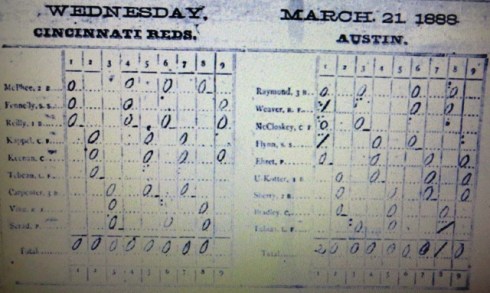
Box score of 1888 Austin -Cincinnati game won by Austin 3-0.

Box score of 1888 Austin-Cincinnati game won by Austin 3-0.

Bradley was Austin’s starting catcher until the dissolution of the Texas League in July.  When the reformed Texas Southern League commenced play later that month, Bradley was with Dallas where he shared catching duties with Kittle.

Bradley hit .158 as Dallas coasted to a championship.

The 1888 off season was an eventful one.

Bradley was offered a contract for 1889 with the St. Joseph Clay Eaters in the Western Association.

He also started seeing Dolly Love, “A woman of bad repute,” as The Dallas Morning News said; problem was Love was also involved with a livery driver named Tom Angus.

At the same time Bradley got in trouble with the law in December of 1888.  The Austin Weekly Statesman said:

“(Bradley) shot a man named Billups in a (Dallas) bar room, because Billups attacked him with an empty beer keg because he refused to pay for drinks.”

Bradley was charged with “assault with intent to kill” and was scheduled to appear in front of a Dallas Judge at the end of January.  He was also arrested twice in early January for altercations with Love at the brothel she operated.

Throughout the chaos Angus and Bradley were trading threats over Dolly Love.

The rivalry came to a head on January 16.  Shortly after 10:30 a.m., Bradley and a friend exited Swope & Mangold’s Saloon at the corner of Main and Austin to return to his room at the Grand Windsor Hotel across the street.  The Austin Weekly Statesman said Bradley was:

“Shot down like a dog by Tom Angus, a hack driver, who followed him and fired in his back.”

The Headline in The Dallas Morning News said:

“The Killing of Charles Bradley the Baseball Catcher, all about a Fallen Woman.”

Bradley was shot through the back and began to run as Angus fired two additional shots; after running about 120 feet, Bradley fell dead in the street.  Angus was immediately arrested and ordered held for trial.

A letter from five representatives of the Texas/Texas Southern League and addressed “To the Baseball Profession of the Union” was published in newspapers around the country soliciting funds “In order that able counsel may be obtained to conduct the prosecution,” the letter concluded:

“John Bradley played with Austin and Dallas in 1888, and had recently signed with St. Joe for the season of 1889. He was a gentleman, an excellent ballplayer and altogether an honor to our profession.  To ball players this case suggests not only a duty but a privilege, and we trust that a suitable response will be made.  Yours fraternally,

J. J. McCloskey, manager Austin team, I888.

Charles Levis, manager Dallas team 1888

Doug Crothers, manager Dallas team, 1889.

Kid Peeples, short stop Dallas team 1888.

Billy Joyce, third base Ft. Worth and New Orleans, 1888.”

It is unknown how much money was raised.

Dolly Love left Dallas for Fort Worth to escape the publicity.  Tom Angus spent more than a year in jail awaiting trial during which time he got married.  Dick Johnson, a friend of Angus’, who was at the scene of the shooting, was charged as an accessory, but was acquitted in a separate trial.

When the trial began in April of 1890 The Dallas Weekly Times-Herald headline called it:

“The Most Sensational Case that Has Been up for Years.”

Several witnesses, including a Dallas police officer testified that Bradley had also made threats against Angus in the weeks leading up to the killing, and that he often carried a gun.  Although Bradley wasn’t carrying a gun on the morning he was shot, and was shot in the back, the defense claimed that Angus had acted in self-defense.  Angus was found guilty, but sentenced to only five years in prison.

The sentence was upheld on appeal, the decision said:

“The accused should congratulate himself upon the mildness of the sentence.”

Angus was released from prison in the spring of 1895; in December he was arrested for shooting a man over a dispute about a horse.

Bradley was buried in Dallas.

The 1888 Texas Southern League

17 Jan

The Texas Southern League was in existence for half of one season; the reason for its creation was that the Dallas Hams were just too good a team in 1888.

In the winter of 1887 the Texas League was formed with six teams: the Dallas Hams, Austin Senators, Fort Worth Panthers, Galveston Giants, Houston Babies and San Antonio Missionaries.  Representatives from the Memphis Grays and New Orleans Pelicans in the Southern League, which was struggling to replace teams that had folded, also attended the meeting and lobbied for the league to be expanded to eight teams, but the six Texas-based teams voted not to include them;   New Orleans and Memphis joined the 4-team (down from 7) incarnation of the Southern League, which also included the Birmingham Maroons and Charleston Sea Gulls.

Charlie Levis, who had played Major League ball in The Union Association and American Association in 1884 and ’85 was named manager and played 1st base for Dallas.  Levis, a St. Louis native, brought in several Missourians including some who had spent time in the Major Leagues and built a strong team.

The Sporting News said Levis:

“Signed a team of professionals for Dallas that would do credit to almost any league in the country…They are all splendid fielders and batsmen and fair base runners.”

The team was so strong according to The Dallas Morning News that:

“So good was the Dallas team that club after club dropped out after repeated drubbings at its hands.  Dallas won so many consecutive victories that the other cities lost their appetite for baseball and withdrew.”

By late June, Dallas led the league with a winning percentage above .800; Austin and Fort Worth had dropped out and all the remaining teams were losing money with players often going several weeks between paydays.  At the same time, the Southern League was collapsing.  In early July, a deal was struck to create the five-team Texas Southern League with New Orleans joining Dallas, Galveston, Houston and San Antonio.

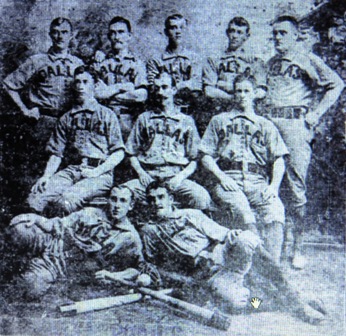
The 1888 Dallas Hams--Identifiable players: Front right Bill Goodenough, front left, Pat Whitaker, seated left, Ducky Hemp, standing left Charlie Levis, standing right John Fogerty,

The 1888 Dallas Hams–Identifiable players:
Front right Bill Goodenough, front left Ducky Hemp, seated left Pat Whitaker, standing left Charlie Levis, standing right John Fogarty,

While New Orleans provided some much-needed competition for Dallas the Texas Southern League half-season was not much different from the Texas League half-season.  Dallas finished with a winning percentage of .826, New Orleans finished second followed by San Antonio, Galveston and Houston.  The Morning News said on the final day of the season:

“The league is dead, and the Dallas club carries off the glory, waves high the pennant, and stands the champion club not only of the league but of all the South.”

The following season Austin and Fort Worth rejoined and the Waco Babies replaced the San Antonio Missionaries to again form a six-team Texas league; New Orleans returned to the Southern League, and the Texas Southern League was finished.

The story of one member of the 1888 Dallas Hams tomorrow.

Lost Advertisements–Joe “Ducky” Medwick

16 Jan

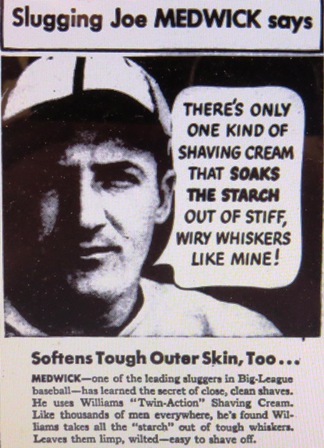
medwickadA 1937 Williams “Twin-Action” Shaving Cream ad featuring that year’s National League Most Valuable Player, Joe Medwick.

“Like thousands of men everywhere,” Medwick discovered that Williams’ “takes all the ‘starch’ out of tough whiskers.”

1937 was Medwick’s best season, he won the triple crown with 31 home runs (tied with Mel Ott), 154 RBIs and a .374 average;  he also led the league in games, at bats, hits, doubles,  and total bases.

Medwick was never popular among baseball writers, or really anyone for that matter; in 1942 Dizzy Dean called him “The most unpopular athlete who visits Sportsman’s Park.  Not only among fans, but also among players.”

Medwick was not elected to the Hall 0f Fame until 1968.  Upon his election a United Press International article by Milton Richman said:

“He was opinionated and argumentative.  He’d as soon pop one of his own teammates on the button as someone from the other club.  He wasn’t the most popular boy in the fraternity.”

Dean was among Medwick’s “own teammates” who he once “popped.”

“Remarkable Baseball Stunt”

15 Jan

In the 1890s, there was a “baseball puzzle” that was said to have confounded Baltimore Orioles catcher Wilbert Robinson for days.  How could a team hit two triples and four singles in an inning and not score a run?

His confusion probably says more about Robinson than the complexity of the puzzle.  The answer was the first two hitters tripled and were out trying to stretch them into home runs.  Three players hit singles to load the bases.  The fourth hitter singles, but the ball strikes a runner ending the inning.

Wilbert robinson

Wilbert Robinson

In 1912, a sportswriter in The Toronto Globe claimed that a similar inning had actually occurred in a minor league game in 1890.

The Pittsburgh Gazette-Times called it a “Remarkable baseball stunt.”

While there’s no proof the story isn’t apocryphal, both papers said it took place on May 30, 1890, in an Indiana League game and the members of the Anderson, Indiana team mentioned in the articles all did play for Anderson in 1890. (Although Baseball Reference doesn’t list statistics or rosters for the 1890 Indiana League, all the named players are confirmed as having played for that team in a variety of contemporaneous sources.)

According to the story Benjamin Ireland led off the inning with a triple.  With Ed Wiswell at the plate, the ball got away from the catcher, Ireland was out trying to score.  Wiswell tripled, but was tagged out trying to stretch the triple.  Rush Shumway followed with the third triple of the inning.

With Shumway on third Gene Derby bunted down the third base line that the third baseman waited to roll foul, “It stayed (fair) and (Derby) pulled up at second.  (Shumway) did not try to score.”

The fifth batter, Charles Faatz, also bunted.  The runners held as Faatz beat out the bunt.  Frank Fear was the next batter and “hit a vicious liner to right, but the ball struck Faatz on the arm.”

Three triples, two singles, no runs.

A remarkable inning.

“Hanlon Springs a Surprise on the Baseball Public”

14 Jan

Albert Joseph “Smiling Al” Maul’s best days seemed well behind him by 1898.  The 32-year-old Maul had posted a 16-12 record for the Pittsburgh Burghers in the Players League in 1890, but after returning to the National League the following season he had gone 39-44 through 1897.

Baltimore Orioles manager Ned Hanlon signed Maul after he was released by the Washington Senators in 1897.  The results were not good; in two games Maul gave up 9 hits and walked 8, posting a 7.04 ERA.  Baltimore released him at the end of the season and there were no takers for Maul at the beginning of 1898.

Ned Hanlon

Ned Hanlon

By June of 1898 The Baltimore Morning Herald said:

“For some time (Hanlon) has been hinting to his friends that he had something up his sleeve in the way of twirling talent that would surprise the natives, but when he let fall Al Maul’s name he was met with a chorus of merry ha-has.”

But by June Hanlon’s “surprise” was no longer met with laughter.

On June 5, The Sunday Herald headline said:

“Hanlon springs a surprise on the baseball world.”

Maul had shut out the Saint Louis Browns on three hits in his first start for Baltimore.

Al Maul

Al Maul

The Herald cautioned that “it’s too early to say that Maul is all right,” but all season he successfully filled the gap in Baltimore’s rotation caused by Joe Corbett’s holdout.

The New York World said Maul was:

“The most remarkable case on record of a restored glass arm.”

Maul’s comeback season became a sensation.  John Clarkson, who had not appeared in a game since 1894, told The Bay City (MI) Tribune he was serious about making his own comeback:

“I might be a second Al Maul, who can tell?”

Clarkson’s comeback never materialized, but Maul’s success continued all summer.

The Sporting Life credited Hanlon for his pitcher’s success:

“Al Maul’s experience this season is only another confirmation of the claim that Ned Hanlon can take any old thing and get good results from, it for a year or so.”

Maul finished the season with a 20-7 record and a 2.10 ERA, and Hanlon had high hopes for his pitcher the next season.  Maul, along with “Wee Willie” Keeler, Hughie Jennings and Joe Kelley moved to the Brooklyn Superbas as part of the stock swap between the Baltimore and Brooklyn franchises that led to Hanlon’s move to Brooklyn.

But the pitcher who won 20 games two years after his career was “over” was out of surprises.  After four games with Brooklyn in 1898, Hanlon released Maul.  Brief stints with the Philadelphia Phillies and New York Giants failed to rekindle the magic and Maul’s career came to an end after his release by the Giants in September of 1901.

Maul went on to coach baseball at Lehigh University and scouted for several years for the Philadelphia Athletics.  He died in 1958 at age 92.

Assumed Names–Happy Hogan

11 Jan
Wallace Bray 1890s

Wallace Bray 1890s

Some players became so closely associated with the name they adopted that their real name takes a century to catch up.  Wallace Louis Bray came from a prominent family in Santa Clara, California, and like many players at the turn of the 20th Century chose to play under an assumed name to spare the family the shame of having produced a professional ballplayer.  Baseball Reference and other sources still list him by his assumed name.

Bray went by the name Wallace Bray while playing baseball at Santa Clara University (other contemporary sources said he also attended the University of the Pacific)—one of his coaches was Major League pitcher Joe Corbett.  (There is some confusion because there is another player with the surname Hogan, Major Leaguer Willie Hogan attended Santa Clara seven years after Bray and also played in the Pacific Coast League at the same time and he was also sometimes called “Happy,” but Hogan was his given name).

Bray became Wallace Hogan when he signed his first professional contract with the Sacramento Senators in the California League in 1900, and picked up the nickname “Happy.”.

The Berkeley Daily Gazette said:

“He was dubbed “Happy” by the writers because of his sunny disposition.”

He become an extremely popular West Coast baseball figure and in 1903 he was still with Sacramento when they joined the Pacific Coast League, the league in which he played and managed for the next 12 seasons

While never a great player, he was considered a good catcher and infielder but he was a career .186 hitter; The San Francisco Chronicle called him “The most popular figure,” in the Pacific Coast League.

After playing for the Tacoma Tigers, Fresno Raisin Eaters and Los Angeles Angels, Bray was named manager of the new PCL franchise, the Vernon Tigers in 1909; Vernon finished last, but Hogan’s team, which moved to nearby Venice, improved each of the next 5 years and finished in 2nd place twice.

The Chronicle said:

“Taking a new club in a league of the highest minor classification…is quite a job.  Hogan made good with a bang, or his club has always been in the running and in addition it has always been a big attraction.”

The Associated Press said:

“(Hogan) is a human dynamo when on the baseball field.  The present position of the Vernon club in the pennant race is due mainly to his dynamic personality…Baseball players say Hap is the fairest manager in the league and that he treats his men better than any other coast league impresario.”

The Tigers got off to a great start in 1915 and were in first place on May 9, an off day, when Bray went swimming at Venice beach and “He contracted a severe cold and pneumonia set in.”  He missed several games, but “While it was reported several times that Hogan was in serious condition, it was confidently expected that he would pull through it all right.”

He did not pull through and died on May 17 at 37-years-old.

The Associated Press said of his funeral:

Roy Hitt, Doc White, Walter Carlisle, Dick Bayless, Frank Decanniere and Johnny Kane are the players who acted as pallbearers.  The other members of the club and prominent men in baseball acted as honorary pallbearers.  While the throng at the funeral viewed for the last time the face from which even death could not efface the famous smile, every baseball game played in the Coast League halted for five minutes, the stars of the diamond in many cities on the Coast stood with bared heads in silent prayer for the dead star. In accordance with Hogan’s wishes, the body was cremated.”

Wallace Louis "Happy Hogan" Bray 1912

Wallace Louis “Happy Hogan” Bray 1912

The Tigers went into a tailspin under new manager Dick Bayless, while they recovered in the second half the team finished 4th.

A benefit game was played to raise money for Bray’s widow on June 25 at Washington Park in Los Angeles.  The Sporting Life said:

“In the most remarkable tribute ever paid to the memory of any man in Los Angeles, 10,000 persons choked the stands.”