“A Pitcher Ought to Fight his own Battle”

17 Jun

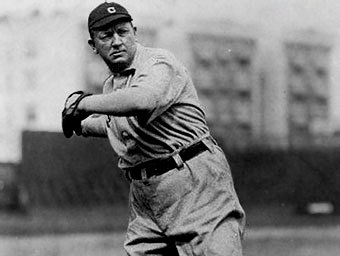
Less than a year before Cy Young’s death in November 1955, a United Press reporter—Haskell Short—visited Newcomerstown, Ohio to get Young’s opinion of the game. Young said:

“I’d like modern baseball a great deal more if there were no relief pitchers.”

cyyoung

Cy Young

Short said Young “shifted his weight in his big, easy rocking chair,” as the two spoke. While Young had his issues with the use of pitchers, “I wouldn’t want to criticize the game as it is played today because I think baseball s still the finest American game.”

Despite not wanting to be critical, Young said he was not happy with how easily pitchers were removed from games:

“’In my day it was like taking a physical beating when a pitcher was taken out of a game…But today,’ he said with a sigh, ‘it looks to me as if some pitchers want help and want to be taken out.’

“’A pitcher ought to fight his own battle to the bitter end, even when he gets into trouble.’”

Young blamed the lack of complete games on improper training, “the result of big salaries and winter frolicking.”

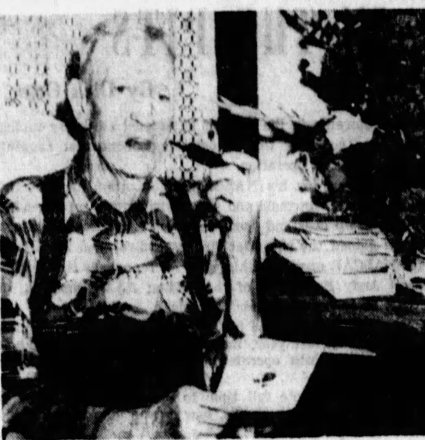
cy87.jpg

Cy Young on his 87th birthday

Young said, “When I was in my prime, I could run two miles a day and I kept in condition the year around,” by working at his father’s farm and chopping wood.

Young turned to hitting and told Short too many current batters were swinging for the fences:

“You can’t meet the ball right when you are trying to hit a homer every swing.”

He blamed that mindset for the difficulty the Indians had during th 1954 World Series—the Giants swept Cleveland and the team hit just .190 and scored nine runs in the four loses. He said:

“’The Indians were helpless against New York in New York and even more helpless in those two games in Cleveland.’

“But Young quickly added, ‘don’t you forget half the game of baseball is the breaks you get.’”

Young, who would soon turn 88, told Short he still tried to attend “two or three games a year” in Cleveland. He died shortly after the 1955 season on November 4.

Lost Pictures: 1935 Newark Dodgers

14 Jun

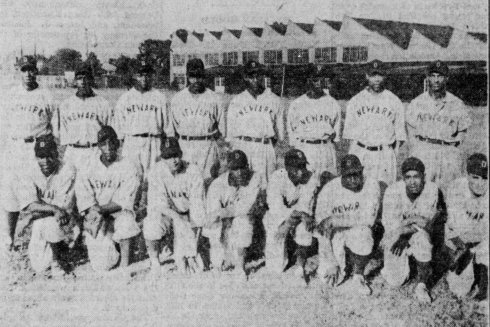
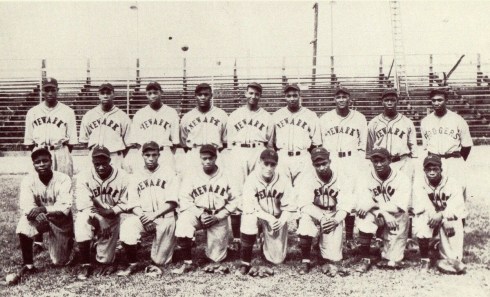
35newark.jpg

A second team photo of the 1935 Newark Dodgers of the Negro National League.

Front row: Homer Craig, James Williams, Ted Bond, Melvin Markham, Frank McCoy, Johnny Hayes, Burnalle “Bun” Hayes, Paul “Sonny” Arnold

Back row: Willie Burns, Ray Dandridge, Bert Johnston, Leroy Miller, William Bell, Percy Lacey, Robert Evans, James Starks

The picture would have been taken after May 24 when, according to The Brooklyn Citizen, Dick Lundy–who was feuding with Dodgers’ owner Charles Tyler–was traded to the Brooklyn Eagles for Bun Hayes–William Bell replaced Lundy as manager. Lundy ended up finishing the season with the New York Cubans as a result of what The New York Age called, “a ruling of the moguls” which allowed him to join that club.

Eagles owners Abe and Effa Manley purchased the Dodgers after the 1935 season–reported to have been a settlement of a $500 debt Tyler owed Manley–and merged the clubs becoming the Newark Eagles.

1935newarkdodgers

The other extant photo of the  Dodgers

“As a Trickster he was a Marvel”

12 Jun

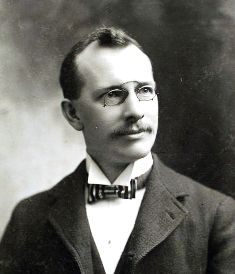
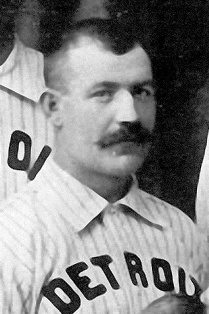
Dan Brouthers was working at the Polo Grounds in 1917—after John McGraw got Brouthers hired, he held a variety of jobs there according to contemporary news accounts, including night watchman, custodian, and operating the gate at the press entrance to the ballpark—when The New York World asked him to reminisce about some of the his experiences as a player.
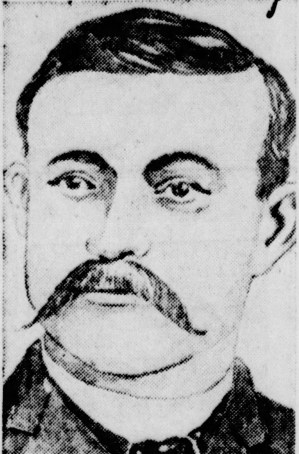
brouthers

Dan Brouthers

Brouthers said he was told by McGraw when he had earlier scouted for the Giants, “brains and speed are what you are to look for.”

Brouthers said:

“If you get hold of a good, speedy man, with something more than a bone above the ears, you probably have the makings of a good ball player.”

He said players with the combination of brains and a willingness to flout the rules had won many games when he was playing:

”It may be that the poorer team had a fox on it somewhere, and every time the umps are asleep or looking the other way, he pulls one over…There are of course, some people who believe in playing baseball on the level. But a good many other birds realize that it is played on a diamond, and so take advantage of all corners.”

One player stood out in that category for Brouthers:

“Mike (King) Kelly was a shark for that sort of thing. He could have sold earmuffs in the Philippines or palm-leaf fans in Alaska. He was a wonder as a baseball player, but as a trickster he was a marvel. Whenever he was on the field the umpires spent half their time combing the wool away from their eyes.”

Brouthers described The King:

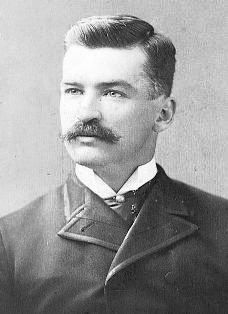
“He was very little short of six feet tall, weighed in the neighborhood of 180 pounds, had a fine, full mustache which was the fashion in those days and a bluff, genial manner that disarmed suspicion and made you like him from the first.”
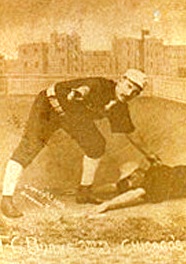
kingkelly

Kelly

He said:

“Mike was the idol of the fanatics, and anything he did was right…He was so popular that he had three nicknames—The King of the Diamond, The Only Kel, and the $10,000 Beauty…Kelly was as full of tricks as a monkey, and couldn’t stand to lose a game if he could win it—by any means at all.”

Brouthers provided his version of the most famous story about Kelly, which he said happened when they were both with the Boston Reds in the Players League in 1890:

“One afternoon Kel was sitting on the bench, while (Charlie) Bennett was catching.”

Brouthers is confusing his former teammate with the Detroit Wolverines—Bennett–with Morgan Murphy and William “Pop” Swett who were the other two catchers in addition to Kelly on the club.

“The game was close, but Kel had made up his mind we had to win it and had his peepers skinned for a chance to put one over. Suddenly the man at bat knocked a high foul that Kelly saw (the catcher) could not catch. It is hardly likely that what Kelly did would have occurred to any other manager. What Kel did was jump up and run for the foul ball at the top of his speed. And while running for it he kept shouting to the umpire that he had taken (the catcher) out of the game and had substituted himself. Then he caught the foul ball.

“According to Mike’s way of doping it out, it was strictly according to Hoyle.”

Brouthers said Kelly then walked over to the catcher and took his mask and glove:

“Then the astonished umpire and the spectators came out of their trance at the same time and there was a yell from both of them. Kel insisted everything was O.K. In fact, he didn’t even concede there was room for an argument. There was nearly a riot over the affair, but it ended by Kelly being shooed back to the bench, and the batter being called safe. That one was a little too raw for the ump. But Kel wore an injured air all the rest of the game, and although the crowd knew he was wrong, they all sympathized with him.”
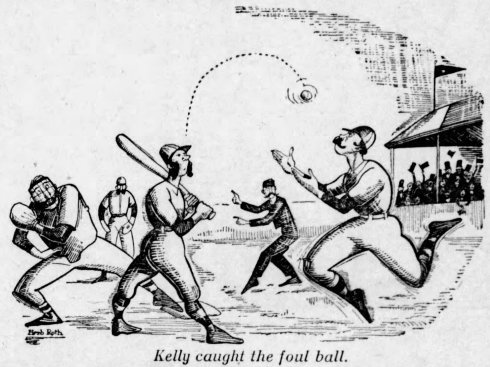
kellycartoon.jpg

Cartoon by Herb Roth of The New York World which accompanied the article

Brouthers said Kelly had more success with other stunts:

“When I was with Detroit Kel was playing with Anson’s Chicago club. At a game in Detroit, when I came to bat in the ninth inning, there were two out and three on base. Moments like that are big ones in a batter’s life, and I got a toe hold and made my mind to tear the cover off the first good one that came across. I believe we needed three runs too. Kel was playing in the field that day. I picked out one that I liked and hit it hard enough to drive it out of the lot. I was sure the ball was going over the fence, because Kelly was running in that direction like a mountain goat. Just as he got near the fence, he made a wonderful jump and got the ball. That made three out; the game was over, and Kel kept running into the clubhouse, taking the ball with him. We lost the game, of course.

“Some time later Kel confessed to me that the ball he apparently caught he had never even touched. It had cleared the fence by 10 feet!”

Brouthers said Kelly often hid a ball in the outfield, “opposing teams didn’t know this at the time. If they had, Kel probably would have died a violent death.”

“One foggy afternoon in Philadelphia, with Phil Powers umpiring, Philadelphia had a man on base when Sam Thomson came to bat. Sam picked out one he liked, and, as we found out later, poled it clear over the right field fence. But because of the fog the umpire couldn’t follow the flight of the ball.

“Now Kelly had a ball hidden in the long grass near the fence, and when Thompson made his hit, Kelly never looked at the ball in play at all, but dived for the extra ball. He fumbled around a bit as though he were looking for it and then picked it up and made an accurate throw to home, putting out the man who had been on first when the ball was hit.”

Brouthers said Thompson was sure the ball had cleared the fence and, “roared like a lion and called down the vengeance of high heaven” on Powers.

“And while he was ranting and roaring, Kelly, with an injured and innocent air, was calmly proving that the ball never went near the fence at all. Powers believed Kelly and his own eyesight, and Thompson, almost crying with rage, was fined for kicking.”

Brouthers said Kelly showed of his “foxiness” coaching third base as well.

“If a ball had been fouled by the man at bat and hit the grandstand, Kelly would demand that the pitcher throw it to him, in order that Kelly might be sure it was not cut or ripped. He only pulled this stunt when there was a man on base. Then the pitcher, if he were not wise, would throw the ball to Kelly. Kelly, instead of catching it, would dodge it, and allow it to roll past him, and the man on base would streak for home. And probably get there before the ball could be returned. Of course, this only worked once on the same man, but it sometimes helped to win a game.”

Brouthers also said Kelly attempted to use a potato as a ball in the 1880s:

“I can remember one time he took a potato to right field with him, and when a hit ball bounded past him, he made believe he had caught it, and then turning whipped the potato to the second baseman. The second baseman relayed the potato to third in order to get the man trying for that base. And he might have got him but for the fact that the potato was not a solid one and burst when the third baseman caught it.”

Brouthers said Kelly “was the most genial fellow in the world off the diamond,” but considered umpires “an eyesore.” He said “he would stand as close to him as he could and jaw him until the ump would run up a $100 fine on him in $5 and $10 clips. But that didn’t work the King any, because someone else always paid his fines.”

“Radbourn Never Thought of Quitting”

10 Jun

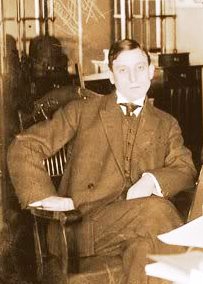
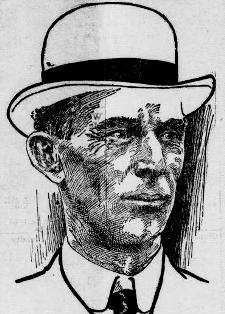
In 1911, The International News Service published an article “written by” Hardy Richardson about “the gamest man who ever stepped in the box:” Old Hoss Radbourn.

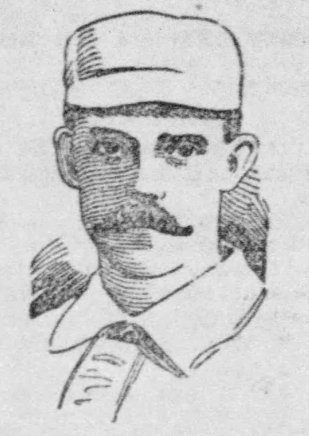
richardson.jpg

Richardson

Richardson said he knew Radbourn “perhaps better than anyone who played with him or against him,” but still did not know him well:

 “Really I do not believe anyone had better opportunity to penetrate the reserve of this unassuming little fellow than myself. I spent one whole winter with him near Bloomington, Illinois. We were together almost continually, hunting or knocking about the open country. But I soon realized that the more I associated with him the less I knew him.”

Richardson told a story that he said exemplified Radbourn’s determination—although after more than 20 years, he got many of the facts wrong:

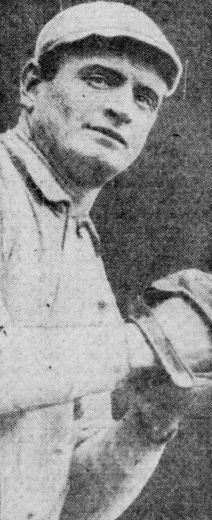
rad.jpg

Radbourn

“It was in 1890 during the Brotherhood days.”

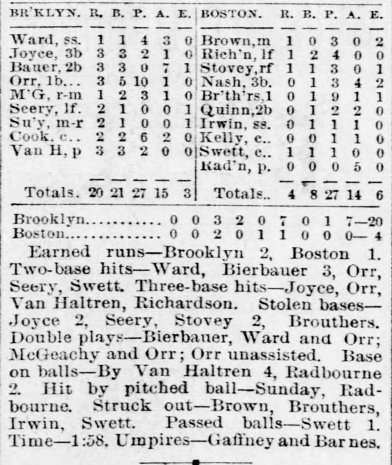
Radbourn faced Ward’s Wonders in Brooklyn on May 5:

“It was one of Radbourn’s few poor days, and Brooklyn simply hit him here, there, and everywhere. The smothered Radbourn by the very disconcerting score of 27 to 6 (the actual score was 20 to 4). It was one of the real slaughters of the season. But Radbourn never thought of quitting. His teammates asked him to retire but Charlie stuck to his guns. The more they hit him the harder he gritted his teeth and the harder he tried. He took his medicine like a little gentleman, without a whimper. To the taunts of Brooklyn, he would simply grunt to his teammates: ‘Well, we’ll get then yet, see if we don’t.’”

may5box.jpg

The Box Score

Here is where Richardson’s memory fails him:

“The next day Radbourn declared he was going to pitch again. His teammates laughed at him. When he went out to warm up they thought him a fit subject for an insane asylum…But there was no stopping Radbourn. And he got his revenge on Brooklyn all right. He shut out the team that had massacred him the day before, allowing only one Brooklynite to reach first.”

Richardson was correct that Radbourn refused to leave the game on May 5. The Brooklyn Eagle said he was “plucky and refused to retire,” despite the drubbing, being hit in the neck with a pitch by Brooklyn pitcher George Van Haltren, and later being struck in the leg by a Van Haltren base hit:

“The ball that Van Haltren hit struck him fair on the shin, making a report that sounded as if the leg was broken. So hard did the ball land that it bounced back from the pitcher’s box to foul ground.”

He was also correct that Radbourn insisted on pitching the following day. The Boston Globe said:

“Radbourn was going in to pitch today.  He said he was anxious to show the Brooklyn men they were in big luck when they hit so hard the first day. Rad was very sore on Umpire Gaffney, who he says would give him nothing over the plate in the first game unless he split it in two.”

That’s where Richardson’s imagination took over. Radbourn warmed up but the game on May 6 was rained out. Bill Daley pitched the next two days for Boston, beating Brooklyn 8 to 4, and 11 to 10; Radbourn did not appear again in the series.

The 35-year-old Radbourn finished the 1890 season with a 27-12 record and 3.31 ERA and led the Reds to the Players League’s only pennant; he would only pitch one more season. Thirty-five-year-old Richardson had his last great season in 1890, hitting .328 and led the league in home runs (16) and RBI (152).

Richardson summed up his late teammate:

 “Radbourn was a man who never despaired of a victory no matter how the tide of fortune flowed. He did not know the meaning of the word ‘quit.’”

Lost Advertisements: $1000 in Gold

7 Jun

1905athletics.jpg

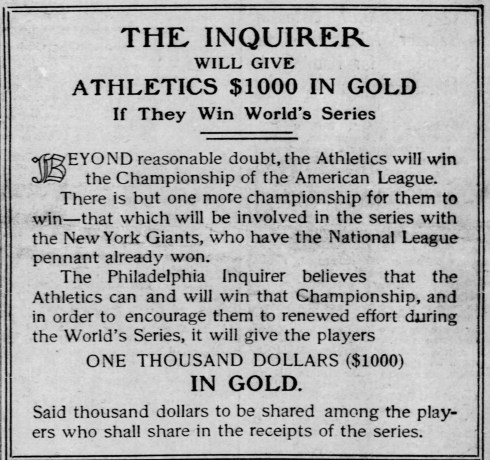
Despite there being six games left in the 1905 season, and only leading the second place Chicago White Sox by two games, The Philadelphia Inquirer declared, “Beyond Reasonable Doubt” that the Athletics would win the American League Pennant.

In order to provide incentive for the team to “encourage them to renewed effort,” the paper offered $1000 in gold to be shared among the players in addition to their World Series share.

The Athletics hung on to their lead and won the pennant, but lost four games to one to the New York Giants and lost out on the gold.

Things I Learned on the way to Looking up Other Things #34

6 Jun

Trash Talk, 1887

In June of 1887 the Cincinnati Red Stockings dropped to sixth place in the American Association pennant race; Ren Mulford of The Cincinnati Enquirer assured his readers the team would not remain in the basement. The St. Louis Post Dispatch responded:

“Ren Mulford Jr., of Cincinnati, whoever he is, is quite a chatty baseball writer, and his apologies for the Cincinnati club are a mark of rare ability. Mr. Mulford, whoever he is, thinks the Reds will not be at the sixth place when the season ends, but Mr. Mulford, whoever he is, will probably find out his mistake later on.”

ren-mulford

Ren Mulford

Mulford was correct, the Red Stockings went 61-33 the rest of the way, finishing second—but it was not enough to catch the St. Louis Browns who won the pennant by 14 games.

Burns on Anson, 1898

Tom Burns, in the process of leading the Chicago Orphans to a fourth-place finish in 1898, told Henry Zuber of The Cincinnati Times-Star that Cap Anson was not primarily responsible for the reputation he built as a great manager in the 1880s:

tomburns

Tom Burns

“Anson had a team that could think for itself. It was not necessary for him to direct the play of the team on the field, for the reason that the players were far above the average in baseball intelligence, and worked and studied together without the aid or suggestions of the manager. The late Mike Kelly carried the leading brainery of the team, and it was he, with the aid of the other baseball-intelligent men of the team, that invented and carried out any plans and tricks that proved such an improvement to the game and made the White Stockings the famous team they were.”

Anson’s teams finished first or second nine times from 1880-1891, from 1892 until he left the team in 1898 his teams finished no better than fourth.

Louisville Patriotism, 1898

At the outset of the Spanish-American War in April of 1888, The Cincinnati Post said of Harry Pulliam’s Louisville Colonels:

pulliam

Harry Pulliam

“Patriotism is running amuck among the Colonels. They purchased gaudy red, white, and blue stockings for yesterday’s game, and each player wore a tiny United States flag in his cap band. President Pulliam is thinking of raising a regiment. ‘The governor of Kentucky,’ said the happy executive, ‘is having all sorts of trouble. You know everybody worth mentioning in our state is a colonel, or considers he is of that rank. All wish to enlist, but no one is ready to accept a commission below that of colonel.”

Comiskey on “ungrateful” players, 1894

By 1894, Charles Comiskey, in his last year as a major league player and manager and leading the Reds to a 55-75 tenth place finish, told The Cincinnati Post his opinion of players had changed:

Charles Comiskey

Comiskey

“Ball players are often accused of being and ungrateful lot of men. I used to defend them on this charge, but I must confess that recently I have come to the conclusion that the average player is inclined to throw down his best friend. It’s a broad assertion, but my experience has been a severe one. There are some true men playing the game, but you can quickly pick them out of every team.”

“Robert was Down in the Mouth Over his Punk Pitching”

3 Jun

Robert Poindexter threw a 7-inning no-hitter for the Birmingham Black Barons in 1928; less than a year later his career was over after he shot a teammate.

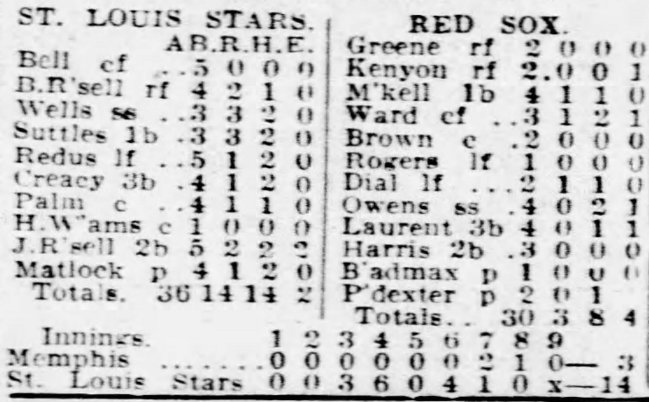
Poindexter joined the Memphis Red Sox in 1929 and was on the mound in relief for the club on May 30. The St. Louis Stars pounded Poindexter and the Red Sox 14-3—Poindexter allowed ten runs and gave up home runs to Mule Suttles and Willie Wells .

The St. Louis Post-Dispatch said, “A flock of errors and poor hitting,” contributed to the Memphis defeat.

poindbox.jpg

The Box Score

The Red Sox retired to the Grand Central Hotel on Jefferson Avenue.

The St. Louis Star said at 1 A.M., Poindexter was sitting in his room “pondering over his poor showing.” The paper suggested that some members of the Red Sox had suggested that the pitcher “laid down of the job,” during the game.

“Unaware of the mood of his teammate, J.C. McHaskell, hard-hitting first baseman, sought to console Poindexter, remarking:

‘”Today’s ladies’ day big boy, and you’ll go better with all the girl’s there.”’

Poindexter was said to have replied:

“’Get away from me—I’m mad enough to shoot.’”

He then drew a revolver and shot his teammate in the left foot:

“McHaskell hobbled downstairs, summoned a taxicab and went to City Hospital No. 2 for treatment. Policemen arrested Poindexter at the hotel.”

The Post-Dispatch interviewed McHaskell:

“’Robert was down in the mouth over his punk pitching and I tried to kinda sympathize with him,’ McHaskell explained at City Hospital No. 2. ‘I told him today was ladies’ day…Somehow he took offense at that. He thought I was razzing him, so he pulled out his pistol.’”

The Times said Poindexter’s teammates “told the police ‘they’d like mighty well,’’’ for him to be bonded out in time to pitch that day.

The United Press (UP) reported however, that it was discovered that Poindexter was wanted in Atlanta for “a little matter of a violated parole,” and would not be returning to the Red Sox. The Chicago Defender said Red Sox players claimed Poindexter had previously served time in Washington D.C. for a murder, but provided no additional details.

Red Sox Manager Harry Kenyon, who pitched that day in place of his incarcerated starter—and was trounced 19 to 6–told The UP:

“It sure is a tough break. McHaskell was good. And Poindexter was about the best pitcher we had. But I never did like his temperament.”

Poindexter’s professional career was over—although it is unclear whether he was ever sent to Atlanta or if he ever faced charges—he was killed just over a year later in Washington D.C. His age at death was estimated at 31, and his occupation was listed as “Ballplayer.”

McHaskell was back in the lineup within a month, but his professional career was over after the 1929 season.

Lost Pictures: Van Haltren

31 May

van1

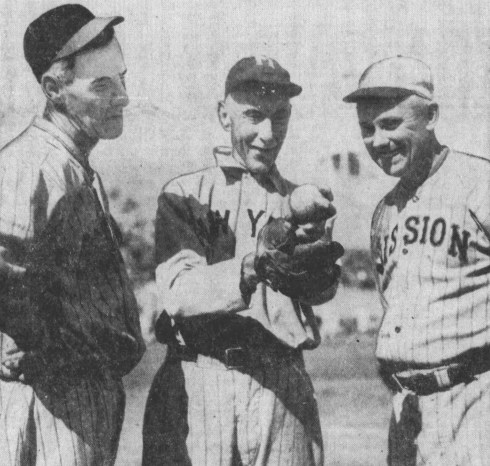
Seventy-two-year-old George Van Haltren (center, with Bill Steen and Jack Kennedy) at the San Francisco Seals’ third annual old-timers game on August 5, 1934.

Van Haltren was the oldest player to participate in  the game; The Associated Press reported that Connie Bigelow, who played for various San Francisco based teams in the 1870s and Mike Fisher, who played for local teams in the 1880s, were the only two present who were older, although neither played.

Van Haltren provided the biggest highlight of the three inning game. Abe Kemp, who covered baseball for The San Francisco Examiner for more than 40 years, said:

van2.jpg

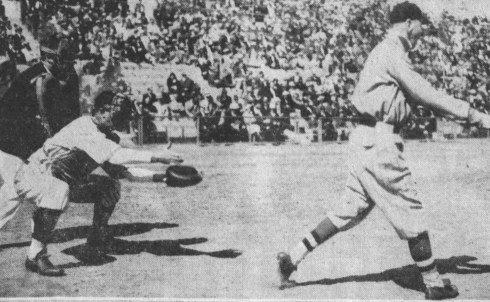
Van Haltren’s hit

“George Van Haltren singles to right.

“Forty years ago, New York baseball fans expected such a thing to happen because it happened frequently, but when a fellow is crawling along in the seventies, as Van is, it approximates quite a feat; yet that is what this grand old warrior did yesterday in his first and only trip to the plate.”

Van Haltren’s Haverly’s lost 6 to 4 to the Pioneers.


“High Upon the Centerfield Fence I saw Rube Perched”

30 May

Connie Mack liked telling Rube Waddell stories as much as anyone else, and many of them became embellished over the years. In 1911, he told “Baseball Magazine” a story that would be told many times by others before and after Waddell’s death in 1914.

mack

 Mack

Mack claimed that Waddell was “a bully fielder” and he would put him in centerfield because “he never wanted to sit on the bench, and we had to humor him, or he wouldn’t have stayed on the lot.”

Mack never played Waddell in the field during a regular season game—Waddell only appeared in one game at another position; at first base with the Chicago Orphans in 1901—so Mack’s story was apocryphal and became the legend, or the incident occurred during a non-league game.

rube

Waddell

“One day we were having quite a battle with some team, and Rube was covering centerfield for us. We were being hard pressed. With only one out, the other team filled the bases in the fifth inning and a brace of good batters were up. We had two strikes on the next man up, and then something happened.

“A black cloud of smoke appeared in the sky back of the centerfield fence, and a little later a blaze. Then came the clash and clanking of fire bels, and the clatter of horses’ hoofs. I happened to look in the direction of the blaze. High upon the centerfield fence I saw Rube perched, looking at the blaze, silhouetted against the red glare of the conflagration. I let out a blast that nearly woke the dead. Rube heard me and looked around. He seemed undecided as to his next move, but he wasn’t long in making up his mind. With a graceful salute of his hand, as is to say ‘so long, fellows,’ he dropped from sight on the other side of the fence, and was on his way to the fire.”

“Whose American Giants?”

27 May

Robert “Judy” Gans played for Negro League teams  from 1908 through the mid-1920s, and was later a manager and umpire; he is probably most famous for being the source of Judy Johnson’s nickname, the Hall of Famer said the two were teammates on a semi-pro team in 1920 and picked up the sobriquet because of his resemblance to the older player.

Gans liked to tell a story about about playing for Rube Foster with the Chicago American Giants in 1914.

gans

Gans

The story, first told to Rollo Wilson of The Pittsburgh Courier in 1929 and later to Lewis Dials from The New York Age in 1936, was substantially the same–although he added some embellishments after six years. Lewis wrote in 1936:

“Gans had been starring down East when Rube sent for him to come to Chicago and play for him. In a game with a group of white league stars, the Giants were trailing 1-0 with a man on second and a sloppy field, the late Rube instructed Judy to bunt and get the runner on third. The opposing pitcher lobbed one up and Gans hit it for a home run, winning the game 2 to 1. Rabid fans tossed money of all descriptions on the field to Judy, who collected it and counted $136.”

In the 1929 version, Gans added a few details–the game took place while the American Giants were barnstorming the West Coast, Bruce Petway was the runner at second, and Portland Beavers pitcher Irv Higginbottom was on the mound.

The amount collected from the fans also changed–in 1929, he said it was $87.50, with an additional “fifty dollar bill” handed to him by George Moore; Moore was an African-American hotel owner in Portland who became a prominent boxing promoter and manager–he was most famous for managing Henry Armstrong at the end of his career.

Gans was told after the game that he would be riding back to the hotel in Foster’s car—in the 1929 version Foster told him in the dugout to ride back to the hotel with him.

“Judy said his chest poked out as he had made a big hit with his new boss. Seated in the car with Rube made Gans feel big until Foster broke the silence with a query, ‘Where did you play ball?’ To which Just proudly replied, ‘Down East with all the good clubs.’”

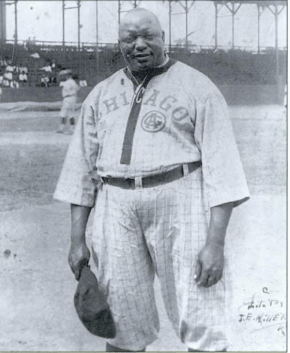
rf.PNG

Foster

In the 1929 version, Gans said Foster asked him about playing for the Lincoln Giants, “How did you like working for Sol White down East? Any discipline down there?”

Gans answered that discipline was “so-so” under White.

“Rube then asked, ‘What team are you playing for now?’ And Judy replied, ‘The American Giants.’ Rube said, “Whose American Giants?’ And Judy replied, ‘Rube Foster’s’. ‘That’s what I thought, how much did you get for hitting that home run?’ Gans told him the sum and Rube said it was some hit alright but add fifty dollars to that $136 you got and it will pay your fine. Judy asked what fine. Rube said it was failure to carry out instructions.”

Foster told Gans:

“’Men on my club play ball like Rube Foster tells them, or it would not be Rube Foster’s American Giants.’

“Judy played as he was told after that, and at the end of the season Rube refunded the money.”

In the 1929 version, Gans did not get the money back and was told by Foster:

“’Well, boy, let papa tell you something. If the Giants had lost the game today, the papers would have been full of what happened to Rube Foster’s team. I am the manager of the club. I told you to lay down and you hit a home run…now the next time I tell you to bunt, you’ll remember that won’t you?’”

Whether he received the money back or not, Gans, according to Dial “pins the medal of a great leader” on Foster.