“The Chief Menace to Baseball”

5 Feb

“To my mind the chief menace to baseball, under its present handicaps, is the presence of so much big money behind certain clubs.”

So said Robert Hedges to John E. Wray of The St. Louis Post-Dispatch after he sold the St. Louis Browns in December of 1915.

“There are in the game today certain capitalists financially able to force a winner.”

Frank Menke of the National News Association asked:

“Is Hedges right—or wrong?”
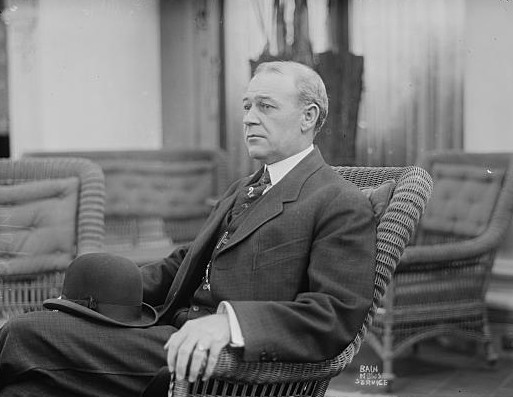
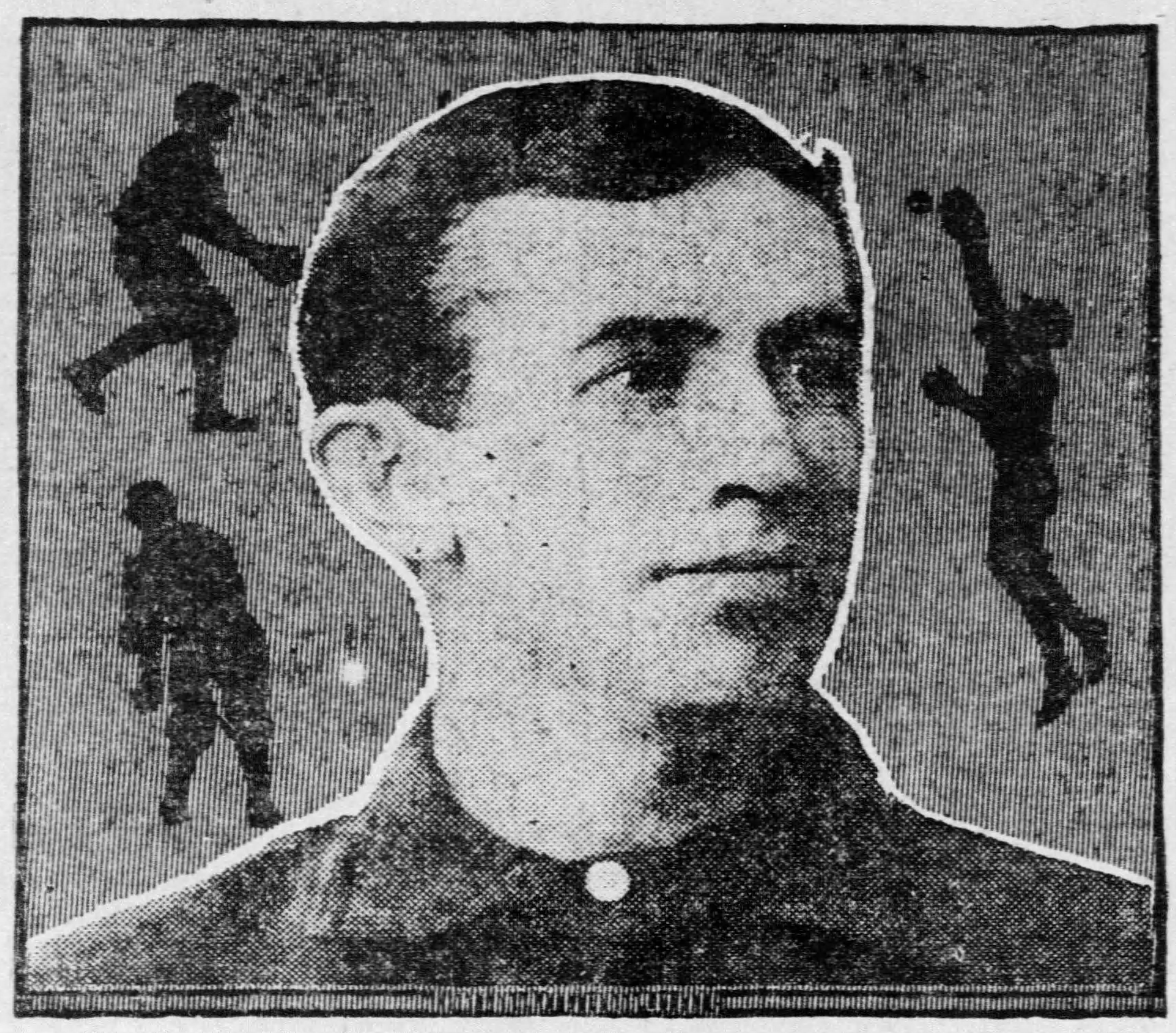
Hedges

Menke said the “greatest team ever welded together in American League history was Connie Mack’s Athletics.”

Mack, he said, “didn’t pay much more for his stars than the ordinary man pays in one year for cigars.”

In the National League he said the Giants were “supposed to be backed by wealth…and unlimited bank roll was at the command of John McGraw in 1915,” but the Giants had finished last.

Charles Comiskey, he said “spent more than $100,000 in trying to ‘buy’ a pennant winner. He failed.”

The National League pennant winning Phillies, he said, “are not wealthy yet they breezed in under the wire a winner,” and did so with “a bunch of misfits making u the club.”

Menke concluded:

“Money can’t make ‘em win a pennant.”

Hedges might have been carrying a grudge about other owners who, he alleged, refused to make deals with him.

Sid Keener of The St. Louis Times claimed Indians owner Charles Somers “Lied” to Hedges and told him Joe Jackson was not available before trading him to the White Sox for three players and $31,500 in August of 1915 (The $31,500 price is according the Baseball Reference; contemporaneous accounts in the Chicago and Cleveland papers reported the sale price between $15,000 and $25,000, while The St. Louis Post-Dispatch reported the sale price as $30,000).

Jackson

Hedges said he offered $20,000 but was told by Somers, “Jackson is not for sale at any price.”

The Post-Dispatch’s coverage of the sale seems to refute the claim that Hedges was misled about Jackson’s availability, implying that the Browns “bid $20,000,” for Jackson and were simply outbid by Comiskey’s offer which included three players.

The Cleveland News said that early in the negotiations for Jackson, Comiskey offered only $20,000:

“Friday, (the day before the deal was finalized) Clark Griffith offered $20,000 for Jackson and later tendered a proposition which carried $12,500 in cash and infielder Ray Morgan. Hedges might have landed the Indians’ slugger for $15,000 and a couple of players.”

Hedges apparently ended up making quite a haul on his investment in the Browns. When he sold the club to Philip De Catesby Ball, who owned the Federal league St. Louis Terriers in 1914-15, Keener said in The Times:

“Hedges, long dubbed “Tail-End Bob” by his fellow magnates, is quitting the game with $500,00, quite an increase over the $30,000 he had when he came in with the American League with the first baseball raid, investing that amount with the Milwaukee franchise. Although the Browns have been the joke team of the circuit, and although Hedges has been panned time and time again for seemingly inexcusable errors, no one doubts his business ability.”

Keener estimated that Hedges walked away with $252,000 from the sale alone.

The Post-Dispatch was less sure of Hedges’ business acumen. The paper had reported on the day of the sale, December 24, the same figure as Keener—that Hedges made $225,000 from the sale—however, on Christmas Day, Post-Dispatch reporter William J. O’Connor told a different story:

“That Col. R.L. Hedges was only a spectator during the final days of negotiations for the sale of the Browns and that he didn’t realize fully on the profits made on the stock of the minority shareholders who sold to a Cincinnati syndicate for $500 the share, are the latest developments in the local baseball plot.”

O’Connor claimed Hedges “lost control of stock” in the club before the sale and the majority of the estimated $400,000 sale price—Ball told the paper $400,000 wasn’t “near the real price,” but he was “pledged to secrecy” regarding the actual amount—went to the Cincinnati syndicate that bought out the minority stockholders.

Lynn Carlisle “L.C.” Davis of The Post-Dispatch concluded that Hedges did not make the amount originally reported, but:

“While Col. Hedges may have received the hot end of the poker in disposing of the Browns stock, it is though that the Colonel will have enough to tide him over the winter and discourage the wolf from hanging around the portcullis next winter.”

Davis, on another occasion, told readers about the “peculiar case’ of the Browns owner being called “Colonel” Hedges:

“His title was not earned on either the field of battle or politics. It just grew on him and stuck.”

Hedges, who was rumored to be interested in purchasing another club—most notably the Cincinnati Reds, never returned to baseball.

He died in 1932.
“The Longest hit ever Secured in a Ball Game”

3 Feb

On June 4, 1913, Joe Jackson hit a home run in the second inning of a game at the Polo Grounds with the New York Highlanders.

The New York Tribune said the blast, off a Russel Ford Spitball that cleared the roof of the rightfield grandstand was:

“(S)et down immediately as the longest hit on record at the grounds.”

Jackson

The ball ended up in Manhattan Field—the previous Polo Grounds which was sold and renamed when the new stadium was opened in 1890

The New York Sun said it was “the longest hit ever made in New York.”

The New York Times was more measured:

“The hit, while perhaps not the longest ever made at the field, has not been approached in this section of the Polo Grounds since the new stands were built.”

The discussion of the longest home runs hit was taken up by infielder turned sportswriter Sam Crane in The New York Journal, who declared Jackson’s:

“(The) longest hit ever secured in a ball game.”

He also reported that the “small boy” who retrieved the ball from Manhattan Field was rewarded with a “$10 bill.”

The Baltimore Sun and a previous generation of fans and players were not going to accept Jackson’s homerun as the longest:

“(T)he present generation, cocksure that everything exceptional happening on the diamond nowadays could not have been eclipsed in the good old days, is wrong again.”

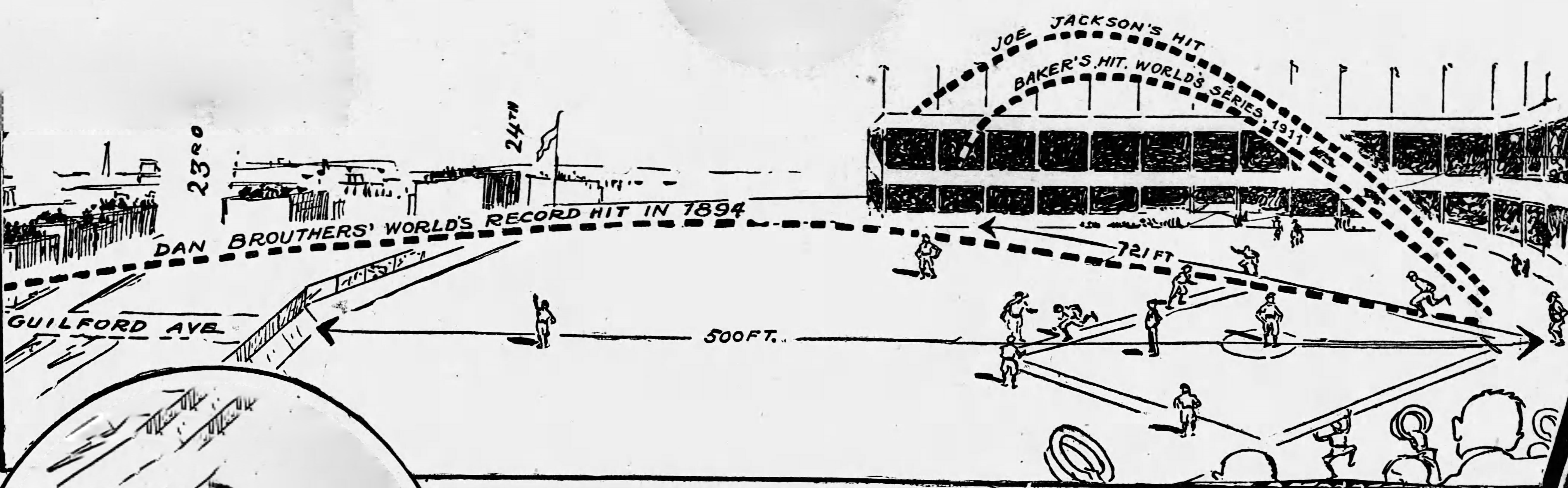
The paper said the longest hit ever made, “happened in 1894” off the bat of Dan Brouthers and lined up five witnesses; Brouthers, his Baltimore Orioles teammates John McGraw and Hughie Jennings, Tom Murphy, the groundskeeper at Oriole Park, and “Abe Marks, scorecard man.”

Brouthers said of his home run:

“I remember distinctly hitting a ball over the right field fence at Baltimore…This hit was a line drive clearing the fence by about 15 feet…I have talked to groundskeeper Murphy regarding this matter, and he says the fence was fully 500 feet from the home plate.”

Brouthers

Brouthers also said he had, “made several other hits that I know equaled the one made by Jackson, particularly one in Boston, one in Columbus, one in Springfield, and one in Raleigh.”

And while Brouthers insisted he did not “wish to detract in any way from the credit due Jackson,” he said he was present at the Polo Grounds when Jackson hit his home run and told an entirely different story about where the ball landed–and who recovered it:

“I saw the hit, and the ball did not go entirely over the grandstand but landed on the top. I had a man go up and get the ball and bring it to Jackson, who gave him 50 cents for it.”

McGraw conceded that he didn’t see Jackson’s hit, but said:

“I have never seen a hit to equal the one made by Brouthers in Baltimore.”

Jennings said, “Jackson’s (hit) isn’t in it at all,” compared to Brouthers.

Jennings also said the Baltimore home run was not Brouthers’ longest; he said the one Brouthers mentioned in Raleigh—also in 1894 on the Orioles “training trip.”

The Sun’s comparison of Brouthers’ homerun versus Jackson’s–also shown is the landing spot of Frank Baker’s homerun in the 1911 World Series

The scorecard vendor, Abe Marks, declared Brouthers’ hit “has never been equaled.” He claimed the ball, after clearing the right field fence, “never stopped until it hit something sticking up in Guilford Avenue.”

All agreed that the ball rolled a long way after it landed and ended up resting from 1300 to 1500 feet from home plate.

While Jackson received his home run ball (or two of them) on the day he hit his long drive, it took Brouthers more than a decade to get his.

When a reunion was held for the 1894 National League Champion Orioles in Baltimore in 1907,

The Sun said the ball had been in the possession of “S.C. Appleby…who is one of the hottest of Oriole fans,” Appleby gave a speech at the reunion held at the Eutaw House, one of Baltimore’s finest hotels, and “toss(ed) it back to Dan Brouthers across the dining table.”

Brouthers said of the presentation:

“This ball went so far that I never expected to see it again. Now that it has been given to me, I shall ever keep it as a memento of my connection with the champion Orioles.”

“The Brilliant Ignoramus of The Sun.”

1 Feb

The New York Sun took up the issue of “Scientific batting” in 1884. The paper said:

“(O)f course scientific play at the bat is not to be learned in a day, as hard hitting can be. Take a muscular man and place him at the bat for the first time, and the chances are five to one that he will make a home run the first hit he makes. But the skill to face for position in batting and to place a ball is an art that requires practice, and no novice can get into it at a jump as he can in home-run hitting.”

The Chicago Tribune was having none of it and suggested that “Somebody—probably “old Chad,” Henry Chadwick—was writing a “column of foolishness on the subject of scientific batting.”

The Tribune wasn’t done, and said, “It is hard to believe that the person who wrote this ever saw a professional game of ball,” and set out to correct “the brilliant ignoramus of The Sun.”

A first-time batter, no matter how “muscular” facing “the delivery of (Larry) Corcoran or (Old Hoss) Radbourn,” could not “hit clean for four bases once in 200 ties trying.”

The paper cited “a friendly dispute” between Corcoran and Cap Anson.

 “Anson, who is considered to be the most skillful batsman in American as regards ability to control the direction of the ball when hit, and whose average of right-field hitting is probably greater than that of any right-hand batsman, asserted that if he chose, he could place the ball in the direction of the right field any time.”

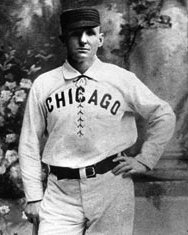
Cap Anson

Corcoran bet Anson he couldn’t do it half the time and offered to bet. Anson refused the bet but said he would prove his point the next day against Stump Weidman of the Detroit Wolverines.

“Out of five times at bat Anson went out on a fly twice in left-center and once in right field, was once thrown out at first base by the second baseman, and once popped on an easy foul fly. The result of the special effort to ‘place the ball’ was that he made not a single clean hit in five times at bat.”

Over the next fifteen games the White Stockings played in Chicago, the paper said Anson had fourteen hits in 65 at bats for a .215 average; he had six hits to right, three to center, and five to left and of his 51 other at bats, three were fly balls to left field, and 13 were ground balls to the right side. The conclusion was that Anson’s hitting suffered when he made a “systematic effort” to hit to right.

The Tribune said the current “swift curve throwing” that batters faced forced batters to focus on having “the judgement and patience to wait for a good ball, the skill to get it on his bat, and the strength to hit it hard.” This differed from when the “old-fashioned straight-arm pitching was in vogue it was quite possible for a skillful batsman to govern in a measure both the direction and force of the ball.”

The paper concluded that “Hard, clean hitting is what is wanted, and, as a rule, direction is of far less consequence than force.”

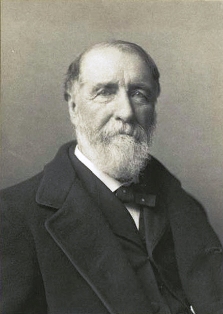
Henry Chadwick

The “ignoramus of The Sun” did not respond.

“Show Life”

29 Jan

Willie Keeler got a couple of details wrong, but told a reporter for The New York Daily News in 1912 about the two best pitchers he ever faced:

“I found during the long time that I was in the big leagues that Amos Rusie and Ed Walsh were the hardest pitchers for me to hit. I have gone through some seasons without striking out, but Rusie and Walsh have the distinction of making me fan twice in one game.”

Keeler struck out so infrequently that it may have seemed like he went an entire season without one, but while he only struck out 136 times in 9616 plate appearances–and from 1897 through 1901 struck out just 20 times–he never had a season with none.

Keeler

Keeler said ‘Rusie did the trick when I was with Baltimore in 1904;” it was in 1894.

“Amos could shoot them over. He had more speed on his curve ball than some of the present-day pitchers have on their fast one. When the big fellow, who was with the Giants, and was going right he was a wonder. How he could buzz them over the plate! I know for a fact that when he was going well it was not necessary for him to pitch any curves. That fast one always had a beautiful hop on it, and it was impossible to connect with it.”

Walsh, he said, had the best spit ball:

“I always thought Jack Chesbro had about the best I ever saw until I went against Walsh. Ed’s breaks better than any I have ever faced.

“Some days a spitball pitcher hasn’t the break on his delivery that he has on others. But when Walsh is good, he is a great pitcher. He may not be effective without the spitball, but they tell me that he still has the spitball going as well as ever.”

Five years earlier, “after much persuasion,” Keeler shared his baseball tips with The Washington Post:

Never–

Throw back your foot and step away from the ball.

Bend the back foot or shift its position as the ball approaches.

Lunge at the ball as if trying to make a homerun.

Strike at every ball that is thrown.

Lose your nerve after two strikes

Wait for instructions if you see a chance to win the game

Always—

Chop the ball so it will not pop up in the air

Step into the ball and meet it with your whole weight on your front foot. This puts your whole weight into the blow.

Watch the ball from the time it leaves the pitcher’s hand

Hit at the good balls only. Don’t be too anxious. Wait and you can rip out the good one.

Get into your position quickly when your side is out. Show life.

Collins, Evers and Umpires

27 Jan

Billy Evans said:

“No American League umpire can ever recall the time that Walter Johnson questioned a ruling. In fact, I have often heard him tell other members of his team that the umpire was right when the general opinion was that the official had erred in his ruling.”

Evans

In 1916, Evans, the umpire and syndicated columnist claimed that “real stars” seldom argued calls—he said National League umpires told him Grover Cleveland Alexander and Christy Mathewson “the two best pitchers in the league…never dispute a called ball or strike.”

It wasn’t just limited to pitchers, he said:

“(T)he really great catchers, the crack infielders, and the brilliant outfielders, as a rule, accept the decisions of the umpires without any protest to speak of…They often believe the umpire has erred in a good many cases they let the official know just what they think of the decision, but they invariably do it in such a way that any umpire with any common sense would have no reason for taking offense.”

Evans cited Eddie Collins as an example, sating people often told him the second baseman wasn’t aggressive enough:

“They form this opinion because Collins is not being put out of the game ever so often.  . It is a fact that Eddie Collins is an aggressive player, but of a type that is not known to the public. Collins can protest as strongly as any player in the business. When he believes the umpire has erred, he never fails to register his protest, but there is nothing of the grandstand variety in the protest. He does nothing by word or action that will cause the crowd to believe the umpire has erred.”

Collins

He said, as a result, Collins was “always listened to and given consideration” when he questioned a call.

“The real good ballplayer can always make good on natural ability,” and Evans said “they never find it necessary to seek an alibi in order to cover up either lack of ability or failure to have properly completed a play.”

He said he had the most problems with players who “believe they are start yet fall considerably shy of that class.”

He said Johnny Evers was one of the “few really great players” who was “in constant hot water” with umpires.

“Evers has just one thing strongly in his favor in this respect—his kicks are actually from the heart, not actuated by a desire to alibi. Evers is one of the greatest players of all times, reputed to be one of the brainiest infielders in the history of the game, yet he is unable to see the error of his way toward the umpire.”

Evers

In comparing the two second basemen, Evans said:

“In all his career Collins has never been put out of a ball grounds, while Johnny has been given the gate in so many contests that he has probably quit keeping track of his banishments a long time ago.”

To that end, he said “Collins has a decided and distinct advantage over Evers. He is always in the game, giving his club his very best efforts. Evers does the same when in the game, but Johnny is often playing the role of spectator, because of his failure to see things as the judge of the play did. Taking Collins and Evers from the game is just like taking the leading man from a play.”

Rube with a Gun

25 Jan

When Rube Waddell was traded to the Pittsburgh Pirates before the 1900 season, The New York Telegram presented some “interesting facts” about the “serio-comic pitcher.”

The paper said:

“He is greatly desirous of spreading his circle of acquaintances, and it is not an uncommon thing for him to walk over to the grandstand and shake hands with all the front row after he has pitched a good inning.”

Rube

Tom Loftus, who briefly managed Waddell with Columbus in the Western League in 1899, and would again be his manager in Chicago in 1901, said “he has as much speed” as any pitcher in baseball.

Loftus also told a story about Waddell:

“When he first joined the Columbus nine, he purchased a revolver and took it out to the grounds with him. He practiced with the fence for a target and was severely reprimanded by the captain of the club, George Tebeau, who told him that he might shoot some passerby.

“When they entered the dressing room the argument was resumed again, and Tebeau, losing his temper, slapped Waddell’s mouth. The youngster may have deserved it, but didn’t see it that way, and promptly laid the irate Tebeau in a heap in the corner with a left hander that would have knocked a hole in a stone wall.

“Waddell immediately fled to his hotel, frightened at the possibility of punishment that awaited him. He expected to be expelled from the league”

Tebeau

Loftus “solemnly lectured” Rube on “the enormity of his offense,” and told the pitcher “all would be forgiven,” if he won the next day’s game.

“Waddell promised to do his best and succeeded in holding the other nine down to two hits. “Tebeau complimented Waddell on his good work, and then the eccentric pitcher journeyed through the league telling all the other players how badly he had whipped his captain.”

Lost Advertisements: Delehanty and Lajoie–Stuart’s Dyspepsia Tablets

22 Jan

A 1900 advertisement for Stuart’s Dyspepsia Tablets featuring Phillies Ed Delehanty and Napoleon Lajoie.

“The $30,000 Stars of the Baseball World.”

The ad includes brief biographies of both and said:

“’Del’ looks the part of a heavy batter, for he is the personification of strength. He is brawn and muscle from top to toe and swings on the horsehide like a trip hammer. He is a wonder at the plate. The was he punishes the ball is a caution. He is swift as a meteor, slamming th ball on the nose nearly every time he goes to bat.”

As for Lajoie:

“His mental alertness and his quickness of though enable him to anticipate every dodge of the ableist pitcher. Brains will tell on the field as well. As ‘Larry’s’ batting proves. He has a ‘hit and run’ look about him that makes cold shivers run down the back of the average pitcher.”

The two “always created a small sized panic when they have their batting clothes on.”

Both sung the praises of Stuart’s, “a powerful digester, preventing acidity and discomfort,” said Delehanty, who “would not be without them.” Lajoie “heartily” recommended them and said the cured “all stomach troubles.”

Lajoie apparently never met a patent medicine he didn’t like; he also appeared in ads for Heptol Splits, “The only perfect laxative,” and the “miracle drug,” Nuxated Iron.

“The Crowd Yelled with Derisive Delight”

20 Jan

Spokane, Washington’s first professional team was performing well; the Bunchgrassers, members of the Pacific Northwest League during the circuit’s inaugural season in 1890, they were second place, a half-game behind the Seattle Blues in the four-team league on July 1.

The Blues were in Spokane for a series, and according to The Spokane Falls Review:

“The game of baseball yesterday was very unsatisfactory to those who put up 75 cents for the privilege of watching it from the grandstand.”

Spokane’s starting centerfielder and leftfielder Tom Turner and Fred Jevne:

“(D)id not occupy their accustomed places. At the beginning of the game, they refused to don their uniforms.”

They refused to play in protest over what they felt were excessive fines imposed by manager John Sloane Barnes:

“After the game had started Jevne and Turner attempted to go up to the ladies’ portion of the grandstand…Tuesday is ladies’ day at the baseball grounds, and their portion of the grandstand was crowded by the gentler sex. When Jevne and Turner came up into the stand, swearing as they did, many of the ladies prepared to go, but Manager Barnes, whose attention was called to the occurrence, quieted the two rowdies at an opportune time, and although the ladies felt outraged, they remained throughout the game.”

John Sloane Barnes

Spokane lost 9 to 6.

The Spokane Daily Chronicle, which went to press on the first after the two refused to play, but before they went into the stands, said initially that Turner and Jevne were “two of the best players on the coast” and that the team would be “materially weakened” if they were released.

The following day, The Daily Chronicle had a different take and said, “Sympathy at first was with the players,” but after they “acted like ruffians,” in an “intoxicated condition,” the paper referred to them as “malcontents.”

By July 4, Turner, the team’s leading hitter, begged for forgiveness. The Review said:

“Turner made an ample apology to (team president Thomas) Jefferson on the condition that he have nothing more to do with Jevne and pay a fine of $50.”

The Daily Chronicle said he, “apologized to Manager Barnes and others and has been reinstated.” However:

“Jevne will hardly be so fortunate even if he apologizes.”

Jevne, who had been suspended earlier in the season for punching an umpire was seen by many to be the instigator in the walk out, but two days later, The Daily Chronicle changed course again when Turner struck out three times on July 6:

Fred Jevne

“Mr. Turner, baseballist, has lost public favor. In Sunday’s game he struck out three times and the crowd yelled with derisive delight. This made Mr. Turner, baseballist, angry and he bit his blonde mustache quite savagely.

“Here is a little story about Mr. Turner, baseballist. He felt aggrieved by the local management, and suggested to Jevne, who was then his firm friend, that they strike. Jevne agreed, not because he wanted to but because Turner so desired. They swore they would stick together. But Turner lacked grit and shamelessly deserted Jevne. He ate crow and was received back into the fold, where, by the way he is heartily disliked by the rest of the lambs. The fact that Turner ‘went back on his pard’ has gone abroad, and the star of Mr. Turner, baseballist, is under a cloud.”

All was forgiven nearly instantly, Turner continued to hit, and the team continued to win. Turner hit .301 and Spokane won the league’s first pennant by seven games over the Tacoma Daisies. Jevne.

Turner played another decade for minor leagues teams across the country.

Jevne never played again in Spokane, and with the exception of a stint with the Evansville Hoosiers in 1891 was finished as a player.  He became an umpire; his life ended tragically and suspiciously in 1901.

“They Would Never Have Been Allowed on a Team”

18 Jan

Charles “Count” Campau was unusual among 19th Century players—he was a Notre Dame graduate and came from a prominent Detroit family—his great-grandfather arrived in the city seven years after its founding and his grandfather, Joseph Campau, was at one point the largest landowner in Detroit.

He played pro ball from 1885 through 1905 with three major league stints totaling 147 games.

Count Campau

Campau worked as an umpire for a couple seasons after his playing career and spent the rest of his life working at racetracks throughout North America—he was at Kenilworth Park in Ontario when Eddie “Hotspur” McBride of The Buffalo Enquirer relayed a conversation about baseball between the Count and a “fan.”

“Why did I leave baseball? Well, I’ll tell you. When I found out that I could not hit .300 I said it was time to get out of the game and I did. In all of the years that I have played ball I never fell under that .300 percentage. And today I see real or so-called baseball stars batting .250 and even less and called ballplayers. They would never have been allowed on a team years ago.”

His memory of his batting average was selective—he hit below .300 in at least 10 of his minor league seasons; he hit .267 in 572 major league at bats.

Campau was asked if “old-time players” were better:

“Certainly, in ninety-nine instances out of 100. I can quote you by the dozen, men who were only fair ballplayers years ago, who would be stars of the diamond today.”

Campau’s interrogator suggested that the current game allowed the batter “but little show” because it gave the pitcher “every advantage today with the spitball, the foul strike rule, and every else.” He disagreed:

“The batter has ten times the show he had years ago. What would these batters of today think if they had a man like (Toad) Ramsay [sic, Ramsey] or (Amos) Rusie, or others I could mention, who could turn around in the box, throw any old way he wanted without it being called a balk, and let that ball come up to the plate looking like a pea? Not one of those stars of today could hit them, not one. They have all the better of the game today with the exception of the foul strike rule.”

Campau also told McBride a story about his first season in New Orleans—1887; he would later become a very popular figure in the city, retiring there, but said his start was rough. Campau said fans thought he was Italian, and he was greeted with slurs and they would “imitate a hand organ when I went to bat.”

Campau had arrived in New Orleans during a period of anti-Italian sentiment in the city that would culminate with the lynching of 11 Italian immigrants thought by some to be responsible for the murder of the city’s police chief the previous year.

“One fellow in particular was a daisy. He was the biggest pest I ever saw and really made me dead sore. He would throw me a bag of peanuts and call me ‘da monk. Again he would toss out one of those penny slabs of ice cream for ‘da dago.’ Finally, one day he sent ‘da monk’ a fan. I nearly exploded with rage, and not knowing what I did I walked out into the field with the fan still in my hand. I had scarcely turned around when someone hit a ball about a mile out into my territory. It was awfully sunny that day, and instinctively I put up my hand to my eyes. The fan was still in it. To my great joy I saw that it shaded my eyes and I saw the ball ten times better than if I didn’t have it. I made the putout, and it was a dandy. From that day on I always carried a fan out into the field.”

Campau also quickly became popular in New Orleans hitting five home runs—two on June 6 and three on June 7—The Times-Picayune said of the three-home run game:

“The first one was off one of the first balls pitched in the game. It was just inside of the foul mark on the right field fence, and the ball was lost under the new stand. The next home run was in the right field seats. The last hit was the best of all, because it was not only the longest, but brought (Jake) Wells is also. This time the ball did not stop to pay its respects to the stand but went clean over the fence.”

The paper said “Hats were enthusiastically passed around and Campau got about $60 from the crowd. There was a cheer when the ladies present called one of the volunteer collectors over and contributed”

Count Campau died in New Orleans in 1938.

“Matt Simply Wasn’t to be Toyed With”

15 Jan

“Matt simply wasn’t to be toyed with.”

William Wrothe Aulick of pitcher Matt Kilroy in The New York Mail in 1911.

Kilroy pitched from 1886 to 1898 for six clubs and his pick off move—now illegal—taking a step forward towards the plate and throwing underhand to first, was said to be the game’s best.

Matt Kilroy

“Matt was a left hander who added to the fame and games of the Louisville team many years ago. There was a prize hung up every game by the Louisville manager to be freely given to the player who succeeded in taking more than two steps off the bag while Kilroy was pitching.”

Aulick said, “nobody ever won the Louisville manager’s prize for defying Matt Kilroy.”

Kilroy’s best seasons were not in Louisville; he won 121 of his 141 major league games with the Baltimore Orioles in the American Association from 1886 to1889; he was 3-7 in just 13 games with the Colonels in 1893 and 1894.

Aulick said:

“Sometimes there would happen along a stranger player who didn’t know about Matt’s peculiar objection to base stealing. With Kilroy’s windup, Mr. Mark would move one step off the base. With Kilroy’s backward shift of his feet, preparatory for delivery, Mr. Mark would scoot two feet off first and look hopefully at second—and then zing! Mr. Player was caught…After awhile the other fellows grew wary and Matt had to work to keep in practice at his specialty. When you’ve been caught dead to rights every time you’ve tried to take even a most modest lead, you require caution.”

Kilroy, a Philadelphia native was close with Connie Mack, after he retired, The Philadelphia Inquirer said, “For several seasons, nearly every morning, Kilroy was out at the park teaching Mack’s pitchers how to hold the runner on first. Those who profited from his coaching in that line were (Eddie) Plank, (Chief) Bender, and (Jack) Coombs.”

When Lefty Grove walked 131 batters in 197 innings as a 25-year-old rookie in 1925, The Philadelphia Bulletin asked Kilroy to diagnose the problem:

“It comes from one source which he can correct easily. He doesn’t follow his pitch through. When he brings that long arm of his over his head, he doesn’t complete his pitch, but gets the ball away too quick. That makes him wild. But he’ll overcome that. When he does, he’ll be a corker.”

Kilroy operated a tavern adjacent to Shibe Park—he sold it in 1939 and it became the Deep Right Field Cafe. Kilroy died in 1940.