Tag Archives: American League

“One of the Most Mysterious Cases in Baseball”

16 May

Before the 1925 season, Billy Evans, the American League umpire and syndicated columnist, said St. Louis Cardinals pitcher Allan Sothoron was:

“One of the most mysterious cases in baseball.”
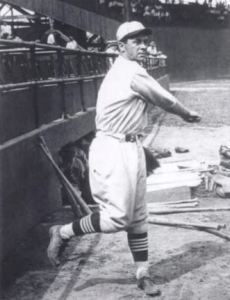
sothoron

Evans said the 32-year-old who had spent parts of nine seasons in the major leagues:

“Here was a pitcher who was recognized as one of the richest prizes ever found.  He had a fast ball, a spitter, a curve, a change of pace; control—well, just everything that a great pitcher requires.

“And Sothoron lived as a pitching star, but not for long.  A weakness was discovered.  Show the opposing side a weak spot and it plays through it.

“Sothoron, with an iron arm are rare intelligence, could not control his throw once he fielded the ball.”

During five seasons in the American League from 1917-1921, Sothoron made 50 errors in just 356 total chances.

“On bunts or easy taps hit straight to him he lost his bearings.  With one swish of his arm, he threw—threw in any direction which usually was yards away from his fielder.

“To first, second, third base or the plate, Sothoron aimed and fired.

“And eventually, he threw himself out of the American League.”

Evans said Indians manager Tris Speaker “thought he could correct the fault’ when he acquired Sothoron in June of 1921, and for a time he thought he had–Speaker told The Cleveland News when he acquired the pitcher that the problem was Sothoron “throwing flat-footed.”
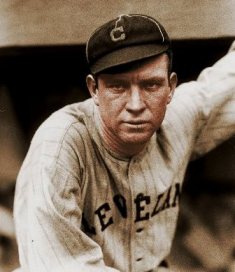
Tris Speaker

Tris Speaker

He won 12 and lost four, with a 3.24 ERA for Cleveland—although he did commit four errors in just 36 total chances.  But in 1922, Speaker “gave up the job” after Sothoron appeared in just six games—he was 1-3 with a 6.39 ERA and made one error on six chances.

Evans said after he was released by Boston:

“Sothoron, disgusted with himself, retired from baseball.”

He returned to baseball in 1923, with the Louisville Colonels in the American Association.  Despite a 6-9 5.92 season with the Colonels, Evans said:

“The scene changes.  Branch Rickey, as manager of the St. Louis Browns in 1914, discovered Sothoron.  And he refused to believe that such an evil could not be corrected.  He took a chance and purchased Sothoron for his St. Louis Cardinals in 1924.”

Branch Rickey
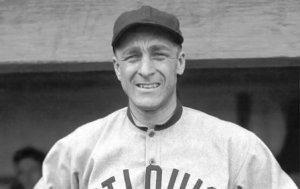
Branch Rickey

And the pitcher responded:

“The story is not closed.  Sothoron was one of the few pitchers with a perfect fielding average in the National league last season.”

He was 10-16 with a 3.57 ERA, but handled 37 total chances without an error, which included “making 35 perfect throws in aiding in the retirement of batters or runners.”

Evans attributed Sothoron’s fielding to:

“Branch Rickey’s system of training… (Rickey) saw that Sothoron…simply scooped in the ball and made his throw.  He did not steady himself.

“For days and weeks, Sothoron was put through such a course—fielding a ball, pausing, steadying himself, then following through with the throw.”

Evans suggested that “after 10 years of drifting” Sothoron had “finally found himself.”

It did not last.

He pitched for the Cardinals for two more seasons, he was 13-13 with a 4.09 ERA, and he committed five errors in just 31 chances.   He finished his career with an .871 fielding percentage.
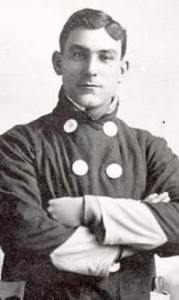
Nap Lajoie “How I Win”

13 May

Napoleon Lajoie spoke to Joseph B. Bowles in 1910 for one of the syndicated journalist’s series of articles called “How I Win.”

Lajoie said:

“It is hard to tell how any man wins a ballgame, because winning depends so much upon other members of the team.  I think that the biggest factor in winning, in my case at least, is in having what I think is the baseball instinct.  Whether that instinct is natural or acquired, or merely the result of quickness of eye, or what I do not pretend to know.  But I believe that a great part of a ballplayer’s success both in batting and in fielding is the result rather of instinct than of anything else.  Many times players  do things almost without thinking that are exactly right, and many times when they think out a thing carefully they do exactly the wrong thing.”

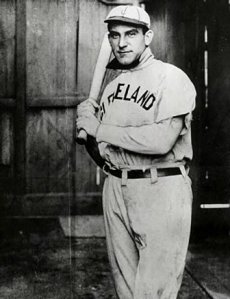
Napoleon Lajoie

Napoleon Lajoie

But after saying he wasn’t sure how he won, Lajoie decided he did know:

 “As far as I am concerned, I win games by hitting.  It seems to me I always could hit, and in spite of the fact that some pitchers think otherwise, I hit almost any kind of ball equally hard.  I have often wondered why this was.  Perhaps it was natural.  I never want to know what a pitcher is going to pitch and would much rather figure out for myself what ball is coming than have a coacher or anyone else tell me.”

Lajoie said he had determined that his ability to hit was “a natural gift” which required practice to refine:

“Position at the bat is a big thing in hitting.  A batter should be firmly on his feet, with the balls of his feet holding the ground tightly, and he should not shift position while striking. ..I do not try to hit the ball as hard as possible, but rather to meet it squarely, and in this I think a quick and steady eye helps.”

laj

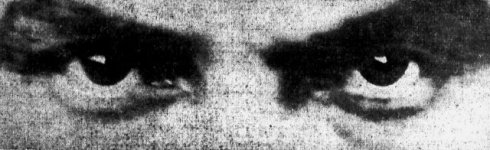
Lajoie’s eyes

Lajoie said he was “striving always” for an advantage at the plate:

“It is a guessing match between the pitcher and the batter at the best, and experience ought to show a batter just what a pitcher is likely to pitch to him on any given ball.  When runners are on bases batting becomes more of an art…I think my position at the bat and long, steady, sweeping stroke helps me very much in the hit-and-run game, for I am able to hit balls that other batters would miss entirely.  Even if I am certain of missing the ball I swing at it hard so as to cause the catcher to lose a step or a foot or two of ground in making his throw.”

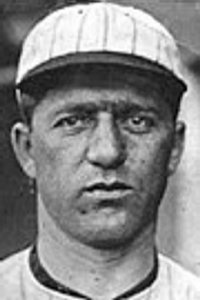
Lajoie

Lajoie

In the end, the man in the midst of a season in which, at age 35, he led the American League in games, at-bats, hits, doubles, total bases, and batting average, said:

“Keen eyesight, close observation and attention to every detail is necessary to win ballgames.  Anyone who grows careless or indifferent ceases to be a winner.”

“Many say he was so Modest he Hated to have his Picture Taken”

30 Mar

In the winter of 1918 Malcolm MacLean of The Chicago Evening Post wrote about the peculiar reactions of a few players to photographers:

“It may happen that a pitcher does a phenomenal streak of work and his photo should run.  It may be the only one of him in stock that has been used time and again—so often, in fact, that it is all but worn out.

“Hence it is necessary for a photographer to snap said fellow’s photo on the ball field.  Ninety-nine times out of a hundred this is a pipe. Yet there are exceptions.”

MacLean said he recalled a handful if examples of players refusing:

“In practically every case it was that uncanny thing known as ‘baseball superstition’ that made it difficult, almost impossible, to get them to pose.

(Urban) Red Faber, of the White Sox, on two occasions (during the 1917 season) lost ball games after he had been snapped.  So he announced his intention of refusing to pose again until the White Sox won the American League championship.  Another member of the Sox, Charles (Swede) Risberg, joined him in the declaration. And they stuck to it.

Red Faber

Red Faber

“The day after the title was clinched both Faber and Risberg were among the easiest fellows on the squad to photograph.  In their case it was ‘superstition’ and we don’t know they could be blamed.  If a player keeps winning, only to have the streak smashed the day his photo is taken, well we have an idea we’d do the same thing.”

MacLean said during Rube Marquard’s 19-game winning streak the Giants’ pitcher refused to allow a Chicago photographer to take his picture.  MacLean said he and a cameraman approached the pitcher on July 8, 1912:

 “’Nothing doing,’ he said.  ‘Come around any time you want after I’ve lost a game and you’re welcome to all you want.’  It so happened that Rube lost that day, Jimmy Lavender hanging the bee on him, and the following afternoon Rube posed and posed and posed.”

MacLean said Jim Thorpe was a particularly difficult subject to photograph when he began his major league career, but not due to superstition:

“When Thorpe first came to Chicago with the Giants, he was the most widely advertised athlete in the world.  He was fresh from his triumphs in Sweden on the track field and from the gridiron at Carlisle.

“Many say he was so modest he hated to have his picture taken.  At any rate, many a film and plate was wasted on him because he would turn his face away, throw up his arm in front of him, or do something also to ruin the exposure.”

Jim Thorpe--Airedale fan

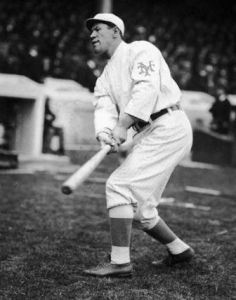
Jim Thorpe

Another difficult member of the Giants was catcher John “Chief” Meyers, who MacLean said would brush past photographers, saying:

“’Aw, you’ve got all of me you want,’ It was decidedly exasperating, especially when publicity is what helps keep major leaguers in the majors.”

Two other oft-photographed pitchers had their own particular quirks.

MacLean said:

“It will surprise many to learn that Ed Walsh, of the White Sox…refused to pose on the day he was expected to pitch…Few men were snapped so frequently as Ed when he was in his prime, yet we venture to say no man ever got a photo of him—when Ed knew it—on the day he was to work.

Eddie Plank, of the Athletics…was one of the easiest of all men to photograph, but it was exceedingly difficult to get a good one of him.  The reason was he kept tossing stones at the camera or twisting up his face in some farcical fashion.  And when other players were being taken Ed would throw peddles at them, trying to have them distort their faces.”

Eddie Plank

Eddie Plank

Clark Griffith, “How I Win”

14 Mar

In 1910, Cincinnati Reds Manager Clark Griffith spoke to journalist Joseph B. Bowles for one of  a series of syndicated articles in which baseball’s biggest stars described “How I Win.”

“If a fellow is going to cut any ice he needs ice picks and the first way for a manager to win is to get men who can deliver, and men intelligent enough to take care of themselves.

“My theories in regard to what constitutes a winner are the only ones, and I use them in instructing my players what to do.  I used them in pitching, and they worked out, and I believe any player will succeed if he follows them.”

Clark Griffith

Clark Griffith

Griffith said baseball was “Ninety-nine and fifteen sixteenths” courage and nerve:

“It is more than that—it is what ballplayers call ‘guts’—which is courage with aggressive confidence behind it…The first thing to do to win baseball games is to go after anyone who does not wear a uniform that looks like yours, and go after him hard.  Hand every opposing player anything that will make him weaken or show the yellow.  Anytime I can convince my men that they are going to win and the other fellows that they are going to lose, I’ll win a pennant.”

He believed his confidence could successfully intimidate opponents:

“The best system of winning games is to tell the other fellow that you are going to beat him.  Tell it to him before the game starts and tell him in a way that will convince him.  You cannot convince him unless you believe it yourself.  I keep telling them all the time, and I believe it myself until the game is over and sometimes even then.”

Griffith said what he wanted most was for his players to:

“Take chances; any chance to gain an inch of ground or a base…Go after the game with intelligence and force every point as hard as possible…The player who takes chances of hurting himself seldom hurts either himself or his opponent and he will make a weak opponent run away.  More players get hurt stopping up on their feet and giving up before they are touched than are damaged in sliding to bases.”

He said that aggressiveness should also be directed at umpires:

“Then claim every point and claim it quick.  Holler.  ‘No, no’ real quick and beat the umpire to it on every close play a la (Johnny) Evers.  The umpire may be perfectly honest and square but on a close play the fellow who yells quickest is much more likely to get the decision.  I do not believe in fighting umpires or nagging at them.  I believe in yelling quickly.  Yelling quickly beats yelling loud all to pieces.  It is not cheating a bit, but simply protecting yourself on close plays not so much to get the decision yourself as to keep the other fellow from getting it.”

Griffith led the Chicago White Sox to the inaugural American League pennant during his first season as a manager in 1901.  And despite not winning one since, was very confident about his “theories” for success:

“These things, taken together with a little good pitching and perhaps one star pitcher, will win any pennant if carried out correctly and persistently, regardless almost of the mechanical ability of the players on the team.”

In the end, Griffith was unable “to win any pennant.”

His Reds teams in 1910 and 1911 were both sub .500 clubs and finished in fifth and sixth place.  He joined the Washington Senators in 1912, and finally with “one star pitcher’ he managed the team to two-second place finishes (1912-13), but did not win a pennant there either.  He stepped down as manager after the 1920 season to devote himself full time to his ownership duties.

One Star Pitcher

One Star Pitcher

He ended his managerial career with a 1491-1367 record over 20 seasons.

“You got away with Something that time, Buck”

2 Mar

It will be reviewable by instant replay this season, but in 1914 the “Neighborhood Play” had no name, and its use by one American Leaguer was a big story.

The Chicago Daily News said:

“There is a story going around the circuit which undertakes to show how Buck Weaver, the White Sox shortstop, fooled all the umpires…Buck’s long suit was acting as pivot on a double play, taking the ball from the second baseman.”

buckweaver

Buck Weaver

The paper said when Weaver joined the Sox in 1912, he “noticed that he was often failing,” to turn double plays.

“He lay awaken nights figuring how he could increase his speed in pulling off (double plays), and finally decided that if he could not get the batter no one could, as he was the owner of as strong a whip as any shortstop in the land.

“The solution of the puzzle came to him by accident.  In dashing to second to take a throw from (Morrie) Rath he overstepped the bag and was a stride closer to first than usual when he got the ball.  Instead of stepping back and touching the sack, he made the throw to first base and, much to his surprise, the umpire called both men out.”

When Weaver returned to the dugout, Manager Jimmy “Nixey” Callahan said:

“’You got away with something that time, Buck.’”

Weaver told his manager:

“’I was a whole stride over second when I got the ball.  But say, I could away with it by accident, what’s the matter with trying to pull it off right along when the man at bat is fast and likely to beat me out if I wait for the throw? I can save a quarter of a second or so by going over the bag.’”

The paper said Callahan encouraged him to try it.

“And Buck did.  He worked the trick successfully against the Naps six or seven times, twice in one game with (George) Hildebrand umpiring the bases.

“’He worked it on us several times,’ said Jim McAleer, formerly of the Red Sox, while Clark Griffith admits that Washington suffered the same fate.

“Even Connie Mack was forced to murmur, and when Connie Mack kicks, something must be wrong, and possibly as a result of the protest of the manager of the world’s champions, the umpires will watch Mr. Weaver more carefully this year when he is acting as pivot man in the double play.”

After 1913, when he participated in a career-high 73 double plays, Weaver never played as many games at shortstop, so it’s unknown whether umpires, in fact, watched him “more carefully” when  he attempted the Neighborhood play.

Things I Learned on the Way to Looking Up Other Things #17

10 Feb

Honus Wagner on Integration, 1939

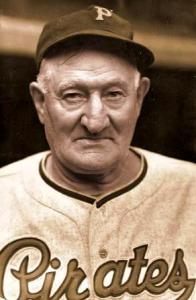
As part of a series of articles on the long overdue need to integrate major league baseball, Wendell Smith of The Pittsburgh Courier interviewed many of baseball’s biggest names.  One of the most vocal proponents was Honus Wagner.

Wagner

Wagner

The then 65-year-old Pittsburgh Pirates coach told Smith:

“Most of the great Negro players I played against have passed on, but I remember many of them well.

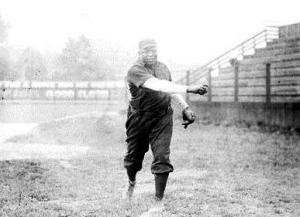
Rube Foster was one of the greatest pitchers of all time.  He was the smartest pitcher I have ever seen in all my years of baseball.

“Another great player was John Henry Lloyd.  They called him ‘The Black Wagner’ and I was always anxious to see him play.

“Well, one day I had an opportunity to go see him play.  After I saw him I felt honored that they should name such a great ballplayer after me, honored.”

Rube Foster

Rube Foster

Wagner said the “Homestead Grays had some of the best ballplayers I have ever seen.”

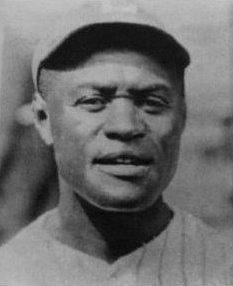
John Henry lloyd

John Henry lloyd

Although he misidentified one of them as “lefty,” Wagner also said of William Oscar Owens, a pitcher and outfielder for the Grays and several other clubs:

“He was a great pitcher and one of the best hitters I have ever seen.”

More recently, Wagner said Oscar CharlestonJasper “Jap” Washington, Satchel Paige and Josh Gibson “could have made the grade easily had they been accepted.”

Wagner concluded:

“Yes, down through the years, I have seen any number of Negro players who should have been in big league baseball.”


Uniform Criticism, 1923

The Decatur (IL) Herald found the state of baseball uniforms worthy of an editorial in March of 1923:

“Pictures of baseball players in training reveal that the season of 1923 has brought no marked change in the style of uniform.  It is quite as baggy and unbecoming as ever.

“Baseball players refer to their costumes as ‘monkey suits,’ a term that is supposed to establish some sort of connection with the cut of the affairs worn by the little animals that pick up the organ grinder’s pennies.  However, that may be, no sensible man imagines that his uniform accentuates his good looks.  It is purely a utility costume and smartness has no place in it.”

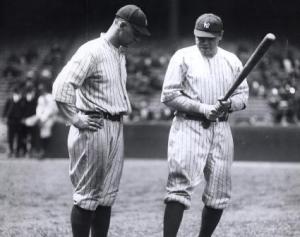
ruthandgehrig

Lou Gehrig and Babe Ruth in their “baggy and unbecoming” 1923 uniforms


The paper was most concerned about the uniform’s tendency to make players look foolish and appear to be out of shape:

“A collarless blouse with an awkward length sleeve bags at the belt in a way to emphasize abdominal prominence instead of athletic trimness about the loins.  Loose knickerbockers gathered at the knee resemble the khaki uniforms of the Spanish-American War period in their voluminousness and wrinkles…A cap fitting close about the head and bringing ears into striking relief is the climatic feature of this make-up.

“Underneath this covering of dirty gray or brown there are doubtless lithe limbs and well developed muscles, but the spectator doesn’t see them.  The baseball costume doubtless serves its purpose, it fails lamentably to make the wearer look like an athlete.”

No Women Allowed, 1912

Coming out of the 1912 winter meetings in Chicago, The New York Globe said:

“Nothing doing for suffragettes in the American League!  Not even if they march to the meeting.  They may be making great progress in their cause, but there will not be any Mrs. Brittons in the Ban Johnson organization.”

“Mrs. Britton” was Helene Hathaway Britton, who became owner of the St. Louis Cardinals after the death of her uncle Stanley Robison.

Helene Hathaway Britton with children Marie and Frank

Helene Hathaway Britton with children Marie and Frank

 “A decision was reached that no woman can own a club or even attend an American League meeting.  According to the owners it was a good decision, as they did not want to get into the same mess of trouble which the National League has encountered since one of its clubs fell into the hands of a woman.  Which shows the American League is constantly being benefitted by the experience of the National.”

The “trouble” referred to tension between Britton and Manager Roger Bresnahan, who she had given a five-year contract before the 1912 season.  The two feuded after the team struggled and Britton rejected numerous overtures from Bresnahan to buy the team.  She eventually fired the manager and a very public battle ensued.  Sinister “Dick” Kinsella, who along with Bill Armour comprised the Cardinals’ scouting staff, resigned claiming Bresnahan was “Not treated right.” Armour remained with the club and a settlement was finally reached when Bresnahan was named manager of the Chicago Cubs.

bresnahanandtoy

Bresnahan moved on to the Cubs

One American League owner told The Globe:

“I think it will benefit our league to keep the women out of baseball.  It is almost impossible to do so, but we must keep them out of baseball.  A woman owning a ballclub is about the limit, and the American League made a great move when they decided to bar female magnates.  Votes for the women may be alright, and we do not blame them for battling for them, but it would be a terrible thing to have them in baseball as owners.  It would mean the ruining of the game.”

Grace Comiskey, who became owner of the Chicago White Sox after the death of her husband John Louis Comiskey in 1939–she was forced to go to court to get control of the club from The First National Bank of Chicago; as trustees of the estate, the bank wanted to sell the team because there was no specific instruction in the will that his widow should take control.

She became the American League’s first woman owner.

The game appears not to have been “ruined” during her tenure.

“Frank Chance Stands Forth as the Biggest Individual Failure”

21 Dec

It was widely assumed that American League President “Ban” Johnson had a hand in the transactions that resulted in Frank Chance coming to New York to manage the Yankees in 1913—Chance was claimed off waivers by the Cincinnati Reds in November of 1912, then waived again and claimed by the Yankees a month later.

Ban Johnson

Ban Johnson

William A. Phelon, the sports editor at The Cincinnati Times-Star noted “(T)he strange fact that all the clubs in the older league permitted him to depart without putting in a claim,” as evidence of the fix being in.  And, in “Ban Johnson: Czar of Baseball,” author Eugene Murdock said “Johnson masterminded a series of intricate maneuvers,” to bring “The Peerless leader” to New York.

Chance’s arrival in New York was heralded as a turning point for the franchise, and he made no effort to downplay his confidence.  On January 9, 1913, The Associated Press reported that chance told Yankees owner Frank Farrell:

“I will win the pennant for you before I get through in New York. That may sound like a bold statement to make at this time, but I ask you to remember my promise.”

Frank Chance

Frank Chance

Despite the maneuvers on Chance’s behalf and Chance’s own confidence, he failed miserably in New York. The club finished seventh with a 57-94 record in 1913. The following season, the team was 60-74 when Chance resigned.   The resignation came after a tumultuous season which included charges by Chance that the team’s failures were largely the result of scout Arthur Irwin’s failure to sign decent players.  He also secured a guarantee of his 1915 salary from Farrell before he resigned.

Two months after Chance’s exit, the man who “masterminded” the moves that brought him to New York, unleashed his wrath on the former manager to Ed Bang of The Cleveland News:

“You can say for me that Frank Chance stands forth as the biggest individual failure in the history of the American League.  That’s the sum and substance of what B. B. Johnson, president of the American League said a short time since when “The Peerless Leader” came up for discussion, ‘and what’s more, you can write a story to that effect and quote me as strong as you’d like,’ Ban continued.

“President Johnson had great hopes of Chance molding a winner in New York, and when, after almost two years as the leader of the Yankees, he quit a dismal failure, the blow all but floored Ban for the count.  The American League has always played second fiddle to the Giants in New York, and Ban and other American Leaguers figured that Chance was the man to bring about a change in the condition of affairs.”

Bang said Johnson took Chance’s failure “to heart,” because he believed he “made a ten-strike” for the league when Chance came to New York.  Johnson told him:

“’Chance had the material in New York and I think any other man would have made a success og the venture,’ said Ban.  ‘Surely no one could have done any worse.  Of all the players that were on the New York roster in 1913 and 1914, and there were any number of likely looking recruits, Chance failed to develop even one man of class.  Why, it was an outrage.’

“’And then when he made up his mind that he was a failure, or at least when he was ready to step down and out he had the unmitigated nerve to ask for pay for services that he had not performed.  That surely was gall, to say the least.”

Johnson finished by comparing Chance unfavorably with the Yankees’ 23-year-old captain who replaced him and guided the team to a 10-10 finish:

“’Why, Roger Peckinpaugh, youth though he is, displayed far more class as manager of the Yankees in the short time he was at the helm than Frank Chance ever did.”

peckinpaugh2

Roger Peckinpaugh

Irwin left the Yankees in January of 1915 when Farrell and his partner William Devery sold the team to Jacob Rupert and Cap Huston.  Peckinpaugh remained captain but was replaced as manager by Bill Donovan, who guided the Yankees for three seasons–a fifth, a fourth and a sixth-place finish with an overall record of 220-239.

Lost Advertisements–Cubs, White Sox and Whales Endorse Steele’s Game of Baseball

18 Dec

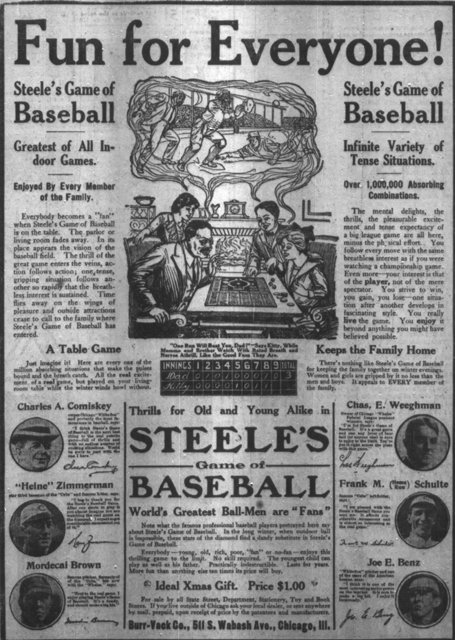
steeles

A 1915 advertisement for Steele’s Game of Baseball, a table-top game which claimed to have “Over 1,000,000 absorbing combinations,” and promised that the player would “enjoy it beyond anything you might have believed possible:”

Greatest of All Indoor Games

“Everybody becomes a ‘fan’ when Steele’s Game of Baseball in on the table.  The parlor or living room fades away.  In its place appears the vision of the baseball field.  The thrill of the great game enters the veins, action follows action; one tense, gripping situation follows another so rapidly that the breathless interest is sustained.  Time flies away on the wings of pleasure and outside attractions cease to call to the family where Steele’s Game of Baseball has entered.”

The game was produced by the Burr-Vack Company, a Chicago-based office supply dealer, and received glowing endorsements from members of the city’s three teams:

World’s Greatest Ball-Men are “Fans

Charles A. Comiskey owner Chicago ‘White Sox’ and probably the most famous man in baseball, says: ‘I think Steele’s Game of Baseball is the next best thing to the real outside game–full of thrills and with an endless number of exciting situations.  Would be sorry to part with the one I have.’

“‘Heine’ Zimmerman third baseman of the ‘Cubs’ and famous hitter says: ‘I  beg to thank you for the Steele’s Baseball Game.  After one starts to play it you almost imagine you are watching the real game on the diamond.  I expect to get considerable amusement out of it.’

Mordecai Brown famous pitcher, formerly of the ‘Cubs’ but now with the ‘Whales’ says: ‘Next to the real game, I enjoy playing Steele’s Game of Baseball.It’s a dandy and should make a big hit.’

Chas. E. Weeghman owner of Chicago ‘Whales’ Federal League pennant winners says, ‘I’m for Steele’s Game of Baseball.  It’s a great game and one any lover of baseball (or anyone else) is sure to enjoy to the limit.  You’ve put it right across the plate with this game.’

Frank M. (Home Run) Schulte famous ‘Cubs’ left fielder says: ‘I am pleased with the Steele’s Baseball Game you sent me.  It affords considerable amusement and is almost as interesting as the real game.”

Joe Benz ‘White Sox’ pitcher and one of the stars of the American League, says, ‘I think it is one of the most interesting parlor games on the market.  It is sure to make a big hit. I enjoy it immensely.'”

[…]

“Note what the famous professional baseball players portrayed here say about Steele’s Game of Baseball.  In the long winter, when outdoor ball is impossible, these stars of the diamond find a dandy substitute in Steele’s Game of Baseball.”

Despite the endorsements, the “Ideal Xmas Gift,” which cost one dollar and was “For sale by all State Street, Department, Stationary, Toy, and Book stores,” appears to have quickly disappeared–there are no mentions of the game in newspapers after 1915.

Lost Advertisements–Ty Cobb, Lewis 66 Rye

11 Dec

cobblewis66

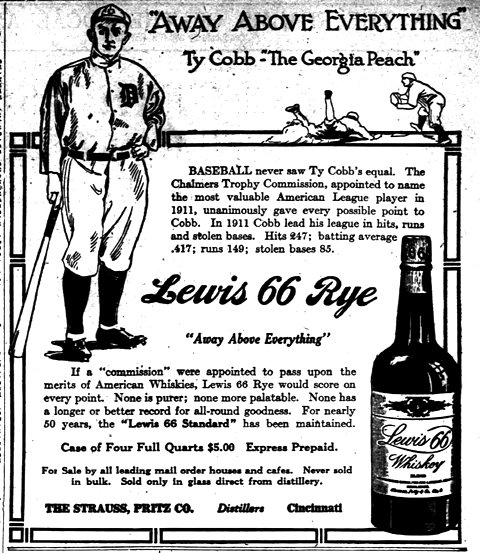
A 1912 advertisement for Lewis 66 Rye Whiskey from The Strauss, Pritz Company, a Cincinnati-based distiller:

“Away Above Everything”

Ty Cobb–‘The Georgia Peach’

“Baseball never saw Ty Cobb‘s equal.  The Chalmers Trophy Commission, appointed to name the most valuable American League player in 1911, unanimously gave every possible point to Cobb (he received all eight first-place votes–the commission consisted on one sportswriter from each league city).  In 1911, Cobb led his league in hits, runs, and stolen bases.  Hits 247; batting average .417; runs 149, stolen bases 85 [sic 248; .420; 147, 83].”

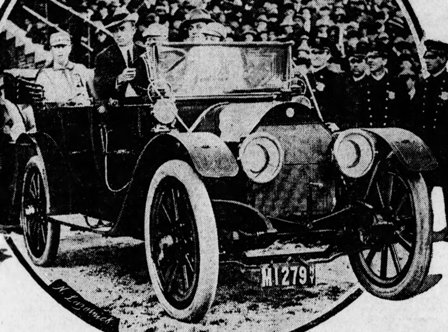
Cobb was presented with a Chalmers “36” at Shibe Park in Philadelphia on October 24, 1911, before game four of the World Series. Jack Ryder, covering the series for The Cincinnati Enquirer said of the presentation:

“President (John T.) Brush of the Giants declined to allow this ceremony at the Polo Grounds, so it was pulled off very quietly here this afternoon…The event took place 10 minutes before the game and was coldly ignored by the Giants though the Athletics took a keen interest in it and several of them had their pictures taken with Cobb. Ty now has three cars, but he says this one is much the best of the lot, and he expects to drive it to his home in Georgia as soon as the series is over.”

Cobb in his Chalmers at Shibe Park

Cobb in his Chalmers at Shibe Park

While Cobb was the unanimous choice of the eight-man commission, the second place finisher in the American League received a more valuable car.

The Chicago Inter Ocean said Chicago White Sox fans, unhappy that pitcher “Big Ed” Walsh finished second to Cobb, “Undertook to raise a fund to purchase an automobile,” for him.

But, said the paper, the fans:

“(F)ound themselves confronted with a dilemma–they had too much money in the fund to buy a duplicate of the Chalmers touring cars presented to Ty Cobb and (National League winner, Chicago Cubs outfielder) Frank Schulte.”

Two days before Cobb received his Chalmers in Philadelphia, Walsh was presented with his car before a charity game at Comiskey Park.

Ed Walsh

Ed Walsh

No Chicago newspaper reported the make and model.  The Daily News called it “A handsome automobile.”  The Inter Ocean said it was “A $4,000 automobile,” and The Tribune said simply that he had received an “(A)utomobile subscribed for by the fandom of the city.”  The Examiner also failed to mention the type of car Walsh received but said the Cubs’ Schulte “gave $25” to the fund.

According to The Tribune, Walsh promised to “‘(L)earn how to run it before spring,’ and the stands cheered loyally.”

“He thought he knew more than his Manager”

14 Oct

New York Highlanders pitcher Jack Chesbro’s wild pitch in the top of the ninth inning in the first game of an October 10, 1904 doubleheader with the Boston Americans allowed the winning run to score in a 3 to 2 game, and ended the first great American League pennant race, Boston winning the championship by 1 ½ games over New York.

Jack Chesbro

Jack Chesbro

But, ten years later, Chesbro’s manager, Clark Griffith, put the blame for losing the game, and the pennant, squarely on another member of the team.

Griffith told Stanley Milliken of The Washington Post:

“Players are often of the opinion that they know more than their manager, and simply on this account New York lost a pennant to Boston in 1904.”

[…]

“It was either Boston or New York, and as fate would have it, the schedule brought us together. I sent in Jack Chesbro, who at the time was one of the greatest pitchers in baseball.  ‘Big’ Bill Dinneen worked for Boston, and when he was right had few superiors.”

Clark Griffith

Clark Griffith

Griffith said the moment that lost the pennant came when “Dinneen began to weaken,” and allowed two runs—Griffith, in his ten-year-old recollection incorrectly said it was the seventh inning; it was actually the fifth.  Dinneen had just walked “Wee Willie” Keeler and “Kid” Elberfeld, forcing in a second run and loading the bases.  With two out, and 2 to 0 lead, Griffith picked up the story:

“Every man that went to the bat (in the fifth inning) had instructions to wait ‘em out.

(Jimmy) Williams, my second baseman was also sent up with the same orders.  But he thought he knew more than his manager.  He did not even look over the first ball, but banged away at it, thinking perhaps he might clean the bases.  What happened?  Well, he rolled weakly (to Dinneen) and the side was retired.  There is no telling how many men Dinneen would have walked.”

Jimmy Williams

Jimmy Williams

Chesbro’s wild pitch was merely a footnote in Griffith’s story, and he failed to mention Williams’ throwing error in the seventh that allowed two runs to score. The pennant, according to Griffith, was lost because Williams failed to listen to his manager; a widespread problem in baseball according to the manager:

“Not only on this occasion but on many, have I seen a player go directly against the orders of his manager and bad results follow.  Of course, we all have different ideas regarding what is to be done at the critical moment, but brains count in baseball just as much as it does in any other walk of life.

“Give me a bunch of ballplayers with superior brains but not as much actual playing ability as opponents and I will win just as many games as they do.“

Despite Williams’ thinking he “knew more than his manager,”  he remained as Griffith’s second baseman for three more seasons.