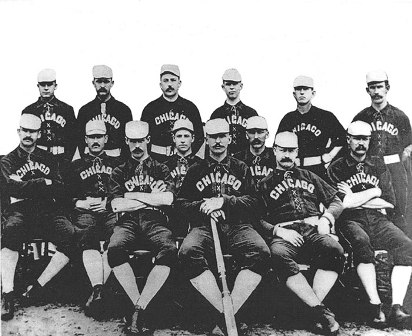
Tag Archives: Clark Griffith

“It is a Pure, Clean, Wholesome Game”

20 Apr

Billy Sunday took time out from saving souls in the Pacific Northwest in 1909, to talk baseball with a reporter from The Washington Post sent to cover the evangelist’s month-long revival in Spokane:

“I wouldn’t take $1 million dollars for my professional baseball experience.  I am proud I made good and that I was one of the best of them in my day.”

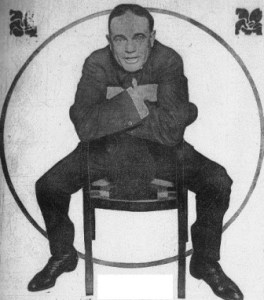
Billy Sunday

Billy Sunday

Sunday then went to bat for the unquestioned integrity of the game:

“Baseball is the one sport in this country upon which the gamblers have not been able to get their crooked claws.

“There isn’t the same disgrace attached to a professional baseball player that attends other professional athletes.  The gambler tried for 30 years to get control, but the men behind the game have stood firm and true.  Baseball has stood the test.  It is a pure, clean, wholesome game, and there is no disgrace to any man today for playing professional baseball.”

Sunday also said that after he “converted in 1886,” he discovered that:

“The club owners, the fans generally, and the players themselves will respect a man all the more for living a clean, honest life.”

While he said he rarely had time anymore to attend games, Sunday said he continued to follow the game closely and read the sports page every day.

Asked to name his all-time team, Sunday said:

“I would put (Cap) Anson on first base and make him captain, and I would have to find a place for Mike Kelly and John ClarksonGeorge Gore, Charlie Bennett, Kid Nichols, Amos Rusie, John Ward, Clark Griffith and others were all good men.”

Sunday returned his attention to his “Idol,” Anson:

“For every day in the season, for every occasion that might arise, I believe old Cap Anson was the best batsman the game ever knew.  Just look at that grand record of his…He could hit anything.  He used an extremely heavy bat…it used to do our hearts good to hear the crack when old ‘Cap’ Anson met the ball squarely.”

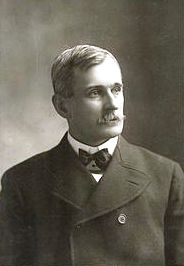
Sunday's "idol" "Cap" Anson

Sunday’s “idol” “Cap” Anson

The preacher then told the reporter about his career:

“My first professional contract (in 1883 with the Chicago White Stockings) called for $60 a month.  That was a windfall for me in those days, too.  When I quit baseball (in 1890) my salary was $500 a month.  The first two years I only got in a few games and was used more as a utility man.

“As a batter I averaged from .240 to .275 (Sunday’s averages actually ranged from .222 to .291) and that was fair in those days.”

Billy Sunday

Billy Sunday

He also recounted the visit received after he secured his release from the Philadelphia Phillies in 1890 in order to take a position with the Y.M.C.A. in Chicago:

“(On the day the release was announced) I was leading a class in a men’s noonday meeting in the Chicago Y.M.C.A., when Jim Hart, president of the Chicago club, walked in, and after the meeting laid down a contract on that old pulpit.  It called for seven month’s salary at $500 a month, with one month’s salary in advance.

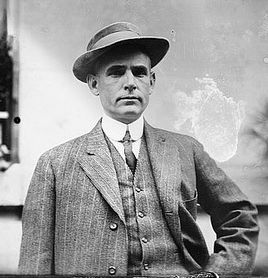
Jim Hart

Jim Hart

“Thirty-five hundred dollars and me almost broke with a wife and a baby to support.  It was a horrible temptation, especially since I loved to play baseball.  The next morning I sent Mr. Hart my refusal of his terms.  I accepted a position for the year with the Y.M.C.A. at $83 a month.”

At the peak of his career as an evangelist in the early teens, it was reported that Sunday earned around $800 per day from the pulpit—roughly the annual salary of the average American worker.

“Those $8 Diamond cuff buttons cost us the Championship”

11 Apr

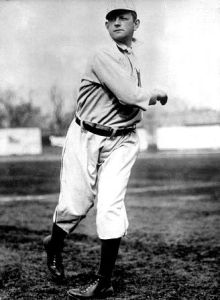
Clark Griffith never got over losing the pennant to the Boston Americans by 1 ½ games in the American League’s first great pennant race in 1904.

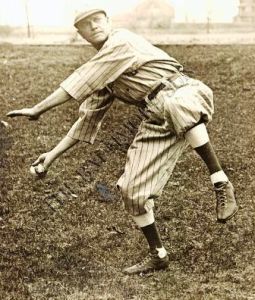
Clark Griffith

Clark Griffith

Over the years, he wasn’t even able to decide which of his New York Highlanders’ three straight losses to Boston in October was the most “hard luck” game, and just who he blamed for letting the season slip away.

In 1914, Griffith told Stanley Milliken of The Washington Post that second baseman Jimmy Williams, who failed to heed his instructions at the plate during the game that gave the pennant to Boston on October 10—Griffith barely mentioned the wild pitch Jack Chesbro threw which allowed Boston to score the winning run.

But two years earlier, he told a different story to Hugh Fullerton of The Chicago Examiner –in in this one he put the blame on himself and Chesbro, but not for the October 10 game:

“There never was any hard luck except mine.  Whenever I hear them tell hard luck stories I think to myself that they don’t know what it is.”

[…]

“The race had narrowed down to New York and Boston.  We both came east from our last Western trip with (a half game) separating us.”

Griffith said his club returned to New York believing all five games would be played in New York as scheduled, but discovered that New York owner Frank Farrell “not thinking we would be in the race at all, had in the middle of the season leased the Highlanders park to the Columbia University team for football on Saturday.”

As a result, the two Saturday games were moved to Boston.

“We beat Boston on Friday 3 to 2, and that put us where we only had to break even in the next four games to win.  Chesbro had pitched the Friday game.  I did my planning and decided to pitch Jack Powell the two games in Boston on Saturday, and to leave Chesbro at home to get a good rest over Sunday and to be ready to pitch the two games on Monday if it became necessary, knowing that with two days of good rest he could do it.”

chesbro2

Jack Chesbro

Griffith said his pitcher had other plans:

“When I got down to the depot that night there was Chesbro begging to go with us to Boston.  Some fool friends of his had notified him that they intended to present him with diamond cuff buttons in Boston, and he was wild to go.  I could not refuse him under the circumstances but those $8 diamond cuff buttons cost us the championship.

“(Once in Boston) Chesbro was crazy to pitch, and he warmed up in Boston and declared he felt better than at any time during his life.  I was angry because I wanted him to rest, and refused him.   He almost cried and said he had repeated numerous times during the season and always had won.  I said ‘no’ that we couldn’t take the chance.”

But Griffith said his team pressured him:

“Chesbro got (Wee Willie) Keeler, (Kid) Elberfeld and all the boys to come to me and beg me to let him pitch.  (Jack) Powell came to me and said he would keep warmed up and ready to relieve Chesbro in the first game.  I fell for it, seeing Chesbro had already warmed up and my plan for resting him was spoiled. He was good for (three innings), but before anyone could relieve him in the next Boston made six runs and the game was lost (13-2)…Powell  and Cy Young met in the second game and Boston won 1 to 0.”

And Griffith was quick to blame that loss on his “hard luck” as well:

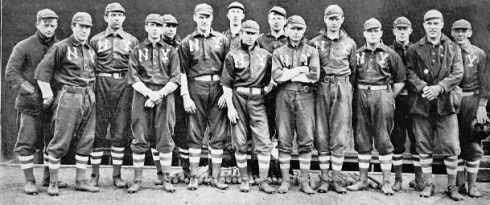
Griffith's "Hard Luck" Highlanders

Griffith’s “Hard Luck” Highlanders

“The one run was scored on the rankest kind of luck.  A ball thrown (by John Anderson) from the outfield to (third baseman Wid) Conroy got by him…allowing the run to score.  The ball would not have rolled five feet from Conroy, but the crowd had pushed up to within three feet of third base.

This made it necessary for us to win both games on Monday.  And in the first game, in the ninth inning, with two out and two strikes on (Freddy) Parent, Chesbro let his spitball slip for a wild pitch and gave Boston the game.  We won the next 1 to 0 but the pennant was done.

“If there ever was harder luck than that, I don’t want to hear of it.”

Clark Griffith, “How I Win”

14 Mar

In 1910, Cincinnati Reds Manager Clark Griffith spoke to journalist Joseph B. Bowles for one of  a series of syndicated articles in which baseball’s biggest stars described “How I Win.”

“If a fellow is going to cut any ice he needs ice picks and the first way for a manager to win is to get men who can deliver, and men intelligent enough to take care of themselves.

“My theories in regard to what constitutes a winner are the only ones, and I use them in instructing my players what to do.  I used them in pitching, and they worked out, and I believe any player will succeed if he follows them.”

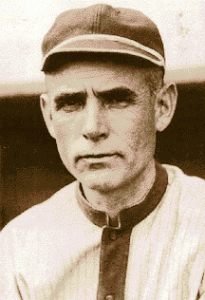
Clark Griffith

Clark Griffith

Griffith said baseball was “Ninety-nine and fifteen sixteenths” courage and nerve:

“It is more than that—it is what ballplayers call ‘guts’—which is courage with aggressive confidence behind it…The first thing to do to win baseball games is to go after anyone who does not wear a uniform that looks like yours, and go after him hard.  Hand every opposing player anything that will make him weaken or show the yellow.  Anytime I can convince my men that they are going to win and the other fellows that they are going to lose, I’ll win a pennant.”

He believed his confidence could successfully intimidate opponents:

“The best system of winning games is to tell the other fellow that you are going to beat him.  Tell it to him before the game starts and tell him in a way that will convince him.  You cannot convince him unless you believe it yourself.  I keep telling them all the time, and I believe it myself until the game is over and sometimes even then.”

Griffith said what he wanted most was for his players to:

“Take chances; any chance to gain an inch of ground or a base…Go after the game with intelligence and force every point as hard as possible…The player who takes chances of hurting himself seldom hurts either himself or his opponent and he will make a weak opponent run away.  More players get hurt stopping up on their feet and giving up before they are touched than are damaged in sliding to bases.”

He said that aggressiveness should also be directed at umpires:

“Then claim every point and claim it quick.  Holler.  ‘No, no’ real quick and beat the umpire to it on every close play a la (Johnny) Evers.  The umpire may be perfectly honest and square but on a close play the fellow who yells quickest is much more likely to get the decision.  I do not believe in fighting umpires or nagging at them.  I believe in yelling quickly.  Yelling quickly beats yelling loud all to pieces.  It is not cheating a bit, but simply protecting yourself on close plays not so much to get the decision yourself as to keep the other fellow from getting it.”

Griffith led the Chicago White Sox to the inaugural American League pennant during his first season as a manager in 1901.  And despite not winning one since, was very confident about his “theories” for success:

“These things, taken together with a little good pitching and perhaps one star pitcher, will win any pennant if carried out correctly and persistently, regardless almost of the mechanical ability of the players on the team.”

In the end, Griffith was unable “to win any pennant.”

His Reds teams in 1910 and 1911 were both sub .500 clubs and finished in fifth and sixth place.  He joined the Washington Senators in 1912, and finally with “one star pitcher’ he managed the team to two-second place finishes (1912-13), but did not win a pennant there either.  He stepped down as manager after the 1920 season to devote himself full time to his ownership duties.

One Star Pitcher

One Star Pitcher

He ended his managerial career with a 1491-1367 record over 20 seasons.

“You got away with Something that time, Buck”

2 Mar

It will be reviewable by instant replay this season, but in 1914 the “Neighborhood Play” had no name, and its use by one American Leaguer was a big story.

The Chicago Daily News said:

“There is a story going around the circuit which undertakes to show how Buck Weaver, the White Sox shortstop, fooled all the umpires…Buck’s long suit was acting as pivot on a double play, taking the ball from the second baseman.”

buckweaver

Buck Weaver

The paper said when Weaver joined the Sox in 1912, he “noticed that he was often failing,” to turn double plays.

“He lay awaken nights figuring how he could increase his speed in pulling off (double plays), and finally decided that if he could not get the batter no one could, as he was the owner of as strong a whip as any shortstop in the land.

“The solution of the puzzle came to him by accident.  In dashing to second to take a throw from (Morrie) Rath he overstepped the bag and was a stride closer to first than usual when he got the ball.  Instead of stepping back and touching the sack, he made the throw to first base and, much to his surprise, the umpire called both men out.”

When Weaver returned to the dugout, Manager Jimmy “Nixey” Callahan said:

“’You got away with something that time, Buck.’”

Weaver told his manager:

“’I was a whole stride over second when I got the ball.  But say, I could away with it by accident, what’s the matter with trying to pull it off right along when the man at bat is fast and likely to beat me out if I wait for the throw? I can save a quarter of a second or so by going over the bag.’”

The paper said Callahan encouraged him to try it.

“And Buck did.  He worked the trick successfully against the Naps six or seven times, twice in one game with (George) Hildebrand umpiring the bases.

“’He worked it on us several times,’ said Jim McAleer, formerly of the Red Sox, while Clark Griffith admits that Washington suffered the same fate.

“Even Connie Mack was forced to murmur, and when Connie Mack kicks, something must be wrong, and possibly as a result of the protest of the manager of the world’s champions, the umpires will watch Mr. Weaver more carefully this year when he is acting as pivot man in the double play.”

After 1913, when he participated in a career-high 73 double plays, Weaver never played as many games at shortstop, so it’s unknown whether umpires, in fact, watched him “more carefully” when  he attempted the Neighborhood play.

“It was just as Hard to Hit a Curve Ball in 1885 as it is Now”

29 Jan

Cap Anson was visiting New York shortly after the death of his wife in February of  1916, when he was asked by Bozeman Bulger of The New York Globe the question put to every former player:

"Cap" Anson

Cap Anson

“’How do you think the ball players of today compare to the boys back in the eighties?’

“’I was always of the belief,’ the Captain answered, ‘that ball players are born and not made according to set rules.  Therefore, a ballplayer had just as much chance being born in 1885 as in 1915.  Really, I can’t see a great deal of difference.’”

While Anson didn’t believe the players of his generation were better, he strenuously disagreed when it was suggested that there had been, in general terms, “a big improvement in the game itself” since his playing days:

“’Where?’ parried the veteran.  ‘The rules are practically the same.  The diamond, the bases, the ball and the bat are exactly the same.  The gloves they wear now make fielding even easier.’

“’Believe me,’ he added with emphasis, ‘it was just as hard to hit a curve ball in 1885 as it is now. We had a few great hitters then just like you have now.  Yes, and we had just as many weak ones.’”

As far as Anson was concerned, there were really only two significant changes in the game:

“The only new thing in baseball that I know of is the spitball.  In the old days, they used to pitch something like it, but not so perfectly and not with such a sharp break.  The spitball is really built on a new principle. That is practically the only new thing.  In the old days, we bunted and stole bases just as you do now, and the runners were blocked away from the plate in exactly the same manner.”

He was honest when asked if he thought he could hit a spitball:

“’No, I don’t. A few years ago when Jack Chesbro was in his prime with the spitter Clark Griffith bet me a hat that Jack could strike me out.  The argument arose over my disbelief in the spitball.  I really did think it simply a lot of newspaper talk then.  Well, we went out and tried it, and Jack did strike me out.’”

Jack Chesbro

Jack Chesbro

Anson said the other “important change in the methods of baseball,” was the number of players on each roster.

“In the old days we rarely ever had over 14 players…I don’t know whether that is a good thing or not.  When we carried a few men each of them felt that he was expected to do his part.  They all worked harder because they had to.  Nowadays if a player doesn’t feel exactly right there are two or three on the bench waiting and anxious to take his place.”

As for salaries, Anson said:

“Yes, there’s been a change there.  What an ordinary ballplayer gets nowadays would have been a star’s salary some years ago.  At that, I always got pretty good money.”

“He thought he knew more than his Manager”

14 Oct

New York Highlanders pitcher Jack Chesbro’s wild pitch in the top of the ninth inning in the first game of an October 10, 1904 doubleheader with the Boston Americans allowed the winning run to score in a 3 to 2 game, and ended the first great American League pennant race, Boston winning the championship by 1 ½ games over New York.

Jack Chesbro

Jack Chesbro

But, ten years later, Chesbro’s manager, Clark Griffith, put the blame for losing the game, and the pennant, squarely on another member of the team.

Griffith told Stanley Milliken of The Washington Post:

“Players are often of the opinion that they know more than their manager, and simply on this account New York lost a pennant to Boston in 1904.”

[…]

“It was either Boston or New York, and as fate would have it, the schedule brought us together. I sent in Jack Chesbro, who at the time was one of the greatest pitchers in baseball.  ‘Big’ Bill Dinneen worked for Boston, and when he was right had few superiors.”

Clark Griffith

Clark Griffith

Griffith said the moment that lost the pennant came when “Dinneen began to weaken,” and allowed two runs—Griffith, in his ten-year-old recollection incorrectly said it was the seventh inning; it was actually the fifth.  Dinneen had just walked “Wee Willie” Keeler and “Kid” Elberfeld, forcing in a second run and loading the bases.  With two out, and 2 to 0 lead, Griffith picked up the story:

“Every man that went to the bat (in the fifth inning) had instructions to wait ‘em out.

(Jimmy) Williams, my second baseman was also sent up with the same orders.  But he thought he knew more than his manager.  He did not even look over the first ball, but banged away at it, thinking perhaps he might clean the bases.  What happened?  Well, he rolled weakly (to Dinneen) and the side was retired.  There is no telling how many men Dinneen would have walked.”

Jimmy Williams

Jimmy Williams

Chesbro’s wild pitch was merely a footnote in Griffith’s story, and he failed to mention Williams’ throwing error in the seventh that allowed two runs to score. The pennant, according to Griffith, was lost because Williams failed to listen to his manager; a widespread problem in baseball according to the manager:

“Not only on this occasion but on many, have I seen a player go directly against the orders of his manager and bad results follow.  Of course, we all have different ideas regarding what is to be done at the critical moment, but brains count in baseball just as much as it does in any other walk of life.

“Give me a bunch of ballplayers with superior brains but not as much actual playing ability as opponents and I will win just as many games as they do.“

Despite Williams’ thinking he “knew more than his manager,”  he remained as Griffith’s second baseman for three more seasons.

Lost Advertisements–Larry McLean for Sweet Caporal

25 Sep

mclean

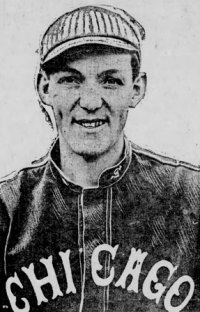
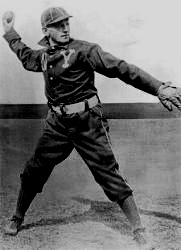
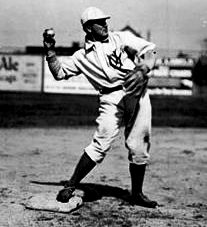
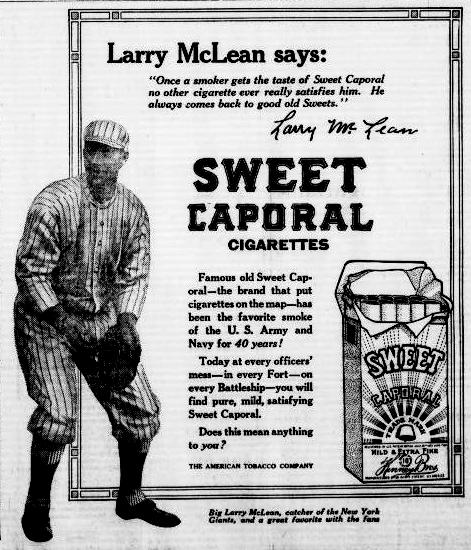
A 1914 Sweet Caporal Cigarette advertisement featuring New York Giants catcher Larry McLean “a great favorite of the fans:”

“Once a smoker gets the taste of Sweet Caporal no other cigarette ever really satisfies him.  He always comes back to good old Sweets.”

McLean wore out his welcome in New York and ended his major league career the following season when he fought with Manager John McGraw, and McGraw’s right-hand man, “Sinister Dick” Kinsella in the lobby of the Buckingham Hotel in St. Louis.

It was hardly the first controversy for McLean, who battled–albeit not physically–with every manager he played for during his 13-year-career.  Sam Crane, the sports writer and former infielder, summed up McLean well in a 1910 article for “Pearson’s Magazine:”

“Larry McLean, of the Cincinnati Reds, as a mere mechanical catcher is hard to beat.  He has a splendid arm and can throw like a streak.  Larry is too, perhaps, the best batting catcher in either league, but his erratic habits make it impossible to place any confidence in him.”

Larry McLean

                                  Larry McLean

A year earlier, in May, McLean had deserted the Reds during an East Coast trip and was “suspended indefinitely” by Manager Clark Griffith, who told The Cincinnati Enquirer:

“When you have a man who is liable to run out at the first call of the wild, you are in an uncertain position all the time. I am perfectly free to say that I might not take McLean back on the team at all, and certainly not until he shows me that he means business.”

McLean was back in the lineup within days, and as he did throughout his career, pledged to a reporter from The Cincinnati Times-Star that he would “(C)onduct himself properly from now on.”

It was a pledge McLean made and broke several times throughout his career which ended at age 33.  He would be dead six years later, the result of a fight in a Boston bar.


Grantland Rice’s “All-Time All-Star Round up”

10 Aug

In December of 1917, thirty-eight-year-old sportswriter Grantland Rice of The New York Tribune enlisted in the army–he spent fourteen months in Europe.  Before he left he laid out the case, over two weeks, for an all-time all-star team in the pages of the paper:

“As we expect to be held to a restricted output very shortly, due to the exigencies and demands of the artillery game, this seemed to be a fairly fitting period to unfold the results.”
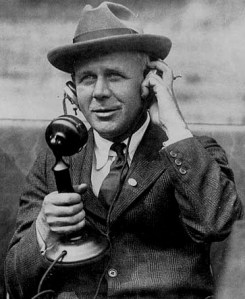
Grantland Rice

Grantland Rice

Rice said the selections were “not solely from our own limited observation, extending over a period of some eighteen or twenty years,” but included input from players, managers and sportswriters, including  “such veterans” as Frank Bancroft and Clark Griffith, and baseball writers Joe Vila of The New York Sun, Bill Hanna of The New York Herald and Sam Crane, the former major league infielder turned sportswriter of The New York Journal.

Rice said only one of the nine selections “(S)eems to rest in doubt.  The others were almost unanimously backed.”

The selections:

Pitcher:  Christy Mathewson

A. G. Spalding, John (Montgomery) Ward, Larry Corcoran, Charley Radbourn, John Clarkson, (Thomas) Toad Ramsey, Tim Keefe, Bill Hoffer, Amos Rusie, (Mordecai) Miner Brown, Addie Joss, Ed Walsh–the array is almost endless.

“In the matter of physical stamina, Cy Young has outclassed the field.  Cy won more games than almost any others ever pitched.

“(But) For all the pitching mixtures and ingredients, stamina, steadiness, brilliancy, brains, control, speed, curves, coolness, courage, is generally agreed that no man has ever yet surpassed Christy Mathewson…there has never been another who had more brains or as fine control.”


[…]

“It might be argued that Radbourn or (Walter) Johnson or (Grover Cleveland) Alexander was a greater pitcher than Mathewson.

But we’ll string with Matty against the field.”

Radbourn was the second choice.  Bancroft said:

“Radbourn was more like Mathewson than any pitcher I ever saw.  I mean by that, that like Matty, he depended largely upon brains and courage and control, like Matty he had fine speed and the rest of it.  Radbourn was a great pitcher, the best of the old school beyond any doubt.”

Catcher:  William “Buck” Ewing

“Here we come to a long array—Frank (Silver) Flint, Charley Bennett, (Charles “Chief”) Zimmer, (James “Deacon”) McGuire, (Wilbert) Robinson, (Marty) Bergen(Johnny) Kling, (Roger) Bresnahan and various others.

“But the bulk of the votes went to Buck Ewing.”
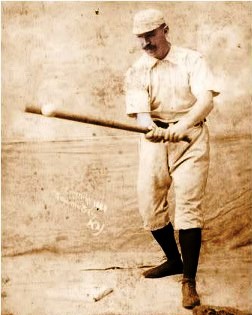
Buck Ewing

Buck Ewing

[…]

“Wherein did Ewing excel?

“He was a great mechanical catcher.  He had a wonderful arm and no man was surer of the bat…he had a keen brain, uncanny judgment, and those who worked with him say that he had no rival at diagnosing the  weakness of opposing batsman, or at handling his pitchers with rare skill.”

Kling was the second choice:

“Kling was fairly close…a fine thrower, hard hitter, and brilliant strategist…But as brilliant as Kling was over a span of years, we found no one who placed him over the immortal Buck.”

1B Fred Tenney

First Base was the one position with “the greatest difference of opinion,” among Rice and the others:

“From Charlie Comiskey to George Sisler is a long gap—and in that gap it seems that no one man has ever risen to undisputed heights… There are logical arguments to be offered that Hal Chase or Frank Chance should displace Fred Tenney at first.

But in the way of batting and fielding records Tenney wins….Of the present array, George Sisler is the one who has the best chance of replacing Tenney.”

2B Eddie Collins

 “There was no great argument about second base.

“The vote was almost unanimous.

“From the days of Ross Barnes, a great hitter and a good second baseman on through 1917, the game has known many stars.  But for all-around ability the game has known but one Eddie Collins.”

Rice said the competition was between Collins, Napoleon Lajoie and Johnny Evers:

“Of these Lajoie was the greatest hitter and most graceful workman.

“Of these Evers was the greatest fighter and the more eternally mentally alert.

“But for batting and base running, fielding skill, speed and the entire combination, Collins was voted on top.”

 SS Honus Wagner

“Here, with possibly one exception, is the easiest pick of the lot.  The game has been replete with star shortstops with George Wright in 1875 to (Walter “Rabbit”) Maranville, (George “Buck”) Weaver…There were (Jack) Glasscock and (John Montgomery) Ward, (Hardy) Richards0n, (Hugh) Jennings, (Herman)Long, (Joe) Tinker and (Jack) Barry.

“But there has been only one Hans Wagner.”
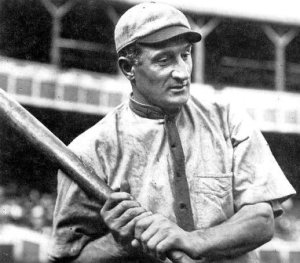
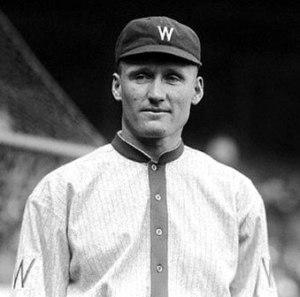
Honus Wagner

Honus Wagner

Jennings and Long were rated second and third,  “But, with the entire list  considered there is no question but that Wagner stands at the top.”

3B Jimmy Collins

Rice said:

“From the days of (Ned) Williamson(Jerry) Denny, and (Ezra) Sutton, over thirty years ago, great third basemen have only appeared at widely separated intervals.

“There have been fewer great third basemen in baseball than at any other position, for there have been periods when five or six years would pass without an undoubted star.”

The final decision came down to “John McGraw vs. Jimmy Collins.”  McGraw was “a great hitter, a fine bunter and a star base runner,” while “Collins was a marvel and a marvel over a long stretch…he was good enough to carve out a .330 or a .340 clip (and) when it came to infield play at third he certainly had no superior…So taking his combined fielding and batting ability against that of McGraw and Collins wins the place.  McGraw was a trifle his superior on the attack. But as a fielder there was no great comparison, Collins leading by a number of strides.”


OF Ty Cobb

“The supply here is overwhelming…Yet the remarkable part is that when we offered our selection to a jury of old players, managers and veteran scribes there was hardly a dissenting vote.”

[…]

“Number one answers itself.  A man who can lead the league nine years in succession at bat.

“A man who can lead his league at bat in ten out of eleven seasons.

“A man who can run up the record for base hits and runs scored in a year—also runs driven in.

“Well, the name Ty Cobb answers the rest of it.”

OF Tris Speaker

 “The man who gives Cobb the hardest battle is Tris Speaker.  Veteran observers like Clark Griffith all say that Speaker is the greatest defensive outfielder baseball has ever exploited…Speaker can cover more ground before a ball is pitched than any man.  And if he guesses incorrectly, which he seldom does, he can go a mile to retrieve his error in judgment…And to this impressive defensive strength must be added the fact he is a powerful hitter, not only a normal .350 man, but one who can tear the hide off the ball for extra bases.”
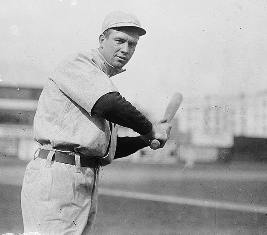
Tris Speaker "hardest hit"

Tris Speaker 

OF “Wee Willie” Keeler

Mike Kelly and Joe KelleyJimmy Sheckard and Fred Clarke—the slugging (Ed) Delehanty—the rare Bill LangeBilly Hamilton.

“The remaining list is a great one, but how can Wee Willie Keeler be put aside?

“Ask Joe Kelley, or John McGraw, or others who played with Keeler and who remember his work.

“Keeler was one of the most scientific batsmen that ever chopped a timely single over third or first…And Keeler was also a great defensive outfielder, a fine ground coverer—a great thrower—a star in every department of play.

“Mike Kelly was a marvel, more of an all-around sensation, but those who watched the work of both figure Keeler on top.”

Rice said of the nine selections:

“The above is the verdict arrived at after discussions with managers, players and writers who have seen a big section of the long parade, and who are therefore able to compare the stars of today with the best men of forgotten years.

“Out of the thousands of fine players who have made up the roll call of the game since 1870 it would seem impossible to pick nine men and award them the olive wreath.  In several instances the margin among three or four is slight.

“But as far a s deductions, observations, records and opinions go, the cast named isn’t very far away from an all-time all-star round up, picked for ability, stamina, brains, aggressiveness and team value.

“If it doesn’t stick, just what name from above could you drop?”

Griff’s Invention

5 Aug

Bob “Buster” Bescher arrived in Cincinnati a right-handed hitter.  In 1909, he led the National League with 54 stolen bases but hit just .240.

Bescher

Bescher

Bescher’s manager, Clark Griffith would compare him to Ty Cobb in an interview with Harry Salsinger of The Detroit News:

“If Bescher could hit he would probably set a pace for base-stealing that would never be equaled…Bescher gets away like Cobb, and his success lies mostly in getting away.  He is running in his first few steps.  He has a great pair of limbs and is in stride at the jump.  He is lightning fast.”

The Cincinnati Enquirer said:

“Bescher is a big, strong fellow, naturally left-handed, who was, unfortunately, coached to bat right-handed when he was a kid.”

Griffith set out to change that before the 1910 season.  In January, The Enquirer said:

“A device for batting practice was shipped to Bob Bescher at his home in London (Ohio) by Manager Griffith yesterday.  The arrangement was constructed according to Griff’s order, and it was designed to give Buster practice in batting left-handed before he goes South with the club six weeks or so hence.”

Clark Griffith

Clark Griffith

The paper described Griffith’s invention:

“The device consists of a ball of regulation size, but fitted with an extra cover, to which stout rubber cords are attached, one on each side.  One of the cords is to be fastened to the floor and the other to the ceiling, allowing the ball to swing loosely at about the height of the batter’s waist.  When the ball is struck with a bat, the flexible cord allows it to swing several yards and it returns with great force, coming back at about the speed of a pitched ball.  Then it is time for Buster to get busy with the club and soak it out again.”

A diagram of Griffith's invention.

A diagram of Griffith’s invention.

The Enquirer said Griffith hoped Bescher would add “30 or 40 points” to his average batting left-handed.

“He is the best base runner in the National League…Griff has sent him instructions to hit only left-handed with the new machine, and he hopes that Bob will be a regular Ty Cobb when he reports in March.”

Bescher batted almost exclusively left-handed during spring training in Hot Springs, Arkansas and became a switch-hitter that season, and seems to have benefitted from Griffith’s invention—but never became a “regular Ty Cobb.”

He improved his average to .250 in 1910 and again led the league with 70 stolen bases.  The next two seasons he hit .275 and a career-high .281, leading the league with 81 and 67 steals.

Bescher

Bescher

In 1913, Bescher slowed, hitting just .258 and stealing 38 bases.  He bounced from the New York Giants to the St. Louis Cardinals and Cleveland Indians over the next five seasons, never hitting better than .270 or stealing more than 39 bases.  He played minor league ball through the 1925 season.

“I mentioned Satchel and Josh and Cool Papa, I told Him he was Missing the boat”

18 May

After Heywood Broun’s remarks at the 1933 Baseball Writers Association dinner about integrating the game, The Pittsburgh Courier initiated a campaign to push the issue.  Despite some support inside baseball and from well-known newspapermen, the effort fell flat by opening day.

That summer, after the first East-West Game—won by the West All-Stars 11 to 7—at Comiskey Park, Henry L. Farrell of The Chicago Daily News suggested several “(M)ajor league club owners who are now on their knees might have their prayers answered,” by signing some the Negro League stars.

In the fall, The Chicago Defender briefly picked up the mantle from The Courier.  The paper asked their readers:

“How would you like to see the great baseball players of the Race performing in the major leagues? Wouldn’t you like to see Willie Foster, Satchel Paige and (Sam) Streeter pitch to Babe Ruth?”

If so:

“Sit down and write K.M. Landis commissioner of baseball, 333 N. Michigan Ave., Chicago.”

The following week, the paper reported that Landis’ office had refused to comment.  When baseball’s winter meetings commenced in Chicago in December, The Defender promised readers that the letters they had sent:

“(A)re not being passed on lightly as many suggested would be the case.  On the contrary, the club owners are downright concerned and from the inside word leaked out that some action would be taken.”

The optimism was tempered later that week when their reporter was barred from covering a meeting where he was told “vital points were discussed.”  The Defender reporter was told no newspapermen would be admitted, but:

“That sinister moves were being made against your author’s admission became a certainty when a well-known writer from one of the downtown papers came along, gave the high sign and was admitted.”

When 1933 came to a close, integration was no closer to being a reality than it was 11 months earlier as Broun stood to deliver his remarks to the baseball writers.

Four years later, Sam Lacy from The Baltimore Afro-American met with Washington Senators owner Clark Griffith in an attempt to revive the subject:

“I mentioned Satchel and Josh and Cool Papa, I told him he was missing the boat.”

Sam Lacy

Sam Lacy

Griffith, he said, told him the timing was wrong, and that Southern-born players would not accept integration.

The next major effort came in 1939.

Political support had generally been limited to socialist and communist organizations—the Young Communist League spent the summer of ’39 gathering signatures to present to Commissioner Landis.  But, in July of that year, the Illinois House of Representatives adopted a resolution which read in part:

“Resolved, by the House of Representatives of the Sixty-first General Assembly.  That the owners of all professional baseball teams in the United States, both in the major and minor leagues be strongly urged to give baseball players of the colored race the same opportunity of becoming players on their respective teams as is accorded to such players of the white race.”

Another push came from Pittsburgh as well.

Wendell Smith, who was playing baseball at West Virginia State College when Broun made his speech in 1933, was now a reporter for The Courier. In July, he promised readers:

“The most exclusive, startling and revealing expose, of the attitude of the major league players and managers themselves, ever written.”

Wendell Smith

Wendell Smith

Over the course of several weeks Smith asked 40 players and eight managers as they passed through Pittsburgh, “Are Negro ballplayers good enough to ‘crash’ the majors?”

The Courier’s Chester Washington said in a column to introduce the series of articles:

“One of the major reasons why Mr. Smith’s discovery is so revolutionary is that the club owners, in trying to pass the buck, have blamed the ban on the players themselves.  They claimed that the injection of colored stars into the clubs would bring about friction and dissention… (Smith) practically disproves this contention.

“Fearlessly buttonholing the managers and outstanding players of all the National League clubs, Mr. Smith received scores of testimonials which should be a revelation to the owners.”

A sampling of the statements collected by Smith:

Ernie Lombardi, Cincinnati Reds:  “(Satchel) Paige is as good as (Dizzy) Dean.”

Johnny Vander Meer, Cincinnati Reds:  “I wouldn’t object.”

James “Doc” Prothro, Philadelphia Phillies: “If given permission I would jump at the opportunity to sign up a good Negro ballplayer.”

Leo Durocher, Brooklyn Dodgers:  “(Satchel) Paige, (Bill “Cy”) Perkins, (Mule) Suttles and (Josh) Gibson are good enough to be in the majors right now…I certainly would use a Negro ballplayer if the bosses said it was all right.”

Gabby Hartnett, Chicago Cubs:  “I am sure that if we were given permission to use them, there would be a mad scramble between managers to sign them.”

Gabby Hartnett

Gabby Hartnett

Dizzy Dean, Chicago Cubs: “If some of the colored players I’ve played against were given a chance to play in the majors they’d be stars as soon as they joined up.”

Pepper Martin, St. Louis Cardinals: “Some of the big league players would object, but on the whole I think they would be accepted.”

Pie Traynor, Pittsburgh Pirates: “believe me when I say I have seen countless numbers of Negro ball players who could have made the grade in the majors.  Only their color kept them out.  If given permission, I would certainly use a Negro player who had the ability.”

Honus Wagner, Pittsburgh Pirates:  “Yes, down through the years I have seen any number of Negro players who should have been in big league baseball.”

Over the next five years, Smith would interview more than 150 additional major leaguers, who would echo the sentiments of his original 40, keeping the pressure on professional baseball to desegregate.