Tag Archives: Hall of Fame

“A Historical Account of a Great Game of Ball”

5 Mar

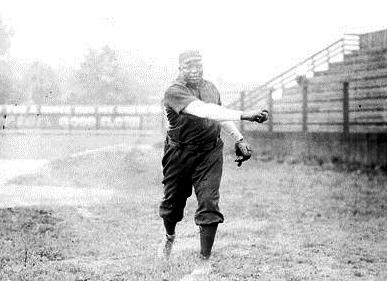
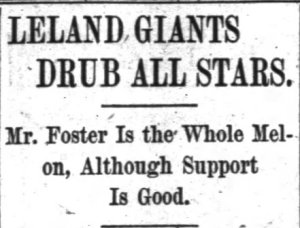
The headline above appeared in 1907 above an article written by Frederick North Shorey in The Freeman regarding a series between Andrew “Rube” Foster’s Leland Giants and Mike Donlin’s All-Stars “an aggregation composed of such noted players as Mike Donlin, Jake Stahl, Jimmie Ryan and Jimmy Callahan, probably the best semi-professional team in the country.”

Shorey said the series at South Side Park “exceeded in interest to the people it attracted anything that took place between the White Sox and Cubs last fall (1906 World Series).”

Rube Foster beat the Donlin All-Stars 3-1 in the first game, allowing only three hits:

“Rube Foster is the pitcher of the Leland Giants, and he has all the speed of (Amos) Rusie, the tricks of a Radbourne, and the heady coolness and deliberation of a Cy Young. What does that make him? Why, the greatest baseball pitcher in the country; that is what the best ballplayers of the white persuasion that have gone up against him say.”

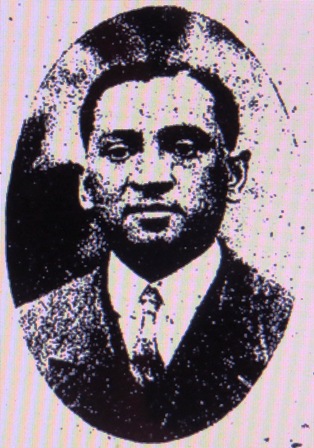
Rube Foster

Rube Foster

Foster was so important to his fans, Shorey said:

“If it were in the power of the colored people to honor him politically or to raise him to the station to which they believe he is entitled, Booker T. Washington would have to be content with second place.”

The Chicago Tribune said of Foster’s domination of the All-Stars:

lelandsvsdonlins

Back to the series, and back to Shorey:

“While the all-stars were confident in their ability to win, several of the old players, including Mr. Donlin himself, who have known of the prowess of Mr. Foster…knew that it was by no means a certainty…but they had hopes that the colored team behind him might do something to undo the efforts of the twirler.

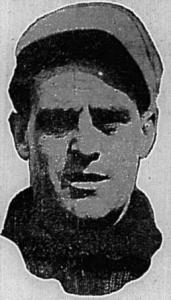
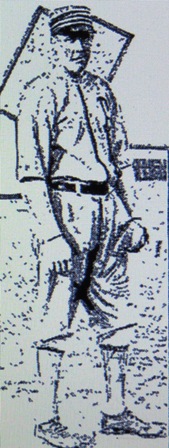
Mike Donlin

Mike Donlin

Shorey said the all-stars were over matched:

“The colored men set a new pace for base running, while foster’s cool, deliberate pitching was too much for the old-time players on Donlin’s team. Both teams put up brilliant fielding games.”

Foster pitched in four games in the series; he won all four.

David Wyatt–who had been a teammate of Foster’s with the Chicago Union Giants in 1902, and who in 1920 was asked by Foster to help draft the constitution of the Negro National League—also wrote about the series in The Freeman:

“All the baseball critics in the city were out to look the Lelands over, many under the impression that they were overrated. The most interested of the number was Mr. Comiskey, owner of the white Sox…After witnessing the first game the white sox boss said if it were possible he would have annexed the signature of at least three of the boys to contracts, and he was so enthused over the fast, snappy work of the Lelands that he had his world’s champions to lay over one day in Chicago to watch the boys play.”

Wyatt had higher hopes for “Baseball as the common leveler” in general and the series specifically:

“There was no color line drawn anywhere; our white brethren outnumbered us by a few hundred, and all bumped elbows in the grand stand, the box seats and bleachers; women and men alike, all whetted freely with one another on the possible outcome of the series, the effect it would have upon the future of the negro in baseball, the merits of the different players etc…”

Foster’s heroics, Wyatt’s hopefulness, Comiskey’s words and Chicago’s enthusiasm were, of course, not enough to change the status quo; regardless of the “Great game of ball,” played at South Side Park in that 1907 series, the color line would remain intact for four more decades.

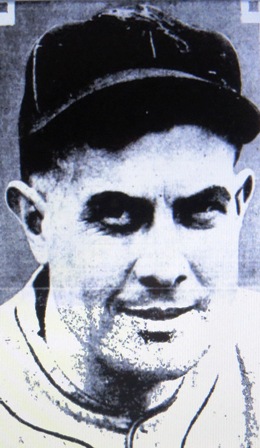
David Wyatt

David Wyatt

Another “Rube”

4 Mar

Hall of Famer “Lefty” Grove and Jack Ogden were the best known pitchers of the great Baltimore Orioles teams that won seven straight International League Pennants from 1919-1925, but in 1923 both were out-pitched by James Arthur “Rube” Parnham.

Parnham began his professional career in 1914 with the Huntington Blue Sox in the Ohio State League.  In 1915 he joined the Raleigh Capitals in the North Carolina State League, managed by Connie Mack’s son Earle.  The 21-year-old was an unspectacular 9-15 for Raleigh, but caught the eye of the elder Mack and spent the spring of 1916 with Jacksonville with the Philadelphia Athletics.
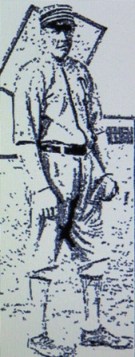
Rube Parnham, 1917

Rube Parnham, 1917

Parnham returned to the North Carolina State League for the 1916 season, splitting time between Raleigh and the Durham Bulls, posting a 17-19; his contract was purchased by the Athletics in late August.  Nearly a month later Parnham made his Major League debut; he appeared in four games for Mack’s last place (36-117) ballclub, he was 2-1 with a 4.01 ERA.

Parnham was with the Athletics in Jacksonville again in 1917, but was sent to Baltimore before the beginning of the season.  He won 16 games for the Orioles and earned one more shot with Mack in Philadelphia; Parnham was 0-1 with a 4.09 ERA in two September appearances.

As Parnham started winning games for Baltimore he developed a reputation as a work horse; in 1917 he won both ends of a double-header against the Rochester Hustlers, pitching a total of 24 innings in two 3-2 victories; in 1919 he won both games of a twin bill twice.   At the same time he began to earn a reputation as “eccentric’ and “erratic,” the inevitable comparisons to Rube Waddell and his small time roots earned Parnham the nickname “Rube,” he was also known as “Uncle.”

Baltimore sold Parnham to the Louisville Colonels in the American Association in March of 1918, but within two months was sold back to Baltimore, where he rejoined manager Jack Dunn, with who he had, and would continue to have, a contentious relationship.  He won 22 games in 1918 and followed with 28 in 1919, leading the Orioles to their first championship since 1908.

As the Orioles jumped out to a quick lead in 1920 (Parnham was 5-0, and was joined on the pitching staff by Ogden and Grove) the erratic Rube Parnham surfaced again. He was prone to disappearing for days at a time and also appears to have been hurt.  By mid-season he was gone.

More recent accounts have said Parnham jumped the Orioles to play semi-pro ball in Pennsylvania; just as likely, Parnham, who was suspended in June by Dunn for being out of shape, and who was clearly overshadowed by Grove (12-2) and Ogden (27-9); as well as Jack Bentley (16-3) and Harry Frank (25-12), was let go.

Lending credence to Parnham not having jumped is a January 1922 Associated Press item that said the pitcher “whose arm went on him” would rejoin “the Baltimores for the 1922 season.  Parnham wrote Dunn that he believed he could come back next season and pitch successfully.”  He won 16 games for the Orioles in 1922.

The following season would be Parnham’s best; the 29-year-old pitcher led the Orioles with a 33-7 record, Grove was 27-10, Ogden 17-12.   In addition to out-pitching his two teammates, Parnham set an international League record by winning 20 consecutive games.

Parnham’s old ways returned before the 1924 season when he failed to report to Florida for spring training.  The Associated Press said:

“Rube never reported at the Oriole training camp in the south and never even deigned to notify Jack Dunn whether he was going to play ball this year.”

Parnham eventually reported, but had another stormy, abbreviated season.  With a 6-5 record and a 4.84 ERA, Dunn suspended the pitcher in June, and he appears to have not pitched for the Orioles again that season.

The only reference to Parnham in 1925 was a May game he pitched for a semi-pro team in Duquesne, Pennsylvania and was beaten 8-0 by the Homestead Grays.

His career appeared to be over, but Dunn, it seems was willing to give his pitcher one more chance.

The Baltimore Sun said shortly before the 1926 season:

“Uncle Rube Parnham, the most colorful figure in the International League, will be back on the mound for the Orioles next season.”

Parnham was 13-9 with a 5.05 ERA, and spent the entire season feuding with Dunn; It was the end of the Orioles dynasty, the Toronto Maple Leafs won the championship in 1926 and Baltimore would not finish first again until 1944.

The Orioles were finally through with Parnham, The Baltimore Sun said:

“There was so much trouble between Parnham and Dunn last year that it was apparent Rube had spent his last season with the Orioles.” “

The 32-year-old was still considered valuable enough that the Milwaukee Brewers in the American Association purchased the pitcher from Baltimore.

The Brewers expected big things from their new pitcher, The Milwaukee Journal said:

“At times his playfulness leads him away from the straight and narrow, and he nearly drove Jack Dunn nutty last season…But Parnham is a great pitcher, despite his eccentricities, and if (Brewers owner) Otto Borchert can hire a good keeper for him is certain to be a winner with the Brewers.”

By March Parnham had worn out his welcome with another manager when he didn’t bother to report to Hot Springs, Arkansas for spring training.  The Journal said:

“Disgusted with the dilatory tactics of Rube Parnham, Jack Lelivelt, boss of the Brewers, hinted Saturday night that unless the eccentric righthander reports at once that he would probably be turned back to Baltimore.  Former International Leaguers …have told the Milwaukee leader about some of Reuben’s idiosyncrasies  and Lelivelt is beginning to feel that he will become a stepsister to Kid trouble if he had the former Oriole on his club.”

Parnham never played for the Brewers, and was returned to Baltimore, but Dunn was finished with him as well and he was shipped off to the Reading Keystones.  After a 2-8 season split between Reading and the Newark Bears, Parnham’s career was over.
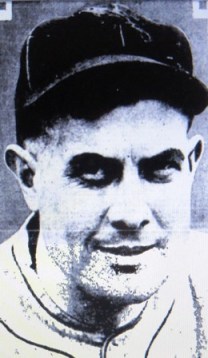
rube

Rube Parnham, 1923

Parnham retired to McKeesport, Pennsylvania, where the troubles that followed him throughout his career seem to have continued.  James Bready, an editor for The Baltimore Sun went to Pennsylvania to interview the former Oriole hero in 1961:

“The story was that he had gone downhill. Falling asleep in the snow, recently, he had lost several toes. On the phone, the director of a home for indigents said he would notify Parnham of the interview project. He gave me the street address — and a caution: ‘Try to get here before noon.’

“Paper, pen — I knocked and Rube beckoned me inside what today would be called a shelter. He was wearing an overcoat (I understand that better, now) and had not shaved recently. We sat down, facing, on two of half a dozen cot beds.  I tried a question. ”Gbbmhdahlr,” he replied. I stared at him; slowly, the meaning penetrated. I reached in my pocket and handed him a dollar.”

Parnham died two years later in McKeesport.

Monte Irvin Turns 94 Today

25 Feb

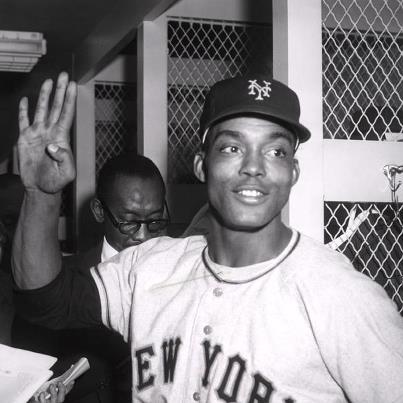
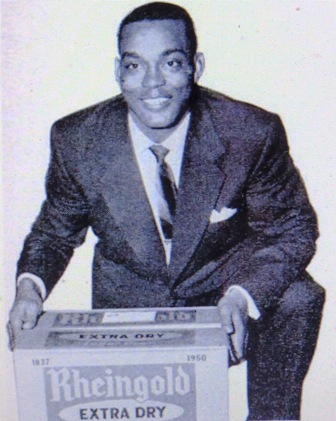
Montford Merrill “Monte” Irvin was born on this date in 1919.

monte

“If a person has good intentions in his heart and wants to do the right thing, then there are certain ways that any obstacle can be overcome. I was very fortunate to have the kind of parents that I had, who believed in doing the right thing, and always tried to be honest, trustworthy, and forthright.”–Monte Irvin, from “Nice Guys Finish First–The Autobiography of Monte Irvin (with James A. Riley)

Irvin worked as a salesman for Rheingold Beer during the off season.

Irvin worked as a salesman for Rheingold Beer during the off season.

Lost Advertisements–Louisville Slugger, New Finish…Adds Punch to Hits

19 Feb

???????????????????????????????


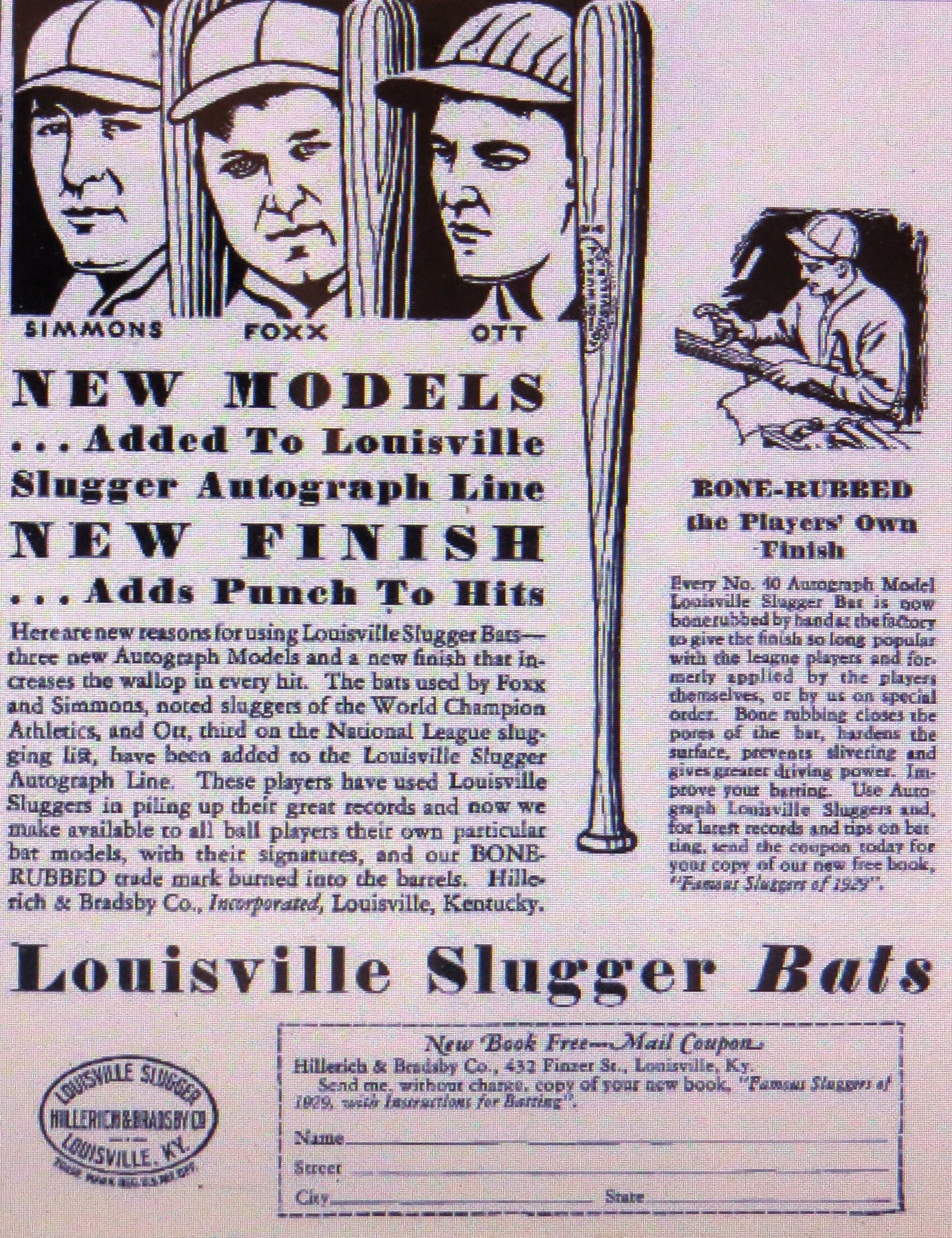
April 1930 advertisement for Louisville Slugger, featuring Hall of Famers Al Simmons, Jimmy Foxx and Mel Ott.

“Here are new reasons for using Louisville Slugger Bats–three new Autograph Models and a new finish that increases the Wallop in every hit.  The bats used by Foxx and Simmons, noted sluggers of the World Champion Athletics, and Ott, third on the National League sluggers list, have been added to the Louisville Slugger Autograph Line.  These players have used Louisville Sluggers in piling up their great records and now we make available to all ballplayers their own particular bat models, with their signatures, and our BONE-RUBBED trademark burned into the barrels”


Ty Cobb, Joe Jackson, Harry Hooper and Quackery

15 Feb

Baseball history is full of stories of products that have been routinely used in the belief they give players an edge.  Some, like steroids and amphetamines have obvious benefits; others like Power Balance bracelets provide none.

In 1916 advertisements began to appear in newspapers and magazines across the country for a new miracle drug from DAE Health Laboratories in Detroit: Nuxated Iron.

An ad featuring Ty Cobb said “Greatest Baseball Batter of all time says Nuxated Iron filled him with renewed life after he was weakened and all run down.”

Cobb said in the advertisement:

“At the beginning of the present season I was nervous and run down from a bad attack of tonsillitis, but soon the papers began to state ‘Ty Cobb has come back, he is hitting up the old stride.’ The secret was iron—Nuxated Iron filled me with renewed life.

“Now they say I’m worth $50,000 a year to any baseball team.”

cobbnux

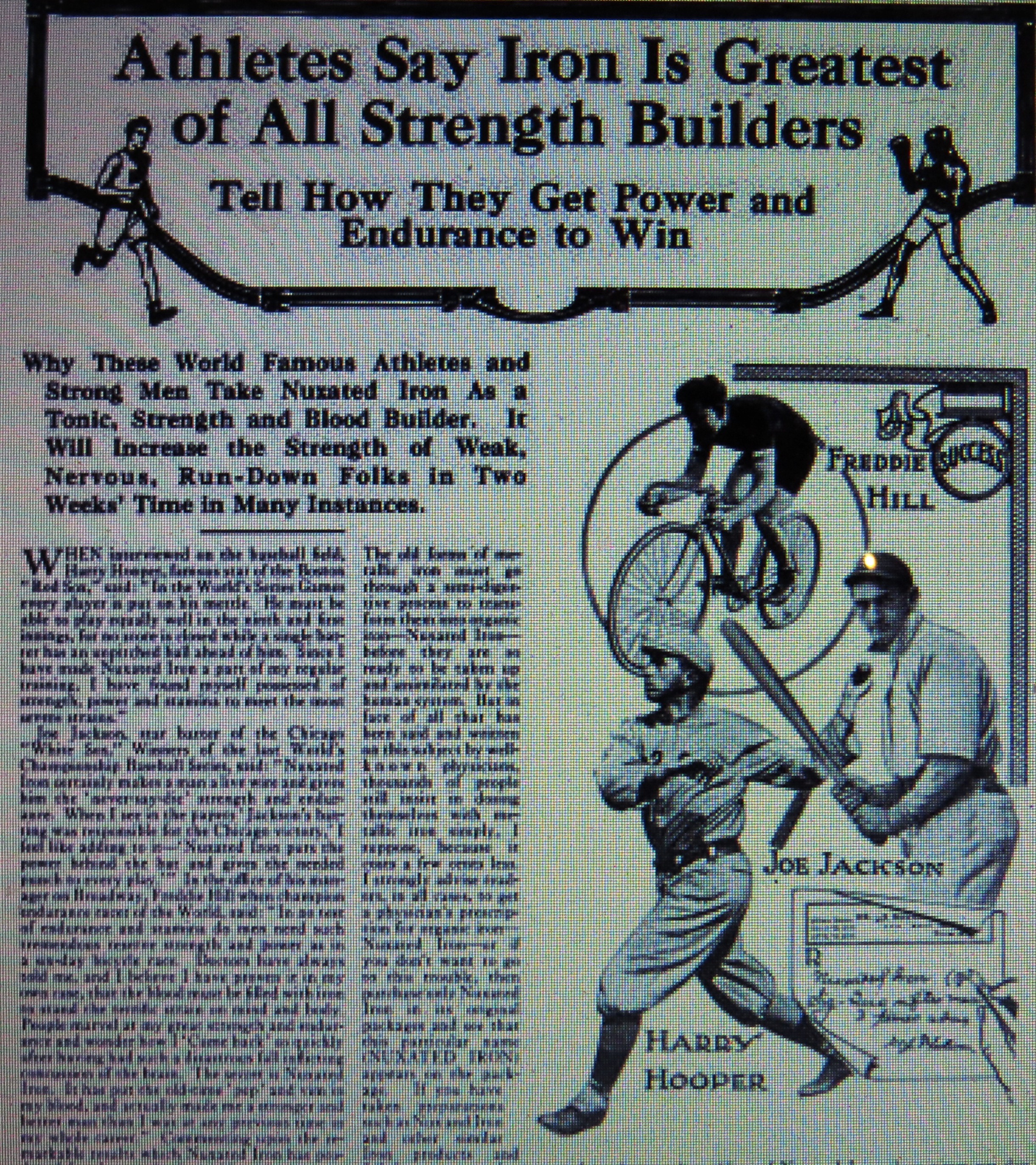
Other ads for Nuxated Iron began to appear, featuring boxer Jess Willard, cyclist Freddie Hill and baseball stars Harry Hooper and Joe Jackson.  Hooper said:

“Since I have made Nuxated Iron a part of my regular training, I have found myself possessed of strength, power and stamina to meet the most severe strains.”

Jackson said:

Nuxated Iron certainly makes a man a live wire and gives him the ‘never-say-die strength and endurance.”

The illiterate Jackson added: “When I see in the papers ‘Jackson’s batting was responsible for the Chicago victory,” I feel like adding to it—‘Nuxated Iron puts the power behind the bat and gives the needed punch to every play.’”

???????????????????????????????

The Journal of the American Medical Association took notice of the Nuxated Iron ad campaign and in October of 1916 had this to say about the “miracle drug:”

“Newspapers whose advertising ethics are still in the formative stage have, for some months past, been singing—at so much a song—the praised of “Nuxated Iron.”  The public has been that this nostrum is what makes Ty Cobb, “the greatest baseball batter of all time,” a “winner” and is what helped Jess Willard “to whip Frank Moran” besides being the “untold secret” of Willard’s “great triumph over jack Johnson.”

All that DAE would say about the ingredients were:

“Formula—The valuable blood, nerve force and tissue building properties of this preparation are due to organic iron in the form of ferrum peptonate in combination with nux vomica (strychnine) phosphoglycerate and other valuable ingredients.

But alas, The AMA Journal was not impressed with the claims made by Nuxated Iron’s endorsements:

“The Journal felt that it owed it to the public to find out just how much iron and nux vomica there were in ‘Nuxated Iron.’  Packages of the nostrum…were subjected to analysis.”

What the analysis found was that the formula that made Ty Cobb a “winner,” offered no health benefits:

“There is only one-twenty-fifth of a grain of iron in each ‘Nuxated Iron’ tablet, while the amount of nux vomica…is practically negligible…In a dollar bottle of ‘Nuxated Iron’ the purchaser gets, according to our analysis, less than 2 ½ grams of iron; in 100 Blaud’s Pills, which can be purchased at any drug store for from 50 to 75 cents, there are 48 grains of iron.”

To sum up their analysis The Journal called the claims made by Nuxated Iron “the sheerest advertising buncombe.”

Contemporary sources said Cobb earned as much as $1000 for his endorsement of Nuxated Iron; there is no record of what Hooper or Jackson were paid, but all three disappeared as paid spokesmen for the product by early 1917.

Nuxated Iron stayed on the market, and stayed in the crosshairs of the AMA until at least 1921.  But by then, the company no longer used baseball players to sing their players.

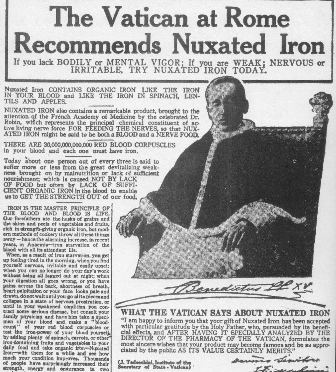
The 1921 ad campaign for Nuxated Iron sought a higher authority to promote the product’s benefits, and featured a picture of Pope Benedict XV under the headline:

“The Vatican at Rome Recommends Nuxated Iron.”

pope

Lost Advertisements: “Boys, the Great Sisler will teach you to play ball!”

14 Feb

???????????????????????????????

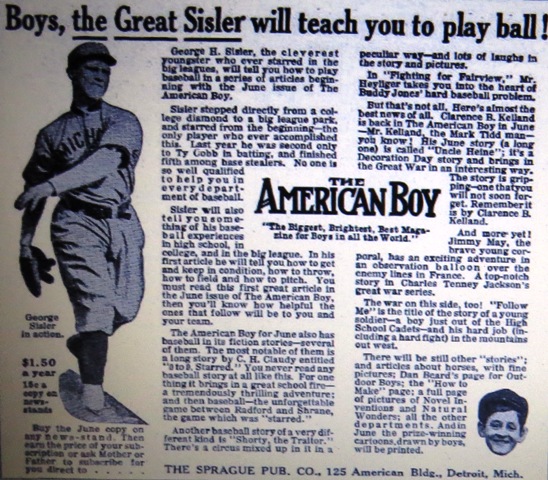
A 1918 advertisement for the June issue of The American Boy magazine featuring Hall of Famer George Sisler; at the time the magazine had a circulation of nearly 300,000 and was the most popular magazine for boys in the United States.

“George H. Sisler, the cleverest youngster who ever starred in the big leagues, will tell you how to play baseball in a series of articles beginning with the June issue of The American Boy.

“In his first article he will tell you how to get and keep in condition, how to throw, how to field and how to pitch.  You must read this first great article in the June issue of The American Boy, then you’ll know how helpful the ones that follow will be to you and your team.”

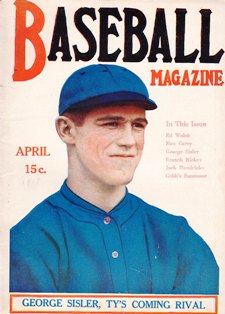
also from 1918, Sisler on the Cover of Baseball Magazine

Also from 1918, Sisler on the Cover of Baseball Magazine

Lost Advertisements—Louisville Slugger, World War II—Sports Aid Preparedness

7 Feb

???????????????????????????????

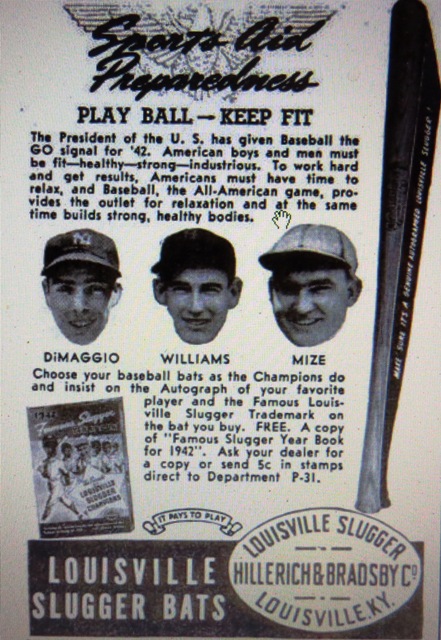
1942 Louisville Slugger Advertisement featuring Hall of Famers Joe DiMaggio, Ted Williams and Johnny Mize.

“The President of the U.S. has given baseball the GO signal for ’42.  American boys and men must be fit—healthy—strong—industrious.  To work hard and get results, Americans must have time to relax, and baseball, the All-American game, provides the outlet for relaxation and at the same time builds strong, healthy bodies.”

“Choose your bats as the champions do and insist on the autograph of your favorite player and the Famous Louisville Slugger trademark on the bat you buy.”

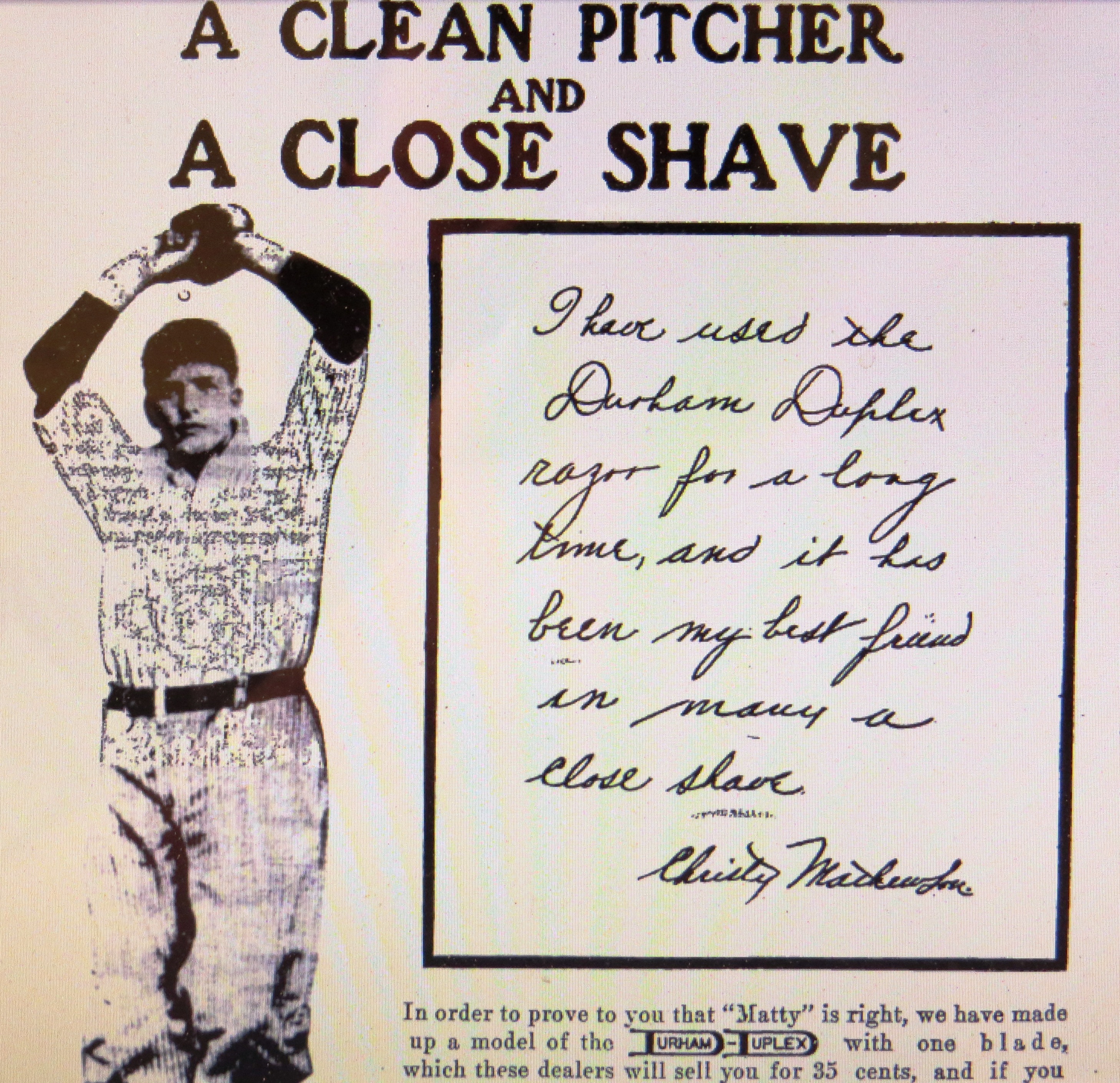
A Thousand Words–Lost Advertisements, Christy Mathewson

24 Jan

mattyad

“A Clean Pitcher and a Close Shave.”  Hall of Fame pitcher Christy Mathewson for the Durham Duplex razor.  “Big Six” says:

“I have used the Durham Duplex Razor for a long time, and it has been my best friend in many a close shave.”

Mathewson won 372 games for The New York Giants and one for the Cincinnati Reds from 1900-1916, including four 30-win seasons, and was a member of the first Hall of Fame induction class.

“Christy Mathewson brought something to baseball no one else had ever given the game. He handed the game a certain touch of class, an indefinable lift in culture, brains, and personality.’”
— Grantland Rice

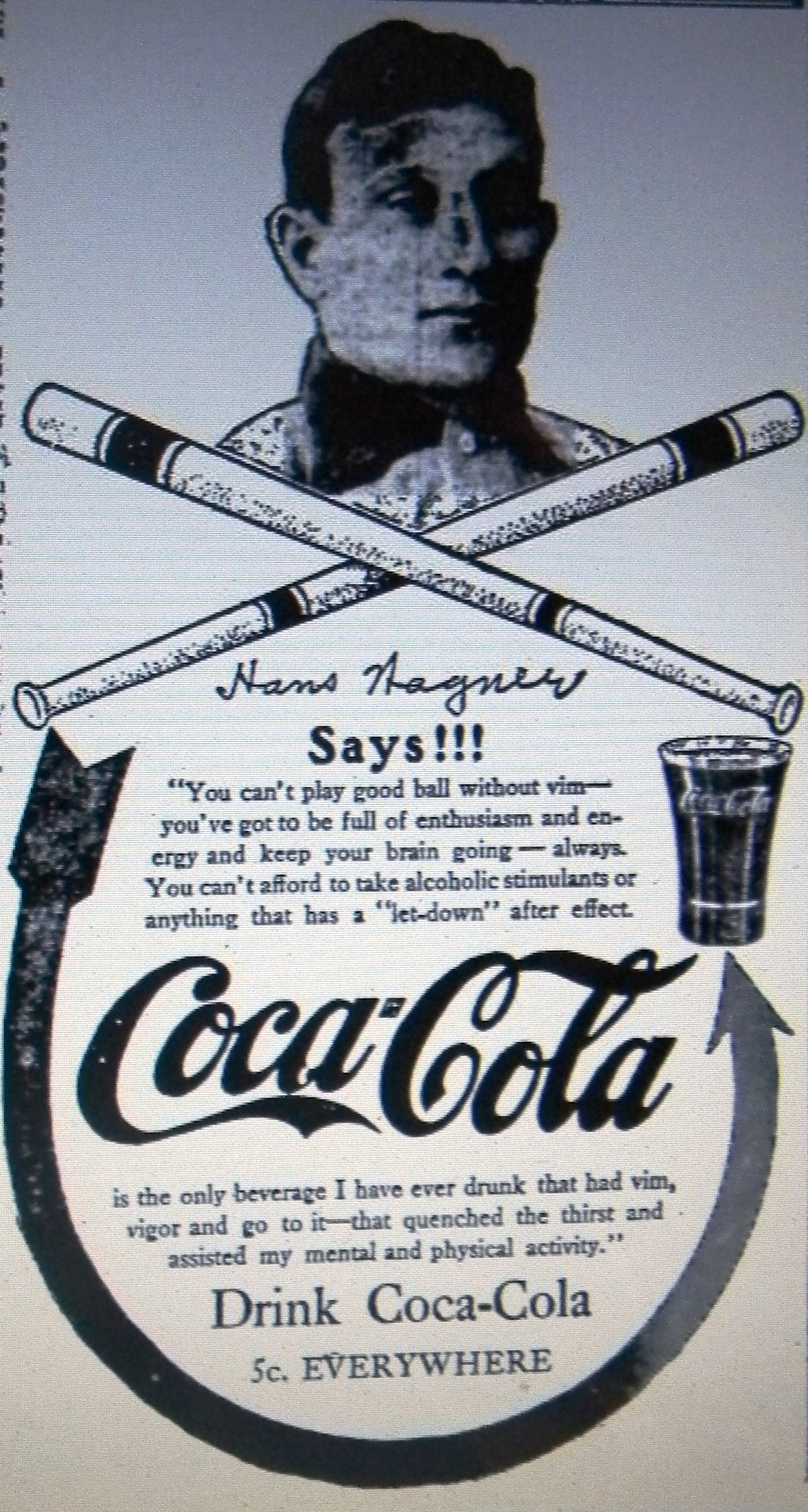
Lost Advertisements: Honus Wagner, 1908 Coke

27 Nov

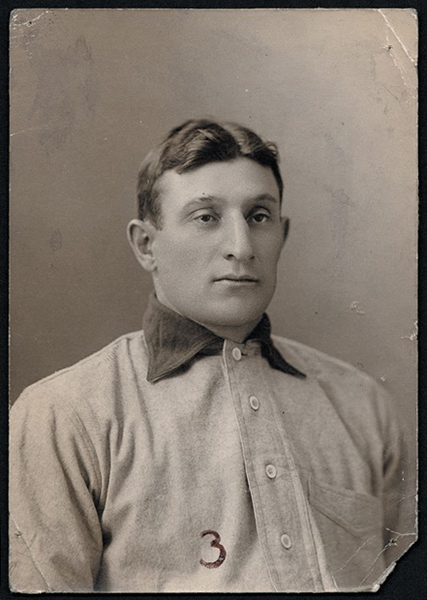
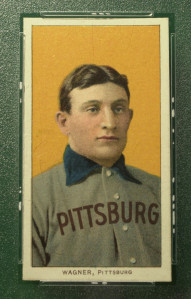
A rare 1908 Coca-Cola Honus Wagner advertisement– featuring Wagner the picture taken in 1905 by Carl Horner, the one on the famous 1909 T206 card.

Original 1905 Carl Horner photo of Honus Wagner

Hans Wagner says:

“You can’t play good ball without vim–you’ve got to be full of enthusiasm and energy and keep your brain going.”

T206 Wagner

Hall of Fame Batting Grips

22 Nov

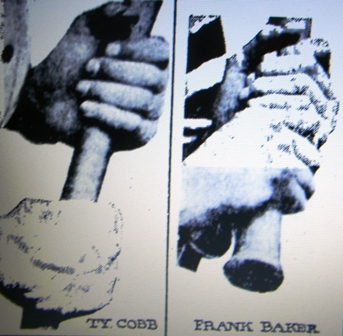
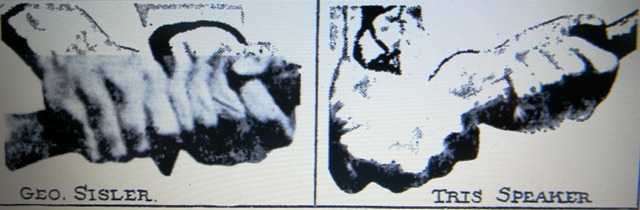
A quick one for Thanksgiving.  The batting grips of  Hall of Famers Ty Cobb, Home Run Baker, George Sisler and Tris Speaker:

: