Tag Archives: John McGraw

“The Dream of an Ardent Baseball Fan and Admirer brought to Realization”

8 Sep

The Associated Press (AP) reported the same day that Hall of Famer Joe McGinnity was released by the New York Giants that he, along with a partner had purchased an Eastern League franchise, the Newark Indians, for $50,000—more than $1.3 million in current dollars.

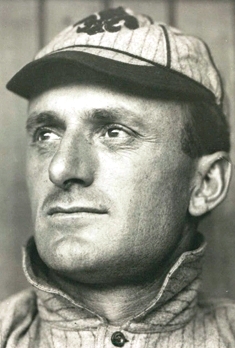
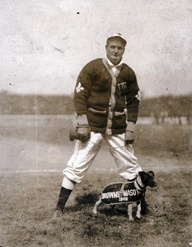
Joe McGinnity

Joe McGinnity

The following month, The AP told how McGinnity and his co-owner, Chicago businessman Henry Clay Smith, came to be partners:

“There is an interesting story connected with the deal whereby Joe McGinnity and H.C. Smith of Chicago purchased the Newark club of the Eastern League, which reveals the identity of Mr. Smith and portrays the rise of a penniless man to a millionaire, who remained true to his first love in the baseball world.

“H.C. Smith is now a leading member of a Chicago manufacturing company, was station agent for the Chicago & Alton Railroad at Auburn, a little town south of Springfield, IL., working on a modest salary, with nothing better in view, 12 years ago…it was in those days that he learned to admire McGinnity as a ballplayer.

“That was the time when McGinnity earned the sobriquet of ‘Iron Man.’ He would work six days a week, pitching for country teams all over central Illinois, and on Sunday he would go to Springfield and play with the Springfield team.”

One of McGinnity’s teammates on that semi-pro team in Springfield was Dick Kinsella, who would become a minor league magnate and confidant of John McGraw:

“(Kinsella) remembers the connection between H.C. Smith and Joe McGinnity in the olden days.

“Smith was one of Joe’s staunchest and most consistent admirers, and from the time he first knew him until the present day, his admiration has not abated.  In 1895 Smith left Auburn and went to Chicago, where he became engaged in the brokerage business, at which he prospered.  Later he became connected with his present company, gradually working his way to the top, until he was a man of wealth.

“Learning that the New York Giants were going to release McGinnity, Smith at once arranged with Joe to get hold of some team, for which Smith would furnish the money.  The result was the purchase of the Newark club, the dream of an ardent baseball fan and admirer brought to realization, and a home assured the famous Joe McGinnity, all through the regard, which a station agent in a country town felt for a ballplayer whom he considered the best he had ever known.”

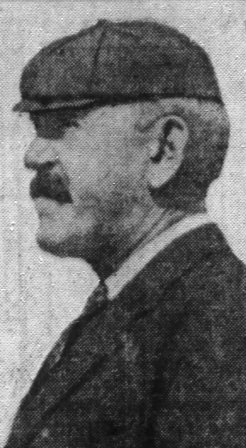
McGinnity

McGinnity

The 38-year-old McGinnity started 46 games and posted a 29-16 record with a 1.66 ERA for the 2nd place Indians during his first season as co-owner and team president.

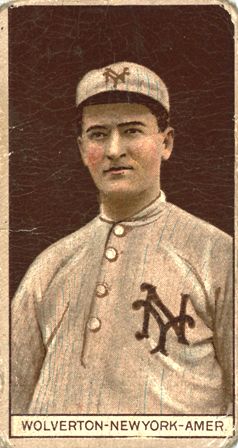
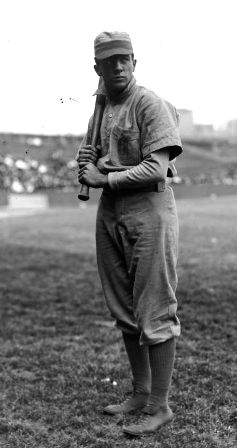
Harry Wolverton, who had been hired as manager by the previous ownership was retained by McGinnity and Smith.

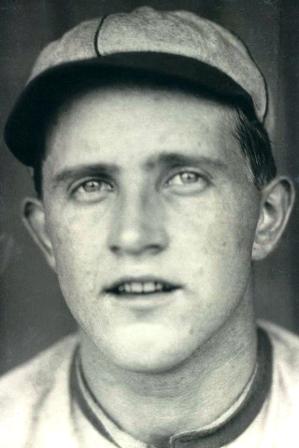
Harry Wolverton

Harry Wolverton


There are several versions of the story of how McGinnity came to replace Wolverton as manager late in the season—some say Wolverton was let go for trying to remove McGinnity from a game, others say Wolverton took another position.  The real story, based on contemporaneous accounts in The Newark Evening News, was simply that Wolverton was injured before the team’s final road trip, and McGinnity took over.  In the winter of 1909 Wolverton purchased his release and McGinnity became the team’s full-time manager.

McGinnity and Smith owned the Newark Tigers through the 1912 season.  McGinnity managed the team to a second place finish in 1910 and a seventh place finish in 1911.  The team joined the International League in 1912 and finished third.

McGinnity won 87 games and lost 64 in 151 starts during his four seasons in Newark.

He and Smith sold their shares in the club after the 1913 season.

Matty and the Federal League

3 Sep

Despite the controversy during 1913 over ghost-written articles appearing under the bylines of major league players, Christy Mathewson continued to  “write” articles that were distributed to newspapers by the “Wheeler Syndicate.”  The Wheeler Syndicate was the creation of John Neville Wheeler, a reporter for The New York Herald, and widely known to be the writer of Mathewson’s articles.

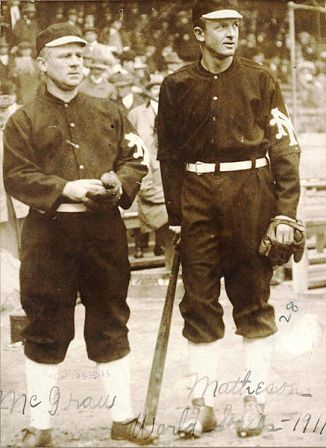
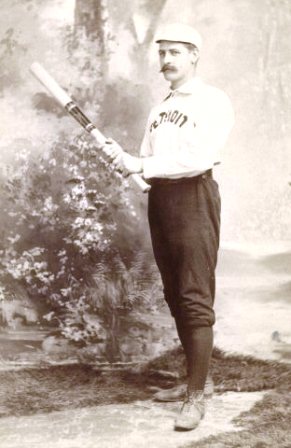
Christy Mathewson with John McGraw

Christy Mathewson with John McGraw

Shortly before the beginning of the 1914 season, Mathewson “wrote’ a story about the outlaw Federal League, and the attempt the nascent league’s president made to secure his services:

“Until I had definitely signed with the Giants again, I made no comment on the Federal League or the offer of that organization to me.  In fact, there was nothing definite in the way of an offer until I received a telegram from President (James A.) Gilmore a few hours after putting my signature to a National league contract…The proposition came out of a clear sky and was unexpected.  I have learned since that the Federals believed I was signed up all winter and that it was not until a New York newspaperman happened to mention the fact to Gilmore.”

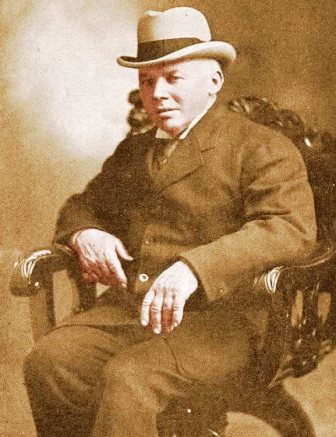
James A. Gilmore

James A. Gilmore

A New York reporter (likely Wheeler) told Mathewson how Gilmore came to find out he wasn’t yet signed:

“’We were sitting around the Waldorf late one night, fanning and discussing the Federal League, when one of the boys said to Gilmore: “’Why don’t you make Matty an offer and get some publicity out of it anyway?

“’He’s signed isn’t he?’ asked Mr. Gilmore.

“’No more than I am.  His contract expired last season, and he has not signed the new one yet.’

“’Gilmore at once left the party and sent a telegram to you.  Then he announced his action to us newspaper men, and the story appeared in the papers the next day.’”

At the time of the offer, Mathewson was asked by a reporter from The Los Angeles Examiner whether he would consider joining the Federal League, and said, “he would consider the offer.”  He now claimed, “all the time I knew I would not desert the New York club which had practically made me in baseball.”

Mathewson also took the opportunity to deny another rumor; that he was in California working on behalf of National and American League franchises to help them protect their players from the Federal League said:

“I saw several reports in the newspapers during the winter and early spring months that I was the agent of organized baseball on the Coast and that I had been busy counterbalancing the bids of the Federal League agents for the players spending the winter there.  As a matter of fact, I kept clear of both baseball on the diamond and the politics of baseball last winter because I did not care to have it on my mind.   Was having too much fun playing golf, and it is not in my province as merely a player to try to influence others to take certain steps which some day they might regret and then blame me for their mistakes”

Mathewson used his former teammate, catcher Art Wilson, as an example of how he had not given any players advice about accepting Federal League offers—Wilson had jumped from the Giants to the Chicago Feds during the winter:

“(Wilson) received a big offer to go with the Federals with the promise of a large piece of advance money.  Wilson has been pining for the chance to work regularly with a big league club for two or three years now and was weary of sitting on the bench, absorbing information in this position about how it is done in the majors.  As I said in a previous article, Wilson even asked (Manager John) McGraw to transfer him to a minor league team this season so that he could have an opportunity to work daily.  Now, if the Federal League turns out to be a big success, and if I had advised Wilson to refuse its offer and stick with the Giants, he might have said to me some day:

“’Well, I took your advice and am still sitting on the bench.  If I had gone with the Feds, I might have been a star now.’”

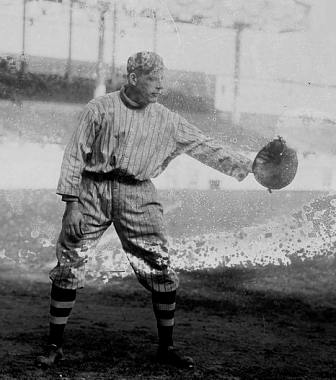
Art Wilson

Art Wilson

The move did result in additional playing time for Wilson.  From the time he joined the Giants in 1908 until he jumped to the Feds, he had appeared in just 231 games over six seasons.  In 1914 and ’15 he appeared in 233 Federal League games, hitting .291 and .305.

Mathewson, who had been paid $9,000 by the Giants in 1913, would not reveal how much he was paid by the Giants for 1914: “It is at the request of the New York club that I do not state the terms.”  He did, however, say exactly what he was offered by Gilmore to jump.  He said after not responding to the initial telegram from the Federal League president—a telegram that did not mention terms–he received a second:

“’Newspaper reports state you do not take Federal League offer seriously.  Get acquainted with the Federal League officials and be convinced we are not four flushing.  I will give you $65,000 for three years service as manager of a Federal League club–$15,000 advance money.  If satisfactory, meet me at the Waldorf Thursday, at my expense.  Wire answer Chicago.’”

Mathewson said he “was torn with regret” for refusing the offer that would have more than doubled his salary.

“It would be like leaving home if I were to pass up the Giants now.  I don’t think I would feel right in any other uniform.”

Mathewson said “the Federals have been spending money very liberally,” but placed the credit for the success the league had in inducing players to jump with Joe Tinker.  Tinker had jumped the Cincinnati Reds to join the Chicago Feds as player-manager.  Mathewson said:

“At first there was little confidence in the backers of the new organization until Joe Tinker jumped…The ball players had faith in Tinker because he is rated as one of the shrewdest in the business.  If the Federal League lives and goes through, Joe should get credit for it, because he is the man who has collected practically all the players for it.”

Joe Tinker

Joe Tinker

Both 33-years-old Mathewson (24-13 3.00 ERA) and Tinker (hit .256 in 126 games and led the Chi-Feds to a second place finish) had their last productive seasons in 1914.

Mathewson continued to “write” articles for the Wheeler Syndicate until 1916 when Wheeler sold the operation to the McClure newspapers.  Almost immediately after the sale, Wheeler formed the Bell Syndicate, and occasional articles under Mathewson’s byline were distributed by Bell through 1919.

“What Right has Hanlon to Show me How to Hit?”

23 Jun

How are hitters created?  Bozeman Bulger of The New York Evening World attempted to answer the question, and described the hitting styles of some of the game’s biggest stars in 1906:

“Batting is a natural gift and to be a success the player must be allowed to swing the willow in his own sweet way.”

Bulger said John McGraw who “For nine years…had a batting average of .330” (actually .346 from 1893 to 1901) was asked his secret:

“Don’t know, I simply used my eye and my arms and figured it out.”

When McGraw played for the Baltimore Orioles, Manager Ned Hanlon tried to show him “how to hit (and) on one occasion he corrected him sharply.”  McGraw said:

“That set me to thinking, and I went to my room and dug up a lot of old records.  In these I saw that Hanlon had never hit as good as .300, that is for a period of two or three seasons (Hanlon hit .302 in 1885) while I had been hitting over .300 right along.  Therefore, I asked myself ‘what right has Hanlon to show me how to hit?’”

Ned Hanlon

Ned Hanlon

Bulger said

“In the past few years Yale and Harvard and Princeton and other colleges have employed coaches to teach them how to hit.  The experiment was futile, and no hitters were developed that did not already possess the gift.

“Take the great batters of to-day and you will find that no two of them stand at the plate alike.  Long since astute managers have found that it is a useless waste of time to attempt a correction of habits easily acquired.  To be successful a ball player must do everything in a perfectly natural manner.  This is paramount in batting.”

Bulger then wrote about the “peculiarities” of some contemporary hitters:

Sam Mertes of the Giants invariably pulls his left foot back as he swings at the ball.  Mertes also crouches with somewhat of a forward lean and keeps his feet wide apart.

Roger Bresnahan and Mike Donlin, two of the greatest hitters in the world, are what are called vicious swingers.  Bresnahan has absolutely no fear.  He never thinks of being hit, but runs squarely into the ball, and when he plants his bat squarely against it a scorching line drive follows.  Nobody hits a ball with more force than Bresnahan.

“Donlin stands with his feet about one foot apart and usually holds the bat perfectly rigid at his waist, slanting at an angle of about 45 degrees.  He can either ‘chop’ or swing hard with the same degree of accuracy.  Donlin is said to be the greatest natural hitter in the business.  He says he has no idea how he does it.

George Stone, one of the most remarkable batters of the age, has a (boxer Jim) Jeffries  crouch at bat which has caused experienced baseball managers to say George wouldn’t last as soon as the pitchers got next to him.  Stone puts a terrific amount of weight into one of his blows, swinging with his shoulders and smashing a line with fearful force.

George Stone

George Stone

“His position has been termed awkward, inelegant, and not conducive to good hitting, but Stone to-day leads the American League with a better average than the great (Napoleon) Lajoie.

“Larry is the personification of grace and elegance at bat.  He has that careless indifferent method which attracts, is devoid of nervousness but active and alert.  Infielders will tell you that there is a force in the balls smashed by Lajoie which makes them unpleasant to handle.  Lajoie is the finished artist.

“His great rival in the National League Honus Wagner is just the opposite.  Hans grabs his stick at the end, holds it high about his shoulders, and when he swings his legs are spread from one end of the batter’s box to the other.  Wagner is awkward standing almost straight and goes after outcurves and drops with equal avidity.  Hans often reaches to the far outside of the plate for a low outcurve and plants it into right center field.

Charlie Hickman stands at the outer edge of the box and swings with his body and shoulders His fondness for the balls on the outside of the pan are known to opposing pitchers.  Lave Cross puts his two feet into the angle of the batter’s box nearest the catcher, while (Dave) Altizer usually spreads out, varying this position with a crouching posture, from which he runs up on a ball.”

“I Remember Well the First Day Latham Coached”

11 Jun

Arlie Latham “The Freshest Man on Earth” is generally credited as the first full-time third base coach.  Even before John McGraw hired him to coach third for the New York Giants in 1909, Latham’s antics as a “coacher” were already legendary—in 1907 Ted Sullivan, one of baseball’s pioneers and Latham’s manager with the St. Louis Browns, told The Washington Evening Star about Latham’s first time.

Ted Sullivan

Ted Sullivan

“’I remember well the first day Latham coached,’ said Sullivan.  ‘It was in Cincinnati in 1883.  I must confess I never had much use for a ‘fresh’ player, and soon after Latham reported I was not backward in telling him he was too d— fresh, but  I later discovered that he was a wonderful player, and that his freshness was of a most harmless and hilarious nature.  But after I gave him the reprimand I noticed he was a little timid about saying anything, but was still of good cheer.

“One day in Cincinnati Will White had the Browns on his staff with his little stingy rise ball.  My best men were on the bases and there was no one on the line.  I asked the men on the bench, ‘Is there no one here able to coach a little?’ Latham speaks up and says, ‘I will coach if you want me.’”

Never one for understatement, Sullivan said what happened next:

“Well, if Gabriel had entered a graveyard and blown his trumpet, and the tombstones had loosened their grip on the dead, it would not have created more of a sensation.  Latham walked out to the home plate and to the consternation of umpire, players and myself, delivered this talk to pitcher White:

‘My Dear Mr. White, we have been very courteous to you during the game, but as the Browns need a few runs we will have to be rude to you for awhile,’ and then stalking off to third base went through those gyrations that afterward made him famous all over America.  White was dumbstruck at the flow of words that afterward fell from Latham, and he became so rattled that the Browns batted him out of the box and won the game.”

Will White

Will White

No Browns game in Cincinnati that season matches well with Sullivan’s initial account—he continued to tell the story to reporters for more than a decade and sometimes said instead the game was “against Cincinnati—the game that best fits Sullivan’s description was a 9 to 5 Browns win over the Reds on May 16. But, contemporary accounts attribute White’s faltering, which led to the Browns come from behind victory, to a knee injury rather than any “flow of words” from Latham.

“Latham was the original funny man in the coacher’s box, and he stood in a class entirely by himself.  He has had many imitators, but they have never reached the position that Latham occupied, for he was a genius in the work and never used language that would offend the ears of the most prudish.

“Many years ago it used to be Latham’s great aim to get out on the coaching line here in Washington in the games that local pet—Win Mercer—was to do the pitching.  It will be recalled that Mercer was an extremely handsome fellow, and often it fell to his lot to pitch on Ladies’ Day.  Latham took the greatest delight in endeavoring to disconcert Mercer, the large number of ladies being mad enough to pull his hair, while at the same time they were convulsed with laughter at his sayings and antics.  He and Mercer were great chums, and when Latham was secured by the Wagners (J. Earl and George) to travel with the Washingtons (in 1899) for coaching purposes alone the two were inseparable, thus showing that though a thorough minstrel and actor, his chaff never broke into bitter personalities  or severed friendships.

“We have our Hughey Jennings and others of today, but in the history of baseball there has only been one ideal coacher from the line—Arlie Latham.”

Latham with the New York Giants

Latham with the New York Giants

When McGraw hired Latham two years later, Bozeman Bulger, sports writer for The New York Evening World said the Giants’ new third base coach had just as much fun as a minor league umpire as he did when coaching—Bulger was a writer for The Birmingham Age-Herald while Latham was working in the Southern Association:

“I had the fun one time of traveling with Latham while he was an umpire in the Southern (Association).  On one of those days the Birmingham club was playing at Little Rock, and Pat Wright was playing first for Little Rock, and Pat Millerick, of Birmingham was at the bat.  He hit a little grounder toward short, and for a moment it was fumbled.  Pat went lumbering down to first.  Seeing that he couldn’t quite make it on the run, he slid for the bag.  Pat Wright at the same time got the ball a little wide and slid for the bag himself, so as to beat the runner.  The feet of both hit the bag at about the same time.”

Latham made no call on the play.

“’Judgment!’ yelled Millerick, as he threw up his hand.

“Everybody waited for Latham to make a decision.

“’Wait a minute,’ said Arlie, ‘I want to do this thing right.’  He then rushed into the clubhouse and came out with a tape measure.  While the crowd sat in suspense Latham deliberately measured the feet of the two Pats—Millerick and Wright.  It was shown that Wright’s foot was one inch longer, and Millerick was promptly declared ‘Out!’  Nobody had the nerve to question the decision.”

Bugs Versus Rube

9 Jun

Charles Emmett Van Loan is largely forgotten today, but from 1904 until his death in 1919 at age 42, he was considered one of the best, and most prolific, baseball writers in the country.

Grantland Rice said:

“Van Loan was not only a great story-teller.  He was the first writer of his time to see the romance and the glamour of the game, mingled with its amazing fund of humor.”

In addition to his newspaper work, which included stints in New York, Los Angeles, San Francisco and Denver, Van Loan wrote some of the most popular fictional baseball stories of his era—he published four collections of baseball stories, as well as anthologies of  boxing, horse racing and golf stories.

Hugh Fullerton said of his death:

“Van is dead and sports in America have lost their greatest interpreter, and fighters, ball players and athletes of all grades have lost their best friend.”

Charles Emmett Van Loan

Charles Emmett Van Loan

As sports editor for The New York American in 1910 Van Loan weighed in on the two most interesting pitchers of the day:

“In the race for distinction as the most erratic, eccentric and daffy pitcher of the big leagues “Bugs” Raymond is leading by an elbow over our old friend, G. Edward Waddell, known to fame and a portion of Missouri as the ‘Rube.’

“The battle between G. Edward and the ‘Bug’ has been a close one.  For many moons Waddell held the belt for eccentricity.  If he had not been a wonderful baseball player, he would have been chucked to the minors years ago, but pitchers like Waddell are so rare that they must be preserved to the game.

Bugs Raymond

Bugs

“We all remember the sorrows of Oscar Hammerstein and the many tribulations forced upon him by his singers, particularly the women.  A woman with a wonderful voice can get away with anything short of murder in the first degree by blaming it upon her artistic temperament—which is an ornamental means for plain unadorned meanness, selfishness or petty spite.  If a soprano got jealous of another woman and tore up her contract, refused to sing her roles and played smash generally, she could blame it upon her artistic temperament, and all was forgiven.  What a shame the ‘Rube’ never heard about that artistic temperament thing!  It would have been such a handy alibi for him.

“Waddell stuck in the limelight by virtue of his ability to throw a ball like a streak of lightning and throw it twice or three times in the same place…In between his marvelous performances the ‘rube’ established himself as a bartender, a side-show barker, an actor, a sidewalk comedian, a rough and tumble battler and a very competent vessel for mixed liquors.  He enjoyed the proud eminence of supreme bug of the major leagues and everything was lovely until ‘Bugs’ Raymond happened along.  ‘Bugs’ went the ‘Rube’ one better.  Waddell in his balmiest days never had a special keeper engaged, by the management to take him gently but firmly by the elbow and steer him away from temptation.

Rube

Rube

“You never heard of a chorus girl with an overdose of the artistic temperament.  A chorus girl who develops tantrums is fired immediately.  You never heard of an eccentric ballplayer who was not a good one, a bad player would be sent  back to herd the cows and coax the potatoes out of the ground with a hoe.

“’Rube’ and ‘Bugs’ are good players.  Raymond almost drove (John) McGraw to despair last season, for the chubby manager realized what an excellent pitcher ‘Bugs’ really was and tried to save him for the hard finish of the season.  McGraw even went so far as to try physical persuasion upon his big, but erratic southpaw, upon the ground that a swift wallop on the nose is sometimes better than a ream of argument.

“McGraw tried to keep money out of Raymond’s hands, figuring that if he never had a cent he would be forced to keep his nose dry.  No use.  ‘Bugs’ had too many friends.  His admirers were always ready to purchase even if ‘Bugs’ had to look up in the air when it came his turn to deliver orders to the gent in the apron.

“’Turn him loose on a desert isle’ said one of the players, referring to Raymond, ‘and inside of an hour he will turn up with a flask on his hip.  How he does that I don’t know.  I guess he just charms that liquor.

“Unfortunately George Edward must retire from the competition.  Boston is his hoodoo town,  By reason of matrimonial troubles ‘Rube’ was forced to cut Boston off the pitching list, and just as the clouds cleared away, bing! On the elbow with a red hot liner, and out goes the ‘Rube’ with a broken bone.

“At the end of last season nobody believed that McGraw would make another effort to reform the thirsty Raymond.  It was thought that in spite of the fact that ‘Bugs’ won 600 percent of his games, he would get the gate, but McGraw decided to try it again on the ground that a pitcher of Raymond’s class is worth saving at any cost.  McGraw is willing to gamble.  Should he fail to straighten out the big spitballist everybody will say:  ‘I told you there wasn’t any use.’  On the other hand, should the private keeper keep ‘Bugs’ away from the disturbance water and his pitching be up to his usual standard, everyone will say that McGraw showed excellent judgment in hanging on to his souse paw through thick and thin.

“An erratic pitcher is a hard strain on a team.  The men behind him never know when he is going to blow up and they are kept on a strain whenever the eccentric one works.

“When ‘Bugs’ goes into the box in good condition, his head clear and his muscles hardened by work, he pitches good enough baseball for any man’s club.  His keeper has been steering him away from the gin mills for some time—touch wood everybody—and at last accounts McGraw was hopeful that the problem had been solved.

“They say the ever loving ‘Rube’ is consumed with jealousy because ‘Bugs’ has a keeper.  A man with a broken wing doesn’t really need a keeper.”

McGraw was unable “to straighten out the big spitballist,” Raymond’s big league career was over by June of 1911, and he was dead just more than a year after that.  Waddell’s major league days were over within weeks of Van Loan’s observations, and he was dead less than four years later.

“This whole Trouble, Disgraceful to be sure, may be Blamed directly on Jack Sheridan”

14 Mar

On April 7, 1901, The San Francisco Call reported that John F. “Jack” Sheridan had accepted an offer from President Ban Johnson to continue working as an umpire in the American League—which operated as a minor league the previous season.  The paper said “The National League also made a bid for his services.  He will receive $400 a month and expenses.”  It was said to be “the largest salary ever paid to an umpire.”

Sheridan was a former player, a second baseman and outfielder, who played for several San Francisco teams in the California League, including stints with the Haverlys from 1883-85.  He went East in 1885 and appeared in six games for the Chattanooga Lookouts in the Southern league, and that same season began working as an umpire.

sheridanpix

Jack Sheridan

Years later, Mique Fisher, long-time California and Pacific Coast League manager and executive told The (Spokane) Spokesman-Review that Sheridan was signed by the Lookouts after he “sold himself to Chattanooga through a glowing personal description of his own ability,” but Fisher said:

 “Sheridan couldn’t field a ball with a fish net or hit one with a tennis racket.  When the Chattanooga manager saw Sheridan in action, he swore out a warrant charging him with obtaining money fraudulently.  Sheridan had to work out the expense advance in a cigarette factory.”

He worked as an umpire in the Southern League (1885, ‘93), the California League (1886-89, ’91), the Players League (1890), the National League (1892, ’96-97), and the Western/American League (1894-95, 1898-1900).

The best-paid umpire in the game, who was also a San Jose undertaker during the off-season, traveled from his California home to Chicago in early April of 1901, but a detour in Missouri nearly cost him his job.

The Chicago Tribune said Sheridan left the train “and was taken into custody on account of his strange actions.”  The Fort Wayne Sentinel said among the “strange actions” Sheridan “donned his uniform and started to umpire an imaginary game in the middle of the street.”

Johnson sent fellow American League Umpire “Pongo” Joe Cantillon to Missouri to get Sheridan released and accompany him to Chicago.  Sheridan was admitted to St. Elizabeth Hospital.  The Tribune said he was suffering from “nervous prostration,’ while The Cincinnati Enquirer said the league president said Sheridan was “on a protracted drunk.”

The day after he was admitted to the hospital two friends were given permission to take Sheridan out for a walk, The Chicago Inter Ocean said:

“As they reached Milwaukee Avenue and Division Street, a (street) car whirled by, and Sheridan swung himself on the rear coach.  His friends yelled in vain to the conductor to stop the train, and lost sight of Sheridan.

“They at once notified the police department to look out for Sheridan…Detective Fitzgerald found Sheridan wandering aimlessly on Jackson Boulevard near Wabash…Sheridan did not know where he was, nor could he tell where he had been since escaping from his friends.”

As Sheridan waited to appear in court to determine whether he was insane, newspapers speculated that Johnson would replace the umpire with either former player Warren “Hick” Carpenter or former Western and National League umpire Al Manassau—Manassau was appointed to the American League staff two days before the season began.

Before he could be adjudicated insane Sheridan made a miraculous recovery just one week into the season.  The San Jose Evening News said:

“Mrs. Sheridan, the mother of Jack Sheridan, the noted baseball umpire, has received a telegram from her son, who is in Chicago, stating that he has fully recovered from his derangement and that he could now continue with his contract.”

Sheridan was back on the field before the month of April of over.  He was competent, served as the American League umpires “chief of staff,”  and umpired in four World Series (1905, 07, 08 and 10); he was also selected, along with National League umpire Bill Klem, to join the Chicago White Sox and New York Giants on their world tour after the 1913 season.

But he also demonstrated erratic behavior for the rest of his career.

Just a month after returning to the field The Sporting Life said “Sheridan became frantic and ran up and down the field like a crazy man,” after a disputed call at home plate in the bottom of the ninth of a May 31 game in Detroit between the Tigers and Baltimore Orioles, which led to Sheridan awarding the game to the Tigers by forfeit.

The Sporting Life’s Baltimore correspondent said Sheridan was “held by President Johnson as a competent man,” despite his “habits.”

He resigned on at least three occasions.  After the 1905 and 07 seasons he said he was retiring to return to San Jose and become a full-time undertaker, only to return the following spring and in June of 1910, he abruptly quit minutes before a game in Washington, but returned within several weeks.

When Sheridan again took the field The Washington Post said he would “establish a precedent, as he will be the only major league umpire wearing glasses.”

Sheridan was also arrested in October of 1907 after a barroom brawl that began over a dispute over $120.  The Associated Press said when police searched Sheridan he was carrying $2700.  He was released from jail the following day after being fined $10.

On July 30, 1914, Sheridan called Ray Morgan of the Washington Senators out on a close play at first base in Detroit.  The Washington Post said Morgan, who had slid, “came up with a handful of dirt and threw it on the ground at Sheridan’s feet…Sheridan evidently thought that Morgan intended to hit him, and did not even give the National’s second sacker time to put up his guard, but whaled away at his smaller opponent.”
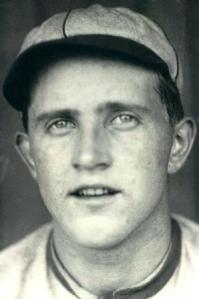
Ray Morgan

Ray Morgan

Morgan punched Sheridan, and after both dugouts emptied, Sheridan was also punched by Washington’s Eddie Ainsmith.  The disturbance spilled over to the stands with a few Washington players, including Morgan and Ainsmith, taking on Detroit fans before police restored order.

The Post said:

“This whole trouble, disgraceful to be sure, may be blamed directly on Jack Sheridan, the umpire, who has been at fault so many times this year.  In the first place Sheridan has threatened to beat up several of the Washington players.  Sheridan told (David “Mutt”) Williams and (Joe) Engel that he would punch them in the nose, the same as he had Morgan, if they did not do as he told them.”

Ban Johnson never took action against Sheridan for the incident in Detroit, but Morgan and Ainsmith drew suspensions from the league.

On August 1, 1914, The Associated Press reported that “The baseball players fraternity intends to take steps to have Umpire Jack Sheridan retired from service on grounds of incompetence.”

The incident, and dust up on August 12 with Jack Fournier of the White Sox inspired a poem from The Chicago Tribune’s Ring Lardner:

Making Night Hideous

Oft in the stilly night,

Ere slumber’s chain has bound me

Fond memory brings the sight

Of athletes crowding round me;

The scowls, the sneers

Of Jack Fourniers

And Morgans strike my vision;

I hear the barks

And rude remarks

That greet each close decision.

Thus in the stilly night,

Ere slumber’s chain has bound me,

I sometimes get tight up and fight

The chairs and tables round me.

At the end of the 1914 season, Sheridan returned to California.  On October 31 The Associated Press reported that Sheridan would not be returning as an umpire:

“Sheridan will probably be retained as a sort of supervisor of umpires, spending his time roaming around the circuit.”

Just three days later Sheridan died of heart failure in San Jose at age 62—he was said to have suffered sunstroke during an August game and never fully recovered.  Ban Johnson supported him to the end; just weeks before the umpire died the American League president told a reporter:

“I sincerely doubt if the baseball game will ever know another Jack Sheridan.  He had all of the virtues of other arbiters, and none of their mistakes.”

“Radbourn would only Accept the Money on Condition that the Money be bet on him”

28 Feb

Like most 19th-Century players, Arthur Irwin was convinced the game didn’t get any better after he played.  He talked to a reporter from The Buffalo Times in 1906 and said there still had never been a pitcher who was better than one of his former teammates.

Arthur Irwin

Arthur Irwin

Irwin said:

“In my opinion (Charles “Old Hoss”) Radbourn was the greatest pitcher the world ever saw and I doubt if his equal will appear.  He had a spit ball and worked it to perfection, only it was not known under that name.”

Irwin’s recollections of Radbourn highlight how open gambling was in 19th Century baseball:

“I remember on one occasion when we (the Providence Grays) were playing the Boston team one of our stockholders came to the hotel the night before the game and said he had wagered $6,000 on the Providence club.  Then he told Rad that he would give him $500 if he would pitch.  Radbourn would only accept the money on condition that the money be bet on him and the $500 was so placed.  The afternoon of the game found Radbourn in grand form and he made the Boston players look like a bunch of minor leaguers, not one of them scoring.”

If the story is not apocryphal, it could refer to Radbourn’s 4-0 shutout of the Beaneaters on August 12, 1884 in Boston—it was his only shutout there while he and Irwin were teammates.

"Old Hoss" Radbourn

“Old Hoss” Radbourn

Irwin also told the reporter about an exhibition game in 1884 against the Toledo Blue Stocking in the American Association:

“When we arrived the night before the game we found that they were betting $10 to $7 against us.  That same evening the mayor of a small town some few miles away drifted into the hotel and during the conversation remarked that he guessed we were not very anxious to win the game.  Naturally, we asked why he said that and he said the odds were against us, with no Providence money in sight, but he was willing to bet $2,500 on us if Radbourn pitched.  It was not Radbourn’s turn, but when the mayor supplemented his remarks by offering to give Rad $100 if he went into the box, the offer was snapped up.  Toledo had such stars as Curt Welch and (Tony) Mullane.  Welch, who was the first man up, got to first base.  After that there was nothing to it and not another man reached first during the entire game.”

Not only were no current pitchers as good as Radbourn, Irwin said no current catcher was nearly as tough as another of his teammates with the Worcester Ruby Legs in 1880:

“One of the most remarkable exhibitions of catching I ever saw was performed by Charles Bennett…As you know, we did not use gloves in those days and the pitcher was allowed to take a hop and step before throwing the ball from the box, which was only 45 feet from the batter.  On three successive days Bennett caught 14, 15 and 16-inning games without any protection.  The following day we were booked to play New York and Bennett went in to catch.  After half a dozen balls had been pitched , Charley suddenly dropped his hands and walked away from the plate.  I at once ran over to him and a glance at his hands told me all I wanted to know.  Both hands were black and blue from the base of the fingers almost to the wrist and the bruises went clear through the hands.  Of course it was impossible for him to continue, but imagine the torture he must have suffered before he was forced to quit.  I don’t believe you could find a catcher today who would go through that experience.”

Charlie Bennett

Charlie Bennett

Irwin also didn’t have much use for the belief that the game had progressed in terms of strategy since his playing days:

“It is amusing to hear (John) McGraw and other talk about the wonderful progress made in playing scientific baseball.  I am sure we put up just as clever a game in the 80s as they do today, but we did not have fancy names for our plays.  We worked the squeeze, hit and run and other tricks.  When I first came to the Philadelphia club (1886) I worked the trap play and got away with it.  There were men on first and second and the ball was hit into short left field.  I yelled for (George) Wood to let me have it, although it was his ball.  Then I let it drop through my hands and the bleachers let out an unearthly holler.  I picked up the ball; shot it to second in time to tag the man there and then the other man was easy.  We had taken our places on the bench before the crowd got wise to the play and then the cheers more than made up for their hisses.”

“Zimmer was not to be frightened.”

20 Jan

On March 28, 1907 the New York Giants took the field against the Philadelphia Athletics in the second game of a five-game exhibition series at New Orleans’ Athletic Park.

The umpire was new.  Charles Louis “Chief’ Zimmer, after a 19-year career a major league catcher had tried his hand at managing in 1906.  His Little Rock Travelers finished last in the Southern Association with a 40-98 record.

Chief Zimmer

Chief Zimmer

The Atlanta Constitution said:

“Zimmer underestimated the strength of the league, and brought men into it who did not have the goods to deliver.”

After Zimmer was dismissed by Little Rock he joined the Southern Association’s umpire staff.

The Giants/Athletics series would be among his first games as a professional umpire.

The Giants won the first game 4 to 3.  The Giants scored two runs with two outs in the bottom of the ninth off Jack Coombs for the victory.  The Philadelphia Inquirer said:

“Zimmer umpired a god game… (but) the rowdy element in the Giants broke loose frequently, and the Chief had many disputed with some of the men.”

The second game did not go as well.  The Inquirer said:

“The Giants were the first at bat, and the first two men were retired. (Art) Devlin and (Cy) Seymour then signaled safely to the outfield, each moving up a base on (Rube) Oldring’s throw…(Frank) Bowerman was then up to the bat.  (Eddie) Plank soon had two strikes and one ball on him.”

With a one and two count the Giants claimed Plank balked when he threw to third and picked Devlin off.  Zimmer said he didn’t.  Roger Bresnahan and Mike Donlin, coaching at first and third, “rushed at Zimmer from the coaching lines and a wordy war ensued.”  Manager John McGraw came out of the dugout and ‘a half hour was consumed in ‘beefing.’”

Eddie Plank

Eddie Plank

Zimmer finally ordered McGraw back to the bench and:

“Play was about to start again when a remark made by McGraw caused Zimmer to order McGraw off the grounds.  The New York manager refused to go, and a lively tilt between him and Zimmer took place, the entire New York gang surrounding the “Chief” in an effort to bulldoze him.  But Zimmer was not to be frightened.”

New Orleans police officers came out on the field as Zimmer declared the game a forfeit after a half inning.

McGraw said his team would not play in the game scheduled two days later if Zimmer was the umpire.  The Inquirer said Athletics Captain Harry Davis “informed McGraw that inasmuch as the giants had turned down Zimmer as the umpire the series might as well be called off.”  New Orleans Pelicans owner Charlie Frank also threatened to bar the Giants from Athletic Park.

On March 30 McGraw arrived at Athletic Park with only nine players consisting of “nearly all the youngsters in camp.”

With both teams on the field, Zimmer approached the Giants dugout and asked for the team’s lineup and was told the Giants would not play if he were not replaced as umpire.  Zimmer announced that the Giants had again forfeited and the Giants left the ballpark.  Frank’s New Orleans Pelicans took their place and pitcher Mark “Moxie” Manuel defeated the Athletics and Rube Waddell 4 to 2.

Waddell--lost to the New Orleans Pelicans

Rube Waddell–lost to the New Orleans Pelicans

The series was over.

Before the Giants left New Orleans that evening, McGraw confronted Thomas Shibe, business manager of the Athletics and son of team president Ben Shibe, in the lobby of the St. Charles Hotel.  The Inquirer said:

“Manager McGraw backed up the entire New York team, insulted Thomas Shibe…by calling him vile names.  McGraw alleged that Tom had informed several persons that he had heard McGraw using insulting language to Umpire Zimmer… pursuing the same cowardly tactics which have made him famous over all the base ball circuit (McGraw)did not keep within reach of Shibe.  He kept well within the group of rowdies which make up his team, and thus being forfeited from any attack from Tom, naturally was as brave as a lion.”

The paper said McGraw disappeared from the scene as soon as members of the Athletics arrived in the lobby.

Frank Leonardo Hough, baseball writer for The Inquirer, took McGraw to task for his actions, and charged the New York press with allowing McGraw and Giants’ management to intimidate them out of “writing the truth” about the team:

“The press of no other city in the Union would stand for the tactics employed by the Giants.  Such a condition of affairs would be impossible in Boston or in Philadelphia.  There are any number of thoroughly equipped baseball reporters in New York City—reporters who know the game from A to Z, who, if permitted to write the game as they see it, would be the peers of any bunch of critics the country over.  But, unfortunately they are under an awful handicap.  Let them criticize the Giants to the latter’s disadvantage and their occupation is gone.  They will be made to feel the displeasure of the august heads of the Giants by being debarred from the Polo Grounds.

“Now and then a paper will stand by its representative, but only in rare cases.  Charley Dryden, Sam Crane, Joe Vila, Eddie Hurst and numerous others were barred from the grounds.”

Hough said some reporters “stand on their manhood, and take up other fields of newspaper endeavors. But the majority of them, less favored perhaps, cannot afford to fight with the bread and butter, and consequently they are compelled to go along, glossing over the Giants’ bad breaks or bad playing as lightly as possible, while others crook the pregnant hinges of the knee until they become almost hunchbacked and ignore everything and anything that might reflect upon the Giants.  That is the reason why the New Yorkers are the best uninformed baseball public in the country.”

No disciplinary action was taken against McGraw; Giants owner John T. Brush was said to have reimbursed Charlie Frank for $1,000 in lost revenue. The Giants finished in fourth place in 1907, the Athletics third, as the Chicago Cubs ran away with the National League pennant, beating the second place Pittsburgh Pirates by 17 games.

Hough continued to write about baseball for The Inquirer despite being an investor in the Athletics (Hough and Sam “Butch” Jones of The Associated Press each held a 12 ½ percent stake in the team beginning in 1901—Jones became a full-time Athletics employee in 1906, Hough remained a sportswriter during the twelve years he held his stock).  He sold his stake to Connie Mack in 1912 and died in 1913.

Chief Zimmer’s tenure as an umpire did not improve much after his first experience in New Orleans.  He opened the season as a member of the Southern association staff, but on July 9 announced his resignation.  His final game was on July 13 in Nashville.

Lost Advertisements–“Kid” Gleason for Cat’s Paw Rubber Heels

22 Nov

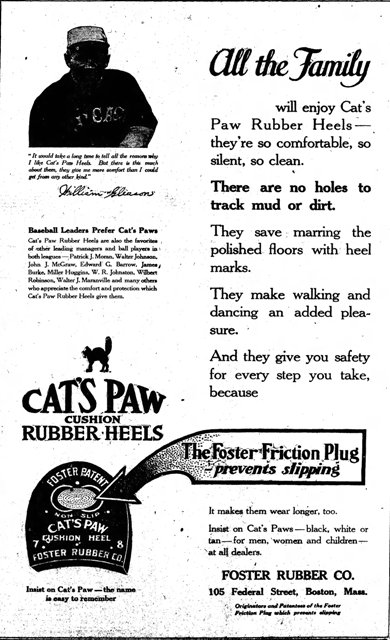
cat'spawA 1920 advertisement featuring William “Kid” Gleason, manager of the defending American League Champion Chicago White Sox–the ad appeared in July, two months before the first grand jury was convened to investigate the 1919 World Series.

“It would take a long time to tell all the reasons why I like the Cat’s Paw Heels.  But there is this much about them, they give me more comfort than I could get from any other brand.”  William Gleason

Baseball Leaders Prefer Cat’s Paws

Cat’s Paw Rubber Heels are also the favorites of other leading managers and ball players in both leagues–Patrick J. Moran, Walter Johnson, John J. McGraw, Edward G. Barrow, James Burke, Miller Huggins, W.R. Johnston, Wilbert Robinson, Walter J. Maranville and many others who appreciate the comfort and protection which Cat’s Paw Rubber Heels give them.

Burns “Put the Punishment on Phyle”

20 Nov

After holding out over a temperance clause the Chicago Orphans added to his contract, Bill Phyle finally signed in late March of 1899.  He reported to spring training in New Mexico anywhere from 10 to 30 pounds overweight (depending on the source) and struggled all season to regain the form he showed the previous season.

On April 17 he was beaten 8-0 by the Louisville Colonels in first start.

On April 25 he lost 3-2 to the St. Louis Perfectos.  The Chicago Tribune said “Phyle gave away the game by distributing bases on balls in just the spots where timely hits followed and transformed the favors into tallies that gave the victory.”

William Phelon, The Chicago Daily News baseball writer, disagreed.  He said Phyle’s “work was of sterling quality.”

Regardless, Chicago Manager Tom Burns didn’t give Phyle another opportunity to pitch for more than a month.

Phelon said it was a mistake for Burns to not use Phyle.  The Chicago Inter Ocean said after the team lost seven of nine games in May “it is passing strange that young Phyle is not given a chance.  On last year’s form Phyle is as good as, if not better than (Jack) Taylor.  The paper called Phyle’s performance in the St. Louis game “gilt-edged” and blamed the loss on “comrades that gave the victory to the enemy.”

Finally, on May 28 Phyle pitched again.   He lost 4 to 3 to the Washington Senators; he gave up three runs on five straight hits with two outs in the ninth.

He lost again on June 1, 7-1 to the Philadelphia Phillies.  Phelon’s opinion of the pitcher was unchanged, and said the losses were simply bad luck:

“Phyle has now lost four straight games.  It is Phyle’s luck to be stuck in whenever the other pitchers have won about three straight, and the team is just about unavoidably due to lose.”

On June 5 Phyle did his best pitching of the season–a victory he is not credited with in the record books.

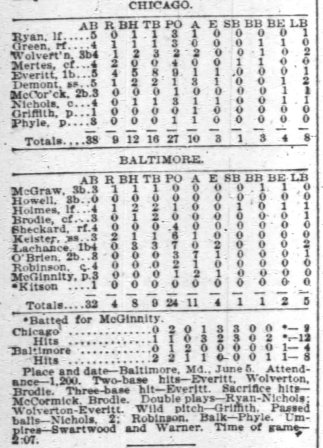
With the Orphans trailing the Baltimore Orioles 3 to 2 in the third inning, pitcher Clark Griffith was ejected for arguing a called ball.  The Chicago Tribune said:

“It was a queer game.  Phyle pitched after Griffith had been benched…holding the Orioles helpless.”

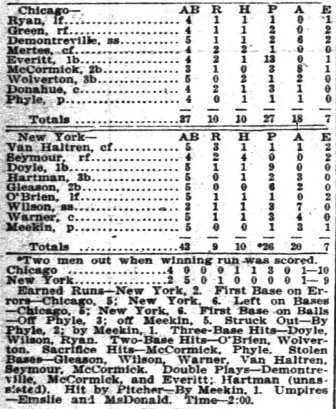
Chicago won 9 to 4.  And while the Chicago newspapers credited the victory to Phyle, the record books do not.

Box score for June 5 game.  Phyle relieved Clark Griffith in the 3rd inning.

Box score for June 5 game. Phyle relieved Clark Griffith in the 3rd inning.

Phyle became ill later the same week, (some sources said it was recurring malaria), a week later he fell off a bicycle and missed two more weeks.  When he returned to the team on June 22, the Boston Beaneaters beat him 5 to 1.

He was credited with his first “official” win on July 1—a game The Inter Ocean called “a comedy of errors,” and a “depressing exhibition.”   He beat the New York Giants 10 to 9, allowing 10 hits and giving up seven runs in the first two innings.  Each team committed seven errors.

Box score of Bill Phyle's only "official" victory of 1899.

Box score of Bill Phyle’s only “official” victory of 1899.

Chicago went into a slump that would last for the rest of the season; after Phyle’s July 1 win the team was 38-24, in third place, and went 37-49 the rest of the way finishing eighth.

Phyle lost again on July 9 and July 24, and rumors began to circulate that he would be released or traded back to Charlie Comiskey’s St. Paul Saints.

On August 6 Phyle lost 10 to 9 to the Cleveland Spiders.  One week later while the team was on the road, The Inter Ocean reported that he “was sent home by manager Burns.”

The Tribune called Phyle “the scapegoat” and said he and three unnamed teammates  “celebrated after beating a horse race at Washington and Manager Burns, to call a halt, put the punishment on Phyle.

Phelon wrote in The Daily News:

“When the club started for Philadelphia he was told to go home ‘You are through young man, go back to Chicago,’ said Burns, and Phyle went back.  He went back in a rage too, and says he will tell (team president) Jim Hart a lot of things. He says that he has been held up to public derision as a drunkard, all season, and that Burns plays favorites, allowing his friends to jag up as much as they wish and turning all the trouble on others.”

Phelon remained supportive of the pitcher in The Daily News, but in The Sporting Life he reported that Phyle, a former boxer, had deserted the team in early August to go to “St. Louis to see a prize fight, and was not on hand when sorely needed.”

While the relationship between Hart and Burns was strained, and Burns would be replaced at season’s end, Phyle’s complaints went nowhere with the team president and he was suspended without pay.

Ten days after Phyle was suspended Phelon reported that the Baltimore Orioles had offered to trade for or buy Phyle,” (John) McGraw has taken quite a fancy to the young pitcher.”  Hart refused to make a deal.

Phyle never pitched for Chicago again, he is credited with a 1-8 record and 4.20 ERA.

The last Bill Phyle chapter—tomorrow.