Tag Archives: National League

“What Earnest, Active and Capable Team Workers those Cuban Giants are”

19 Feb

The Middle States League lasted just one season, 1889.  Not part of the National Agreement, and intended as an eight-team league, the circuit included, at various times, thirteen teams representing cities in Pennsylvania, Delaware, Connecticut, and New Jersey.

The league became integrated with the inclusion of the Cuban Giants of Trenton, who had become the first salaried African-American team four years earlier, and later their biggest rivals, the New York Gorhams (the Gorhams joined the league late, and were expelled in August—they played their home games in Easton, Pennsylvania and Hoboken, New Jersey).

Despite their membership in the league, and the Gorhams’ calling Easton their part-time “home,” both black teams were refused hotel accommodations in Easton during the season.

The relationship between the Cuban Giants and the rest of the league was contentious.  In May, The Philadelphia Inquirer said the league’s board of directors charged Cuban Giants’ Manager Stanislaus Kostka (variously nicknamed Cos, S.K., Siki) Govern with violating the league’s $75 a month salary cap by using “players who have not signed regular contracts,” and not using league’s official ball in games.  The Inquirer said:

“It appears that the colored club has been running things to suit its own sweet will.”

The paper said after a two-hour meeting Govern promised “to do better in the future.”
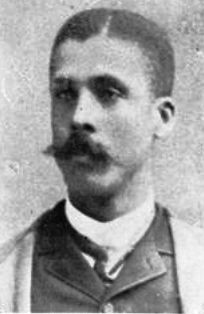
govern

S. K. Govern

The following month the league denied rumors in The Inquirer that “the Cuban Giants were to be forced out on account of their color.”  The paper said the August league meeting “was long and mainly occupied by debates between Harrisburg and the Cuban Giants.”

Most of the teams were financially troubled from the outset—at one point  a York, Pennsylvania hotel proprietor confiscated the uniforms of the Shenandoah club after the team failed to pay their bill—Shenandoah lasted just 15 games, joining the league in mid July and disbanding August 6.
1889middlestates

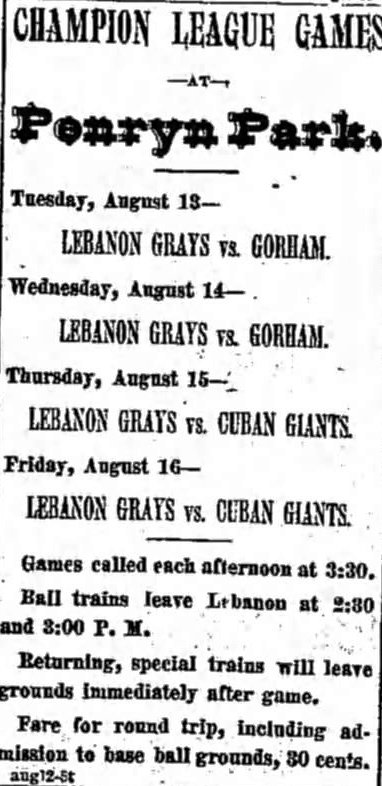
Advertisement for August, 1889 games between the Lebanon Grays and the Cuban Giants, and Gorhams. The Gorhams were expelled from the league several days after these games were played.

The Harrisburg Ponies were the only team in the league that made money—the Gorhams, according to The Philadelphia Inquirer, had “few paying crowds” in Easton.  On August 21 The Inquirer said their “receipts did not amount to more than $20.”  The following day they were unable to pay the Hazelton team the guarantee for a scheduled game and were expelled from the league.  The Gorhams took to the road and barnstormed for the remainder of the year.

The Cuban Giants didn’t fare much better financially.  Owner John Bright, according to The Harrisburg Telegraph, needed to schedule his team for more than 60 exhibition games in addition to the 74 league games in order to turn a profit.

No one who followed the league, including Henry Chadwick, who watched the Cubans Giants play in August, had any doubt which team was the best in the Middle States League.  In The Brooklyn Eagle, Chadwick, “The Father of Baseball,” wrote:

“What earnest, active and capable team workers those Cuban Giants are.  In fact, I would rather see them play in a game where they had work to do to win than see half the (National) League or American Association teams play.  They are well up in the points and they play with a spirit and vigor, and with a good nature withal which makes their field work very attractive.  They have very intelligent and gentlemanly young official (manager) in Mr. McGovern [sic].  That catcher of theirs—(Arthur) Thomas—is a character, and they have an excellent strategic pitcher in (William) Seldon, and as for (Frank) Grant, he is at least a second (Fred) Dunlap on the field.  In fact, did not see a weak spot in the team in this game.”

Frank Grant
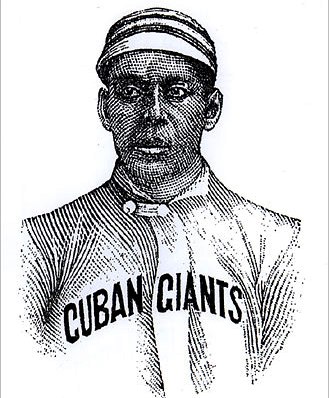
Frank Grant

Despite playing more than 60 extra games over the course of the season, the Cuban Giants managed to stay neck-and-neck with the Harrisburg Ponies all year.   In mid-September, with just four games remaining on the schedule, and with the league’s future in serious doubt, the Cuban Giants, just .001 behind the Ponies chose to cancel their last four games.  The Chambersburg Repository said the cancellations allowed “the colored club an opportunity to make a trip through New York State.”

The championship was awarded to the Ponies (who added two more victories after the Cuban Giants departed for New York).

The final official standings:

Harrisburg Ponies 64-19 .771

Cuban Giants 55-17 .764

Cuban Giants owner John Bright protested the final standings and took his case to the press.  In a long letter, published in The New York Sun, and other papers, Bright said his team “justly and honestly won” the pennant.  He claimed that Harrisburg was incorrectly awarded three victories for forfeited games–one against the Gorhams, when neither team showed up for the game, and two games against Wilmington after that team had disbanded.

Bright also charged that Harrisburg also lost a September game to Lebanon, and after the fact “Harrisburg turns it in as an exhibition game.”  He said his team was stripped of two victories in games where the official league ball was not used, while there were two games  they lost while playing with the wrong ball “but much to our amazement, only one game was not counted.”  Additionally, Bright claimed the league failed to award the Cuban Giants two games won against the Hazelton team.

Bright said the league standings should have been:

Cuban Giants 57-16 .780

Harrisburg Ponies 61-20 .753

Bright concluded:

“So any fair-minded person can see at a glance that the Cuban Giants are the real champions.”

The Philadelphia Inquirer initially seemed to side with the Cuban Giants.  They printed Bright’s charges and quoted an unnamed “prominent manager of the Middle States League” who said:

“The Giants are right in a number of their claims.  I never could see upon what grounds the Harrisburg club could claim a number of the games complained of, more than by the bulldogging tactics that they always employed throughout the season.”

The Philadelphia Press was squarely in the Harrisburg camp.  The paper referred to Bright’s “several foolish claims for the pennant,” and provided a forum for league president William Voltz-who was also the paper’s baseball editor–to respond.  Voltz called Bright’s charges “unwarranted and untrue.”  The league president/baseball editor also claimed the Cuban Giants still owed the league money and that the proper time for bright to protest the championship would be at the league meeting in December.

Newspaper reports of the December meeting make no mention of any representative of the Cuban Giants appealing the championship.

Harrisburg remains the official champion of the 1889 Middle States League

The league was reconstituted as the Eastern Interstate League for 1890.  The nucleus of the Cuban Giants jumped from Bright’s club and joined the league as the York Colored Monarchs—Frank Grant and Clarence Williams joined the previously all white Harrisburg Ponies.  The six-team league struggled, quickly became a four-team league, and folded all together in July.
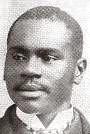
Clarence Williams

Clarence Williams

York was leading the Eastern Interstate League when it disbanded.
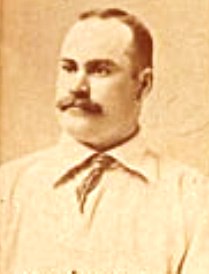
Alternate Uniforms, Circa 1879

14 Feb

On the eve of the 1879 season The Chicago Times endorsed an innovation about to be introduced by the Chicago White Stockings:

“The management of the Chicago Club has very wisely decided that the skinny white uniform with tips of blue, in which it has dressed its men from time immemorial, is not the best of its kind; that good taste dictates higher colors for the field, something that will bring out, instead of dwarfing the muscular development of its wearer.  The result of the consultations over the matter has been the adoption of something which has merit of novelty about it, at least, and, at the first blush, there seems to be no reason why it should not produce a pretty effect on the field.”

The Times noted that three years earlier, the White Stockings had worn individually colored caps in order to make it either for fans to identify the players.  The move “for some unknown reason was discarded” at the end of the 1876 season.

“The present change is in the same line, except that it goes further and applies the principle to the entire uniform.  The customary white flannel will be used for the body of the dress.  In this respect they will all be alike; but each man will be furnished with an individual color to finish it with, including cap, neck-tie, belt and a band some three inches wide around the thickest part of the calf.  The colors have been selected, and Spalding Bros. are now at work upon the uniforms.”

The 1879 Chicago roster by color:

Silver Flint:  Blue

Terry Larkin: Brown

“Cap” Anson: Grey

Joe Quest: Black and yellow

John Peters: Green

Frank Hankinson: Scarlet

Abner Dalrymple: White

George “Orator” Shafer: Red and black

George Gore: Blue and white

Bill Harbridge: Red and white

Frank Hankinson--wore scarlet in 1879

Frank Hankinson–wore scarlet in 1879

The move was taunted in at least one National League city–The Syracuse Courier derisively referred to the team as the “Chicago Rainbows.”

The Times said “Cap” Anson was in favor of the new uniforms and “says there’s luck in it.”

The paper agreed with Anson’s assessment:

“The individual caps won in 1876.  Since then they have been discarded, and Chicago hasn’t been able to win anything.”

Anson’s “luck” didn’t hold in 1879.  The White Stockings were in first place from Opening Day until August 1, then Anson became ill in July and eventually left the team which went 5-12  the rest of the season under Silver Flint, and finished in fourth place.

The uniforms disappeared and Anson returned for the 1880 season. When the team took the field for the opener The Chicago Tribune said:

“The Chicagos appeared for the first time in their regular League uniform for this year, with all-white stockings that are a marked improvement over the many-colored rings of last year.”

The 1880 White Stockings

The 1880 White Stockings “with all-white stockings”

“Mr. Borchers has Merely made Excuses.”

12 Feb

After two arrests and a season-long suspension in 1889, and another arrest and stints with four teams in 1890, George Borchers seemed to have settled down.

The San Francisco Chronicle said in January of 1891 that he was “taking excellent care of himself and will be ready to play winning ball.”

George Borchers

George Borchers

From 1891 through 1893 he pitched in the Pacific Northwest and California League’s and seems to have stayed sober and out of jail.

He was essentially a .500 pitcher, with less than average control; when he was with the Los Angeles Angels in 1893 he walked 210 batters, hit 24 and had 17 wild pitches.

The Los Angeles Herald regularly noted Borchers’ wildness.  In his first appearance for the Angels in April of ’93 he walked six and hit two batters in the first inning, yielding four runs, and was removed in the second after another walk and two more hit batsmen.  After a 21-12 May victory against Stockton the paper said:  “Borchers did himself proud, allowing 13 men to walk to first base, 12 for base on balls and one for being hit.  How the Angels managed to win with him in the box is a marvel.”

From 1894 through the 1896 season he was a baseball nomad, playing for nine teams in six leagues, including a single, disastrous final major league appearance with the Louisville Colonels in May of 1895—he started a game against the Brooklyn Grooms, lasting just two-thirds of an inning, giving up a hit, three walks, a wild pitch and two runs—earning the loss as the Colonels went down 11 to 0.

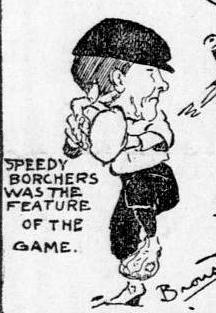
Caricature of Borchers from The San Francisco Call

Caricature of Borchers from The San Francisco Call

Borchers was out of organized baseball in 1897 and it’s unclear what he was doing and where he was doing it, but he resurfaced the in 1898 as a minor league team owner.  The Pacific Northwest League, which folded after the 1896 season, was resurrected as a four-team circuit organized by Dan Dugdale and William Works.  Dugdale took the Seattle franchise; Works took Tacoma, a Spokane “newspaperman” named Hutchinson took that town’s team, and George Borchers was awarded the Portland club.

The league struggled, and Borchers was stripped of his franchise in early July.  The Tacoma Daily News explained the problem:

“George Borchers is beginning to look upon matters of baseball in a new light.  The (league) is holding an inquest on his official corpse this afternoon, sitting in Portland.  The chief is not to figure any longer as manager of the Portland baseball team…The trouble has all arisen over Borchers’ treatment of his men.  He has not distributed cash since the opening of the season and as he is still short on the amount due the league will be displaced…Mr. Borchers has merely made excuses.”

Borchers returned to California and appeared in games for three Pacific Coast League teams during the remainder of the season: Santa Cruz, Stockton and Watsonville.

Borchers would continue, on and off, as a player until 1903—including a season as player/manager with the California League’s San Jose Brewers in 1899.  But in 1901 he made headlines when he became embroiled in a scandal.


Borchers was pitching for the Oakland Commuters in the California League, and failed to show up for a game he was scheduled to pitch on May 1.  The San Francisco Call said:

“George Borchers, the star pitcher of the Oakland baseball nine, has disappeared…None of the missing player’s close friends in baseball circles can explain why he decamped so suddenly nor where the absent ballplayer has gone.”

“Some of the Oakland players are injecting a bit of romance into the story, the names of some of the fair enthusiasts of Golden Gate being introduced as the possible cause for the handsome pitcher’s sudden leave taking.  But none seem to be able to tell with certainty the story that he has fallen victim to the charms of some fair one.”

The plot thickened the following day when Oakland owner J. Cal Ewing hired a private detective to track the missing pitcher, and an angry father went public.

J. Cal Ewing

J. Cal Ewing

While Ewing’s investigator hunted, an Oakland real estate developer named Don Miller told The San Jose Evening News his daughter Grace had disappeared:

“(Miller) is convinced that she has gone with the ballplayer.  Neither Borchers, who has a wife in Portland, not Miss Miller has been seen since last Monday, when they boarded an eastward-bound train.”

Miller told the paper:

“I am endeavoring to locate them now, and if I ever find the man who has broken up my home he’ll need nothing but a coffin.  I’ll find them yet.”

After a week, he turned up in Ogden, Utah, pitching for that town’s club in the Inter-Mountain League.  The Santa Cruz Evening Sentinel said:

“He says he left simply to better his position and justifies his action on the ground that the California League takes players who skip out on other leagues and the local players are in competition with them all the time.  He thinks he had the right to skip out likewise and better his position.  He claims the reason he left secretly was because he feared Ewing would cause him trouble.

“He was worried over the account that he had left with Miss Grace Miller, but denied it.”

The paper noted that while Borchers wife remained in Portland, he had received two train tickets from the Ogden club.

Eventually, the truth came out.  Borchers returned to California to secure a divorce from his wife and married the former Miss Miller.  He spent 1902 playing and managing for a team in Salt Lake City, and managing a bowling alley there.

The second Mrs. Borchers became ill in November of 1902 and died two weeks later from peritonitis.

His last scandal behind him, Borchers married again and operated a large dairy in Sacramento until his death in 1938.


Em Gross

5 Feb

Emil Michael “Em” Gross was one of the best hitting (.295) and worst fielding (233 errors) catchers of the 19th Century during five major league seasons between 1879 and 1884.  The Chicago Tribune’s Hugh Fullerton, no stranger to hyperbole, called Gross “perhaps the heaviest hitting catcher that ever donned a glove.”

Em Gross

Em Gross

Gross, a Chicago native, didn’t need baseball in order to earn a living.  In 1884, when he played with his hometown team, the Browns,  in the Union Association (the team relocated to Pittsburgh in August), The Chicago Daily News said he “owns $50,000 worth of real estate in Chicago.”

Gross’ professional career came to an end after the 1884 season, but he played one more year for a Chicago semi-pro team called the Heavyweights.  The Tribune said of the team:

“While they do not count a man who weighs less than 200 pounds, they have some great baseball talent.”

Fullerton is responsible for the story that was most often told about Gross’ career in the years before his death in 1921.

Like many of Fullerton’s stories, the first telling appeared more than a decade after the fact and contained vague details,  little corroboration and was likely apocryphal.

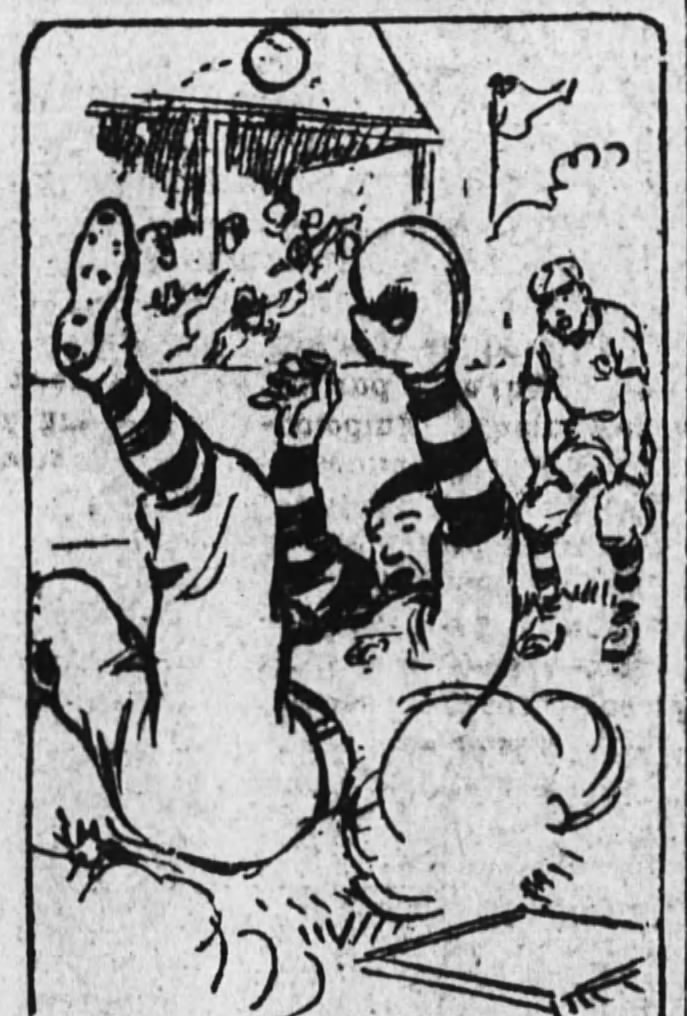
This one made its first appearance in a Fullerton column in 1907.  He said Gross’ biggest weakness “was in catching foul flies.  He tried for everything in sight, ran circles around the ball and sometimes speared it, but he never felt at ease when one of those tall, twisting fouls went up.”

The columnist claimed the story was “vouched for by two old ballplayers who watched it come off:”

“(Gross) was catching in Providence one day when a Philadelphia batter poked up a fly that looked 50 feet high.  There was a wind blowing and the ball began to twist around in circles, with Em doing a merry-go-rounder under it.  Finally, seeing that it was escaping he made a desperate effort to turn quickly and fell flat on his back.  To his amazement he discovered that, for perhaps the first time in his career, he was under the ball which was descending like a shot straight toward his nose.

“Instinctively he threw up his feet and hands to protect his face.  The ball struck the sole of his shoe, bounded up into the air, and, as it fell again, Em reached out and caught it.

“And the next morning the Providence papers had the nerve to say he did it on purpose.”

A cartoon which appeared with the 1914 retelling of the Gross story

A cartoon which appeared with the 1914 retelling of the Gross story

Fullerton continued to retell the story, with minor alterations, after he left The Tribune to join The Chicago Record-Herald, then The Chicago Examiner and The Tribune repeated the story several times over the years, with no byline, as well.

Gross was an important man in Chicago during the years Fullerton’s story circulated.  He owned several properties in the city, including two hotels, and his nephew, Fred A. Busse, was mayor of Chicago from 1907-1911.

Mayor Fred Busse

Mayor Fred Busse

Gross was known to help former baseball players in need; The Examiner called him “a refuge in time of trouble for all the old timers.”  When it was reported in 1907 that Joe Quest, a former National League, and American Association infielder, was “near death” from  tuberculosis in Georgia, he was living on, and managing a plantation owned by Gross—Quest survived and lived until 1924.

Joe Quest

Joe Quest

Gross told a story to Fullerton, then at The Examiner, about his attempt to help another player, William Henry “Bollicky Bill” Taylor during the 1890s.

“Taylor made an entre into Chicago without cash or credit and immediately swarmed upon Em and renewed old friendships. That was in November and along about midnight Em made the discovery that his friend had no money nor any place to sleep.  So he wrote a note to the manager of his hotels saying, ‘Take care of my friend Mr. Taylor, and give him what he needs.’  Em didn’t see ‘Bollicky’ again, but early in March his manager called him in the phone and inquired; ‘Say, how long do you want me to take care of your friend?’

“’What friend ‘inquired Em, who had forgotten all about it.

“Why the fellow you sent here with a note.’

“’Bollicky’ had wintered there and kept out of the path of his host, and when Em got through laughing, he ‘phoned back:

“Keep him as long as he has the nerve to stay.”

Gross never confirmed whether or not he made the catch Fullerton claimed he did.  He died in Eagle River, Wisconsin in 1921.

Lost Advertisements–Old Underoof–White Sox, Cubs and “The Battle of the Century”

27 Jan

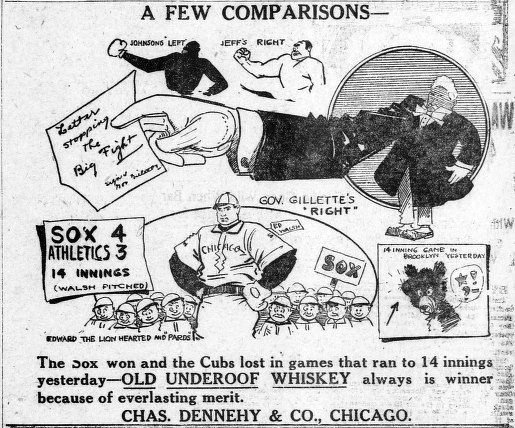
oldunderroof1910jj


An advertisement for Old Underoof Whiskey from June 16, 1910–“A Few Comparisons.”  Most of the Old Underoof ads were exclusively about baseball, but this one also mentions the biggest sports story of that week.  California Governor James Norris Gillett  (the ad misspelled it “Gillette”) had just issued an order to stop the Jack Johnson vs Jim Jeffries “Battle of the Century,” scheduled for July 4 in San Francisco.  The San Francisco Chronicle said that despite $300,000 worth of tickets having been sold, and the construction of a new stadium for the bout being nearly completed, Gillett bowed to “Pleas to the governor to stop the fight.”  The San Francisco Church Federation was the most vocal opponent to the fight.

On the same day, the Chicago White Sox and Cubs both played 14 innings.

The seventh place White Sox, behind a complete game from “Big Ed” Walsh defeated the Philadelphia Athletics 4 to 3; he also drove in the winning run with one out in the fourteenth.

The first place Cubs lost 3 to 2.  Eros Bolivar “Cy” Barger pitched a complete game for the Brooklyn Superbas, and like Walsh, drove in the winning run with one out in the fourteenth.

The fight was moved to Reno, Nevada and Johnson won by TKO in the 15th round.

The White Sox finished in sixth place with a 68-85 record.  Walsh was 18-20 and led the American League with a 1.27 ERA

The Cubs remained in first place and won the National League pennant by 13 games.  The Athletics beat them four games to one in the World Series.


Samuel H. Apperious

6 Jan

Samuel H. “Sam” Apperious (incorrectly identified as William Apperious  on Baseball Reference and other sources) led two separate boycotts that contributed to keeping William Clarence Matthews out of organized baseball—four decades before Jackie Robinson broke the color barrier.

Apperious was born in Montgomery, Alabama; fellow Alabamian Matthews was born in Selma (some contemporaneous accounts wrongly claimed both were born in Selma).

The wealthy Apperious attended Georgetown University.  Matthews, after studying, and playing baseball and football, at Tuskegee Institute and Phillips Andover, enrolled at Harvard University.

Apperious was part of Georgetown teams (1900-1904) that sent several players to the big leagues, including Leon “Doc” Martell, James “Hub” Hart, Charles Moran, and Art Devlin.  Apperious, who was first a catcher and later a center fielder, was considered one of the team’s best prospects.

In 1903, the Boston press reported that Boston Americans manager Jimmy Collins, in need of a second catcher, “tried to get Sam Apperious, of Georgetown, but he declined to enter the professional ranks.”  The following year The Sporting Life said among college players, Apperious was “the hardest-hitting outfielder of them all.”

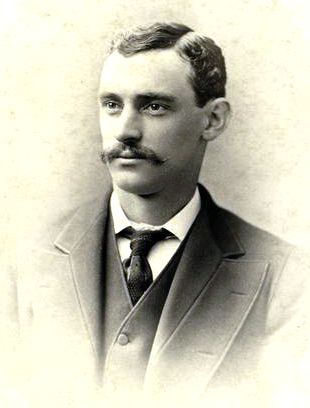
Sam Apperious

Sam Apperious

Matthews played shortstop at Harvard and received equally as glowing reports.  Samuel McClure’s “Outing” magazine, a monthly sports publication, said Matthews was the best shortstop in college baseball each year from 1903 through 1905.  The Boston Post said he was “the best infielder” in Harvard’s history—this included teammate Eddie Grant who went on to a 10-year big league career.

Apperious and Matthews met for the first time on April 18, 1903.  When the Harvard team arrived in Washington D.C. for a game, Apperious, the Georgetown captain, refused to play.  The Associated Press said in addition to Apperious’ boycott “There were some wild demonstrations of displeasure at the Negros’ appearance in the field but Matthews won the crowd by his brilliant plays.”

The Colored American said:

“Mr. Apperious is no doubt feeling pretty mean, that is, if he is capable of such a sensation.  His want of hospitality, his conspicuous rudeness and their absolute futility must be subjects of unpleasant recollections to him.”

The paper noted that Apperious’ name “indicates his un-American traits,” and said after Matthews demonstrated his talent, several of the other Georgetown players “grew ashamed of their conduct and acclaimed Matthews as heartily as they had sneered at him, but this foreign importation was not sure enough of his own status to imperil it in a contest of brawn and skill with a colored gentleman.”

Harvard won the game 8 to 0.  Apperious would also choose to sit out two additional games against Harvard (one later that season and one in 1904) which led to a short rift between the schools, and a suspension of scheduled games.

In 1905, Apperious was appointed Graduate Coach of the Georgetown team.  He summed up his coaching philosophy to The Washington Times:

“In short the choice of men must be wholly on the man’s worth for the position for which he is trying.”

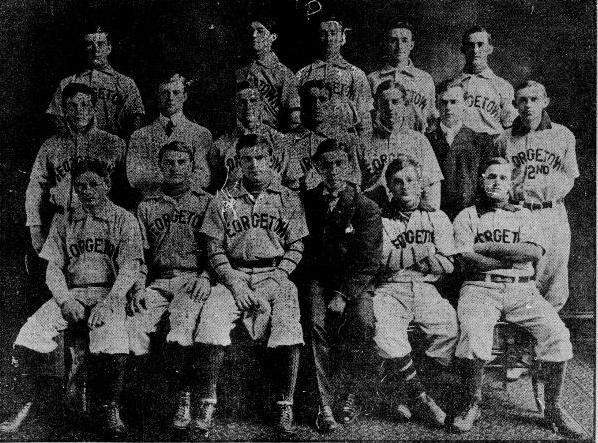
1905 Georgetown baseball team. Apperious is second from left in the center row

1905 Georgetown baseball team. Apperious is second from left in the center row

Later that year Apperious failed to apply his philosophy to Matthews.

In the summer of 1905 Apperious went to Vermont, as he had the previous summer, to play in the state’s “outlaw” Northern League—the league was notorious for having multiple college players performing under assumed names to retain their eligibility.  Apperious played both seasons for the Montpelier-Barre club (known in the local press as the Inter-Cities or Hyphens).

During his first summer in Vermont,  Apperious had raised some eyebrows on July 21, 1904, when he did not participate in an exhibition game between the Inter-Cities and the barnstorming Cuban X Giants.  The Bennington Evening Banner said the “Southerner refused to play against the colored team.”

Matthews joined the Burlington club at the end of June 1905 to immediate controversy.  The Montpelier Argus said a pitcher named Smith “from the south” had left the team as a result, and Apperious made it known he would not play on the same field as Matthews.  When the Burlington club arrived in Barre for a July game with the Inter-Cities, Apperious made good on his threat and watched the game from the bleachers.

Apperious was condemned in the Vermont press:

The Newport Express and Standard:

“(Matthews) may be his equal in every respect: not only in intelligence, but in performing the part of a gentleman as well.  Certainly so in this instance, so far as Mr. Apperious  is concerned, the much aggrieved white individual in this case…Mr. Apperious had better retire to those places where peonage is still in practice—where he can still vent his spite on the Negro as his little, narrow-minded, measly soul desires.”

The St. Albans Messenger:

“If Apperious wants to show his loyalty to and affection for his native Southland, which is a commendable thing in any man, he could do it better by helping his generation t forget some rank nonsense that used to pass for ultra-refinement and chivalry.”

The Poultney Journal:

“(Apperious) Hails from a state where the best citizens” burn people alive…Good chap.  Too good to play ball with a graduate of Harvard college.  If he goes to heaven will want a box stall all to himself.  Scat! Vermont has no use for him—believes in the doctrine “all men were created free and equal.” Apperious is as good as a colored man—if he behaves himself as well.  Better wash and go South.”

  The Wilmington Times:

“Vermonters like to see good, clean ball, and they are not fussy as to the color of the player who can deliver.”

One of the few exceptions in Vermont was The Montpelier Argus which said Apperious was simply following his “traditions, sentiments and interests,” and “it is rank foolishness to expect everyone to bend to our ideas.”

Apperious also found support from The Washington Post which said: “The college players in the Vermont League (sic) are following the lead of Sam Apperious in ‘cutting’ Negro Matthews.”

The paper also repeated an allegation that Matthews “had played (professional) summer ball every year since he entered Harvard.”  While Matthews had played four seasons on the baseball team and graduated from Harvard, The Post, with no evidence, alleged Harvard “dropped Matthews,” because of the allegations.

Despite Apperious’ refusal to play against him, and reports throughout the season that, as The Boston Globe said,  some opponents were “laying for “ Matthews and he “had been spiked several times,” he completed the season with Burlington. But after a quick start (.314 through 14 games) his average dropped off to .248.

There were rumors in the Boston press that summer that Matthews might become a member of the National League’s Boston Beaneaters, but he never played professional baseball after his controversial season in Vermont and his second run-in with Sam Apperious.

Matthews became an attorney, was actively involved in politics and served as legal counsel for Black Nationalist leader Marcus Garvey.  He died in 1928.

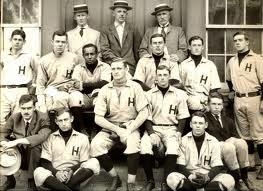
William Clarence Matthews with Harvard Baseball Team

William Clarence Matthews with Harvard Baseball Team

The rest of Apperious’ story on Wednesday.


Lost Advertisements–Do You Want To Know The Baseball Scores?

2 Jan

baseballscores

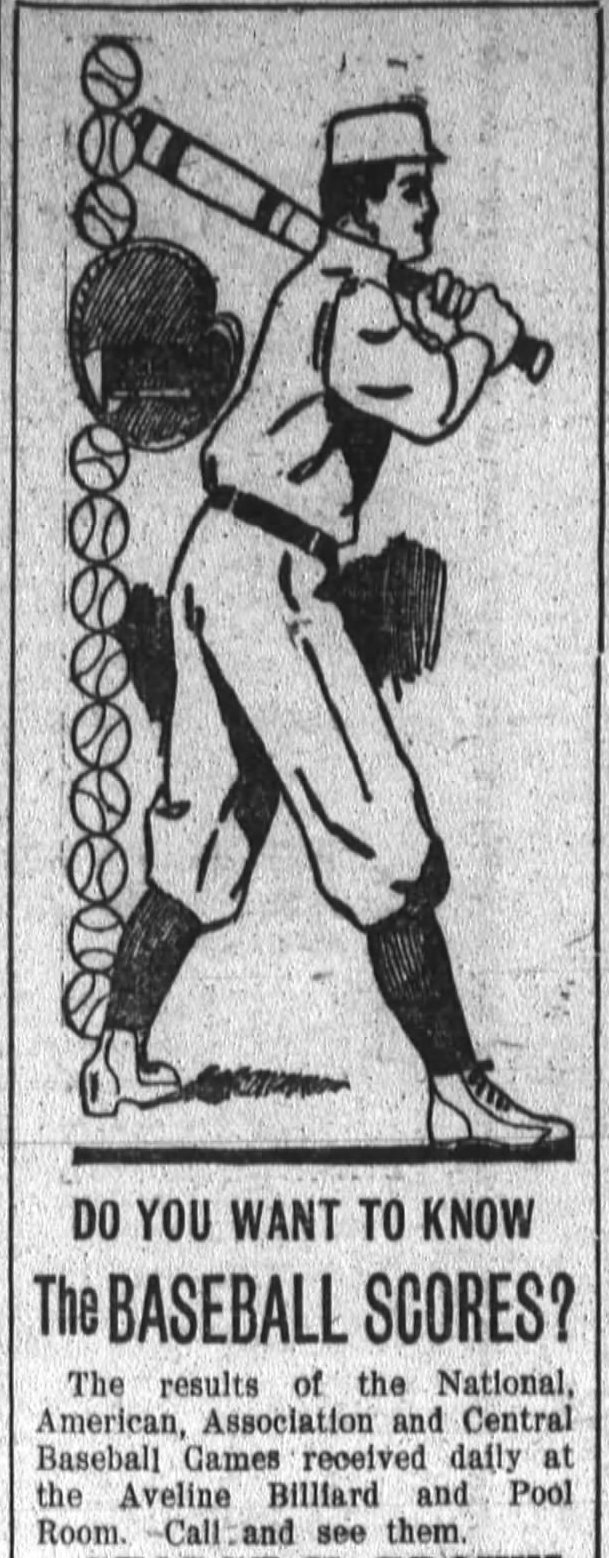
A 1908 advertisement for the Aveline Billiard and Pool Room in Fort Wayne, Indiana: “The results of the National, American, Association and Central Baseball Games received daily.”

Hope Springs Eternal

30 Dec

In April of 1889, the Washington Nationals were preparing to open the season at home against the Philadelphia Quakers.

The Washington Critic editorialized about the fortunes of the local team:

“As is proper, the National Capital has a club competing for the pennant, which indicates championship in the national game, but unfortunately, this club has never yet succeeded in winning the coveted emblem.  The ‘Senators,’ as a facetious country has dubbed out baseball players, are engaged usually in a desperate struggle to keep from taking place near the tail end of the league at the tail end of the season, and if the Goddess of Liberty on the dome of the Capitol has any local pride she must weep at what she has seen happen in the park a few blocks north of her.  She has observed the home club walloped all over the grounds and has been humiliated beyond endurance.”

The Nationals had been members of the National League for three underachieving season; 28-92 in 1886 (eighth place), 46-76 in 1887 (seventh place), and 48-86 in 1888 (eighth place).  John Morrill would open the 1889 season as the team’s fifth manager:

John Morrill

John Morrill

“There is a prospect of better baseball fortunes for Washington in the season opening today.  There are, up to date at least, no dissensions in the club, and a stalwart and resolute group are prepared to do battle for the pennant.  They may not win the trophy, but it is tolerably certain that they will give a good account of themselves, and that when ‘Senators’ are referred to in terms of opprobrium , reference will be had to those belonging to that club ‘where wealth accumulates and men decay,’ rather than to our baseball team.”

There would be no “prospect of better baseball fortunes’ for Washington.  The Nationals lost the opener to Philadelphia, then lost seven more.  In July, John Morrill, who had led the team to a 13-38 record and was hitting .185, was replaced as manager and released.  Arthur Irwin did better (but only slightly better) at the helm.  The team went 28-45 the rest of the way, finishing in eighth place with a 41-83 record.  The team disbanded at the end of the season.

Arthur Irwin

Arthur Irwin

“By-By, Baby Anson”

26 Dec

On August 20, 1888 Adrian Constantine “Cap” Anson and his Chicago White Stockings were set to begin a three-game series with the Pittsburgh Pirates.  Chicago was in second place, six and a half games behind the New York Giants.

Anson’s club had been in first place for most of the season, but  relinquished the lead to the Giants after dropping eight of nine games at the end of July.

After sweeping two games from the Giants in New York earlier that week, Anson said he had just improved his team by signing pitcher John Tener, who was playing for the East End Athletic Club in Pittsburgh, for a reported $2500 for the remainder of the season.   He also spoke to a reporter from The New York Times:

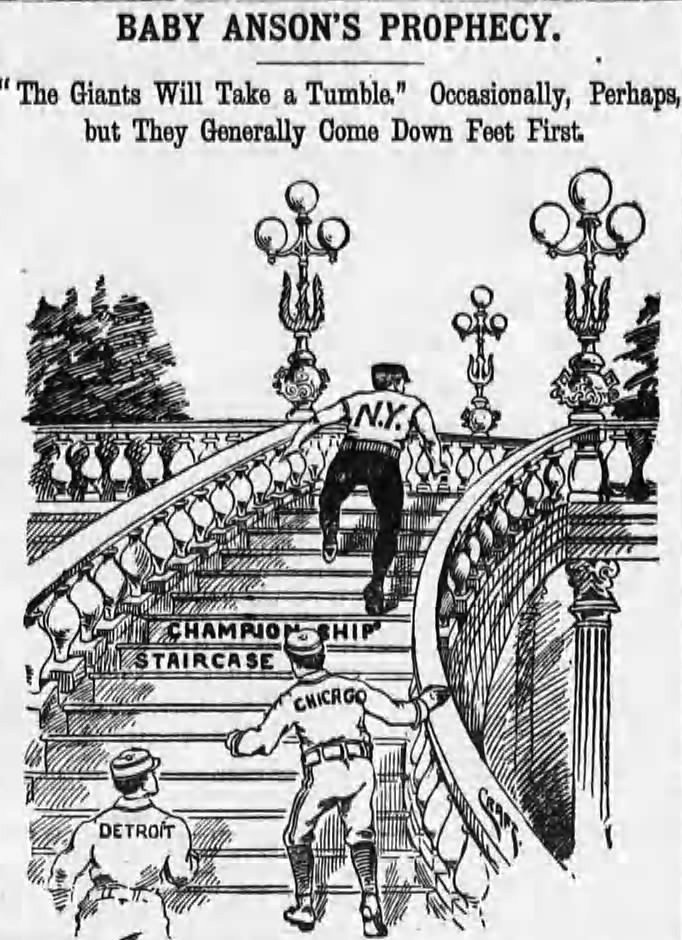
“Mr. Anson is inclined to think that New York will ‘take a tumble,’ and if it occurs soon the Giants’ chances of closing the season at the top of the pile are woefully thin.”

Another New York paper, The World, was determined to not let Anson forget his prediction.

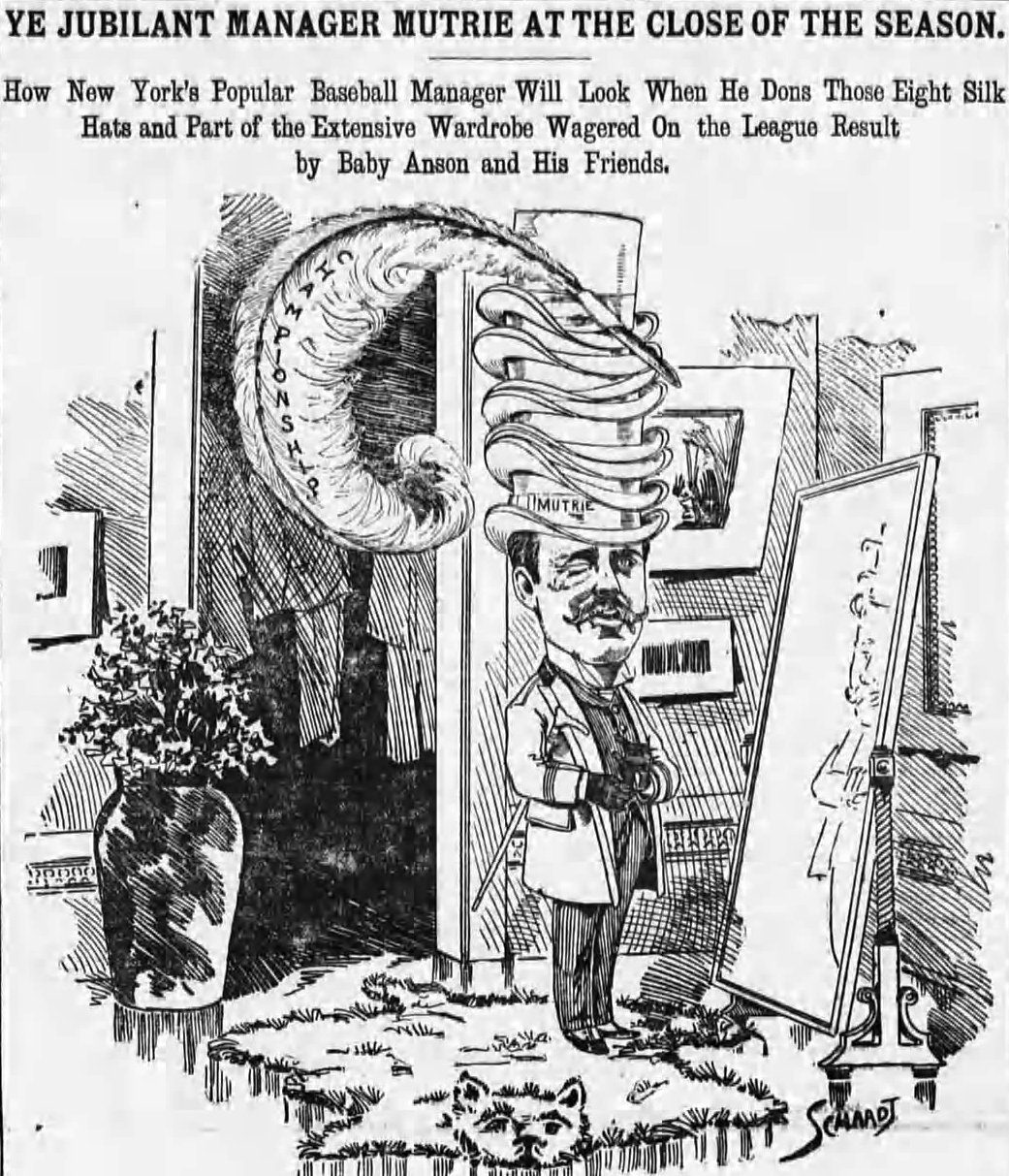
Three days after he made the comment, The World said Anson and Giants Manager Jim Mutrie had bet a $100 suit on the National League race, and:

“(Anson) has been busily engaged in predicting a tumble for the Giants. Jim says that tumble is not coming.”

Within a week the White Stockings had dropped to eight games behind the Giants.  The World said:

“Anson’s prophecies much resemble the boomerang.  He swore Mutrie’s men would take a tumble, and his own men are fast getting there themselves.”

The paper also taunted Anson with a front-page cartoon:

 anson18880

The taunting continued.  After Chicago lost 14 to 0 to the Indianapolis Hoosiers on August 31:

“Did Brother Anson notice anything falling in Indianapolis yesterday?”

Another front-page cartoon on September 6:

anson18881

A week later, after the Colts took three straight from the Giants in Chicago, and cut the New York lead to five and a half games, The World attributed it to “Two new men for Anson’s team;” umpires Phil Powers and Charles Daniels.   The Giants managed win the fourth game of the series 7 to 3; the paper said Giant pitcher Tim Keefe was “too much for Anson and the umpires.”

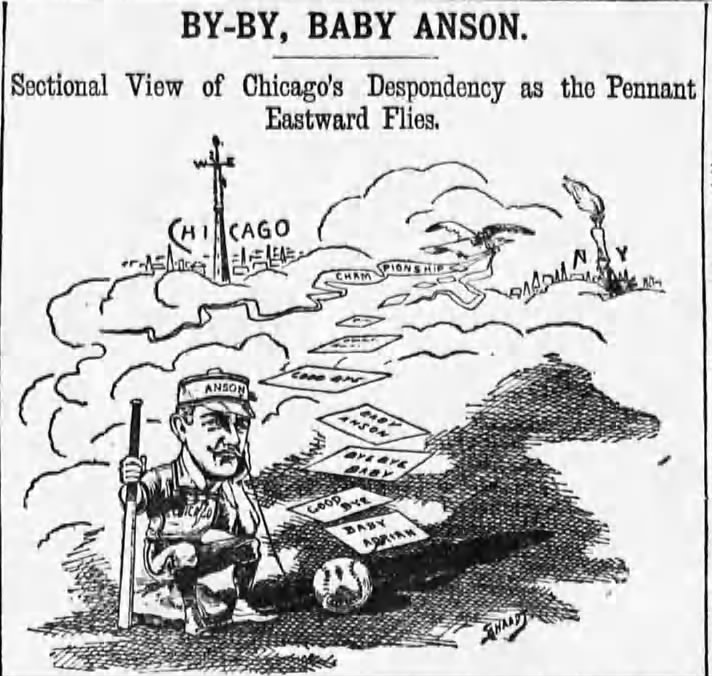
Chicago never got within six and a half games again.  On September 27 the Giants shut out the Washington Nationals, putting New York nine games ahead of the idle White Stockings.  The World declared the race over on the next day’s front page:

anson1888

All was finally forgiven on October 10.  The Giants had won the pennant, and Anson, on an off day before his club’s final two games of the season in Philadelphia, came to the Polo Grounds and met with Mutrie:

“(Anson) gave Mutrie a check for $100, in payment for the suit of clothes won by the latter.  The two then clasped hands over a similar bet for the next season—that is, each betting his club would beat the other out..  Anson then cordially congratulated his successful rival upon the winning of the pennant, and stated his belief that New York would surely win the World’s Championship.”

The Giants beat Charlie Comiskey’s American Association champion St. Louis Browns six games to four.

Anson’s White Stockings won five National League championships between 1880 and 1886, he managed Chicago for another decade after the 1888 season; he never won another pennant.

Tener, the pitcher signed by Chicago in August posted a 7-5 record with a 2.74 ERA.  He played one more season in Chicago and finished his career in 1890 with the Pittsburgh Burghers in the Player’s League.  Tener later became a member of the United States Congress (1909-1911) and Governor of Pennsylvania (1911-1915), and served as President of the National League.

Mutrie’s Giants repeated as champions in 1889 (and he presumably claimed another $100 suit from Anson), he managed the team through the 1891 season.

“Such Men are Demoralizing Agents in any Team”

19 Dec

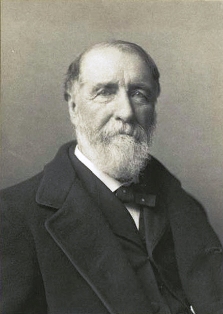
Henry Chadwick is called by many “The Father of Baseball.”  Is Hall of Fame plaque calls him “Baseball’s preeminent pioneer.”  Chadwick is credited with creating the box score and writing baseball’s first rule book.  He was also a sportswriter for more than 50 years.  In 1880 he wrote an article for The New York Clipper about what qualities teams should looks for in the players they sign.  O.P. Caylor of The Cincinnati Enquirer said Chadwick “Never wrote more truth in so little space:”

“In the first place, what a manager must avoid is the engagement of players is the habit of indulging in intoxicating liquors.  Such men are demoralizing agents in any team in which they allowed to play, as the experience of 1879, especially in the League arena, fully proved.  Not only is a drunken professional his own enemy, but his presence in a team is also necessarily destructive of its morals.  In fact, temperate habits among professional ball players are more essential to success than is any special skill they may possess in playing their several positions; for a poor player who is a temperate man and earnest in his work is more serviceable than any man who is a fine player can be who is under the influence of drinking habits.

“Secondly, quick-tempered, passionate men are unfit to be in a nine made up to play for the side.  Hot temper is not only opposed to clear judgment, but it entirely prevents a man under its influence from playing for the side.  Such men, when they ‘get their mad up’ at anything, do not hesitate a moment to indulge their spite at a brother player at the cost of even the loss of the match.

Henry Chadwick

Henry Chadwick

“Thirdly, in making up a team for carrying out this policy, you must avoid putting players in it who have any ambitious views for preferment, such as a desire to be made captain of the nine or manager of the team.  It is impossible for such men to play for the side.  They are so busy in organizing cliques against the powers that be, and in maneuvering for the desired place, that they think of little else, and they play the game only with this one object in view.  This has always been a cause of difficulty in teams in which there are two or more ex-captains or ex-managers.  The player who has once tasted the fruit of authority is rarely amenable to control when occupying a subordinate position unless it be under some ruler whom he knows to be his superior as a captain or manager.  Ex-captains or ex-managers might serve under Harry Wright, for instance, but they would be restive under the rule of a less experienced and capable man.

“Fourthly, players who have an “itching palm’ should be avoided in the make-up of a team selected for carrying out the policy of playing for the side.  Men of this class are always (on the alert) for opportunities to do a little outside business in a quiet way which will help to increase their pecuniary receipts of the season.

“Fifthly, the longer players are kept in the service of one club the more they may be relied upon to play for the side, as a general rule; and it is not an unfair conclusion to arrive at that that player who is ready to leave the service of a good club at the temptation of the offer of a couple of hundred dollars a year more salary, is a man whose heart is not in his work sufficiently to make him a good player for his side.  In fact, this club feeling—that is, a feeling of special interest in the success of his club outside of any interested motive of a more personal nature—is one of the foundation stones of the policy of playing for the side.  Players who possess none of this kind of feeling are of that class who are ready to exclaim ‘I don’t care a snap for the club; I go in to play my best for my record, and if this helps to win games, well and good; but you bet I ain’t a-going to spoil my average just to win a match for no club in the league.  That’s the kind of a player I am, and don’t you forget it.’”