Tag Archives: National League

Nearly a Century before his Time

22 Oct

Baseball’s Reserve Clause was first instituted in September of 1879; the eight National League clubs agreed at a meeting in Buffalo, New York, that each team would be able to “reserve” five players for the following season.

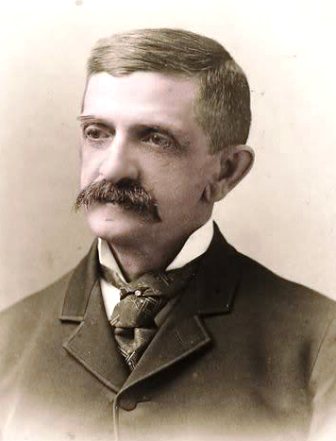
In August of 1880, as it appeared the league would renew the agreement, Oliver Perry “O.P.” Caylor of The Cincinnati Enquirer wrote a scathing article about the practice; one that could have been written 10 years later by John Montgomery Ward during the creation of the Players League, or almost 90 years later by Curt Flood.

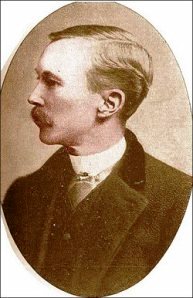
opcaylor11

O.P. Caylor

“It has frequently been urged in these columns that the so-called Buffalo agreement made by the league clubs last year…was a gross outrage and unworthy of the organization.  We did not believe until recently that the league would have gall enough to enact the disgrace.  But already there is log-rolling going on to bring it into existence for next season.”

Caylor said the only way to defeat the “five-men fraud” was for the players to stand up against it.

“What right has the league to say to any player where he shall play ball next year?  The days of slavery are over.  This system of Ku-Kluxism in ball-playing ought to be quashed.  A ballplayer has no better right than to place a price on his services in Cincinnati, and another for his services in Chicago.  It may be that he would rather play in Chicago for $100 less than in Cincinnati, or vice versa.  Let him name his price for each place.  Let the city which considers him worth the salary asked pay for it.  If he asks too much; that city need not engage him.  No man with common business sense would engage a clerk at a salary he could not earn”

Caylor did seem to miss the point that several owners did lack “common business sense” and that the Reserve Clause was instituted in large part to protect them from themselves.  He also overestimated the resolve of players to exercise their influence.

“It is time such outrageous policy was ended.  If the league will not do it, the players must.  It is a poor rule that will not work both ways.  Let the players then anticipate the fraud, and meet it half way.  Let every league player sign a solemn agreement with every other league player not to play ball next season for any club that shall attempt to coerce players in this manner.  The players command the field.  Clubs cannot do without them; but they can do without clubs.  If the league intends to repeat the fraud, it should deserve to have its existence ended.  Such men as George Wright, Jim (Deacon) White and John Clapp cannot afford to be driven out of the profession by such repeated outrages.  If the players, or, at least, the better part of them, will but demand their rights as men—freemen—they can have them.  If they go on supremely careless and do nothing until forty of them are under the yoke of despotism, they will richly deserve all that they suffer by it.  This is the time to act.  We warn players that the log is already rolling which is intended to pin them down again under the dictation of a despotic power.”

“Anson, the Baseballist, would like to see some Changes”

26 Sep

Some of baseball’s pioneer’s had ideas for rule changes that would have if adopted, dramatically changed the game.  In 1896 Adrian Constantine “Cap” Anson proposed two such changes.

Anson’s Colts had not finished better than fourth place in the National League in the previous five seasons, and the manager apparently thought two radical changes would improve his team’s chances and simplify the game.

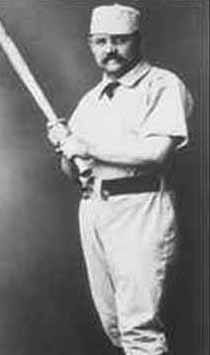
"Cap" Anson

“Cap” Anson

The Chicago Record said:

“Anson, the baseballist, would like to see some changes in the present system of playing ball.”

Anson said he wanted to make a change to the 1893 rule that established the distance from the pitcher’s mound to home plate and replaced the pitcher’s box with the rubber:

“He is in favor of putting the pitcher’s slab in front of the pitcher, instead of having it behind him.  He wants this done in order to stop the interminable bickering that is going on in almost every game as to whether the pitcher was in position.  It is much easier to see whether the rule is conformed to when the slab is in front of the pitcher, and he dare not stop over it.”

Anson’s other rule change would have led to complete chaos, and would have made it an adventure to fill out a scorecard:

“Another radical change that Anson is in favor of allowing the captain to put players back into the game after they have been taken out…(Anson)  wants all restrictions removed, the manager being allowed to play his men just as he sees fit, taking them out and putting them back just when he wants to.”

The issue of introducing free substitution into baseball has occasionally been raised in the years since Anson advocated for it.

Montreal Canadians coach Dick Irvin suggested it to Kennesaw Mountain Landis as a solution to player shortages when the baseball commissioner attended an NHL game during World War II.   Lew Fonseca made a pitch for the rule in the 1950s, and Walter “Red” Barber, long-time Dodger and Yankee broadcaster suggested in the 1960’s that the rule would help keep baseball from being “as exciting as watching paint dry.”

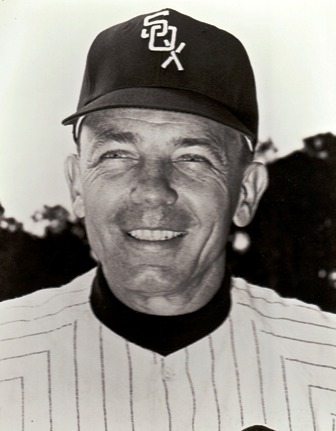
In 1967, Eddie Stanky of the Chicago White Sox was given permission from the American League to experiment with a crude form of what would become the designated hitter rule six years later.  The convoluted rule, according to The Milwaukee Sentinel, said:

“(T)he Sox and their spring opponents will be allowed to call on a pinch hitter twice provided that he is designated before the game is not used twice in the same inning.”

Eddie Stanky

Eddie Stanky


“Krug Seemingly Lost his Head”

25 Sep

The 1902 Southern Association season was so contentious that a headline in The Atlanta Constitution said the day after it ended:

To the Relief of All the Season is Now Over

In addition to the months-long battle between Charlie Frank and the league, there was an on-field incident that The Columbus (GA) Daily Enquirer called “an exhibition as was never before seen on an Atlanta Diamond.”  Henry “Heine” Krug was at the center of it.

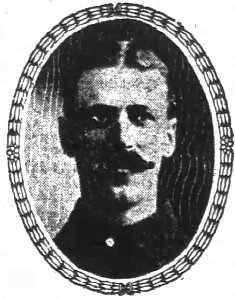
Henry Krug

Henry Krug, 1902

In February of 1902, Ed Peters, new owner and president of the Atlanta Firemen signed Ed Pabst to manage the team.  Pabst had played the previous season with the San Francisco Wasps in the California League and brought with him to Atlanta his friend Krug, a 25-year-old shortstop who had been playing for West Coast professional teams since he was 17.

When Krug was signed The Constitution said he was “beyond doubt the star of the Pacific Coast,”

The Sporting Life said Krug had already signed a contract with the Philadelphia Phillies, but jumped the Phillies to join Atlanta.

Krug’s average never dipped below .300, and was very popular with fans and the press.  The Constitution called him “The best all-around professional of the Southern Association” in June.

On July 15 the paper noted his “dashing, errorless work that has been classed as phenomenal.”

Two days later the tone changed dramatically.

The fourth place Firemen were playing Charlie Frank’s Memphis Egyptians and Krug was having a rough day.  Early in the game a throw from first baseman George Winters hit Krug “and gave him a severe blow in the mouth.”  Krug had walked off the field, intending to leave the game, but came back.  He probably shouldn’t have.

Krug went on to make three errors, two of which The Constitution said “in the opinion of the crowd might have been avoided.”

The crowd began to taunt Krug and “Instead of taking the roast the bleachers proceeded to give him as any sensible player would take it, Krug seemingly lost his head and with all the vicious intent imaginable, he secured the ball and threw it with all his strength into the bleachers.”

The Constitution said Krug, “phenomenal” just two days earlier, now said the shortstop’s “conduct on former occasions has been offensive to the patrons of the game.”  Although Krug was ejected from a game earlier in the week, there didn’t appear from newspaper reports to be any pattern of “offensive conduct.”

Atlanta bleacher fans “dodged the sphere” and no one was hurt.  Team president Peters immediately approached Ed Pabst and “instructed him to order Krug out of the game.”  Pabst refused:

“He did not like what he considered an infringement on his prerogative, and at once tendered his resignation as manager of the Atlanta team.  President Peters was just as ready to accept as Manager Pabst was to tender, and within the space of a few seconds the ball player who has been managing the Atlanta team since the playing season of 1902 opened found himself deposed.”

Ed Pabst

Ed Pabst

Peters took over as manager and remained in the position for the rest of the season.  His first act as manager was to remove Krug from the game and suspend him.  The Constitution said:

“Krug’s baby act was witnessed by Sergeant Martin and policemen Norman and Hollingsworth.  They placed him under arrest.”

Some reports said a bottle and rock were thrown at Krug, but the player said he didn’t see that and was reacting only to the verbal taunts.  He appeared in court the following day and was fined $10.75; The Daily Chronicle said, “Krug appeared very penitent.”

Peters sold Krug’s contact to the New Orleans Pelicans the following day, but Krug refused to report sending a wire to Peters and Pelicans owner Abner Powell saying “that if he could not play in Atlanta he would not play,” in the league.

Despite the incident, there was no shortage of interest in Krug’s services.  In addition to New Orleans, the Phillies, who he jumped to join Atlanta and the San Francisco franchise in the California League offered him contracts.

Krug signed with Philadelphia and made his debut with the Phillies on July 26; the day after Atlanta management petitioned the National Association of Baseball Leagues (NAPBL) to blacklist Krug.

No action was taken and Krug played out the season in Philadelphia, hitting .227 in 53 games.  He spent 1903 with the San Francisco Seals in the Pacific Coast League (PCL).  Peters sold his interest in Atlanta in 1903.

Before the 1904 season, the PCL and the NAPBL reached an agreement that made the league part of the National Association and no more an “outlaw league.”  As part of the deal, PCL players who were under contract with other teams were returned.  As a result, Krug returned to Atlanta.

The Constitution assured their readers:

“He has promised to be good and to do his best to help the team win.  It is the belief of many fans in this city that he wishes to redeem the past.”

Krug played two incident-free, if unspectacular seasons in Atlanta, then played in the New York State League with the Scranton Miners and the American Association with the Indianapolis Indians.

krug1

Henry Krug,1907

The 31-year-old returned to San Francisco, where he was “negotiating for a place with the California State League,” and had accepted a position coaching the baseball team at Cogswell College.  Krug underwent surgery for “an abscess upon his throat” on January 12, 1908, and died from complications from the operation two days later.

Two months after his death all had been forgiven in Atlanta.  The Constitution named him to the paper’s “All-Atlanta Ball Team,” the best professional players to have played in the city.  Krug “was a power with the stick.  No better man ever played on the Atlanta team when it came to breaking up a game.”

“If Jones Refrains from any more ‘Baby’ Whining”

17 Sep

In June of 1877 the struggling– financially and on the field–Cincinnati Reds disbanded. The defending champion Chicago White Stockings, mired in fifth place in the six-team league, signed Reds second baseman Jimmy Hallinan and outfielder Charley Jones.

Both players had signed with Chicago believing there was no chance that the Cincinnati franchise would be saved. Some stories claim Lewis E. Meacham of The Chicago Tribune, who worked with White Stockings President William Hulbert to organized the National League, got Hallinan drunk and convinced him to sign. There were also non-specific, unsubstantiated rumors of “coercion” being used to secure Jones.

Within days, enough money was raised by the Reds new president J.M. Wayne Neff to continue operation of the club, and Jones made it clear he wasn’t happy to be in Chicago; the Chicago press was not particularly happy with Jones either.

Charley Jones

Charley Jones

When the White Stockings new outfielder failed to join the team before two straight losses in Hartford to the Dark Blues, The Chicago Inter Ocean said:

“(I)f Jones refrains from any more ‘baby’ whining, and shows up like a man and a reputable ball-player there should be no reason why the nine should not win.”

Jones officially became a member of the White Stockings on June 26; an 11-0 win over the St. Louis Brown Stockings; Jones had a single in four at bats. Two days later they beat St. Louis again 6 to 2, Jones was 2 for 4 with two RBIs.

During those three days the Reds were petitioning the National League to return Jones to Cincinnati (they made no effort to reacquire Hallinan), Hulbert refused and the league refused to force the issue. A prominent Cincinnati attorney, Edgar M. Johnson sent a letter to the White Stockings requesting that Jones be released, the letter read in part:

“We, as you probably know, have succeeded in reorganizing the base-ball club here. The task has been a hard one, and even now we find that it will be almost impossible for us to get along without Jones…I ask you, as a favor that our club will always appreciate, that you will honorably release Jones and permit him to rejoin us.”

On June 30 Charley Jones’ two-game career with Chicago came to an end.

The Cincinnati Enquirer announced that an agreement had been reached, Hulbert had agreed to release Jones and, “recognized the fact that (Jones’ contract) had been obtained in an unfair manner.”

The Chicago Tribune saw the situation differently; Hulbert made a, “graceful concession to the evident feeling in Cincinnati,” and by releasing Jones carried out “the idea of doing what he could for the new (Reds) club.”

Chicago papers were quick to point out to their readers that the release of Jones, and the signing of former Philadelphia Athletics outfielder Dave Eggler to take his place, would not hurt the White Stockings:

The Inter Ocean:

“Eggler is generally considered a fine ballplayer, and there are many who think a much better fielder, runner and batter than Jones. Last year his record in all of these important points was far in advance of Jones’.’’

The Tribune:

“There can be no doubt that Eggler will fully fill Jones’ place and the club will certainly lose nothing by the change.”

Dave Eggler

Dave Eggler

Eggler hit .265 in 33 games in Chicago. Jones hit .313 for the Reds.

The White Stockings finished in fifth place with a 26-33 record, the Reds were sixth with a 15-42 record.

Speaking of Charley Jones

Jones (born Benjamin Wesley Rippay) was once, for a short period in the 1880s, baseball’s all-time home run leader. He hit 56 in a 12-year career from 1875 to 1888. He missed 1881-82 after being blacklisted from the National League because of a dispute over money owed to him by Boston Red Stockings owner Arthur Soden, despite his claim being upheld in court.

He returned to major league baseball with the Cincinnati Red Stockings in the American Association in 1883.

Colorful was a word often used in regard to Jones; and probably his most colorful mention in the press came between the 1885 and ’86 seasons. The Cincinnati Star-Times reported on some unrest in the Jones household:

“Charles W. Jones, the well-known base ball player, was accosted by his wife Monday night, while he was making himself agreeable to another woman. Mrs. Jones threw cayenne pepper in her spouse’s eyes causing such intense suffering that he had to be taken to the hospital.”

While there was no report of any lasting effects, Jones’ batting average did drop 52 points; from .322 in 1885 to .270 in 1886.

Jimmy Rogers

16 Sep

In January of 1897 owner Barney Dreyfuss and the directors of the Louisville, Colonels met to determine the future of the club.  The Louisville Courier-Journal said:

“The most important meeting in the history of the Louisville Base-ball club was held last night at the Louisville Hotel.  It was marked by more liberality than had been shown by the club during all the years since it became a member of the big league.”

No one was surprised that Dreyfuss’ protégé, team secretary Harry Clay Pulliam was named team president, nor was it surprising that Charles Dehler was retained as vice president.

But no one had predicted the Colonel’s choice to replace Bill McGunnigle as manager.

McGunnigle had succeeded John McCloskey, and the two combined for a 38-93 record and a twelfth place finish.

James F. “Jimmy” Rogers would be a first-time manager; three months short of his 25th birthday and only 110 games into his major league career.  The Courier-Journal knew so little about the new manager that the paper got his age and place of birth wrong, and also reported incorrectly that he had minor league managerial experience.

While he had only played 72 games with Louisville in 1896 and only 60 at first base, The Courier-Journal called Rogers “the best first baseman the Colonels ever had.”  Even so, the paper acknowledged that “as a manager he is yet to be tried.”

Just why was he the right man to manage the team?

“One of the chief reasons Rogers was selected was that he is sober.”

Jimmy Rogers

Jimmy Rogers

Despite being “the best first baseman the Colonels ever had,” Rogers opened the season as the team’s starting second baseman; thirty-five-year-old minor league home run king Perry Werden, acquired from the Minneapolis Millers of the Western League played first base for Louisville.

The team won five of their first seven games, and then went 12-22 through June 16 when Rogers was fired as manager and released; he was hitting .144 and made 16 errors in forty games at second base.

Rogers was replaced as manager by Fred Clarke; the future Hall of Famer was two weeks shy of his 24th birthday.

The Cincinnati Post said the outgoing manager was not only to blame for the team’s poor performance but also for center fielder Ollie Pickering’s slump; Pickering hit .303 after joining Louisville in August of 1896 but was hitting .243 on the day Rogers was let go:

“The claim is made that Jimmy Rogers is responsible for the decline of Pickering.  The Virginian created a sensation last fall, but “Manager Jimmy” tacked the title “Rube” to Pick, and it broke his heart.”

Ollie "Rube" Pickering

Ollie “Rube” Pickering

Pickering was released in July, signed with the Cleveland Spiders, and apparently recovered from his broken heart, hitting .352 in 46 games for Cleveland.

Rogers would never play another major league game.  He was signed by the Pittsburgh Pirates the day after Louisville released him, but became ill with the flu and never played for them.  A month later he joined the Springfield Ponies in the Eastern League and finished the season with them.  Rogers played for East Coast minor league teams until in August of 1899 when he became ill while playing with the Norwich Witches in the Connecticut League.

In January of 1900, Rogers died at age 27.  Two different explanations for his death appear in various newspapers; both may be wrong.  The Courier-Journal and several other newspapers said his death was the result of the lingering effects of “being struck on the head by a pitched ball several years ago while playing in the National League.”

The New Haven (CT) Register repeated the story about Rogers being hit by a pitch, and said that while that injury contributed to his death, he had died of Bright’s disease—a kidney ailment now referred to as nephritis.

Rogers’ Connecticut death certificate listed the cause of death as a bacterial inflammation of the brain.

The First Triple Play in the West

12 Sep

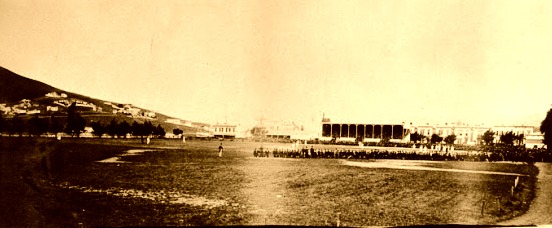
On April 4 of 1880, the California League San Franciscos and Athletics met at the Recreation Grounds (the park was located at 25th and Folsom).

San Francisco's Recreation Grounds

San Francisco’s Recreation Grounds

Two newspapers in town treated the key play of the game very differently.

The San Francisco Bulletin’s coverage of the game was headlined:

Extraordinary Base-Ball Play

The San Francisco Chronicle headline:

An Uninteresting Game with a Score of 4 to 1—Very Poor Playing on the Part of the San Franciscos

In the eighth inning, the San Franciscos’ Al Mast was on second and Andy Piercy was on first.  George “Live Oak” Taylor was at the plate.

Hall of Famer James “Pud” Galvin was pitching for the Athletics; Galvin, in a contract dispute with the  Buffalo Bisons, played several months in California before jumping the Athletics to return to Buffalo in May.

Pud Galvin

Pud Galvin

The second baseman was Jim McDonald, a 19-year-old San Francisco native.

The Bulletin’s first paragraph referred to “The feature of the game” and said:

“(Taylor) struck a powerful ‘liner’ to second base, which was neatly captured by McDonald, and placing his foot on second forced Mast out, and then threw the ball to first in time to cut Piercy off.  The play was vociferously applauded.  There is but one other instance in the history of the national game where this play has been made.”

(The article was referring to Providence Grays center fielder Paul Hines’ disputed unassisted triple play, turned two years earlier versus the Boston Red Caps)

The Chronicle, while mentioning McDonald’s play was less impressed, mentioning the play deep into its much longer recap of the game.  The paper noted that McDonald made three errors earlier, and “in a measure he redeemed himself by an effective pay in the eighth inning,” the paper described the play and noted that McDonald “was deservedly applauded for it.”

Despite the triple play The Chronicle questioned the wisdom of McDonald being in the lineup:

“(McDonald) is a player of some promise, but the policy of putting him in the important position he fills is a questionable one.  In his practice games his playing in brilliant, but in a match contest he appears to lack the necessary confidence, and in baseball vernacular he falls all to pieces.”

Jim McDonald

Jim McDonald

McDonald played primarily on the West Coast, but had a brief career in the East, spending time in all three major leagues in 1884 and 1885.  He played two games for the Washington Nationals in the Union Association, 38 with the Pittsburgh Alleghenys in the American Association and five with the Buffalo Bisons in the National League.

After his playing career ended in 1894, McDonald was an umpire in the National League and California League, and a West Coast boxing referee; he officiated many fights including Jim Jeffries 1898 victory over Peter Jackson and Abe Attell’s 1903 20 round draw with Eddie Hanlon.

His active career came to an end in 1904 when he was diagnosed with Tuberculosis; he died in 1914 in San Francisco.

“Fear of the Black List has Stopped Many a Crooked Player from Jumping”

9 Sep

For a brief period in the mid1890s, George Jouett Meekin was considered among the top pitchers in the game; he might never have had the opportunity, but for what The Sporting Life called “The disastrous effects of Chairman Young’s somersault.”
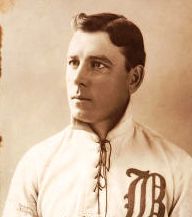
Jouett Meekin

Jouett Meekin

 John Montgomery Ward, Meekin’s manager with the New York Giants, said he was, along with Amos Rusie, Tim Keefe, John Clarkson and Kid Nichols, the “most marvelous pitchers as ever lived.”

Charles “Duke” Farrell, who caught Meekin and Rusie with the Giants, said:

“Sometime, it seemed to me that (Meekin) was actually faster…Rusie’s speed struck the glove with a bruising deadening, heavy shock, and Meekin’s fastest gave a sharp, sudden sting.”

But in 1891 Meekin was a 24-year-old pitcher in his third season with the St. Paul Apostles in the Western Association. The New Albany, Indiana native became a well-known amateur player across the Ohio River in Louisville before signing his first professional contract with the Apostles in 1889.  His sub .500 winning percentage was not enough to keep the American Association’s eighth place Louisville Colonels, from inducing Meekin to jump his contract with St. Paul.

In June Meekin jumped; at the same time third baseman Harry Raymond jumped to Colonels from the Western League’s Lincoln Rustlers.

The National Board of Control, created after the 1890 season as part of the “peace agreement” between the National League and The American Association after the collapse of the Players League, to arbitrate contract disputes, acted quickly.  Board Chairman (and National League President) Nick Young announced that Meekin and Raymond would be “forever ineligible to play with or against a National Agreement club.”  The statement, signed by Young, also said:

“This order or any other that may hereafter be made for the same cause, will never be modified or revoked during the existence of the present board, whose term of office will not expire for five years.”

The move was applauded by the press and no less a figure than “the father of baseball,” Henry Chadwick, who called Raymond and Meekin part of a “venal cabal” of jumping players.

Despite the promise that the order would “never be modified or revoked,” Young did just that.  Within weeks of issuing the order, both players were reinstated.

The backlash was swift.

The Cleveland Plain Dealer called the reversal “nauseating.”  The Cincinnati Times-Star said it was “one of the greatest mistakes ever made.”  The Milwaukee Evening Wisconsin said Young and the board chose to “toss the National Agreement into the fire.”
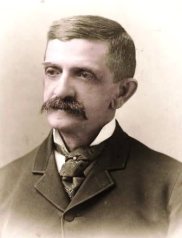
nickyoungpix

Nick Young

James Edward Sullivan, founder of the Amateur Athletic Union (AAU) said the reinstatement of the “arch-culprits” Meekin and Raymond “was the worst in the history.”  He predicted dire consequences as a result:

“Heretofore the fear of the black list has stopped many a crooked player from jumping or doing dishonest work.  But from now on it will be different.  A precedent has been formed.”

Raymond jumped back to Lincoln, taking Colonels’ pitcher Phillip “Red” Ehret with him to the Rustlers.  Meekin remained with Louisville and moved to the National League with the Colonels the following season.

Meekin had a 10-year big league career as a result of Young’s reversal.

From 1891-93, Meekin was 29-51 with Louisville and the Washington Senators and was traded to the Giants (along with Duke Farrell) before the 1894 season.  He was 33-9, and fellow Indiana native Amos Rusie was 36-13, for the 2nd place Giants.  Meekin had two complete game victories in the Giants four game sweep of the first-place Baltimore Orioles in the Temple Cup series (Rusie won the other two games).

The New York Evening Journal called Meekin “Old Reliable,” and said, “He can push ‘em up to the plate in any old style, and is factor with the stick.”  The pitcher hit .276 with 29 RBI in 183 at bats in 1894 (including hitting 3 triples in a game on July 4) and was a career .243 hitter.

Meekin won 102 more games (including 26, and 20 win seasons in 1896 and ’97), but as O. P. Caylor said in The New York Herald he suffered from “a lack of control.”  Meekin walked 1056 batters and struck out only 901 in more than 2600 innings, he also hit 89 batters; in 1898, he broke Hughie Jennings nose with a pitch.

After posting a 16-18 record for the seventh place Giants in 1898, Meekin, along with Rusie, and second baseman William “Kid” Gleason, were blamed by New York owner Andrew Freeman for the team’s disappointing finish.  Freeman told reporters:

“Meekin, Rusie and Gleason will be either sold or traded.  We do not want them.  I’m going to break up cliques in the team even if I have to get rid of every man.  There must be harmony.  Without it we can’t win games.  We have too many men who are simply playing for their salaries and do not seem to care whether they win or not.”

Rusie had injured his arm late in the season and sat out the next two years.  Meekin and Gleason, despite Freedman’s promise, returned to the Giants for the 1899 season.  The team finished in tenth place, and Meekin struggled with a 5-11 record.

He was sold to the Boston Beaneaters in August for a reported $5000, although it was commonly assumed that the Giants received much less, or simply “loaned” Meekin to Boston for the stretch run; a charge made by Brooklyn Superbas manager Ned Hanlon.  Although Hanlon’s charges have become “fact” in countless books and articles over the years, several newspapers, including The Pittsburgh Press refuted Hanlon’s story:

“All that talk and fuss about Freedman giving Jouett Meekin to Boston in order to help that team win the pennant and thus get even with Brooklyn is nonsense.  The truth of the matter is that Freedman thought Meekin’s days as a pitcher were over, and he offered him to the Pittsburgh club, but President (William) Kerr thought the same way and did not take him.  At the time Boston’s pitching corps was in bad shape and manager (Frank) Selee took a chance on the big fellow.  There was no underhand dealing in the matter at all.”

Meekin was 7-6 with a 2.83 ERA for Boston, but the team finished second to Brooklyn.  He was released by Boston before the 1900 season and pitched just two games with the Pittsburgh Pirates before being released again in July.  He finished the season with the Grand Rapids Furniture Makers in the Western Association and spent 1902 in the Southern Association with the Memphis Egyptians.

Meekin returned home to New Albany, Indiana, where, in 1910, according to The Trenton True American “his earnings from baseball are well invested in real estate.”

Meekin slipped into relative obscurity by the time he died in 1944.

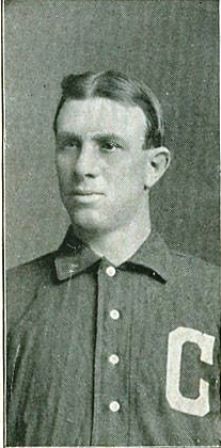
The original picture that appeared with this post–now below–was misidentified as Jouett Meekin in this blog and by The Louisville courier-Journal in 1897.  According to Mark Fimoff co-chair SABR Pictorial History Committee, the picture was actually Lave Cross.  
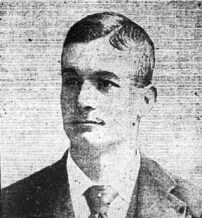
Lave Cross--picture earlier misidentified as Jouett Meekin.

Lave Cross–picture earlier misidentified as Jouett Meekin.

“A Great deal of foolish Sympathy was wasted on Rusie”

5 Sep

Hank O’Day, pitcher and Hall of Fame umpire, said Amos Rusie was the greatest pitcher ever:

“Amos is the greatest pitcher the country ever saw. Why, Rusie had more speed in his curve ball than any pitcher I ever saw before, or have ever since seen, has in his straight fast ones.  Rusie was a wonder—that’s all there is to it.  I was behind the plate one day when one of Rusie’s  fast incurves hit Hughey Jennings…the ball hit Jennings squarely in the temple, and he fell as though shot by a ball from a Winchester rifle.  I caught him in my arms as he toppled backwards—and he was out of his head for three days.” (Contemporary reports of the incident said Jennings actually finished the game, but later lost consciousness for four days)

O’Day was also on the field when Rusie blew out his arm in 1898; Rusie threw to first to pick-off Chicago Orphans outfielder Bill Lange and “his arm cracked like a pistol’s shot.”  In 1940 Lange told his version of the story to The Portland Oregonian:

“Amos Rusie, I don’t know of any better one and I never played against any other one as good.  He had great control, as well as everything else a pitcher should have.  But my base stealing got him.  He worried over it.  I guess he lost sleep over it.  Anyway, one day he showed up on the field and said he had developed a new way to catch me off of first without turning his body.  I was anxious to see what he had, and he caught me off of first.  But—and it was a mighty large but—in doing so Rusie threw his arm out.  And never could pitch in his old form again.”

Amos Rusie

Amos Rusie

Rusie, with a dead arm, became a benchmark, an oddity, and a cautionary tale.

He posted a 246-173 record before the injury; after sitting out all of 1899 and 1900 he was traded to the Cincinnati Reds for Christy Mathewson, appeared in three games, was 0-1 with an 8.59 ERA, and his career was over.

In the decade between 1898 and 1908 The Sporting Life christened “the next Rusie,” or “another Rusie” no less than 20 times; scores more were given the same title by newspapers across the country.  Most like Cecil Ferguson (career 29-46), Davey Dunkle (17-30), Cowboy Jones (25-34), and Whitey Guese (1-4) were busts.  The three best were Orval Overall (108-71), who was called the “next Rusie” more than anyone else; Ed Reulbach (182-106), and Hall of Famer Ed Walsh (195-126).

During that same decade there were regular, small items in newspapers about Rusie’s post National League life.  Shortly after his release from the Reds in June of 1901 papers reported that Rusie, “who commanded a salary of many thousands of dollars, is now working as day laborer at $1.50 a day.”   The pitcher told a reporter “This shows I am not afraid to work, but it’s an awful comedown in salary.”

The Dallas Morning News pulled no punches in their assessment of his plight:

“The dismal afterclap to the brilliant career of a once-famous ballplayer whose name was a household word in balldom…reckless wastefulness in financial matters and a total disregard for physical care brought Rusie to his present deplorable condition when he should have been in his prime, for the big fellow is barely 30 now.”

In 1903 it was reported that Rusie had joined the Vincennes (IN) Alices in the Kitty League.  While no statistics survive, he appears to have stayed with the team for most of the summer.  The Detroit Free Press said he was “playing for a salary of $75 per month.”

After the 1903 season he went to work in a lumber yard, and the regular reports on his activities as a “low-wage laborer” appeared regularly in newspapers.  The items became such a regular feature that The Associated Press, in a short story about the Philadelphia Athletics’ eccentric and troubled Rube Waddell in 1904 said:

“Rube has run the gamut of foolishness.  He is in his prime but a few more years of such lack of sense as he displayed last season will send him to the wood pile or coal heap and he will, like Amos Rusie, be occupying two inches in the has-been columns every spring.”

There were multiple reports that Rusie was coming back as a pitcher for the 1906 season.  The rumors started in September of 1905 when Rusie attended an exhibition game in Vincennes between the Alices and the Chicago Cubs.  The Philadelphia Inquirer said of the news:

“If you don’t know the tremendous importance of this announcement you are no baseball fan.”

Not everyone agreed that Rusie returning to baseball would be a good thing.  A report from The News Special Service, which appeared in many Midwest papers said:

“His habits were none of the best, and he rapidly deteriorated in efficiency as an athlete.  He refused to pitch one whole season because he had been fined by the New York (Giants) management for being intoxicated and abusing his wife.  A great deal of foolish sympathy was wasted about that time on Rusie, but he was entitled to nothing except what he received, and some who knew the circumstances thought stricter disciplinary methods would not have been amiss.”

Rusie didn’t sign a contract that spring; and two other rumors that John McGraw had sent him a letter inviting him to spring training with the Giants and that he would return to the Kitty League didn’t materialize either.

But Rusie did make the news again in June.  A man named Gabe Watson was collecting mussels in the Wabash River when his boat when his boat overturned.  The Evansville Courier said Rusie pulled the drowning man from the river.

The nearly annual reports of “Rusie’s return” ended after 1906, but Rusie’s many career, and life changes continued as newspaper copy for the next twenty years.

When pearls were discovered in the Wabash River’s mussels, Rusie became a pearl diver.  Two years later he was in Weiser, Idaho, serving a 10-day sentence for public drunkenness.  In 1910 he was in Olney, Illinois working in a glass factory.  The following year he moved to Seattle, Washington.  For the next decade served as an umpire for a couple of Northwestern League games, worked as a ticket taker and groundskeeper at Yesler Way Park and Dugdale Field, home of the Seattle Giants, and also worked as a steam fitter.  Rusie went to jail at least once while in Seattle, and remained a big enough name that when he was injured by a falling pipe in 1913, it made newspapers throughout the country.

In 1921 Rusie became another in the long line of former players hired by the New York Giants at the behest of John McGraw.  According to newspaper reports McGraw offered the former pitcher a “job for life” as a “deputy superintendent” at the Polo Grounds.  Interest in Rusie’s career was renewed, and the pitcher was regularly interviewed for the next couple of years, reminiscing about his career and about how he’d like to have had the opportunity to pitch to Babe Ruth.

Unlike most of the former players who McGraw found work for at the Polo Grounds, Rusie did not stay for the rest of his life; he returned to Auburn, Washington in 1929 and bought a farm, where he remained for the rest of his life.  He was badly injured in a car accident in July of 1934—The Seattle Daily Times said Rusie’s vehicle overturned and he sustained a concussion and broken ribs.

While he received less attention after being incapacitated after the car accident, Rusie was still mentioned frequently in the press until his death in 1942; contrary to oft-repeated fiction that he died in obscurity.  And his obituary appeared in hundreds of papers across the country in December of 1942.  It wasn’t until the post WWII area that Rusie stopped being a household name, which led to his final comeback in the 1970s; Rusie was inducted into the Hall of Fame 34 years after his death.

“In the Sixth Inning the Fun Began”

27 Aug

Samuel Jewett Kelly came from a prominent Cleveland family, his grandfather started one of the most prestigious law firms in the city and his father served as a judge and member of the city council.  Samuel, born in 1866, became a well-known journalist, and for more than a decade before his death in 1948 he wrote articles for The Cleveland Plain Dealer chronicling Cleveland in the 19th Century.

In 1937 he wrote about Cleveland’s first professional league baseball game on May 11, 1871—The Forest Citys versus the Chicago White Stockings.

The Forest Citys of Cleveland participated in the first game of the newly formed National Association on May 4 in Indiana, shut out 2 to 0 by Bobby Matthews of the  Fort Wayne Kekiongas,  followed by two road games in Illinois versus the Forest Citys of Rockford (a 12-4 win) and the Chicago White Stockings (a 14-12 loss).  Now they were taking the field in front of a crowd of about 2,500 for Cleveland’s first home game.

Kelly described the scene:

“White shirts trimmed in blue, blue hose and belt, high russet leather shoes, big monogram (a crossed “C” and “F”) on the shirt.

“When they walked out on the field and took their places, wearing neatly shaped white cloth caps and blue band and the rim bound with ribbon of the same color, they looked fine pictures of old-time ball players. Many of them wore quite fluffy side-whiskers while some had goatees with mustache.”

When Jimmy Wood and the White Stockings arrived in Cleveland they brought with them James Henry Haynie, a reporter for The Chicago Times and the National Associations recording secretary.  Haynie would serve as umpire for the game.   (Kelly incorrectly gives his middle initial as “L”)

Some reports said the arrival of Haynie with the Chicago team was a surprise, and a different umpire was expected, others (including Kelly’s recollection 65 years later) said Haynie was one of five potential umpires that forest City manager Charlie Pabor approved.  Regardless of the circumstances by which he arrived, Haynie, like many other umpires of the 1870s took a lead role in the game’s outcome.

Charlie Pabor

Charlie Pabor

According to Kelly:

“That first professional game in Cleveland ended unexpectedly in a furor of excitement in the eighth inning, almost a riot.”

The game was tied 6 to 6 through five innings.  Kelly said “in the sixth inning the fun began.”

With one out and Chicago at bat Ed Pinkham and George Zettlein walked:

 “(Michael ’Bub’) McAtee hit a grounder to (Ezra) Sutton at third (Jim) Carleton at first, cutting McAtee off for the third out, as everybody said.  But umpire Haynie said different and Chicago piled up five runs that inning.”

The Forest Citys came to bat in the eighth inning down 18 to 10.  According to Kelly:

“There had been five decisions against Cleveland.  In the eighth there was one more.  It was the last straw.  Pabor was declared out at third and after consulting with the officers of the club the Forest Citys agreed to surrender the game as it stood and appeal …Everybody swarmed on the field and talked to their heart’s content”

The game was awarded to the White Stockings–the first forfeited game in the National Association.

Many histories of Cleveland baseball implied that Haynie (universally misidentified with the wrong middle initial—an indication that all relied entirely on Kelly’s 1937 account) was a one-time “plant” intended to steal the game from the Forest Citys.  In reality he served as an umpire for several games throughout the season, including Chicago’s game with Fort Wayne two games later, without incident or charges of favoritism.

A “Dispatch” to The Pittsburgh Commercial after the Fort Wayne game, a 14-5 Chicago victory, said:

“There were some doubts about taking (Haynie), owing to his reported partiality shown the Whites at Cleveland, but since the game has closed both clubs have expressed themselves satisfied by his decisions, which were all made promptly.”

The first National Association game in Cleveland was an appropriate beginning for the team.  The Forest Citys finished in eighth place in the nine team league with a 10-19 record, and folded after posting a 6-16 record in 1872.  There was no big league baseball in Cleveland again until the Blues joined National League in 1879.

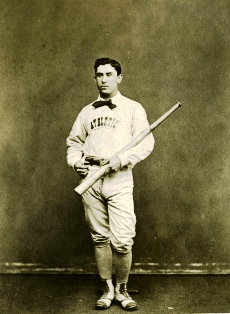
James Henry Haynie

James Henry Haynie

___

A postscript:

James Henry Haynie served in the 19th Illinois Volunteer Regiment in the Army of the Cumberland during the Civil War.  After the war he went to work for The Chicago Times where he remained until 1875 when he became foreign editor of The New York Times.  He later served as a Paris-based correspondent for several newspapers.  He returned to the United States in 1895 and died in Boston in 1912.

Haynie covered the Great Chicago Fire in 1871 for The Times.  Twenty years after the fire a reporter for The Chicago Republican named Michael Ahern claimed that he, Haynie and John English, a reporter for The Chicago Tribune had together created the story that the fire was the result of a cow belonging to Catherine O’Leary kicking over a lantern.

“Offered him $1,000 to Throw the Game”

21 Aug

Pitcher George “Charmer” Zettlein began his professional career with the Chicago White Stockings in 1871 when his friend, manager Jimmy Wood convinced him to leave the Brooklyn Atlantics.  He followed Wood to the Troy Haymakers, Brooklyn Eckfords and Philadelphia Whites, and they returned to Chicago together in 1874.

1875 would be the end of their professional association.

It’s unclear where the trouble began.  When Wood’s “private” conversation with a reporter from The St. Louis Democrat was printed verbatim in the newspaper, Zettlein was the only Chicago player he said anything negative about—referring to his friend “as a poor batter and runner.”   Whether the comment contributed is unclear, but shortly after the season began, and the team started struggling, The Chicago Tribune said there was undisclosed “trouble” between the pitcher and manager.

George Zettlein

George Zettlein

Rumors of tension between the two heated up when allegations of throwing games were leveled at team captain Dick Higham; Zettlein also became a target of rumors, including second-hand reports that Wood accused him of “laying down.”  The Tribune said the day after Higham was replaced as team captain:

“It is known that the name of Zettlein was brought before the meeting (of the White Stockings directors) in connection with hints before made that affected his honesty.  It is due to Mr. Zettlein to say that no charges were made against him…the conviction is generally expressed that the White Stockings pitcher works hard to win.”

After the White Stockings and Zettlein lost 15-3 to the Mutuals in New York on July, 31 Wood and his pitcher were finished.  Zettlein sent a letter to club President William Hulbert accusing Wood of “arbitrary and unjust” treatment, and demanded his release.

The Tribune said:

“(Zettlein) will play ball in Chicago no more, except as the member of some visiting club.  He has asked to be relieved from the contract which binds him to the Chicago management.  His request has been granted, and he will not return here with the club…Zettlein states that Wood’s conduct towards him during their Eastern trip has been unbearable.”

Part of Zettlein’s dissatisfaction was that Wood played him at first base in three games; although he had played at least one game in the field every season except 1874, seemingly with no complaints.

The Tribune said Zettlein claimed Wood “has systematically imposed upon him to such an extent that he cannot remain.”

Already on the East Coast, Zettlein immediately signed with the Philadelphia Whites.  His troubles weren’t over.

After less than a month with the Whites, the vague rumors in Chicago turned into direct allegations from his new teammates.  The Philadelphia Times said on August 31, after an 11-3 Athletics loss:

“After the game between the Philadelphia and Hartford (Dark Blues) clubs yesterday, while the (Athletics) players were undressing an exciting discussion took place to the cause of the severe defeat.  (Third baseman/manager Mike) McGeary was angry and he charged (outfielder Fred) Treacy with being in collusion with the gamblers and selling the game, and pointing to Zettlein, said, ‘And there’s another one who’s in it.’”

Zettlein and Treacy had been teammates, with Wood, on the 1871 White Stockings.  Both players denied the charge, and both were immediately suspended by the team pending an investigation.  At the same time the two suspended players charged that McGeary was the gambler, and said a Hartford player, well-known for his integrity could back up their allegations.  The Times said:

“Zettlein and Treacy had a talk with (Jack) Burdock, of the Hartfords…a meeting of the Philadelphia club was held, at which the subject was brought up.  Zettlein and Treacy were present, and made statements to the effect that Burdock (intended to show) that prior to the game McGeary had approached him and told him he had a large amount of money bet on the success of the Philadelphias and offered him $1,000 to throw the game so that the Philadelphias should win, and that he refused to have anything to do with such an arrangement.”

Burdock was also said to have additional information, including a charge that “McGeary approached him with (other) offers, saying they could make plenty of money,” but there is no record of Burdock ever discussing McGeary, or the allegations publicly.  The Times said “there was an exciting discussion over these astounding charges, “and that a committee was appointed to conduct an investigation.

Mike McGeary

Mike McGeary

Like most of the “investigations” into allegations of gambling in the National Association there appears to have been little real investigation of any of what was happening with the Philadelphia Whites.  Within a week the team announced that the “charges were not sustained.”  The only fallout from the scandal was that Bob Addy replaced McGeary as manager for the final seven regular season games.

In October when the Whites met the Athletics in a 10-game Philadelphia series, Zettlein walked off the mound during the sixth inning of the tenth game with his team behind 7 to 3.  The Philadelphia Inquirer said “Zettlein left the field, giving as an excuse that some of his men were trying to lose the game.”

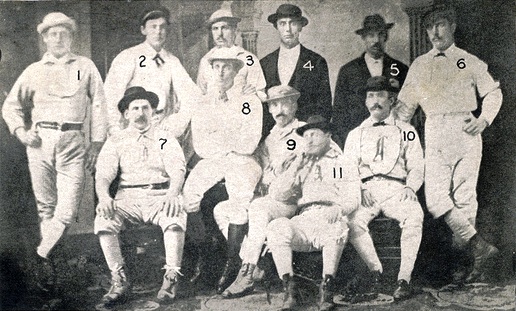
Zettlein, (7), Wood (8), Treacey (9), as teammates with the 1871 Chicago White Stockings.

Zettlein, (7), Wood (8), Treacey (9), as teammates with the 1871 Chicago White Stockings.

Jimmy Wood never managed again after 1875.

After poor seasons during the National League’s inaugural year in 1876, Zettlein (4-20 for the Athletics) and Treacy (.214 and 39 errors for the New York Mutuals), two of the principals in the 1875 scandal were out of baseball.  McGeary, who joined the St. Louis Brown Stockings in 1876, would become a major figure in the 1877 game fixing scandal of 1877.  As with the charges 1875, nothing was proven and after sitting out the 1878 season McGeary returned to the National League and played until 1882.