Tag Archives: Pittsburgh Pirates

“Even when he Wins he Loses”

18 Apr

During his most successful season as a major leaguer, Bobby Byrne had some advice for the children who wished to follow in his footsteps:

“If they asked me I would tell them everything I could to keep them from starting.  Not that I knock the profession, but I think it is a poor one to choose, not because of the life itself, but because of its temptation and hardships, and worse than that, the small chances of being successful.”

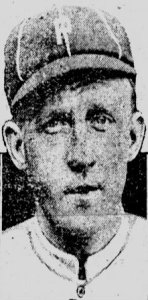
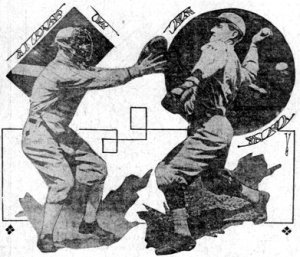
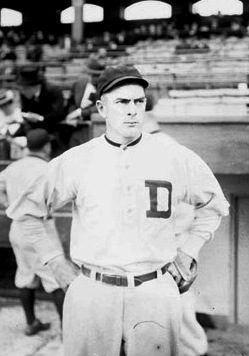
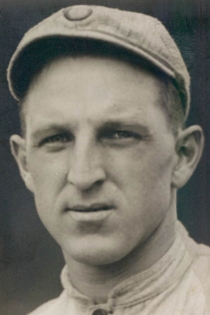
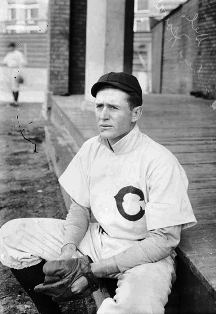
Bobby Byrne

Bobby Byrne

That answer was given to syndicated journalist Joseph B. Bowles during the 1910 season when he asked Byrne questions about how he started in baseball “in order to help young and aspiring players.”

Despite being the starting third basemen for the defending World Champion Pittsburgh Pirates, and on his way to leading the National League in hits (tied with Honus Wagner) and doubles (178, 43), while hitting a personal-best .296 in 1910, he told Bowles:

“If I had it to do over again I do not think I ever would become a professional ballplayer, in spite of the fact that I love the game and love to play it.  I think a young fellow would do better to devote himself to some other line than to take the chances of success in the national game, for even when he wins he loses.”

He talked about how he started, and offered a theory about where the best players come from:

“I wanted to be a ballplayer and was educated at the game in a good school, on the lots around St. Louis.  I think that ballplayers develop faster when they are in the neighborhood of some major league team.  One or two of the players on a ‘prairie’ team are at every game the big league (team) plays.  They see how the game is played, and being at that age as imitative as monkeys, they work the same things on their own teams and teach all the other boys.  I have noticed when any city has a pennant winning club the quality of baseball played by the boys and the amateurs in that vicinity are much improved.”

Byrne

Byrne

Byrne said because of his time playing on the sandlots of St. Louis, he “picked up the game rapidly,” but said it wasn’t until he began to play professionally, first in Fort Scott, Arkansas, then in Springfield, MO, that he corrected the biggest flaw in his game:

“The hardest thing I had to learn was when to throw.   I think I must have thrown away half the games we played before I learned not to throw when there was no chance to get the runner. I think that is one of the first things a young player should learn; to look before he throws and only throw when he has a chance to make a play.  The next thing, it seems to me, is to learn to handle one’s feet and to keep in the game all the time, and be in position to move when the ball is hit.”

Even at the pinnacle of his career, the man who discouraged children from following in his path, was also somewhat cynical about his own experience:

“The biggest thing I had learned was that, no matter how far a fellow gets up in the business, there still is a lot he does not know, and by dint of watching and learning I held on, and still am learning and willing to learn.  When I know it all I’ll quit, or be released.”

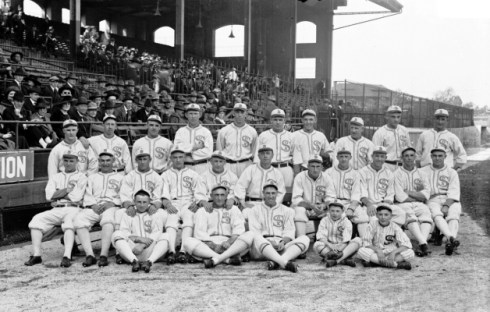
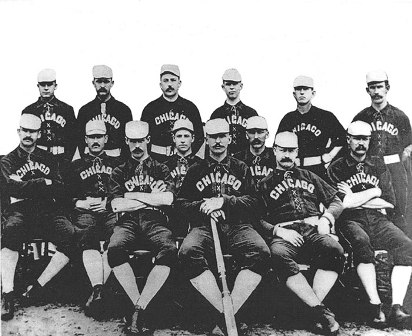
Byrne continued “learning” for seven more seasons, and the end of his career was fitting for someone who warned that a young man should steer clear of baseball because “even when he wins he loses.” After being acquired on waivers by the Chicago White Sox in September of 1917, he appeared in just one game, on September 4.  He was with the team when they clinched the pennant 20 days later; and was released the day after he appeared in the team photo commemorating their American League Championship.

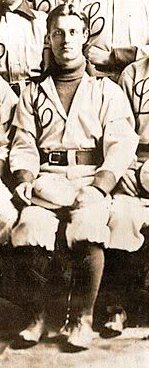
Group portrait of American League's Chicago White Sox baseball team posing in front of a section of the grandstands on the field at Comiskey Park, Chicago, Illinois, 1917.

White Sox team photo after clinching 1917 pennant, Byrne is fourth from right in second row–he was released the following day.

While the Sox were beating the Giants in the World Series, Byrne was back in St. Louis operating a bowling alley.   After three years away from baseball, he managed minor league teams—the Miami (OK) Indians and Saginaw (MI) Aces—in 1921 and ’22 before returning again to the bowling business.

His admonition against professional baseball didn’t stop his two sons from having their own brief minor league careers; Bobby played for several clubs between 1939 and 1941, and Bernie (listed as “Byrnes” on Baseball Reference) played for the Paragould (AK) Browns in the Northeast Arkansas League in 1940.  Both had their careers interrupted by WWII, Bernie was an airforce fighter pilot in Asia, while Bobby was awarded the Distinguished Flying Cross, Air Medal and Purple Heart while flying for the airforce in the Mediterranean Theater.

“It’s the Noodle that Throws the Ball, not the Wing”

13 Apr

Charles Benjamin “Babe” Adams appeared washed up at age 34.  After posting a 2-9 record and 5.72 ERA in 1916, the Pittsburgh Pirates released him.  But, Adams wasn’t done.

He won 20 games in the Western League in 1917 and was 14-3 with a 1.67 ERA for Kansas City Blues in the American Association when the Pirates reacquired Adams in July of 1918.

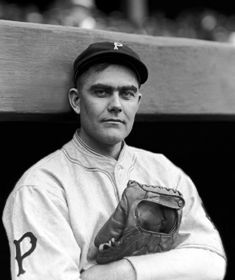
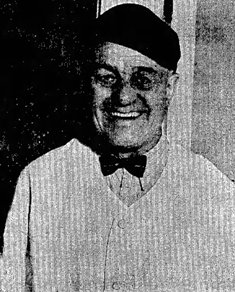
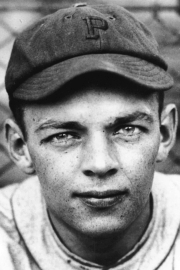
Babe Adams

Babe Adams

Adams was 49-29 with a 2.17 ERA from his return through the 1921 season, and now turning 40, talked about his success with Roy Grove, a cartoonist, and writer for The Cleveland Press:

“A ballplayer has lots of time in which he can do himself harm.

“A fellow can’t disregard nature and get away with it.  He can kid himself along for a while but finally, he’ll snap…A fellow my years has to dig some to get by the young chaps.”

But, said Adams, baseball had changed a lot since his debut in 1906,and most younger pitchers could never approach his longevity:

“The pitching game isn’t what it used to be.  In my day, I used to have to sit down and figure out the different things that go to make pitching and then go out and practice them hard.  The young pitcher today can pick the game up in a few weeks.  He has two or three coaches, with modern methods of tricks and systems and so forth that have been accumulated through years of experience.  That‘s the reason I think they crack so fast.  They don’t get the right seasoning during youth to stand the grinds of the years.”

But in the end, Adams said he was just smarter than most:

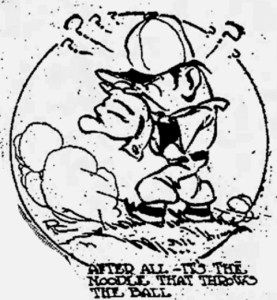
“It’s not so much the old pitching arm these Twentieth Century days as it is the pitching head.  After all, it’s the noodle that throws the ball, not the wing.  There are some fellows I can throw a high inside ball to and they won’t touch it, and then let some other pitcher come up and do the same thing and that same player will knock it outa the lot.

“If a fellow were to stop thinking out there in the box and resort to strength, he’d darn soon find out he was losing all his friends.”

babeadams1

A Roy Grove cartoon that accompanied the article.

Adams’ “Noodle” and excellent control (18th all-time lowest walks per nine innings) kept him in the National League for five more seasons, until he was 44.

Los Advertisements–Hans Wagner, Lewis 66

26 Feb

wagner66

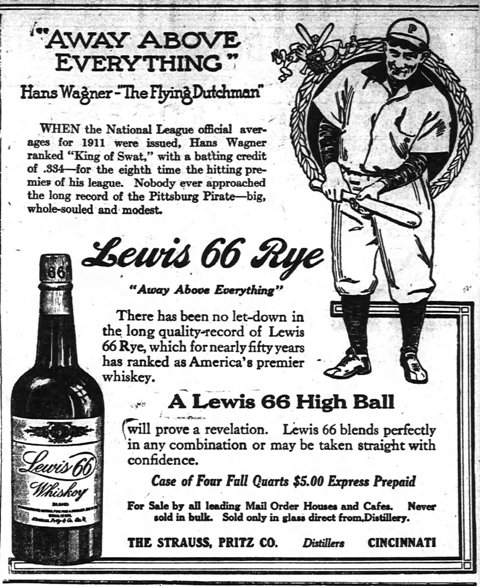
A 1912 advertisement for Lewis 66 Rye, featuring Honus Wagner:

“Hans Wagner–‘The Flying Dutchman’

“When the National League official averages for 1911 were issues, Hans Wagner ranked ‘King of Swat,’ with a batting credit of .334–for the eighth time the hitting premier of his league.  Nobody ever approached the long record of the Pittsburgh Pirate–big, whole-souled and modest.”

Five years later, as Wagner’s career was drawing to a close, Grantland Rice of The New York Tribune said:

Grantland Rice

Grantland Rice

“Wagner stands to date, for team worth, as the most valuable ball player that ever lived.

“A great infielder is of more value than a great outfielder, so in this respect Wagner has even ranged beyond Ty Cobb.

“Hughey Jennings was a star–a great hitter, a brilliant infielder and a brainy workman.

“But even Hughey has to make way before Wagner a man who for twenty years could average .340 [sic 21 years, .328] at bat and cover all the ground in sight between third base and the right field bleachers.

“Wagner is the game’s main marvel…He was as marvelous in the field as at the bat.  Floundering, awkward looking, bow-legged, with his vast hands dangling at his side, no one would ever have taken him for any action snapshot of grace.

Honus Wagner

Honus Wagner

“But when it came to killing base hits back of third and back of second, mopping up his side of the field with a deadly certainty, he had no equal.

“If Wagner had been a .240 hitter he would have been one of the most valuable man of all time through his great defensive value alone.”

Lost Advertisements–The $30,000 Battery

30 Dec

otoolead

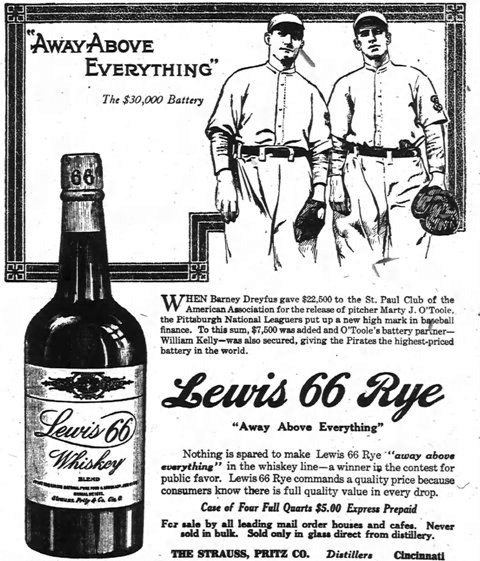
An advertisement from the spring of 1914 for Lewis 66 Rye from The Strauss, Pritz Co., of Cincinnati:

“When Barney Dreyfus gave $22,500 to the St. Paul Club of the American Association for the release of pitcher Marty J. O’Toole, the Pittsburgh National Leaguers up a new high mark in baseball finance.  To this sum, 7,500 was added and O’Toole’s battery partner–William Kelly–was also secured, giving the Pirates the highest priced battery in the world.”

The price paid for Kelly remains a matter of dispute.  The New York Times said he was acquired “for less than $5,000.”  The Washington Post put the price at $10,000 while The Pittsburgh Gazette Times, The Pittsburgh Press and The Associated Press said it was $12,500.


Kelly and O'Toole

Kelly and O’Toole

O’Toole posted a 24-27 record from 1911-1913.  He struggled in 1914, and with a 1-8 and record and 4.68 ERA in August, he was sold to the Giants, in 10 appearances with new York he was 1-1 with a 4.24 ERA.  Dreyfus’ “$22,500 Beauty,” was done as a major leaguer at 25 years old, seven months after the ad appeared.  He played four more seasons in the American Association and Western League; his professional career was over before his 30th birthday.

Kelly’s big league career was over before the ad came out.  In three seasons with Pittsburgh, he appeared in 104 games and batted .290, but was sold to the Toronto Maple Leafs of the International League at the end of 1913 season.  The Pittsburgh Press said the sale came as no surprise:

“Kelly came here from St. Paul with Marty O’Toole, but he has not developed as was expected of him, and has long been rated as considerable of a disappointment. It looks very much as if he were just a trifle shy of major league calibre.”

Kelly played four years in Toronto, hitting .227 in 280 games; his professional career was over at age 31.


“The Man who Lives in the Santa Claus House””

23 Dec

Walter Sydney Woods earned his nickname “Sunday School Pitcher” because he never played a game on Sunday throughout his 20-year professional career.

Woods also played lacrosse, football, basketball and tennis and was considered one of the best athletes in New Hampshire when he chose to enter professional baseball with Portland in the New England League in 1895.

In 1897, he won 17 games for the Springfield Ponies in the Eastern League and was drafted by the Chicago Orphans.

When Woods arrived in Chicago, it was assumed he’d give up his pledge not to play on Sunday, but he quickly made it clear that he would quit first.  The Sporting Life said:

“Walter Woods, Chicago’s model man, will not play Sunday ball either at home or on the road.  The conscientious youngster who neither smokes, drinks nor swears, also has scruples against participating in games on the Sabbath. He will thus be a standing reproach to all the other members of the Chicago Club”

Woods pitched and played infield and outfield for Chicago, going 9-13 and hitting only .175.  He was traded to the Louisville Colonels the following season and posted an identical pitching record, although The Sporting Life said in July:

“Walter Woods is an unlucky pitcher.  Though pitching finely he has won but two games out of his last eight.”

Woods went to the Pittsburgh Pirates in 1900 but was released in April.  He spent the next 14 season playing for a variety of teams in the Eastern and New York State Leagues, exclusively as a position player after 1902.

Walter Woods, 1899 Louisville Colonels

Walter Woods, 1899 Louisville Colonels

Woods also coached baseball at the University of New Hampshire from 1897-99 and at Dartmouth from 1912-1915 and played semi-pro football during the winter.  After baseball, he went to work for the US Postal Service.

But to a generation of kids in Portsmouth, New Hampshire, none of that mattered.  At Christmas every year, he was known as “Jolly Wally Woods-the man who lives in the Santa Claus house.”

For about 15 years until his death, kids would line up in front of Woods’ house one day about a week before Christmas and wait for him to appear in an attic window dressed as Santa Claus.  Woods would lower baskets of candy and toys down to the children with a rope, and then on Christmas morning, he was back in the suit with presents for all the neighborhood kids.

Wally Woods

Wally Woods

The “Sunday School Pitcher” died in Portsmouth in 1951.

Things I Learned on the Way to Looking Up Other Things #16

21 Oct

Pirates Slump, 1921

The first place Pittsburgh Pirates were preparing for a doubleheader with the New York Giants on August 24, 1921, when the team took time out to pose for a photo.  The Pittsburgh Leader said:

“Someone happened to mention, as the photographer moved away, that for a whole team to watch the little birdie at once was a jinx.”

The team promptly went out and dropped the doubleheader, then lost three more to the Giants.  The paper said of the five straight losses:

“It doesn’t prove the jinx exists.  But it does prove that to imbue a man or a team of men, with the idea that they can’t win a ballgame generally means that they won’t win.  For their pep and enthusiasm has been stolen.”

The Pirates finished second, four games behind the Giants.

Anson’s All-Time Team, 1918

While visiting St. Paul, Minnesota in the summer of 1918, Cap Anson was asked by a reporter for The Associated Press to name his all-time all-star team.  The reporter said the team was most “notable for including in its makeup not one” current player:

"Cap" Anson

                        “Cap” Anson

“According to Captain Anson, at  least four outfielders of old times are better than (Ty) Cobb or (Tris) Speaker and (John) Clarkson, (Amos) Rusie, and (Jim) McCormick, he thinks were better pitchers than (Grover Cleveland)  Alexander  or (Walter) Johnson.  His line-up would be:

Catchers—William “Buck” Ewing and Mike “King” Kelly

Pitchers—Amos Rusie, John Clarkson, and Jim McCormick

First Base—Captain Anson, himself

Second Base—Fred Pfeffer

Third Base—Ned Williamson

Shortstop—Ross Barnes

Outfielders—Bill Lange, George Gore, Jimmy Ryan and Hugh Duffy

Cy Young’s Five Rules, 1907

Forty-year-old Cy Young won 21 games for the Boston Americans in 1907 and his longevity became a popular topic of newspaper copy until he pitched his final major league game four years later.

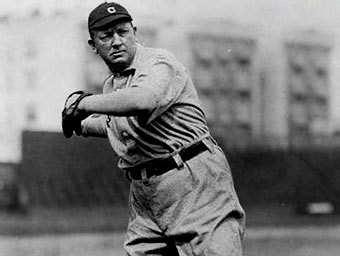
Cy Young

                                             Cy Young

During that 1907 season he gave a reporter for The Boston Post his advice for young players:

“(T)o the young player who seeks his advice about getting in condition and being able to stay in the game as long as the veteran himself, Cy lays down a few simple rules, which are as follows:

  1.  Live a temperate life
  2. Don’t abuse yourself if you want to attain success
  3. Don’t try to bait the umpires; abusing the arbitrators does a player no good and harms him in the eyes of the umpires, players and public in general
  4. Play the game for all you are worth at all times
  5. Render faithful service to your employers

Regarding his “rule” about umpires, Young said:

“What’s the use in kicking?  The umpire won’t change his decision, and kicking will give him another chance to get back at you for your silly abuse.”

“Daily Chats with Famous Ballplayers”

18 Sep

In 1916, a series of two to three paragraph items called “Daily Chats with Famous Ballplayers” (some papers called the feature different names) appeared in several smaller West Coast and Midwest newspapers.

Some highlights:

Oscar “Ossie” Vitt, third baseman for the Detroit Tigers, who survived a beaning from Walter Johnson of the Washington Senators on August 10, 1915:

“The world stopped moving when the ball nicked my bean.  Johnson thought I was killed and I guess I thought so myself for awhile, so far as I was able to think at all.

Ossie Vitt

Ossie Vitt

“My head proved to be the goods alright and wasn’t worse for wear.  But it upset Johnson so much that he couldn’t locate the plate and we pounded him all over the lot (Vitt was hit leading off the first inning—Johnson gave up eight runs after that in six innings and lost 8 to 2 to Detroit).”

St. Louis Cardinals pitcher Henry “Hi” Jasper on the superstition of teammate Harry “Slim” Sallee:

“Sal’s pet superstition is that it’s bad luck for him to warm up with any catcher but the one who is to work in the game with him.

“If the playing backstop has batted last and has to put on his shin guards and armour before warming up, Sal will never throw a ball to the plate to any man who may come out of the dugout with a mitt.  He will throw either to the first or third baseman.”

Pittsburgh Pirates pitcher Al Mamaux on a lesson learned during a loss to the Chicago Cubs in September of 1914:

“Smart old timers can always make it tough for youngsters just breaking in.  I remember one day when I was the goat for a trick pulled by Roger Bresnahan.”

Mamaux

Al Mamaux

Mamaux said Chicago had two runners on base and Bresnahan was coaching third.

“(He was) talking real friendly like to me (then) hailed me suddenly as the ball was returned to me.  ‘Say Al, toss me that ball I want to look at it,’ said Roger.  I didn’t give it a second thought…tossed it towards him and I’ll be darned if he didn’t step to one side and yell to the runners to beat it home.  Each advanced a base and would have scored if Jimmy Viox hadn’t run his head off to recover the ball.  Believe me that one cured me.”

George Stallings, on suspensions and how badly the Boston Braves needed George Stallings:

“You don’t have to call an umpire all the names in the calendar to draw a suspension.  I got three days off for just remarking to (Charles “Cy”) Rigler that he ought to go to jail for umpiring a game like he did the other day.

George Stallings

George Stallings

“Nothing that I could say or do would make any difference.  What I can say though right now is that the action of (National League) President (John) Tener, coming as it does, with the race so close, appears peculiar to say the least (Tener said the suspension was for a series of altercations that Stallings and his players had with umpires during the two months before the August suspension was announced).

“Without any braggadocio I can say that my suspension will cripple my club considerably.  I know what my presence means to the club and so does President Tener.”

Boston won all three games during Stallings’ suspension and regained second place, but finished the season in third, five and half games behind the Brooklyn Robins.

“The Phillies were Somewhat Crippled by the absence of Roy Thomas”

14 Sep

Charles “Chief” Zimmer was acquired by the Philadelphia Phillies to play for and manage the team in 1903; it was assumed he couldn’t do worse than Bill Shettsline who led the team to a 56-81 record the previous season.  He did.

Unlike nearly every other “Chief” in 19th Century baseball, Zimmer had no Native American blood and various stories have circulated as to the origin of the nickname.  His 1949 obituary said:

“In 1886 he joined Poughkeepsie as captain and manager…”since we were fleet of foot we were called Indians.  As I was the head man of the Indians somebody began to call me “Chief.”  It stuck.”

The Pittsburgh Press said in 1904:

“Zimmer received his sobriquet as ‘Chief’ because of his facial resemblance to an Indian, although he is a German.”

Zimmer was one of the best catchers in baseball for more than a decade.  He had brief trials in the National League with the Detroit Wolverines and American Association with the New York Metropolitans from 1884 and 1886, and was playing for the Rochester Maroons in the International Association in 1887 when his contract was purchased for $500 by the Cleveland Blues of the American Association.

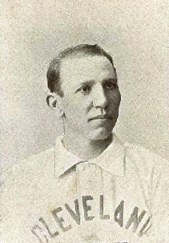
zimmer

Chief Zimmer

Zimmer was the starting catcher for the Blues when the team moved to the National League and became the Cleveland Spiders in 1889, and remained in Cleveland until 1899.  In 1890, he caught 111 straight games; which was the Major League record for 19 years.

By January of 1903 the 43-year-old’s best days were behind when Philadelphia acquired him on waivers from the Pittsburgh Pirates and named Zimmer manager.

After a 2-2 start, the Phillies never saw .500 again and Zimmer quickly lost control of his team.

The team went into June with an 11-26 record.  Things got worse that month in Cincinnati when Zimmer put the team’s captain,  centerfielder and leadoff man Roy Thomas into the lineup–Thomas was  a devout Christian who did not want to play on Sundays.  The Philadelphia Record said:

“Manager Zimmer had some trouble getting Roy Thomas to play in the Sunday game, he claiming that he had not contracted to play on Sunday, and that he had no desire to break the Sabbath.  In the end, however, Zimmer prevailed and Thomas went into the game.”

The Philadelphia Times said Zimmer talked to the team’s new owner, James Potter, who was reported to have said:

“So he won’t play today, eh?  Well, then place him on the bench today, tomorrow and for the remainder of the season, without pay.”

Thomas relented, but told reporters before the game::

“I’m playing under protest.  There’s nothing in my contract that exempts me from playing on Sunday, but when I signed it I had no idea that the Philadelphia Club would change hands and abandon old precepts.”

The following Sunday, with the Phillies in Chicago, The Associated Press (AP) said:

“Thomas made his protest doubly strong and backed it up by staying out of uniform that day.”

After Philadelphia’s 4 to 2 loss, The Chicago Tribune said:

“The Phillies were somewhat crippled by the absence of Roy Thomas who does not like the new ownership of the club, because it believes in Sunday games. which Roy does not.”

As a result The AP said,  other players on the slumping team suddenly found religion.

“Now several other members of the team declare that they are as much opposed to playing baseball on Sunday as is Thomas and that their religious scruples are just as strong as his.”

The article quoted an unnamed member of the Phillies:

“(I)f the club insists on showing partiality to Thomas the others who also object to playing on Sunday, but who are willing to help out the club, will insist on the same privileges.”

Zimmer faced a full-blown revolt as they prepared to embark on a 19 game road trip:

“All of which portends a pleasant trip in the West for Zimmer when he starts out again.”

The Philadelphia papers did not continue to pursue the story during the Phillies’ 4-15  road trip, but it seems that for the remainder of 1903 Thomas backed off of his demand as he appears in box scores for several Sunday games in the final three months of the season.

Roy Thomas

Roy Thomas

The Phillies limped to a 49-86 seventh place finish, seven less victories than the previous season under Shettsline.  Zimmer was dismissed at the end of the season and was replaced by Hugh Duffy.

Thomas’ Sunday request was granted the following season, with manager Duffy making most of his appearances as a player in 1904 on Sundays when his centerfielder took the day off.  There is no record of teammates complaining about Thomas’ Sunday schedule under Duffy’s management.

Regardless of the team’s new-found harmony, the Phillies under Duffy finished 52-100.  Potter sold the team after the 1904 season to Bill Shettsline.

A shorter version of this story was posted 12-18-2012.


“He is a Model for the Young Ballplayer to Emulate”

21 Aug

March of 1916 was a bad month for “Prince Hal” Chase.

According to The International News Service, Chase, who spent the winter in San Jose, California playing for the Maxwells—a team sponsored by the automobile company–was “the last of the stars” of the defunct Federal League who had still not signed with a professional team.
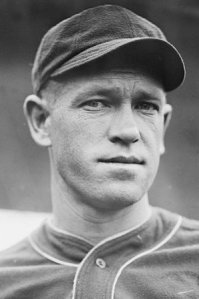
Hal Chase

                          Hal Chase

It got worse when he was arrested for failure to pay alimony and support to his ex-wife Nellie and their son Hal Jr.

He was released on $2000 bond, and it is unclear whether the case was ever fully adjudicated. After his release, Chase continued playing with the Maxwells and working out with Harry Wolverton‘s San Francisco Seals while rumors of who he would play for during the regular season were advanced on a daily basis.

The strongest rumors were that Chase would go to the New York Giants in a deal which would include Fred Merkle, who would be displaced at first base, going to the Chicago White Sox, the team Chase jumped to join the Federal League.

The Pittsburgh Post-Gazette said the deal was eventually foiled by Pirates Manager Jimmy “Nixey” Callahan, who “refuse(d) to waive.”

At the same time the papers in Cincinnati said Chase would be joining the Reds while West Coast papers said he might stay in California and join the Seals.

The Cincinnati Enquirer said Reds’ Manager Charles “Buck” Herzog “vigorously denied,” that Chase would join his club and said he would stick with Frederick “Fritz” Mollwitz at first base.
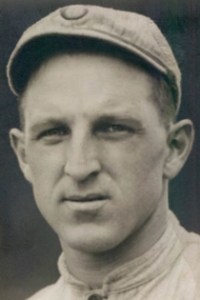
Buck Herzog

                     Buck Herzog

Herzog was even more forceful in his denial in The Cincinnati Times-Star:

“I wouldn’t have Chase at the camp.  Mollwitz is a very much better player, and he won’t jump when he is most needed.”

An even stronger indictment of Chase came from Detroit Tigers Manager Hugh Jennings, who told The Detroit News:

“As a player, there is nobody who can touch Chase for holding down first base.”

Jennings went on to note Chase’s intelligence, speed, and “superb” fielding:

“Yet for all his ability I would not have him on my club, and I do not believe any other major league manager will take a chance on him.  He will not heed training rules and has a demoralizing influence on the younger players.”
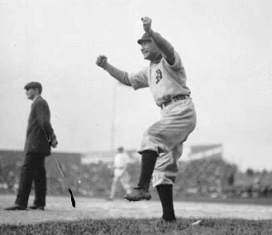
Tiger Manager Hugh Jennings

Tiger Manager Hugh Jennings

Jennings said while Chase managed the New York Highlanders in 1910 and ’11, led his team “astray,” instead of “trying to keep his players straight.”

Perhaps most damaging, Jennings said Chase was a source of dissent on the clubs he played for:

“One of his favorite stunts is to go around telling on man what another is supposed to have said about him, with the result that in a very short time he has the fellows pulling in all directions  instead of working together.  He is apt to take a dislike to the manager and work against him with the players until the whole squad is sore and will not give the sort of work that it is paid for.”

Jennings, whose team finished second in 1915 with George Burns at first base, said:

“The Tigers would win the pennant beyond question with a player of Hal’s ability on first this season, but I wouldn’t risk introducing a man who had such a bad disposition.  I believe that we can accomplish better results by having harmony on the squad, even if we have to get along with a first baseman with less talent.”

Despite the negative press, and over the objection of Herzog, the Reds purchased Chase’s contract from the defunct Buffalo Blues on April 6.

The New York Times lauded the move and defended Chase against his detractors.  The paper said “His failure with the New York Americans was due to petty controversies and rebellion against the club’s discipline,” and “(W)hen he is at his best there is not a player in the major leagues who is more spectacular than ‘Prince Hal.’”

Chase initially balked at reporting to Cincinnati, telling The San Francisco Chronicle “I haven’t made up my mind…it is possible that I would prefer to remain in California, even if there is no chance to play ball.”

Six days later, while his new team opened the season, Chase was on a train to Cincinnati.  The Associated Press said he agreed to join the Reds after receiving “word from Cincinnati that his entire contract with the Federal League, which calls for a salary of $8,000 a year, has been taken over,” by the Reds.

When Chase arrived in Cincinnati on April 15, the Reds had won three straight after losing their opener, and Mollwitz had played well at first base with five hits in 13 at-bats and just one error.

According to Frederick Bushnell “Jack” Ryder–college football star and Ohio State football coach turned sportswriter–of The Enquirer, Herzog had no intention of putting Chase in the game April 16:

“Herzog had little thought of playing him, as Fritz Mollwitz was putting up a bang-up game and hitting better than any member of the club,” until “Mollwitz made a bad mental mistake in the third inning.”

After Umpire Hank O’Day called a strike on Mollwitz, “the youngster allowed his tongue to slip,” and was ejected.
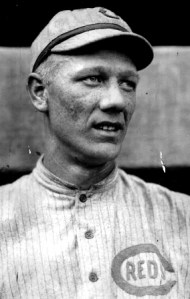
Fritz Mollwitz

                 Fritz Mollwitz

Chase came to bat with an 0-2 count and doubled off of Pirates pitcher Frank Miller, stole third, and after catcher Tommy Clark walked “(Chase) caused an upheaval in the stands by scoring on (a) double steal with Clark.”

Chase also wowed the crowd in the ninth.  After making “a nice stop” on Max Carey’s hard ground ball over first base and with pitcher Fred Toney unable to cover first in time, Chase dove “headforemost to first base to make a putout on the fleet Carey.”

In all, he played 98 games at first base, 25 in the outfield, and 16 at second base, he also hit a league-leading and career-high .329.

While the Reds struggled, Chase was wildly popular in Cincinnati.  The Enquirer’s Ryder was possibly his biggest fan—the writer raved about Chase’s performance in the outfield, his adjustment to playing second base, and his consistent bat.

While Chase thrived, Herzog, who had a contentious relationship with Reds’ owner August Herrmann, exacerbated by the signing of Chase against his wishes, began to unravel as the season progressed.  On May 30, he was hit in the head and knocked unconscious, by a throw from catcher Ivey Wingo during pregame warm-ups.  While he recovered physically, he became increasingly frustrated by the club’s performance.  On July 5—with a 29-40 record– he announced that he would retire at the end of the season when his contract expired.  He told The Times-Star:

“It would be a great blow to my pride to continue as a player, after being a manager for three years.”

The following day it was reported that the Chicago Cubs and New York Giants were interested in acquiring Herzog.  Within a week, it was reported that Herzog was heading to New York in a trade that would bring Christy Mathewson to Cincinnati to manage.  The negotiations continued over several days but floundered.  The Cubs reentered the picture—Owner Charles Weeghman told The Chicago Daily News “I brought the bankroll along…and I’ll get Herzog so quick I’ll make (the Reds) eyes pop.”  He later told the paper he offered “$25,000 and an outfielder” for Herzog.

At the same time The Brooklyn Daily Eagle said the Dodgers were after Herzog, and The Pittsburgh Post said the Pirates were in pursuit as well.

The pressure got to Herzog who held himself out of the lineup of July 17, The Enquirer said:

“The managerial situation is worrying Herzie, who had expected by this time to be cavorting at the third corner for the giddy Giants.  With the deal held off for various reasons, the Red leader is naturally a bit anxious.”

Herzog’s destination was unclear, but it was clear he would be gone.  With Mathewson seeming to be out of the picture, rumors persisted—fueled by Ryder of The Enquirer and William A. Phelon in The Times-Star—that Chase would be the new manager.

On July 20, Ivey Wingo managed the team to a doubleheader split with the Philadelphia Phillies, and the papers reported on Herzog’s successor:

The Enquirer ran Chase’s picture under the headline “Reds’ New Manager,” although they hedged in another headline which said he would “probably” be named.

The Times-Star said “Hermann has decided to allow Hal Chase to manage the team for the remainder of the season, and for this reason he does not want Mathewson.”

They were both wrong.

Within hours of the papers hitting the streets, a trade involving three future Hall of Famers was agreed to.  Herzog, along with catcher Wade “Red” Killefer went to New York for Mathewson, Edd Roush, and Bill McKechnie.  Mathewson was immediately named manager.
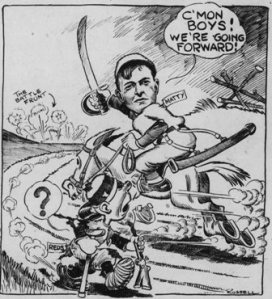
Cartoon accompanying the announcement of Mathewson's appointment.

          Cartoon which accompanied the announcement of Mathewson’s appointment.

Ryder said in The Enquirer that “Chase was greeted with a great round of applause” when he stepped to the plate for the first time on July 20:

“The fans at that time did not know of President Herrmann’s change of mind with regard to Matty, and they thought Chase was the new leader of the team.  The universal and hearty applause showed how popular the star third-sacker has become in this town.”

The Chase story is well-known; two years later Mathewson would suspend him, charge him with “indifferent playing.”  With Mathewson in Europe when the charges were heard by National League President John Heydler that winter, three Reds teammates, and Giants Manager Pol Perritt testified Chase had thrown games.

But in October of 1916 Chase appeared to have repaired his reputation, and his difficult March appeared to be far behind him.  In a season wrap-up, The Enquirer–there was no byline on the article, but it was likely the work of Ryder–published a glowing profile of the National League’s leading hitter and the man who nearly became the Reds’ manager:

“What has become of all the talk about Chase being a bad actor, a disorganizer, a former of cliques and a knocker of managers?  All gone to the discard.  Chase has not only played brilliant ball for the reds all season, but he has been loyal to the club and the managers.  He worked hard for Herzog and equally hard for Matty.  He has been a wonderful fellow on the club.  Chase is modest and does not seek notoriety or approbation…He played game after game in midseason when he was so badly crippled with a Charley horse that he could scarcely walk.  When Manager Herzog wanted to make an outfielder out of him he went to the garden and played sensational ball…Later in the season he filled in for several games at second base, a difficult position for a left-hand thrower, but he put up great ball there.  He is a natural ballplayer of the highest class, and with it all a perfect gentleman, both on and off the field.”

The profile concluded with this assessment of the man who would become synonymous with the baseball’s greatest sins:

“Chase has been a great man for the Reds, and there is many a manager of today who wishes that he had got in ahead of the Cincinnati club in signing him.  He is the smartest ballplayer and the quickest thinker in the National League today.  He is a model for the young ballplayer to emulate, because he is a real artist in his profession.”

“Baseball is full of Authenticated instances of Woman’s Influence over it”

27 Jul

In 1905, The Washington Evening Star said:

“The unwritten history of baseball is full of authenticated instances of woman’s influence over it…Not infrequently a sweetheart’s or a wife’s objections to the game cause a star to forsake the diamond for work for which he is not fitted in the least degree, and at which he makes only a living at best.

Bill Lange is a case in point.  Up to (1899) he was one of the best ground coverers in the profession, and as a batsman had a high average.  From the day of his wedding, his wife kept at him to leave the game, urging him to take the step on the grounds of personal safety.  Bill reasoned with her and told her time and again that he knew of no other job for which he could make $4,500 in six months.  But Mrs. Lange was obdurate, and so, when his last season closed Bill ruefully announced to his manager that the diamond would never know him again.  And it has not, though he has annually been tempted by numerous flattering offers. ‘I have given my word to my wife,’ he says simply, ‘and so long as she feels as she does about the game I shall not take up the bat.’”


Bill Lange

Bill Lange

Lange never played another professional game

The Evening Star said that occasionally a wife would change her mind, and allow her husband to play professional ball; George “Del” Howard was one such player.

Howard—under his middle name Elmer—was a member of the Mattoon, Illinois team in the Indiana-Illinois League in 1899.

“Howard took as his wife the daughter of a prominent citizen of a central western town.  They had scarcely settled down after their honeymoon when Mrs. Howard began pleading with her husband to give up the game, naming as a reason that she had a strong dislike for it.  She was so insistent that finally Howard reluctantly severed connections with the game, and secured employment selling agricultural implements.

“But he did not give up all hope of returning to the diamond.  During the months that he was engaged in telling farmers of the merits of his particular make of wheat drills and mowers he spent his spare time endeavoring to get his wife interested in baseball. At first it was hard and slow work, and had to be accomplished diplomatically, but little by little he progressed to the point where Mrs. Howard would accompany him to games.  Then Howard explained every play made, told her about the players, introduced them to her, and made her acquainted with the woman folk of the players who were in the grandstand.

“At the end of four tedious years his work of education bore fruit.  Mrs. Howard came to him one day, confessed that she had changed her mind about baseball, declared that she would rather have him on the diamond than an agent for farm implements, and further caused him great joy by appending that he couldn’t get their quickly enough to suit her.“

After a five-year absence from baseball, Howard signed with the Omaha Rangers in the Western League in 1904.  He hit .316 in 144 games (finishing second to William “Bunk” Congalton of the Colorado Springs Millionaires for the batting title) and was purchased by the Philadelphia Phillies.

Del Howard

Del Howard

Traded to Pittsburgh for three players, the 27-year-old Howard made his major league debut for the Pirates on April 15, 1905, in Cincinnati with his wife Jessie in the stands.

Howard’s rookie season was his best; he hit .292 in 123 games with the Pirates.  He played in the major leagues for five seasons and was a member of the 1907 and ’08 World Series Champion Chicago Cubs.

Howard played and managed in the minor leagues through 1922. His wife Jesse died in California in 1933.  He died on his 79th birthday on December 24, 1956.