Tag Archives: Rube Waddell

Bill Setley

1 Oct

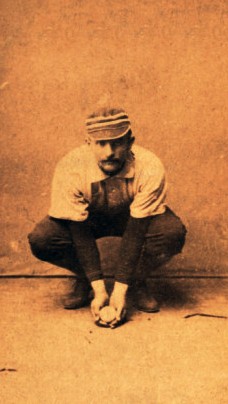
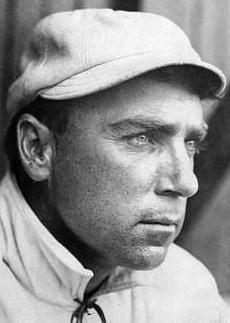
William Warren “Wild Bill” Setley was a career minor league player and umpire, and one of the most colorful figures in 19th and early 20th Century baseball.

He was born in New Jersey in 1871—Setley often claimed he was born in 1859; his grave marker and several sources still list this date, but there is a New Jersey birth certificate that confirms the 1871 date.
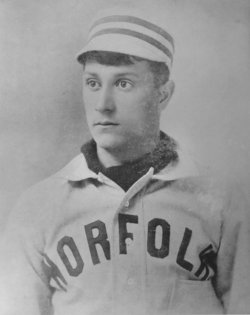
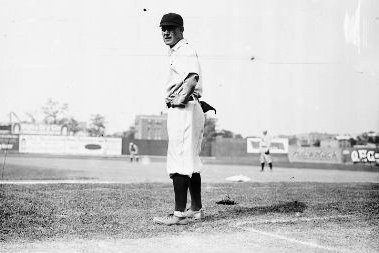
Bill Setley 1895

Bill Setley 1895

Setley spent the early part of his playing career in the Pennsylvania State League (PSL).  The Shenandoah Evening Herald said in 1893:

“(Setley) kept the home management on the anxious bench for many weeks last summer by his daring and acrobatic plays on the diamond and his eccentric whims between games.”

As a pitcher, Setley was credited with introducing the hidden potato play (made famous nearly a century later when Williamsport Bills Catcher Dave Bresnahan pulled a similar stunt), and he was known for turning routine plays in the outfield into spectacular circus catches.

William A. Phelon said Setley was “crazier than Rube Waddell ever thought of being,” and described an incident “when the pennant hung on the final game,”  with the winning runs on base in the ninth inning:

“Out came a fly to Setley.  Instead of catching it squarely in both hands he deliberately turned his back, reached out behind and made a dazzling circus catch—almost an impossibility.”

Years later, another Pennsylvania paper, The Mount Carmel Item described him as:

“(O)ne of the most erratic players in his day and while here a dozen years ago he was in his prime, but for a pack of cigarettes or a drink of whiskey he was liable to throw a game.”

George McQuillan who played in several leagues Setley worked as an umpire said:

“He is one of the real wonders of the game, and it’s too bad the big league fans have never had the chance to see him in action.”

There were many versions of the most often told story about Setley, and  Clarence “Pants” Rowland told the version that most often appeared in print:
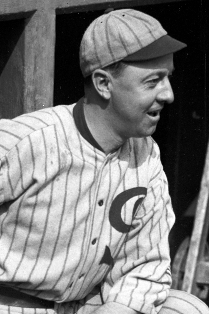
Pants Rowland

Pants Rowland

“’I was managing Dubuque in the Three-I League at the time,’ says Rowland.  ‘The game was being handled by Wild Bill Setley, who was quite the character in those days.

“’I was coaching at third base and we got a runner to first during the early innings.  The next batter made a single and our runner started on the dead run from first, rounded second and bore down on third.  Right at his heels was Bill Setley.

“The ball was quickly recovered and beat the runner to third by a couple of steps.  Setley waved him out, and I had nothing to say.  But you should have heard me yell when, on turning, he also called my other man out at second, although he was standing on the base.  The third sacker had whipped the ball down to the second sacker, trying to complete a double play on our man who was trying for the base.

“’Where do you get that way? I demanded.  You had your back turned on the play how could you call him out?’

“’Setley grinned, came over to me, and showed me a small mirror he had concealed in his hand.  ‘I had my eye on the play all the time,’ he said, ‘and you know he was out.’  I was stopped all right, had nothing further to say.’”

Setley, on a few occasions, told a different version of the story.  This one placed the event in Pennsylvania and substituted Jack Tighe for Rowland.

In this rendition, Setley claimed that on the way to the ballpark he received “an advertising mirror” as a present for his daughter.  During the game, Tighe scored from second base on an infield hit, but Setley said:

“(I) knew he couldn’t have reached there if he had gone within 50 feet of the third bag.  The crowd kept yelling ‘Throw the ball to third,’ and when the first baseman did so I called Tighe out.  ‘What’s that?  Out! What do you mean?’ He yelled, chasing out on the diamond like a wild man.  ‘You are out for cutting third.’  ‘Well, if I did you didn’t see me’…’Be reasonable, Jack’ I replied, pulling out the mirror and holding it up in the palm of my hand before my face.  ‘When I was running over to first I had this glass up this way watching you.’  That wilted Tighe and he walked back to the bench as meek as a lamb.”

The Texas League was one of the many minor leagues Setley worked as an umpire.  On September 5, 1910, a triple-header (the first two games were five innings each) was scheduled between the Houston Buffaloes and the Galveston Sand Crabs on the season’s final day, with Setley working as the umpire in all three games.  After the teams split the first two games, The Houston Post said:

“The last game of the Texas League race progressed nicely here until the second inning when (with Galveston at bat) (Gus) Dundon singled to left and (Joe) Kipp had walked.  Then (Houston pitcher  Roy) Mitchell and umpire Setley, while (Bert) James was at the bat, had some words.  Suddenly Mitchell turned on the umpire and knocked him down.  Setley arose and ran towards short position, when Mitchell threw the ball at him, striking him in the back of the head rendering him unconscious.  Immediately the crowd surged into the field.”

The Associated Press added a few details, including that Mitchell “ran up and cuffed (Setley) several times,” after hitting him with the ball, and:

“(S)everal thousand fans had swarmed into the field, all of them apparently in sympathy with Mitchell.

“Setley remained motionless on the ground and the rumor spread like wild-fire over the field that his neck was broken.  Six men picked him up, shouldered him and carried him to the club house, where a physician examined him only to discover that his pulse was perfectly normal and that he was uninjured.  It suddenly dawned on the physician that someone was playing possum.

“’Come out of it Setley,’ said the physician, ‘no one is going to hurt you.’

“Setley ‘came back’ with a grin and said nothing but his feelings had been hurt.”

During the “riot” on the field, the Galveston club left the ballpark in a wagon “and returned to town.”  The game was awarded to Houston as a forfeit.

Mitchell was arrested but quickly released on bond.  Five days later he made his big league debut for the St. Louis Browns, beating the Chicago White Sox 7 to 2.
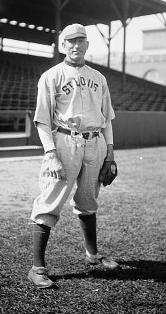
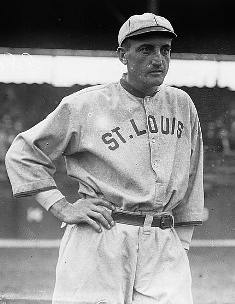
Roy Mitchell

Roy Mitchell

Somehow the Texas League and the National Commission failed to take any action against Mitchell for more than a month.  The Sporting News said:

“It was a matter of surprise that Mitchell was allowed to come direct to St. Louis and continue play, as if nothing had happened.”

He was fined $50, and while it was announced he was also suspended indefinitely, he was allowed to begin the 1911 season with the Browns.

Setley was let go by the Texas League in November.  The Fort Worth Star-Telegram said:

“(He) will always remember his short sojourn in this league as an umpire, as it probably was one of the most strenuous periods of his existence.  His first appearance was in Fort Worth, where he narrowly avoided a serious conflict with a spectator, and he precipitated wrangles at nearly every point he officiated, with the climax coming in the memorable last day’s game at Houston.”

More Setley stories later this month.
“It was one of those Lucky Days when a Player can hit a pea”

8 Aug

Norman Arthur “The Tabasco Kid” Elberfeld earned his nickname for his aggressive play and violent temper.  In 1904 he described his greatest game in an  article that appeared in several newspapers:

Kid Elberfeld

Kid Elberfeld

“It is not a cinch by any means to dig up the good and bad plays one has made.  If my team can win the game, that is about sufficient for me, and I forget many times just how prominently I may have figured in the victory.

“The best batting I remember having done was right up on Washington Heights last season, when we were playing the Philadelphia Athletics.  Connie Mack had saved Rube Waddell for us, and the famous southpaw never had more speed or better benders.  When Rube is right he is a wonder, and when it is remembered that he fanned thirteen batters that afternoon it can be appreciated that he was pretty near being tight.  It was Rube’s first appearance of the season in New York, and he was more than anxious to pitch a winning game.  It was the closest kind of contest, and we just managed to win out 4 to 3.  I was the lucky boy that day.  I made four clean plunks off Rube, drove in three runs and scored one myself.  That wasn’t so bad, when you say it quick.  There were only four hits made off Rube that day.  So I copped.

“It was one of those lucky days when a player can hit a pea.  Rube didn’t fool me a little bit.  I refused to let him drive me away from the plate, but stood up close and just met the ball.  Every hit was a hard one, too, and on a line.  If I had attempted to swing hard I might not have made a hit.  There is everything in a batter timing the ball well and then just meeting it.  One will be surprised at the swiftness with which the ball shoots off the bat.”

Elberfeld got a couple of key facts incorrect; the score was actually 3 to 2 and while Elberfeld drove in all three runs he did not score a run that day.  For the rest of his life, Elberfeld referred to the game as the greatest of his career.

In 1929, in an article about the athletic prowess of Elberfeld’s five daughters—they had their own basketball team, and each excelled in additional sports as well—the proud father still referred to the 1903 game as “The best batting I remember having done,” although he still incorrectly maintained that the Highlanders scored four runs that day.

Elberfeld's greatest game, August 1, 1903

Elberfeld’s greatest game, August 1, 1903

As for his aggressiveness towards umpires, Elberfeld had no regrets fifteen years after his playing career ended:

“I’ve been asked whether it did any good to threaten umpires, and occasionally take a wallop at one.  I always thought that if I didn’t stand up for my rights, they would give me the worst of it.  If an umpire made a mistake in the really rowdy days the whole team would threaten his life.  Would that scare him?  I should say so, and the next time a close decision came up, he would even up for the bad one previously handed down.”

Sam Crane on International Baseball

30 Jul

Samuel Newhall “Sam” Crane, like Tim Murnane, turned to sports writing after his career on the field ended.  His involvement in a scandal might have contributed to his departure from the diamond—but contrary to oft-repeated stories it was not the direct result.

Sam Crane

Sam Crane

Crane was named as a respondent in a Scranton, Pennsylvania divorce in 1889—a prominent Scranton businessman named Edwin Fraunfelter (some contemporary newspapers incorrectly said “Travenfelter”) charged that Crane had stolen his wife, and $1500.  Crane had played for the Scranton Miners in 1887 and ’88 and departed the city with Fraunfelter’s wife Hattie in 1889, relocating to New York.  Crane and Hattie Fraunfelter were returned to Scranton to face trial for the theft.

In October of 1889, they were acquitted.  The Philadelphia Times said the two were released and Mr. Fraunfelter was ordered to pay the court costs, and “The congratulations which were showered on the second baseman and the woman made a scene in the courtroom.”

Despite the scandal the New York Giants (twice) and the Pittsburgh Alleghenys were happy to sign Crane in 1890.  The end of his career was more of a result of the 36-year-old’s .179 batting average and diminishing fielding skills—twelve errors in 103 total chances at second base–and, of course, he probably wouldn’t have found himself in Scranton in 1887 and ’88 had his career not already been on a downward trajectory.

Crane immediately went to work for The New York Press upon his retirement and remained one of the most respected sports writers in the country.  He edited the “Reach Guide” from 1902 until his death in 1926.

In 1905 Crane, then with The New York Journal, wrote about the boom in International baseball on the eve of the visit of the Waseda University baseball team:

“The Japanese are nothing if not progressive, and even with their country in the throes of a disastrous war (The Russo-Japanese War) they have found time to devote attention to our national game.”

Crane said the Waseda visit would:

“(M)ark a red letter day in the history of the game,  It will be a sensational era in the life of the sport, and in fact, that of all athletic sports.”

Japan was not alone in embracing the game:

“Baseball is also flourishing in South Africa.  The Transvaal Leader, a progressive newspaper, has taken up the sport and publishes full scores of the games and the records of the players.

“There is a South African baseball association and the players of the different teams can hit the ball, even if they have not yet attained the accuracy and agility in fielding their American cousins have reached.  According to The Leader, out of thirty-seven batsmen who figure in the official  record from July 1 to October 8, twenty-three of them batted over .300…A batter named Suter of the Wanderers was the Lajoie of the league, and he made our own ‘Larruping Larry’s’ record of .381 look like a bush league mark.  Suter’s batting percentage was .535.

“The second batter to Suter was Hotchkiss, also of the Wanderers, who walloped out a base hit every other time at bat, making his average .500…Wonder what the Africans would do with ‘Rube’ Waddell and the Chesbro ‘spit ball?’”

As evidence that the South Africans had “grasped the American style of reporting games” Crane gave an example from a recent edition of The Leader:

“’The diamond was very hard, and, as a consequence, the ball frequently wore whiskers, as some infielders can testify.’”

Crane expressed surprise that baseball had taken such a “stronghold” in an “English possession”  like South Africa:

“Britons, wherever found, look upon the great American game as a direct infringement on the sporting rights as established by cricket.

“’It is only an offshoot of our rounders,’ they are wont to say, and that ancient game is about on the level of ‘one old cat’ and ‘barnball.’

“Englishmen are extremely conservative about their sports, especially of cricket, which is considered their national game, and in their own stanch little island they have always pooh-poohed baseball.  But when the Briton gets away from home influences he becomes an ardent admirer of the American game and is loud in his praise of the sharp fielding it develops.

“In Canada, South Africa and Australia, where there is more hustling, and time is more valuable than in the staid old mother country, the quick action, liveliness and all around hustling of baseball that give a result in a couple of hours, is fast becoming more popular with the colonials than cricket, that requires as many days to arrive at a decision.

“Great strides have been made in baseball in the Sandwich (Hawaiian) Islands.  Honolulu is the headquarters just now, but the game is fast spreading to other localities.  The game has been played in the Sandwich Islands for many years, but it was not until the United States was given possession that it flourished.”

Crane mentioned that his late brother Charles–who died in 1900, and incidentally, married his brother Sam’s ex-wife who Sam divorced before leaving Scranton with Mrs. Fraunfelter) had been the catcher on the team representing the naval vessel the USS Vandalia and frequently played games against teams in Hawaii and Samoa during the 1880s:

“The natives took to the game very quickly and soon learned to enjoy it.  They welcomed every arrival of the Vandalia with loud demonstrations of joy, and there was a general holiday whenever a game was to be played.”

Crane predicted that baseball would continue to flourish in the islands, and throughout Asia, noting that a Chinese player “plays third base on the leading club, and has the reputation of being the best player in the whole league.”

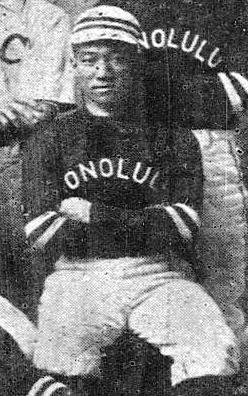
He was likely referring to 20-year-old Charles En Sue Pung, a teammate of Barney Joy’s on the Honolulu Athletic Club team who was also one of Hawaii’s best track athletes.  Pung was rumored to be joining Joy when the pitcher signed with the San Francisco Seals in the Pacific Coast League in 1907, and in 1908 there were brief rumors in the press that Chicago Cubs Manager Frank Chance wanted to sign the Chinese third baseman—neither materialized, and he remained in Hawaii.

Charles En Sue Pung

Charles En Sue Pung

Crane said the growth of the game internationally would be endless; he said the introduction of the game in the Philippines was a prime example:

“(T)here are several enclosed grounds in Manila to which are attracted big crowds…I know they can learn to play the game, for when the (New York) Giants were in Savannah (Georgia) for practice last spring a team of soldiers from a nearby fort played an exhibition game with the Giants.”

Crane said the team was accompanied by “a young Filipino, who, while he did not play on the soldier team, practiced with them and showed surprising proficiency… (The) youth knew all the points of the game as well as Henry Chadwick.”

For Crane, that was enough to declare that “in short order” the Philippines would adopt the game as had, and would, “all people that are blessed with real red blood and progressive.”

Bugs Versus Rube

9 Jun

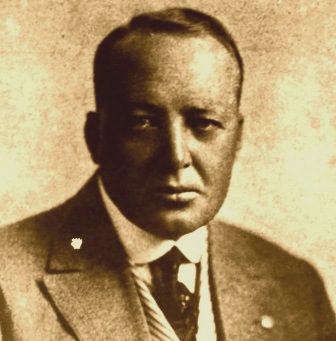
Charles Emmett Van Loan is largely forgotten today, but from 1904 until his death in 1919 at age 42, he was considered one of the best, and most prolific, baseball writers in the country.

Grantland Rice said:

“Van Loan was not only a great story-teller.  He was the first writer of his time to see the romance and the glamour of the game, mingled with its amazing fund of humor.”

In addition to his newspaper work, which included stints in New York, Los Angeles, San Francisco and Denver, Van Loan wrote some of the most popular fictional baseball stories of his era—he published four collections of baseball stories, as well as anthologies of  boxing, horse racing and golf stories.

Hugh Fullerton said of his death:

“Van is dead and sports in America have lost their greatest interpreter, and fighters, ball players and athletes of all grades have lost their best friend.”

Charles Emmett Van Loan

Charles Emmett Van Loan

As sports editor for The New York American in 1910 Van Loan weighed in on the two most interesting pitchers of the day:

“In the race for distinction as the most erratic, eccentric and daffy pitcher of the big leagues “Bugs” Raymond is leading by an elbow over our old friend, G. Edward Waddell, known to fame and a portion of Missouri as the ‘Rube.’

“The battle between G. Edward and the ‘Bug’ has been a close one.  For many moons Waddell held the belt for eccentricity.  If he had not been a wonderful baseball player, he would have been chucked to the minors years ago, but pitchers like Waddell are so rare that they must be preserved to the game.

Bugs Raymond

Bugs

“We all remember the sorrows of Oscar Hammerstein and the many tribulations forced upon him by his singers, particularly the women.  A woman with a wonderful voice can get away with anything short of murder in the first degree by blaming it upon her artistic temperament—which is an ornamental means for plain unadorned meanness, selfishness or petty spite.  If a soprano got jealous of another woman and tore up her contract, refused to sing her roles and played smash generally, she could blame it upon her artistic temperament, and all was forgiven.  What a shame the ‘Rube’ never heard about that artistic temperament thing!  It would have been such a handy alibi for him.

“Waddell stuck in the limelight by virtue of his ability to throw a ball like a streak of lightning and throw it twice or three times in the same place…In between his marvelous performances the ‘rube’ established himself as a bartender, a side-show barker, an actor, a sidewalk comedian, a rough and tumble battler and a very competent vessel for mixed liquors.  He enjoyed the proud eminence of supreme bug of the major leagues and everything was lovely until ‘Bugs’ Raymond happened along.  ‘Bugs’ went the ‘Rube’ one better.  Waddell in his balmiest days never had a special keeper engaged, by the management to take him gently but firmly by the elbow and steer him away from temptation.

Rube

Rube

“You never heard of a chorus girl with an overdose of the artistic temperament.  A chorus girl who develops tantrums is fired immediately.  You never heard of an eccentric ballplayer who was not a good one, a bad player would be sent  back to herd the cows and coax the potatoes out of the ground with a hoe.

“’Rube’ and ‘Bugs’ are good players.  Raymond almost drove (John) McGraw to despair last season, for the chubby manager realized what an excellent pitcher ‘Bugs’ really was and tried to save him for the hard finish of the season.  McGraw even went so far as to try physical persuasion upon his big, but erratic southpaw, upon the ground that a swift wallop on the nose is sometimes better than a ream of argument.

“McGraw tried to keep money out of Raymond’s hands, figuring that if he never had a cent he would be forced to keep his nose dry.  No use.  ‘Bugs’ had too many friends.  His admirers were always ready to purchase even if ‘Bugs’ had to look up in the air when it came his turn to deliver orders to the gent in the apron.

“’Turn him loose on a desert isle’ said one of the players, referring to Raymond, ‘and inside of an hour he will turn up with a flask on his hip.  How he does that I don’t know.  I guess he just charms that liquor.

“Unfortunately George Edward must retire from the competition.  Boston is his hoodoo town,  By reason of matrimonial troubles ‘Rube’ was forced to cut Boston off the pitching list, and just as the clouds cleared away, bing! On the elbow with a red hot liner, and out goes the ‘Rube’ with a broken bone.

“At the end of last season nobody believed that McGraw would make another effort to reform the thirsty Raymond.  It was thought that in spite of the fact that ‘Bugs’ won 600 percent of his games, he would get the gate, but McGraw decided to try it again on the ground that a pitcher of Raymond’s class is worth saving at any cost.  McGraw is willing to gamble.  Should he fail to straighten out the big spitballist everybody will say:  ‘I told you there wasn’t any use.’  On the other hand, should the private keeper keep ‘Bugs’ away from the disturbance water and his pitching be up to his usual standard, everyone will say that McGraw showed excellent judgment in hanging on to his souse paw through thick and thin.

“An erratic pitcher is a hard strain on a team.  The men behind him never know when he is going to blow up and they are kept on a strain whenever the eccentric one works.

“When ‘Bugs’ goes into the box in good condition, his head clear and his muscles hardened by work, he pitches good enough baseball for any man’s club.  His keeper has been steering him away from the gin mills for some time—touch wood everybody—and at last accounts McGraw was hopeful that the problem had been solved.

“They say the ever loving ‘Rube’ is consumed with jealousy because ‘Bugs’ has a keeper.  A man with a broken wing doesn’t really need a keeper.”

McGraw was unable “to straighten out the big spitballist,” Raymond’s big league career was over by June of 1911, and he was dead just more than a year after that.  Waddell’s major league days were over within weeks of Van Loan’s observations, and he was dead less than four years later.

Rube and Ossee

10 Mar

Connie Mack’s Philadelphia Athletics were expected to repeat as American League champions in 1906.  The 1905 team won 92 games, finishing two games ahead of the Chicago White Sox, and lost to the New York Giants in the World Series.

The 1906 Athletics were in first place as late as August 11, but faded to fourth, losing 33 of their last 52 games and finishing 12 games behind the champion White Sox.

Much of the blame for the poor finish was directed at Rube Waddell.

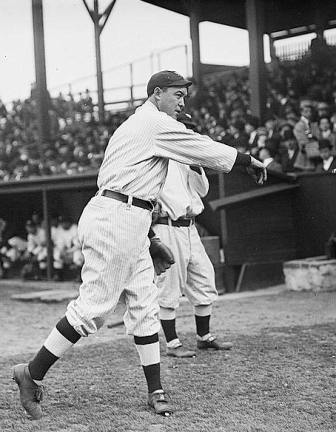
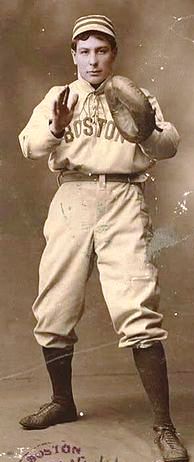
Rube Waddell

Rube Waddell

Waddell, 27-10 in ’05, dropped to 15-17 after fracturing his thumb in May of ’06.   The Philadelphia Inquirer said he was driving a rented carriage, “At Twenty-second Street and Ridge Avenue he became involved is a collision with a delivery wagon…he turned his horse quick to avoid the wagon, and when he found that the wagon was sure to hit the carriage he jumped and landed on his thumb.”  He sat for two weeks and never found his form from the previous season.

Waddell’s recovery was slowed, it was suspected, because of his off-field habits.  The general opinion of the fans and press was summed up by The Wilkes-Barre Times which said:

“Waddell has refused to appreciate that the modern ballplayer positively must keep in condition and ‘deliver the goods.’  The famous Mike Kelly could spend a $100 bill the night before playing a championship game and not report the next day.  It was regarded in those days as a joke.  That day has gone by.”

Waddell’s personal catcher, Ossee Schreckengost—Schreck—was also blamed for the collapse.  Schreck was sent home by Mack for the remainder of the season on September 22.  During a series in St. Louis he failed to return to the team hotel after a night out with “some German friends.”  Schreck said:

“Mack told me to pack up and go home.  That’s all there is to it.  We did not have any argument.

“Mack wants to try out a lot of juveniles this trip.  I do not think he is sore at me, and do not think I stand suspended.”

The Philadelphia Inquirer disagreed:

“For the good of the cause, Ossie [sic] Schreckengost was sent home by Manager Mack tonight suspended for the rest of the season.

“Schreck has not taken care of himself this year (as) an athlete should, and to his shortcomings more than anything else Manager Mack attributes the slump of the team in mid-season.  To Schreck St. Louis is the most attractive town on the circuit.  Yesterday he succumbed to its blandishments.”

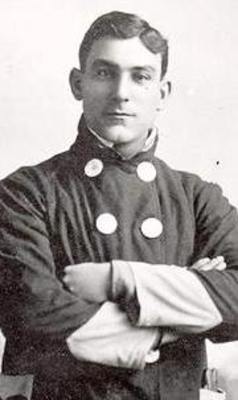
Ossee Schrecongost

Ossee Schrecongost

Either as a result of their drinking, the fact they were said to have “tanked” the Athletics season, or both, The Washington Post suggested that “Waddell and Schreck should be dubbed the tank battery.”

The battery mates and road roommates were sent their contracts for 1907.  Waddell was threatened with a pay cut if he didn’t stay in shape.  He quickly signed.

Mack is quoted by many sources over the years saying Schreck refused to sign his contract until Waddell agreed to no longer eat crackers in the double beds they shared on the road.

It is generally considered an apocryphal story invented by Mack years later—and often even said to have happened before the 1904 or ’05 seasons rather than 1907.

But, the story was not the invention of Mack.  There was actually a letter purported to be written by Schreck “from his home in Cleveland” (it is not known who actually wrote the letter), and reprinted in several newspapers between the 1906 and ’07 seasons:

“Dear Connie:  This is not a touch for any advance, or an increase in salary, but something much more serious, and as it won’t be long before the Athletics start south for spring practice, I am going to ask you to put Waddell under another charge this year.

“While I did not mind Rube bringing mocking birds and a reptile or two into our sleeping apartments down south, I do object to his habit of eating crackers in bed.  This Rube does nightly.  Not a single night last spring did Waddell retire without his south paw containing a dozen crackers, many of them resembling animals.

“By the time Rube, or Eddie, as he wishes to be called in southland, had got outside of these crackers, I was in anything but a sleepy mood, due in a measure to his crunching of the crackers.  It did not seem to interfere with Eddie.  He would turn over and go to sleep at once when through.

“Had it stopped here, all would have been lovely.  It didn’t however, and the natural result was that the bed was full of crumbs.  This had been going on for years, and frequently have I welcomed a night on the road with an upper berth, so as to escape Waddell and his crumbs.

“This complaint may seem trivial to you, after your varied experiences with Rube, but I can assure you that the crumbs that came from those crackers were anything but ‘crumbs of comfort’ for your humble servant.  In closing, I would like to suggest that if you can put a clause in Waddell’s contract that he is not to eat crackers in bed during the season of 1907.  I am sure Waddell and I will continue to be real good friends as of yore.  Yours truly, Ossee Schreck

“P.S.—I wish all of the boys, and of course this takes in you, a happy new year.  Am doing light training.  O.S.”

Whether or not the “cracker clause” was inserted in Waddell’s contract, the Rube/Ossee battery was together for all but four of Waddell’s 33 starts in 1907, but the relationship between “the real good friend’s of yore” began to deteriorate that season;  likely because Schreck had cut back his drinking considerably, while Waddell continued to be Waddell.

Despite a 19-13 record for the second place Athletics in 1907 Waddell had become a distraction and more trouble than he was worth.   The Inquirer said he was sold to the St. Louis Browns after “Ruben made himself objectionable to his club mates, and for the good of the club’s future Manager Mack concluded that it would be the part of wisdom to let him out.”  Waddell was 33-29 in parts of three seasons in St. Louis.

Schreck remained in Philadelphia until September of 1908 when he was sold to the Chicago White Sox, his big league career was over at the end of that season, after eight games with Chicago.

The two old teammates died just three months apart in 1914, Waddell was 37, and Schreck was 39.  The Inquirer said:

“’Thuh batt’ries for today: for Philadelphia, Waddell and Schreck!’  It has lo these many days been but a memory, and now there is only memory left of the famous diamond combination.  They flashed in dazzling brilliancy across the baseball horizon and disappeared as quickly as they came.  And both died old young.”

The Tribune’s First All-Star Team

21 Feb

In 1933 The Chicago Tribune underwrote the first All-Star game, created by Arch Ward, the  paper’s sports editor,  to coincide with the Century of Progress World’s Fair—more than 30 years earlier The Tribune published one of the earliest  sportswriter selected “all-star teams.”

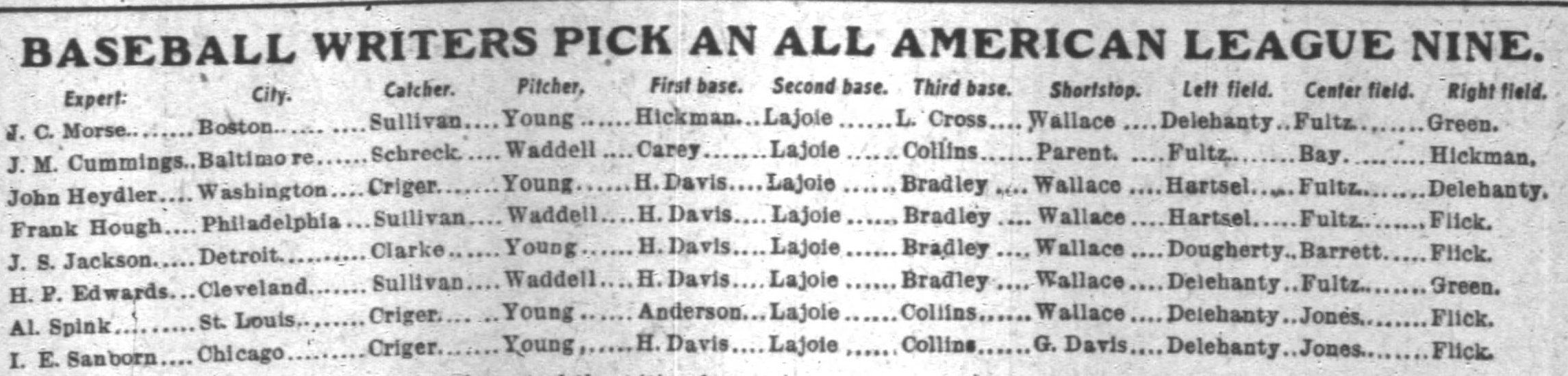
Near the end of the 1902 season, The Tribune polled sportswriters from American League cities to pick “An all American League Nine.” (No similar poll was done for the National League)

The writers polled:

Jacob Charles Morse—The Boston Herald

Joseph M. Cummings—The Baltimore News

John Arnold HeydlerThe Washington Post

Frank Leonardo HoughThe Philadelphia Inquirer

Joseph Samuel Jackson—The Detroit Free Press

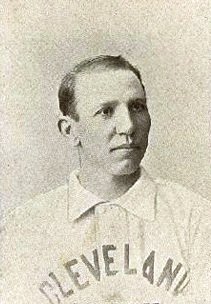
Henry P. Edwards—The Cleveland Plain Dealer

Alfred Henry SpinkThe St. Louis World

Irving E. (Sy) Sanborn—The Chicago Tribune

The only unanimous choice was Cleveland Bronchos second baseman Napoleon Lajoie—Lajoie appeared in just 86 games, but hit .379.

Napoleon Lajoie --the only unanimous choice

Napoleon Lajoie –the only unanimous choice

The most disagreement was behind the plate; four different catchers received votes:  Billy Sullivan of the Chicago White Sox and Lou Criger of the Boston Americans received three votes each;  Freeman Ossee Schrecongost who played 18 games with Cleveland and 79 with the Philadelphia Athletics, and William “Boileryard” Clarke of the Washington Senators each received one vote.

Cy Young of Boston led pitchers with five votes, with Philadelphia’s Rube Waddell being the choice of the other three.

Four first basemen were also chosen, but Harry Davis of the Philadelphia Athletics was the consensus choice with five votes.  Cleveland’s Charlie “Piano Legs” Hickman, Washington’s George “Scoops” Carey, and “Honest John” Anderson of the St. Louis Browns all received one vote.

Cleveland’s Bill Bradley edged Boston’s Jimmy Collins four to three, with Philadelphia’s Lafayette “Lave” Cross getting the remaining vote.

Bobby Wallace of St. Louis was the shortstop consensus with six votes, Boston’s Freddy Parent and Chicago’s George Davis received one vote each.

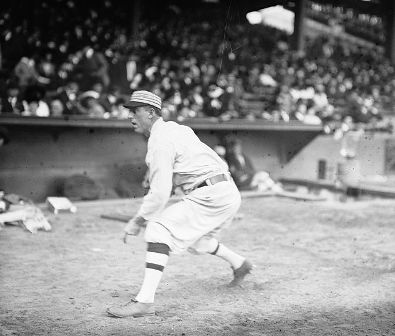
Booby Wallace, the choice at shortstop

Bobby Wallace, the choice at shortstop

Washington’s Ed Delehanty got four votes in left field, Philadelphia’s Tully “Topsy” Hartsell two; one vote each went to Boston rookie Patsy Dougherty and Philadelphia’s Dave Fultz (who played center field)

With or without his vote as a left fielder, Fultz was the consensus in center field.  He received four votes at that position; Chicago’s Fielder Jones got two votes, Jimmy Barrett, the only Detroit Tiger to make the list received a single vote (from Joseph Samuel Jackson of Detroit) and Harry “Deerfoot” Bay of Cleveland received one vote.

Jimmy Barrett, the only Tiger

Jimmy Barrett, the only Tiger

Right field included a couple more out of position players, Charlie Hickman picked up one vote despite being primarily a first baseman and playing just 27 games in the outfield in 1902.  Delehanty, almost exclusively a left fielder in 1902, received one vote in right.  Elmer Flick of Cleveland was the consensus with four votes.  Danny Green of Chicago received two votes.

The Results

The Results

The 1902 effort was not repeated by the paper.

“Zimmer was not to be frightened.”

20 Jan

On March 28, 1907 the New York Giants took the field against the Philadelphia Athletics in the second game of a five-game exhibition series at New Orleans’ Athletic Park.

The umpire was new.  Charles Louis “Chief’ Zimmer, after a 19-year career a major league catcher had tried his hand at managing in 1906.  His Little Rock Travelers finished last in the Southern Association with a 40-98 record.

Chief Zimmer

Chief Zimmer

The Atlanta Constitution said:

“Zimmer underestimated the strength of the league, and brought men into it who did not have the goods to deliver.”

After Zimmer was dismissed by Little Rock he joined the Southern Association’s umpire staff.

The Giants/Athletics series would be among his first games as a professional umpire.

The Giants won the first game 4 to 3.  The Giants scored two runs with two outs in the bottom of the ninth off Jack Coombs for the victory.  The Philadelphia Inquirer said:

“Zimmer umpired a god game… (but) the rowdy element in the Giants broke loose frequently, and the Chief had many disputed with some of the men.”

The second game did not go as well.  The Inquirer said:

“The Giants were the first at bat, and the first two men were retired. (Art) Devlin and (Cy) Seymour then signaled safely to the outfield, each moving up a base on (Rube) Oldring’s throw…(Frank) Bowerman was then up to the bat.  (Eddie) Plank soon had two strikes and one ball on him.”

With a one and two count the Giants claimed Plank balked when he threw to third and picked Devlin off.  Zimmer said he didn’t.  Roger Bresnahan and Mike Donlin, coaching at first and third, “rushed at Zimmer from the coaching lines and a wordy war ensued.”  Manager John McGraw came out of the dugout and ‘a half hour was consumed in ‘beefing.’”

Eddie Plank

Eddie Plank

Zimmer finally ordered McGraw back to the bench and:

“Play was about to start again when a remark made by McGraw caused Zimmer to order McGraw off the grounds.  The New York manager refused to go, and a lively tilt between him and Zimmer took place, the entire New York gang surrounding the “Chief” in an effort to bulldoze him.  But Zimmer was not to be frightened.”

New Orleans police officers came out on the field as Zimmer declared the game a forfeit after a half inning.

McGraw said his team would not play in the game scheduled two days later if Zimmer was the umpire.  The Inquirer said Athletics Captain Harry Davis “informed McGraw that inasmuch as the giants had turned down Zimmer as the umpire the series might as well be called off.”  New Orleans Pelicans owner Charlie Frank also threatened to bar the Giants from Athletic Park.

On March 30 McGraw arrived at Athletic Park with only nine players consisting of “nearly all the youngsters in camp.”

With both teams on the field, Zimmer approached the Giants dugout and asked for the team’s lineup and was told the Giants would not play if he were not replaced as umpire.  Zimmer announced that the Giants had again forfeited and the Giants left the ballpark.  Frank’s New Orleans Pelicans took their place and pitcher Mark “Moxie” Manuel defeated the Athletics and Rube Waddell 4 to 2.

Waddell--lost to the New Orleans Pelicans

Rube Waddell–lost to the New Orleans Pelicans

The series was over.

Before the Giants left New Orleans that evening, McGraw confronted Thomas Shibe, business manager of the Athletics and son of team president Ben Shibe, in the lobby of the St. Charles Hotel.  The Inquirer said:

“Manager McGraw backed up the entire New York team, insulted Thomas Shibe…by calling him vile names.  McGraw alleged that Tom had informed several persons that he had heard McGraw using insulting language to Umpire Zimmer… pursuing the same cowardly tactics which have made him famous over all the base ball circuit (McGraw)did not keep within reach of Shibe.  He kept well within the group of rowdies which make up his team, and thus being forfeited from any attack from Tom, naturally was as brave as a lion.”

The paper said McGraw disappeared from the scene as soon as members of the Athletics arrived in the lobby.

Frank Leonardo Hough, baseball writer for The Inquirer, took McGraw to task for his actions, and charged the New York press with allowing McGraw and Giants’ management to intimidate them out of “writing the truth” about the team:

“The press of no other city in the Union would stand for the tactics employed by the Giants.  Such a condition of affairs would be impossible in Boston or in Philadelphia.  There are any number of thoroughly equipped baseball reporters in New York City—reporters who know the game from A to Z, who, if permitted to write the game as they see it, would be the peers of any bunch of critics the country over.  But, unfortunately they are under an awful handicap.  Let them criticize the Giants to the latter’s disadvantage and their occupation is gone.  They will be made to feel the displeasure of the august heads of the Giants by being debarred from the Polo Grounds.

“Now and then a paper will stand by its representative, but only in rare cases.  Charley Dryden, Sam Crane, Joe Vila, Eddie Hurst and numerous others were barred from the grounds.”

Hough said some reporters “stand on their manhood, and take up other fields of newspaper endeavors. But the majority of them, less favored perhaps, cannot afford to fight with the bread and butter, and consequently they are compelled to go along, glossing over the Giants’ bad breaks or bad playing as lightly as possible, while others crook the pregnant hinges of the knee until they become almost hunchbacked and ignore everything and anything that might reflect upon the Giants.  That is the reason why the New Yorkers are the best uninformed baseball public in the country.”

No disciplinary action was taken against McGraw; Giants owner John T. Brush was said to have reimbursed Charlie Frank for $1,000 in lost revenue. The Giants finished in fourth place in 1907, the Athletics third, as the Chicago Cubs ran away with the National League pennant, beating the second place Pittsburgh Pirates by 17 games.

Hough continued to write about baseball for The Inquirer despite being an investor in the Athletics (Hough and Sam “Butch” Jones of The Associated Press each held a 12 ½ percent stake in the team beginning in 1901—Jones became a full-time Athletics employee in 1906, Hough remained a sportswriter during the twelve years he held his stock).  He sold his stake to Connie Mack in 1912 and died in 1913.

Chief Zimmer’s tenure as an umpire did not improve much after his first experience in New Orleans.  He opened the season as a member of the Southern association staff, but on July 9 announced his resignation.  His final game was on July 13 in Nashville.

“A Great deal of foolish Sympathy was wasted on Rusie”

5 Sep

Hank O’Day, pitcher and Hall of Fame umpire, said Amos Rusie was the greatest pitcher ever:

“Amos is the greatest pitcher the country ever saw. Why, Rusie had more speed in his curve ball than any pitcher I ever saw before, or have ever since seen, has in his straight fast ones.  Rusie was a wonder—that’s all there is to it.  I was behind the plate one day when one of Rusie’s  fast incurves hit Hughey Jennings…the ball hit Jennings squarely in the temple, and he fell as though shot by a ball from a Winchester rifle.  I caught him in my arms as he toppled backwards—and he was out of his head for three days.” (Contemporary reports of the incident said Jennings actually finished the game, but later lost consciousness for four days)

O’Day was also on the field when Rusie blew out his arm in 1898; Rusie threw to first to pick-off Chicago Orphans outfielder Bill Lange and “his arm cracked like a pistol’s shot.”  In 1940 Lange told his version of the story to The Portland Oregonian:

“Amos Rusie, I don’t know of any better one and I never played against any other one as good.  He had great control, as well as everything else a pitcher should have.  But my base stealing got him.  He worried over it.  I guess he lost sleep over it.  Anyway, one day he showed up on the field and said he had developed a new way to catch me off of first without turning his body.  I was anxious to see what he had, and he caught me off of first.  But—and it was a mighty large but—in doing so Rusie threw his arm out.  And never could pitch in his old form again.”

Amos Rusie

Amos Rusie

Rusie, with a dead arm, became a benchmark, an oddity, and a cautionary tale.

He posted a 246-173 record before the injury; after sitting out all of 1899 and 1900 he was traded to the Cincinnati Reds for Christy Mathewson, appeared in three games, was 0-1 with an 8.59 ERA, and his career was over.

In the decade between 1898 and 1908 The Sporting Life christened “the next Rusie,” or “another Rusie” no less than 20 times; scores more were given the same title by newspapers across the country.  Most like Cecil Ferguson (career 29-46), Davey Dunkle (17-30), Cowboy Jones (25-34), and Whitey Guese (1-4) were busts.  The three best were Orval Overall (108-71), who was called the “next Rusie” more than anyone else; Ed Reulbach (182-106), and Hall of Famer Ed Walsh (195-126).

During that same decade there were regular, small items in newspapers about Rusie’s post National League life.  Shortly after his release from the Reds in June of 1901 papers reported that Rusie, “who commanded a salary of many thousands of dollars, is now working as day laborer at $1.50 a day.”   The pitcher told a reporter “This shows I am not afraid to work, but it’s an awful comedown in salary.”

The Dallas Morning News pulled no punches in their assessment of his plight:

“The dismal afterclap to the brilliant career of a once-famous ballplayer whose name was a household word in balldom…reckless wastefulness in financial matters and a total disregard for physical care brought Rusie to his present deplorable condition when he should have been in his prime, for the big fellow is barely 30 now.”

In 1903 it was reported that Rusie had joined the Vincennes (IN) Alices in the Kitty League.  While no statistics survive, he appears to have stayed with the team for most of the summer.  The Detroit Free Press said he was “playing for a salary of $75 per month.”

After the 1903 season he went to work in a lumber yard, and the regular reports on his activities as a “low-wage laborer” appeared regularly in newspapers.  The items became such a regular feature that The Associated Press, in a short story about the Philadelphia Athletics’ eccentric and troubled Rube Waddell in 1904 said:

“Rube has run the gamut of foolishness.  He is in his prime but a few more years of such lack of sense as he displayed last season will send him to the wood pile or coal heap and he will, like Amos Rusie, be occupying two inches in the has-been columns every spring.”

There were multiple reports that Rusie was coming back as a pitcher for the 1906 season.  The rumors started in September of 1905 when Rusie attended an exhibition game in Vincennes between the Alices and the Chicago Cubs.  The Philadelphia Inquirer said of the news:

“If you don’t know the tremendous importance of this announcement you are no baseball fan.”

Not everyone agreed that Rusie returning to baseball would be a good thing.  A report from The News Special Service, which appeared in many Midwest papers said:

“His habits were none of the best, and he rapidly deteriorated in efficiency as an athlete.  He refused to pitch one whole season because he had been fined by the New York (Giants) management for being intoxicated and abusing his wife.  A great deal of foolish sympathy was wasted about that time on Rusie, but he was entitled to nothing except what he received, and some who knew the circumstances thought stricter disciplinary methods would not have been amiss.”

Rusie didn’t sign a contract that spring; and two other rumors that John McGraw had sent him a letter inviting him to spring training with the Giants and that he would return to the Kitty League didn’t materialize either.

But Rusie did make the news again in June.  A man named Gabe Watson was collecting mussels in the Wabash River when his boat when his boat overturned.  The Evansville Courier said Rusie pulled the drowning man from the river.

The nearly annual reports of “Rusie’s return” ended after 1906, but Rusie’s many career, and life changes continued as newspaper copy for the next twenty years.

When pearls were discovered in the Wabash River’s mussels, Rusie became a pearl diver.  Two years later he was in Weiser, Idaho, serving a 10-day sentence for public drunkenness.  In 1910 he was in Olney, Illinois working in a glass factory.  The following year he moved to Seattle, Washington.  For the next decade served as an umpire for a couple of Northwestern League games, worked as a ticket taker and groundskeeper at Yesler Way Park and Dugdale Field, home of the Seattle Giants, and also worked as a steam fitter.  Rusie went to jail at least once while in Seattle, and remained a big enough name that when he was injured by a falling pipe in 1913, it made newspapers throughout the country.

In 1921 Rusie became another in the long line of former players hired by the New York Giants at the behest of John McGraw.  According to newspaper reports McGraw offered the former pitcher a “job for life” as a “deputy superintendent” at the Polo Grounds.  Interest in Rusie’s career was renewed, and the pitcher was regularly interviewed for the next couple of years, reminiscing about his career and about how he’d like to have had the opportunity to pitch to Babe Ruth.

Unlike most of the former players who McGraw found work for at the Polo Grounds, Rusie did not stay for the rest of his life; he returned to Auburn, Washington in 1929 and bought a farm, where he remained for the rest of his life.  He was badly injured in a car accident in July of 1934—The Seattle Daily Times said Rusie’s vehicle overturned and he sustained a concussion and broken ribs.

While he received less attention after being incapacitated after the car accident, Rusie was still mentioned frequently in the press until his death in 1942; contrary to oft-repeated fiction that he died in obscurity.  And his obituary appeared in hundreds of papers across the country in December of 1942.  It wasn’t until the post WWII area that Rusie stopped being a household name, which led to his final comeback in the 1970s; Rusie was inducted into the Hall of Fame 34 years after his death.

Another Rube Waddell Story

31 Jul

There are probably as many stories about George Edward “Rube” Waddell as any player in the history of baseball; and some of them might be true,

This one was told by Hugh Fullerton in The Chicago Tribune, and is about the contract Waddell signed to join the Chicago Orphans in 1901.

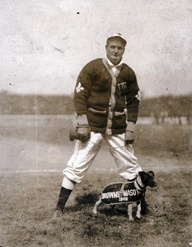
Waddell with St. Louis Browns Mascot

Rube Waddell

Despite the erroneous story, told through the decades, that the Pirates were so anxious to rid themselves of Waddell that they let him go for a cigar (or a box of cigars in some versions), there was actually a great deal of interest in Waddell and while the sale price was never disclosed, The Chicago Daily News said Chicago paid “good money” for the pitcher.

In addition to Chicago, other contemporaneous reports said the Boston Beaneaters were very interested in obtaining Waddell.

Fullerton told a good story, maybe just as erroneous as the cigar story, of how Chicago manager Tom Loftus was able to sign Waddell and thus beat Boston to the punch of purchasing his release from Pittsburgh:

“(Rube) was threatening to annihilate several members of the team and he was on one of his periodical rampages.  Boston wanted him badly—and so did Chicago.  Boston offered to give him $3,500 for the remainder of the season, and Chicago was willing to pay him only $2,400 and Loftus was delegated to sign Rube and make him be glad to knock off $1,000 from his earnings from the end of May to the middle of October.  Loftus cornered George Edward and commenced jollying him.

“’I’ll tell you, Tom,’ said Eddie, ‘I’d rather play with you than with Boston, but they offer me $1,100 more.

“’That’s all right,’ said Tom.  ‘Don’t let a little thing like that stop you from joining a good ball club with a lot of good fellows.”

Fullerton said the two discussed the pros and cons of Waddell accepting Chicago’s offer when Loftus finally said:

 “’I’ll tell you, Eddie, what I’ll do.  You sign that contract, and when we get to New York I’ll buy you the best Panama hat in town.

’“’All right,’ said George Edward.  ‘Just put that in the contract.’”

Fullerton said the deal was made and “When they got to New York Loftus bought him the $1,000 Panama hat—for $28.”

Tom Loftus

Tom Loftus

Waddell’s time in Chicago was brief, and typically bizarre.  After posting a 14-14 record and a 2.81 ERA for Loftus and the Orphans, Rube received an offer he couldn’t refuse in September.

The Tribune told the “pitiable little story, this tale of ‘Rube’ Waddell and his love of nature.”  Waddell had deserted the team to play for an amateur club in the town of Grayslake, Illinois, about 40 miles north of Chicago.  The Tribune said Waddell was induced to go north with the promise of being able to fish six days a week, if he pitched on the seventh.

The Orphans suspended Waddell for the remainder of the season.  In December he jumped Chicago to join Los Angeles in the California League.

“There was probably none so Unique as Shreve”

24 Jul

Leven Lawrence “Lev” Shreve II came from a prominent family in Louisville, Kentucky.  His great-uncle, and namesake, had been president of the Louisville Gas and Water Company, and the Louisville & Nashville Railroad.

The 19-year-old made his professional debut in 1886, playing with Savannah, then Chattanooga; he was a combined 12-9 with 1.52 ERA.  Shreve was signed by Billy Barnie to join his young pitching staff with the Baltimore Orioles in the American Association.  He came to Baltimore with great expectations.

Lev Shreve

Lev Shreve

The Baltimore Daily News called him “Barnie’s phenom.”  In wasn’t the first time a relatively unknown pitcher was given that name by the Baltimore press.

Shreve had trouble getting as Barnie primarily relied on 21-year-old Matt Kilroy and 22-year-old Phenomenal Smith; Shreve, and fellow 20-year-old Ed Knouff saw limited action in the first two months of the season.

The Sporting Life said he wasn’t happy:

 “Shreve, the Louisville boy…complains that he does not get a fair deal.  He affirms that his arm is in fine trim, but that he is not allowed to pitch. Shreve is an ambitious ball player, and desires to show what is in him.  He says he will quit if Barnie does not play him.”

The Baltimore Sun said

“People are asking why Shreve isn’t given a chance.”

The Sporting Life, perhaps, provided an explanation for the lack of work later that month:

“Cigarette smoking is said to be impairing the efficiency of two Baltimore pitchers, Shreve and Knouff”

It would not be the last mention of cigarettes and Shreve in The Sporting Life;  the pitcher was also said to be “a cigarette fiend,” and “as noted for his cigarette habit” as his pitching.

Neither Shreve, who was sold to the Indianapolis Hoosiers in the National League, nor Knouff, who was sold to the St. Louis Browns, would finish the season with Baltimore; it’s unknown whether smoking was the cause.

Shreve was 3-1 with a 3.79 ERA in five games in Baltimore.

The sale to Indianapolis didn’t seem to hurt Shreve’s confidence according to George Myers, his catcher with the Hoosiers.  Meyers, two decades after playing with Shreve, said the pitcher was talented, cocky and erratic, and described Shreve’s first National League game; a 4-1 10-inning victory over the first place Detroit Wolverines on August 19:

“There was probably none so unique as Shreve…My, but he was a fresh youth…He had awful speed and good curves and perfect control of the ball.  His confidence and egotism were astounding.  I remember one day we were to play against Detroit (Wolverines).  It was when the big four, (Jack) Rowe, (Deacon) White, (Hardy) Richardson and (Dan) Brouthers were on the team.

“Mr. Shreve, who had been assigned to pitch, strutted to the box with the swagger that would have made John L. Sullivan look cheap when John L. was monarch of all in the fistic business.  ‘Just watch me fellows, and see what I do to those swell-headed guys from Michigan,’ said the smiling Shreve.  ‘I am going to make ‘em look like a lot of suckers.’

“Richardson was the first batter up…’So you are the great invincible Hardy Richardson, eh?’ drawled Mr. Shreve.  ‘Well Hardy, old chap, I’m going to show you that you are easy for a good pitcher…Shreve let go the first ball and it went around Hardy’s neck like a shot.  He struck at it after I had it in my hands.  Bang goes the second, also a strike, and the third a wide, slow, outshoot, fooled the great batter completely and Shreve said mockingly: ‘Back to the bench Hardy, I told you that you were easy.

“Big Dan Brouthers, who was always a terror to pitchers, came next and he had blood in his eye…’so this is the terrible Mr. Dan Brouthers,’ grinned the fresh pitcher.  ‘Hate to tell you Dan, how soft a mark you are’…Dan missed the first two, which went close to his chin, and the next he hit like a shot at the pitcher.  Shreve caught it in easy style and gave Brouthers the ‘ha ha’ in most tantalizing fashion as Dan ambled to the bench.

“Deacon White came next and Shreve kidded him unmercifully.  ‘Deacon who told you that you could hit anything?’ was the greeting white was given.  The Deacon scowled and muttered ominous.  ’Duck soup is what you are for me.’ Sand Shreve, as White missed the first ball by several inches.  ‘Oh, how easy,’ was the next rejoinder, and Deacon smashed blindly at an outshoot, a moment later striking out on one of those speedy ones such as had sent Richardson to the bench.

“The Big Four could do absolutely nothing with Shreve’s delivery, and the other members of their team were just as helpless…This fellow Shreve was one of the best pitchers I ever met, but he was an erratic chap, and dreadfully hard to handle.”

George Myers

George Myers

After beating the eventual National League champions in his first start, Shreve ended up a disappointing 5-9 with a 4.72 ERA for Indianapolis.

Myers said on another occasion Shreve approached him before pitching against the Chicago White Stockings, who had won the National League championship in 1886:

“’Say, George, what team is this we are up against today?’

“I immediately began to read him a lecture, telling him that a young man just starting in on his career as a professional ballplayer shouldn’t deport himself in such a manner. ‘The idea of you coming on to the grounds when the champion Chicagos are here, and not knowing it, why—‘  ‘The champion Chicagos,’ interrupted Shreve, ‘Never mind, George, just watch me.  Oh just wait and see what I will do to that bunch.”

Myer s said Shreve shutout the White Stockings.  (This story appears to be either apocryphal or conflated with another incident as Shreve did not shutout Chicago that season).

Shreve was 11-24 in 1888 and 0-3 in 1889 when he was released by the Hoosiers.  He played three minor league seasons and was out of professional baseball by the age of 24.

Myers said his former teammate was “erratic as Rube Waddell,” and:

“I could tell story after story about this man Shreve.  If he had taken care of himself he would have been the greatest pitcher in baseball history.”